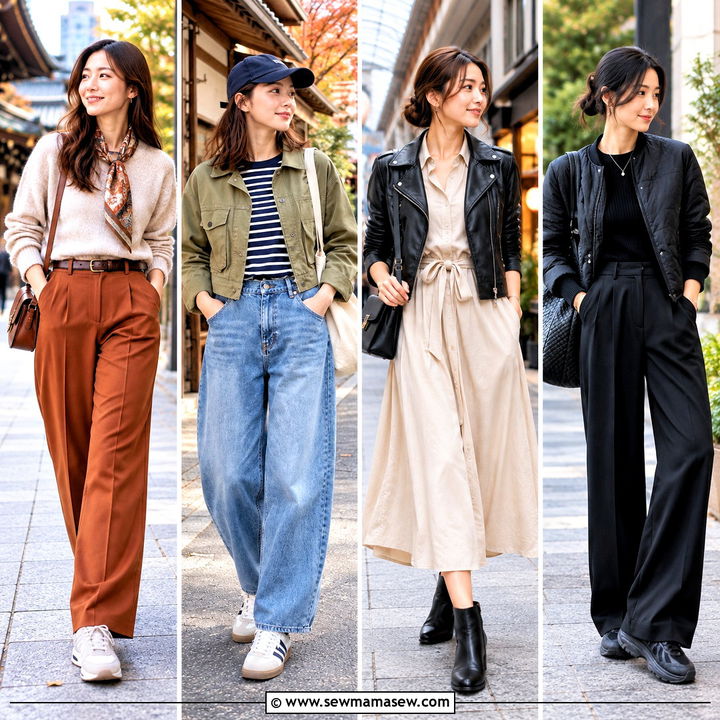
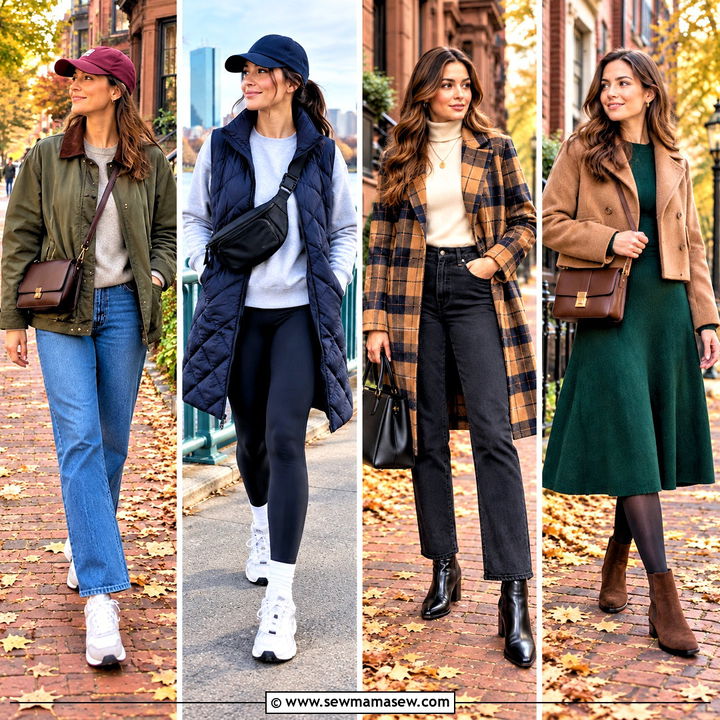
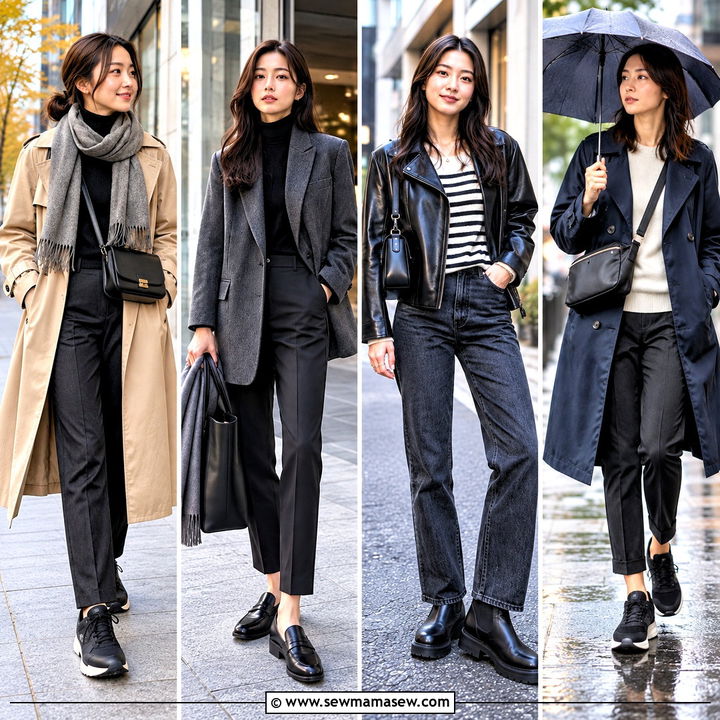
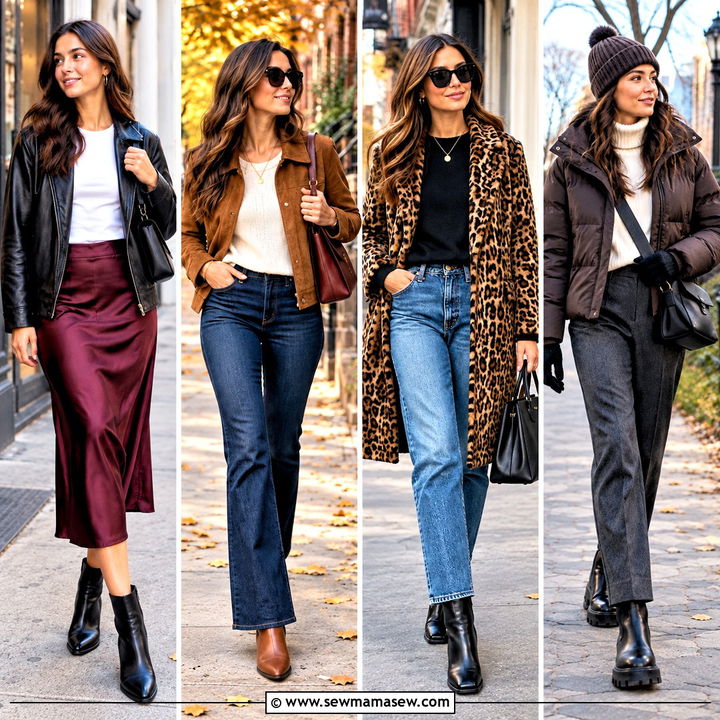
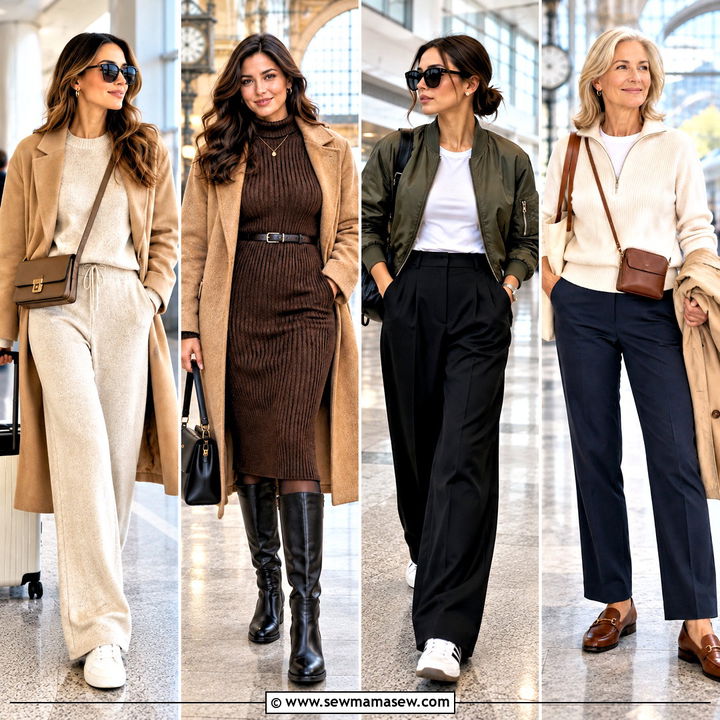
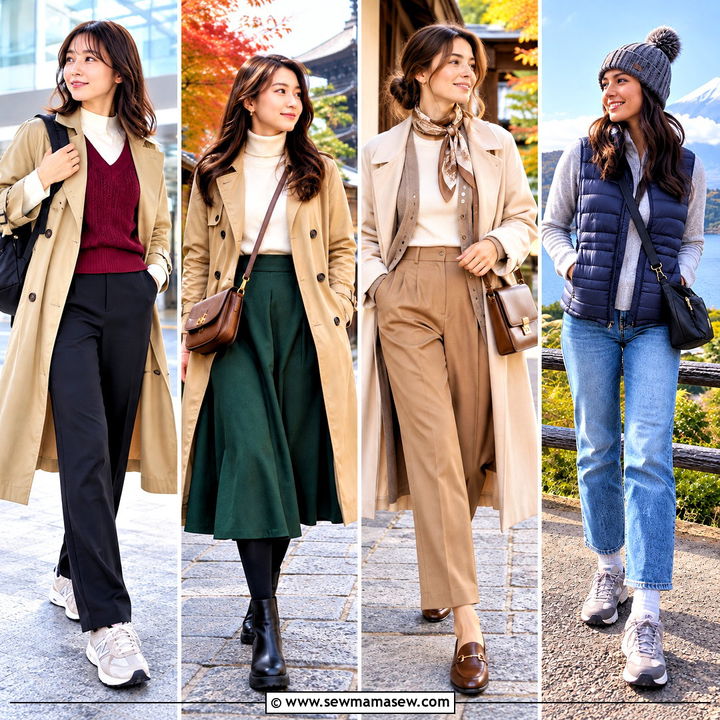
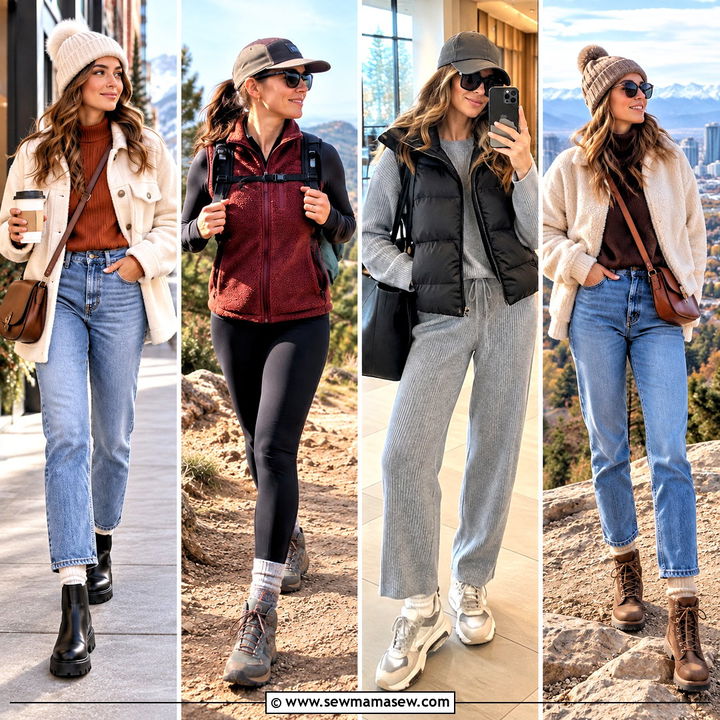
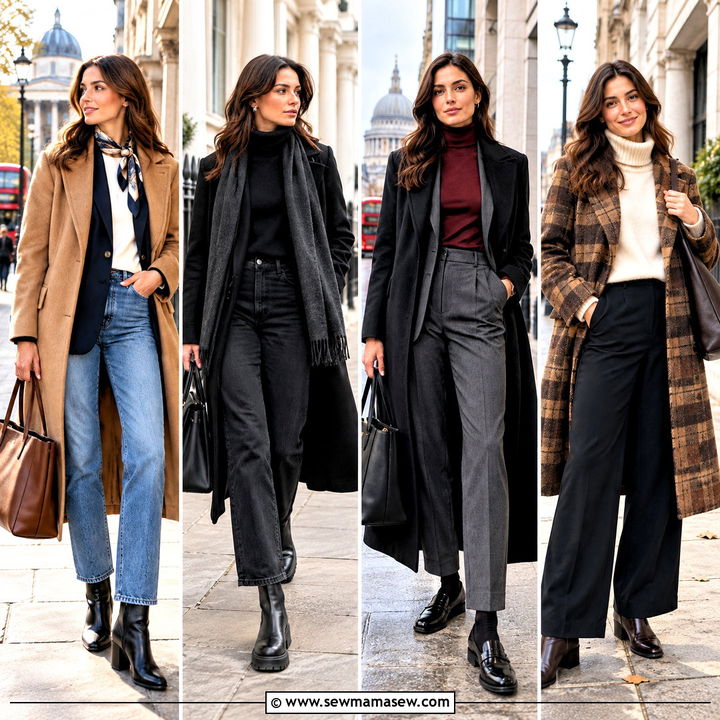
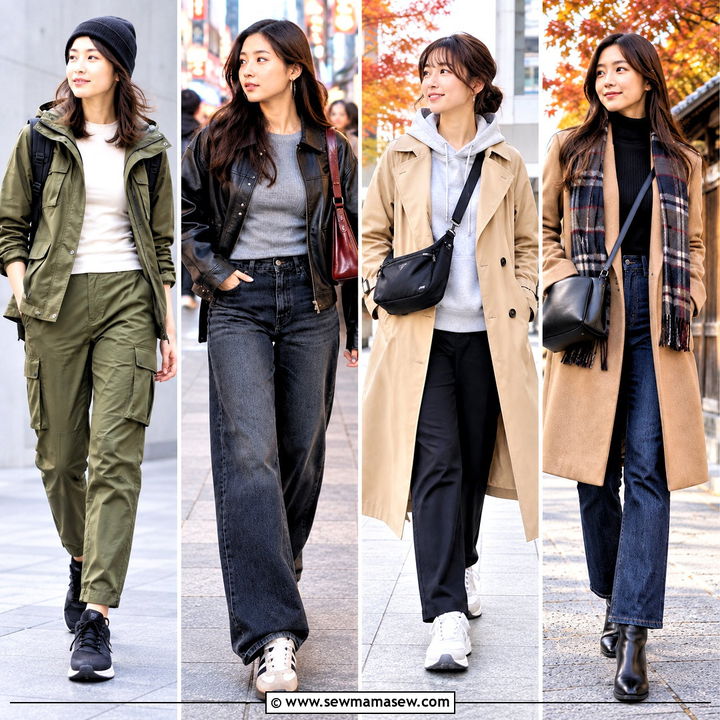
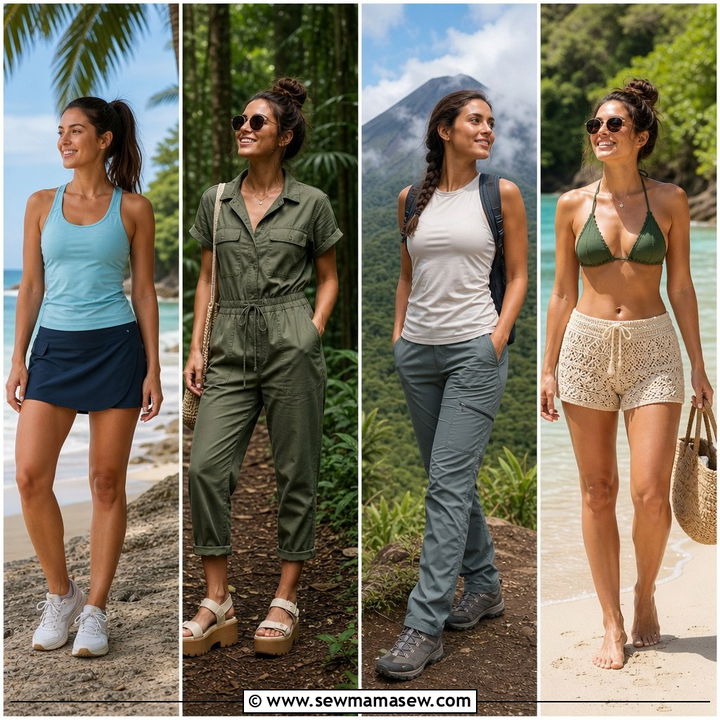
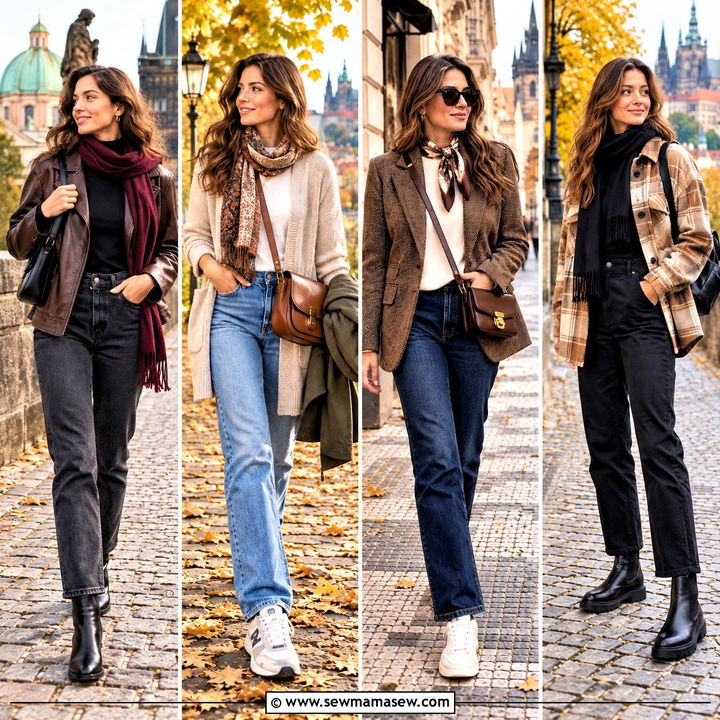
November is the month when Japan's regions stop feeling alike. Tokyo, Kyoto and Osaka have cool, often clear afternoons and properly chilly mornings and evenings, Hokkaido can already see snow, and Okinawa is still mild enough for a light jacket. Add the long walking days that sightseeing involves and you need two things from every outfit: layers that come off easily and closed shoes you can trust. I lean on coordinated colors and practical fabrics, and keep the shapes neat and understated, which fits in well on Japanese city streets. The outfits below cover temples, trains, shopping, foliage walks and the far north and south of the country.
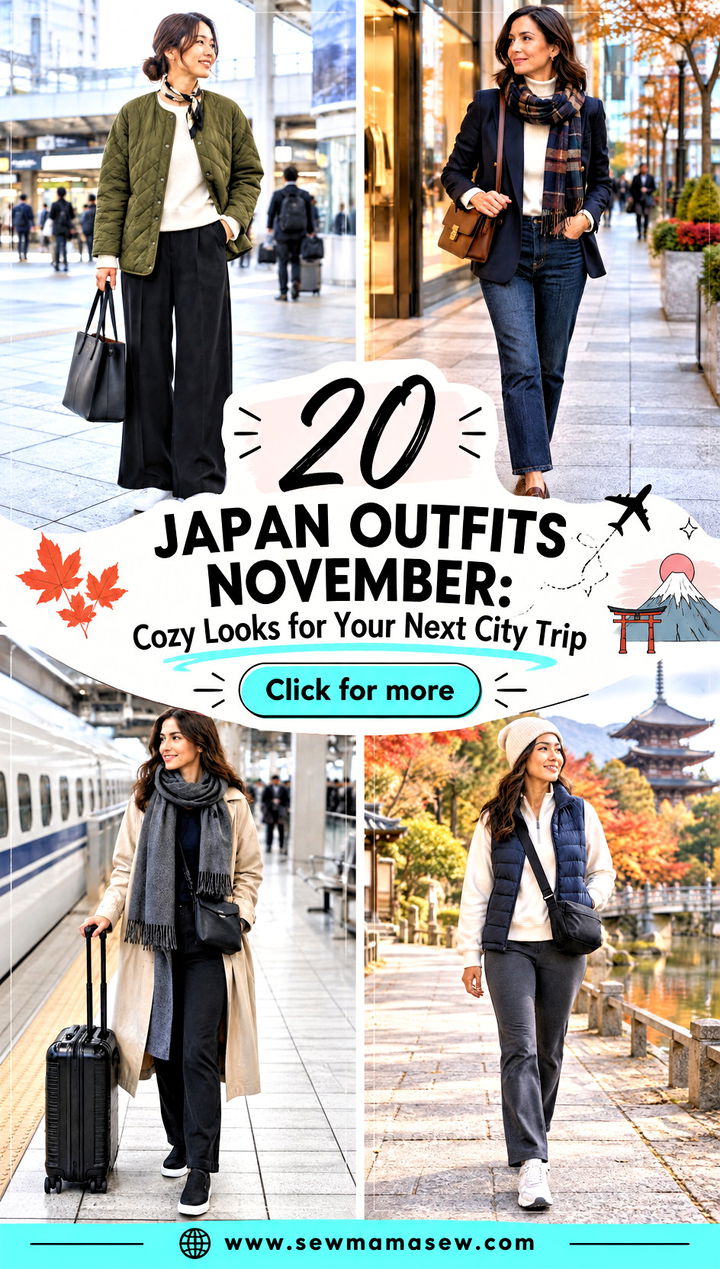
Packing for Several Climates in One November Trip
This list spans Okinawa to Hokkaido, and a lot of November itineraries do too. The mistake I see most is packing a full wardrobe for each climate. Instead, build one core set in the middle temperature range and add a small kit for each extreme.
- Core for Tokyo, Kyoto and Osaka: two or three knits, two pairs of trousers or jeans, one skirt or dress, a trench or quilted jacket, and two pairs of walking shoes.
- North kit: thermal top and leggings, a down coat, gloves, a hat and boots with grip. Wear the coat and boots on travel days so they don't fill your case.
- South kit: two lighter long-sleeve tops and a windbreaker. Your city sneakers and trousers already cover the rest.
If your route goes north last, you can ship or leave a bag of warm gear rather than carrying it from the start. Many travelers send luggage between hotels with a courier service, which makes the bulky north kit far less of a burden.
1. Japan Trench Coat Outfit
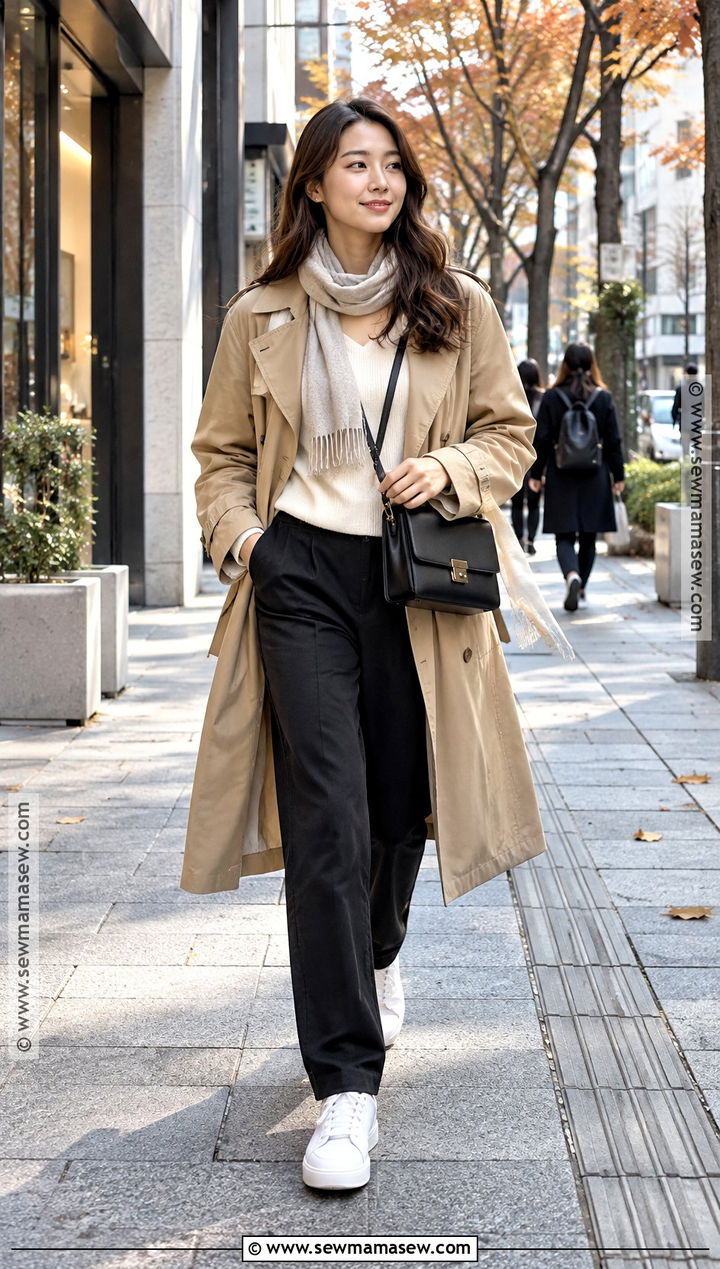
I'd start a November city day in a trench. Beige, stone or olive over a fitted long-sleeve knit, with black straight-leg trousers and white leather sneakers for contrast. It's warm enough for a cool morning and light enough to carry once you're in a heated train. A medium crossbody, simple earrings and a thin scarf that tucks into the bag complete it. Check the label before you rely on it in rain: a cotton trench is water-resistant only up to a point, and a coated or treated one copes far better with a steady shower. It looks right in cafés, museums and at a casual dinner.
2. Japan Cardigan And Midi Skirt Outfit
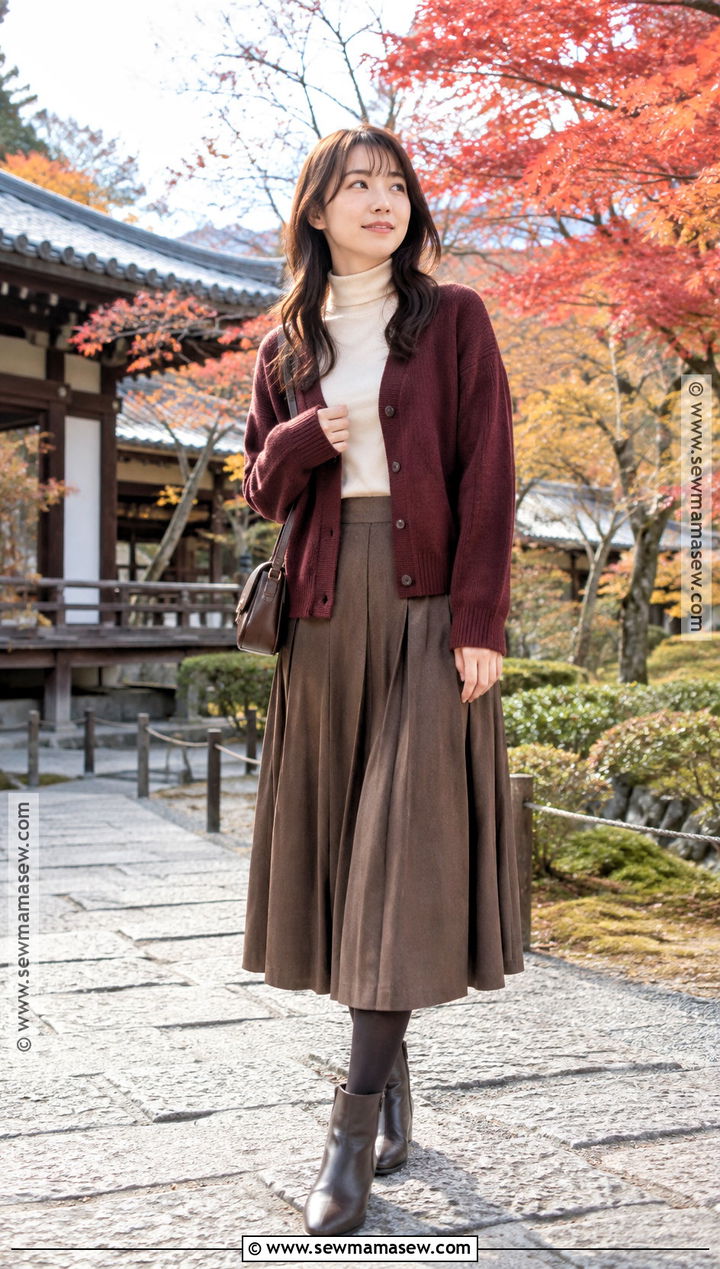
Kyoto in foliage season means lots of gravel paths, steps and standing, and this skirt outfit handles all of it. A fitted cream mock-neck goes under a camel, burgundy or forest-green cardigan, with a pleated or softly structured midi that lets you take full strides up temple stairs. Opaque tights for chilly days, and ankle boots with a low block heel rather than anything slim, since gravel and uneven stone catch narrow heels. Keep the cardigan relaxed but not oversized so a coat still closes over it. A compact shoulder bag and a little gold jewelry finish it. Burgundy and green sit well against red maples.
3. Japan Leather Jacket And Jeans Outfit
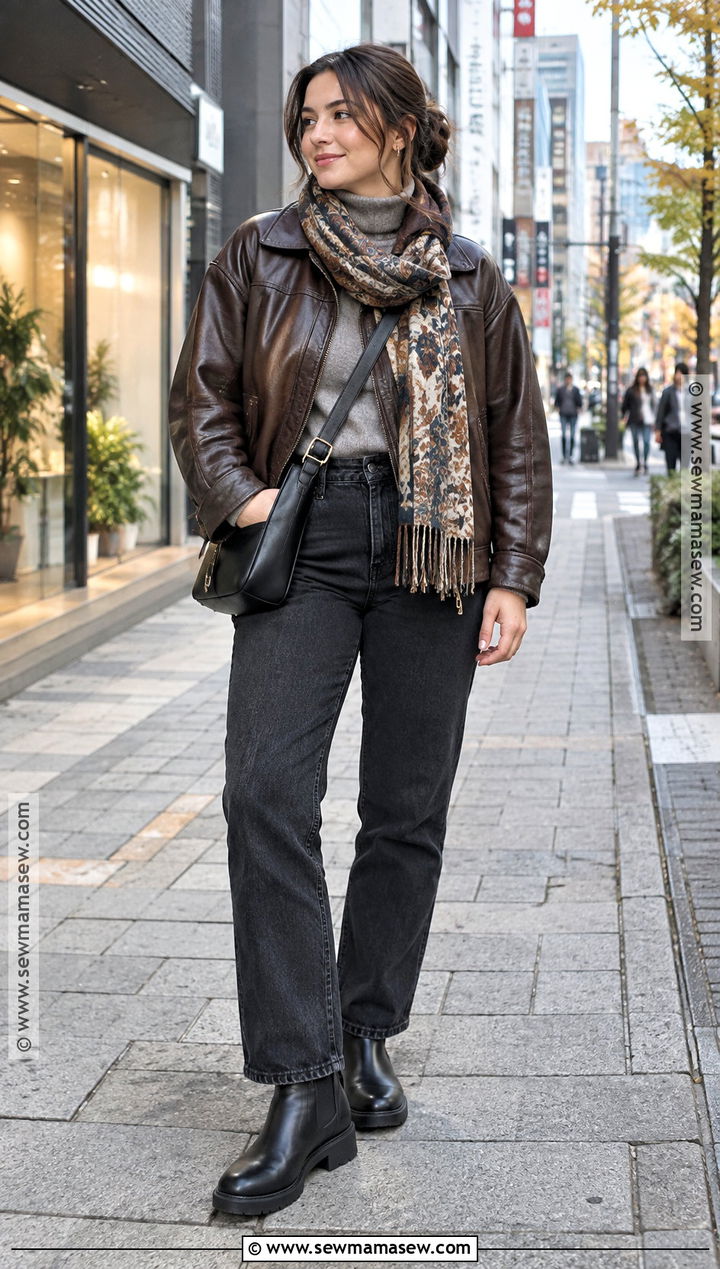
A leather jacket over a fine turtleneck is my default for a busy day in Shibuya, Shinjuku or Osaka. Black or dark brown leather pairs with gray, cream or muted blue knit and dark straight-leg jeans. Skip very rigid denim; it rubs at the back of the knee after a few hours of walking. Cushioned sneakers or broken-in Chelsea boots work on station floors, and a zipped crossbody keeps cards and phone within reach. A patterned scarf adds color. When evenings turn cold, I add a thin thermal under the turtleneck instead of a bulky sweater, because leather jackets are cut close and won't take much underneath.
4. Japan Sweater Dress And Long Coat Outfit
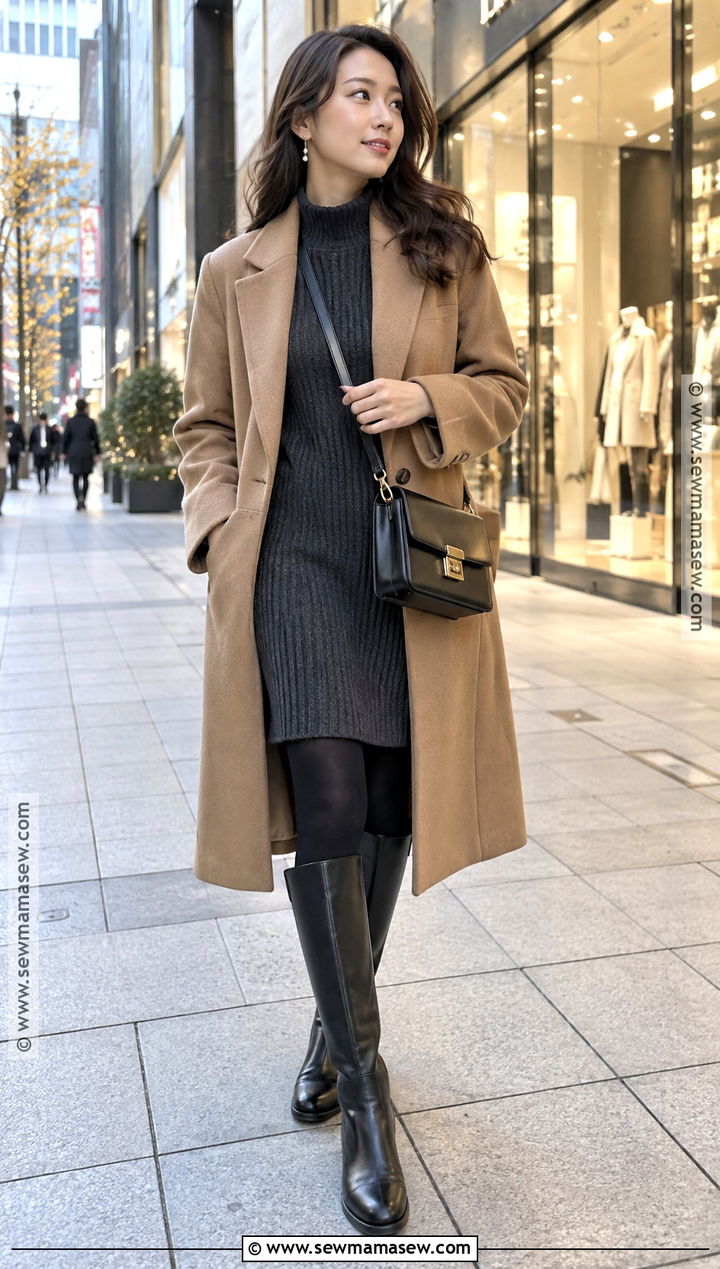
A sweater dress is the quickest way to look put-together with two pieces. Choose a ribbed midi in charcoal, navy, chocolate or deep burgundy that skims rather than clings, then check you can sit and climb stairs in it before packing. A tailored wool-blend coat in camel or soft gray goes over it, with opaque tights and flat knee-high boots. A structured crossbody and small earrings or a pendant finish it; the belt is optional. Ribbed knits stretch at the seat after a long train ride, so a wool blend with some synthetic recovers better than pure cotton. It suits a department store afternoon or a nicer dinner.
5. Japan Quilted Jacket And Wide Leg Pants Outfit
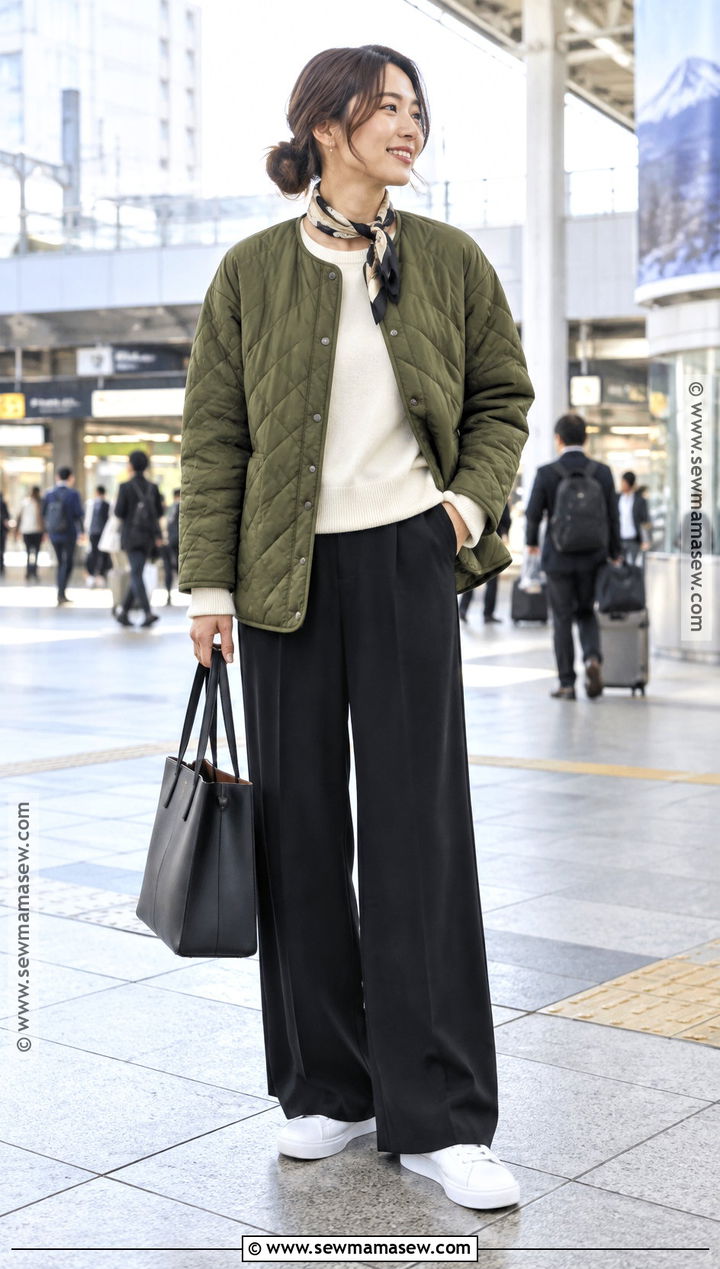
Quilted jackets give real warmth for very little weight, which matters when you change cities every few days. A hip-length one in olive, navy, black or taupe goes over a breathable crewneck sweater, with wrinkle-resistant wide-leg trousers to dress it up. Hem those trousers so they clear wet pavement and station stairs. Loafers with an insole suit light walking days; plain sneakers are better on long ones. A tote that zips closed and a printed neck scarf finish it. The jacket rolls into a corner of a bag, and the loose layers are comfortable for sitting on a train or wrangling a suitcase.
6. Japan Denim Jacket And Cargo Pants Outfit
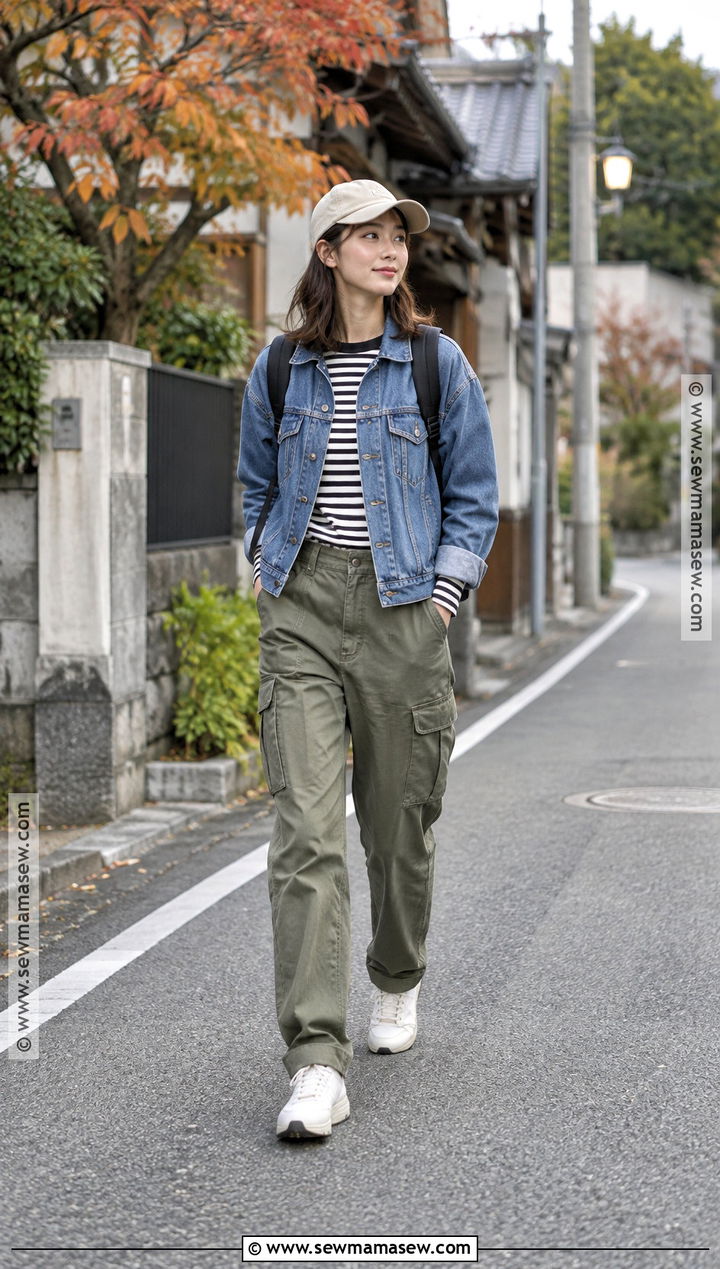
Early November still brings some mild afternoons, and a denim jacket is enough for those. A fitted long-sleeve T-shirt or thin striped knit underneath, a medium-wash jacket sized with room for a cardigan, and tailored cargo pants in olive, black or beige rather than baggy utility styles. Sleek sneakers and a small backpack suit parks and lookout decks. Denim gives almost no wind protection, so I always carry a scarf for when the sun drops. Repeating one color across top, shoes and bag pulls it together. It's an outfit for casual days, not for a smart restaurant.
7. Japan Blazer And Straight Leg Jeans Outfit
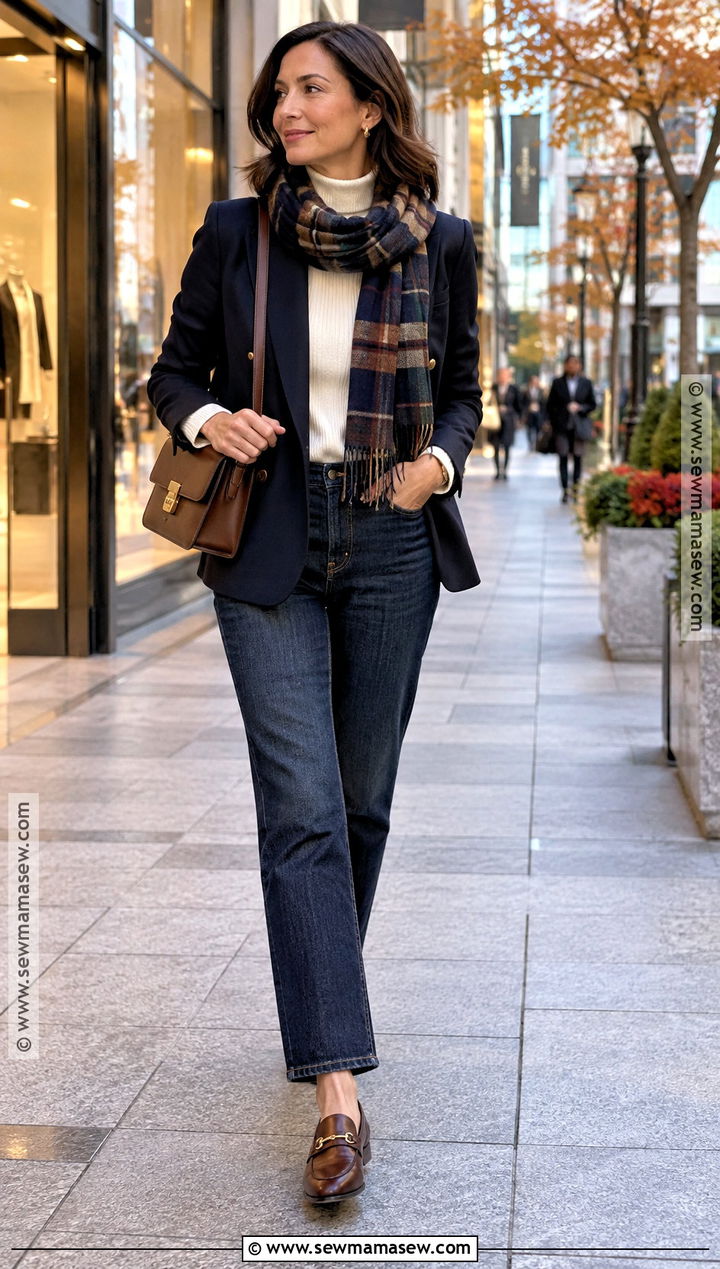
A relaxed blazer makes ordinary travel pieces look sharp. Navy, charcoal or a small check over a thin merino sweater or turtleneck, with dark indigo or black straight-leg jeans that aren't distressed. Loafers for a shopping day, cushioned sneakers if you're covering ground. I'd choose a soft-shouldered, unlined or half-lined blazer: rigid shoulders and heavy cloth get stuffy fast inside heated stores and trains. Roll the sleeves in the afternoon and add a big scarf after dark. It fits right in around Ginza and Marunouchi, where people tend to dress in quiet tailoring.
8. Japan Raincoat And Trousers Outfit
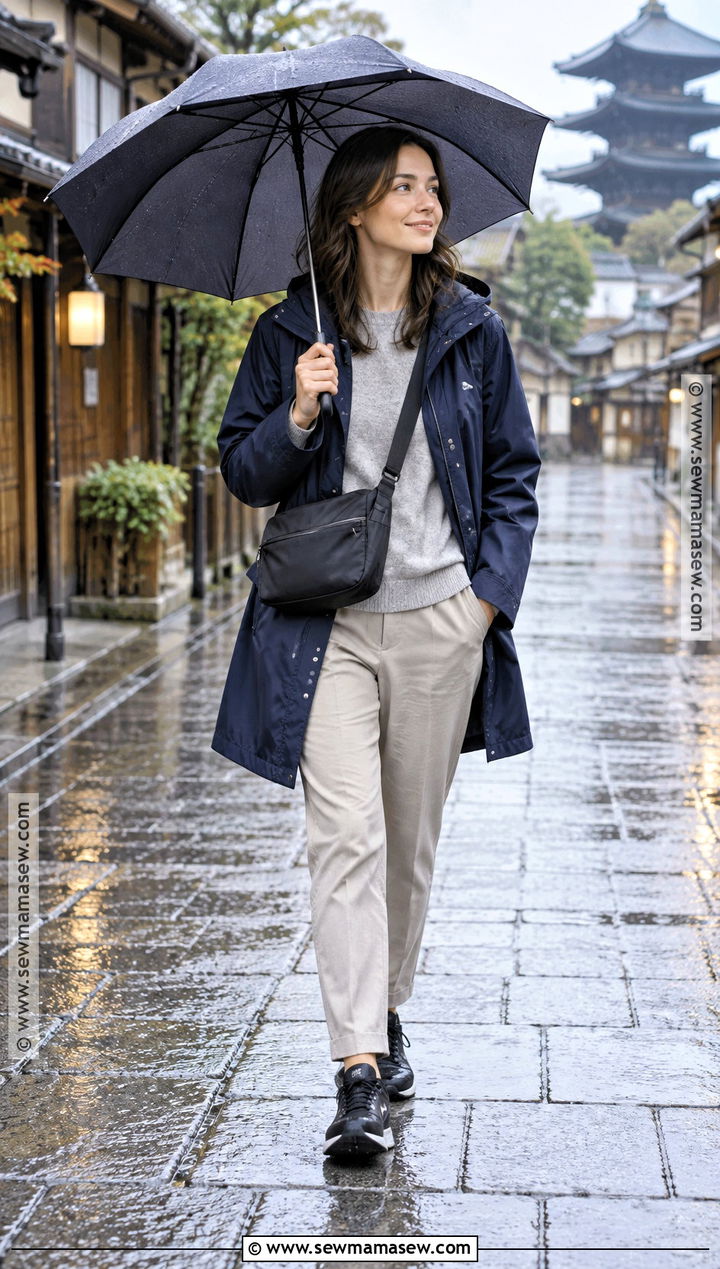
Rainy days call for function without looking like you're off on a hike. A hooded water-resistant raincoat goes over a fine-knit sweater and straight or tapered trousers in navy, khaki, black or stone, which all hide splashes. Wear waterproof sneakers or low boots with a slip-resistant sole; wet stone paths and station stairs are where people fall. Hem the trousers high enough that they don't wick water up. A zipped nylon crossbody protects your essentials, and a compact umbrella helps in crowds. Keep the base layer breathable, because a raincoat traps heat the moment you step indoors.
9. Japan Temple Outfit
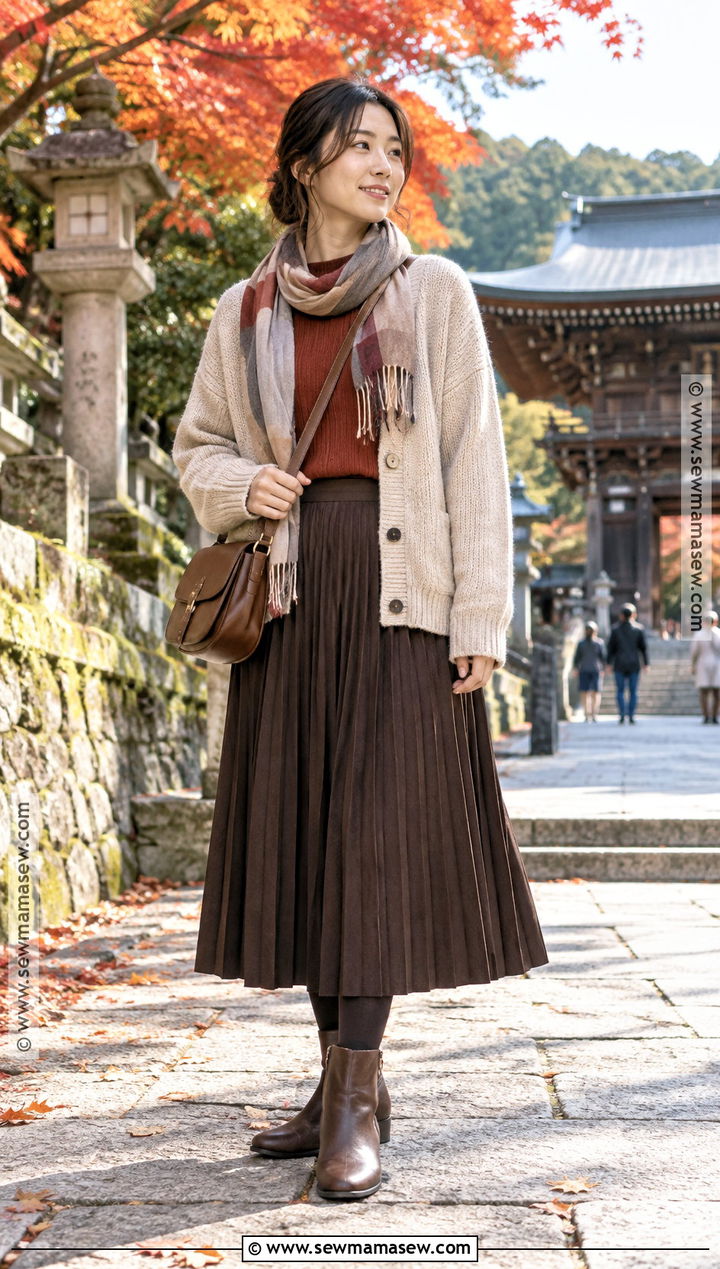
At temples you'll be walking, standing, and often taking your shoes off, so I dress for all three. A soft wool cardigan over a long-sleeve crewneck, with a pleated midi or relaxed ankle-length trousers that let you kneel or sit on the floor. Side-zip ankle boots or supportive slip-ons save time at the entrance, and socks need to be clean, matching and without thin heels, since they'll be on view. A medium crossbody is easier than a big tote on crowded paths. Rust, moss, oatmeal and brown suit the wood and the season. Skip tight skirts and boots with long laces.
10. Japan Autumn Foliage Outfit
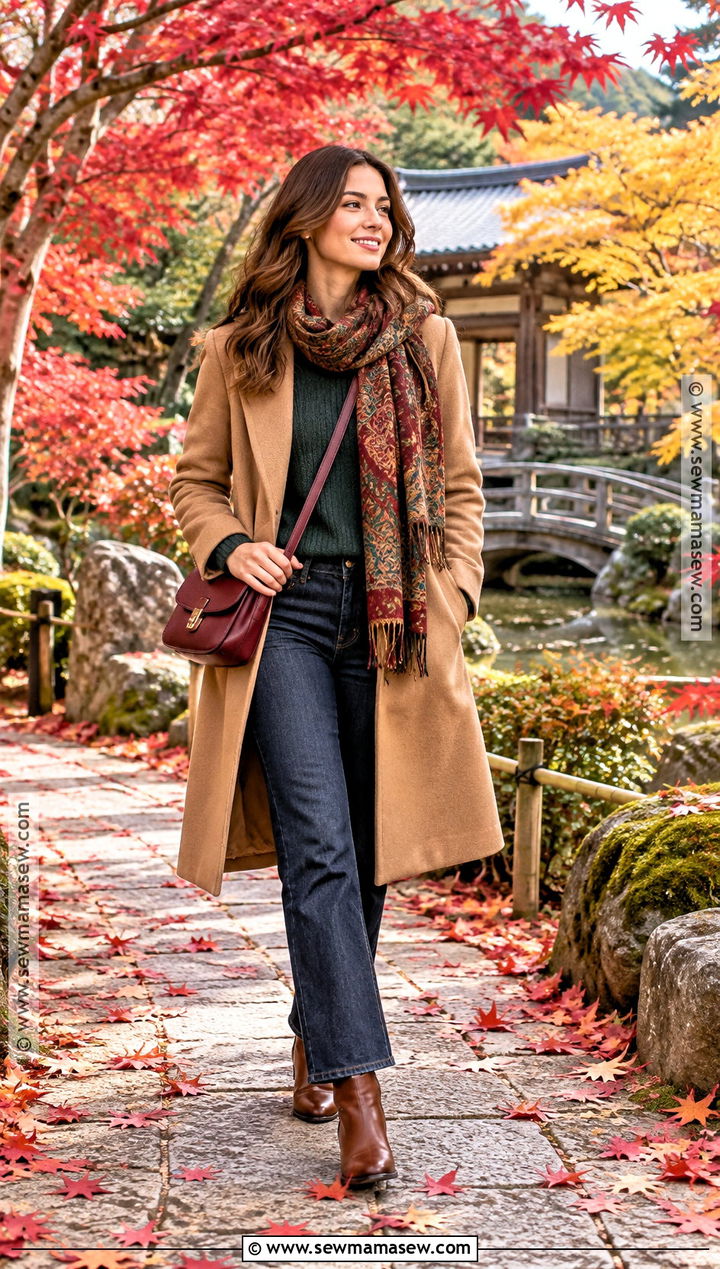
If foliage is the point of your trip, you can wear the season too. A rust, mustard or deep green sweater, dark straight-leg jeans and a knee-length camel wool-blend coat, with brown ankle boots and a burgundy or dark tan crossbody. Keep the shapes simple so the color does the work. One thing I warn people about: rust and mustard can disappear against red and orange leaves in photos, so the green sweater stands out better if you're shooting under maples. Put a thermal under the sweater for a cold start and open the coat as the day warms.
11. Japan Knit Dress And Cropped Jacket Outfit
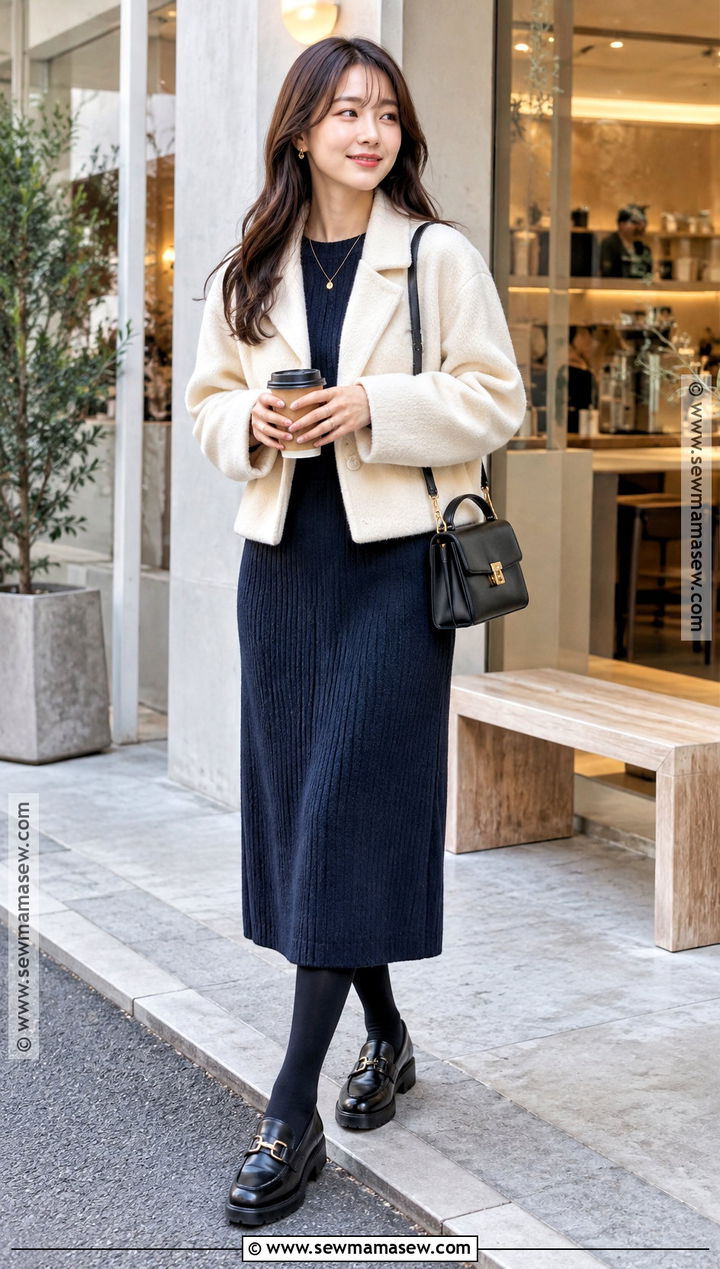
A cropped jacket over a knit dress fixes the proportion problem a long knit can create on its own. Choose a long-sleeve midi with a gently defined waist, then a cropped wool, suede-look or structured jacket that ends near the waistline. Black, navy, espresso and cream mix in any combination. Opaque tights with cushioned loafers or flat ankle boots, and a top-handle crossbody. I check the jacket sleeves with the dress on; if they're tight, the knit bunches at the elbow. A packable insulated vest slips under the jacket on a cold night, and the outfit takes you from galleries to dinner.
12. Japan Bomber Jacket And Maxi Skirt Outfit
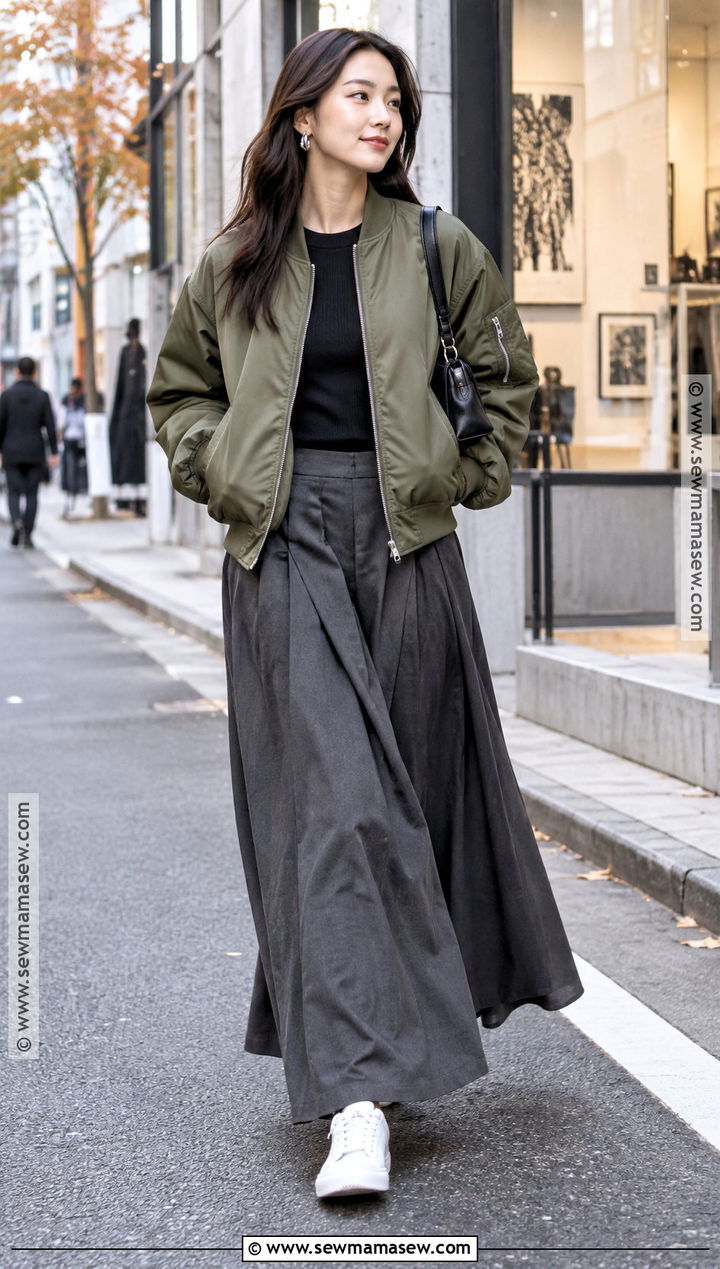
A bomber over a maxi skirt is an easy street-style mix for Harajuku, Shimokitazawa, Koenji or Osaka's shopping streets. Wear a fitted crewneck knit so the top half stays slim, and a black, olive, navy or chocolate bomber that's warmer than it looks. The skirt needs room for a long step; a modest side slit helps more than extra fabric. Keep the hem off the ground so it doesn't catch on escalators or soak up puddles. Low-profile sneakers suit a day of browsing vintage shops, and a compact shoulder bag with small silver jewelry finishes it.
13. Japan Train Travel Outfit
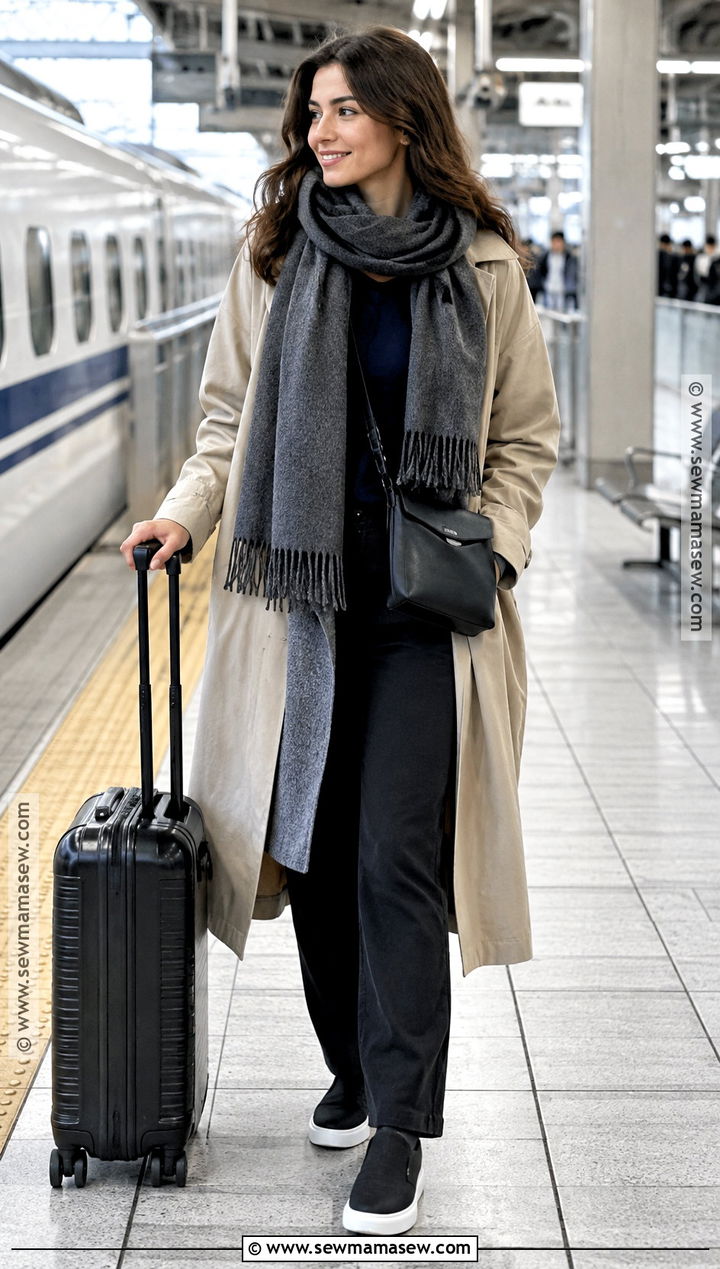
Train days mean sitting for hours, lifting luggage and moving between cold platforms and warm carriages. I dress for that with a breathable long-sleeve top under an open cardigan and wrinkle-resistant knit trousers with a straight or slightly wide leg. Slip-on sneakers make life easier when you're lifting bags and getting on and off quickly. Add a light trench or packable jacket for the forecast, and keep tickets, phone and passport in a crossbody, not in the case on the rack. A large scarf doubles as a blanket on an overcooled train. Neutral pieces mean everything gets worn again later.
14. Japan Puffer Vest And Sweatshirt Outfit
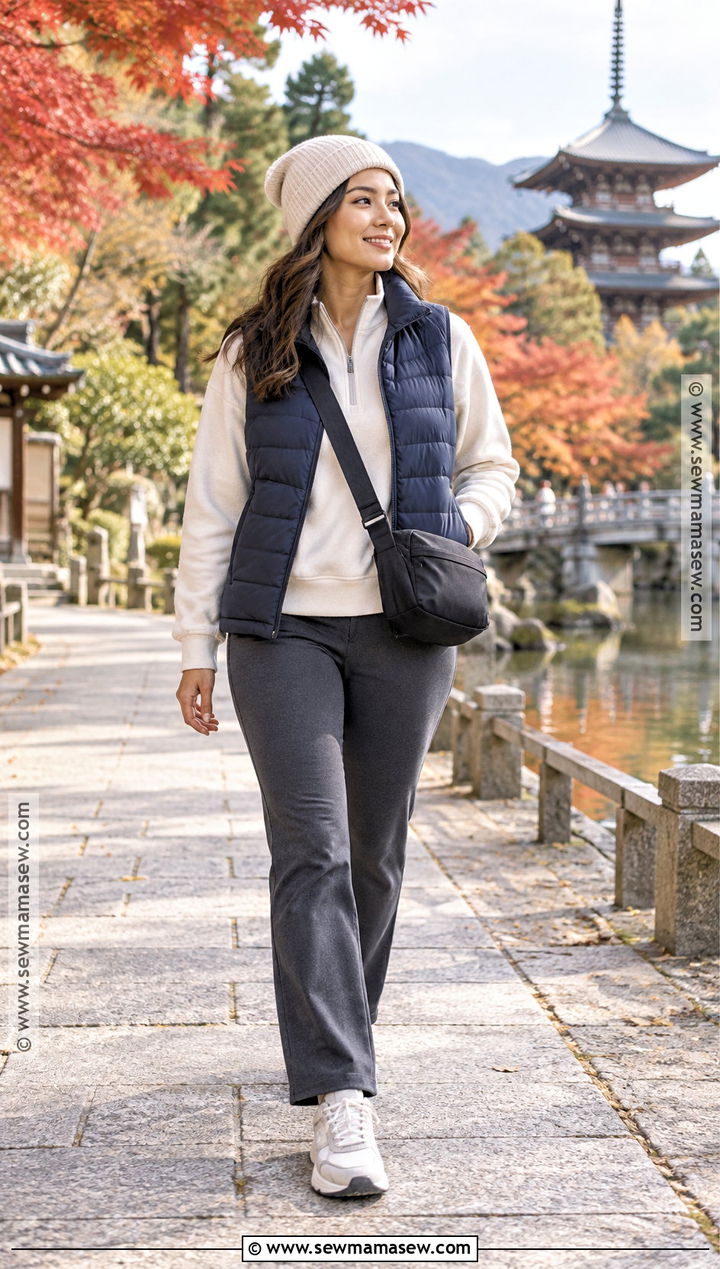
A puffer vest warms your core while leaving your arms free, which is handy for active day trips. A slim one over a structured sweatshirt or half-zip knit in cream, gray, navy or burgundy, with ponte pants or tailored joggers. Ponte holds its shape far better than jersey, which is why it reads polished rather than gym-ready. Cushioned walking sneakers, a crossbody and a soft beanie for cold mornings finish it. Pick a thin vest that fits under a raincoat if needed, and a sweatshirt with little or no branding. Keep the colors related so you can go straight to a café afterward.
15. Hakone Packable Down Jacket Outfit
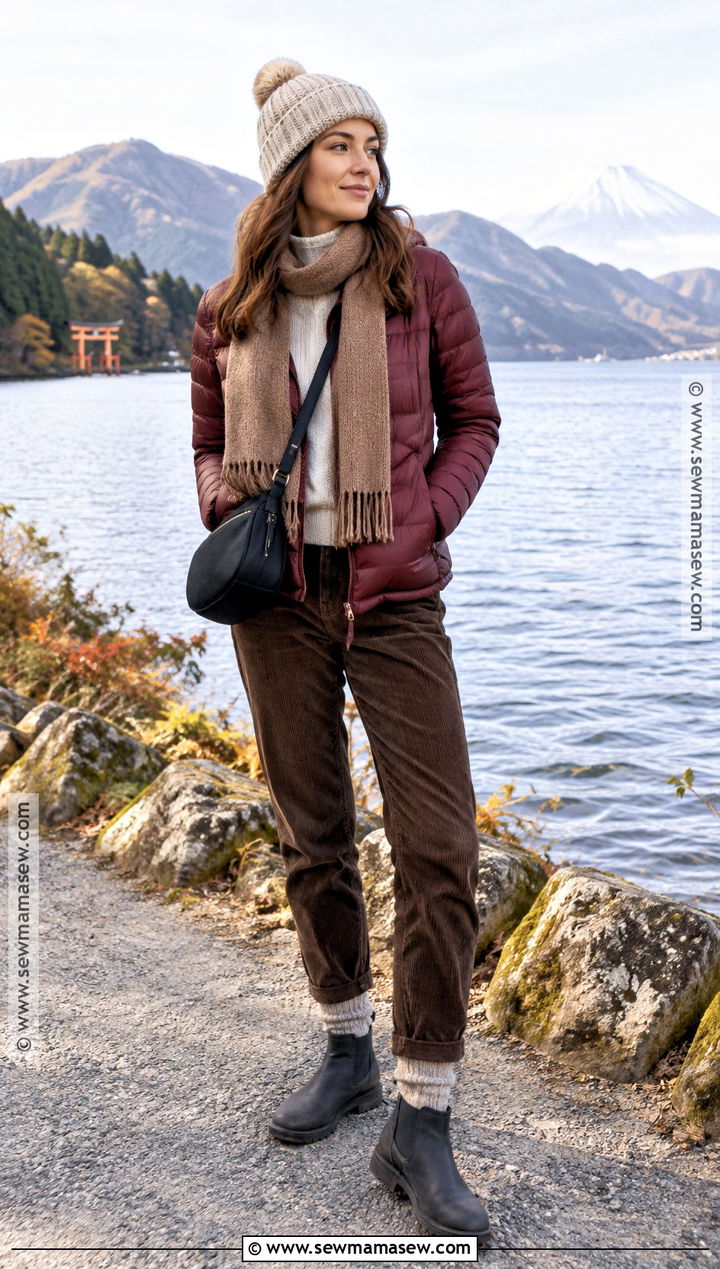
Hakone and other lake and mountain areas run colder than the cities, particularly early and late in the day, so a packable down jacket is worth the space. Layer it over a merino sweater and a thin thermal top so you can strip down in museums and heated buildings. Corduroy or brushed cotton pants hold warmth better than light trousers. Waterproof ankle boots and wool-blend socks handle damp paths, and a scarf and knitted beanie cover the rest. A down jacket with some shaping at the waist looks far less puffy in photos. Down loses its loft when soaked, so keep a shell handy if rain is forecast.
16. Hokkaido Down Coat Outfit
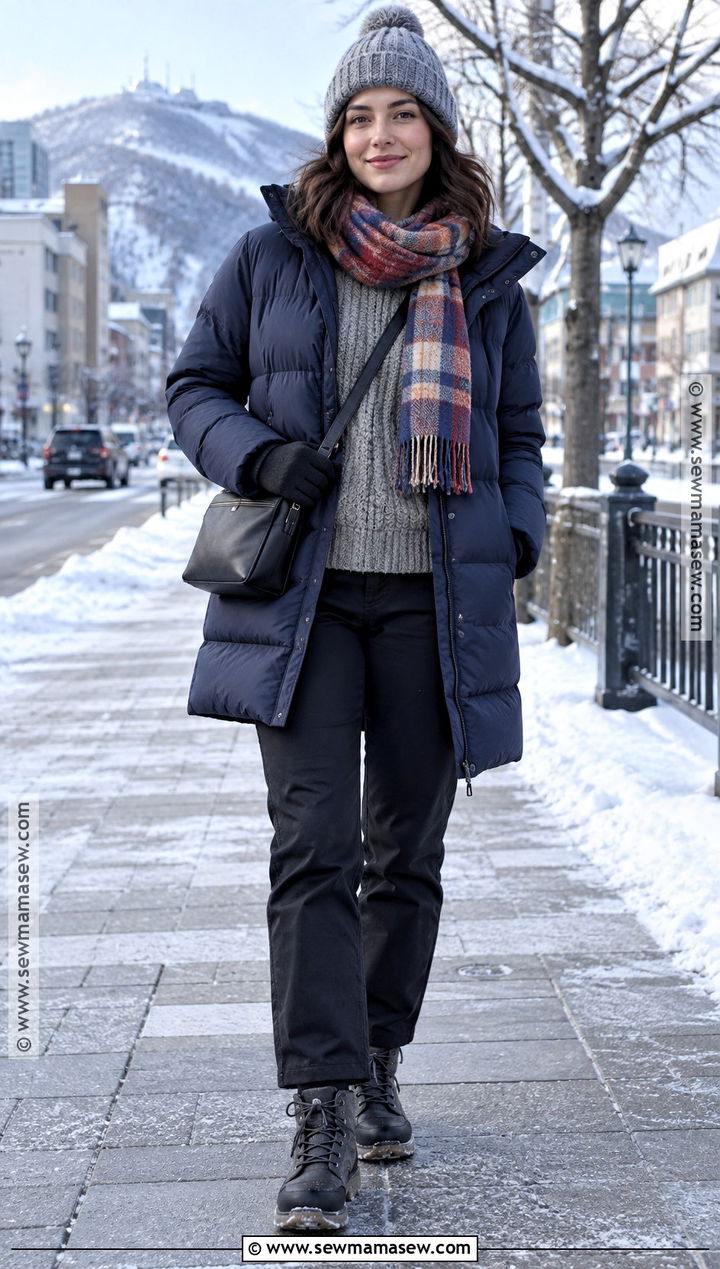
Hokkaido in November needs a different packing list from Tokyo, Kyoto or Osaka, and depending on where and when you go, there may already be snow. Start with a moisture-wicking thermal top and a substantial merino or wool-blend sweater, then insulated or lined straight-leg pants that still let you move. A knee-length down coat covers the hips and thighs, which a short city jacket can't. Weather-resistant boots with a grippy sole matter most, since icy pavement is the real hazard; break them in at home first. Add warm socks, gloves and a knitted hat, and wear the crossbody under the coat. Dark neutrals with one colorful scarf keep it tidy.
17. Okinawa Lightweight Jacket Outfit
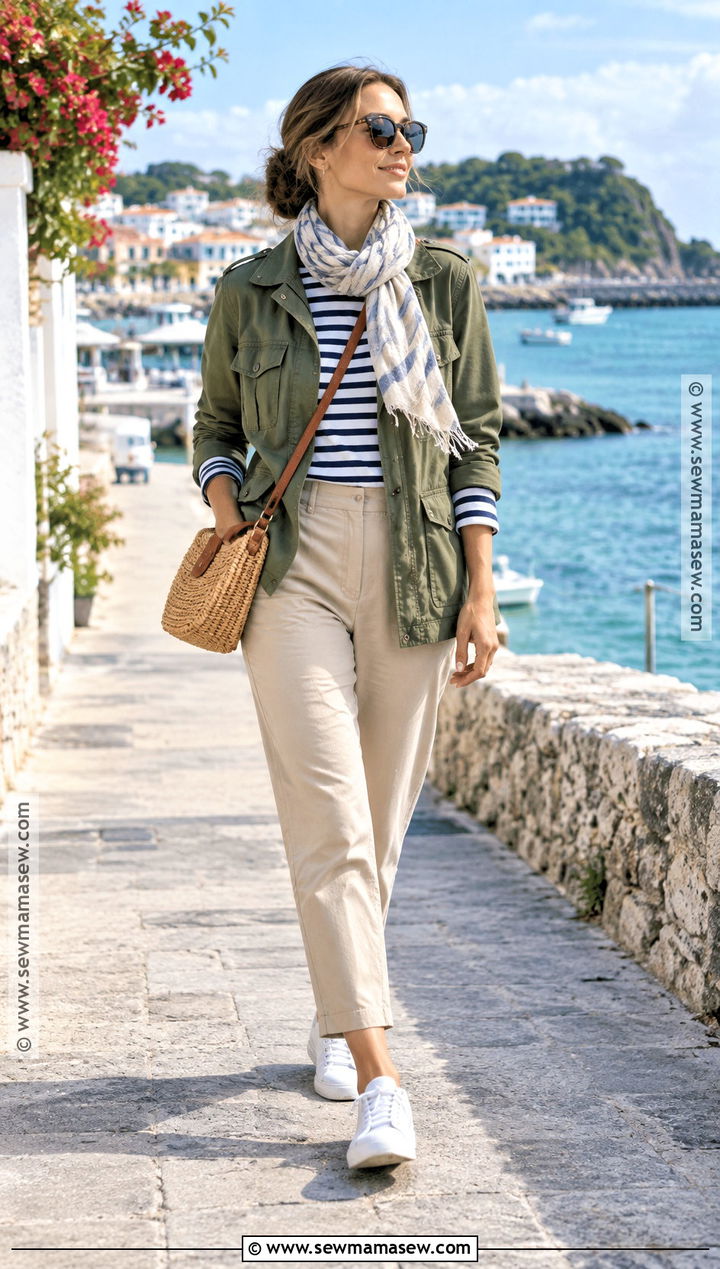
Okinawa stays warm through November, so winter clothes can stay home. A striped long-sleeve top and lightweight ankle-length trousers in navy, beige or olive make the base, and a cotton utility jacket, unlined blazer or light windbreaker handles the sea breeze and the evenings. White sneakers work around town; closed-toe walking sandals suit the warmest days. A woven crossbody, sunglasses and a light scarf for after sunset finish it. Breathable cotton and linen blends feel better than wool here. Pack a compact rain jacket for showers, and you're set for museums, castle sites and walks by the water.
18. Japan Monochrome Black Outfit
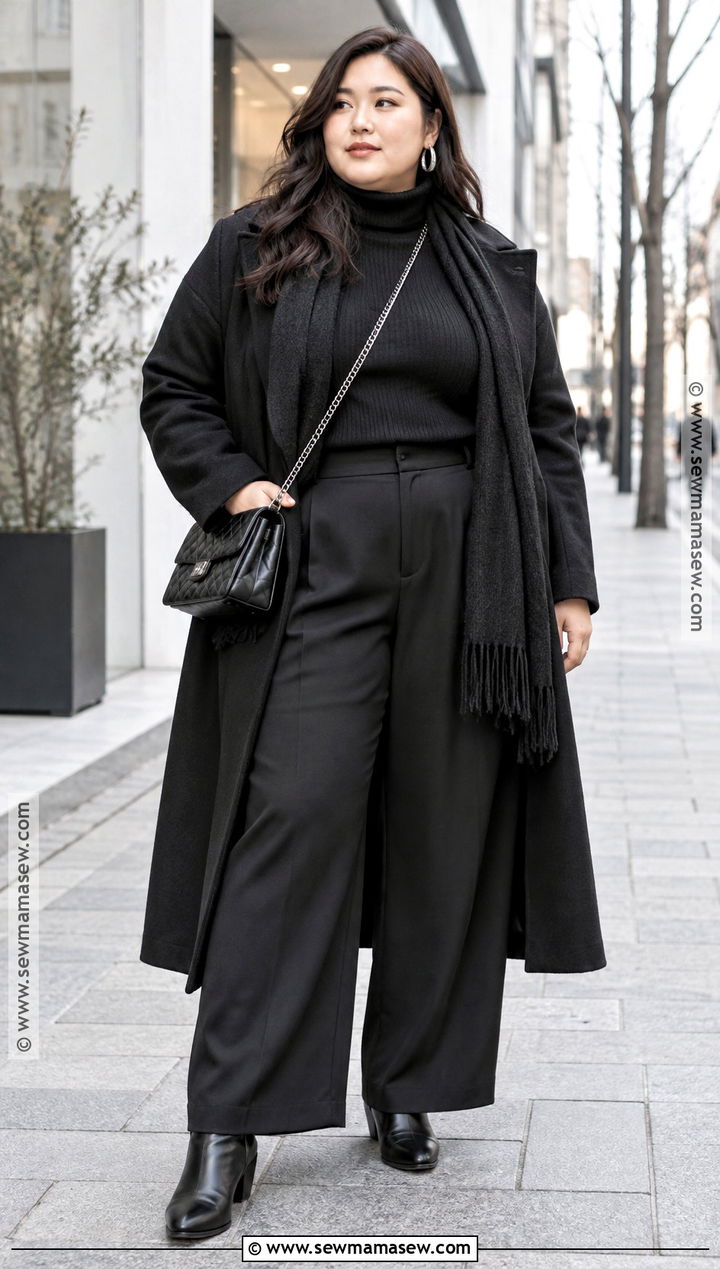
All black is practical for travel and looks naturally sharp on busy city streets. A black fine-knit turtleneck, wide-leg trousers in a fluid wrinkle-resistant fabric, and a black wool coat or water-resistant trench depending on the day. Black leather sneakers or ankle boots keep the line unbroken. To stop it looking flat, mix textures: a ribbed knit, smooth trousers, a quilted bag, a soft scarf. Silver earrings or a watch add a small highlight. Dark wool shows every bit of lint, so I pack a mini lint roller and use it before heading out. Each piece also mixes with lighter neutrals on other days.
19. Japan Neutral Capsule Outfit
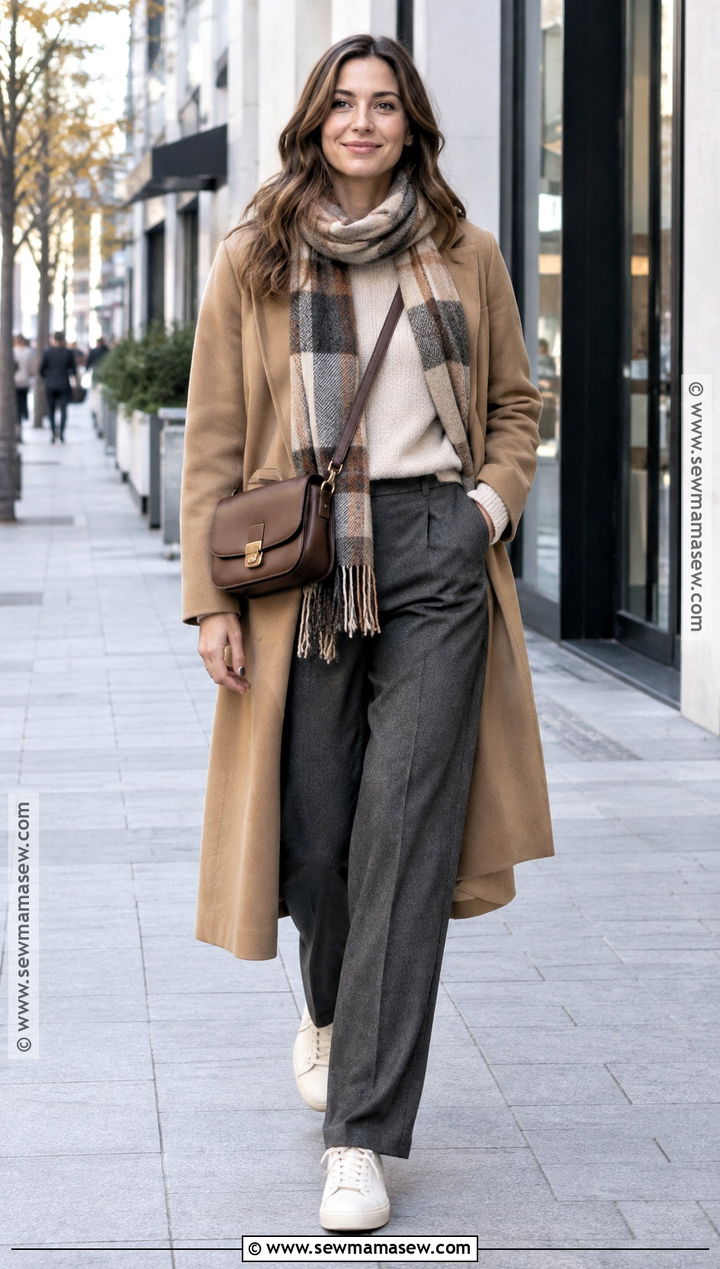
This is the outfit I'd build a November capsule around. An oatmeal crewneck sweater, taupe or charcoal straight-leg trousers, a camel, navy or gray coat and cream leather sneakers. A medium brown crossbody adds gentle contrast, and a plaid scarf that contains several of your capsule colors ties the whole suitcase together. Every piece here works with most of the others, which is the point. On longer trips, choose washable or odor-resistant fabrics such as merino, which can be aired out and worn again. When it gets colder, a thermal base layer slips underneath without changing anything you can see.
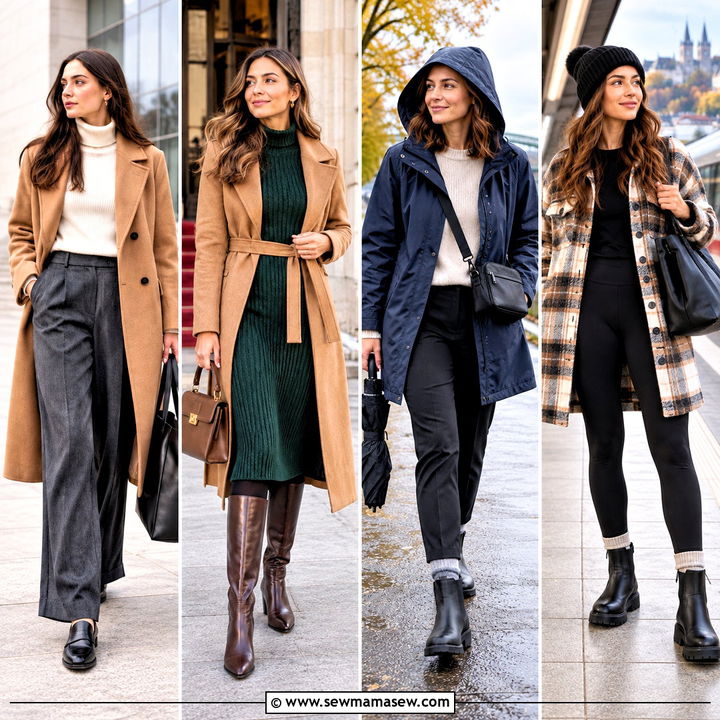
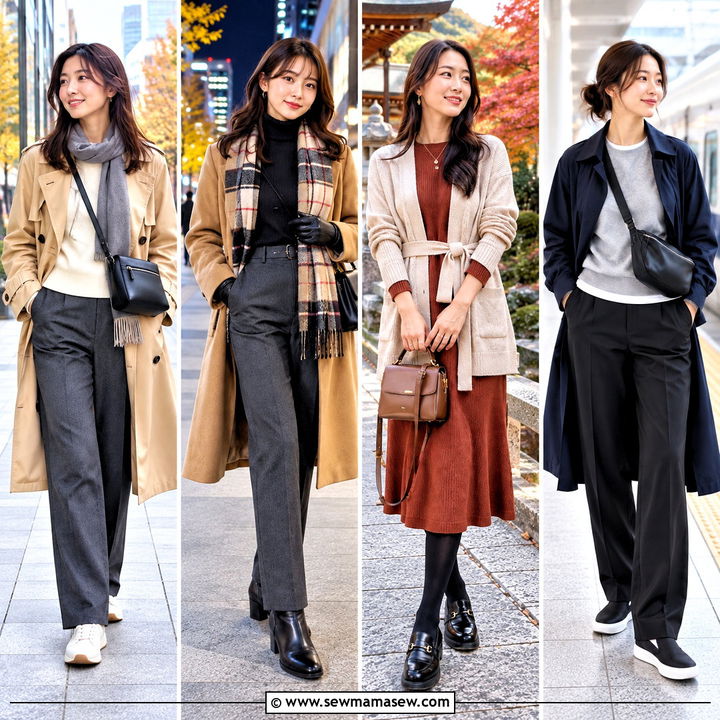
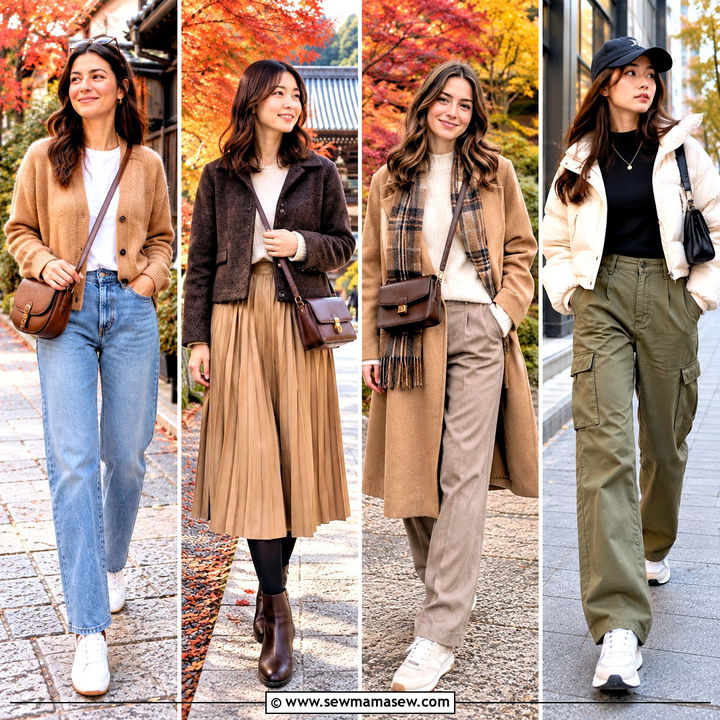
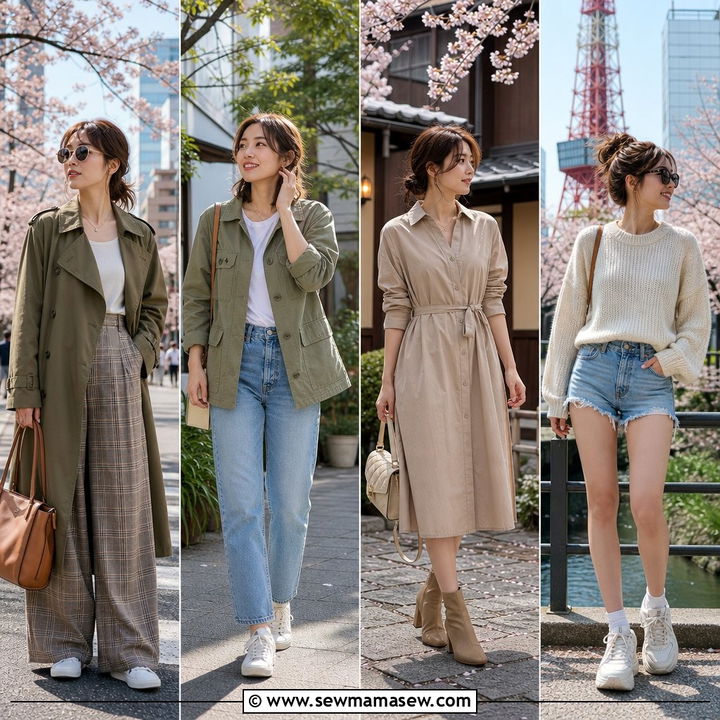
20. Japan Late November Wool Coat Outfit
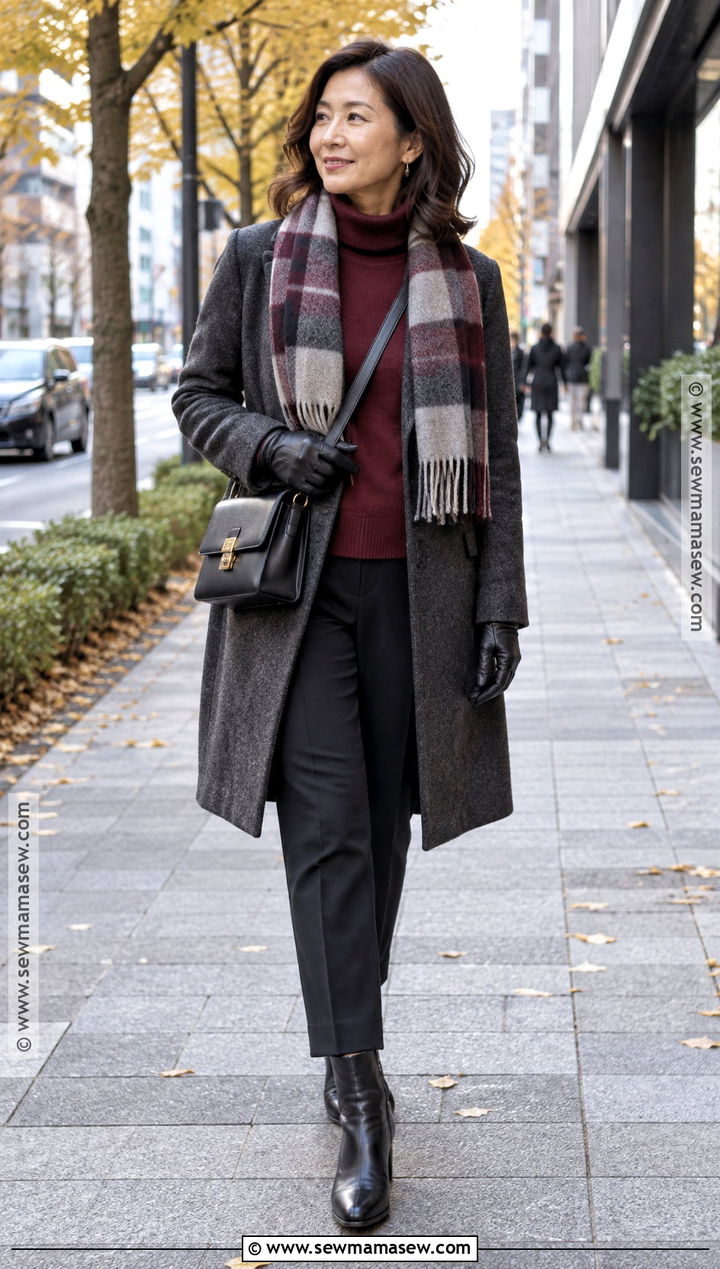
By the end of November, a medium-weight coat earns its place in Tokyo, Kyoto and Osaka, especially early and late in the day. A knee-length wool-blend coat goes over a fitted thermal and a warm turtleneck, with full-length tailored trousers or dark jeans, which block wind far better than thin fabrics. Leather ankle boots with cushioned, slip-resistant soles, a large scarf, thin gloves and a structured crossbody complete it. Buy the coat with room for those layers; if the shoulders feel tight over a sweater in the fitting room, it will feel worse by the afternoon. Several thin layers beat one very heavy sweater on heated trains.
Thermal Layers That Stay Hidden
Several outfits here rely on a thin base layer under the visible clothes, and a good one keeps you comfortable all day. The base layer should sit close to the skin and be thin enough that a fitted turtleneck or knit dress still lies flat over it.
- Merino wool stays warm when damp and resists odor, so you can wear it two or three days between washes.
- Synthetic heat-retaining layers are cheaper and dry quickly overnight in a hotel room, but can smell sooner.
- Cotton holds sweat and turns cold once you stop walking. I leave it out of the base layer entirely.
- Pick a scoop or crew neck that won't peek above a sweater, and sleeves that end before your wrist.
Remember that you'll be inside a lot: trains, shops, restaurants and museums are often warm. A base layer plus one removable layer is easier to manage than two thick sweaters, and it keeps the outer outfit looking the same in every photo.
Down Coats Need More Care Than City Wool
For Hakone and Hokkaido I put people in down, but it behaves differently from the wool coats in the city looks. Down is very warm for its weight and packs small, yet it flattens and loses warmth when it gets wet. A shell with a water-repellent finish helps in light snow and drizzle. Don't leave a down coat compressed in its pouch for days; take it out at each hotel and let it recover its loft. Shake it out after a long train ride and it will warm you properly again.
From Sapporo Snow to Okinawa Sun, Pack by Region
November in Japan is easiest to dress for when every outfit starts with layers you can remove, shoes you trust and colors that work together. These looks cover city days, train journeys, temples, rain, foliage walks and very different climates. Wear the lighter jackets on mild early-month afternoons, and add thermals, scarves, wool coats or packable down as temperatures fall. Check the forecast for each stop a few days before you leave, particularly if you are moving between Okinawa, the main cities, the mountains and Hokkaido. Wear-test your shoes and clothes before the trip. Comfort is what you'll notice on day five.
Related posts: