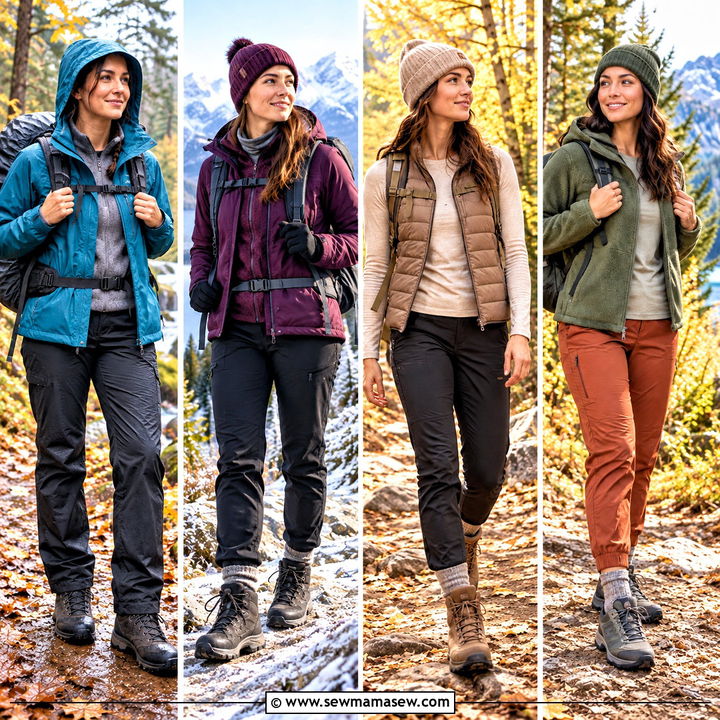
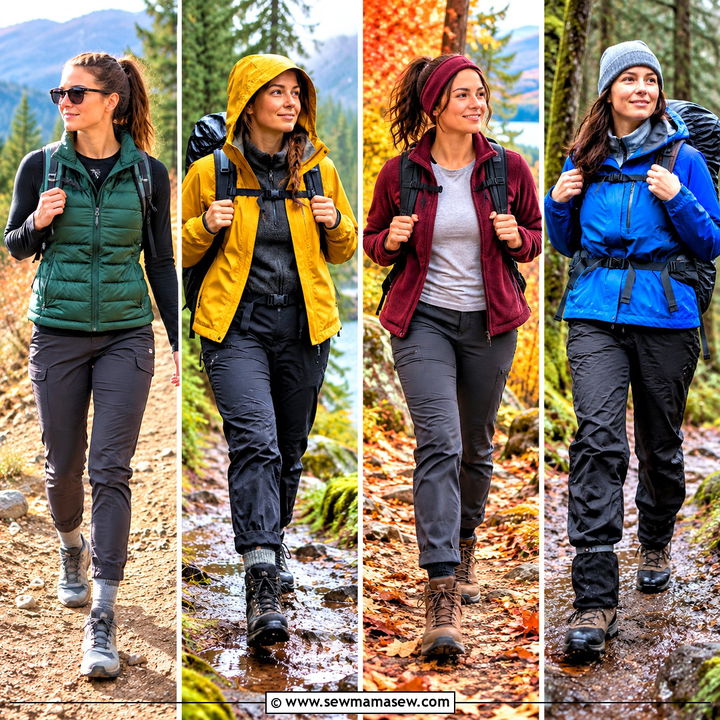
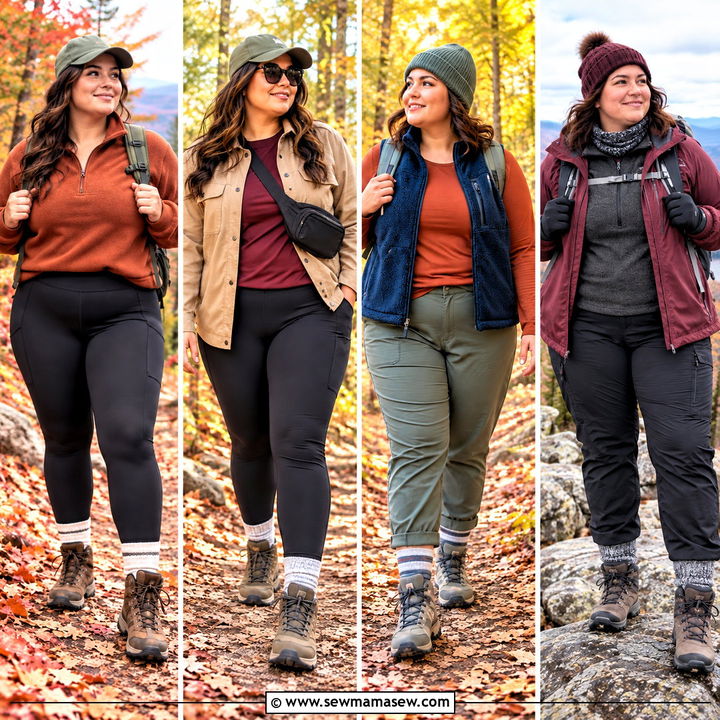
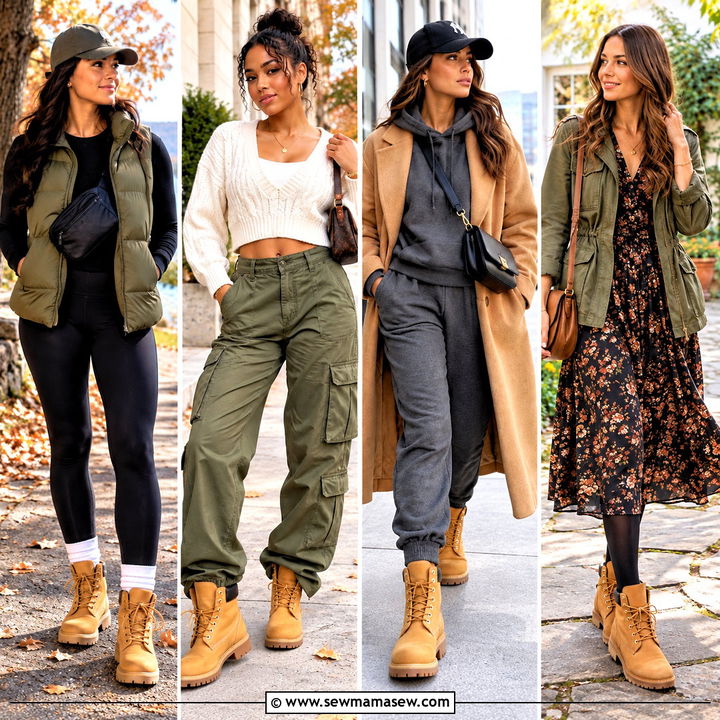
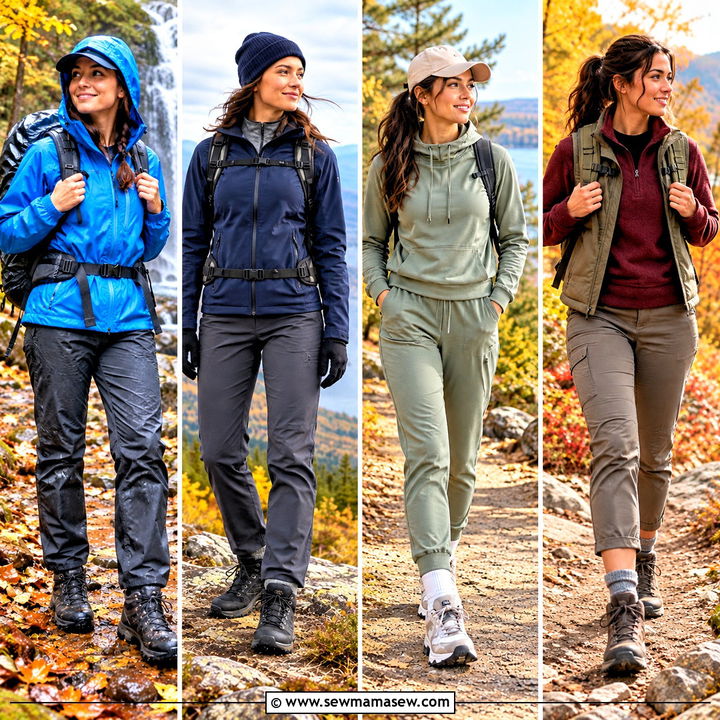
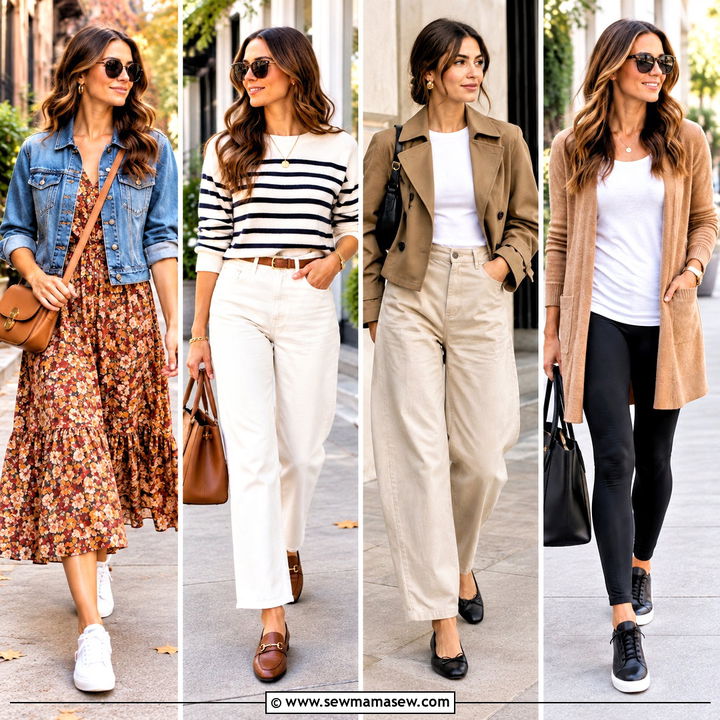
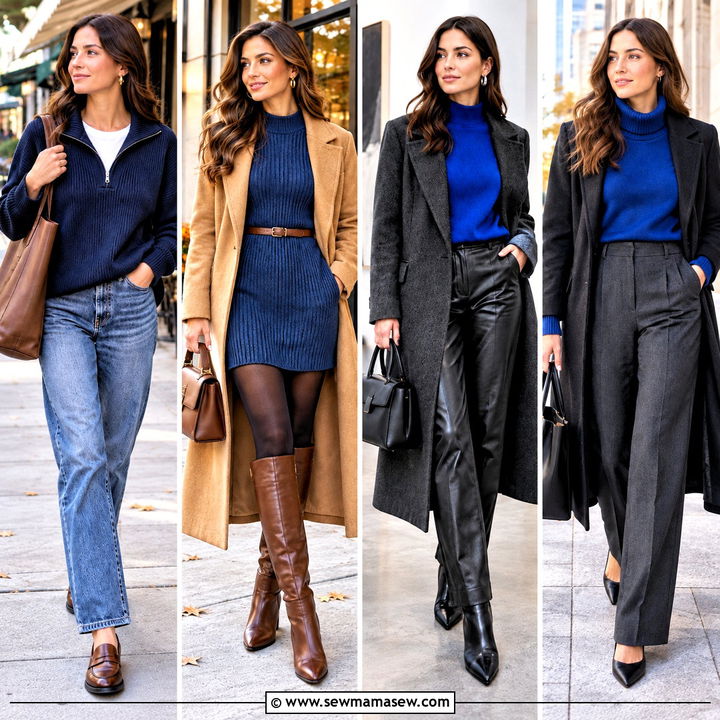
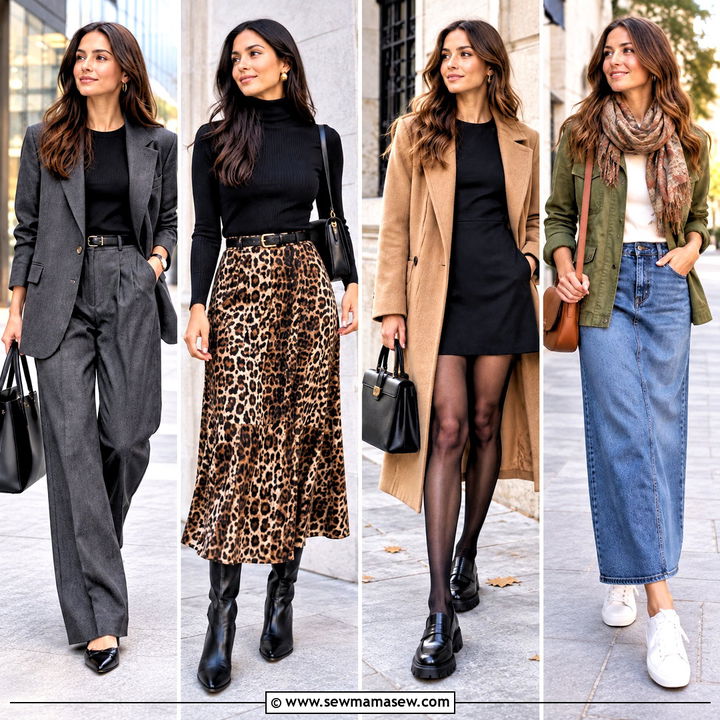
An autumn hike can start near freezing in a shaded parking lot and end in full sun on a ridge, so the outfit has to change as you go. That is why every look below is built from layers you can peel off on a climb and pull back on at a windy stop. When I put together a trail outfit, the fabric list matters more than the color list: wool, fleece and quick-drying synthetics close to the body, packable outerwear on top, and boots chosen for the ground rather than the photo. I've grouped mild woodland walks, damp paths and colder mountain days together, with notes on fit for shorter, taller and curvier hikers along the way.
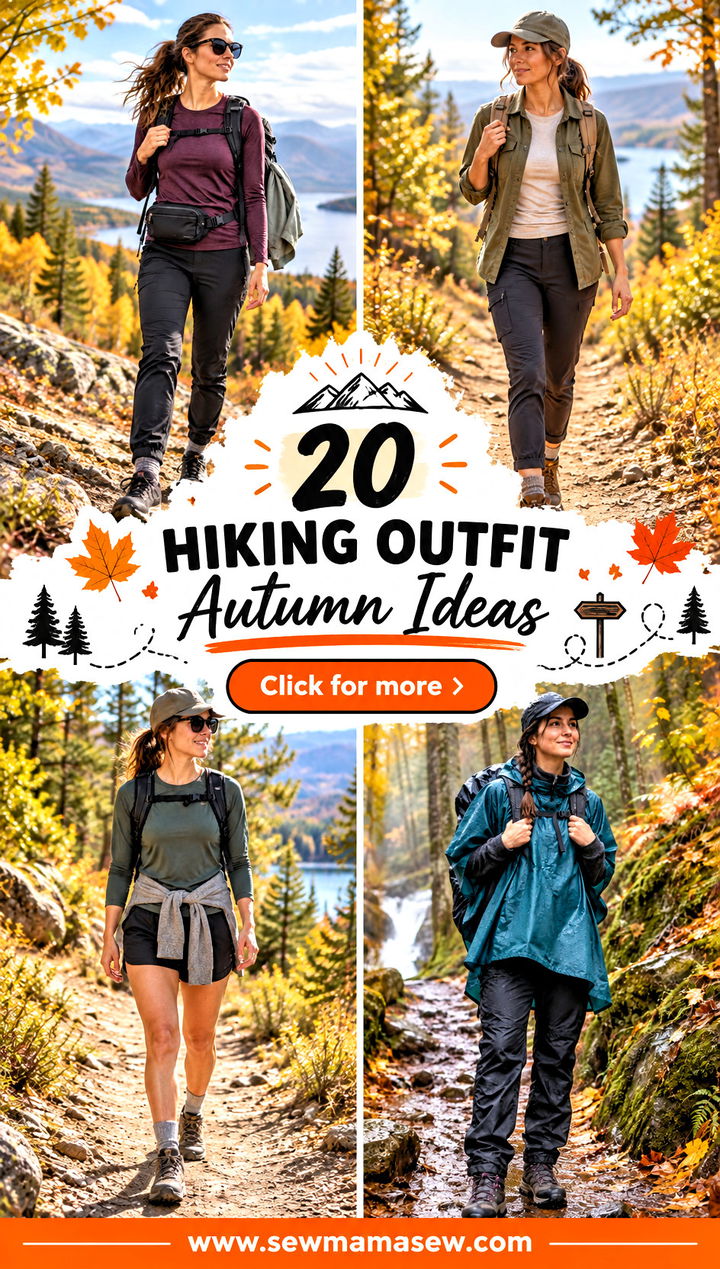
Starting Cold at the Trailhead on Purpose
The most common mistake I see on fall hikes is setting off fully bundled. Ten minutes into the first climb you're sweating into your base layer, and that damp fabric is what makes you shiver at the next windy stop. Hikers have a simple rule for this: if you feel slightly chilly standing at the car, you're dressed right for walking.
I think of every outfit below in three jobs, and I check that each job has its own piece:
- Next to skin: merino or a synthetic tee that moves sweat away. Cotton is fine for a stroll, poor for a climb.
- Warmth: fleece, a puffer or a vest, something you can take off in under a minute without removing your pack.
- Weather: a windbreaker, softshell or rain shell, worn or packed depending on the forecast.
Take the warm layer off before you start to sweat, not after. Put it back on the moment you stop for a snack, before you feel cold. That habit matters more than any single garment, and it's why I lean toward zips and packable pieces throughout this list.
1. Fleece And Leggings Hiking Outfit
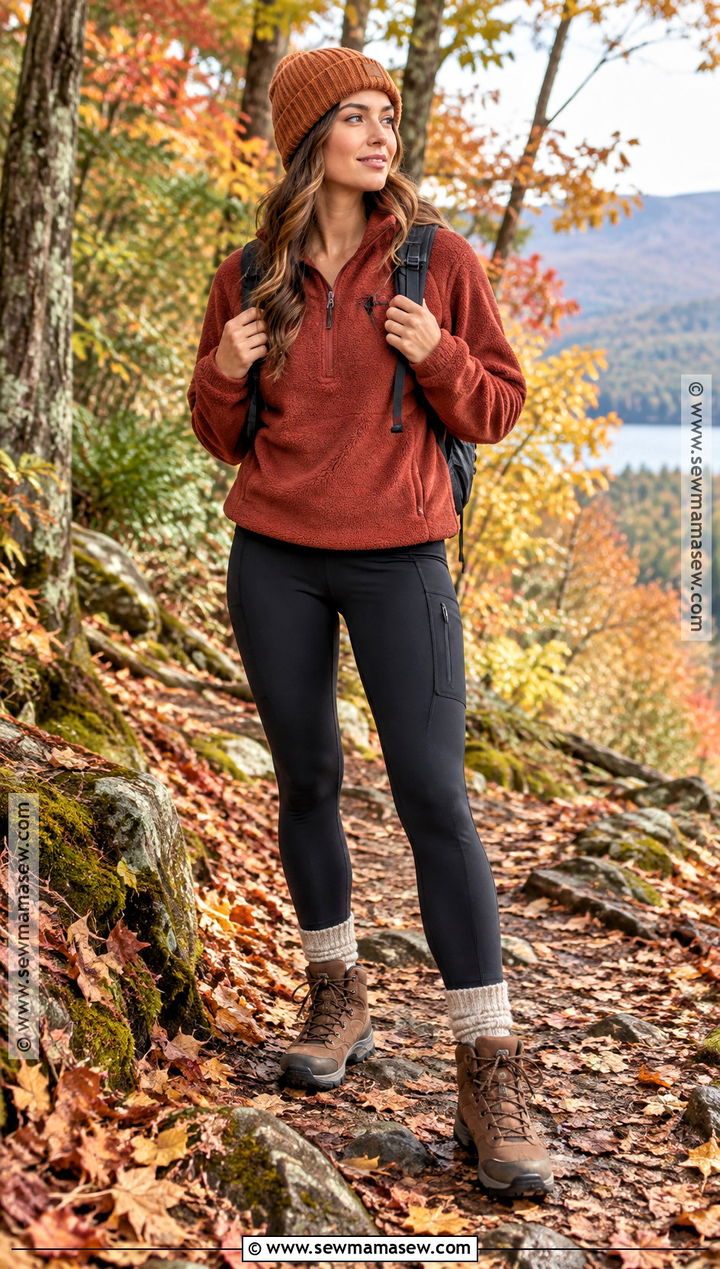
This is the pairing I suggest most often for a first cool-weather hike. A thin long-sleeve top goes on first, then a half-zip fleece in rust, olive or cream, and the zip is what makes it work: you open it on the uphill and close it at the top instead of stopping to strip a layer. Pick proper hiking leggings with a thick, opaque knit and zip pockets; studio leggings snag on brambles and go see-through when you bend. Brown waterproof boots, cushioned socks, a small pack and a light beanie finish it. On a cold start I tuck a packable vest in the bag. Hip-length fleece suits petite frames, while a longer cut gives taller or curvier hikers more coverage under a pack belt.
2. Flannel And Hiking Pants Outfit
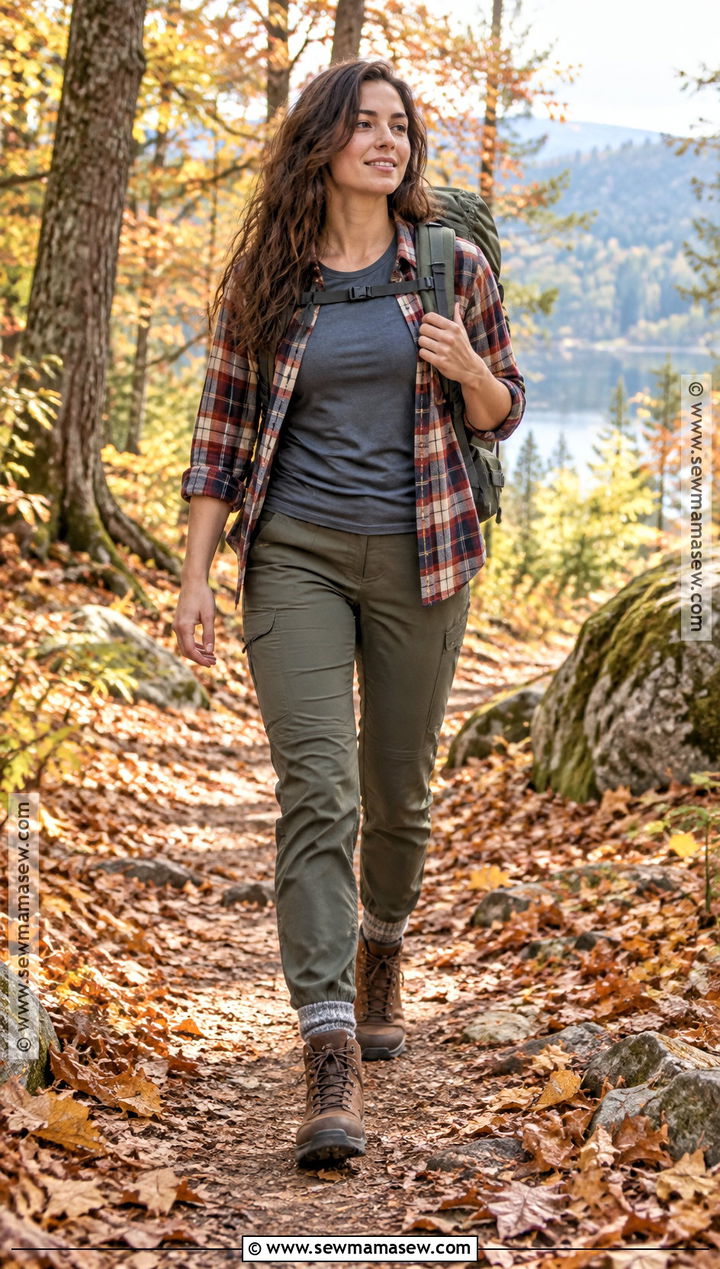
Plaid flannel over hiking pants is the classic fall trail picture, and it's fine as long as you remember flannel is cotton. Once you sweat into it, it stays damp and cold. So I put a fitted synthetic or merino tee underneath and treat the flannel as an overshirt that comes off on the steep part. Black, olive or tan pants in a straight or tapered leg give you pockets and room to step up onto rocks. Leather or synthetic boots, wool-blend socks and a structured daypack round it out, with a rain shell packed because the flannel won't stop a shower. I keep this one for dry, easy trails and walks that end at a café.
3. Puffer Vest And Trail Leggings Outfit
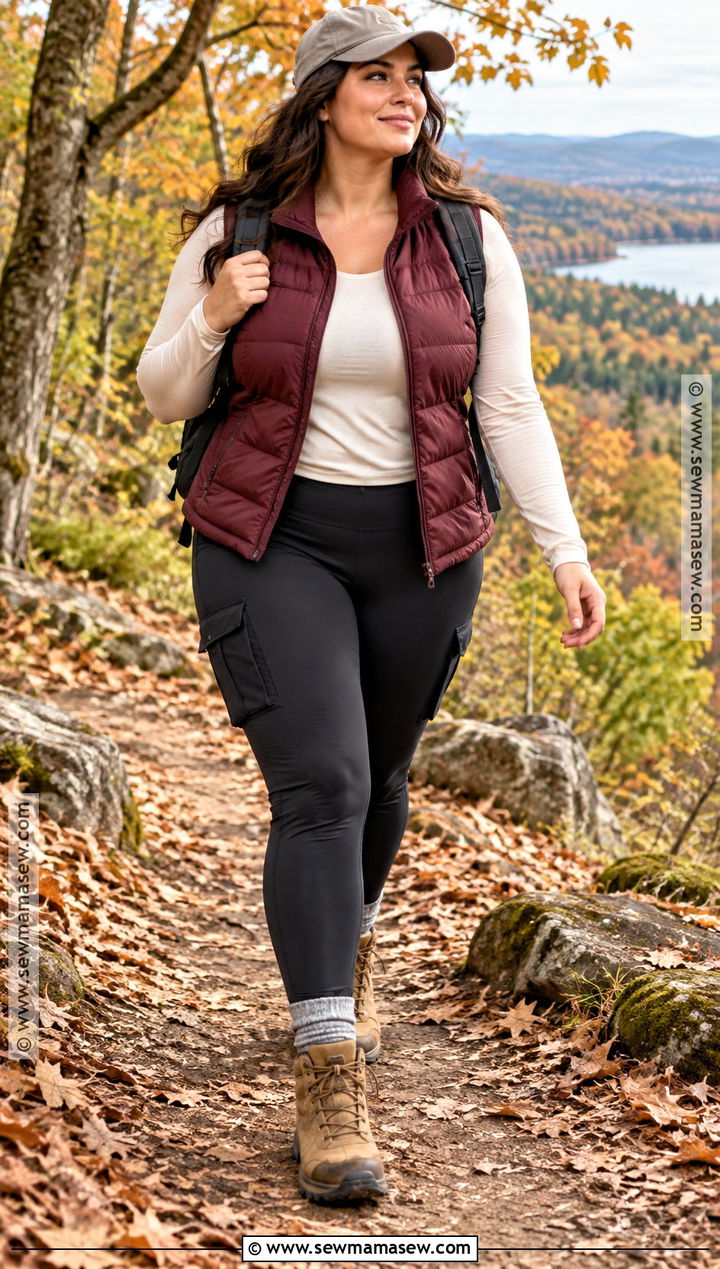
A puffer vest keeps your core warm while leaving your arms free, which is exactly what you want when you're swinging poles or scrambling. Wear olive, burgundy or navy over a fitted long-sleeve top, with black trail leggings that have side pockets or reinforced panels. Mid-height boots steady the ankle on roots, and patterned socks are a nice small bit of color. The thing that usually goes wrong is the vest length under a backpack: a long vest bunches under the hip belt, so I'd pick the shorter cut if you carry a loaded pack. Thin gloves in an outer pocket sort out the cold first mile.
4. Rain Jacket And Hiking Pants Outfit
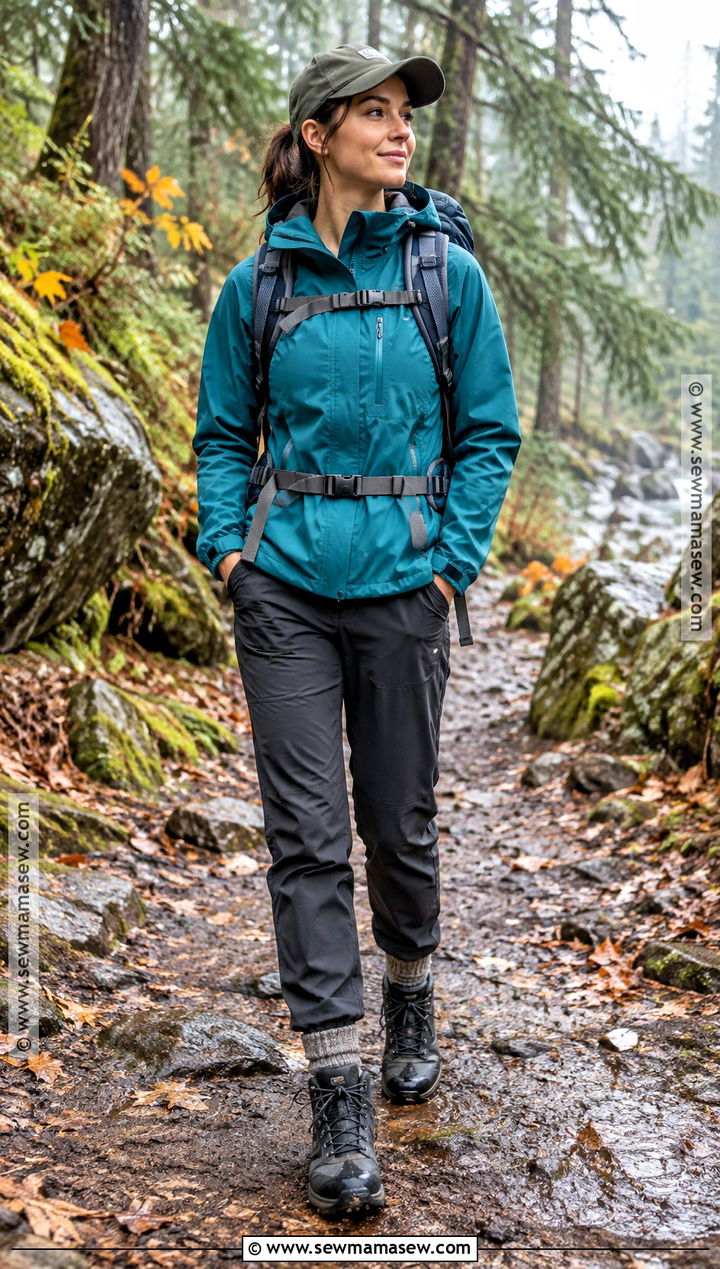
On a grey, wet day I build the whole outfit backward from the jacket. A hooded rain shell in teal, red, mustard or forest green goes over a breathable base, and I check two things before anything else: that the hood has a stiff brim or an adjuster so it turns with your head, and that the pit zips open. Hiking pants should have enough room for thin thermals underneath. Waterproof boots with deep lugs, wool-blend socks and a water-resistant pack handle the mud. Keep pant hems cuffed or cinched so they don't wick water up from wet ferns. A cap under the hood keeps drizzle off your glasses or face.
5. Merino Top And Softshell Pants Outfit
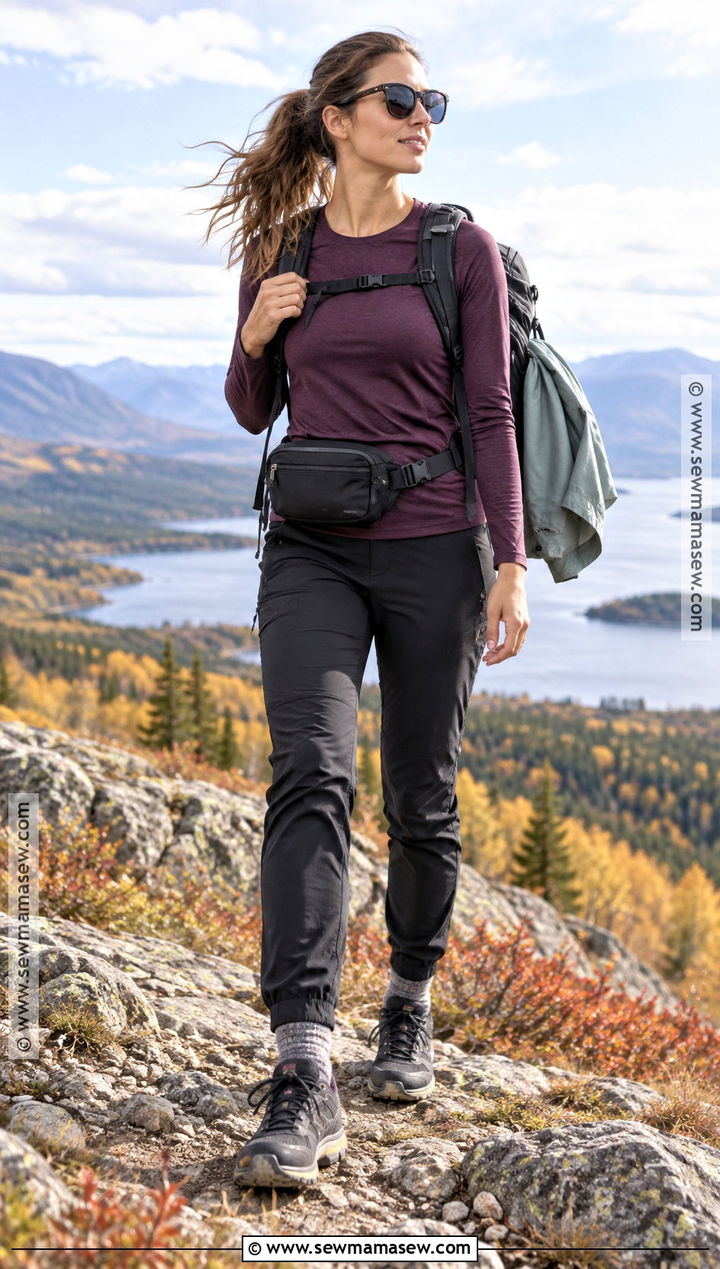
Merino is my first choice for a base layer on a fast hike because it stays warm when damp and doesn't hold odor the way polyester does. A crewneck in charcoal, plum, deep green or warm beige pairs neatly with softshell pants, which stretch through the knee and block a fair amount of wind without the crinkle of a rain pant. One honest caveat: thin merino wears through at the shoulders where pack straps rub, so a blend with nylon lasts longer. Low hiking shoes are fine on graded paths; switch to ankle boots on rocky ground. A belt bag, sunglasses and a shell in the pack cover a breezy overlook, and a thin zip fleece can be tied at the waist later.
6. Quilted Jacket And Cargo Pants Hiking Outfit
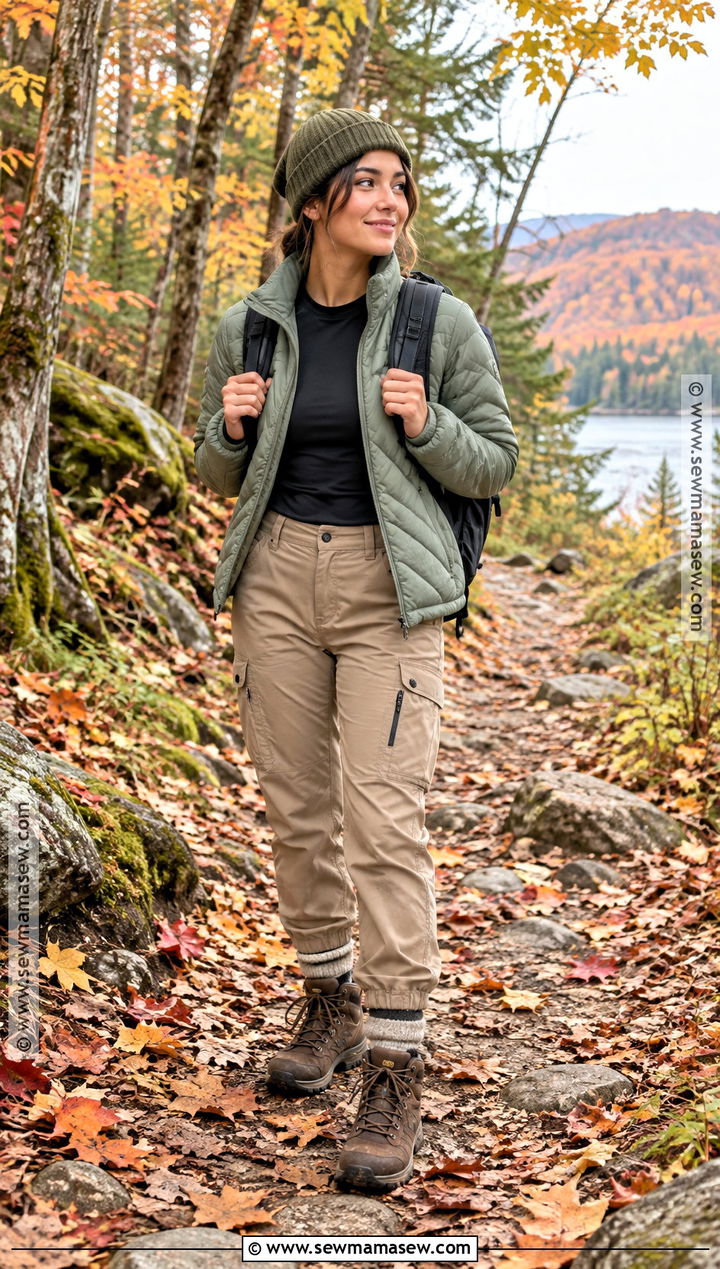
A light quilted jacket gives cargo hiking pants some shape and adds warmth you can take off. Sage, navy, brown or muted orange all sit well with fall woods. Look for pants with articulated knees, which means the knee is cut with a bend built in so the fabric doesn't pull when you climb. Waterproof boots, ribbed socks, a beanie and a simple pack finish it. I size the jacket so a thin layer fits underneath, but I stop short of oversized; a big boxy jacket catches on branches and lets cold air up the back. Shorter frames do better with a hip-length jacket and tapered pants, which keeps the legs from looking cut off.
7. Hoodie And Hiking Leggings Outfit
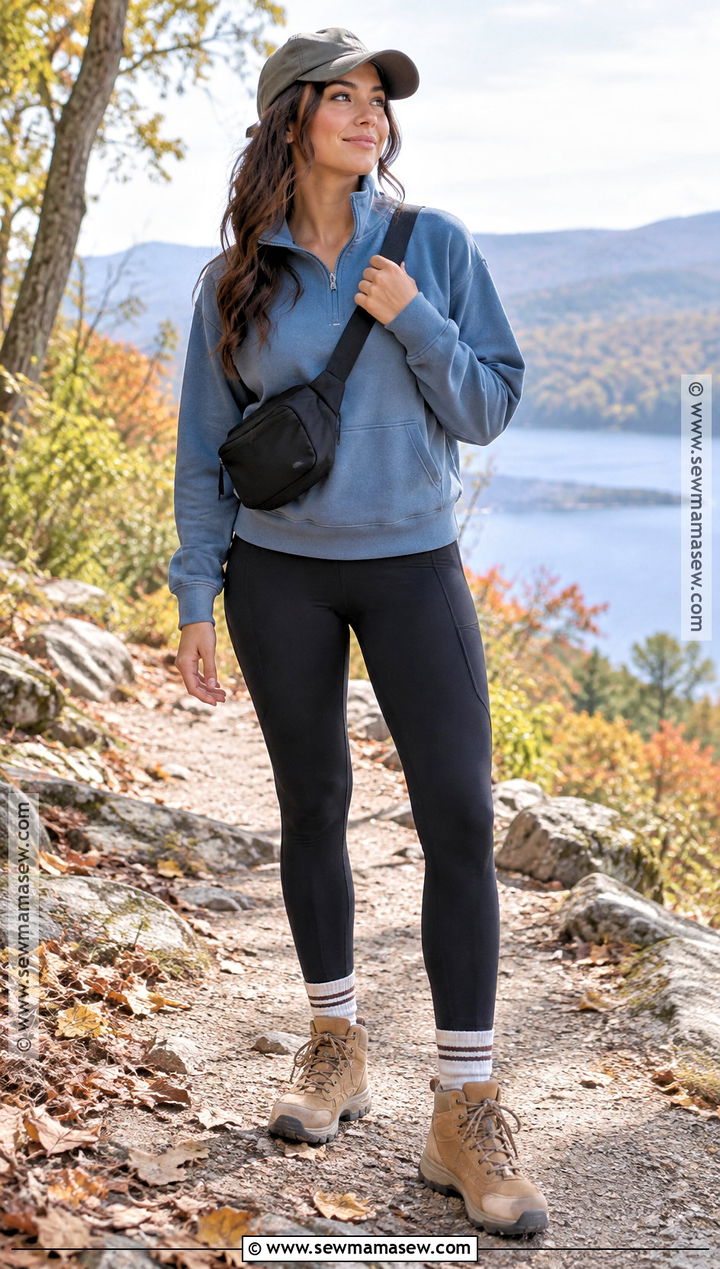
A technical hoodie with durable leggings is the relaxed version, good for a local trail on a Saturday. I'd choose a quarter-zip or full-zip in heather grey, dusty blue, berry or oatmeal, and make sure it's a performance knit rather than a cotton sweatshirt, which gets heavy the moment you sweat. Keep it close-fitting so it can go under a shell. Black or deep brown leggings and tan boots carry the fall color. Add crew socks, a nylon cap and a crossbody pack, with the rain shell rolled in your bag. The one thing this outfit doesn't do well is wind, so I'd skip it for exposed ridges.
8. Fleece Jacket And Cargo Leggings Outfit
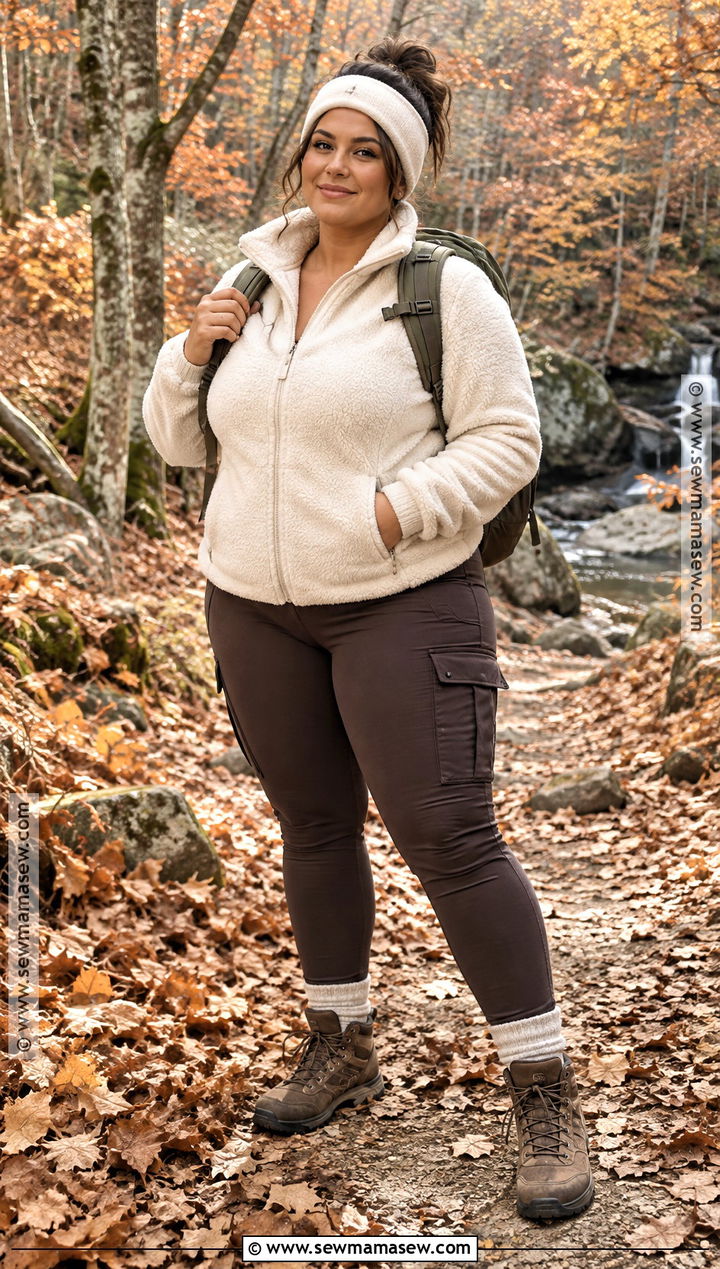
Cargo leggings fix the biggest complaint about leggings on a trail, which is nowhere to put your phone. Black or espresso works with a cream, rust or moss fleece jacket over a light athletic tee. Lace-up boots, cushioned socks and a pack with adjustable straps make it trail-ready. Before you buy, do the bend test in a mirror for opacity, and check that the thigh pocket sits below the hip belt so your phone isn't pressed into you. Fitted on the bottom and a little relaxed on top tends to balance most shapes. A fleece headband covers the ears without the bulk of a hat.
9. Packable Puffer And Hiking Trousers Outfit
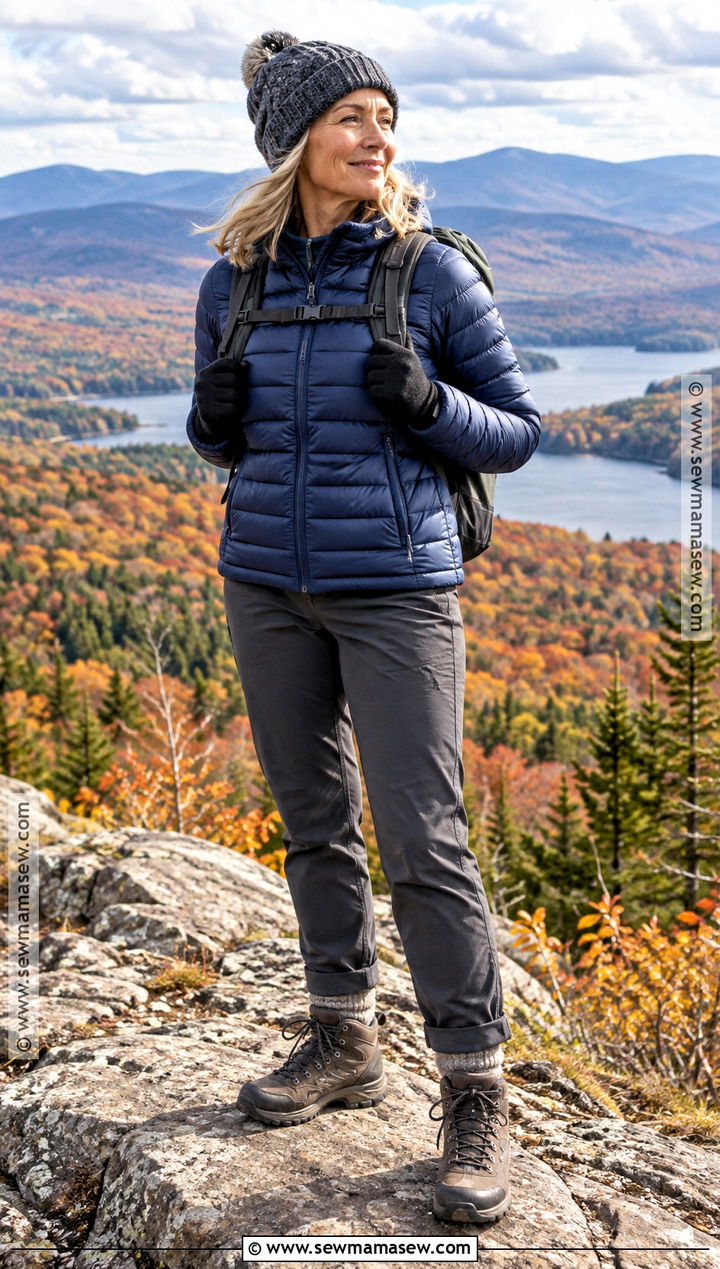
A packable puffer is the layer I'd hand anyone heading up to a cold summit. Slim insulated jacket over a breathable top, straight-leg trousers in charcoal, taupe or olive, waterproof ankle boots, thick socks and a knit beanie. The jacket should squash into its own pocket or a small sack, because you'll carry it more than you'll wear it. Down packs smallest but loses warmth when it gets soaked; synthetic fill is the safer pick if rain is possible. A neck gaiter does the job of a scarf without ends flapping. Tonal colors read long and clean, though a bright jacket is easier to spot on a hillside.
10. Shacket And Trail Pants Hiking Outfit
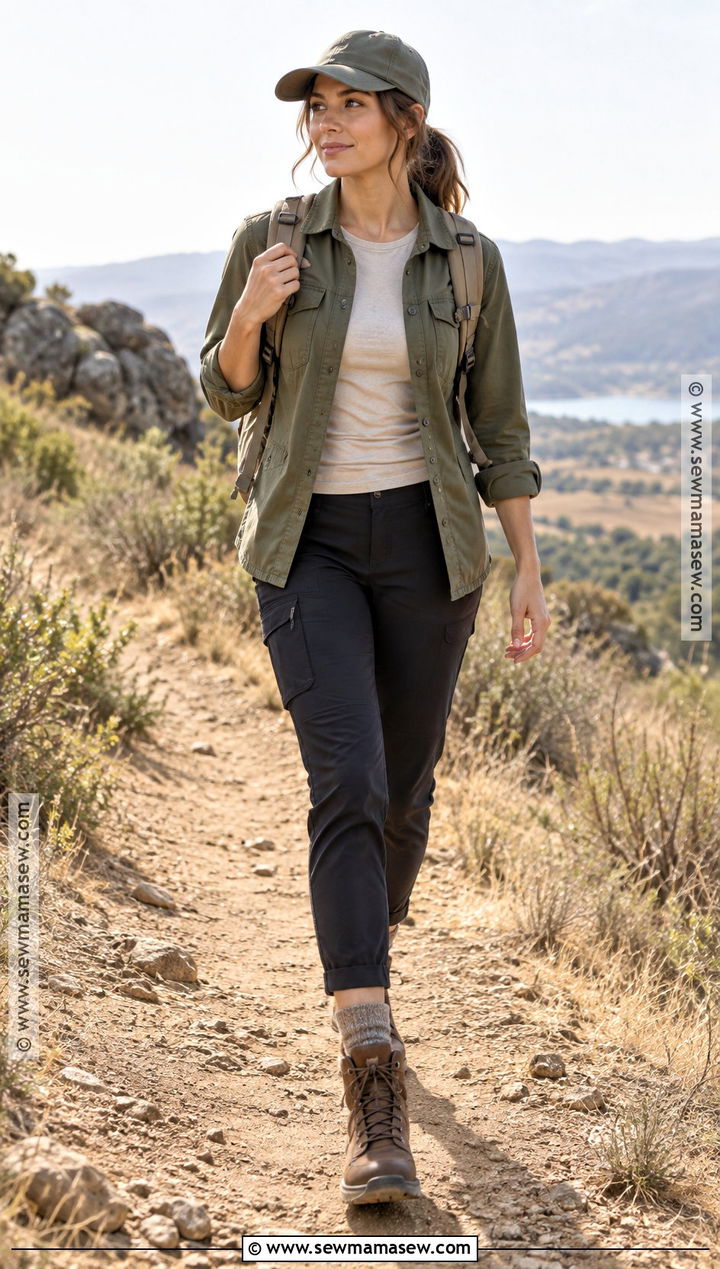
The shacket is a fashion piece, so on a trail I only use the outdoor kind made from quick-drying synthetic. Plaid, olive or camel over a fitted performance tee, with black tapered trail pants, looks relaxed without being impractical. Check that you can lift your arms above your head without the hem riding up, and that it fits under your rain shell. Brown boots, neutral socks, a canvas-look pack and a cap complete it. Wear it open when it's mild and buttoned when the wind comes up. A heavy wool fashion shacket is the version I'd leave at home; once it's wet it's a weight on your shoulders. Stick to dry park trails and short countryside walks.
11. Thermal Top And Fleece-Lined Leggings Outfit
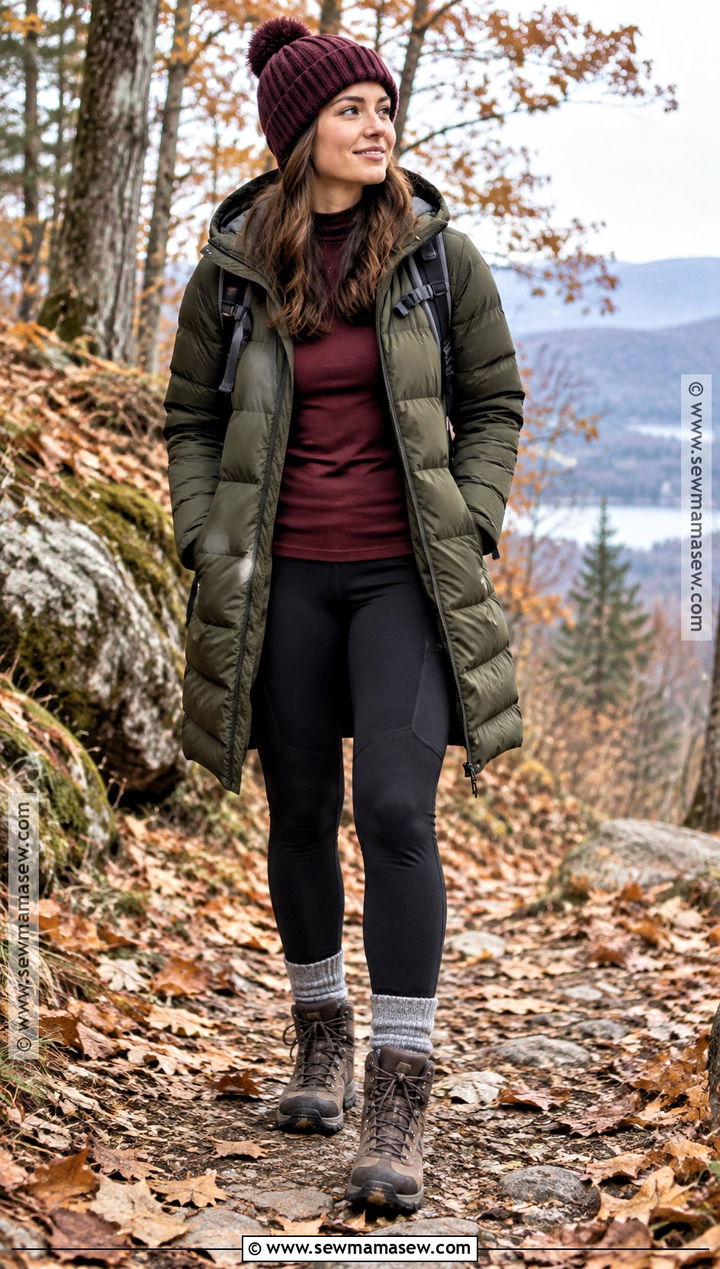
Fleece-lined leggings are for the days when autumn starts acting like winter. A fitted crewneck or mock-neck base layer in black, burgundy, navy or ivory pairs with thermal leggings that have a smooth face, so dirt and burrs brush off instead of clinging. Add insulated boots, thicker socks, a packable puffer and a ribbed beanie, with a shell in reserve. I'm careful who I recommend this to. On a hard climb, lined leggings get hot fast and you can't take them off on the trail, so they suit gentle routes and people who run cold. A longer jacket over them adds coverage without getting in the way of your stride.
12. Windbreaker And Jogger Hiking Outfit
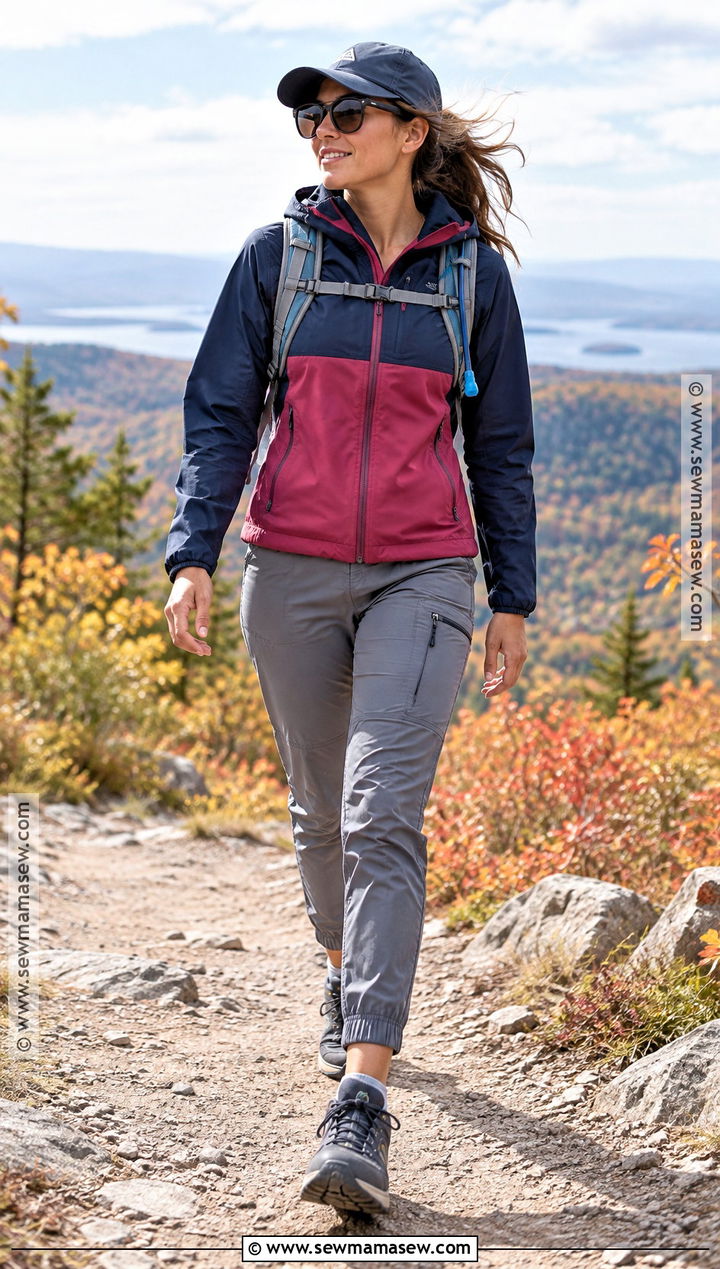
On a breezy but mild afternoon, insulation matters less than stopping the wind, and a windbreaker weighs almost nothing. Start with a fitted tee or long-sleeve top, add a solid or color-blocked windbreaker, and pair it with tapered hiking joggers that cuff at the ankle so they don't flap. Trail runners are fine on dry ground; waterproof hiking shoes are the better call when it's muddy. Low socks, a cap, sunglasses and a hydration pack finish it. Most windbreakers have a drawcord hem, and pulling it in stops the jacket ballooning on exposed stretches. Pack a thin fleece for the rest stop, because you cool down quickly once you stop moving.
13. Long-Sleeve Tee And Hiking Shorts Outfit
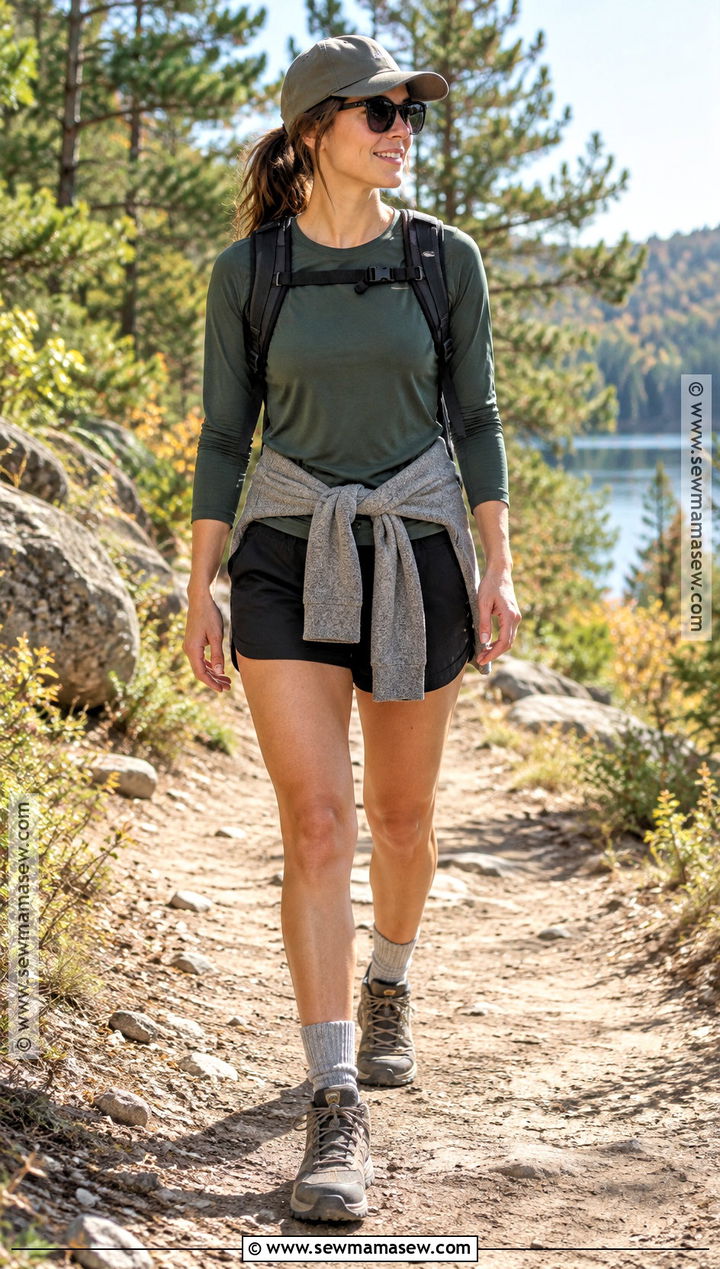
Shorts in October sound wrong, but early autumn in a warm climate can still hit the seventies by lunch. I pair mid-thigh or knee-length hiking shorts with a breathable long-sleeve tee, which protects your arms from sun and scratches while your legs stay cool. Crew socks are worth it here, since they stop low-cut shoes from rubbing the ankle. Tie a light fleece at your waist for shady sections and carry a rain shell in the daypack. Choose shorts with a stretch waistband rather than stiff cotton twill. I'd avoid this outfit on overgrown paths or in tick country, where full-length pants are the sensible choice.
14. Hiking Skirt And Thermal Leggings Outfit
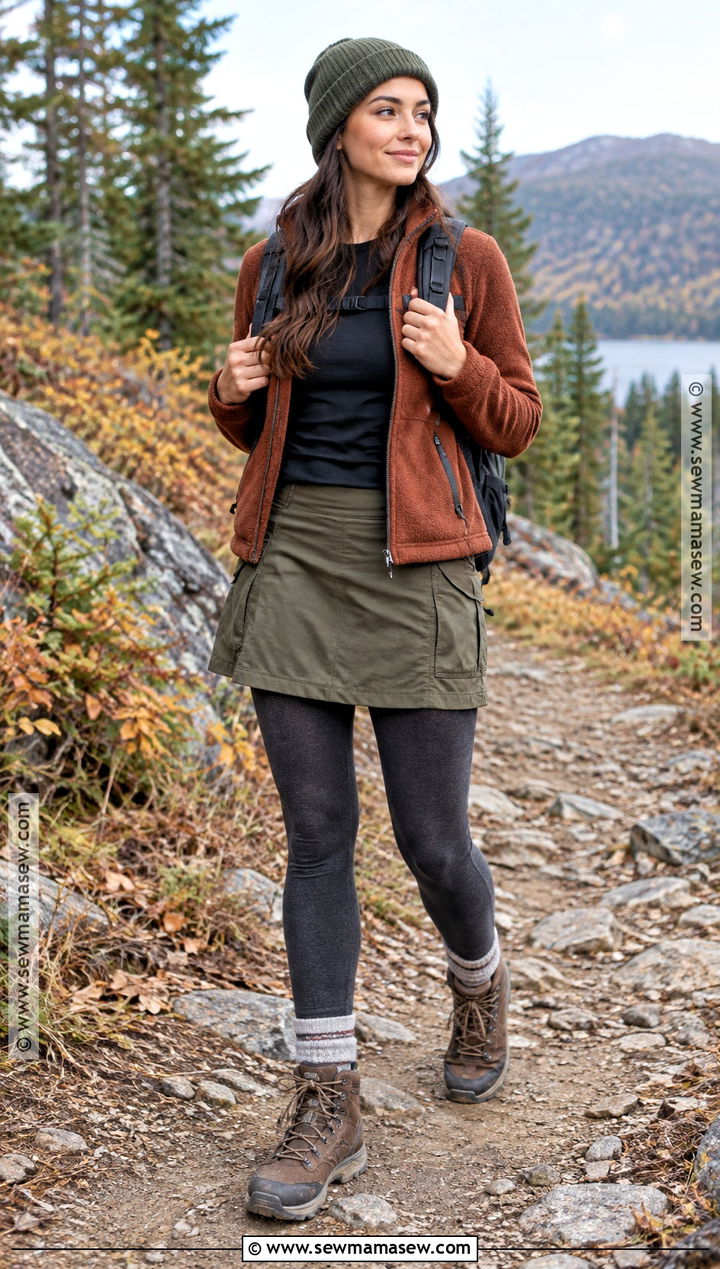
Hiking skirts look like a style choice, but a lot of women wear them for comfort: there's nothing pulling across the hips on a big step, and you get coverage over leggings. I pair an insulated or water-resistant skirt that ends above the knee with black or charcoal thermal leggings, a fitted base top, a zip fleece, waterproof boots and cushioned socks. A beanie and small pack keep it from looking overdone. The detail I check first is the side zip or stretch panel, because a skirt with no give will shorten your stride on the uphill. Keep every layer thin, or the waist area gets bulky under a hip belt.
15. Matching Hiking Set With Fleece Outfit
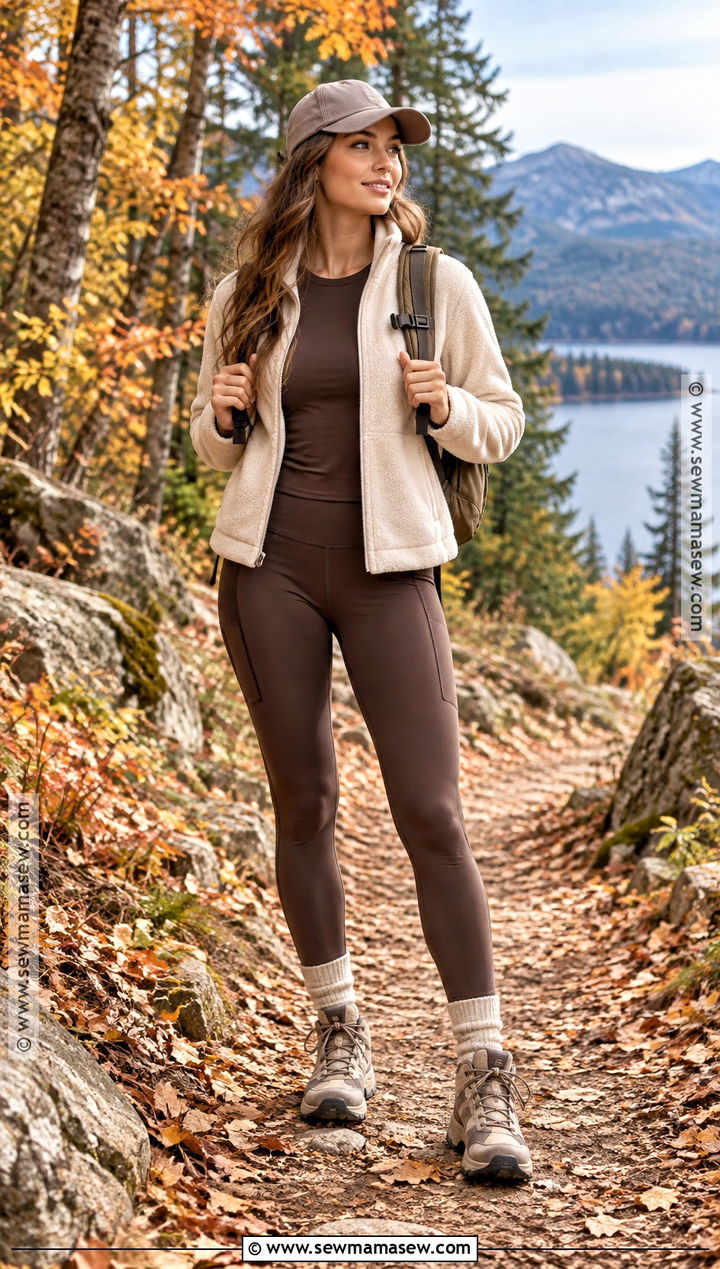
A matching set takes the decisions out of getting dressed, which I like for travel days with a short hike tacked on. Espresso, navy, deep plum or forest green performance tops and leggings pair well with a cream or tan zip fleece for contrast. A single color from neck to ankle draws one long line and makes most people look taller. Add coordinated shoes, crew socks, a compact pack and a neutral cap. Two practical checks: the top should be long enough not to ride up under backpack straps, and the leggings should be the heavier outdoor weight, not a gym set. Then it holds up fine on maintained trails.
16. Utility Jumpsuit Hiking Outfit
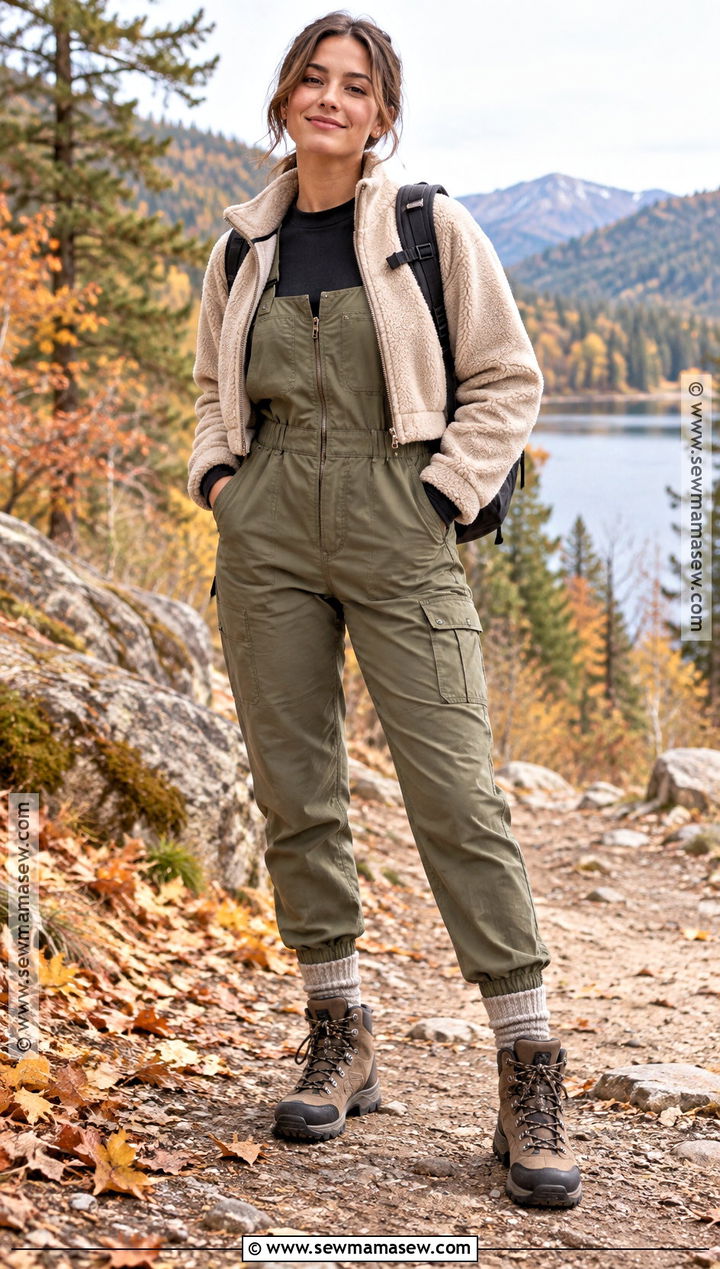
A utility jumpsuit is the most fashion-forward outfit on this list, and I'd only recommend it to someone who already likes wearing one. The good outdoor versions have stretch fabric, an adjustable waist and zip pockets; layer a thermal top underneath, then add lace-up boots, wool-blend socks, a cropped fleece and a slim pack. Do a deep squat in the fitting room, because a jumpsuit that's too short in the torso pulls at the crotch on every step up. Shorter hikers can roll the cuffs so fabric doesn't pile on the boot. And plan the bathroom question before a long route: look for a design with a drop seat or a waist zip.
17. Turtleneck And Hiking Pants Outfit
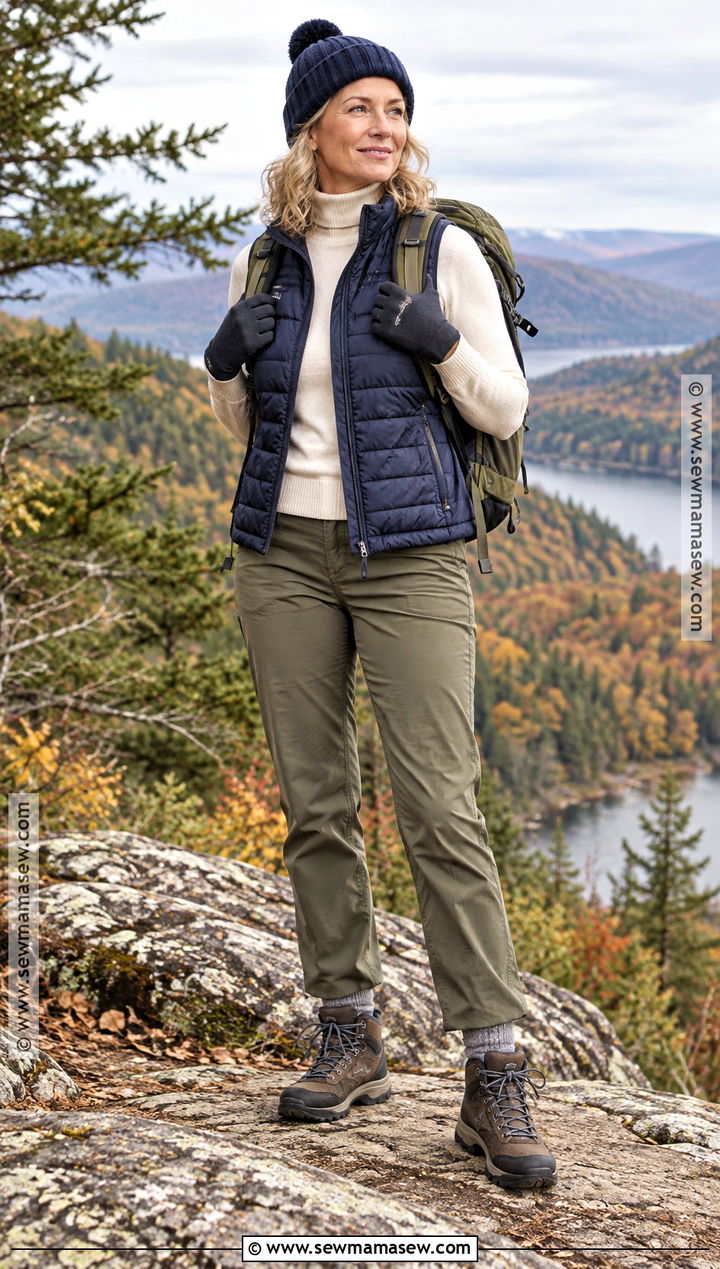
A performance turtleneck does what a scarf does without anything to tie or lose. Pair a fitted black, cream or burgundy one with olive or charcoal hiking pants, add a quilted vest for core warmth, then waterproof ankle boots, ribbed crew socks, thin gloves and a beanie. I always choose a stretchy synthetic or merino turtleneck over a thick everyday knit. A chunky sweater neck traps sweat on a climb and then chills you at the top. Straight-leg pants balance a fitted top, and tapered ones look sportier. It also passes nicely for lunch in town after the hike.
18. Denim Shirt And Black Leggings Hiking Outfit
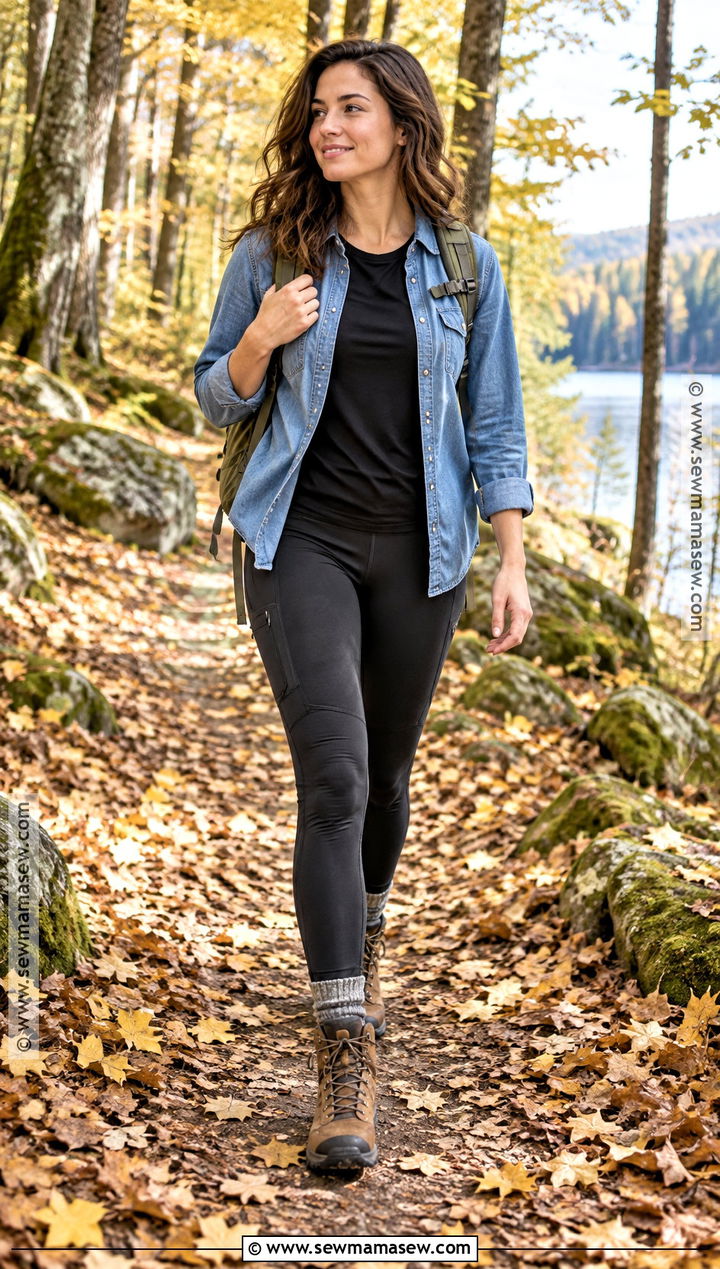
Denim is the fabric I talk people out of most on trails. Heavy jeans hold water, dry slowly and stiffen at the knee. A denim-look performance shirt gets you the same color without that problem. Wear it open over a black moisture-wicking tee with durable black leggings, and bring in fall color with brown lace-up boots, textured socks and an olive pack. Tie the shirt at your waist when the afternoon warms up. Keep a packable windbreaker in the bag, since a shirt won't block much wind. This is a short, dry-route outfit for easy woodland walks and viewpoints near the car park.
19. Softshell Jacket And Hiking Pants Outfit
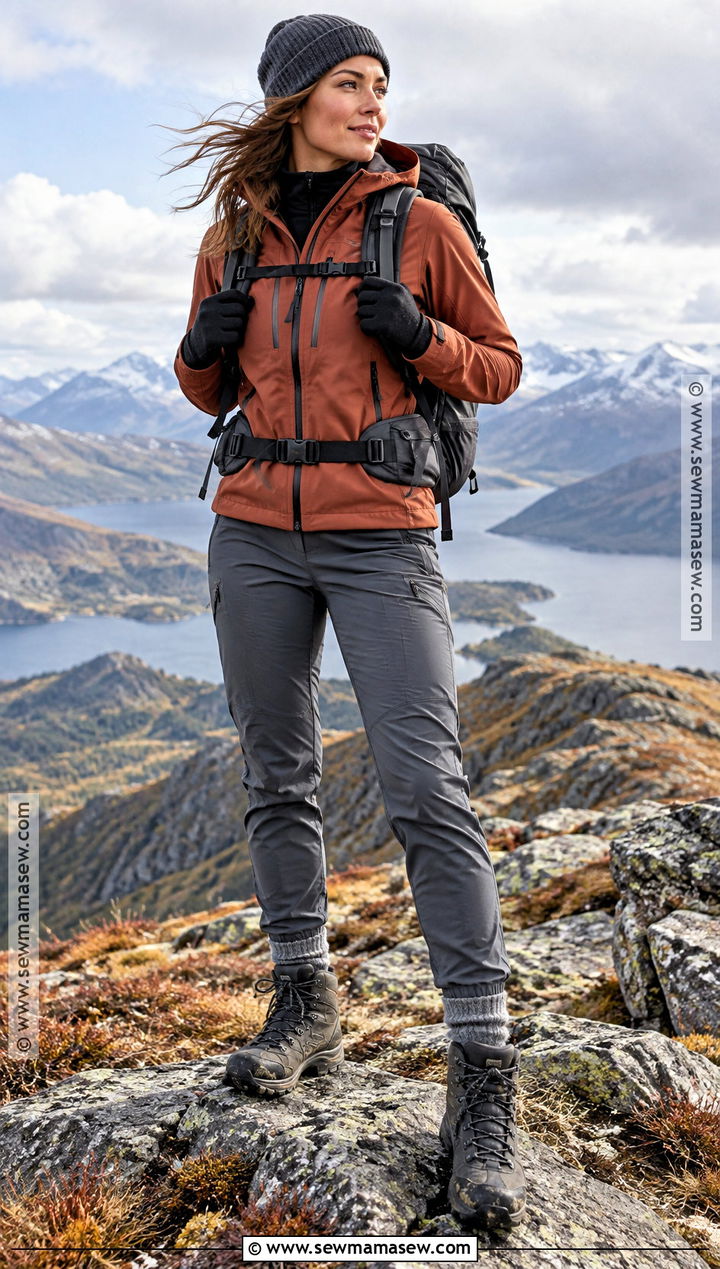
Softshell is my answer for windy ridges where it's dry but raw. It stretches with you, breathes better than a rain jacket and blocks most wind, though it isn't waterproof, so a real downpour still needs a shell. Wear a light half-zip base underneath for venting. Black, navy or slate pants are the neutral base, and a berry, teal or rust jacket adds color and makes you easier to see. Add supportive boots, wool-blend socks, thin gloves and a close beanie. When fitting, raise both arms and check the hem stays below the waistband; if it rides up, it will also creep out from under your pack.
20. Rain Poncho And Waterproof Trousers Outfit
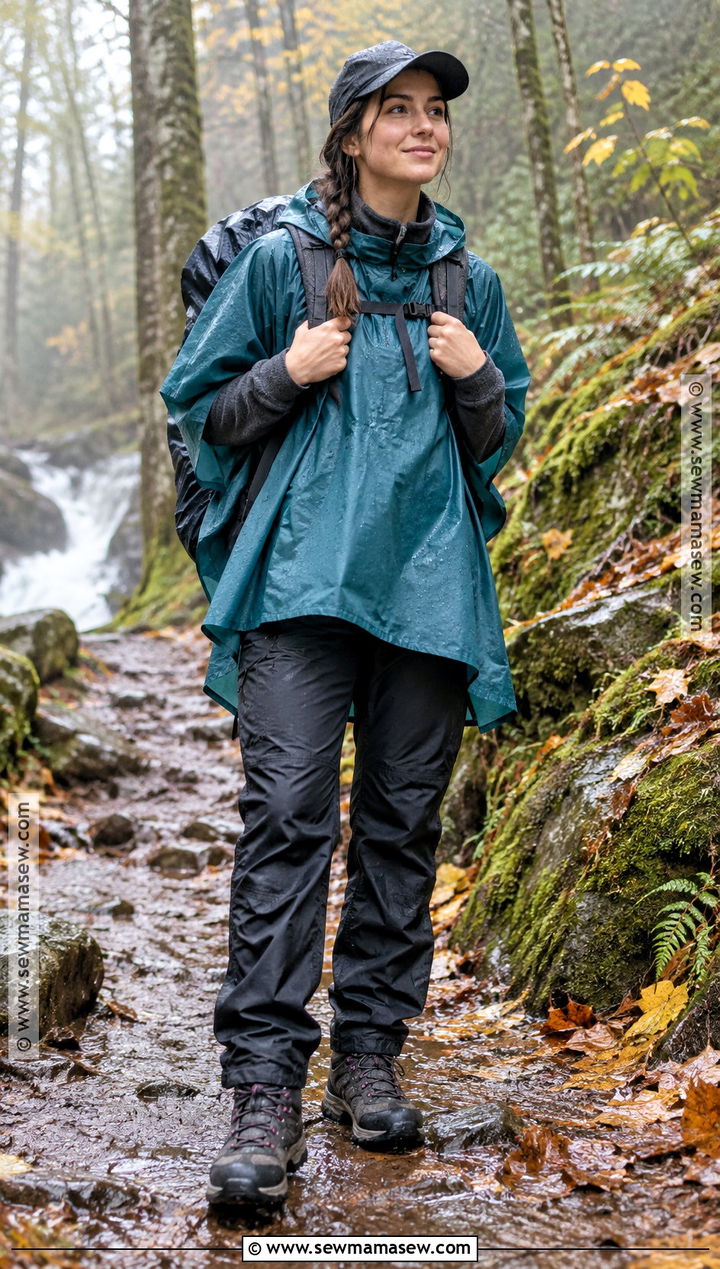
Steady rain is a different problem from a passing shower. I start with a breathable base and a light fleece, then a fitted hiking shell or a trail poncho cut to stay put in wind. Waterproof overtrousers go over tapered pants, and the ones with long ankle zips are much easier to pull on over boots. Waterproof boots, high socks, a brimmed cap and a pack cover finish it. Ponchos have a real downside: a long one hides your feet on steps and flaps around in a gust, so keep it no lower than the knee. Coordinate the outer layers so you don't look patched together, and keep this for low-risk woodland routes, not exposed ground.
Socks and Boots Decide How the Day Ends
You can get the jacket wrong and still have a good hike. Get the feet wrong and you'll remember it for a week. A few things I check for every client heading out in autumn:
- Wear the exact socks you'll hike in when you try on boots. A thick wool sock can take up half a size.
- Break new boots in on short walks around town first. Stiff leather and even some synthetic uppers need time to soften at the flex point.
- Pick wool or synthetic socks, never cotton, which stays wet and leads to blisters.
- Waterproof boots keep puddles out but also hold sweat in, so on dry, mild days a breathable shoe can feel better.
Wet leaves on rock are slippery, and that's where a deep lug sole earns its place. If your trail is mostly packed dirt, trail runners are lighter and perfectly sensible.
Making Hiking Clothes Fit a Shorter or Curvier Frame
Outdoor brands often cut for a narrow, average-height body, so fit takes more care than with everyday clothes. If you're petite, look for short inseams or tapered legs and roll rather than cut hems, since technical fabric can fray. Hip-length jackets keep your legs from looking shortened under a pack. If you're curvier, size pants to your hips and use a belt for the waist rather than squeezing into a smaller size that pulls when you step up. Long-line fleeces and hiking skirts give extra coverage without restricting movement. Tall hikers should check sleeve length with arms raised, because a cuff that ends at the wrist when you're standing will ride up the moment you reach for a handhold.
Packing the Bag the Night Before
Every outfit here follows the same pattern under the colors: a breathable layer against the skin, warmth you can take off, and something for wind or rain in the pack. Pick footwear for the surface you'll walk on and let color and accessories carry the personal side. The night before, I check the forecast for the trailhead and the high point, since they often differ, and pack the one extra layer I think I won't need. That layer is usually the one that keeps the last mile pleasant.
Related posts: