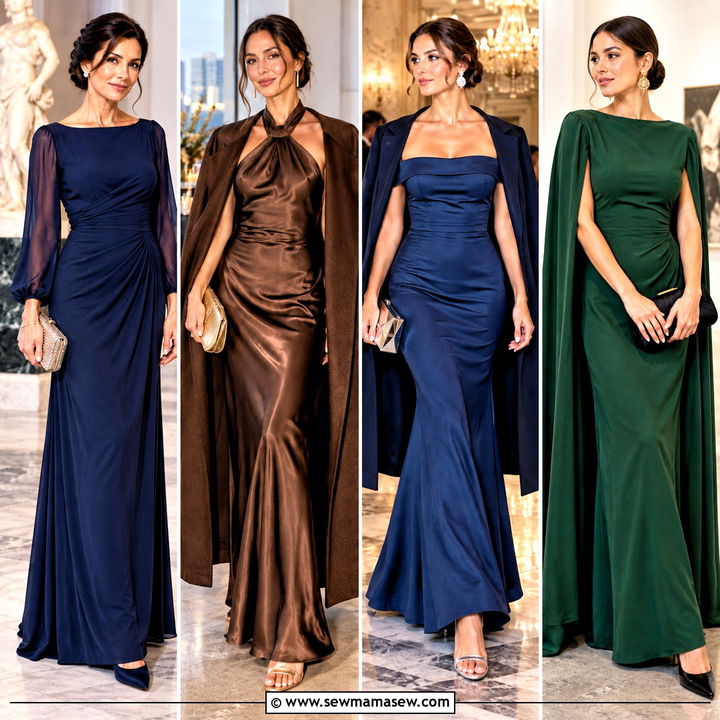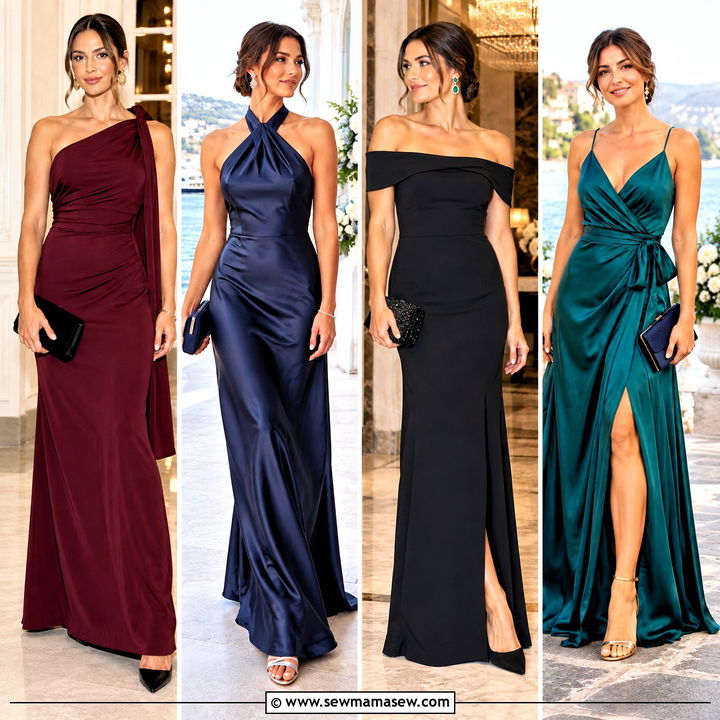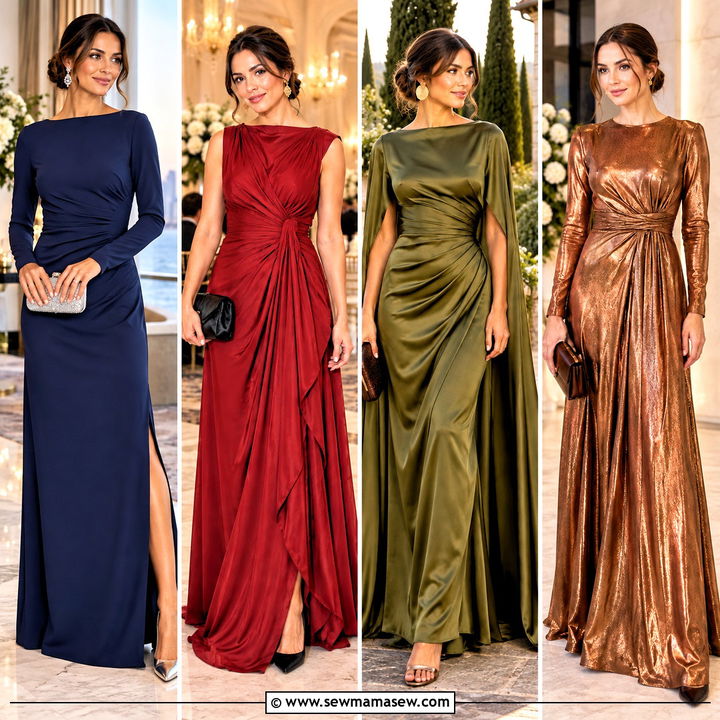
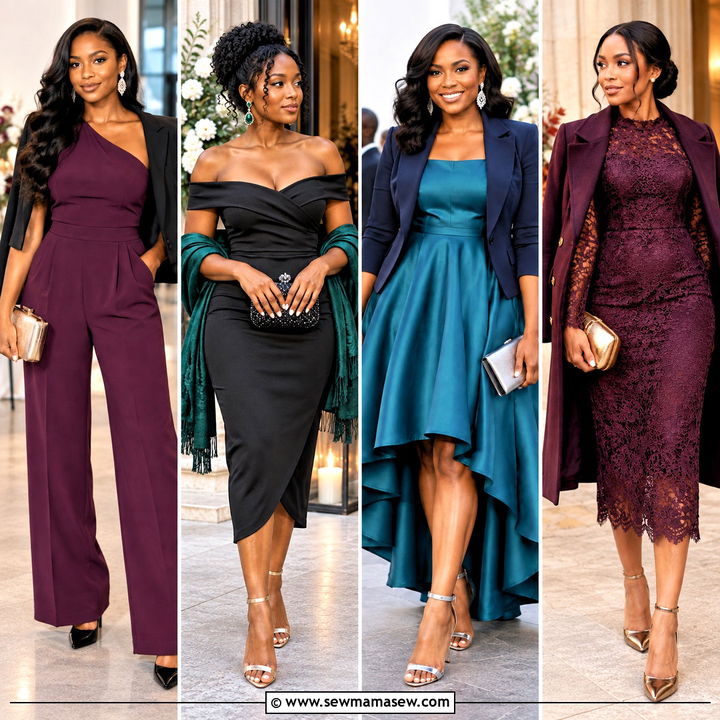
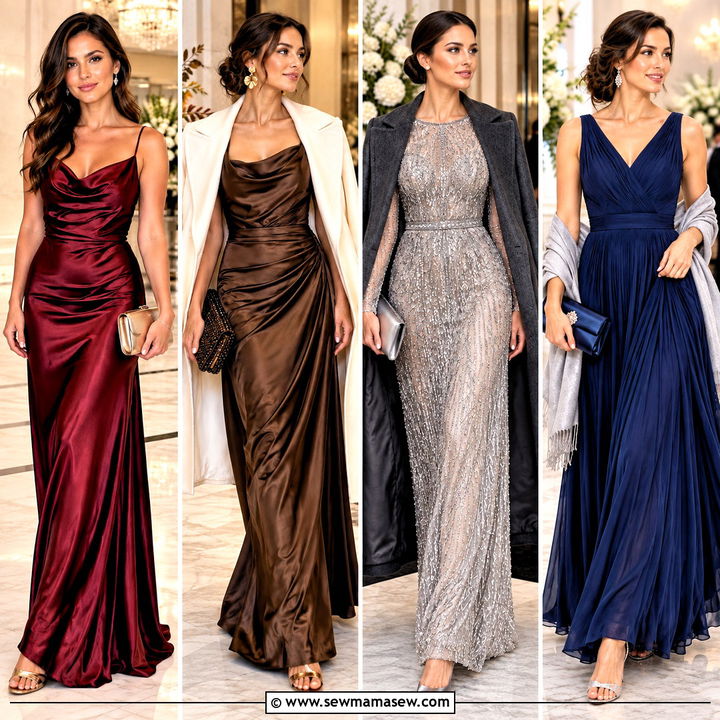
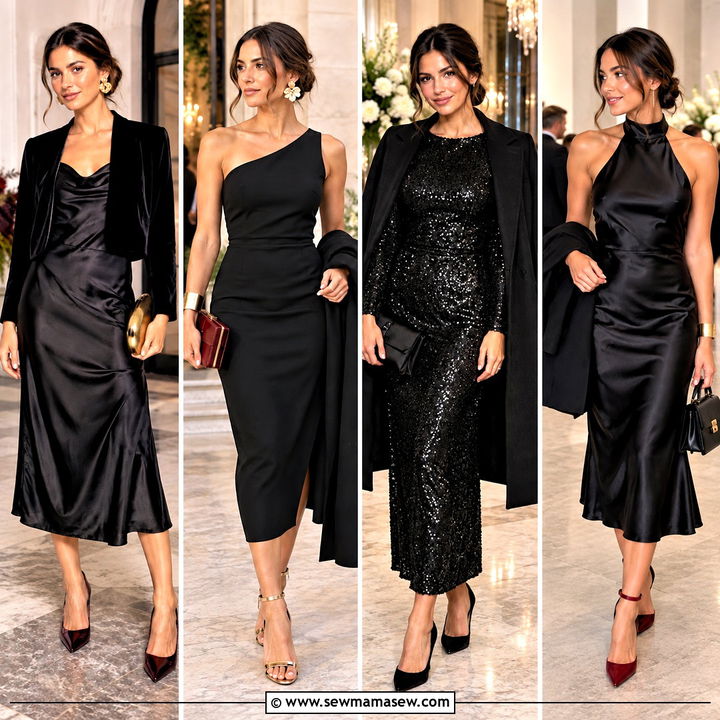
A black tie invitation is the second most formal dress code there is, after white tie, and it's the one guests most often underdress for. It asks for a floor-length gown or an equally formal alternative, in fabric with real weight or shine, finished with polished shoes and a small evening bag. I tell anyone unsure that being a little overdressed at black tie is almost never noticed, while a knee-length day dress always is. Below are thirty gowns, jumpsuits and suits I'd happily send a guest out in, with what I check on each one, so you look like you belong in the room without competing with the couple.

Reading the Invitation Wording Before You Shop
Couples use these phrases loosely, so I read the whole invitation before I pull a single gown. Strict black tie means floor length for women and tuxedos for men, with a few equally formal alternatives, such as a tailored tuxedo suit or a dressy wide-leg jumpsuit, sitting comfortably alongside. Black tie optional gives guests more room: an elegant cocktail dress, a dressy midi or a tea-length dress all pass, and gowns are still welcome. Plain "formal" usually means knee to midi length in good fabric.
If the wording is vague, look at the venue and the start time. An evening ceremony in a hotel ballroom or a country estate leans strict black tie even when the card only says formal. When in doubt, ask someone in the wedding party. Nobody minds that question, and it beats being the only guest in a short dress.
Colors I'd Leave in the Closet
- White, ivory and very pale champagne, which can read bridal in photographs even when they look clearly different in person.
- The bridesmaids' color, if you know it, so you don't end up looking like a member of the wedding party.
- Head-to-toe red at some cultural weddings, where red may be the bride's color. If you're unsure, ask the couple or their family.
1. Classic Black Floor-Length Gown

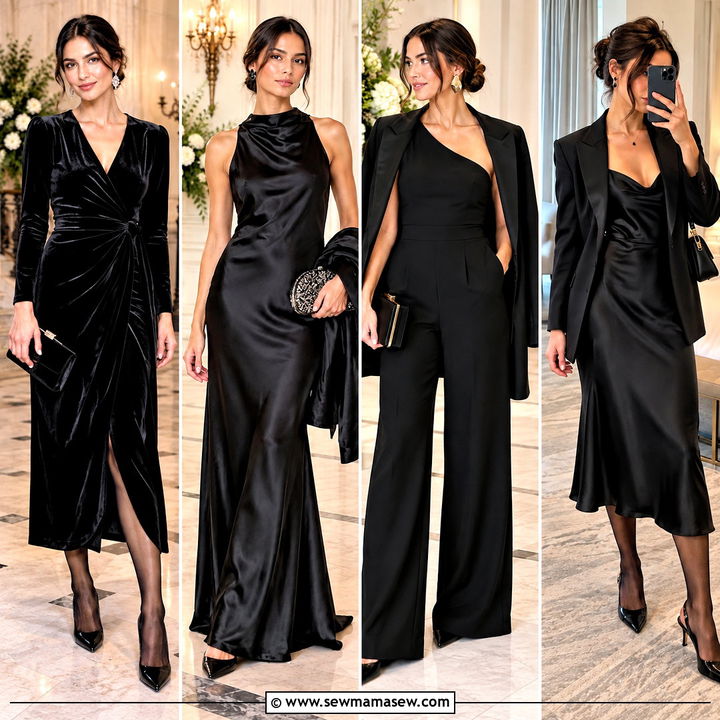
Nothing is safer than a black floor-length column, and at black tie safe is not a weakness. The fabric decides how expensive it reads: heavyweight crepe hangs straight and hides underwear lines, while thin polyester satin shows every seam and wrinkle by the reception. I keep the neckline simple, a shallow V or a boatneck, and put the interest into strappy black sandals, a structured satin clutch and crystal drop earrings that pick up the candlelight. For a cold venue, a tailored black blazer or a cashmere wrap over the shoulders carries you through cocktail hour. It suits every season and nearly any venue, from a city ballroom to a converted warehouse.
2. Velvet Wrap Gown

Velvet belongs to fall and winter weddings, and a wrap cut is the most forgiving way to wear it. The tie defines the waist on almost any figure, and a jewel tone such as emerald, oxblood or sapphire shows off the pile far better than black, which can look flat in a dim room. One warning I always give: velvet crushes where you sit, so check the back of the skirt after the ceremony and steam it rather than iron it. Satin slingbacks in a matching dark shade, a vintage-style box clutch and pearl drops finish it, and a faux-fur stole handles a chilly ceremony.
3. Satin Slip Dress

A bias-cut slip is the most relaxed gown on this list, and it only reads black tie at full length and in satin with some weight to it. Bias cut lets the fabric stretch over the body, so it moves well on a dance floor but also shows everything underneath. I'd sort out smooth, no-line underwear before anything else. Champagne or dusty rose suits spring and summer, and a slightly oversized black tuxedo blazer on top gives it structure for the ceremony. Barely-there sandals, a beaded clutch and fine layered gold chains keep the rest light. If you dislike cling or run cold, pick another gown.
4. Emerald Green Satin Gown

Emerald is the color I reach for when a guest wants to stand out without wearing anything loud. In satin it looks rich, but satin also reflects every pull and crease, so the fit across the hips has to be right or the shine exaggerates it. Keep the details few: a draped bodice, a modest side slit or a low back. Gold sandals, a gold minaudière and gold earrings sit naturally with green, and a neutral face with one strong lip keeps it grown-up. Warm light in a hotel ballroom or a candlelit gallery flatters this shade most.
5. Navy Blue Off-Shoulder Gown

Navy is my usual answer for a guest who wants something softer than black but just as formal. The asymmetric neckline frames the collarbones and shoulders, and it needs a stiff fabric such as Mikado or duchess satin to hold its shape; in soft jersey the band slides down by the first dance. Before you buy, raise both arms in the fitting room. If the neckline rides up or digs in, it will bother you all night. Silver sandals, a rhinestone clutch and chandelier earrings give a crisp contrast against dark blue, and a sleek low bun keeps the shoulders clear for church ceremonies and grand hotel receptions alike.
6. Burgundy Sequined Column Dress

Burgundy sequins are a winter wedding answer: festive in the dark months and deep enough that they never read like a party dress. I check two things with sequins. First the inside seams, because cheap sequin fabric scratches the underarms over a long evening. Second, how the dress behaves when you sit, since sequined fabric barely stretches and a tight column can pull at the hips. Keep everything else plain: black patent pointed pumps, a black satin clutch, small studs, a sleek middle-part updo and a berry lip. It is at its best under candlelight and at New Year's Eve weddings.
7. Black Tuxedo-Style Jumpsuit

A tuxedo jumpsuit is the alternative I suggest most often to guests who simply don't like gowns. To hold its own at black tie it needs satin lapels, a defined waist and a wide leg long enough to touch the top of the shoe. Its weak point is the bathroom trip, so I always look for a back zip you can reach yourself, or a wrap front. Patent pointed heels, a metallic clutch and crystal statement earrings bring the sparkle, with a low ponytail and a smoky eye. City weddings and rooftop receptions suit its tailored edge.
8. Two-Piece Matching Set

Two-piece sets can pass black tie, but only when the skirt reaches the floor and the fabric is formal, such as duchess satin, crepe or jacquard. The gap between top and skirt is where these go wrong. I like a top that overlaps the waistband slightly, so no skin flashes when you reach across a dinner table. Tonal beading or crystal trim adds polish; pile on too much and it tips into costume. Metallic pointed heels, a box clutch and sculptural earrings suit the modern line, and a gallery or loft venue suits the set.
9. Women's Tuxedo Suit

A women's tuxedo is the most traditional option here, borrowed straight from the dress code's menswear roots. The formula is a black jacket with satin peak lapels, matching trousers with a satin side stripe, and either a silk camisole or a crisp white tuxedo shirt. Tailoring is everything: the shoulder seam should sit at the edge of your own shoulder, and the trousers should break once over the shoe, so I'd set money aside for alterations before buying accessories. Black patent stilettos, a slim clutch and stud earrings keep it formal. A silk bow tie is optional and fun if you enjoy the menswear nod.
10. Floral Floor-Length Gown

Florals at black tie are a judgement call, and the background color decides it. A print on black, navy or deep burgundy with muted jewel-toned blooms reads evening; bright flowers on white read garden party, which is a different dress code entirely. Chiffon, georgette or silk keeps the gown formal and moving outdoors, though chiffon snags on rough paving and rose bushes, so watch the hem. I keep accessories to neutral metallic heels, a matching clutch and diamond studs, and save this one for spring and summer evenings at vineyards and botanical gardens.
11. One-Shoulder Pleated Gown

Pleats need a fabric that can hold them, so I look for charmeuse or heavyweight chiffon in midnight navy, aubergine or deep teal rather than a thin polyester that loses its folds within an hour. The single strap pulls the eye up and across, which is exactly why I'd skip a necklace. One sculptural cuff on the bare arm, metallic strappy sandals and a plain clutch are enough. Sweep your hair to one side or into a low chignon so the neckline stays visible, and check the strap after sitting, as one-shoulder bodices tend to creep toward the bare side.
12. Velvet Off-Shoulder Gown

Velvet with an off-shoulder neckline is the most old-Hollywood gown on this list. Saturated colors such as black, forest green or plum let the pile do the work; bright velvet can look like a holiday costume. Closed-toe satin pumps lengthen the leg, and a beaded clutch plus a pair of Art Deco-inspired drop earrings catch the light near the bare shoulders. For outdoor winter photos I always pack a tailored wool coat or faux-fur wrap, because velvet is not nearly as warm as it looks once the shoulders are uncovered. Winter ballrooms and historic estates are its natural setting.
13. Metallic Jacquard Gown

Metallic jacquard gives shimmer without a single sequin, because the metal thread is woven into the pattern itself. That also makes it stiff, so I keep the shape simple, a column or gentle A-line, and avoid heavy gathers that would bunch at the waist. Match your shoes to the thread: warm gold with gold, cool silver with silver, bronze with bronze. A metal-framed clutch and small studs are plenty. Jacquard is warm to wear, which makes it a natural pick for winter and candlelit receptions and a poor one for a July garden.
14. Lace Floor-Length Gown

A full lace gown over a tonal lining looks romantic without being sheer, and the lining is the first thing I check, because unlined lace under a camera flash shows far more than it does in a mirror. Long sleeves and scalloped edges at the hem and cuffs give it a vintage feel. Navy, black or deep burgundy suit an evening wedding; dusty blue or sage can work for spring. Pearl studs, a satin clutch and heeled sandals are all it needs, with soft waves or a low twisted updo. Traditional settings, church ceremonies and garden weddings in particular, suit it best.
15. Cape Gown

A cape gown brings red-carpet movement, and it stays guest-appropriate as long as the dress underneath is a plain column or sheath in black, midnight blue or deep emerald. I do one test in the fitting room: hug someone. If the cape gets in the way or the sleeves pin your arms, you'll feel it all evening, especially when you reach for food at dinner. Sleek pointed heels, a minimal metallic clutch and earrings that show when the cape swings are enough. Hair up in a bun or low ponytail stops it catching in the fabric.
16. Cowl Neck Satin Gown

A cowl neck on bias-cut satin is the Old Hollywood shape most guests picture first. The drape adds softness over the bust and the bias lets the skirt move like water, which is why it's kinder to most figures than a tight satin sheath. A cowl does gape when you lean forward, so I fix it with a small strip of fashion tape at the lowest fold. Chocolate brown, mulberry or charcoal feel fresher than black at the moment. Strappy metallic heels, a satin envelope clutch and drop earrings, with glossy waves and a soft smoky eye, carry it from the ceremony to the dance floor.
17. Halter Neck Gown

A halter lifts the eye to the shoulders and neck, which suits broad shoulders and athletic builds especially well. I'm more cautious with it on a fuller bust, because the strap around the neck carries the weight and can ache by the end of the night; a version with a built-in bra or wider straps fixes that. Crepe or heavyweight satin holds the bodice before flowing into an A-line or column skirt, and sapphire, ruby or amethyst all look rich. Chandelier earrings fill the space near the collarbone, with metallic open-toe heels and a sleek minaudière. Wear your hair up so the halter and any open back stay visible.
18. A-Line Ball Gown

An A-line ball gown brings the most volume here without crossing into bridal, as long as the color is nowhere near white or ivory. The fitted bodice and full skirt build an hourglass, which is why it suits pear-shaped and hourglass figures so well. Corset boning, beaded straps or a tonal satin waistband define the middle, and tulle, organza or light satin keep the skirt moving; a heavy satin skirt gets hot quickly. I'd also think about the room. A very full skirt between tightly packed round tables is hard to manage. Classic pumps, pearl or crystal drops and a soft low bun keep it refined.
19. High-Low Hemline Gown

High-low is the riskiest hemline for black tie, and it only works when the back reaches the floor or at least the ankle. With a knee-length front the look drifts toward cocktail, so I'd keep it for black tie optional rather than a strict invitation. The upside is the shoes, which finally get seen, so embellished heeled sandals earn their place here. Choose satin, chiffon or light crepe in a solid jewel tone or a soft metallic, then add a matching clutch, sculptural earrings and sleek straight hair or a low ponytail. Destination weddings with a relaxed formal crowd are where it fits.


20. Chiffon A-Line Gown

Chiffon is my pick for a hot spring or summer black tie wedding, because it breathes in a way satin and velvet never will. The A-line floats away from the body below the waist, which skims a lot and moves well outdoors. Soft dusty pastels like mauve, sage or powder blue suit the season, while plum or teal stretch the same gown into early fall. Single-layer chiffon can turn see-through in direct sun, so look for a lined skirt. Metallic sandals, a beaded clutch, small pearl or crystal studs and loose waves keep it light.
21. Sequin Maxi Dress

A sequin maxi does most of the styling for you, which is why I suggest it to guests who don't enjoy putting outfits together. Black, navy or gunmetal reads moody; champagne or rose gold reads celebratory. Keep the silhouette plain, a column or sheath, so the sequins don't swamp your frame, and let a matte satin clutch set off the shine with neutral heels and small studs. One practical note: sequins catch on lace and loose knit wraps, so if you need a layer, bring something smooth in satin or fine wool. Winter weddings and busy dance floors are where it shines.
22. Tea-Length Formal Dress

Floor length is the standard, but a tea-length dress ending mid-calf can pass when the fabric and structure are clearly formal. I'd only suggest it in heavyweight satin, brocade or embellished lace with a full skirt that nods to 1950s evening dressing. A bateau or portrait neckline keeps the proportions balanced, and pointed pumps in a matching or metallic tone, a structured top-handle bag, pearls and a red lip suit the period feel. On a strict black tie card I'd still go floor length; tea length sits more comfortably at black tie optional or an early-evening ceremony.
23. Tulle Gown

Tulle flirts with bridal, so color is your safeguard: charcoal, navy or deep plum make it clearly a guest's gown. Look for a fitted bodice over a multi-layered tulle skirt, with a beaded waistband or a few appliqués to ground it. Tulle snags on prong-set rings, chair edges and hook-and-loop fastenings, so I skip spiky bracelets and keep a tiny pair of scissors in the clutch for pulled threads. Metallic or patent heels peeking out, a plain clutch, delicate drops and a sleek updo to balance the skirt volume are all it needs.
24. Embellished Beaded Gown

An all-over beaded gown is for the guest who wants to treat the night as a full red-carpet event. Tonal beading, sequin patterns or crystal appliqués catch light everywhere, so the silhouette has to stay simple: column, sheath or a gentle mermaid. Beading is heavy, and I store these folded flat in tissue rather than on a hanger, where the shoulders slowly stretch out of shape. Black, navy or emerald bases show the beadwork best, with a satin clutch, understated sandals and studs. Save it for the most formal events, including gala-style receptions and luxury hotel weddings.


25. Strapless Column Gown

The strapless column is the cleanest line here, chest to floor, and fit decides everything. I won't send anyone out in one without internal boning and a waist stay, because a bodice held up by the bust alone slides down the moment you start dancing. Heavyweight crepe, duchess satin or bonded jersey in midnight blue, deep plum or black gives it substance. A crystal collar necklace fills the bare neckline, with metallic pointed pumps, a box clutch and an updo. If you hate adjusting your top all night, the halter or cowl is the kinder choice.
26. Deep V-Neck Gown

A deep V lengthens the torso and pulls the eye down the center, which flatters many figures, but it needs restraint everywhere else. Pair it with a full A-line or column skirt in satin, velvet or heavy crepe, and keep the back covered. Fashion tape along the edges of the V is not optional; I apply it before the dress goes on and press it again once you're dressed. A fine chain or lariat that follows the line, heeled sandals, a minimal clutch and soft drop earrings are enough, with hair off the shoulders. Warm-weather destination weddings suit it, and so do guests at ease with a daring line.
27. Tiered Ruffle Gown

Tiered ruffles bring movement and texture, which is great on a dance floor and harder in a crowded dinner seat. A fitted bodice has to balance the skirt, or the whole gown starts to look theatrical. Butter yellow, dusty rose and deep teal all work, and chiffon or organza keeps the tiers light where a heavier fabric would drag. Each tier adds width, so if you're petite I'd look for narrow tiers that begin below the hip. Metallic strappy sandals, pearl drops and a slim satin clutch go with it, plus soft curls or a low textured updo for spring and summer garden weddings.
28. Tailored Satin Pantsuit

A tailored satin suit is the sharpest modern answer to black tie. Look for a matching jacket and wide-leg trouser in satin-backed crepe, silk charmeuse or a subtle jacquard. The jacket should be firm at the shoulder and shaped at the waist, and the trousers should almost touch the floor in your heels, so I always hem them while the client wears the exact shoes. A silk camisole or lace-trimmed bralette underneath softens the tailoring. Pointed stilettos, a crystal clutch and chandelier earrings bring the shine, finished with a blowout and a bold lip for a city or contemporary venue.
29. Curve-Hugging Mermaid Gown

The mermaid is fitted through the bodice, waist and hips before flaring at or below the knee, which makes an emphatic hourglass. It is also the hardest gown on this list to walk, sit and climb stairs in. I insist on some stretch, such as a good stretch crepe, satin-backed knit or velvet with elastane, and I check where the flare begins: a flare below the knee is far easier to move in than one at the knee. Emerald, burgundy or black, platform heels for comfort and height, a metallic clutch and bold earrings suit it, with a high ponytail or sleek middle part. Wear it if you love being looked at and don't mind taking small steps.

30. Long-Sleeve Lace Gown

Long lace sleeves give coverage without heaviness, which is why I suggest this one for church ceremonies and for guests who prefer covered arms. Lined or sheer lace across the sleeves and bodice, a matching floor-length skirt and scalloped edges at the cuffs and hem make it feel finished. Check the sleeves by bending your elbow, since lace has little give and a tight cuff limits movement at dinner. Navy, burgundy or black feel right for evening, and dusty sage suits spring. Closed-toe satin pumps, a pearl-trimmed clutch, diamond or pearl studs and a low chignon keep it classic in a historic venue.
Hemming a Floor-Length Gown to the Shoes You'll Wear
Most floor-length gowns arrive too long, because they're cut for a tall frame in high heels. I never pin a hem without the actual shoes on, and I have the wearer stand on a hard floor rather than carpet, which hides a surprising amount of length. The front should sit just off the floor, so the shoe barely shows when you stand still, while the back can graze the ground.
Book alterations early. Satin, chiffon and beaded hems take a seamstress longer, and a heavily beaded gown sometimes has to be shortened from the waist instead of the hem to save the beadwork. Bring the underwear you'll wear on the day, too, since a strapless bra or shapewear changes where the bodice and waistline land.
Trains, Capes and Tulle After the First Toast
If your gown has any train at all, ask for a bustle or a wrist loop, or people will be stepping on it from the speeches onward. Tulle and chiffon hems also pick up dust, grass and spilled drinks, so I tuck a lint roller sheet and a small stain pen into the clutch. They take up almost no room and save a lot of late-night photos.
A Gown You Can Sit, Eat and Dance In
A black tie invitation is really asking one thing: that you dress as though the evening matters, because to the couple it does. A black column, a jewel-toned velvet wrap, a tailored jumpsuit or a sparkling sequin maxi all answer that request. What decides between them is practical: how you like to move, how warm the venue runs, and whether you can sit, eat and dance in the thing for six hours. Get the fit and the hem right, keep the jewelry to two or three good pieces, and the gown will carry the rest of the night.
Related posts: