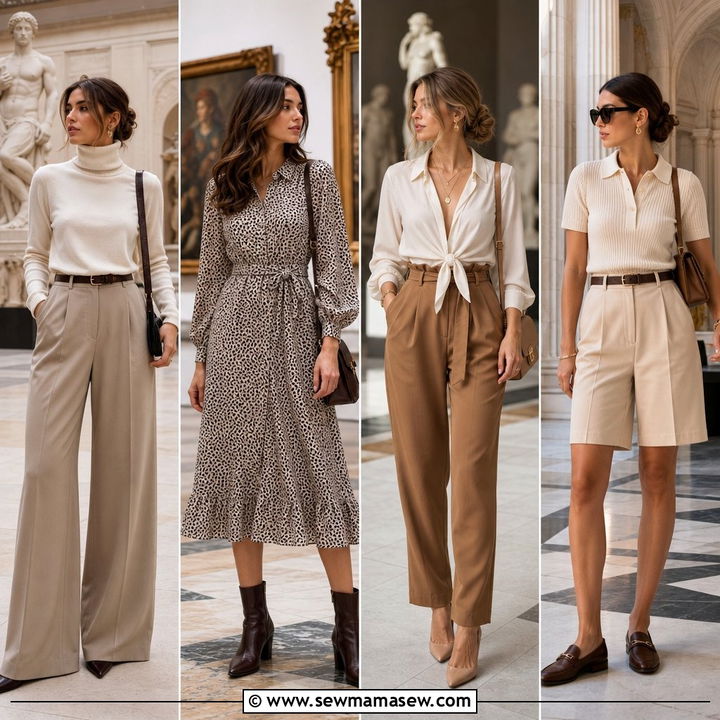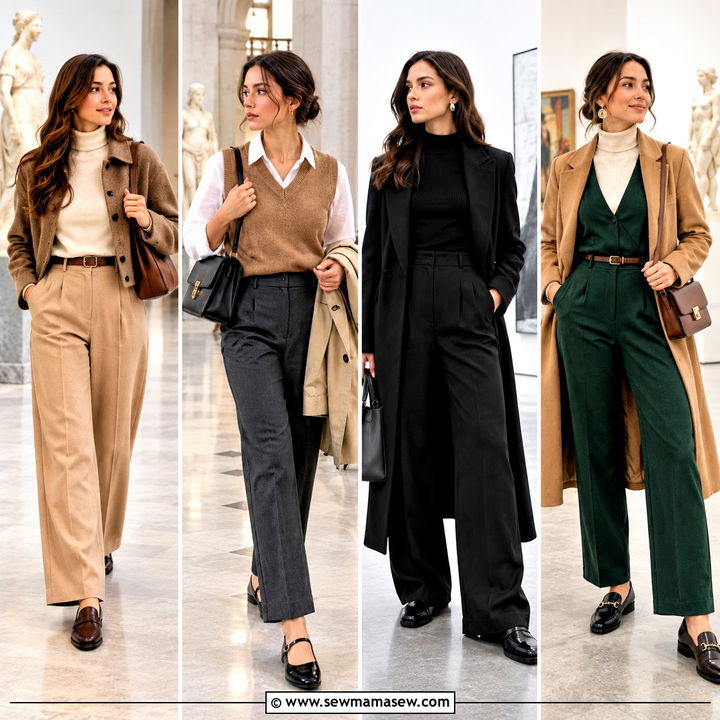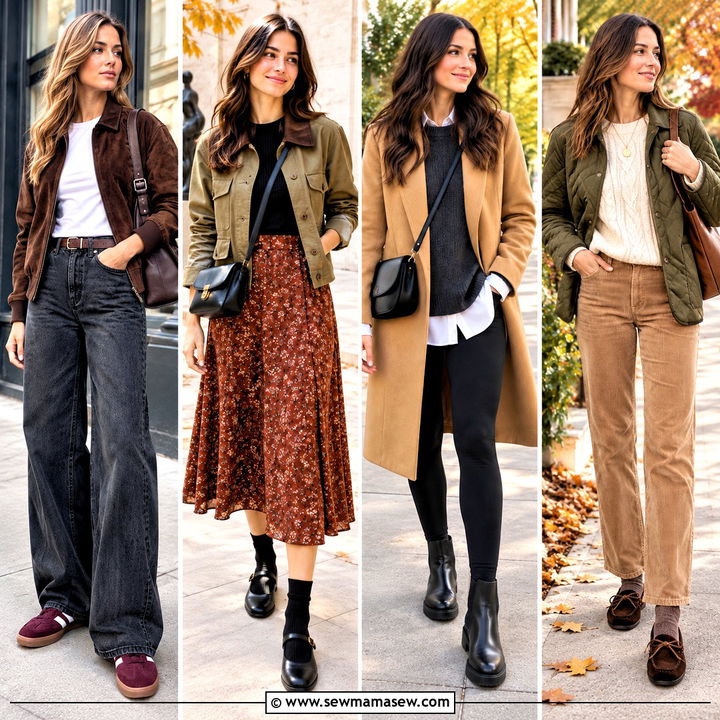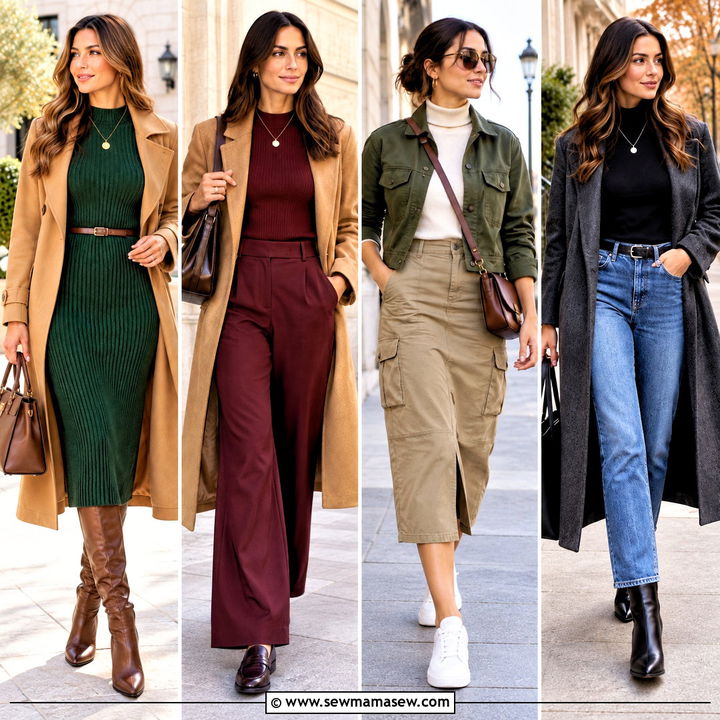
A museum day sounds gentle until you add up what it asks of your clothes: hours of slow standing, miles across marble, galleries kept cool for the art, and a coat and bag that have to pass the cloakroom rules. That's why so many women freeze in front of the closet the morning of a visit. When I dress someone for a museum, I start with the shoes and the layers and only then think about style, because a sore foot or a shiver ends the visit sooner than any outfit regret. The 35 head-to-toe looks below suit modern art galleries, natural history halls and classic portrait rooms alike, with notes on comfort and practicality for each.

Cloakroom Rules That Shape the Whole Outfit
Museums set rules to protect the art, and those rules quietly decide what you can wear and carry. I check them on the museum's visitor page before planning any outfit, because a coat or bag that has to be checked changes everything else.
- Bags: large bags, totes and backpacks are often refused in the galleries or must be worn on the front. A small crossbody is the safest choice for a full day.
- Coats: many museums ask that bulky coats, umbrellas and wet outerwear be checked. If you hate cloakroom queues, wear a layer you can carry over one arm.
- Temperature: galleries are usually kept fairly cool and steady for the collections, while crowded rooms and cafés run warm. A thin knit under a removable layer covers both.
- Food and drink: water bottles are sometimes allowed only in lobbies, so pockets or a bag with an outside pocket help.
Plan the outfit around what you'll actually have on in the galleries, not what you'll wear on the street. If the coat goes to the cloakroom, the sweater underneath is the outfit.
1. Camel turtleneck and pleated midi skirt

A camel turtleneck tucked into a cream pleated midi skirt looks quietly sophisticated, and the neutral tones sit comfortably against classical stone and marble. The pleats move as you walk, which keeps a long skirt from feeling heavy. Brown suede ankle boots add warmth and texture, and a small crossbody keeps your hands free. It suits fall and early winter visits. I'd pick a turtleneck in fine merino rather than chunky wool; galleries are kept cool, but crowded rooms heat up fast, and a thin knit lets you stay comfortable in both.
2. Oversized blazer and straight-leg jeans

A well-cut beige oversized blazer over a white tee and relaxed straight-leg jeans balances comfort and polish. It's unfussy but clearly styled. White leather sneakers handle miles of walking, and slim gold hoops with a structured tote add just enough refinement. It moves easily between a contemporary art museum, a photography exhibit and lunch afterward. The blazer is also your coat on a mild day, which matters because it can stay on through the galleries instead of going to the cloakroom queue.
3. Black turtleneck and wide-leg trousers

The black turtleneck with tailored wide-leg trousers is a museum favorite for good reason. It's sleek and architectural, the high neck frames your face, and the trousers make one long line from waist to floor. Pointed black flats or low block-heel mules keep it monochrome and comfortable for a full afternoon. Add a single sculptural gold earring and a smooth leather clutch. I'd choose it for modern art spaces or an evening opening. Black wool picks up lint, so a small lint roller in your bag is worth the space.
4. Sweater dress and knee-high boots

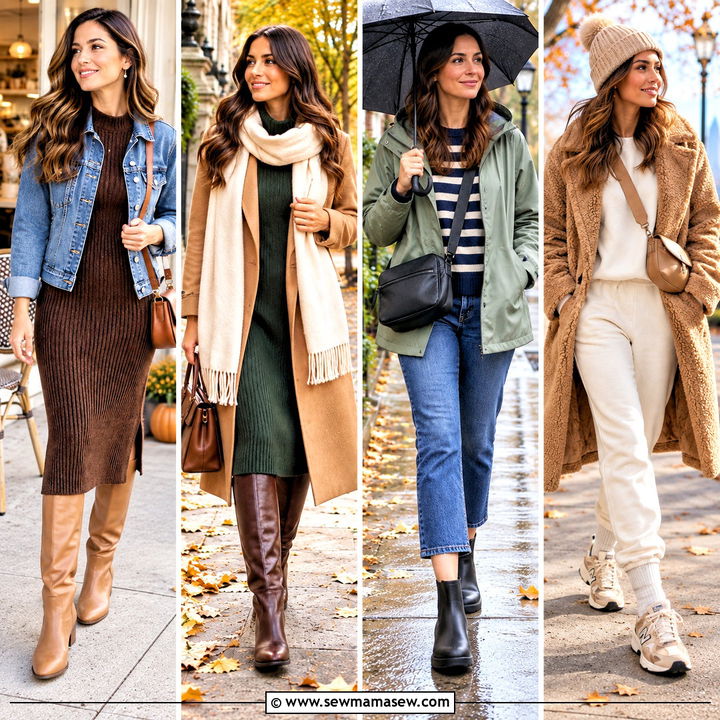
A knit sweater dress in charcoal, oatmeal or forest green with flat or low-heeled knee boots is my pick for a properly cold museum day. It's long and lean and feels like wearing a blanket. A slim belt at the waist breaks up the knit, opaque tights add warmth, and a long pendant draws the eye down. A roomy leather tote holds the map, phone and gloves. Check the tote against the museum's bag rules before you go, though; large bags often have to be checked. It carries you through history museums, science centers and café stops.
5. Trench coat layered over a shirt and trousers

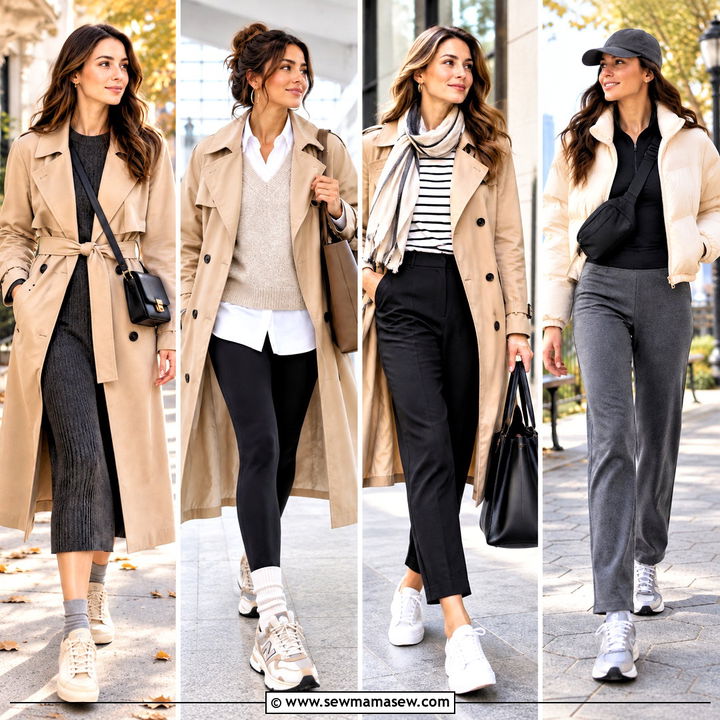
A beige trench over a crisp white button-down and tailored navy or black trousers is about as classic as museum style gets. The belt cinched at the waist creates a flattering hourglass shape, and when the galleries warm up, the coat comes off to reveal a polished shirt and trousers underneath. Leather loafers or ballet flats keep it walkable, with a structured satchel. It works in spring and autumn. A trench folds over the arm far more neatly than a padded coat, so it's the one I'd carry rather than check.
6. Denim jumpsuit and white sneakers

A relaxed denim jumpsuit brings a playful ease to a museum visit. One piece means no decisions, and rigid denim or a cotton-hemp blend holds its shape. Roll the cuffs at the ankle, add bright white leather sneakers with visible socks, and a canvas tote for a sketchbook and wallet. A red lip or bold sunglasses gives it personality. It's at home in industrial art spaces and photography museums. The honest drawback: jumpsuits mean undressing almost completely in a small museum restroom stall, so I'd pick one with a front zip or buttons that open past the waist.
7. Slip dress and chunky cardigan

A silky slip dress in champagne, blush or soft sage changes completely under an oversized chunky cardigan. The sheen of the silk against the heavy knit is what makes it look modern. Flat leather sandals or minimal ankle boots ground it, fine layered necklaces catch the light, and a small crescent crossbody keeps the line clean. It goes from a quiet morning in the galleries to an early dinner. Slip dresses cling and show creases after sitting on a gallery bench, so I'd look for a bias-cut one in a heavier satin that hangs rather than sticks.
8. Leather jacket draped over a floral midi dress

An oversized black leather biker jacket changes the mood of a floral midi dress entirely. Soft romance meets hard leather, and the mix suits contemporary art museums and street-art shows. Combat boots or chunky platform loafers carry the edge, a small leather backpack or crossbody keeps your hands free, and dark sunglasses with a berry lip finish it. It's also good for a social evening opening. Leather jackets are heavy to carry, so if you'll be inside for hours I'd choose a lighter lambskin or plan on wearing it throughout.
9. High-waisted linen trousers and matching vest

When the visit includes an outdoor sculpture garden or a sunny courtyard, a linen set in oatmeal, sage or soft terracotta keeps you cool. High-waisted wide-leg linen trousers with a matching sleeveless button-front vest make a clean, breathable outfit. Flat leather sandals or espadrilles keep it walkable, with a straw tote and tortoiseshell sunglasses. Linen lets air move through, so you stay comfortable at midday. Indoors is another story: galleries are air-conditioned and bare arms get chilly, so I'd tuck a light cardigan or scarf in the tote.
10. Pleated midi skirt and fitted turtleneck

A fine-gauge turtleneck in charcoal or deep burgundy tucked into a knife-pleated midi skirt in a complementary neutral looks quietly refined. The close top balances the volume of the skirt. Suede pointed ankle boots in a matching shade lengthen the leg, and a slim structured bag, pearl studs and a fine chain bracelet keep it understated. I'd wear it to fine art, classical antiquities or portrait galleries, where it feels respectful without being stiff. Knife pleats need a good press to stay sharp, so I hang the skirt in a steamy bathroom the night before.
11. Monochromatic beige blazer and trousers

Head-to-toe beige makes a long, modern line against museum architecture. A soft-tailored blazer in sandy beige, double-breasted or single-button, with matching wide or straight trousers, goes over a white ribbed tank or bodysuit. Ivory pointed flats or kitten-heel mules keep it tonal, with a matching structured bag and a single gold cuff or slim watch. It's especially good in minimalist contemporary spaces with clean lines and white walls. Beige shows every coffee splash, so I'd stick to the museum café's water until after the visit.
12. Striped shirt dress and tan ankle boots

A blue-and-white striped cotton shirt dress, cinched with a slim leather belt, has a slightly cinematic charm. The collar and button placket give structure while the cotton or cotton-linen moves easily as you walk. Tan leather ankle boots with a low stacked heel add a bit of Western-inspired character, and a weathered brown satchel suits it. Roll the sleeves to just below the elbow and add a watch. It works year-round with a camel coat or denim jacket on top, and suits history museums, natural history halls and botanical conservatories. Vertical stripes are forgiving, but I'd check the belt sits at your natural waist so the stripes don't bend oddly across the hips.
13. Cropped sweater and flowy midi skirt

A slightly cropped fine-knit sweater in rust, gold or chocolate with a high-waisted flowy midi skirt in cream gives a nicely proportioned shape. A hint of tucked-in camisole at the waist adds interest without bare skin. Flat mules or white sneakers keep it relaxed, and a slouchy suede shoulder bag swings as you move. It suits a slow autumn afternoon with Renaissance paintings. Raise your arms once in the mirror before you leave: a cropped sweater that shows skin when you point at a painting is the kind of distraction this outfit is meant to avoid.
14. Grey blazer and relaxed denim

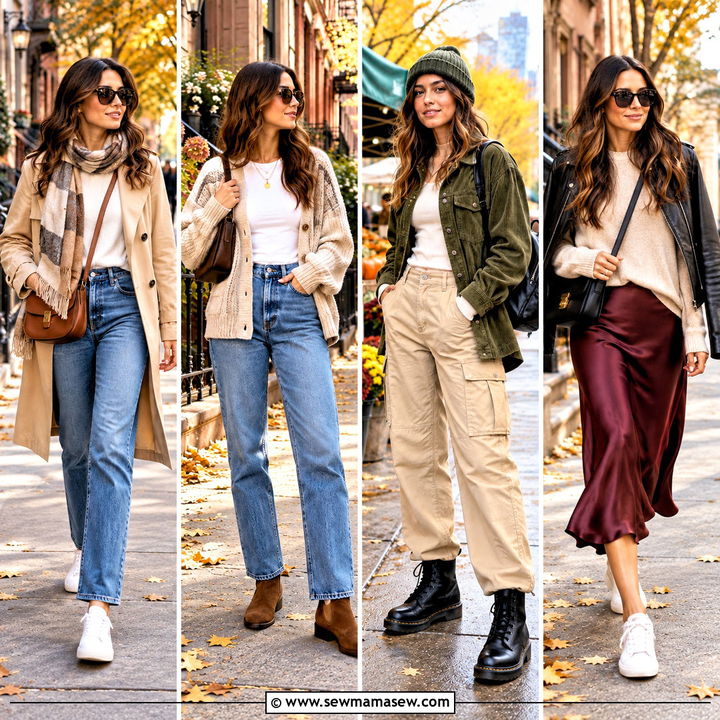
A charcoal or heather gray single-breasted blazer with relaxed straight or slightly wide jeans in a medium wash always seems to land right. The blazer adds structure to the denim and the jeans keep it from feeling formal. A white or black crewneck tee or fine merino underneath, black ankle boots with a chunky sole, and a leather backpack or oversized clutch finish it, with a thin silver chain and aviators. It handles contemporary art museums, openings and a full day of museum-hopping in a big city. Chunky soles are kinder on hard floors than thin leather ones, which is why I favor them here.
15. Print dress and ankle boots

A midi or maxi dress in an artistic print, abstract brushstrokes, delicate florals or geometric shapes, brings some of the gallery's creativity into what you wear. Prints spark conversation, especially in modern art spaces. Flat or low black leather ankle boots make all-day walking comfortable, and a plain black crossbody keeps the focus on the dress. Red lipstick and hoops get you ready for an opening. I'd choose a print that feels expressive rather than overwhelming, and keep accessories quiet so the effect stays balanced.
16. White button-down and high-waisted jeans

Simple often works best, and a crisp white button-down half-tucked into high-waisted straight or wide-leg jeans proves it. Cotton poplin holds its shape, with a sharp collar framing the face and cuffs rolled to the elbow. Tan or cognac loafers add warmth, a thick leather belt with a gold buckle defines the waist, and a basket bag or leather tote finishes it. It suits science institutions, modern galleries and history museums alike, at any age. Poplin wrinkles where it's tucked, so I iron the shirt right before leaving and tuck it only at the front.
17. Knit vest layered over a white shirt

For a scholarly, academic-artist feel, layer a cream or oatmeal cable-knit vest over a slightly oversized white button-down. Pleated wool trousers or wide corduroys in chocolate or charcoal go below, with chunky-soled dark loafers, wire-rim or tortoiseshell glasses, a satchel crossbody and a vintage watch. It looks pulled from a university library but reads fresh. I'd wear it for autumn and winter visits to history, natural history or academic collections. A vest gives core warmth without heavy sleeves, so you stay comfortable when crowded rooms warm up.
18. Palazzo pants and a fitted camisole

Fluid palazzo pants in crepe or satin with a fitted camisole or sleeveless knit make a dramatic shape that moves like water through big gallery halls. The high waist lengthens the leg and the hem brushes the floor. Flat jeweled sandals or pointed mules keep the long line, a small metallic or tonal evening bag adds polish, and a silk scarf at the neck or over the shoulders brings in a painterly touch of color. It's a dressier choice for evening openings and museum galas. I'd hem the palazzos to the exact shoe you'll wear; long hems on marble stairs are a tripping hazard.
19. Canvas utility jacket and cargo pants

For a science museum, planetarium or hands-on exhibit, a utility look is practical and surprisingly stylish. An olive or khaki canvas utility jacket over a white or black tank goes with relaxed cargo trousers in a matching neutral. Chunky platform sneakers or trail-style trainers cushion hours of standing, and a sturdy canvas backpack holds water, snacks and guides. Add a cap or beanie depending on the season. You can crouch to read a fossil label or lean over a touch tank with nothing pulling. Many museums ask that backpacks be worn on the front or checked, so I'd go for a small one.


20. Classic black dress and ballet flats

A well-cut black midi dress, A-line, fit-and-flare or column, may be the most versatile museum outfit you can own. Black steps back so the art gets the attention, while you still look pulled together. Cushioned black leather ballet flats make quiet steps across marble and wood, and a colorful silk scarf at the neck or on a ponytail adds a personal note. Gold studs, a watch and a structured top-handle bag finish it. It moves from a morning visit to coffee and on to dinner. Thin ballet flats are the one risk here; I'd add a cushioned insole if you'll be on your feet more than two hours.
21. Puff-sleeve blouse and high-waist trousers

A puff-sleeve blouse in ivory, blush or pale blue cotton voile tucked into high-waisted tailored trousers looks soft but polished. The shoulder volume adds a sculptural note without overwhelming your frame, and the trousers keep it grounded. Flat pointed slingbacks or mules lengthen the line, and a small woven bag with a bamboo handle adds texture, with pearl earrings or a single bracelet. It suits classical museums with ornate rooms and gilded frames. Voile is sheer, so I'd wear a skin-tone camisole underneath, and puff sleeves crush under a coat, so carry the coat instead.
22. Corduroy jacket and wide-leg trousers

A soft corduroy jacket in burnt orange, forest green or chestnut with matching or tonal wide-leg trousers is a warm, textured outfit. Corduroy catches the light differently from every angle. A fine cream or beige knit underneath softens it, brown Chelsea boots with a slight heel carry the earthy palette, and a woven wool scarf with a felt fedora adds layers. I'd wear it to historic house museums and antique collections on a crisp fall day. Corduroy wears shiny at the knees and seat if pressed flat, so I steam it rather than iron it.
23. Maxi knit dress and platform sneakers

A floor-grazing ribbed knit maxi in heathered gray, soft black or muted taupe is about as comfortable as dressing gets without looking sloppy. It skims the body and lets you move freely through the exhibitions. White or cream platform sneakers add a sporty contrast and plenty of cushioning, a long cardigan or duster adds warmth, and a slouchy hobo or crescent bag carries the day's essentials. It's the outfit for the huge encyclopedic museums where you'll walk for hours. Ribbed knit maxis can catch under a sneaker on stairs, so I'd check the length and take it up an inch if needed.
24. Cropped leather jacket and midi skirt

A cropped black leather moto jacket zipped over a white or gray tee gives a sharp top half that pairs well with a soft midi skirt in satin, chiffon or light cotton. Hard against soft gives the outfit its creative edge, which suits modern art museums, street-art exhibitions and openings with a younger crowd. Black platform loafers or lug-sole Chelsea boots keep the attitude, a chain-strap bag adds a little glamour, and smudged liner with an undone updo sets the mood. A cropped jacket hits at the waist, so I'd choose a high-waisted skirt to avoid a gap of tee showing between the two.

25. Silk scarf blouse and straight-leg trousers

A blouse in a silk scarf print, geometric, heritage floral or abstract watercolor, is a wearable piece of art that suits a museum perfectly. Tuck it into high-waisted straight trousers in ivory, navy or black, picking up the print's main color. Pointed slingback flats or low block-heel pumps add refinement, and a solid leather tote or satchel balances the pattern. A simple gold chain and small studs are enough. I'd wear it to a special exhibition, a guided tour or a cultural afternoon. Real silk shows water spots, so I'd keep a cardigan handy if rain is forecast.
26. Off-the-shoulder top and wide-leg trousers

An off-the-shoulder or one-shoulder fitted knit in black, ivory or a rich jewel tone adds a little sensuality to museum dressing without overstepping. With high-waisted wide-leg trousers pooling slightly over pointed heels or flats, the overall effect is statuesque. Bare shoulders stand out against darker gallery walls, a slim cuff draws the eye to the wrist, and a small clutch keeps it sleek. I'd save it for evening openings, curator talks or galas where dress leans smarter. Off-the-shoulder necklines slip when you carry a shoulder bag, so a clutch really is the right choice here.
27. Cotton midi dress and woven accessories

A cotton or cotton-blend midi dress in a solid terracotta, olive or chambray blue is a blank canvas for warm-weather visits. The fabric breathes and the modest length looks appropriate. Build texture with woven accessories: a wide straw hat, a braided leather belt, a rattan or bamboo-handled tote and woven-strap flat sandals, with wooden bead earrings or a shell necklace. It shines in outdoor sculpture parks and museum gardens. Check whether the museum allows large hats inside; many ask you to remove them, so I'd pick one that packs flat or clips onto the bag.
28. Tailored jumpsuit and statement belt

A tailored full-length jumpsuit in navy, olive or black looks finished with almost no styling. The unbroken vertical line is flattering, and the clean neckline frames the face. Cinch it with a statement belt, a wide leather obi wrap, a gold-chain belt or a braided piece, to give it a waist and a focal point. Block-heel ankle boots or pointed flats keep it long, with gold hoops and a simple clutch. It's an easy one-step outfit for openings and galas. As with any jumpsuit, I'd think about restroom trips and choose one that unzips easily.
29. Plaid oversized blazer and black mini dress

A slouchy oversized plaid blazer over a simple black mini dress or tunic plays with proportion in a fresh way. The long blazer covers the hips and the short hem shows below. Chunky black loafers or platform combat boots ground it, opaque tights add coverage on cool days, and a small black shoulder bag with silver jewelry keeps it modern. It suits contemporary art museums, gallery districts and social evening events. With a mini, I'd test the gallery bench: sit down in the mirror first, since some of the lowest museum seating is surprisingly unforgiving.


30. Tweed jacket and mini skirt

A tweed jacket, perhaps a bouclé with metallic thread or fringe trim, with a simple black or navy mini skirt looks polished, Parisian, and charmingly vintage. A thin knit or silk shell underneath keeps the lines clean. Opaque black tights with chunky-heeled Mary Janes or ankle boots carry the retro mood, and a structured top-handle bag with pearl studs suits it, plus a small silk scarf at the neck or on a ponytail. It's a natural choice for historic house museums, decorative arts and fashion exhibitions. Bouclé snags easily on bag zips and velcro, so I'd carry a smooth leather bag with it.
31. Neutral knit set and white sneakers

A matching knit set in oatmeal, dove gray or soft beige, a relaxed crewneck with tapered or wide-leg knit pants, is comfort dressing that still looks deliberate. The single knit texture reads rich, and the stretch lets you move through endless wings. White leather sneakers and white crew socks keep it from looking like pajamas, with an oversized tote and black sunglasses. It's the outfit for long museum days and cultural stops on a trip. Knit pants bag at the knees after a day of walking, so I'd choose a denser knit with some elastane that springs back.
32. Western shirt and high-waist straight jeans

A snap-button Western shirt in denim, chambray or soft cotton plaid brings a Southwestern note to a museum wardrobe. Tuck it into darker high-waisted straight or slightly flared jeans for contrast. A wide belt with a statement buckle defines the waist, pointed Western ankle boots with a low stacked heel keep it from tipping into costume, and a suede fringe bag or plain crossbody adds texture, with turquoise or silver jewelry. It suits museums of American art, Indigenous collections and regional history. I'd keep it to one or two Western pieces at most; the shirt plus the boots is plenty.
33. Colorful knit set and neutral accessories

A bright knit set in saffron, cobalt or fuchsia stands out joyfully against neutral museum interiors. A matching fine-knit crewneck with a midi skirt or wide knit trousers forms a solid column of color. Keep the accessories neutral so the color does the work: nude ballet flats or sandals, a beige or cream structured bag and minimal gold. It fits contemporary galleries and pop-art shows especially well. Strong single colors can clash with the art in your photos, so I'd stand beside the piece rather than in front of it when taking pictures.
34. Double-breasted coat and tailored trousers

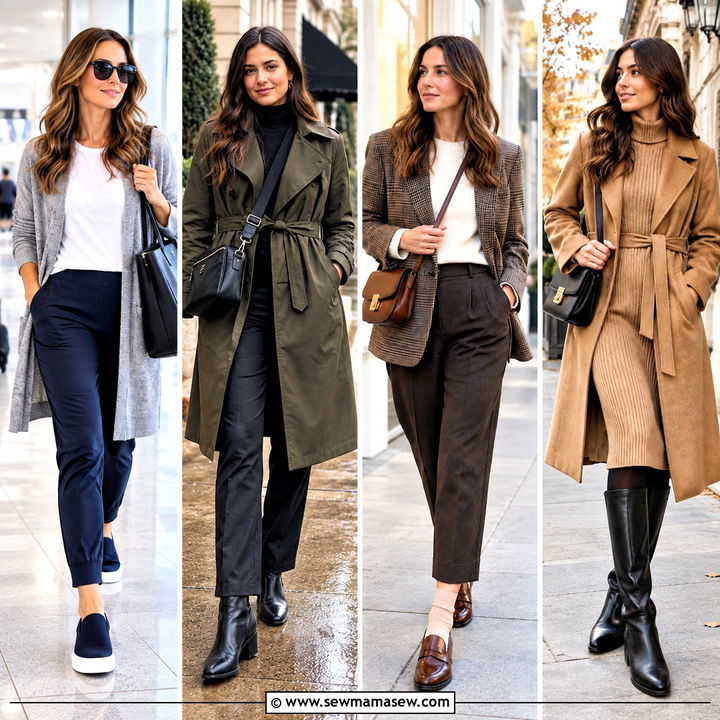
For the coldest winter visits, a long double-breasted wool coat in camel, charcoal or black over a fine-gauge turtleneck and tailored wool trousers gives a tall, city-smart shape. The coat's square shoulders and sharp lapels do the structural work, while the thin layers underneath keep you warm without bulk. Leather gloves, a cashmere scarf in a contrasting neutral and pointed knee boots on a low stacked heel add finish, with a structured doctor bag or frame satchel. It suits grand neoclassical buildings with sweeping staircases. Long wool coats are heavy to carry, so this is the outfit where I'd use the cloakroom and keep the layers underneath polished.
35. Linen shirt dress and flat sandals

On the hottest days, a breathable linen or cotton-blend shirt dress in white, pale blue or natural beige is my answer. The loose fit lets air move, and the collar and button front keep it smart enough for a cultural setting. Flat leather sandals with supportive straps handle hard floors, and a straw tote or canvas bucket bag carries sunscreen, water and guides, with cat-eye sunglasses and a simple gold necklace. It suits bright museums with large windows and outdoor sculpture gardens. Sandals and cold marble are a less pleasant mix than they sound, so I'd pick a pair with a cushioned footbed, not a flat leather sole.
Shoes for Standing Still, Not Just Walking
Museum tiredness is different from a long walk. Much of the visit is slow shuffling and standing in front of a painting, which loads your heels and lower back more than steady walking does. Hard floors like marble, stone and polished concrete give back no cushioning at all.
That's why I look for three things in a museum shoe: a cushioned footbed or room for an insole, a rubber sole that grips polished floors and stays quiet, and a shape you've already worn for a full day somewhere else. Hard leather soles and thin heels click loudly in silent galleries and slip on stone stairs. New shoes of any kind are a gamble, so break them in at home first.
- Best bets: cushioned leather sneakers, lug-sole loafers, low block-heel ankle boots and padded ballet flats.
- Use with care: thin-soled ballet flats, smooth leather-soled boots and flat sandals with no arch support.
- Skip: stilettos, brand-new boots and anything you've never worn for more than an hour.
Dress for the Fourth Hour of the Visit
A museum day makes you both spectator and participant, and your clothes should help rather than distract. The outfits that work best balance looks with real comfort so you can wander, stand and take it all in. Neutral palettes feel quietly sophisticated, while bold single colors and artistic prints let personality show. Layers handle shifting gallery temperatures, and supportive shoes are the one thing I'd never compromise on. Across all 35 looks, the rule is the same: dress with intention, but never at the cost of your own ease. When your clothes feel good, you can forget them and get lost in the art.
Related posts: