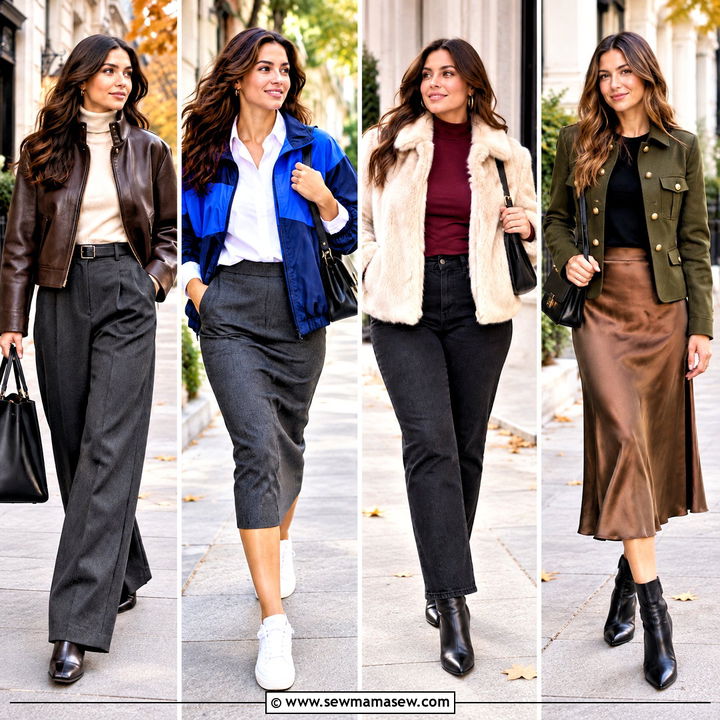
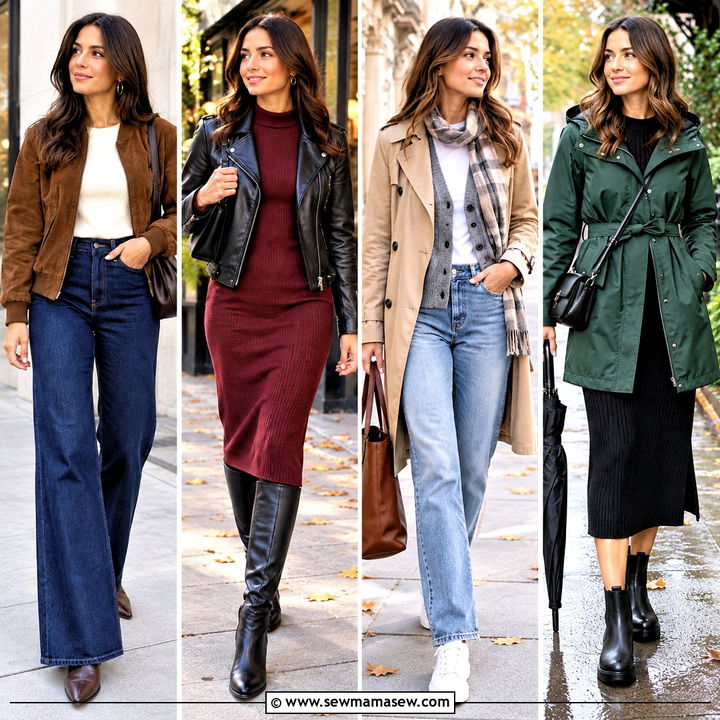
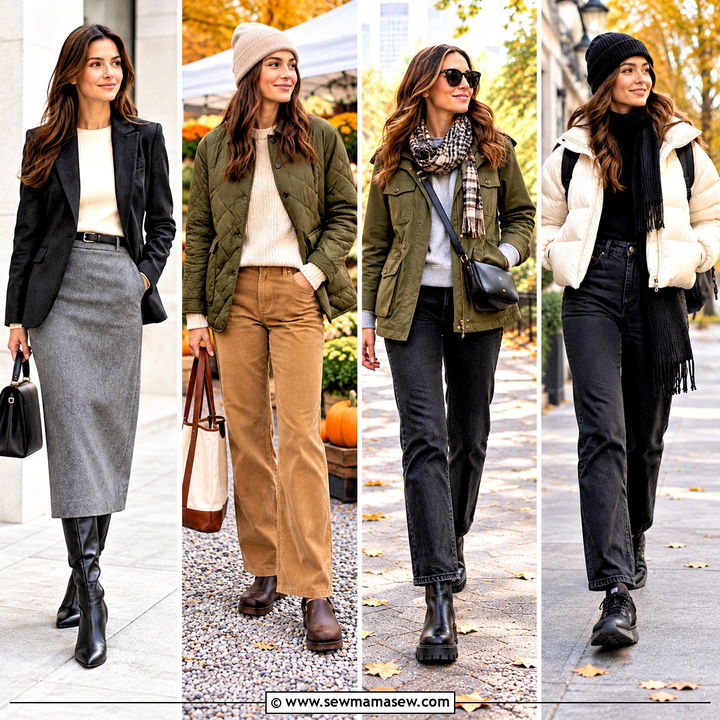
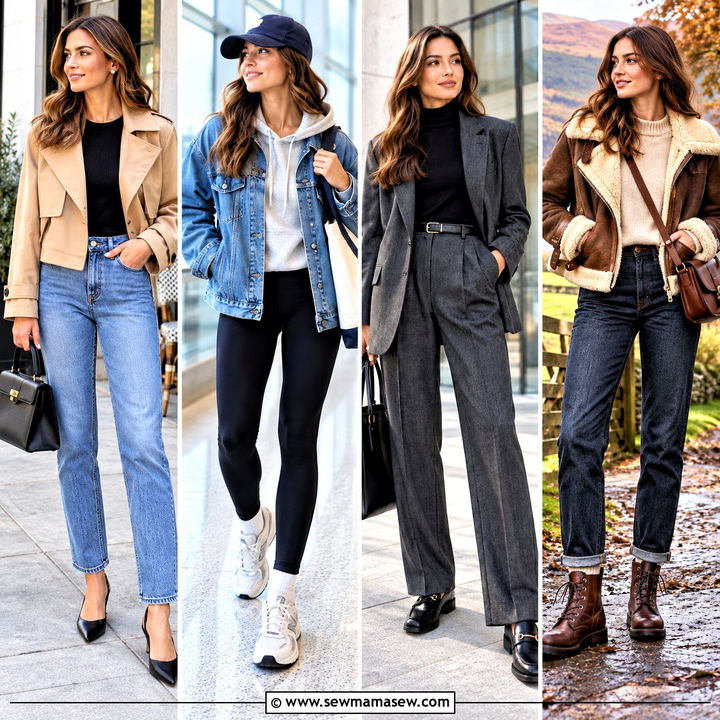
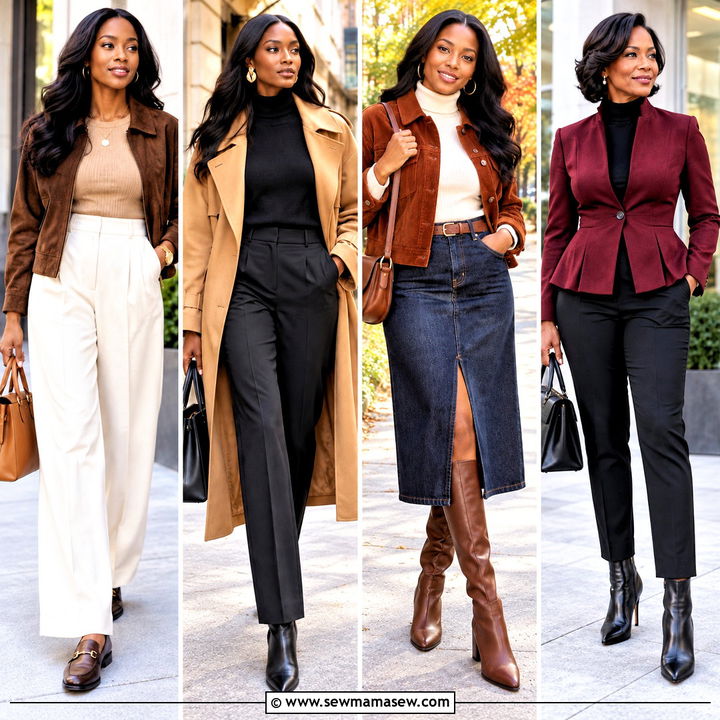
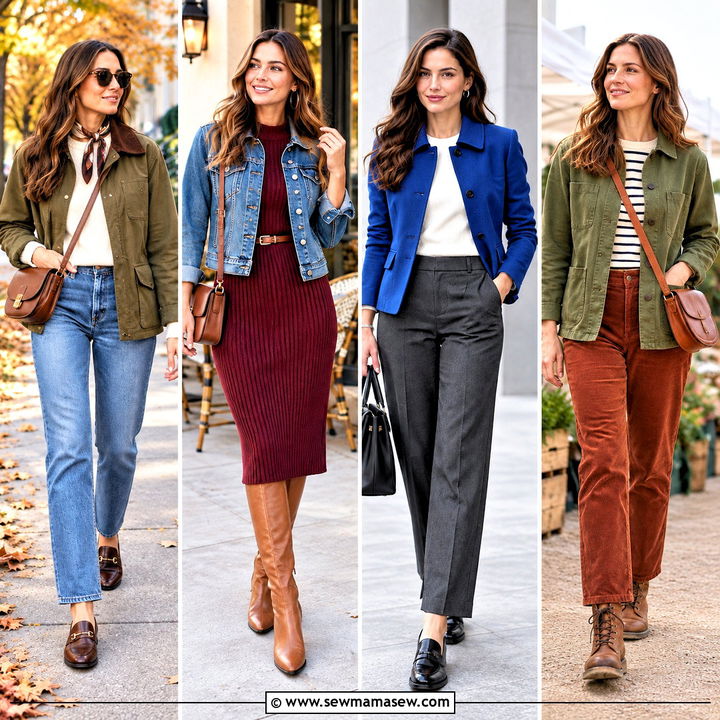
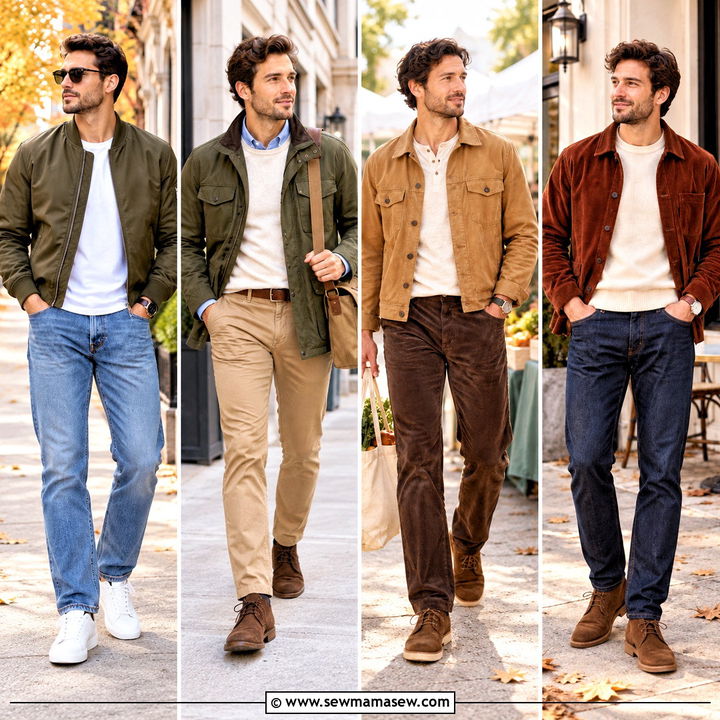
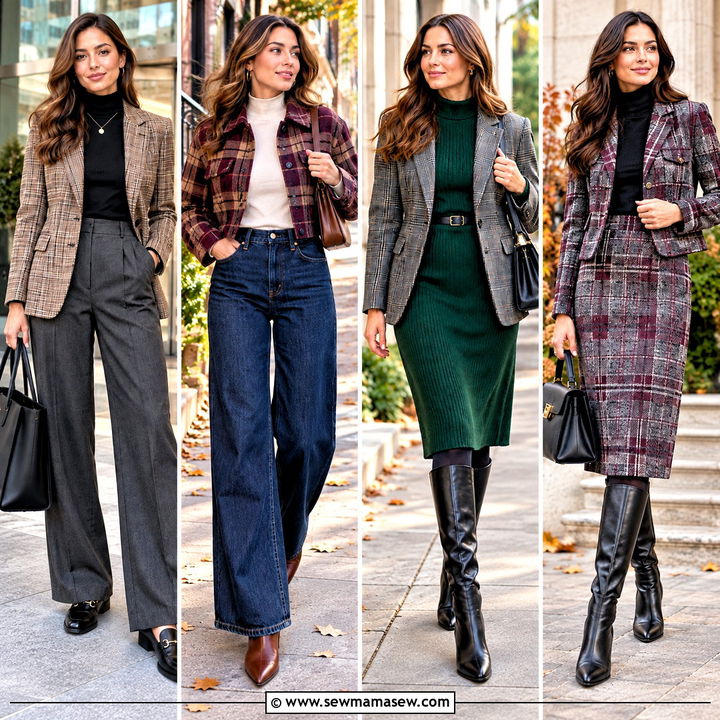
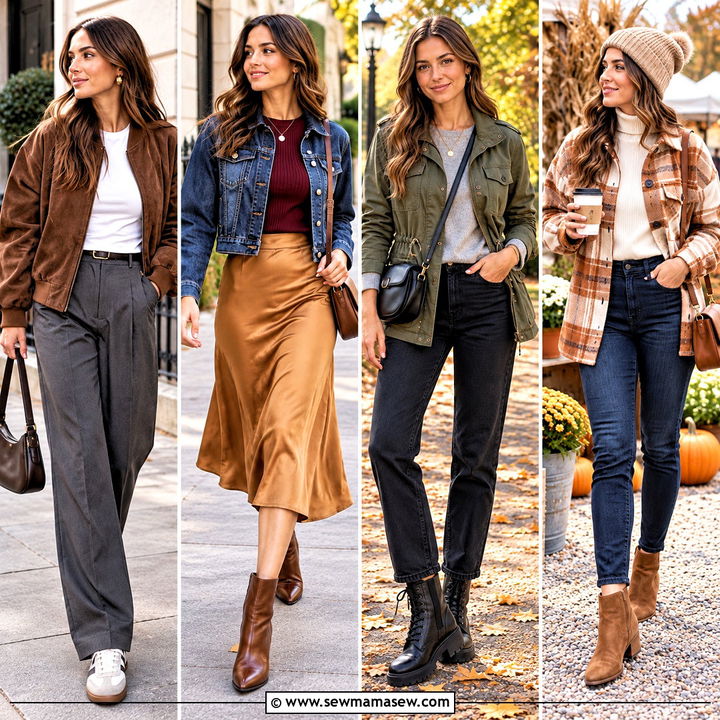
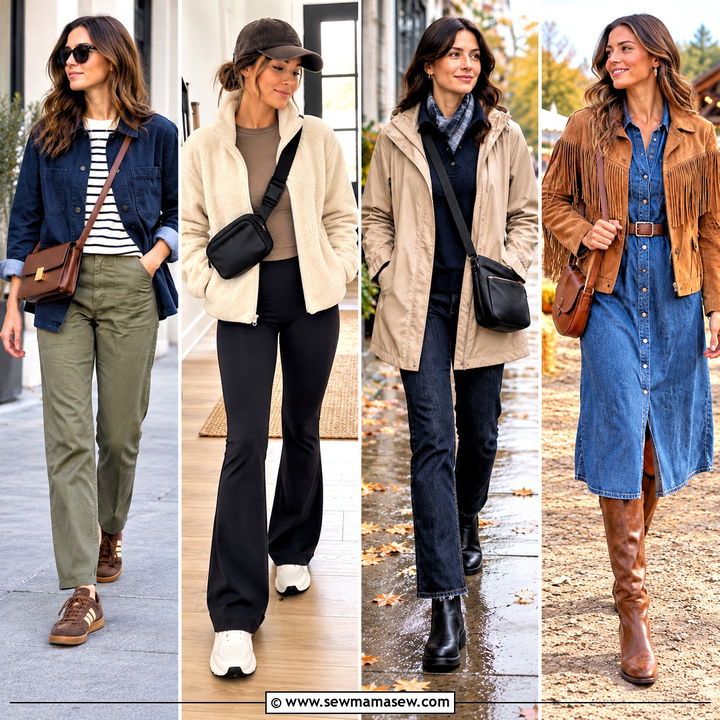
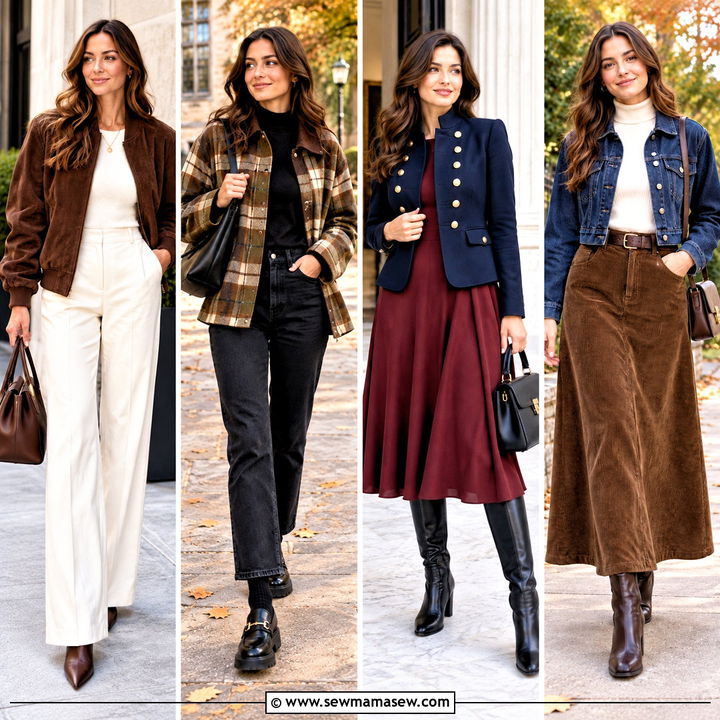
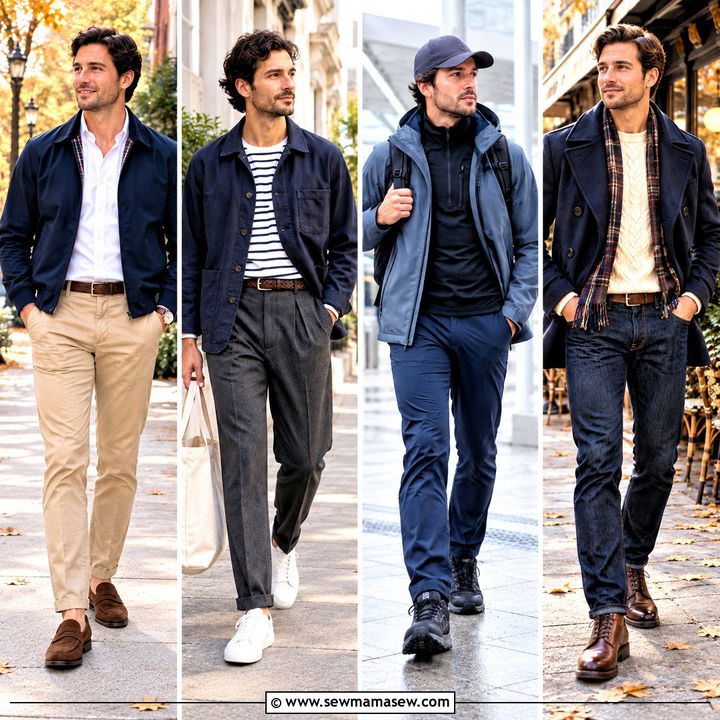
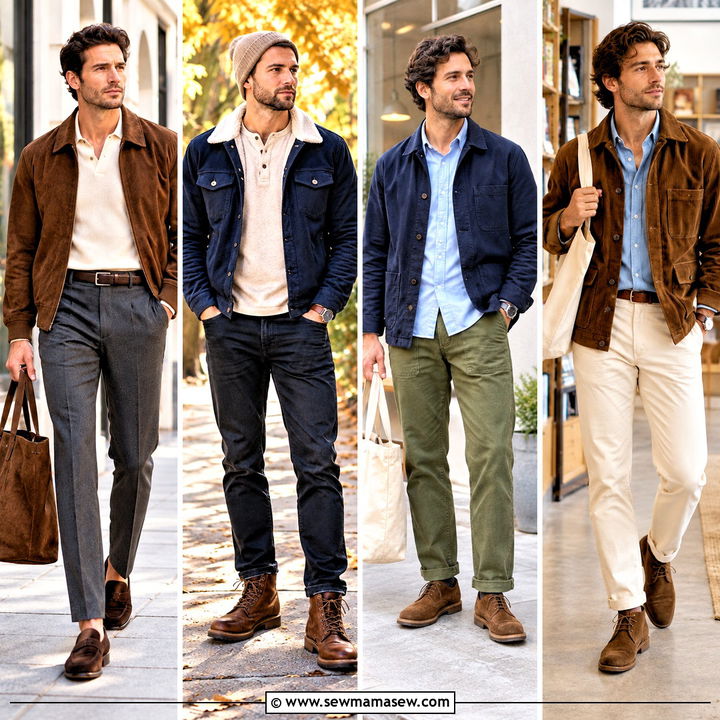
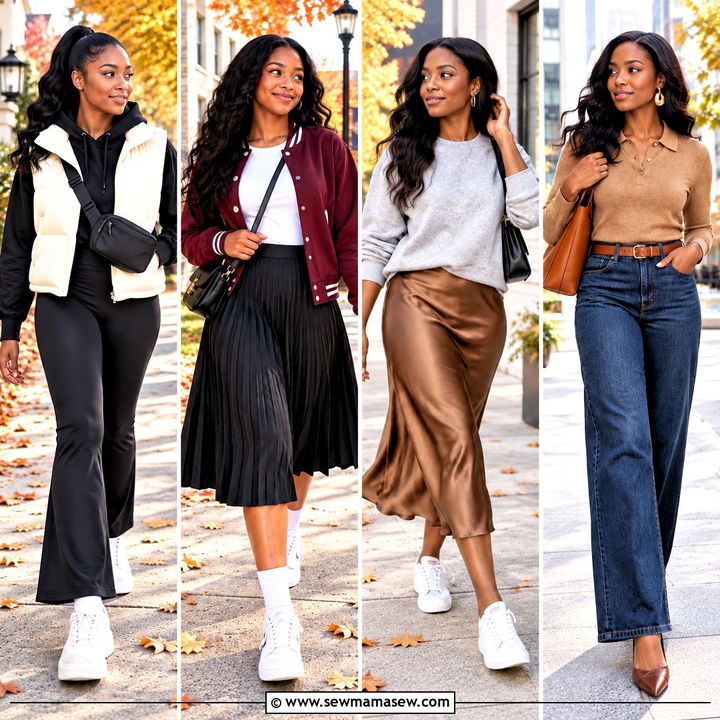
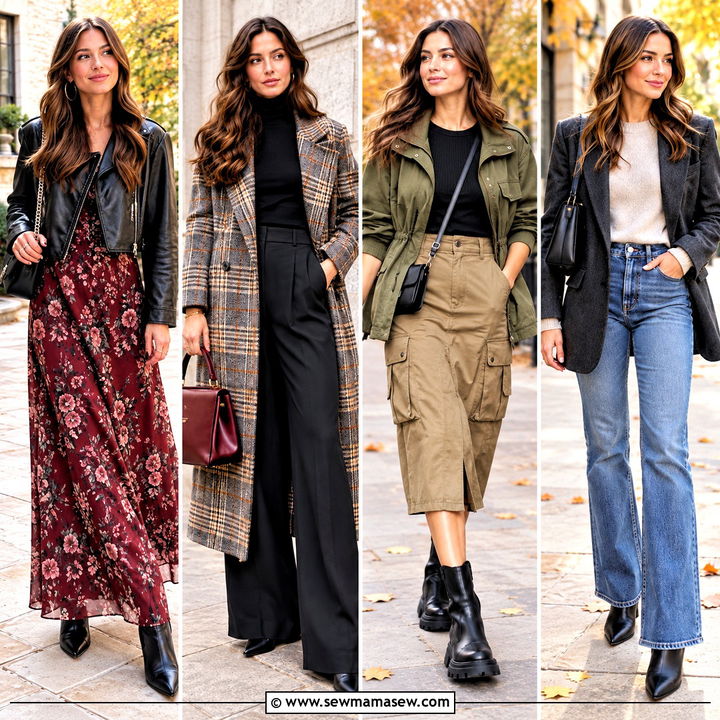
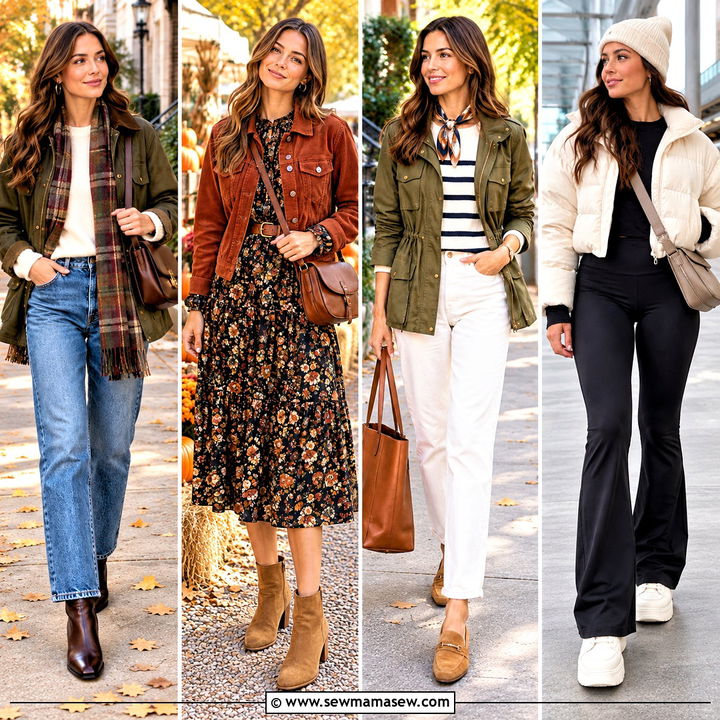
When I go through someone's closet in September, the jacket rail tells me more than anything else. A good casual fall jacket has to fit over a sweater, go with at least three different bottoms and feel right from the first crisp mornings through the raw afternoons of November. Barn jackets, suede, bombers and denim are all having a moment, and utility and rain layers never really leave. Cut matters as much as style: cropped jackets mark the waist, longer ones give coverage, and relaxed shapes leave room for knitwear. Below are fifteen jackets, each shown as a full outfit, with notes on who each one suits and what to check before you buy.
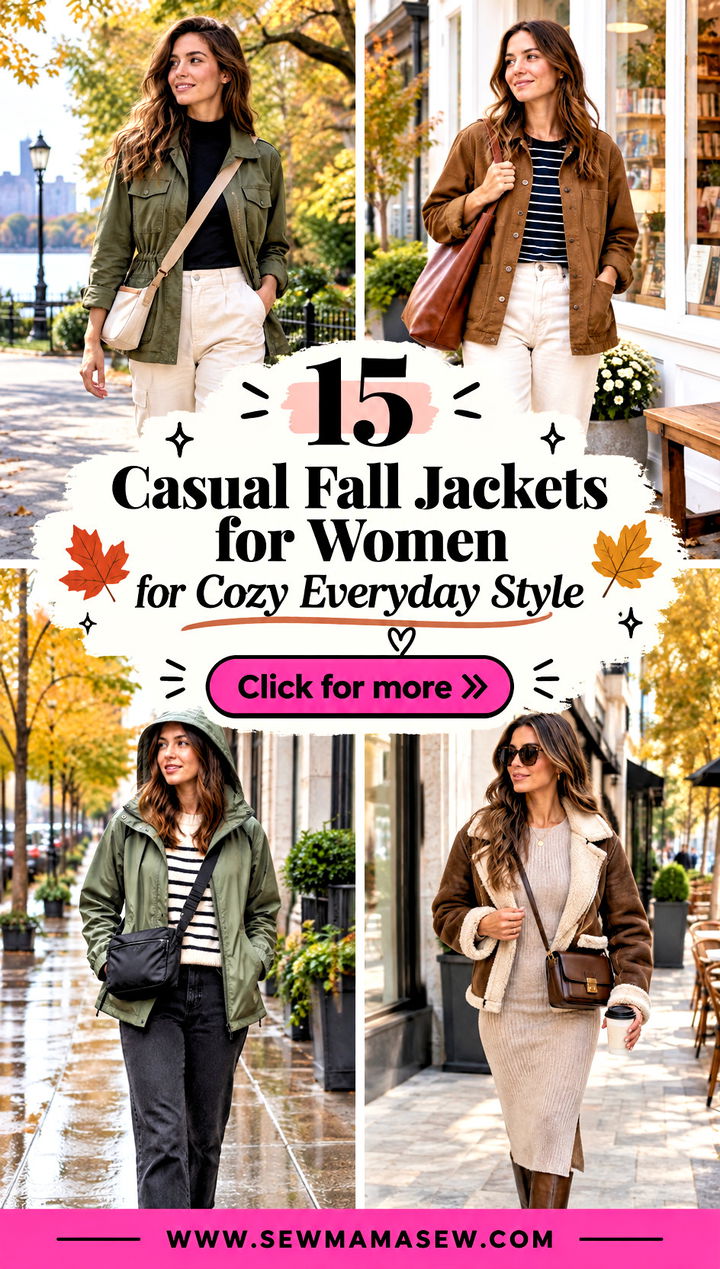
Bring Your Bulkiest Sweater to the Fitting Room
Most fall jackets are bought in a tee and worn over knitwear, which is why so many end up too tight by November. When I shop with someone, we always bring or borrow the bulkiest sweater they own and run through four checks.
- Shoulders. The seam should sit at the edge of your shoulder, or slightly past it on a relaxed cut. Shoulders are the hardest thing to alter, so buy for them first.
- Sleeves. With arms down, the cuff should cover your wrist bone. Reach forward; if the sleeve pulls back past your wrist, it's too short over knitwear.
- Back. Cross your arms. Tight pulling across the shoulder blades means you need the next size.
- Closure. Zip or button it all the way. Even if you'll wear it open, you want the option on a windy day.
Then look at the length in a full mirror with the bottoms you wear most. A jacket that ends exactly at the widest part of your hips draws a horizontal line there, so I aim either a little above it or a little below. If you're between sizes in a structured jacket like leather or a blazer, take the larger one and have the sleeves shortened; going small almost never works once a sweater goes underneath.
1. Barn Jacket With Straight-Leg Jeans
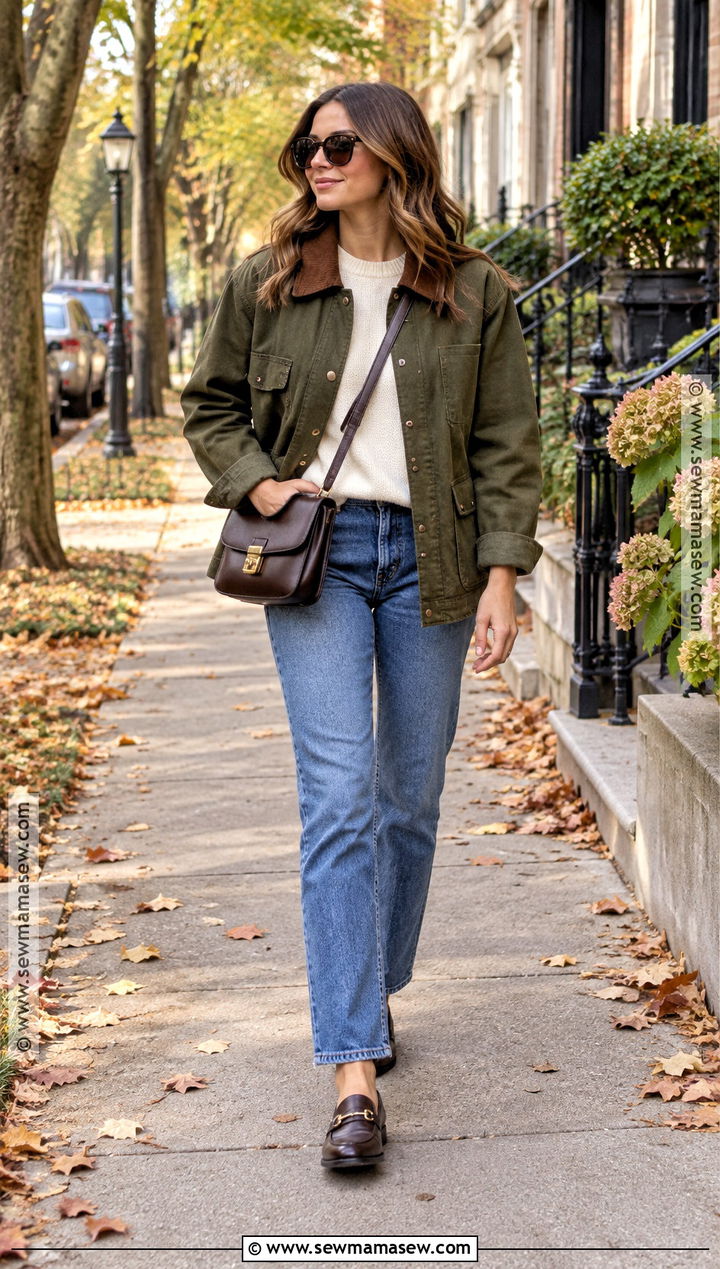
The barn jacket is the one I'd buy first if you own none of these. Olive, tan, navy or chocolate with a contrasting corduroy collar is the classic version. Over a cream crewneck or striped tee, with straight blue jeans, it looks relaxed without bulk. Brown loafers, ankle boots or retro sneakers all work. Waxed or heavy cotton canvas starts stiff and softens over a season of wear, so don't judge the fit by how rigid it feels in the store. If it reads boxy on you, wear it open and let a little sweater cuff show; that vertical line does most of the shaping. Petite frames do best with a hip-length cut.
2. Suede Bomber Jacket With Dark Jeans
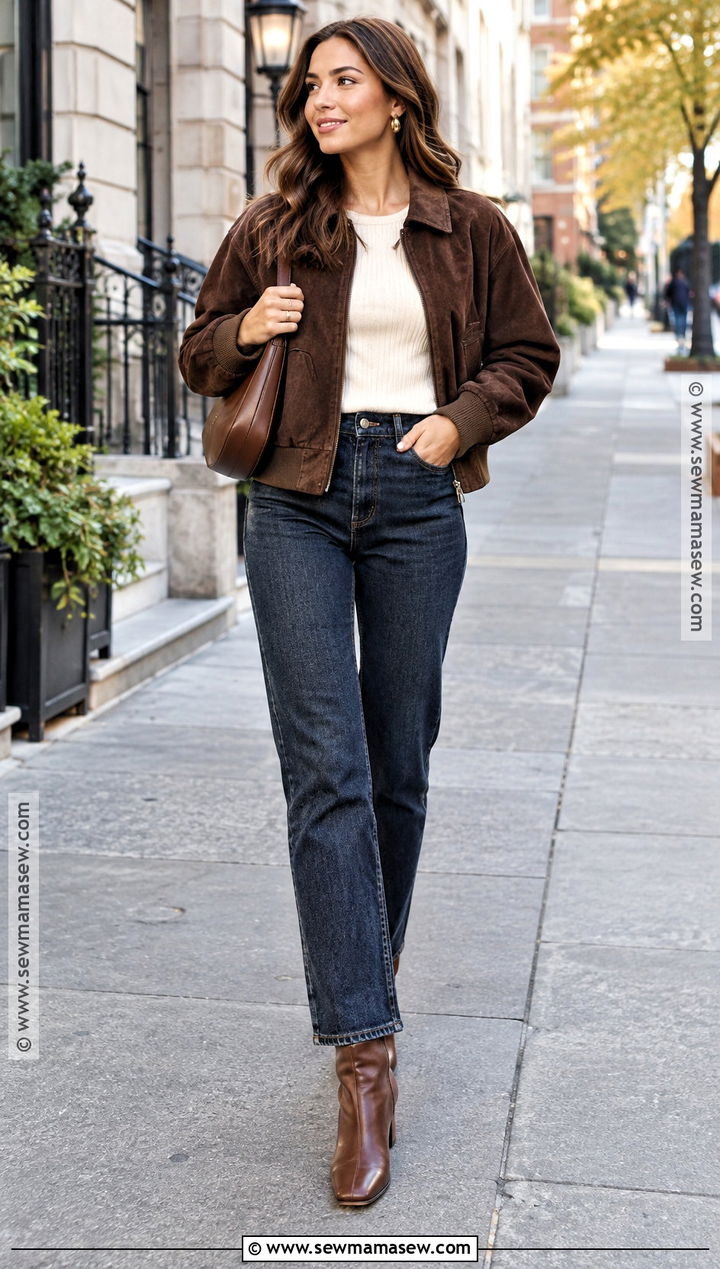
A suede bomber has the softest texture on this list. Chocolate, cognac, camel or burgundy all pair well with dark straight or wide-leg jeans. Under it, keep things fitted, a tee, ribbed knit or fine turtleneck, because the bomber's ribbed hem already puffs out at the waist. If you have broad shoulders, look for little padding and a soft collar. A slightly cropped hem over high-rise denim keeps the waist visible. Know what you're buying: real suede spots in rain and needs a protector spray before its first outing. If your fall is mostly wet, a faux suede will save you some worry.
3. Denim Jacket With Black Wide-Leg Pants
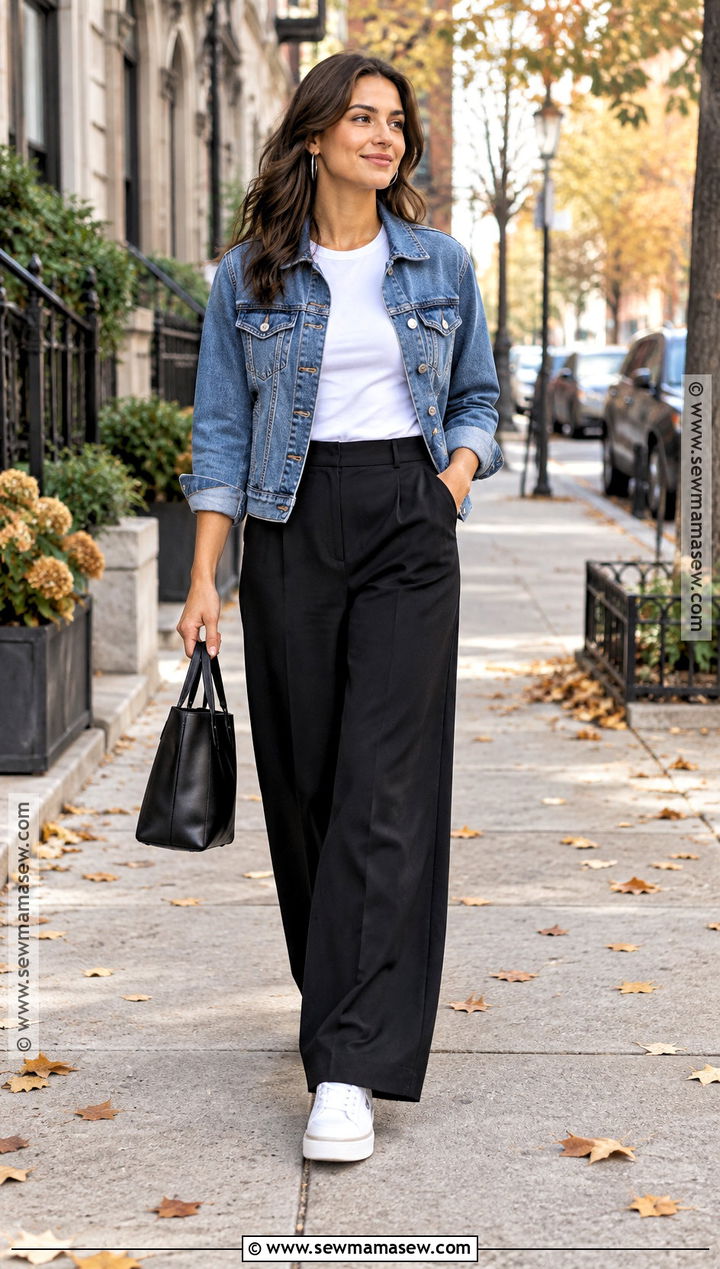
A medium-wash denim jacket is how I make dressier black trousers feel weekend-ready. Start with a white tee, gray knit or black mock-neck, then high-rise wide-leg pants with a fluid drape and white sneakers or black loafers. Rigid denim can't stretch over a thick sweater, so test the fit with the heaviest top you'd realistically wear underneath. A jacket ending at the top of the hip shows off the waist; a longer trucker cut covers more and suits taller frames. Roll the sleeves once or twice to show the wrist. Denim is also the most forgiving jacket here for a quick wash.
4. Leather Moto Jacket With Midi Skirt
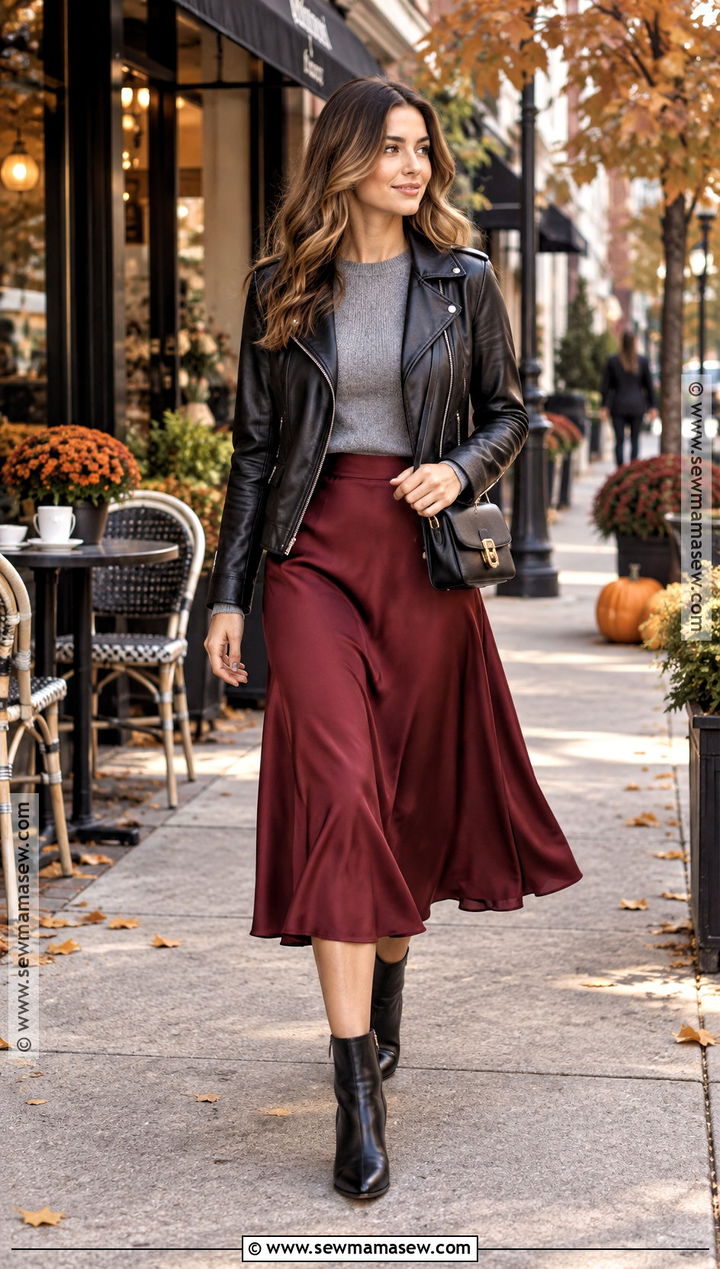
A leather moto over a flowing midi skirt is a contrast I like because each piece softens the other. Put a black or dark brown jacket over a thin fitted sweater, then a satin, knit or pleated midi skirt. Sleek ankle boots anchor the longer hem. Wear your crossbody so the bag sits above the widest part of the skirt rather than bouncing on it. Classic motos with big lapels and an asymmetric zip can gape on a fuller bust; a collarless or softly structured version usually lies flatter. New leather is stiff at the elbows, so give it a few weeks of wear before you decide whether it fits.
5. Quilted Jacket With Leggings And Boots
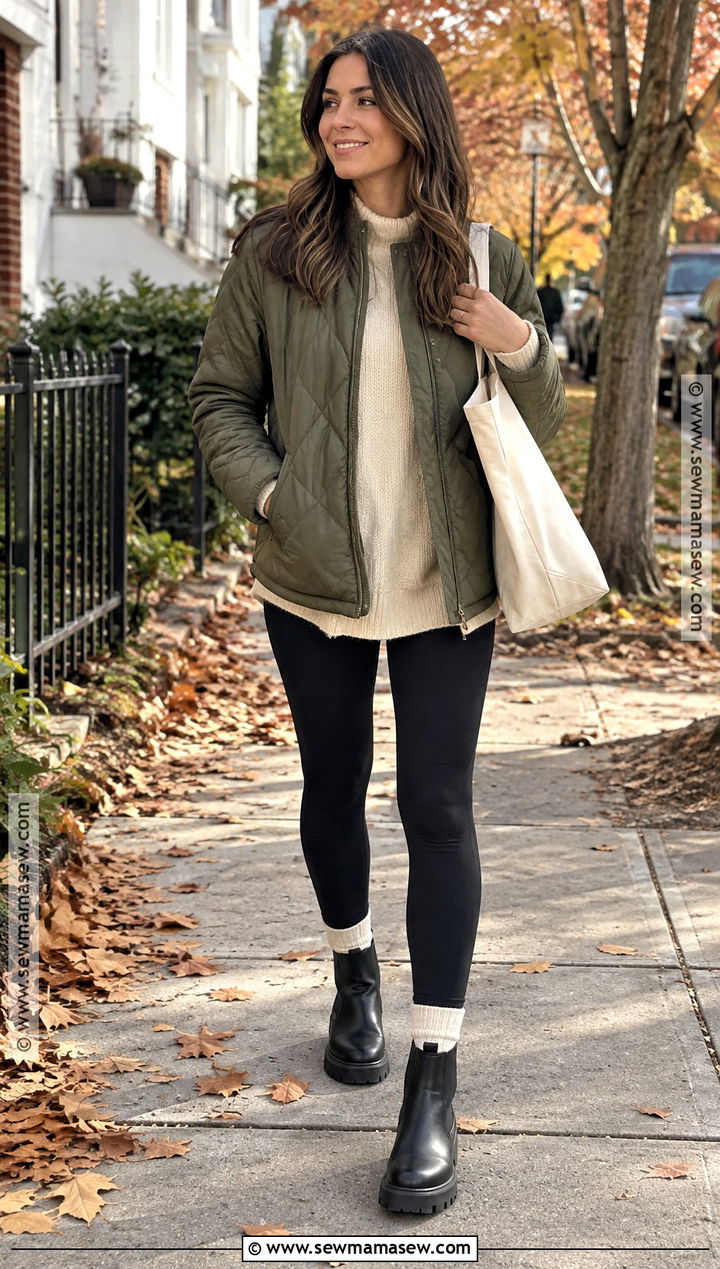
A lightweight quilted jacket gives warmth without feeling like winter gear. Layer olive, navy or cream over a long cotton shirt or fine knit, with thick black leggings or ponte pants. Lug-sole Chelsea boots grip wet sidewalks and leaf-covered paths, and crew socks keep ankles warm. Side slits let the jacket move over your hips when you walk or sit in the car. If oversized cuts swallow you, pick a lightly shaped one with narrow quilting; wide channels add visible bulk. It's the jacket for school runs and errands, and most of these machine wash well, which matters for a jacket you'll wear constantly.
6. Cropped Trench Jacket With Relaxed Jeans
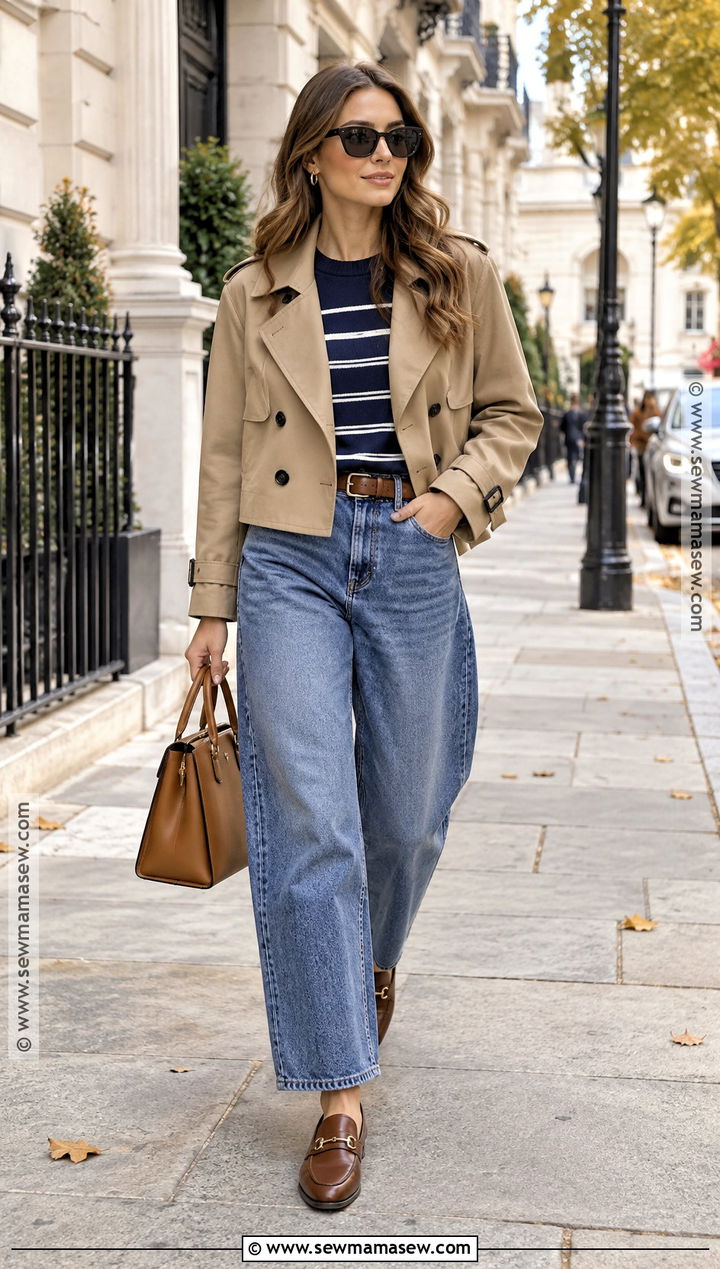
A cropped trench keeps the belt, collar and storm flap of the classic coat in a shorter, easier shape. Choose khaki, stone, navy or muted green over a striped knit or plain crewneck, and pair it with relaxed straight or barrel jeans. If you're long in the torso, the cropped hem raises your visual waist. With fuller hips, look for one that stops just above the widest point, never right at it. Wear it open so the top runs down the center. Cotton gabardine sheds a light drizzle but soaks through in real rain, so treat it as a dry-day jacket.
7. Utility Jacket With Cargo Pants
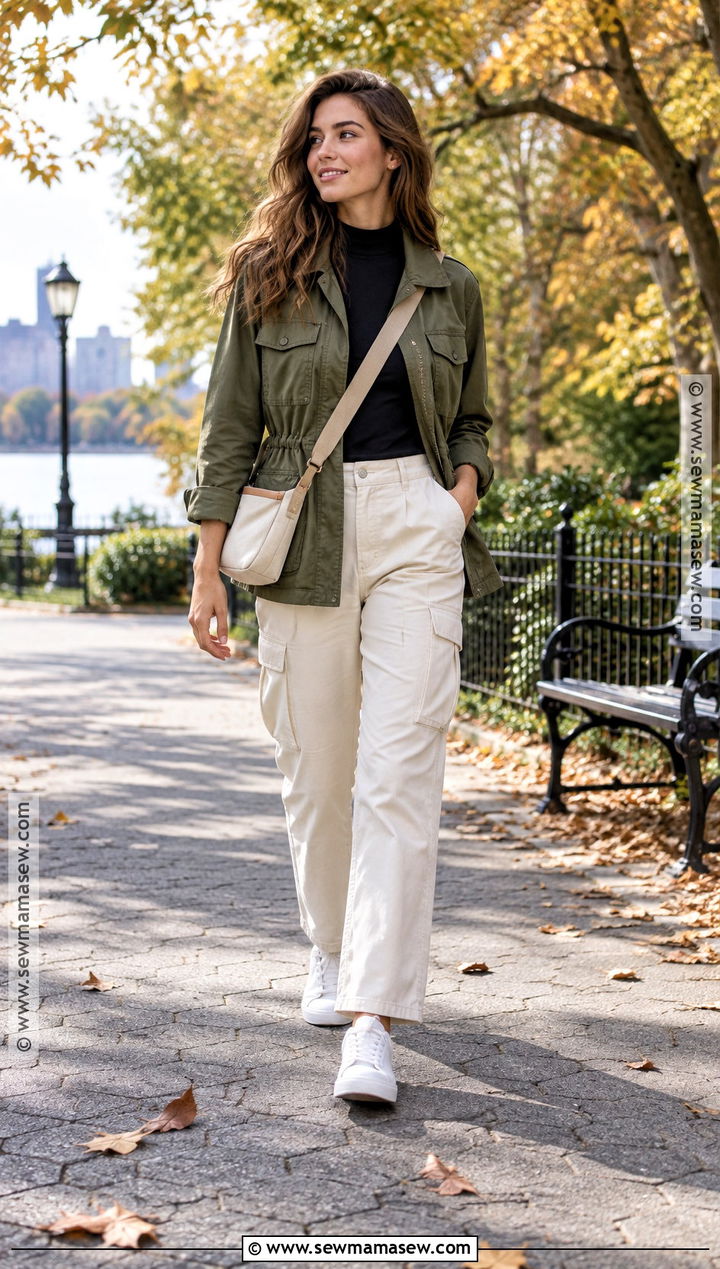
A utility jacket earns its place with pockets and structure. Pair a faded olive, khaki or brown one with a fitted neutral tee or thin mock-neck, then black, cream or dark green cargo pants in a straight or tapered cut. Minimal sneakers or lace-up boots keep it practical. The thing I watch here is volume: an oversized jacket over very loose cargos looks slouchy unless that's the point. Many utility jackets have an inner drawstring at the waist, and pulling it in a little gives you shape without changing the outfit. Push the sleeves up to lighten it.
8. Corduroy Jacket With Straight-Leg Trousers
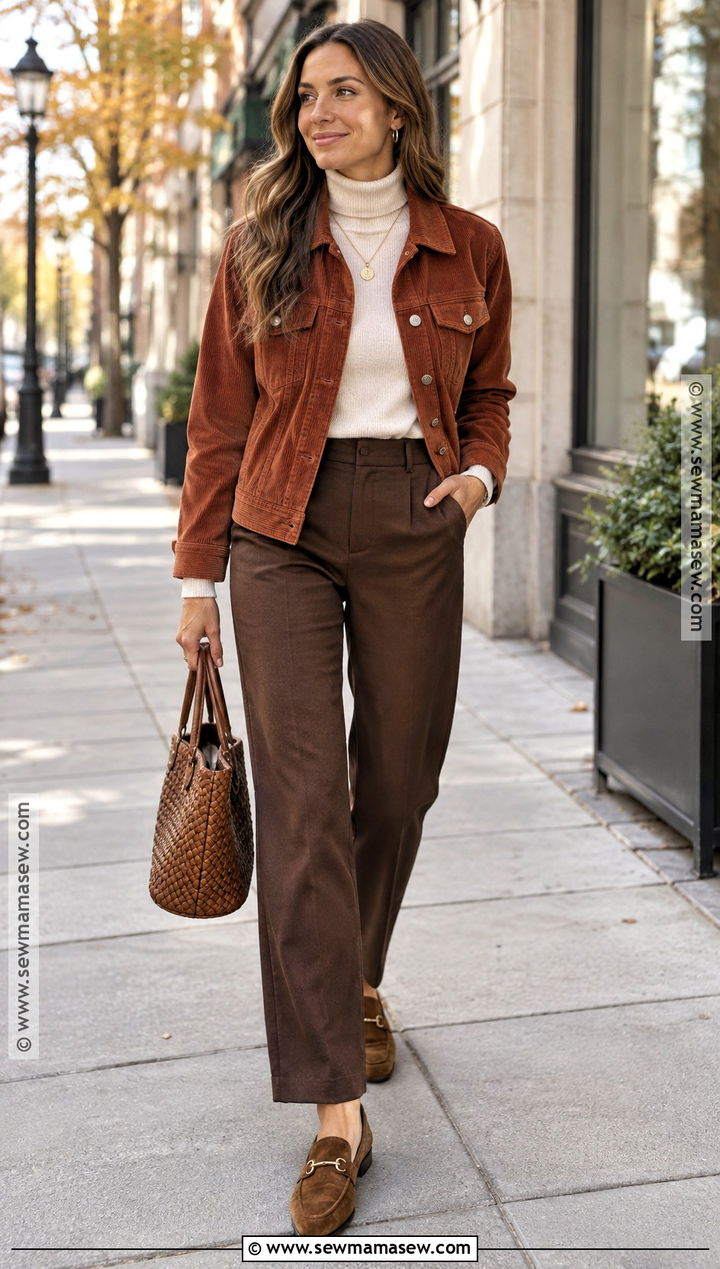
Corduroy adds warmth and depth on its own, so the rest can stay simple. Try a rust, camel or forest-green trucker over a cream thermal or light turtleneck, with straight trousers in chocolate, black or warm beige. Suede loafers or low-heeled ankle boots fit the vintage feel. Fine wale looks streamlined; wide wale is more casual and adds a little bulk. Keep your top and trousers close in color and let the jacket frame them, which lengthens the body. Cord crushes where you sit and lean, so brush the pile up with a soft clothes brush after wearing.
9. Plaid Shacket With Black Jeans
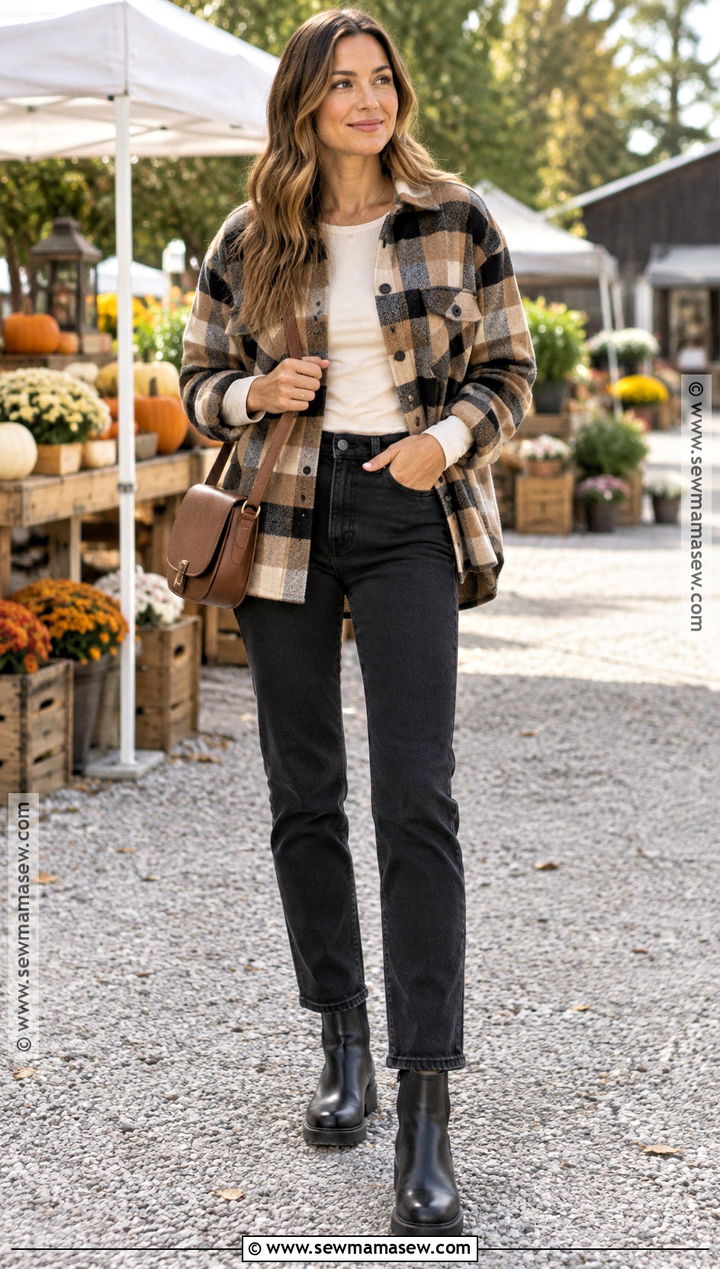
Plaid shackets feel like fall the moment you put one on. Pick a pattern with camel, cream, olive or rust in it so it works with your basics, and wear it open over a fitted long-sleeve tee with black straight jeans to calm the print. Chelsea boots or clogs, and a plain crossbody, not another pattern. Petite women should look for a smaller plaid and a hip-length hem; a big check on a small frame overwhelms. Stiff flannel stands away from the body, so if you're curvy, a softer brushed fabric that drapes will sit better. Leave a few inches of the inner top showing down the middle.
10. Lightweight Puffer Jacket With Joggers
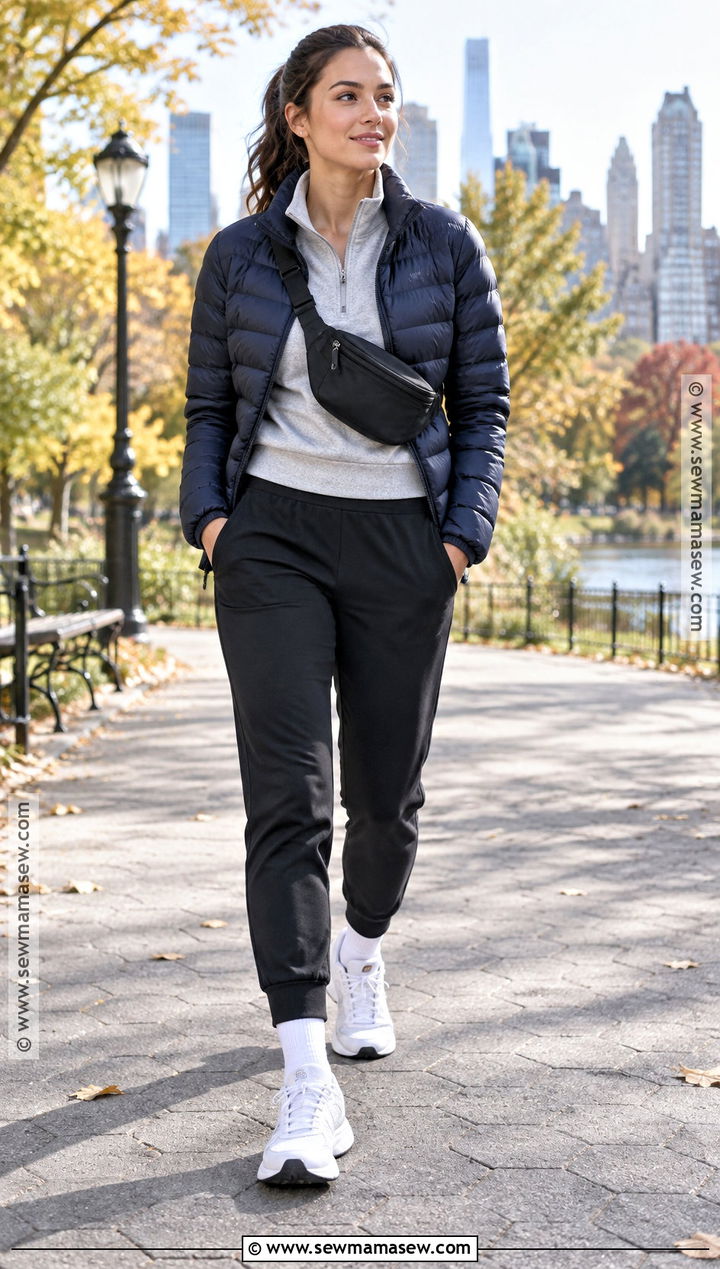
A slim, lightweight puffer is for days when it's cold but a winter coat is overkill. Wear a hip-length black, navy or taupe one over a sweatshirt or quarter-zip with tapered joggers in a matching neutral. Supportive sneakers and warm socks make it a walking outfit. A belt bag across the body keeps your hands free. Narrow baffles look sleeker than wide ones, and a curved or drawcord hem stops the puffer from turning into a box. Down packs small and is warmest for its weight, but synthetic fill keeps insulating when damp, which is worth weighing if your autumns are wet.
11. Oversized Blazer Jacket With Blue Jeans
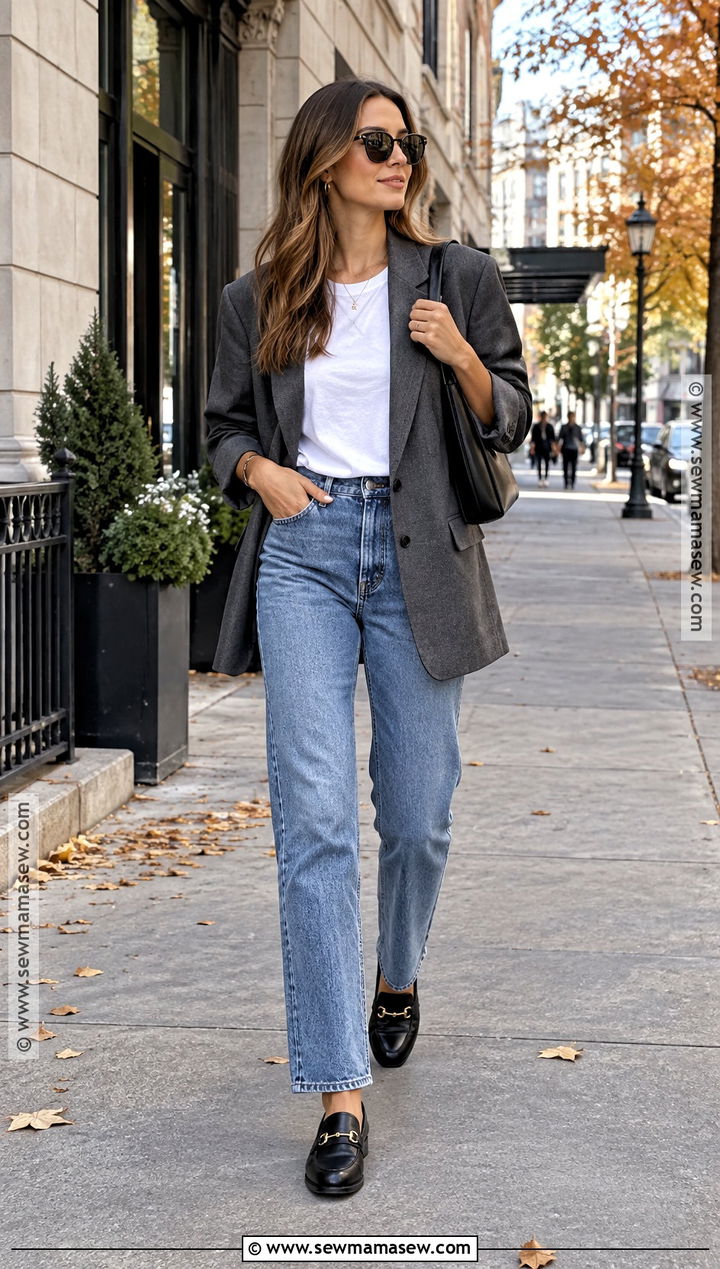
An oversized blazer looks casual when everything under it is plain. Start with a white tee, fitted tank or fine crewneck, then medium-wash straight jeans and a brown, charcoal or subtle plaid blazer. Clean sneakers or loafers and a soft shoulder bag keep it relaxed. Push the sleeves up a little so it doesn't read corporate. Oversized should mean a roomier body, not shoulders hanging halfway down your arm; I check that the shoulder seam lands no more than an inch or so past your own shoulder. If you're petite, moderate shoulders are kinder than dramatic ones.
12. Varsity Jacket With Pleated Pants
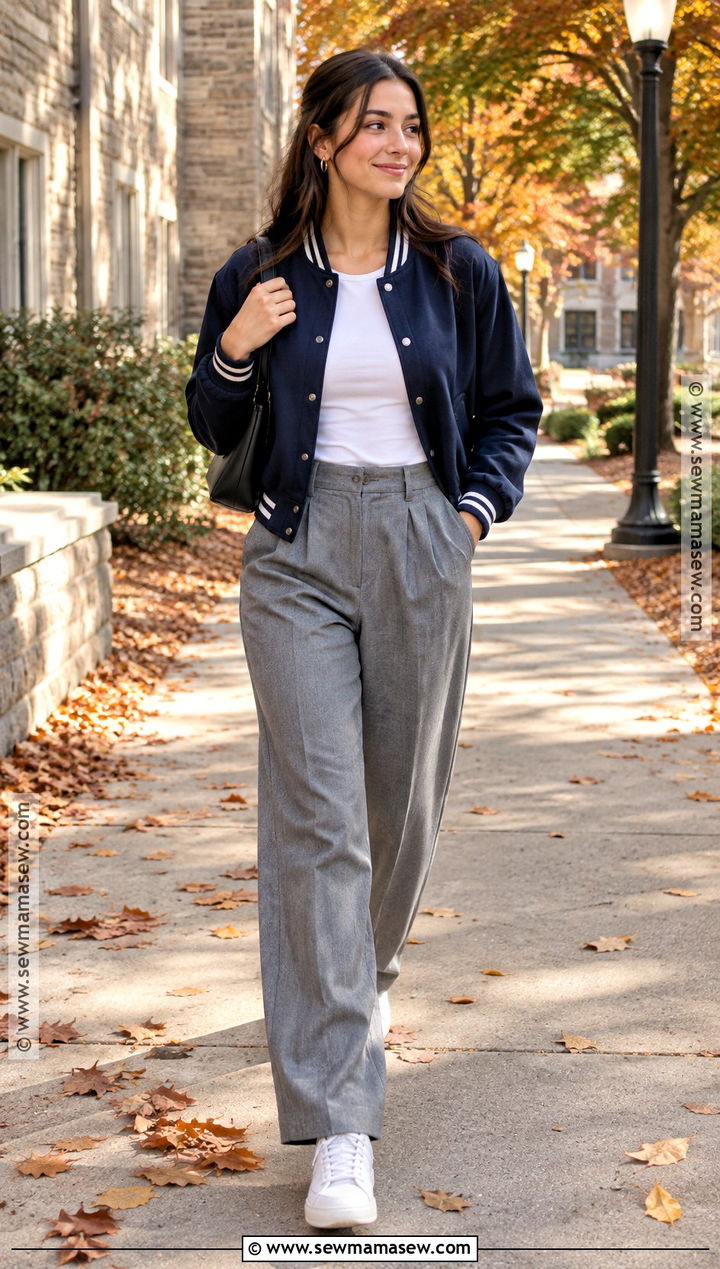
A varsity jacket looks grown-up when you keep the sporty parts quiet. Pick navy, forest green, burgundy or chocolate with minimal lettering and simple trim, over a white tee or fine sweater, with high-rise pleated pants in gray, cream or black. Low sneakers keep the athletic feel; loafers make it smarter. A waist-length jacket balances wide trousers well. Most varsity jackets have a ribbed hem and cuffs that grip, so check that the hem sits at your waist rather than riding up onto your ribs when you raise your arms. Stick to two or three colors in the whole outfit.
13. Chore Jacket With White Jeans
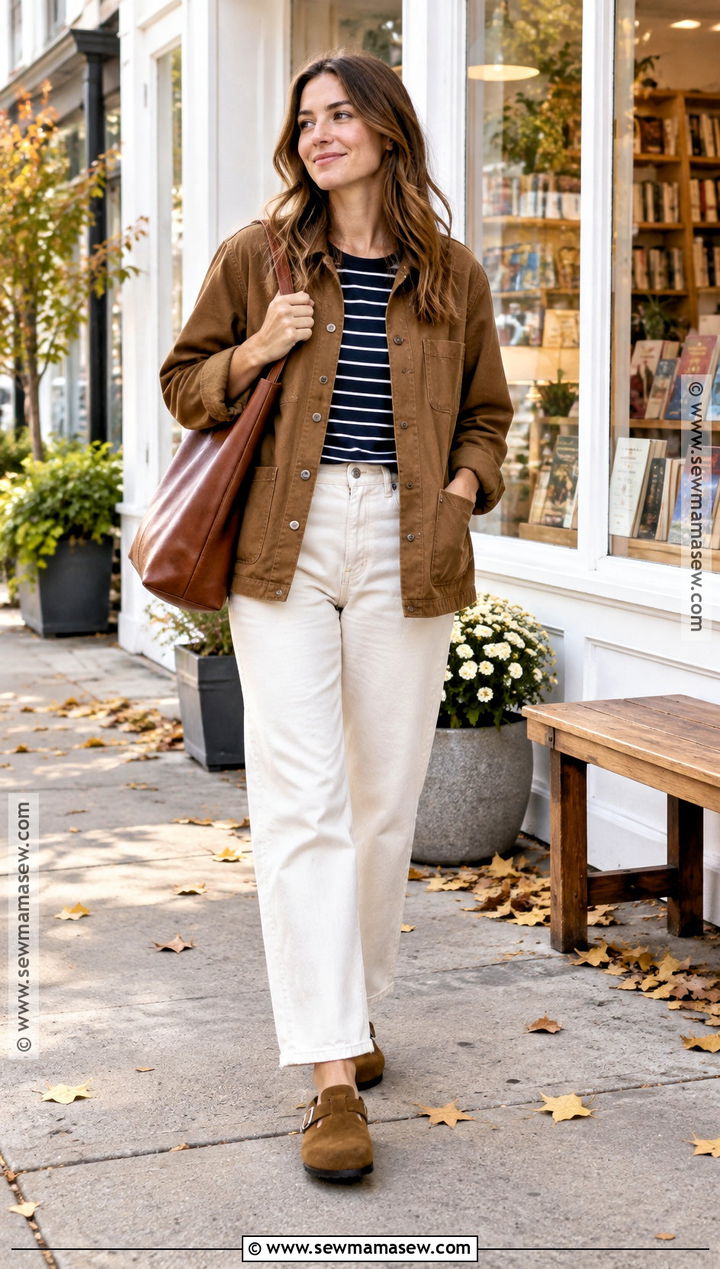
A chore jacket is the easiest way to carry white jeans into fall. Choose navy, tobacco, olive or brown canvas over a striped tee or oatmeal knit, and swap bright white for ecru, which looks more seasonal. Brown loafers, suede clogs or leather ankle boots and a cognac tote finish it. Chore jackets are cut straight and fairly short, so they suit most torsos; roll the sleeves if you want a bit more definition. Boots close to the jean color lengthen your leg. The canvas wears in and fades at the seams over time, which is exactly what makes a good one worth keeping.
14. Hooded Rain Jacket With Casual Trousers
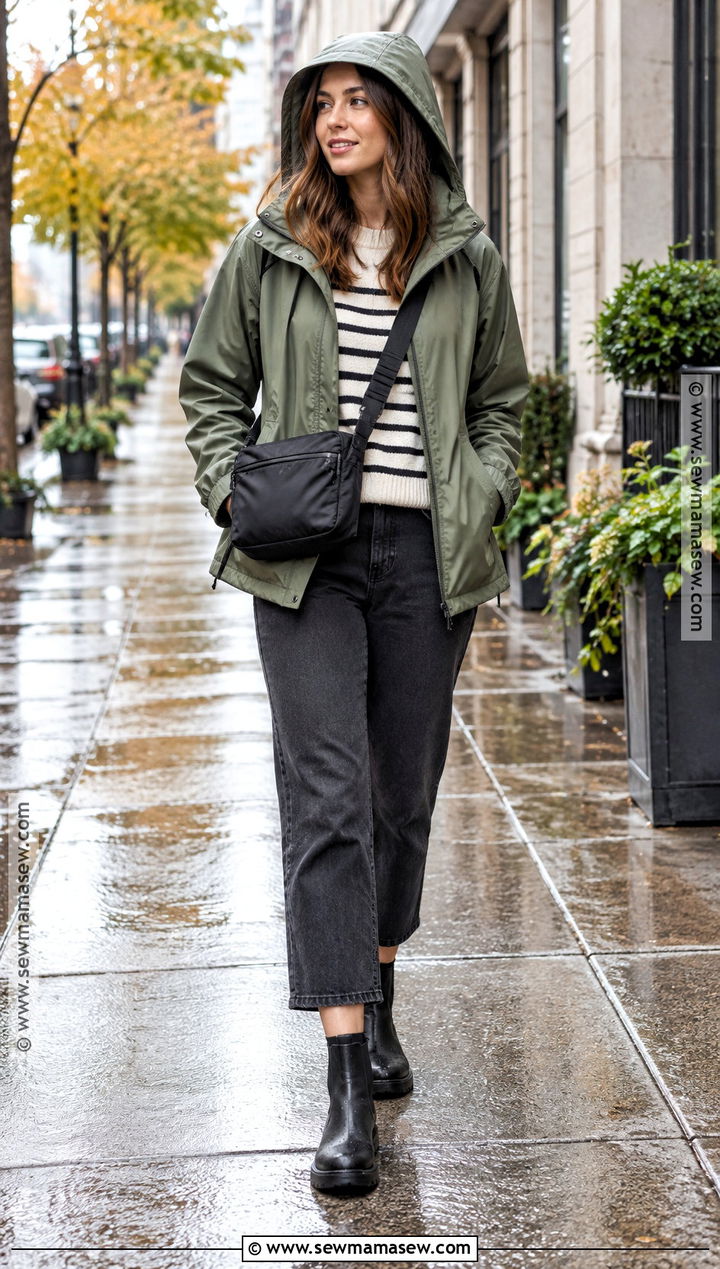
Rain doesn't have to mean giving up on the outfit. A hooded jacket in sage, navy, stone or muted red goes over a striped sweater or wicking long-sleeve top, with cropped casual or technical trousers in black or charcoal and waterproof Chelsea boots. Look for taped seams if you get proper downpours; water-resistant fabric alone handles drizzle, not a soaking. An adjustable waist or curved hem keeps the shape from going tent-like. Try the hood on and turn your head; a good one moves with you instead of blocking your side view. Trousers and boots in the same shade keep it tidy.
15. Aviator Jacket With Knit Dress
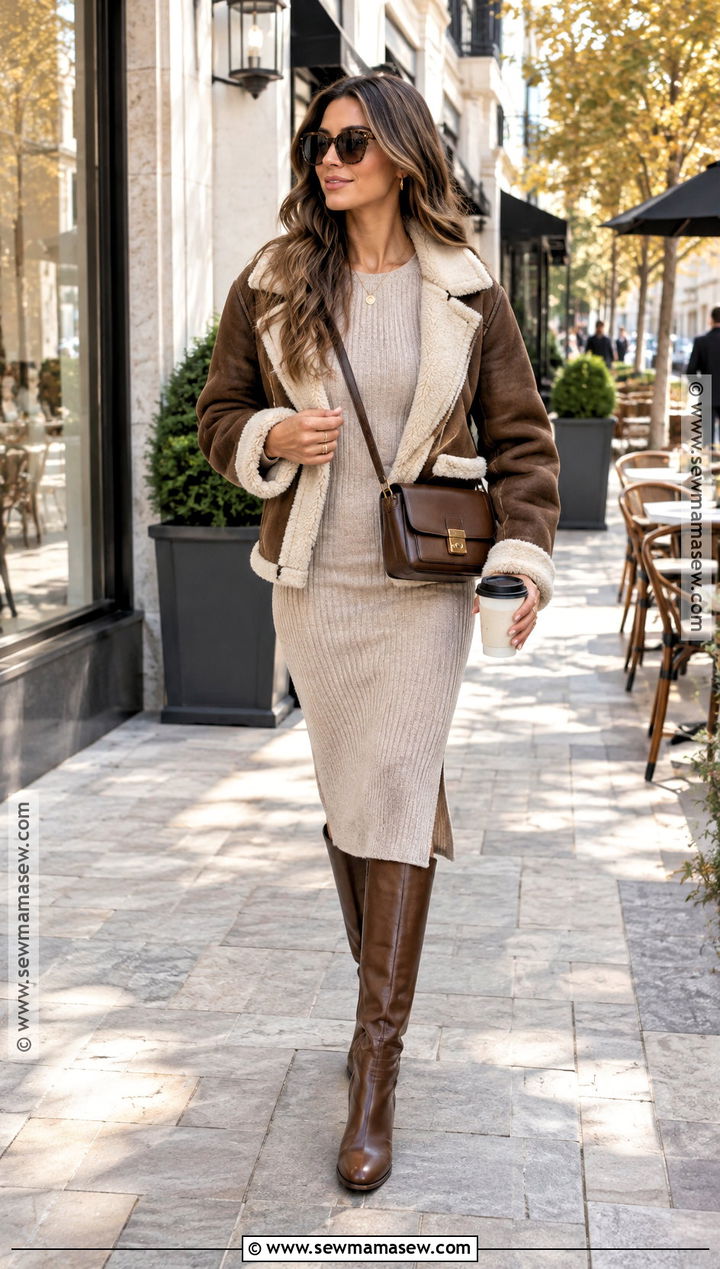
A fleece-lined aviator over a knit dress is the warmest outfit here. Choose brown, black, tan or cream over a ribbed midi in charcoal, oatmeal or olive. Flat knee-high boots give coverage, while chunky ankle boots suit a dress that shows some leg, with opaque tights when it's cold. Aviators carry a lot of volume at the collar and body, so keep the dress streamlined. Cropped versions mark the waist; longer ones cover the hips. Shearling-style collars are heavy, which means a flimsy hanger will dent the shoulders, so store it on a broad wooden one.
Which Jacket Handles Drizzle, Wind or Real Cold
These fifteen don't all perform the same once the weather turns. Here's how I sort them for clients who want one or two that cover their actual climate.
Wet autumns
The hooded rain jacket is the only true rain layer here. Waxed barn jackets and quilted nylon handle showers well. Suede, corduroy and unlined cotton trench jackets soak through, so keep them for dry days.
Windy days
Leather blocks wind better than almost anything, and a puffer with a snug cuff and hem traps heat. Knit-heavy shackets and loose chore jackets let wind straight through unless you layer a close-fitting knit underneath.
Late fall cold
The aviator and the lightweight puffer are the warmest. Denim, utility and cropped trench jackets work as long as you add a proper sweater, which is another reason to check the fit over one before buying.
A Short Jacket Rail Goes a Long Way
A fall jacket is only worth buying if it works with what's already in your closet. Between barn, suede, denim, leather, quilted and utility shapes, you can cover most temperatures with two or three pieces. Before you buy, think about your weather, which bottoms you wear most, what your days involve and how thick your sweaters are. Neutrals go with everything, but burgundy, forest green and rust add color without being hard to pair. Use the outfits above as formulas and swap in your own shoes, bags and fabrics.
Related posts: