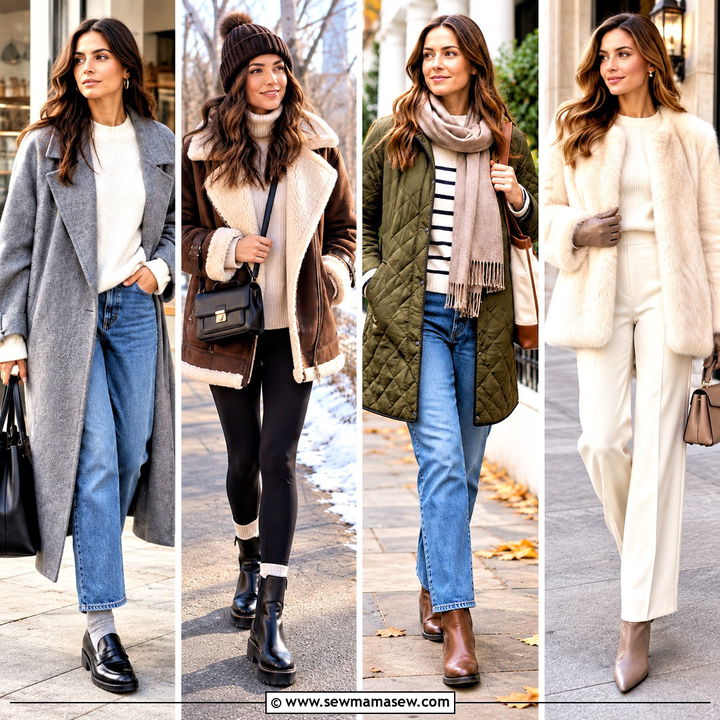
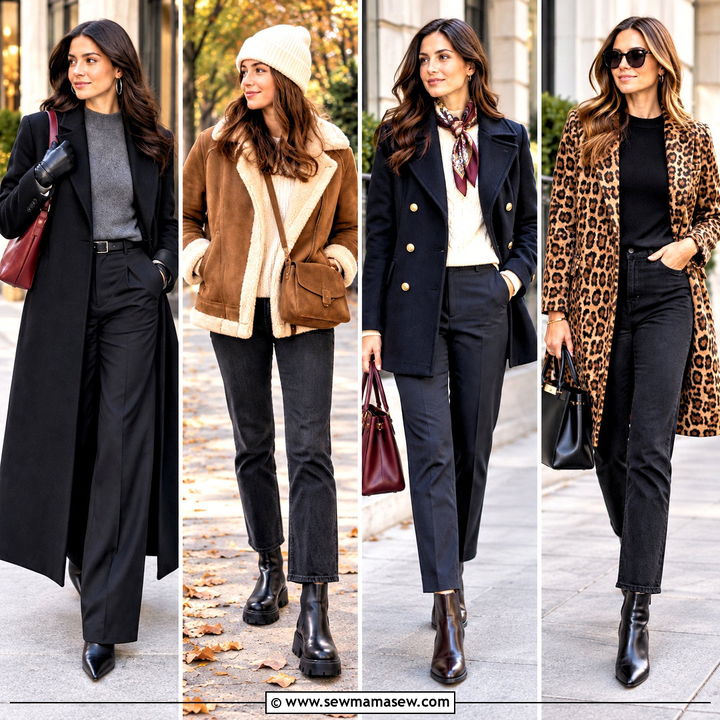
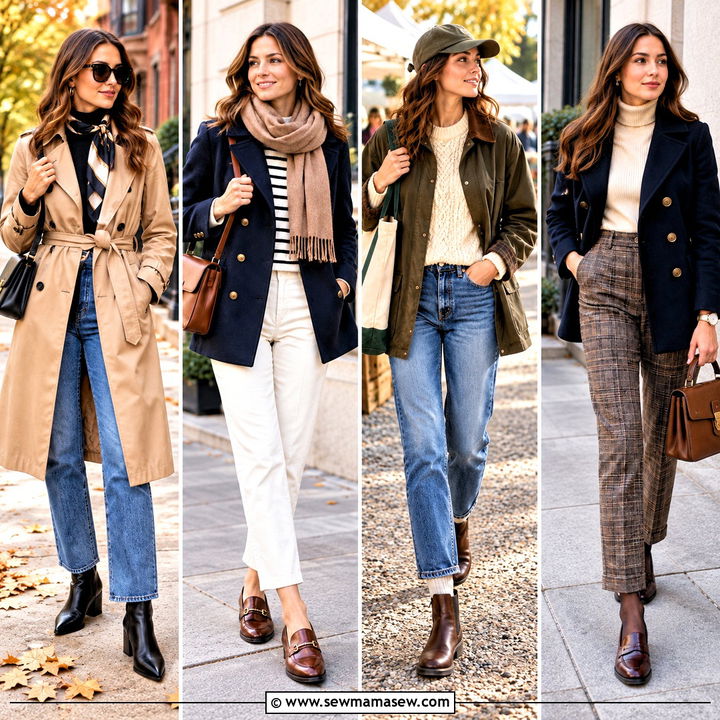
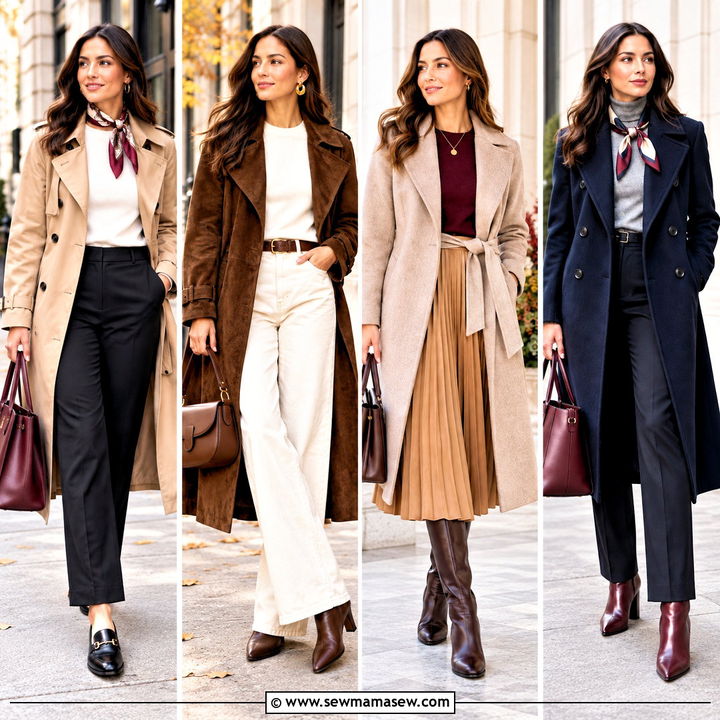
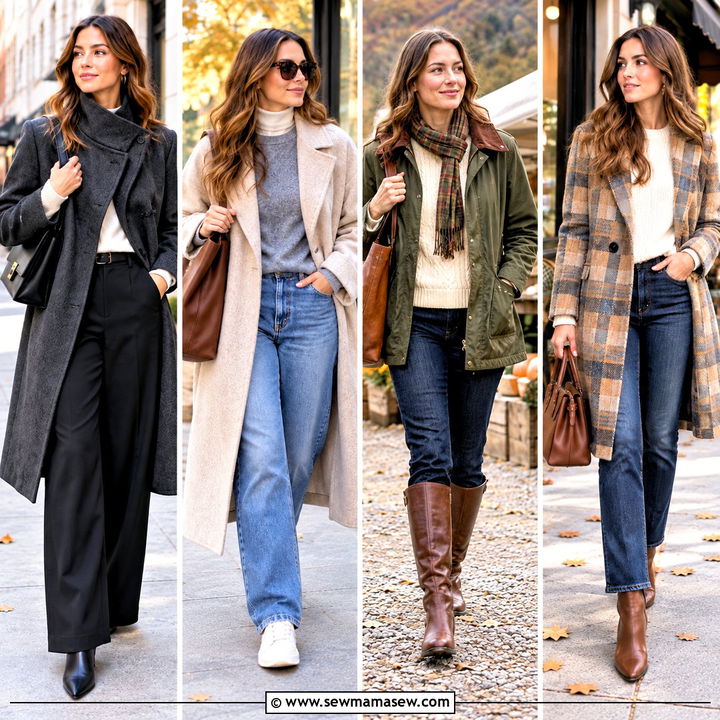
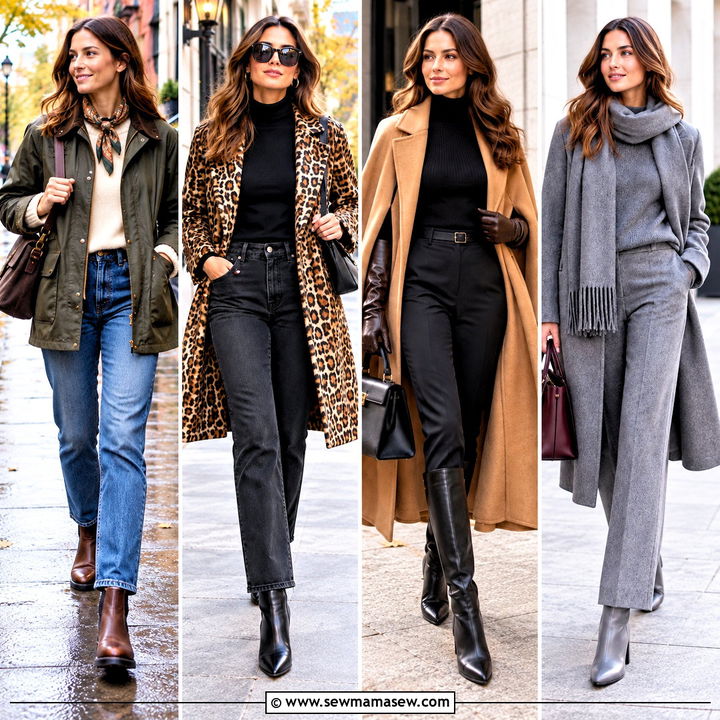
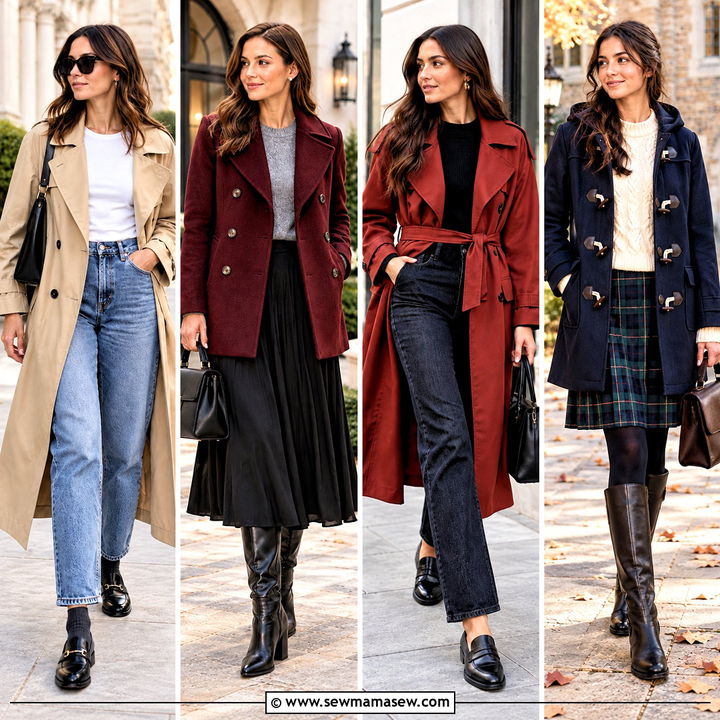
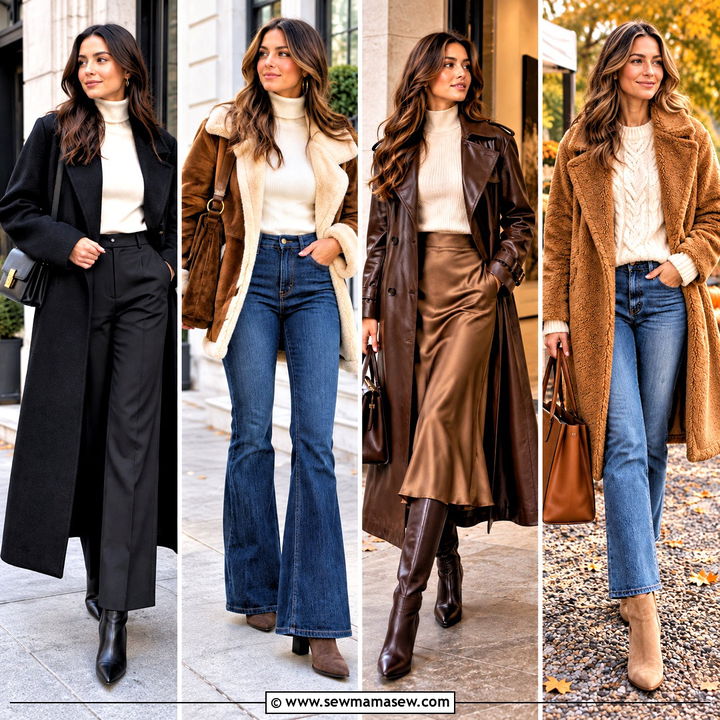
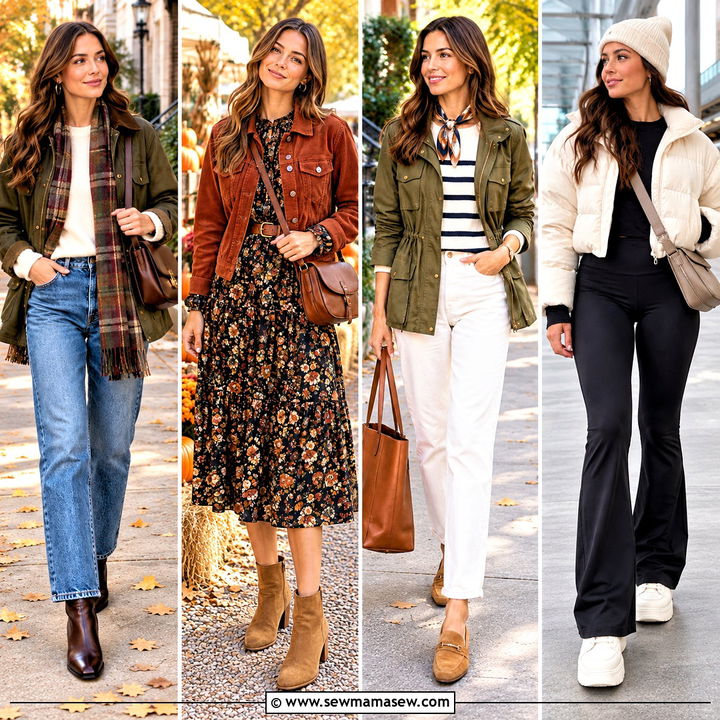
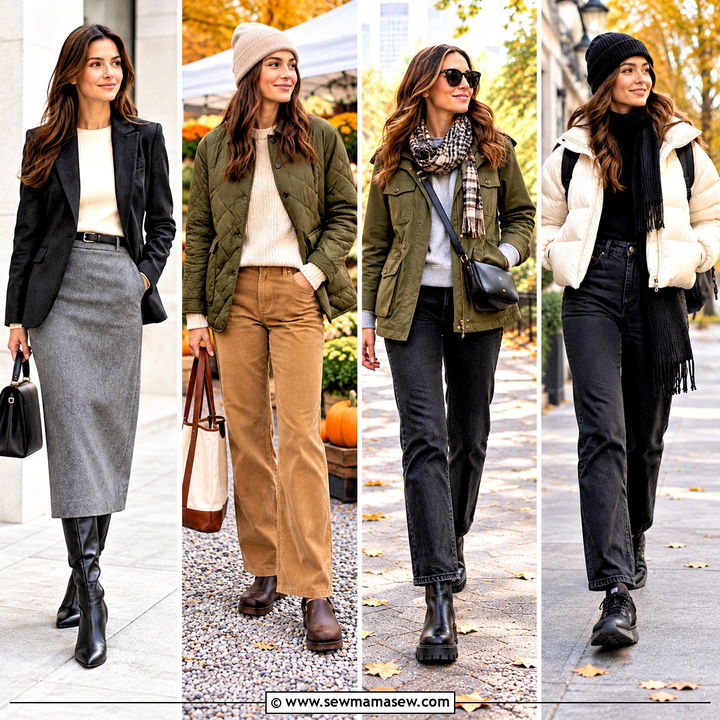
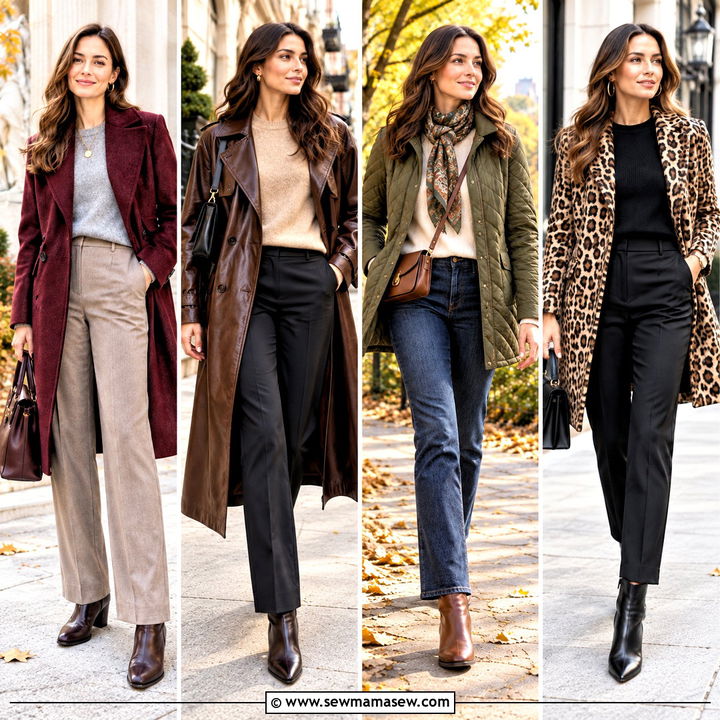
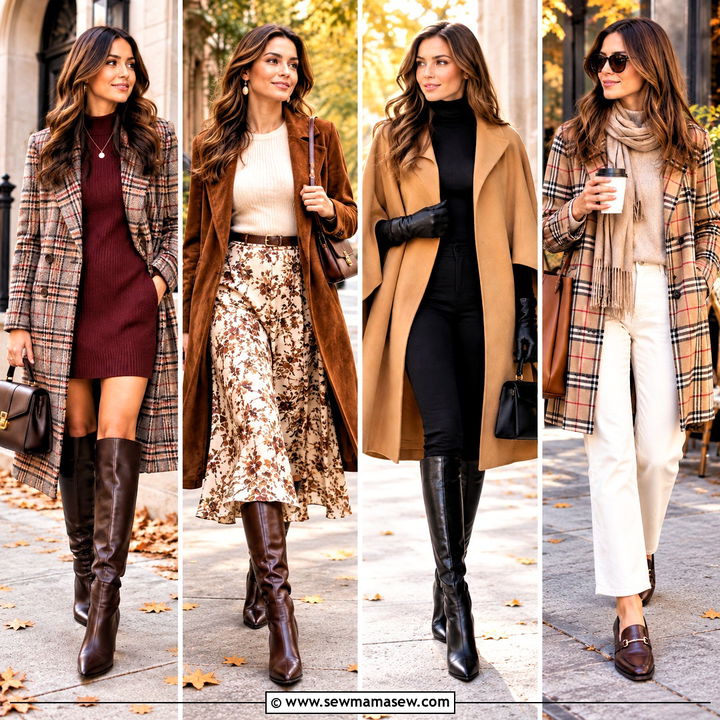
Most fall outfits are decided by the coat, because it's the piece people actually see on the street. When I edit a client's outerwear, I sort it by job: a light layer for mild afternoons, something warm for a cold commute, and something that won't sulk in the rain. The twenty looks below follow that logic, from trench and suede to wool, bombers and a proper rain shell, and each one comes with the tops, bottoms and shoes I'd put under it. Treat the lengths and colors as adjustable. Your height, your climate and what's already hanging in your closet should decide the final version, not the photo.
Fitting a Coat Over Your Bulkiest Sweater
Most outerwear mistakes happen in the fitting room, because people try coats on over a thin T-shirt. In October you'll wear that coat over a chunky knit, so bring one with you or wear one when you shop. I run every coat through the same four checks before anything else.
- Shoulder seam: it should sit at or just past the edge of your shoulder bone. A coat that fits there can be altered almost anywhere else, but shoulders are expensive or impossible to fix.
- The reach test: cross your arms in front of you as if hugging someone. If the back pulls tight or the sleeves ride up past your wrist bone, the coat is too small for your fall layers.
- Sleeve length: with your arms relaxed, the sleeve should cover your wrist and touch the base of your thumb. That half inch keeps cold air out when you lift a bag.
- Buttoned front: fasten it fully. The front edges should lie flat without gaping between buttons. Small gaps mean the coat will strain all season.
Hem length is the last thing I look at, and the one most worth getting right for your height. On shorter women, coats ending just above or at the knee keep the leg visible. On taller frames, a longer hem looks deliberate rather than borrowed. Sleeves and hems are routine alterations for a tailor; shoulders and chest width are not, so buy for those.
1. Trench Coat With Knit Dress And Boots
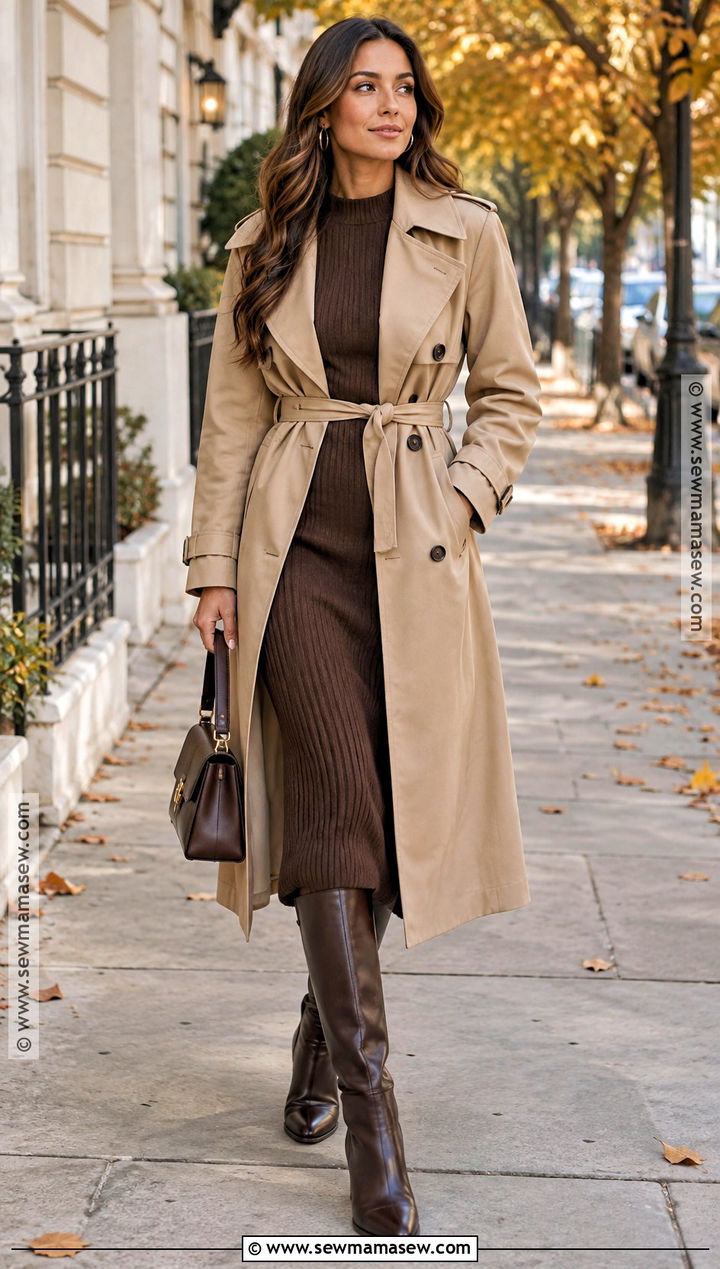
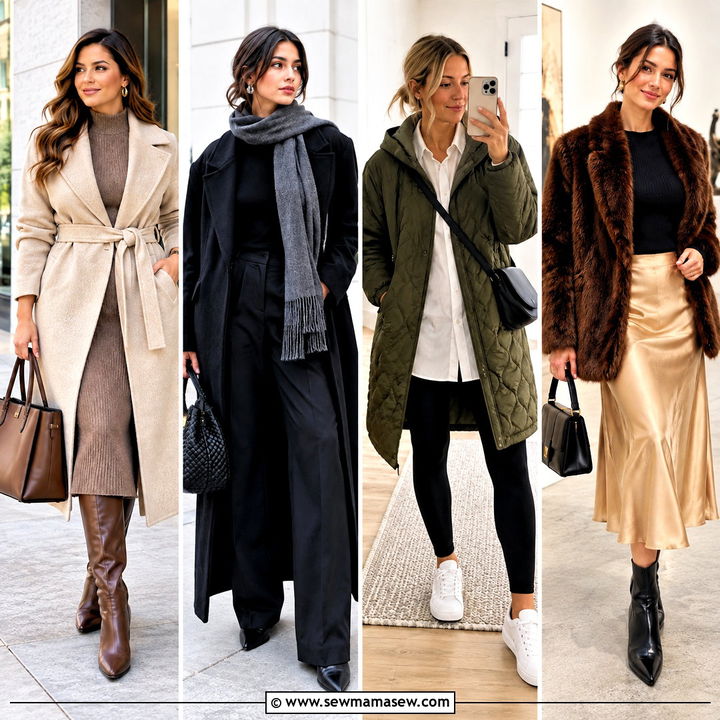
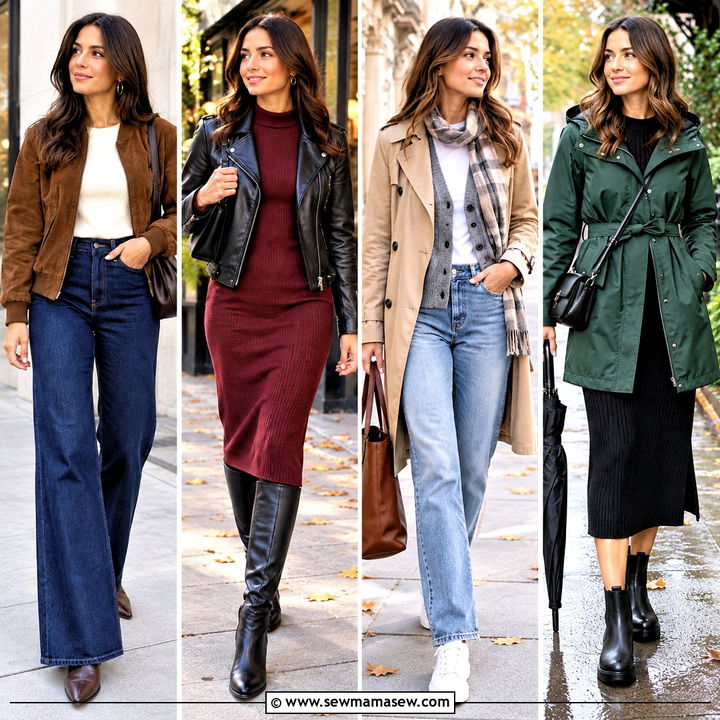
A beige trench over a ribbed midi dress is the outfit I reach for when a day has three different plans in it. Chocolate, charcoal or deep olive all sit well against the khaki. The close knit of the dress gives the trench's looser shape something to fall around, so you don't look swallowed. I'd add knee-high leather boots on a low block heel, a structured shoulder bag and small gold earrings. When you wear the coat open, knot the belt behind you so it doesn't swing and catch on bags. If you're petite, stop the trench at the knee. Taller women can carry a hem that falls well below it.
2. Suede Jacket With White Shirt And Jeans
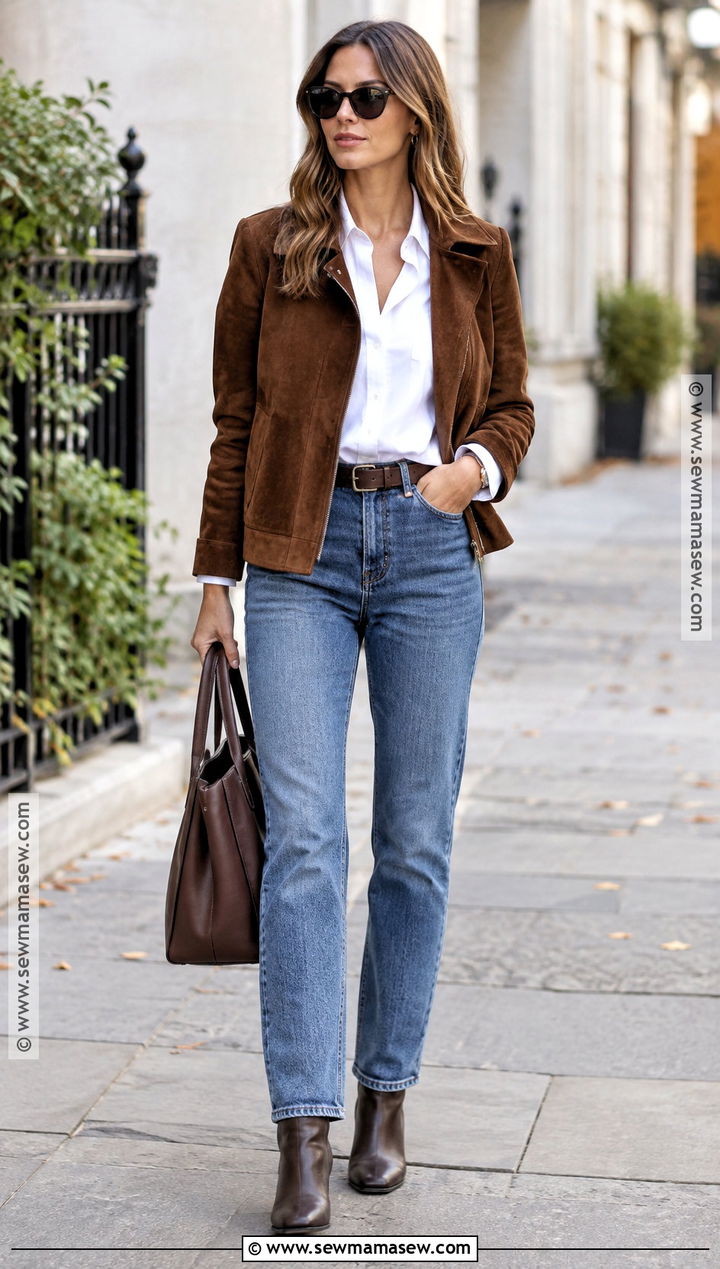
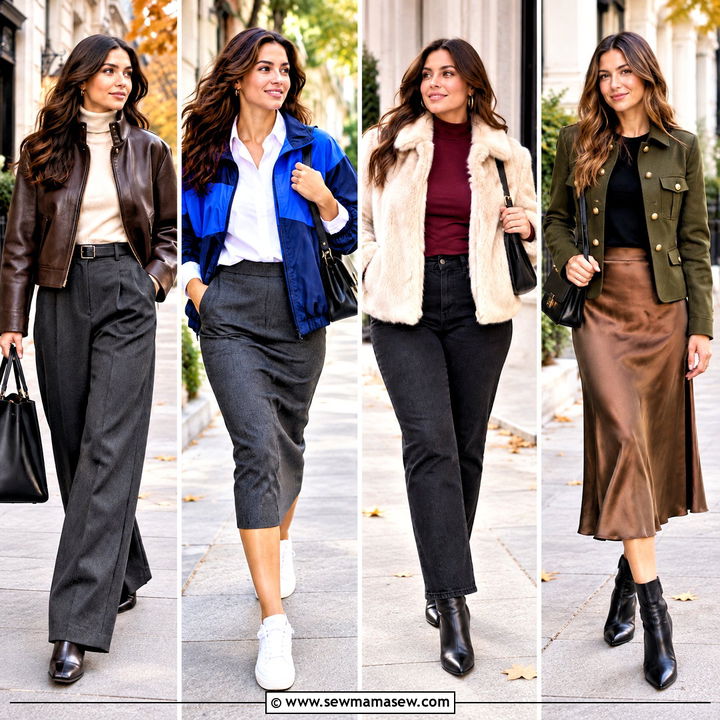
Brown suede does the work of a whole outfit's worth of texture. I put a hip-length jacket over a crisp white button-down, let the collar and cuffs show, and keep the jeans straight and blue. Dark brown ankle boots and a leather belt tie back to the jacket without matching it exactly. Before you buy, do up the jacket over the shirt and reach forward: suede has very little give, and pulling across the shoulder blades is the first sign it's a size small. Real suede also darkens in rain and needs a protector spray, so faux suede is an honest choice if your fall is wet. Swap the jeans for black denim or tailored trousers when you need it dressier.
3. Leather Bomber Jacket With Midi Skirt
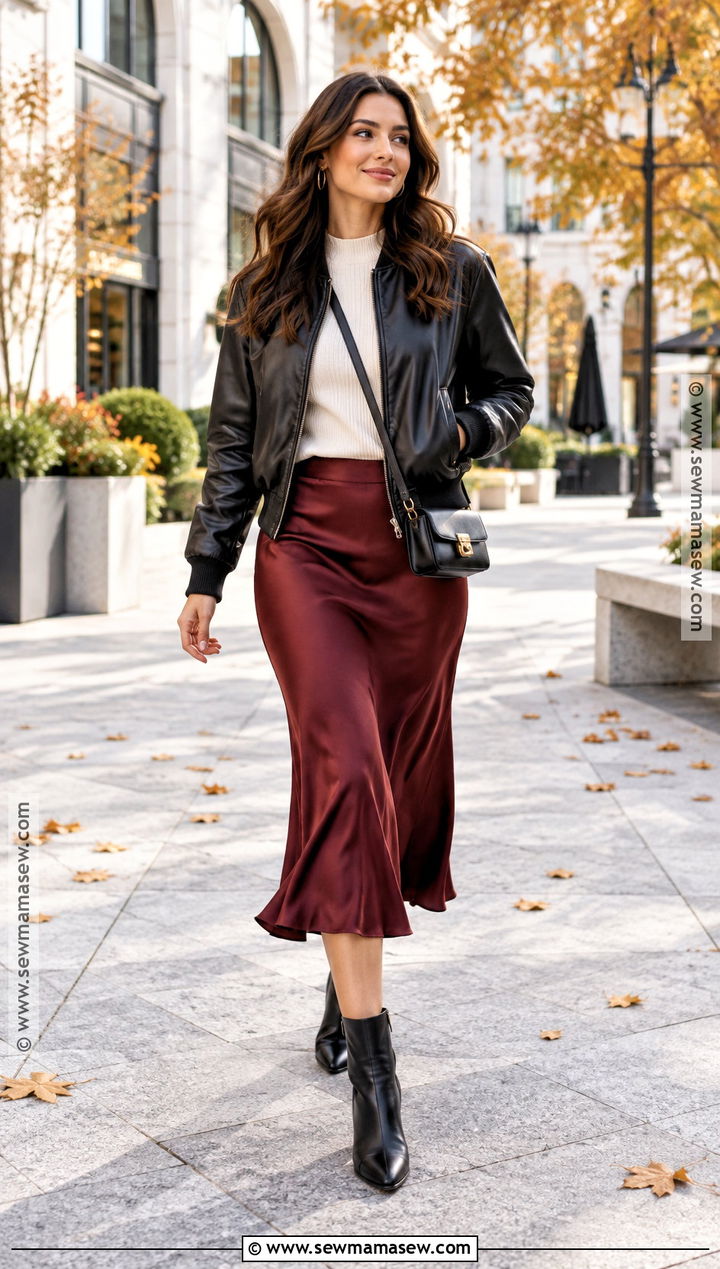
The bomber stops short, and that's exactly why it suits a flowing midi skirt. I start with a fitted crewneck in cream, gray or black, then add a skirt that moves: satin, pleats or a fine knit falling below the knee. A stiff skirt would fight the bomber's ribbed hem, but a soft one lets the jacket define the waist instead. Sleek ankle boots or loafers keep it grounded. If your hips are fuller, look for a bomber whose rib band lands at your natural waist, not at the widest point, or it draws a line straight across the hip. Pick two colors, like black with burgundy, and stop there.
4. Barn Jacket With Straight Leg Jeans
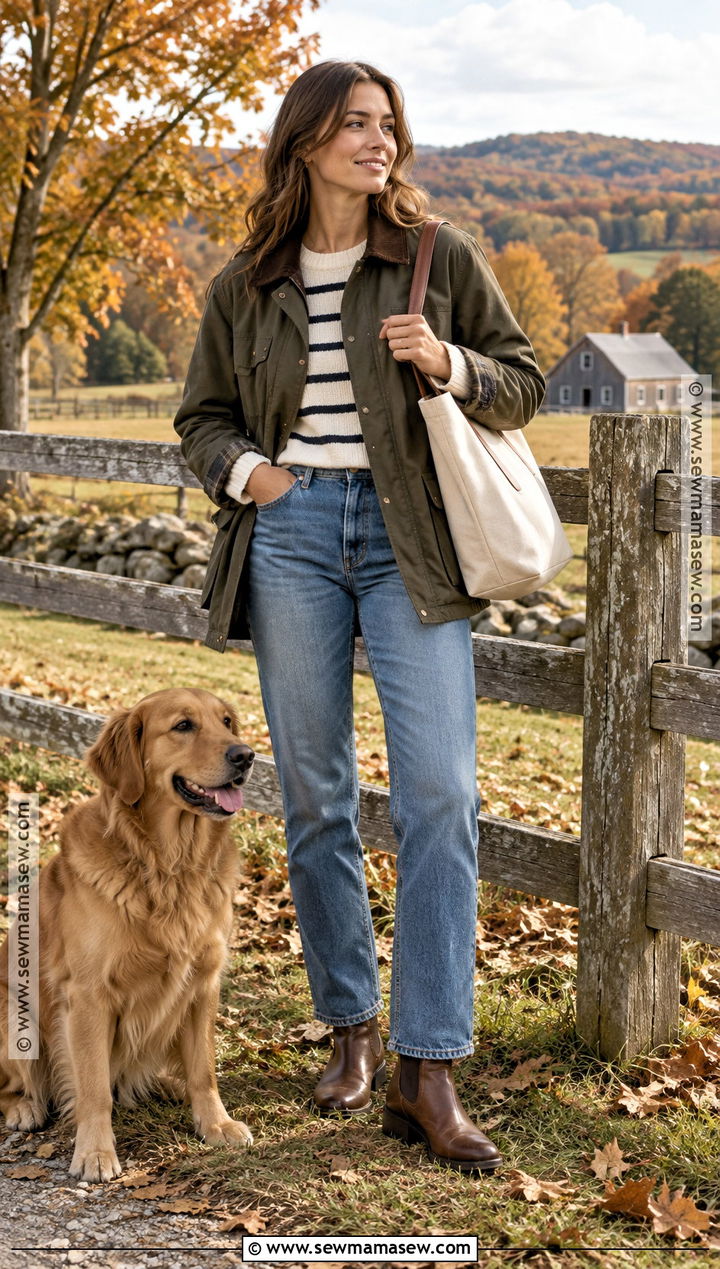
A barn jacket is a weekend coat first. I like olive, tan or navy with a contrast corduroy collar, over a fine-knit turtleneck or a striped cotton sweater that leaves room to lift your arms. Medium-wash jeans and leather loafers keep it from tipping into full field gear. A single narrow roll at the jean hem shows off the shoe and sharpens the line, but two thick rolls just shorten your leg. Wool socks and a checked scarf take it through a colder morning. Waxed versions shed light rain; plain canvas will soak through in a steady shower.
5. Wool Wrap Coat With Turtleneck And Trousers
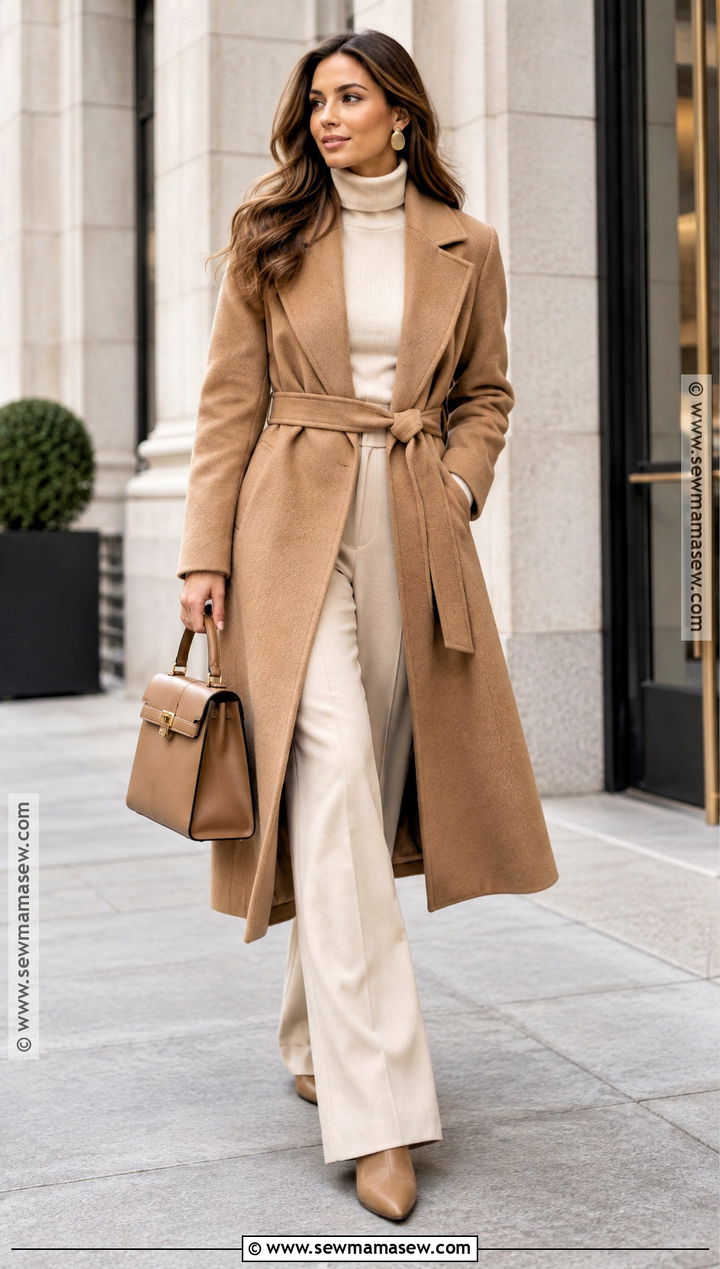
Wrap coats look graceful because the belt does the tailoring for you. Wear one over a lightweight turtleneck and wide-leg trousers in the same family: camel with cream, charcoal with black, navy with soft gray. Pointed ankle boots carry the trouser line down, and a top-handle bag adds a firm edge to all that softness. Tie the belt at your natural waist and leave a little slack. Pulled tight, wool bunches above and below the knot and the coat starts to look padded. If you'd rather have less volume, choose narrow lapels and a softly shaped shoulder. I wear this one to meetings and city lunches more than anywhere else.
6. Cropped Leather Jacket With Maxi Dress
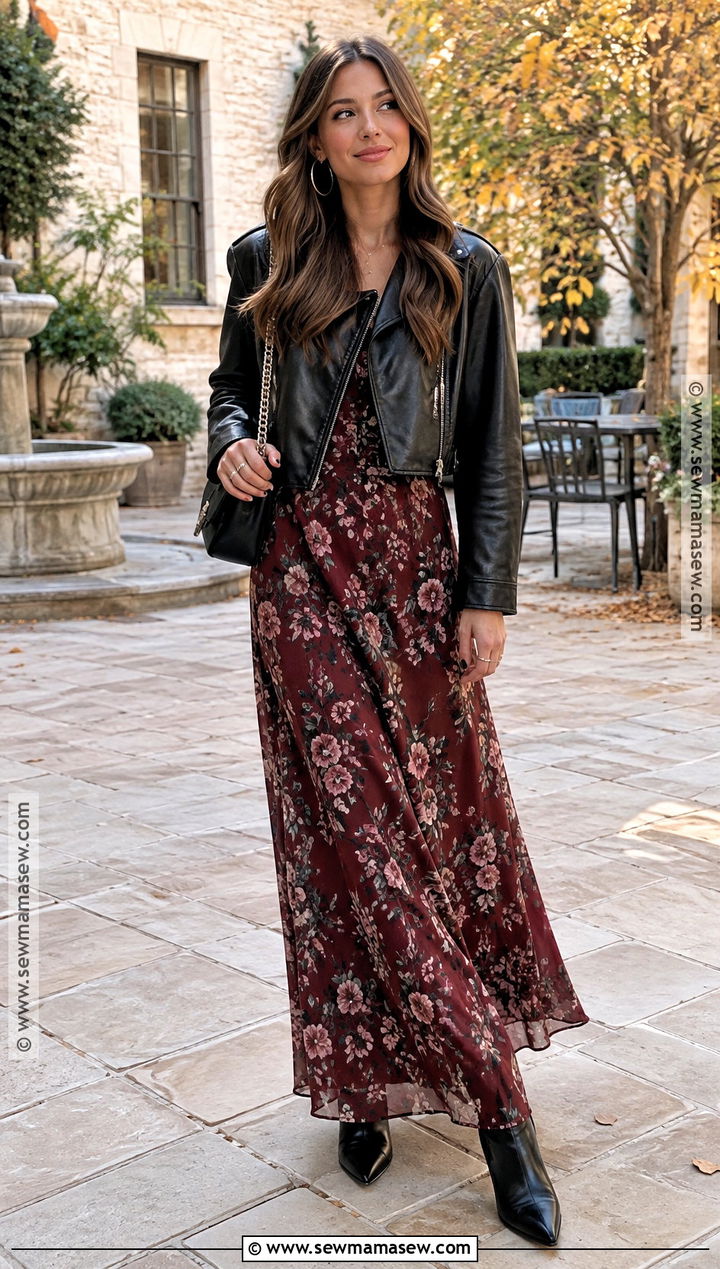
Long dresses can look like summer leftovers in October. A cropped leather jacket fixes that faster than anything else I've tried. Choose a maxi with long sleeves and a defined waist, then let the jacket end right at the waistband so the two pieces split your body into clear thirds. Pointed ankle boots work with a dress that clears the ankle; a longer hem wants slim knee-high boots so no skin flashes when you walk. Thin tights under the dress add warmth nobody will notice. For a softer take, look for supple leather with very little hardware.
7. Denim Jacket With Sweater And Midi Skirt
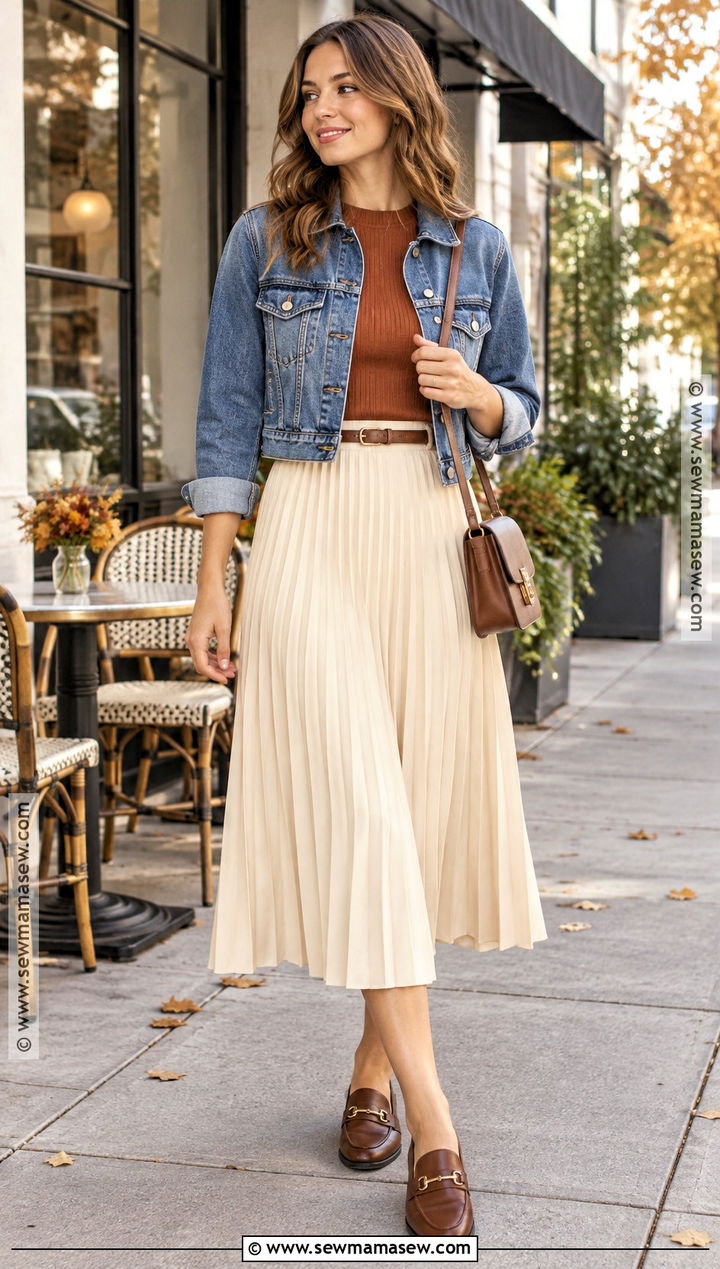
Denim jackets earn their keep in September, when you only need a thin layer over a sweater. I start with a fitted knit in cream, rust or forest green and a pleated or straight midi skirt in a quieter neutral. Medium-wash denim keeps it casual, and loafers or ankle boots handle the walking. Belt the sweater if you tuck it. The one thing I always check is where the jacket ends: if it lands at the same height as the skirt waistband or the knee, the outfit looks chopped. Stagger the lengths, cropped above the waist or relaxed past the hip, and the proportions sort themselves out.
8. Quilted Jacket With Leggings And Loafers
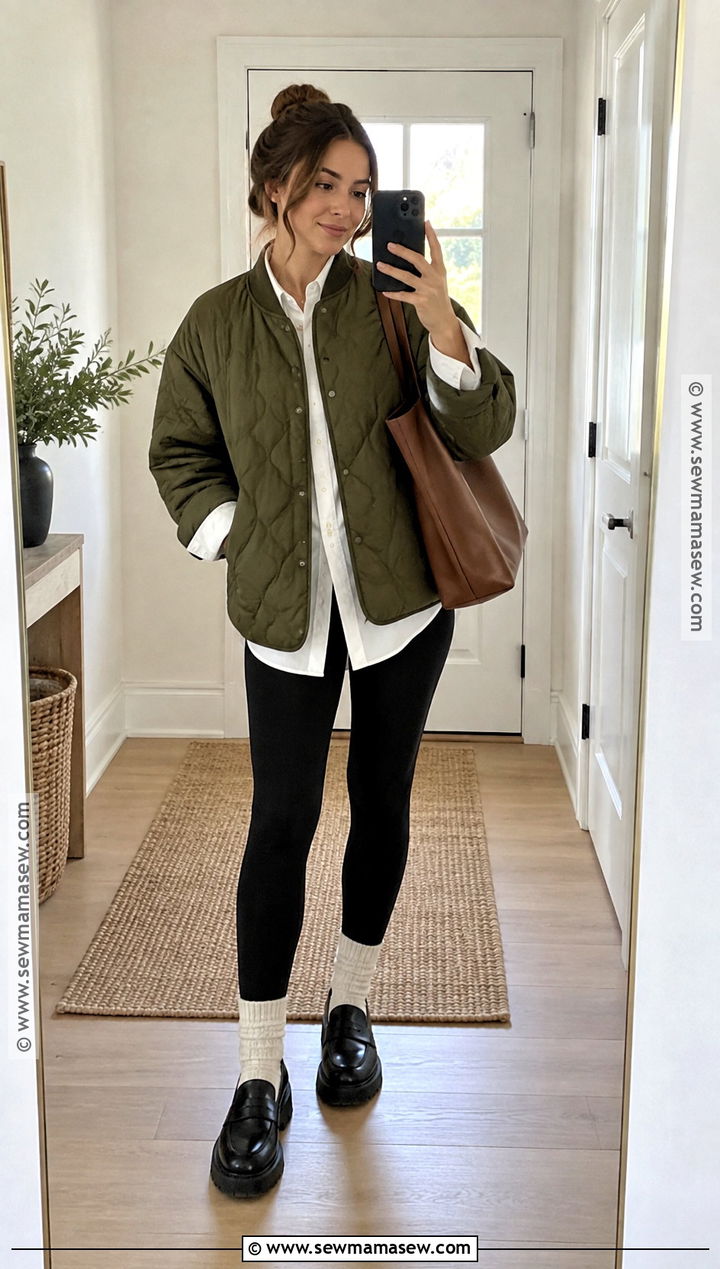
A light quilted jacket is the layer for mornings that start crisp and end mild. I size it slightly roomy, in olive, navy or warm taupe, and put a long white shirt or a fine sweater underneath that covers the hips. Thick black leggings or ponte pants make a neat base. Chunky loafers with ribbed socks look intentional; clean sneakers are fine when you're on your feet all day. A roomy leather tote holds the rest. Quilting is thin, so this jacket is about wind, not cold. It's my go-to for school runs and travel days, and it packs flat.
9. Shearling Aviator Jacket With Dark Jeans
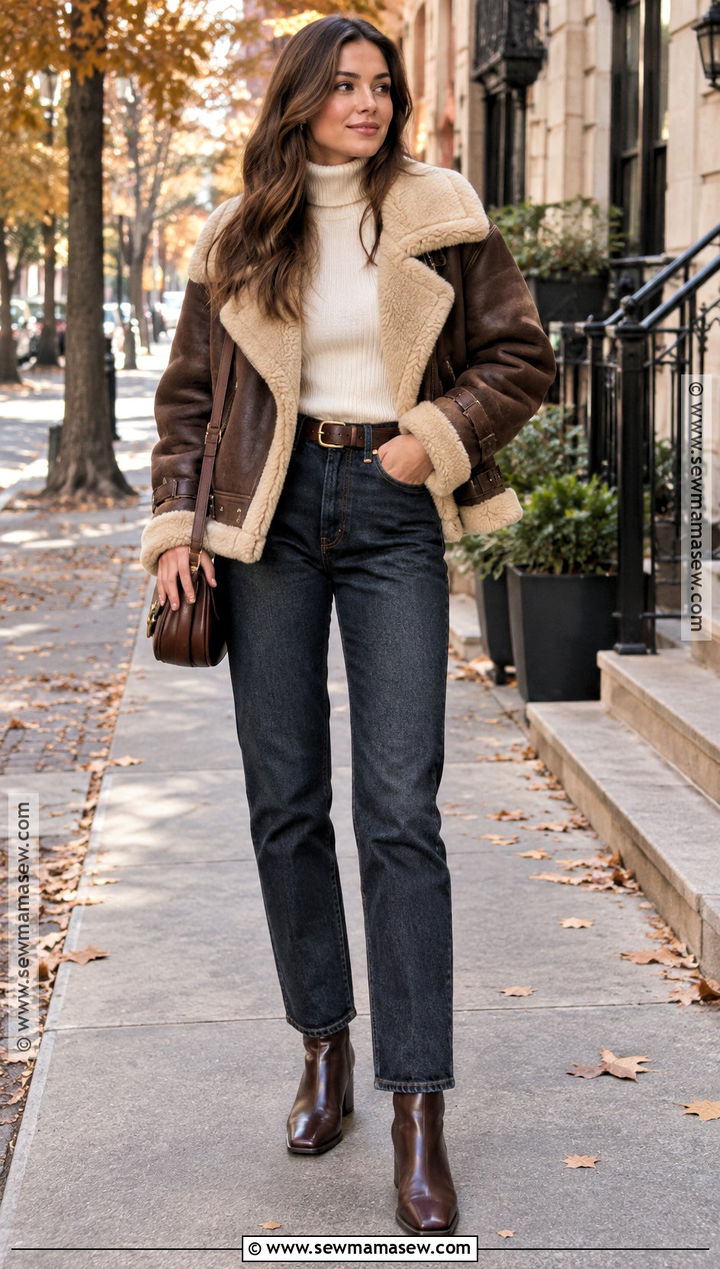
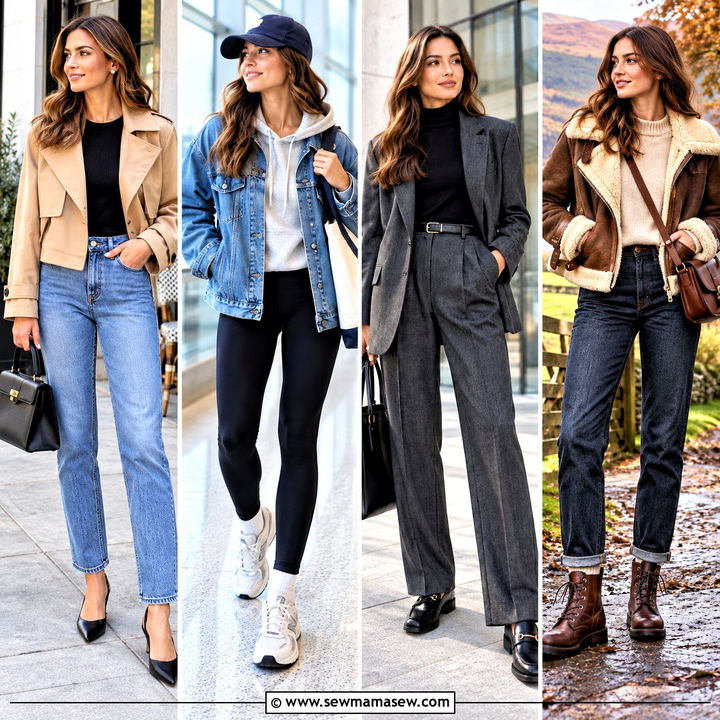
Shearling is the warmest thing on this list, and the collar is the whole point. Keep everything under it quiet: a fitted turtleneck, dark straight jeans, leather ankle boots in a matching tone and a compact satchel. Leave the big scarf at home, since it fights the collar and makes your neck disappear. Small hoops or a textured belt are enough detail. Real shearling adds real bulk, so petite women should look for a cropped aviator with little hardware. Taller women can wear the hip-length cut over slim or straight trousers without it looking heavy.
10. Plaid Coat With Monochrome Black Outfit
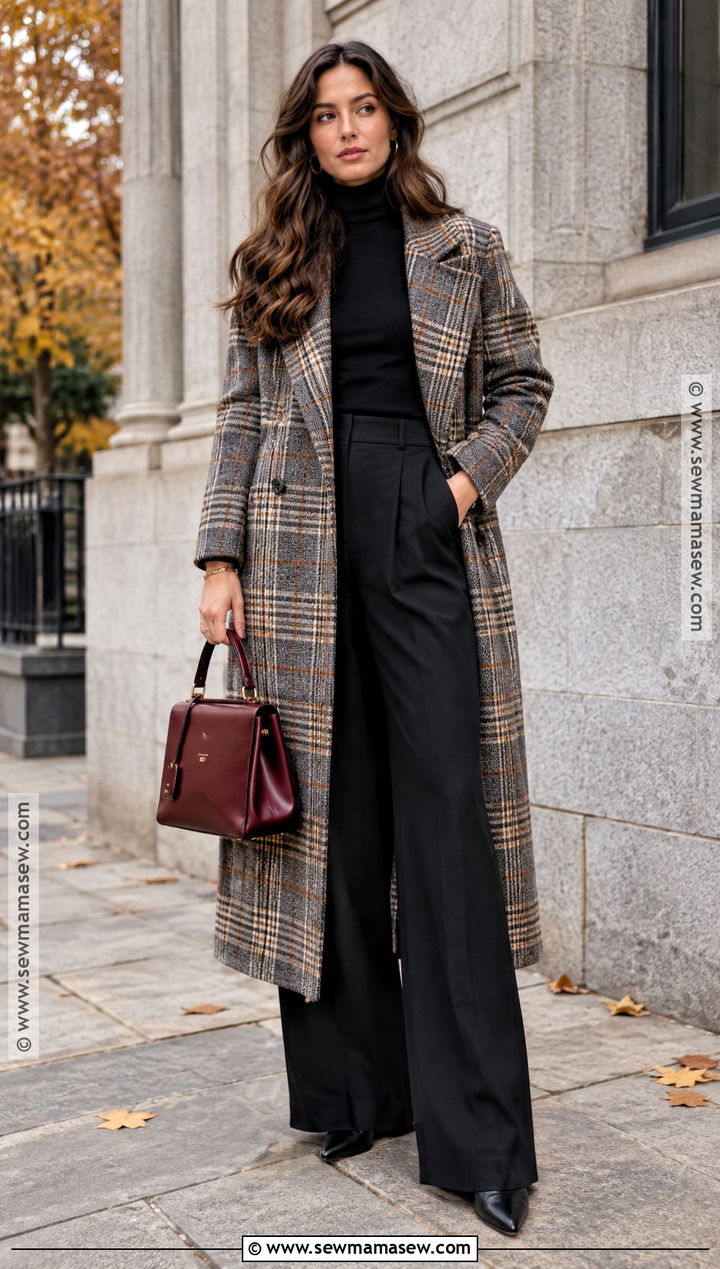
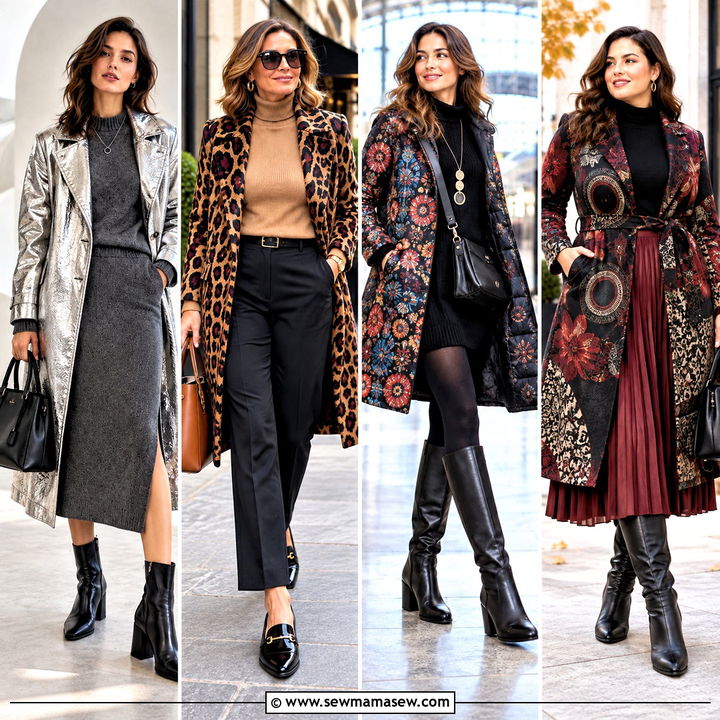
Let a plaid coat do the talking and dress the rest in black. A black turtleneck and black trousers, straight or wide, make one unbroken column so the check reads clearly. I add black ankle boots with a pointed or almond toe and pick a bag in one of the plaid's colors. Gray, camel, burgundy and forest green checks are the easiest to wear with basics. Keep jewelry minimal; three things competing with a pattern is too many. If a large check feels loud, go for a smaller scale. Look closely at the shoulder too, because a soft, dropped shoulder plus a big pattern can look oversized everywhere.
11. Car Coat With Wide Leg Pants
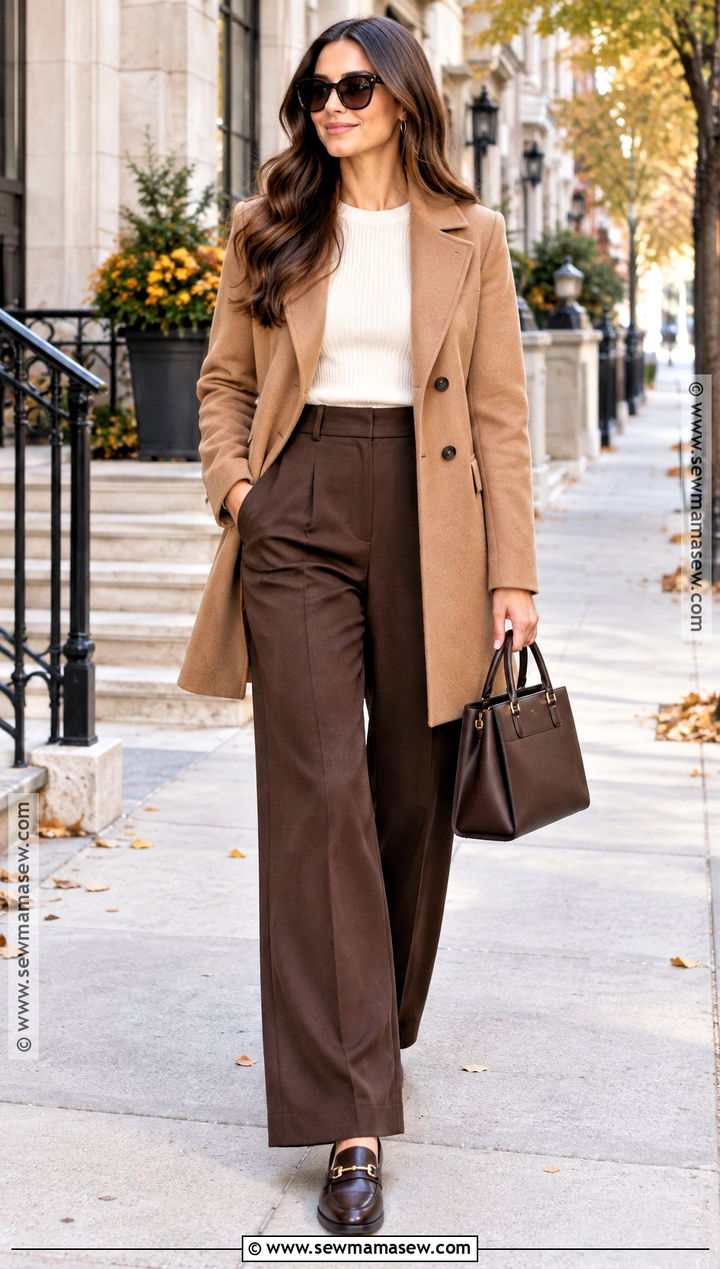
The car coat sits at mid-thigh, which is the length I recommend to anyone who finds full coats heavy. It covers more than a jacket but leaves your trousers in view. I'd wear a camel or navy one over a fitted crewneck and high-waisted wide-leg pants, with loafers for daytime or heeled ankle boots for extra height. A structured handbag and a plain watch suit its tidy mood. Test the sleeves with a sweater on: you want room in the arm, but a heavily dropped shoulder blurs the shape. With wide pants, keep the sweater fitted or half-tucked so there's a waist somewhere.
12. Fitted Jacket With Button Down Shirt And Jeans
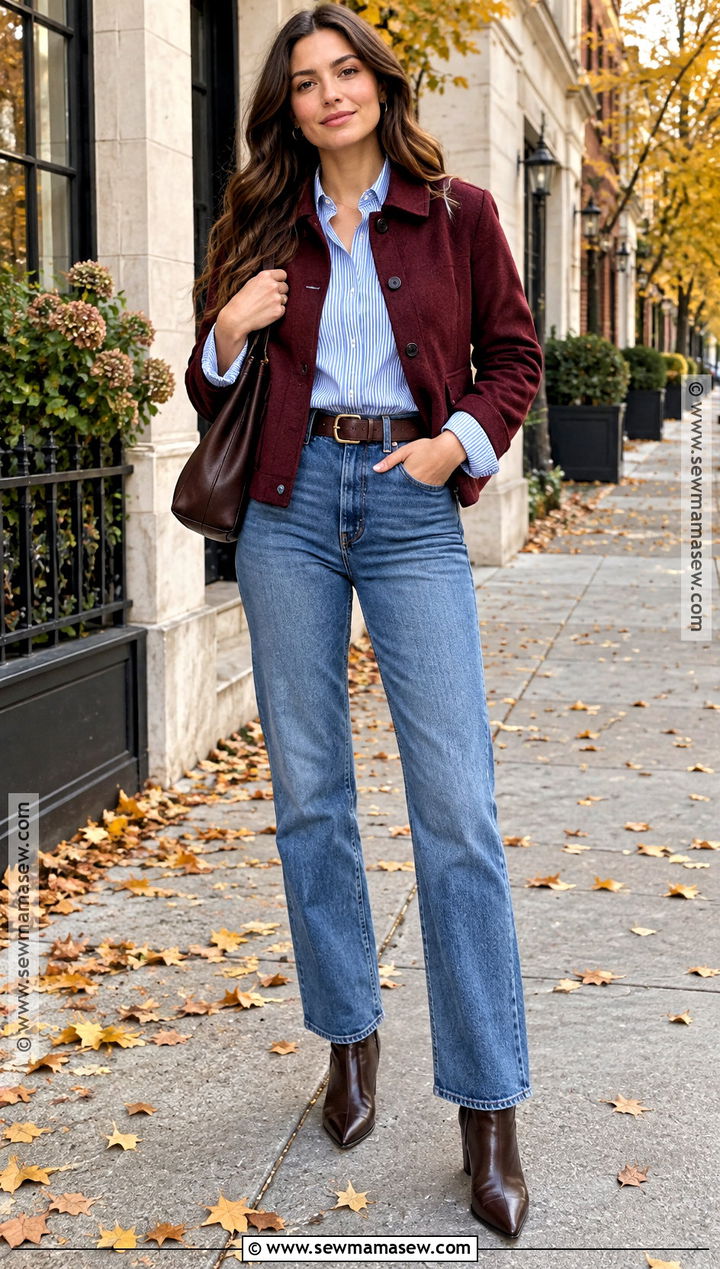
Ordinary jeans and a shirt look planned the moment you add a jacket that follows your waist. Tuck a striped or plain button-down into high-rise straight jeans, then layer the fitted jacket over it in black, chocolate, navy or burgundy. A leather belt, pointed ankle boots and a medium shoulder bag finish it. Let a half inch of shirt cuff show past the jacket sleeve; it breaks up the arm and looks deliberate. If the jacket pulls across the bust, look for princess seams and a slightly longer hem rather than sizing up and losing the shape. This works for appointments, work and dinner without changing a thing.
13. Animal Print Jacket With Black Basics
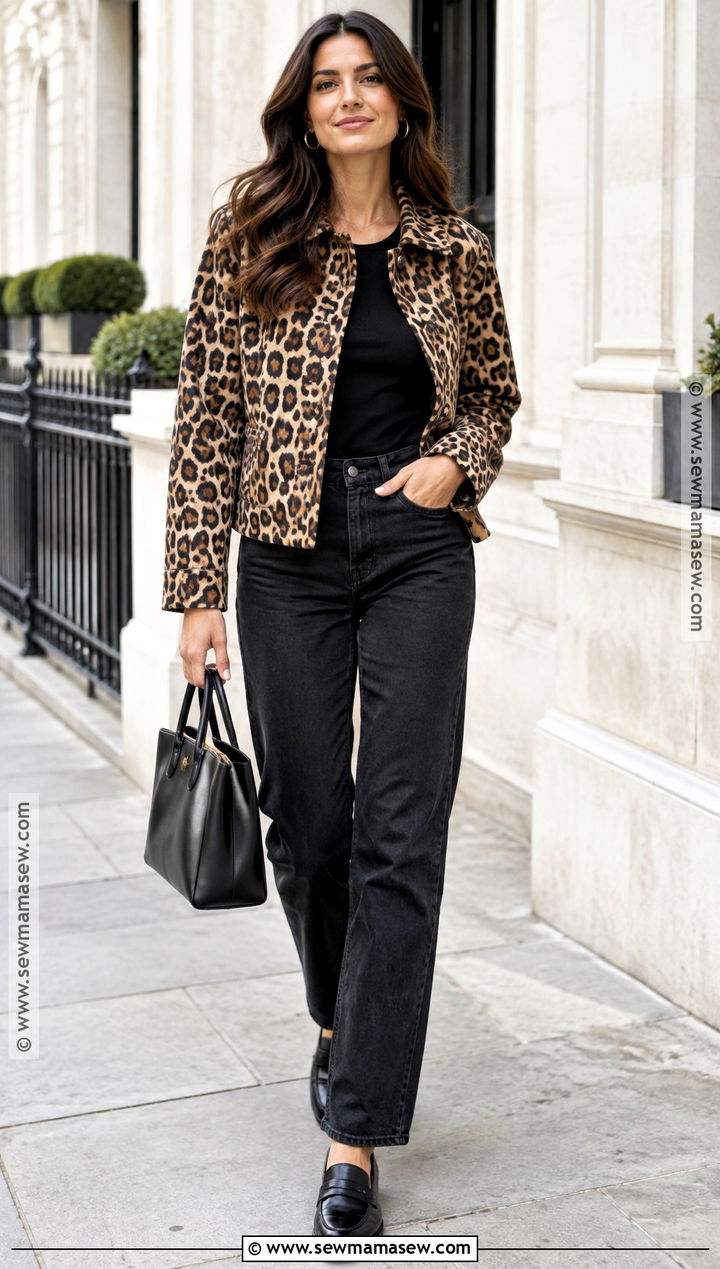
An animal-print jacket is a shortcut: the print does the styling, so everything under it can be plain. I choose leopard or a quieter cow print with a clean cut and little hardware, then wear it over a fitted black top and black straight jeans. Black loafers or ankle boots keep the focus up top. Carry a plain leather bag and skip any second pattern. Scale matters more than people expect. Small spots read almost neutral, while large markings are a full statement. Chocolate brown or cream underneath gives you a softer version.
14. Collarless Coat With Matching Knit Set
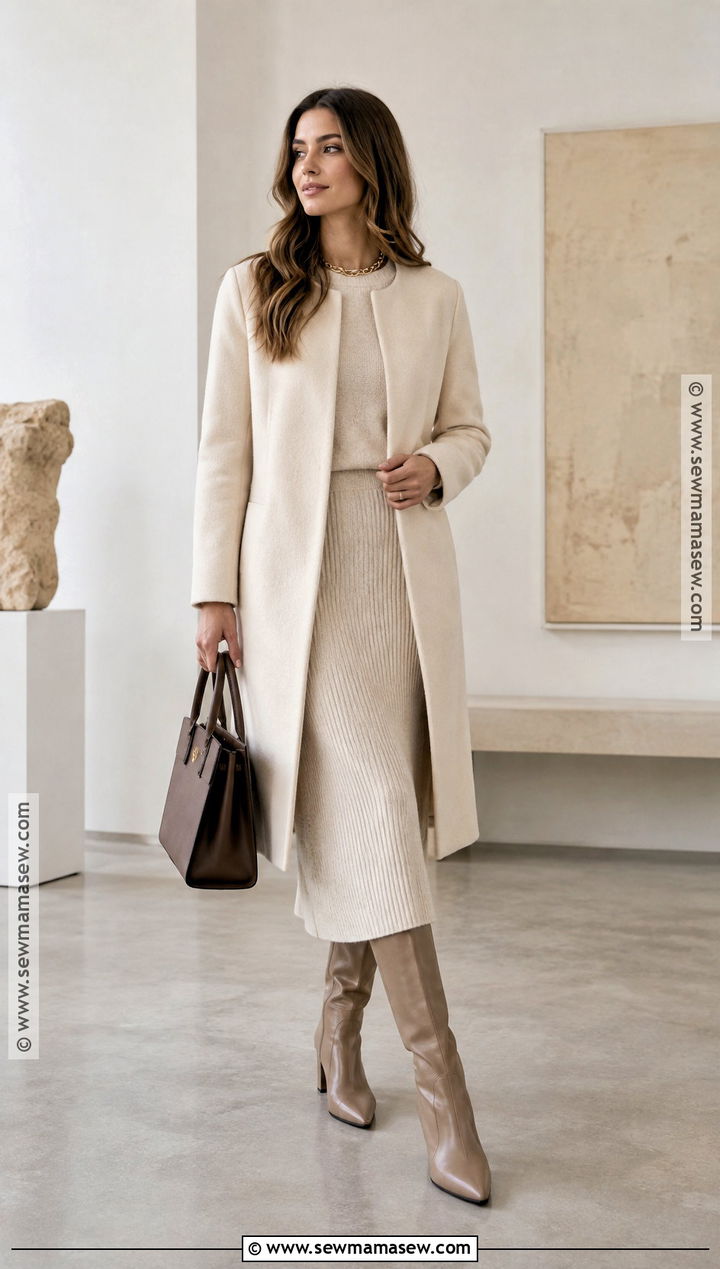
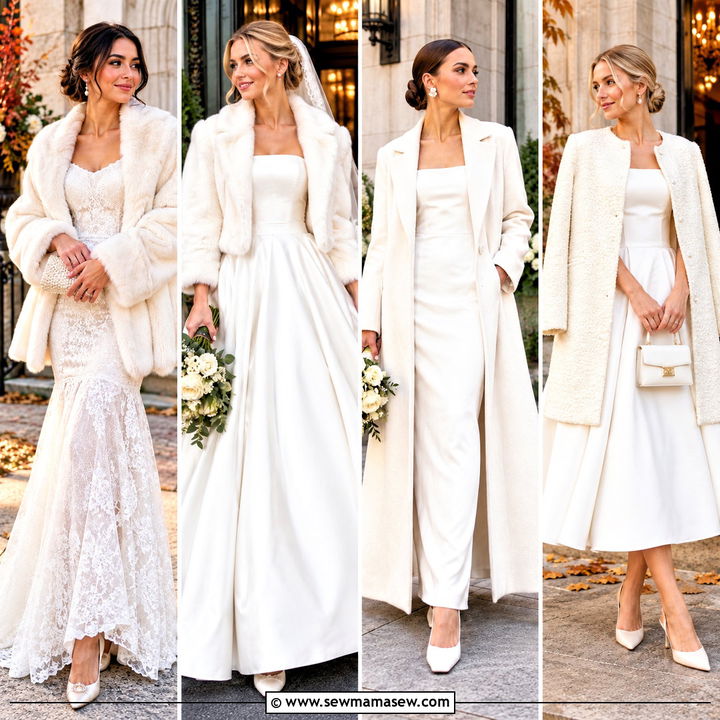
A collarless coat over a matching knit set is one of the most comfortable outfits I put together that still looks finished. Choose a long coat in cream, camel or gray and wear it with a sweater and knit midi skirt, or relaxed knit pants, in the same shade. The repeated color makes one smooth line, and the open neckline leaves space for a silk scarf or a short necklace. Knee-high boots go with the skirt, ankle boots with the pants. A structured bag stops the knits from reading as loungewear. If it all feels too pale, a burgundy shoe or a dark brown bag adds the contrast it needs.
15. Utility Jacket With Cargo Skirt And Boots
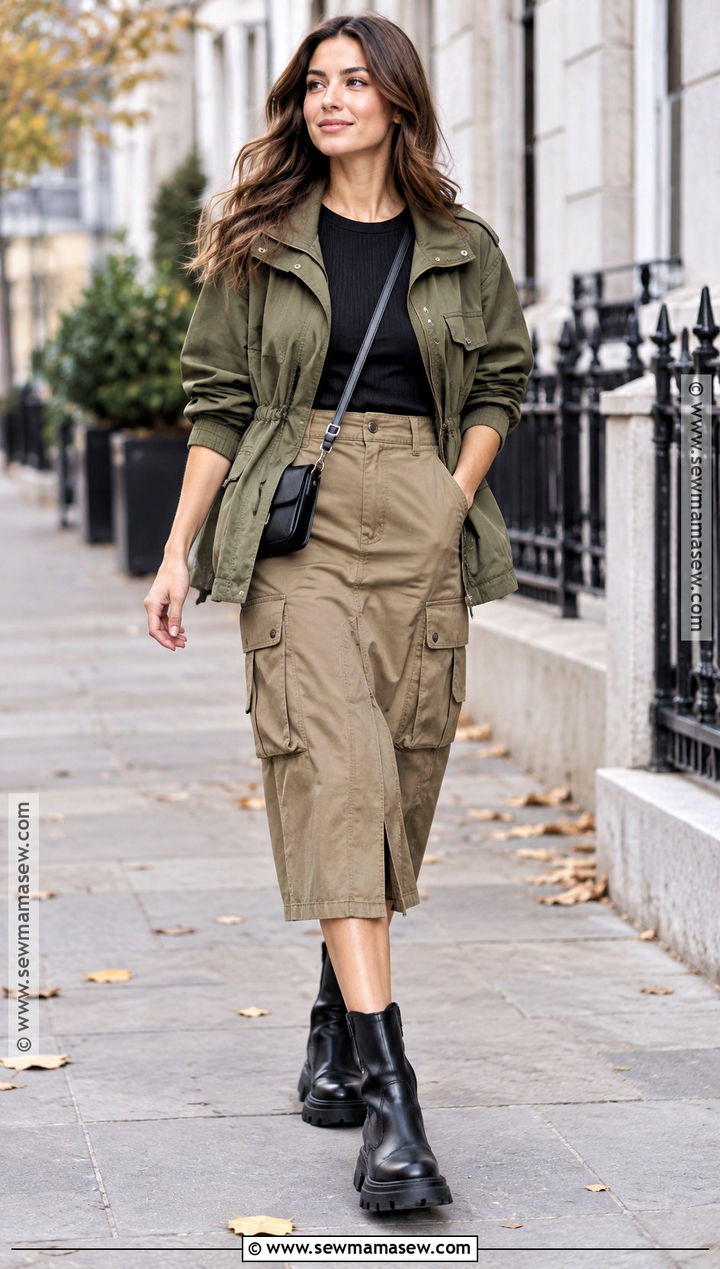
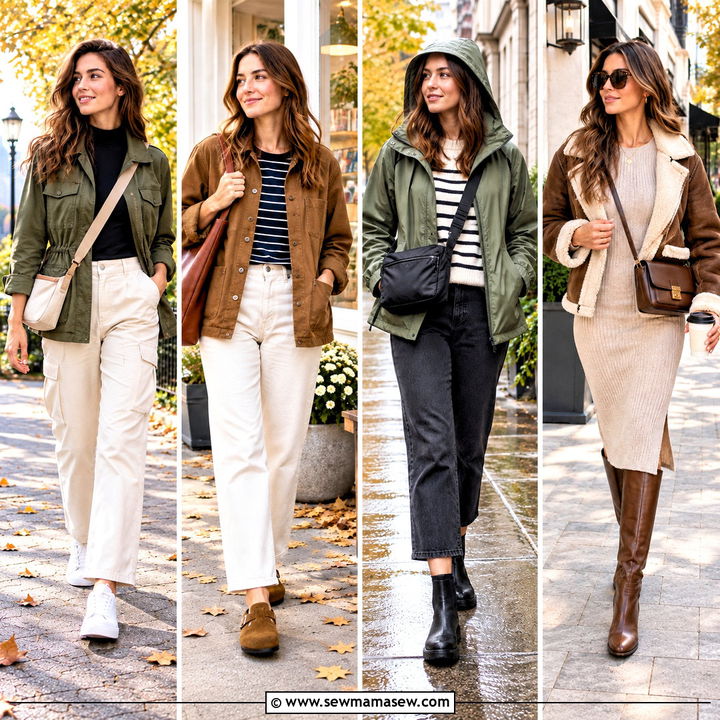
Utility jacket and cargo skirt together could easily tip into costume, so I keep everything else very simple. An olive or khaki jacket with real pockets and a waist drawstring goes over a fitted ribbed top. The straight cargo midi carries the theme; lug-sole ankle boots and a simple crossbody bag finish it. On warm afternoons, push the sleeves up. When you want shape, pull the drawstring in rather than adding a belt over it. If the cargo skirt feels like too much, a plain denim midi does the same job. Three earthy shades is the limit here.
16. Puffer Jacket With Sweater Dress And Sneakers
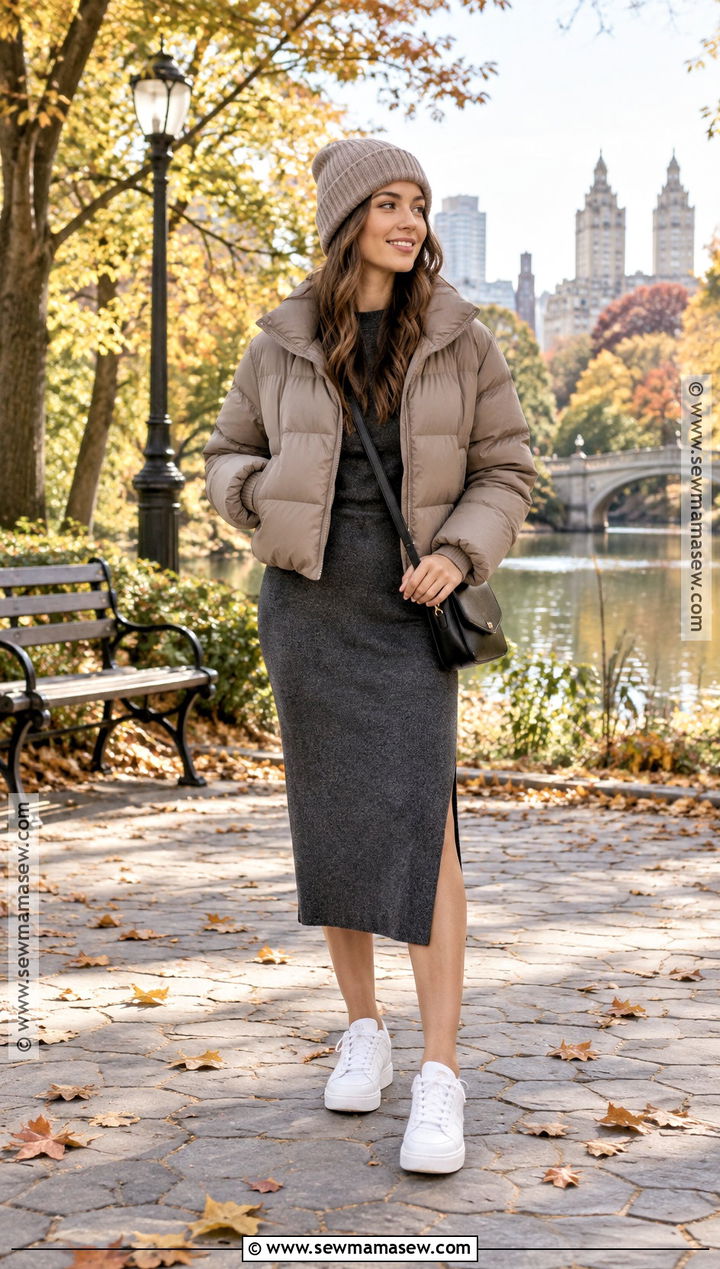
A puffer only looks polished when the dress under it is slim. I pair a hip-length puffer with a fitted or skimming sweater dress in black, gray, oatmeal or chocolate. Keep the puffer moderate; the very puffy ones are fine for a walk but tiring to wear all day indoors and out. Clean leather sneakers make it casual, weather-resistant ankle boots give more coverage. Wear the crossbody strap under the open jacket, not over it, or it squashes the quilting. Opaque tights and a ribbed beanie take it into colder days. Simple, even baffles and a defined collar look neater than shiny, chunky ones.
17. Peacoat With Trousers And Loafers
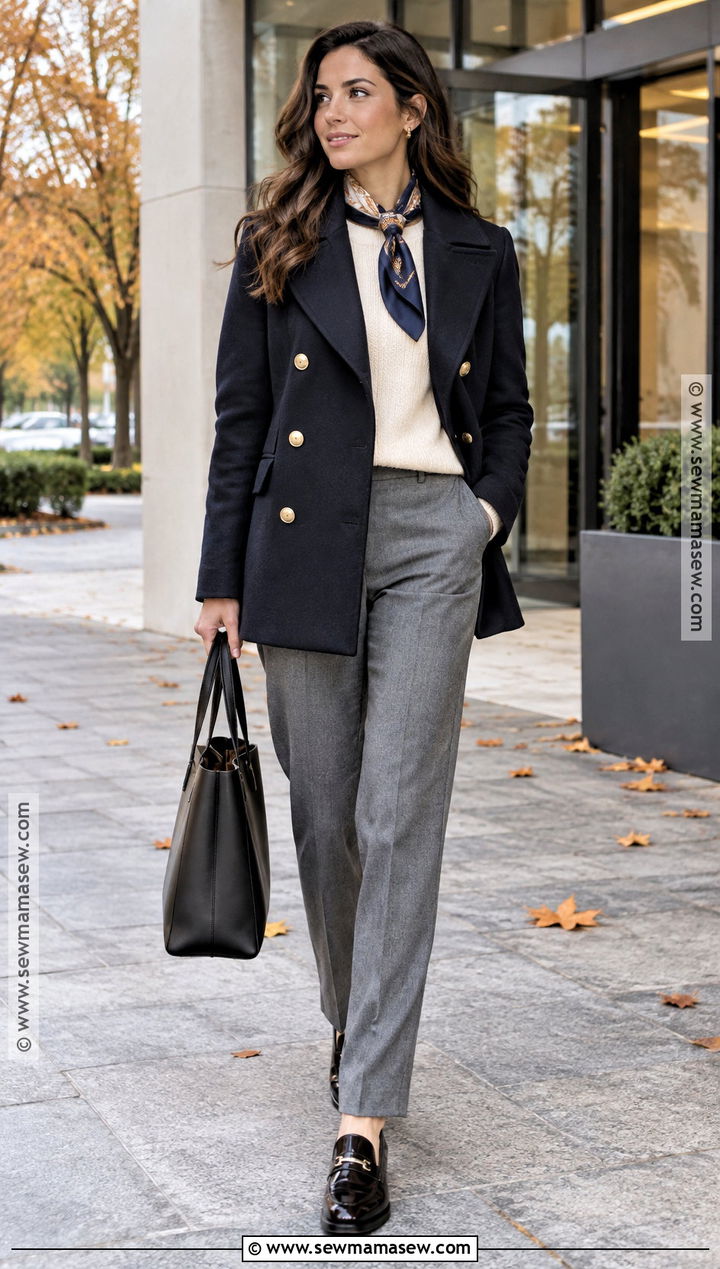
A navy peacoat over tailored trousers is the closest thing to a commuting uniform I know. Put a cream crewneck or a striped knit under it, then straight or gently wide pants in gray, camel or navy, hemmed so they break neatly over leather loafers. A structured tote and a patterned silk scarf add personality. Remember that a double-breasted front adds width across the chest by design. If that bothers you, wear it open for a long vertical line, or choose a style with slim lapels and less overlap. Every piece here mixes easily with the more casual clothes already in your closet.
18. Blazer Coat With Sweater And Jeans
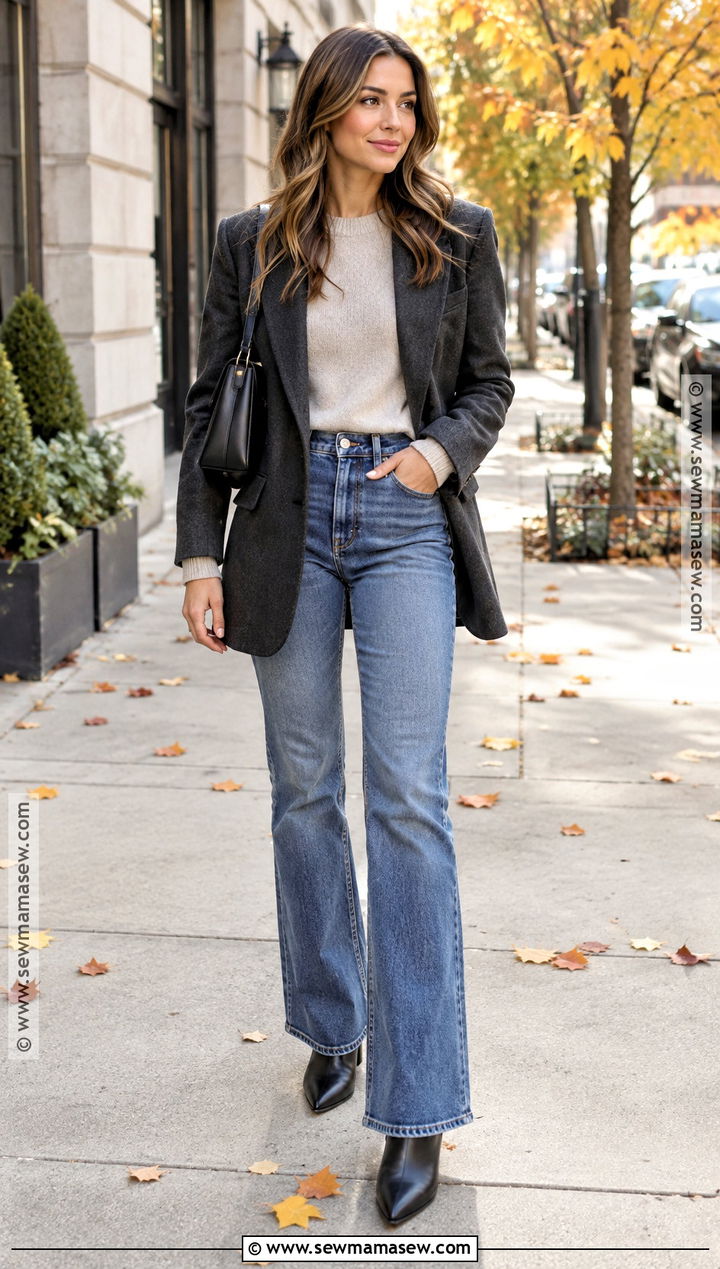
A blazer coat is the layer for those in-between weeks when a wool coat is too much and a blazer is too little. I wear an oversized charcoal, camel or checked one over a fine-gauge sweater and high-rise jeans, straight or slightly flared to balance the length. Pointed boots, a structured shoulder bag and plain metal jewelry finish it. Only push the sleeves up if the fabric is light enough to stay put; heavier cloth just slides down and creases. Petite women look best when it ends at mid-thigh, taller women can go to the knee. Keep the sweater slim, or the shoulders lose their line.
19. Cape Coat With Mini Skirt And Knee High Boots
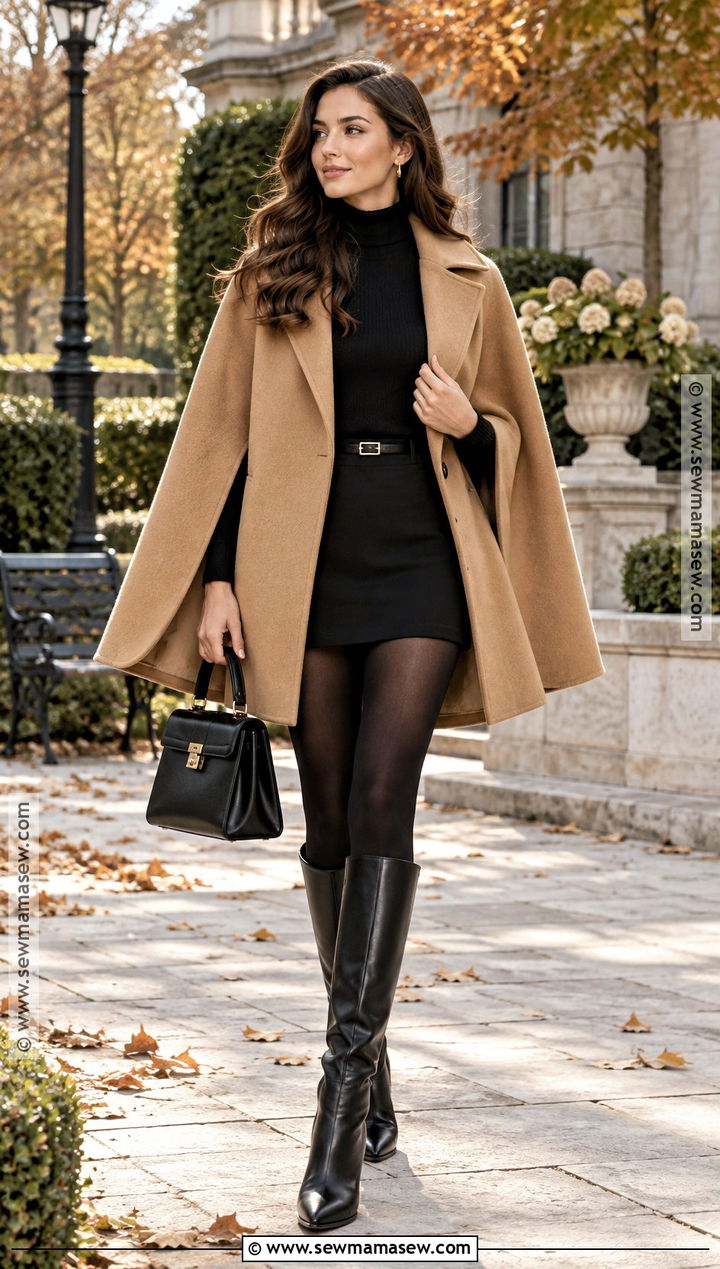
Capes are dramatic, and they're more practical than they look because your arms move freely under them. Keep the top half slim with a fitted turtleneck. Add a tailored mini, opaque tights and knee-high leather boots; together, the boots and tights cover enough leg that the short skirt feels right for cold weather. Carry a top-handle bag or a wristlet, since shoulder straps slide off a cape and crush the drape. Black, camel and deep green are the easiest colors to own. If you want more coverage, a narrow midi skirt works just as well. Everything else stays simple so the outline stays the focus.
20. Rain Jacket With Joggers And Sneakers
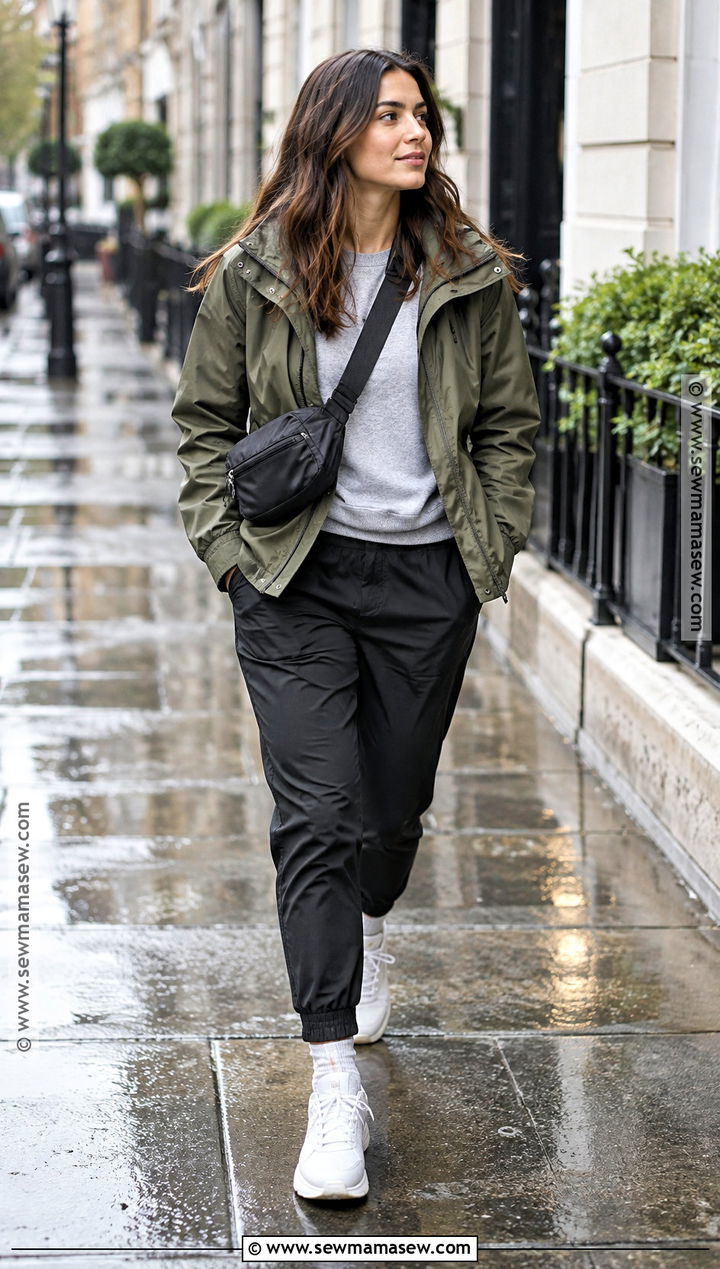
Rainy days don't have to mean giving up on a put-together outfit. I start with a light waterproof jacket in navy, olive or beige over a fitted sweatshirt or soft knit, then add tapered joggers or technical trousers in a matching neutral. Water-resistant sneakers and ribbed socks are what keep the day comfortable. A nylon crossbody leaves your hands free, and a proper hood means the umbrella can stay home. Check for adjustable cuffs and a drawstring hem, which keep wind out. A matte finish looks less sporty than a shiny one and goes with more of your wardrobe.
What Each Fabric Does in Drizzle and Wind
Several of these coats look similar on a hanger but behave very differently on a wet, gusty afternoon. This is how I explain it to clients deciding which one to buy first.
- Wool and wool blends shed light drizzle well and stay warm even when slightly damp. Heavy rain will soak them, and they need to dry on a wide hanger away from a radiator.
- Cotton gabardine, the classic trench fabric, is tightly woven and handles showers, but it isn't warm. Plan on a sweater under it once mornings drop below about 50 degrees.
- Suede marks and darkens in rain. A protector spray helps, but I still keep suede for dry days.
- Smooth leather blocks wind better than almost anything here. Wipe off rain with a soft cloth and let it dry naturally so it doesn't stiffen.
- Nylon puffers and rain shells are the only real answer to a downpour. Look for taped seams if you'll be outside for long.
Small Habits That Keep Outerwear Looking New
Coats last for years when you treat them gently between wears. Empty the pockets every evening, because keys and phones stretch the fabric into bags. Hang wool and tailored coats on shaped hangers that fill the shoulder; a thin wire hanger leaves bumps that are hard to press out. Brush wool with a soft clothes brush to lift dust before it settles into the weave, and use a fabric shaver on pilling under the arms where your sleeves rub. Clean coats once at the end of the season instead of after every few wears, since frequent dry cleaning flattens the nap faster than wearing ever will.
Four Coats Cover Most of the Season
An autumn coat collection doesn't need to be large. A trench, a warm wool coat, a casual quilted jacket and something waterproof cover almost every temperature and plan. Suede, leather, plaid, shearling or a print can come later, once the basics are covered. Whatever you buy, test it the way you'll wear it: with your thickest sweater on, arms reaching forward, hem checked against your usual shoes. If the shoulders and sleeves pass that test, the rest of the outfit is easy to build around it.
Related posts: