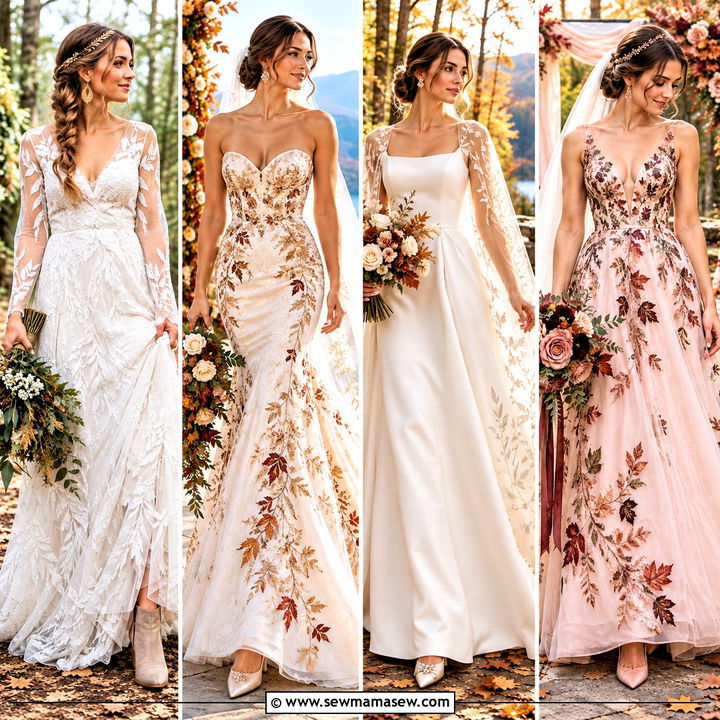
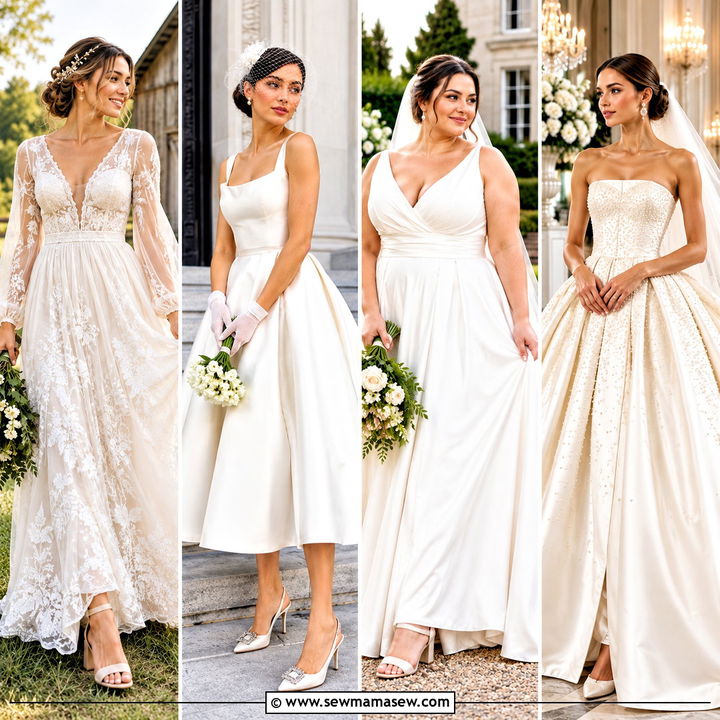
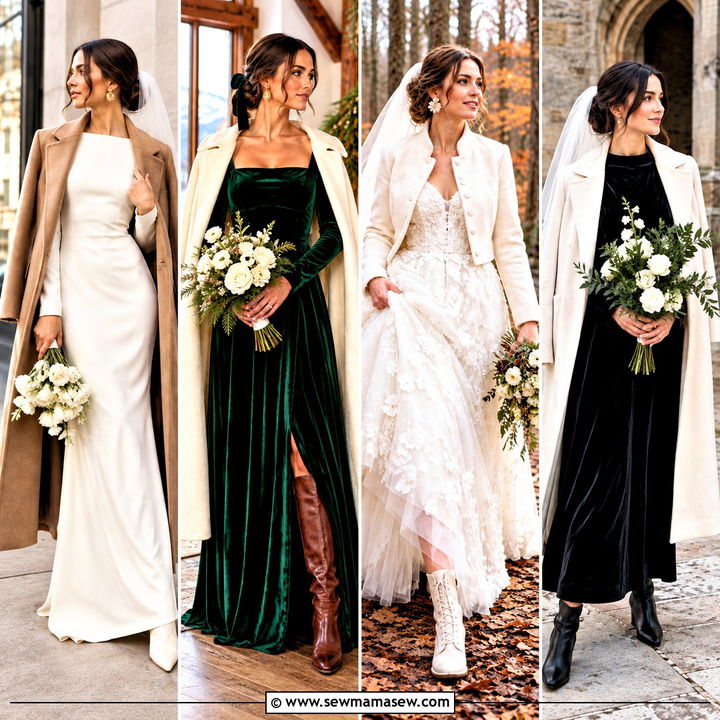
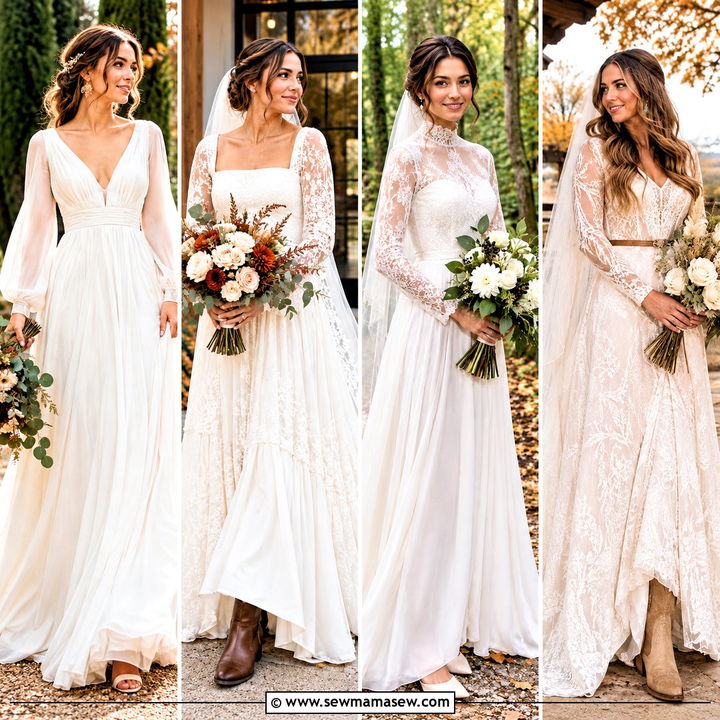
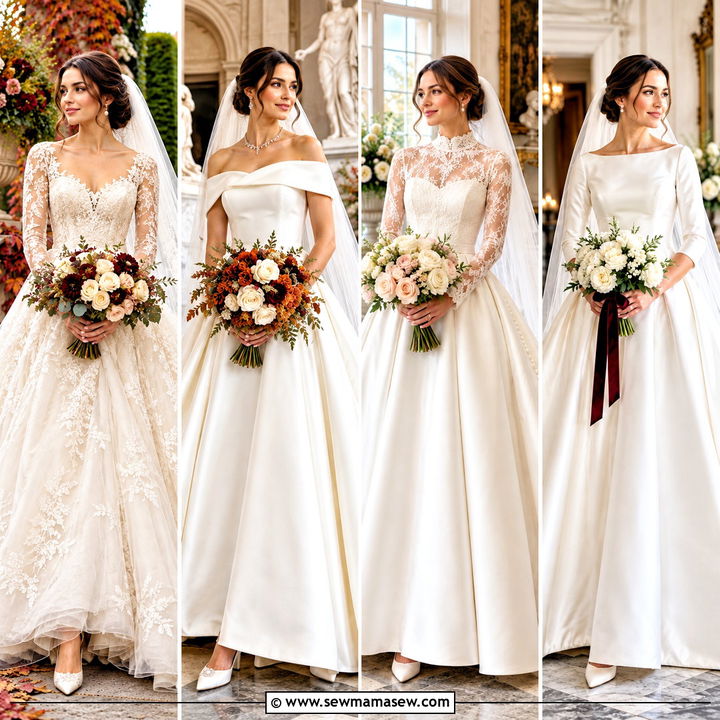
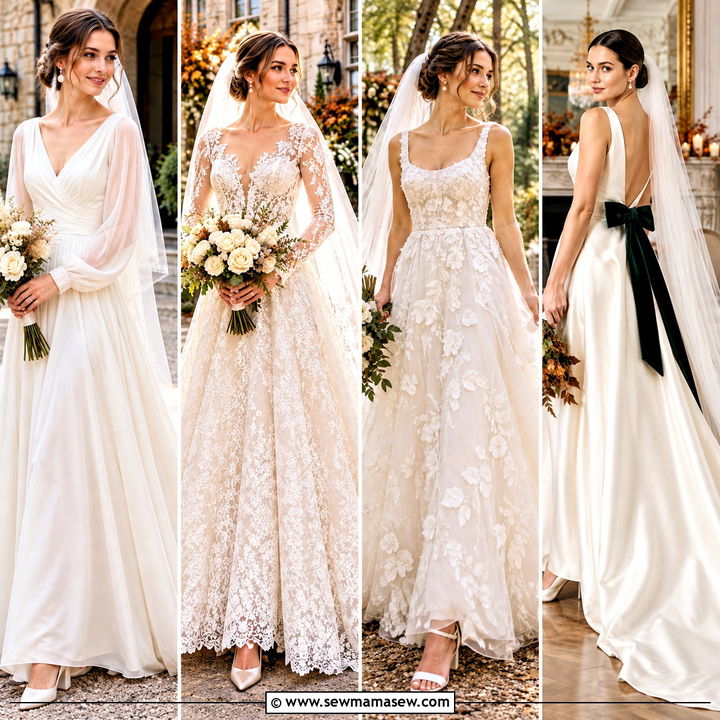
A forest ceremony asks more of a wedding dress than a ballroom does. The gown has to look right against bark, moss and turning leaves, and it also has to cross grass, gravel, roots and damp ground without becoming a problem. Fall bridal styles now run from long-sleeve lace and floor-length capes to plain crepe columns and softly tinted gowns, so there's room for almost any taste. When I help a bride choose for the woods, I look first at the lining, the train length, the shoes and whether there's a layer she can take off as the afternoon warms or cools. Floral embroidery, champagne undertones, velvet and loose, flowing skirts all suit the season, as long as the dress doesn't turn the woodland theme into fancy dress. Below are fifteen directions, from bohemian and classic to modern, colored, plus-size and maternity.
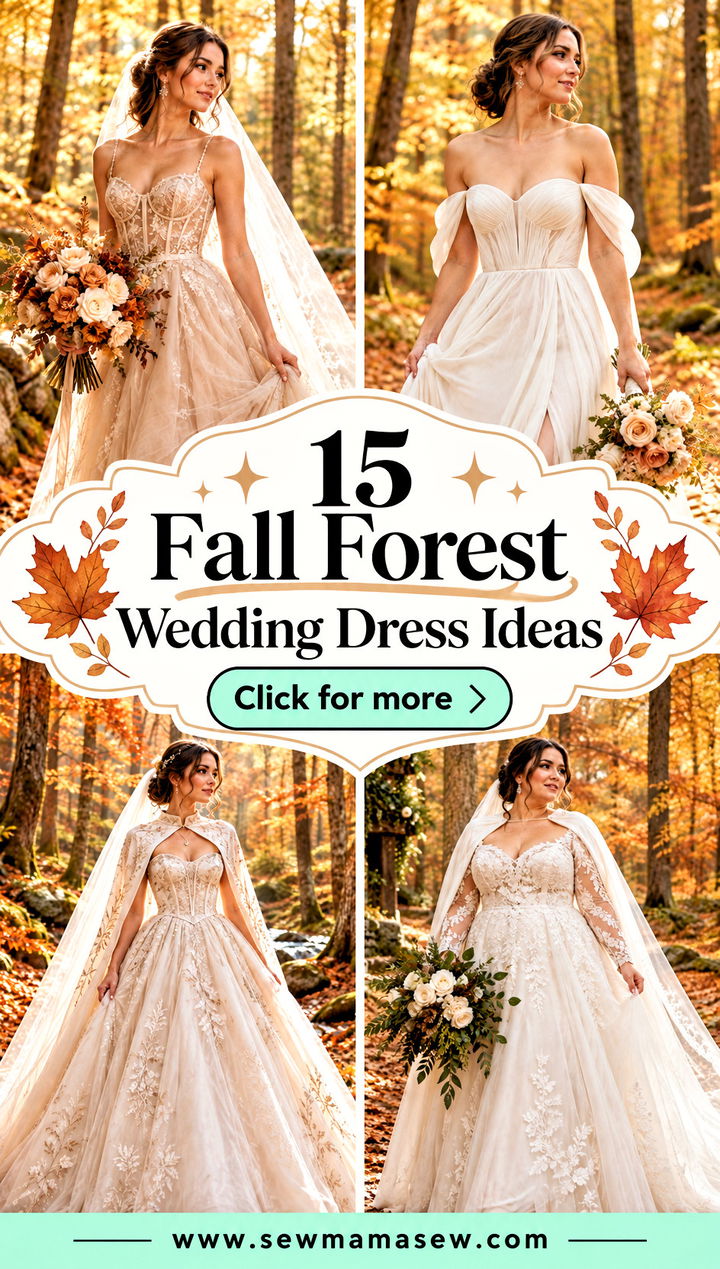
Walk the Ceremony Path Before You Pick a Train
I ask every forest bride the same question before we talk about lace or sleeves: what will you actually be walking on? A mown lawn in a clearing, a gravel path and a narrow trail covered in wet leaves need very different hems. If you can visit the site, walk from where you'll get dressed to the ceremony spot and note the surface, any steps and how damp the shade stays.
How train lengths behave outdoors
- No train or a sweep train: just brushes the ground, stays cleanest and is the easiest on trails.
- Chapel train: extends a few feet behind you. It photographs well and still bustles up neatly for the reception.
- Cathedral train: very long and dramatic, but it gathers leaves, needles and mud. I only suggest it for a short, clean aisle, with someone ready to arrange it.
Ask your seamstress which bustle suits the fabric. An over bustle lifts the train with hooks or buttons on top of the skirt; an under bustle tucks it beneath and suits soft fabrics like chiffon. Have whoever will fasten it on the day practice at your last fitting. Ordering the hem with your exact wedding shoes on is just as important, since a half-inch difference decides whether the dress skims the ground or drags through it.
1. Long Sleeve Lace Fall Forest Wedding Dress
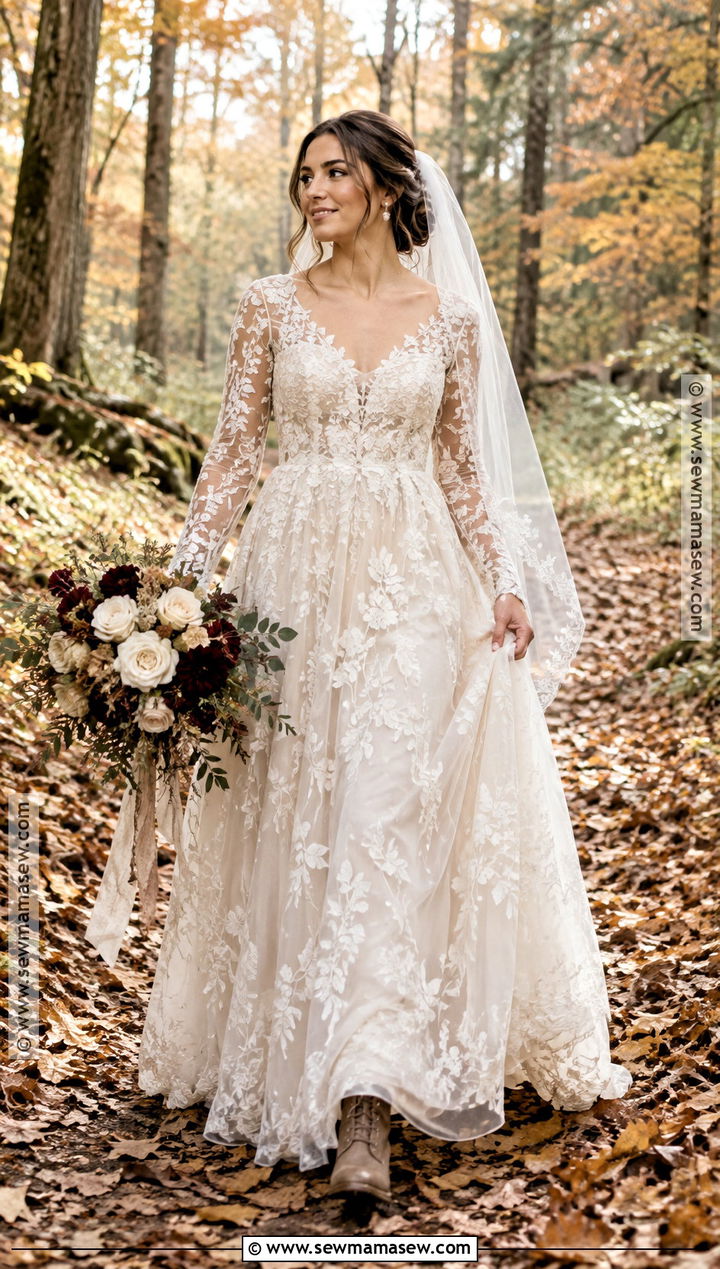
Long lace sleeves under a canopy of turning leaves is the look many brides picture first, and it earns its popularity. I'd choose an A-line with botanical lace, a fitted bodice and a skirt that moves, because a stiff skirt fights uneven ground. An illusion neckline gives coverage without weight, and a low back keeps it from feeling buttoned up. Ivory ankle boots are far steadier on a woodland path than heels. A fingertip veil ends around the hands, so it never drags in the leaves. Pearl drops and a bouquet of cream flowers, burgundy foliage and trailing greenery finish it, with a light ivory wrap waiting for after the vows.
2. Floral Appliqué Fall Forest Wedding Dress
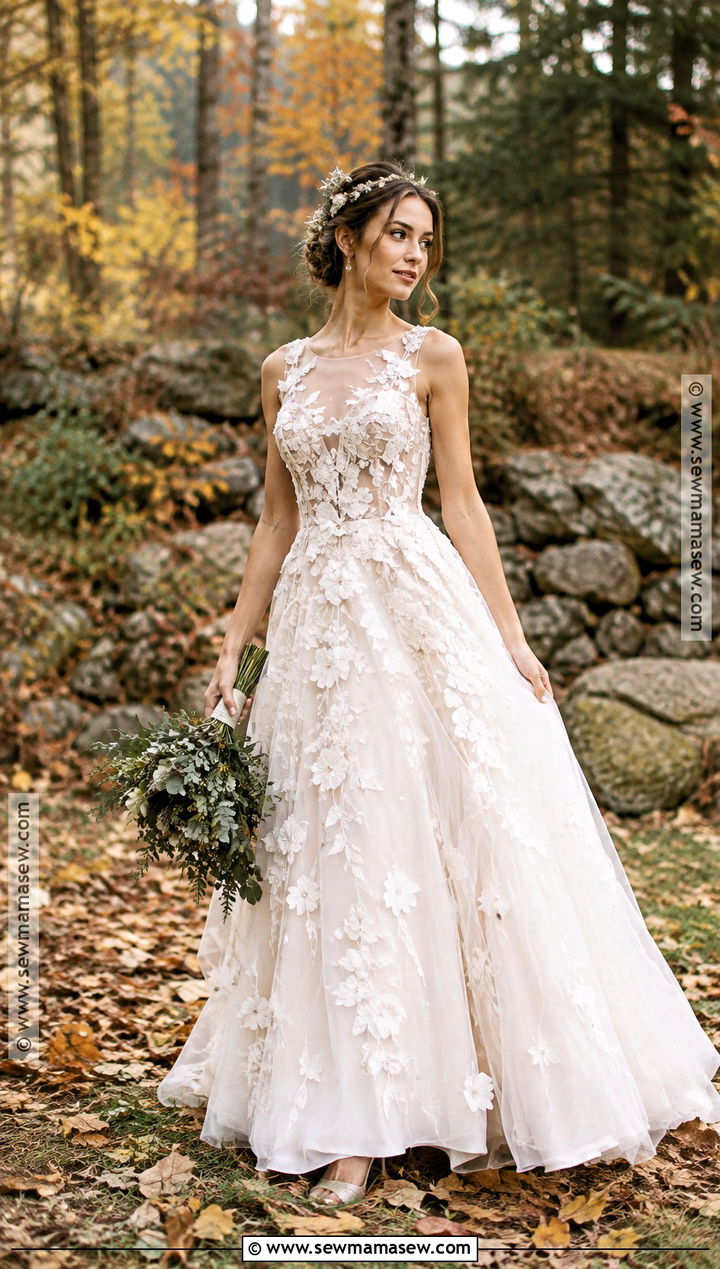
Three-dimensional appliqués look as if the forest itself climbed onto the dress. I like them placed across the bodice, sleeves and upper skirt of an ivory A-line, with a sheer neckline and a lightly structured waist. The thing I warn brides about is snagging: raised petals and leaves catch on twigs, brambles and rough bark, so the lower skirt should stay smooth if you're walking a trail. Block heels, delicate gold earrings and a narrow floral hair vine keep the styling quiet. A cathedral veil looks wonderful in portraits; I'd take it off before any rough walking. A loose bouquet of ivory blooms, ferns and copper leaves picks up the colors without adding sparkle.
3. Champagne Tulle Fall Forest Wedding Dress
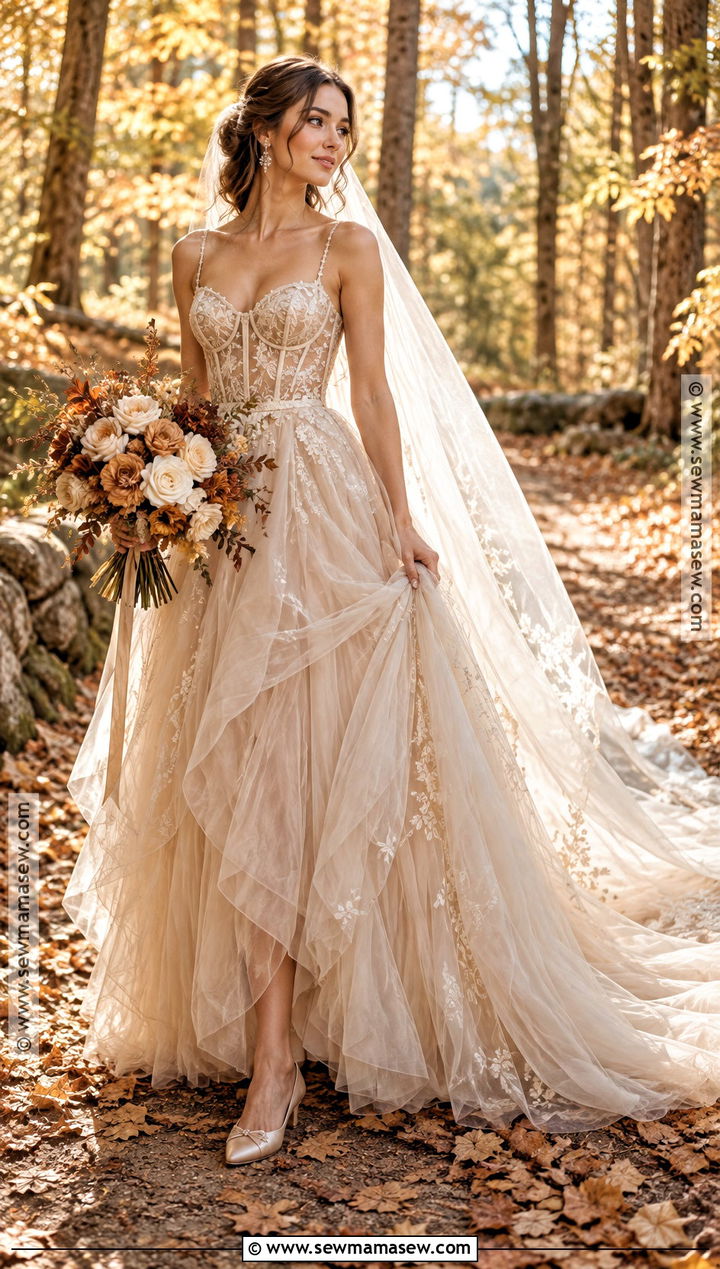
Champagne tulle sits beautifully against amber leaves and deep green trees, and its warm undertone reads as clearly bridal while being kinder than bright white in shaded light. A layered ball gown with a corset bodice, fine straps and a light skirt gives movement without heavy weight. The catch with tulle in the woods is that every layer collects leaves, burrs and pine needles, so ask for a bustle and keep the train moderate. Champagne ballet flats or low block heels give stability. Crystal studs and a sheer chapel-length veil finish the look, with cream roses, rust-colored flowers and eucalyptus in the bouquet. It suits a formal forest ceremony and sunset portraits among gold trees.
4. Ivory Satin Cape Fall Forest Wedding Dress
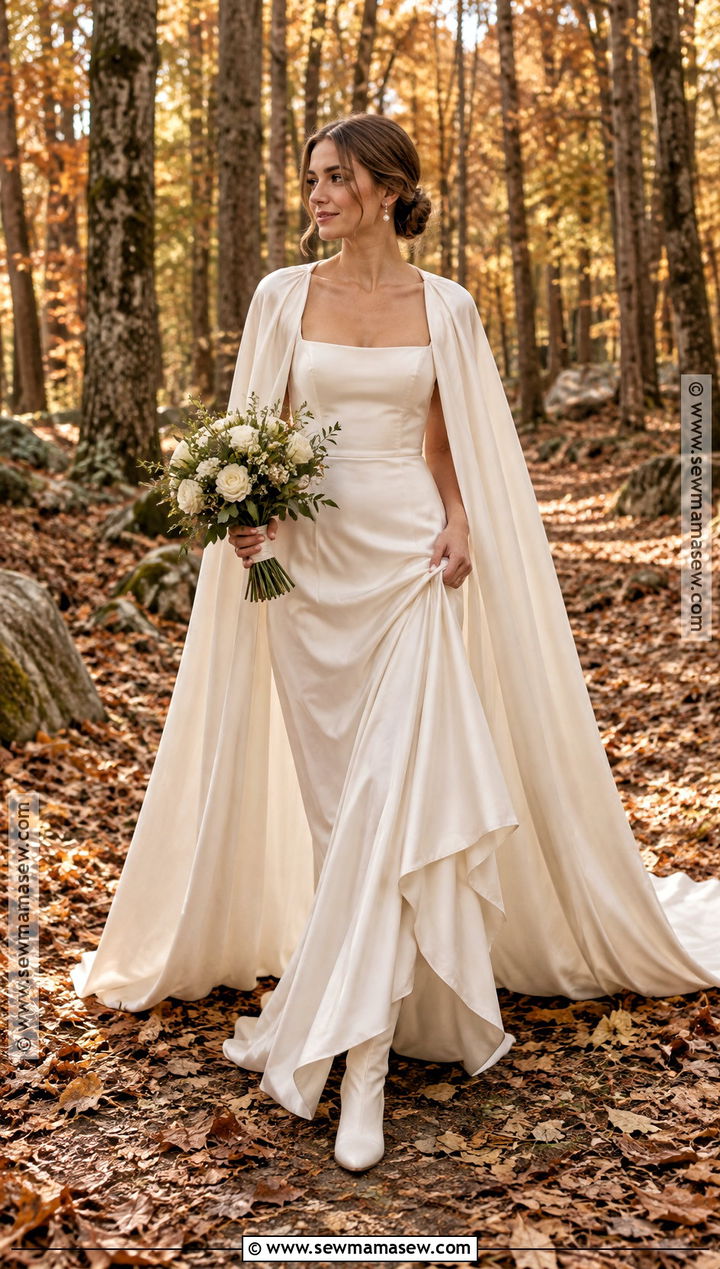
Cool autumn air is the best excuse for a bridal cape. I'd start with a clean ivory satin gown with a square neckline, fitted waist and gently flared skirt, then add a matching floor-length cape that fastens at the neck and comes off for the reception. In photographs the cape moves dramatically in any breeze. Satin is the fabric I'm most careful with outdoors: it shows water spots and dirt quickly, so I keep the hem just off the ground and plan a dry route to the ceremony spot. Pointed block heels or polished bridal boots depend on the terrain. Pearl earrings, a low bun and a small bouquet of white flowers and greenery keep it refined.
5. Boho Bell Sleeve Fall Forest Wedding Dress
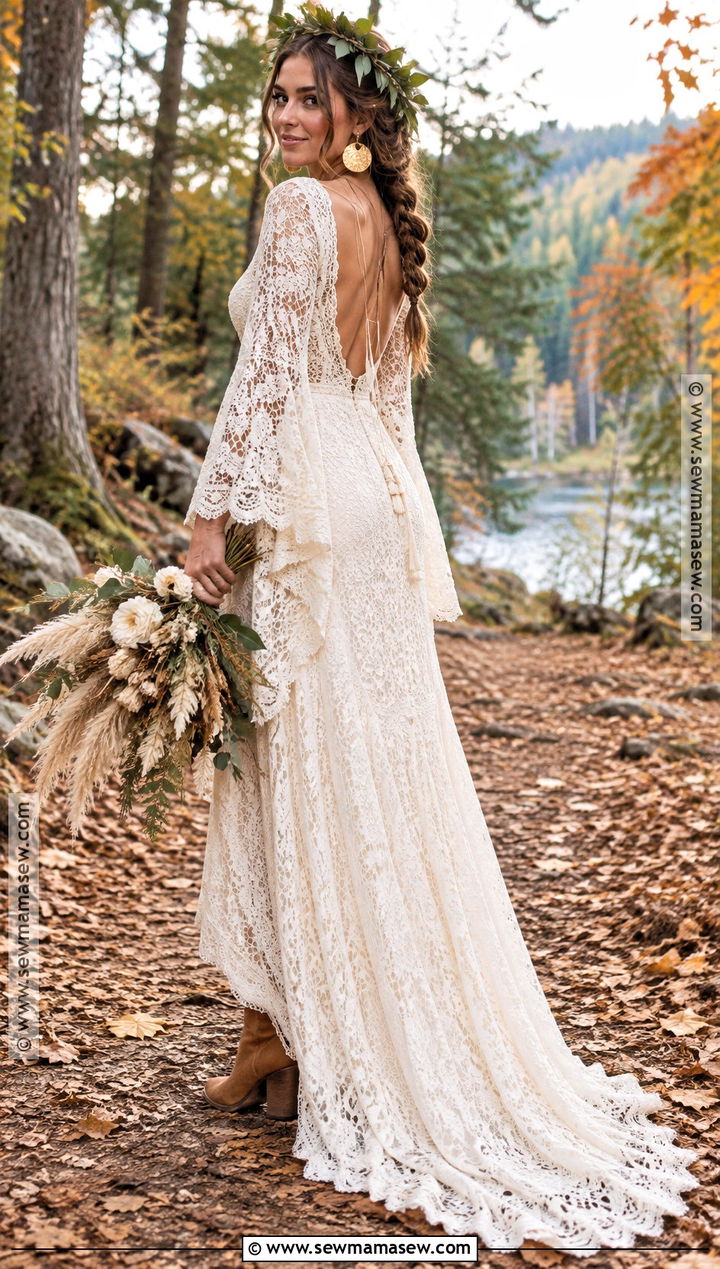
Bell sleeves and crochet lace suit a relaxed woodland wedding with a free-spirited feel. I look for a fitted lining under the lace, a defined waist and a skirt that falls close to the body without restricting your stride. Wide sleeves give a romantic shape, and an open back keeps all that coverage from feeling formal. One practical point: very wide sleeves drag through food at a reception and catch on branches, so check how far they hang when your arms are down. Tan or ivory ankle boots, hammered-gold earrings and a loose braid suit the mood, with a greenery crown or short embroidered veil instead of a long one. A gathered bouquet of dried grasses, cream flowers and rust foliage ties it together. Keep the train short or add a wrist loop.
6. High Neck Fall Forest Wedding Dress
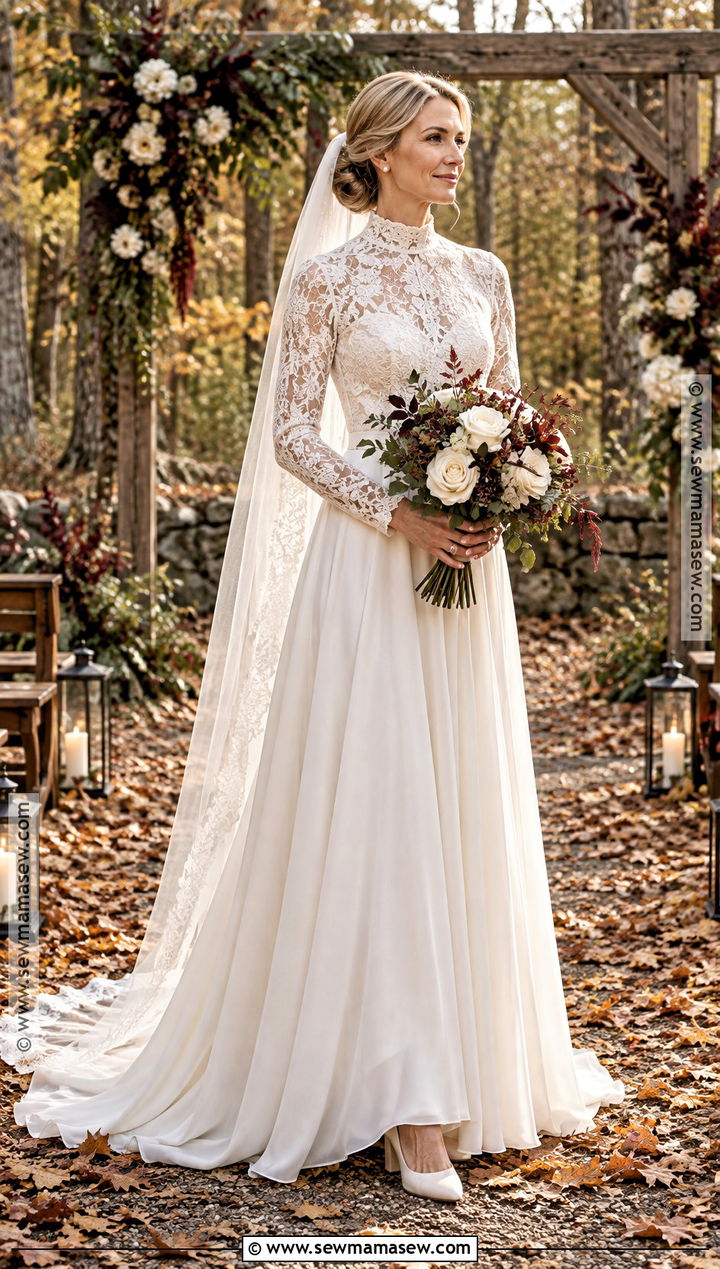
A high neck has a vintage formality that suits an older forest, tall trees and filtered light. I pair a fitted lace bodice and long sleeves with an A-line skirt in crepe or chiffon so the top doesn't feel heavy. A keyhole back or a row of covered buttons gives interest from behind, which matters because guests see your back for most of the ceremony. Ivory block-heel pumps with an ankle strap stay on over soft ground. Pearl studs, a smooth low chignon and a fingertip veil finish it, with white flowers, burgundy leaves and dark foliage in the bouquet. A full lining under the lace gives extra coverage and keeps a modest look feeling light.
7. Off Shoulder Chiffon Fall Forest Wedding Dress
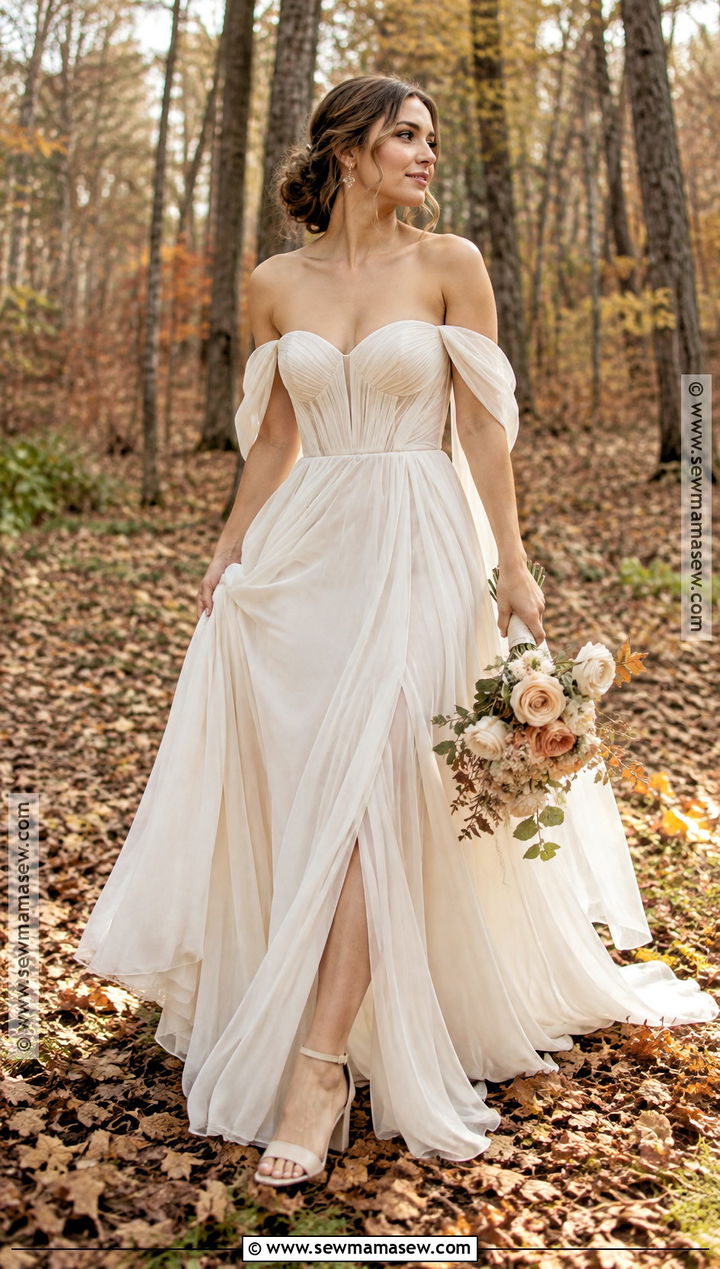
Off-the-shoulder chiffon is about movement: it floats in a breeze in a way heavier fabrics simply don't. Because the neckline has no straps, the bodice must be properly structured, or you'll spend the day pulling it up. Draped sleeves, a light skirt and either a side slit or a modest train keep it uncomplicated. Low block heels, crystal drops and an updo pinned firmly against wind work well. Chiffon frays and stains easily at the hem, so I have it hemmed to clear the ground slightly, especially on damp paths. A sheer wrap or fitted bridal jacket keeps you warm between portraits and the reception, and a bouquet of cream blooms, muted peach and eucalyptus suits the soft palette.
8. Corset Ball Gown Fall Forest Wedding Dress
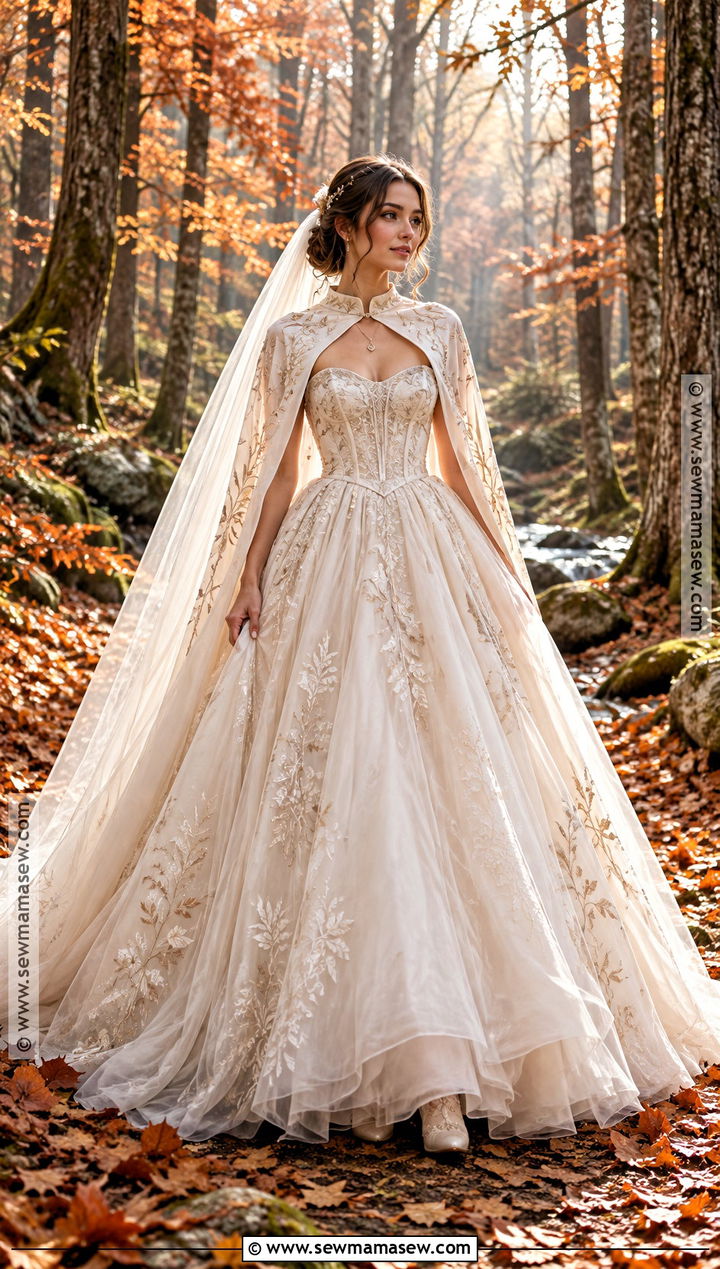
A corset ball gown against rugged trees is pure storybook contrast. I'd only recommend it with a lightweight tulle skirt; a full skirt in heavy satin or mikado gets exhausting on soft ground and picks up mud along the whole hem. A supportive boned bodice with subtle embroidery defines the waist. Closed-toe shoes protect your feet from roots and stones. Keep the long veil for the ceremony and formal portraits, and have a fitted ivory capelet ready if the temperature drops. A slightly smaller bouquet stops it competing with all that volume. Measure your aisle before committing, as a wide skirt needs real space, and practice with the bustle so walking and dancing stay easy.
9. Sage Green Fall Forest Wedding Dress
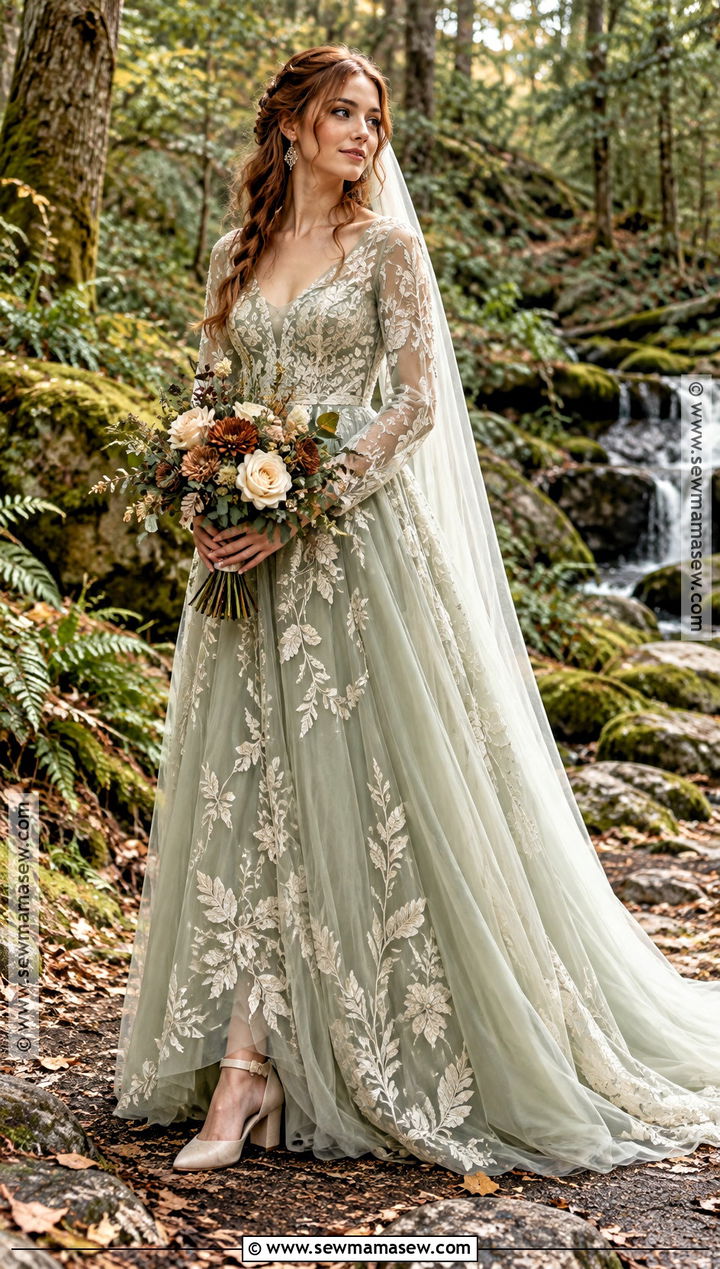
Sage gives you color while keeping the softness of a bridal gown. A muted sage tulle dress with an embroidered ivory bodice, a flowing A-line skirt and sheer long sleeves is the version I'd suggest, because the ivory near the face keeps your complexion bright. The shade blends with the forest yet stays lighter than the foliage behind it, so you won't disappear in photos. Neutral block heels, antique-style earrings and a simple ivory veil tucked beneath a loose bun keep it calm. Don't match every accessory to the green; neutral details look more polished. A bouquet of cream flowers, deep green leaves and small copper accents adds contrast. It's a strong choice for intimate or nontraditional ceremonies.
10. Rust Ombre Fall Forest Wedding Dress
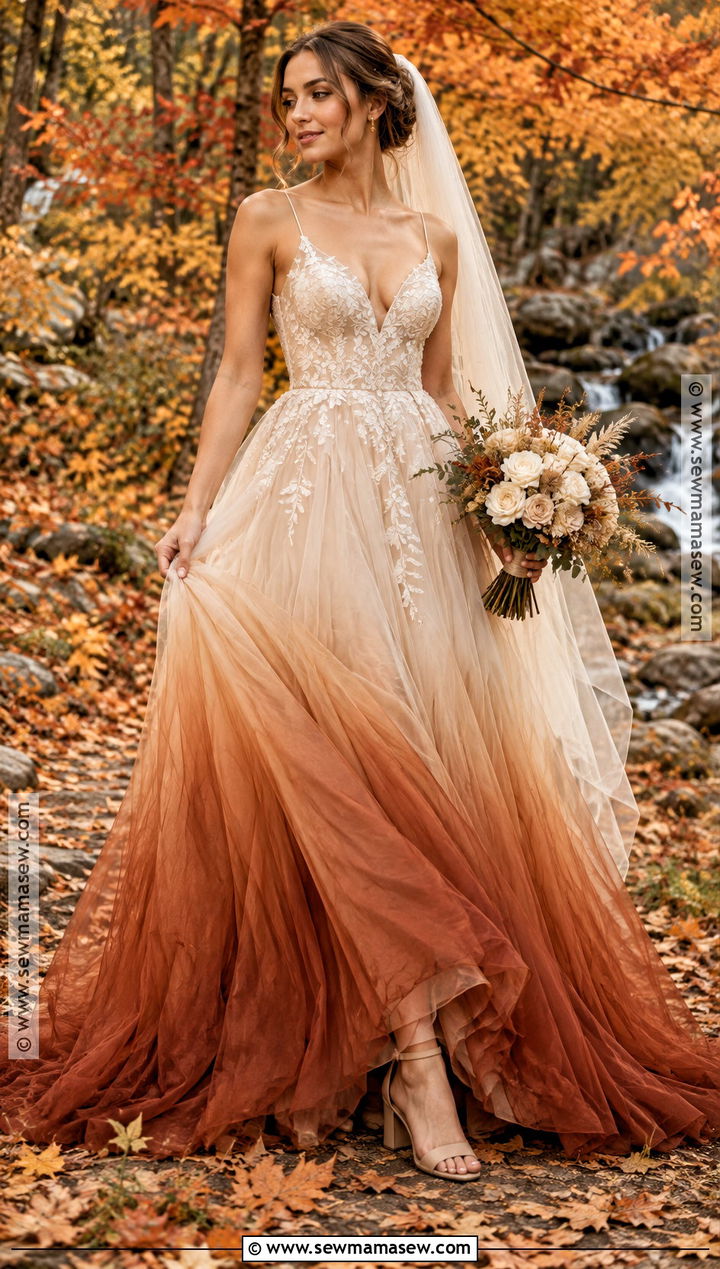
Rust ombré puts the foliage right into the gown. An ivory or pale champagne bodice that fades into copper, terracotta or burnt orange at the hem looks soft rather than theatrical when the skirt is flowing tulle or chiffon. Ombré actually hides the dirt that a forest hem collects, which is a practical bonus few people consider. Nude block heels, small gold earrings and an ivory veil with minimal edging keep the focus on the dress, and the bouquet should stay neutral with cream flowers and green foliage. If a full ombré gown feels too bold, put the color in a removable overskirt and change the look for the reception. I'd suggest this for creative brides who want the season reflected directly in what they wear.
11. Velvet Bodice Fall Forest Wedding Dress
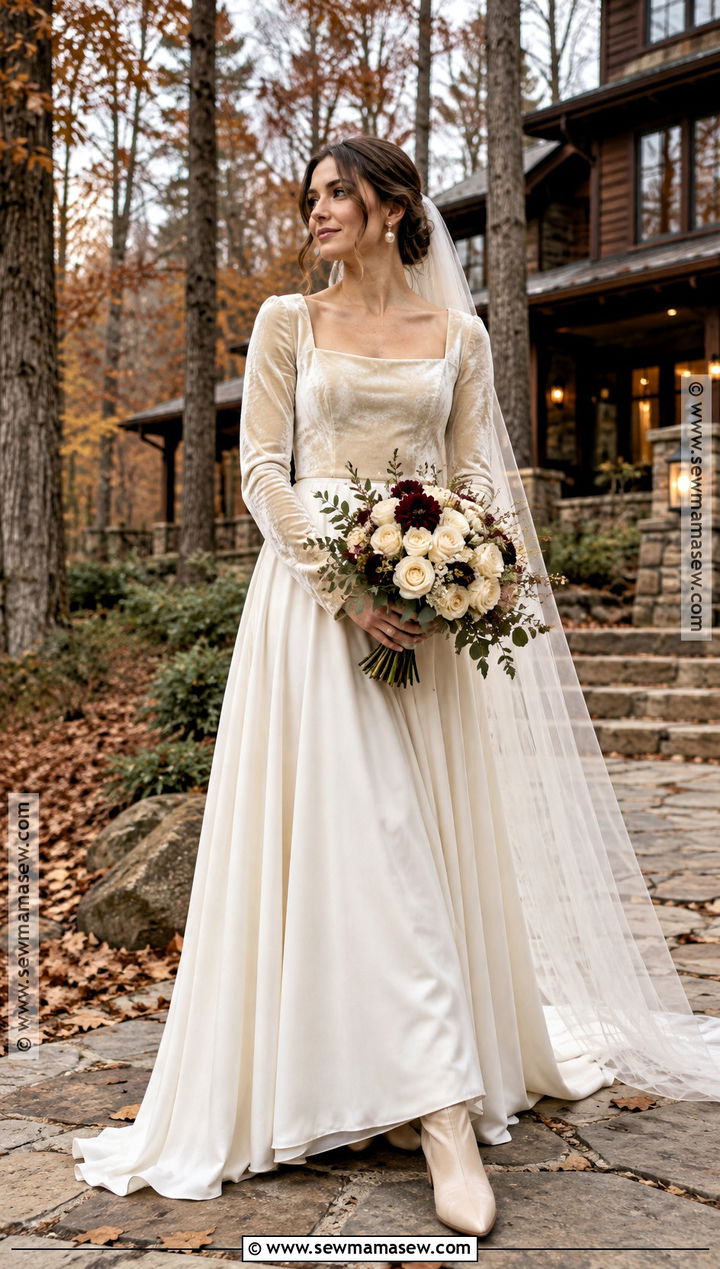
Velvet is a late-fall fabric, and it photographs with real richness in natural light. Used as a fitted bodice with long sleeves above a chiffon or crepe skirt, it gives warmth and depth without making the whole dress heavy. If a full velvet bodice feels like too much, a deep green velvet ribbon at the waist gives a smaller touch of the same idea. Velvet does crush where it's pressed, so I steam it rather than iron it and keep the bride from sitting for long before the ceremony. Ivory ankle boots, pearl earrings and a soft tulle veil suit it, with cream flowers and burgundy and evergreen accents. Save this one for genuinely cool ceremonies under dense trees or near a lodge.
12. Tea Length Fall Forest Wedding Dress
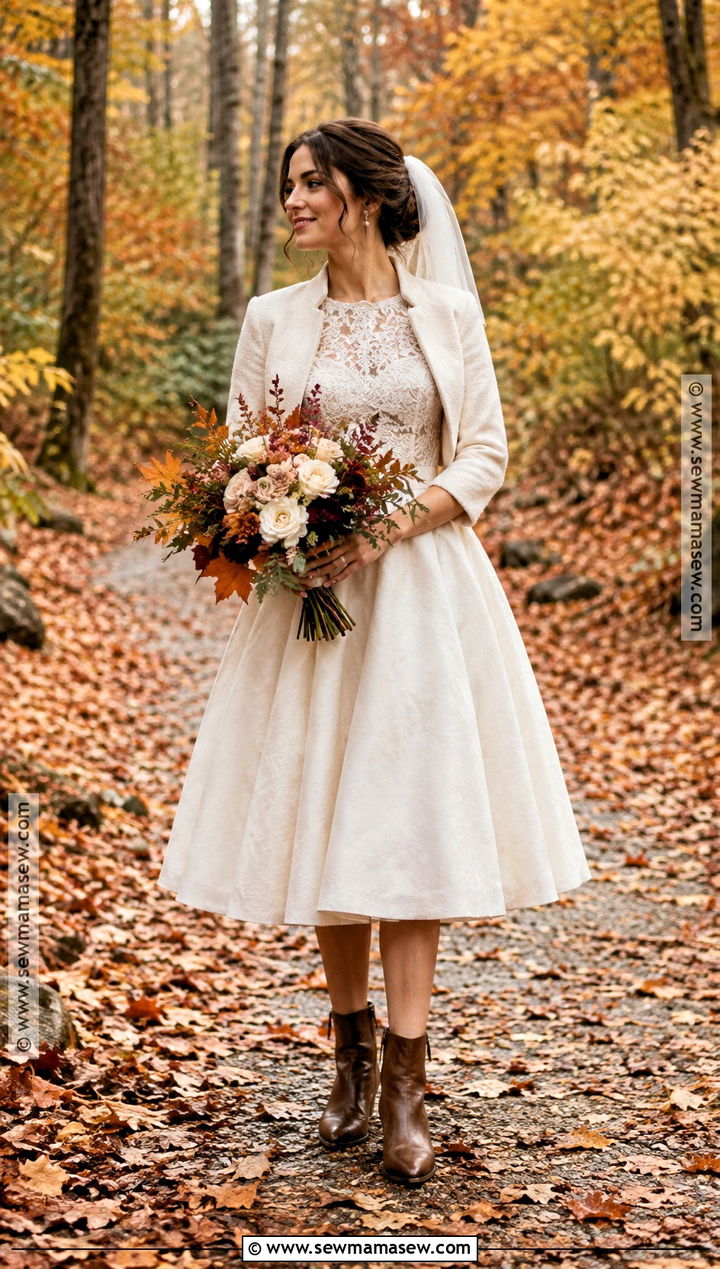
A tea-length dress is the most practical choice on this list for walking over roots, grass and fallen leaves. The hem ends between the knee and ankle, so it stays clean and you never worry about a train. I like an ivory lace version with three-quarter sleeves, a fitted waist and a softly flared skirt. Because your shoes are on show, they become part of the outfit: polished ankle boots, classic pumps or embellished flats, all with grippy soles. Pearl earrings, a short veil and a structured bouquet of cream flowers and autumn foliage suit the vintage feel, and a cropped cardigan or tailored jacket adds warmth without hiding the skirt. I steer micro-wedding brides and anyone who plans to dance hard toward this one.
13. Minimalist Crepe Fall Forest Wedding Dress
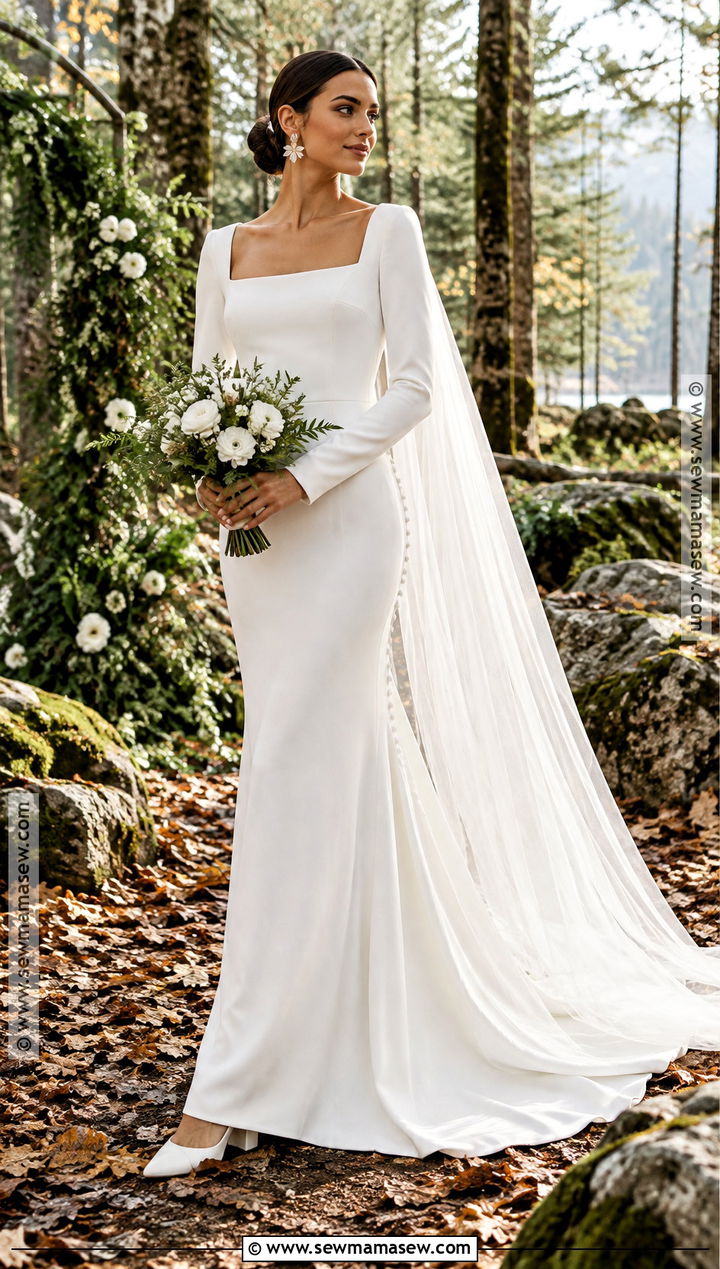
Clean crepe lets the forest supply the texture. A long-sleeve column or soft fit-and-flare with a square neckline, defined waist and covered buttons looks sharp next to rough bark, moss and layered leaves. Pointed block heels, sculptural earrings and a sleek low bun keep it modern. A detachable tulle cape adds movement for the ceremony and comes off afterward. The honest drawback of crepe is that it shows everything underneath, so I fit smooth, flat-finish foundations before the first alteration appointment, not after. Carry a compact bouquet of white flowers and dark greenery. It's for brides who prefer a quiet line over lace, beading or floral decoration.
14. Plus Size A-Line Fall Forest Wedding Dress
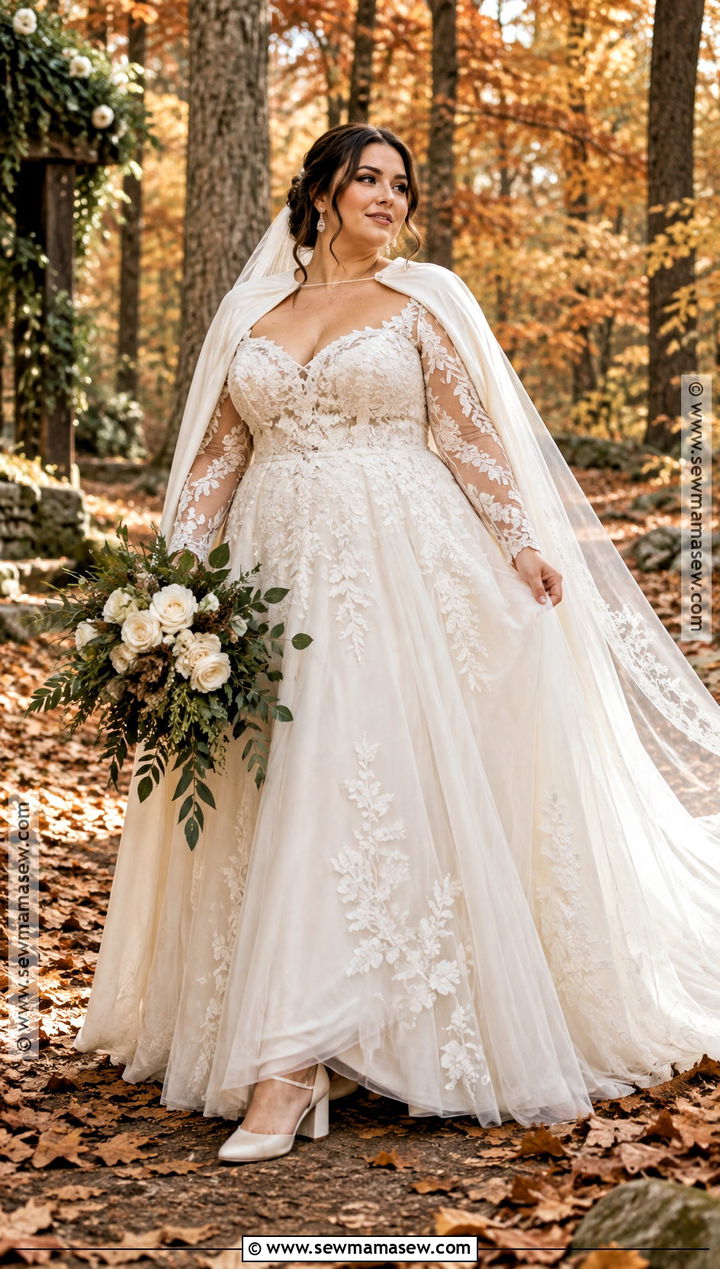
An A-line is a reliable shape for a plus-size bride in the woods: it defines the waist and moves freely without adding volume at the hip. I look for a structured bodice with wide straps or fitted lace sleeves, a natural waistline and a skirt that skims rather than balloons. Soft ivory, champagne and light blush all sit well against autumn color. Supportive block heels, drop earrings and a fingertip veil anchored firmly with combs finish it, and a tailored cape adds warmth without bulk at the waist. Bring your actual undergarments to every fitting so the alterations match what you'll wear. Raise your arms and sit during fittings too; a bodice that looks perfect standing still can dig in once you hug guests.
15. Maternity Empire Waist Fall Forest Wedding Dress
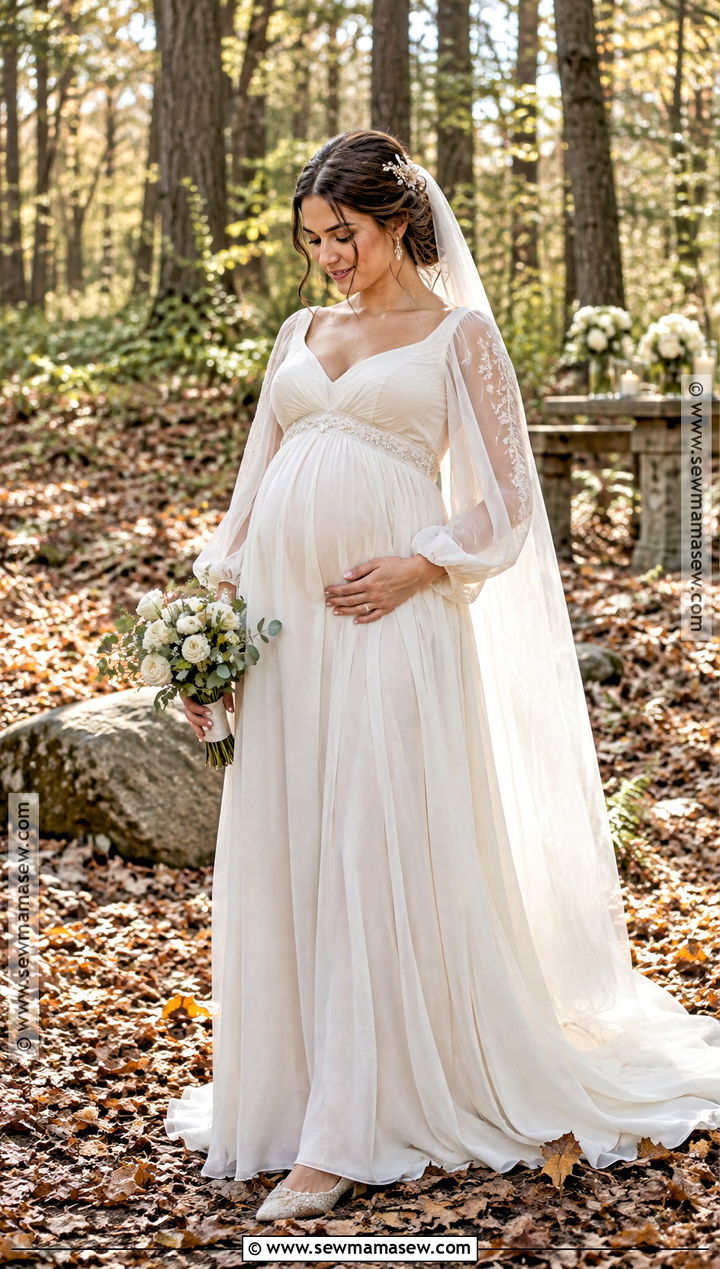
An empire waist gives a pregnant bride room while keeping a romantic line. The skirt starts just below the bust, so a flowing chiffon or soft tulle one falls over the bump without pressure. I'd choose a supportive bodice with comfortable straps and avoid stiff boning or any fitted waistband. Long sheer sleeves add warmth. Cushioned flats or low block heels matter even more than usual on uneven ground. Small pearl earrings, a light fingertip veil and a floral hair comb in place of a heavy headpiece keep it comfortable through a long day. A manageable bouquet of ivory flowers, eucalyptus and muted autumn accents suits it. Book the final alteration as close to the date as your seamstress allows, because sizing can change within weeks.
Shade Under the Trees Runs Colder Than the Forecast
A forest in October can feel several degrees cooler than the open lawn next to it, and the light goes earlier too, because the canopy blocks the low sun. Both affect what you wear and when you photograph it.
- Plan a warm layer that matches the gown: a faux-fur stole, a cropped knit, a tailored bridal jacket or the cape itself. Try it on with the dress at a fitting.
- Bare shoulders feel the cold fastest once you stop moving, so off-shoulder and strapless brides should keep the layer close by.
- Schedule portraits before the light drops below the trees. Under a dense canopy, that can be well before sunset.
- Green leaves reflect a slight green tint onto bright white fabric in shade. Ivory and champagne hold their color better there.
A small kit for a gown outdoors
I pack the same few things for every outdoor ceremony: a lint roller and a soft clothes brush for leaves and seeds, a white stain stick, safety pins and clear thread for a loose bustle loop, blister plasters, and a clean towel to stand on while you change shoes. A spare pair of flat shoes for the walk back saves both your feet and your hem.
Dress for the Trail First, Then for the Photos
A fall forest gown should feel like you, move comfortably and belong to the place. Lace sleeves, floral appliqués, champagne tulle, satin capes and softly colored gowns each answer the season differently, and none of them is the single right choice. The practical decisions are what make the day go smoothly: the temperature in the shade, the surface you'll walk on, the train length, how the sleeves move, your shoes and a layer you can remove. Go to fittings in your real shoes and undergarments, and practice the bustle before the day. Let the woods inspire the gown without following the theme so literally that it stops looking like you.
Related posts: