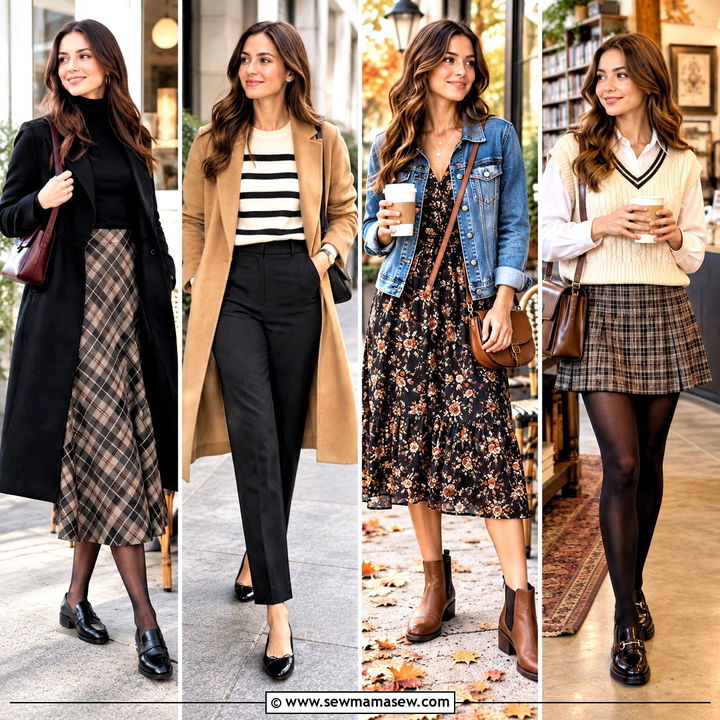
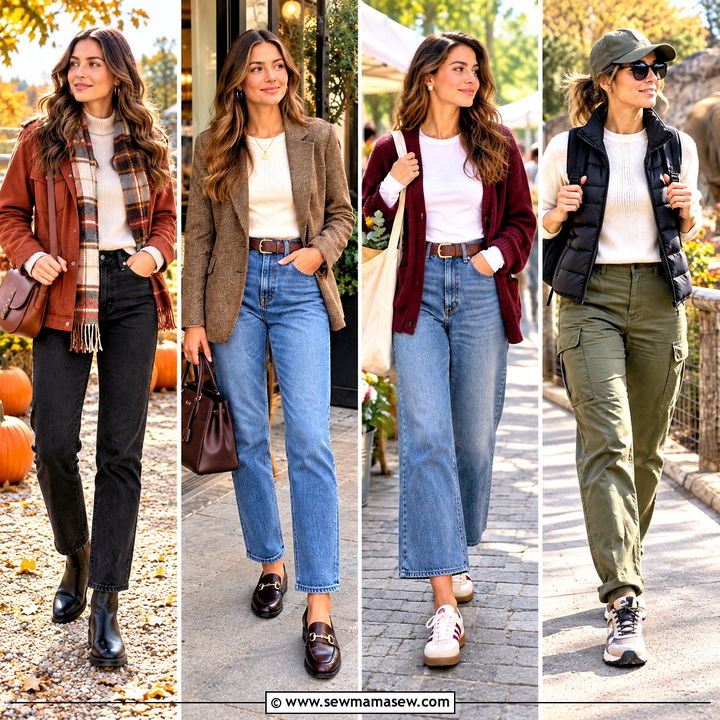
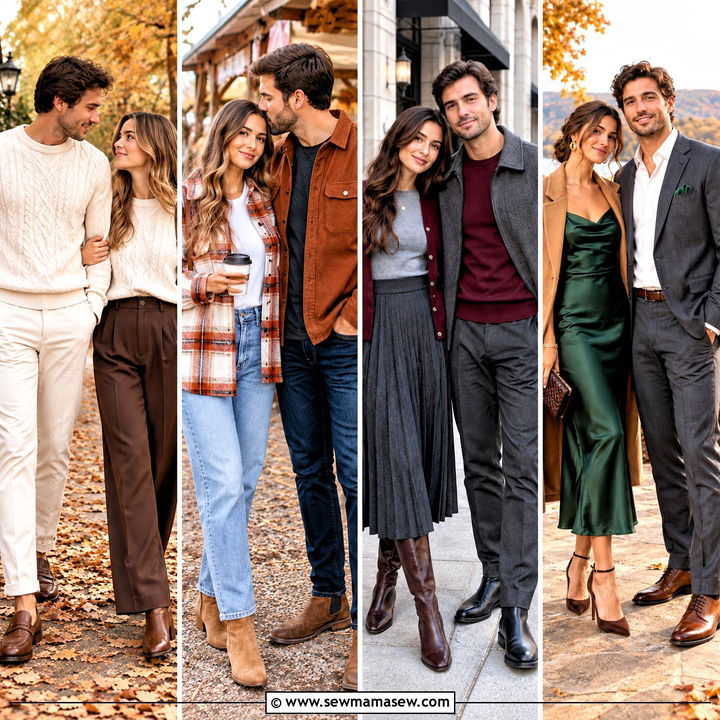
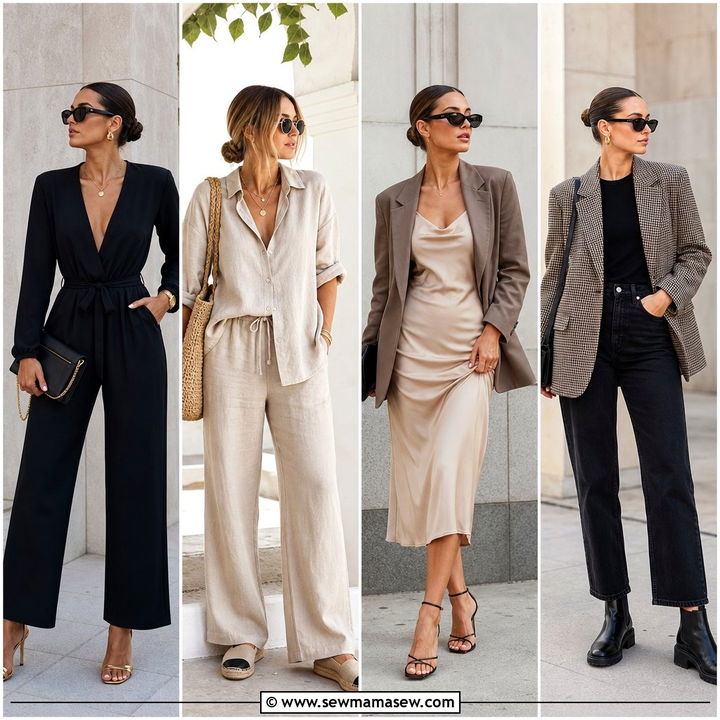
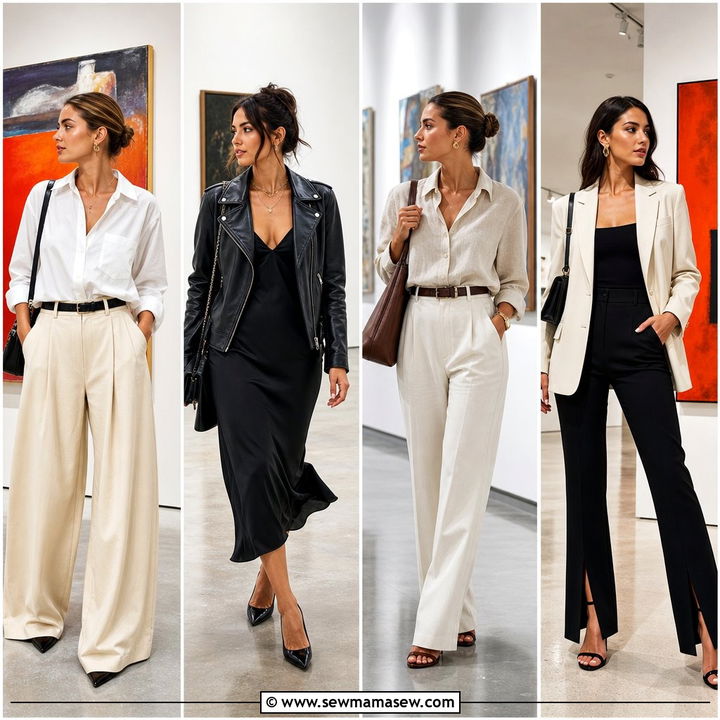
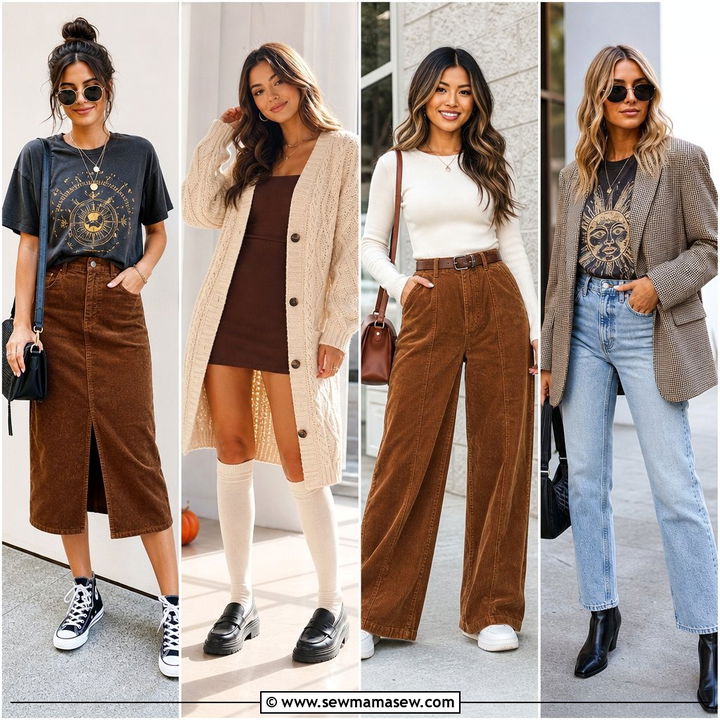
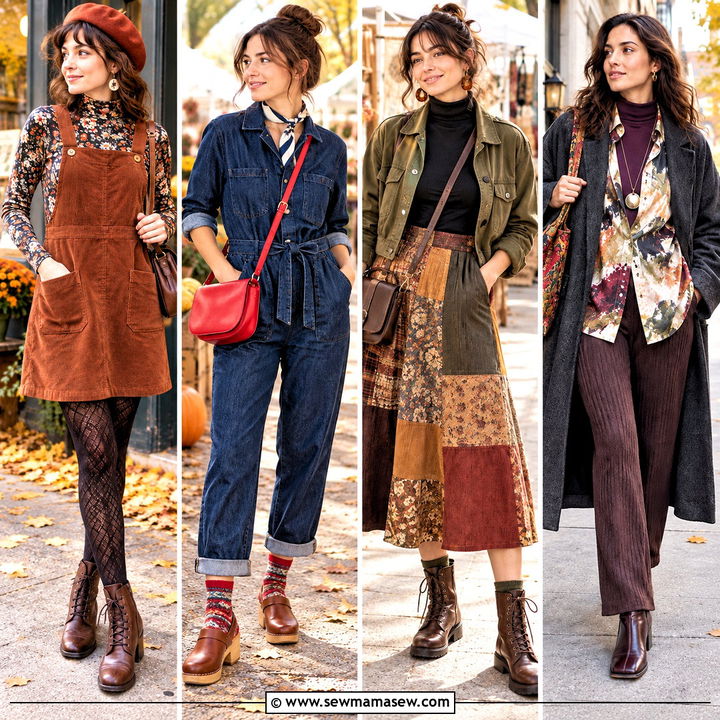
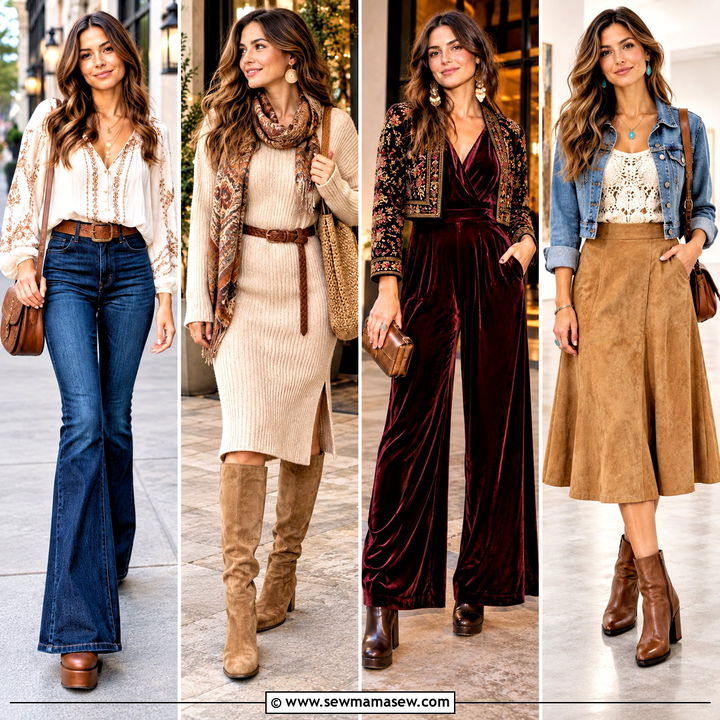
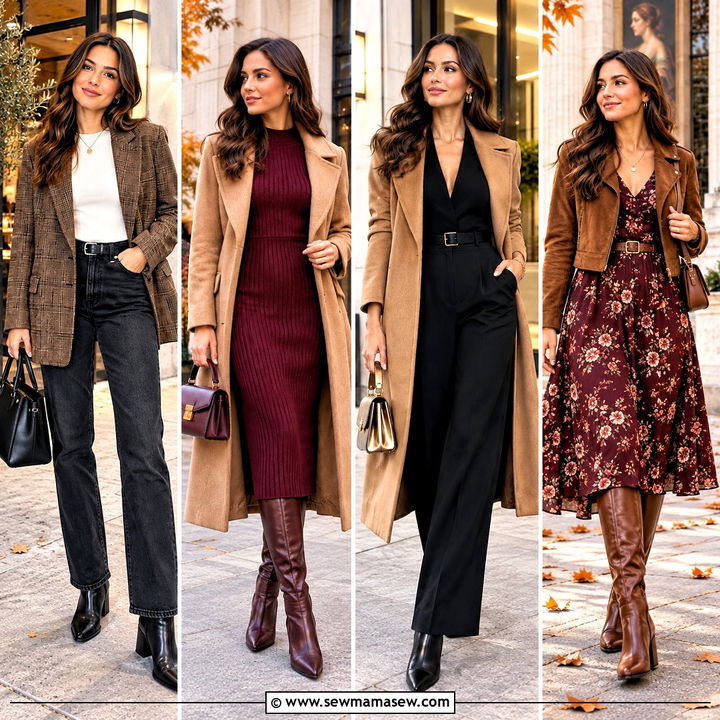
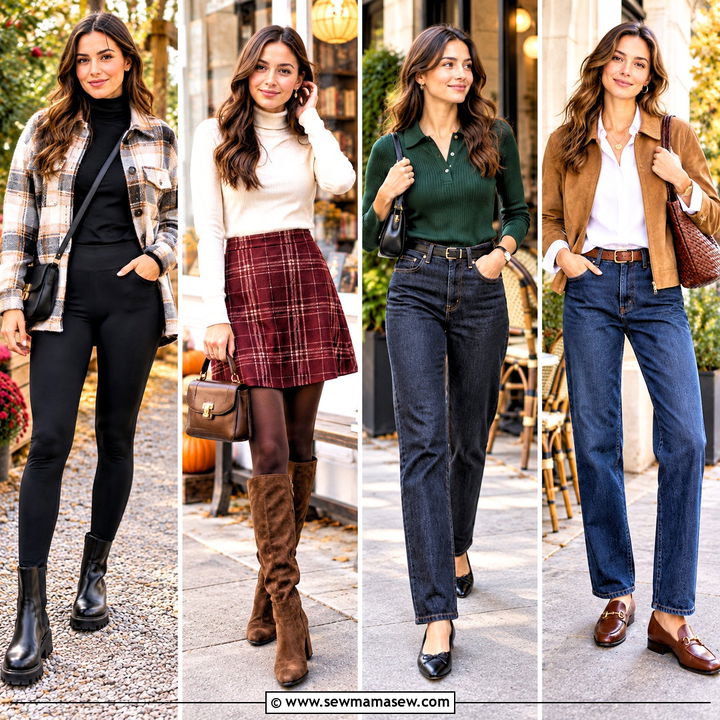
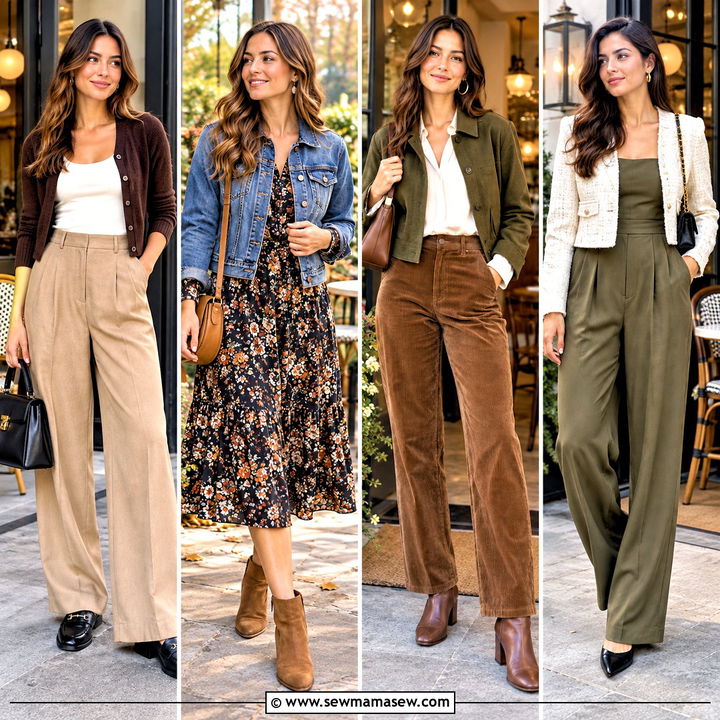
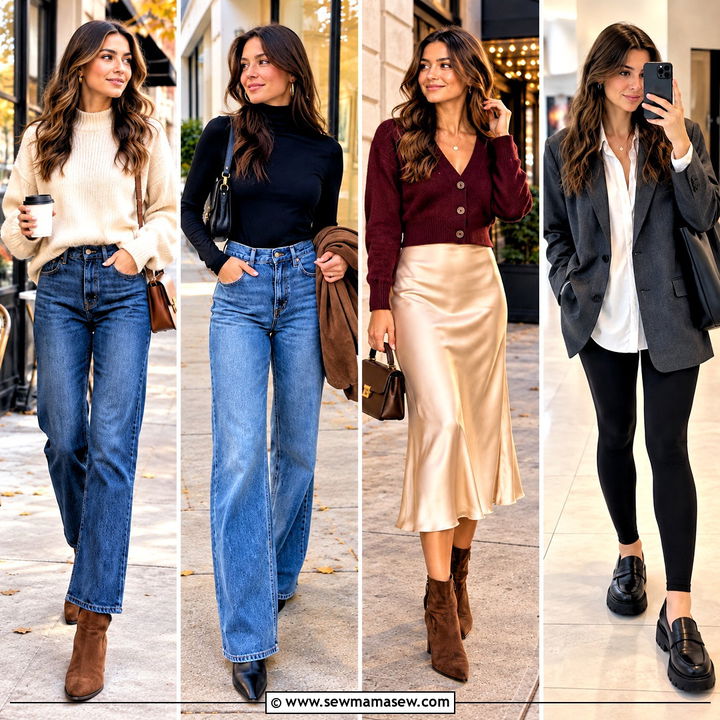
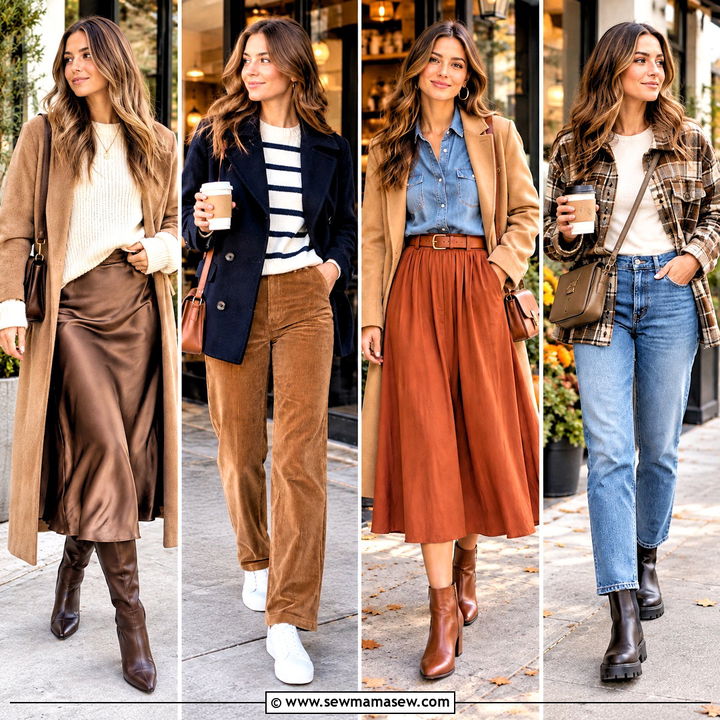
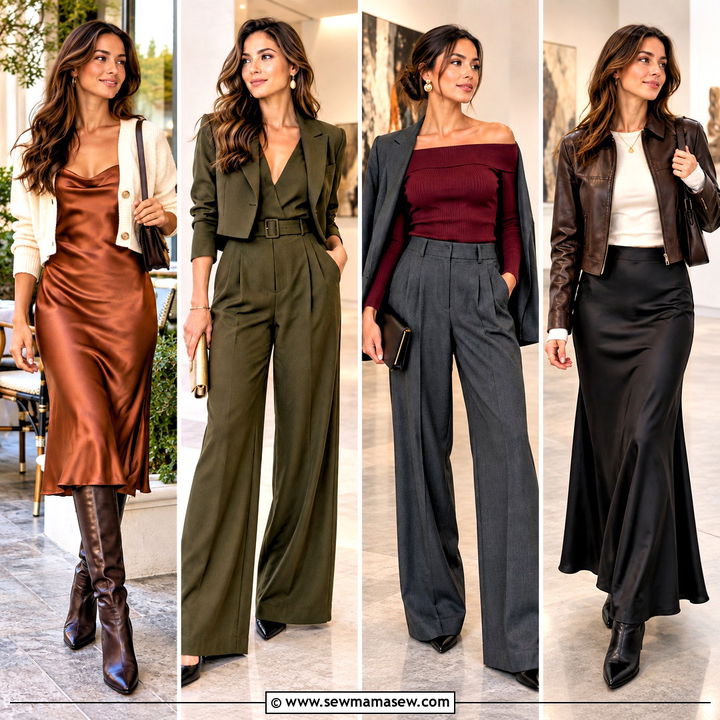
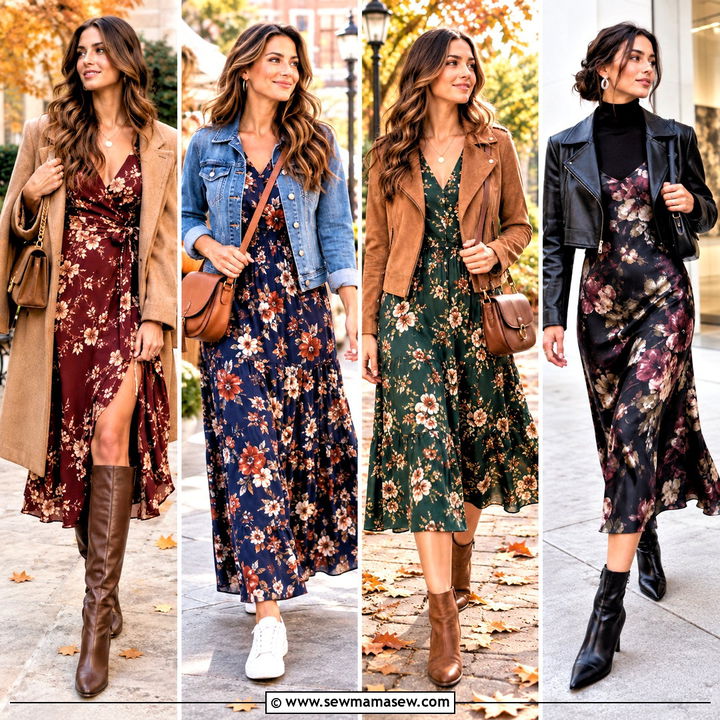
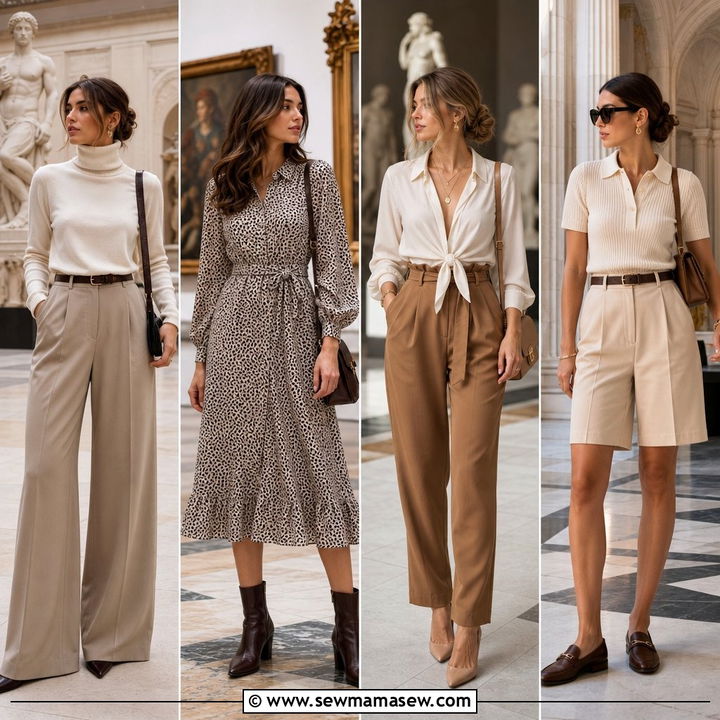
A museum date is mostly standing. You drift, stop, lean in, sit for two minutes on a bench, then stand again for another hour, usually on stone or polished concrete. Add the shift from a cold street into warm galleries and back out again, and the outfit has a lot to handle. When I plan one, I start with the shoes and the layer that comes off at the coat check, because the look underneath has to hold up on its own once the coat is gone. Fall helps here: knits, wool trousers and corduroy are comfortable for hours and still look put together in a quiet room. The fifteen outfits below cover everything from a casual gallery afternoon to a ticketed exhibition followed by dinner.
Coat Check, Bag Rules and Gallery Temperatures
Most larger museums ask visitors to check backpacks and oversized bags, and many won't let you carry a big tote or an umbrella into the galleries. That's why every look below uses a small crossbody or shoulder bag. I plan for the bag to stay on my body the whole time, so a strap that sits flat across the chest and a closure that actually shuts matter more than the color.
Galleries are kept at a steady, fairly mild temperature with controlled humidity to protect the collection, so the inside of a museum in October often feels like late spring. Your coat will come off within minutes, and you'll either carry it or check it. That changes how I dress:
- The outfit under the coat should look complete by itself, with the top tucked or finished at the waist the way you want it seen.
- Choose a mid-weight knit over a heavy one. A thick sweater is pleasant outdoors and too warm after an hour inside.
- If you plan to carry your coat, a trench or unlined wool folds over an arm better than a stiff puffer.
- Leave scarves that need constant rearranging at home. One that ties once and stays put is easier.
1. Trench Coat And Knit Midi Dress Museum Outfit
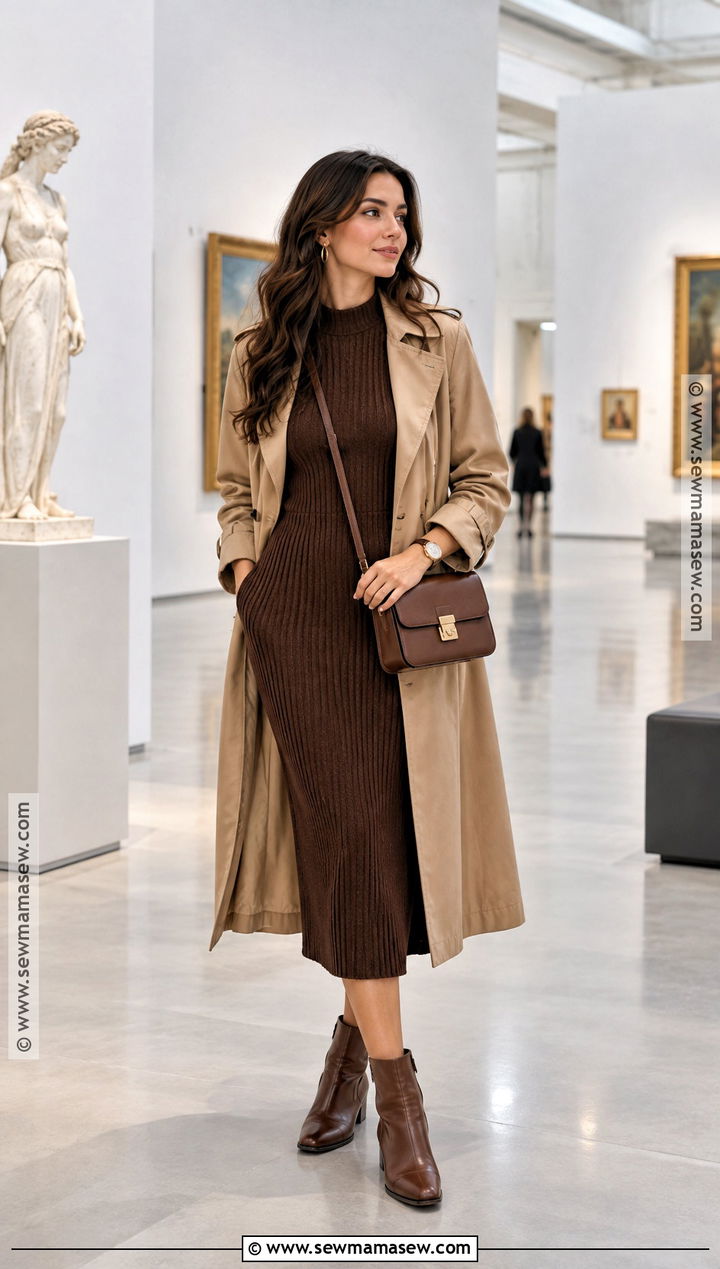
A ribbed knit midi with a trench over it is the outfit I suggest most when someone wants to look polished but expects to walk a lot. Chocolate, charcoal, burgundy and deep olive all read as fall without fuss. The thing I check first is the waist: a dress that is softly shaped there gives you a silhouette without squeezing you through three hours of gallery wandering. If the dress is close-fitting, go for a trench with a little room in the body, since a slim dress under a slim coat looks stiff from the side. Low block-heel ankle boots, a structured crossbody, small hoops and a watch finish it, and the whole thing moves straight on to coffee or an early dinner.
2. Turtleneck And Wide Leg Trousers Museum Outfit
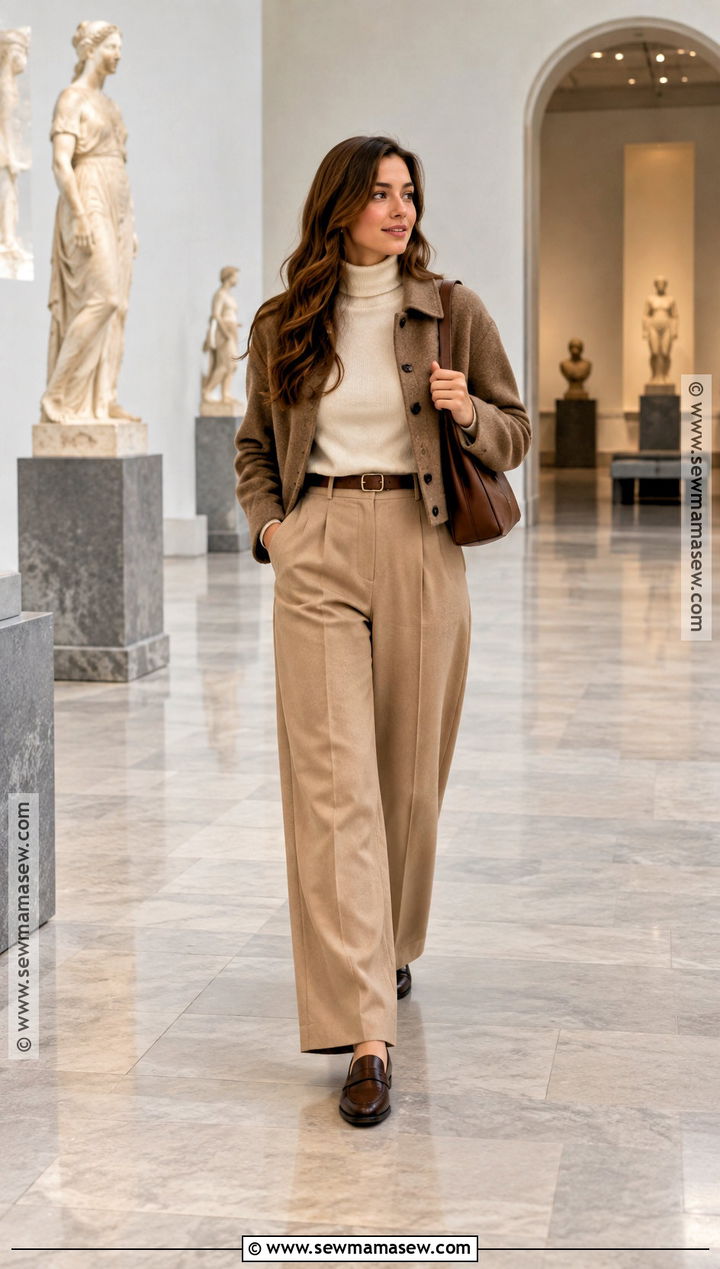
Wide trousers and a fitted turtleneck read clean against white walls and open architecture. Tuck a black, cream or rust turtleneck into high-waisted wide legs; camel, taupe or a quiet plaid keeps the bottom half warm in tone. The hem is where this one succeeds or fails. On petite frames I want the trousers to almost skim the floor while leaving the toe of the shoe visible, because a hem that swallows the loafer drags on museum stairs and frays fast. Taller women can go full-length with a heavier drape. A cropped wool jacket stops the volume below from taking over, and cushioned loafers, a slim belt and a medium shoulder bag keep it practical.
3. Blazer And Dark Jeans Museum Outfit
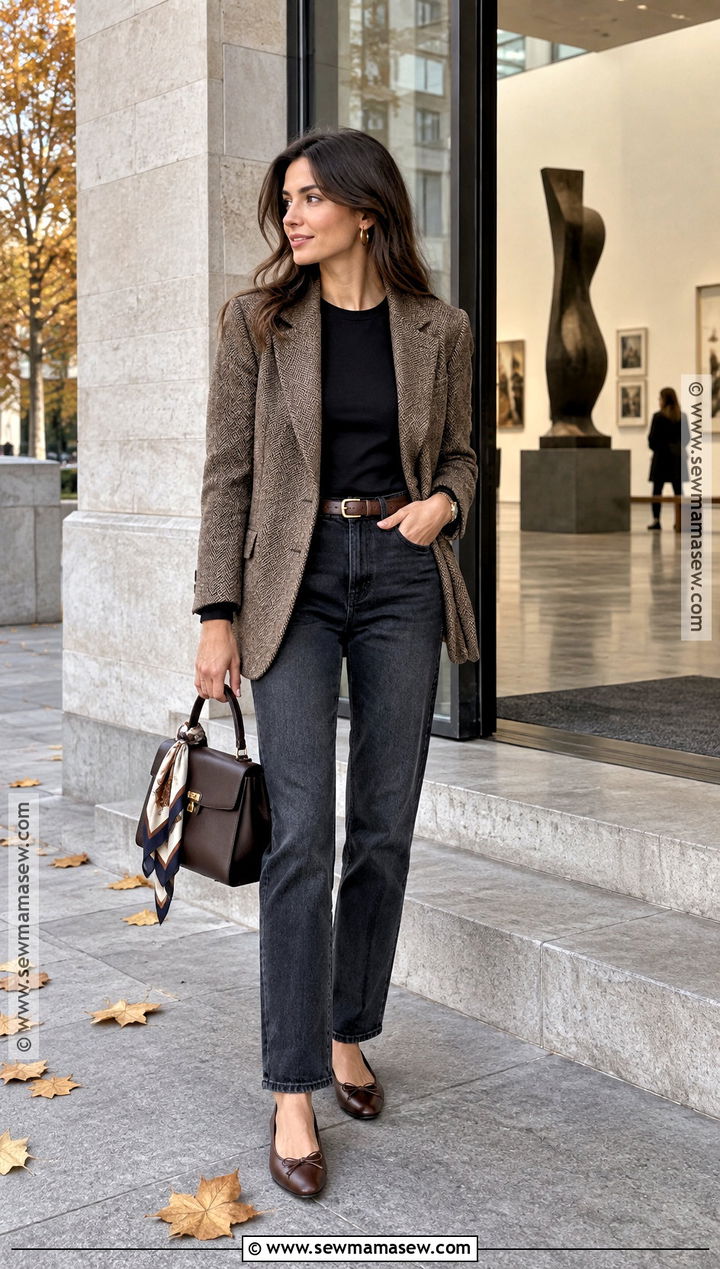
For a casual museum where you still want to look like you made a decision, dark straight-leg jeans and a tailored blazer do it. I like a fitted crewneck underneath and a blazer in herringbone or brown for fall texture, though navy and charcoal are just as easy. Dark denim stays sharp next to ballet flats, loafers or low boots. One check before you leave: sit down in the jeans. Rigid denim with no stretch digs in at the waistband by the second floor, so I look for a bit of give. A slim belt, a top-handle bag and a silk scarf tied to its strap add color without fighting the art on the walls. It's a strong pick for photography shows and contemporary galleries.
4. Sweater And Midi Skirt Museum Outfit
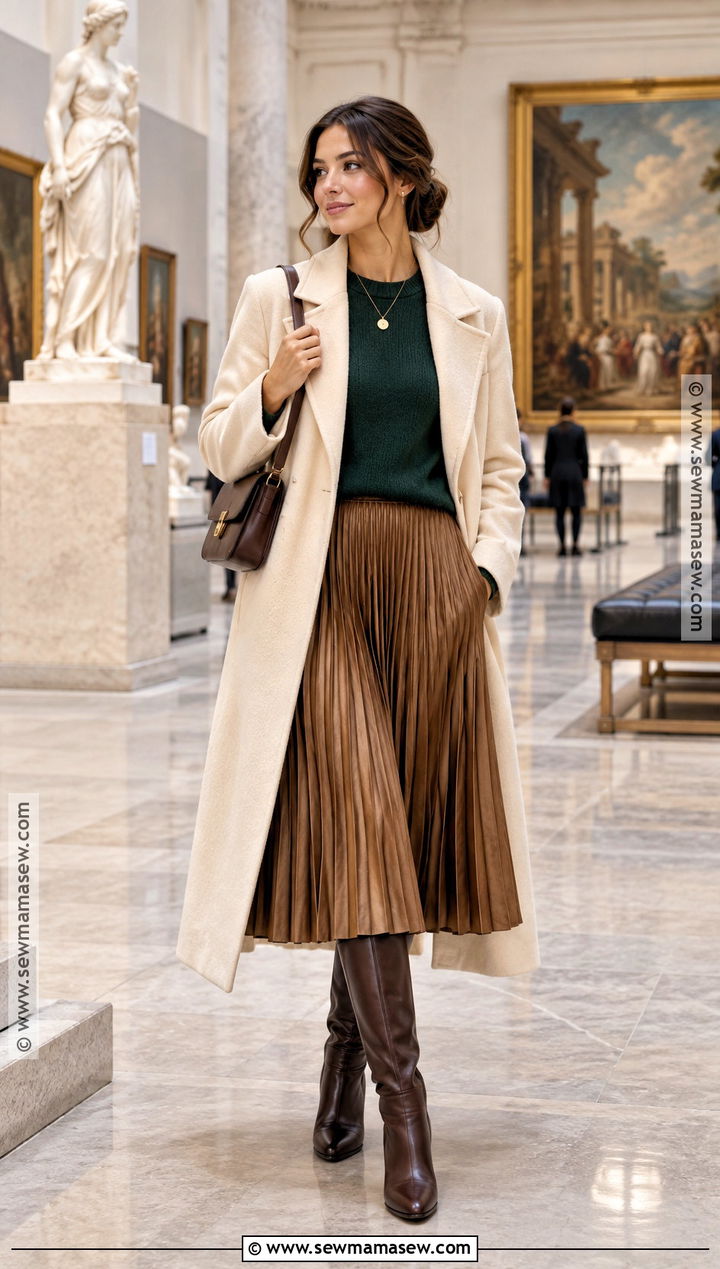
A midi skirt gives the look some movement, which is half the pleasure of wandering a gallery. Pair a lightweight crewneck with a pleated or soft satin midi in forest green, warm cream, navy or muted berry. I half-tuck the sweater at the front so the waist shows, but a thick knit won't tuck neatly, so with chunkier sweaters I switch to a slimmer skirt and leave it out. Knee-high boots should disappear under the hem, with no gap of bare leg when you walk. If the building has several floors and lots of stairs, I'd choose a flat or a stable block heel over anything slim. Add opaque tights for coverage, a compact shoulder bag and a wool coat for the walk in.
5. Leather Jacket And Pleated Skirt Museum Outfit
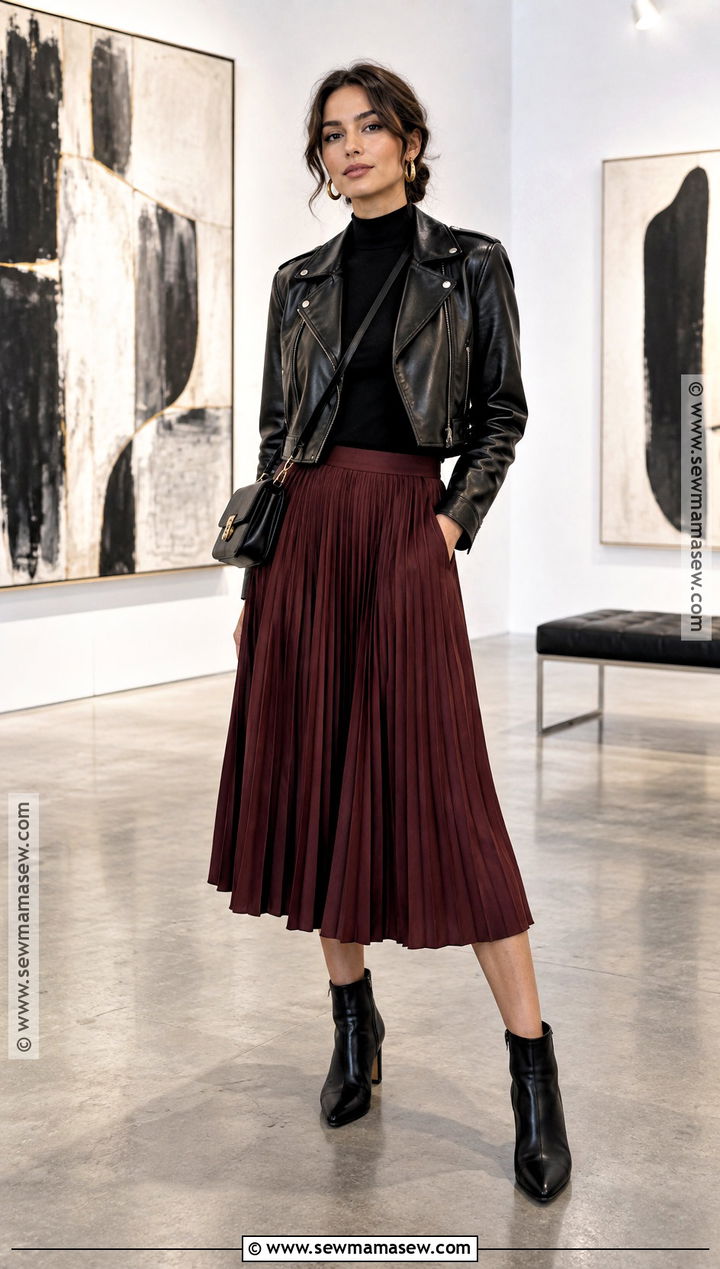
Put a cropped leather jacket over a pleated midi and the skirt stops looking prim. A black mock-neck underneath anchors it, and the skirt can be burgundy, bronze, forest green or a quiet abstract print. Keep the jacket short: it should end at or just above the waistband, otherwise it cuts across the pleats and shortens your legs. I hold the palette to two or three shades so leather, pleats and knit look related rather than random. Sleek ankle boots are kinder to your feet than narrow heels, and a crossbody with a proper zip or clasp matters in busy modern art spaces. Sculptural earrings suit the setting without tipping into costume.
6. Cardigan And Straight Leg Jeans Museum Outfit
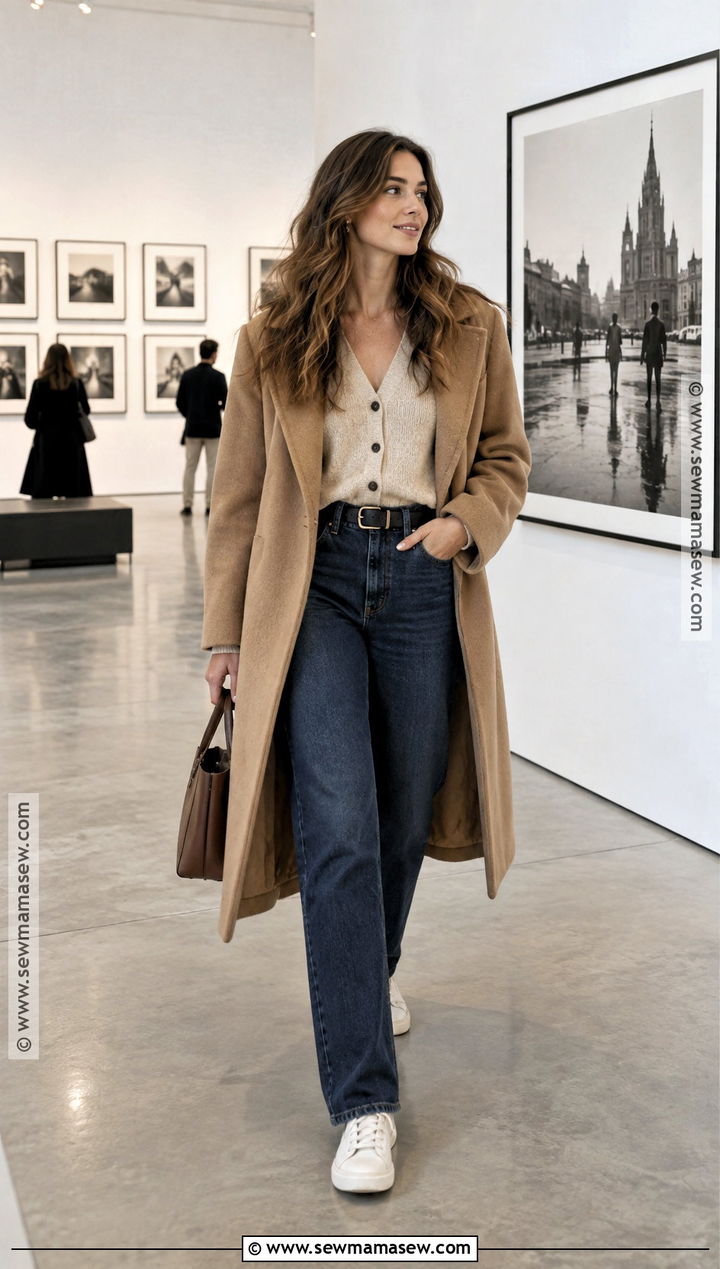
Few combinations are as dependable on a slow afternoon as a fine cardigan and good jeans. Button an oatmeal, camel, dusty blue or deep red cardigan all the way and wear it as a top, with high-rise straight jeans in a medium or dark wash. Fine merino or cotton knits sit flat under a coat; anything chunky bunches at the shoulders and makes a long wool coat look tight. If you'd rather layer, a fitted white tee under the cardigan with a few buttons open works too. On curvy figures I usually prefer a cardigan that ends near the waistband, while longer versions read more relaxed. Clean leather sneakers, a compact tote and small studs are all it needs.
7. Sweater Dress And Tall Boots Museum Outfit
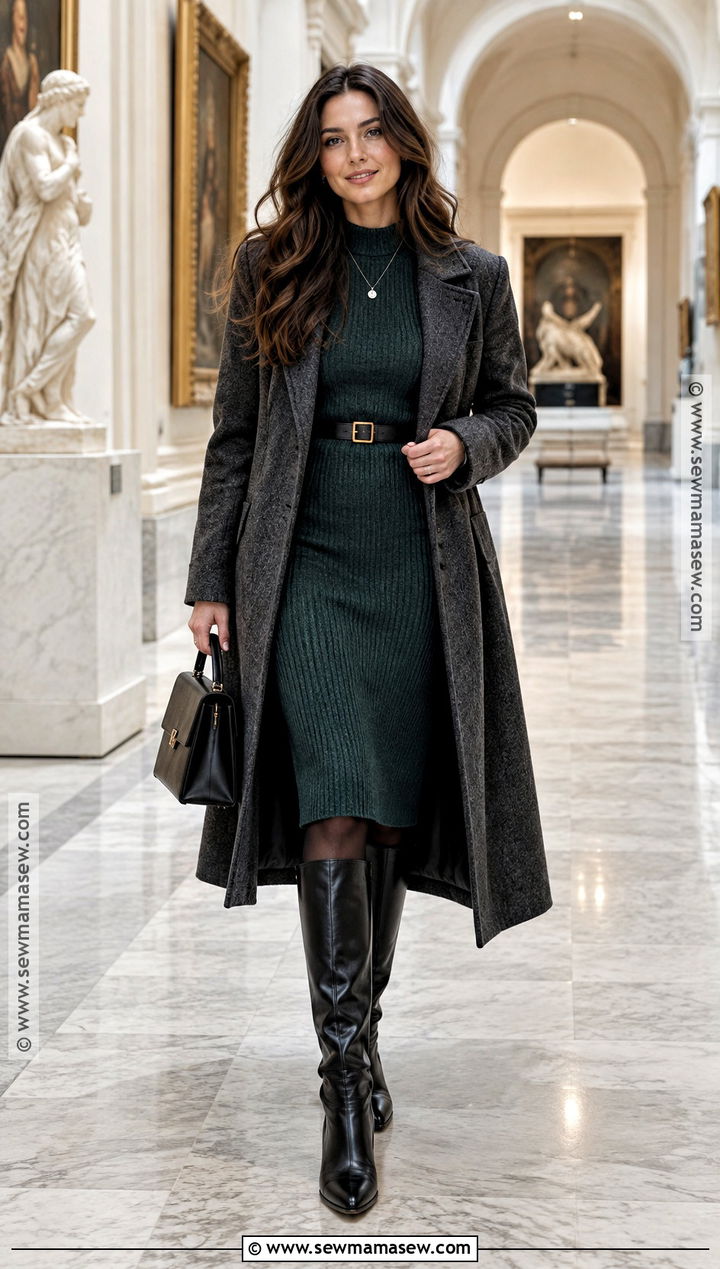
Sweater dresses are warm, soft and easy to move in, which is exactly what a museum asks for. I look for knee or midi length in charcoal, camel, dark teal or cinnamon, fitted enough to show some shape but with room to sit. Here's the honest catch: thin, clingy knits show every line and pill quickly where a crossbody strap rubs, so a medium-weight knit is worth it. Flat or low-heeled tall boots in dark brown or black, lightweight tights on colder days and a long tailored wool coat make it complete. A belt is optional on looser shapes. I'd reach for this one for a more formal museum or a ticketed show with dinner after.
8. Sweater Vest And Tailored Pants Museum Outfit
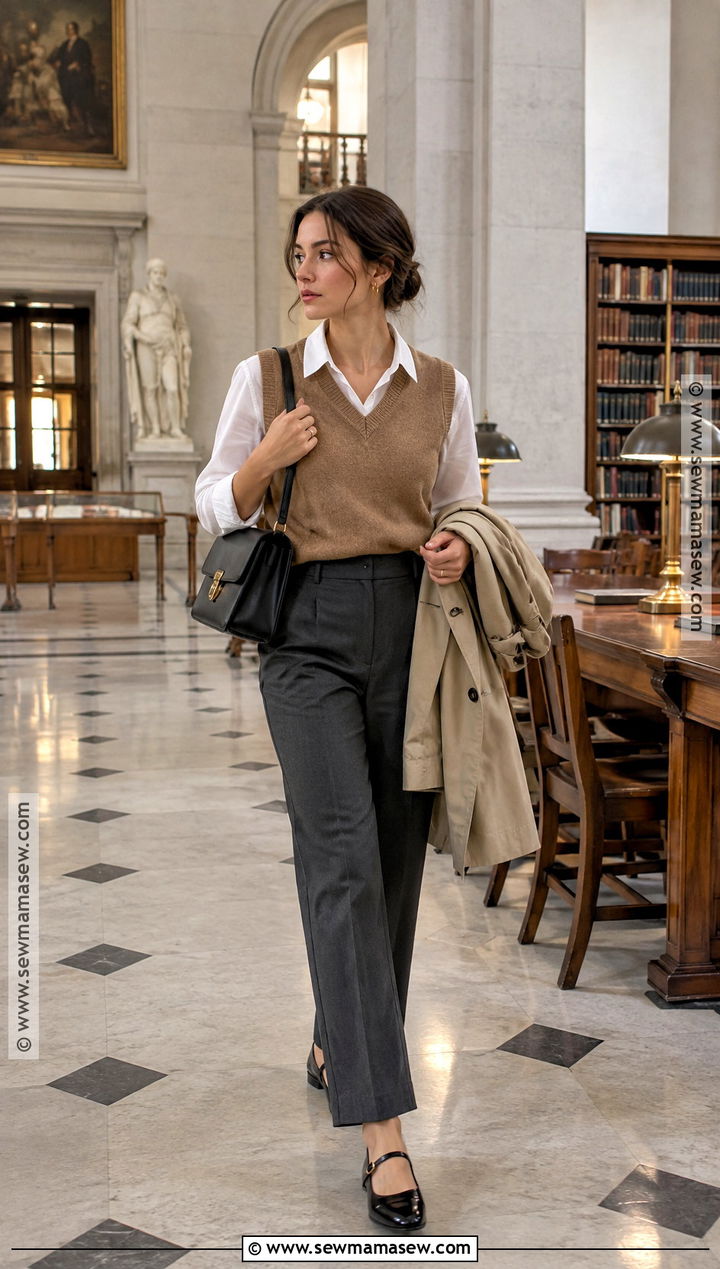
A sweater vest over a crisp shirt has a slightly academic feel that suits archives and historical collections. Pair a cream, camel or patterned vest with a white or pale blue button-down and high-waisted tailored trousers in charcoal, navy or chocolate. The collar and cuffs give contrast; the trousers keep the line long. My first check is the vest length. It should land at the trouser waistband or a touch below, never halfway down the hip, or the proportions fall apart. Roll the sleeves once to relax it. Mary Jane flats or loafers with a cushioned sole, a structured satchel and small gold hoops suit it, and a short trench or wool blazer covers colder days.
9. Denim Jacket And Knit Dress Museum Outfit
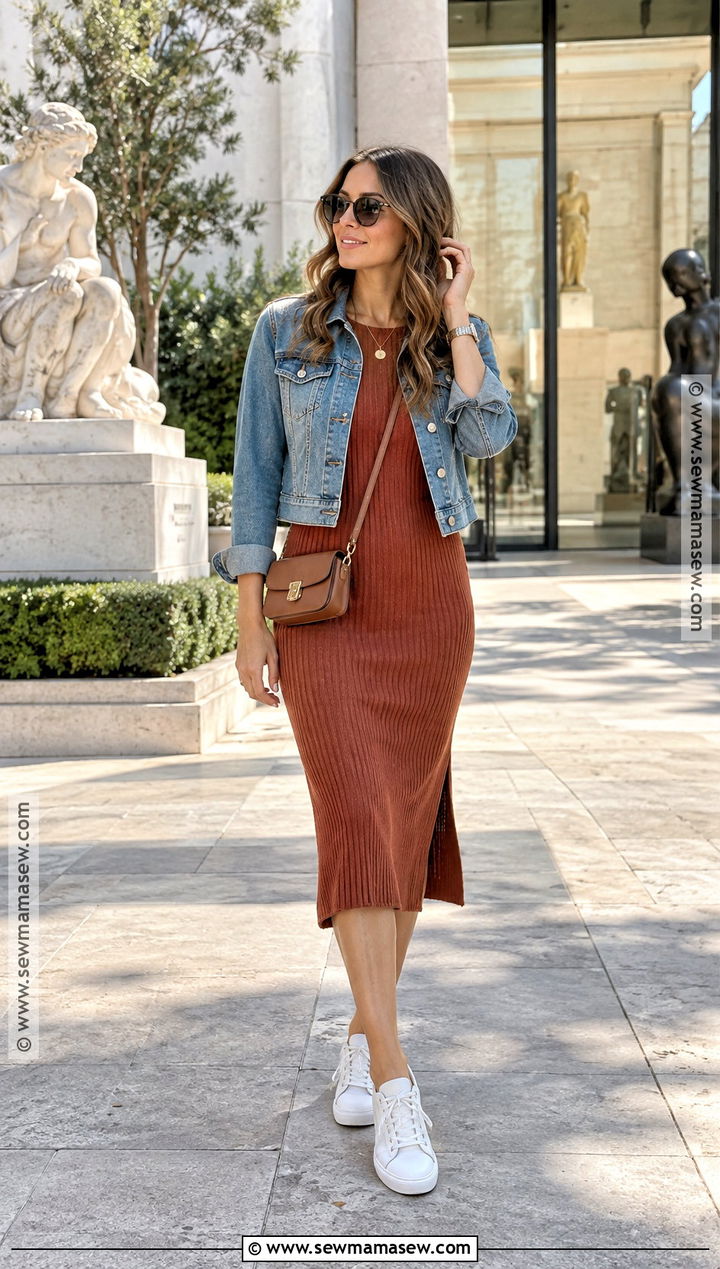
Early fall mornings start cool and turn warm by mid-afternoon, so I want a base layer that can stand alone indoors. A fitted or gently flared knit midi does that, with a medium-wash denim jacket on top for the walk there. Black, rust, olive and burgundy dresses all work. If you want more shape, a cropped denim jacket that hits your natural waist defines it better than a longer boyfriend cut, which tends to hide the dress entirely. White leather or streamlined platform sneakers keep you comfortable on long walking days, and a small crossbody stops the look getting sloppy. Add a pendant and sunglasses. It's a good fit for sculpture gardens and interactive museums.
10. Monochrome Black Museum Outfit
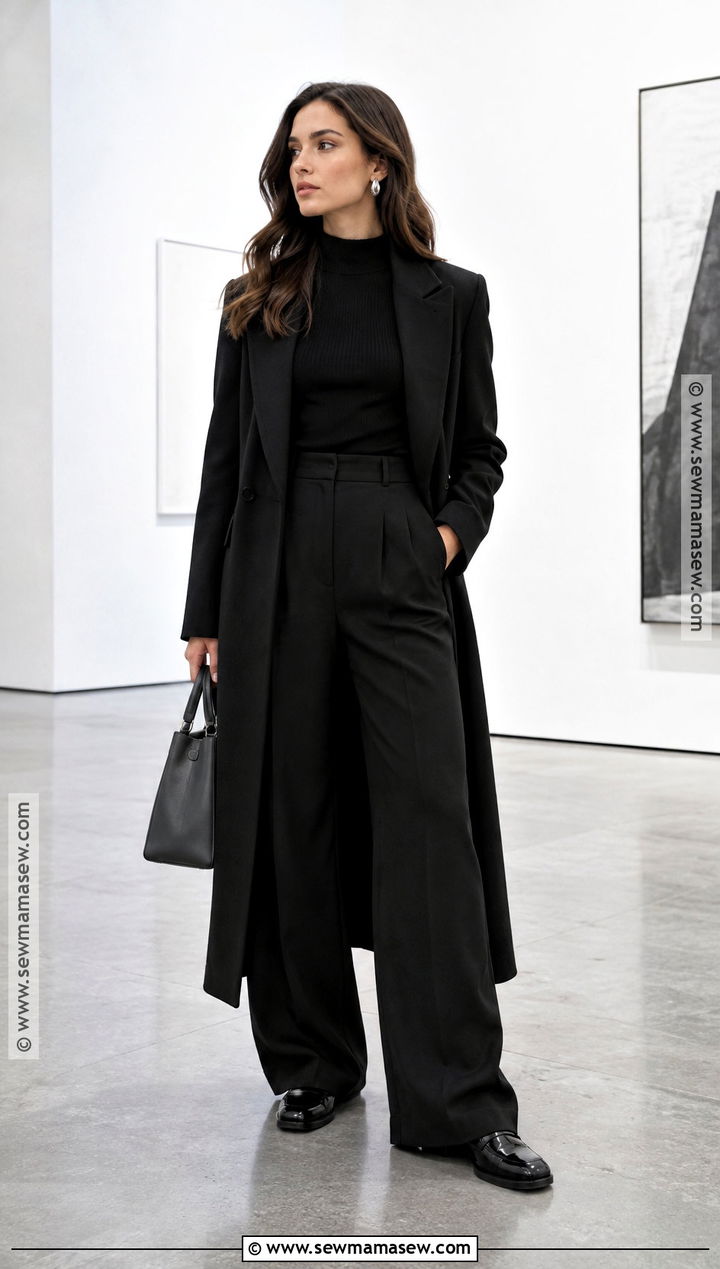
All black is the easiest way to look sharp with little effort, but only if the textures differ. Start with a fitted black mock-neck and high-waisted black trousers, straight or slightly wide, and add a long black coat or blazer. I deliberately mix a fine knit with matte trousers and smooth leather accessories, because three identical black fabrics go flat and look like a uniform. Fit matters more in monochrome: choose pieces that skim rather than pull across the body, since every strain line shows on solid black. Loafers or pointed flats keep the line sleek. Silver jewelry, a charcoal bag or a patterned scarf adds quiet contrast, and it photographs well against pale gallery walls.
11. Plaid Blazer And Mini Skirt Museum Outfit
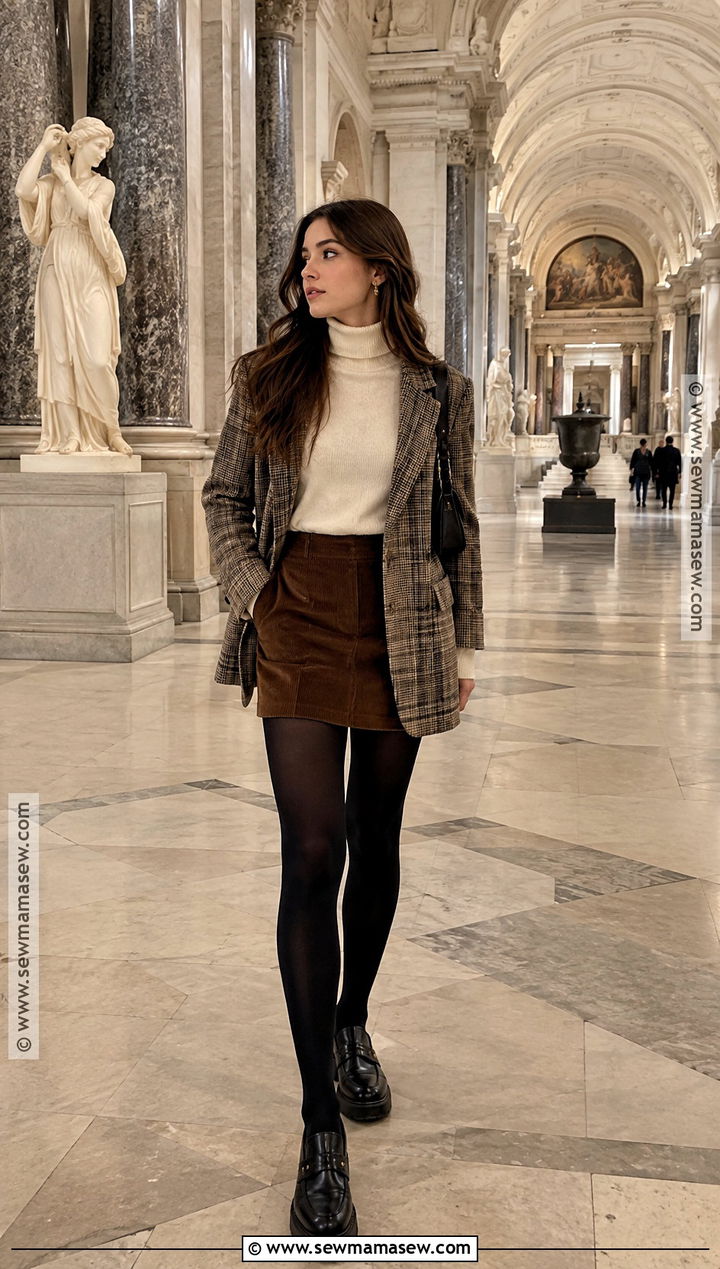
A plaid blazer makes a mini skirt feel smart instead of young. Under it, a fitted black or cream turtleneck, and the skirt in wool, corduroy or faux suede, A-line so you can walk. Opaque tights are not optional here; they give warmth and coverage when you bend toward a low display case. The blazer can be a little oversized, ending past the hem of the skirt, which makes the short length look intentional. Before you buy or wear the skirt, sit down and lean forward in it in front of a mirror. Chunky loafers or flat knee boots, a small bag worn close to the body and simple earrings keep it suited to quiet galleries and campus museums.
12. Utility Jacket And Satin Skirt Museum Outfit
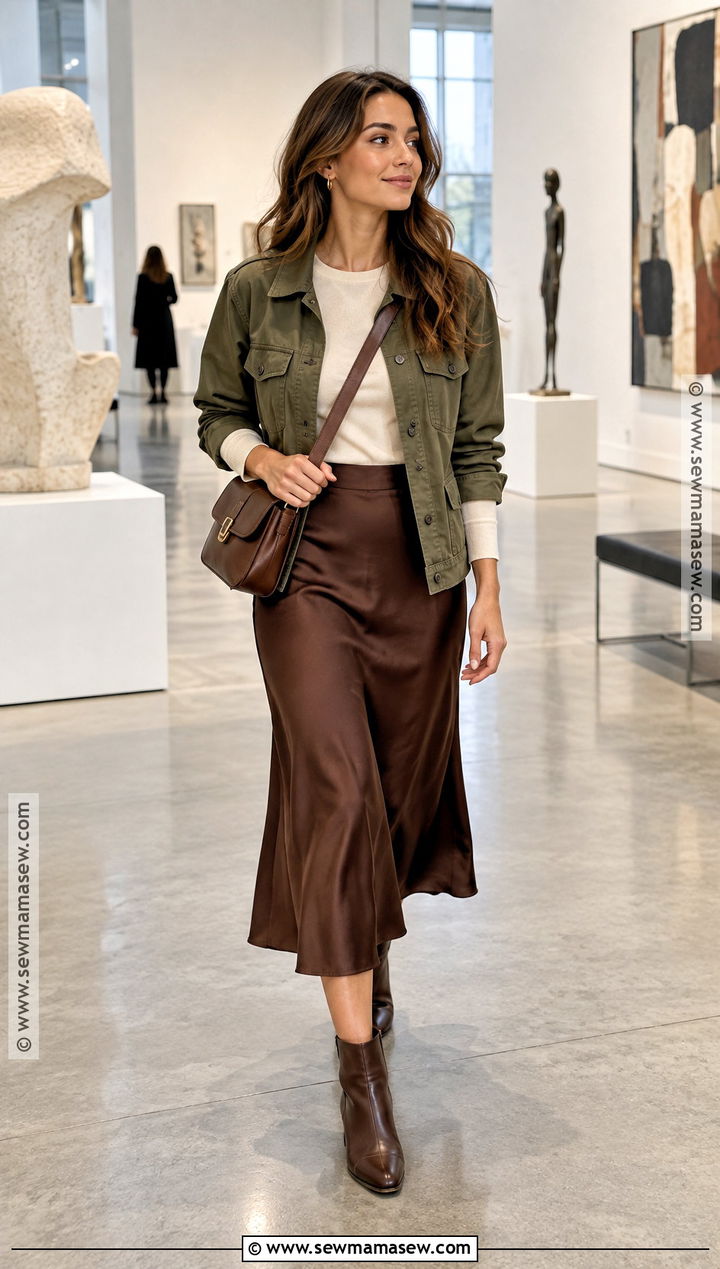
Pairing a utility jacket with a satin skirt is one of my favorite mixes of practical and dressy. Wear a fluid satin midi with a fitted long-sleeve tee or light knit, and an olive, khaki or dark navy utility jacket on top; the boxy pockets set off the way the skirt moves. Choose matte satin. Shiny satin shows every crease from sitting and can look like eveningwear in daylight, while a matte finish reads calmer. I'd avoid very thin satin for a long walking day, since it clings to tights and wrinkles fast. Low ankle boots with a rounded or almond toe, a plain leather crossbody and small hoops suit design museums and contemporary exhibitions.
13. Jumpsuit And Loafers Museum Outfit
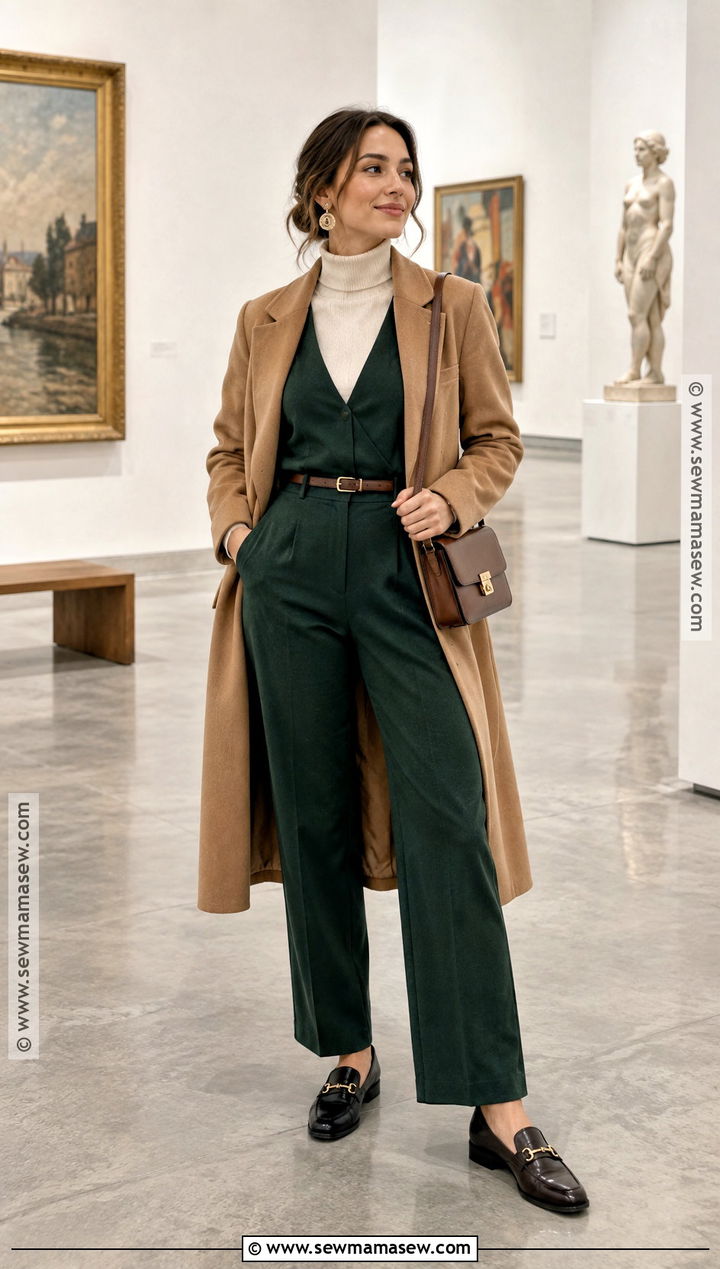
A jumpsuit solves the outfit in one piece, which is great until you sit down in one that's short in the body. Before anything else, I check the rise and torso length: lift your arms and sit, and if it pulls at the crotch or shoulders, it will bother you all afternoon. Tailored versions in navy, black, rust or dark green look best. A sleeveless one takes a fitted turtleneck underneath for warmth. Define the waist with its own tie or a narrow leather belt. Cushioned loafers, a structured crossbody and small statement earrings are enough, and a camel coat over the top keeps the clean line intact. Plan for restroom trips too; it's the one honest drawback.
14. Striped Sweater And Corduroy Pants Museum Outfit
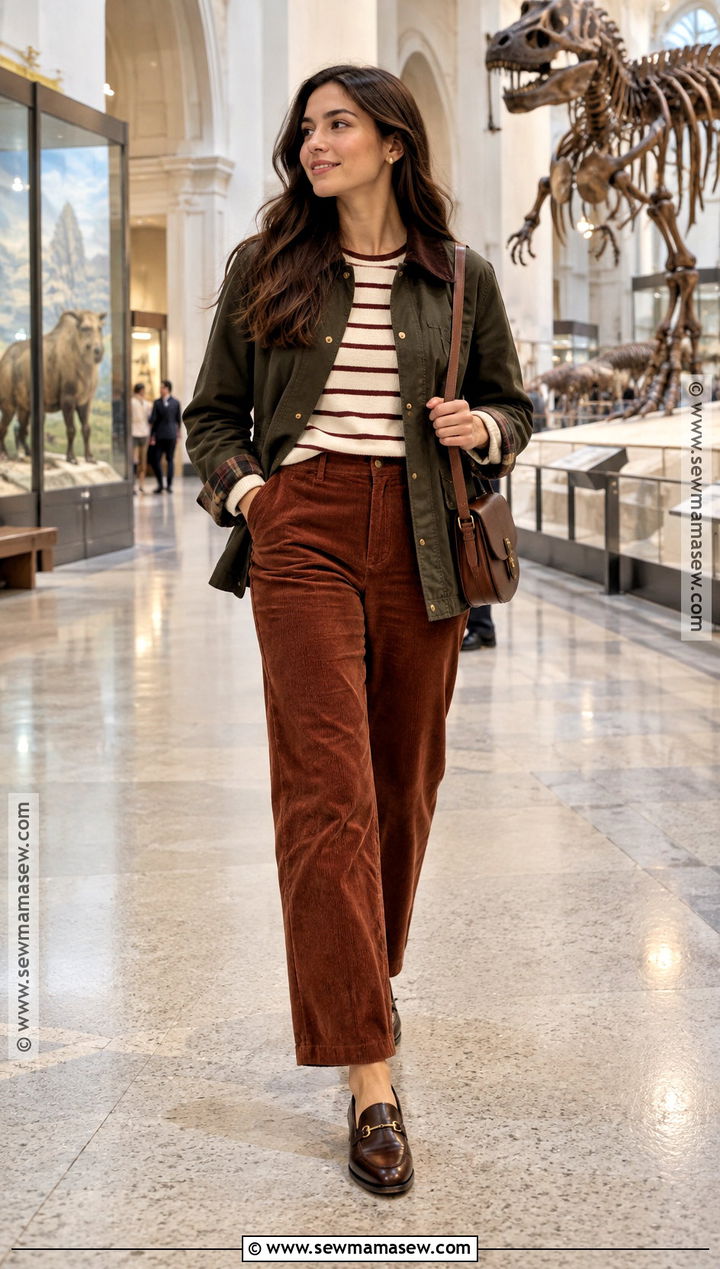
Stripes and corduroy have a cheerful, unfussy feel that suits natural history museums and science centers. Pair a cream sweater with navy, brown or burgundy stripes with straight corduroy in tan, chocolate, olive or deep rust. Corduroy is warm and comfortable for hours, though wide wale adds visible bulk at the hip, so if that worries you, a finer wale sits flatter. With an oversized sweater, I use a partial tuck at the front so the waistband shows. Leather clogs, loafers or retro sneakers keep you comfortable walking, and a cropped barn jacket or casual wool coat covers the outdoor part. A small saddle bag and studs keep the accessories light.
15. Tailored Coat And Maxi Skirt Museum Outfit
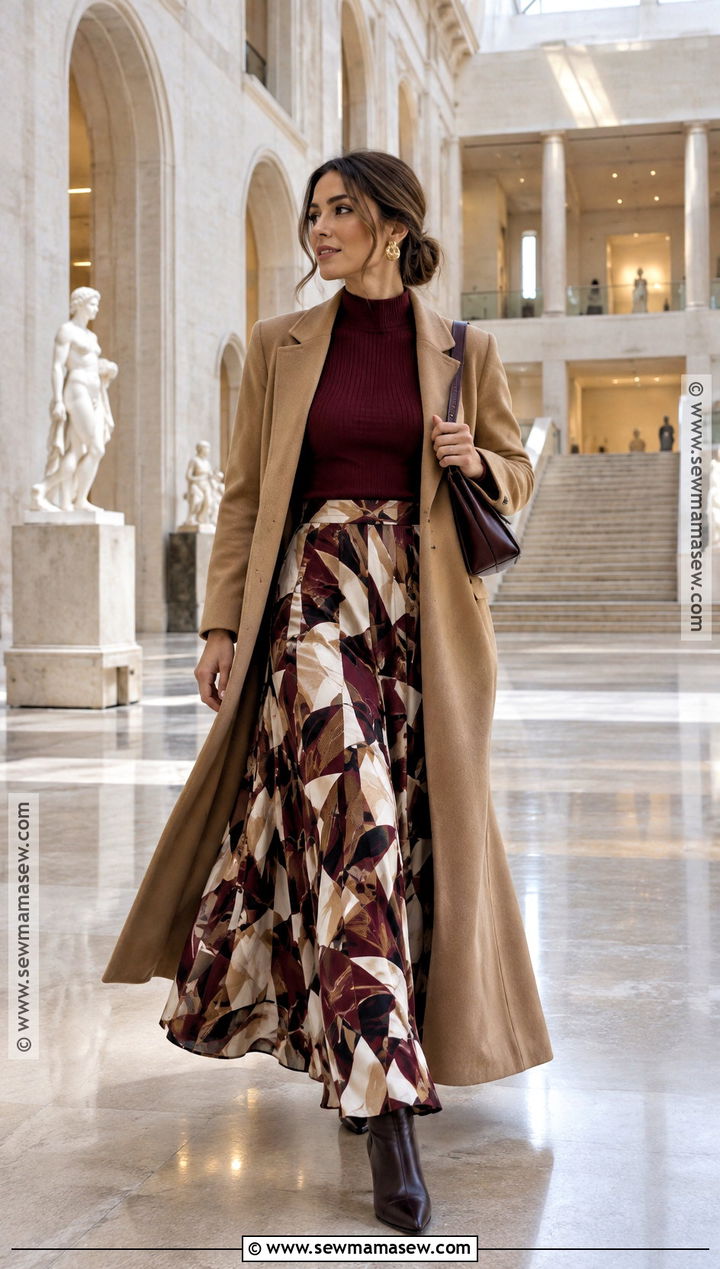
A maxi skirt and tailored coat give you a long, graceful line through big exhibition halls. Wear a fitted long-sleeve top in cream, black or burgundy with an A-line maxi, solid or in a subtle geometric print. My rule with the coat is simple: it should end clearly above or below the skirt hem, never at the same point, or the two lengths blur into one heavy block. Low-heeled ankle boots lift the fabric off the floor so it doesn't catch on stairs or escalators. A structured shoulder bag and one distinctive accessory, such as sculptural earrings or a colorful scarf, finish it. It keeps you covered and warm on the coldest museum days.
Three Hours on Stone Floors
Museum floors are hard, usually marble, terrazzo, wood over concrete or plain polished concrete, and you spend more time standing still than walking. Standing is harder on feet than a brisk walk, which is why a shoe that's fine on a city stroll can ache by the second gallery. When I judge a shoe for a museum day, I press the sole with my thumb: if there's no give at the ball of the foot, I add a cushioned insole or pick another pair.
- Wear new loafers and boots around the house for several evenings first. Leather softens and shapes to your foot with wear, and the first long outing is not the time to find a rubbing seam.
- A low block heel of an inch or so is often more comfortable over hours than a completely flat ballet shoe with a thin sole.
- Leather soles get slippery on polished stone. A rubber sole or a rubber heel tip makes stairs much less nerve-wracking.
- Tall boots should not pinch at the calf when you stand still; that's when it shows.
Dressing the Same Base Up for an Evening Opening
Many museums run late openings, member evenings and exhibition previews, and the same outfit can go there with two or three changes. I keep the base, so the trousers, knit dress or midi skirt stay, and swap the details. Sneakers become sleek loafers or a pointed flat. A canvas or slouchy bag becomes a small structured one. Add one stronger piece of jewelry, such as sculptural earrings, and a coat with a sharper shoulder.
Going the other way is just as easy. For a free afternoon at a small local gallery, the plaid blazer or the trench can be replaced with a denim jacket or a cardigan, and the outfit relaxes without looking sloppy. What I avoid in either direction is shine: sequins and glossy satin feel out of place in daylight galleries and catch the overhead lighting in photos.
What Matters Once the Coat Comes Off
Every outfit here starts from the same three decisions: shoes you can stand in, a layer that comes off easily, and a base look that's finished once the coat is checked. Trousers, knit dresses, midis, dark denim and jumpsuits all give you that base for fall. Keep your bag light and close to your body, let color and texture carry your personality, and test anything new with a long walk at home first. Pick the outfit that matches the museum you're visiting, then spend the day looking at the art instead of thinking about your feet.
Related posts: