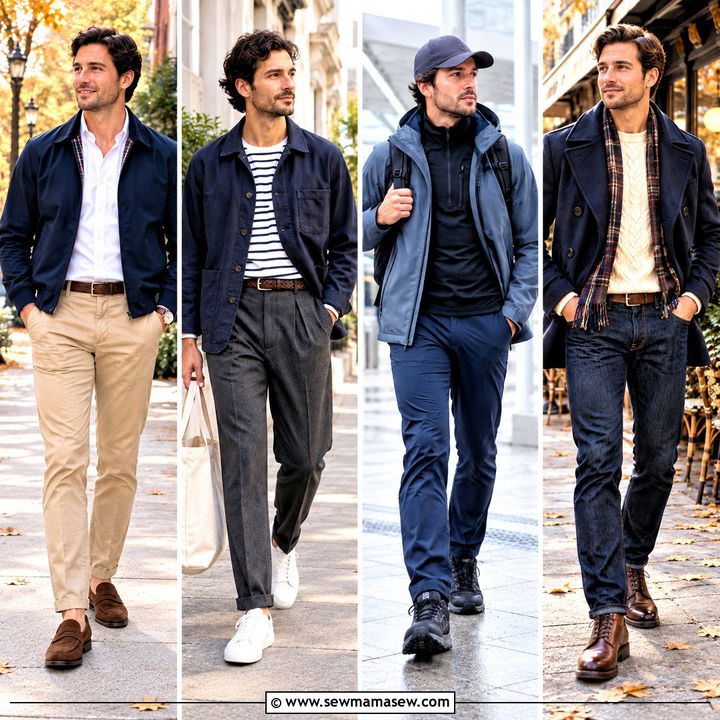
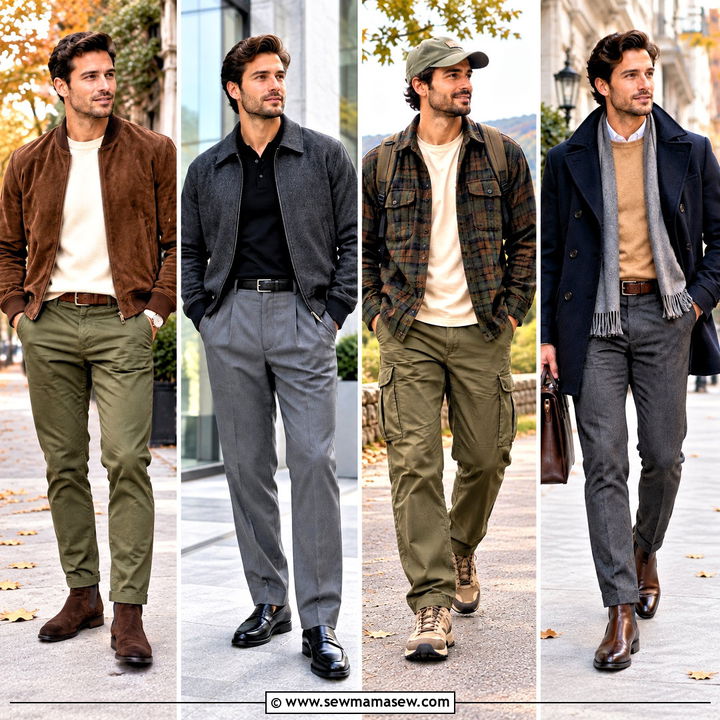
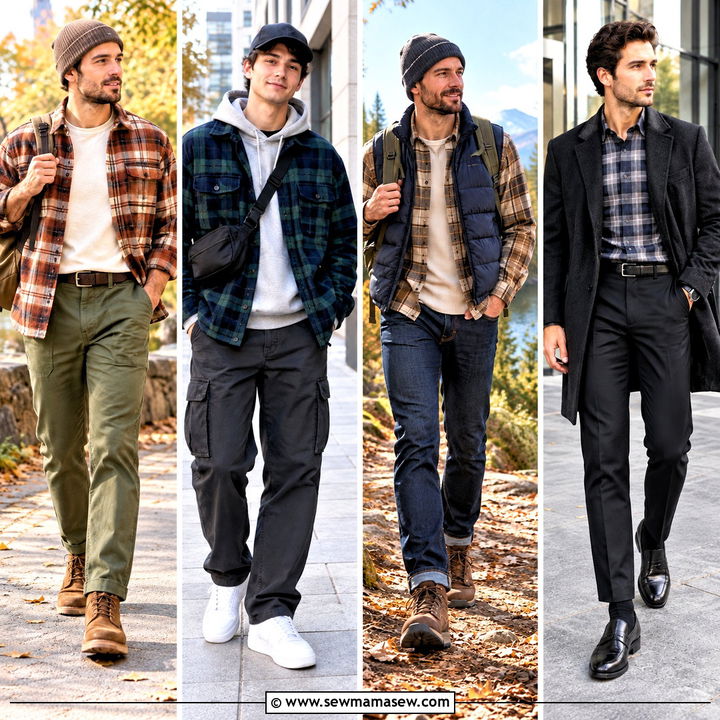
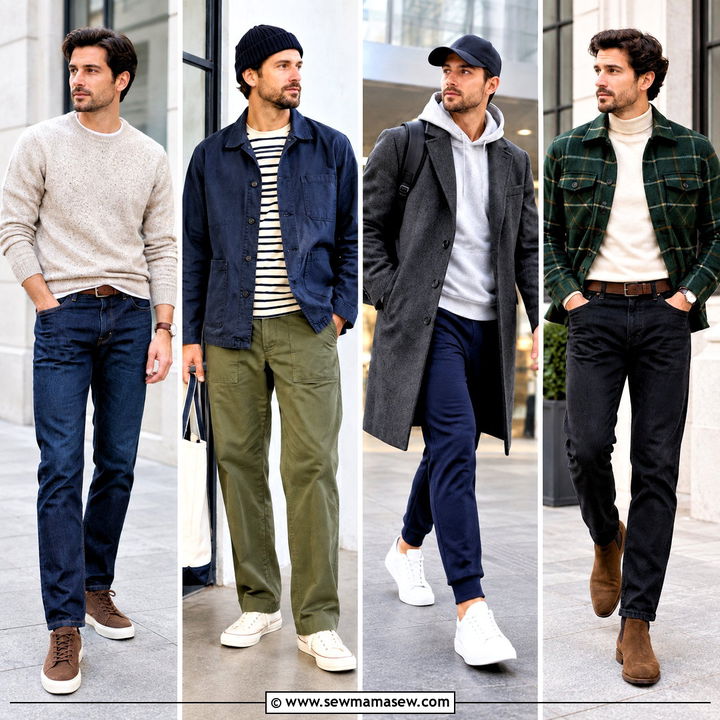
A fall jacket has two jobs: keep you warm on a cold morning and still feel right when the afternoon warms up. Below are fifteen of them, from the Harrington, suede, denim and field jackets most men already know to quilted, waxed, sherpa and rain shells for rougher weather, and a peacoat for smarter days. I've built a full outfit around each one, because a jacket only looks good when the layer underneath and the trousers below suit its shape. Where it matters, I've also noted how much room to leave for a sweater, since that's the fit mistake I see more than any other.
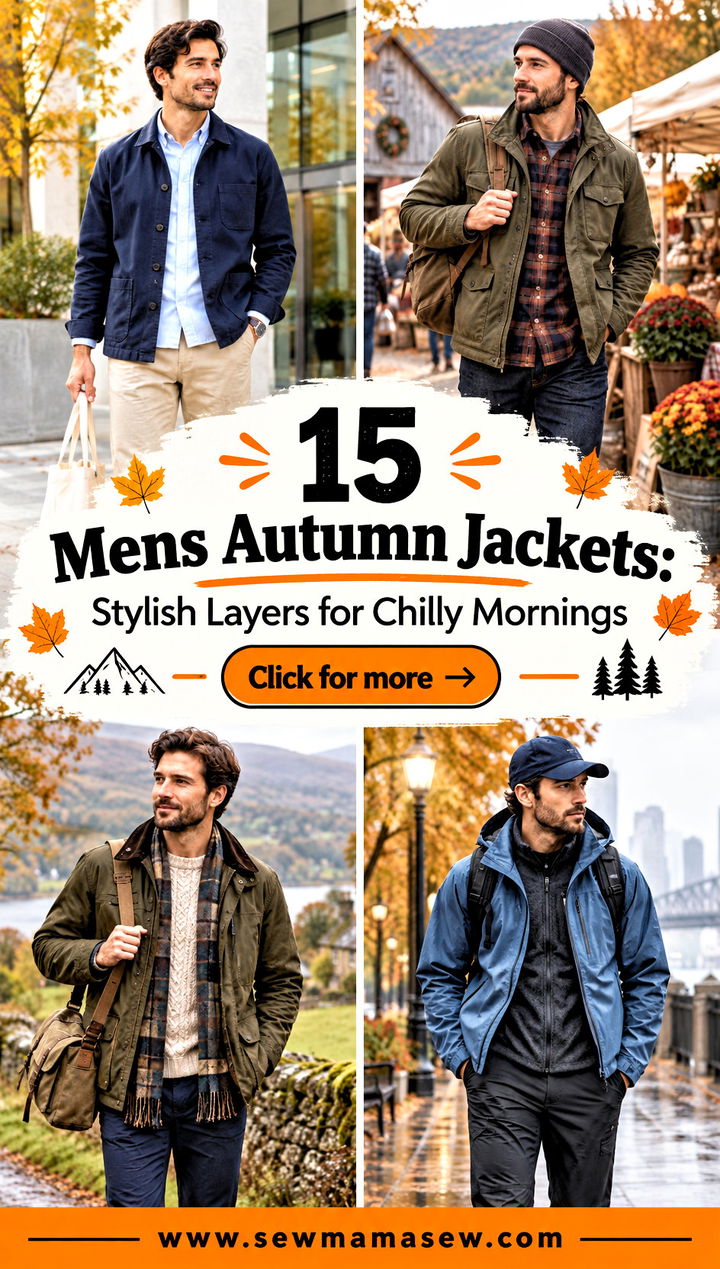
Which Jacket for 65, 50 and 40 Degrees
Fall covers a wide band of temperatures, and a jacket that's perfect in September can leave you shivering by November. This is roughly how I'd group the fifteen jackets below by how cold it gets. Everyone runs differently, so treat the numbers as a starting point.
Around 60 to 70°F
Harrington, denim jacket, chore jacket and overshirt. Light layers over a tee or polo, easy to carry once it warms up.
Around 45 to 60°F
Suede, leather, field, quilted, waxed, bomber and varsity jackets. Add a sweater or sweatshirt underneath and these cover most of mid fall.
Below about 45°F
Peacoat, sherpa trucker and light puffer. Pair them with real knitwear, and add a scarf and beanie when there's wind.
Wind and rain move every jacket down a group. A 55°F day with a stiff breeze feels colder in a denim jacket than a still 45°F morning in a quilted one, which is why I keep a rain shell with a fleece as a backup for any day the forecast can't make up its mind.
1. Harrington Jacket With Polo And Chinos
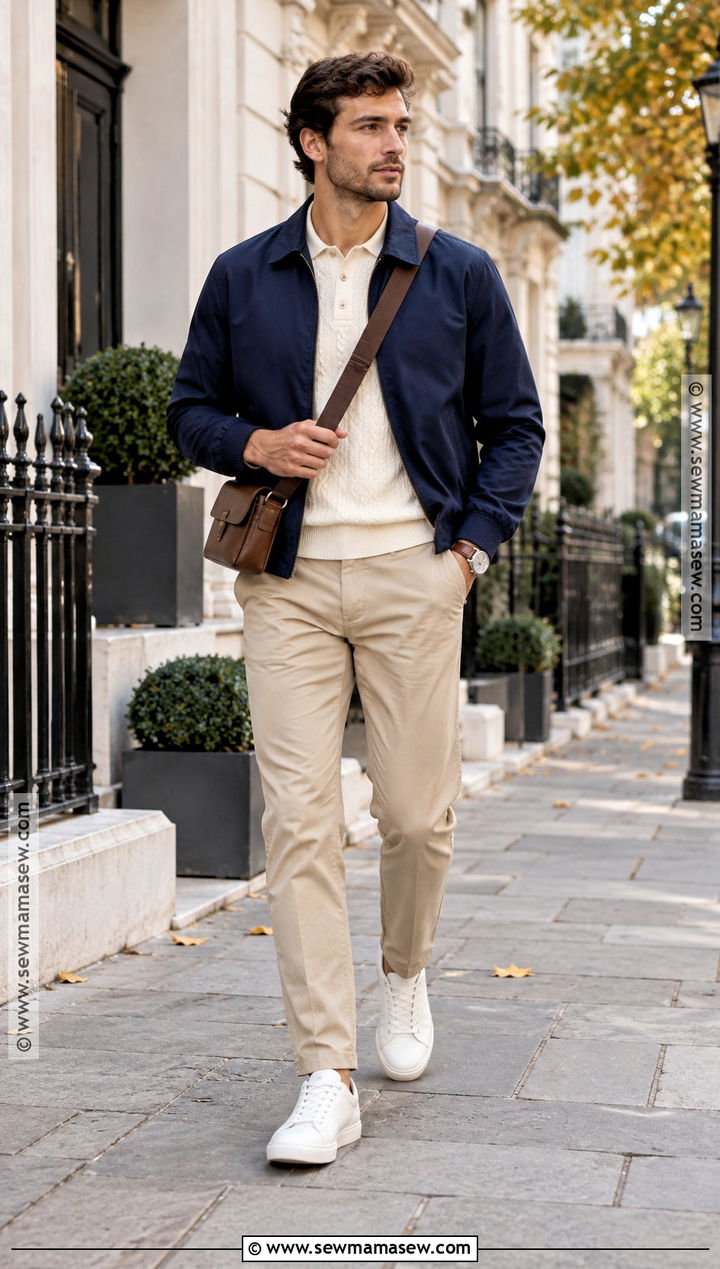
The Harrington suits almost any age and build, which is why it's often the first jacket I recommend. Navy, olive, tan or burgundy, sized with room for a light layer, over a knitted polo or fitted long-sleeve shirt in cream, gray or pale blue. Straight chinos keep it balanced; leather sneakers keep it relaxed, brown suede loafers make it smarter. Look at the knit waistband. It should sit at the hip without gripping, because a tight band pulls the jacket up and makes the back puff out. A plain watch and structured crossbody are enough for lunch or a casual office.
2. Suede Jacket With Sweater And Dark Jeans
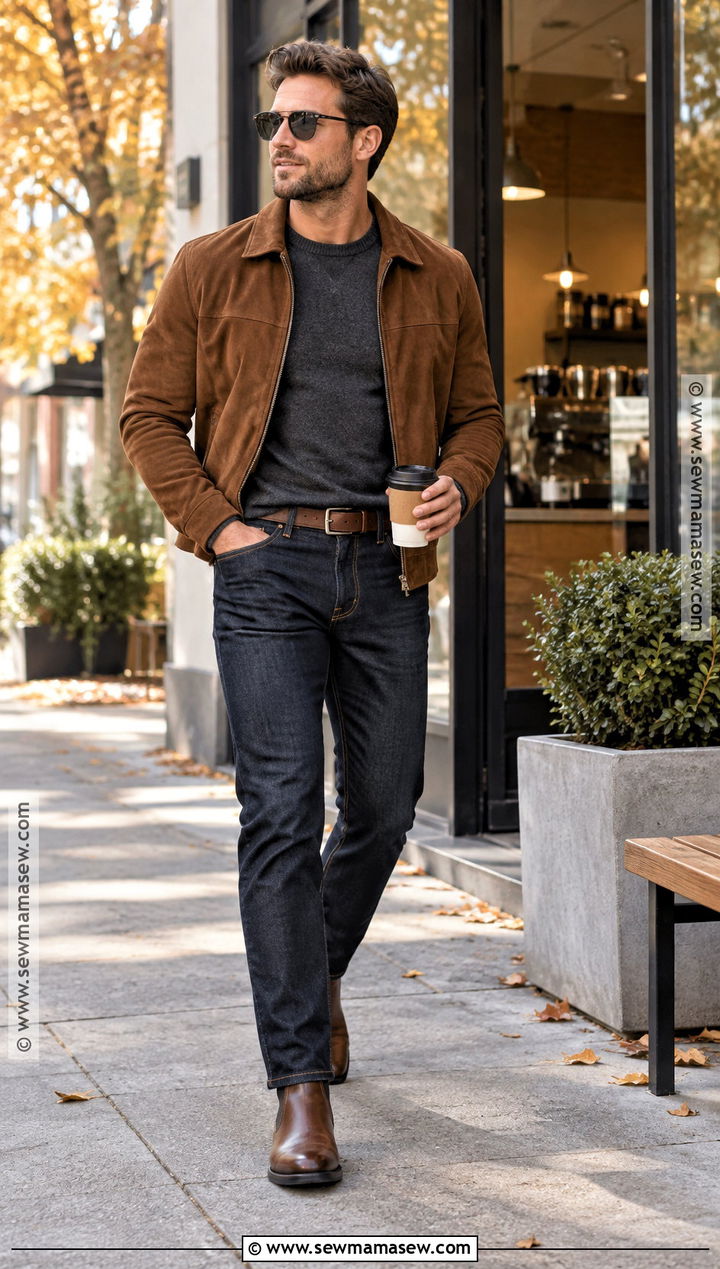
A suede jacket brings texture and warm color to the plainest outfit. Brown, tobacco or dark olive in a trucker or bomber shape, over a light merino with a simple neckline, then dark indigo jeans, straight or gently tapered rather than skinny. Brown Chelsea boots link back to the suede, with a belt in a similar but not identical shade. Suede doesn't stretch much, so judge the fit across the back with the sweater on. And be realistic about rain: water darkens and stiffens suede, so I keep this one for clear days and indoor plans.
3. Bomber Jacket With Hoodie And Cargo Pants
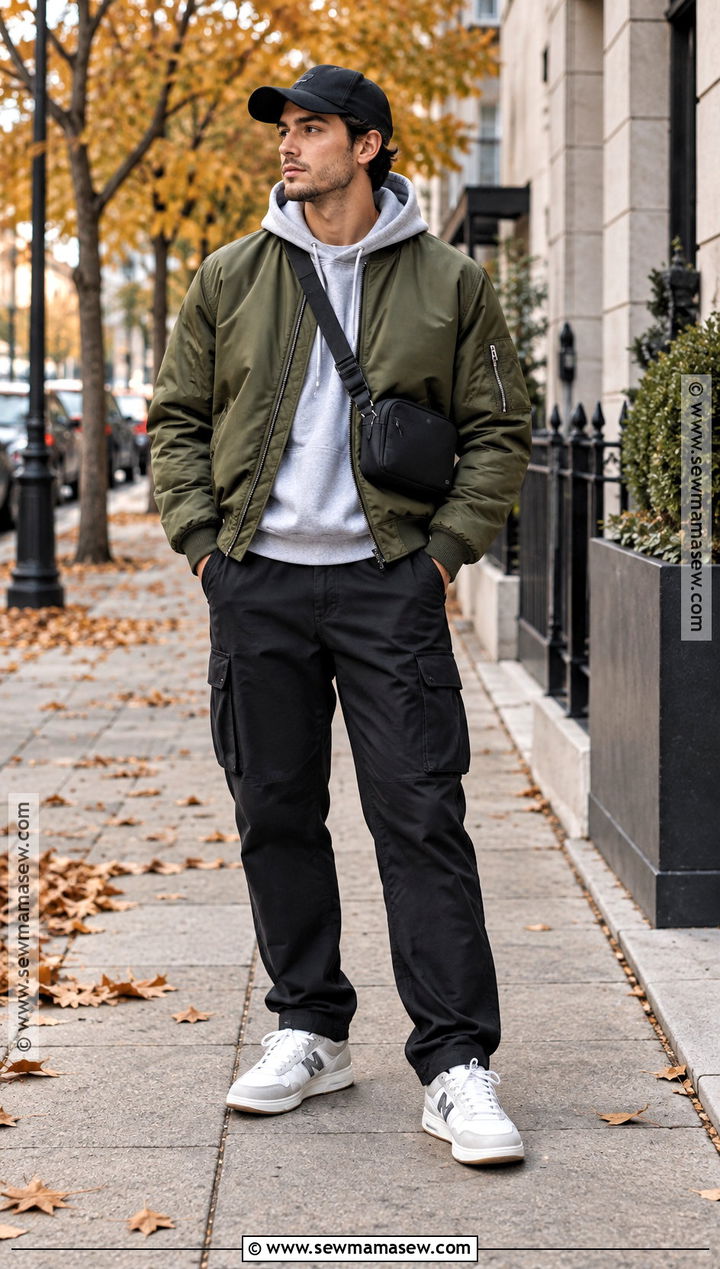
Bomber, hoodie and cargos is the streetwear version of a fall jacket outfit. Olive, black or charcoal bomber, a lightweight hoodie that sits under it without bunching at the shoulders, and straight cargos in black, stone or dark green. Low-top sneakers or retro runners, plus a cap and small crossbody if you like. On a broader frame, I'd pick a bomber with less padding; puffy nylon adds width fast. Slimmer guys can carry a more structured one. Keep the whole thing relaxed but not oversized, or the short jacket and baggy cargos lose any shape.
4. Chore Jacket With Oxford Shirt And Chinos
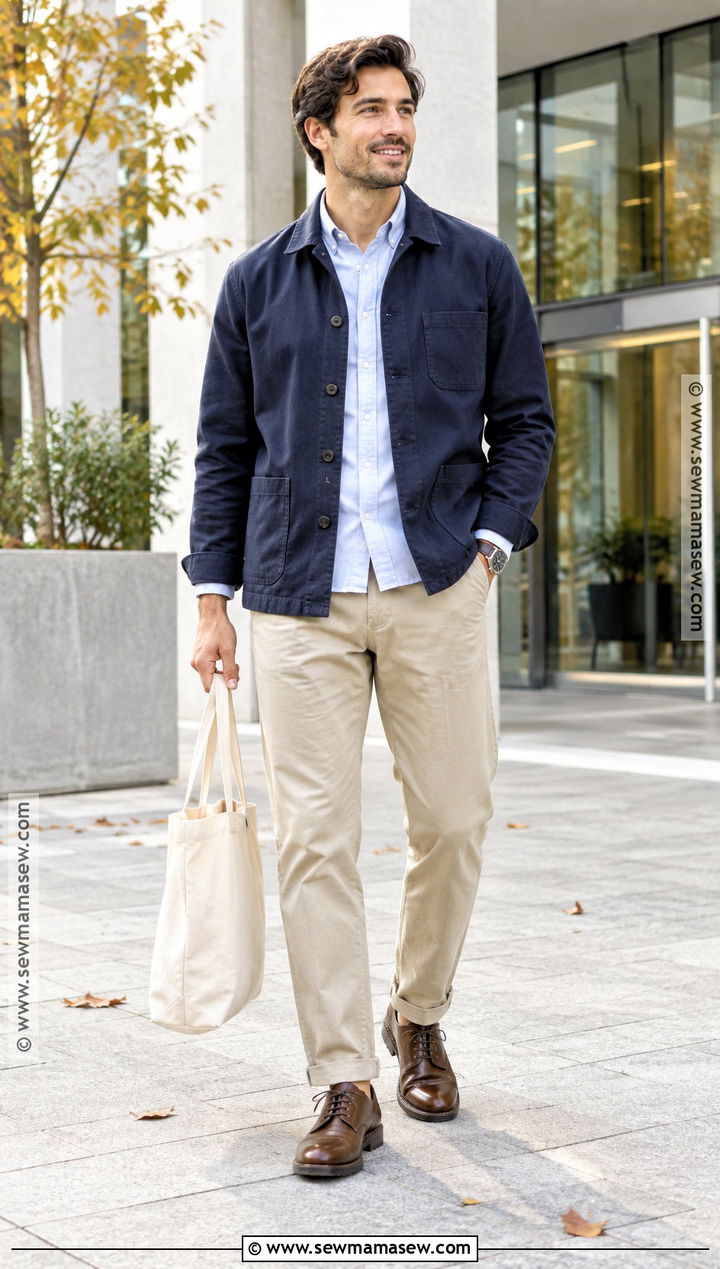
The chore jacket sits between workwear and everyday smart, which is why it goes with so much. Cotton canvas, brushed twill or corduroy in navy, tan, forest green or chocolate, over a white or pale blue Oxford with the collar open, then olive or stone chinos. Brown derbies, sturdy loafers or white sneakers depending on the day. I always raise my arms in one before buying; the cut is boxy, but the armholes on some are small and pull the whole jacket up. Canvas versions soften and fade with washing, and I think they look better for it.
5. Denim Jacket With Sweatshirt And Black Jeans
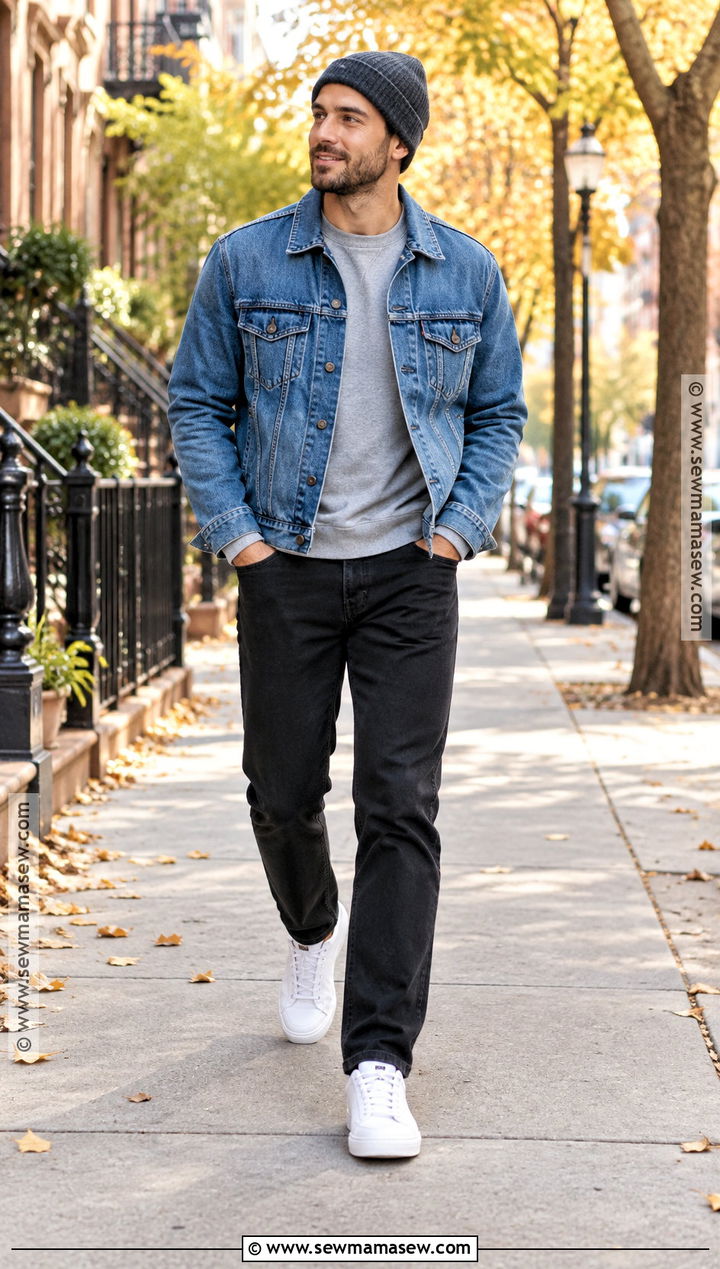
Denim jacket plus black jeans avoids the matching-set problem of full double denim. A medium-blue jacket that ends at the hip, a gray, cream or faded burgundy crewneck sweatshirt under it, then black straight jeans. White leather sneakers keep it fresh; black lace-up boots give it more weight for colder weeks. Add a charcoal or navy beanie when needed. Denim jackets are cut short and fairly close, so the sweatshirt should stop no more than an inch below the hem. Anything longer looks like a layering accident rather than a choice.
6. Leather Biker Jacket With Turtleneck And Trousers
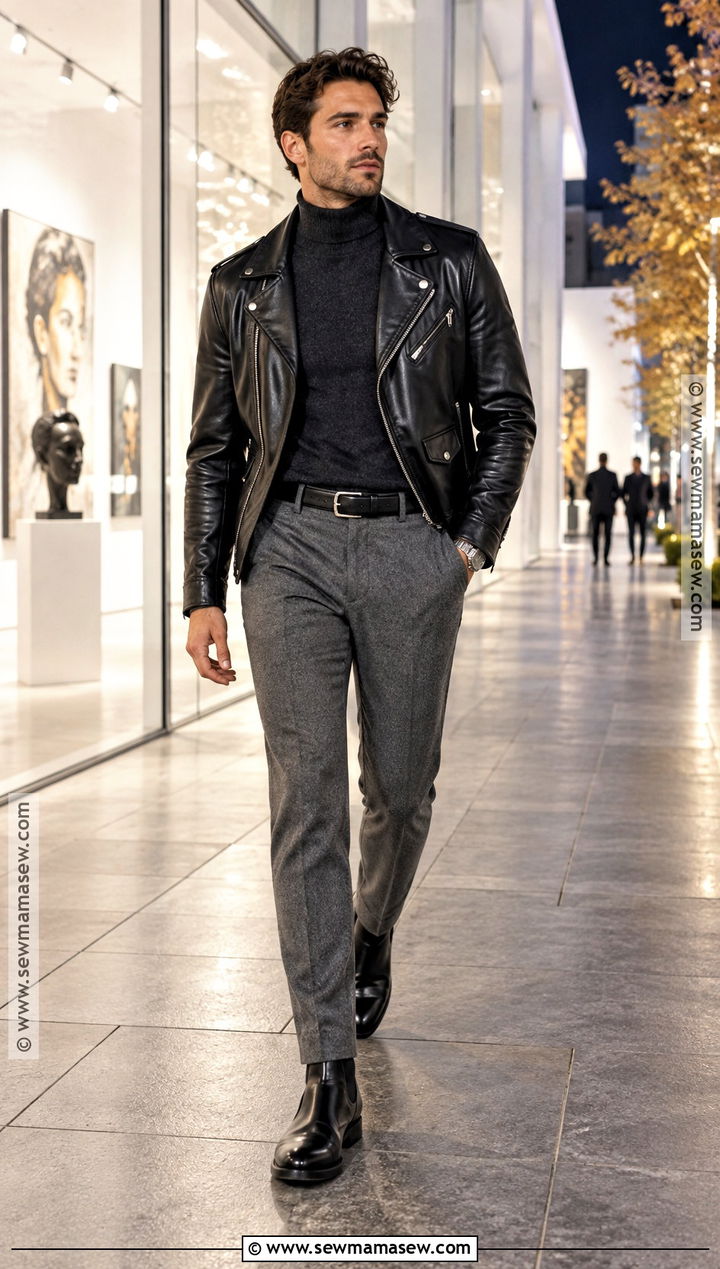
A biker jacket looks grown up when you remove the distressed jeans and band tees that usually come with it. Clean black or deep brown leather with restrained hardware and room through the shoulders, over a fine-knit turtleneck in charcoal, cream or black, then tailored wool-blend trousers. Polished Chelsea boots or minimal leather sneakers, a slim belt and a plain watch. The asymmetric zip of a biker jacket adds a lot of visual detail already, so I keep accessories almost empty. Leather molds to your shoulders over time, which is the reason it's worth buying one that fits well from the start.
7. Field Jacket With Flannel Shirt And Raw Denim
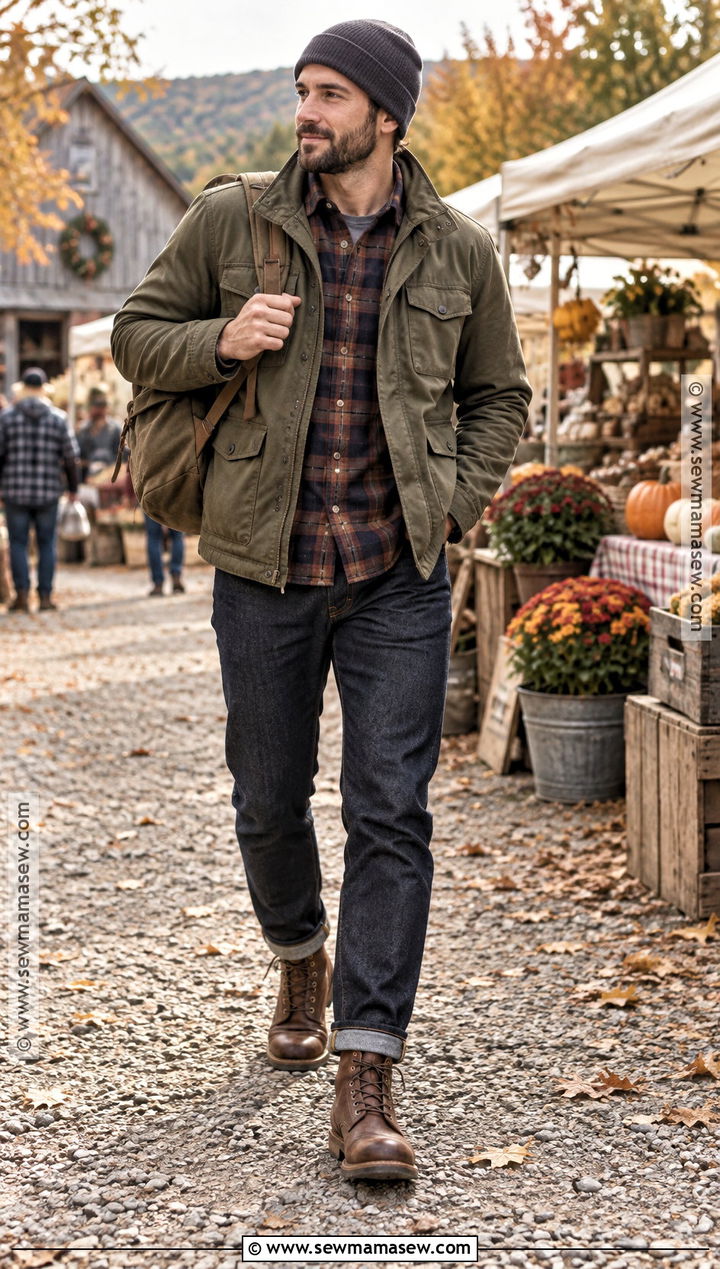
Field jackets were built for the outdoors, and that utility is exactly what makes them so practical in fall. Olive, khaki or brown, hip length, with working pockets, over a muted plaid flannel in rust, navy, cream or dark green, then raw or dark straight jeans so the flannel stays the focal layer. Brown work, service or hiking-style boots, a ribbed beanie and a canvas pack. Many field jackets have an internal drawcord at the waist. I pull it in slightly; it gives the roomy cut some shape without making it tight, which matters on slimmer frames.
8. Quilted Jacket With Crewneck Sweater And Corduroy Pants
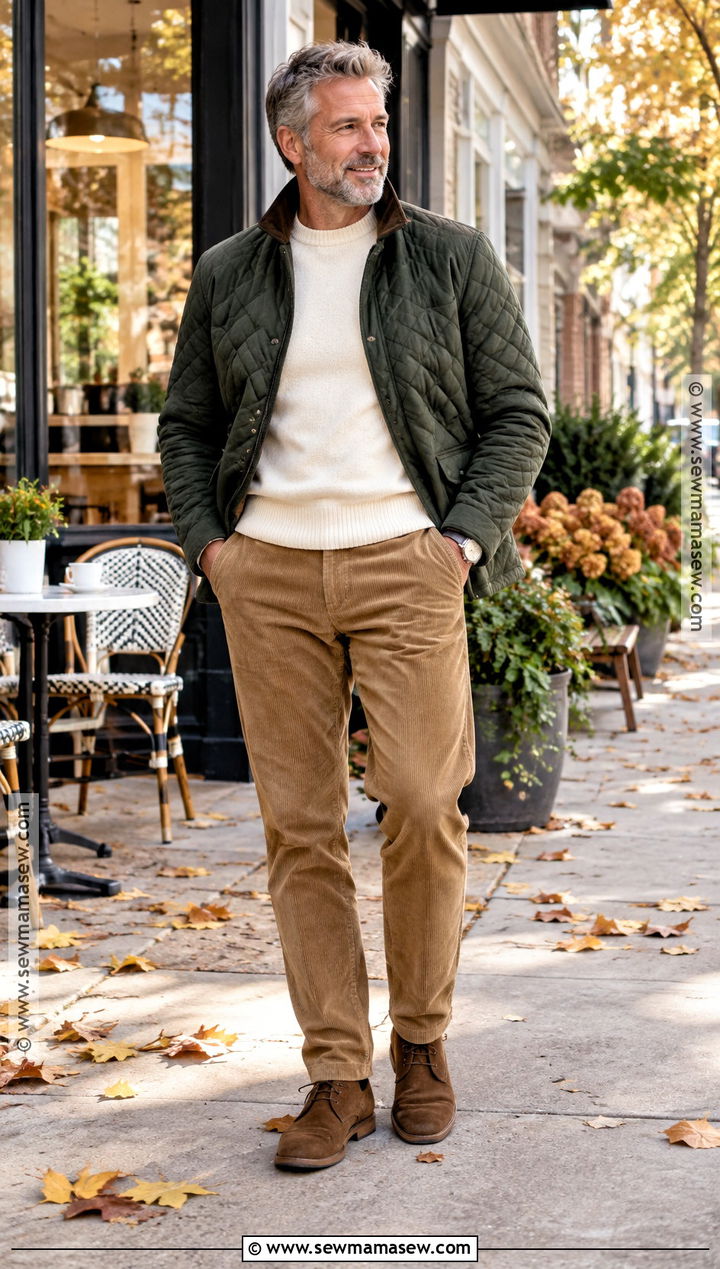
A light quilted jacket handles the days when the temperature swings between morning and lunch. Navy, dark green or brown over a cream or gray crewneck, then straight cords in tan, chocolate or deep olive. Quilting, knit and corduroy add depth even with plain colors, and suede desert boots or leather sneakers keep it comfortable. The jacket should follow your body without pulling across the chest when buttoned. If you want a slimmer look, choose narrow diamond quilting and fewer pockets; wide channels and big flap pockets add bulk. Good for a casual office or a family weekend.
9. Waxed Jacket With Knit Sweater And Chinos
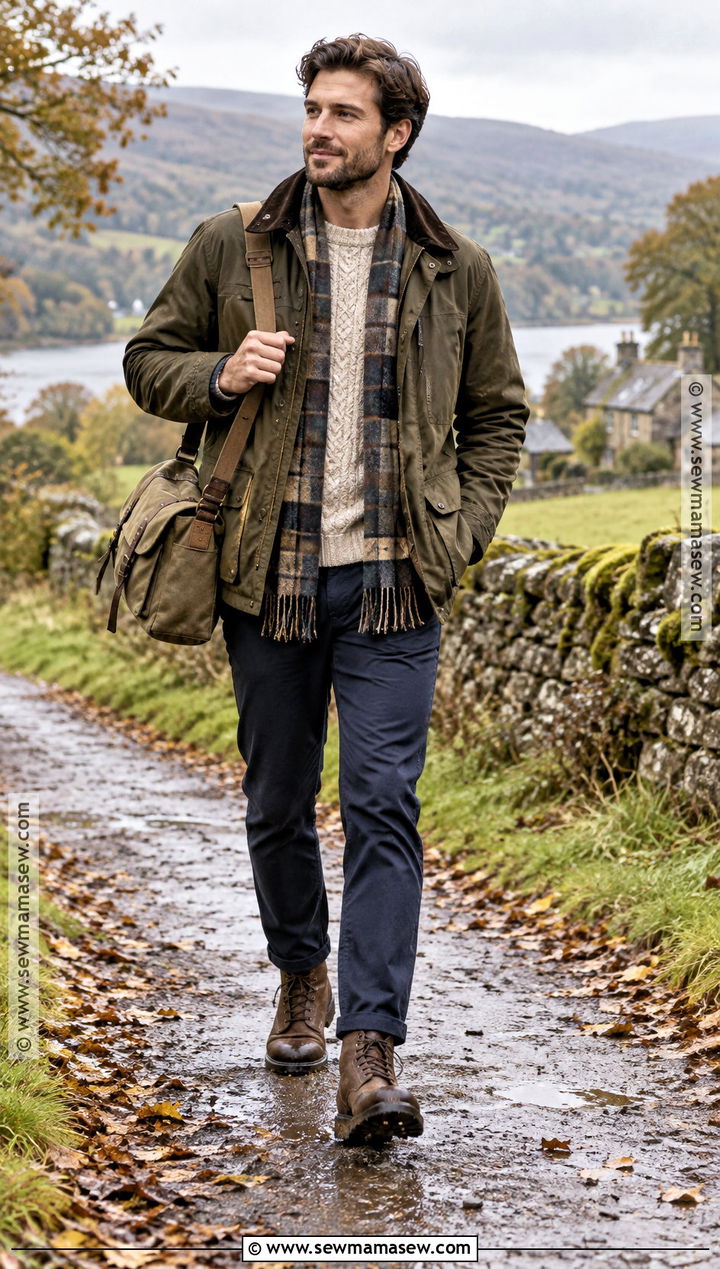
Waxed cotton is the jacket I reach for when it's damp and breezy but not pouring. Olive, navy or dark brown over a textured oatmeal, rust or charcoal knit, then khaki or dark navy chinos so it doesn't look like you're heading for a field. Water-resistant leather boots with a sturdy but not chunky sole, a plaid scarf and a canvas messenger finish it. A new waxed jacket is stiff and a little tacky to the touch, and it softens as the wax works in, so pick a fit with comfortable arm room from day one. Expect it to mark and crease; that patina is part of it.
10. Rain Jacket With Fleece And Technical Pants
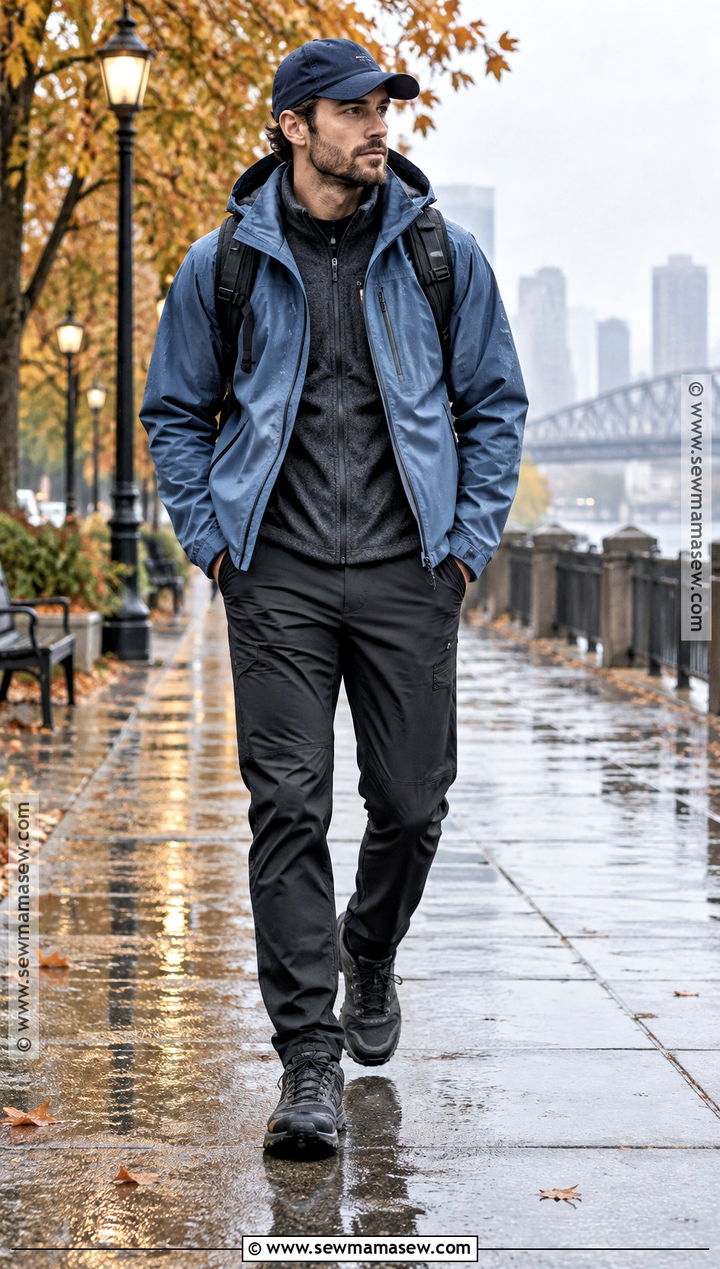
For wind and showers, a proper rain shell beats any fashion jacket. A waterproof or water-resistant hooded jacket in navy, slate blue, forest green or black, a light zip fleece underneath so you can add or shed warmth, and tapered technical pants that move with you. Waterproof trail sneakers or light hikers, plus a weather-resistant pack and a plain cap. I check three things on a rain jacket before anything else: cuffs that tighten, a hood that stays put when you turn your head, and enough room over the fleece. Without those, the waterproofing doesn't help much.
11. Overshirt Jacket With T-Shirt And Wool Trousers
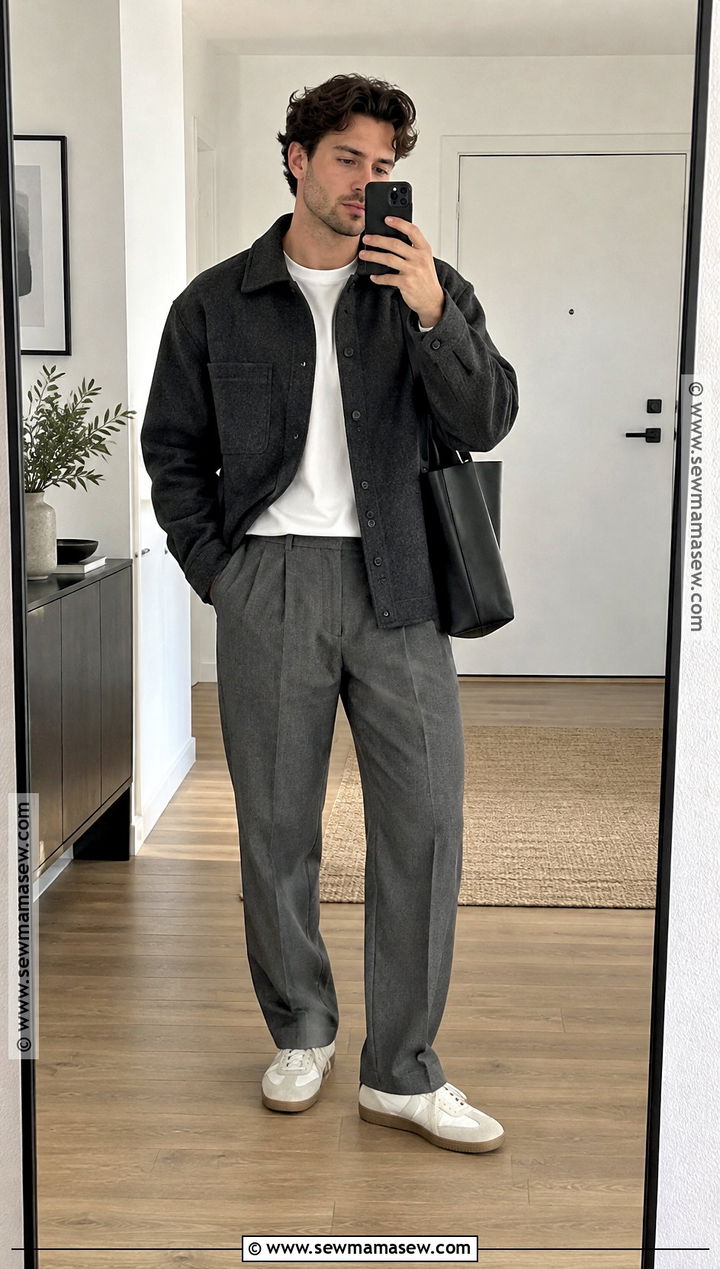
A heavy overshirt covers the days when a coat is too much but a shirt alone isn't enough. Wool-blend, twill or brushed cotton in charcoal, camel, navy or a quiet check, worn open over a thick white or black crewneck tee, with pleated wool trousers below. Retro sneakers keep it casual; loafers make it sharper. Add a minimal tote or small shoulder bag. A thin tee under a heavy overshirt shows every crease and can look underdressed, so I'd choose a heavyweight tee with a firm collar. Trousers straight or gently tapered keep the line clean.
12. Sherpa Trucker Jacket With Henley And Jeans
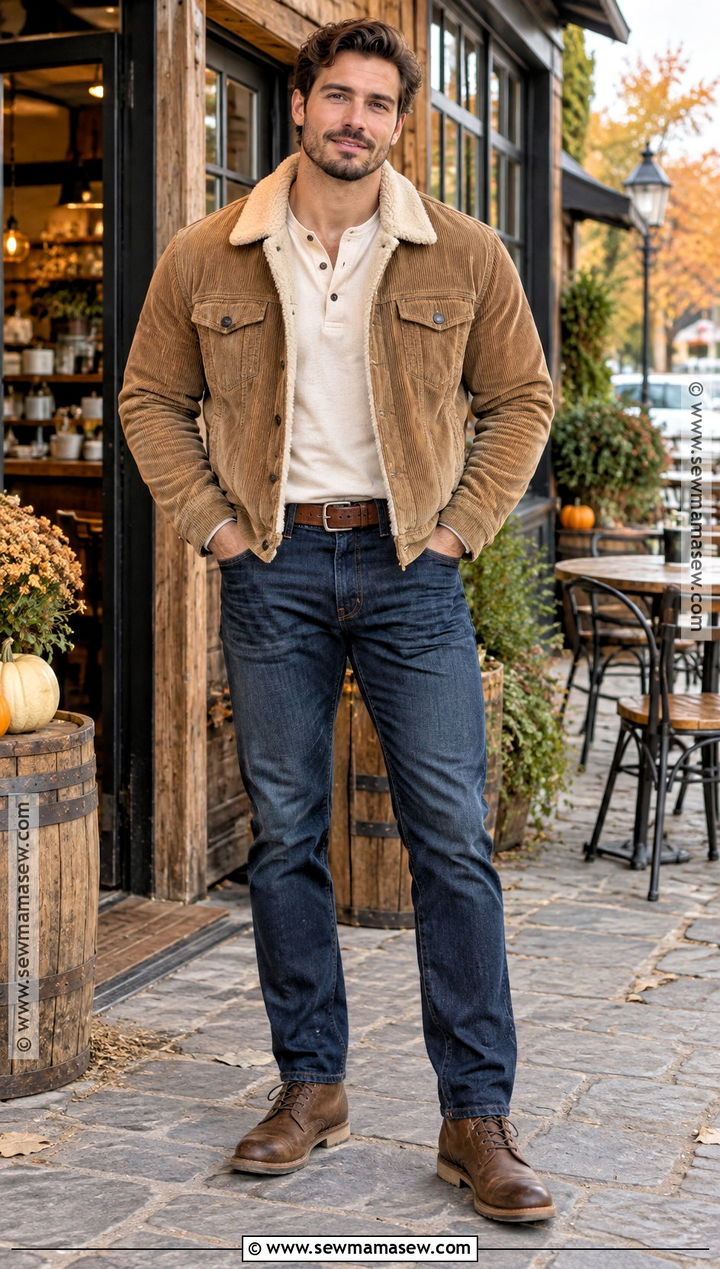
Sherpa-lined truckers are the warmest jackets in this list short of the peacoat. Denim, corduroy or canvas in indigo, tan, dark brown or black, with a fitted cotton henley under it, since the button placket adds detail without fighting the fleecy collar. Black or dark-blue straight jeans, lace-up leather boots, a matching belt and thick socks finish it. The lining takes up real room, so a sherpa trucker in your usual size often fits like the next size down. Broad-shouldered men especially should try it on with arms raised, and skip extra bulky layers unless the cut is relaxed.
13. Varsity Jacket With Sweatshirt And Straight Jeans
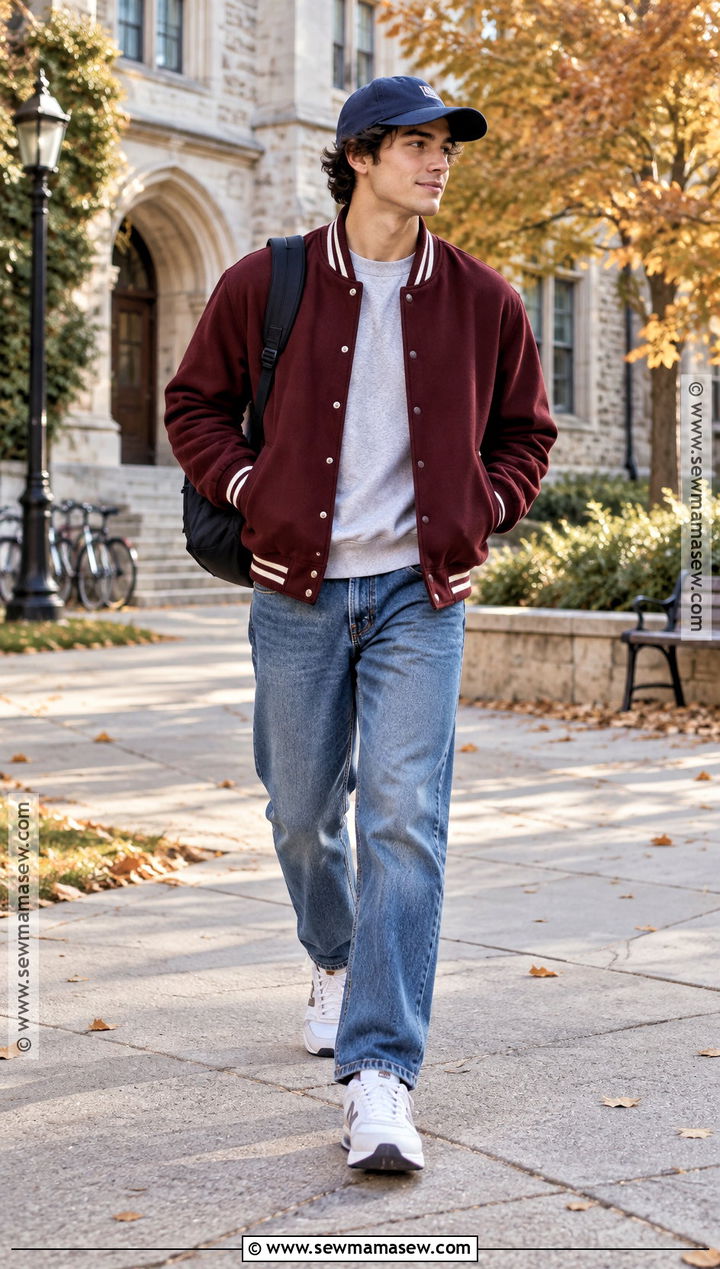
Varsity jackets look adult when the colors are solid and the branding is minimal. Navy, forest green, burgundy or black, over a plain gray or cream sweatshirt, with medium-wash straight jeans. White sneakers, retro trainers or simple suede shoes, and a cap or beanie if you want, but only one sporty accessory at a time. Traditional versions have a wool body and leather sleeves, which are warm but heavier than they look. The ribbed waistband should sit at your hip without riding up; if it climbs when you lift your arms, the body is too short.
14. Peacoat With Roll Neck And Tailored Trousers
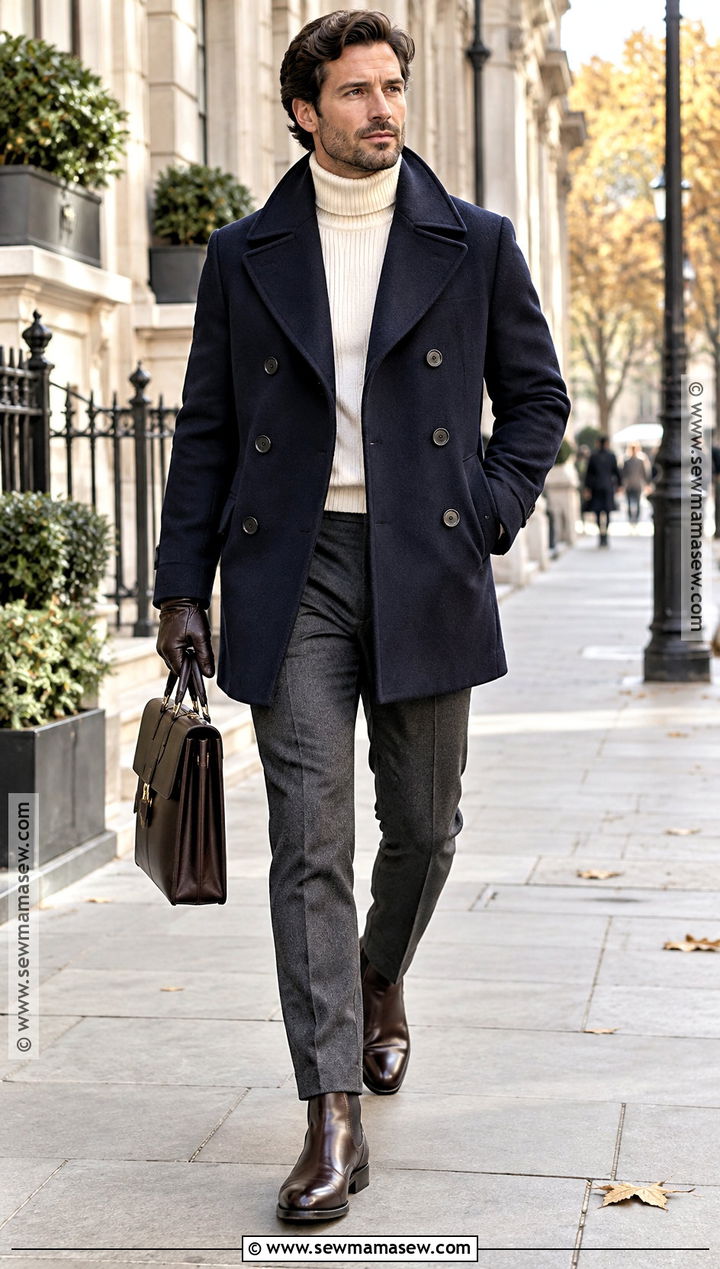
A navy or charcoal peacoat gives an outfit a sharper edge the moment you put it on. It goes over a fine-gauge roll-neck in cream, camel, burgundy or mid-gray, with tailored trousers in charcoal or dark brown. Polished Chelsea boots, derbies or loafers finish it, plus leather gloves and a briefcase for work. Peacoats are double-breasted and cut close, so I insist it closes without strain over the sweater. Dense melton wool is very warm and holds its shape, but it's heavy. Shorter men should look for a hem around the upper thigh rather than lower.
15. Lightweight Puffer Jacket With Hoodie And Joggers
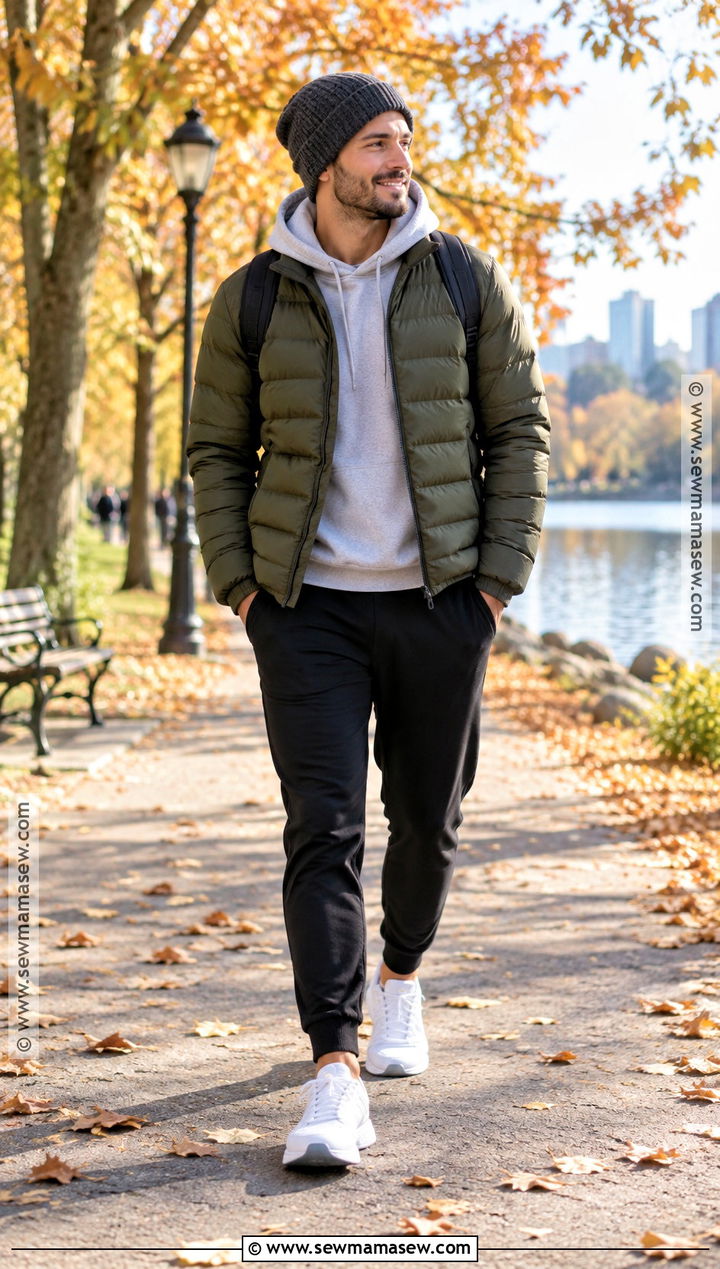
A light puffer earns its place on cold mornings that warm up, because it packs down small once you take it off. Black, navy, olive or rust over a plain hoodie in gray, cream or another neutral, with tapered knit joggers for weekends or technical trousers for something neater. Running-style sneakers, a backpack and a knit beanie. Choose moderate insulation, not a winter-weight jacket. On a broader build, narrow horizontal baffles or vertical quilting look slimmer than big puffy tubes. Down loses warmth when soaked, so if your fall is mostly wet, a synthetic fill is the safer choice.
Rewaxing, Washing Down and Brushing Out Sherpa
Outerwear lasts for many seasons when you look after the fabric it's made from. Each of these needs its own routine.
- Waxed cotton: never machine wash it or use hot water, which strips the wax. Sponge off dirt with cold water and rewax roughly once a year, or sooner when the fabric stops beading water.
- Down puffers: wash only when needed, on a gentle cycle with a down-specific wash, then tumble dry low with a couple of dryer balls to break up clumps and bring the loft back.
- Rain shells: wash with a technical cleaner and skip fabric softener, which clogs the membrane. A short, low tumble dry often revives the water-repellent finish.
- Sherpa linings: wash cold, inside out, without softener, and air dry. High heat mats the fleece; a soft brush fluffs it back up.
- Leather: wipe with a damp cloth, condition it now and then so it doesn't dry out, and hang it on a wide, shaped hanger.
In spring, I clean every jacket before putting it away. Dirt and body oils left in over summer set as stains and attract moths in wool pieces like the peacoat and varsity jacket, and puffers should hang loose rather than staying squashed in a stuff sack for months.
If You Only Buy One Jacket This Fall
Every jacket here works best when you treat it as the start of an outfit rather than something thrown on at the door. If you're only adding one this year, I'd pick by your weather first: a quilted or waxed jacket for damp places, a Harrington or chore jacket for mild ones, a peacoat or sherpa trucker where mornings get properly cold. Navy, olive and brown give you the most outfits; suede, corduroy and quilting bring the texture. Above all, check the shoulders, the room for a sweater and a length that suits your height before you buy.
Related posts: