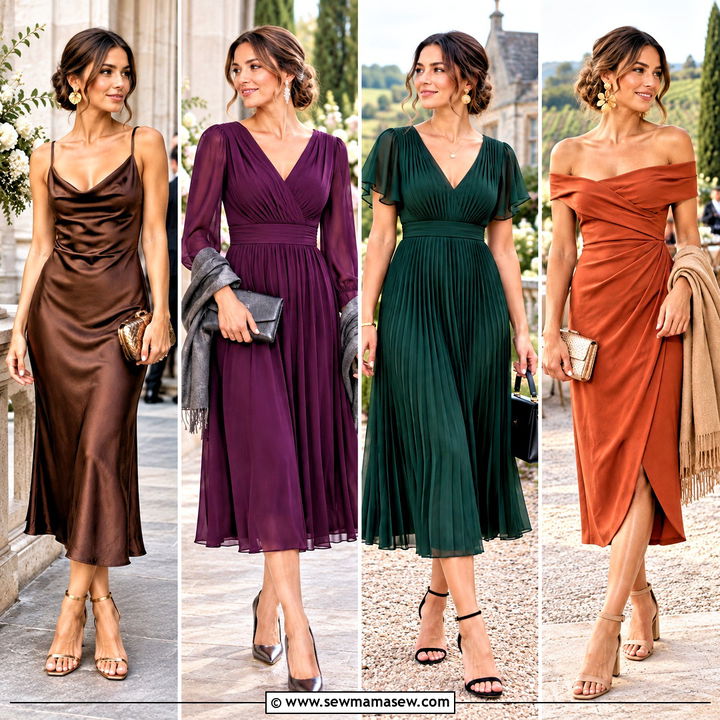
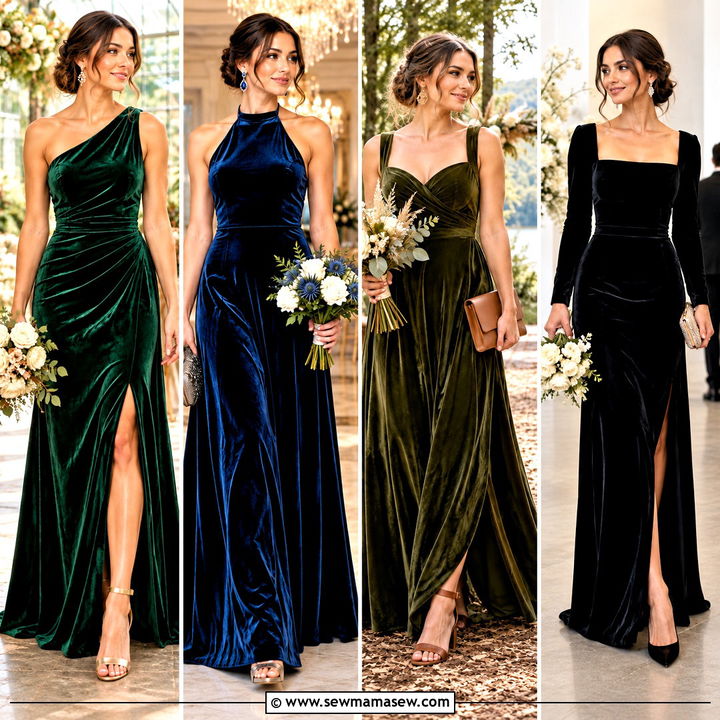
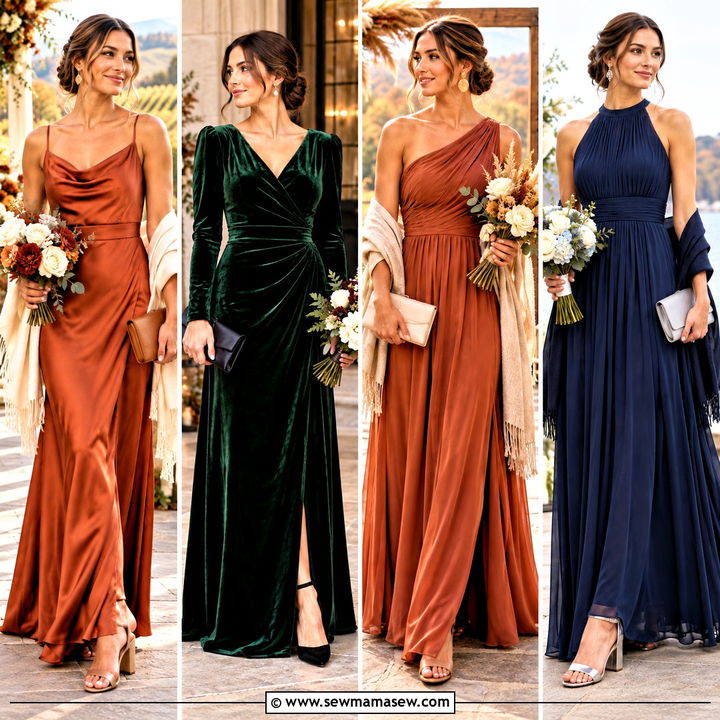
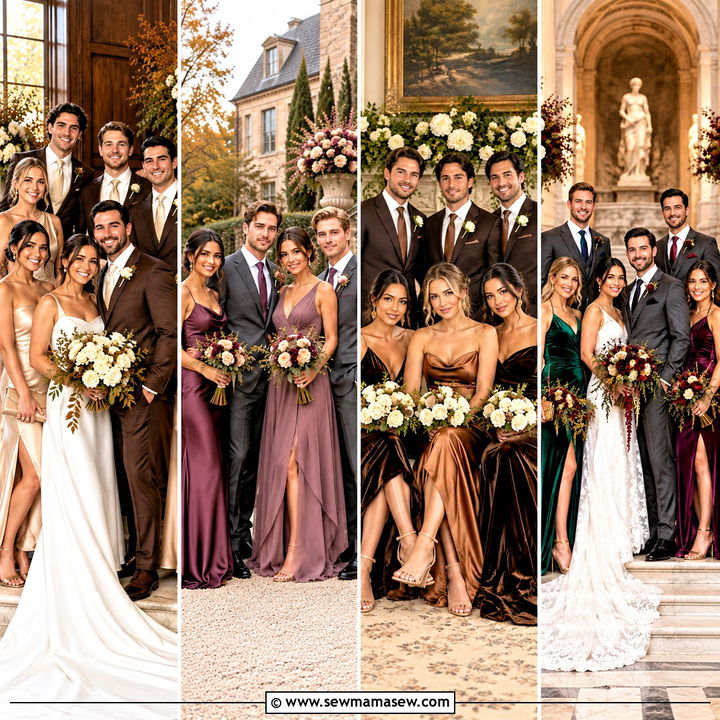
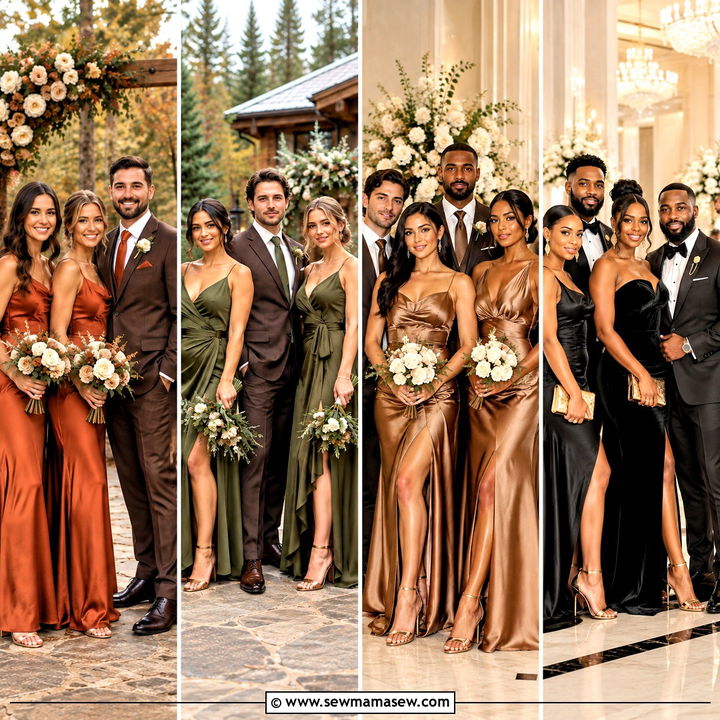
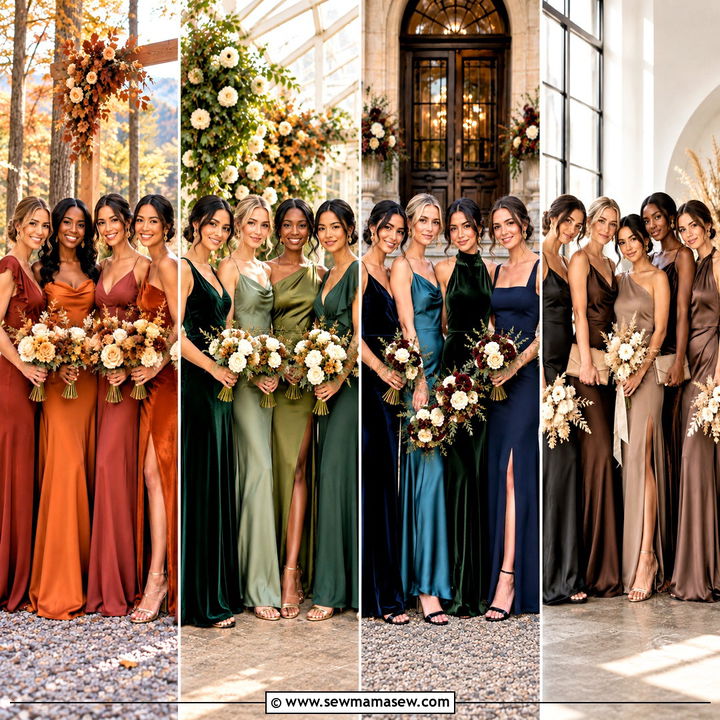
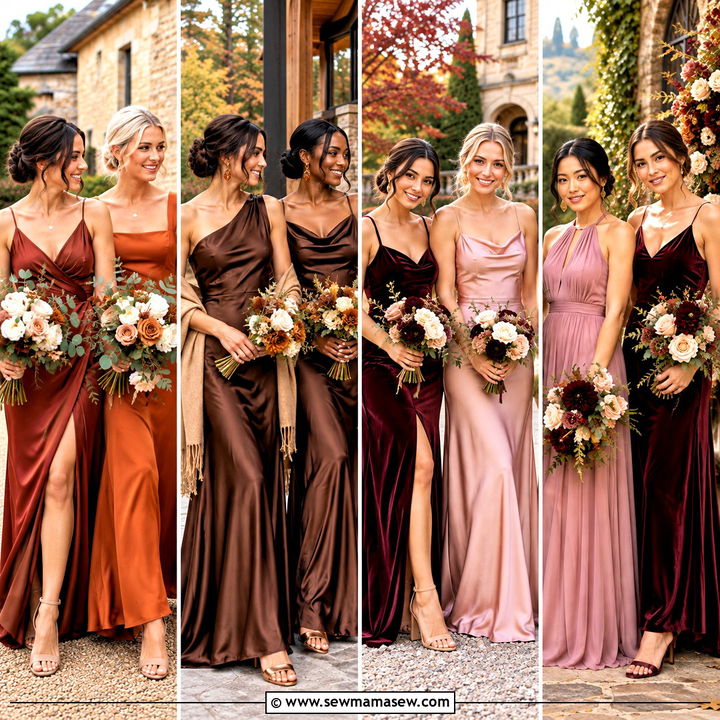
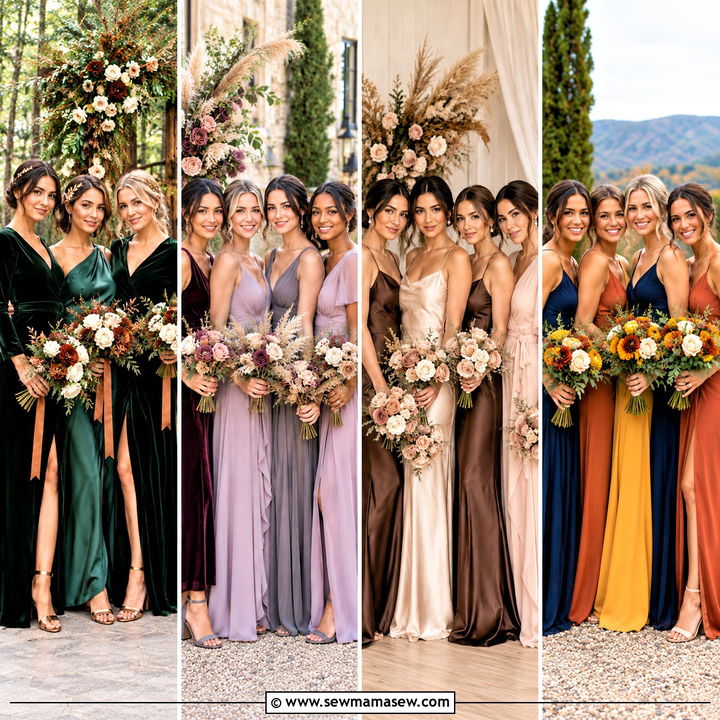
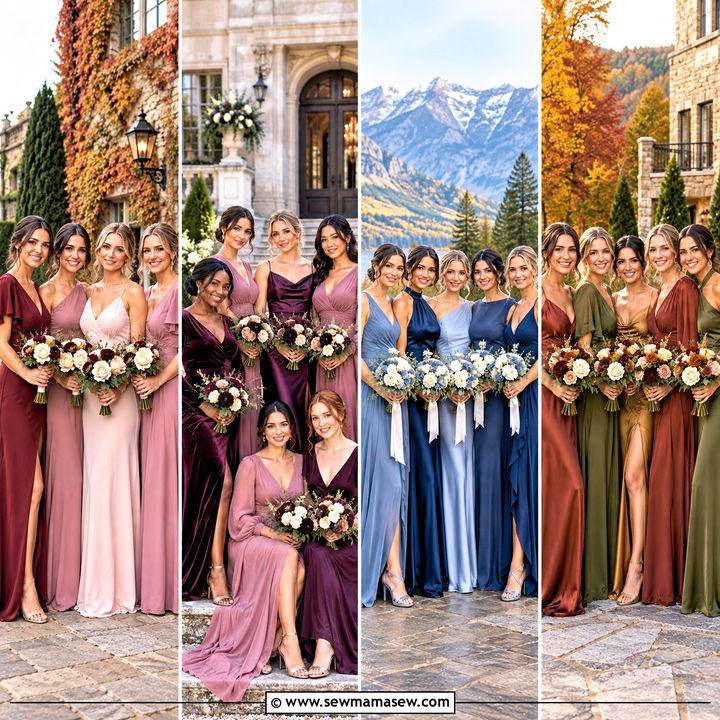
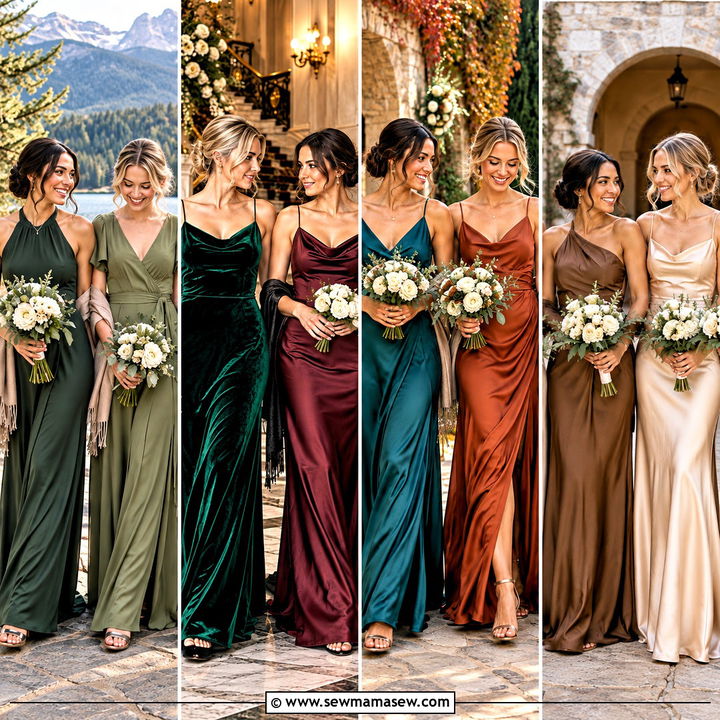
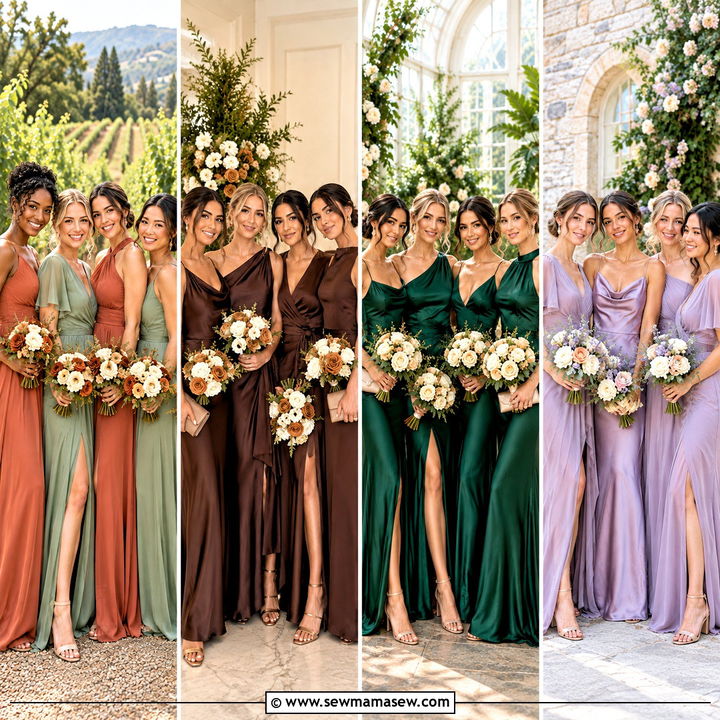
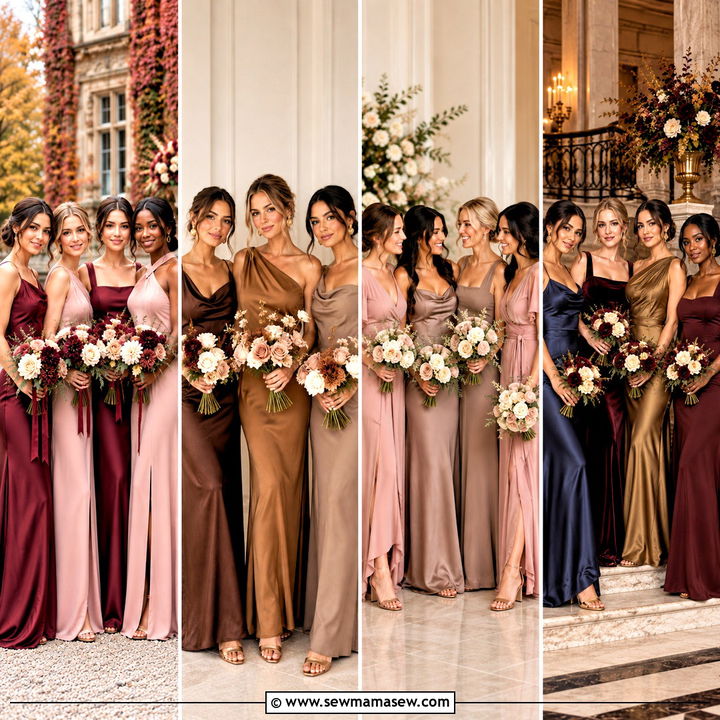
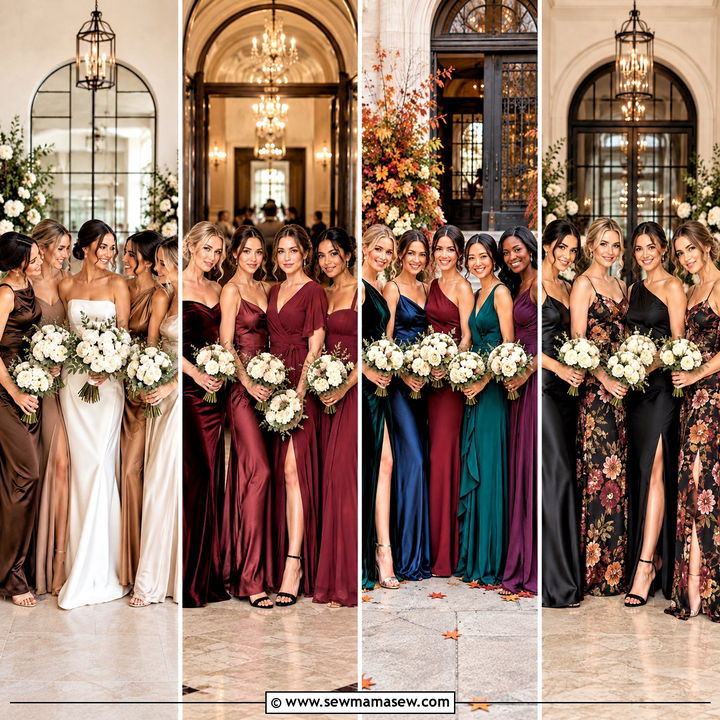
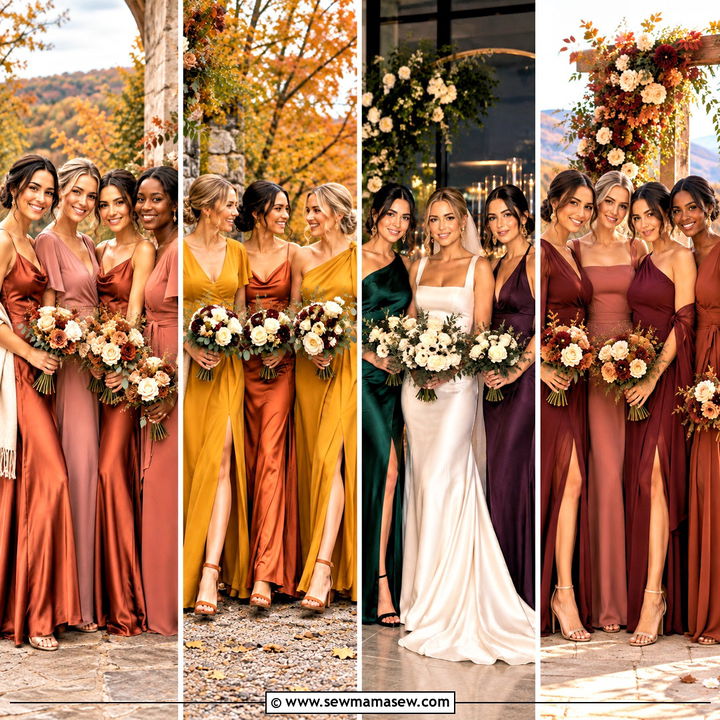
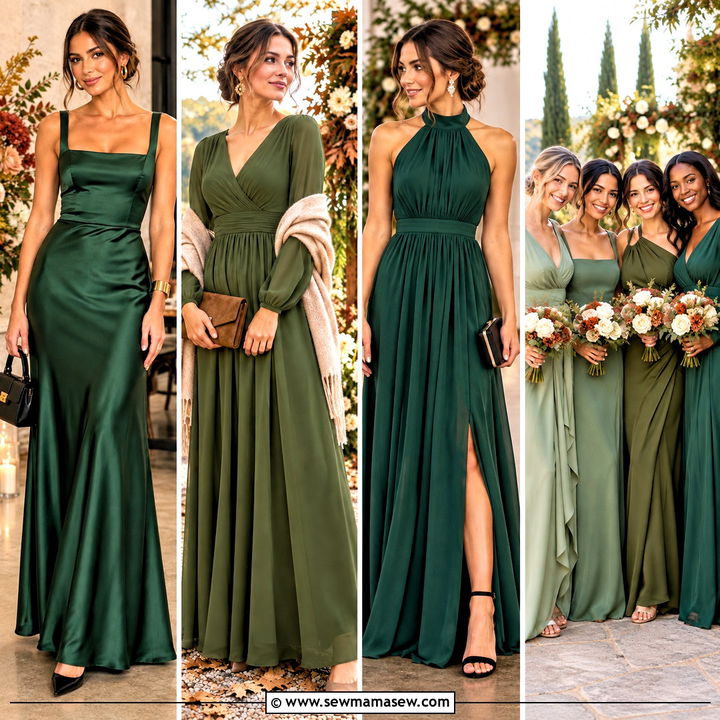
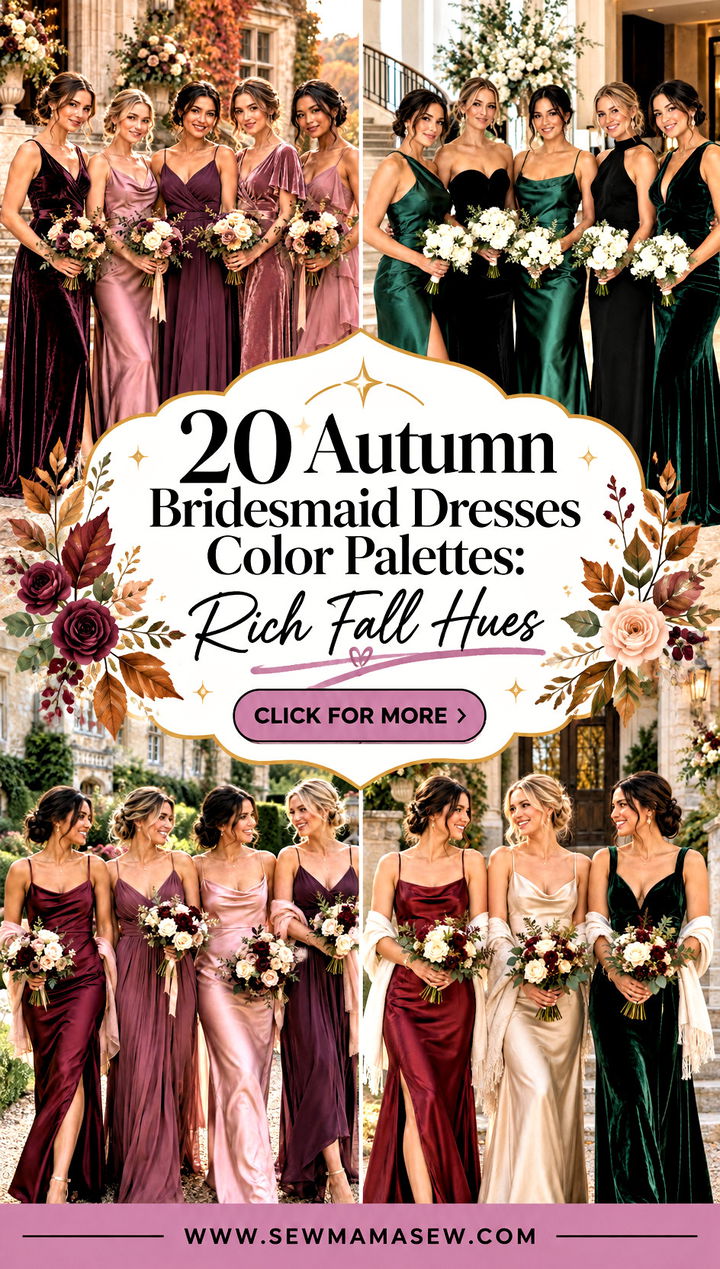
Autumn weddings give a bridal party room for deeper color and heavier fabric than any other season, and those shades read richly against turning leaves in photos. Terracotta, burgundy and deep green are still the colors most couples ask me about for fall, usually in satin, crepe or velvet, with a softer neutral mixed in so the darker lineups don't look heavy. Each palette below comes with a dress direction plus the shoes, jewelry, bouquet and layer I'd pair with it. You can dress everyone in one gown, run a tonal range, or let each bridesmaid pick her own silhouette in a shared fabric. I've also noted which palettes lean formal and which suit a barn or a garden, so you can match the colors to the day you're actually planning.
Matching Each Shade to the Woman Wearing It
A palette can look perfect on a mood board and still leave one bridesmaid looking tired in every photo. Before anyone orders, I have each woman hold the swatches under her chin in daylight, near a window, with no makeup if possible. You can see it right away: the right shade makes the skin look even and rested, the wrong one throws shadows under the eyes or a yellow or gray cast across the jaw.
In a multi-color palette, this is how I hand out the colors. Women with warmer coloring usually carry rust, mustard, caramel and copper well. Cooler coloring tends to suit plum, slate, emerald and berry. Very pale neutrals like beige and sage need a little color in the skin to avoid washing out. Deeper burgundy, forest green and navy are the generous shades; they suit nearly everyone, so I put them on the women who aren't sure.
If someone is stuck in a color that doesn't suit her, move the problem away from the face. A wrap, a necklace or earrings in a kinder shade near the chin fixes more than people expect.
1. Terracotta Rust And Champagne Bridesmaid Dresses
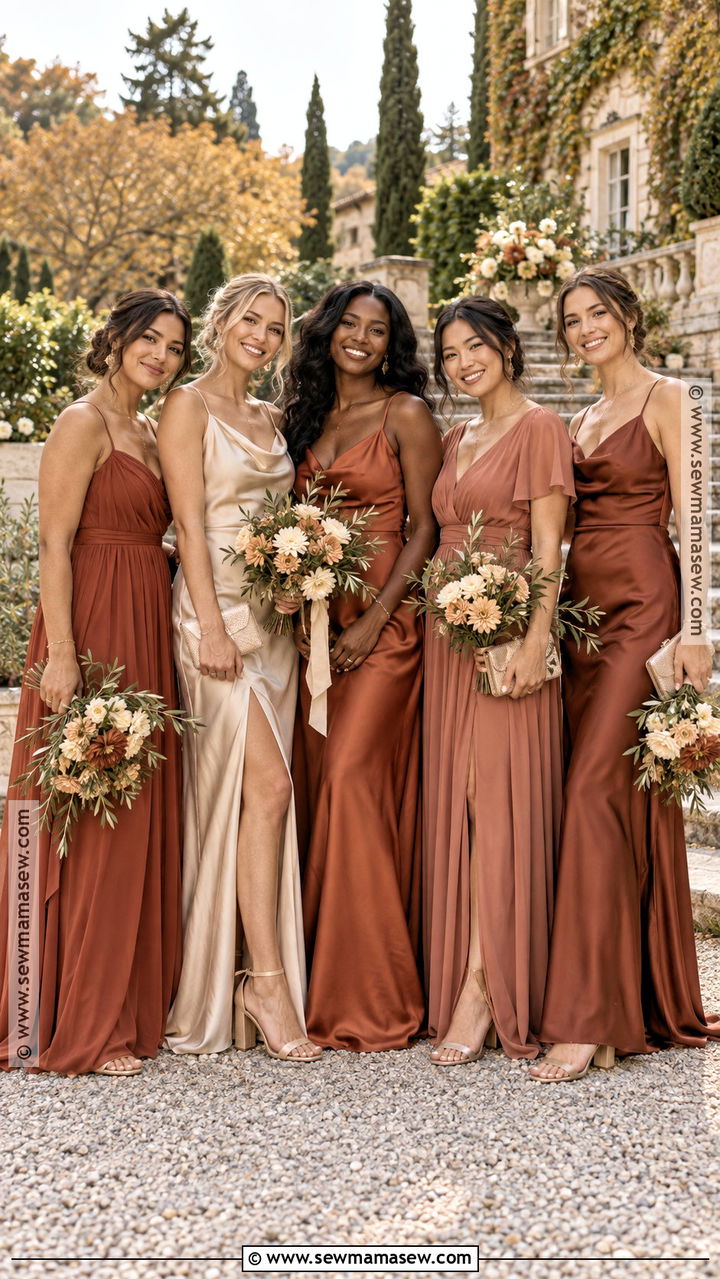
Terracotta and rust read warm without tipping into a pumpkin theme, as long as you split them. I'd put half the party in muted terracotta and half in the deeper rust, then bring champagne in through shoes, wraps or satin ribbon. Chiffon moves well at an outdoor ceremony; rust satin looks dressier for an evening reception. Let each woman choose her neckline, but hold everyone to the same hem length, because uneven hems are what make a mixed lineup look accidental. Champagne block heels sink less into a lawn than stilettos. Cream roses and olive greenery in the bouquets keep the orange from taking over the group photos.
2. Burgundy Blush And Gold Bridesmaid Dresses
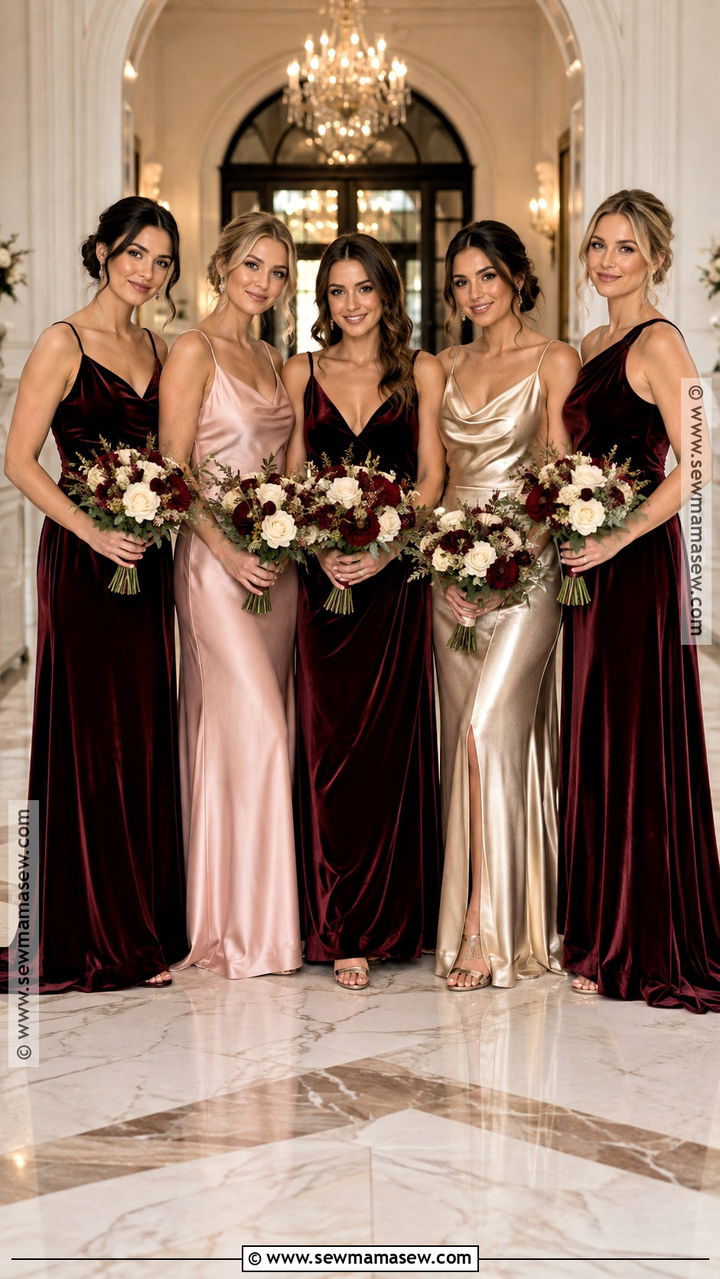
Burgundy is my go-to foundation for a formal autumn party because it flatters most skin tones and photographs as a clear color even indoors. Blush is the softener, through a few dresses, the bouquets or light wraps. Gold should stay an accent; once it becomes a third main color, the lineup starts to look like holiday decor. I like burgundy velvet toward the center of the line with blush satin or chiffon between, which builds a gradient for the camera. Matching gold earrings and champagne-gold heels connect the different shapes. Ballrooms and candlelit estates suit it, and it carries from an afternoon ceremony into the evening without extra accessories.
3. Olive Sage And Taupe Bridesmaid Dresses
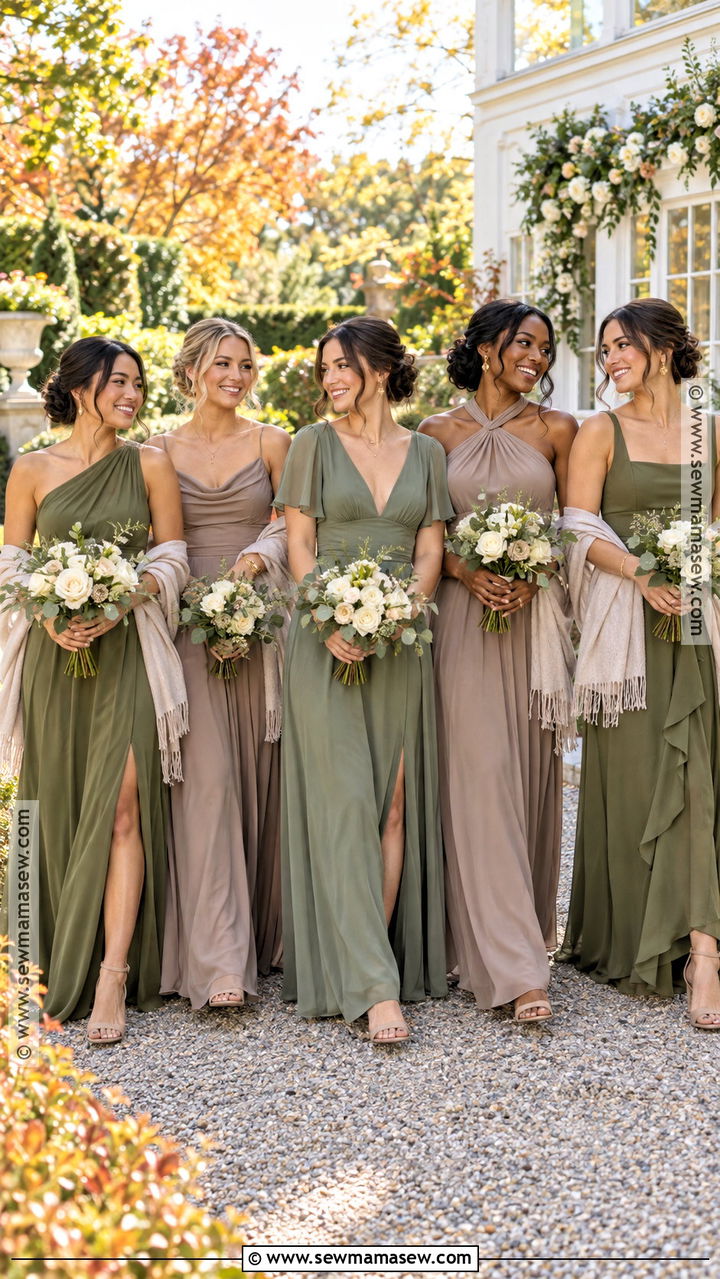
Olive, sage and taupe are the quiet palette, and I recommend them for barns, vineyards and woodland settings where the backdrop is already doing a lot. Olive goes on the deepest dresses, sage softens, taupe brightens the line. Crepe and chiffon keep these muted colors looking refined; cotton or a matte jersey in the same shades can drift toward casual. Different necklines and sleeves are fine with a shared floor-length hem. Nude or taupe shoes lengthen the leg and match every dress. One honest caveat: sage and taupe can wash out very fair skin in flat light, so give those shades to bridesmaids with a bit more color, or add a brushed gold earring near the face.
4. Forest Green Copper And Cream Bridesmaid Dresses
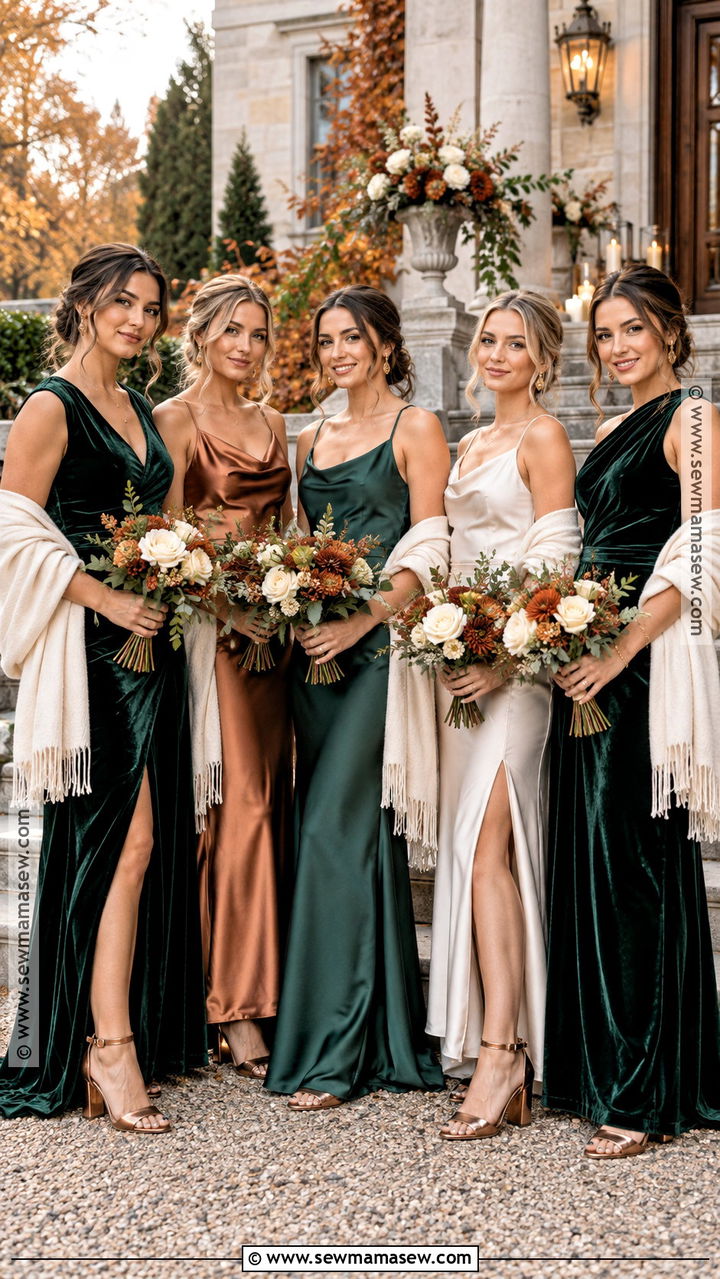
Forest green needs a fabric with some sheen to look rich, which is why velvet, satin and structured crepe all suit it. Copper comes in through shoes, hair accessories or one or two statement gowns, and cream flowers keep the look fresh. A mixed lineup of wrap dresses, cowl necks and long sleeves holds together if the green is the same depth throughout. Check that in daylight: two greens from different makers can look identical indoors and noticeably different outside. Copper sandals or closed-toe pumps add warmth. For an outdoor ceremony, coordinate cream pashminas or forest green wraps so the warm layers look planned.
5. Plum Mauve And Dusty Rose Bridesmaid Dresses
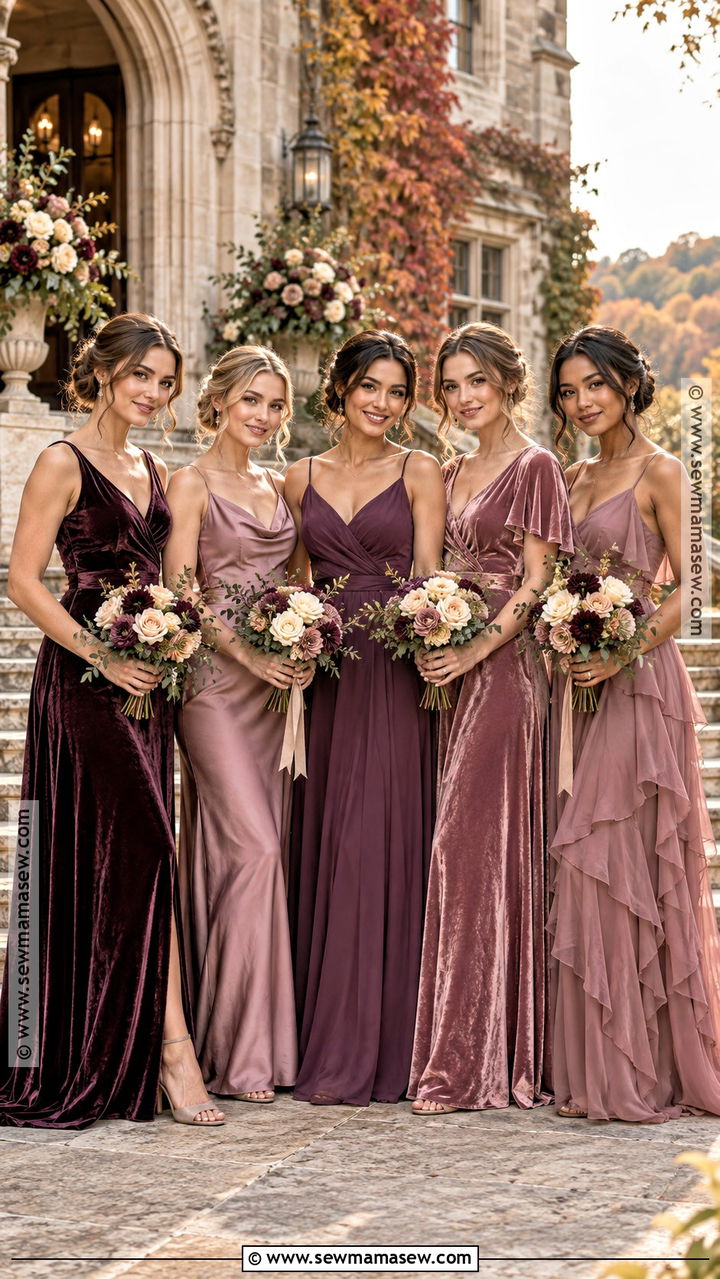
Plum, mauve and dusty rose are the romantic way out of orange and brown. Plum anchors the party, and mauve and dusty rose fill in a gentle tonal step between. Velvet plum suits a late autumn date; for a September wedding I'd switch to chiffon or satin, because velvet in warm sun gets uncomfortable fast. Hold the group together with one length and one repeated detail, a draped neckline or a flutter sleeve. Taupe heels and rose-gold jewelry suit all three shades. These colors look soft in daylight and deepen under evening lighting, which makes them a good choice for a historic indoor venue.
6. Navy Burnt Orange And Camel Bridesmaid Dresses
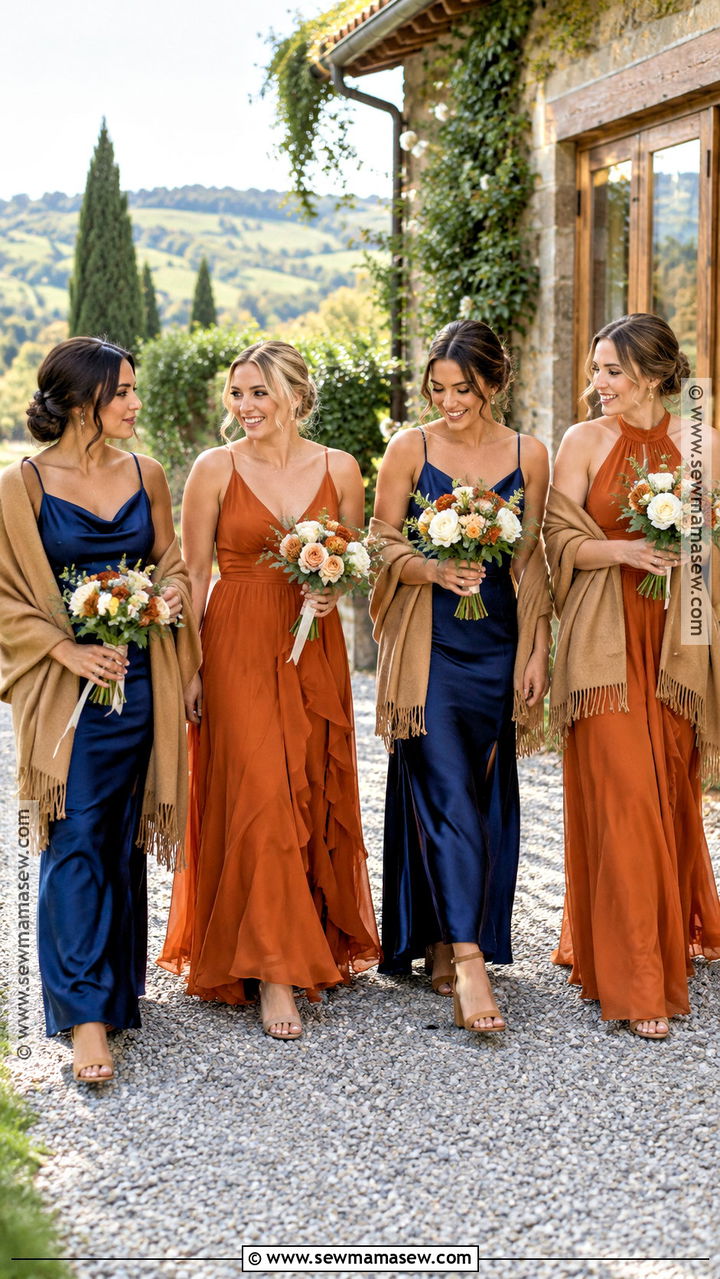
Navy and burnt orange give a strong cool-warm contrast that looks grown-up rather than rustic. I'd make navy the main dress and use burnt orange in a few gowns or only in the bouquets and accessories, with camel wraps and neutral shoes bridging the two. Spread the orange gowns evenly through the line so one end of the photo doesn't look heavier. Navy satin brings depth to an evening wedding; chiffon moves better outdoors. Camel or tan block heels and simple gold earrings finish it. Orange ranunculus and cream flowers tie the bouquets in, and the palette pairs well with navy groomsmen's suits.
7. Chocolate Brown Champagne And Bronze Bridesmaid Dresses
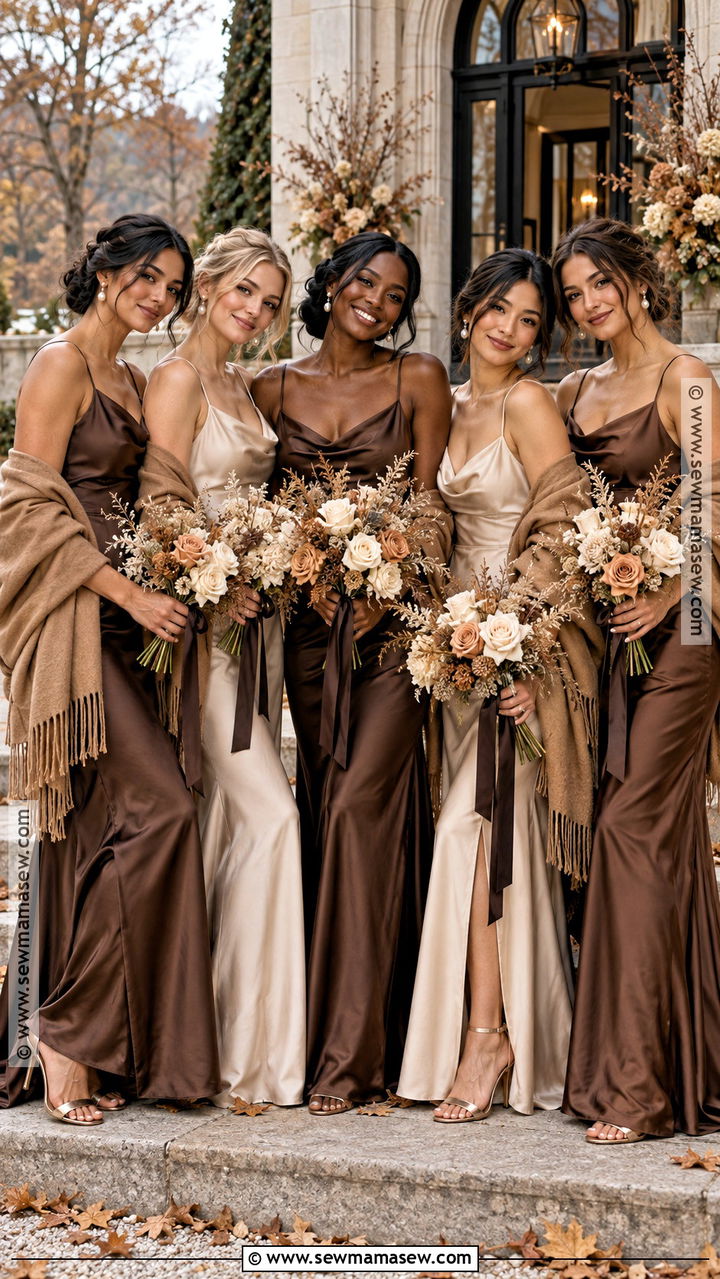
Chocolate brown has become a favorite of mine for late autumn because it reads luxurious without any shine at all. Mix deep cocoa satin with lighter champagne dresses for contrast, and repeat bronze through shoes and jewelry so the browns don't collapse into one flat shade. Cowl necks, one-shoulder gowns and modest long sleeves can stand together if fabric weight and hem length match. Pearl or brushed gold earrings bring light to the face, which dark brown needs. Champagne wraps or camel coats help in outdoor photos: brown against dark trees can disappear, and a lighter layer separates each woman from the background.
8. Emerald Black And Gold Bridesmaid Dresses
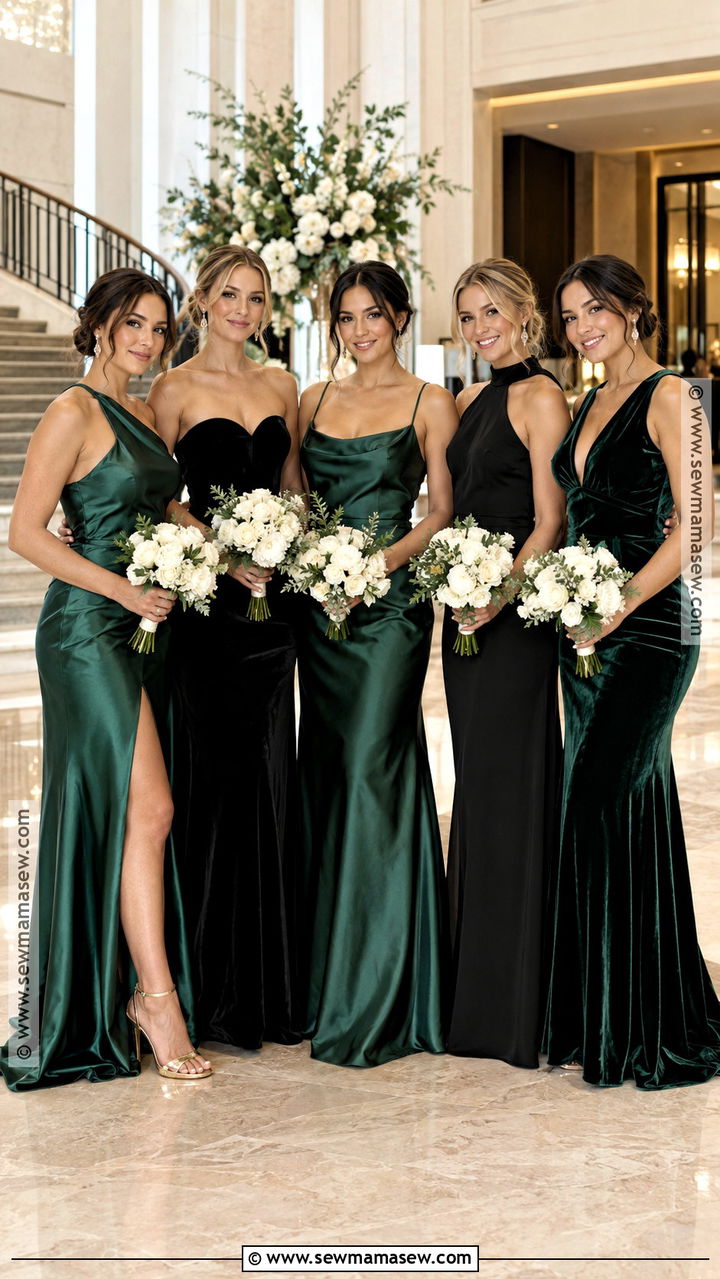
Emerald, black and gold is the most dramatic palette here, so I'd keep it for a formal evening wedding. Emerald should lead; black works best in a few gowns or as velvet wraps. Satin or velvet reflects enough light to show the silhouettes, while matte black in a dim room can look like a hole in the photo. Alternating emerald and black floor-length dresses with matching necklines keeps it orderly. Gold heels and simple drop earrings add brightness, and white roses with deep greenery give crisp contrast. Hotels, galleries and traditional ballrooms suit it. Neat updos and soft waves keep the hair as polished as the dresses.
9. Cinnamon Rose Clay And Peach Bridesmaid Dresses
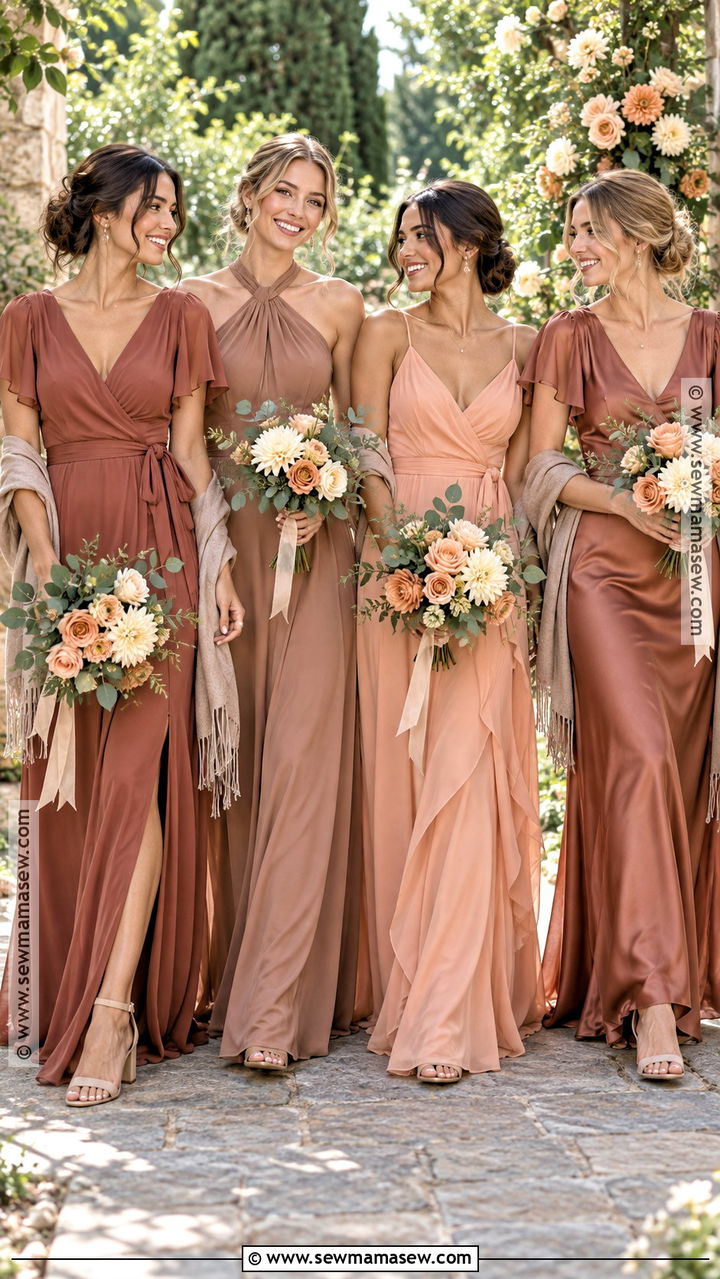
Cinnamon rose sits between terracotta and dusty pink, which makes it approachable for an early autumn wedding. Pair it with clay dresses and muted peach for a tonal line that feels warm but not intensely orange. In bright sun I'd choose chiffon or matte satin; high-shine fabric in these warm shades throws glare and color onto faces in photos. Wrap dresses, halters or flutter sleeves all fit within the range. Nude block heels and delicate rose-gold jewelry suit the earthy undertones, and peach roses with eucalyptus vary the bouquets naturally. Light taupe wraps for the evening chill. Garden ceremonies and relaxed estate weddings fit it well.
10. Mustard Rust And Olive Bridesmaid Dresses
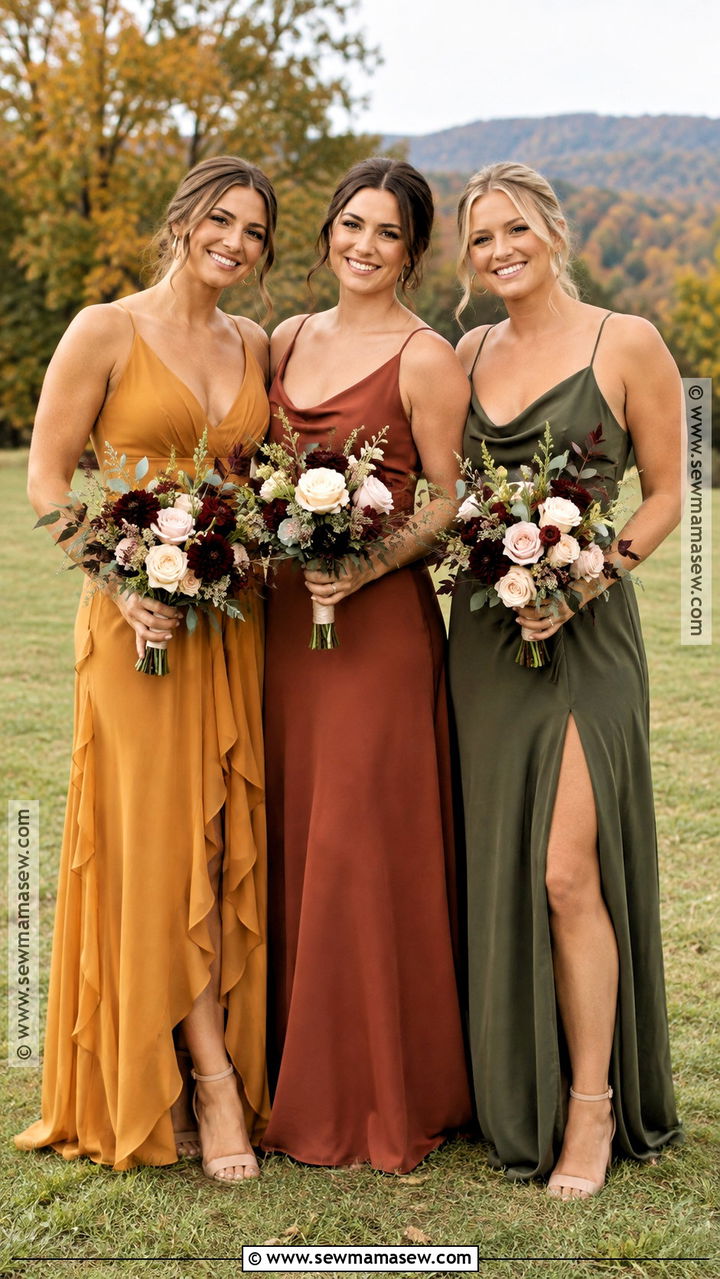
Mustard, rust and olive all carry visual weight, so the dresses have to be simple. I'd make rust the main color, put olive on several bridesmaids and keep mustard small, maybe on the maid of honor alone. Mustard is the hardest of the three to wear; on many skin tones it reflects yellow under the chin, which is another reason to use it sparingly. Matte crepe and chiffon soften the saturation. Tan heels, small gold hoops and neutral clutches stop the outfits looking busy. Bouquets need plenty of cream and greenery as a visual break. Open outdoor light keeps these deep shades clear.
11. Slate Blue Burgundy And Silver Bridesmaid Dresses
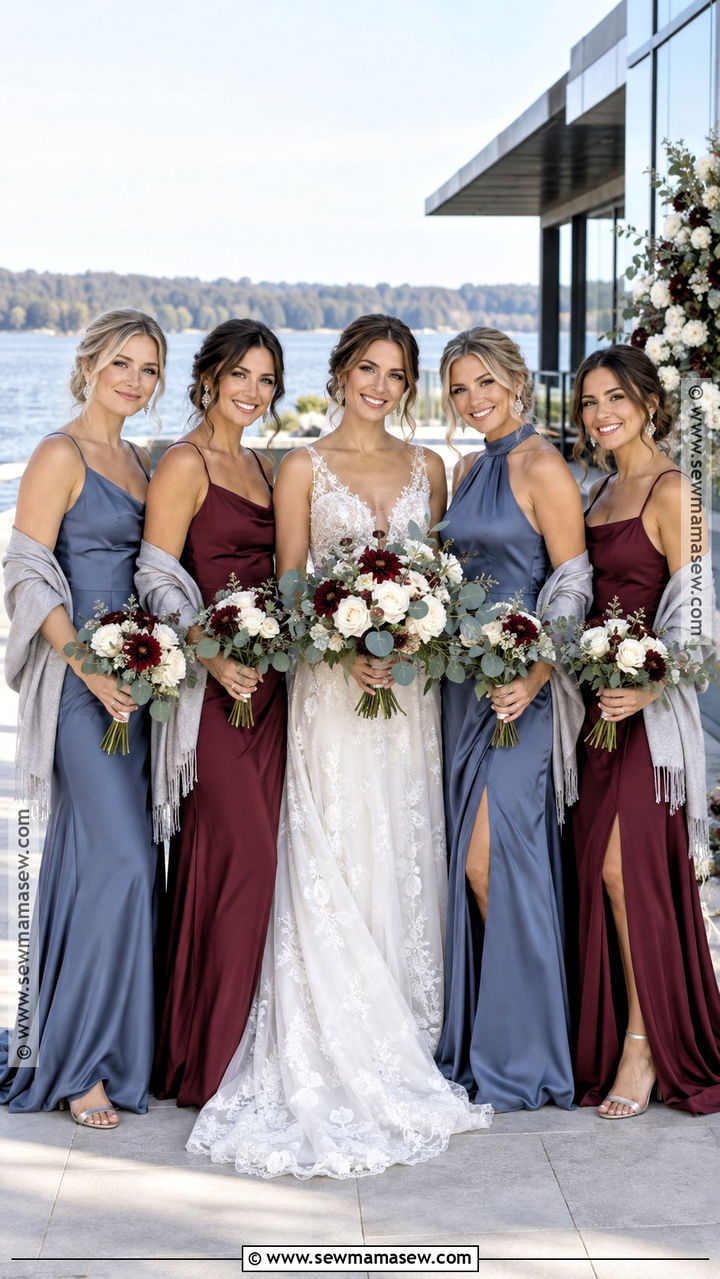
Slate blue brings a cool, misty note to fall colors, and burgundy warms it up. Silver is the accent, in shoes, earrings, hairpins or ribbon. Alternate the two dress colors in matte satin or crepe and keep one floor-length hem for unity. I suggest the blue for early fall, or for a venue whose decor already has orange and brown in it, where an all-warm palette would fight the room. Silver-gray heels and fine crystal jewelry keep the edges light. White roses, burgundy flowers and blue-gray foliage tie both dress colors into the bouquets. Soft gray wraps for outdoors. Waterfront and modern venues suit it.
12. Dusty Blue Mauve And Beige Bridesmaid Dresses
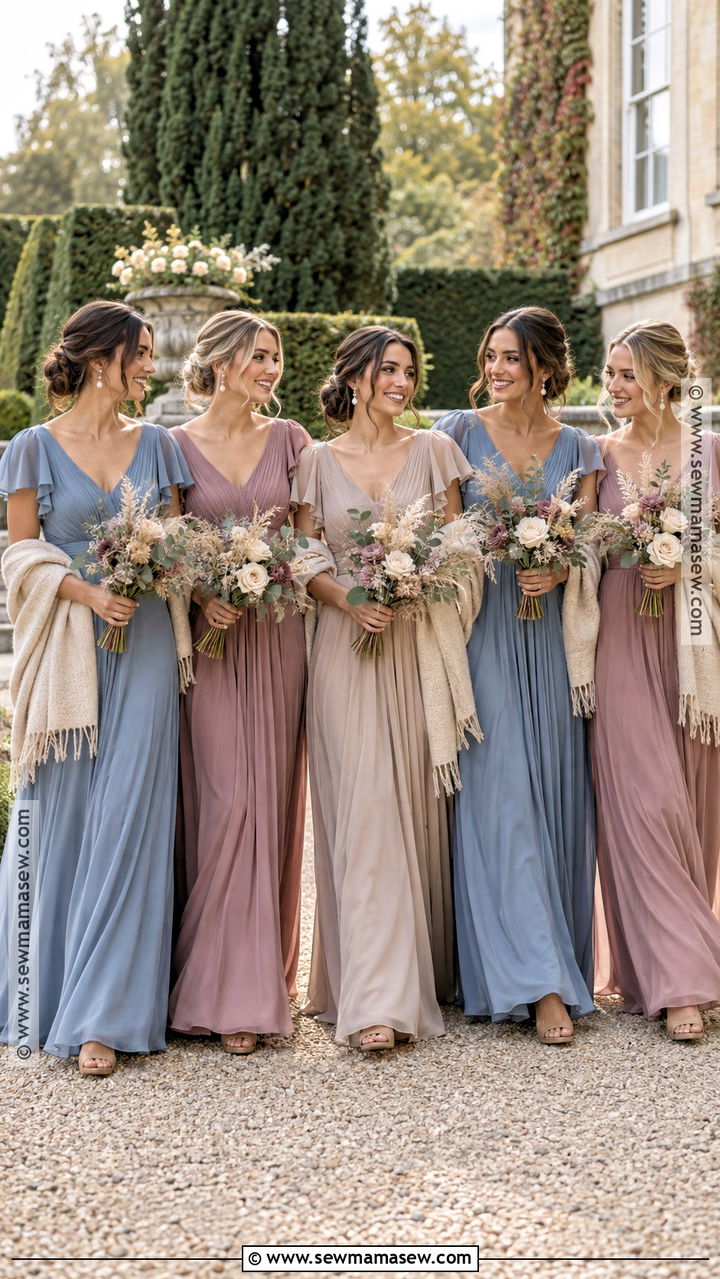
Some autumn weddings call for colors that sit back, and dusty blue, mauve and beige do exactly that while keeping enough depth for the season. Give each bridesmaid one of the three, or use dusty blue for most of the party and save mauve and beige for the maid of honor and accessories. Flowing chiffon with gentle pleating or flutter sleeves suits these pale shades. Beige is the one to test: in some fabrics it reads almost as ivory on camera, and nobody wants to look like she's matching the bride. Taupe or nude heels and pearl earrings. Oatmeal wraps sit naturally beside every color in outdoor portraits.
13. Copper Persimmon And Rosewood Bridesmaid Dresses
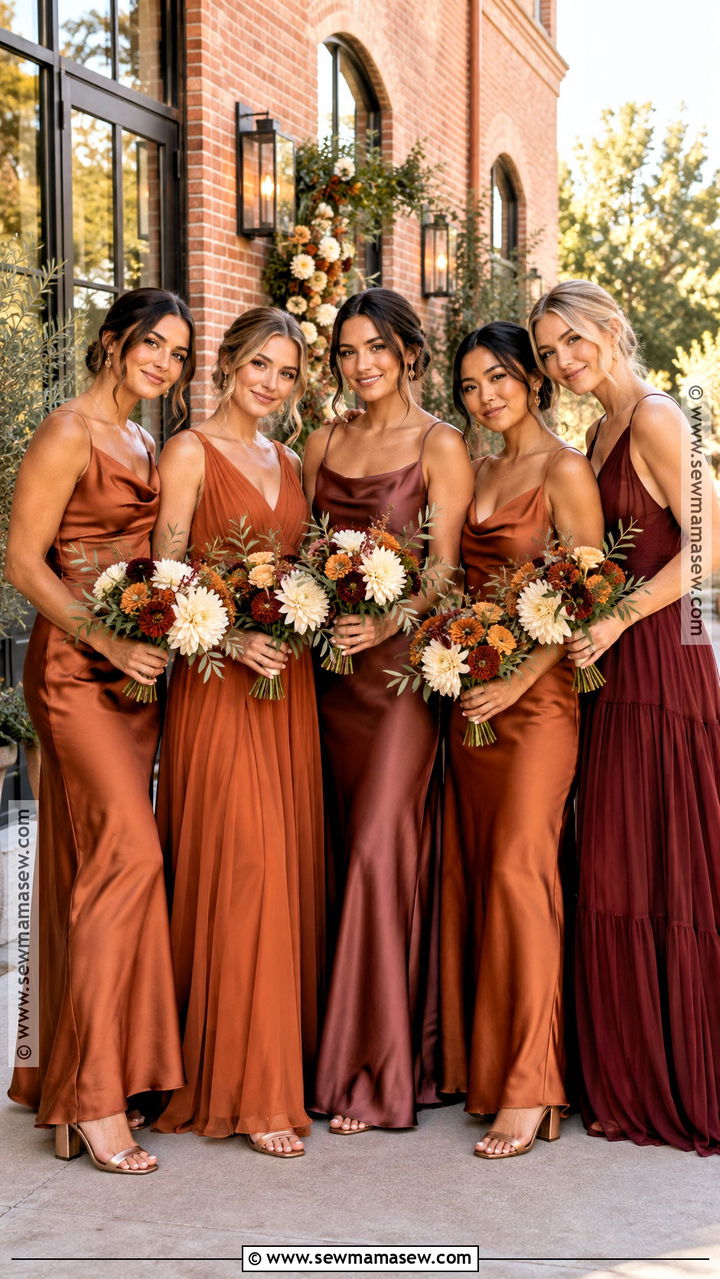
Copper, persimmon and rosewood form a sunset palette for a party that enjoys color. Copper satin gives reflective depth, persimmon chiffon brings brighter orange, and rosewood grounds it with a muted red-brown. Spread the shades evenly so no color sits alone at one end of the photo. Because the palette is already loud, I'd keep silhouettes simple: floor length, clean necklines, little embellishment. Tan sandals or bronze block heels suit all three. Small gold earrings and soft hair finish it. It is especially striking at a sunset ceremony or a brick venue, where warm walls echo the dresses.
14. Berry Fig And Blush Bridesmaid Dresses
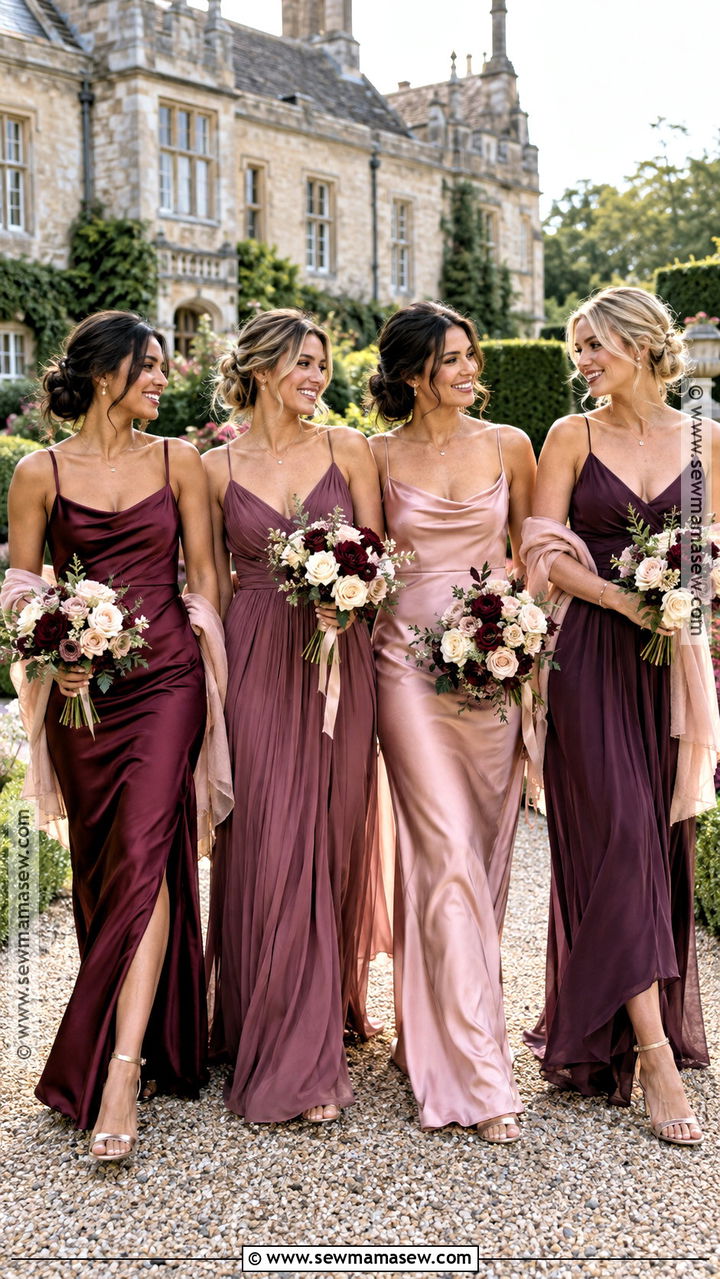
Berry and fig give you romance without falling back on burgundy, and blush keeps the darker dresses distinct in a group shot. Berry satin glows, fig crepe stays understated, and blush chiffon adds movement. A mismatched line holds together when every dress shares a waistline or a floor-length hem. Champagne heels and rose-gold jewelry keep the attention on the dresses. Blush wraps warm the women up without adding a competing color. The pinks and purples look richest indoors under bright, even light; in a very dim room, fig can drift toward brown, so I'd check the venue's evening lighting before committing.
15. Moss Green Caramel And Ivory Bridesmaid Dresses
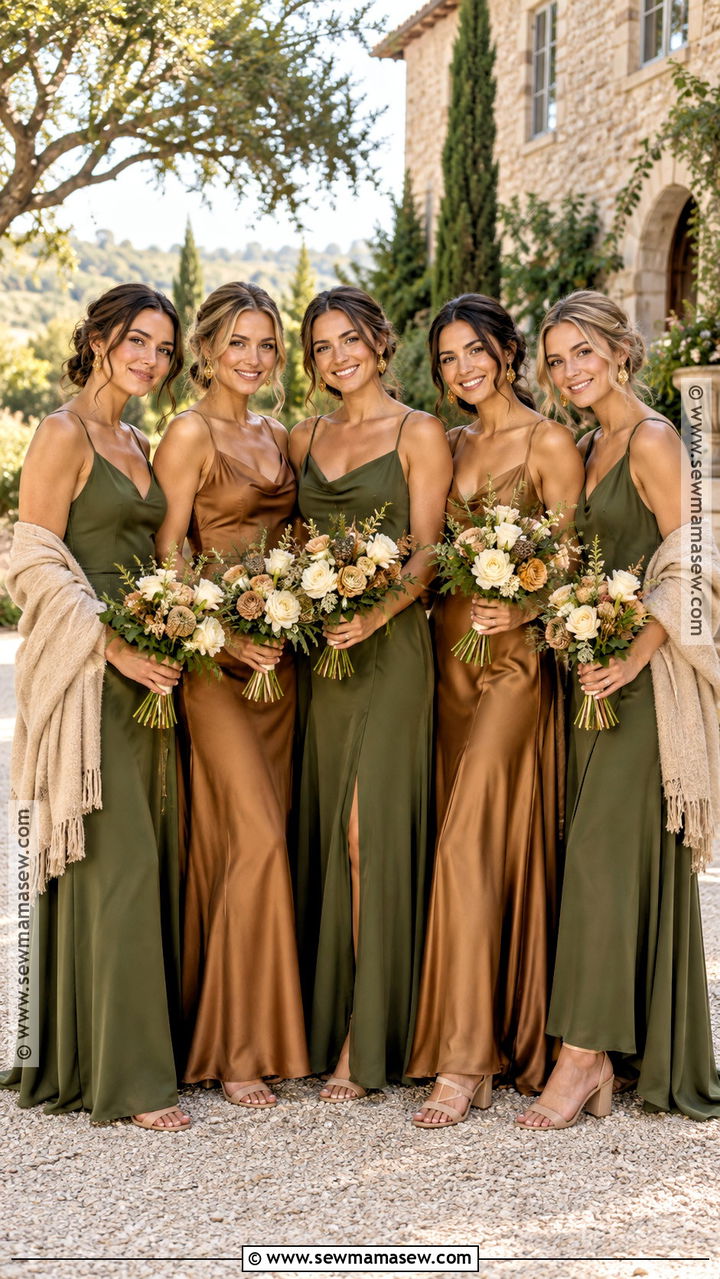
Moss green and caramel are an earthy pair, grounded and very autumn. Keep ivory as an accent in bouquets, wraps or accessories rather than a dress color, so no bridesmaid competes with the bride. Moss works for most gowns, with caramel placed through the group for warm contrast. Satin, crepe or chiffon all suit these shades, but one shared fabric is what makes them look connected. Tan block heels, brushed gold earrings and small caramel clutches. Ivory flowers with soft peach blooms and brown seed pods finish the seasonal feel. Light beige wraps help at an outdoor ceremony without pushing the look toward rustic.
16. Aubergine Bronze And Taupe Bridesmaid Dresses
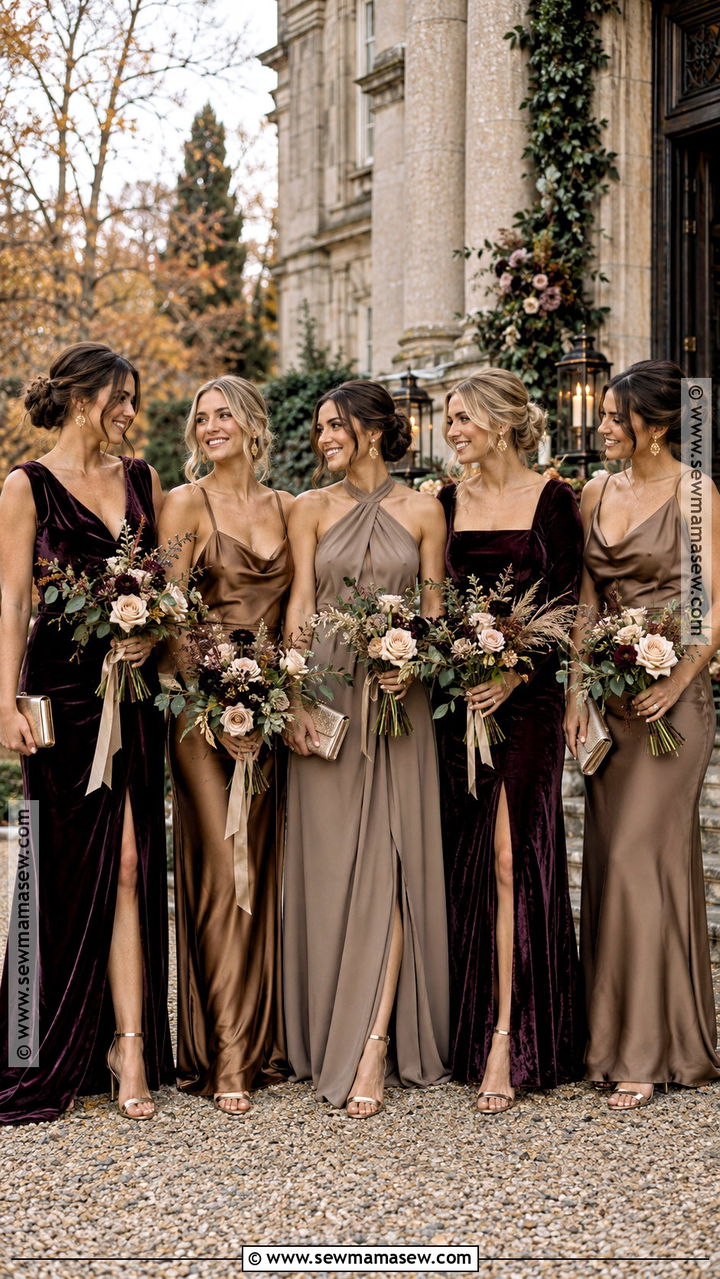
Aubergine has the depth of dark purple with an earthier, softer character than a bright jewel tone. With bronze and taupe it becomes a late-autumn palette I'd suggest for a formal wedding. Velvet aubergine suits a ballroom; crepe is lighter if guests move between indoors and out. Bronze satin adds controlled shine, and taupe keeps the line from going too dark. Bronze heels and gold earrings keep accessories consistent. Different necklines and sleeve lengths are fine with a shared floor-length silhouette. Velvet does crush in storage and transit, so I always tell bridal parties to hang it on arrival and steam from the inside.
17. Cranberry Forest Green And Champagne Bridesmaid Dresses
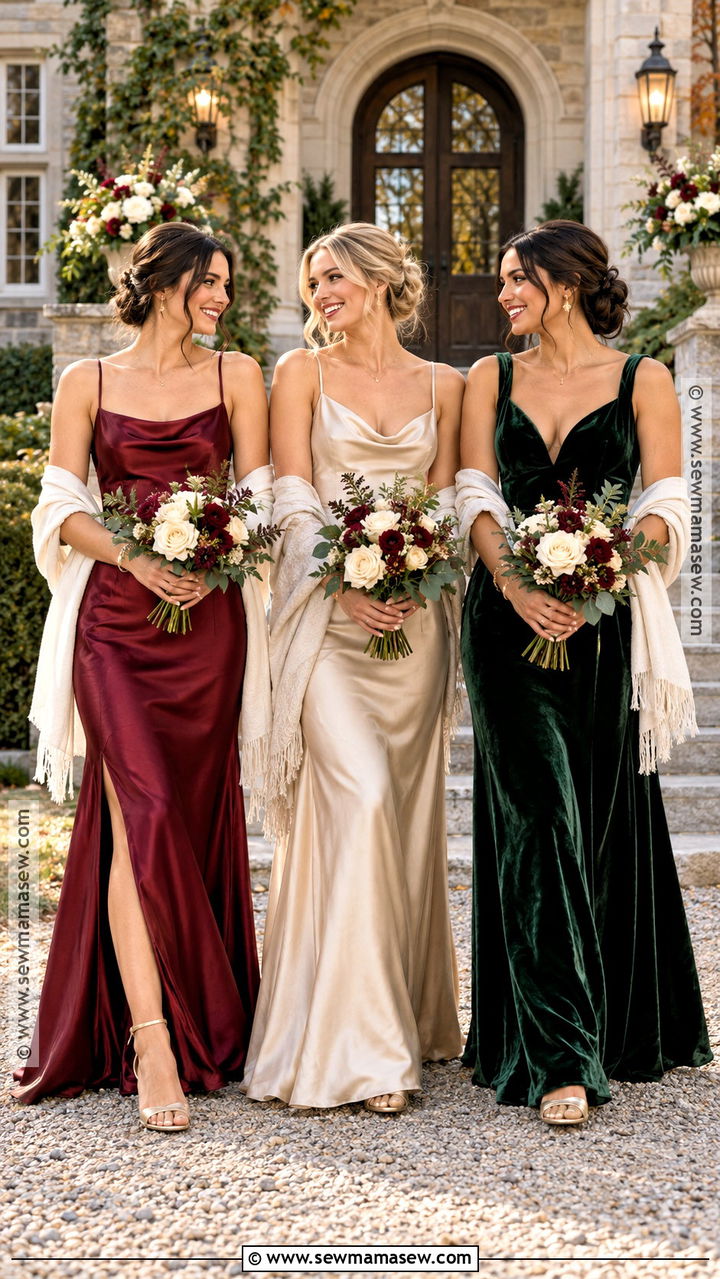
Cranberry against forest green gives the strongest seasonal contrast on this list, so champagne is there to lighten it. Use cranberry satin and forest velvet in equal numbers, or choose one main color and reserve the other for the maid of honor. Champagne goes into shoes, wraps and bouquet ribbon. One-shoulder, V-neck and long-sleeve gowns let each bridesmaid pick her coverage while staying formal. Keep the flowers mostly cream with cranberry accents; red-and-green bouquets on top of red-and-green dresses start to look like December. Stone, dark wood and neutral architecture suit this pairing best for a late-autumn date.
18. Espresso Rust And Sage Bridesmaid Dresses
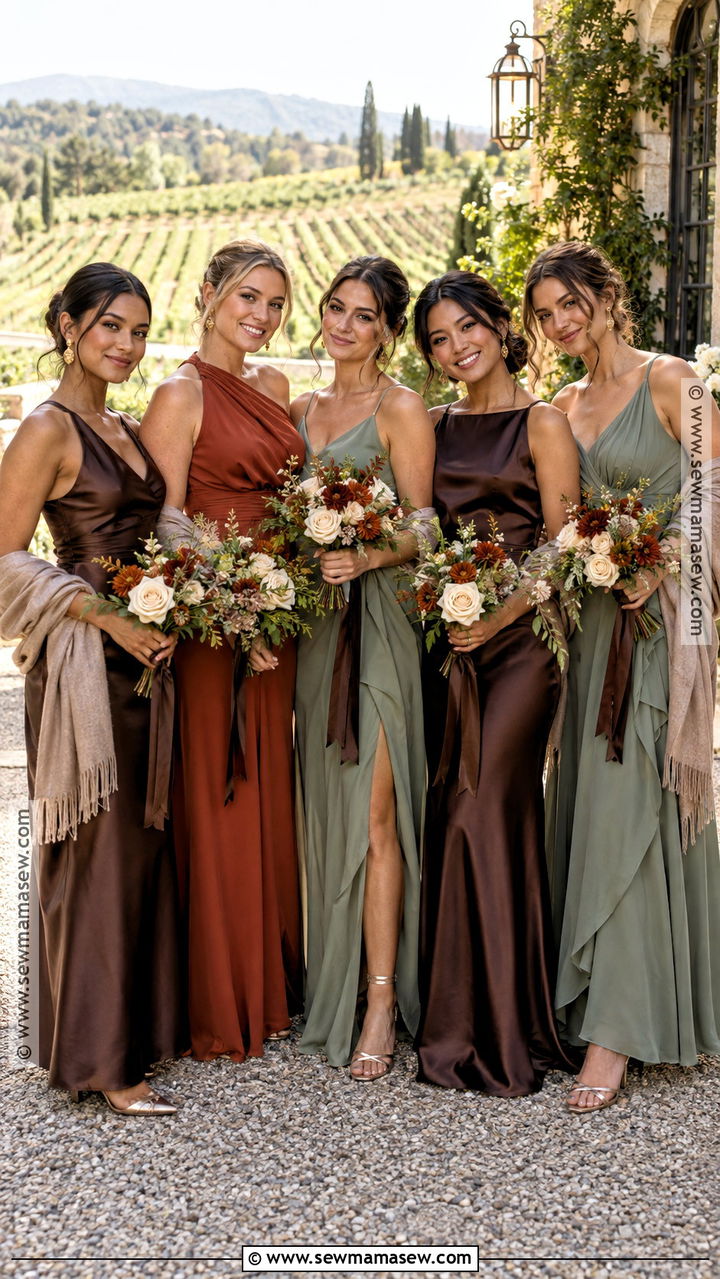
Espresso brown makes a sleek base, and warm rust plus muted sage give it contrast and a link to the landscape. Espresso satin for the sleek gowns, rust crepe for warmth, sage chiffon to lighten the line. With three colors carrying the look, the silhouettes should stay plain. Tan or bronze shoes and gold earrings work with all of them. For an outdoor ceremony I'd add taupe shawls, not a fourth strong color. Sage in particular can look gray in shade, so if most photos happen under trees, put it on fewer women. It feels modern and suits barns, vineyards and intimate restaurant receptions.
19. Charcoal Plum And Dusty Pink Bridesmaid Dresses
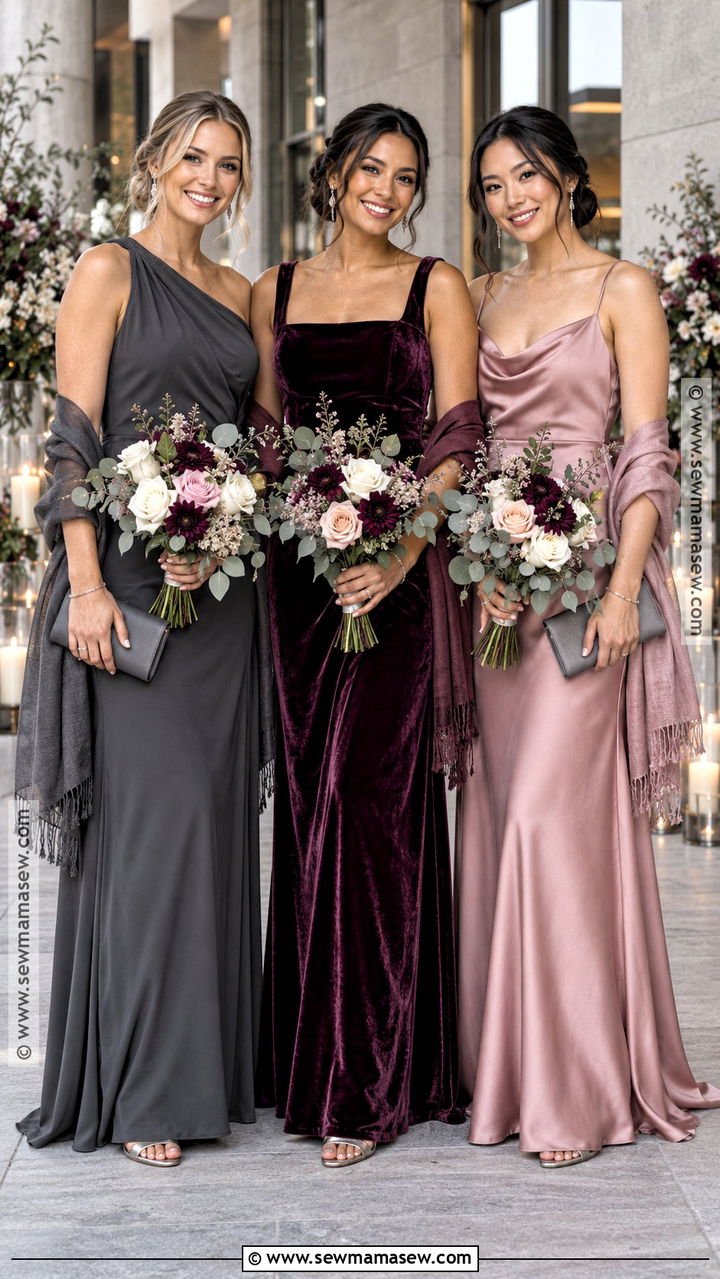
Charcoal is softer than black but still has the depth for a formal wedding, and it makes a calm background for plum and dusty pink. Place the charcoal gowns between the other two to build a gradual line. You can mix crepe, matte satin and velvet carefully, but similar finishes photograph more consistently; velvet beside satin in the same shade will read as two different colors. Pewter heels and silver earrings unify everyone. White roses, dusty pink and plum blooms and silvery eucalyptus cover every shade. Gray wraps after the ceremony. Modern hotels and lofts, where autumn orange would feel out of place, suit it.
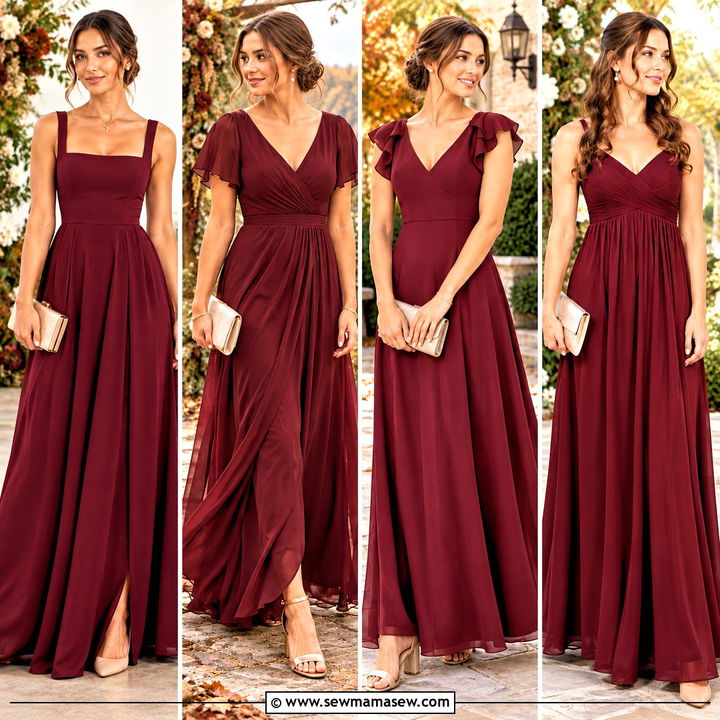
20. Emerald Sapphire And Garnet Bridesmaid Dresses
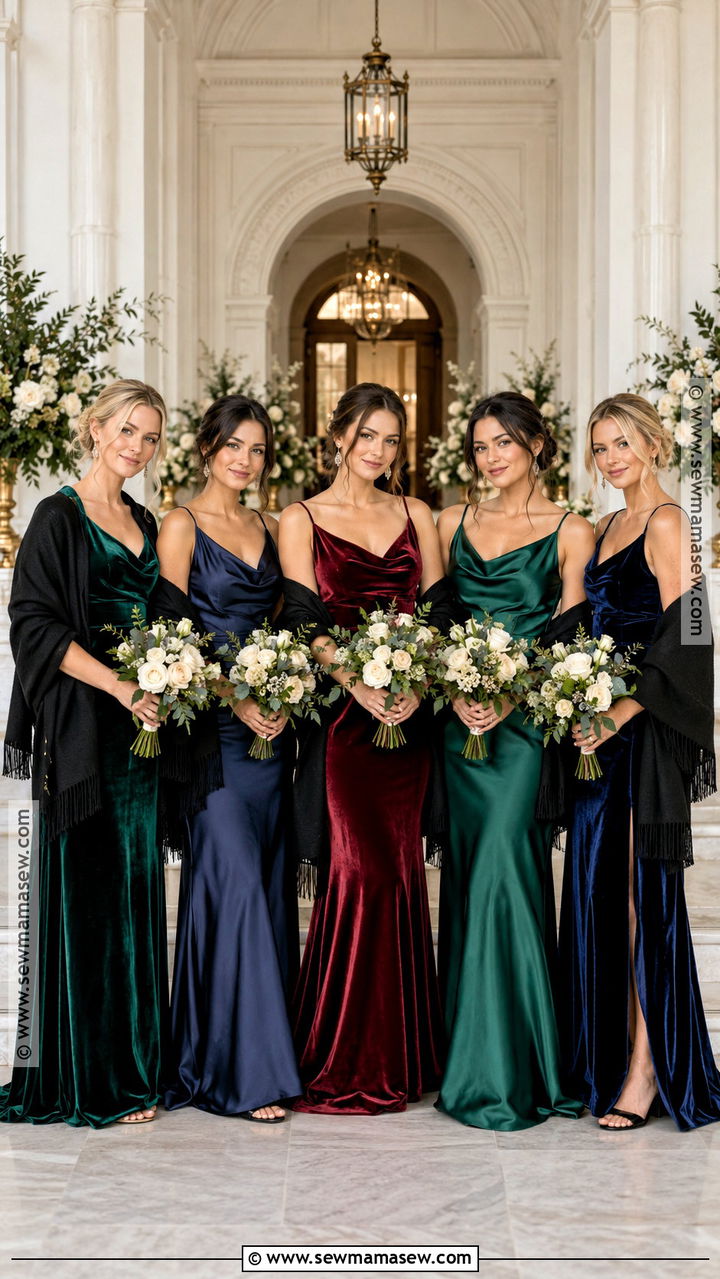
Emerald, sapphire and garnet together are a full jewel-tone palette, and the way to keep it from looking like a costume party is to share everything except color: same fabric, same length, same formality. Velvet gives the most depth at a late-season ceremony; satin adds movement and glow indoors. Alternate the shades rather than grouping matching colors. Black or dark metallic heels ground the bold dresses, and gold jewelry adds one consistent warm note. Keep bouquets light, mostly cream with dark greenery. Black wraps after sunset. Every bridesmaid wears her own color, yet the group still reads as one party.
Ordering So the Colors Actually Match
Most color disappointments at a fall wedding come from ordering, not from the palette. Dresses from the same maker and the same color name can still differ if they are cut from different dye lots, so I ask the bridal party to order in one batch, through one person, whenever the shop allows it. Mixing makers is fine for a mismatched look, but compare the physical swatches side by side in daylight, not the photos on a screen.
- Allow several months for made-to-order gowns plus time for alterations; lead times vary a lot by maker and season, so ask before you set a deadline.
- Hem everyone in the shoes they'll wear on the day, or the shared floor length won't be shared at all.
- Order wraps and shawls at the same time as the dresses, so their color can be checked against the real fabric.
- Keep one leftover swatch for the florist, who can match ribbon and accent blooms to the cloth itself.
Placing Mixed Colors in the Lineup
Where each woman stands matters as much as what she wears. I map the line on paper before the day. In a two-color palette, alternate them. With three, mirror the order from the center out, so the photo balances left and right. Darker shades look best toward the middle, near the bride, and lighter ones at the ends, which frames the group rather than leaving a dark block at one edge.
Give the photographer that plan too. With mixed colors and mixed silhouettes, a few seconds of arranging before the formal shots saves a lot of awkward shuffling.
Let the Venue Pick Half the Palette
I start every palette conversation with three things: the venue, how formal the day is and the likely weather. Rust, terracotta and caramel feel earthy; emerald, plum, navy and burgundy give more drama; mauve, sage, champagne and dusty blue balance the deep shades and brighten group photos. Order swatches before anything is final, because velvet, satin, chiffon and crepe reflect the same color differently. Once the palette is set, plan shoes, jewelry, wraps and bouquets together rather than one at a time. A shared length or fabric is what makes mismatched dresses look intentional, and comfort is what keeps a bridal party smiling through a long day.
Related posts: