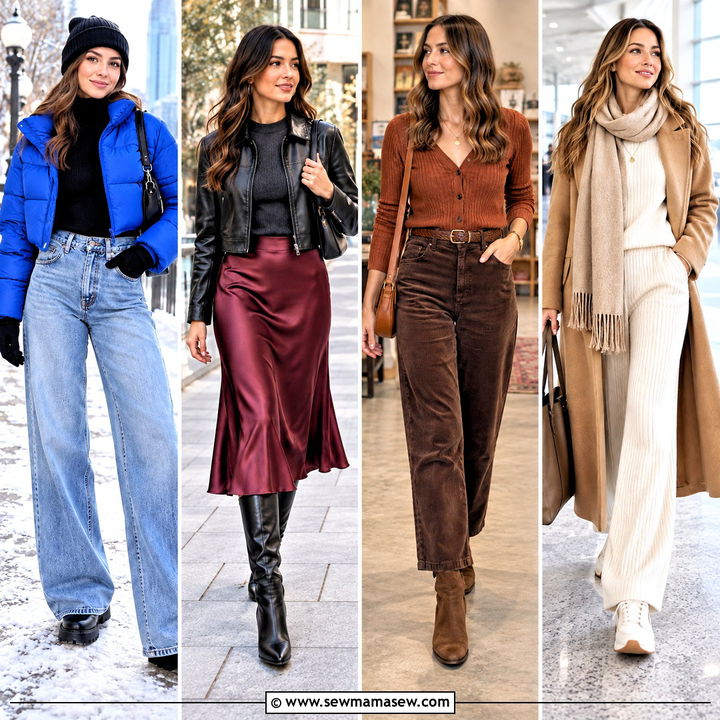
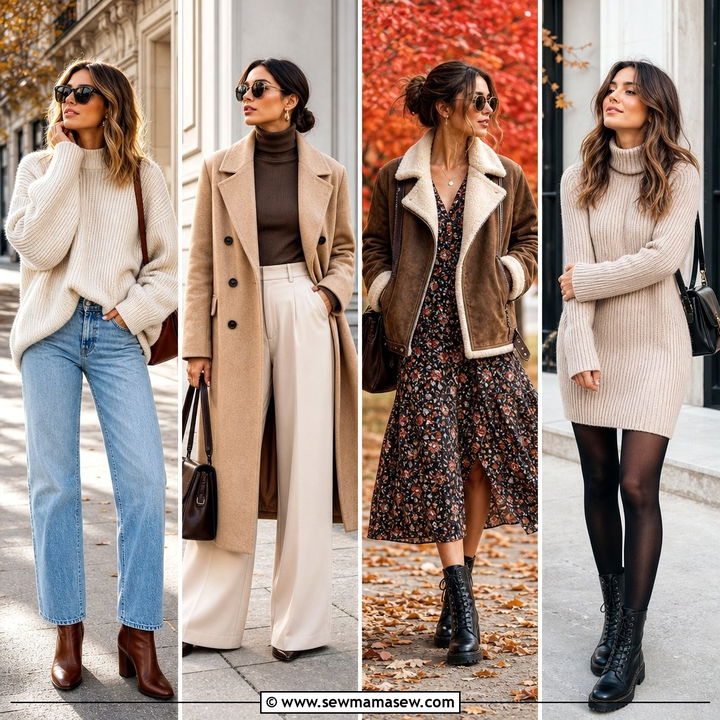
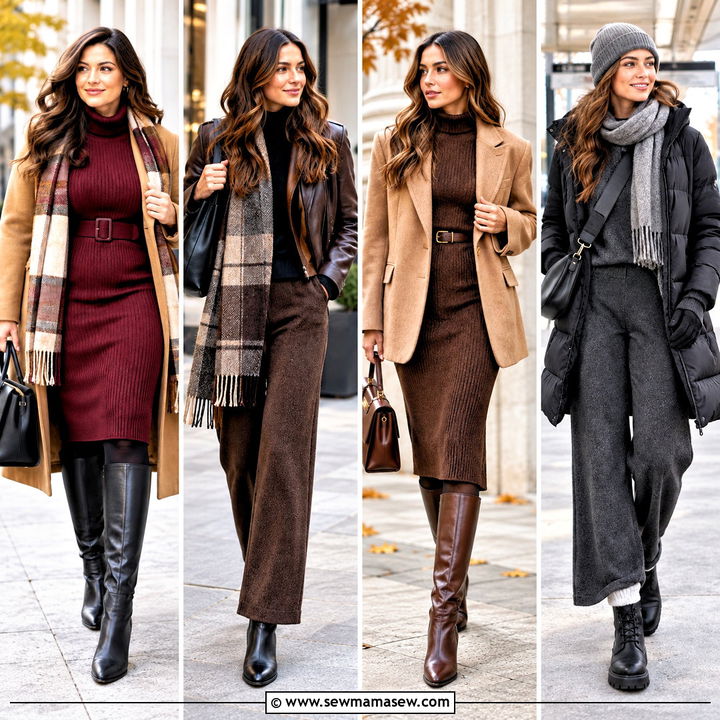
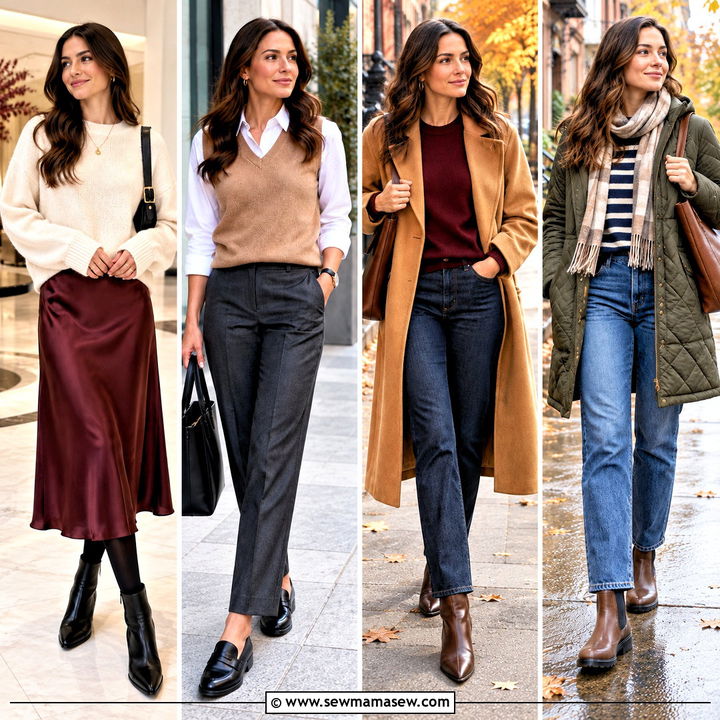
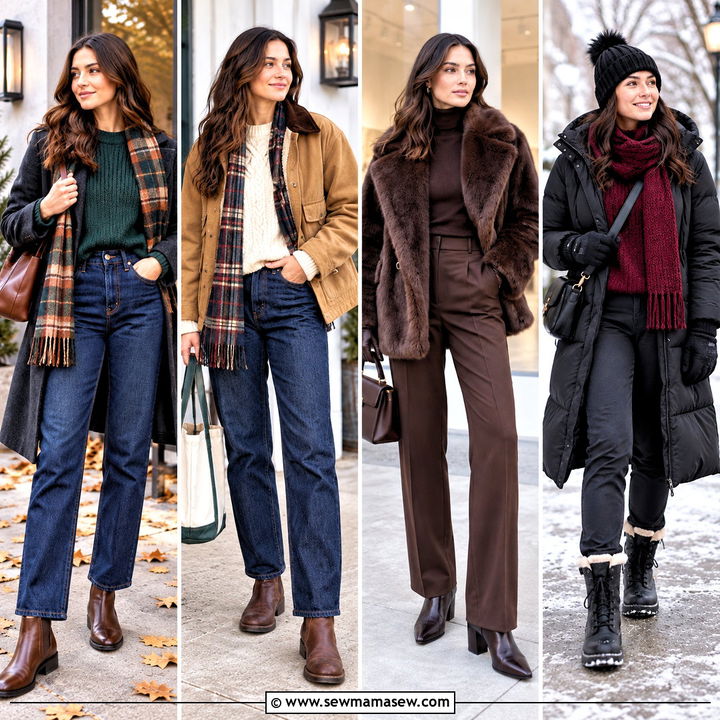
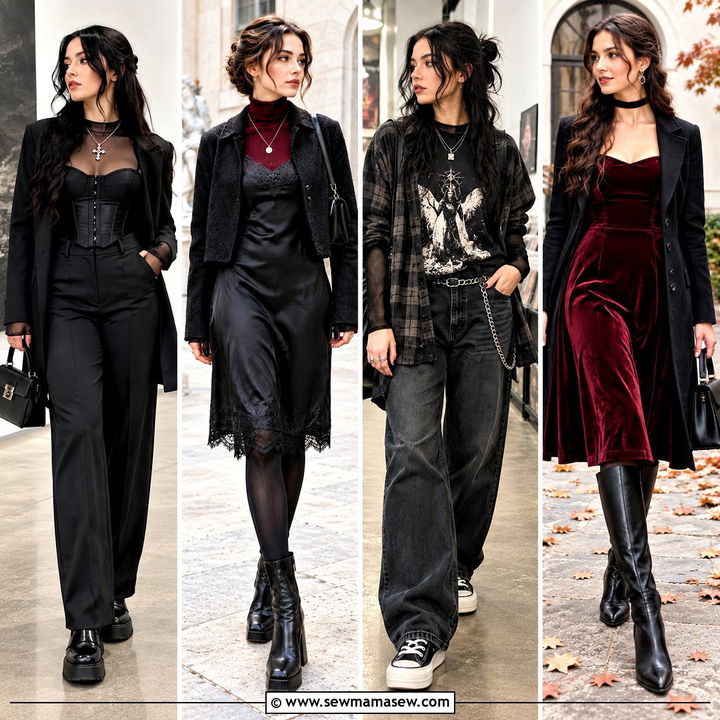
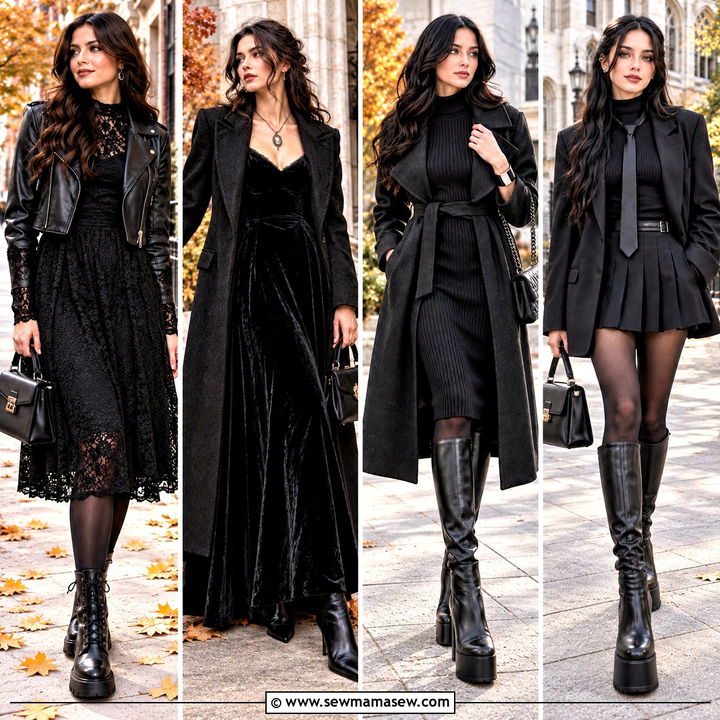
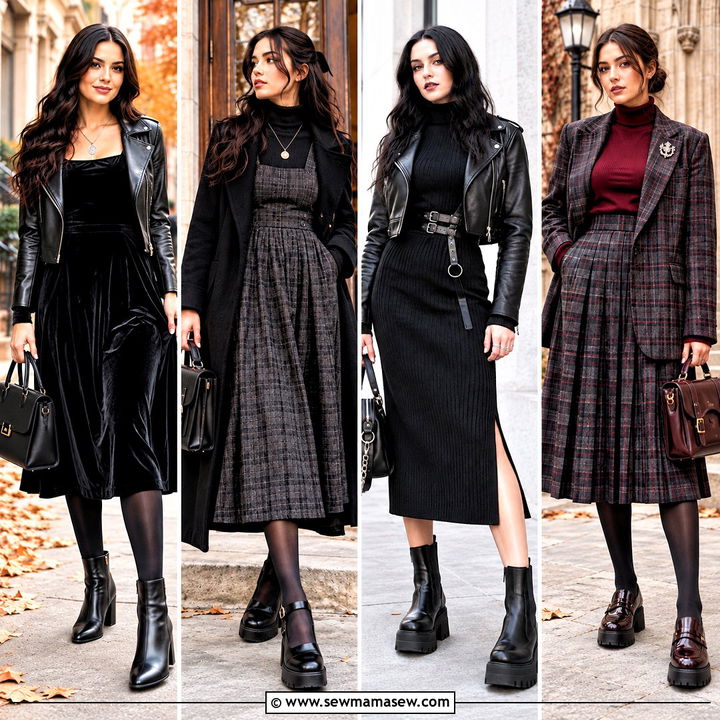
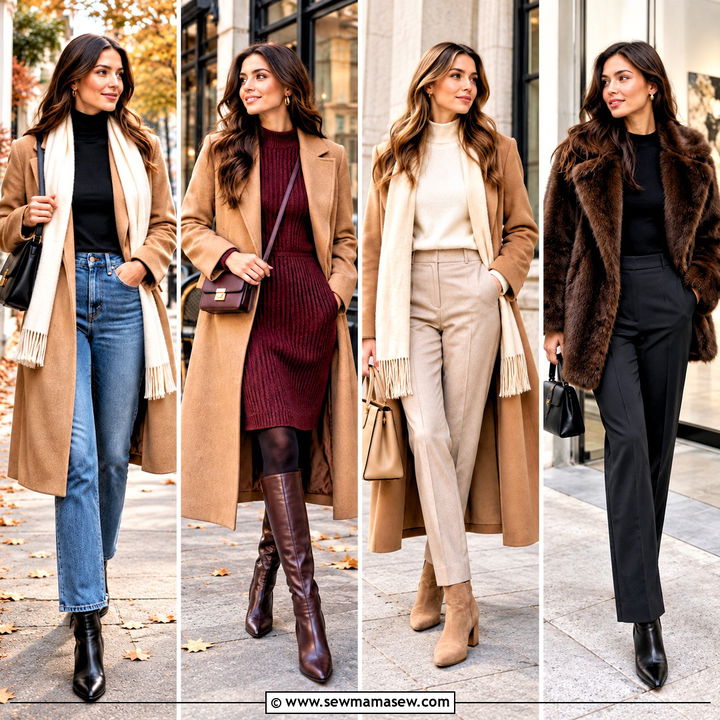
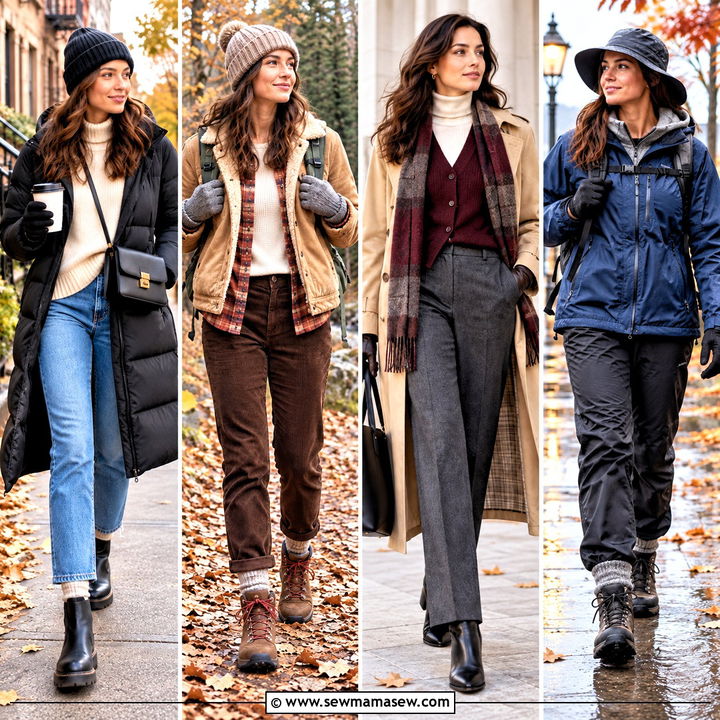
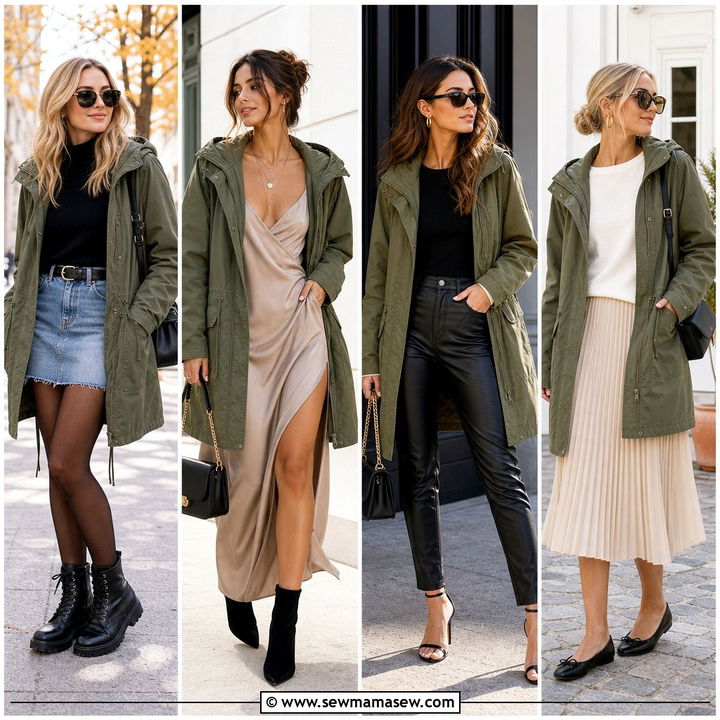
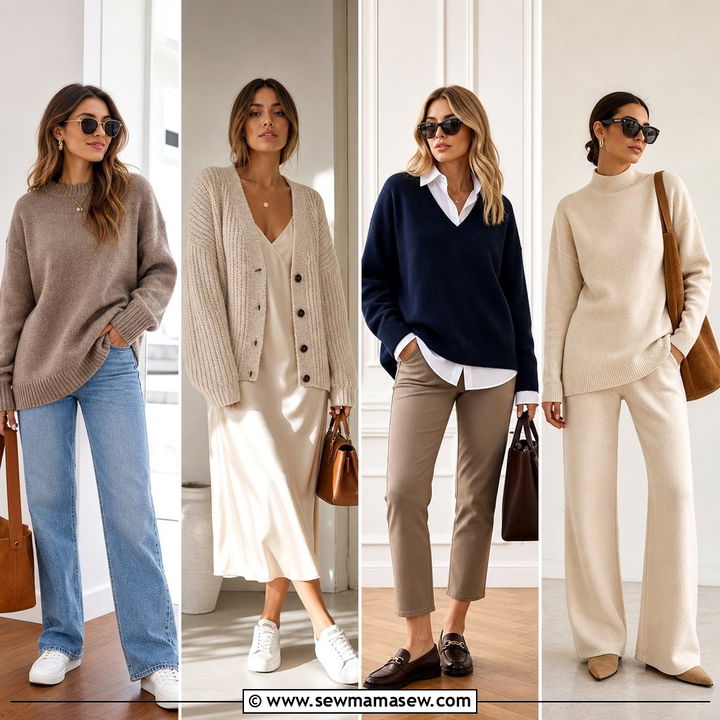
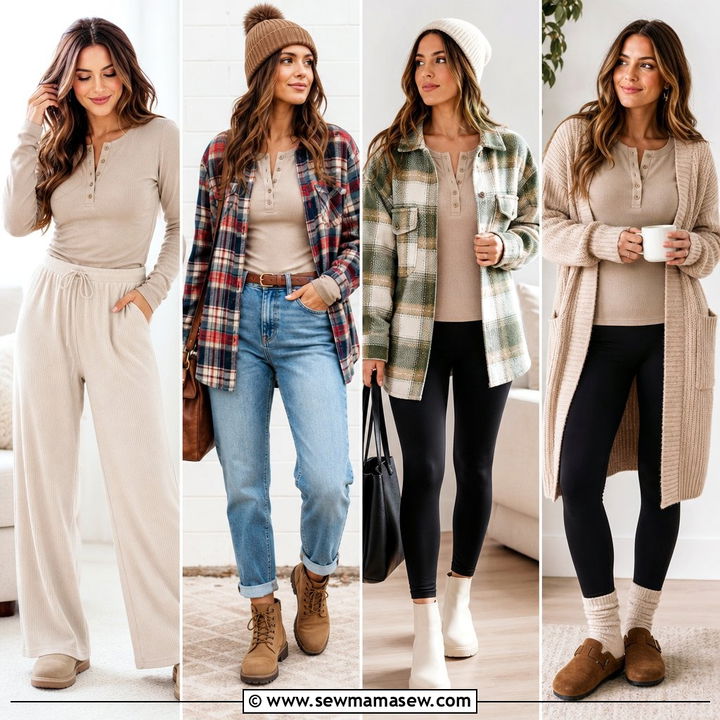
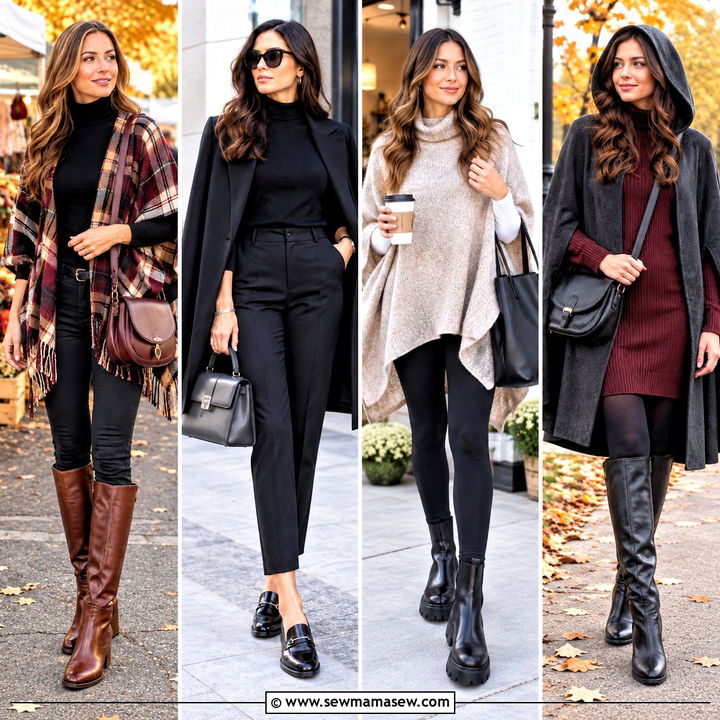
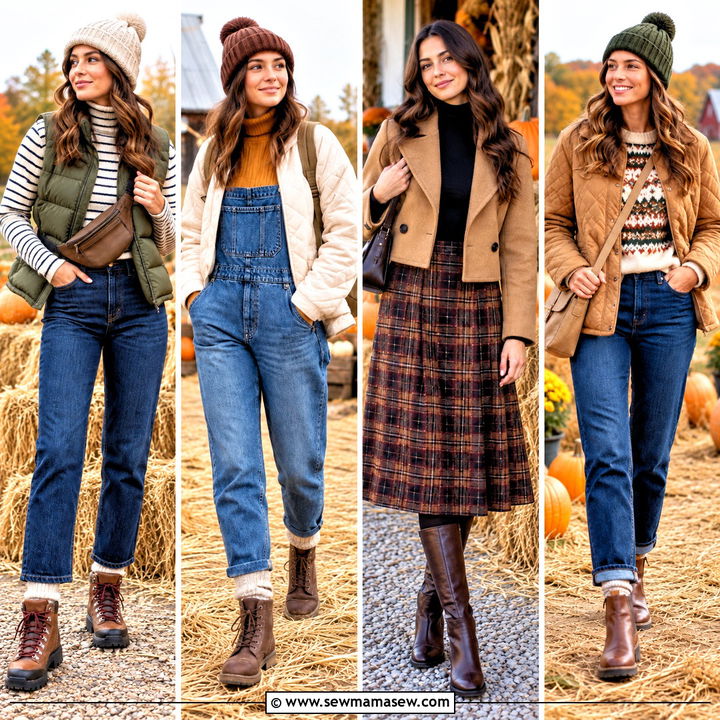
Cold-weather outfits fall apart when one layer is doing nothing, and they come together when each piece has a job. I build every fall and winter look from the inside out: a base that holds warmth, a middle layer you can show, and a coat sized for both. The twenty outfits below run from weekend denim to office tailoring to the truly cold days, with long coats, tall boots, skirts and a few bright colors in the mix. I've noted fit, fabric and warmth adjustments as I go so you can tune each one to your climate and body.
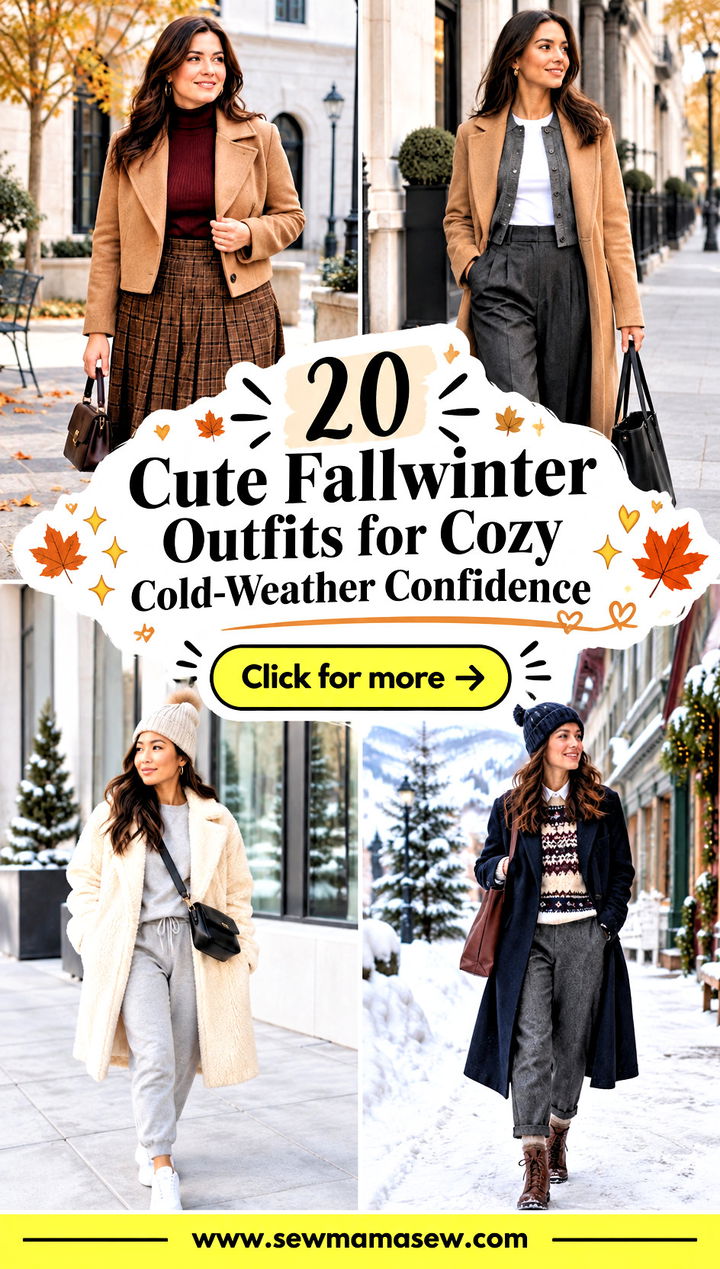
Down, Synthetic Fill or Wool: Matching the Coat to Your Winter
Half the outfits below depend on the coat, and the right one depends on what your winter actually does. I look at three things: how cold it gets, how wet it gets, and how much you walk.
- Down: the warmest for its weight. Fill power tells you how much it lofts, and higher numbers mean more warmth per ounce. Its weakness is water; soaked down clumps and stops insulating.
- Synthetic fill: a bit heavier for the same warmth, but it keeps insulating when damp and dries faster. Better for rainy, sleety places.
- Wool: dense wool coats block wind and still hold some warmth when damp, and they look the most polished over tailoring. A thin wool blend with lots of synthetic fiber looks similar but is far less warm.
Size coats with your thickest sweater on. If you can't cross your arms or the buttons pull, the layer underneath gets compressed and you lose the warmth you were counting on.
1. Oversized Sweater and Straight-Leg Jeans Outfit
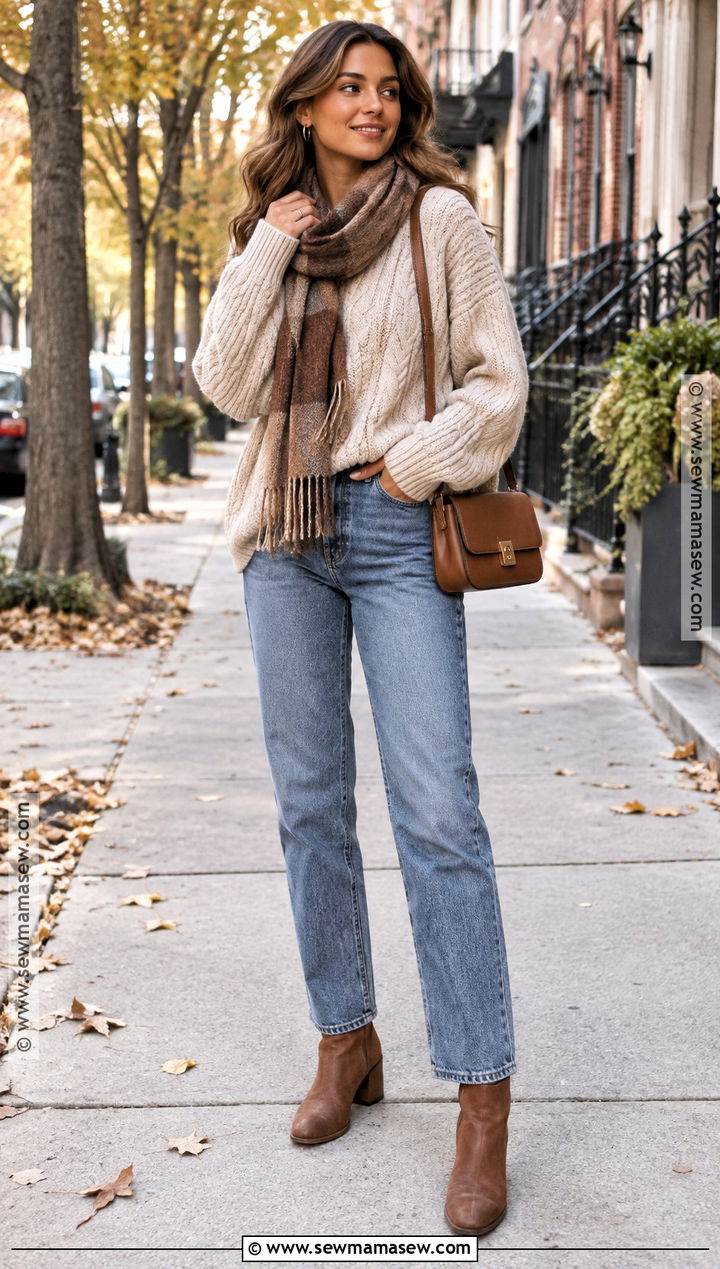
This is the outfit I'd wear on a cool weekend when it isn't cold enough for a heavy coat yet. A chunky oatmeal or forest-green sweater over high-rise straight jeans, with a partial front tuck so the waist doesn't vanish. Chunky knits trap a lot of air, which makes them warm on their own, but they also make coats tight in the arms, so check the fit with both on. Brown block-heel ankle boots and a wool scarf. Taller or curvier figures often like a longer hem with side slits; petite frames, a shorter one.
2. Turtleneck and Plaid Midi Skirt Outfit
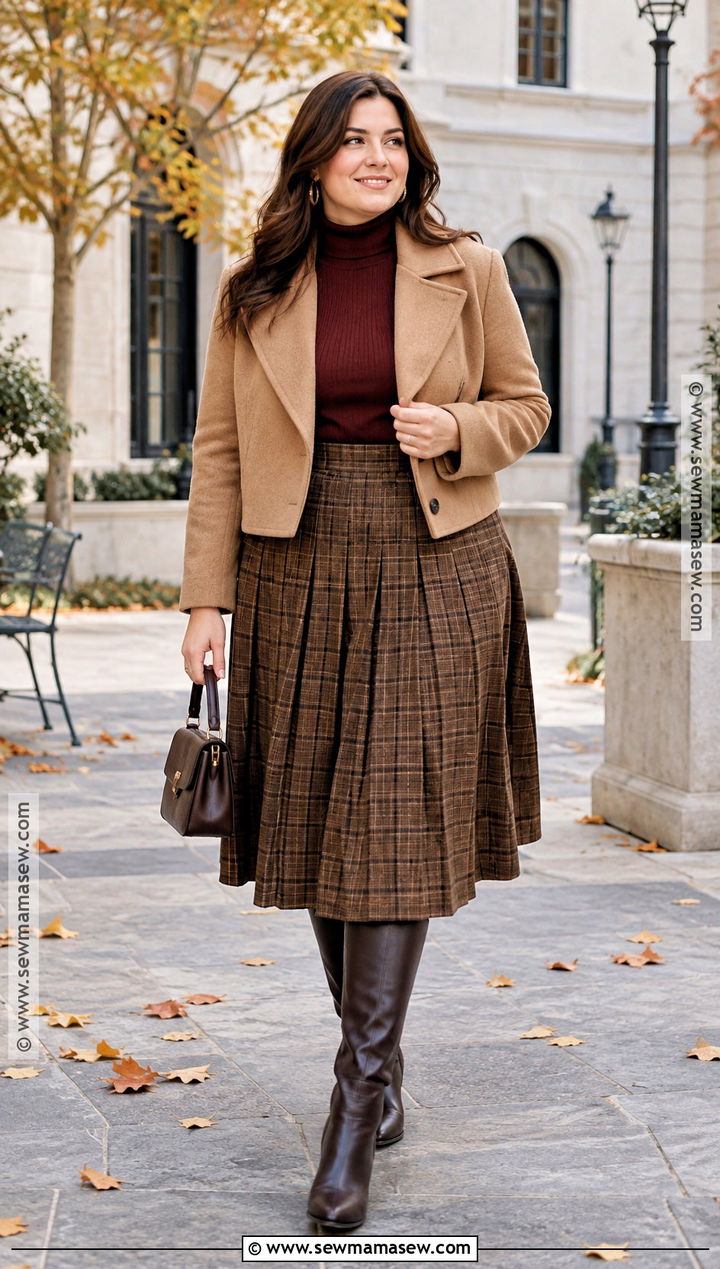
A fitted turtleneck tucked into a plaid midi looks polished and stays warm, as long as the knit is thin enough to tuck without a ridge. I like black or burgundy with an A-line or soft-pleated plaid. Knee-high leather boots under the longer hem keep the legs covered. With a midi, the coat proportion matters: a cropped wool jacket that ends at the waist, or a coat long enough to cover the skirt entirely. Thermal tights are the quiet upgrade for real cold.
3. Puffer Jacket and Black Leggings Outfit
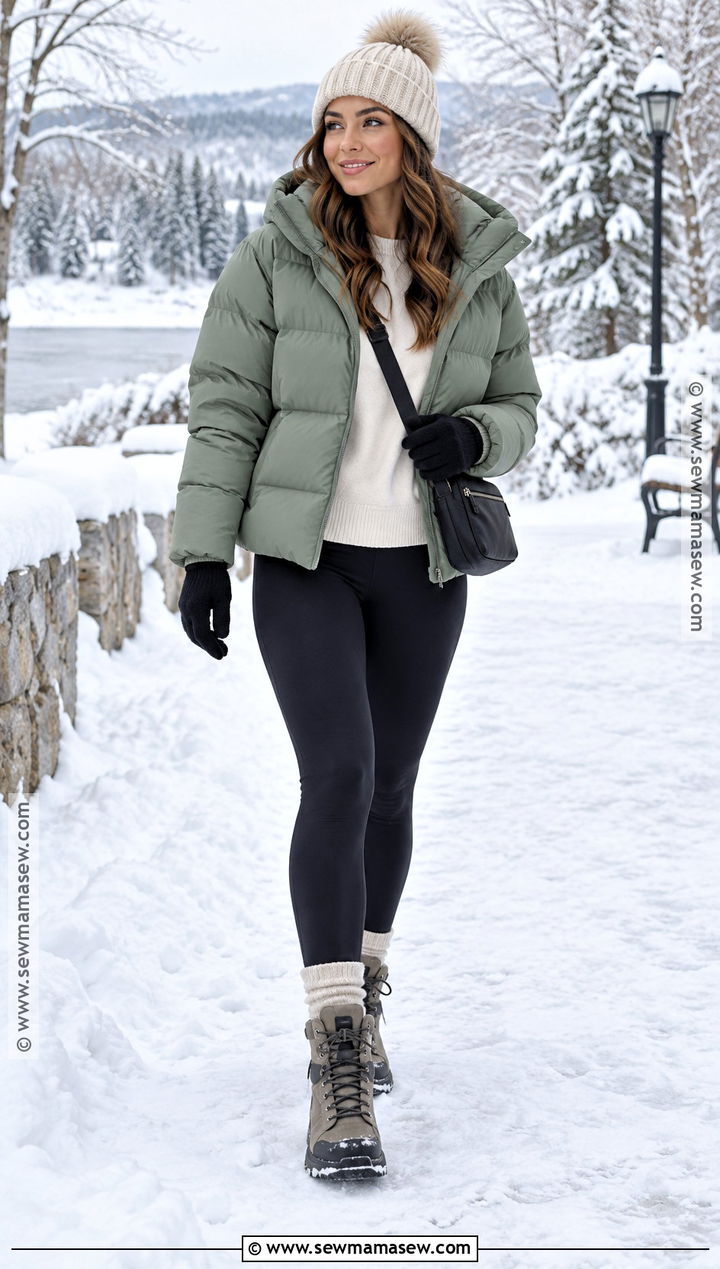
For a fast, warm morning, nothing beats a hip-length puffer over a thermal top and fleece-lined leggings. The fleece lining makes a bigger difference than people expect; thin athletic leggings let wind straight through. I'd add thick crew socks and weather-resistant lace-up boots rather than canvas sneakers. Sage, navy or chocolate puffers have more character than black. An adjustable drawcord waist gives the jacket shape, which helps on every body type.
4. Sweater Dress and Knee-High Boots Outfit
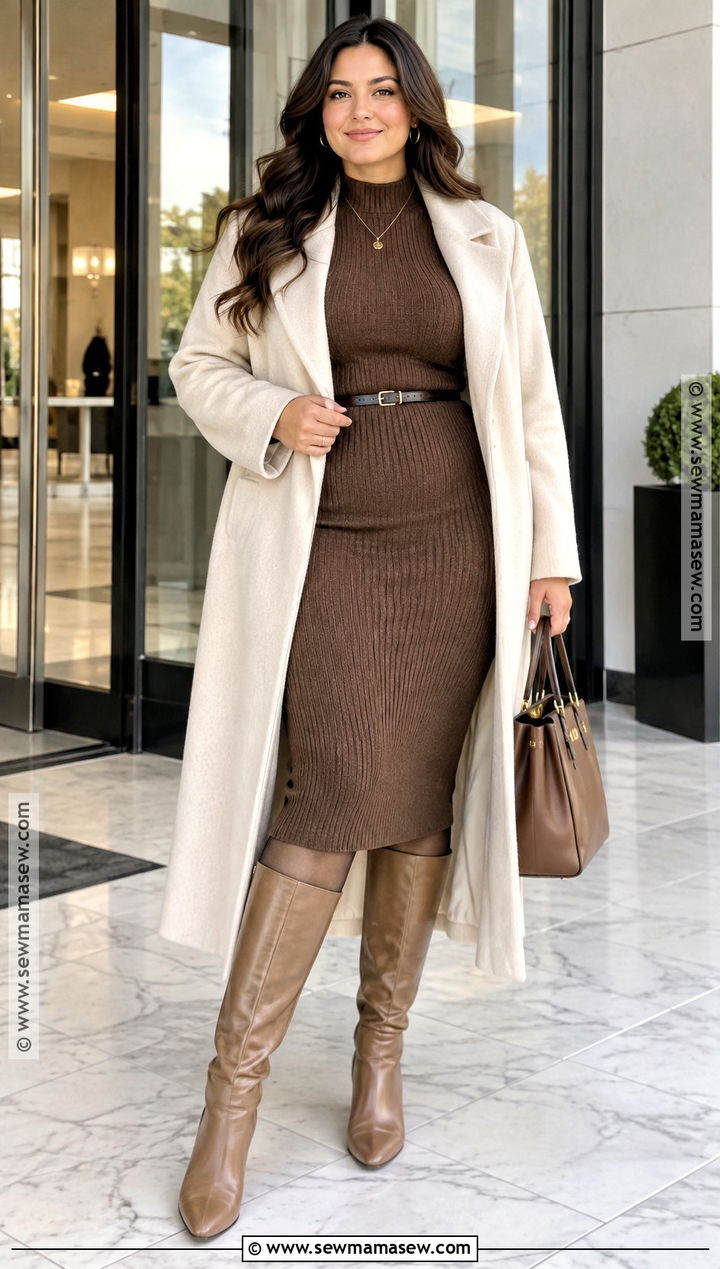
A ribbed midi sweater dress is a full outfit in one move. Choose one that skims instead of clinging, with a mock neck or turtleneck for cold-weather coverage. Knee-high boots should leave little or no gap under the hem. In real cold, fleece-lined tights underneath and a long wool coat on top make this warm enough for an outdoor event. Belt it if you want shape, or leave it as a column. Ribbed knits can bag at the seat after hours of sitting, so let the dress rest between wears.
5. Cardigan and Wide-Leg Trousers Outfit
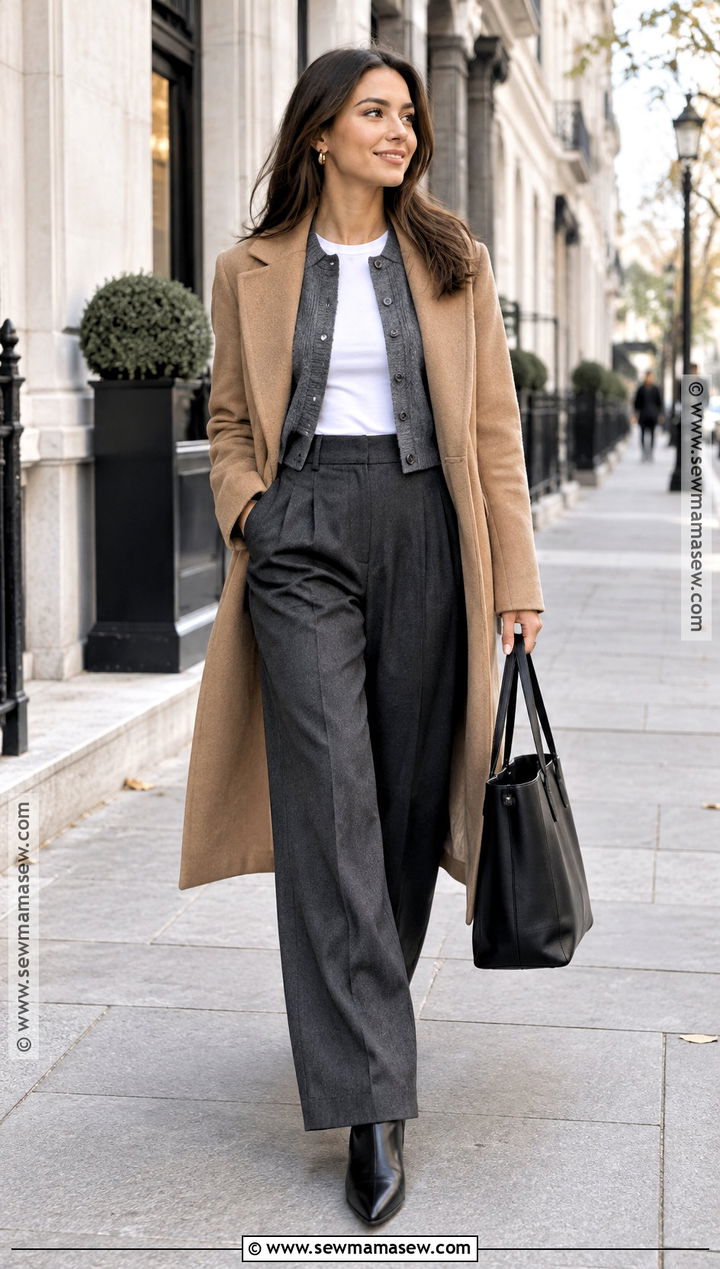
Buttoning a cardigan and wearing it as a top with wide-leg trousers is how I add comfort to an office outfit. High-rise trousers in charcoal or camel create a long line, and a cropped cardigan shows the waist. A longer fine-knit cardigan can be tucked in instead, which keeps the bulk down. Loafers suit mild days; pointed ankle boots take over in winter, and their heel lifts the wide hem off wet ground. A tailored overcoat gives the soft knit structure for the commute.
6. Leather Jacket and Satin Midi Skirt Outfit
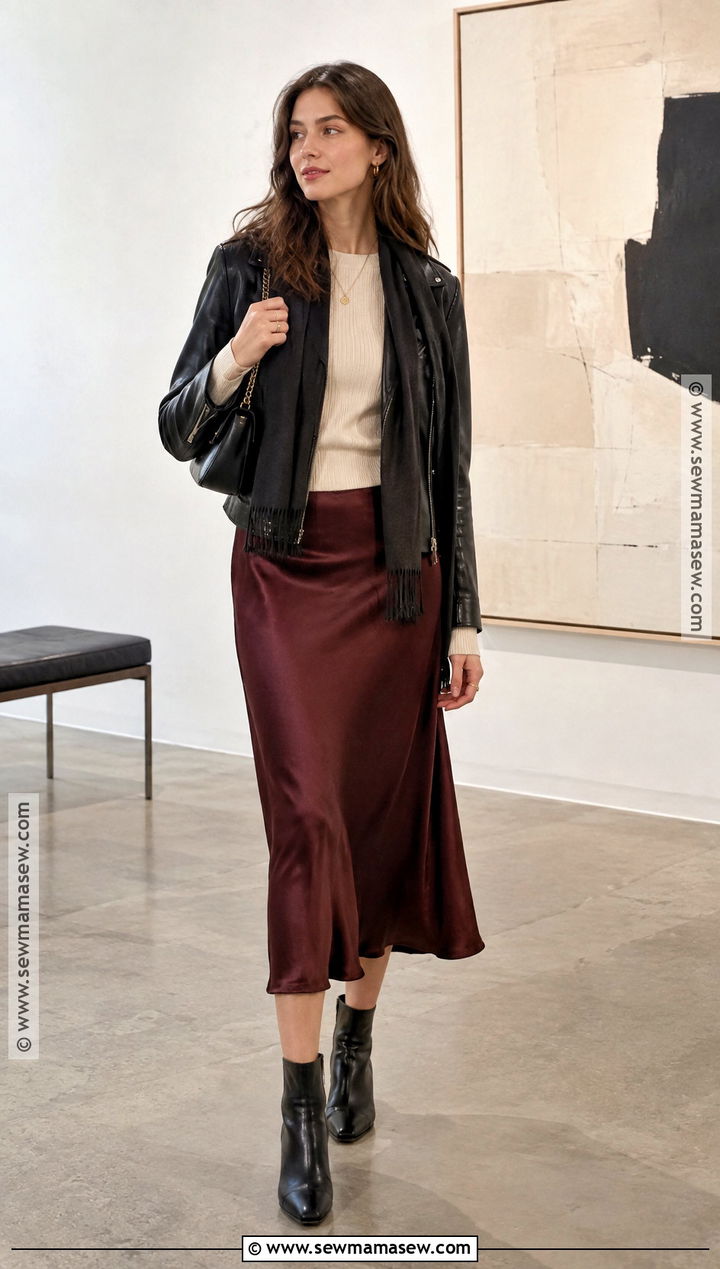
Leather and satin balance each other: the jacket is stiff and the skirt moves. A bias-cut satin midi in burgundy or olive with a fitted crewneck and a slightly oversized leather jacket feels dressed up without being formal. Satin is thin and cold against the legs in winter, so I add thermal shorts or tights underneath. Satin also shows water spots, so on wet days, keep the coat long enough to cover it. Ankle boots and a compact bag finish it.
7. Long Wool Coat and Monochrome Knit Outfit
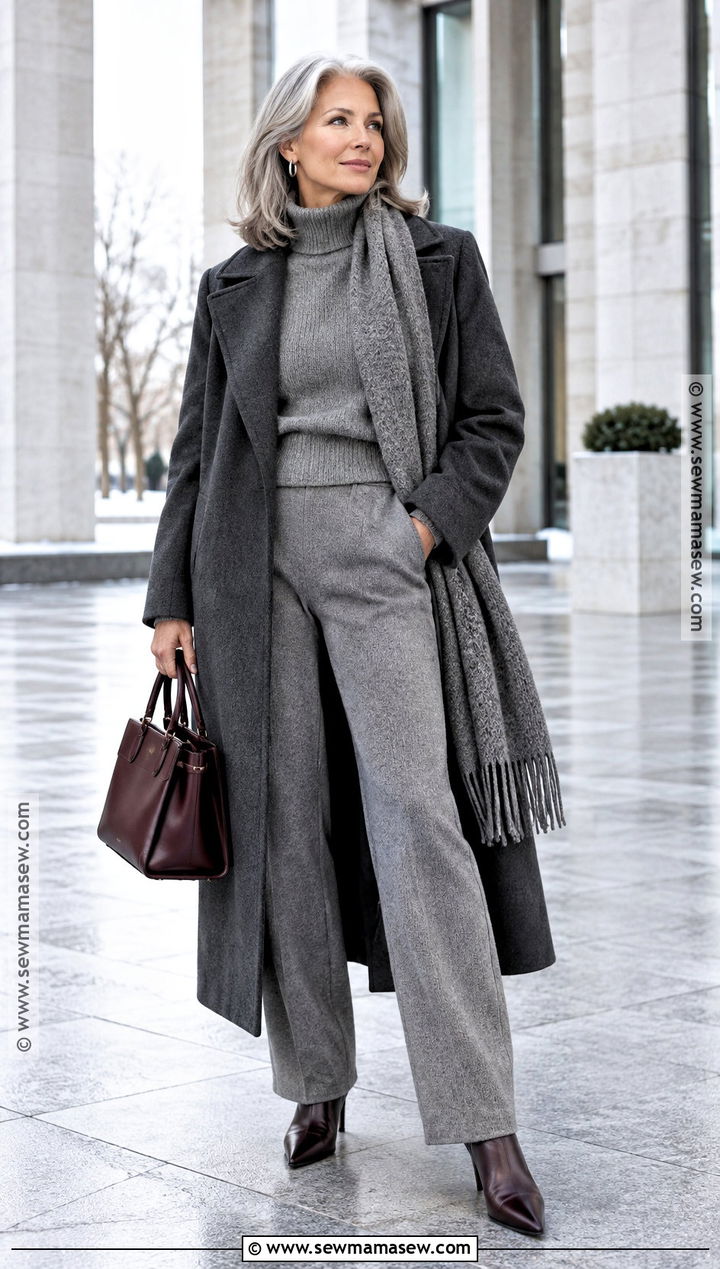
Monochrome under a long coat is the easiest way to look put together in winter, and texture is what keeps it from looking flat. I pair a fitted turtleneck with knit pants in the same family, then a long wool coat in that color, and mix ribbed knit with brushed wool and smooth leather. Pale shades are lovely but stain easily on slushy days, so charcoal or espresso with cream accessories is the practical version. Pointed ankle boots or slim sneakers, depending on where you're going.
8. Denim Jacket and Floral Midi Dress Outfit
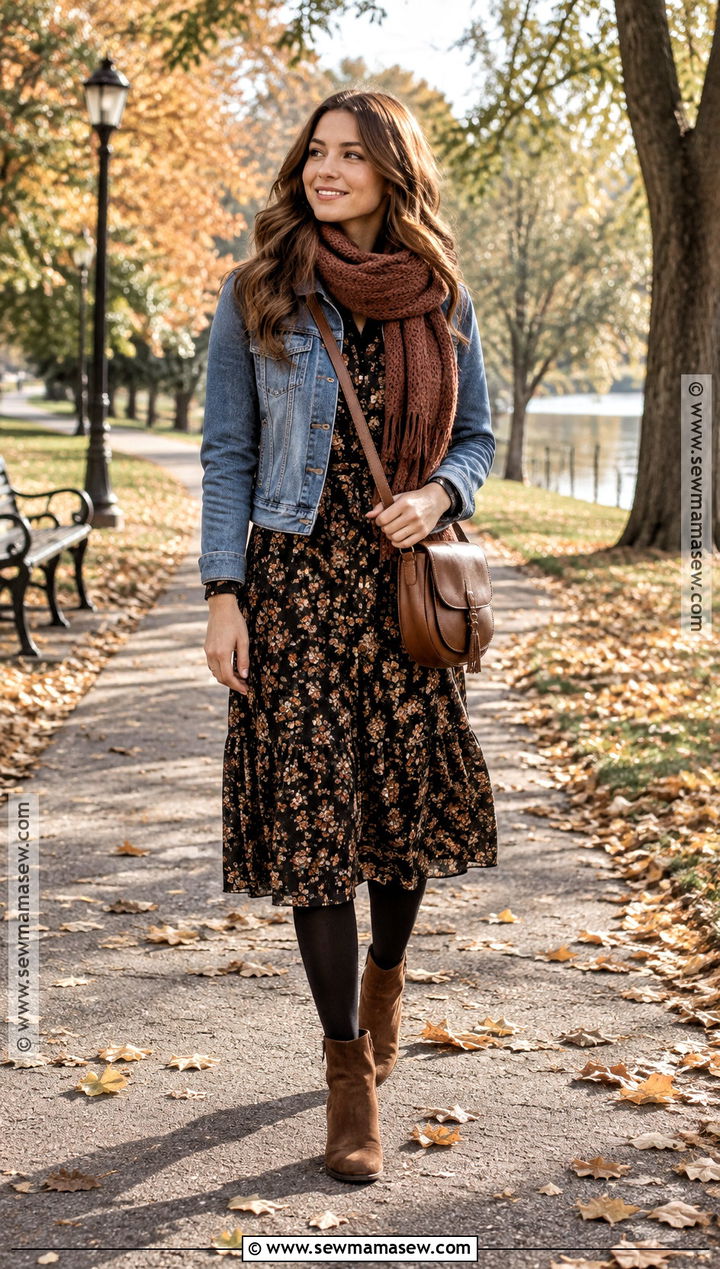
A floral midi dress can stay in rotation if the print turns dark: rust, plum or olive florals on a deep ground. Layer a fitted long-sleeve top under a sleeveless dress, then add a waist-length denim jacket, which keeps the fuller skirt in proportion. Opaque tights and suede ankle boots carry it into late fall. Once winter arrives, swap the denim for a wool coat and leave everything else as is. Denim jackets add little warmth on their own, so that swap matters once mornings hit freezing.
9. Blazer and Dark-Wash Jeans Outfit
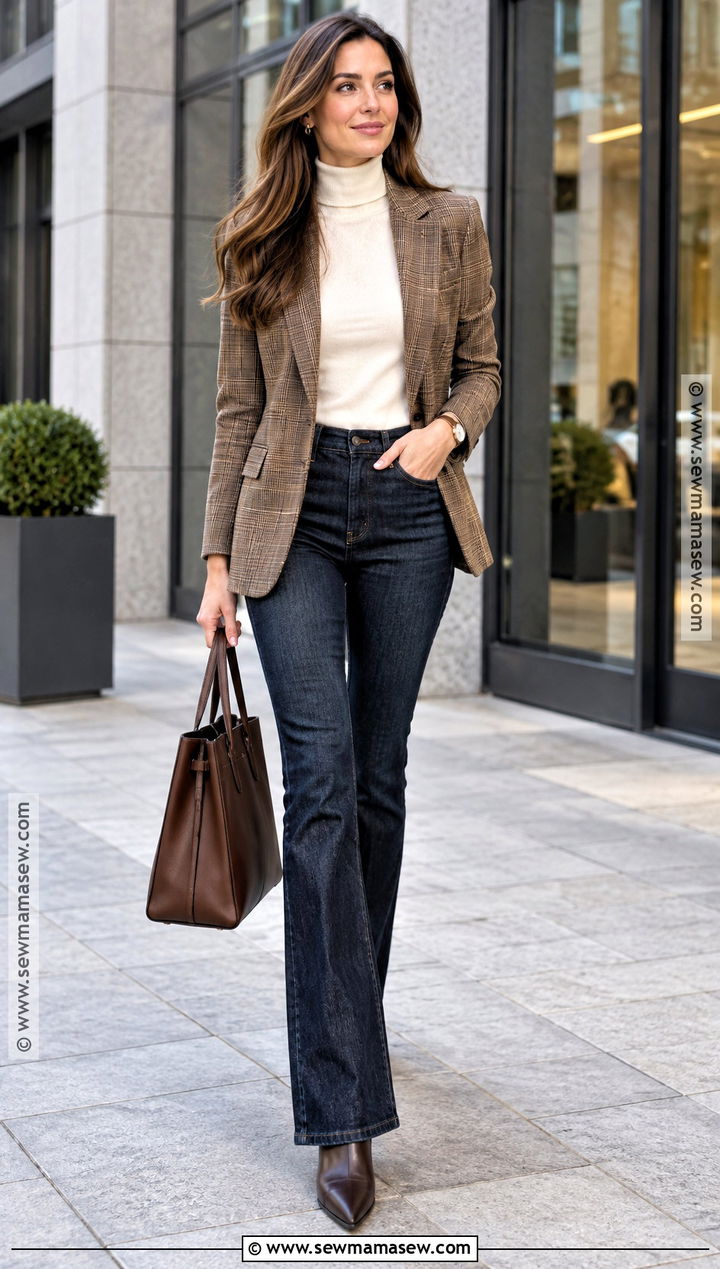
A blazer over dark jeans is my go-to for days that start at work and end out. Choose high-rise straight or bootcut jeans without heavy distressing, then a slim turtleneck, striped knit or crisp shirt. A camel, navy or plaid blazer brings the structure. If blazers look boxy on you, wear it open for a vertical line or look for one with light waist shaping. Push the sleeves up slightly to show the layer underneath. In winter a blazer fits under a roomy coat, but check the sleeve length so the cuff doesn't bunch.
10. Shacket and Corduroy Pants Outfit
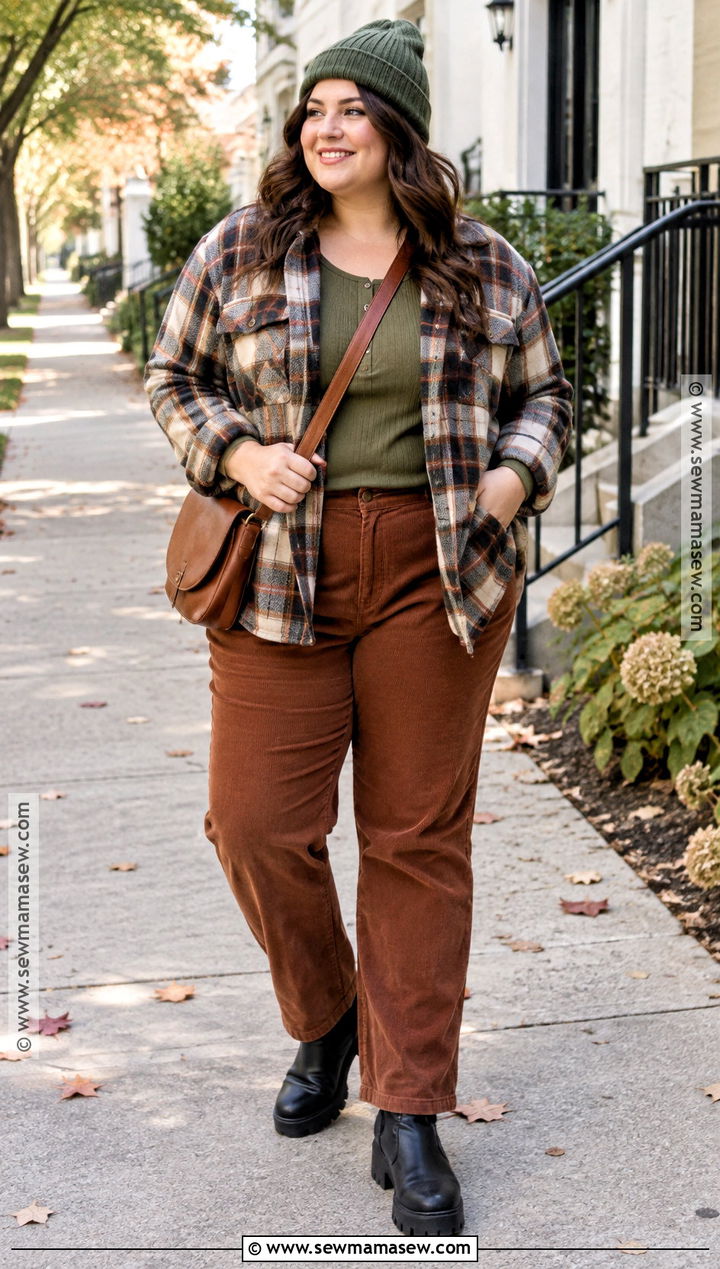
A wool-blend shacket is warmer than a flannel and lighter than a coat, which covers most of fall. I wear it over a fitted thermal tee or thin turtleneck with straight or wide corduroy pants in camel or chocolate. Since the shacket and the pants are both relaxed, the base layer has to be fitted or the whole outfit loses shape. Lug-sole ankle boots and a ribbed beanie finish it. When it turns colder, a thin insulated vest slides underneath without changing the look.
11. Cable-Knit Sweater and Pleated Skirt Outfit
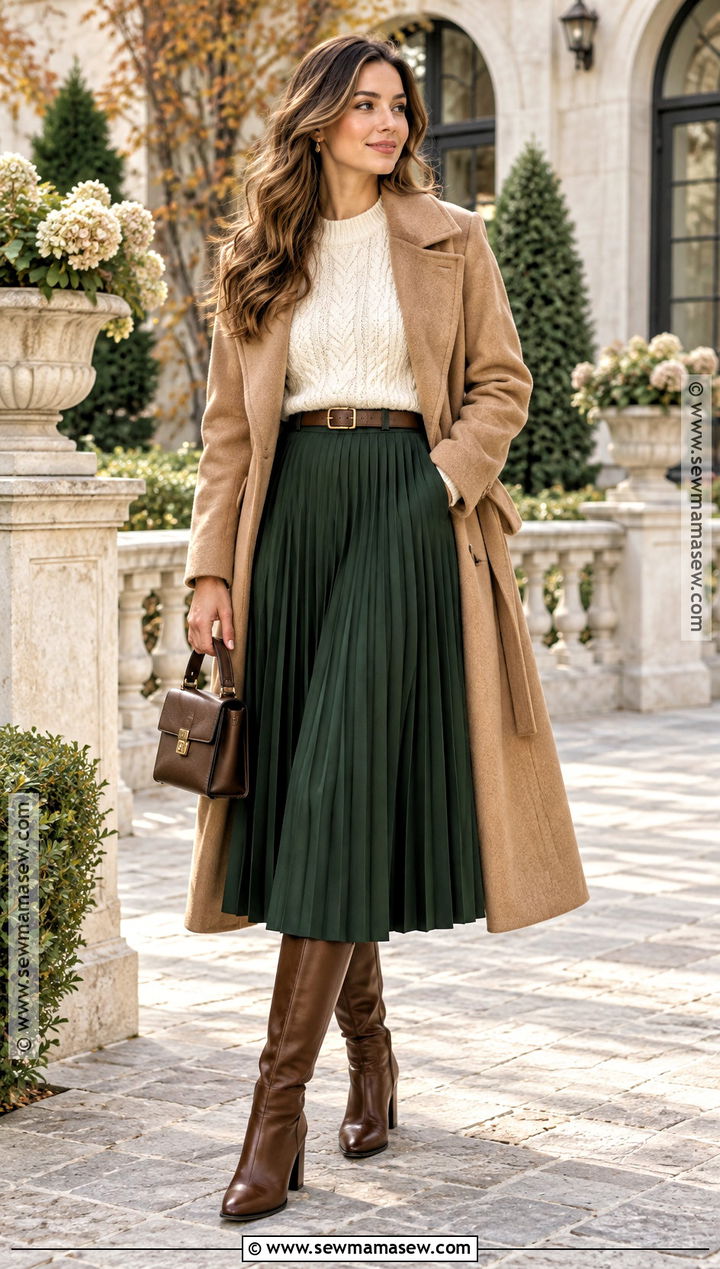
Cable knit with pleats is a soft, warm pairing, but two bulky pieces can swamp you, so I keep the sweater at the waistband or front-tuck it into a high-rise midi. Forest-green or navy pleats with cream or gray cables look classic. Tall boots under the skirt keep your legs covered, and a belted wool coat handles the outdoors. For windy days, a lined or wool-blend skirt is far warmer than thin polyester pleats, which tend to blow up and let cold air in.
12. Trench Coat and Knit Set Outfit
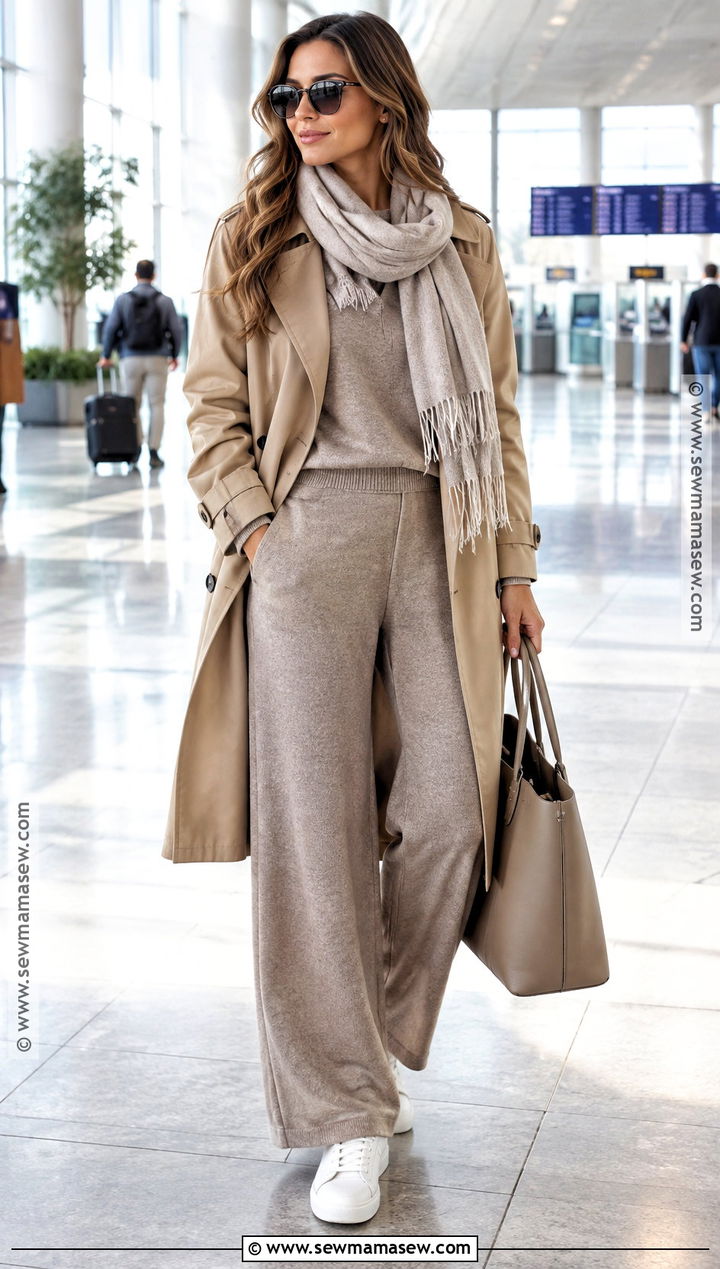
A knit set under a trench is the outfit I'd pack for unpredictable fall travel. Matching cream or taupe knit pants and a crewneck give one long line, and the trench handles wind and light rain. Look for pants with a defined waistband and enough weight to drape. A trench isn't insulated, so on a colder day I add a thin down vest underneath or switch coats. Leather sneakers for walking, loafers if you need to look sharper.
13. Faux-Fur Coat and Relaxed Jeans Outfit
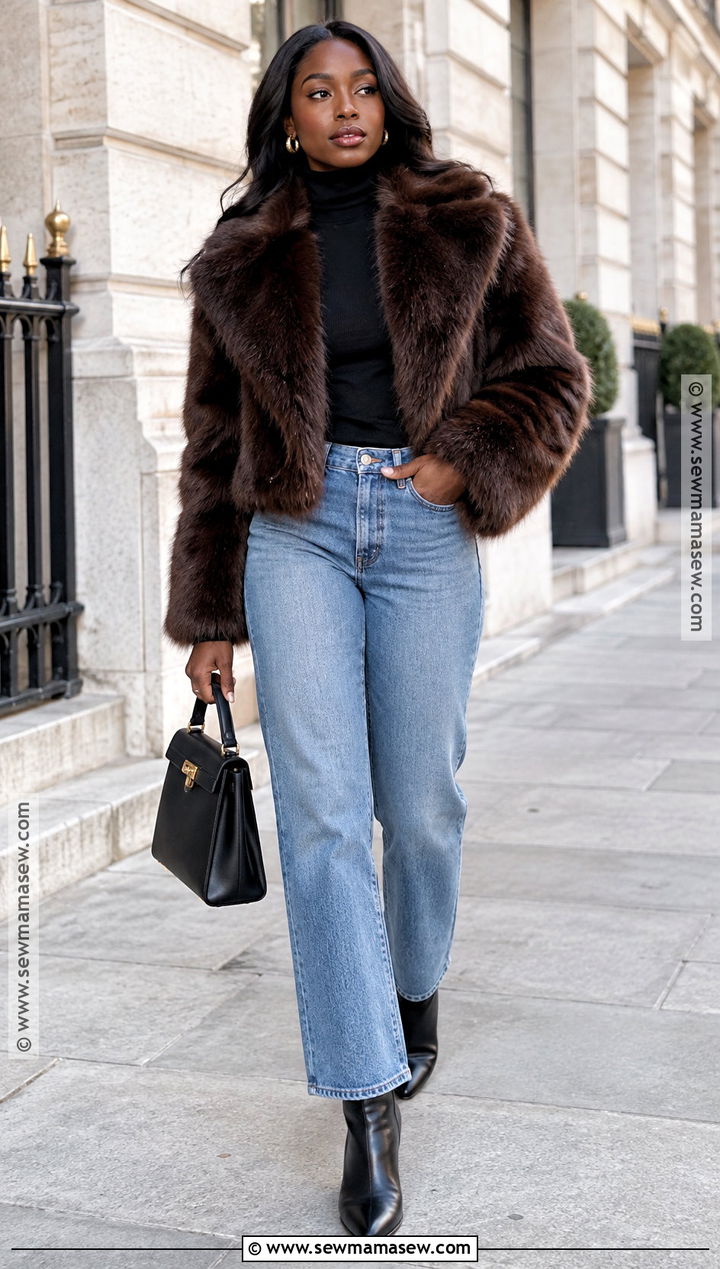
A faux-fur coat is the whole outfit, so everything under it should be plain. I put it over a fitted black turtleneck and straight or relaxed jeans, dark wash for polish. Faux fur sheds a little at first and mats where a bag strap rubs, so I carry a handheld bag rather than a crossbody. A cropped style shows off high-rise jeans; knee length is warmer. Leather ankle boots and small earrings keep the coat in charge.
14. Sweater Vest and Button-Down Shirt Outfit
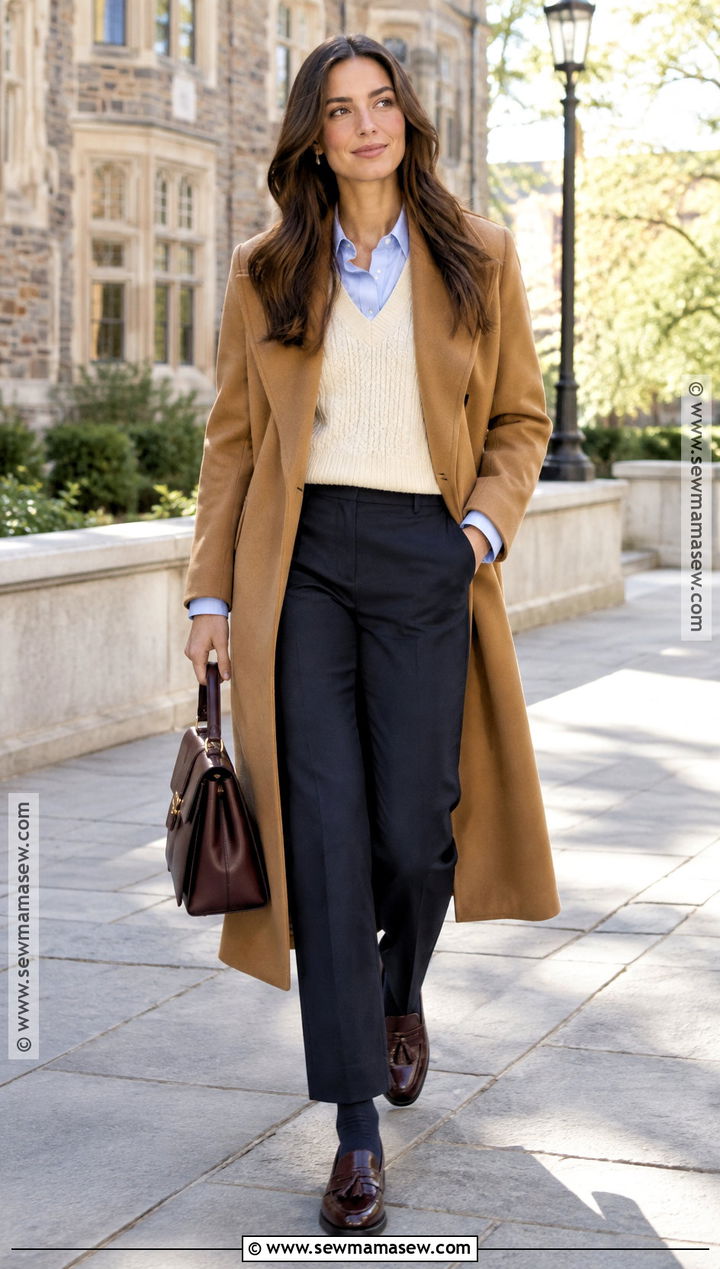
Sweater vests are best for heated buildings and mild days, since they warm the core and leave the arms free. Over a crisp white or pale blue shirt with tailored pants or dark jeans, a slightly oversized vest looks classic. A V-neck lengthens the upper body. If the shirt bunches under the vest, swap to a lighter cotton or a fitted bodysuit shirt. Loafers with socks for fall, ankle boots for winter, and a long trench or wool coat on top.
15. Teddy Coat and Jogger Outfit
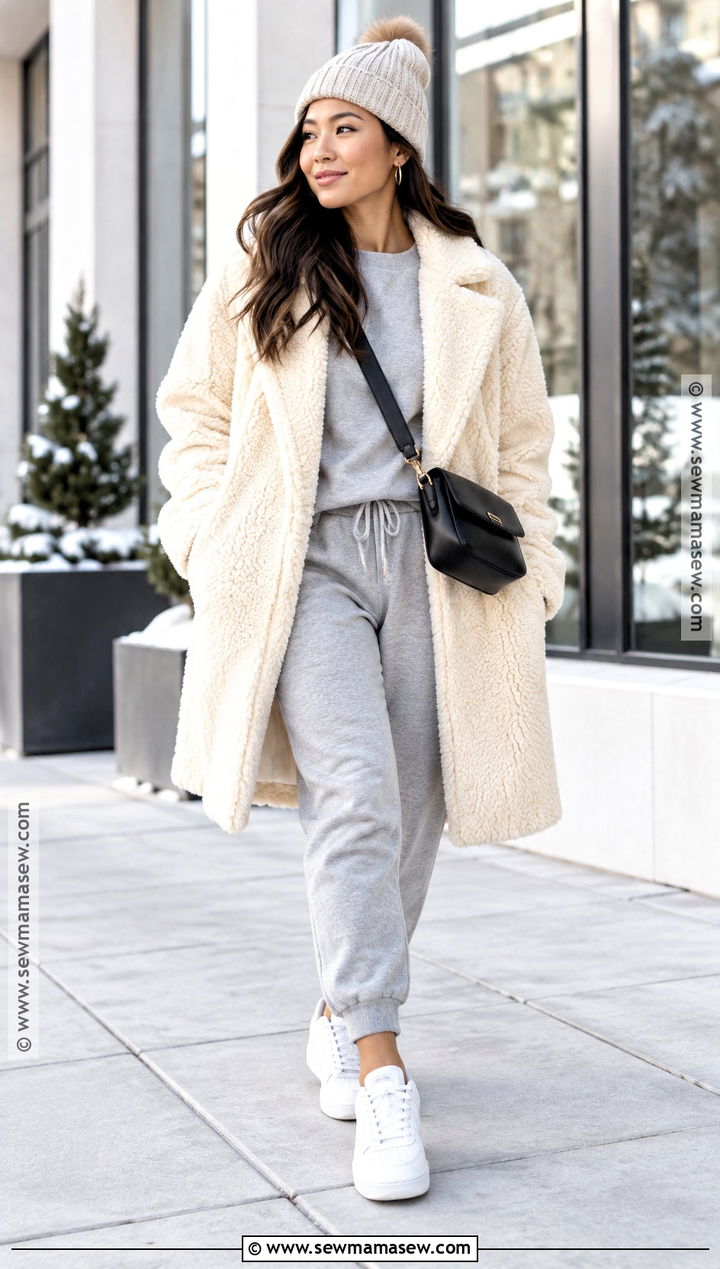
Joggers can leave the house if the fit is right and the coat does the dressing up. Tapered joggers should end at the ankle bone instead of bunching over the shoe. A matching sweatshirt in a neutral, then a cream or camel teddy coat to mid-thigh, which covers the seat and balances the relaxed pants. Teddy coats are warm but shed and pill at the cuffs over time, and they don't handle rain well. Lace-up winter boots or clean leather sneakers depending on the weather.
16. Turtleneck and Denim Midi Skirt Outfit
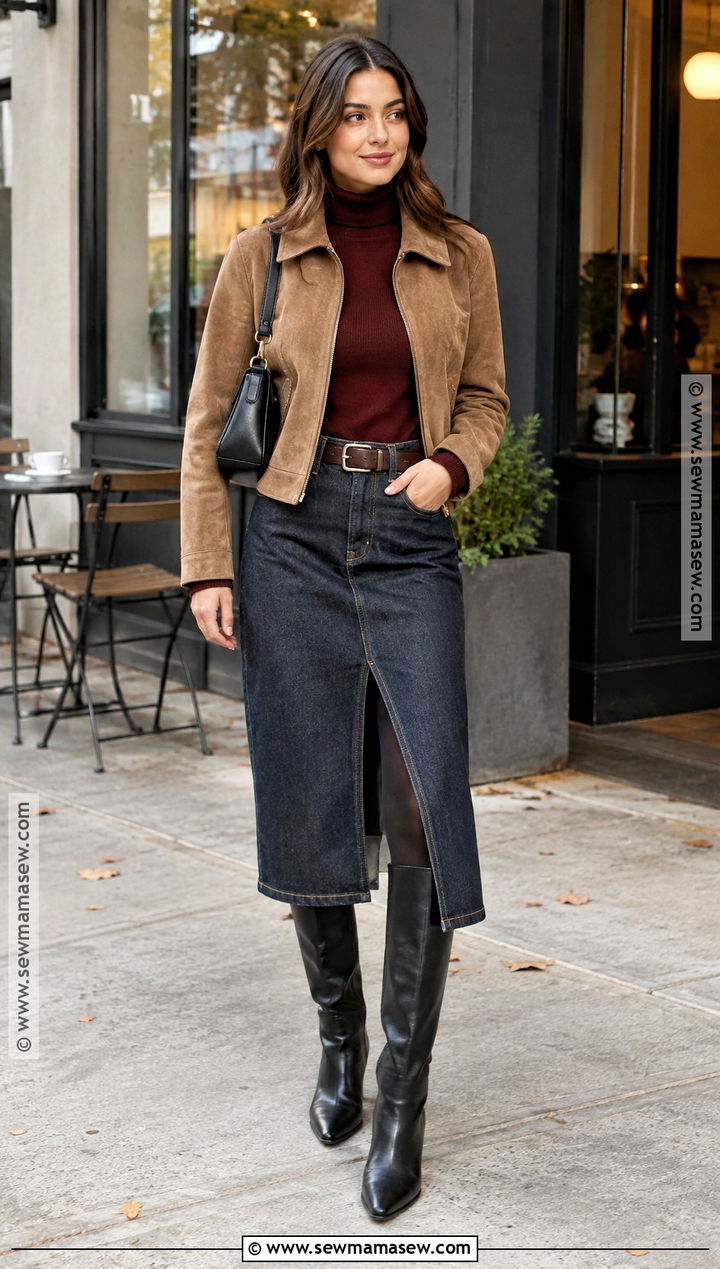
A denim midi gives more coverage than a mini and is a good change from jeans. I pair a front-slit skirt with a fitted burgundy or striped turtleneck, then knee-high boots that tuck neatly under the hem. A back slit or some stretch makes walking easier. Petite frames often look best with a hem just below the knee; taller wearers can go to the ankle. Thermal tights keep it warm, and a cropped suede jacket switches to a long coat when winter arrives.
17. Colorful Sweater and Black Trouser Outfit
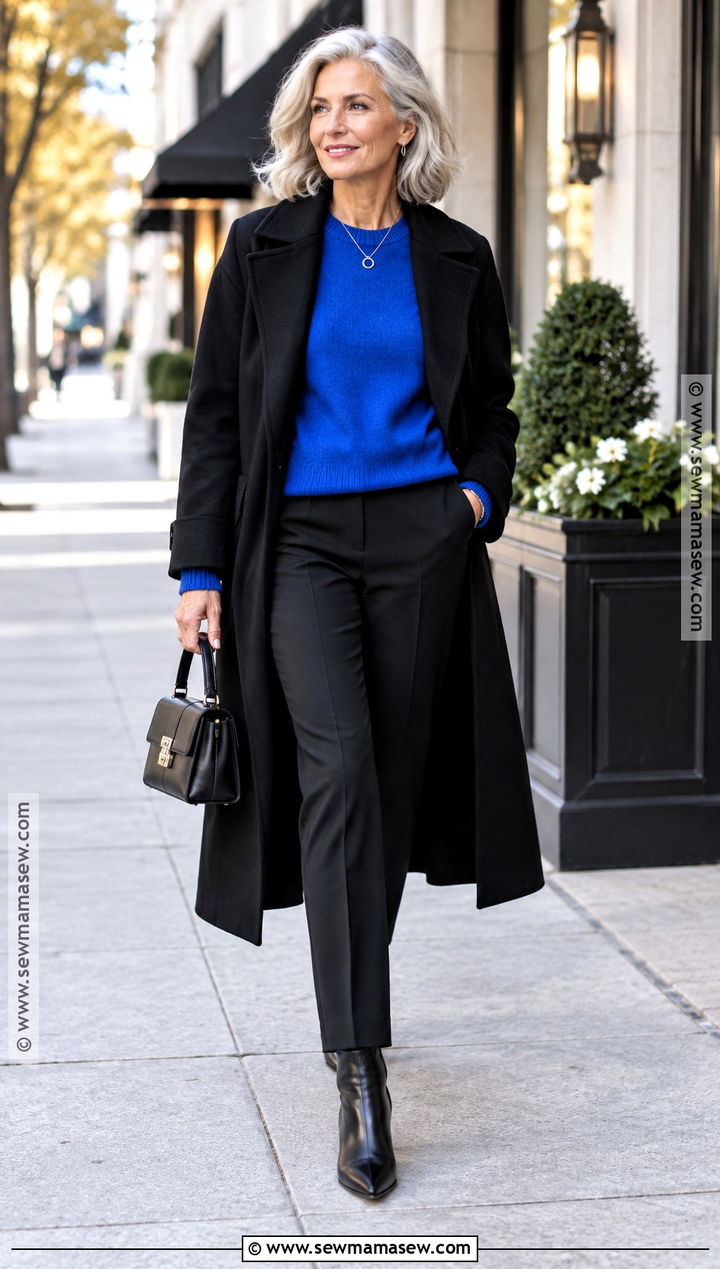
One bright sweater on a gray day does more than any accessory. Cobalt, cherry, emerald or purple against tailored black trousers keeps the color controlled. I loosely tuck the front of a relaxed knit to keep the shape. A long black coat frames the color and makes the bright knit the only thing people notice. If a vivid shade feels like a lot, start with a muted version or a striped knit. Loafers or pointed ankle boots finish it.
18. Quilted Jacket and Barrel Jeans Outfit
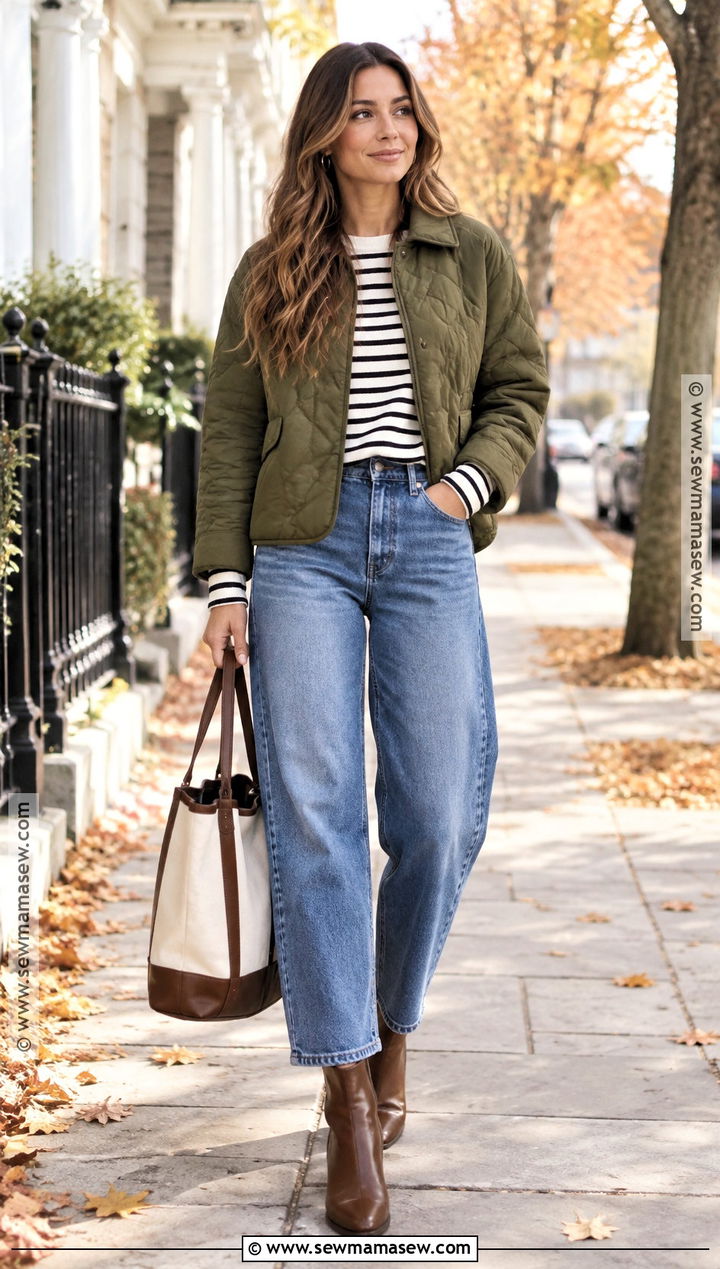
A quilted jacket fills the gap between a denim jacket and a real coat. Over a fine knit or striped tee, it pairs well with barrel jeans as long as the top stays neat, since the curved leg already adds volume. Low sneakers, loafers or fitted ankle boots keep the hem clean; cuff it once if it breaks too low. A cropped quilted jacket shows the waistband; hip length covers more. If barrel jeans aren't for you, relaxed straight jeans give a similar feel.
19. Wrap Coat and Bootcut Jeans Outfit
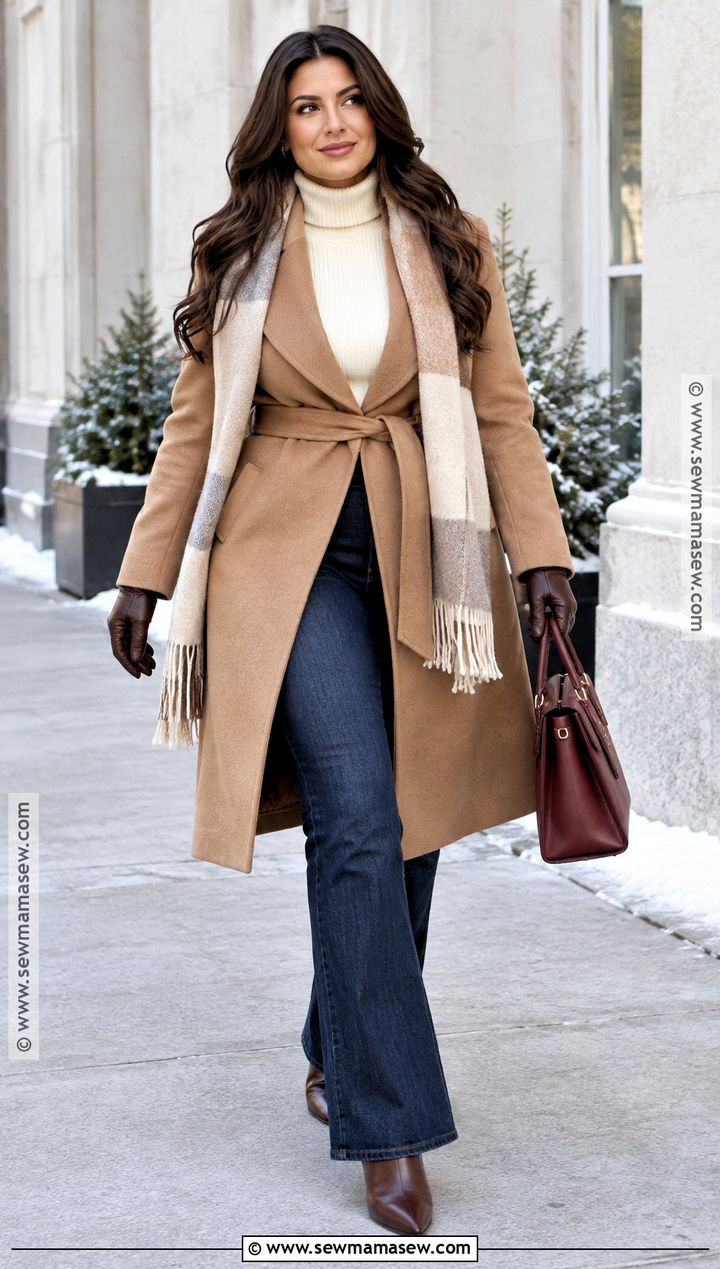
Wrap coats and bootcut jeans both flatter the waist and leg, and together they lengthen the whole outline. I start with a fitted turtleneck, then dark bootcuts that skim the thigh and widen below the knee. Pointed ankle boots under the hem extend the leg; the hem should nearly cover the boot but not touch the ground. Tie the belt slightly to one side so you don't get a lump at the center. Leather gloves and a soft scarf finish it.
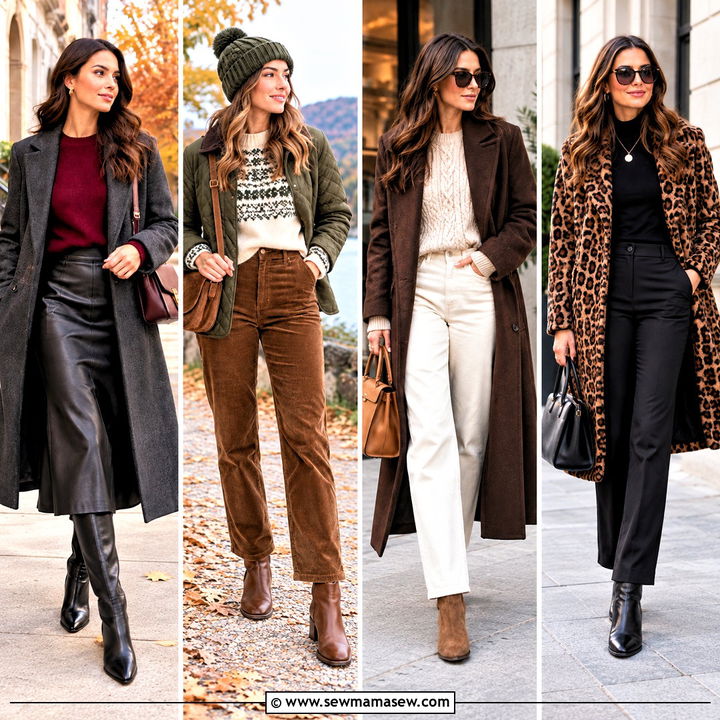
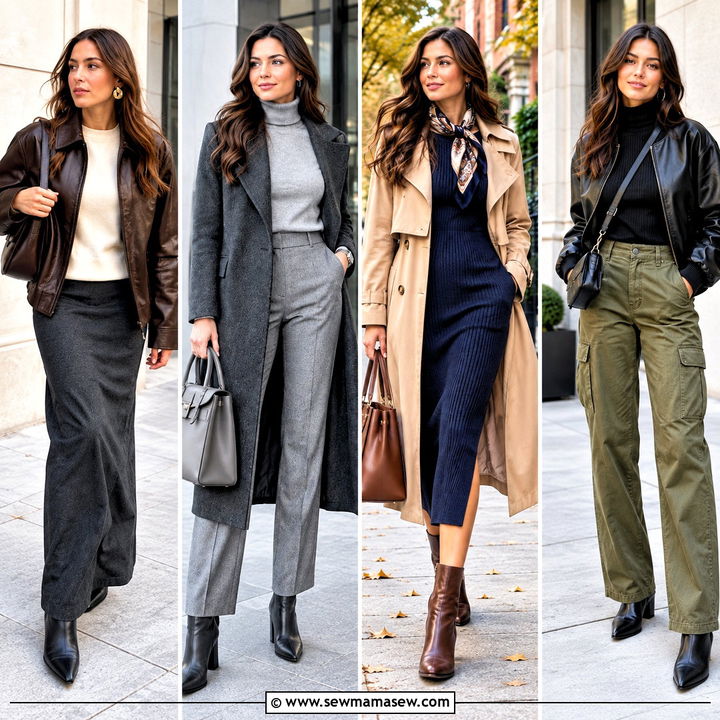
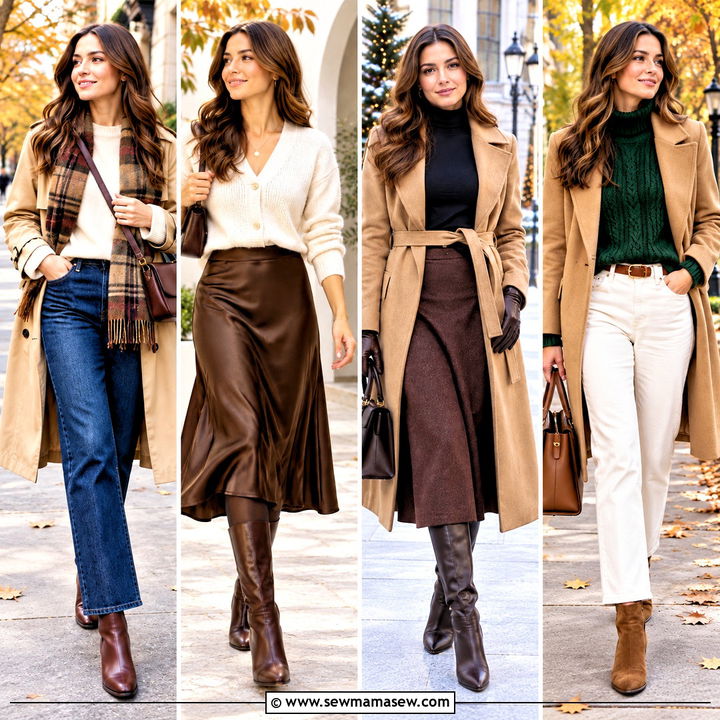
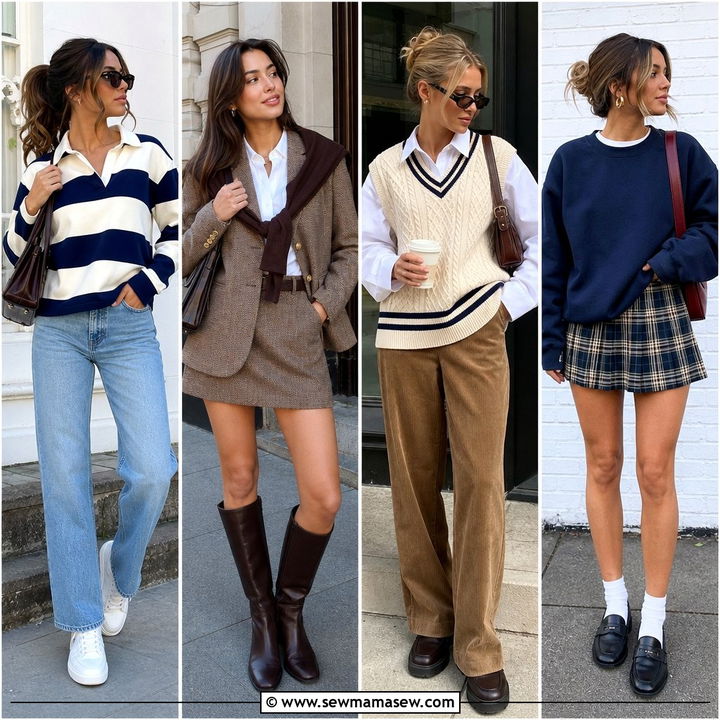
20. Fair Isle Sweater and Wool Pants Outfit
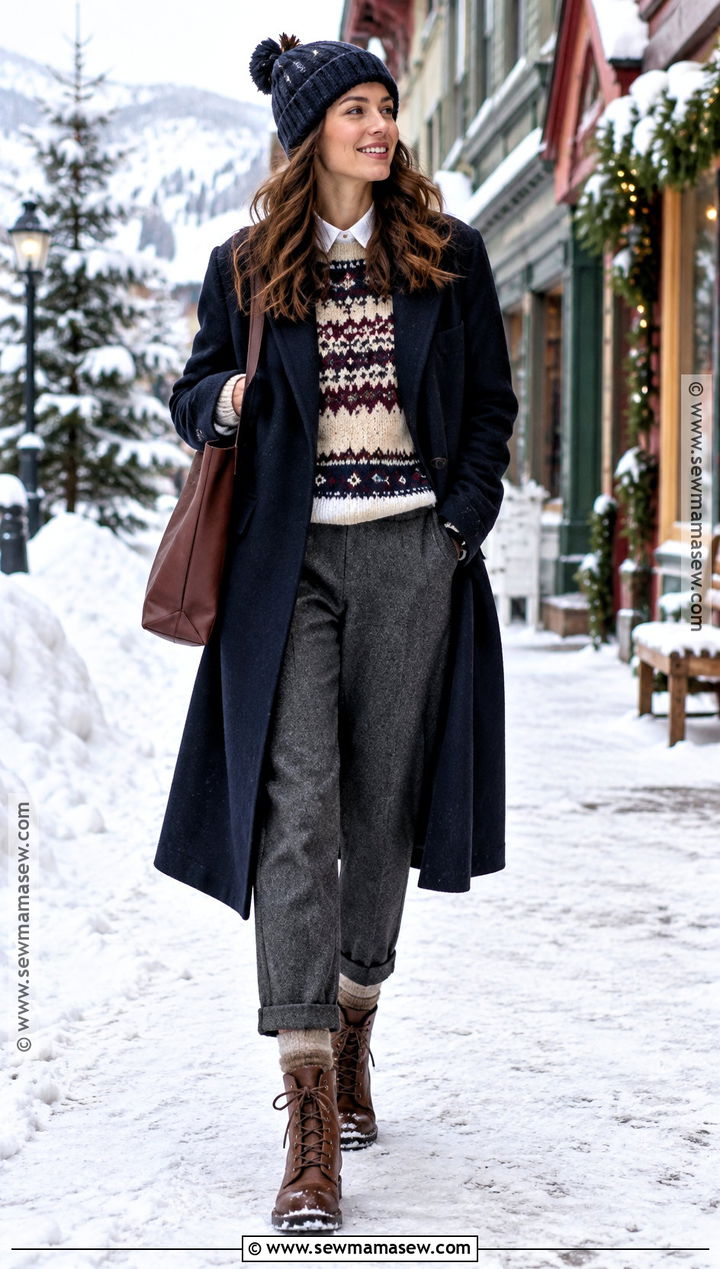
A Fair Isle sweater with wool trousers is warm right down to the ankles. Charcoal or navy wool-blend pants in a straight or gently tapered cut keep the pattern as the focus. In very cold weather I'd choose a thermal crewneck underneath rather than a shirt collar, since the extra layer matters more than the detail. Lace-up boots or loafers with visible wool socks, then a long solid coat. Repeat one sweater color in a hat or scarf and leave other prints out.
Thermal Layers That Never Show
A thin base layer is the reason a skirt or a satin piece can work in January. I prefer merino or silk thermals because they're warm without bulk and fit under a fitted turtleneck. Pick a scoop or crew neck lower than your sweater's neckline and sleeves shorter than the knit's cuff. Under skirts, thermal shorts or fleece-lined tights stay hidden; under wide trousers, thin thermal leggings disappear entirely. Cotton thermals are cheap but hold sweat, which turns cold once you're back outside.
Salt Stains, Slush and Leather Boots
Many of these outfits rely on leather and suede boots, and winter sidewalks are hard on them. Road salt leaves white tide lines that dry out leather and can crack it if left. I wipe boots after a salty walk with a cloth dampened in a mix of water and a little white vinegar, then let them dry away from a radiator. Treat suede with a protector spray before the first snow and brush it once dry. On the worst slushy days, I'd wear rubber-soled waterproof boots and save the leather pair for dry ones.
Base, Middle, Coat: The Order Behind All Twenty
A cold-weather wardrobe is easier when you think in outfits rather than single pieces. Sweaters, coats, denim, skirts, trousers and boots all work together in the combinations above. I'd start with warm base layers, add a middle layer you like seeing, and choose outerwear that suits both the weather and the outfit's proportions. Small swaps, a different shoe, thermal tights or another coat length, adapt each look to your climate and body. Pick the colors and textures you enjoy, and getting dressed on a dark morning gets much quicker.
Related posts: