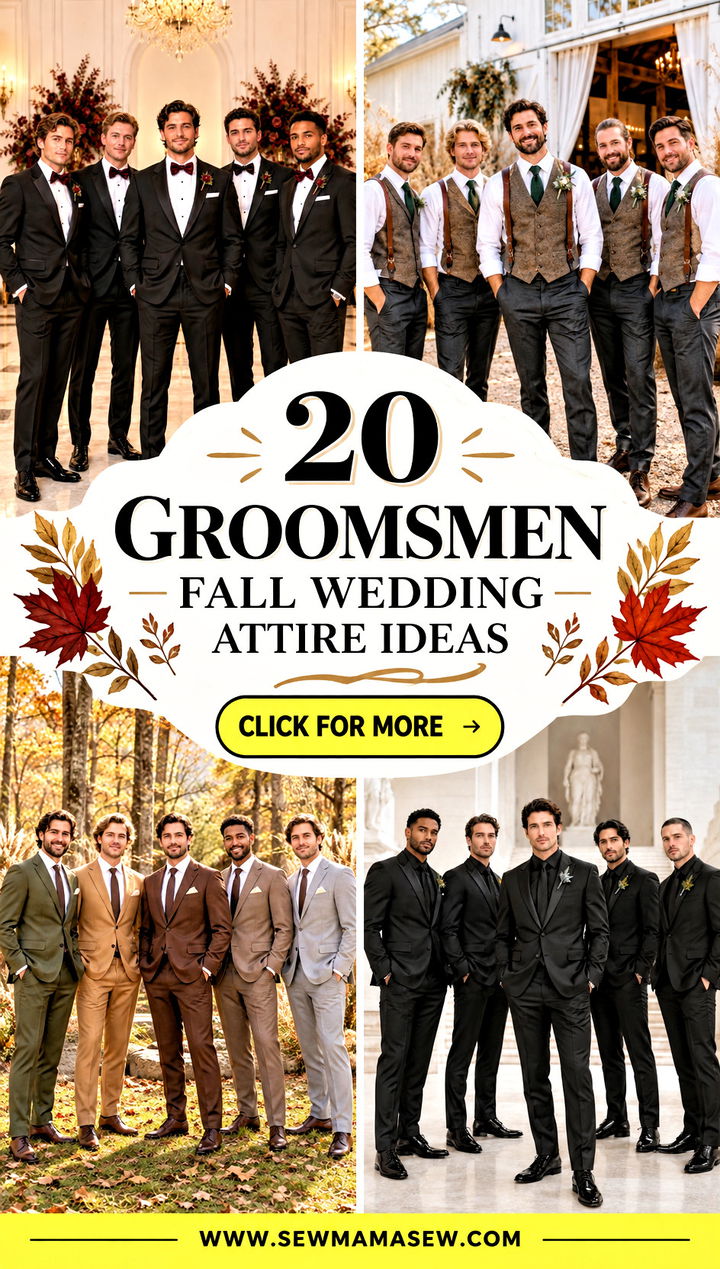
What the Invitation Wording Means for the Groomsmen
The dress code line on the invitation decides which of these outfits are even on the table. Guests take their cue from it, and the wedding party should sit at or just above that level. Here's how I translate the common terms for groomsmen.
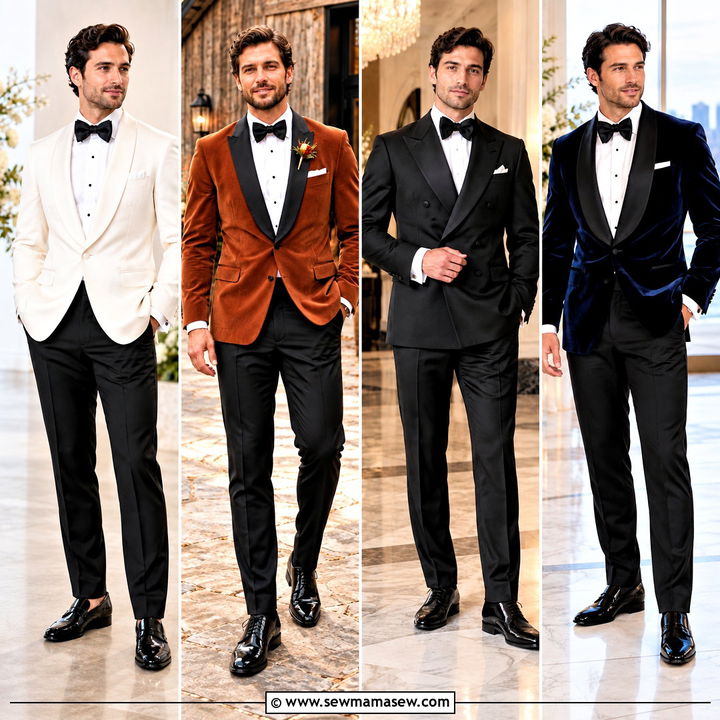
- Black tie: tuxedos, bow ties, formal shirts and patent or highly polished black shoes. Velvet dinner jackets fit here; tweed and corduroy do not.
- Black tie optional or formal: tuxedos or dark, well-cut suits in navy, charcoal or black. Midnight blue tuxedos and dark three-piece suits sit comfortably here.
- Cocktail or semi-formal: suits in any of the seasonal colors, with ties. This is where burgundy, forest green, brown and plaid live.
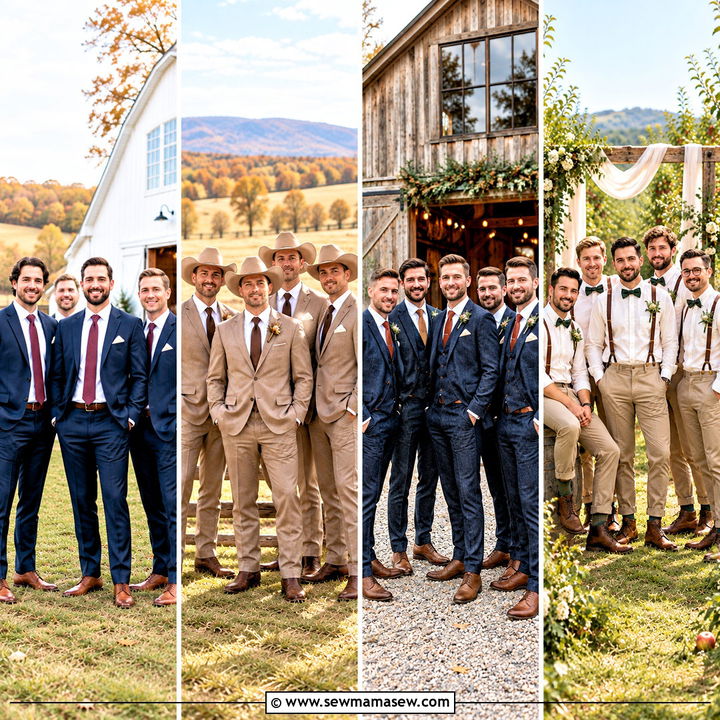
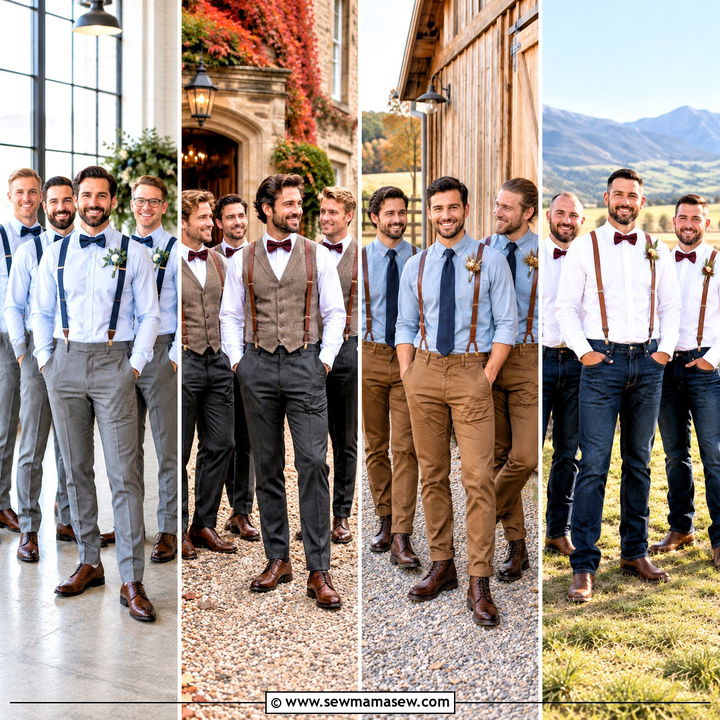
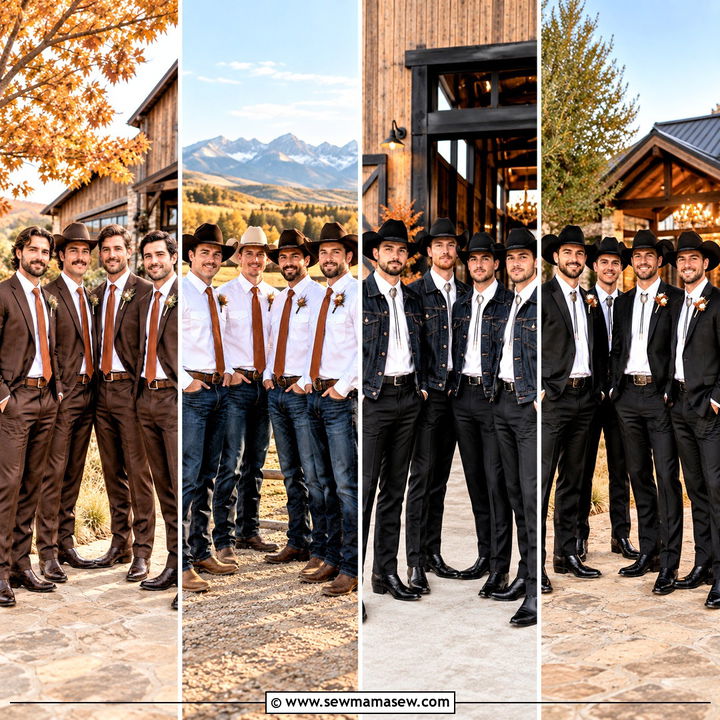
- Rustic, casual or garden: separates, vests and suspenders, corduroy blazers and tan or camel suits all work, but shirts stay pressed and tucked.
If the invitation gives no dress code, I look at the time and the venue. An evening reception in a hotel ballroom implies formal; a 2 p.m. ceremony in a field implies something relaxed. When in doubt, dress the groomsmen one step more formal than the guests are likely to be.
1. Navy Suit With Burgundy Tie
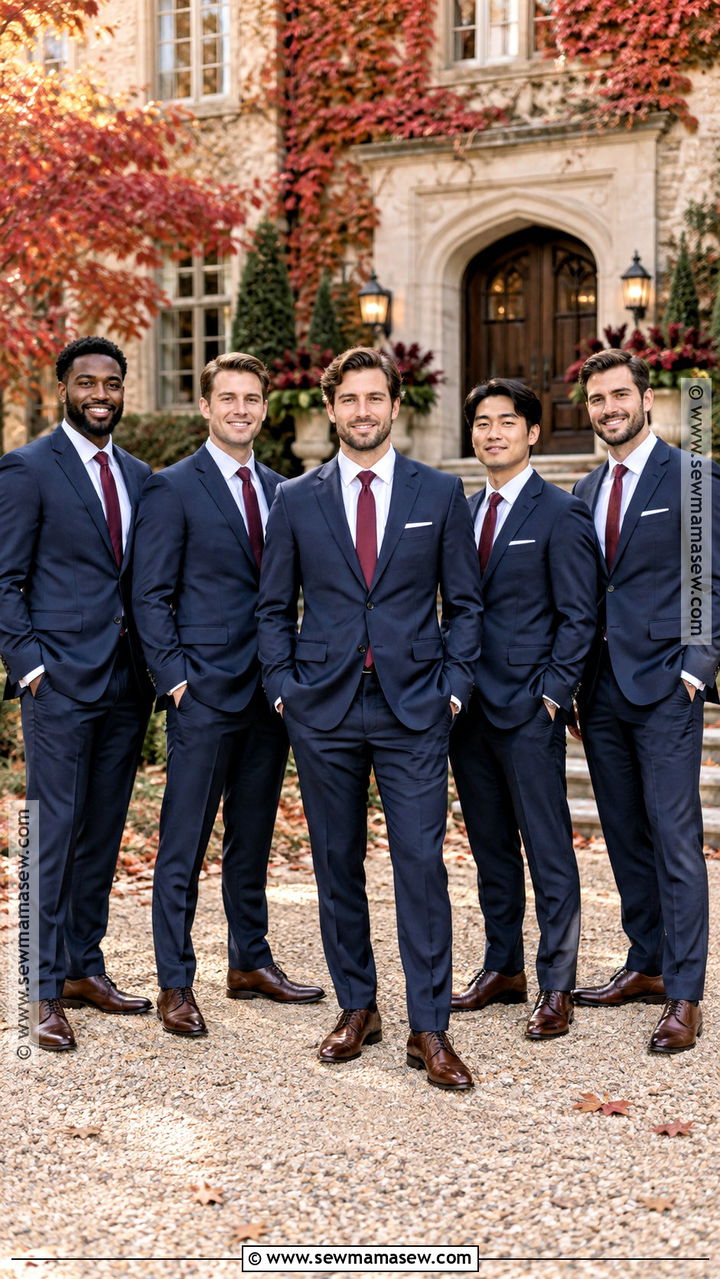
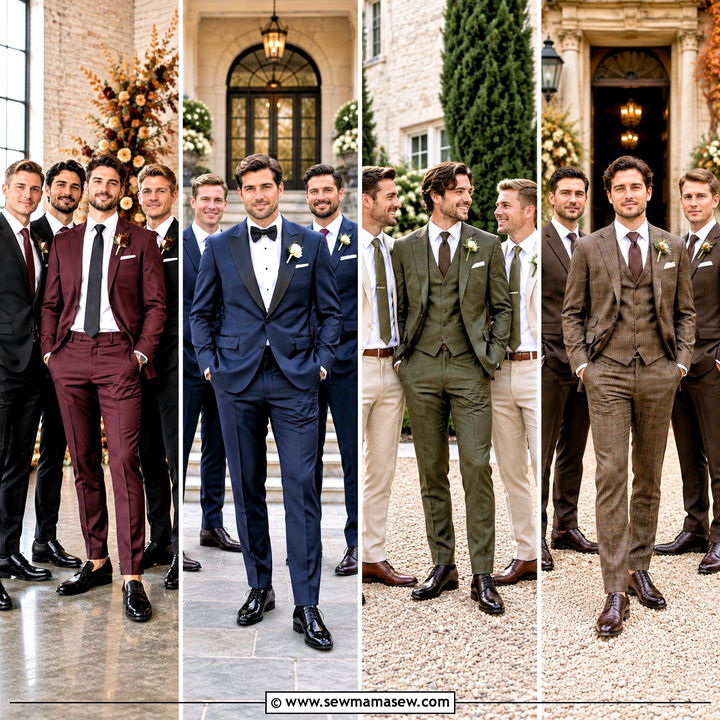
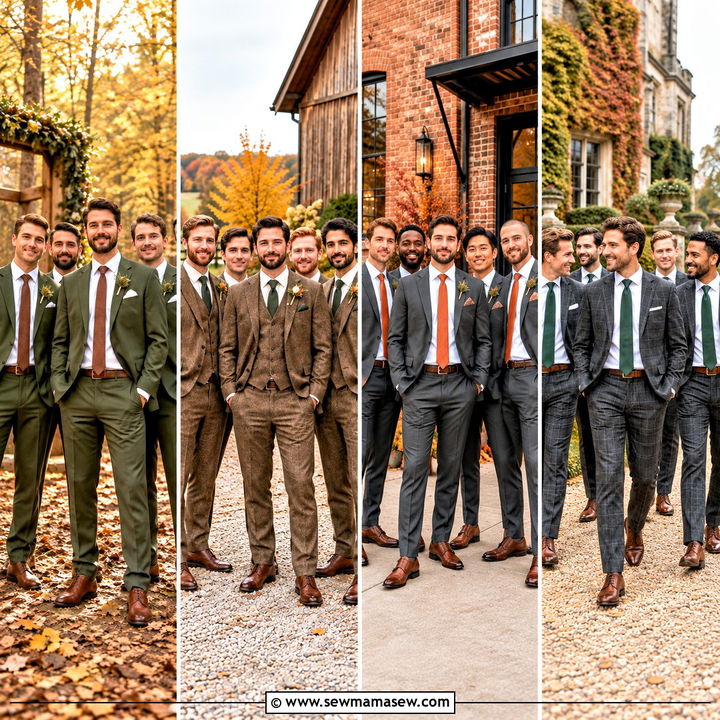
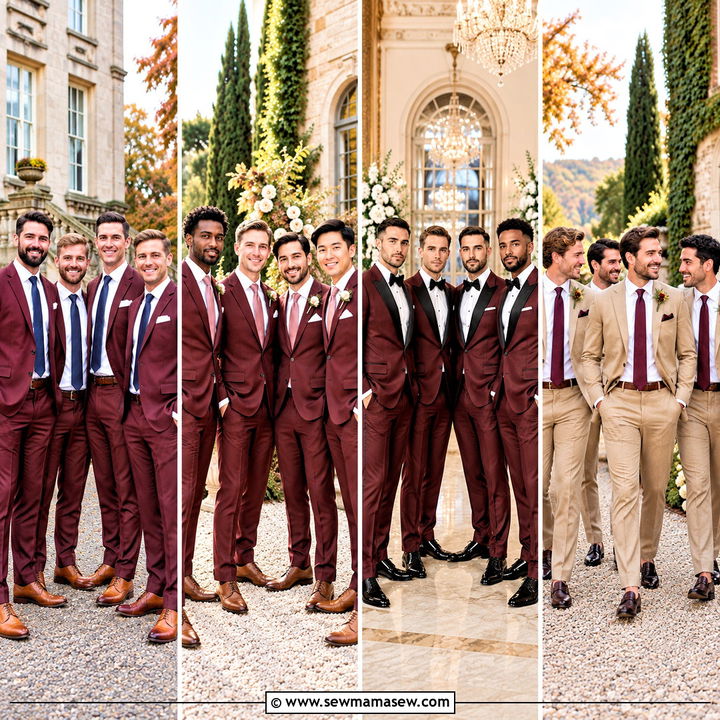
Navy with a burgundy tie is the pairing I'd hand to any wedding party that can't agree on anything else. A medium or dark navy wool, a clean white shirt, a solid burgundy tie and a white pocket square. Dark brown Oxfords, a matching belt and plain metal cuff links finish it. Navy holds its color under every kind of light, which is why it looks as good in a hotel ballroom as at a vineyard. If the bridesmaids wear burgundy, I'd pick a tie a shade darker or lighter on purpose; trying for an exact match almost never works across two fabrics. The groom can add a waistcoat, a burgundy velvet tie or a patterned square.
2. Charcoal Suit With Rust Tie
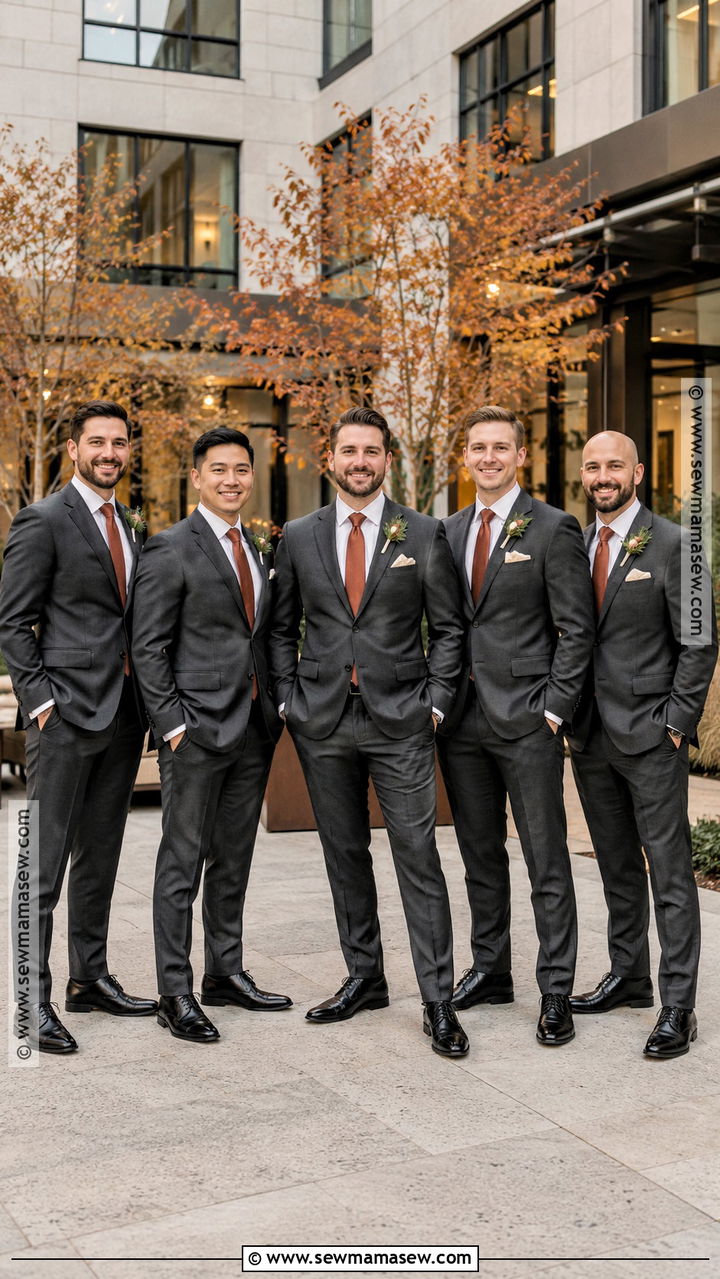
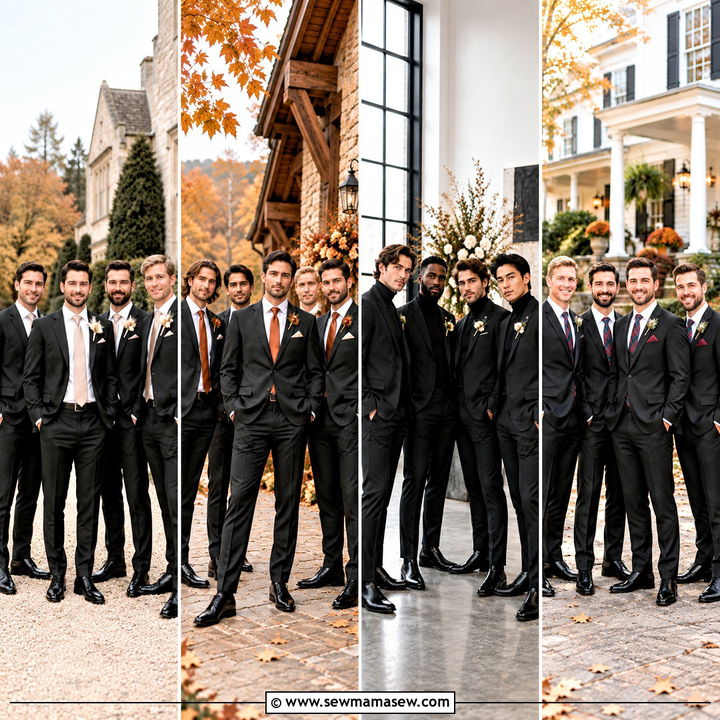
Charcoal reads formal enough for an evening and softer than all black, and rust is the tie I like on it most. Start with a tailored wool-blend suit and a white or pale ivory shirt, then a matte rust tie, cream square and a small greenery boutonniere. Shoes set the tone: black cap-toes make it dressy, dark brown Derbies relax it. It sits well with rust, terracotta, copper and burnt orange palettes. Matte matters on the tie, since a shiny rust silk goes orange under a camera flash. Keep every accessory the same across the group. A charcoal vest or a patterned rust tie marks out the groom.
3. Brown Tweed Three-Piece Suit
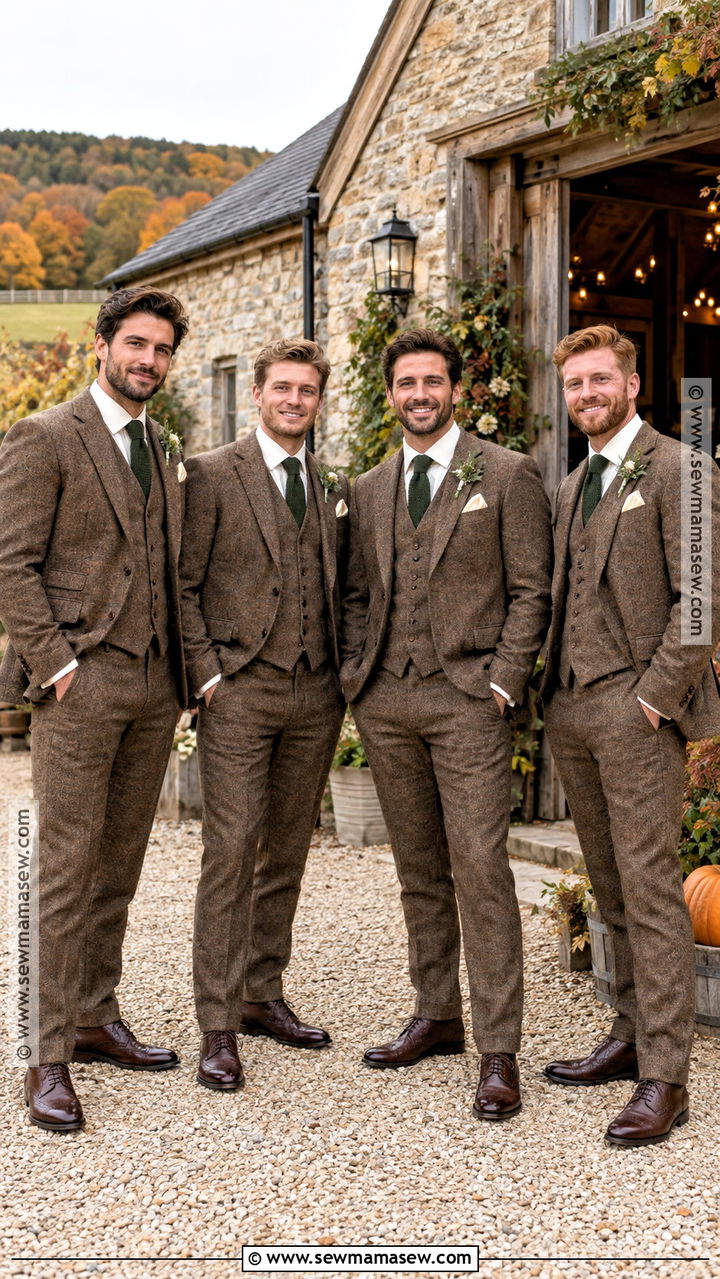
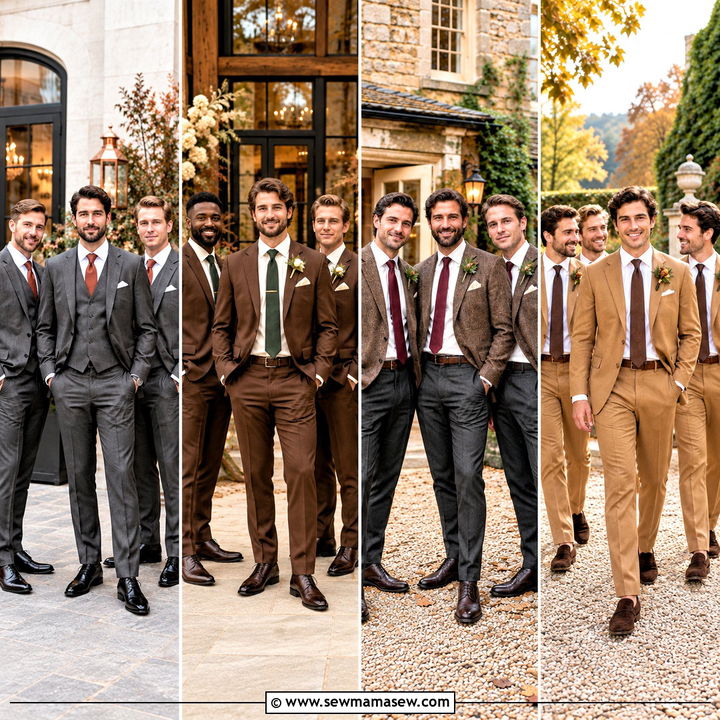
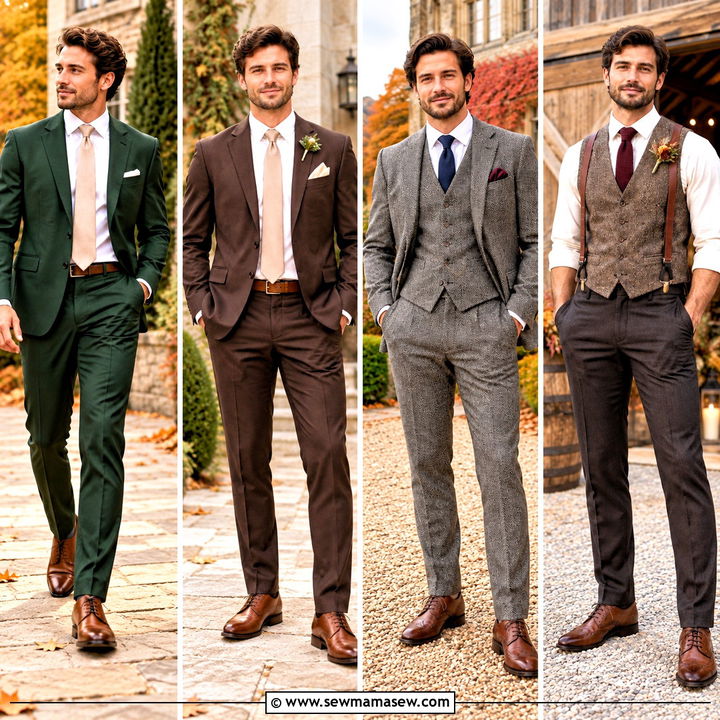
For a barn, lodge or farm, a brown tweed three-piece is hard to beat. The vest keeps the men looking finished once jackets come off. I pair it with a white, cream or pale blue shirt and a forest green knitted tie, then dark brown brogues or leather lace-up boots. A cream square stops the dark colors feeling heavy. Tweed is a naturally warm, dense cloth, which is exactly why it suits a cold fall day and why I'd hesitate on a hot September afternoon. Choose a small, refined weave over a bold check so the group shot stays calm. A contrasting waistcoat or a darker tweed sets the groom apart.
4. Forest Green Suit With Brown Shoes
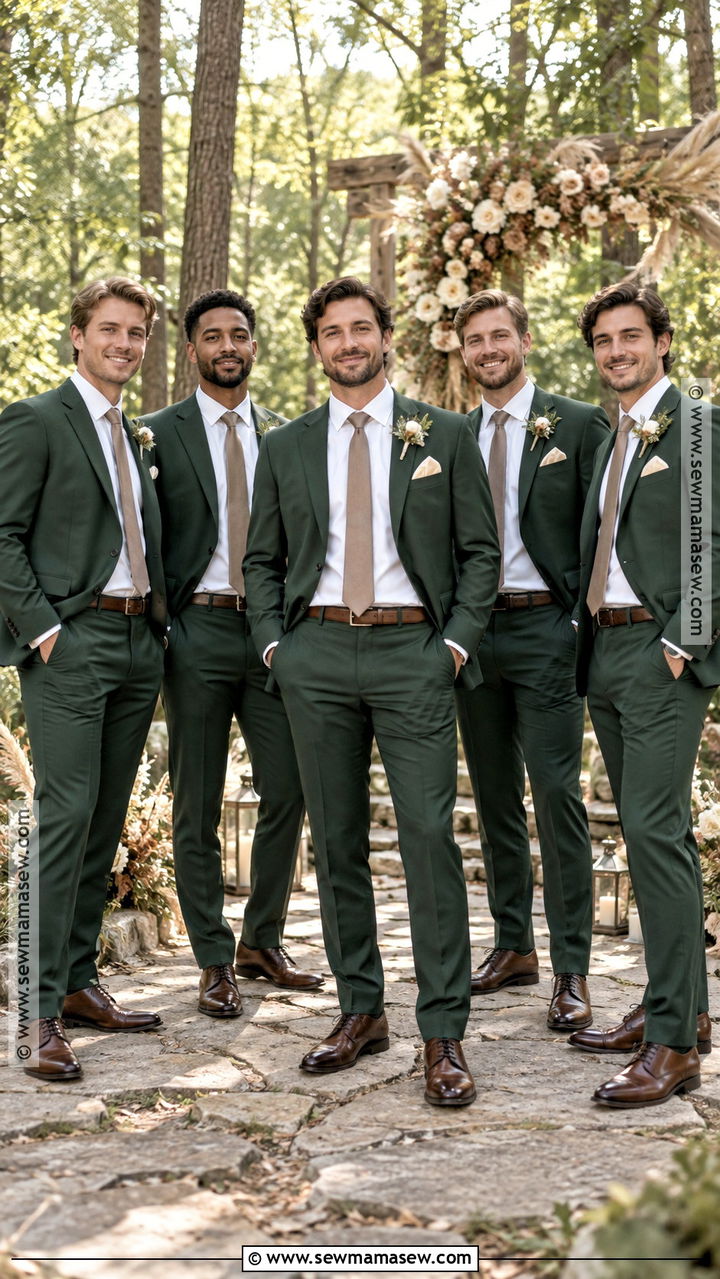
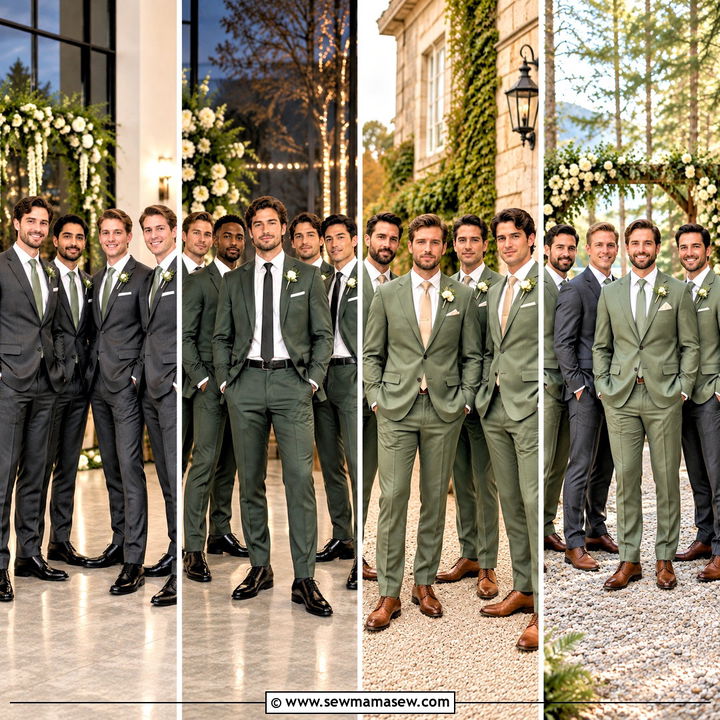
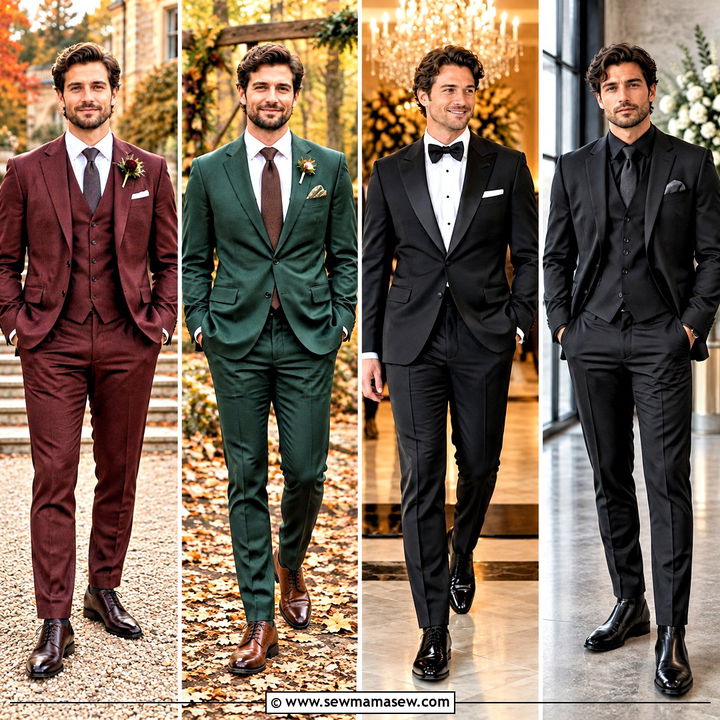
Forest green feels confident but still wearable for most men. For a big wedding party, I go deep and muted rather than emerald, because bright green on eight men looks like a uniform. White shirt, then a taupe, chocolate or black tie depending on how formal the day is. Dark brown Oxfords and a belt warm it up; a cream pocket square and a boutonniere of greenery or dried neutrals finish it. Gardens, woodland, greenhouses and modern rustic venues suit it best, and it sits nicely next to champagne, rust, burgundy or dusty rose dresses. The groom wears a three-piece, everyone else two-piece, same shirts and shoes.
5. Olive Suit With Cream Shirt
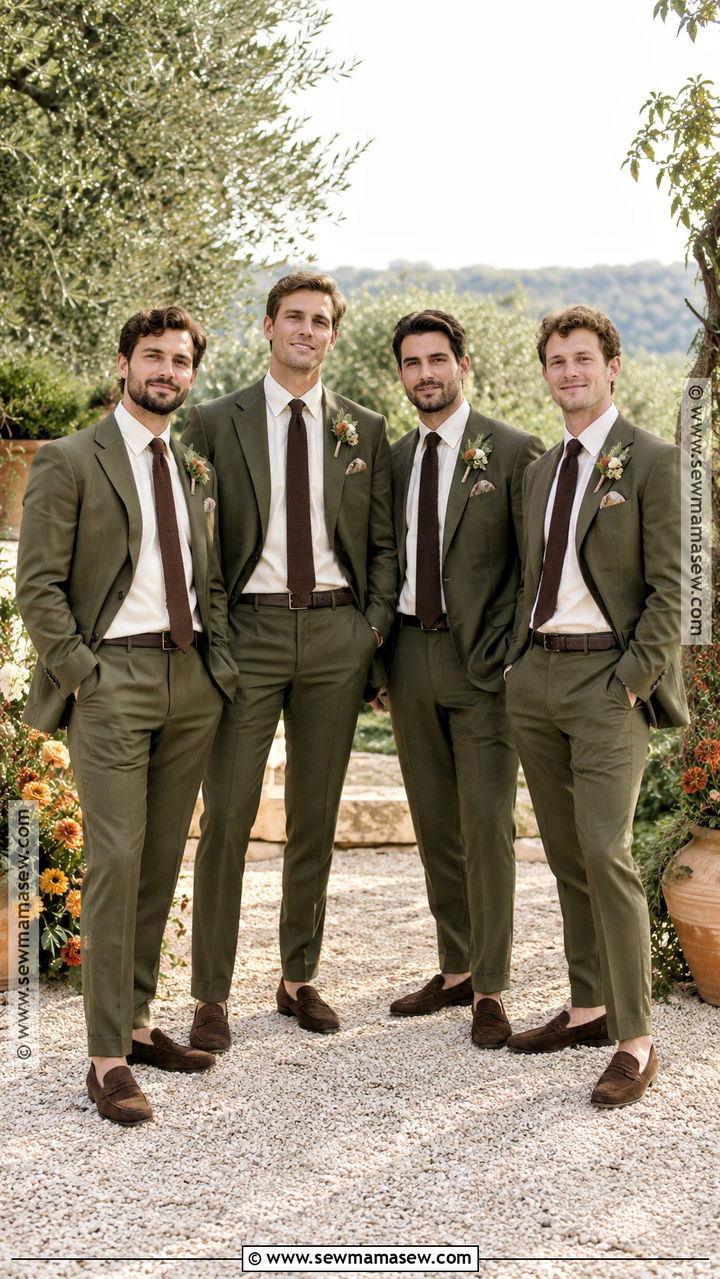
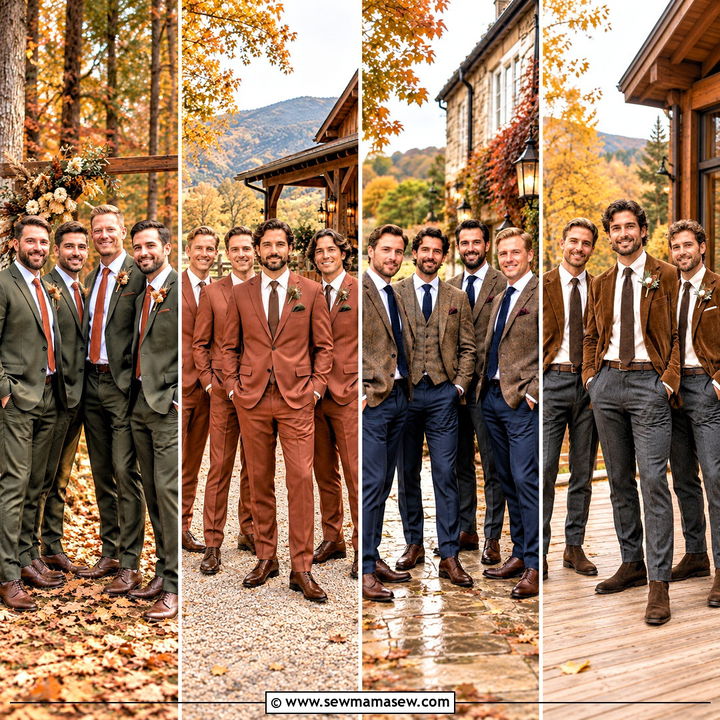
Olive with a cream shirt is softer and earthier than a dark suit, so I save it for daytime ceremonies and relaxed venues. A structured olive wool or cotton blend, a cream button-down, a chocolate knitted tie, a patterned pocket square and dark brown loafers or Derbies. Match the belt to the shoes. The trouble with olive is consistency. One brand's olive is grayish, another's is nearly khaki, so I order every suit from the same collection. Terracotta flowers and wooden venue details bring out the color. The groom can add a brown or camel vest while the groomsmen stay in plain two-piece suits.
6. Burgundy Suit With Black Accessories
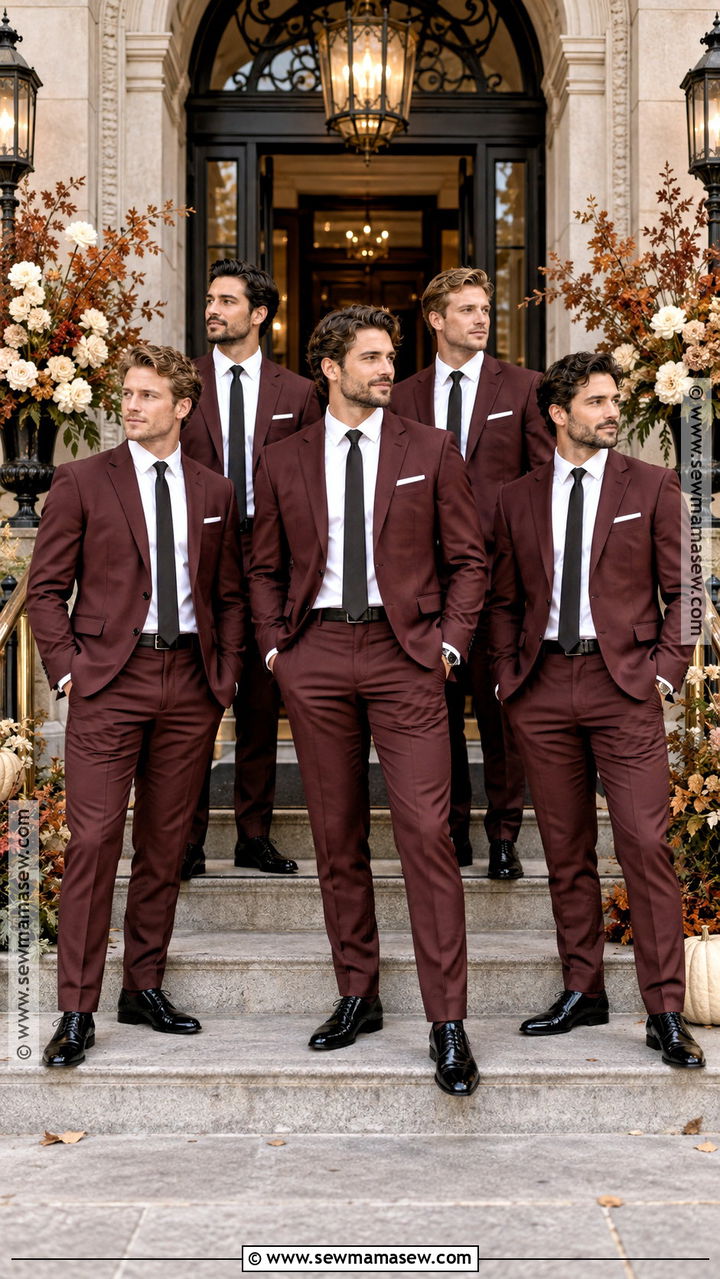
Burgundy suits get noticed, so the rest of the outfit has to step back. White shirt, slim black tie, black belt and polished black Oxfords, with a white pocket square folded flat. That's all it needs. I like it for indoor evenings, upscale restaurants, historic hotels and loft venues, where neutral décor frames the color. Check the cloth before ordering. A matte or lightly textured burgundy looks rich; a shiny one bounces light and looks cheap in pictures. The groom can switch to a black tuxedo, or wear the same burgundy with a black waistcoat and bow tie.
7. Black Tuxedo With Burgundy Bow Tie
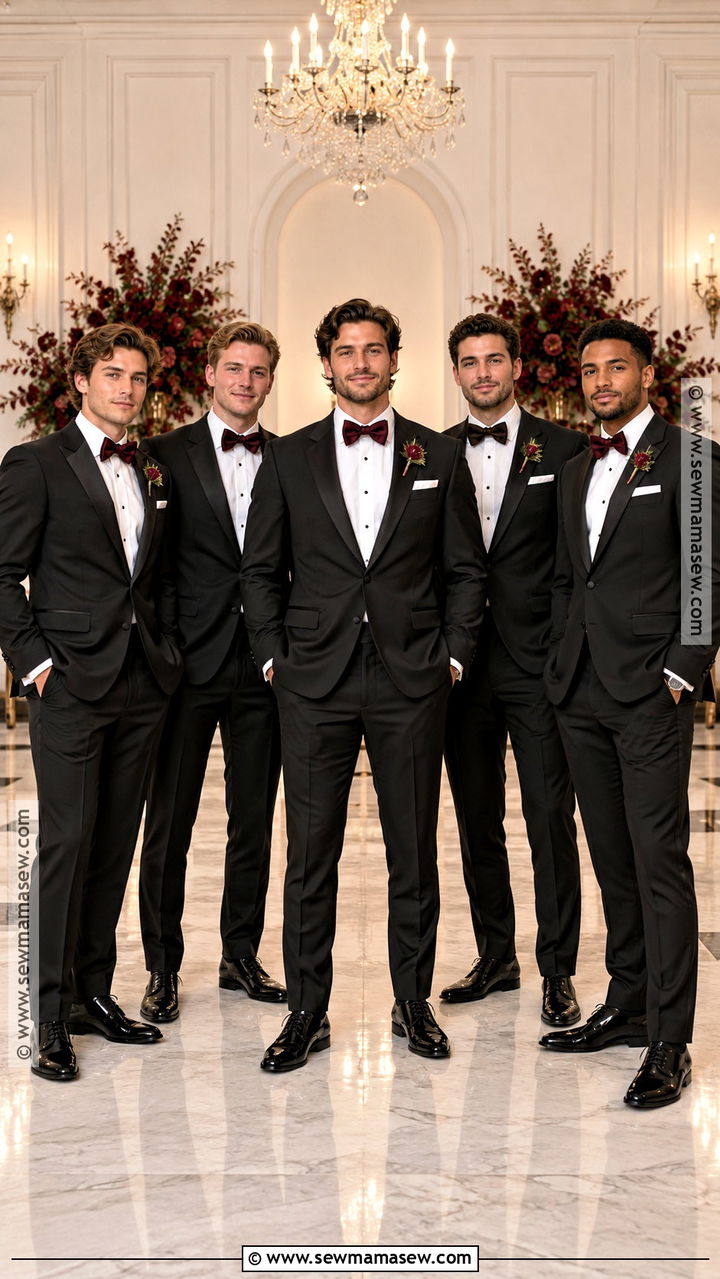
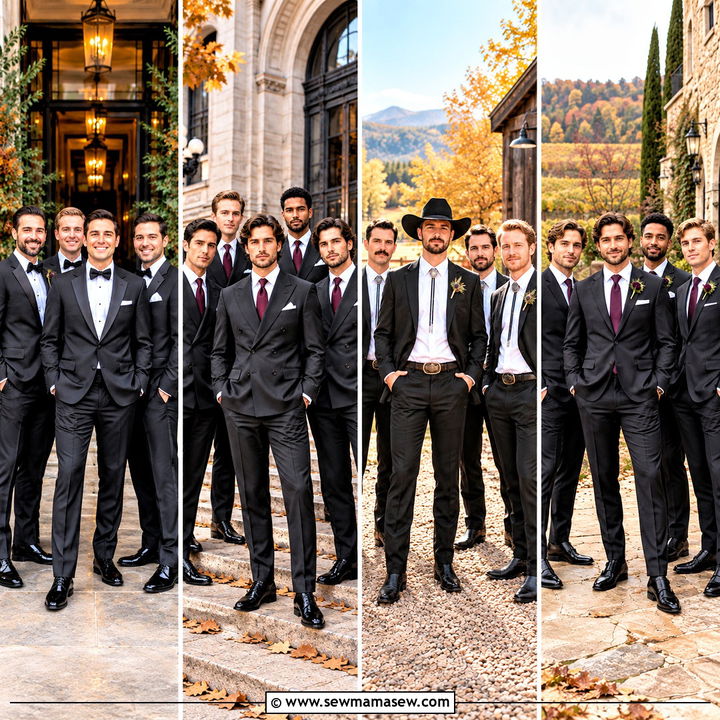
A black tuxedo with a burgundy bow tie is classic black tie with one seasonal nod. Well-fitted tuxedo, satin peak or shawl lapels, matching trousers, a crisp white formal shirt. Burgundy bow ties, white squares and black patent or calfskin shoes. No belts: tuxedo trousers are meant for side adjusters or braces, and a belt buckle breaks the clean waist line. It belongs at black tie and formal evening weddings in ballrooms, hotels, museums and grand estates. One deep red boutonniere connects to the tie. The groom can take a burgundy velvet dinner jacket while the groomsmen stay in traditional black.
8. Velvet Dinner Jacket With Black Trousers
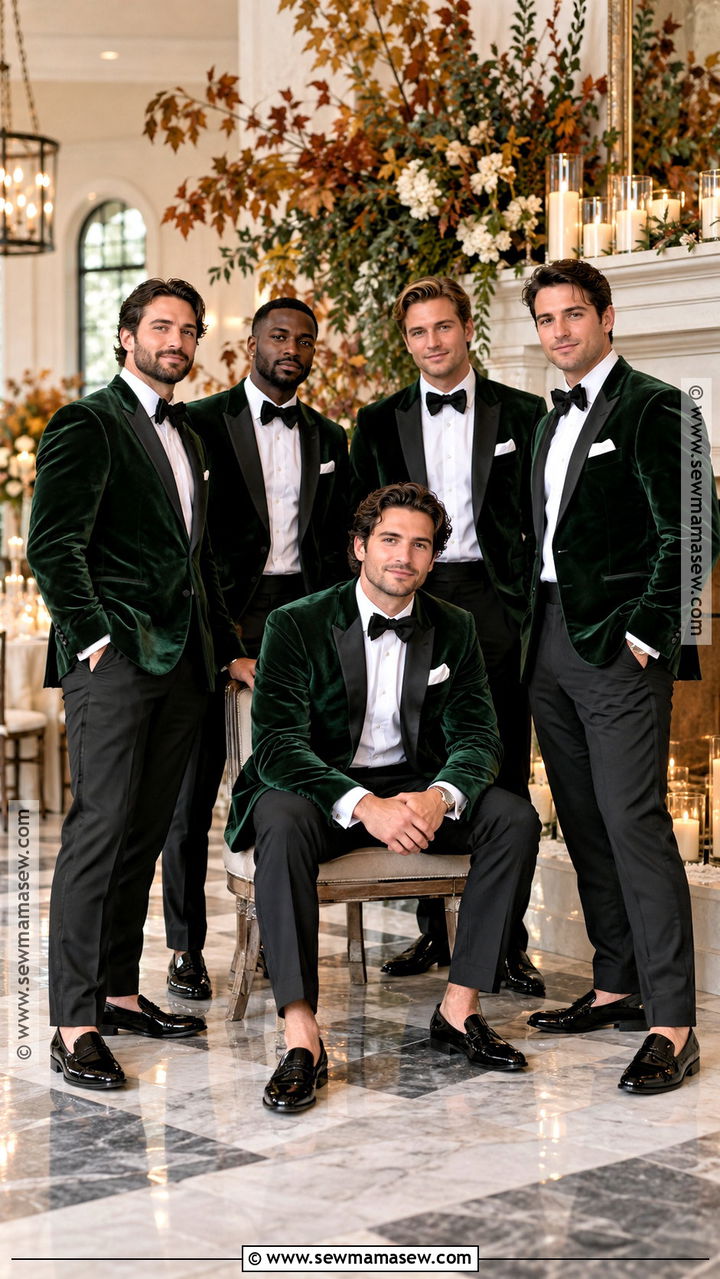
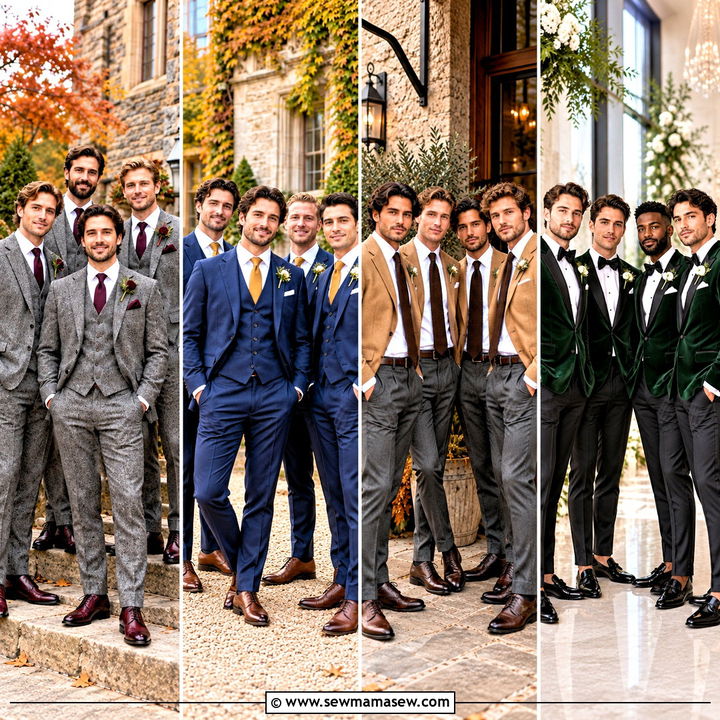
Velvet is my cold-weather choice for formal groomsmen. Navy, forest green or burgundy velvet dinner jackets with tailored black tuxedo trousers, a white formal shirt and a black bow tie. Black velvet loafers or polished Oxfords and a plain white square. Velvet already carries the outfit, so I skip colorful socks, patterned ties and big boutonnieres. It's warm, which makes it an indoor fabric for evening ceremonies and receptions; in a sunny garden it gets uncomfortable quickly. Velvet also crushes where it's pressed, so I hang the jackets on wide hangers and never fold them in a garment bag. The groom can wear a different velvet color or add satin lapels.
9. Tan Suit With Dark Green Tie
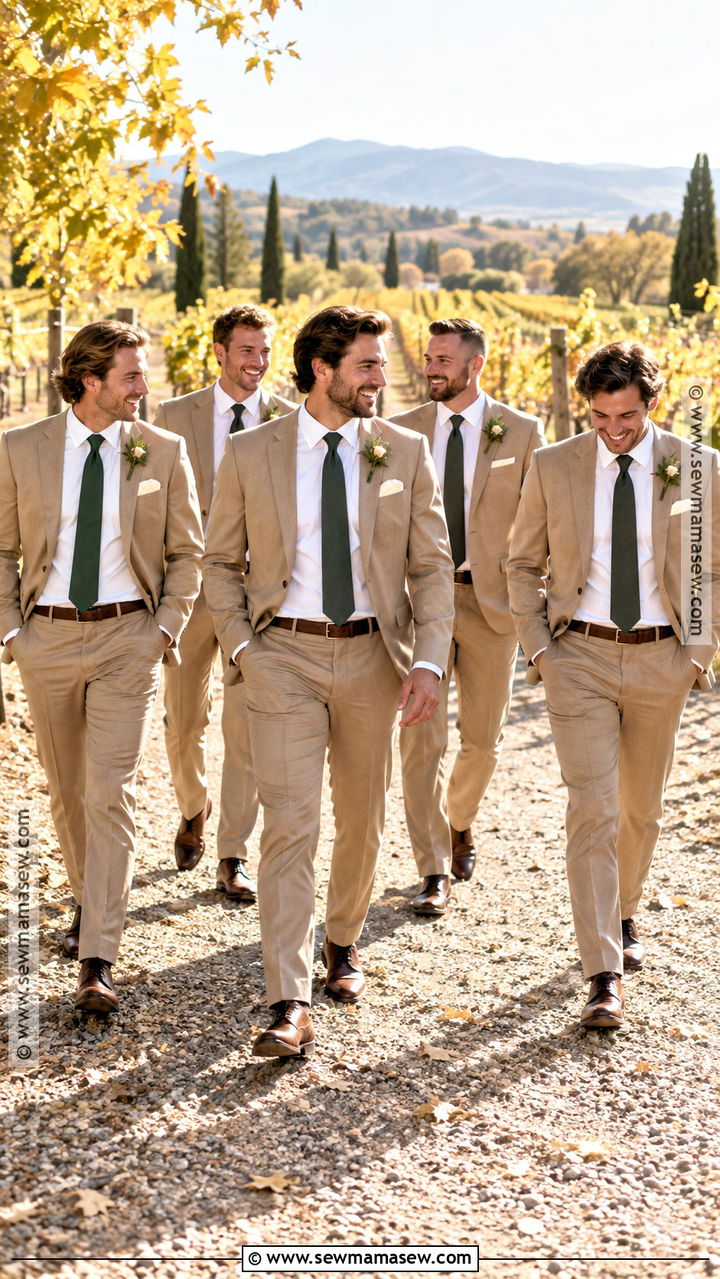
Early fall, warm climates and daytime outdoor ceremonies are where a tan suit earns its place. I go medium-weight rather than summer linen, which looks too casual by October. White or light blue shirt, forest green tie, cream pocket square and rich brown leather shoes. Suede loafers or Chelsea boots suit a relaxed venue; leather Derbies are more traditional. Tan looks good against greenery, timber and dried grasses, and it keeps the group light against dark autumn trees. Put the groom in dark green, or give him a tan three-piece with a green waistcoat.
10. Camel Suit With Chocolate Tie
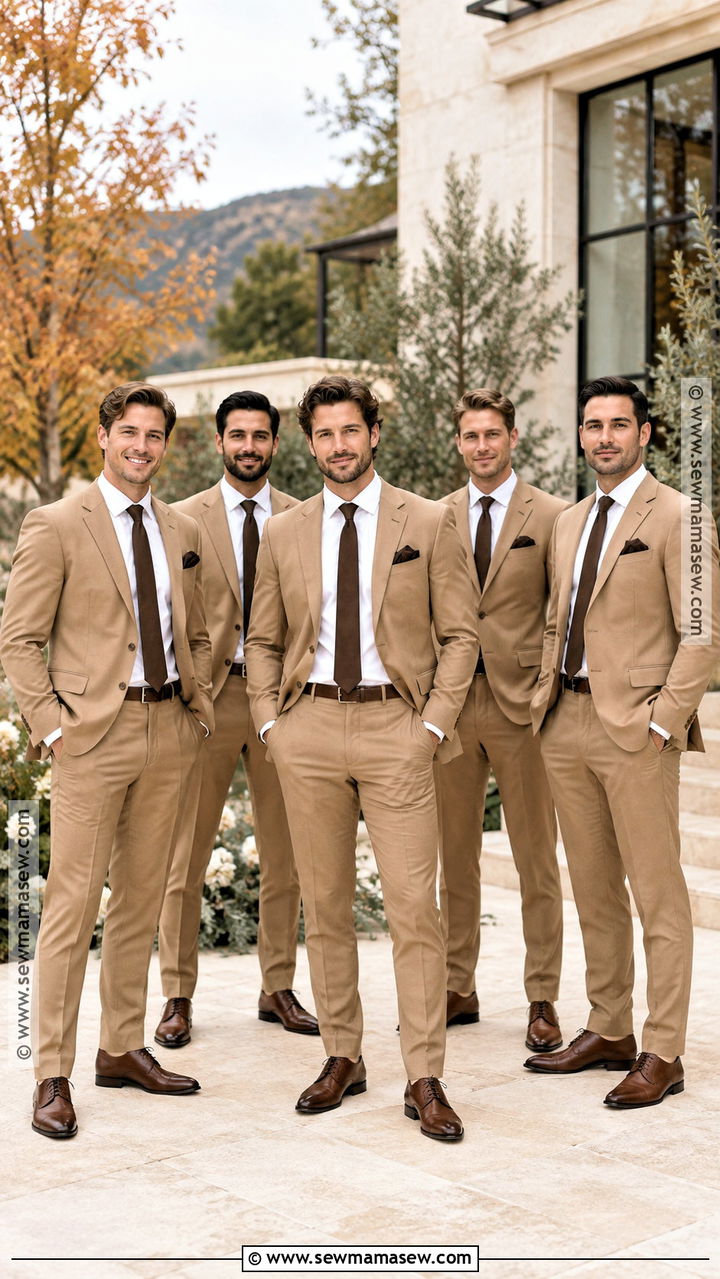
Camel sits between summer neutrals and deep autumn color. I look for a camel or light brown suit with real structure, because a soft, unlined camel looks like vacation wear in photos. White shirt, chocolate tie, dark brown pocket square and polished brown Oxfords build a tonal look. Matching belt, a minimal boutonniere of greenery or cream. Desert venues, vineyards, outdoor estates and modern barns suit it. Camel can lean yellow or orange depending on the dye, so I hold fabric samples against the actual décor or flowers before anyone orders. Let the groom wear chocolate, or add a camel vest and a darker tie.
11. Gray Flannel Suit With Burgundy Accessories
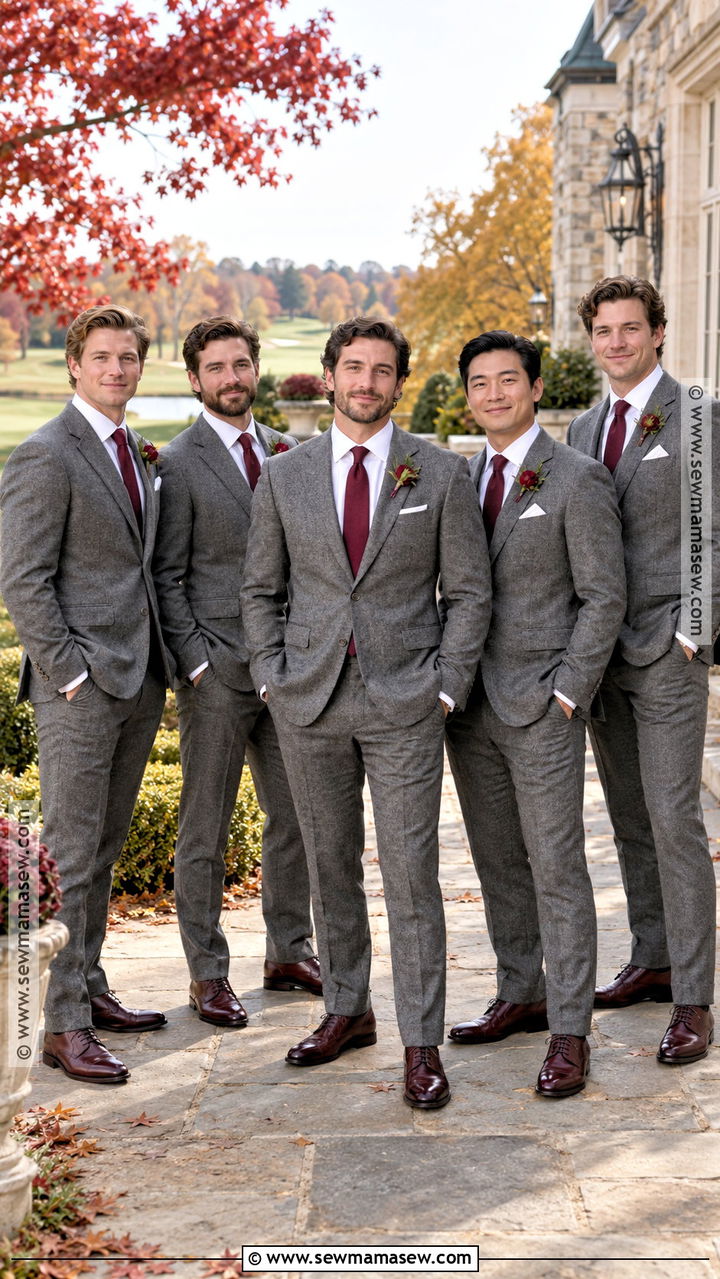
Gray flannel is the softest, most textured base for a late fall wedding. Flannel is brushed wool, so it has a slightly fuzzy face that looks warm and matte. Choose charcoal for evening and medium gray for daytime. White shirt, burgundy tie, white square and black or oxblood shoes. A burgundy ribbon on the boutonniere repeats the color quietly. Flannel is genuinely warm; in a hot region or an overheated ballroom, I'd pick a worsted instead. Country clubs, historic homes, city hotels and formal barns suit it. The groom can wear a gray three-piece or a deeper burgundy tie with a subtle pattern.
12. Plaid Suit With Solid Tie
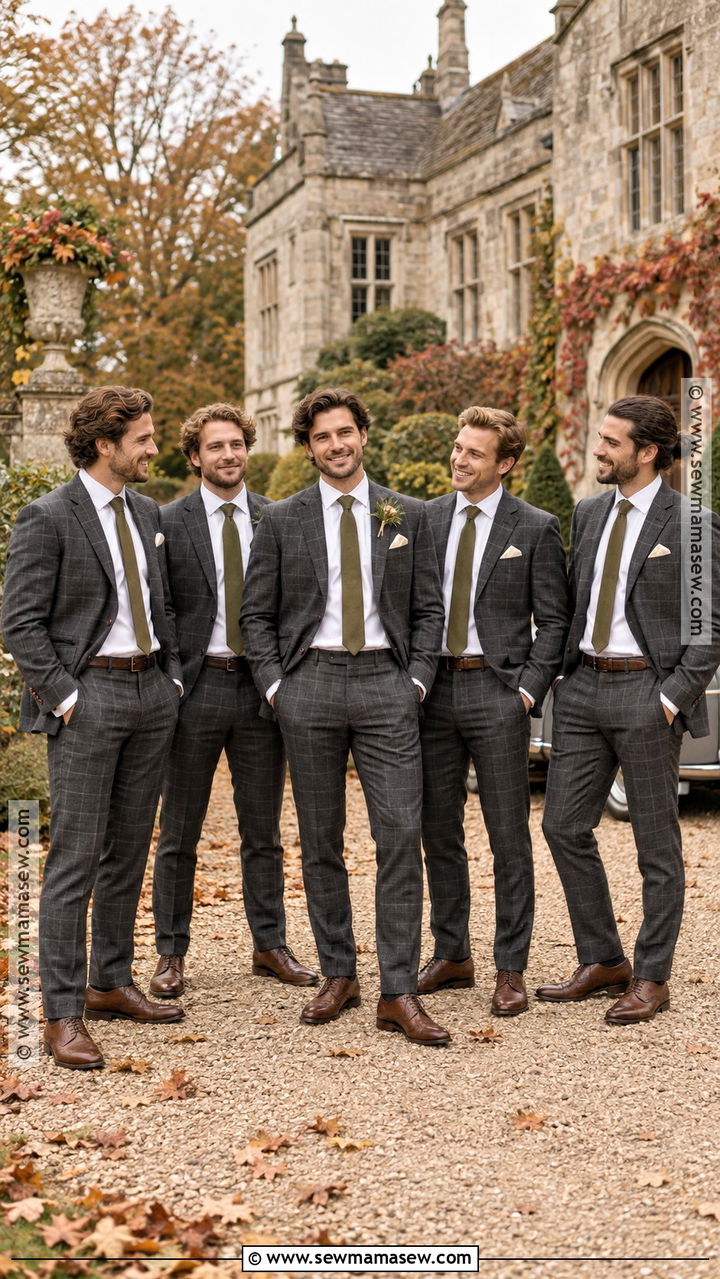
A subtle plaid adds character without breaking the group. I look for a charcoal, brown or navy base with a quiet windowpane or glen check, then a solid white shirt and a tie that picks one muted color out of the check, burgundy, olive or navy. Dark brown brogues, a matching belt and a plain cream square. Patterned shirts and busy accessories are out; five men in pattern on pattern looks chaotic in a lineup. Historic venues, country estates, libraries and refined rustic spaces suit it. The groom can wear the three-piece version in the same cloth while the groomsmen wear two-piece.
13. Corduroy Blazer With Wool Trousers
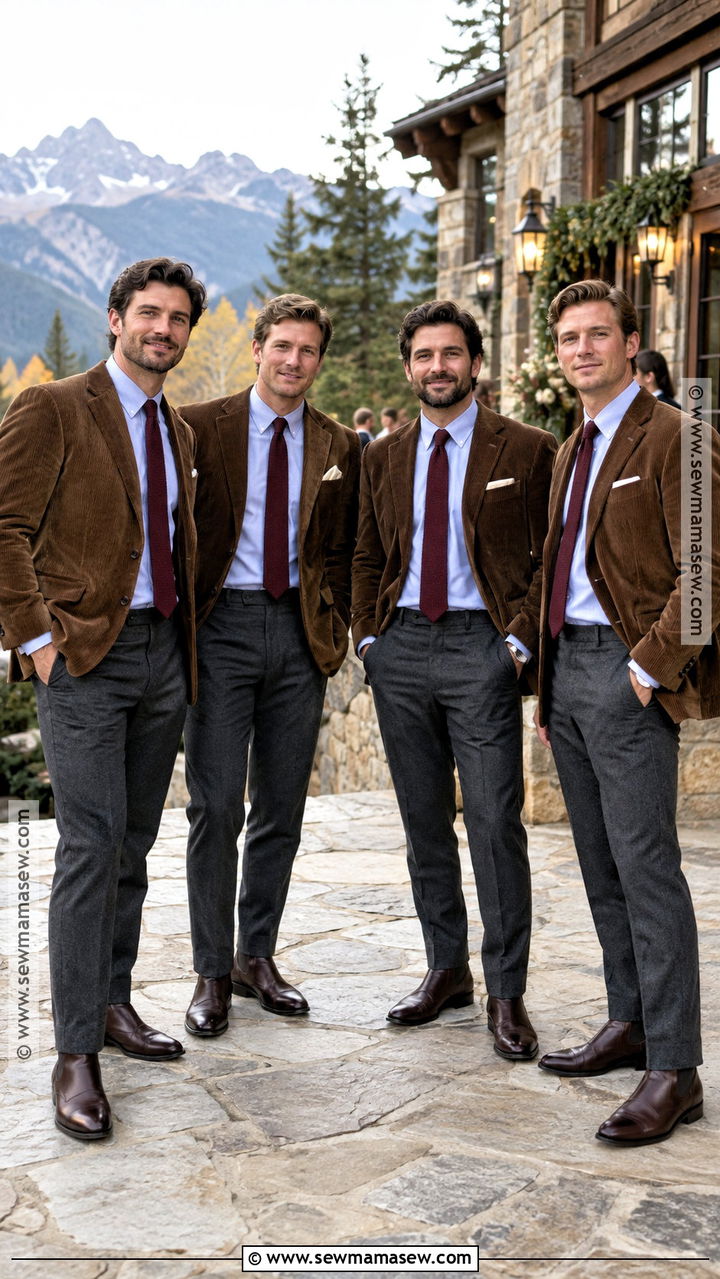
Corduroy blazers with wool trousers suit a casual fall wedding that still wants coordination. I specify fine-wale corduroy in tobacco, olive or dark brown; wide wale looks rugged and adds bulk at the chest. Charcoal wool trousers, a white or pale blue shirt and a burgundy knit tie. Dark brown boots or brogues, matching belts and cream squares. With separates, the trousers are where groups fall apart, so every pair should be the same cut and shade from the same source. Backyards, small farms, mountain venues and daytime ceremonies suit it. The groom can add a waistcoat or a deeper cord color while keeping the same trousers, shirt and shoes.
14. Navy Three-Piece Suit With Copper Tie
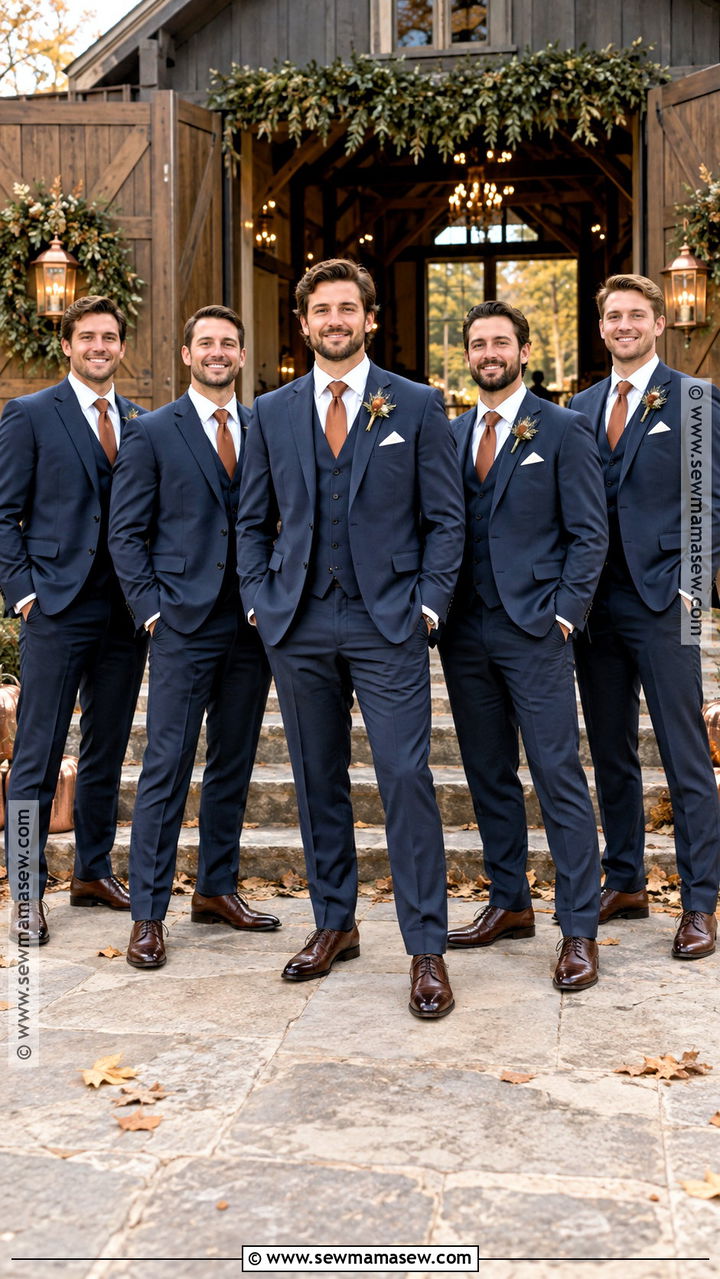
Navy three-piece suits with a copper tie are dependable and seasonal at once. A dark navy wool with fitted waistcoat, crisp white shirt, matte copper or burnt orange tie, white square and polished dark brown Oxfords. Keep the boutonniere small and neutral; the tie is the accent. I like waistcoats for groups because when jackets come off at dinner, the men still look matched. Formal barns, hotels, traditional venues and evening estates suit it. If the bridesmaids wear copper, use a related tone rather than chasing an exact match. The groom can wear a patterned tie or a navy velvet waistcoat.
15. Chocolate Brown Suit With Cream Tie
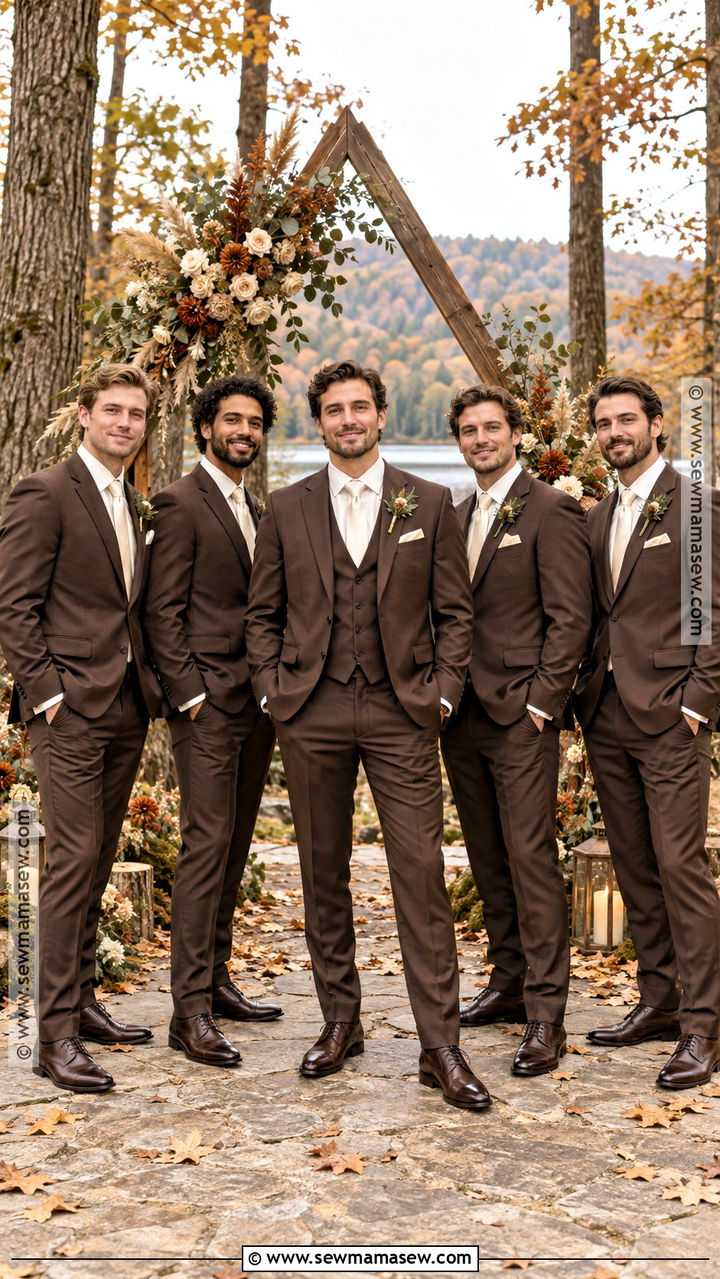
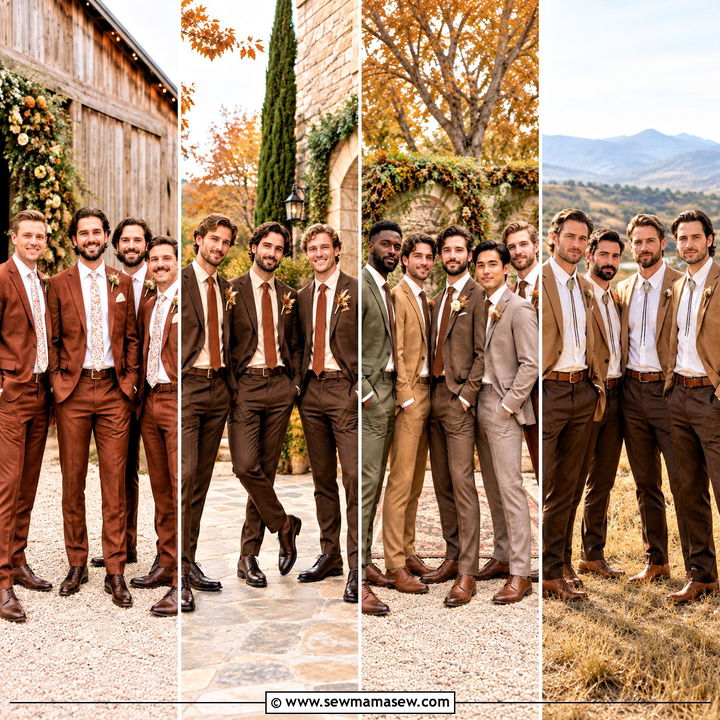
Chocolate brown builds a rich tonal look that doesn't shout. A bright white shirt gives contrast; soft ivory blends more warmly. Cream tie, cream square and dark brown Oxfords. I always keep the shoes a little darker than the suit so the outfit has a base, and I never put brown shirts under brown suits, which flattens the whole thing into one block. Candlelit receptions, lodges, woodland ceremonies and venues dressed in beige, rust or muted green suit it. The groom can wear a patterned cream waistcoat, a velvet tie or a darker espresso suit.
16. Black Suit With Burnt Orange Tie
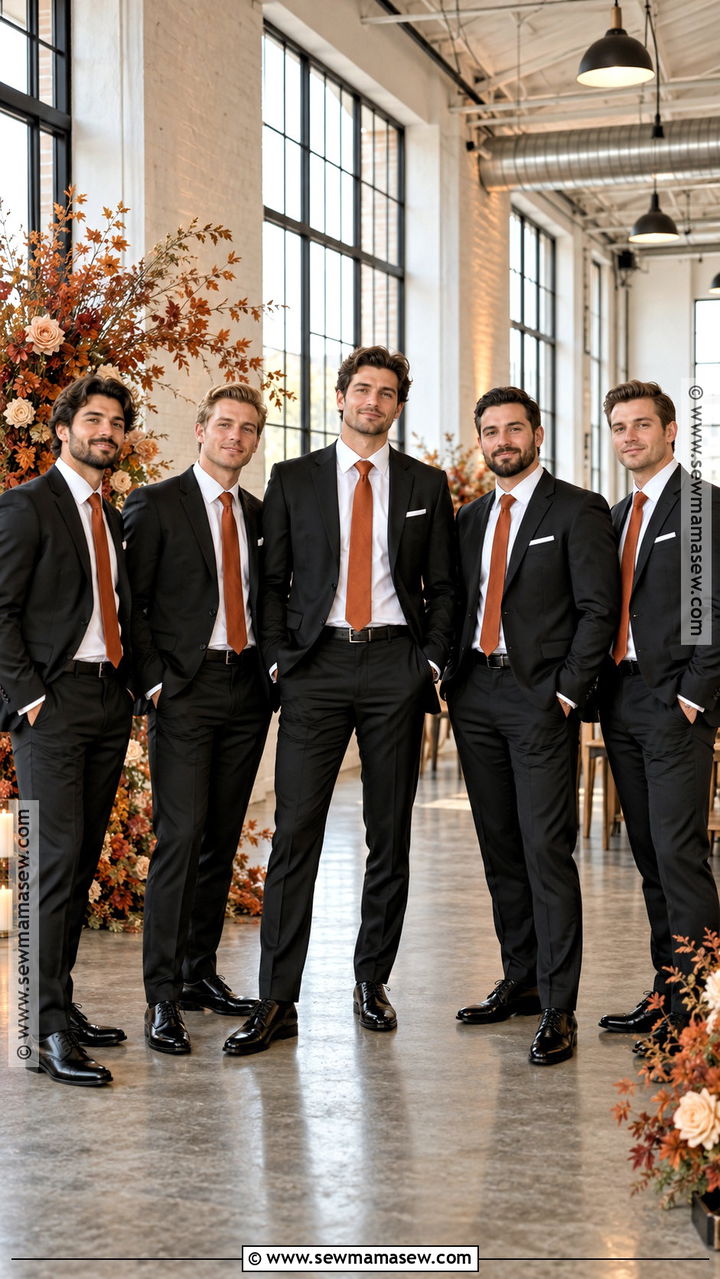
Black suits pick up a recognizable fall color with one burnt orange tie. Matte black suiting, modern tailored cut, crisp white shirt. Then the solid tie, a plain white square, a black belt and polished black Derbies or Oxfords. Orange takes over fast, so I keep it to that single accent, no orange socks, shirts or flowers. Industrial spaces, modern hotels, galleries and evening ceremonies suit it, and it works alongside terracotta, copper or rust dresses. The groom can step up to a black tuxedo with a burnt orange velvet bow tie and still connect to the group.
17. Blue-Gray Suit With Plum Tie
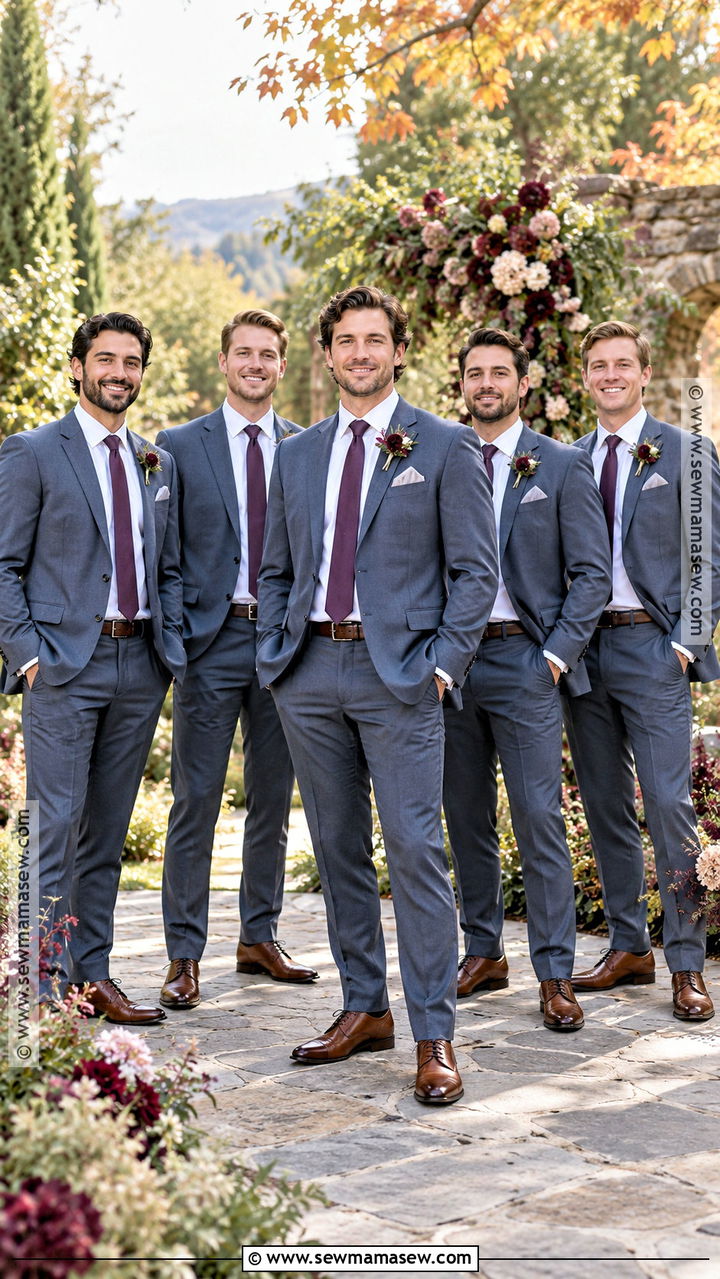
Blue-gray is softer than navy and more interesting than plain medium gray, and it shows best outdoors, where daylight brings out the blue. A blue-gray wool suit, white shirt and deep plum tie. Dark brown Oxfords, a matching belt and a white or pale gray pocket square. Plum gives seasonal depth without locking the wedding into orange and brown, and it pairs with mauve, berry, burgundy and dusty purple florals. Plum ties vary from reddish to bluish, so I order them all in the same fabric at once. For the groom, a navy three-piece with a plum tie, or the same suit with a patterned waistcoat.
18. Tweed Vest With Suspenders And Trousers
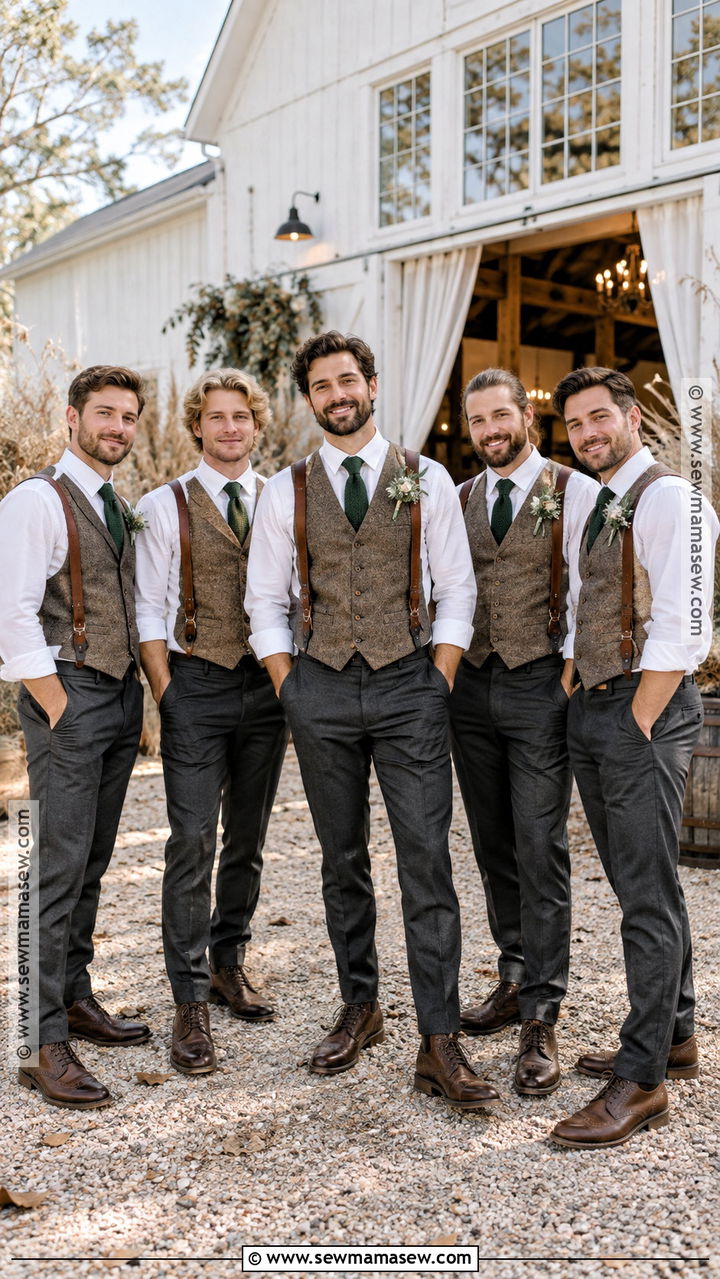
A casual rustic ceremony doesn't need full suits. Charcoal, brown or navy trousers, a crisp white shirt, matching tweed vests, leather suspenders, knitted ties and dark brown boots or brogues. Wear suspenders under the vest for the ceremony; if the vests come off later, they become part of the look. Without a jacket, every fit flaw is on show, so I check each trouser hem and each vest length; the vest should just cover the waistband with no shirt peeking out. It suits warm early fall afternoons, barns, farms and informal outdoor celebrations. The groom adds the matching tweed jacket for a full three-piece.
19. Mismatched Earth-Tone Suits
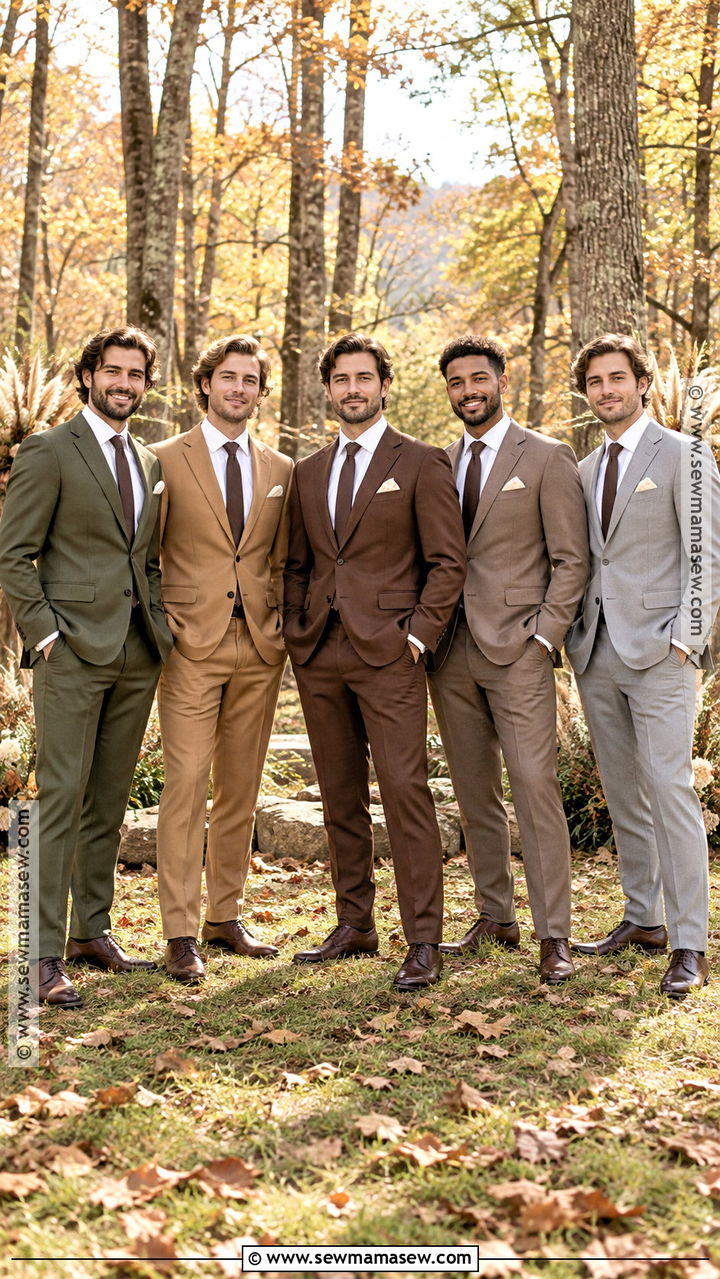
Mismatched earth tones look modern when someone keeps tight control. Olive, taupe, camel, chocolate and warm gray, all tied together with the same white shirt, dark brown tie, cream square and dark brown shoe. I limit it to three or four related colors; five completely different suits look like five guests. Fabric weight and formality need to match too. Bohemian, outdoor, woodland and creative city weddings suit it. Before photos, arrange the men so similar shades are spread out rather than clumped at one end. The groom takes the darkest suit or a three-piece with a patterned tie.
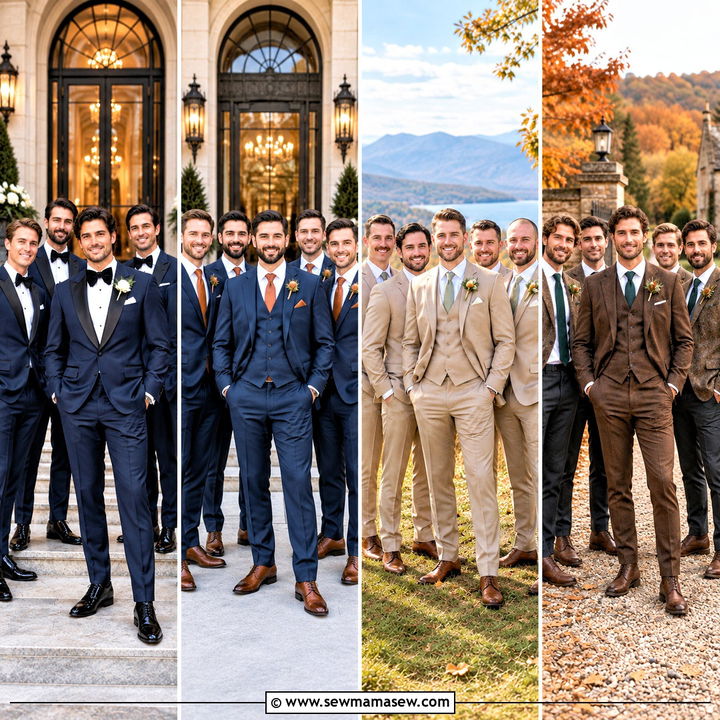
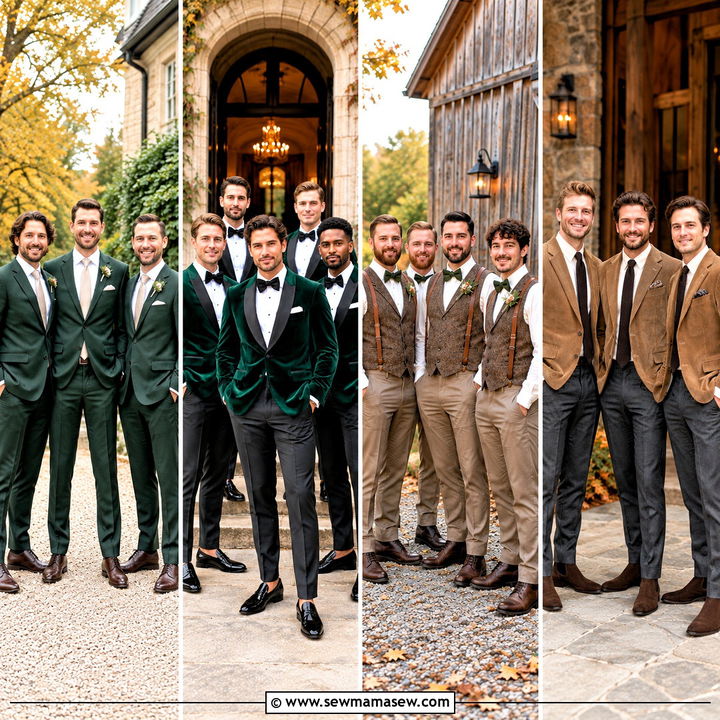
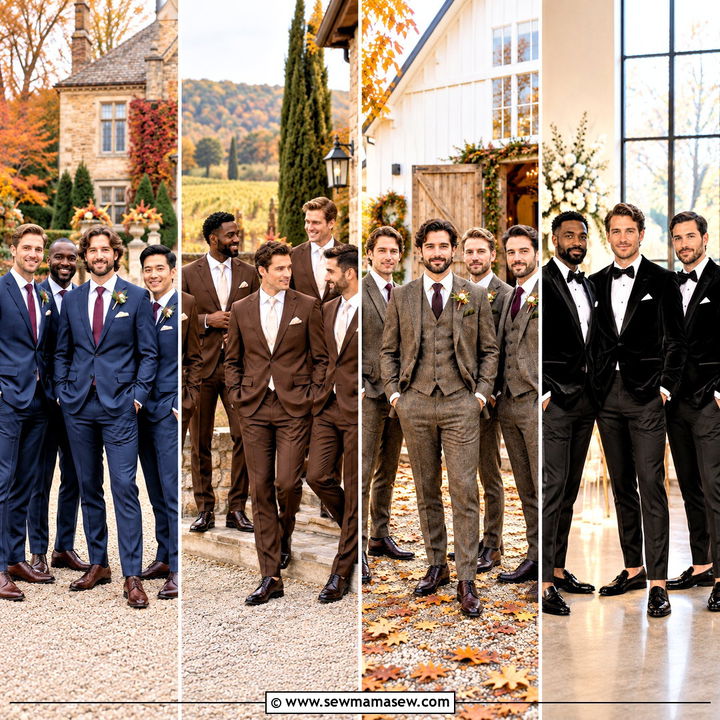
20. Monochrome Black Groomsmen Outfit
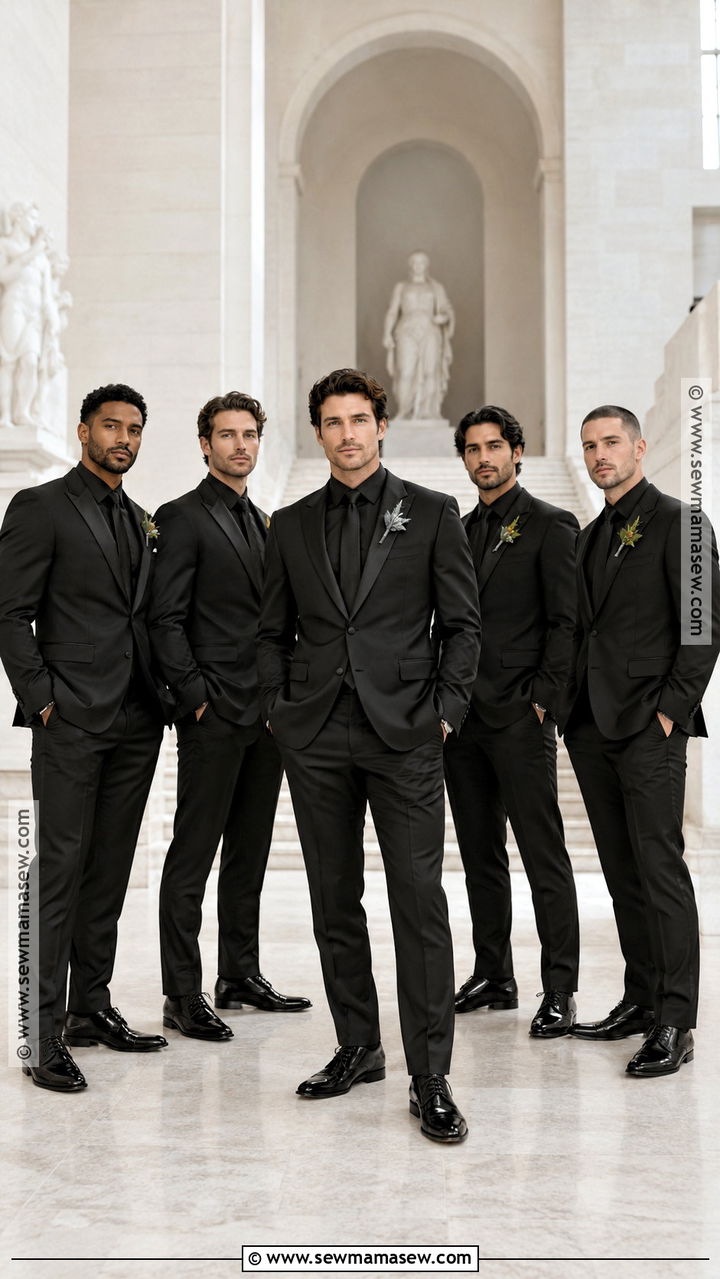
All-black groomsmen give colorful autumn flowers and dramatic décor a clean backdrop. Black suits, black shirts, black ties, polished black shoes. The trick is varying texture, not color: matte wool, a silk tie and smooth leather keep it from going flat. No bright pocket squares; a little greenery on the lapel is enough. Modern lofts, museums, formal restaurants and evening celebrations suit it. I'd avoid it for a casual daytime wedding, where it can look severe. Black shirts also show lint and deodorant marks, so keep a lint roller handy. Monochrome puts every fit issue on display, so tailoring has to be precise. The groom can wear a satin-lapel tuxedo, a charcoal vest or a white shirt.
Six Men, One Tie Knot: The Small Details That Line Up
Matching suits are only half of looking like a group. In photos, it's the small things that betray a wedding party that wasn't coordinated: three different knots, ties hanging at different lengths, boutonnieres on the wrong side. I run through these with the men on the morning itself.
- Pick one knot for everyone. A four-in-hand is slim and slightly asymmetric; a half-Windsor is fuller and suits wider collars. Either is fine as long as it's the same on every man.
- The tip of the tie should land at or just touching the top of the belt buckle or waistband. Tall men may need extra-long ties to get there.
- Self-tie bow ties look more natural than pre-tied, but only if every groomsman can tie one. Otherwise, pre-tied for all.
- Boutonnieres go on the left lapel, over the heart, pinned from behind so the pin doesn't show.
- Choose one pocket-square fold, a straight flat fold is the easiest to repeat, and set the height so a small strip shows above the pocket.
- On a two-button jacket, fasten the top button only; on a waistcoat, leave the bottom button undone. Everyone unbuttons when they sit and rebuttons when they stand.
It takes ten minutes to check all six men side by side in a mirror, and it makes the difference between a group that looks dressed and one that looks styled.
Fit and a Shared Palette Matter More Than Matching
Every outfit here works best when it matches the real dress code, the weather, the venue and the couple's colors. Navy and charcoal are the reliable foundations; brown tweed, forest green, burgundy, velvet and corduroy push the season harder. Get accurate measurements, keep accessories consistent, choose shoes that can stand all day and finish tailoring well ahead. Groomsmen don't need to look identical, but their colors, fabrics and level of formality should clearly connect. Give the groom one distinct detail, a vest, a textured jacket, a patterned tie or a bigger boutonniere, and plan the rest head to toe.
Related posts: