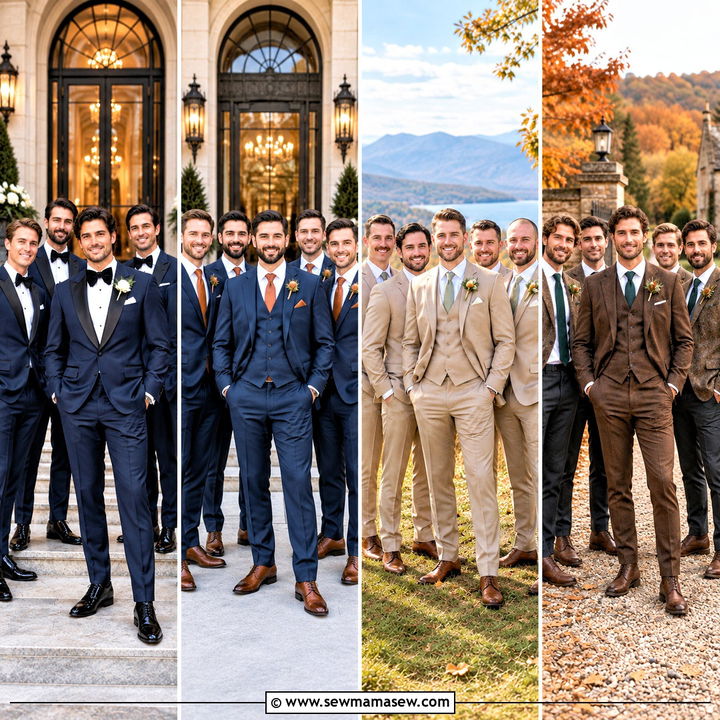
Fall is the easiest season to dress a wedding party, because the fabrics finally work in your favor. Wool, flannel, tweed and velvet all carry deeper color than summer suiting, so a group in brown, olive or burgundy reads as seasonal rather than costumed. When I plan groomsmen for an autumn date, I settle three things before anyone looks at a tie: the dress code on the invitation, whether the ceremony is indoors or out, and the bride's palette. Navy and charcoal are still the safest base. The real work is making six men of different builds look like one group, which comes down to matching tailoring, shoes and accessories far more than the suit color itself. The twenty looks below run from black tie evenings to barn ceremonies.
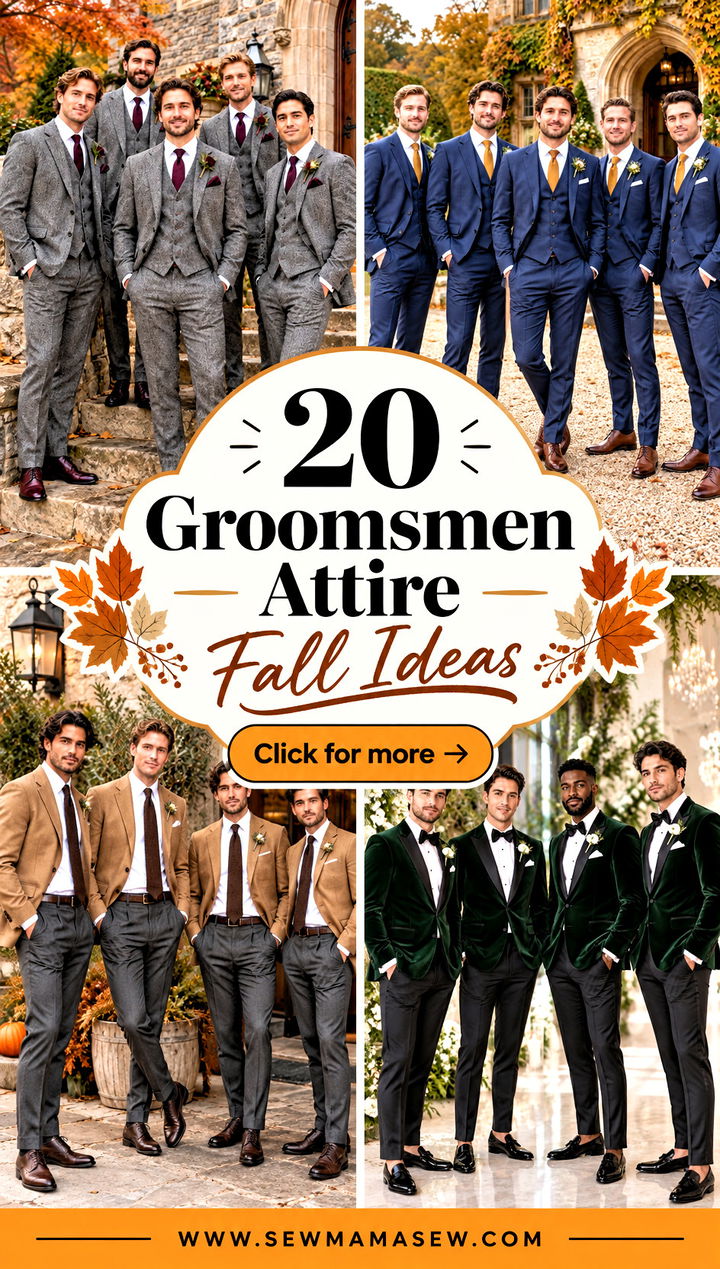
Measuring Groomsmen Who Live in Different Cities
The most common problem I see isn't color. It's a groomsman three states away who sends in measurements taken by his roommate with a sewing tape over a sweatshirt. Remote sizing goes wrong more than anything else in wedding menswear, so I build the timeline around it.
- Start ordering about three months out for purchased suits. Rental companies usually want measurements six to eight weeks ahead, but check the specific cutoff.
- Ask each man to get measured at a tailor or a menswear counter, not at home. Chest, waist, sleeve, inseam, neck and shoe size are the minimum.
- Get height and weight too. Sizing teams use them to sanity-check numbers that look off.
- Schedule one fitting for every man after the suits arrive, at least two weeks before the wedding, so there's time for a sleeve or hem adjustment.
- Have a backup plan for the one person who gains or loses weight before the date. A jacket can usually be taken in or let out about an inch at the waist; the shoulders can't be changed.
Renting versus buying depends on the look. Classic navy, charcoal and black tuxedos rent well. Velvet, tweed, corduroy and specific shades of olive or rust are harder to find in rental fleets, so for those I plan on buying, and I tell the groomsmen early so it isn't a surprise expense.
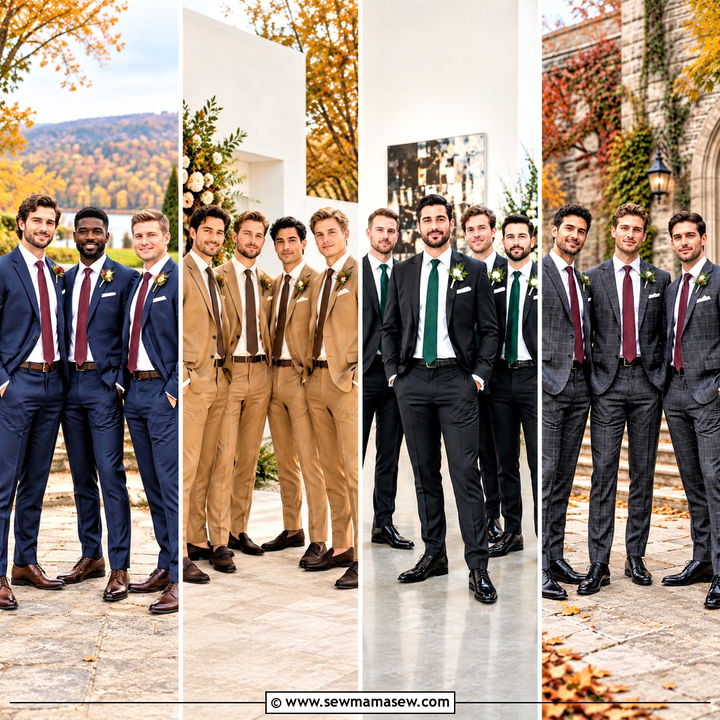
1. Navy Groomsmen Suits With Burgundy Ties
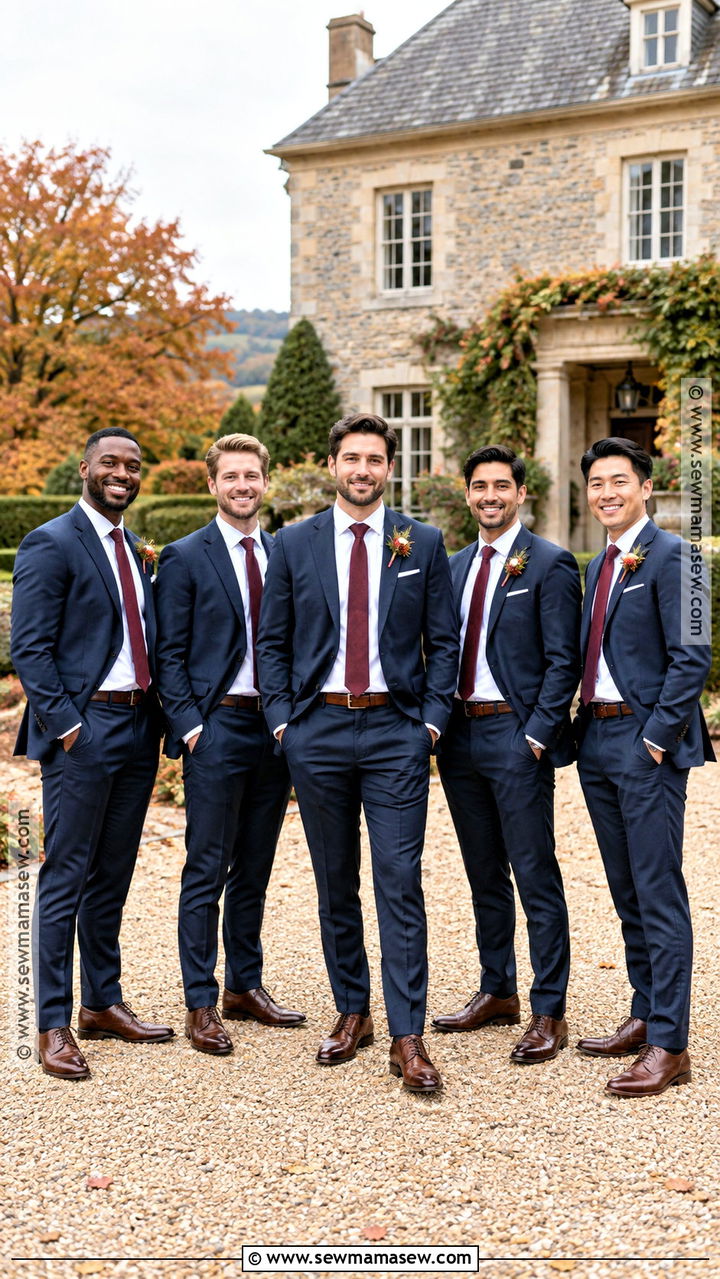
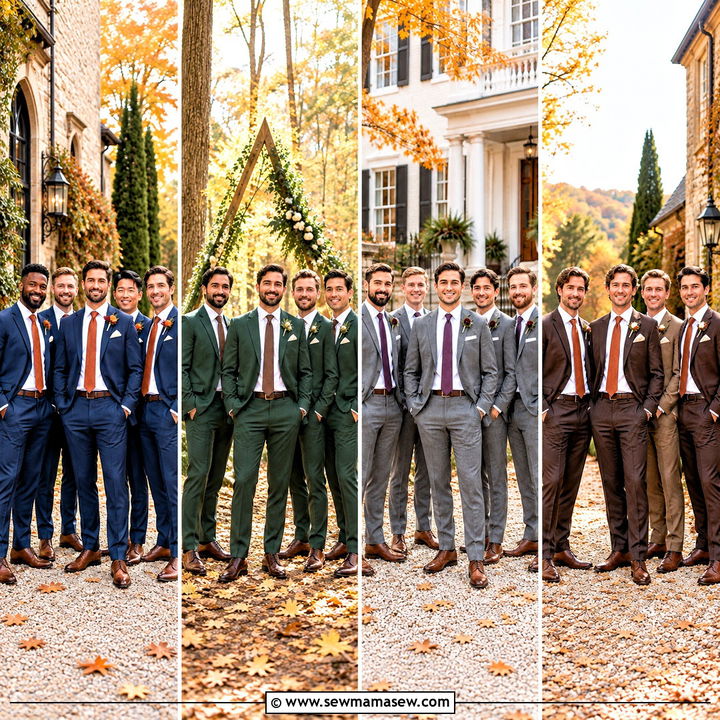
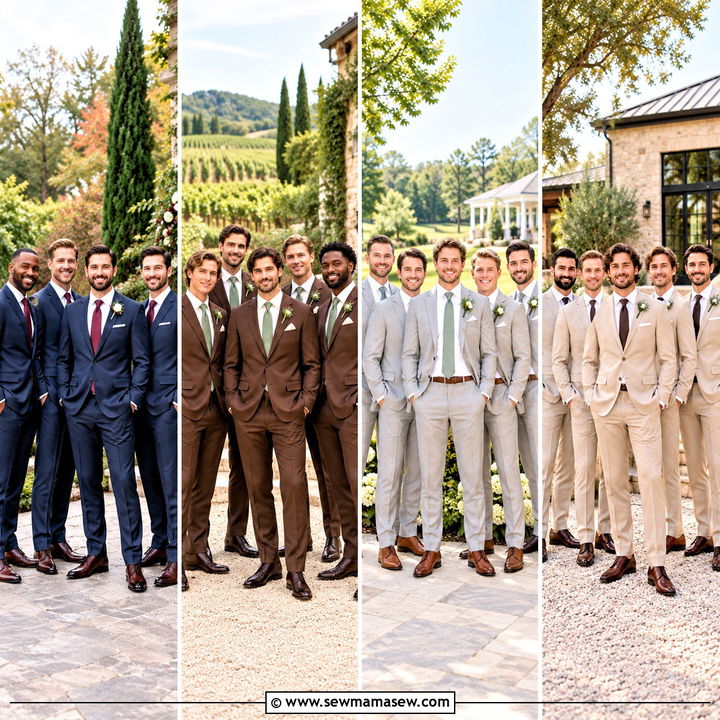
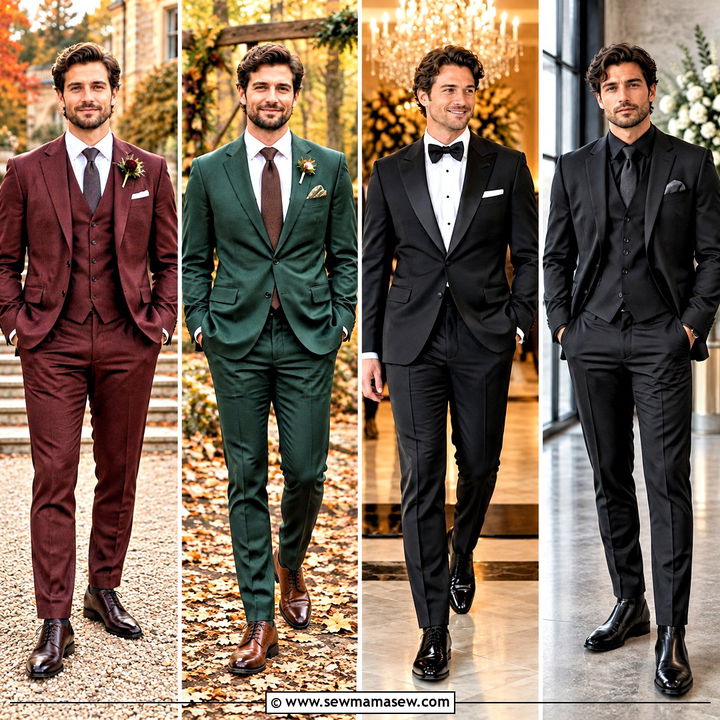
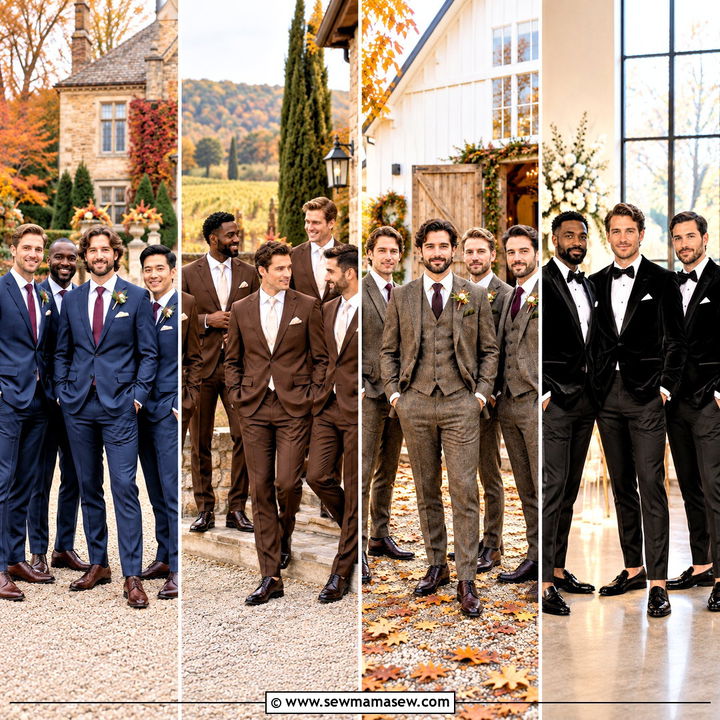
Navy is the suit I reach for when the couple wants something that will still look right in photos twenty years from now. White shirt, burgundy silk tie, a pocket square in the same family and dark brown Oxfords. Brown shoes with navy are the detail that makes it feel autumnal rather than corporate. For a September date I'd specify a lighter worsted wool, around 9 to 10 ounces, because a heavy flannel in warm afternoon sun gets miserable fast; save the heavier cloth for November. Match the belts to the shoes. The groom can step out with a burgundy waistcoat or a patterned tie while everyone else stays solid. I use this one most at hotels, country clubs and traditional indoor venues.
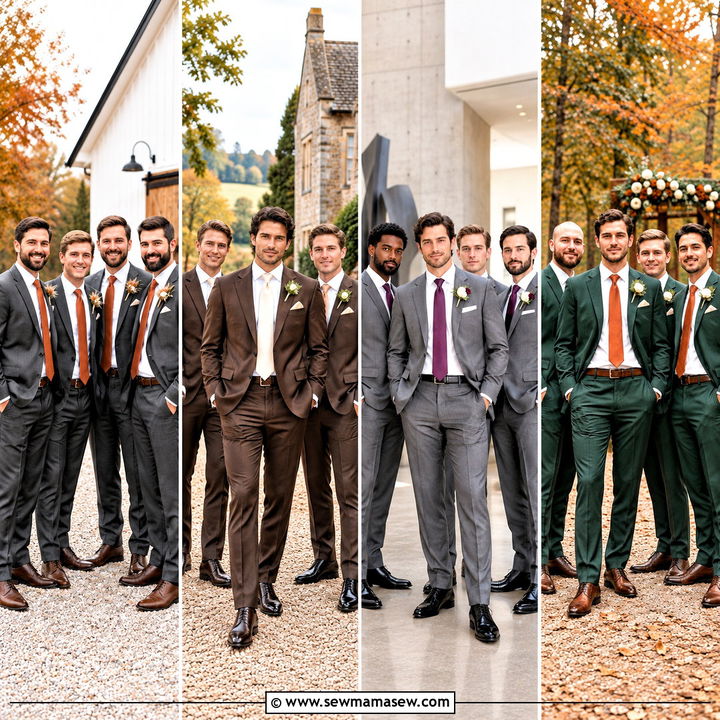
2. Charcoal Groomsmen Suits With Rust Ties
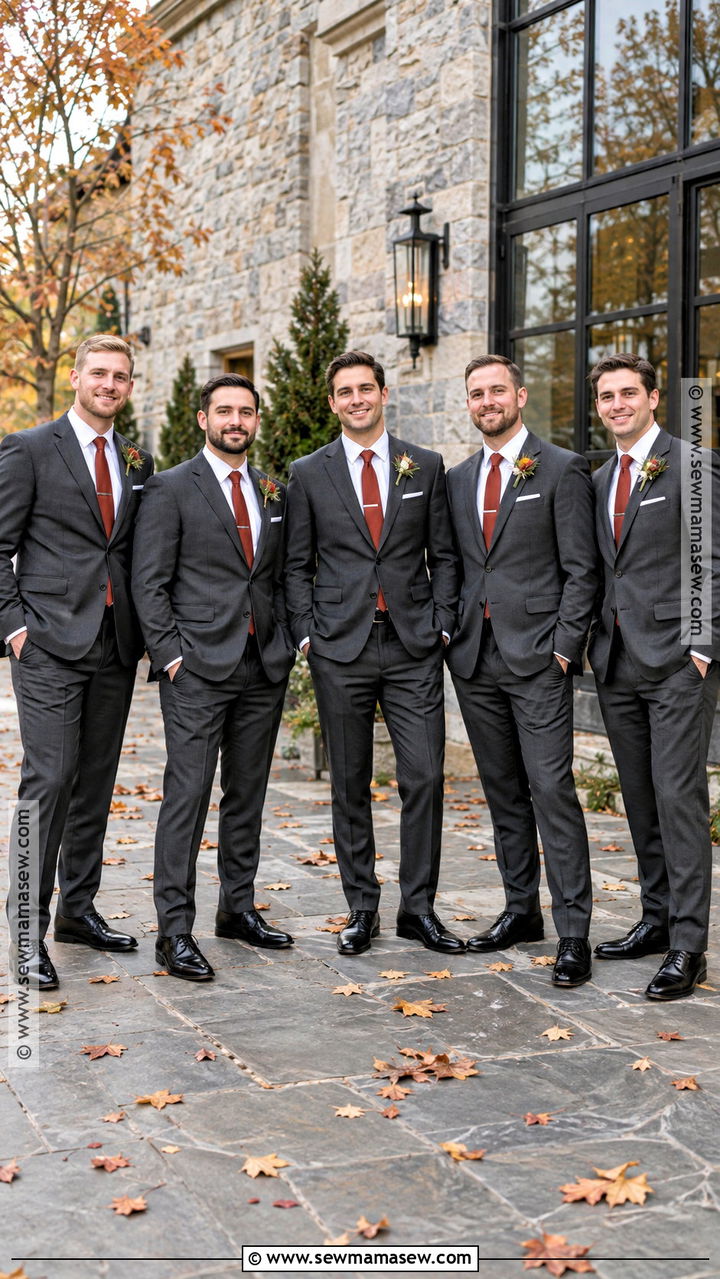
Charcoal is more forgiving than navy in mixed light, which is why I like it for venues with stone walls and turning trees. Pair it with a white or pale ivory shirt, a textured rust tie, a white pocket square and black Oxfords. Rust warms the gray without glowing in photos the way a bright orange would. Smooth worsted with a structured shoulder suits a formal evening; for a lodge or barn I'd switch to a lightly brushed flannel, which looks softer and handles a cold evening better. Keep socks dark gray or black so the leg line doesn't break. Putting the groom in a three-piece while the rest wear two-piece is the quietest way to set him apart.
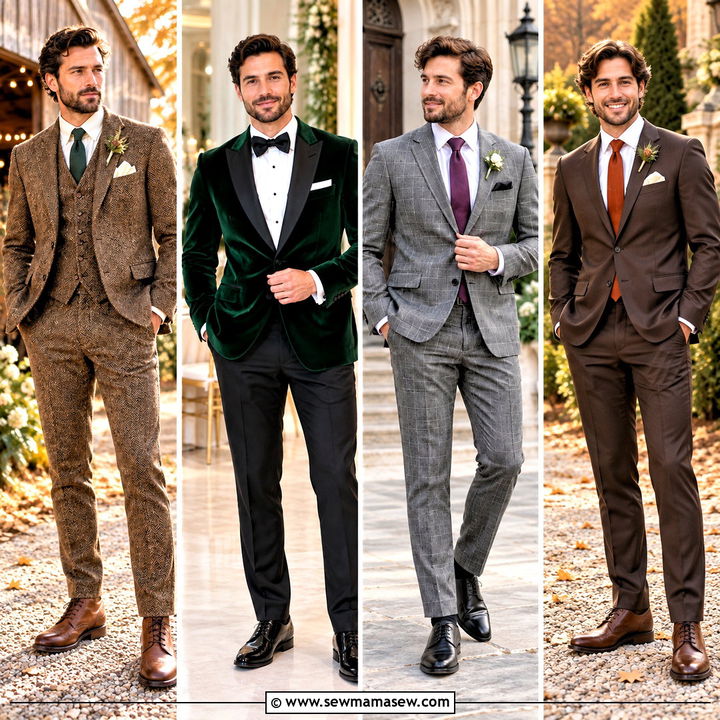
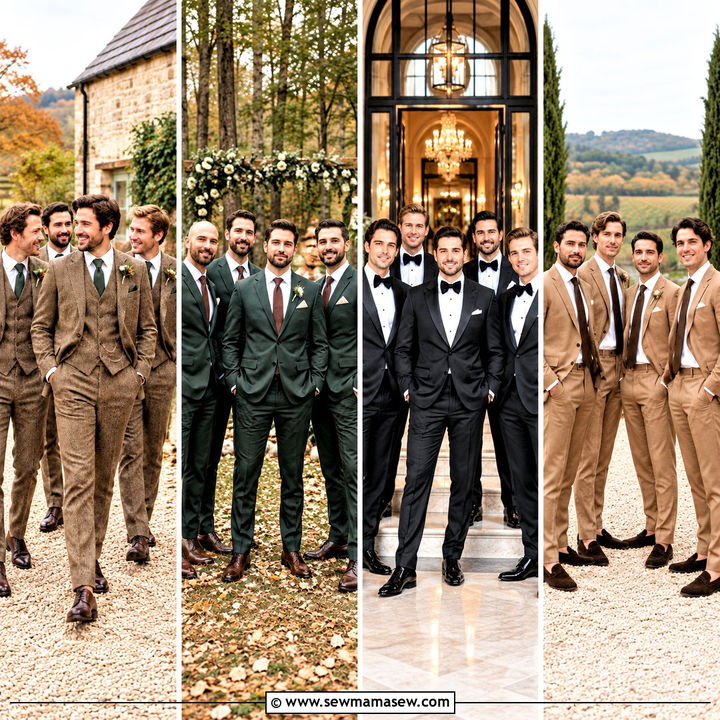
3. Brown Tweed Groomsmen Three-Piece Suits
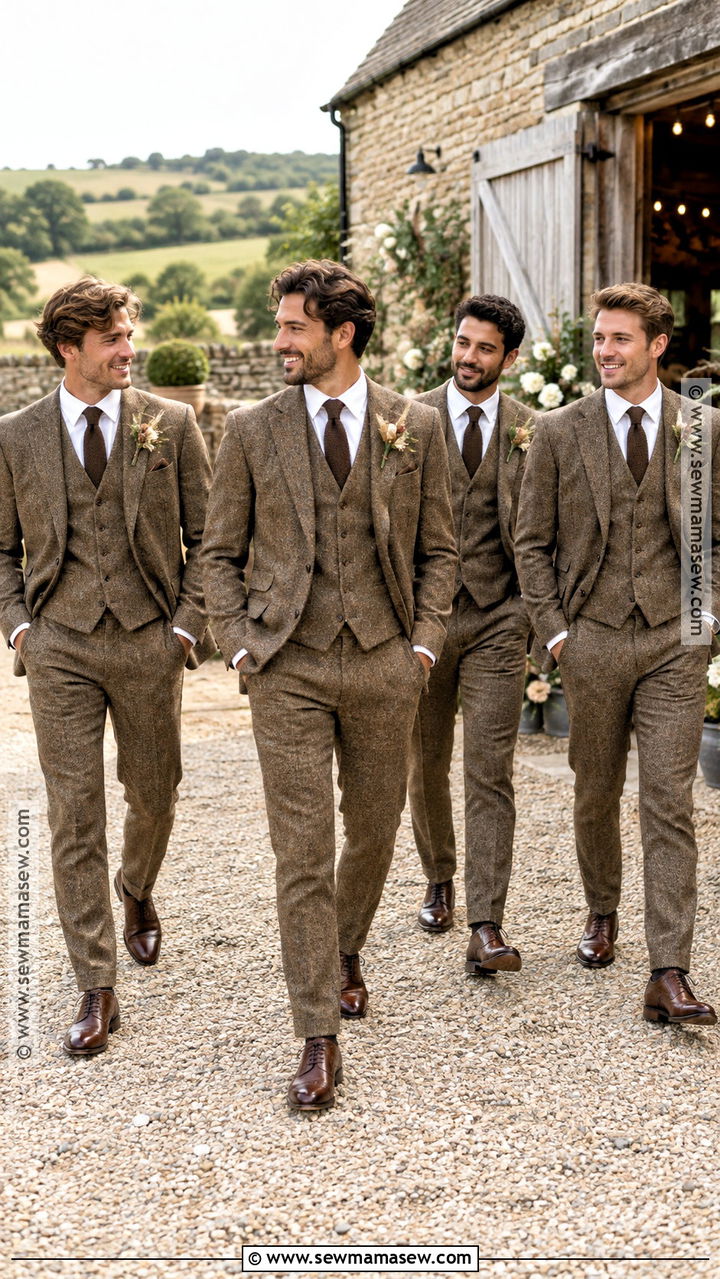
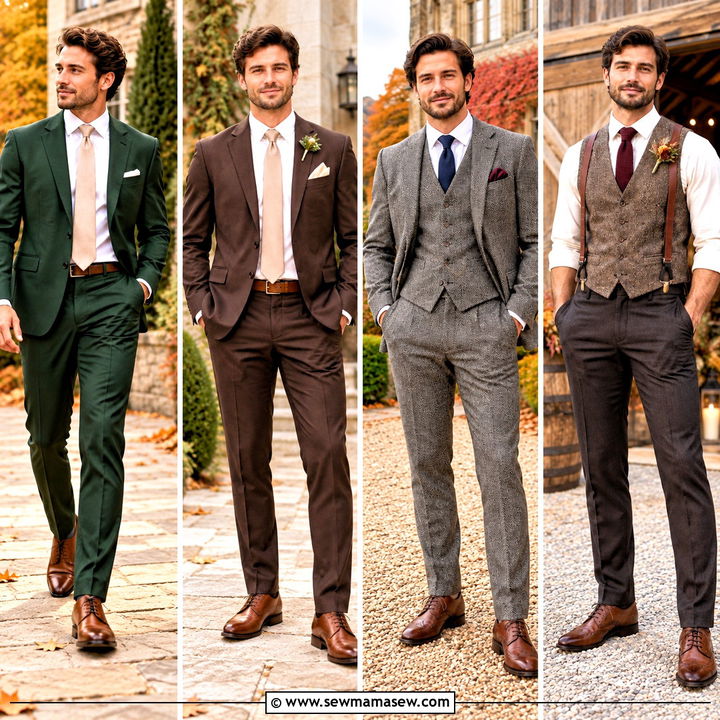
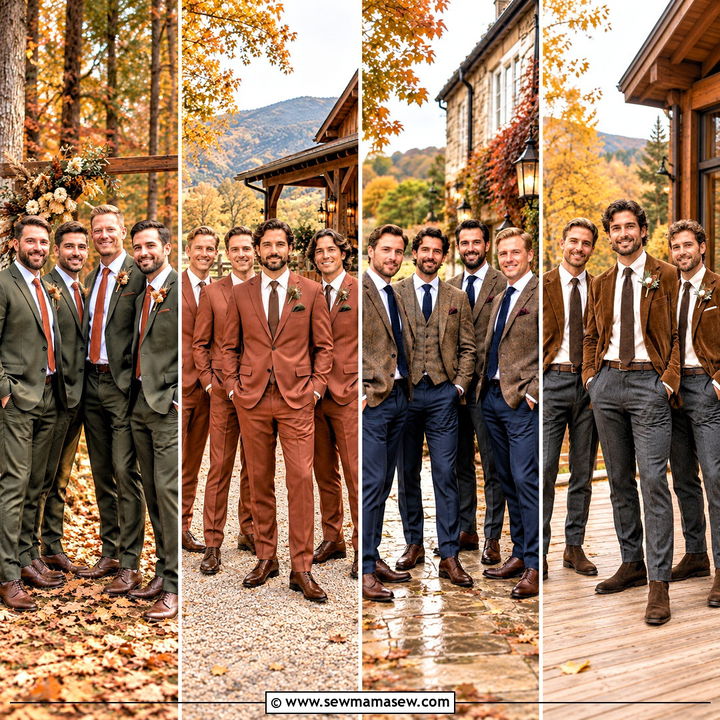
Tweed belongs in the countryside, and a cold daytime ceremony at a barn, farm or vineyard is exactly where it shines. Ivory shirts, dark brown knit ties, matching waistcoats and chocolate brogues finish it. The cloth already has a lot going on, so I keep every accessory solid. A small dried-flower boutonniere ties the suits to an autumn bouquet without tipping into theme. The thing that goes wrong with tweed is fit. It's a thick, stiff fabric, and a jacket that's even one size loose stands away from the body and makes a slim man look heavy, so I insist on a proper tailoring appointment for every jacket and trouser. Expect a three-piece in tweed to run warm in a sunny field, so plan a shaded spot for photos.
4. Forest Green Groomsmen Suits With Brown Shoes
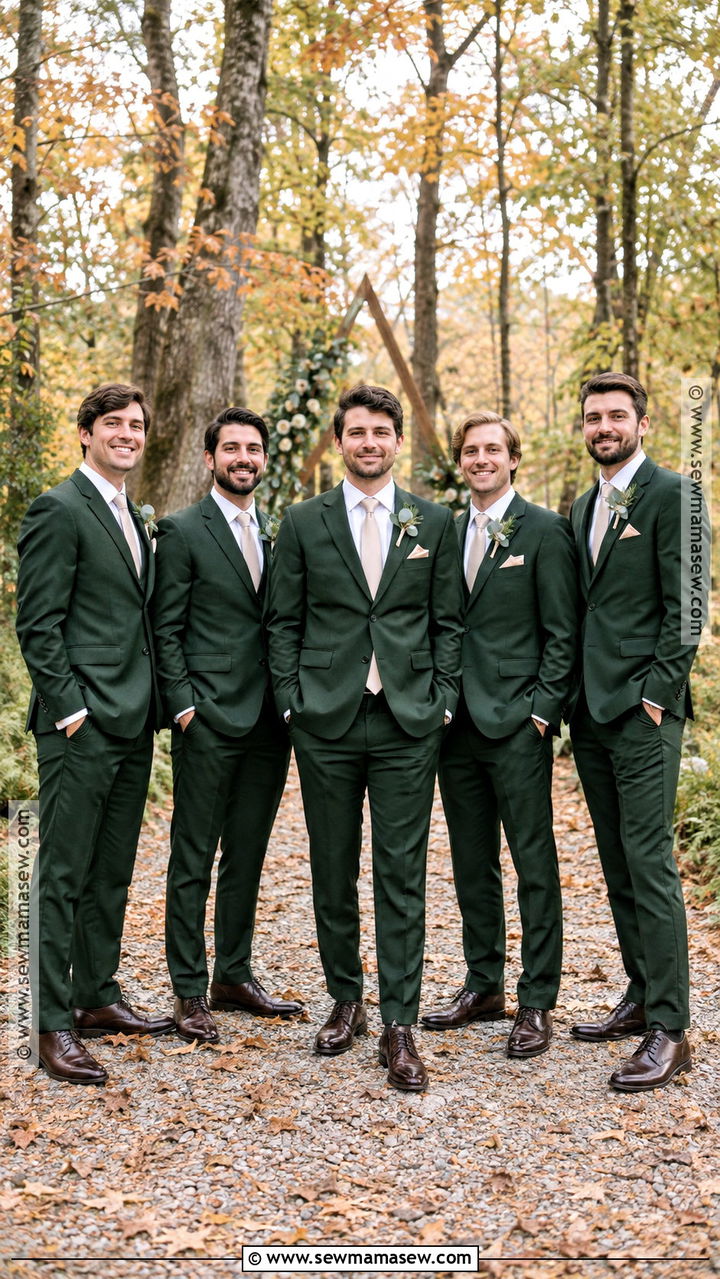
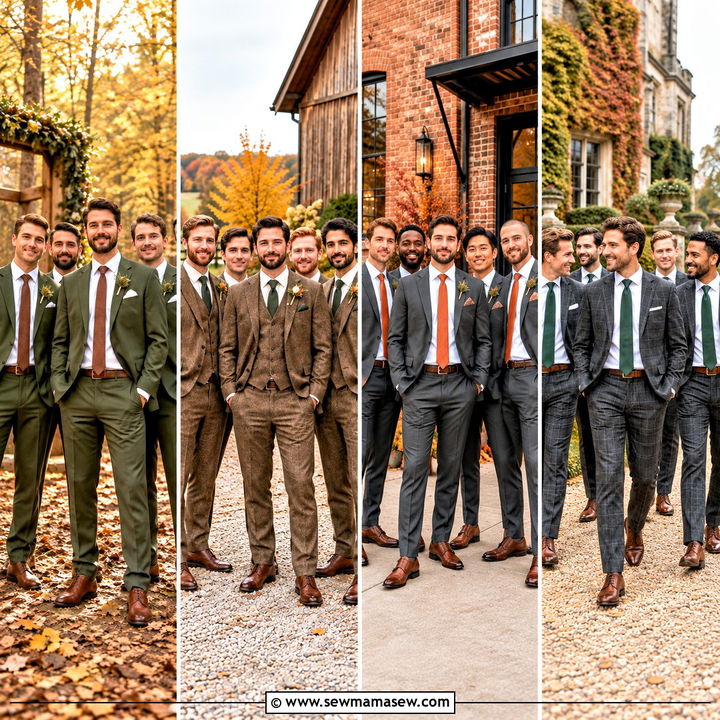
Forest green is the color I suggest when a couple wants something distinctive that the groomsmen will still wear again. White shirts, taupe or champagne ties, cream pocket squares and dark brown Derbies keep it grounded. Those quiet neutrals stop a deep green from swallowing the rest of the wedding palette. I always ask for a matte wool; any sheen on green looks cheap outdoors and flares under a flash. Brown belts and a sprig of greenery on each lapel finish it. Woodland, garden and mountain venues suit it best. If the groom needs a difference, give him a waistcoat or a subtle pattern on the tie and keep the attendants in two-piece suits.
5. Burgundy Groomsmen Suits With Black Accessories
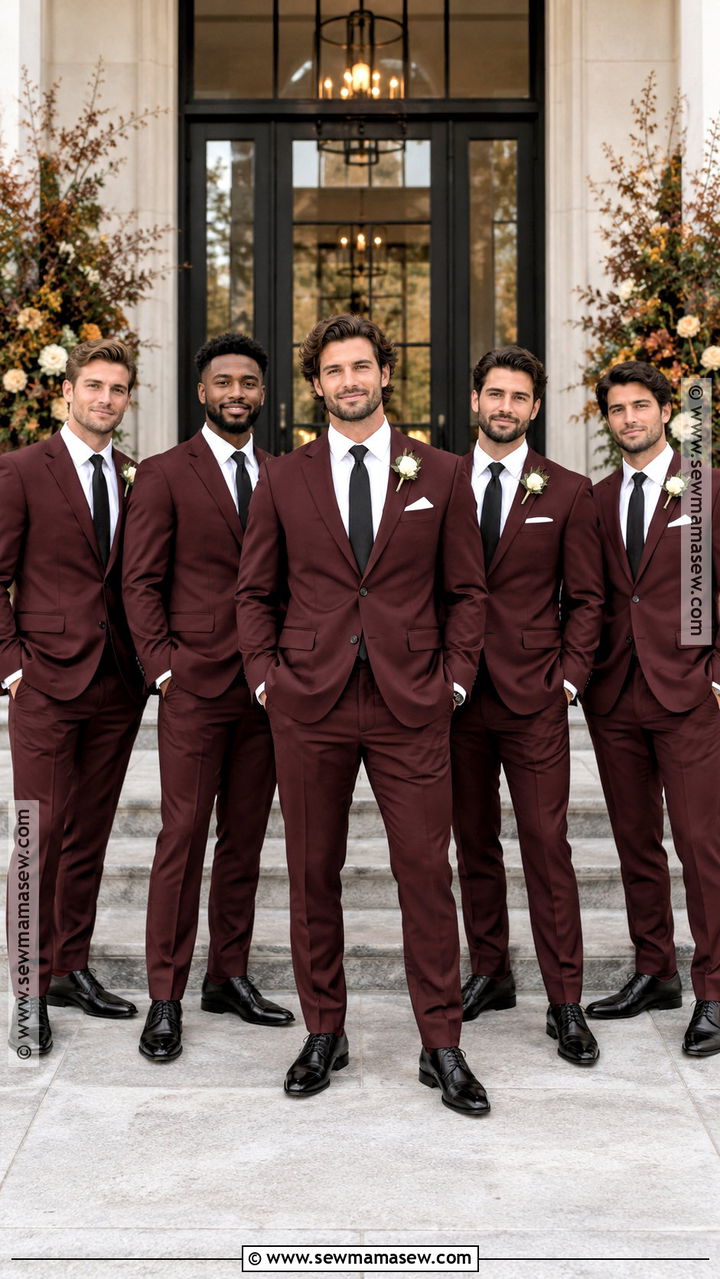
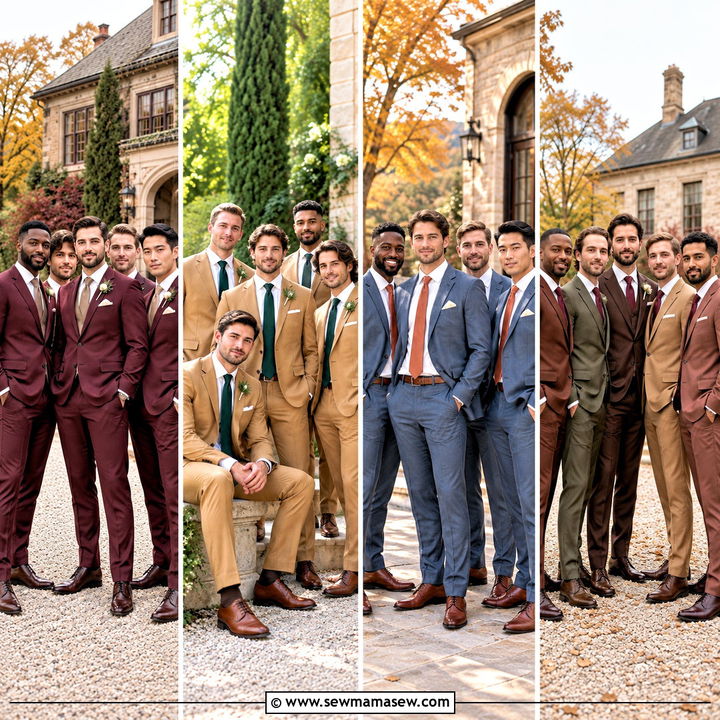
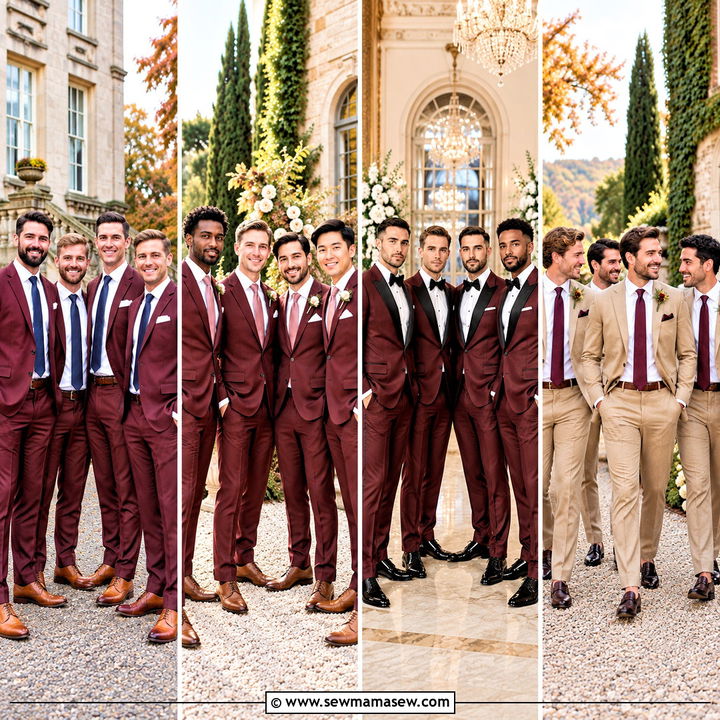
Burgundy suits are bold, so I strip everything around them back to black and white: white shirts, black ties, black belts, polished black shoes and a neatly folded white square. That restraint is what keeps the look formal. Shade matters more than anything here. A medium to dark burgundy in wool sits comfortably next to cream, blush, navy or plum, while anything leaning toward true red looks like a costume rental. I'd keep boutonnieres small, greenery with one pale bloom. Ballrooms, converted warehouses and modern estates carry it well. A black waistcoat or a velvet bow tie gives the groom a slightly more formal edge.
6. Black Groomsmen Tuxedos With Velvet Bow Ties
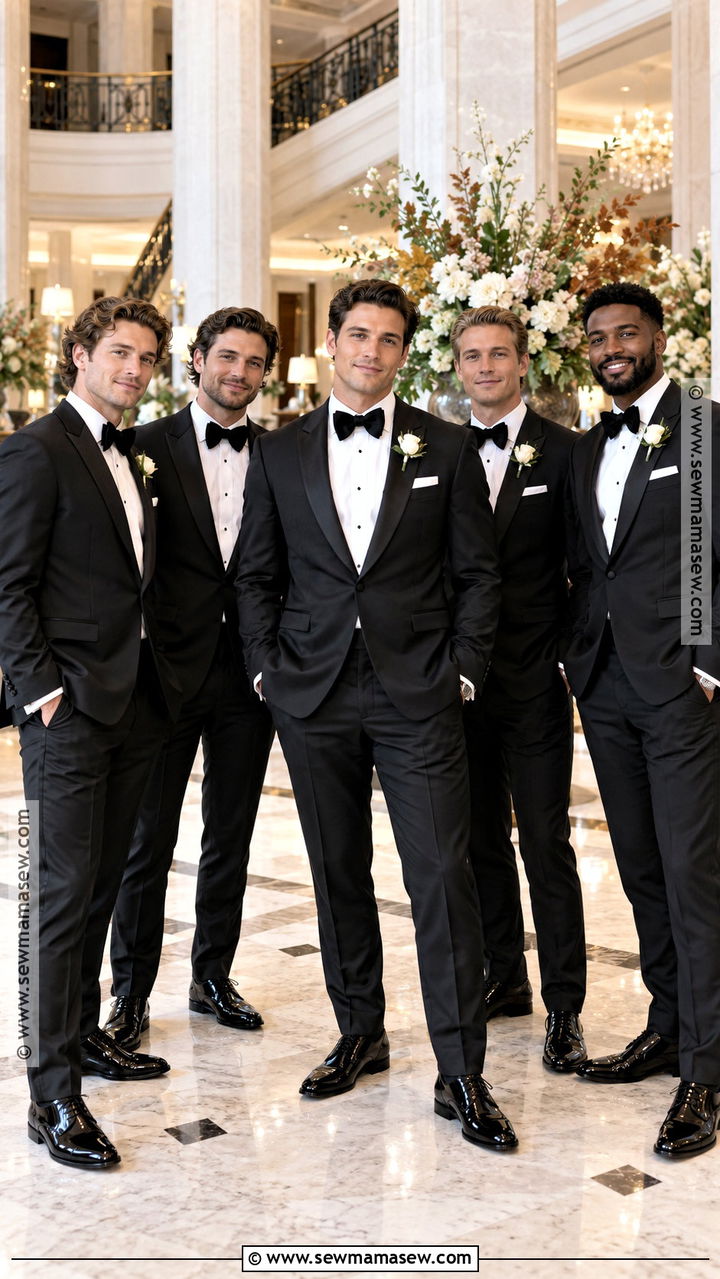
If the invitation says black tie, I don't improvise: black tuxedos, white pleated or bib-front shirts, black velvet bow ties, patent shoes and a white pocket square. Velvet on the tie is the one seasonal nod the dress code comfortably allows. In a formal lineup, tiny inconsistencies jump out, so I check every trouser hem and every shirt collar style before the day; one man in a wing collar among five turndowns is visible from the back row. Evening ceremonies at hotels, museums and elegant indoor spaces suit it. The groom can wear a velvet dinner jacket or a different boutonniere and still belong to the group.
7. Black Groomsmen Suits With Burnt Orange Ties
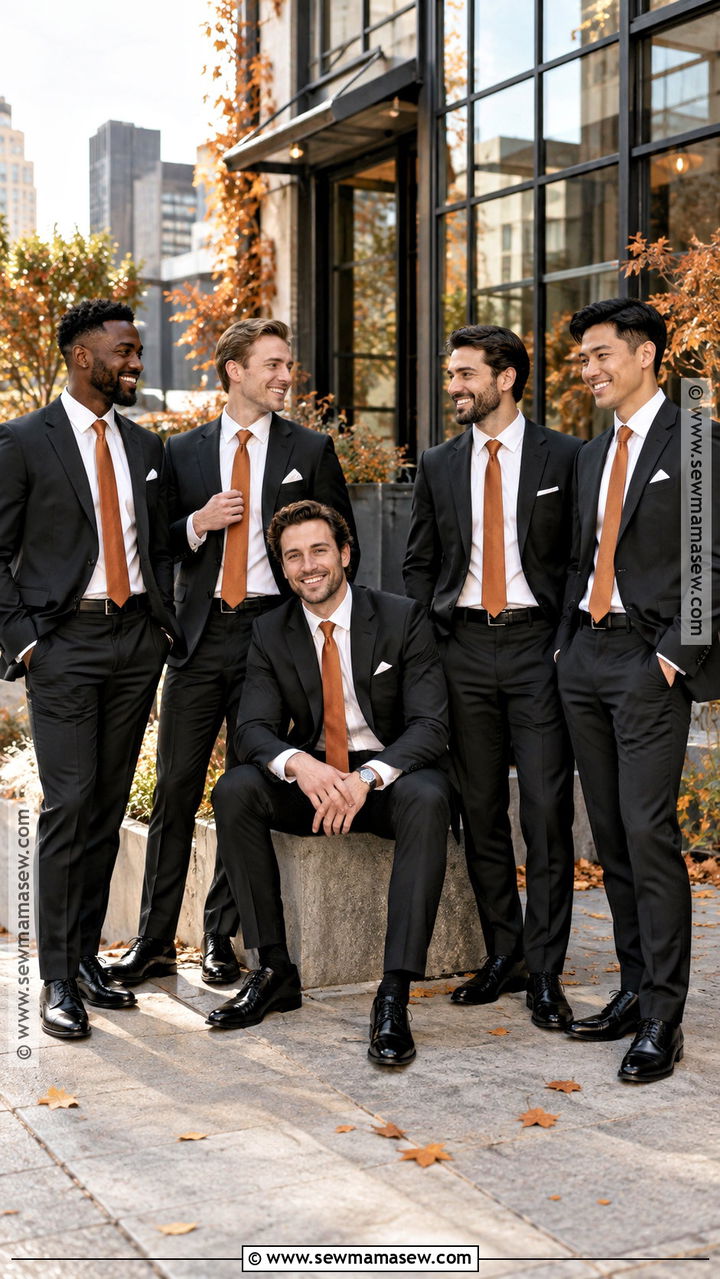
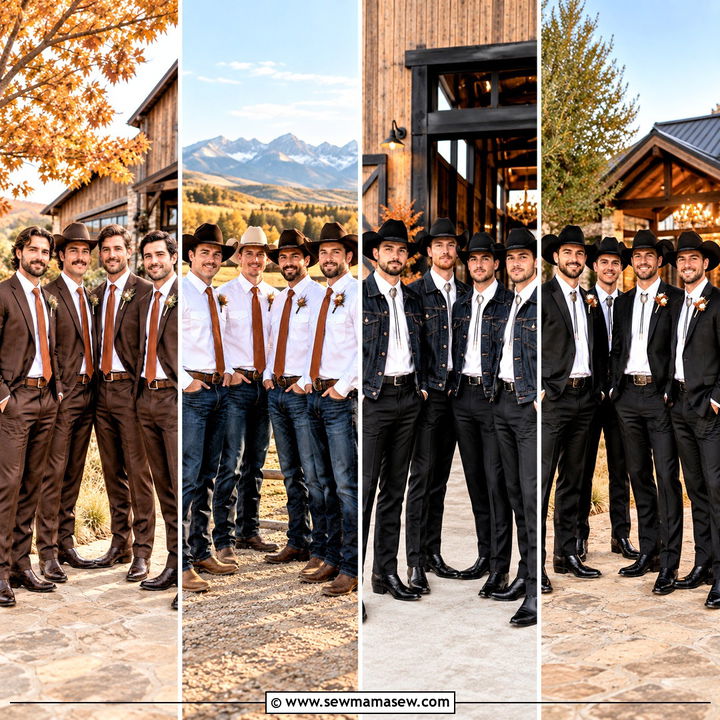
Black suits only feel autumnal when the accent color is chosen carefully. White shirts, a muted burnt orange tie, a white pocket square, black belts and polished black Derbies. I look for an orange with brown or copper in it; bright pumpkin reads as Halloween, especially beside black. Black socks and minimal boutonnieres keep the line clean. I like it for contemporary venues, lofts and restaurants after dark. It's also the practical answer when most of the groomsmen already own black suits. Line them up together first, though. Black cloth varies more than people expect, and a notch lapel next to a peak lapel or a matte finish next to a shiny one shows up in every group shot.
8. Tan Groomsmen Suits With Dark Green Ties
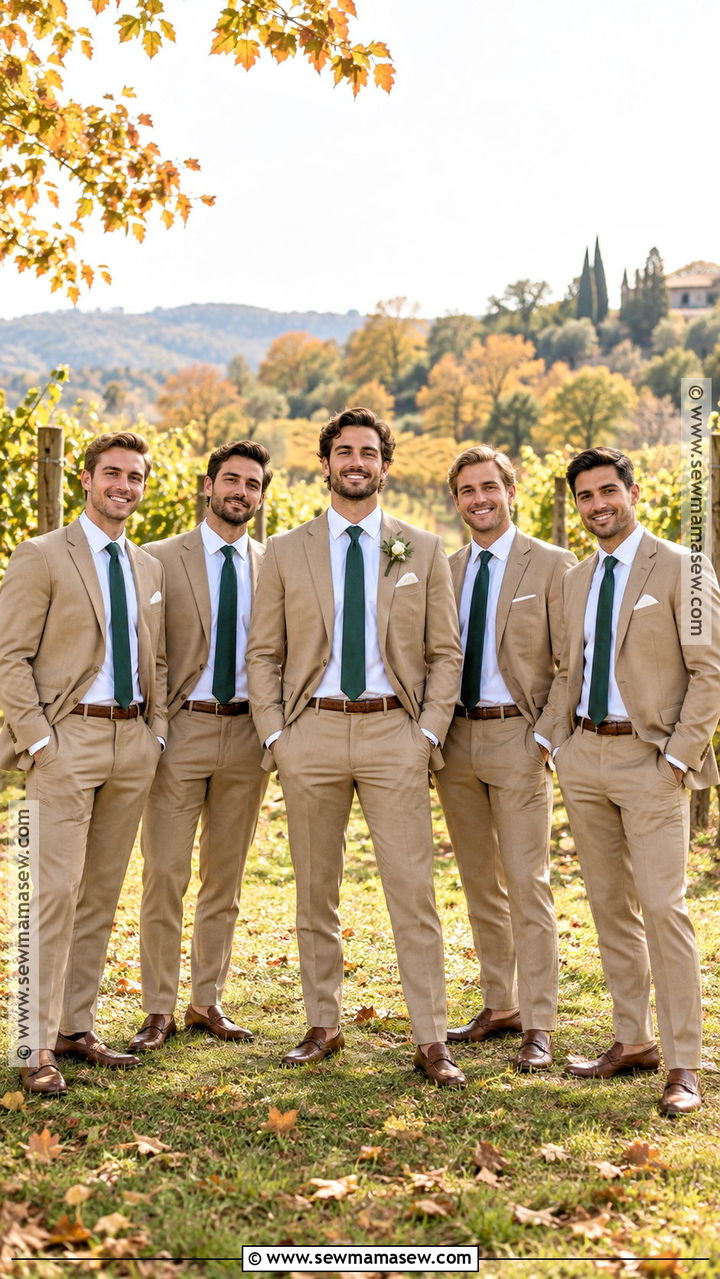
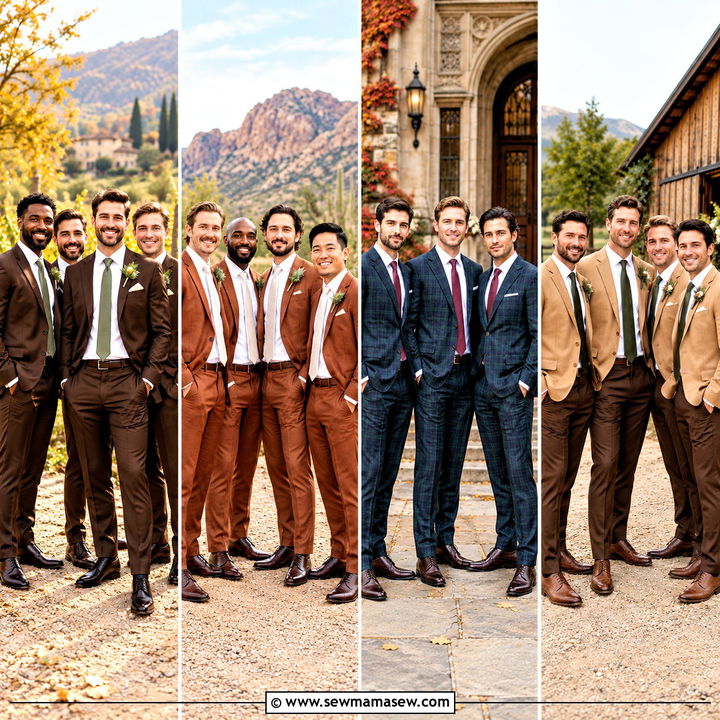
Early September can still be hot, and a dark wool suit at a 3 p.m. outdoor ceremony is hard on everyone. Tan is my answer: white shirts, dark green ties, brown leather loafers and cream pocket squares. The green gives the light suit enough depth to read as fall. I'd go for a medium tan rather than a pale beige, because strong afternoon sun bleaches pale cloth to almost white in photos. A linen-wool or tropical wool blend breathes far better than all-wool. Match belts and socks so the group looks planned. Vineyards, gardens and ranches suit it. The groom can reverse the palette, a dark green suit with a tan tie, so his outfit still talks to theirs.
9. Olive Groomsmen Suits With Cream Shirts
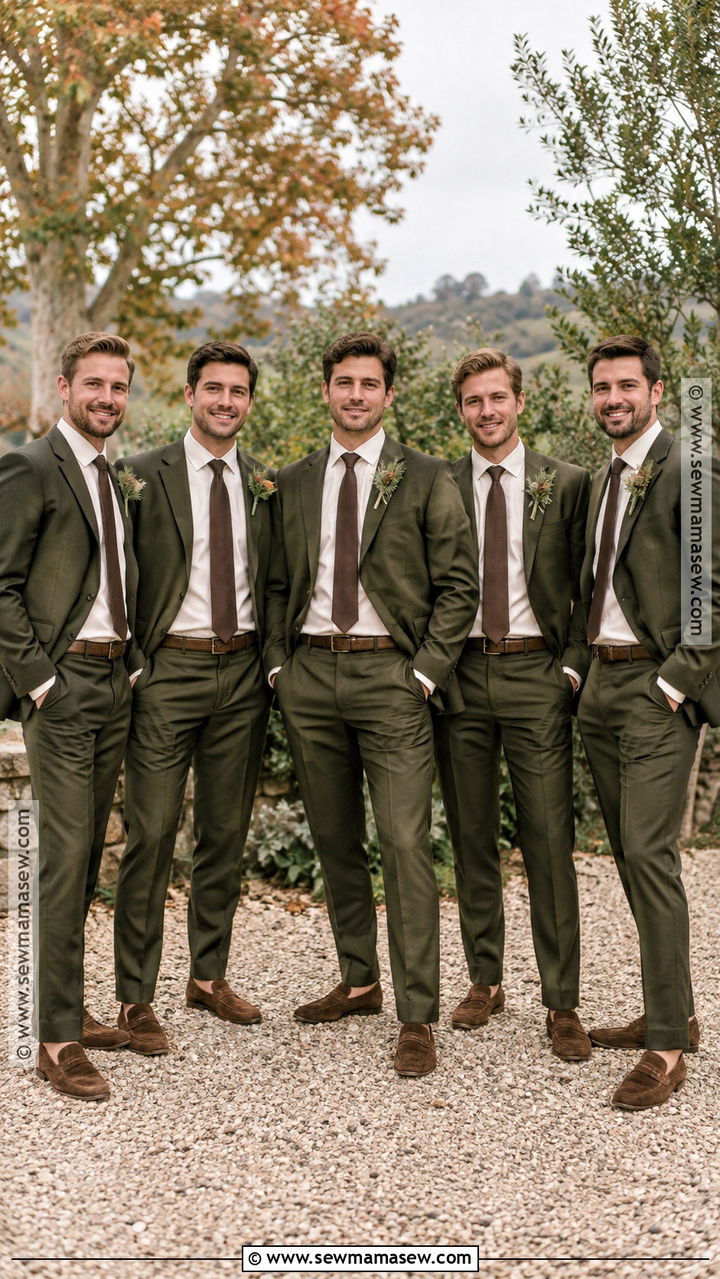
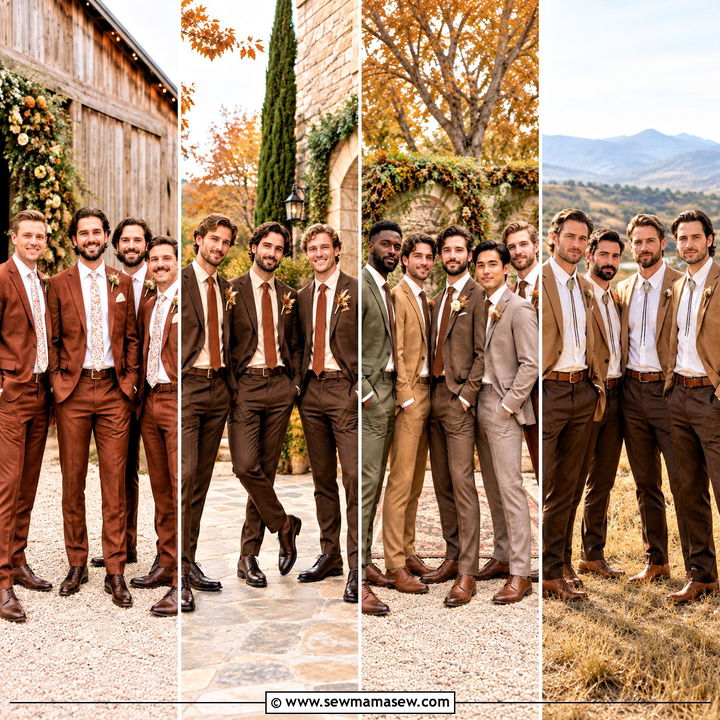
Olive looks good against turning leaves and dried florals, and it's flattering on most skin tones. I style it with cream shirts, chocolate ties, brown belts and dark brown suede loafers or lace-ups. Cream rather than bright white keeps the whole outfit warm. Olive is the shade I'm most careful about sourcing, because it varies more than almost any other suit color; one maker's olive is another's khaki. Order or rent every suit from the same line and the same batch rather than letting each man find something close. Go darker for a formal setting and softer moss for a rustic one. A patterned brown tie or a waistcoat sets the groom apart.
10. Chocolate Brown Groomsmen Suits With Taupe Ties
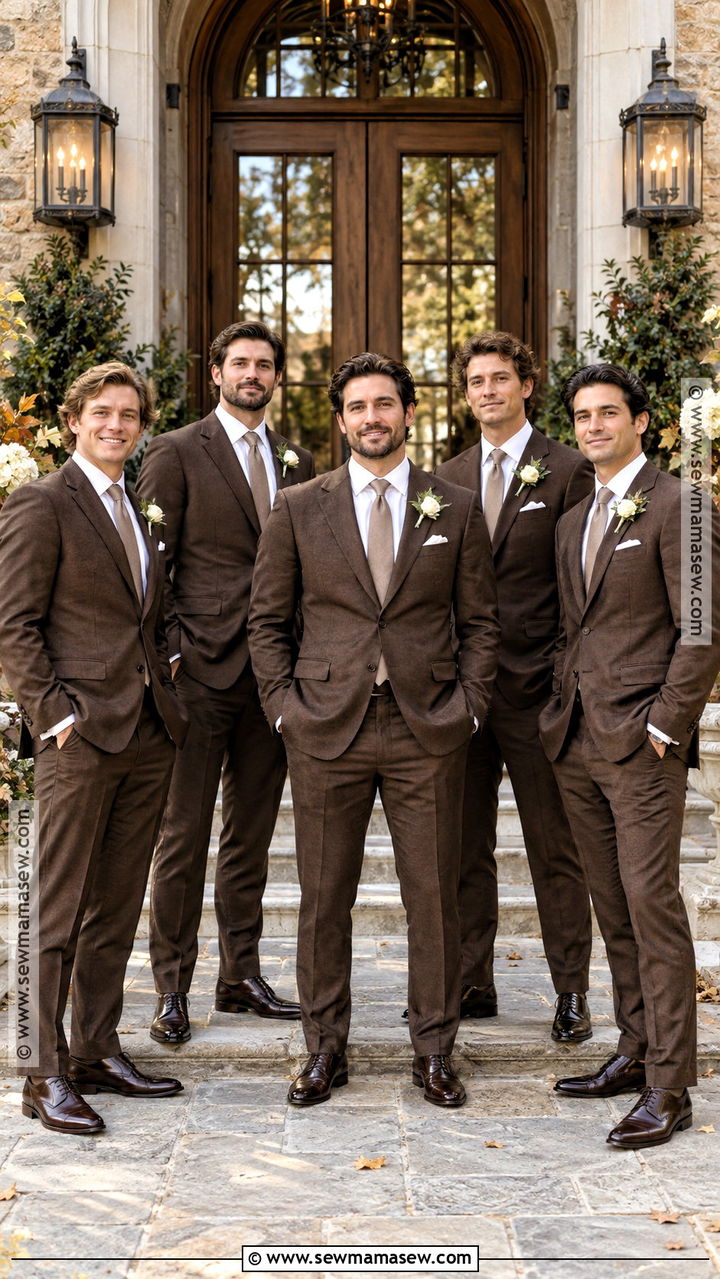
Chocolate brown is the modern alternative to navy, and it still looks properly dressed. Brown jackets and trousers, white shirts, taupe ties, ivory pocket squares and dark brown Oxfords. Here's the rule I follow with brown on brown: the shoes can be a touch darker than the suit, never lighter, or the eye drops straight to the feet. A wool or flannel in brown has a rich matte face that comes into its own in October and November light. A cream and greenery boutonniere is all the accent it needs. It pairs with beige, terracotta, champagne, sage and burgundy palettes, and it looks warm in candlelit receptions at estates, barns and restaurants.
11. Gray Herringbone Groomsmen Suits With Wine Ties
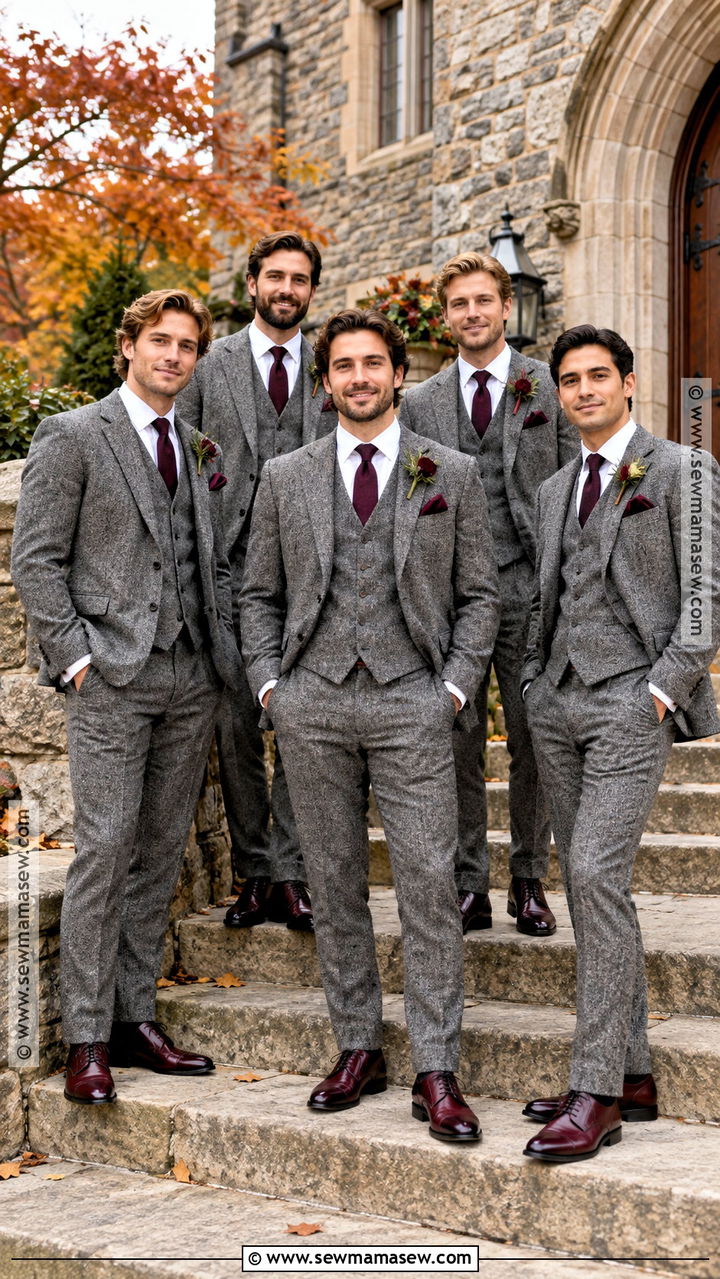
Herringbone is how I add texture to a gray suit without putting a loud pattern in front of the camera. White shirts, wine ties, burgundy pocket squares and oxblood shoes give it warmth. Up close, the weave is visible and interesting; from across the room in a group photo, it reads as a solid. That makes it safe for traditional and rustic venues alike. I keep shirts plain, since a striped shirt fights the weave and can shimmer on screen. Medium gray suits an afternoon ceremony; dark gray carries better after sunset. A matching herringbone waistcoat or a deeper tie distinguishes the groom.
12. Navy Three-Piece Groomsmen Suits With Mustard Ties
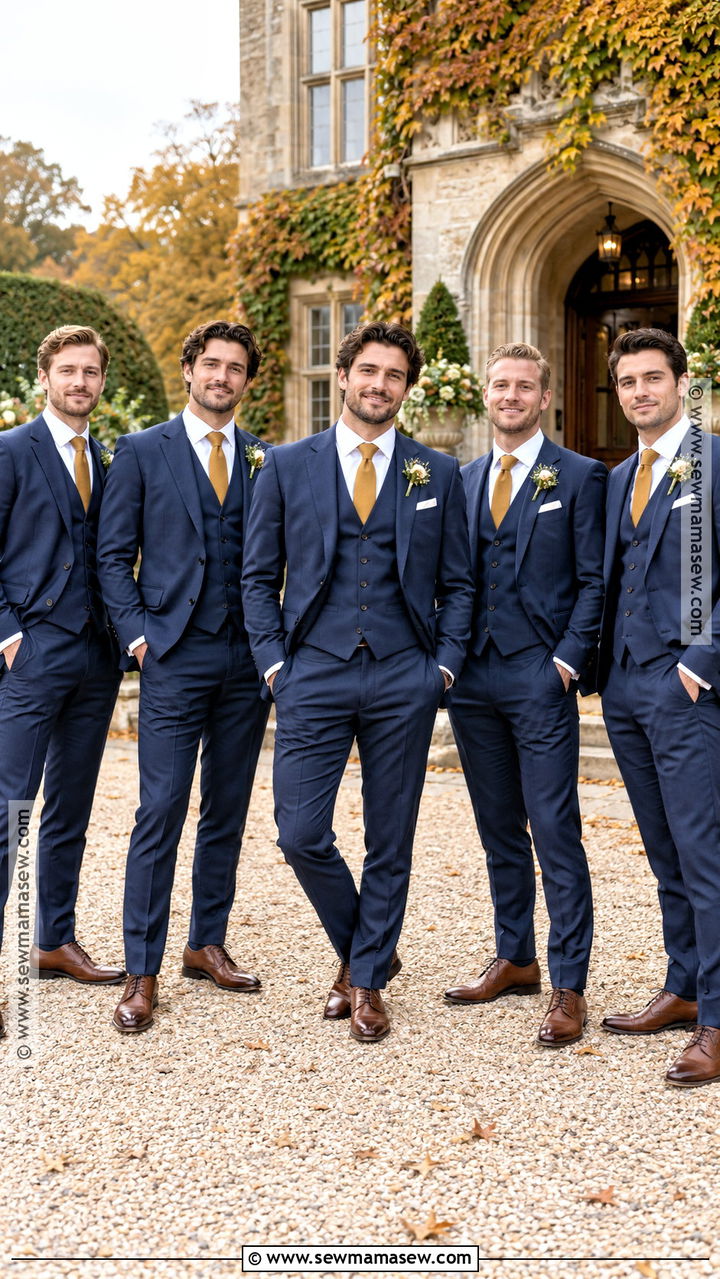
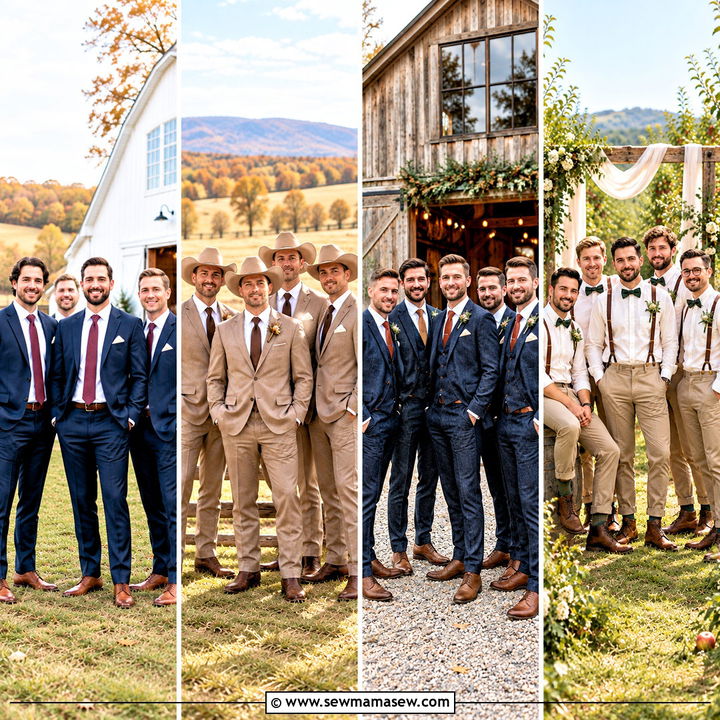
Navy three-piece suits with a muted mustard tie are my pick when a couple wants the classic look but with one clear autumn note. White shirts, brown Oxfords and white pocket squares round it out. I always steer toward ochre rather than a bright yellow, which looks loud next to navy and wrong at a formal event. The waistcoat earns its place at the reception. Once the jackets come off after dinner, the men still look put together instead of standing around in shirtsleeves. Historic hotels, country estates and dressier barns suit it. If everyone wears a waistcoat, set the groom apart with a patterned tie or a different boutonniere, not a different suit color.
13. Camel Groomsmen Blazers With Charcoal Trousers
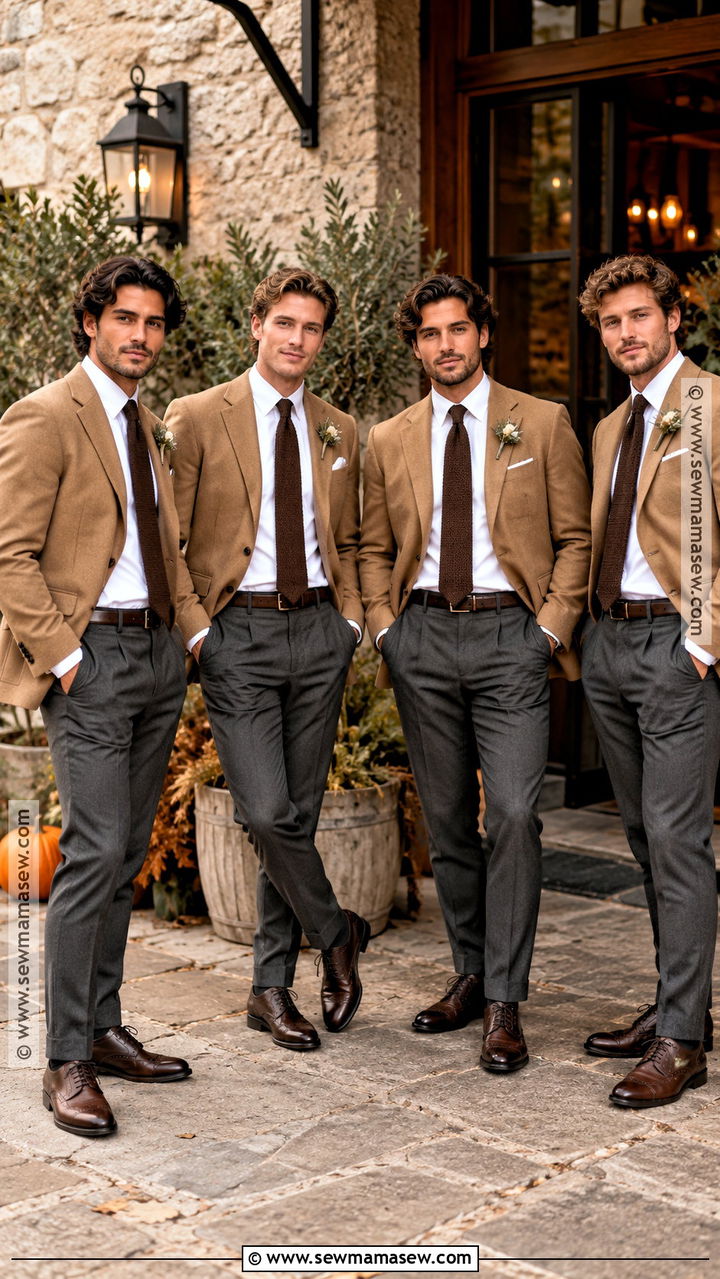
Camel blazers over charcoal trousers sit between relaxed and formal, so I use them for cocktail and semi-formal invitations, never black tie. White shirts, dark brown knit ties, chocolate brogues and matching belts complete it. The light jacket brightens the group while the charcoal leg anchors it. The risk with separates is drift. Camel comes in many shades and weights, and if each man buys his own blazer you'll see four different lapels and three different browns. Buy them from one source, with matching buttons and fabric weight. Breweries, restaurants and casual estates are a good fit. The groom can wear a full chocolate suit, or add a waistcoat under his camel jacket.
14. Tweed Groomsmen Vests With Dark Trousers
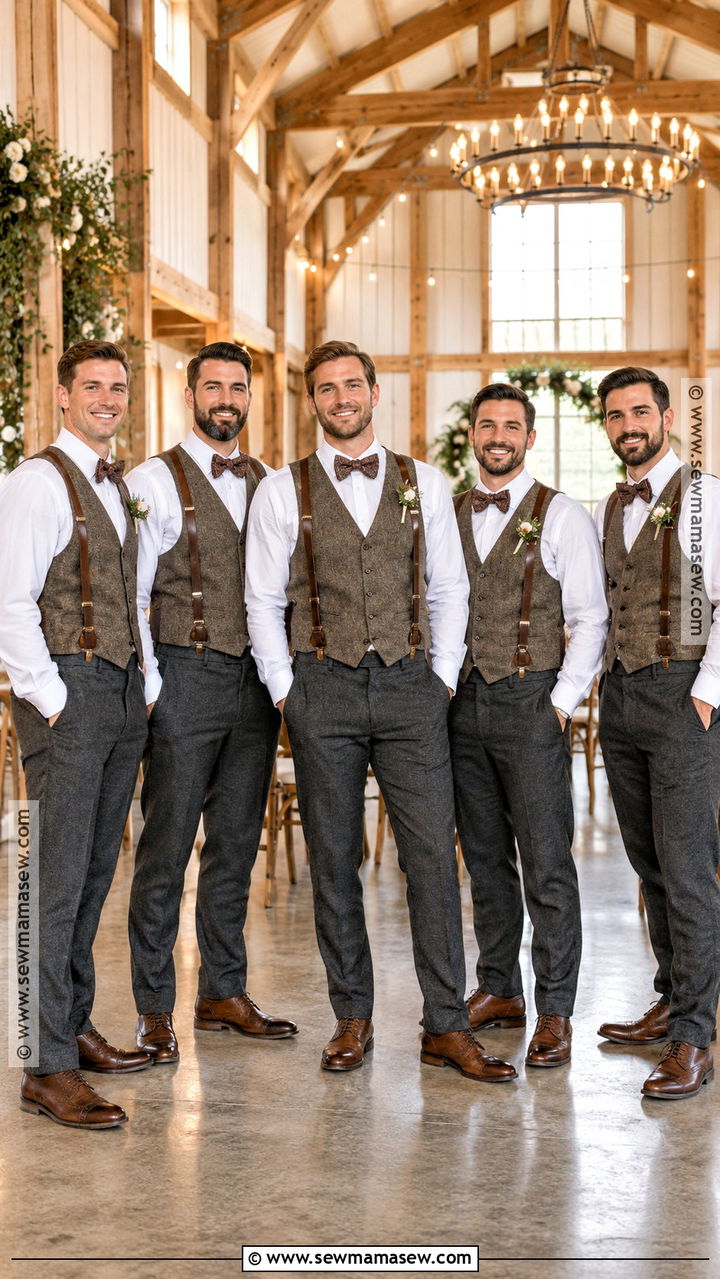
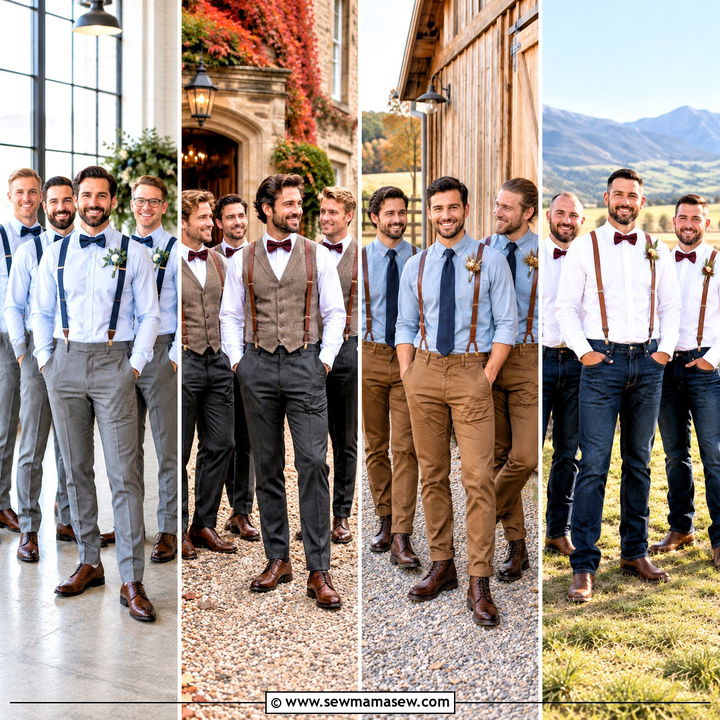
At a relaxed barn wedding, I don't always make the groomsmen wear jackets all day. Brown or gray tweed vests, white long-sleeve dress shirts, charcoal trousers, dark brown leather suspenders, textured bow ties and brown brogues hold together on their own. Keep sleeves down and buttoned for the ceremony; rolling them is for the dance floor. A vest is less forgiving than a jacket because it shows the shirt and the trouser rise, so every vest should match in cloth and cut and every trouser needs a proper hem. Pressed shirts and polished shoes are what stop it sliding into casual. The groom wears the matching tweed jacket. Vests also handle a cool outdoor ceremony followed by a warm, crowded reception.
15. Burgundy Velvet Groomsmen Blazers With Black Trousers
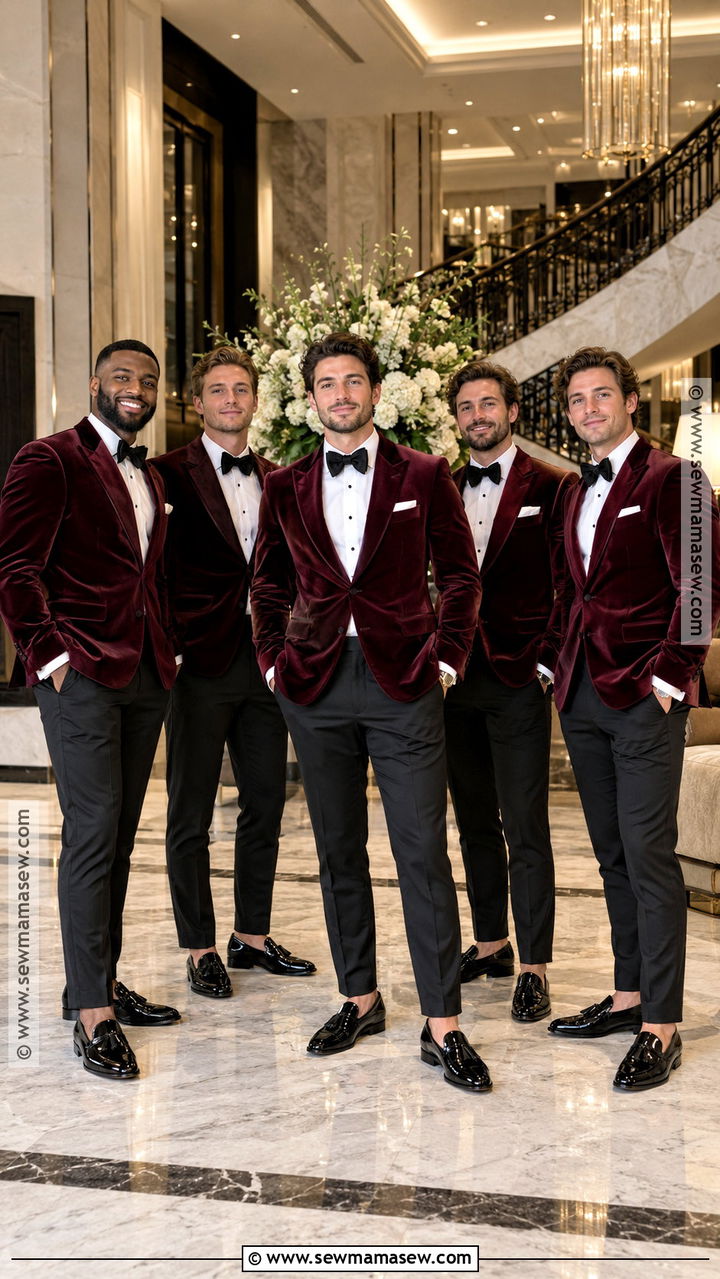
Burgundy velvet blazers are made for evenings. I pair them with tailored black trousers, white tuxedo shirts, black bow ties, black velvet or patent loafers and white pocket squares. The plain black pieces calm the color and the pile. Keep boutonnieres and jewelry minimal; velvet is the feature. It's an indoor fabric for cooler weather, at hotels, galleries, theaters or formal event spaces. Before ordering a full set, I look at a sample under daylight and under warm tungsten bulbs, because velvet shifts a lot, and a burgundy that looks rich in the shop can turn brownish or purplish at the venue. The groom in a black velvet jacket keeps the theme while standing apart.
16. Forest Green Velvet Groomsmen Dinner Jackets
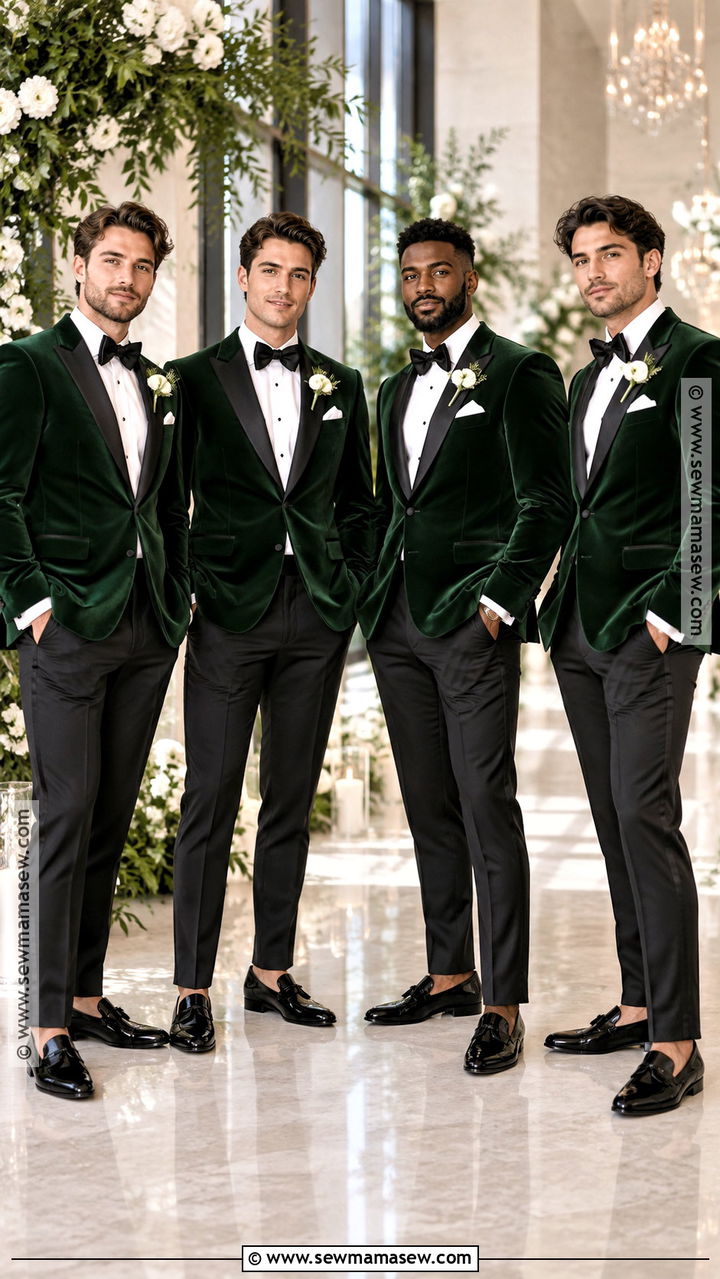
Green velvet is the less expected choice, and it's luxurious without leaning on the usual brown or burgundy. Forest green dinner jackets, white tuxedo shirts, black trousers, black bow ties, black loafers and white pocket squares. I ask for black satin lapels so the jacket connects to the trousers and ties. Velvet is warm, so it suits formal evening ceremonies indoors rather than a sunlit garden. The real headache is matching. Green velvet can read blue, olive or emerald depending on the light and the dye lot, so all jackets should come from the same order. Keep florals white and compact. The groom can wear the same jacket with a distinct boutonniere, or switch to a black tuxedo.
17. Rust Corduroy Groomsmen Suits With Brown Shoes
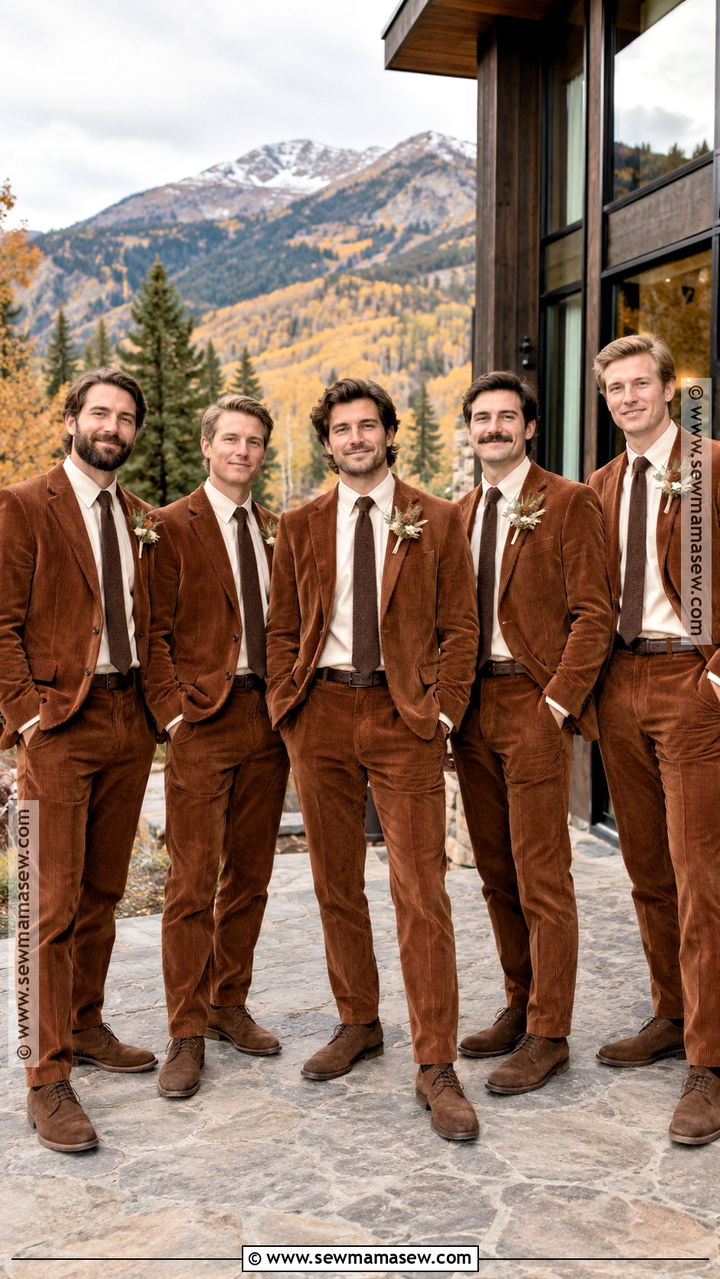
Rust corduroy suits have a vintage confidence that suits couples who don't want a traditional look. Ivory shirts, dark brown knit ties, chocolate belts and brown suede Derbies steady the color. Wale size is the detail I check first. Fine-wale corduroy lies flatter and looks dressier; wide wale reads like weekend trousers and adds bulk. Corduroy needs a close fit for the same reason. Mountain lodges, restored barns and art spaces suit it. Use small neutral boutonnieres. One thing to know: corduroy pile crushes where you sit, so hang the suits the night before and keep a lint brush handy. If rust feels like too much for the whole group, give it to the groom and put the groomsmen in chocolate or charcoal cord.
18. Brown Plaid Groomsmen Suits With Solid Ties
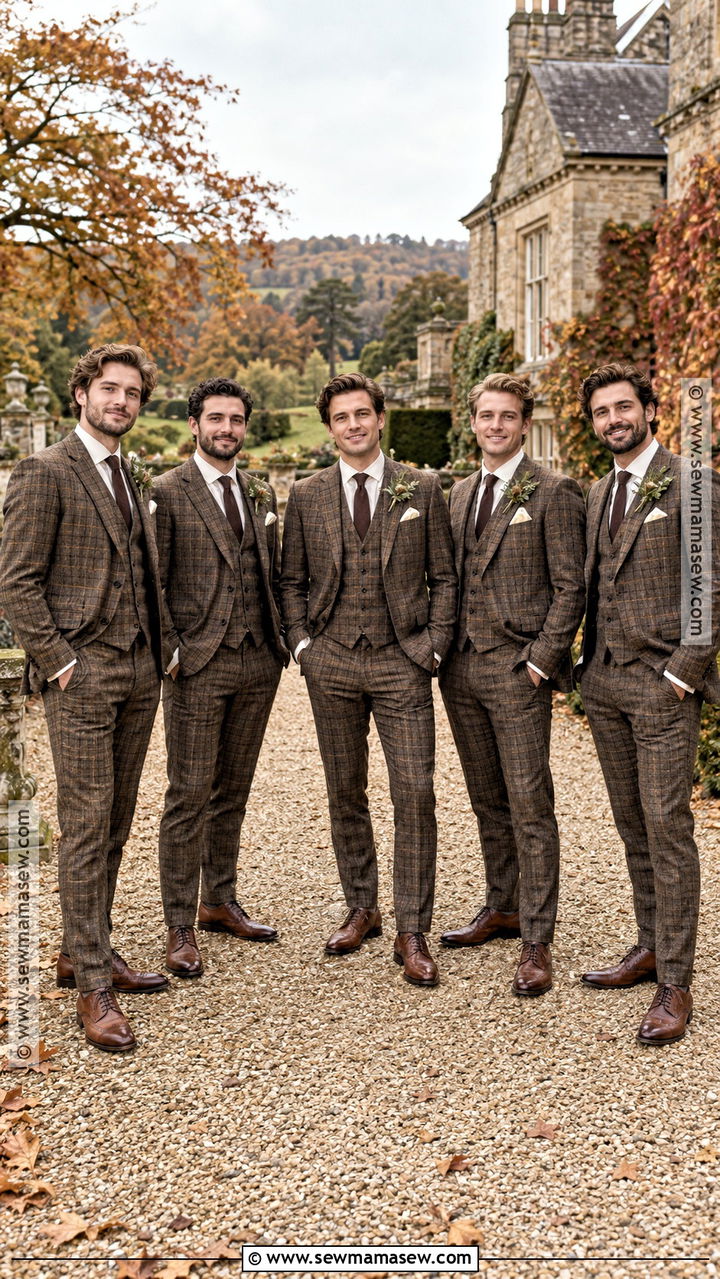
A muted plaid brings pattern into the party without breaking the sense of a group. I look for checks in brown, taupe and charcoal, then add ivory shirts, solid dark brown ties, cream pocket squares and polished brown brogues. With a patterned suit, everything else goes solid, ties and boutonnieres included. Keep the check small. A large plaid can moiré on digital cameras and dominates a lineup. Everyone wears the same cloth; mixing unrelated plaids never reads as intentional. Rustic estates, countryside venues and vintage-inspired ceremonies suit it. The groom in a solid chocolate suit with a plaid waistcoat connects to the group without copying it.
19. Mixed Earth-Tone Groomsmen Suits
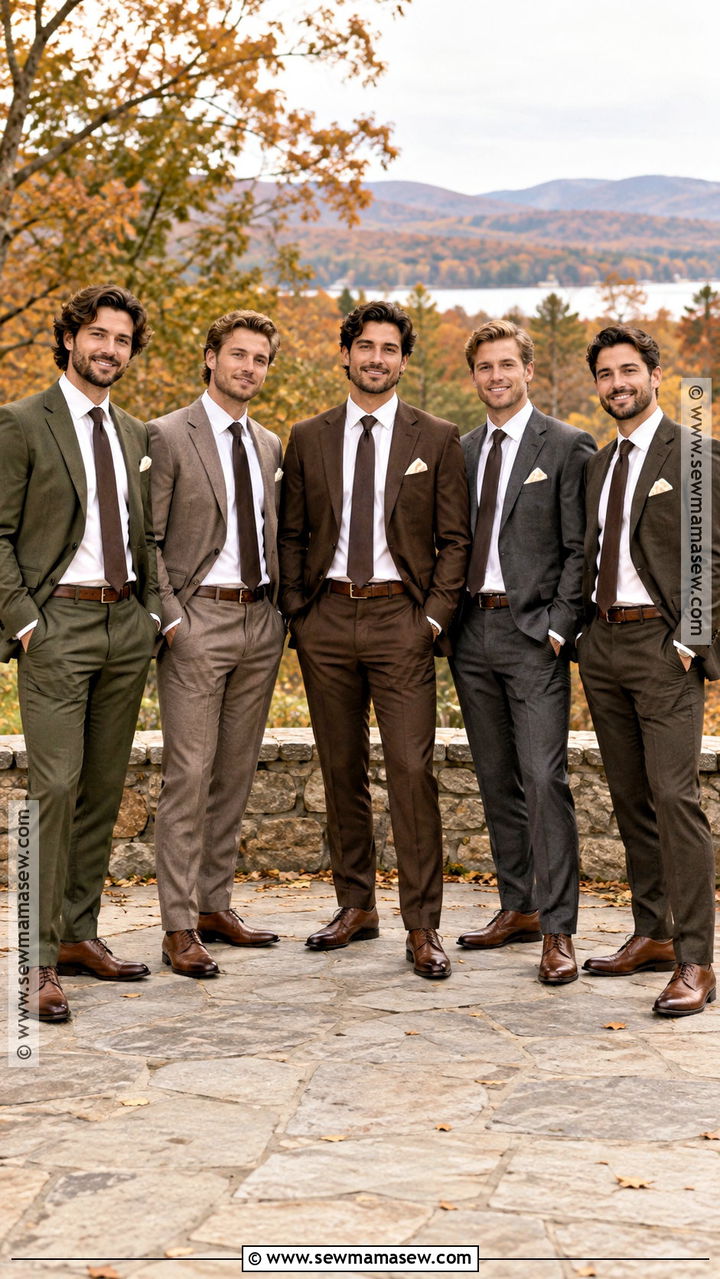
Mismatched suits can look deliberate, but only if someone controls the palette. I assign each groomsman a color, olive, taupe, chocolate or charcoal, and keep shirts, ties, shoes, belts and pocket squares identical across the group. Before anyone buys, lay the fabric swatches side by side in daylight. Matching lapel width and jacket length matters more here than in a uniform group, because the color is already doing the varying. It suits small wedding parties and relaxed outdoor or artistic venues. Give the groom the deepest shade, something like a dark forest green. Repeating one accessory color across every man is what makes it look planned instead of accidental.
20. Dark Chinos With Wool Groomsmen Blazers
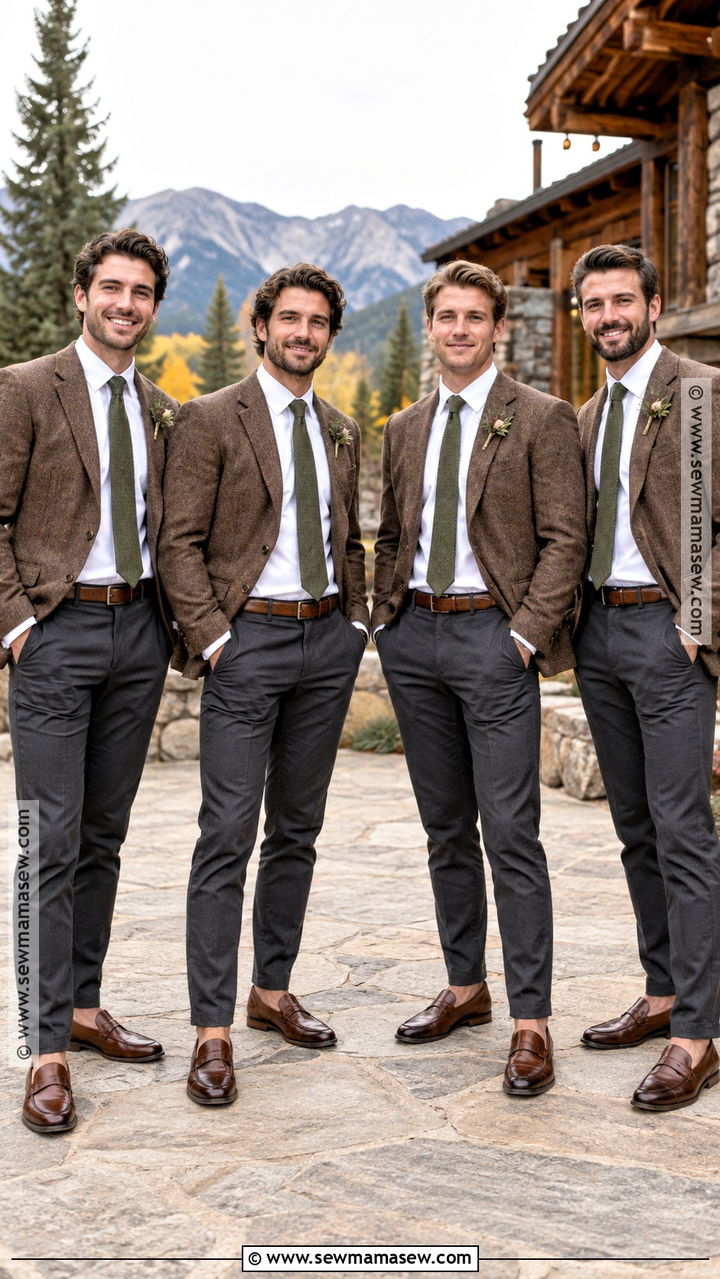
For a small casual wedding, the groomsmen don't need suits, but they still need to look like a team. Slim dark navy or charcoal chinos, white Oxford shirts, brown wool blazers, textured olive ties, matching brown belts and polished leather loafers. The blazer gives structure; the chinos keep everyone comfortable. I ask for flat-front chinos with no cargo pockets or fading, and I check that the hems land at the same break on every man, since chinos look sloppy when they pool. Shirts stay tucked during the ceremony and everyone wears the same shoe color. It suits backyards, small lodges and daytime venues. The groom can add a wool waistcoat or wear proper suit trousers to dress his version up a notch.
Five Different Builds, One Lineup
A wedding party is rarely five men of the same height and shape. Identical suits in identical cuts won't make them look alike; consistent proportions will. These are the adjustments I make most often.
Tall and lean
Long jackets in regular lengths often ride high on a tall man and expose too much shirt at the waist. Order long sizes, and let the trouser carry a slight break so the leg doesn't look like it stopped short. A three-piece or a textured cloth like tweed adds welcome width.
Shorter or stocky
Keep the jacket length just covering the seat, a slightly higher trouser rise and little or no break at the hem. A single vertical line of color from shoulder to shoe makes him look taller in group photos. Heavy flannel and wide corduroy add bulk, so a smoother worsted is kinder on a stocky frame.
Broad chest or athletic thighs
Size off the chest and shoulder, then have the waist taken in. Never size off the waist and squeeze into the shoulders, because pulling across the buttons is the first thing a camera picks up. Many trousers can be let out a little in the seat, so it's worth asking the tailor before ordering up a size.
Ceremony Outside at Four, Reception Inside Till Midnight
Fall weddings swing hard on temperature. An October afternoon can sit in the low 70s in the sun and drop into the 40s by the last dance, and the men are wearing the same clothes for all of it. A medium-weight wool around 10 to 12 ounces is my default because wool breathes in the warm part of the day and still insulates once it cools. Velvet and heavy tweed are lovely after dark but punishing in direct sun, so if the ceremony is outdoors in daylight, I schedule photos in shade and let the groomsmen keep jackets on a chair until they're needed. For a cold evening outdoors, a dark overcoat in charcoal or camel, all in the same color, looks far better in pictures than a mix of puffer jackets.
Settle the Invitation, the Venue and the Shoes First
When couples ask me where to start, I tell them to read the invitation, picture the venue and only then think about color. Black tie evenings call for tuxedos or velvet dinner jackets. Daytime country weddings open the door to tweed, herringbone, corduroy and separates. Navy, charcoal and black stay dependable; burgundy, olive, forest green and chocolate carry more of the season. Whatever you pick, tailoring decides how the group looks far more than the color does. Lock in shirts, shoes, belts, ties and fabric early, get every man to a fitting, and the wedding party will look like it belongs together.
Related posts: