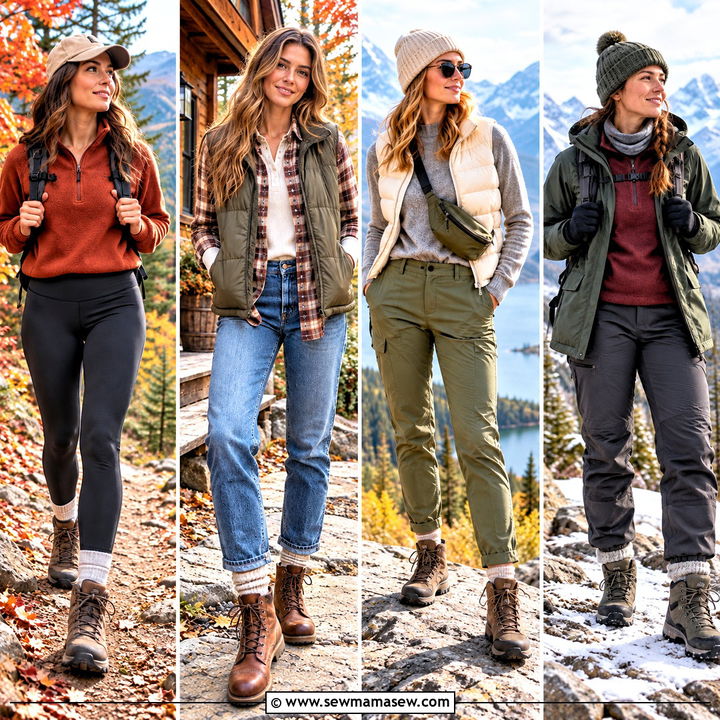
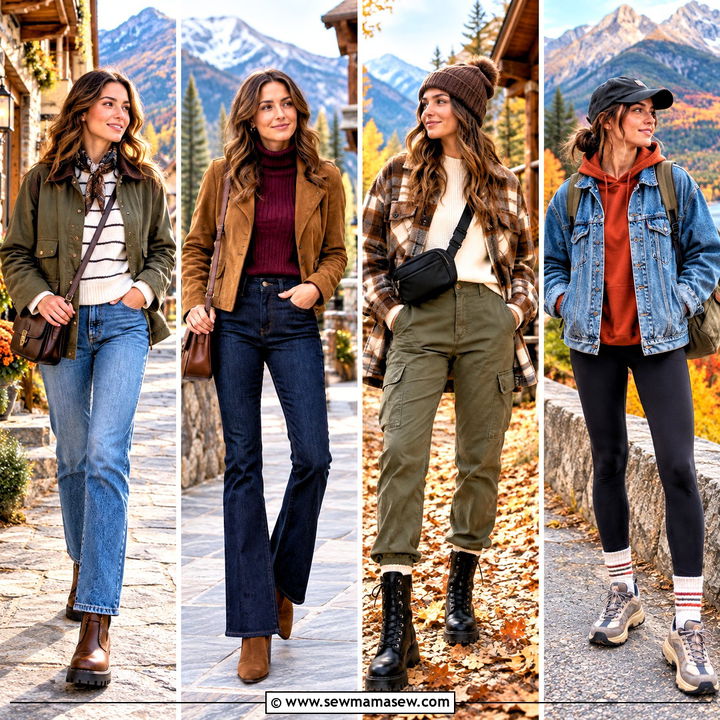
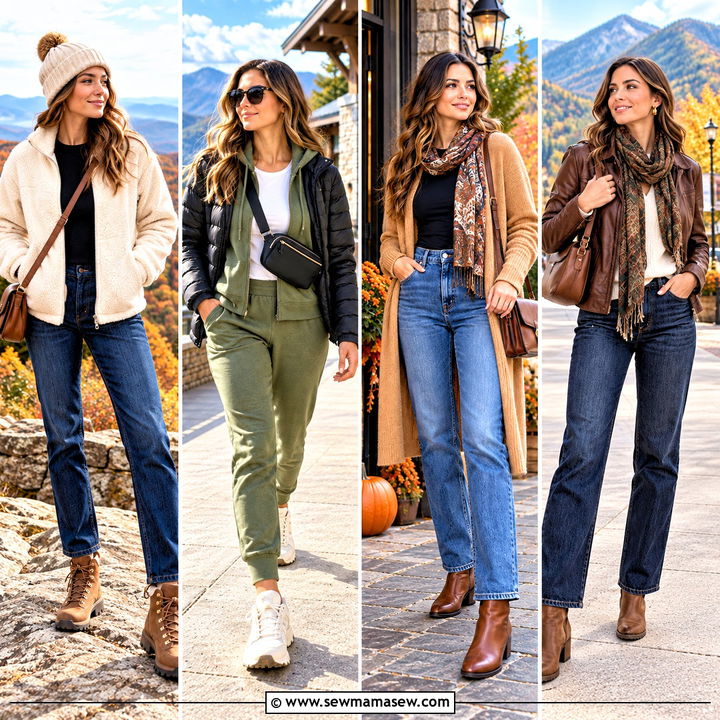
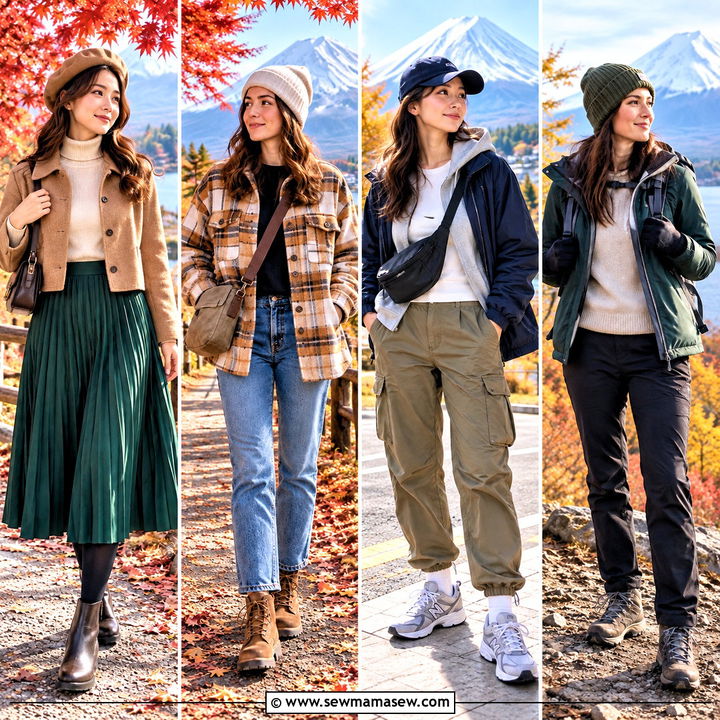
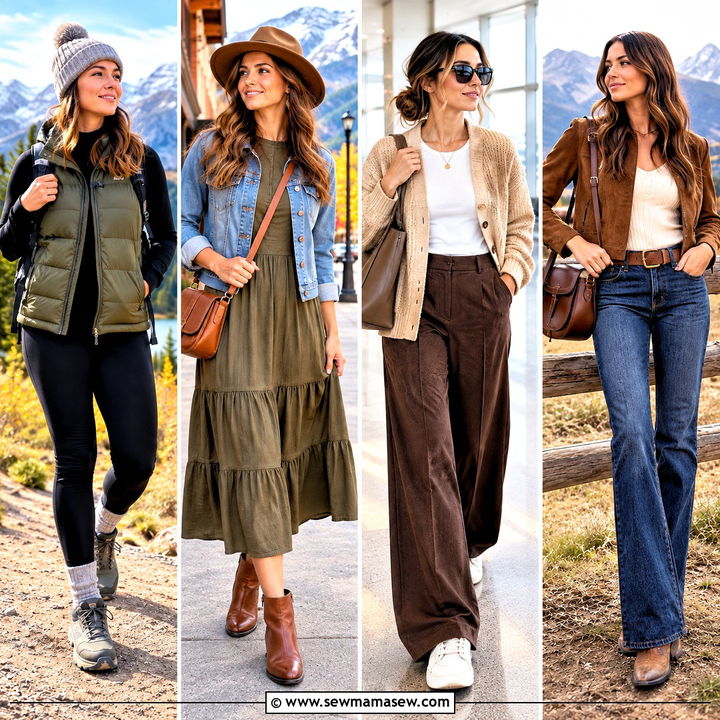
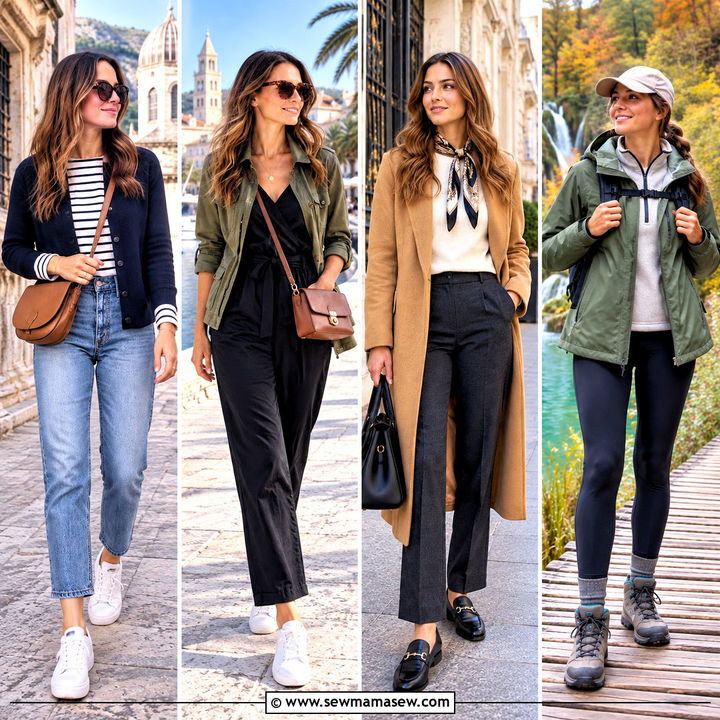
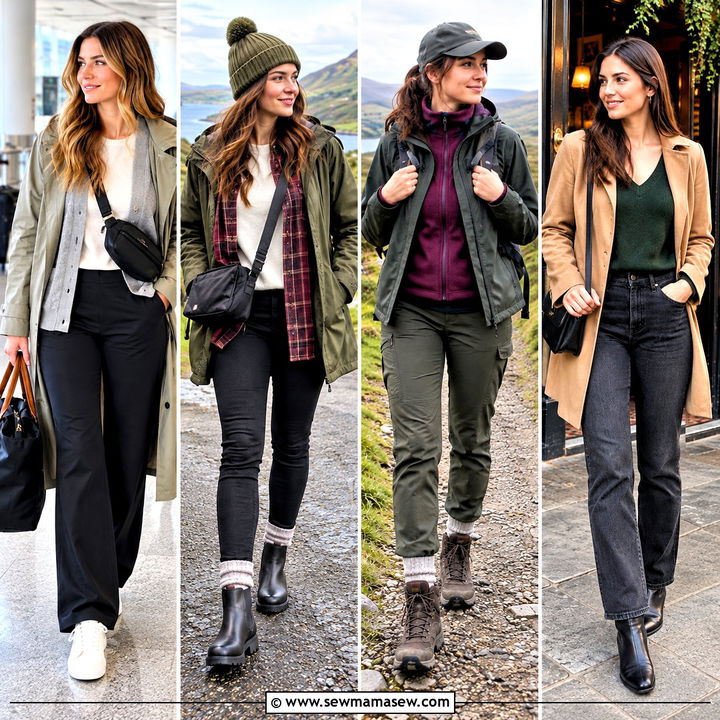
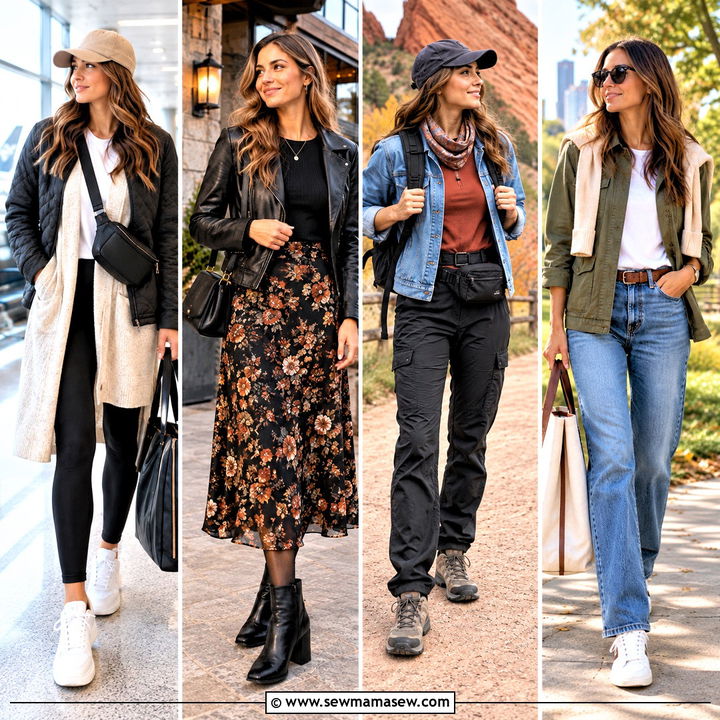
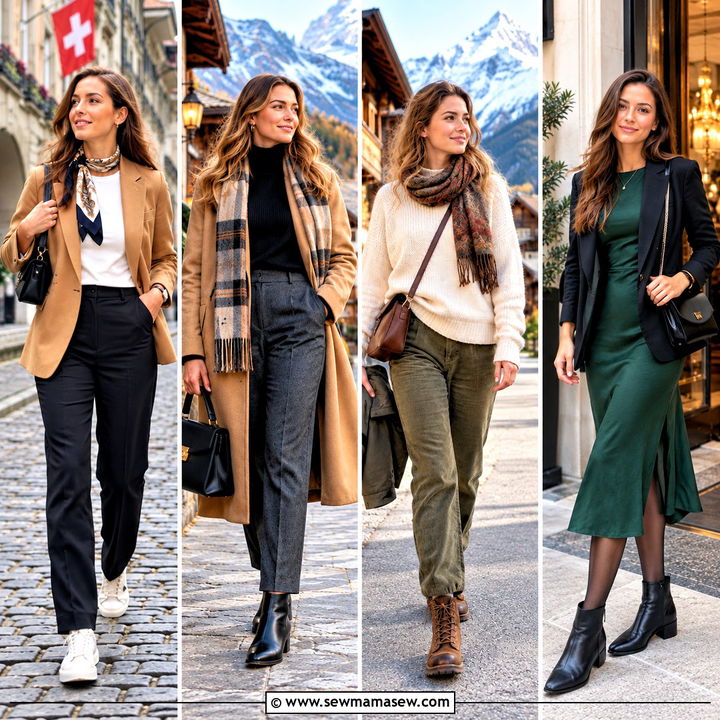
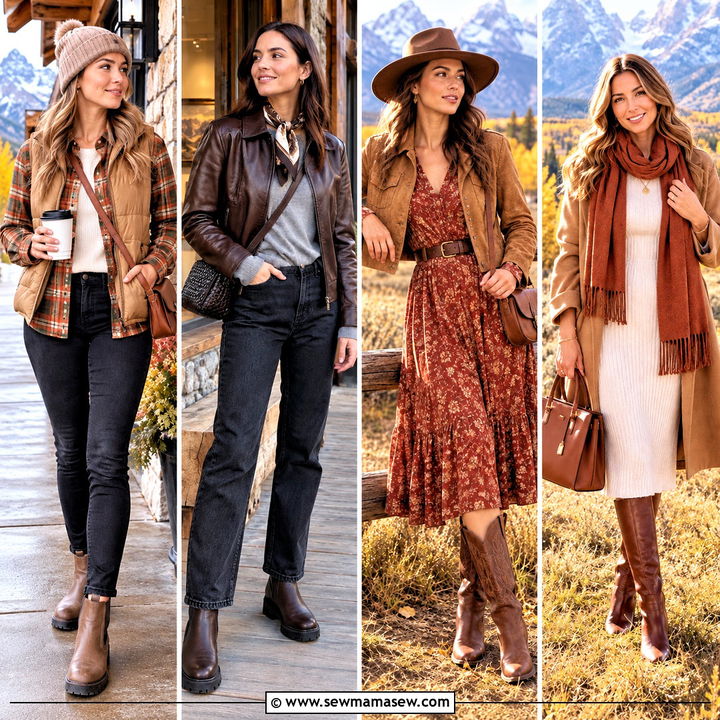
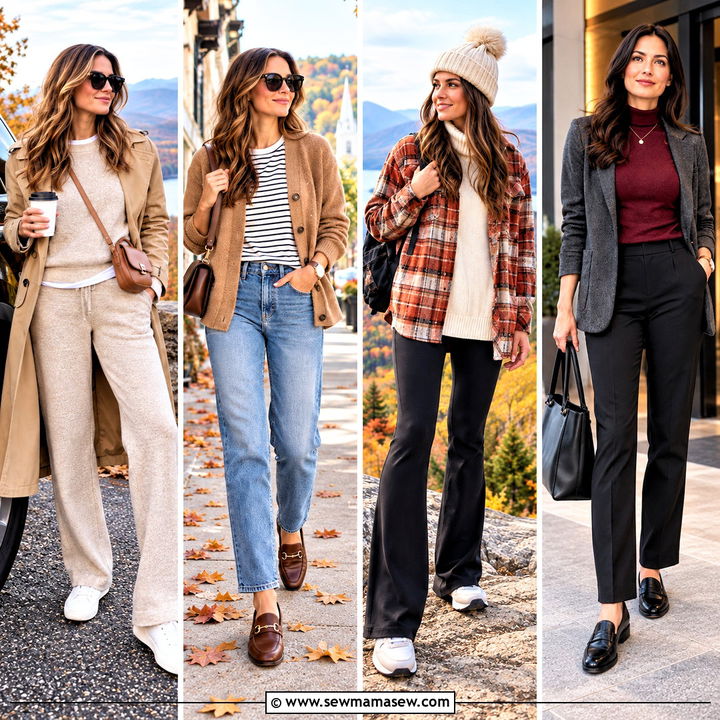
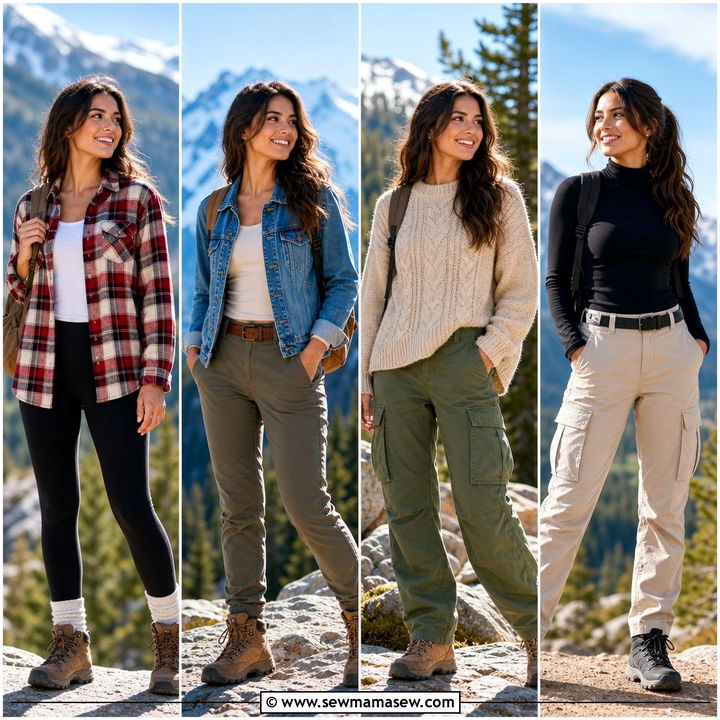
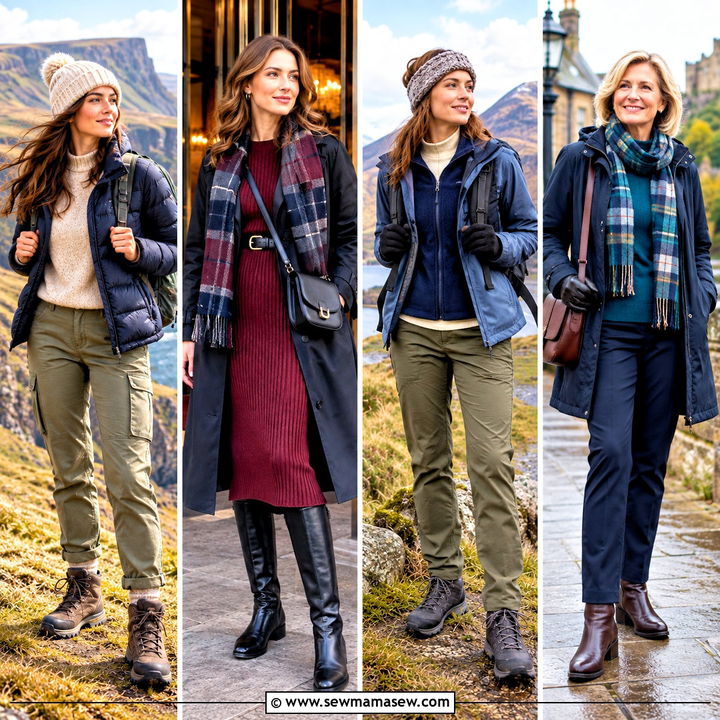
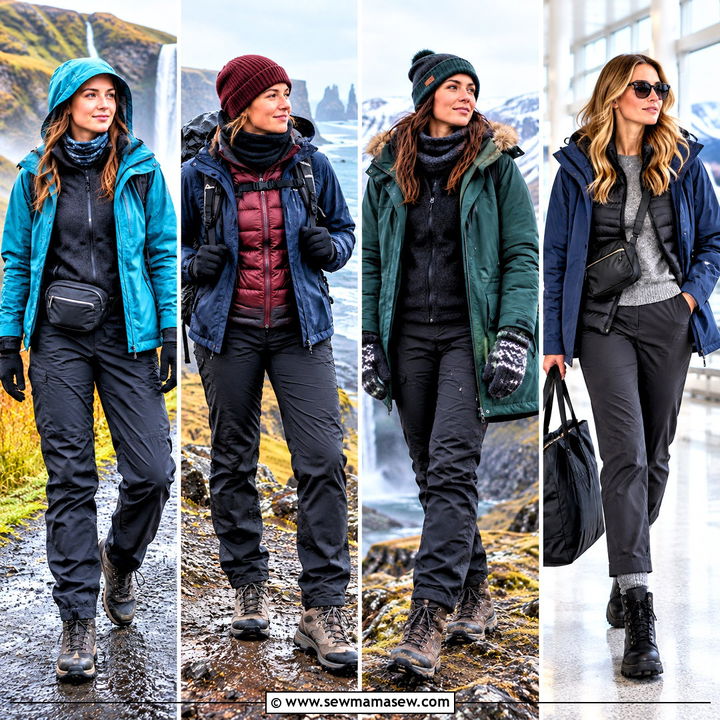
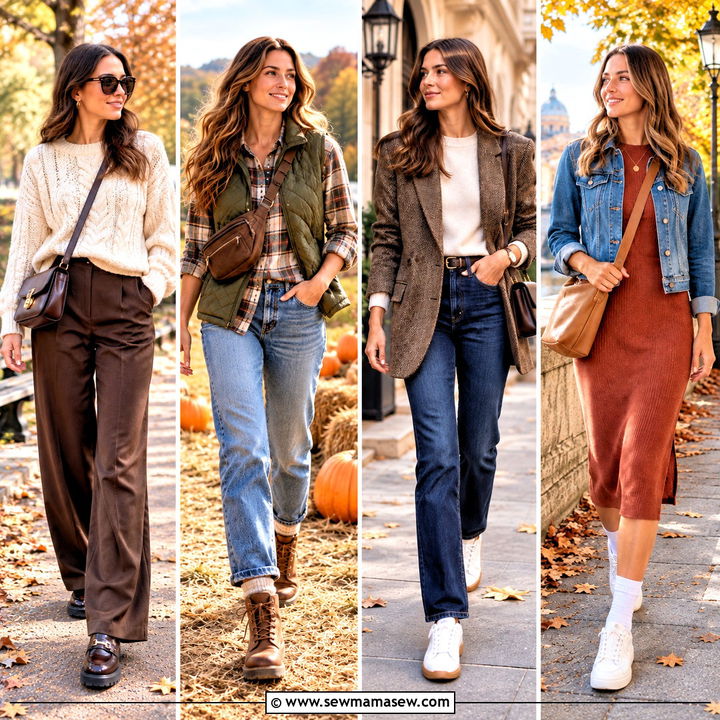
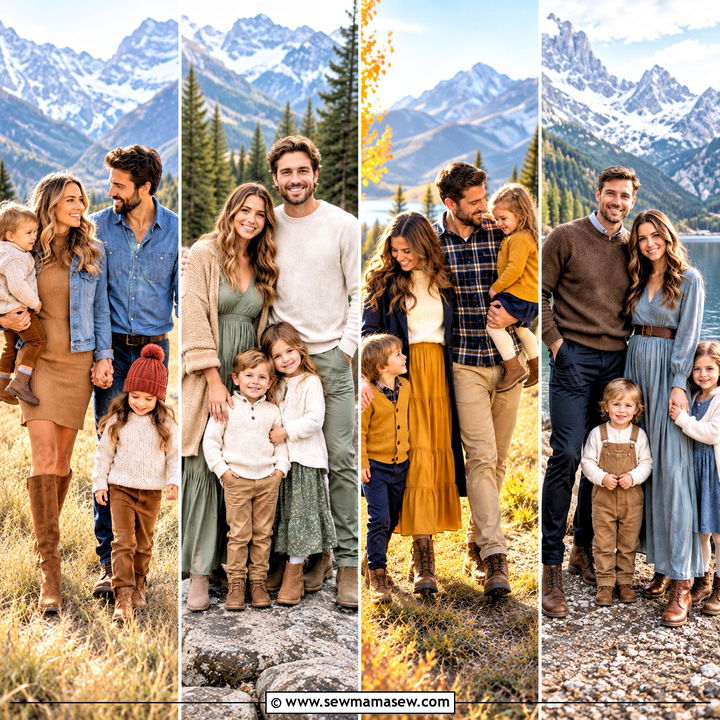
Mountain weather in fall changes faster than most people pack for. A frosty trailhead can turn into a warm, sunny ridge by noon and back to cold wind by four, so every outfit I plan for these trips starts with layers: a base that moves sweat off the skin, a midlayer that holds warmth, and a shell that blocks wind and rain. For anything active, I pack wool or quick-drying synthetics instead of cotton, because cotton holds moisture and gets cold once you stop moving. The twenty outfits below run from real trail clothes to cabin mornings and dinners in town, each one dressed from hat to boots.
Why the Overlook Feels So Much Colder Than the Trailhead
Air cools as you climb, by roughly three to five degrees Fahrenheit for every thousand feet of elevation on a typical day. Gain two thousand feet on a hike and the summit can be ten degrees colder than where you parked, before you add any wind. That's why I never dress for the temperature at the car.
Wind and sun make the gap wider. An exposed ridge with a steady breeze feels far colder than the sheltered forest below it, and the sun is stronger at altitude, so you can be cold and sunburned on the same afternoon. When I plan a mountain day, I check three things:
- The forecast for the highest point you'll reach, not just the nearest town.
- What time the sun drops behind the ridge, because temperatures fall quickly once a valley goes into shade.
- Whether you'll be moving steadily or stopping often. Stop-and-start days need more insulation than a steady climb.
Sunglasses, a cap with a brim and sunscreen belong in the pack even on a cool day.
1. Mountain Hiking Outfit With Leggings And Puffer Vest
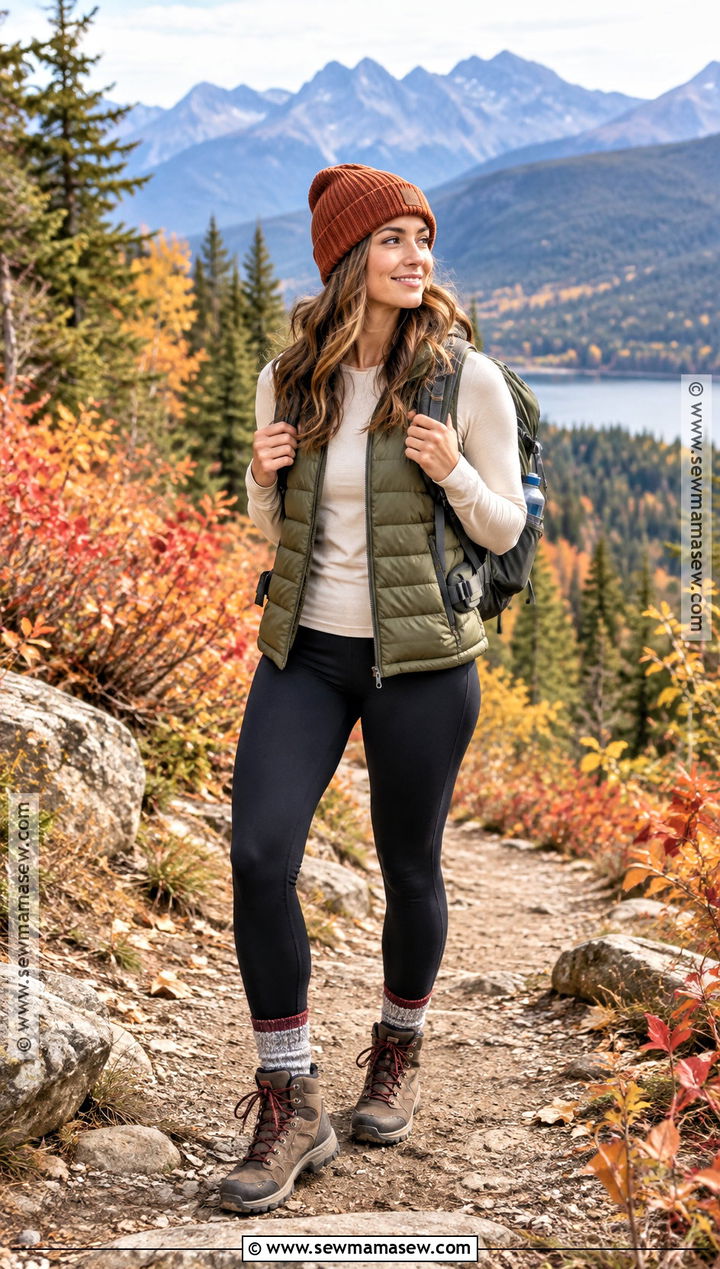
For a maintained trail or a foliage walk, black leggings and a fitted wicking top make a simple base. The puffer vest is the clever part: it warms the core, where you feel cold first, while leaving the arms free to swing and sweat less. On a crisp start, a light flannel fits between top and vest. Wool hiking socks, waterproof ankle boots, a daypack and a ribbed beanie finish it. I look for leggings with deep side pockets, since a phone in a back pocket bounces on every step. Keep a packable rain shell in the bag for wind or a passing shower.
2. Mountain Hiking Outfit With Fleece And Cargo Pants
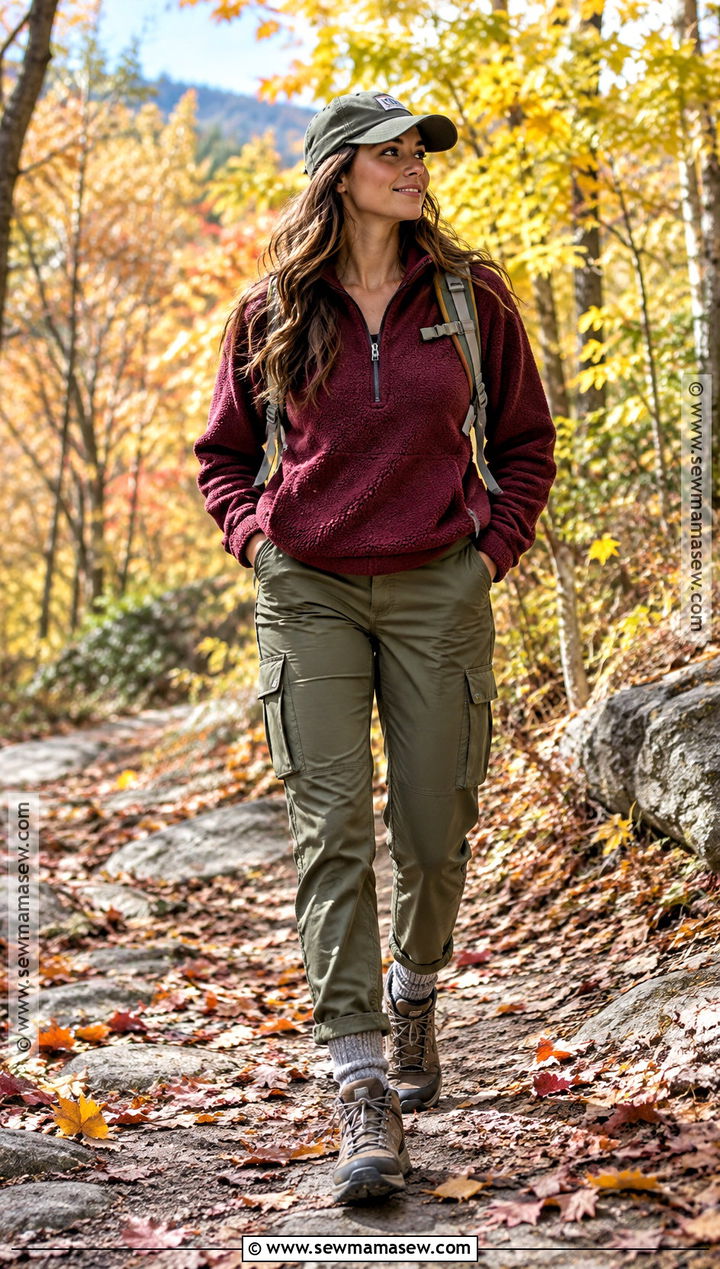
A half-zip fleece over a breathable long-sleeve base is the outfit I trust for forest paths and easy climbs. The zip is a vent: open it on the uphill, close it at the top. Cargo hiking pants in a straight or tapered cut balance the fleece's relaxed shape and carry snacks and a map without a bag. Pick the fleece in burgundy, forest green or warm brown, then add trail shoes, cushioned wool-blend socks, a cap and a small crossbody or daypack. If rain is possible, choose quick-drying pants and a waterproof jacket sized to go over the fleece without binding at the shoulders.
3. Mountain Outfit With Flannel And Black Jeans
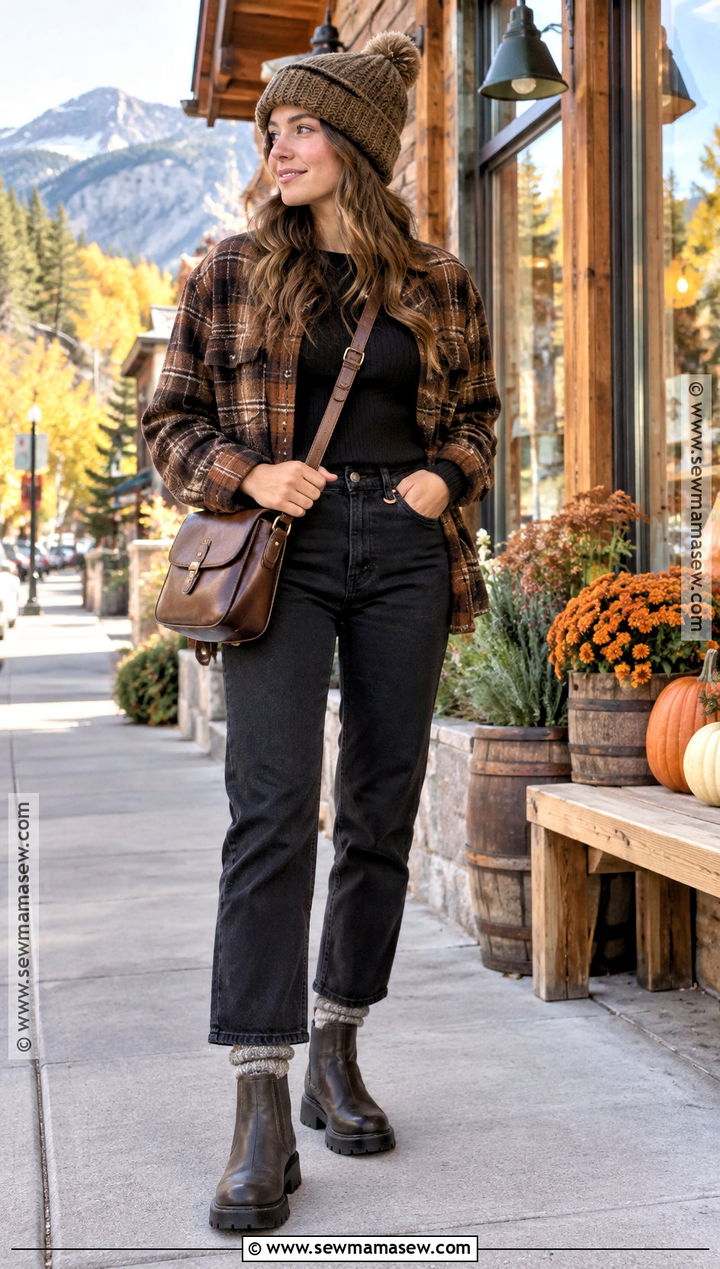
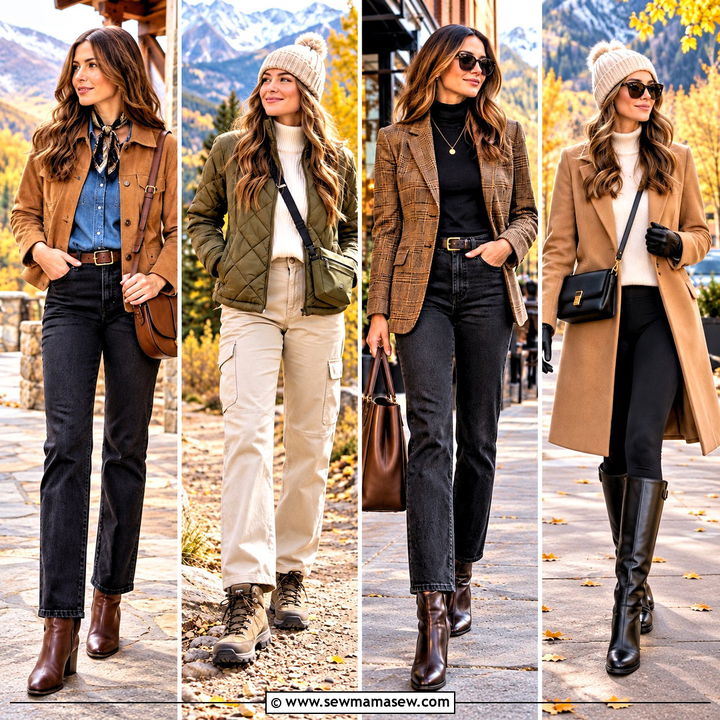
This one is for town, not trail. A plaid flannel over a fitted thermal top gives warmth without bulk, and black straight-leg jeans look a little sharper than blue denim at a coffee shop or on a scenic drive. Add lug-sole ankle boots, thick socks, a leather crossbody and a wool beanie. Wear the flannel open in the afternoon, or button it under a quilted jacket when the light goes. I'd keep it off steep trails, since denim gets heavy and cold once it's damp and takes hours to dry.
4. Mountain Cabin Outfit With Sweater And Leggings
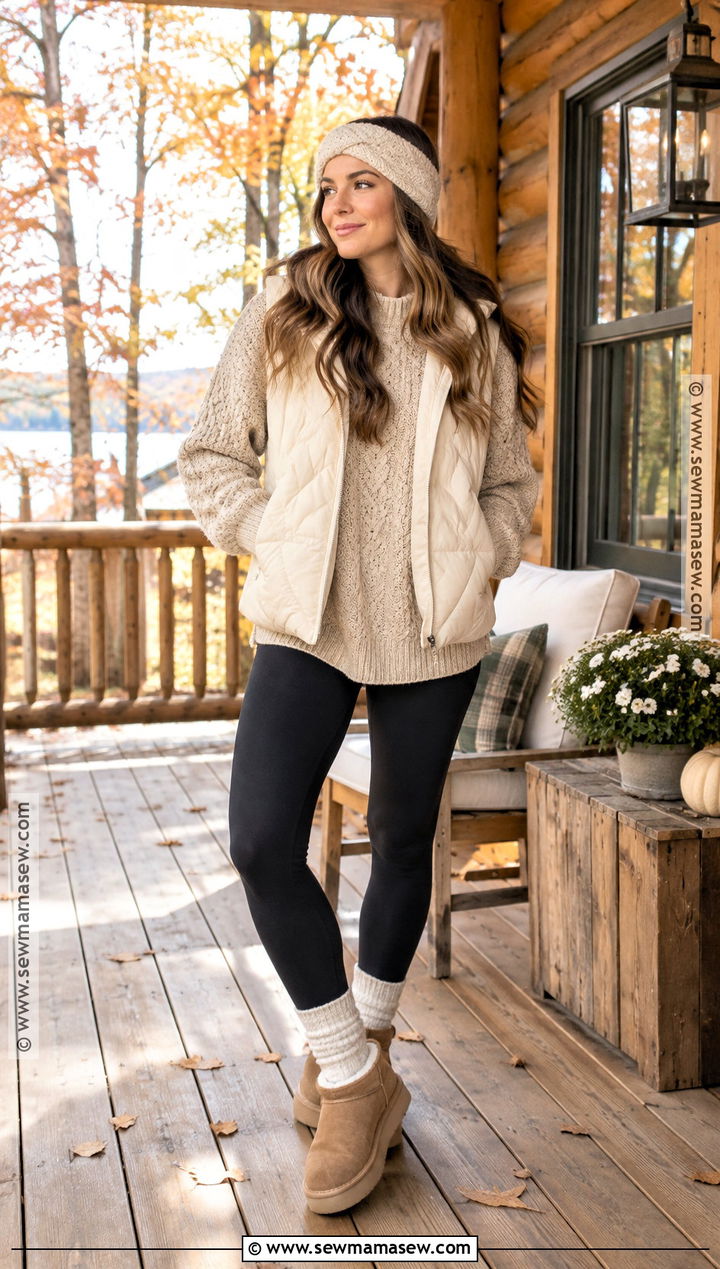
Cabin mornings are when people tend to overdress or underdress. An oversized cable-knit sweater over a thin thermal tank, with thick black leggings, keeps you warm inside a drafty cabin and still presentable on the porch. Oatmeal, camel, moss or muted burgundy sit well against the landscape. Lined clogs or slip-on boots save lacing up every time you step out, and a quilted vest goes on for a walk around the property. Watch the sweater length: it should cover the hips without reaching mid-thigh on a petite frame. Small hoops and a structured tote are enough for a trip to nearby shops.
5. Mountain Rain Outfit With Waterproof Jacket
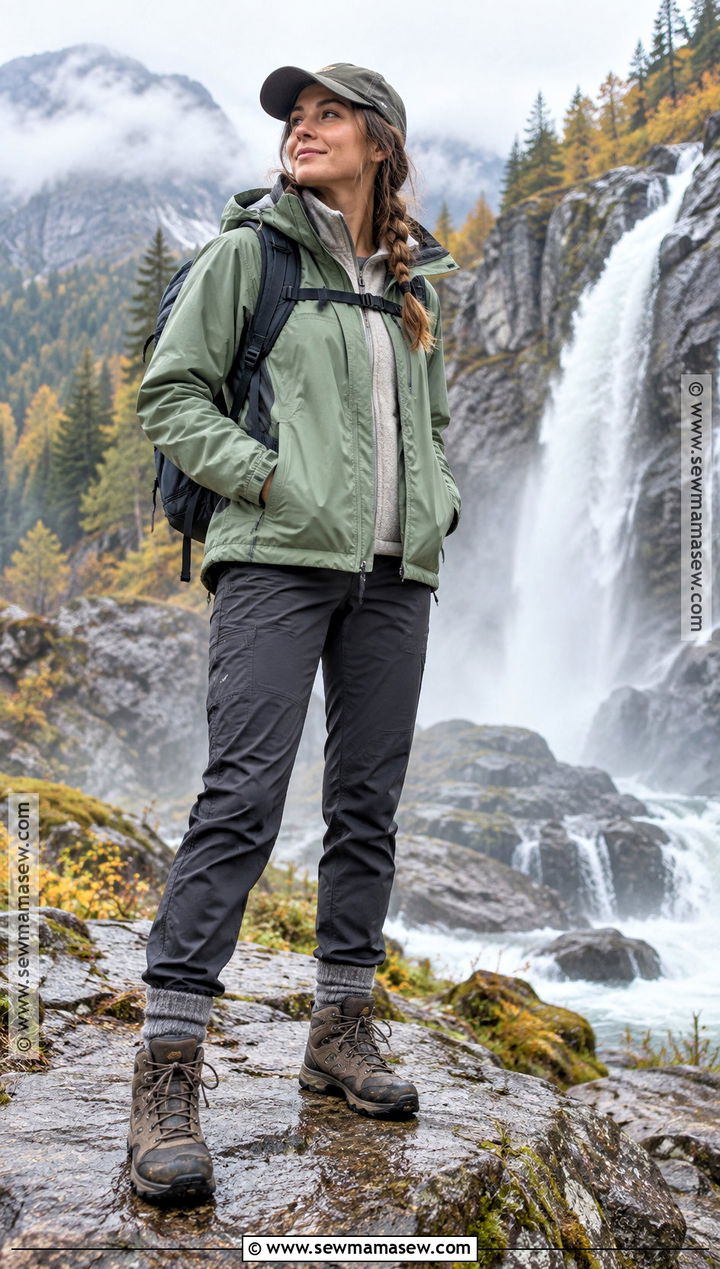
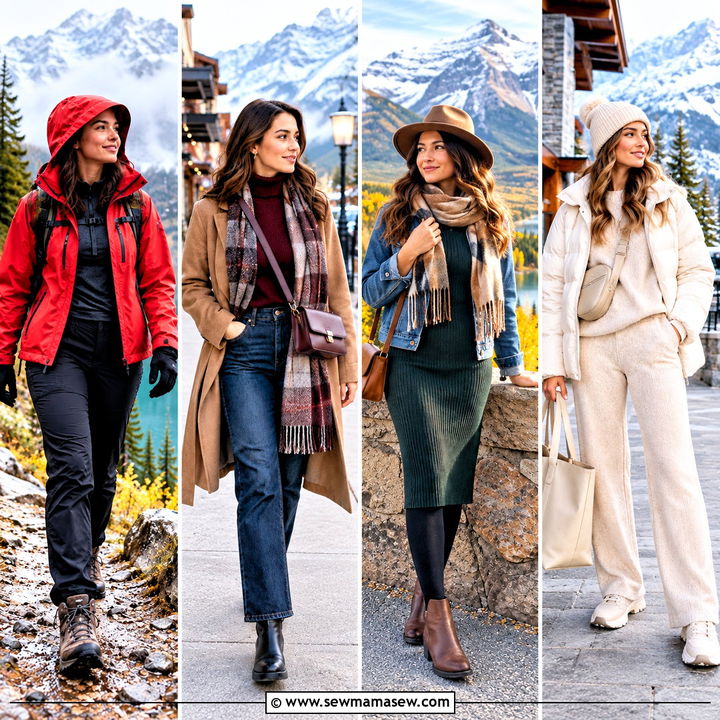
Rain in the mountains is when bad layering really shows. Start with a light wicking shirt and a thin fleece, then a waterproof, breathable jacket with an adjustable hood. Breathable matters, because a non-breathable shell traps sweat inside and you end up wet either way. Quick-drying hiking pants replace denim, with wool-blend socks and waterproof boots. A brimmed cap under the hood keeps rain off your face and stops the hood from blocking your side view. Size the shell to fit over the fleece without restricting your arms, and use a water-resistant pack. It's the outfit I'd want for waterfalls and misty overlooks.
6. Mountain Outfit With Shacket And Hiking Boots
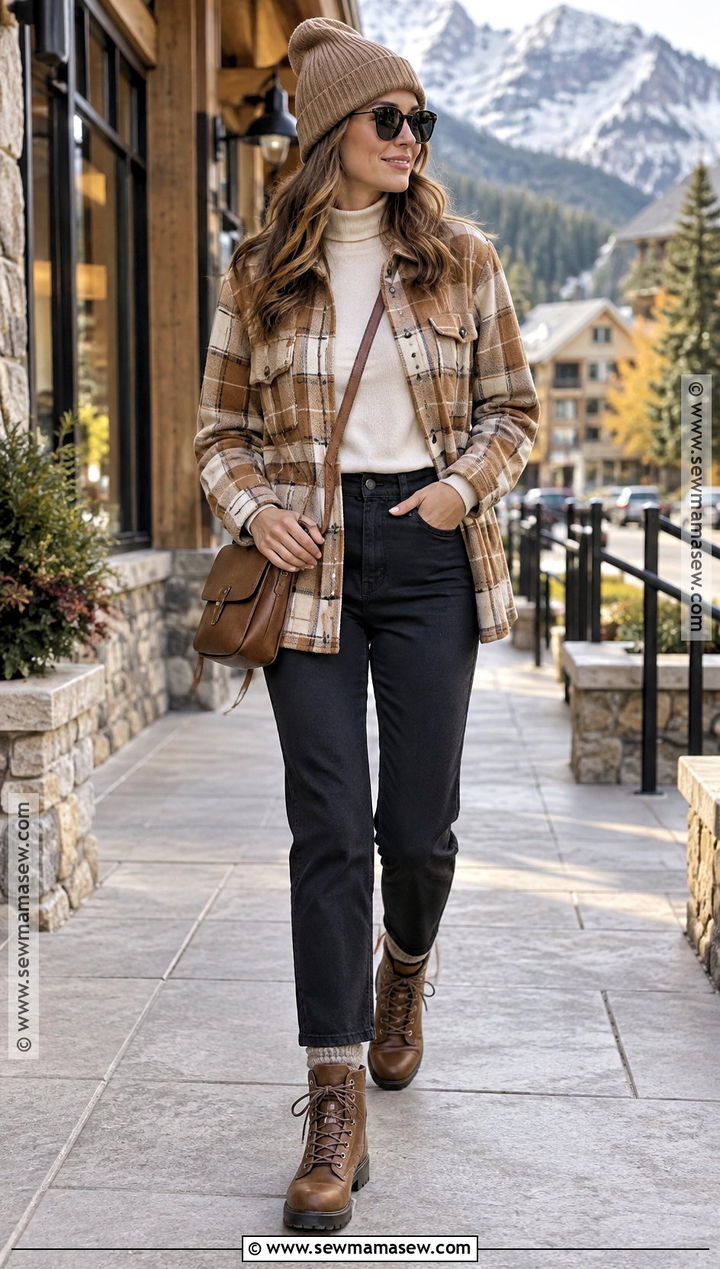
A shacket brings fall texture to a sightseeing day without the weight of a real coat. Layer a wool-blend or fleece-lined one over a fitted mock-neck top, with dark straight-leg pants that have some stretch. Brown lace-up hiking boots look right in the setting, and warm socks stop new boots from rubbing on long walks. Add a crossbody bag, knit beanie and sunglasses. Plaid, camel, charcoal and deep green all coordinate easily. If you're petite, choose a hip-length shacket; extra-long cuts cut the leg line in half. On colder days a thin insulated vest slides underneath without changing the shape.
7. Mountain Outfit With Puffer Jacket And Joggers
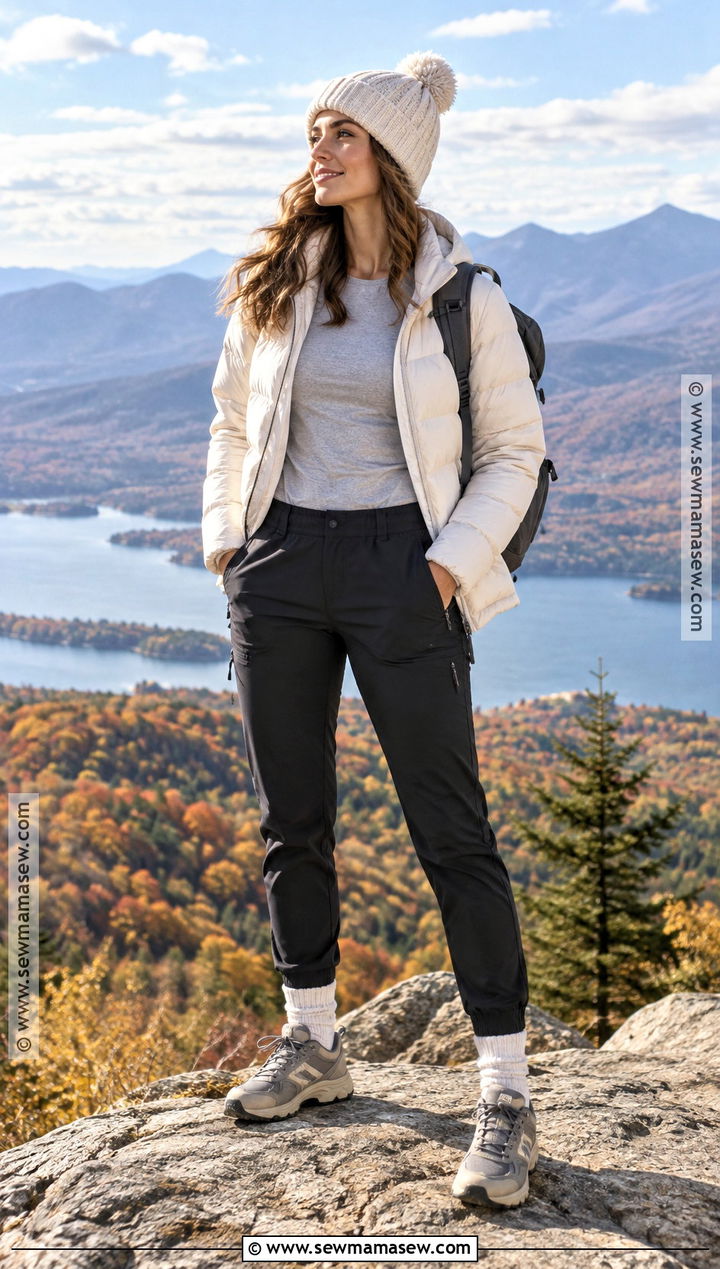
Travel days call for joggers. Tapered technical joggers with zip pockets and a water-resistant finish handle the drive, the lookout stop and the cabin check-in. A fitted thermal shirt keeps the base neat, and a cropped or hip-length puffer stops the outfit from turning into a sleeping bag. Trail sneakers, ribbed socks, a knit hat and a medium backpack finish it. Keeping everything in black, gray and cream makes casual pieces look planned. Exposed viewpoints are always windier than the parking lot, so I put light gloves in the pocket before leaving the car.
8. Mountain Outfit With Corduroy Pants And Turtleneck
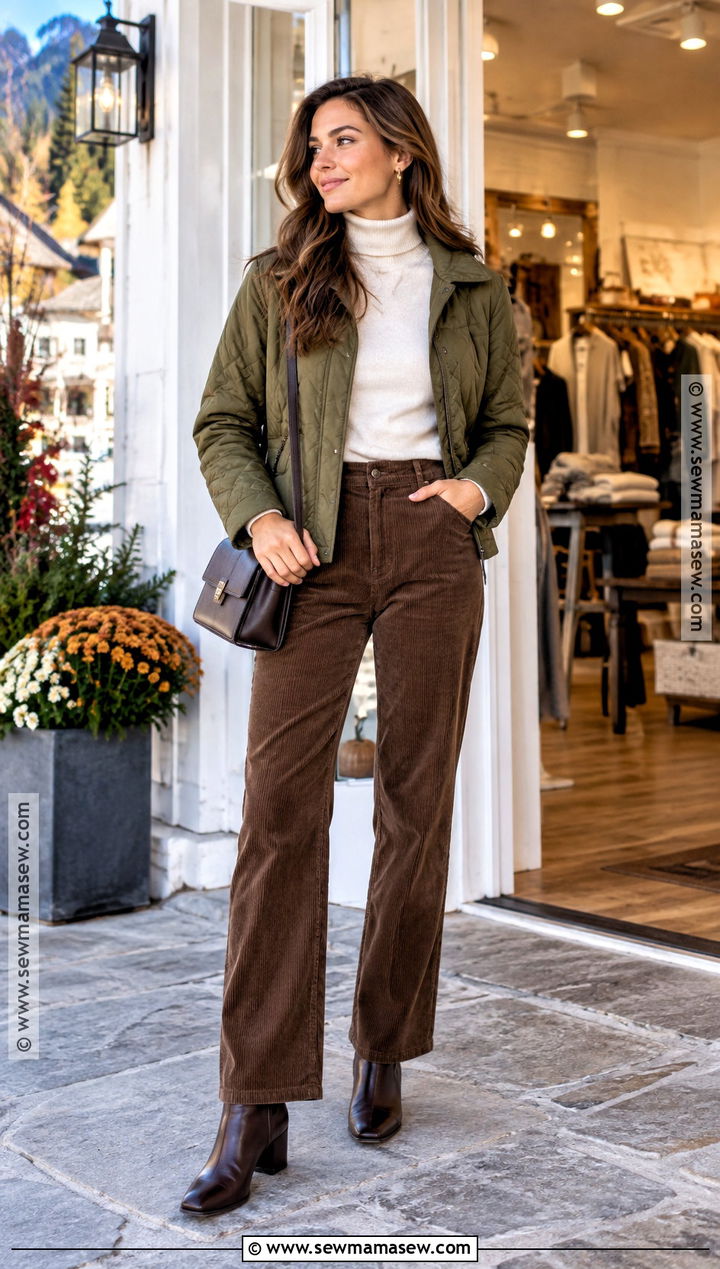
Corduroy is my shortcut for a mountain-town day that needs to look put together. High-rise straight-leg cords with a fitted turtleneck in cream, black or soft gray, plus a cropped quilted jacket that marks the waist, give shape without effort. Leather ankle boots, a structured crossbody and small gold earrings finish it. Rust, chocolate, olive and tan cords suit the season. One honest note: wide-wale corduroy rubs and shines at the inner thigh with a lot of walking, so a bit of stretch and a finer wale wear better. Save this for restaurants, shops and museums, and add a subtle plaid wool scarf for the evening.
9. Mountain Outfit With Overalls And Thermal Top
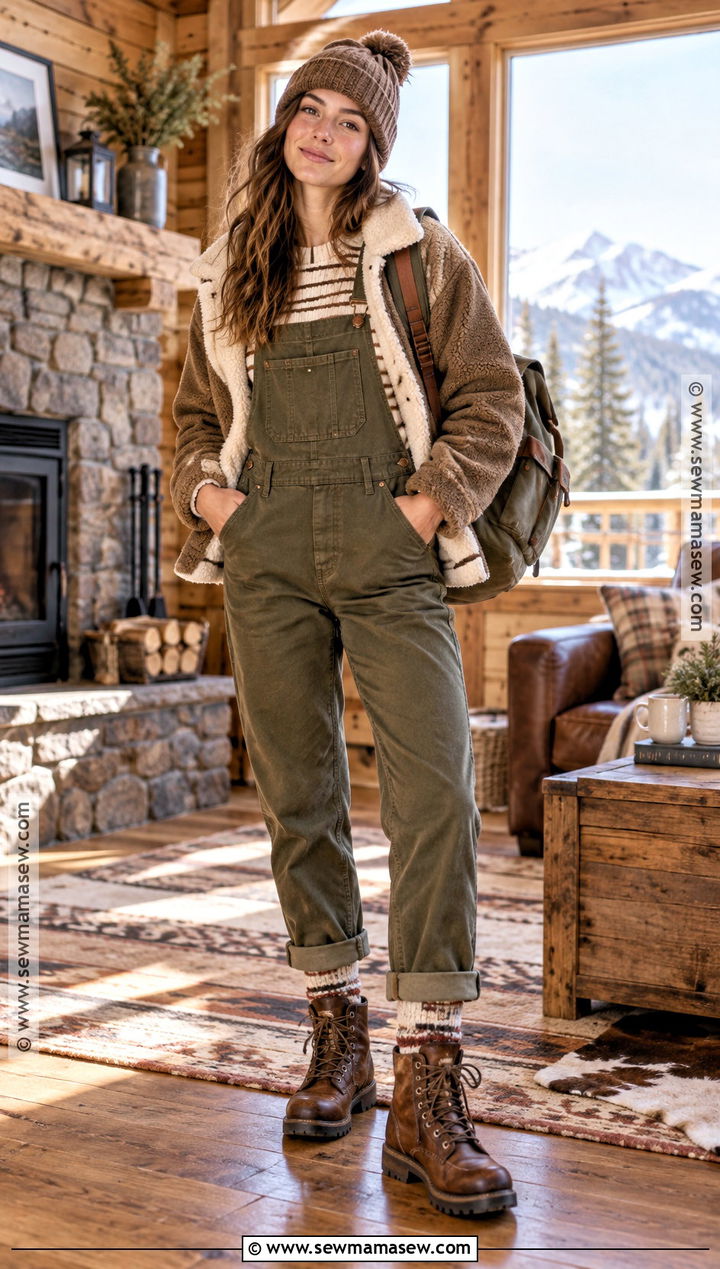
Overalls are practical in a way people forget. There's no waistband to dig in when you sit in a car or on a picnic blanket, and the bib adds a layer of warmth over the chest. Dark denim or canvas over a striped thermal, with hems cuffed above lace-up boots and thick contrast socks, gets the look right. A sherpa-lined jacket adds warmth, with a beanie and compact backpack. Check that the overalls give enough room through the hips and thighs to crouch. Canvas sits more comfortably with earth tones; dark denim feels more classic. Bring an insulated vest for farm stops and cabin grounds if the afternoon turns cool.
10. Mountain Outfit With Sweater Dress And Boots
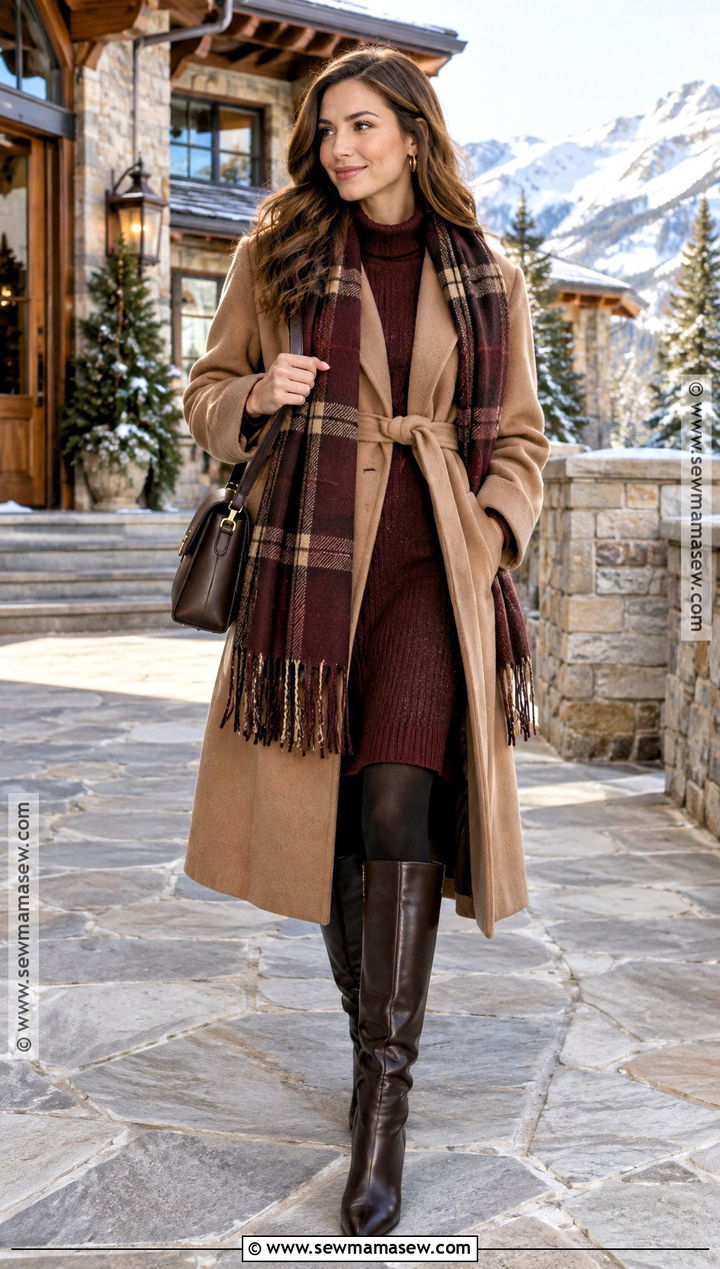
A sweater dress works for mountain-town plans if you treat the legs seriously. Opaque tights and knee-high leather boots close the gap that bare skin would leave, and a belted wool coat covers the rest. Choose a midi or knee-length knit with room for a thin thermal camisole underneath. A structured shoulder bag and simple earrings keep it from looking too formal for brunch, shopping or dinner in town. Camel, charcoal, burgundy and deep forest green all work. A slim belt adds definition if the knit hangs straight. This isn't a hiking outfit, and I'd pack a wide scarf that doubles as a wrap after sunset.
11. Mountain Outfit With Quilted Jacket And Straight Jeans
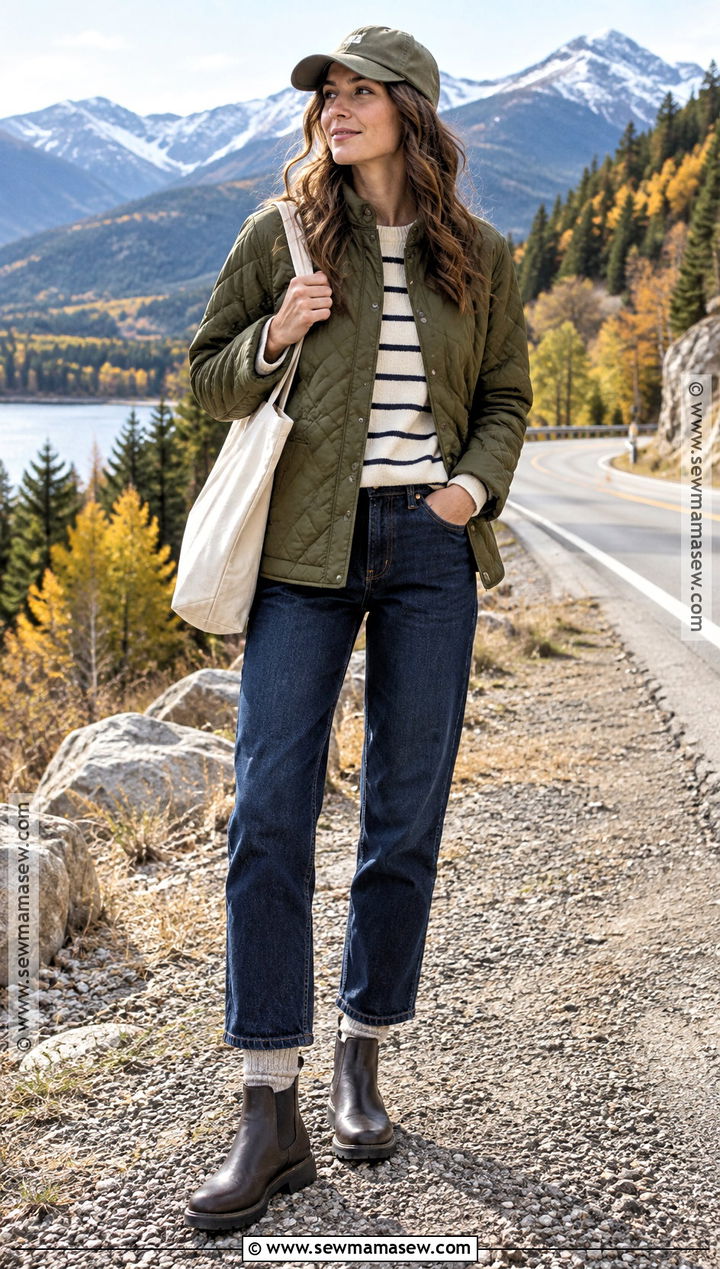
A quilted jacket is the light layer I pack for clear, cool days. Wear it over a striped long-sleeve shirt or a fine-knit sweater with straight medium or dark wash jeans, then add weather-resistant Chelsea boots, wool socks, a canvas tote and a cap. Olive, navy and brown jackets all sit easily with denim. When I try one on, I put the sweater I'll actually wear underneath it, because the shoulders are where quilting gets tight. It suits scenic drives, lunches and roadside markets. For unpaved paths, swap smooth-soled Chelsea boots for a lug sole, and keep a packable scarf for breezy overlooks.
12. Mountain Outfit With Sherpa Jacket And Cargo Pants
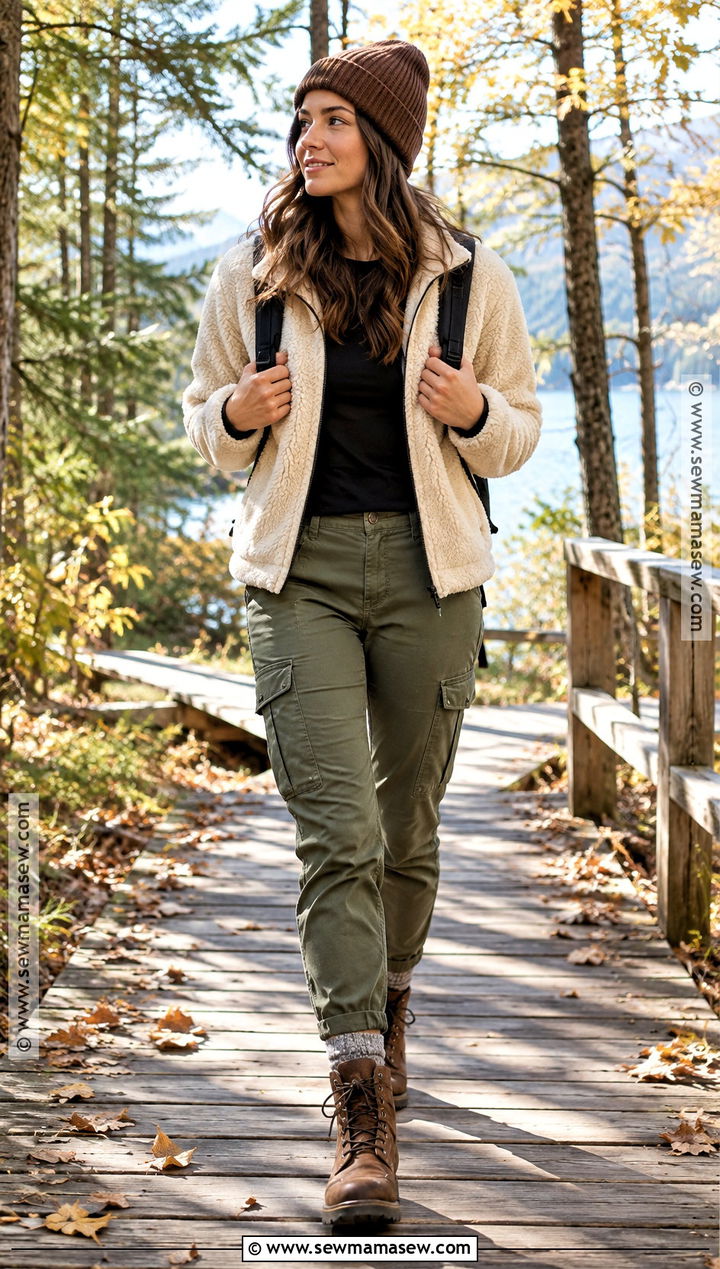
Sherpa is warm and soft, but bulky, so the base underneath has to be slim. A fitted long-sleeve tee works better than a sweater here. Tapered cargo pants in olive, charcoal or tan, sturdy lace-up boots and marled socks keep the outfit grounded, with a small nylon backpack and ribbed beanie. I prefer a sherpa jacket with woven panels or reinforced pockets, since all-pile versions lose shape quickly. Wear it open indoors to show the cleaner layer below. Sherpa soaks up water and dries slowly, so it belongs to dry, crisp days, with a thin shell in the bag if rain shows up.
13. Mountain Hiking Outfit With Base Layers And Shell
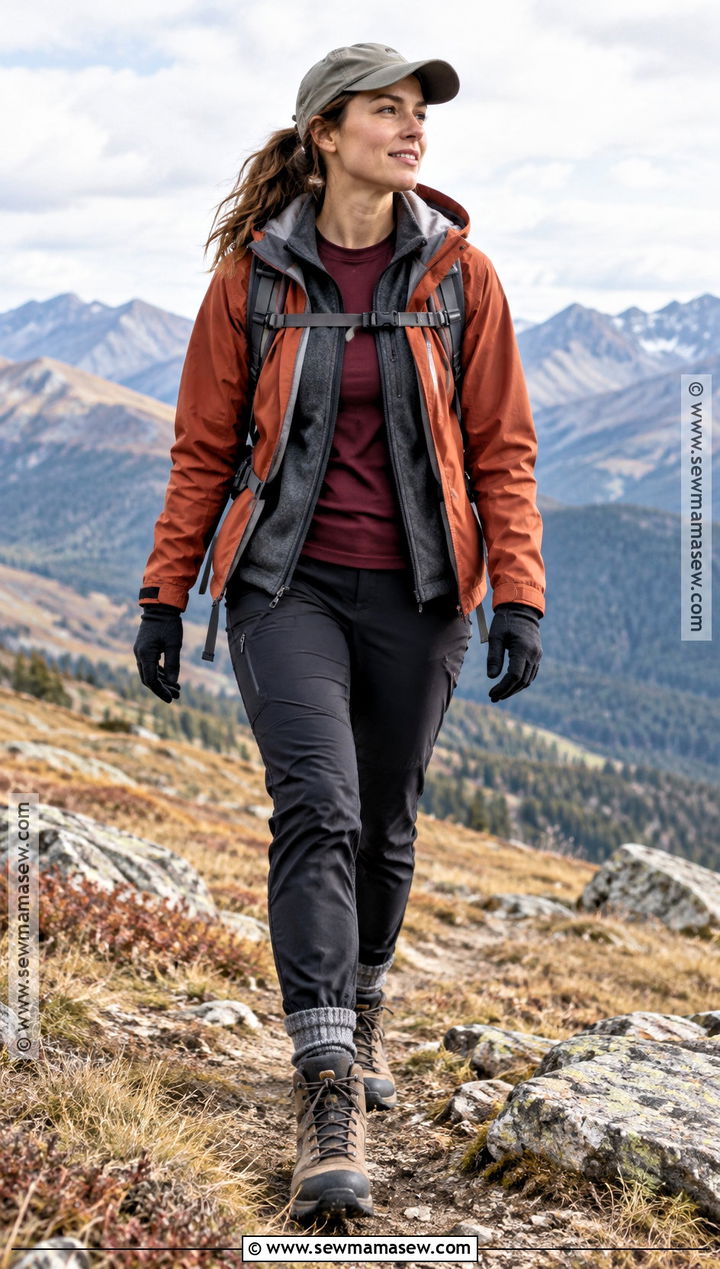
On a longer hike, your body heat swings more than the weather does. You'll be too warm climbing and chilled the moment you stop, so this outfit is built to change. Start with a wicking long-sleeve base and flexible trail pants, add a light fleece, then a packable windproof or waterproof shell. Supportive boots, wool socks, a brimmed cap, light gloves and a well-fitted daypack complete it. I stick to two neutrals and one bright shade, which helps others spot you on the trail. Pack removed layers inside the bag rather than tying them round your waist, where they snag on branches. Footwear should match the specific route.
14. Mountain Outfit With Plaid Coat And Ankle Boots
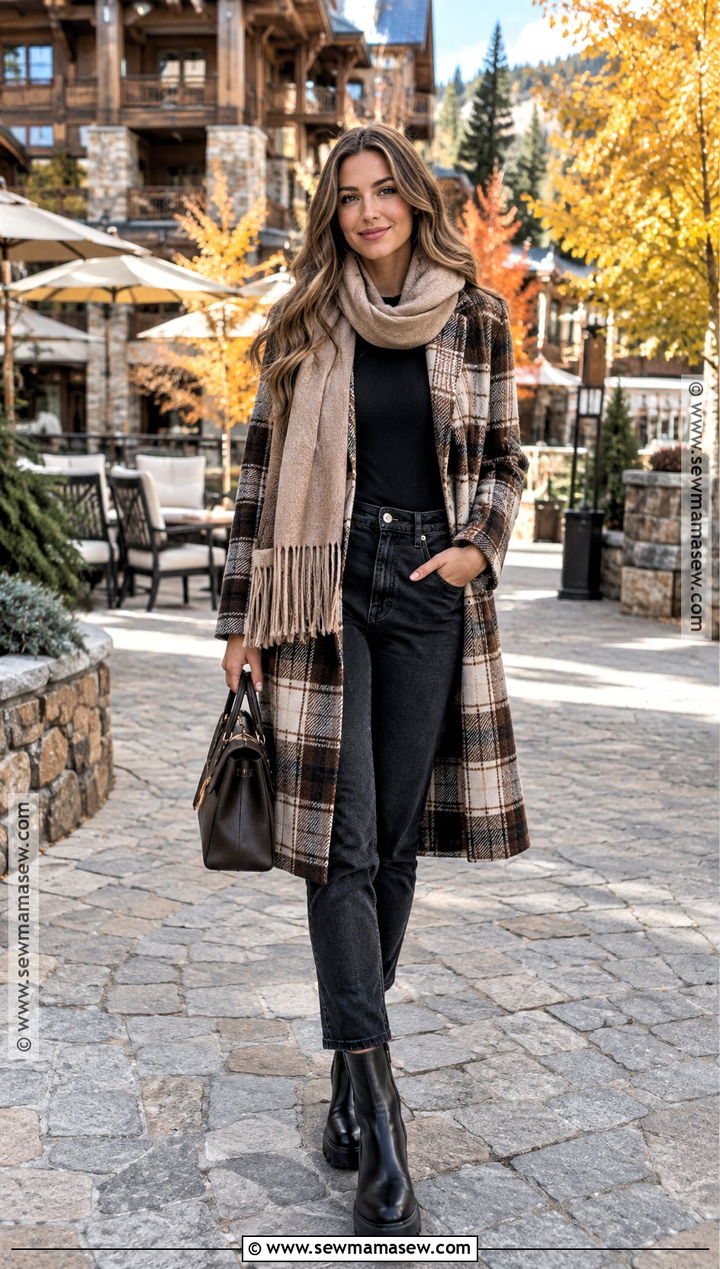
A plaid coat makes plain basics look ready for a mountain trip. A fitted crewneck sweater and dark slim-straight jeans go under a mid-length plaid coat, with leather ankle boots, a neutral scarf and a structured handbag. In a small travel wardrobe I pick the coat first, because its colors decide everything else; brown, cream, charcoal or muted rust in the plaid will coordinate with several outfits. A relaxed cut lets you lift your arms for photos. It's right for resort grounds, lunches and town squares. If the ground is wet, a rubber lug sole is safer than a smooth fashion sole on slick paths.
15. Mountain Outfit With Knit Set And Puffer Vest
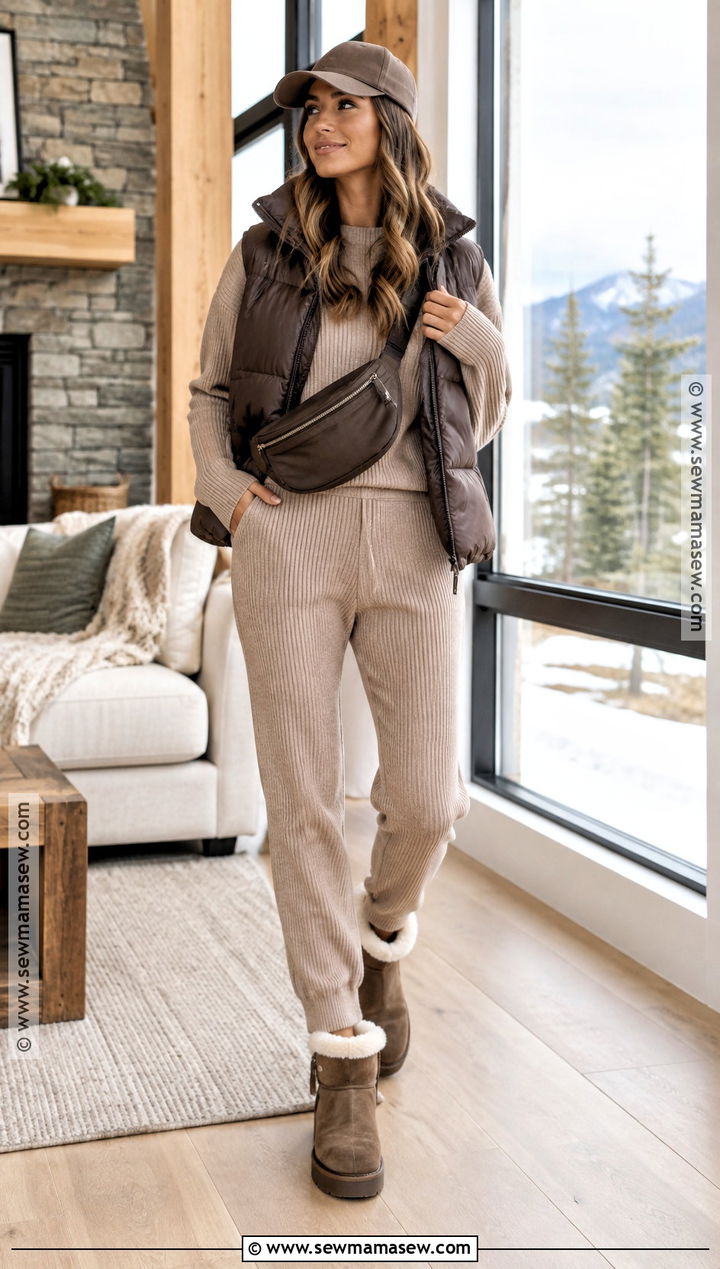
Matching knit sets are the easiest thing to pack, since the outfit is already decided. A ribbed long-sleeve top with wide-leg or tapered knit pants in taupe, charcoal or deep brown creates one long, unbroken line. A contrasting puffer vest gives the soft base some shape and makes it usable outdoors. Clean trail sneakers or lined ankle boots, a belt bag and a cap finish it. Wide-leg knits will drag through wet grass, so check the hem clears the ground in your chosen shoes. A thermal tank underneath and a light scarf handle cabin breakfasts and porch mornings.
16. Mountain Outfit With Cardigan And Hiking Pants
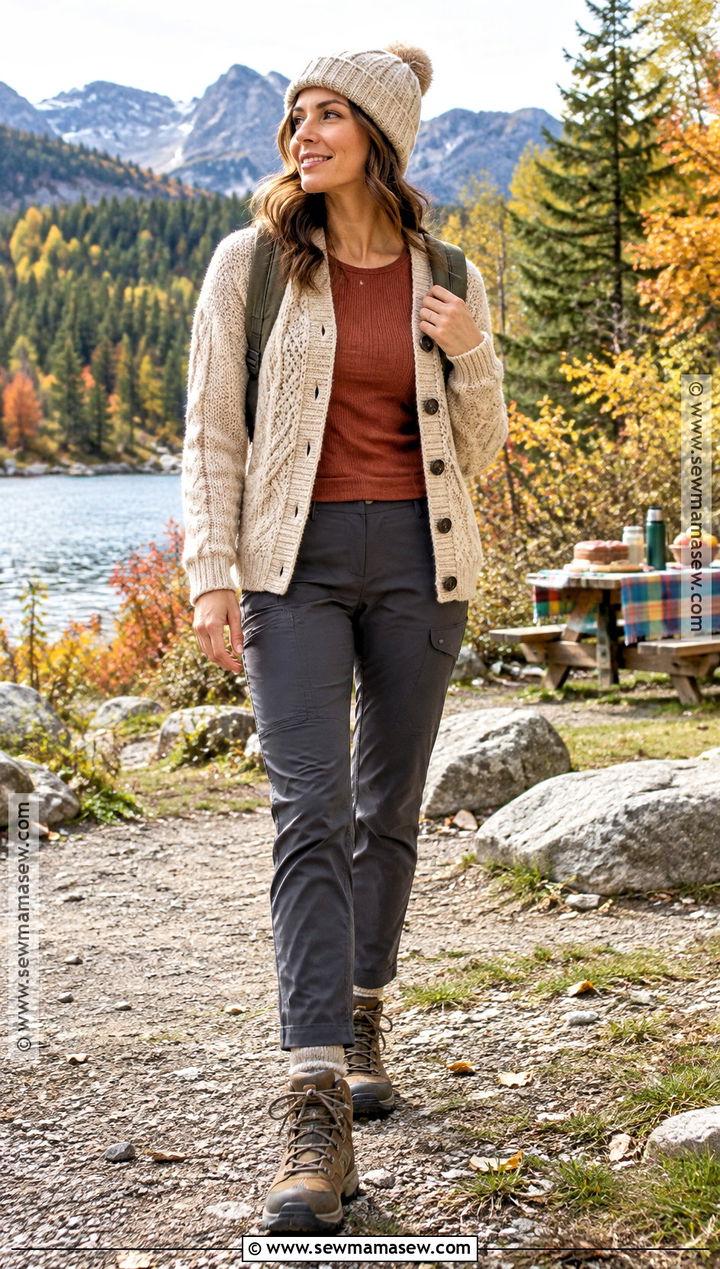
Can a chunky cardigan work outside the cabin? Yes, for gentle walks in dry weather. Over a fitted thermal tee, a button-front cardigan in oatmeal, rust or moss gives real warmth, and straight-leg trail pants with secure pockets keep the lower half practical. Ankle hiking boots, wool socks, a beanie and a small daypack finish it. Open-knit cardigans let wind straight through, though, so on a breezy ridge it stops working. Button it in the morning and open it when the sun comes out. When the wind picks up, swap it for a fleece or put a packable shell on top.
17. Mountain Outfit With Denim Jacket And Hoodie
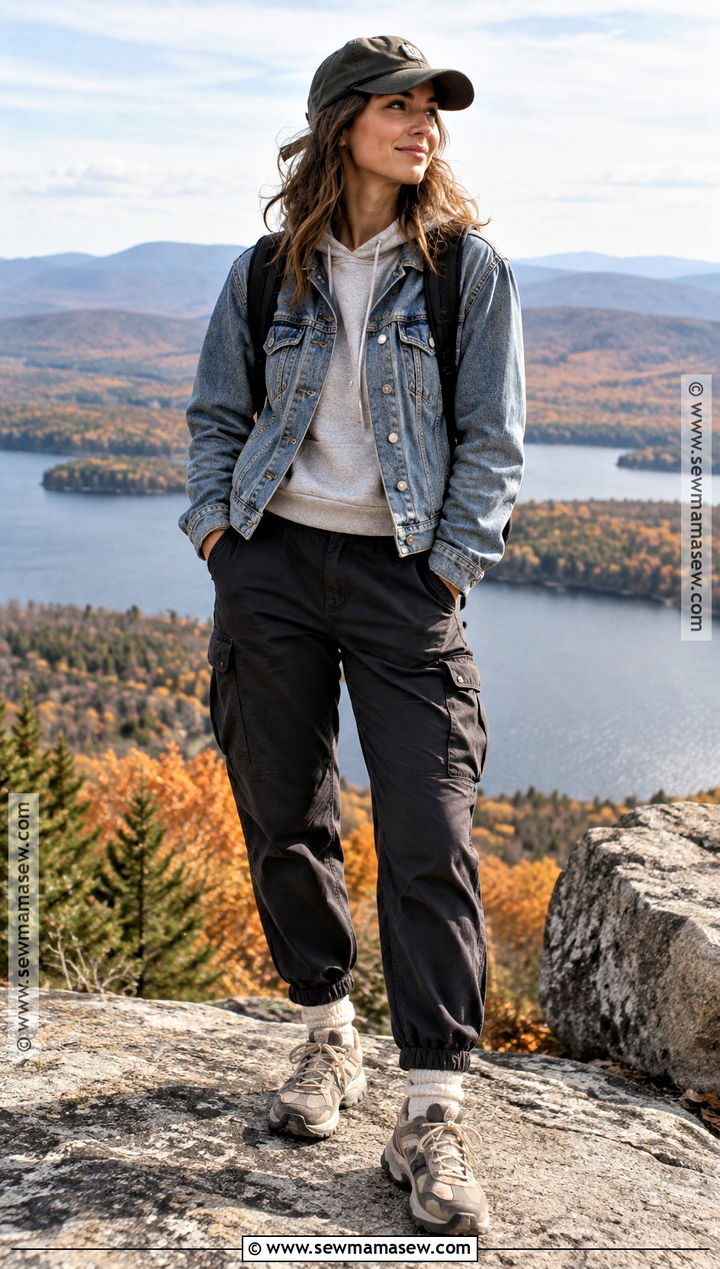
A hoodie under a denim jacket is familiar for good reason, and early fall in the mountains is where it fits best. Choose a medium-weight hoodie with slim enough sleeves to sit under the jacket without bunching at the elbows. Black utility pants or thick leggings, hiking-style sneakers, crew socks and a cap complete it, with a compact backpack for overlooks and town trails. Dark or medium-wash denim pairs with gray, cream, burgundy or forest green hoodies. Denim and cotton fleece both hold water, so this belongs to dry days and short walks. Carry a rain jacket if the forecast is unsure.
18. Mountain Outfit With Wool Coat And Wide-Leg Pants
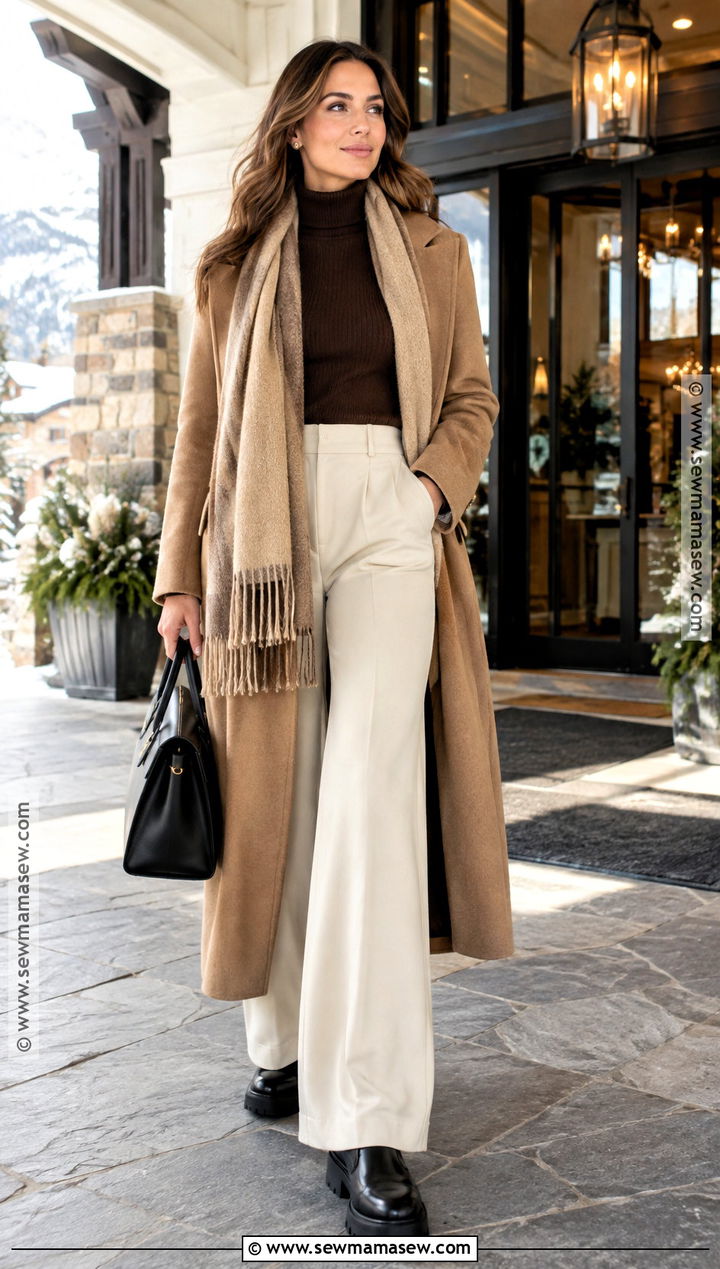
For a resort stay, wide-leg trousers and a long wool-blend coat look refined, but mountain ground is rarely clean. I keep wide legs cropped or hemmed so they don't sweep damp pavement, and pair them with sleek lug-sole boots instead of heels. A fitted knit top, a structured handbag and a soft scarf finish the outfit. Camel, chocolate, cream and black in one tonal palette make it easy to put together. Pants with an elastic back or a little stretch are more comfortable on the drive up. In wind, a buttoned coat with a removable belt stays closed better than a wrap coat, and simple studs are enough jewelry.
19. Mountain Outfit With Fleece Vest And Trail Pants
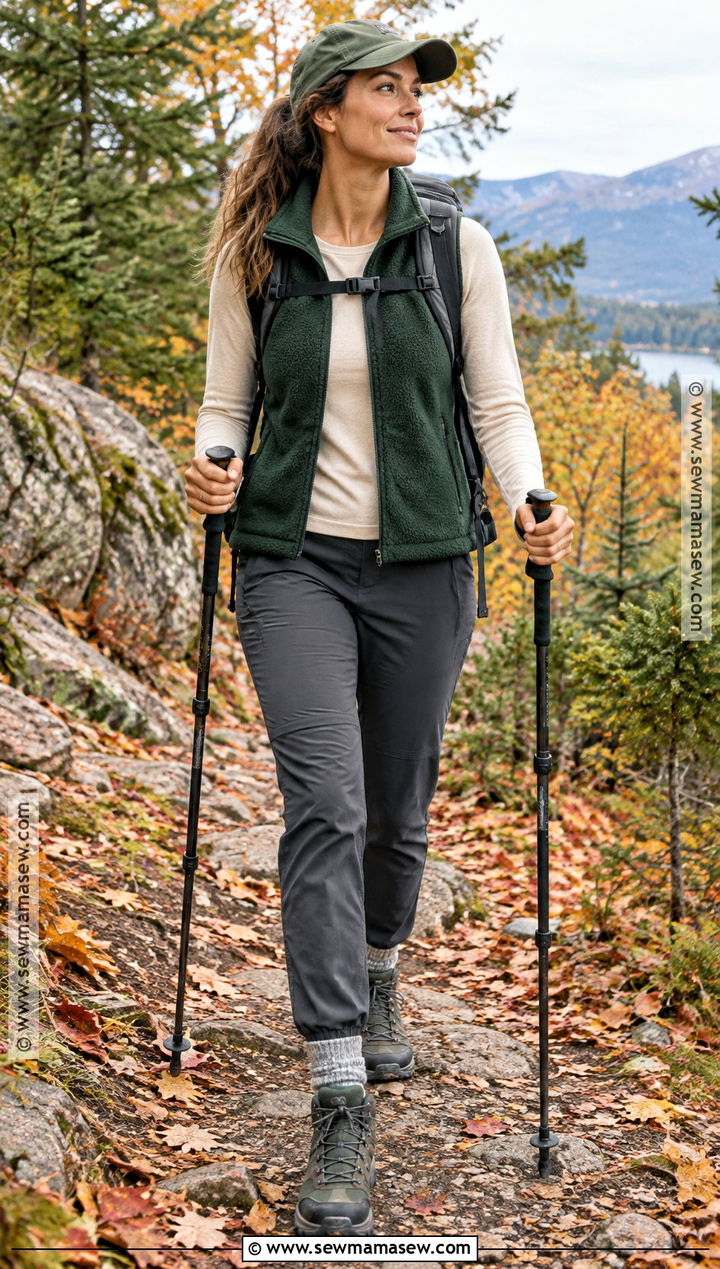
A fleece vest is a practical choice for active days that start cold and warm up fast. Over a light merino or synthetic long-sleeve top, it keeps the core warm while your arms vent heat, which is a real advantage when you're swinging trekking poles. Durable trail pants, waterproof hiking shoes, cushioned socks, a sun cap and a streamlined pack complete it. Pick the vest in cream, brown, burgundy or forest green and keep the rest neutral. Fleece breathes well but blocks very little wind, so carry a light insulated jacket for rest stops and higher ground, and a shell if rain is forecast.
20. Mountain Outfit With Parka And Thermal Leggings
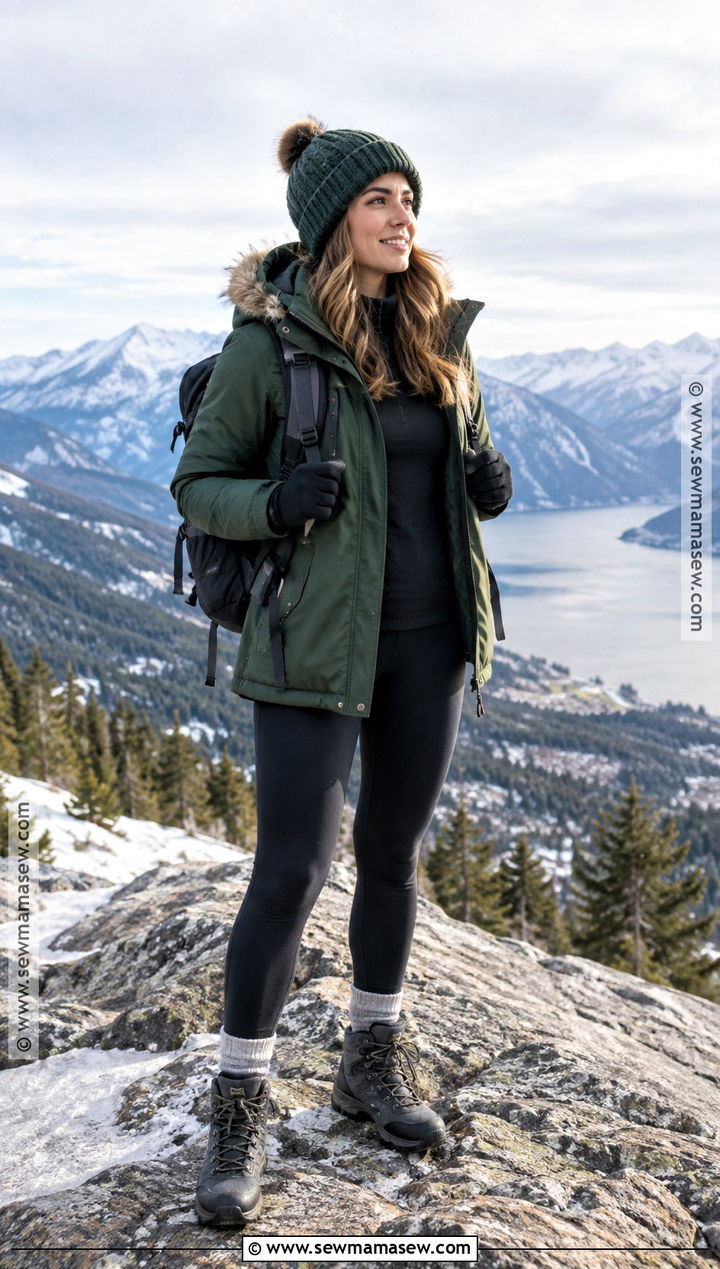
Late-fall mornings at elevation are properly cold, and this is the outfit for them. A thermal base and fleece-lined leggings go under a hip-length insulated parka, with waterproof boots, midweight wool socks, a beanie, touchscreen gloves and a backpack. Deep green, navy, rust or black parkas pair easily with neutral leggings. Look for an adjustable hood and enough room for a fleece underneath. The common mistake is starting a climb in the parka. You'll sweat into your base layer within minutes and feel colder at the top, so take it off for steady uphill sections and put it back on when you stop.
Packing One Bag for Trail Days and Town Dinners
Most mountain trips mix two kinds of day, and the easy mistake is packing two separate wardrobes. I plan the trail pieces first, because they're less flexible, then choose town pieces that share their colors so they cross over.
For a long weekend, this is the list I'd start from:
- Two wicking base layers and one thermal top that also looks fine under a sweater in town.
- One fleece or puffer vest, which works on the trail and over a knit set at the cabin.
- One waterproof shell, packed every day whatever the forecast says.
- One pair of trail pants and one pair of dark jeans or cords.
- One warm coat or parka in a neutral that goes with everything else.
- Waterproof hiking boots plus one pair of lug-sole leather boots for town.
- Wool socks for every day, a beanie, light gloves and a scarf.
Wear the bulkiest items on the drive or flight, and roll knits rather than folding them. If you can only bring one pair of footwear, make it the waterproof boots. Damp feet ruin a day faster than any clothing choice, and a clean pair of dark boots passes in most restaurants.
Match the Outfit to the Day's Plan and the Forecast
A good mountain wardrobe lets you enjoy changing leaves and cold mornings without spending the trip feeling unprepared. For active days, build on breathable base layers, flexible pants, an insulating midlayer and outerwear that handles weather. For town and resort plans, bring in corduroy, knit dresses, wool coats and polished boots. Earth tones look right in the setting, and black, cream and charcoal make everything mix. The one rule I never break is checking each day's plan against the forecast before getting dressed. With layers chosen that way, one bag covers hiking, sightseeing, travel and rest.
Related posts: