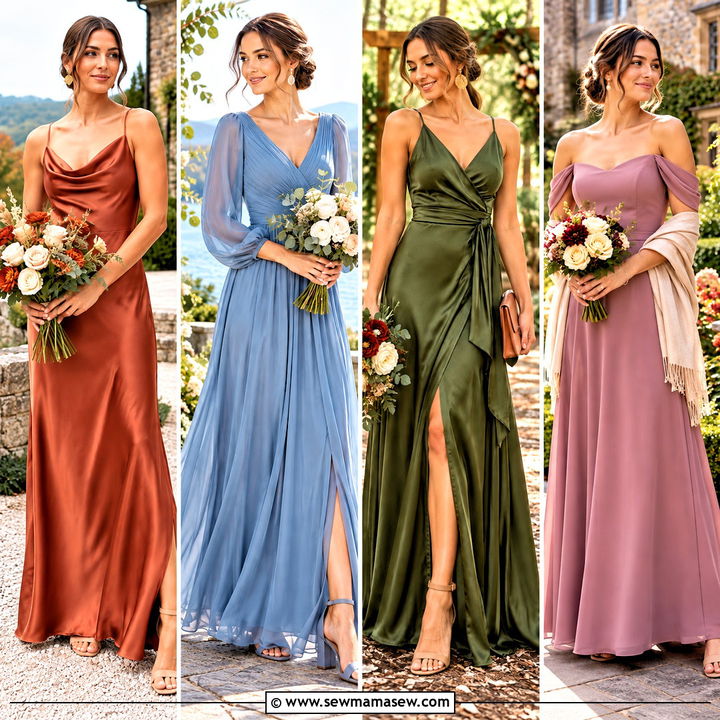
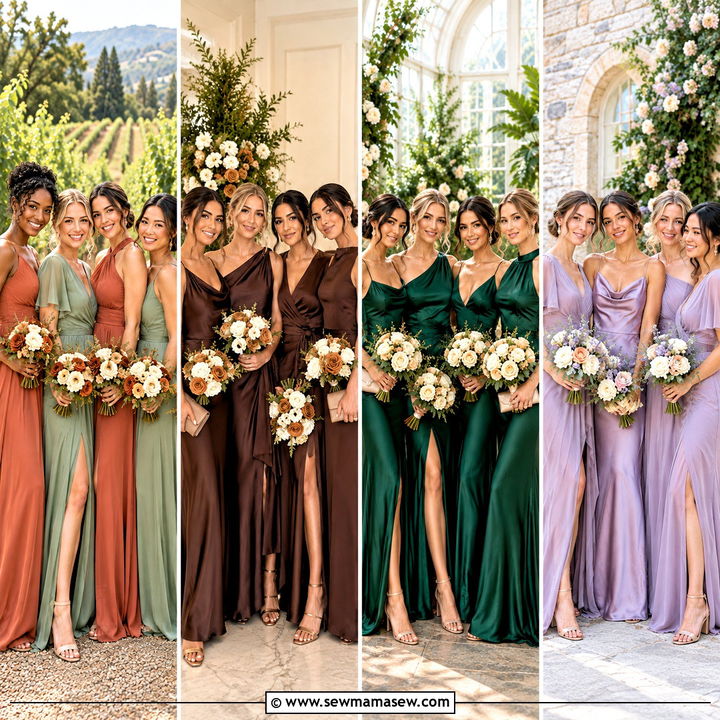
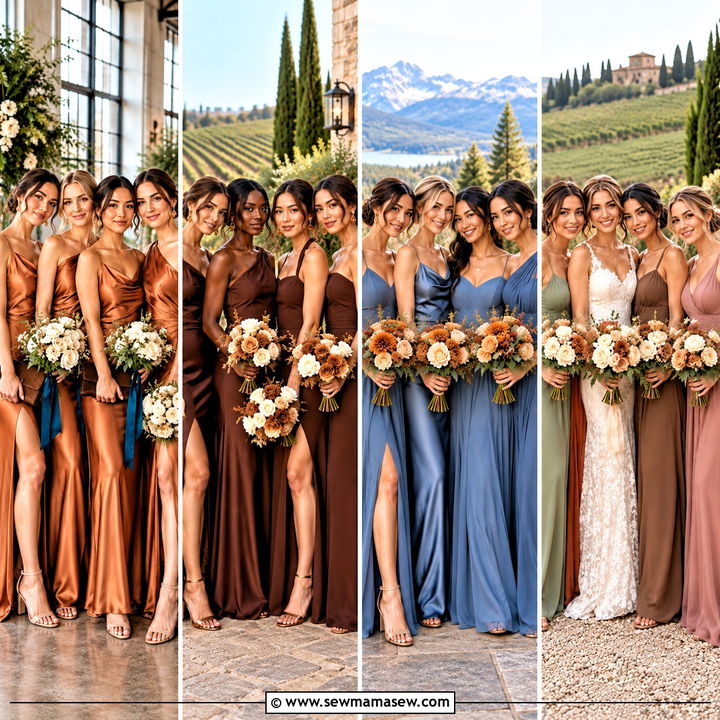
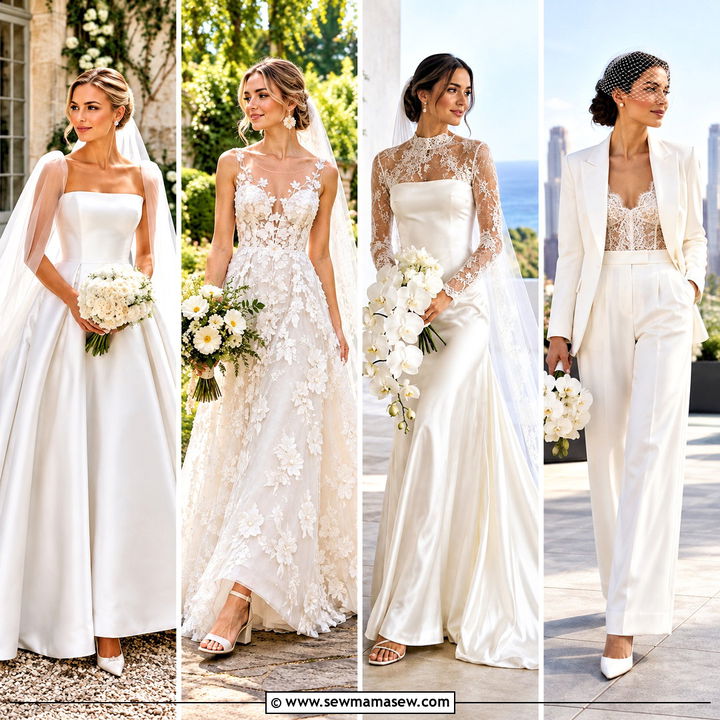
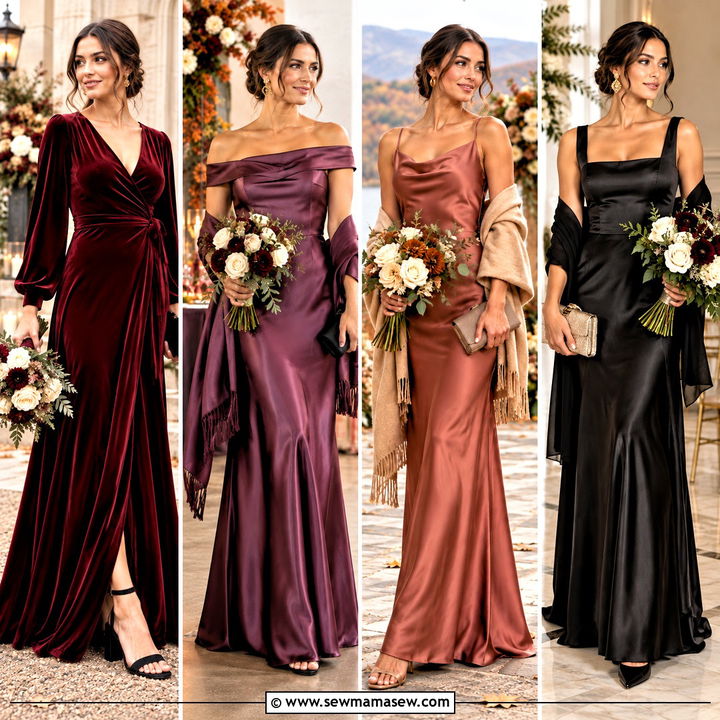
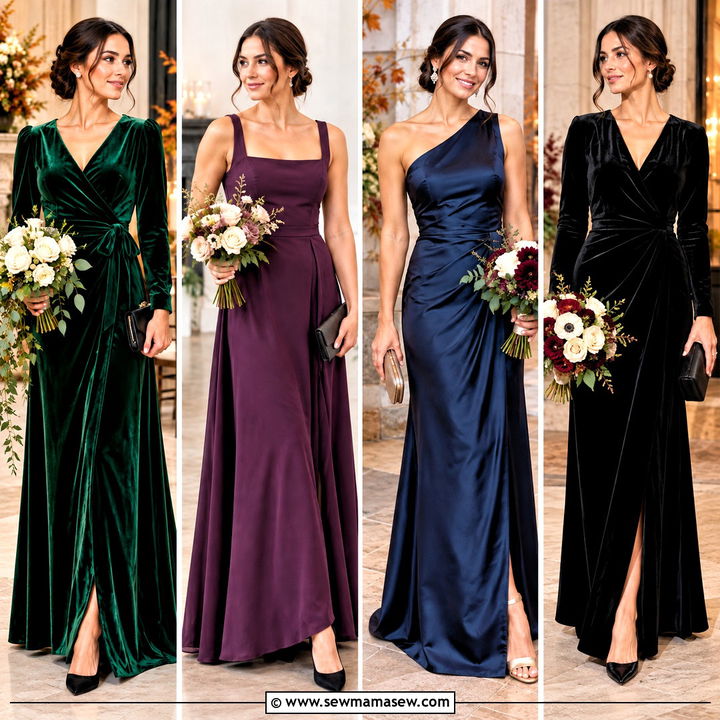
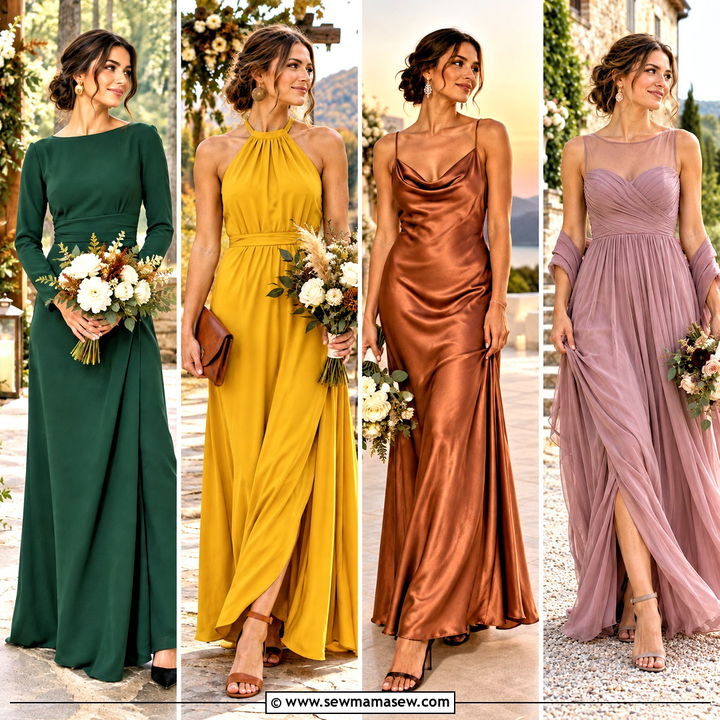
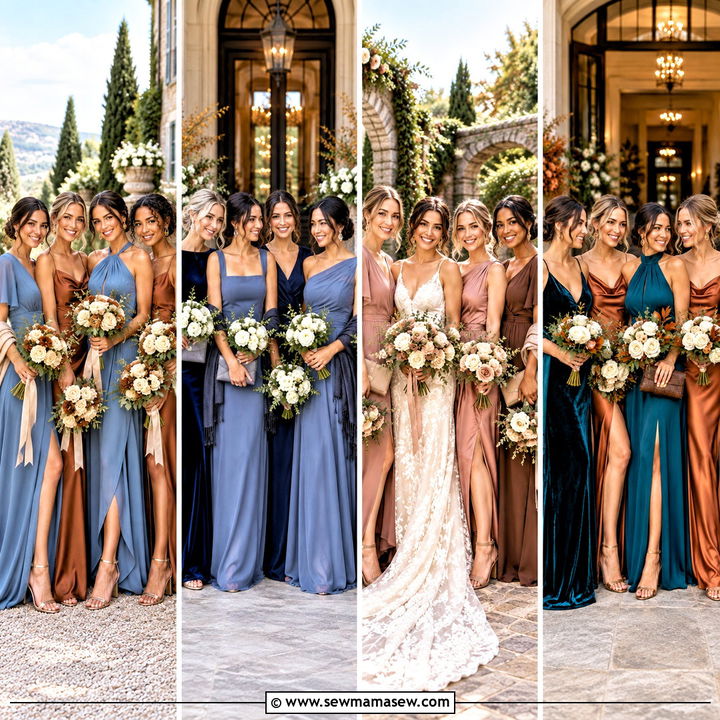
September is the trickiest month I dress bridal parties for. The ceremony can be warm enough to make satin uncomfortable, and the same evening can need a wrap by the time toasts start. So I pick bridesmaid dresses for this month by fabric and weight first, color second. Chiffon and light crepe handle a hot afternoon; satin, deeper shades and the odd velvet detail make more sense once the sun is down or the calendar is closer to October. Below are twenty looks I'd actually put in front of a bride, each with the shoes, jewelry, flowers and layer I'd pair with it, plus notes on who each one suits and where it can go wrong.

Why Satin Struggles at a Hot Afternoon Ceremony
Before anyone looks at colors, I ask the couple what time the ceremony starts and whether it's outdoors. Early September can still be properly hot, and the fabric decides how a bridesmaid feels standing in the sun for thirty minutes.
- Satin is usually polyester with a smooth face, so it doesn't breathe well and it shows perspiration at the underarms and lower back. It also creases across the lap after sitting. It looks its best indoors or after sunset.
- Chiffon is sheer and layered, lets air through and hides damp patches. The trade-off is that it snags on rough wood, brambles and some jewelry clasps.
- Crepe has a matte, slightly textured surface that hides wrinkles and photographs cleanly in harsh light. It's heavier than chiffon but cooler than satin.
- Velvet holds heat and crushes under pressure. I keep it for evening weddings, cool climates or the last days of the month.
If the ceremony is outside at midday and the group has their hearts set on satin, I'd suggest a lighter weight, a lining that breathes, and darker shades, which hide damp marks far better than champagne or sage.
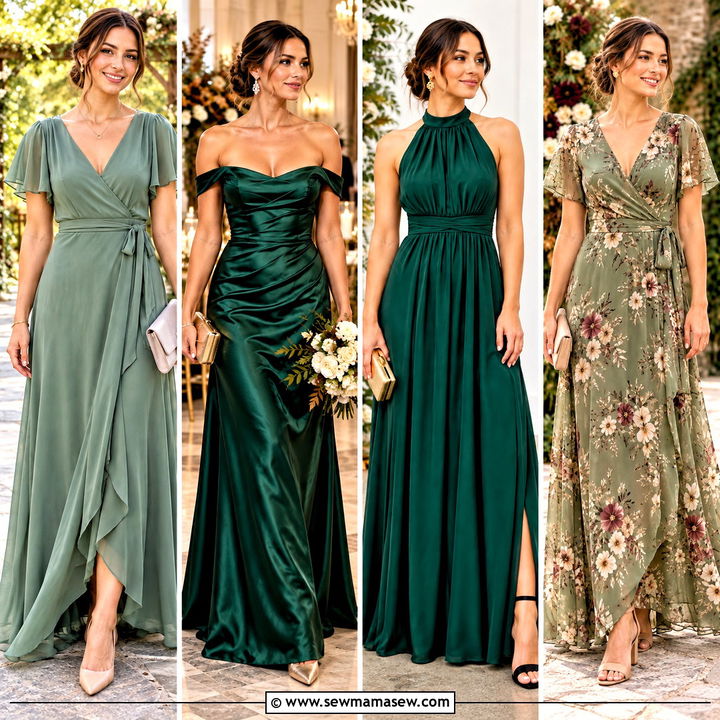
1. Sage Green Chiffon Bridesmaid Dress
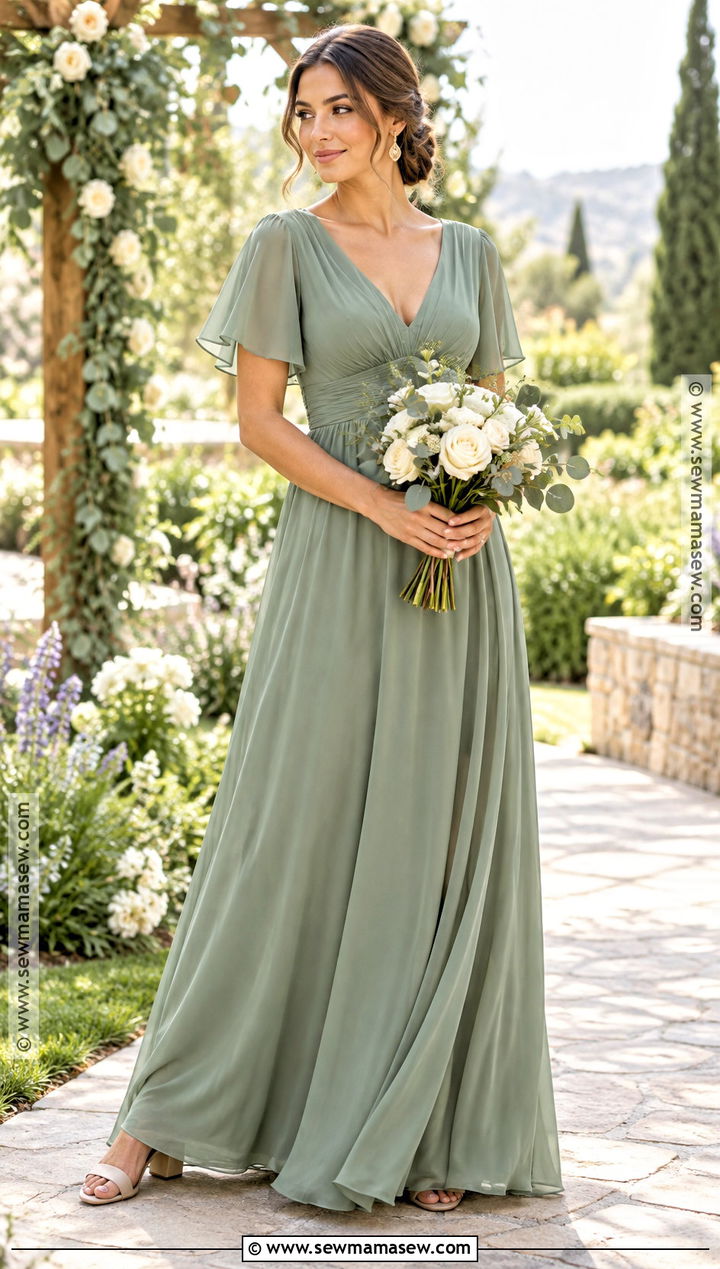
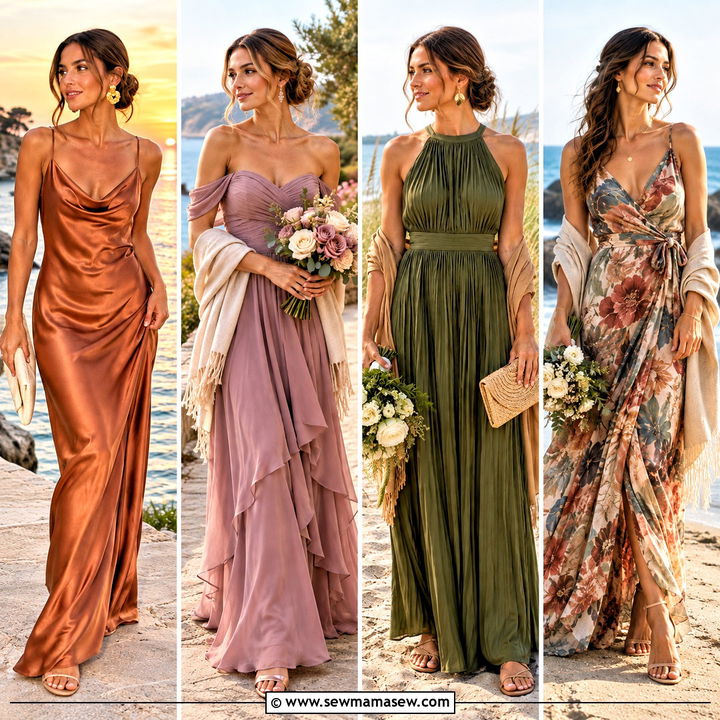
Sage chiffon is the dress I suggest most often for an early September garden ceremony, because it reads soft in daylight and doesn't fight greenery in photos. An A-line with a V-neck, a defined waist and flutter sleeves suits a wide range of figures, and the sleeves give some upper-arm coverage without adding weight. I keep the accessories small: nude block heels, thin gold drops, one bracelet. Ivory roses, white cosmos and eucalyptus echo the green without copying it. The one thing I check is the lining, since pale chiffon can turn see-through in strong sun. A matching sage wrap covers the evening chill at a vineyard or country venue.
2. Terracotta Satin One-Shoulder Bridesmaid Dress
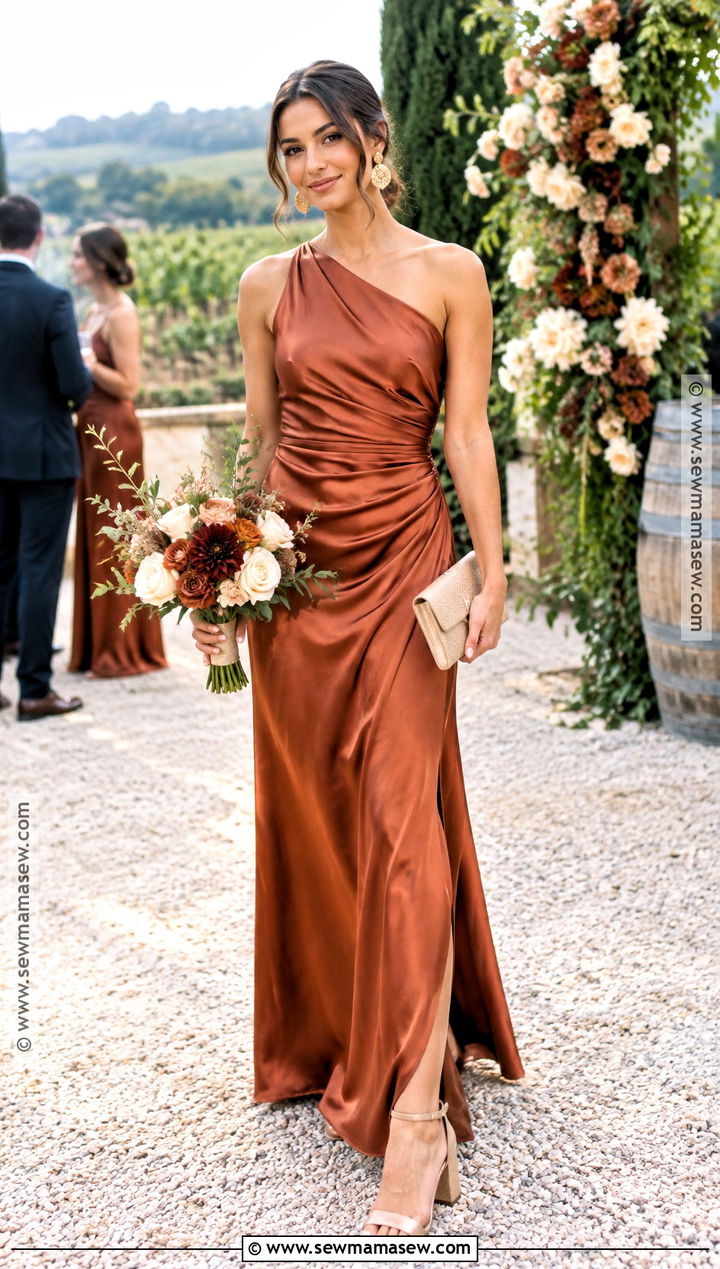
Terracotta is the color that tells guests it's fall without anyone needing a velvet dress yet. I like it in a one-shoulder satin maxi with gentle ruching at the waist, which hides the creasing satin picks up after an hour of sitting. Steer away from a tight, body-skimming cut here; satin shows every line underneath. Champagne block heels are steadier than stilettos on an outdoor aisle. Brushed-gold earrings, a cuff and a small neutral clutch are enough. For flowers, cream roses with rust blooms and olive leaves sit next to the dress rather than matching it. A light camel wrap keeps the warm color story going after sunset.
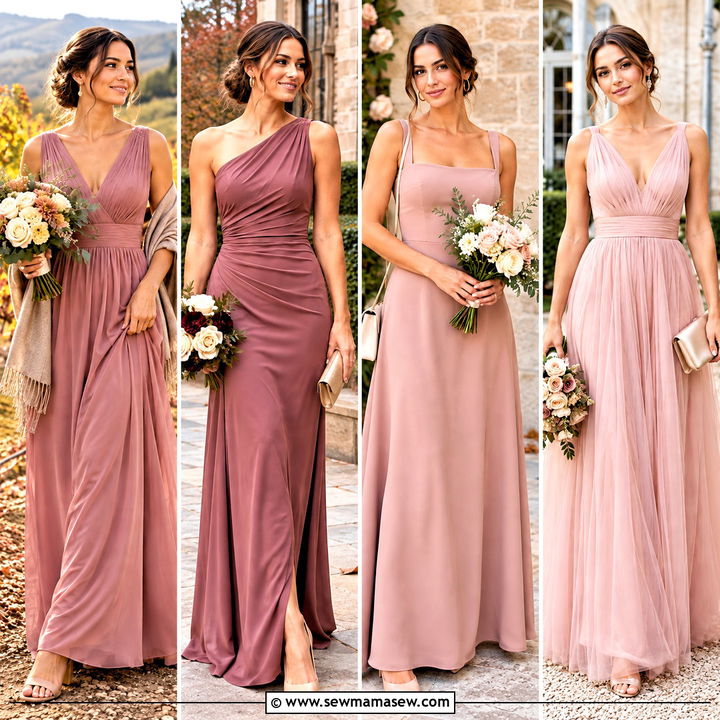
3. Dusty Rose Wrap Bridesmaid Dress
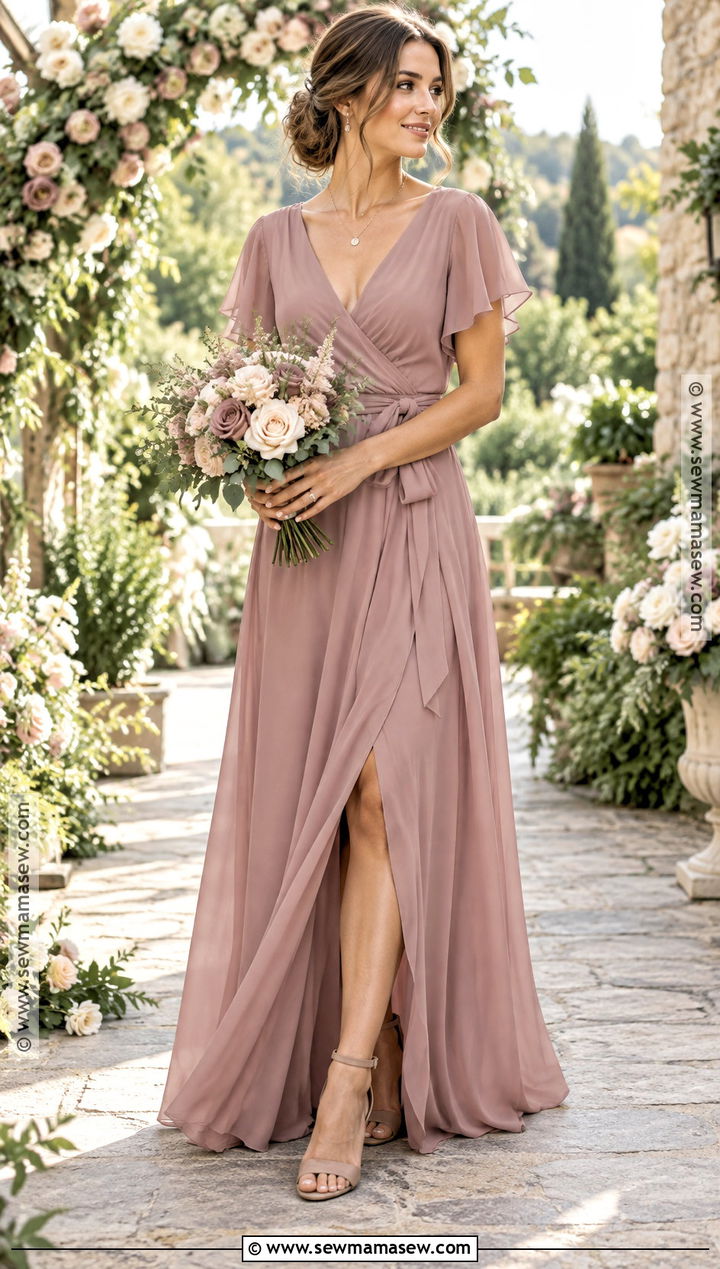
A wrap dress is the one I recommend when the bridesmaids range in size and shape, because the tie lets each person set her own waist. In dusty rose chiffon with a surplice neckline it moves easily through a long ceremony and a dance floor. I always ask the group to test the wrap front by sitting and bending before the wedding; a shallow overlap can gape, and a small snap sewn at the cross point fixes it. Floor length with short flutter sleeves stays airy on a warm day. Taupe ankle-strap heels, rose-gold studs and a fine pendant suit the muted tone. Ivory, blush and mauve flowers give depth, and a matching stole helps inside a heavily air-conditioned barn or hall.
4. Burgundy Satin Cowl-Neck Bridesmaid Dress
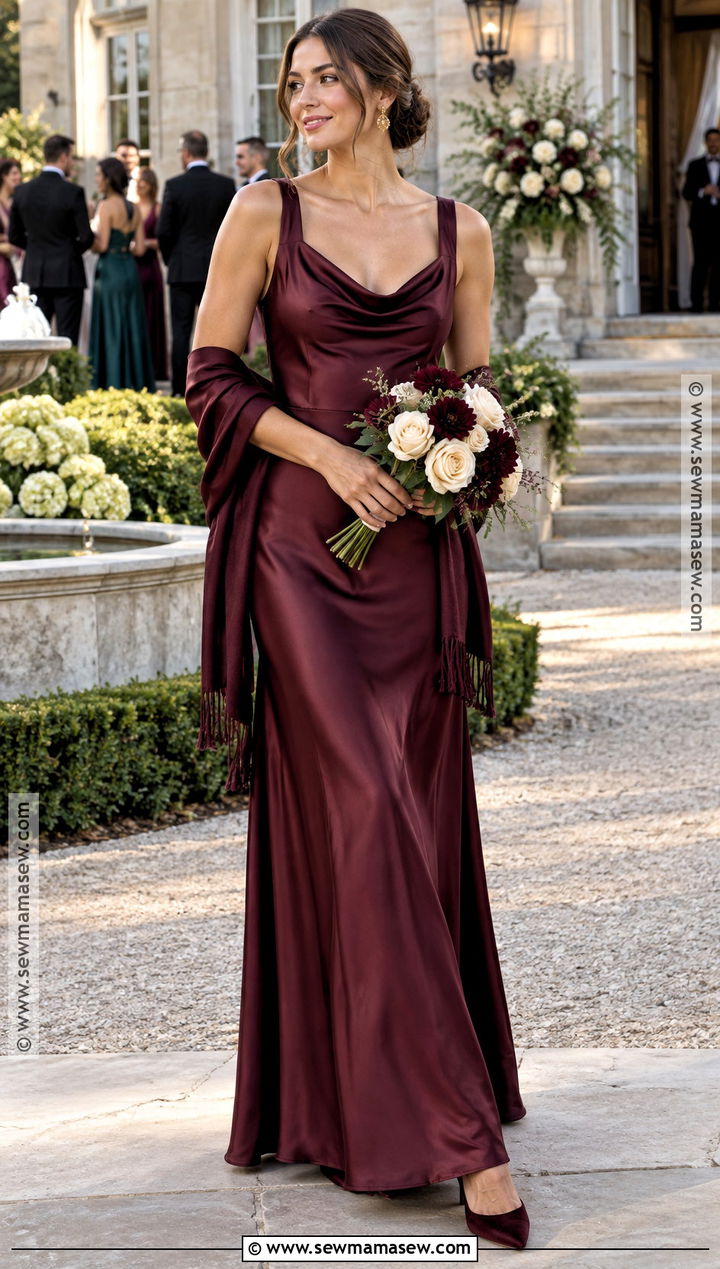
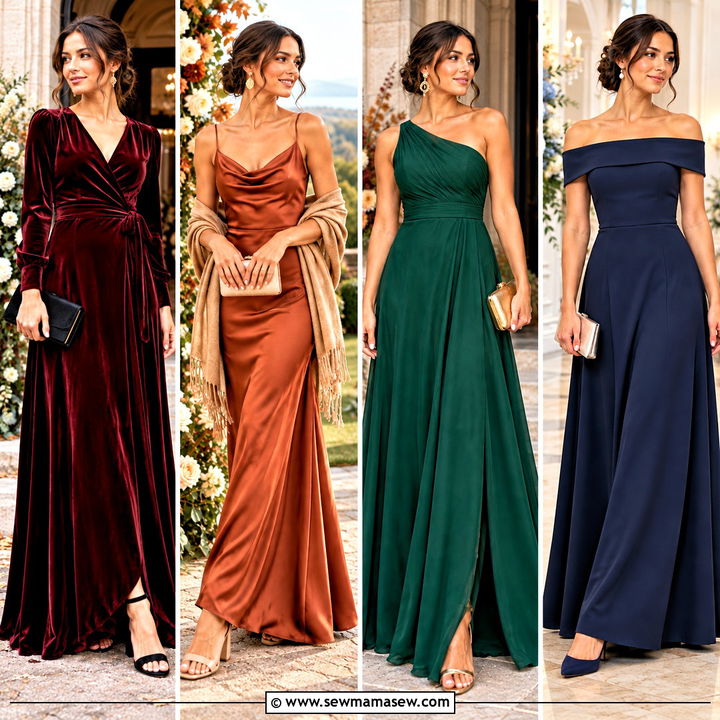
Burgundy satin is where I go when the wedding is in the evening or the couple wants depth. A cowl neck with wider straps gives that liquid drape while holding the bust far better than a thin-strapped slip, and that matters for anyone who needs a regular bra. The cowl does its own work, so I skip a necklace and let gold earrings bring light to the face. Black or dark burgundy heels ground the look. Leave enough ease in the skirt for walking and dancing; a narrow satin hem hobbles people on stairs. Cream roses, burgundy dahlias and dark greenery tie it to autumn, and a wine or black wrap finishes it for a hotel, estate or late vineyard reception.
5. Champagne Pleated Bridesmaid Dress
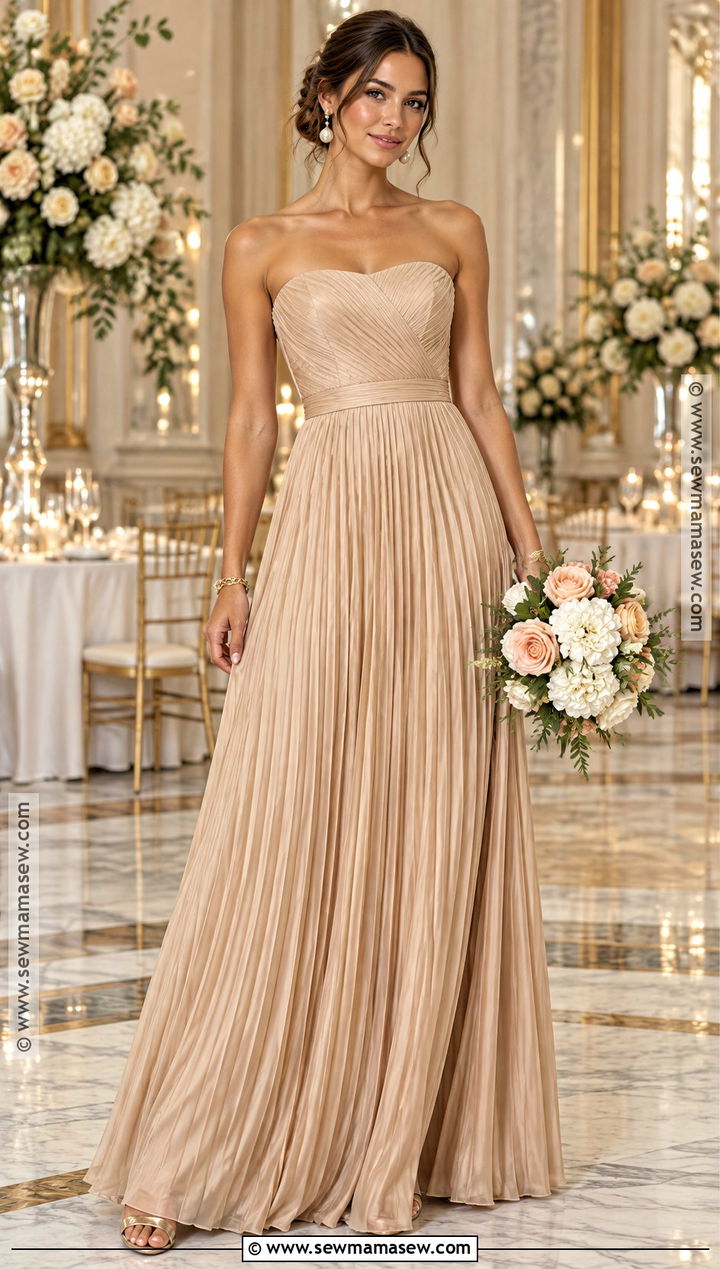
Champagne is lovely on paper and risky in practice, because it can sit very close to the bride's ivory. I only approve it once I've held the swatch next to her gown in daylight. When it passes that test, a pleated A-line with a fitted bodice is the shape I like most; narrow vertical pleats catch light as the bridesmaids walk and lengthen the body in photos. A high neck or modest V keeps the pale shade from looking bridal. Metallic champagne sandals, pearl drops and a slim gold bracelet keep everything in one tonal family. Flowers need contrast here, so I add peach or terracotta to the greenery and white blooms.
6. Olive Green Crepe Bridesmaid Dress
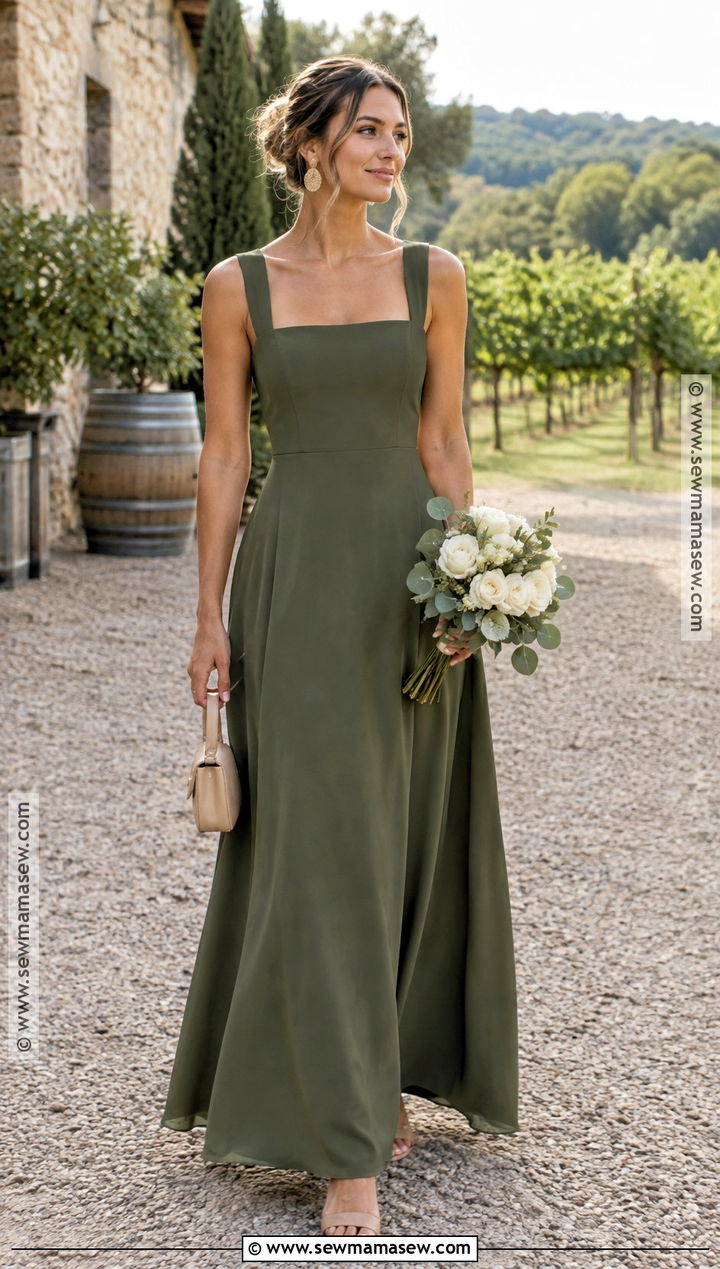
Olive sits between sage and forest green, and it's one of the easiest early-fall colors for a mixed group of skin tones. I like it in a square-neck crepe with wide straps and an A-line skirt. Matte crepe hides creases and doesn't bounce flash back the way satin can, so it photographs cleanly in bright midday light. Tan block heels, hammered-gold earrings and a structured beige mini bag keep it relaxed. Bouquets with ivory blooms, dried grasses and a little muted orange pick up the earthiness. On a cool evening I'd hand out taupe pashminas rather than jackets, since a jacket breaks the long line of the dress at the waist.
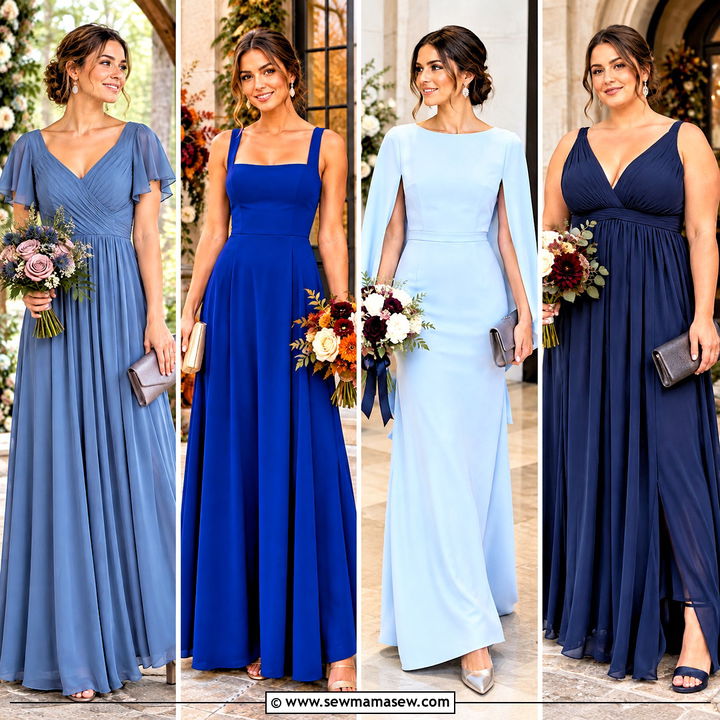
7. Navy Blue Halter Bridesmaid Dress
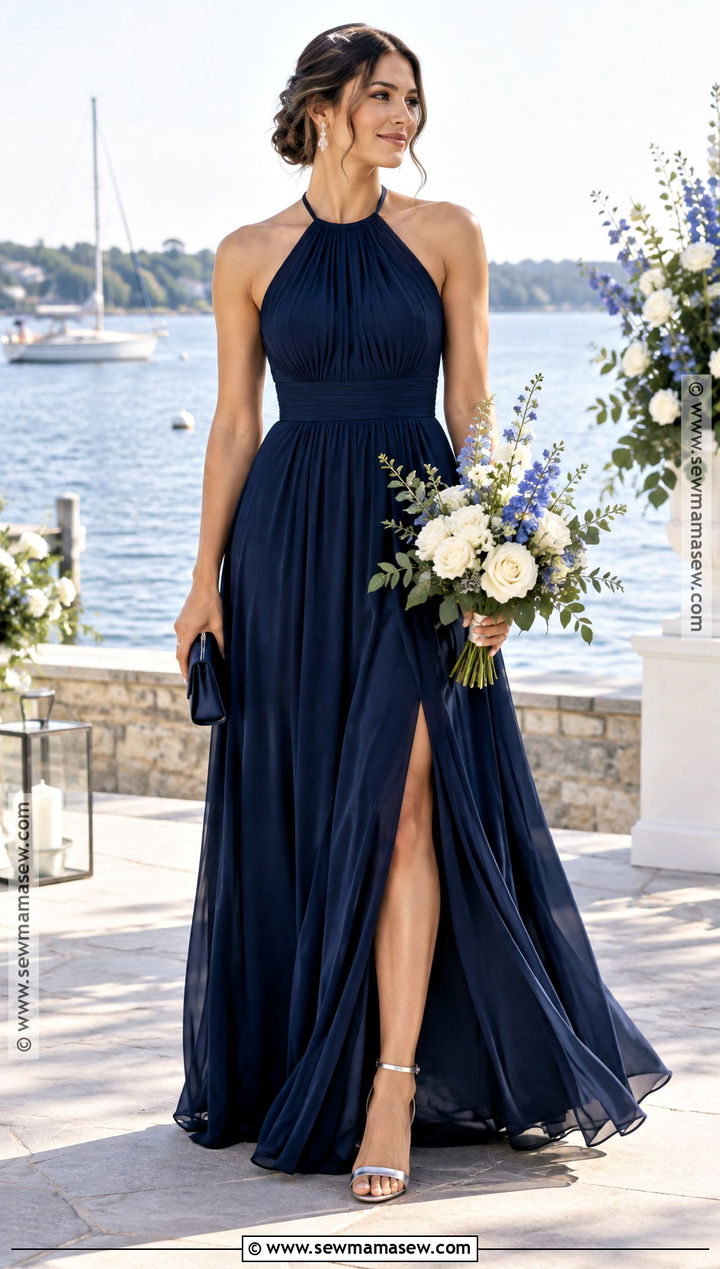
Navy is my answer for couples who want September without the pumpkin palette. It suits nearly everyone and reads formal in any light. A floor-length halter with a gathered neckline draws the eye up and lengthens the frame, though I'd steer anyone with broad shoulders toward a V or a wide-strap version instead. Chiffon for a daytime wedding, satin for a black-tie evening. Silver ankle-strap heels, crystal drops and a small navy clutch keep it cool-toned. White roses, blue delphiniums and silvery leaves stand out sharply against dark fabric. A pale gray wrap is the layer I'd pick for a waterfront or country club where wind comes off the water after dark.
8. Rust Flutter-Sleeve Bridesmaid Dress
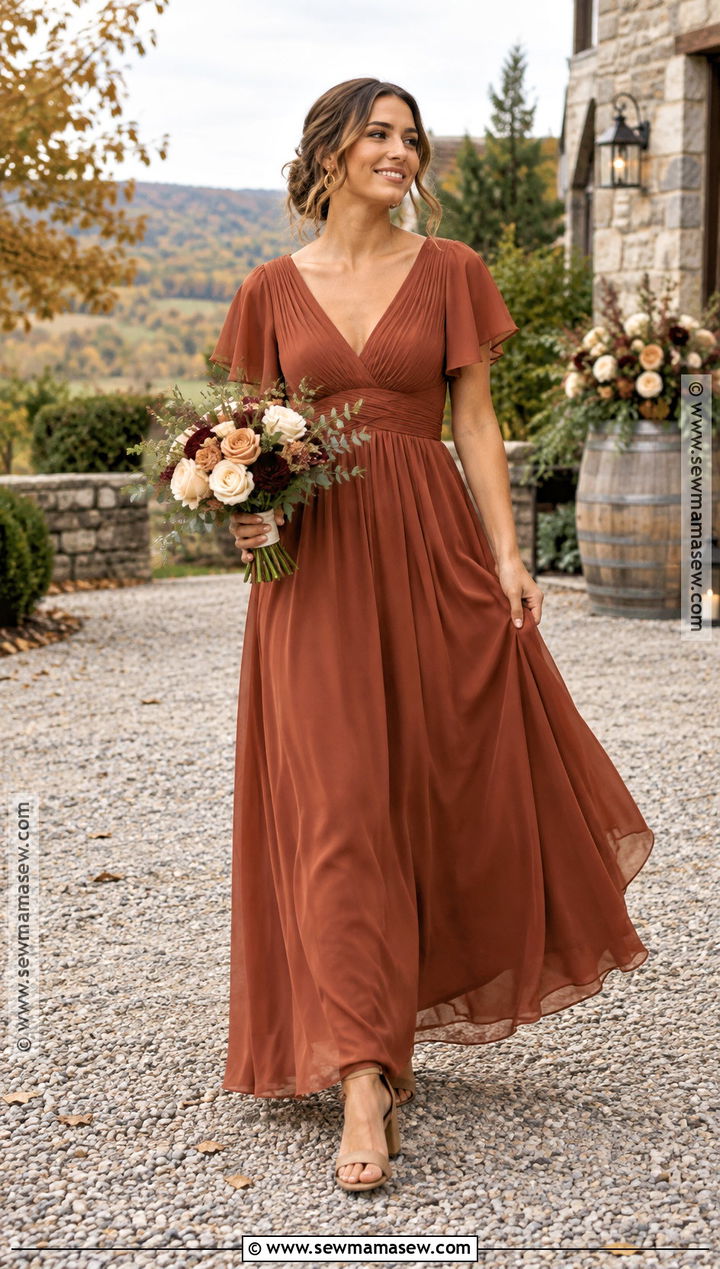
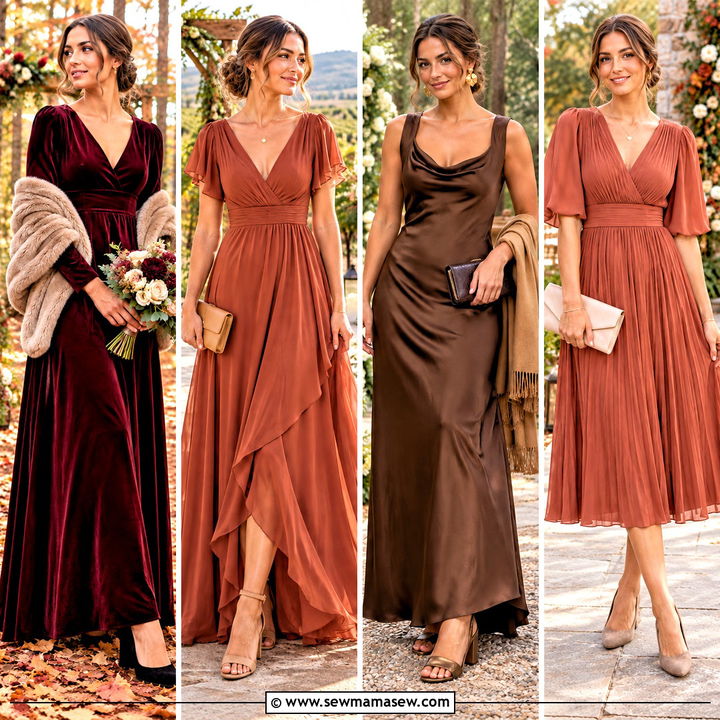
Rust is saturated, and saturated colors can overpower a bridal party if the fabric is heavy. That's why I put it in chiffon: the floating layers soften it, so the shade works on more of the group. A V-neck, flutter sleeves and a gathered A-line skirt are the cut I'd choose. Keep shoes light in nude or tan, with gold hoops and a fine chain bracelet. Cream flowers, peach roses and a few small burgundy blooms give the bouquet range. Outdoors, a neutral woven wrap handles a cooler reception. I find this one looks best against warm wood, stone and dry landscapes; next to cool gray architecture it can look orange.
9. Plum Off-the-Shoulder Bridesmaid Dress
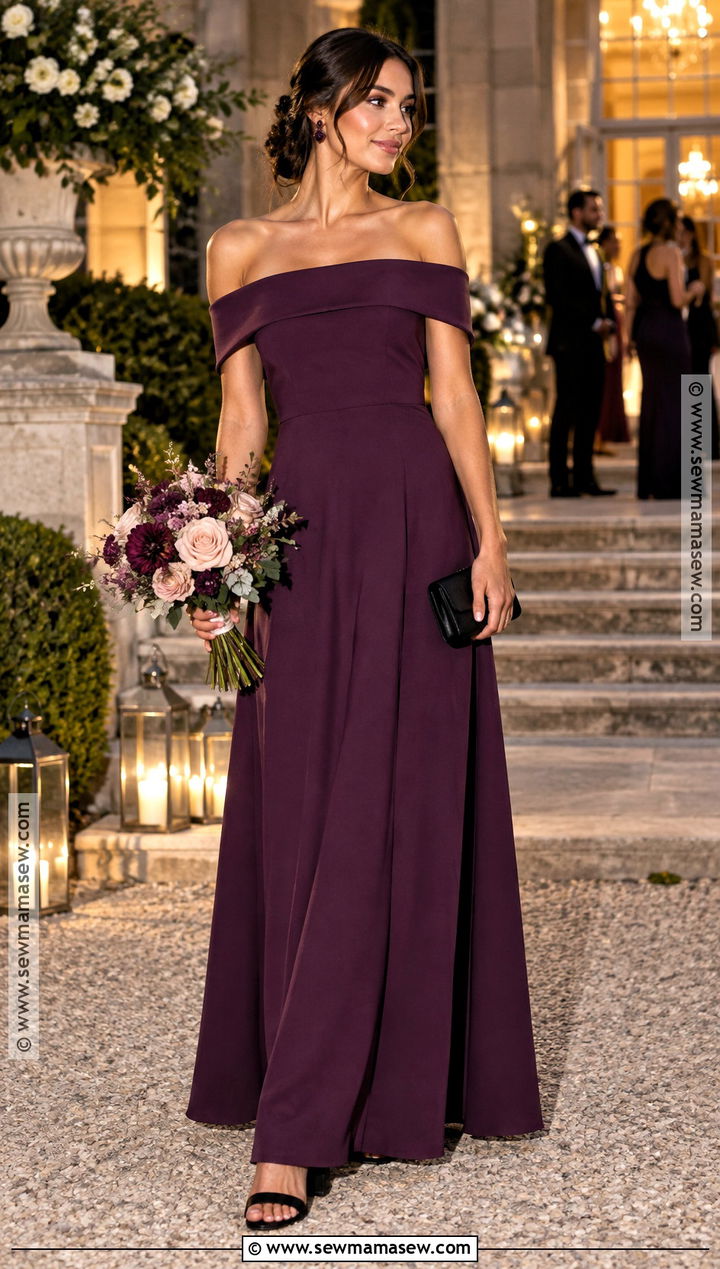
Plum is the jewel tone I reach for when the reception is candlelit, since warm low light makes it glow rather than go flat. An off-the-shoulder crepe gown with a structured fold-over neckline frames the collarbone, but it needs a well-fitted bodice and some silicone grip at the top edge or it slides all night. Ask each bridesmaid how she feels about arm movement before committing. Choose A-line or a softer fitted skirt depending on formality. Black block heels, amethyst-toned studs and a compact black clutch. No necklace; the neckline is already the frame. Blush roses, ivory flowers and dark leaves with a few plum accents, plus a matching plum wrap if it turns cold.
10. Dusty Blue Long-Sleeve Bridesmaid Dress
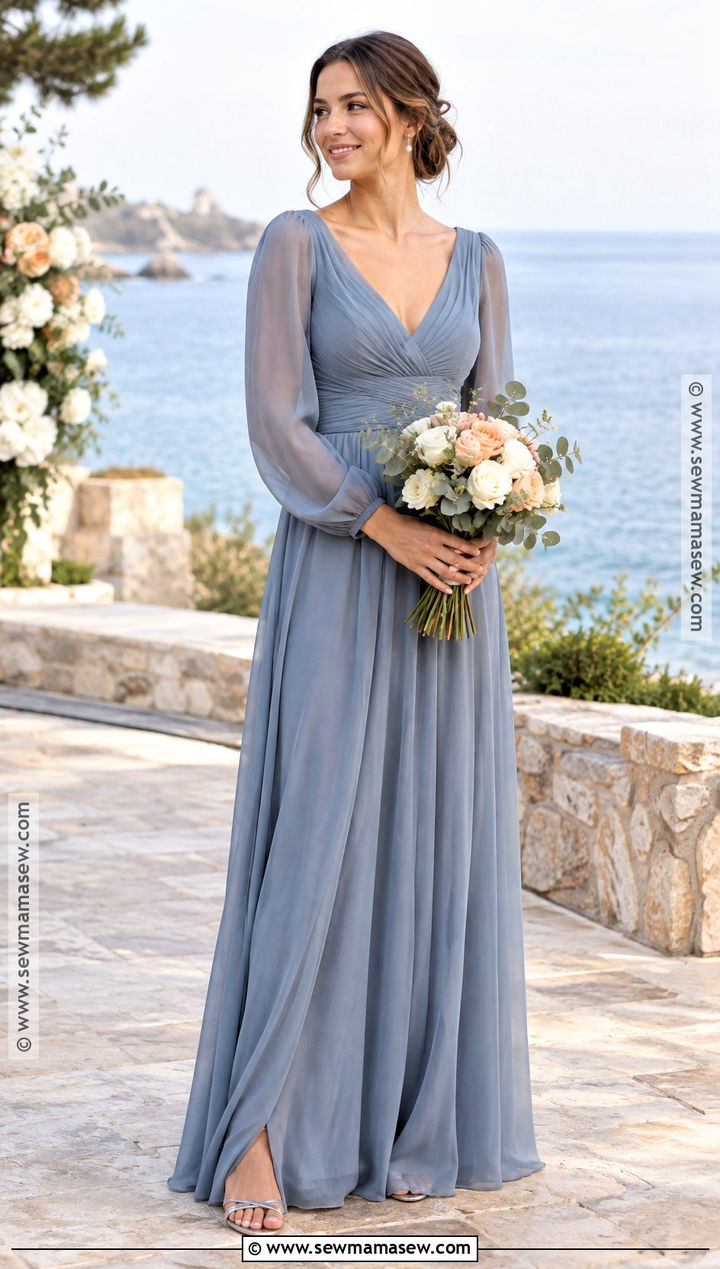
Dusty blue in September surprises people, but it works well at the coast or in the mountains where the light is cooler. A long-sleeve chiffon gown with sheer sleeves gives coverage without heat, which is why I suggest it to groups with mixed preferences about bare arms. A wrapped bodice and a natural waist keep the shape soft. Silver low heels, pearl earrings and a gray-blue clutch suit the shade. The bouquet is what keeps it from looking wintry: white roses and eucalyptus with a touch of peach or rust. Because the sleeves already cover the arms, I'd only hand out wraps for very late outdoor dancing.
11. Emerald Green Column Bridesmaid Dress
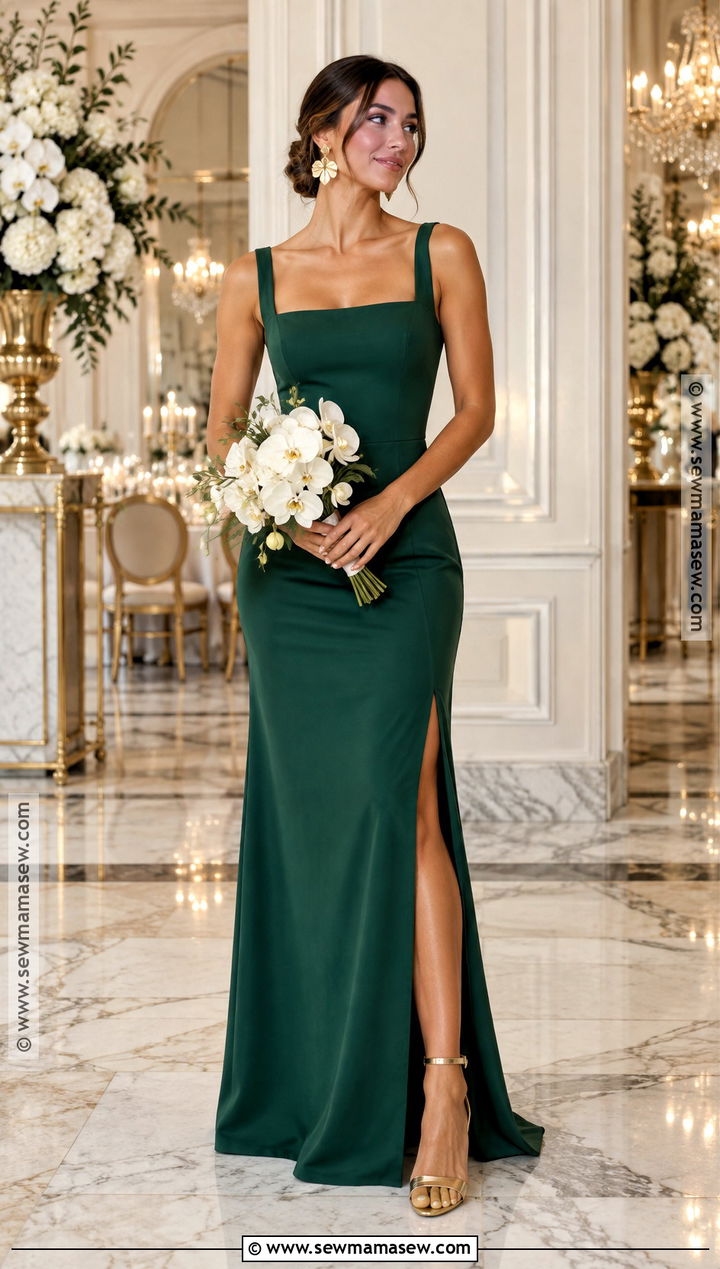
Emerald is a confident choice and a forgiving one if the fabric is right. I prefer stretch crepe for a column dress, because it moves with the body and recovers after sitting, where a stiffer woven column wrinkles at the hip. A modest side slit is not just for looks; without it, a straight column makes walking down steps awkward. A draped bodice or gathered waist softens the line for curvier bridesmaids. Gold heels and sculptural gold earrings warm up the green. Ivory roses, white orchids and glossy greenery keep the palette restrained. When evening temperatures drop at a ballroom or historic house, a black or deep green stole covers the shoulders without adding a second color.
12. Chocolate Brown Satin Bridesmaid Dress
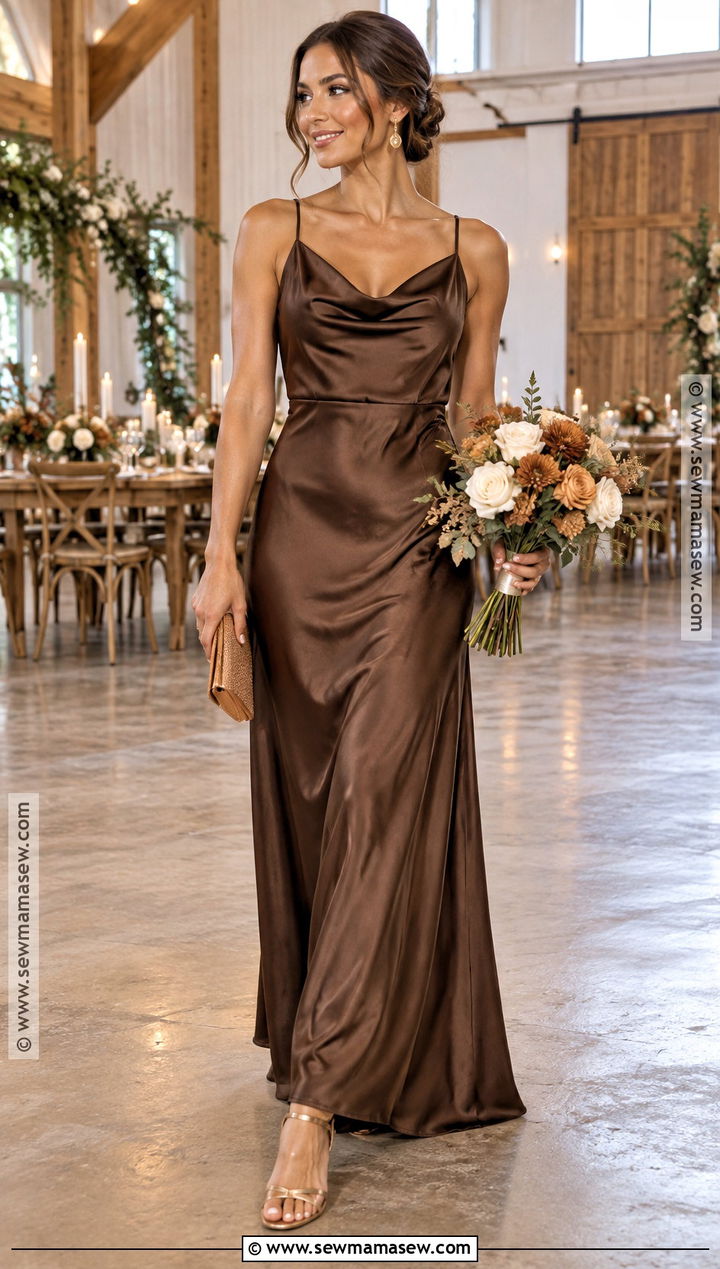
Chocolate brown satin is the neutral I suggest when a couple wants something dark that isn't black. A bias-cut maxi drapes beautifully but clings, so I only put it on bridesmaids who are comfortable in a close fit; for everyone else, a satin A-line with a defined waist and fuller skirt gives the same color with more ease. Adjustable wider straps let each person set the bodice where it sits best. Bronze heels, gold drops and a small caramel clutch. Cream roses with copper-toned flowers show up clearly against deep brown. A camel or espresso wrap covers a cool outdoor reception, and the shade sits comfortably beside cream, tan, terracotta and greenery.
13. Mauve Convertible Bridesmaid Dress
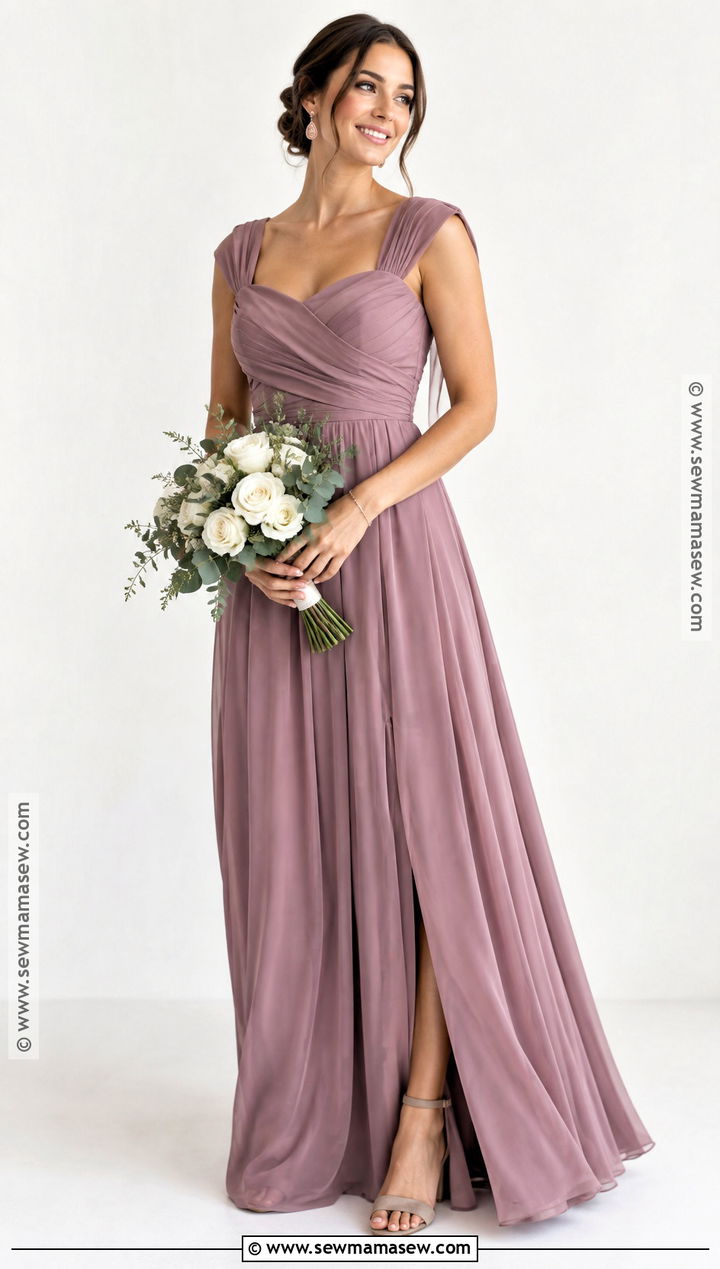
Convertible gowns solve the coverage problem in mixed bridal parties: the long panels can wrap into wide straps, a halter, cap sleeves or one shoulder. The catch is that they take practice. I always book a short group session before the wedding so everyone learns one wrap she trusts, and I tell them to pin it at the back for a long day. Look for a secure waistband and enough lining in the skirt to stay opaque in bright sun. Mauve works with taupe block heels, rose-gold earrings and a fine bracelet. Bouquets stay soft with ivory roses, mauve blooms and eucalyptus.
14. Dark Floral Chiffon Bridesmaid Dress
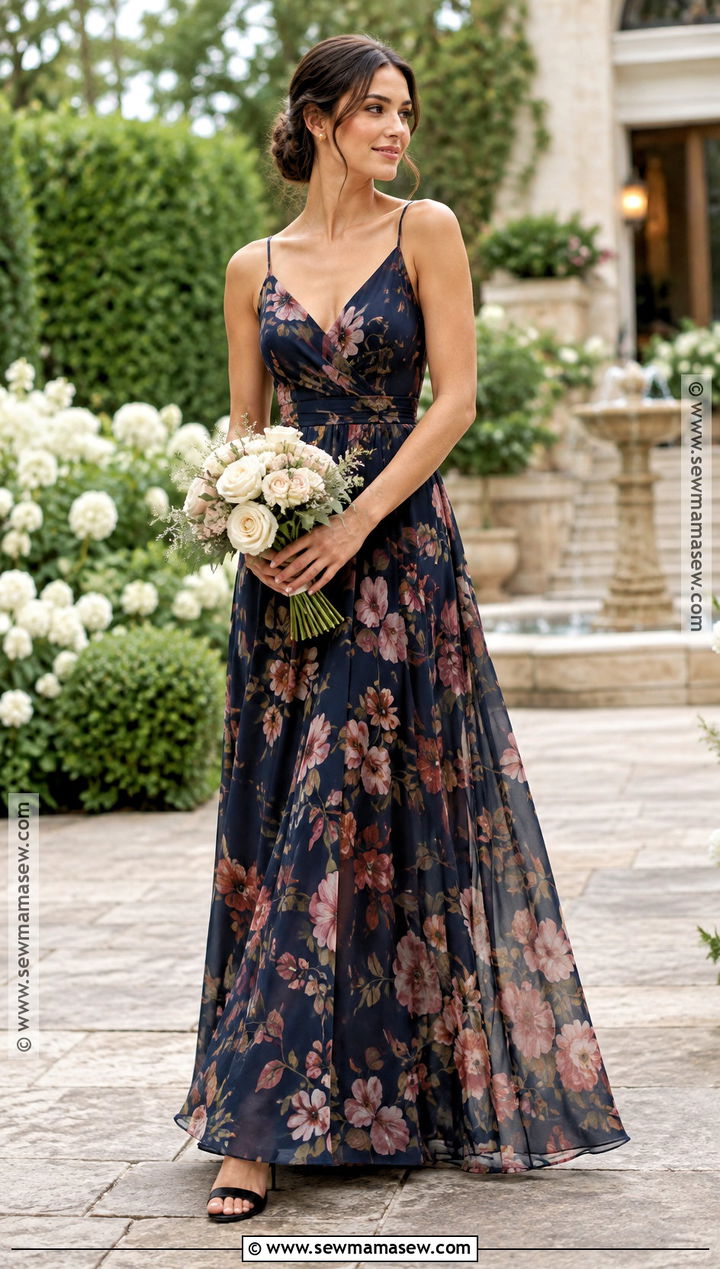
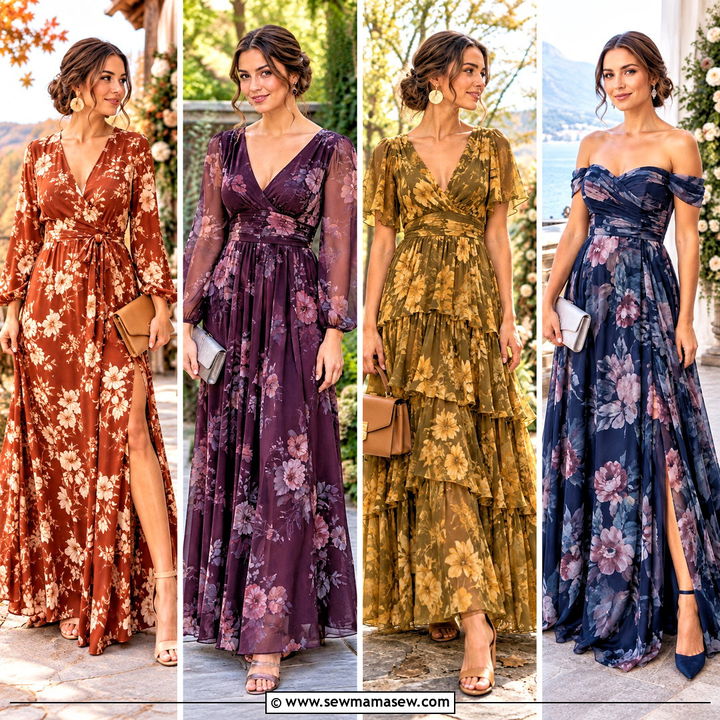
Pattern in a bridal party has to be controlled, and I'm strict about it. With a dark floral chiffon, I want a navy, plum or deep brown ground and a print in muted pink, rust or cream where no single flower is larger than a palm; big blooms look busy from the back rows. A defined waist and flowing A-line keep it calm. Shoes should be plain black or nude, jewelry small gold studs, bag simple. For the bouquet, I pull one or two colors from the print instead of chasing all of them. If only the maid of honor wears the floral, the rest of the group in a solid from the print ties it together at a garden or countryside wedding.
15. Black Satin Bridesmaid Dress
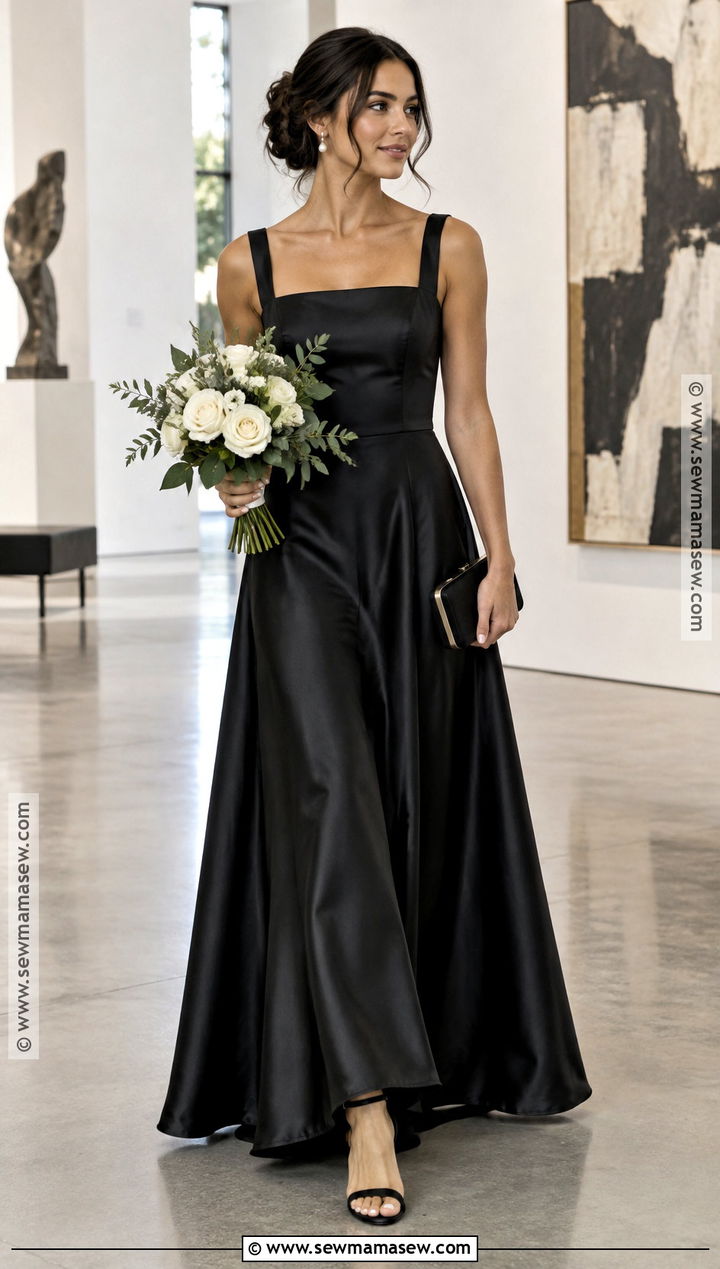
A black bridal party used to raise eyebrows, but at a formal evening wedding it looks sharp and very modern. Satin keeps black from going flat in photos, since the sheen gives the camera something to catch. I like a square neck with substantial straps on a floor-length A-line or softly fitted shape. Black ankle-strap heels, pearl drops and a small structured clutch. White roses with greenery and a touch of warm beige give strong contrast. If an all-black group looks severe, I mix the necklines but keep fabric and hem length identical, which reads deliberate. A lightweight black wrap for evening, and it suits a gallery, hotel ballroom or industrial space.
16. Copper Velvet Bridesmaid Dress
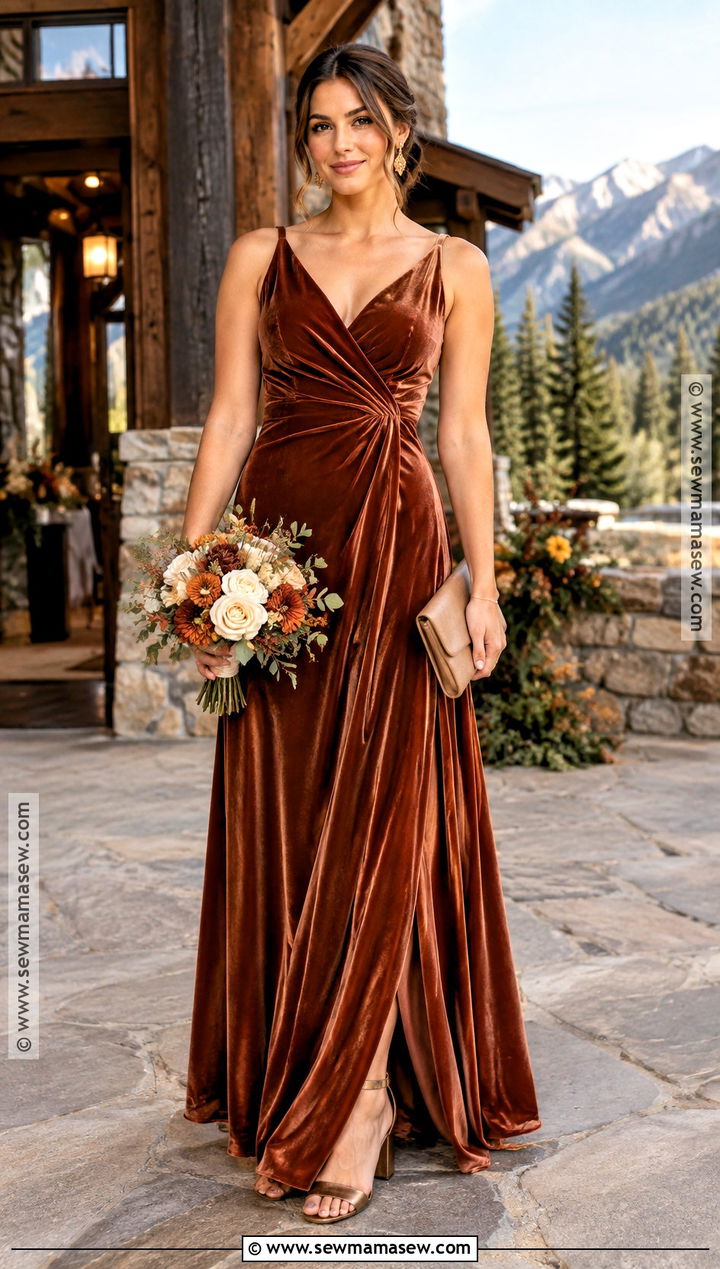
Copper velvet belongs to a cool late-September evening or a northern venue, not a hot afternoon ceremony; velvet traps heat, and that's what I warn every bride about. I'd choose a sleeveless wrap gown or a dress with a velvet bodice and lighter skirt rather than full velvet sleeves if the forecast could swing. A defined waist and a softly flowing skirt balance the weight of the pile. Velvet also crushes when people sit, so a short steam before photos helps. Bronze block heels, small gold earrings and a matte clutch suit the metallic tone. Cream roses, rust blooms and olive leaves complete it, and I'd skip a thick wrap unless the whole event is outdoors in a lodge, barn or estate setting.
17. Eucalyptus High-Neck Bridesmaid Dress
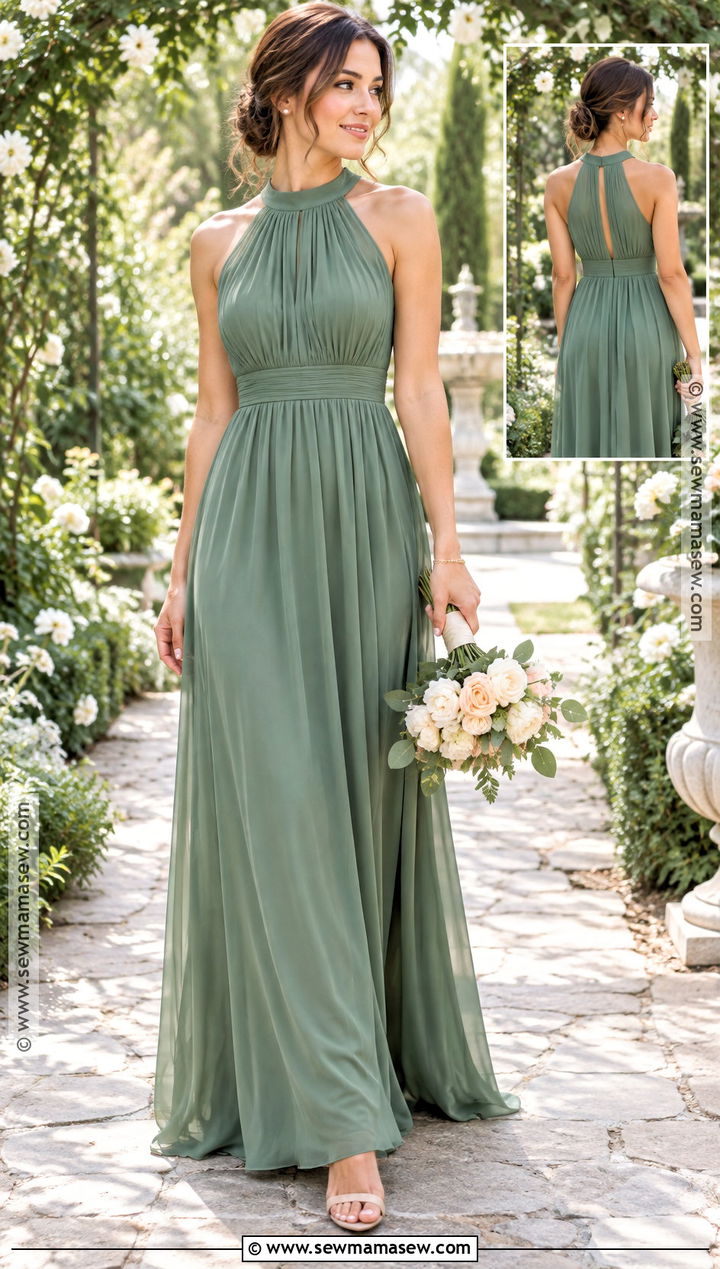
Eucalyptus green is cooler and lighter than olive, and it suits a pale, airy palette. The high neck is the detail to think about: it's flattering on longer necks and narrow shoulders, but it can look closed-in on a short neck or a fuller bust, so I'd offer a V option alongside it. A gathered bodice, fitted waistband and flowing chiffon skirt keep it graceful, and a keyhole or tie back gives the photographer something from behind during the ceremony. Nude heels, pearl studs and a slim gold bracelet are plenty. White flowers, pale peach roses and eucalyptus branches fit a greenhouse or modern barn, and a beige pashmina covers an outdoor evening.
18. Cinnamon Ruffle Bridesmaid Dress
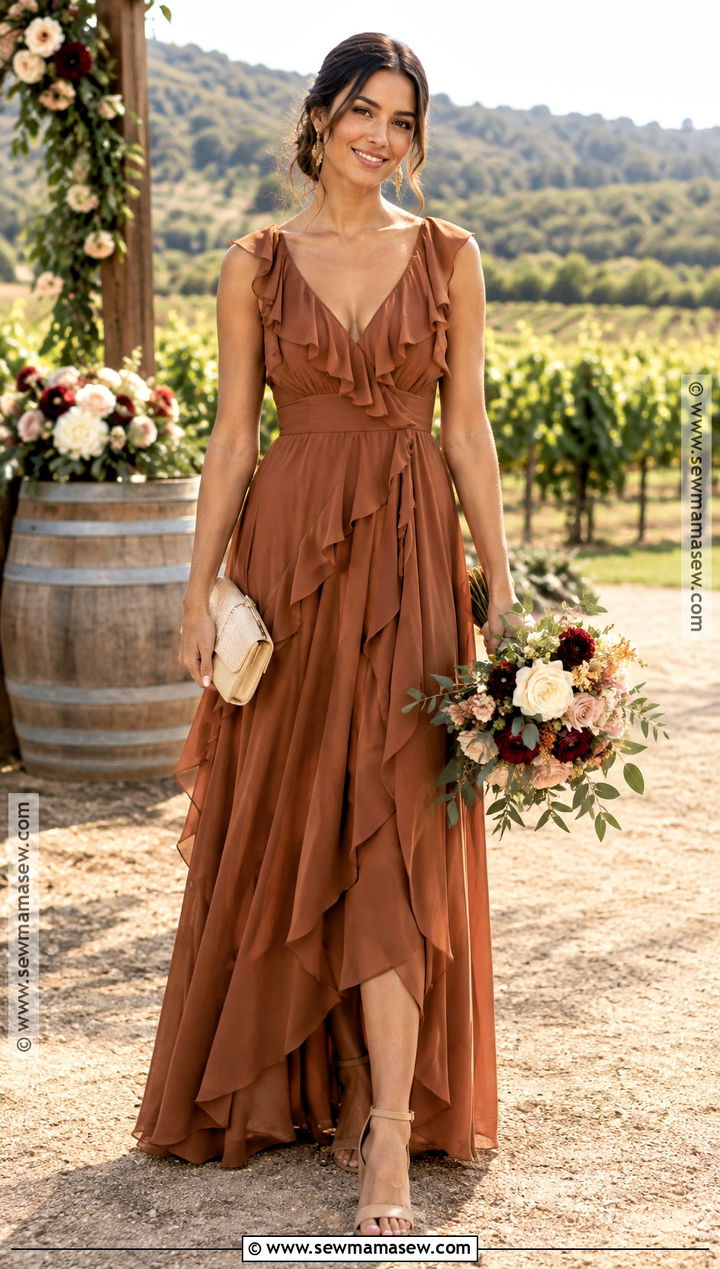
Cinnamon sits between bright orange and dusty rose, and it flatters warm and olive skin especially well. I choose crepe or chiffon with a ruffled V-neck and a lightly layered skirt; the ruffles add movement without needing beading. Watch the ruffle size on petite bridesmaids, since a deep frill at the neck can swamp a small frame. Tan block-heel sandals cope with grass or gravel, and gold studs with a small cream clutch keep it tidy. When the neckline is busy, skip the necklace and let earrings or a bracelet do the job. Ivory blooms, muted peach, a little burgundy and olive leaves balance the bouquet, and a camel wrap handles a cool evening at a ranch or vineyard.
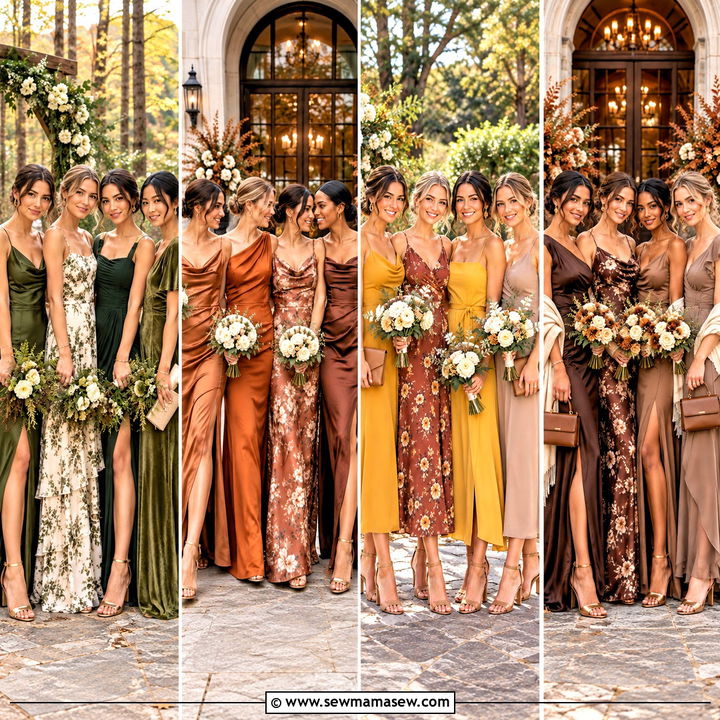
19. Mismatched Earth-Tone Bridesmaid Dresses
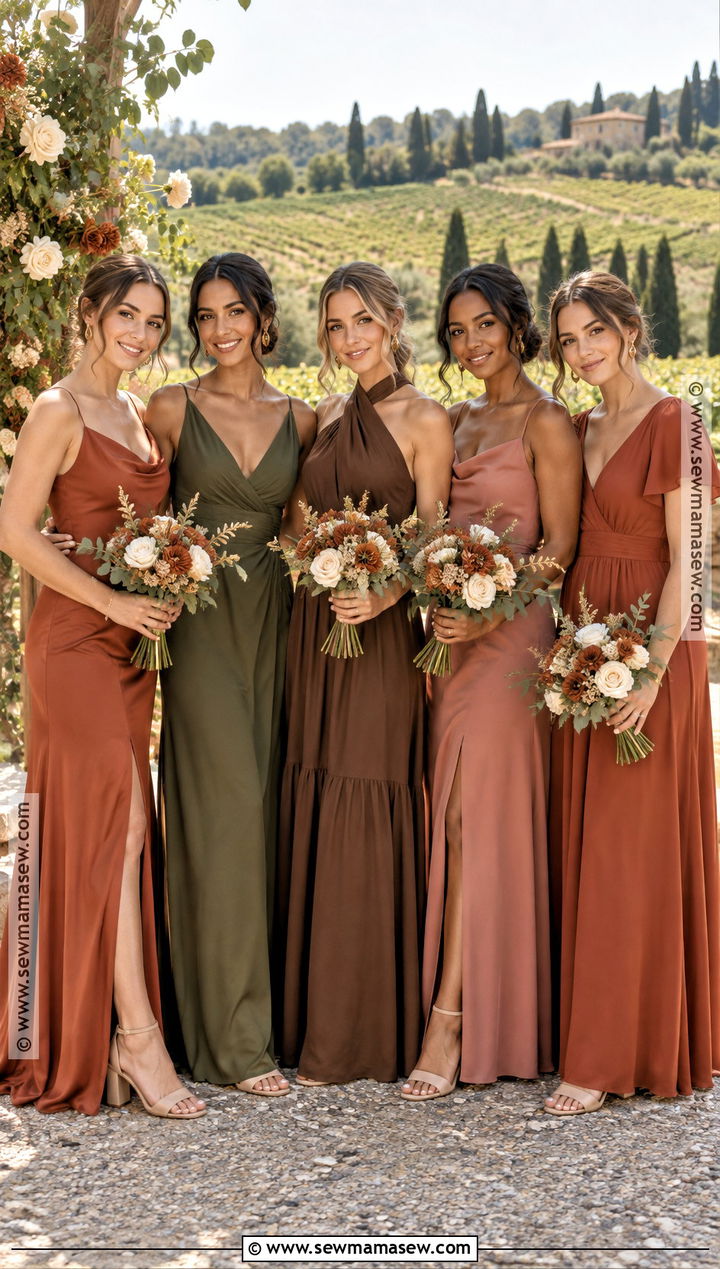
Mismatched earth tones look intentional only when something else is strictly matched. I set three rules for the group: one fabric family, one floor length, one level of formality. Within that, terracotta, cinnamon, olive, chocolate and muted rose can sit side by side, and each bridesmaid picks the neckline and waist that suit her. Tan or champagne shoes and simple gold jewelry pull the line together. Identical bouquets of cream flowers, rust accents and greenery do a lot of the unifying work. I insist on swatches before anyone orders, because a shade called rust or olive varies a great deal from one maker to the next. The result is personal without looking random at a woodland, barn or estate wedding.
20. Mismatched Jewel-Tone Bridesmaid Dresses
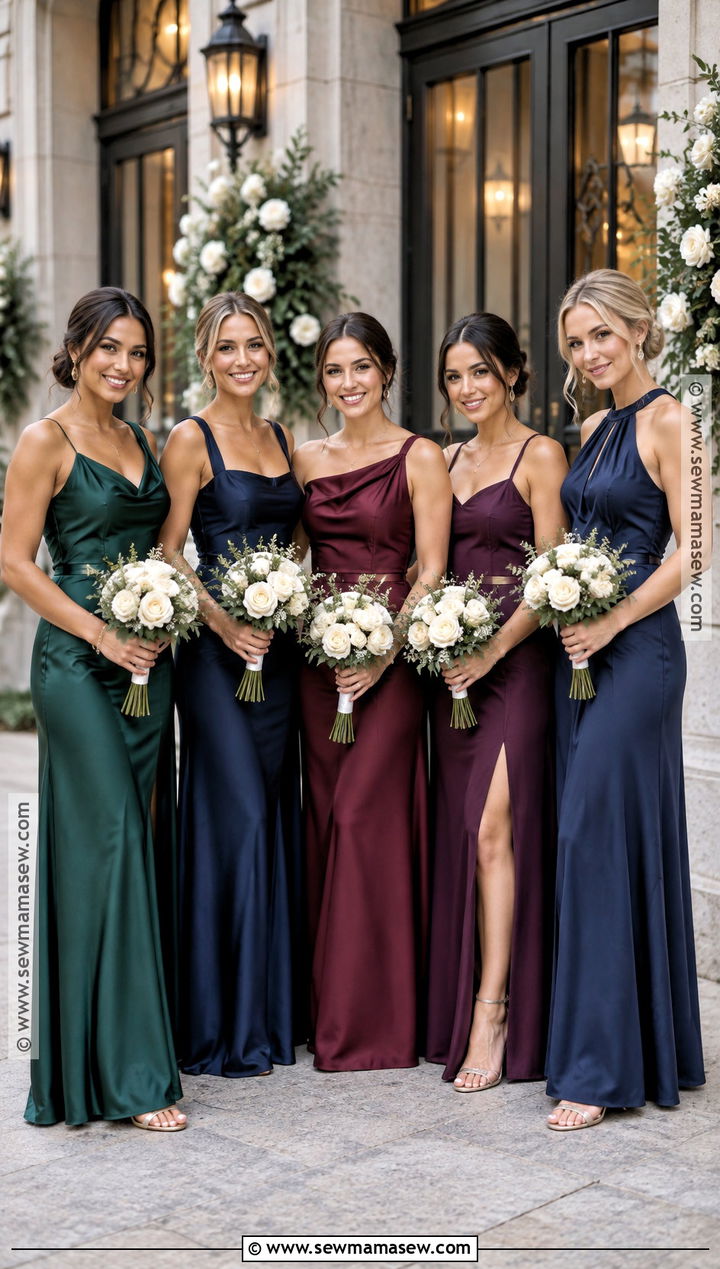
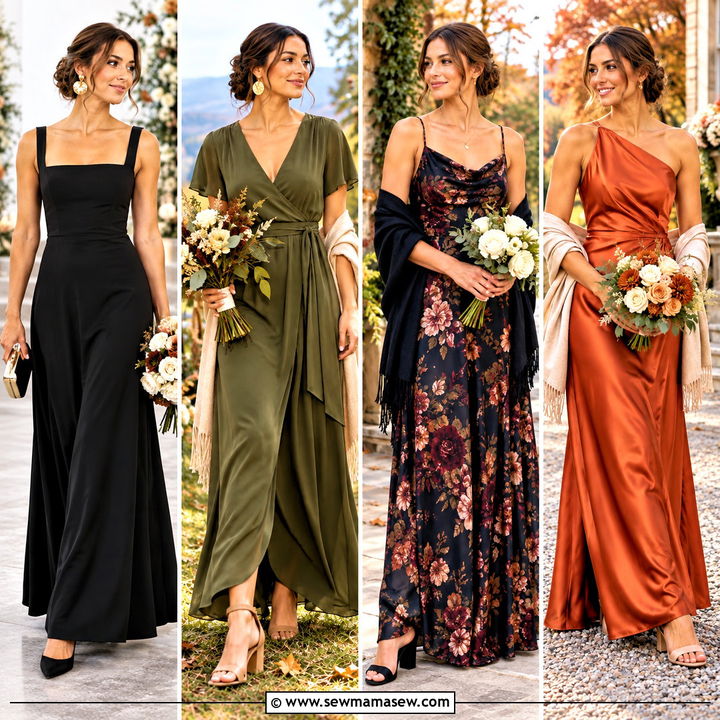
Jewel tones mix well because emerald, navy, burgundy and plum share roughly the same depth, so no single dress jumps forward in a group photo. That's the test I use: squint at the swatches side by side, and if one reads noticeably lighter, swap it. Keep every gown floor length in one fabric, satin or crepe, and let each bridesmaid choose a supportive neckline and sleeve. Black or metallic heels give a consistent base, and identical gold or crystal earrings add one more shared detail. Ivory flowers with dark greenery and small burgundy accents stand out against every color. A matching black wrap for outdoor portraits and late-night dancing at a ballroom or historic hotel.
Ordering for a Whole Bridal Party Without Color Surprises
Most bridesmaid dresses are made to order, and delivery can take anywhere from several weeks to a few months depending on the maker. Alterations need their own window on top of that. My working order goes like this:
- Order swatches of every shortlisted color and view them together outdoors and under warm indoor bulbs.
- Have each bridesmaid measure the same way, ideally with a friend holding the tape, and compare against the maker's own size chart rather than her usual dress size.
- Place all orders at once. Dresses cut from different fabric batches can come out a shade apart, which shows clearly in a lineup.
- Leave time for hemming in the actual wedding shoes. A floor-length hem set while barefoot will drag once heels go on.
- Try the full outfit with the wrap and bag a week or two before the day, and fix any strap or neckline slipping with a few stitches or fashion tape.
Planning the Evening Layer Before It Gets Cold
Almost every look above ends with a wrap, and that's on purpose. Temperatures in many places fall noticeably once the sun sets in September, and bridesmaids end up in borrowed jackets that ruin the group photos. I'd decide the layer when the dresses are ordered, not the night before.
A chiffon or light pashmina wrap in one shared neutral works across mismatched colors. For a breezy waterfront or hilltop venue, a slightly heavier knit or faux-fur stole holds its place better than a sliding chiffon one. Give everyone the same wrap and the same way to wear it, and the late portraits will look as planned as the ceremony ones.
Matching the Dress to the Hour and the Temperature
September bridesmaid dresses come down to one decision made early: how warm will it be when the ceremony starts, and how cool once the dancing begins? Answer that and the fabric chooses itself. Early in the month I lean toward chiffon, light crepe and softer shades; later, satin, jewel tones and well-placed velvet make sense. Matching or mixed, hold one thing constant, such as hem length, fabric or the bouquet, and give every bridesmaid a neckline she can relax in. Above all, look at swatches in the venue's daylight and its evening lighting before anyone pays for a dress.
Related posts: