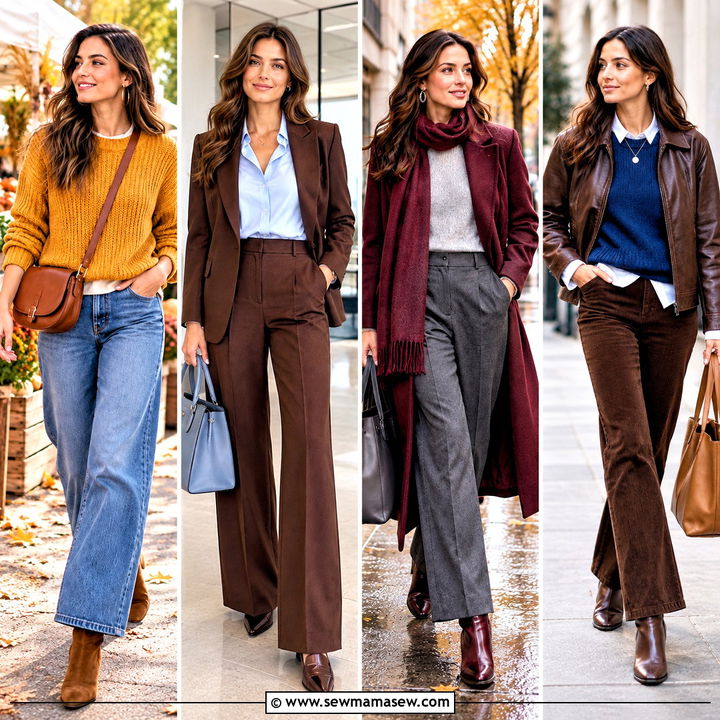
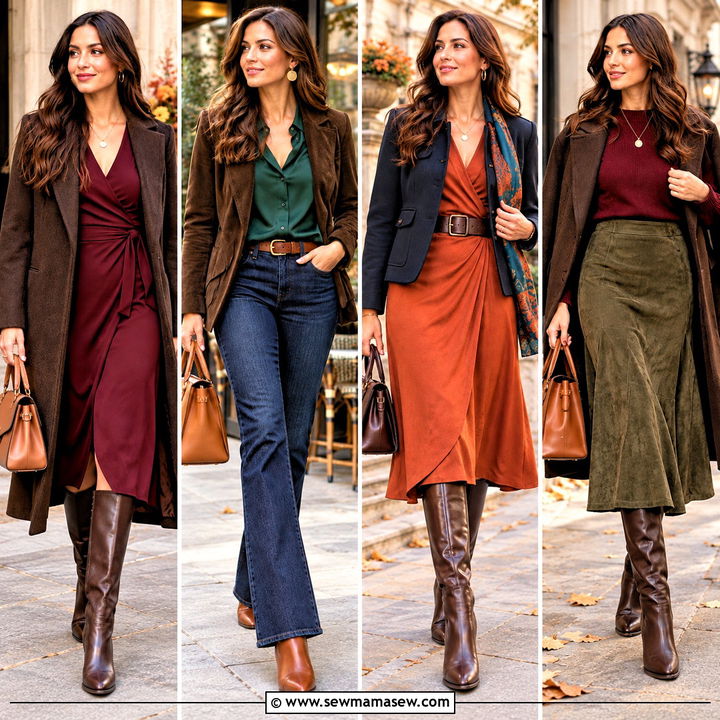
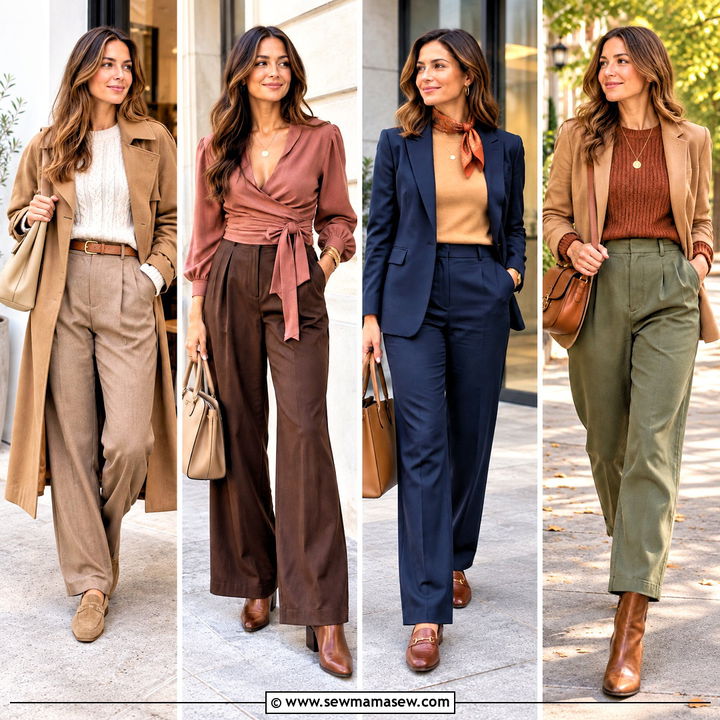
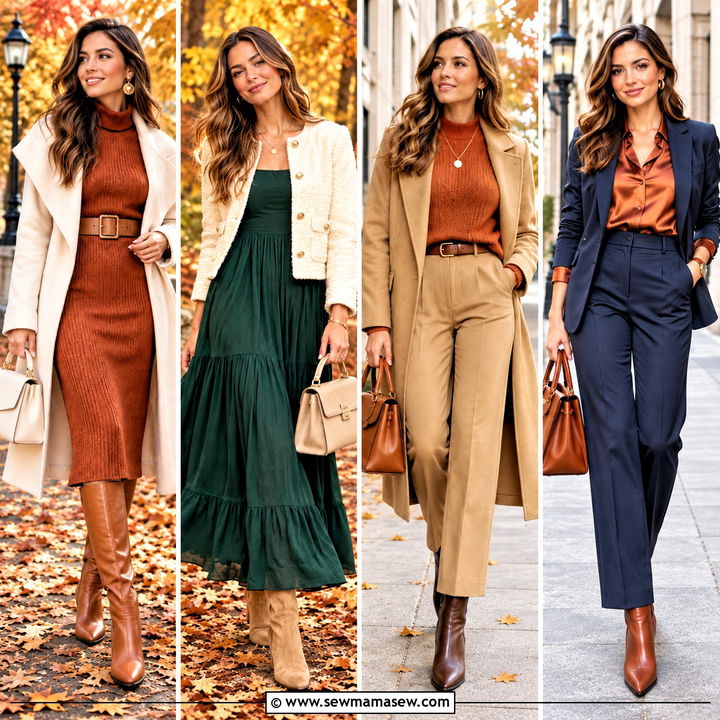
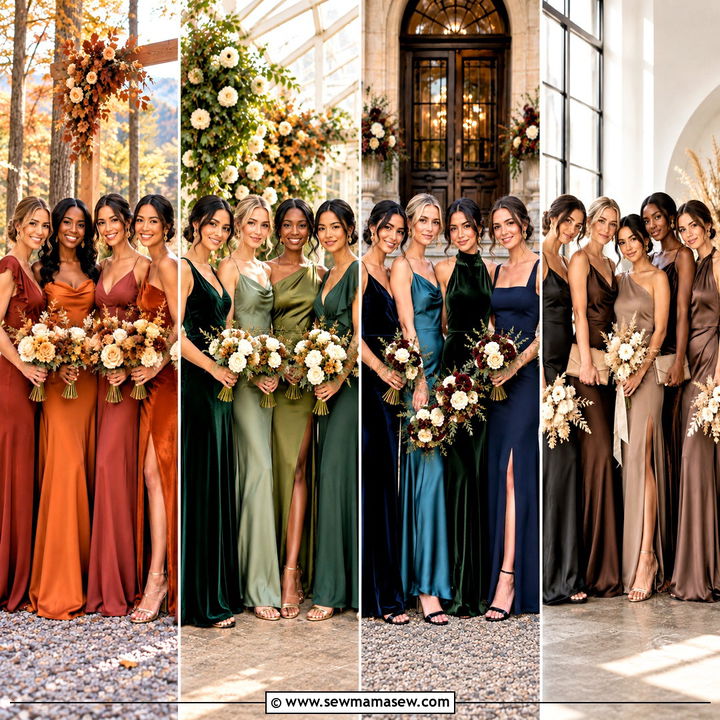
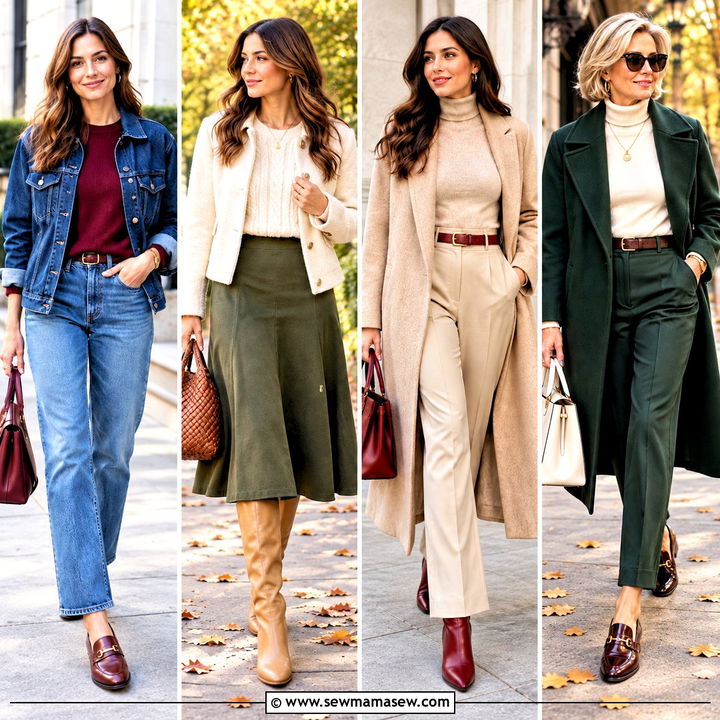
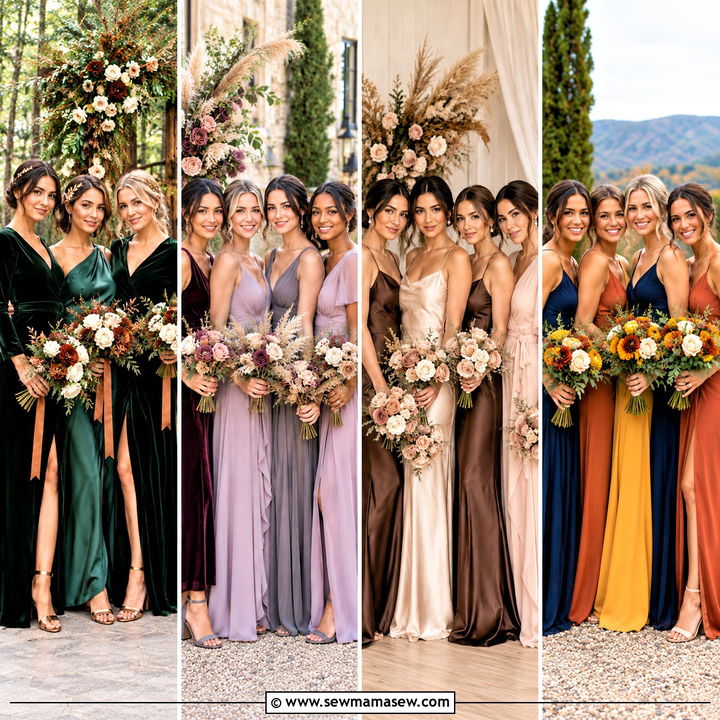
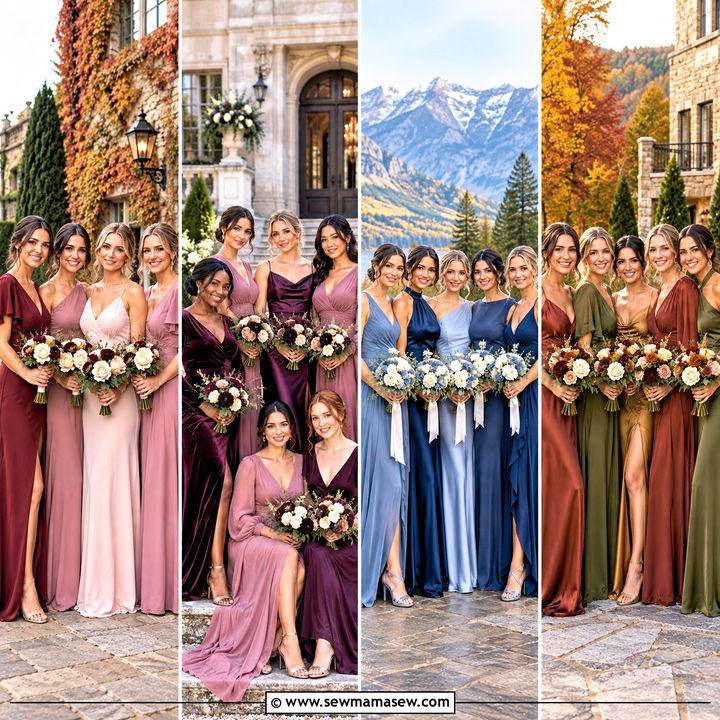
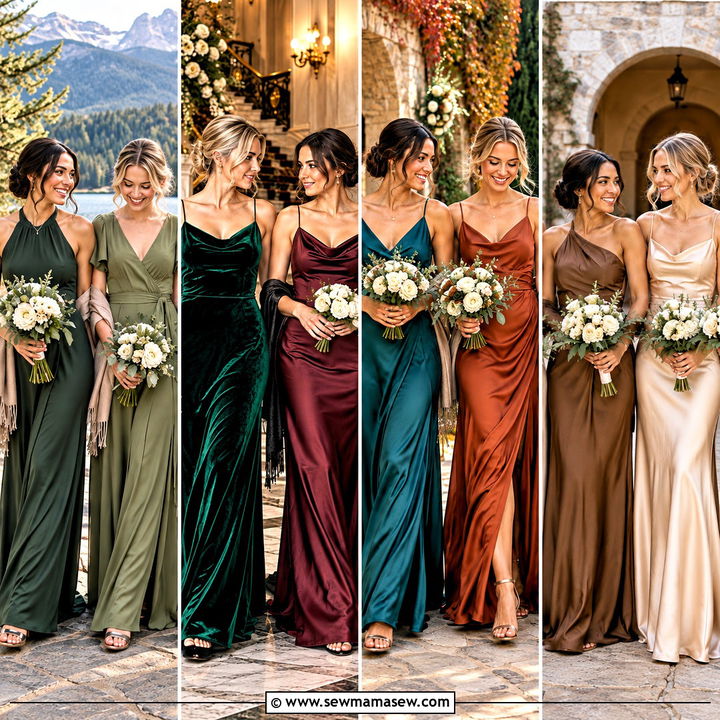
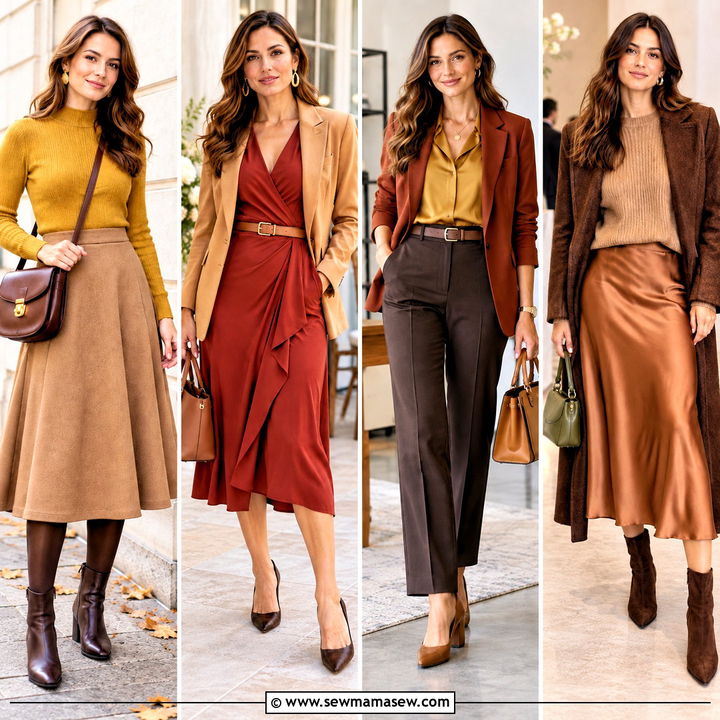
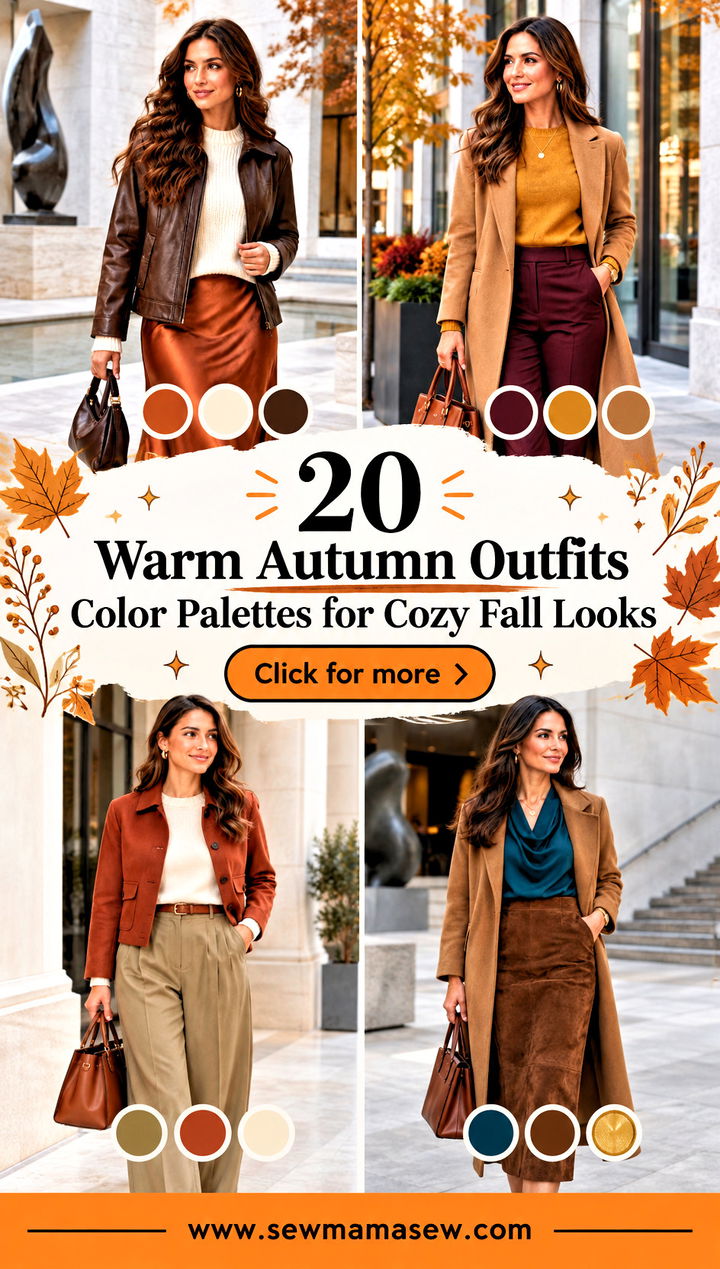
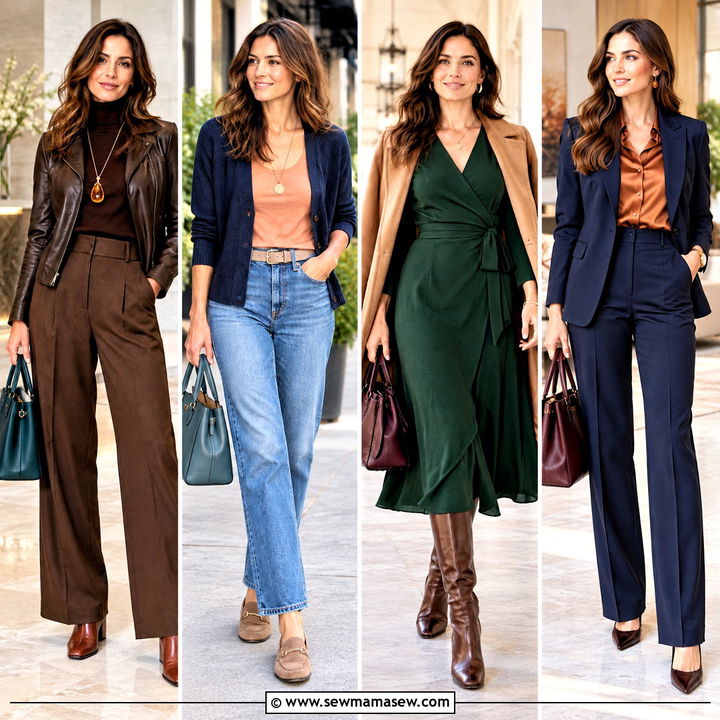
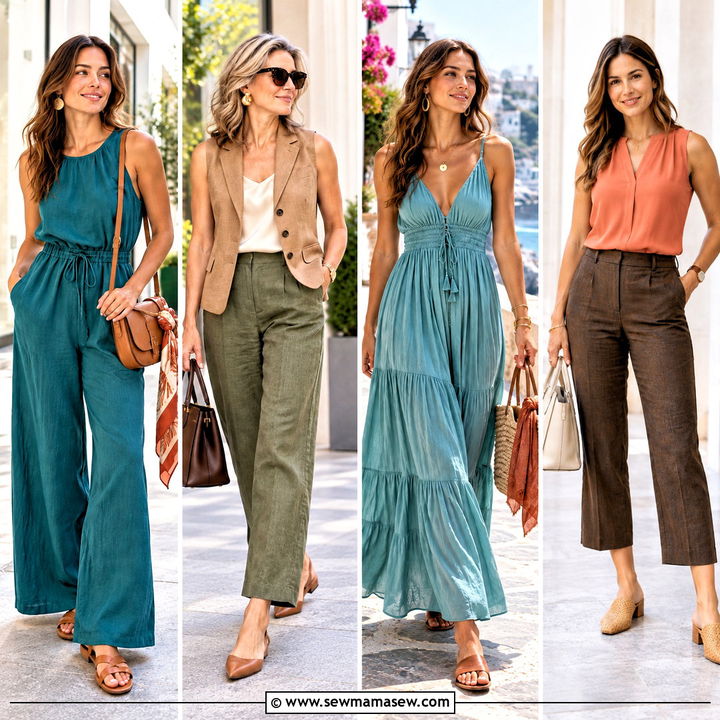
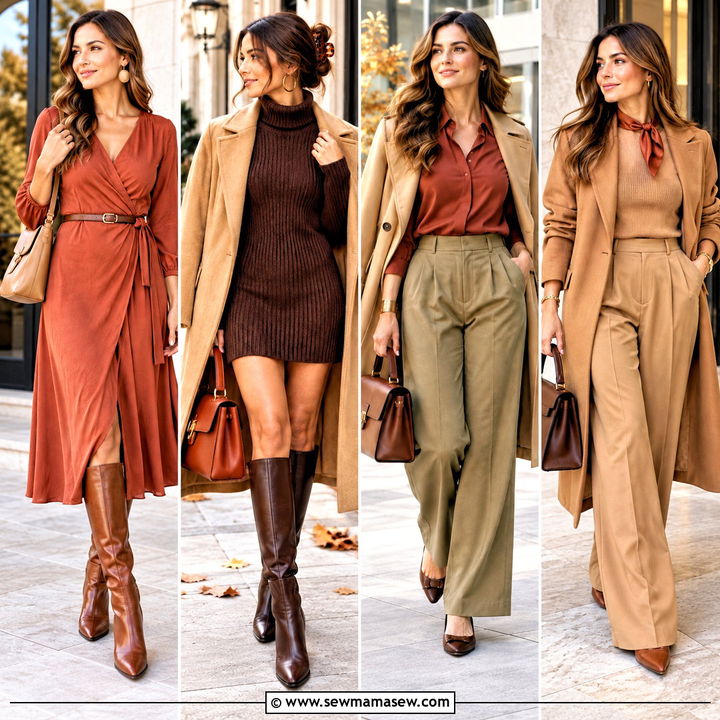
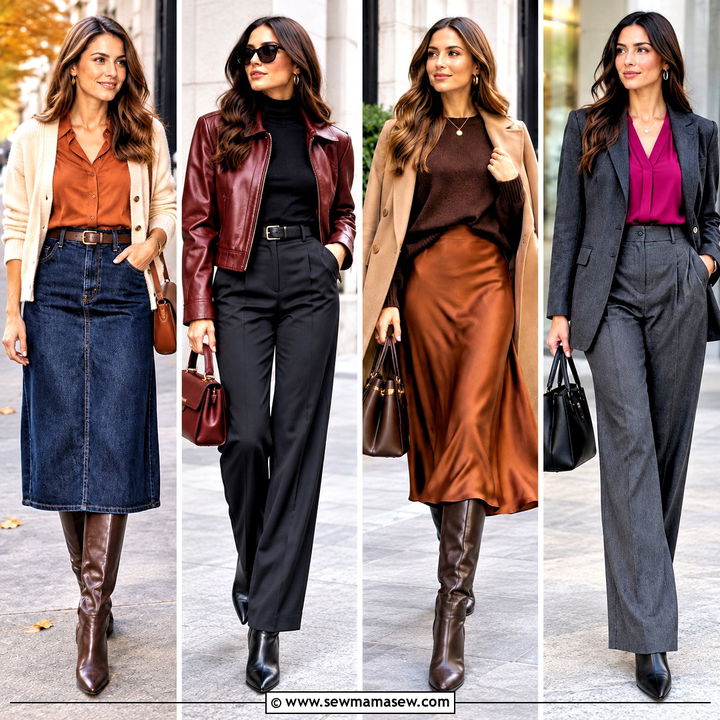
Warm autumn coloring has a golden or peachy cast to the skin, and the shades that suit it are the ones with yellow mixed in: rust, olive, mustard, camel, warm teal and chocolate brown. When I drape someone with these next to their face, the skin looks even and the eyes look clearer, which is the whole point of working inside a palette. The outfits below pair one or two of those stronger colors with an earthy neutral, so each one can move from a weekday to a weekend by swapping the shoes or the top layer. I've also called out texture, because suede, corduroy and wool carry these colors far better than a flat synthetic does. Change the silhouette to suit your build and climate, but keep the color relationships, since they are what makes each look hold together.
Is Warm Autumn Really Your Season?
The vein test and the jewelry question are where most people start, and both are unreliable. Vein color shifts with lighting and skin thickness, and plenty of people like silver simply because they grew up wearing it. What I trust is fabric held under the chin in plain daylight, near a window, with no makeup or with very light makeup.
- Hold a rust or camel piece under your chin, then a cool gray or icy pink one. If the warm shade evens out redness and the cool one makes you look tired or gray, you're on the warm side.
- Compare a soft, slightly muted color with a bright clear one. Warm autumns usually look best in the softer, earthier version of a color.
- Try cream next to stark white. If white looks harsh and cream looks fresh, that's another point for autumn.
- Check your natural hair and eye colors. Golden, copper or auburn tones in the hair and hazel, amber or warm brown eyes often go with this palette, though not always.
If the results are mixed, you may sit between autumn and a neighboring season. That's common, and it just means you'll favor the softer, less saturated colors in the list below and keep the brightest ones away from your face.
1. Camel, Cream, and Chocolate Autumn Outfit
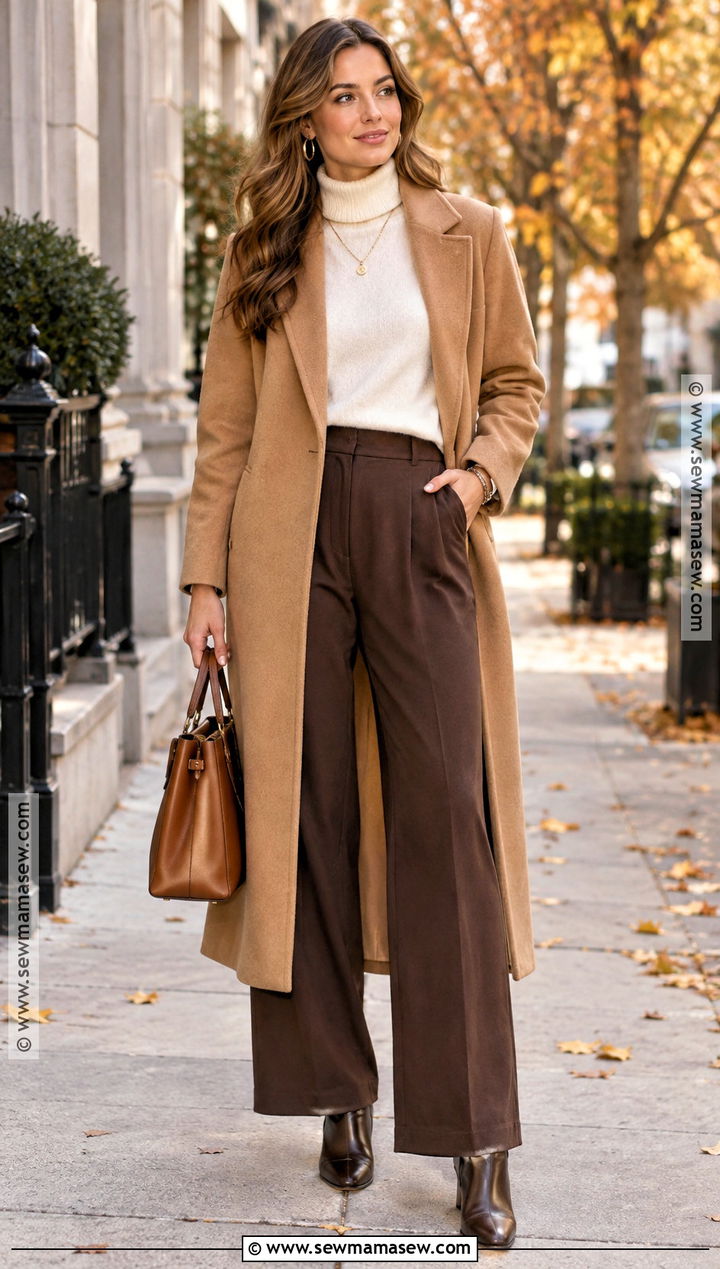
This is the palette I hand to anyone just starting with warm colors, because it is almost impossible to get wrong. A cream turtleneck goes on top, then high-waisted chocolate trousers, straight or wide, and a tailored camel coat over both. Dark brown ankle boots, a cognac bag and plain gold jewelry finish it. The one rule I hold to is keeping the cream at the neckline: the lightest shade near the face reflects light upward, while chocolate up there can drag a warm complexion down. For a casual day, chocolate corduroy pants and cream sneakers do the same job with less polish.
2. Rust, Olive, and Tan Autumn Outfit
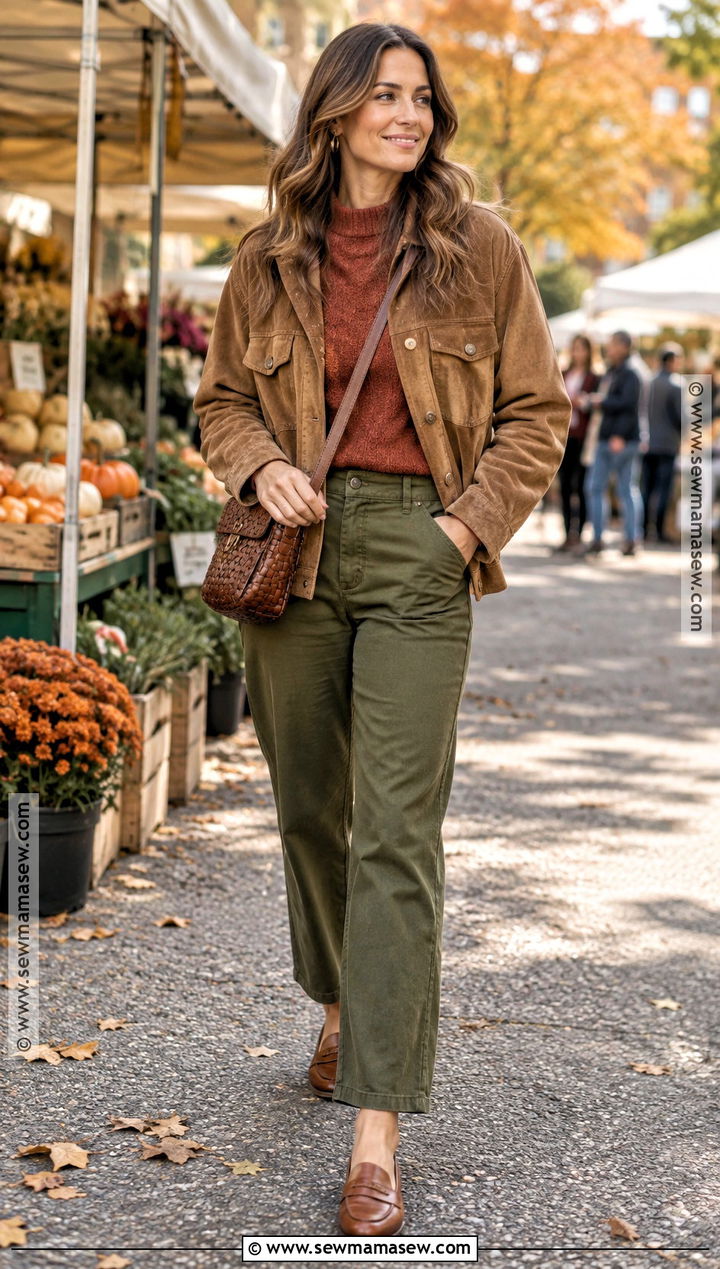
Rust and olive sit at almost the same depth and muddiness, which is why they look settled together instead of loud. I put the rust sweater on top, where it warms the face, and let olive straight-leg pants or a midi skirt carry the lower half. A tan suede jacket bridges the two and adds texture. Cognac loafers or ankle boots and a woven brown bag keep everything in the same family. If the rust you own leans close to true orange, slip a cream camisole under it so a strip of light sits between the color and your skin.
3. Mustard, Chocolate, and Cream Autumn Outfit
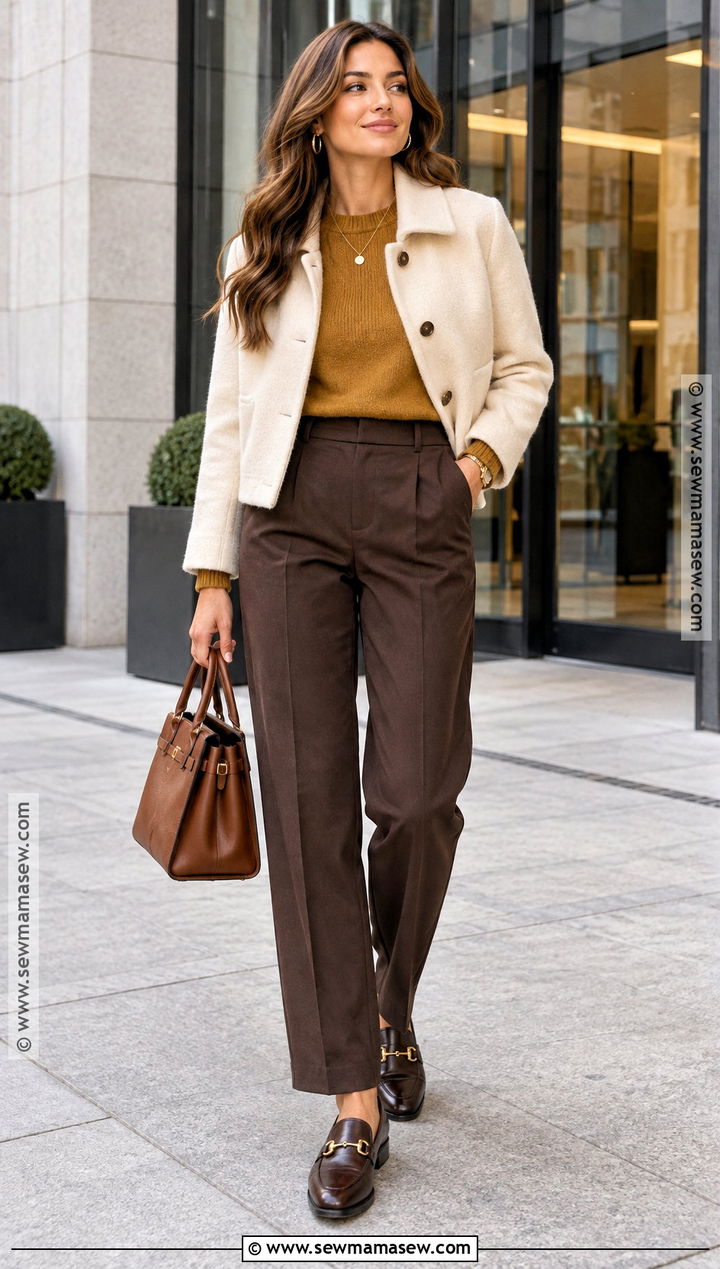
Mustard is the color I test most carefully in a drape session, because a shade too green turns sallow skin even greener. When it works, a relaxed mustard crewneck lightly tucked into chocolate tailored pants is cheerful without looking costumey, and the dark brown keeps it grounded. A cream trench or cropped wool jacket goes over it. Brown loafers lean office, cream sneakers lean weekend, and a chestnut bag with brushed gold echoes the yellow. Not sure about mustard by your face? Wear it as an open cardigan over a cream blouse and you get the color with a buffer.
4. Teal, Camel, and Cognac Autumn Outfit
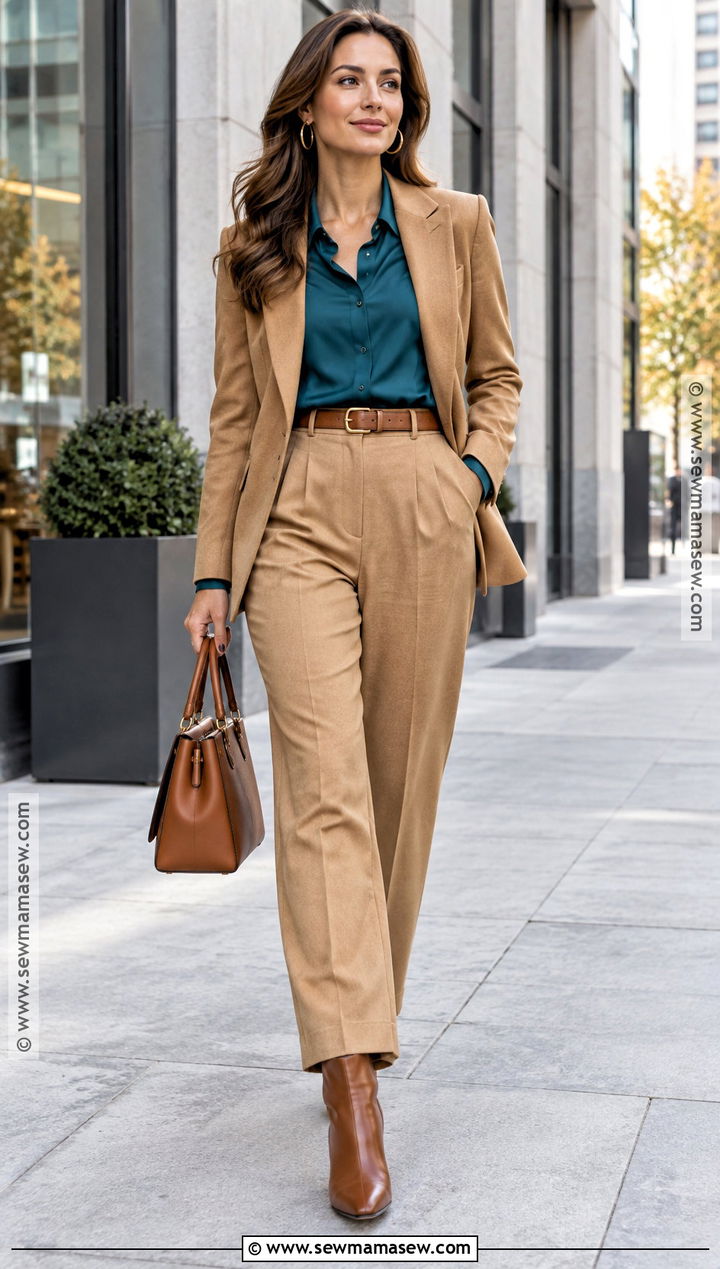
Warm teal is my favorite answer for people who reach for black out of habit. It has the depth of a dark neutral, but the yellow in it flatters golden skin where black can look harsh. A teal blouse, fine knit or midi dress is the base; camel trousers and a cognac belt at the waist build the separates version. With the dress, I swap to a long camel coat and knee-high brown boots. Check the teal in daylight before you commit: some versions are really blue-green with a cool cast, and those fight the camel instead of resting against it.
5. Terracotta, Oatmeal, and Olive Autumn Outfit
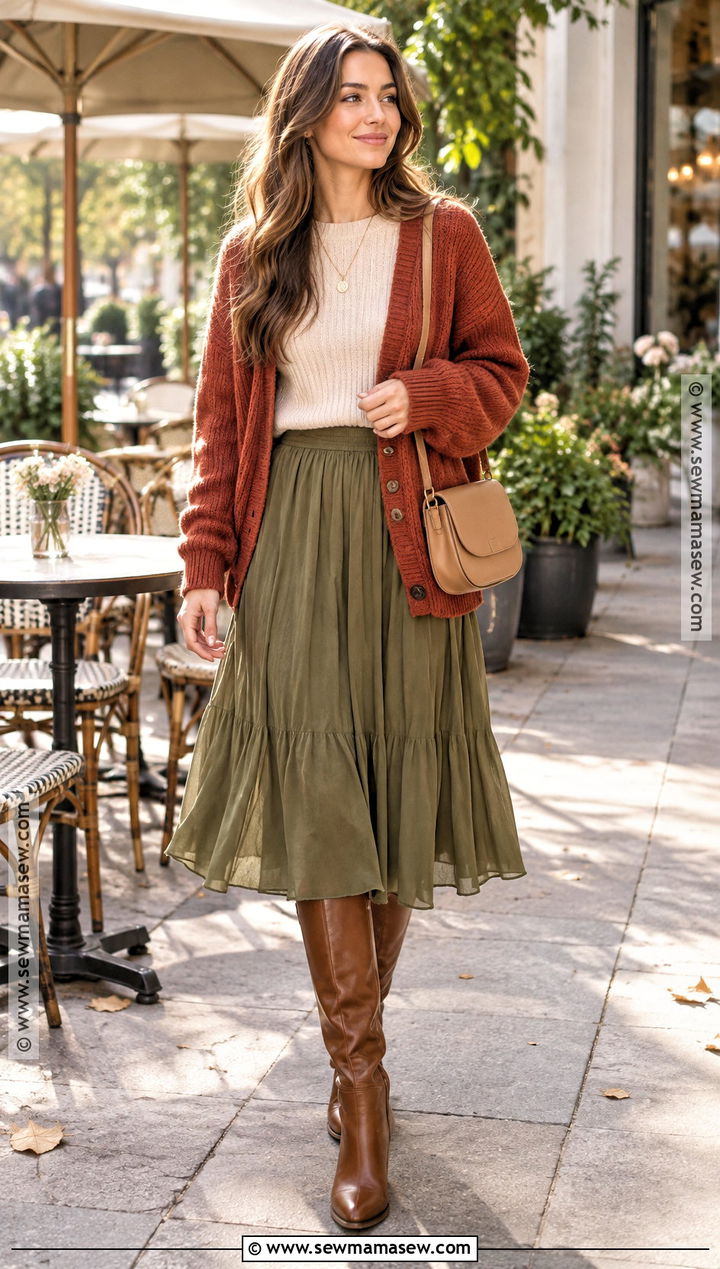
Oatmeal is the quiet one here, and it does a lot of work. An oatmeal ribbed sweater with an olive midi skirt sets a calm base, and a terracotta cardigan or relaxed blazer brings the color. I like an A-line, pleated or bias-cut skirt with this because a chunky rib needs movement below it to avoid looking blocky. Brown knee-high boots cover cold days; tan ankle boots suit September. A small camel crossbody and a gold pendant finish it, and a rust-patterned scarf is useful insurance against a cold wind.
6. Forest Green, Rust, and Chestnut Autumn Outfit
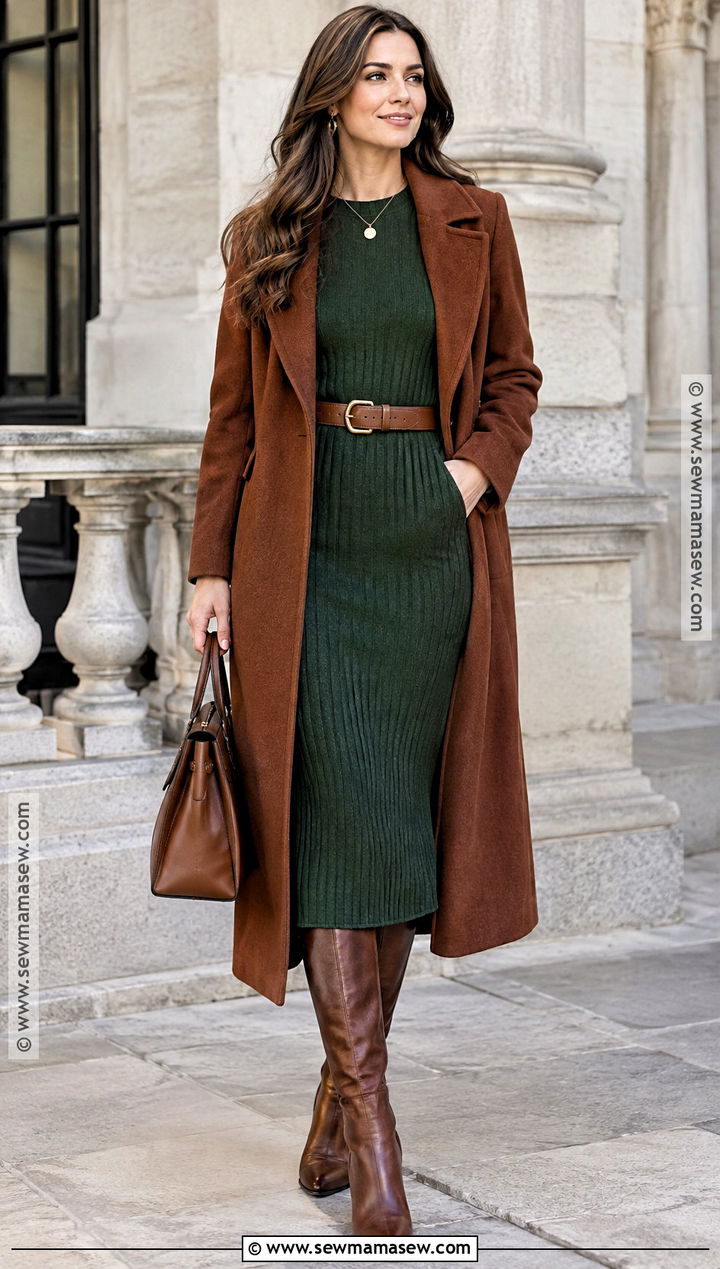
On its own, forest green can look severe on warm coloring. Rust and chestnut fix that. My usual version is a forest green knit dress under a rust wool coat, cinched with a chestnut belt and finished with matching knee-high boots and a structured bag. Choose a midi hem that ends just above the boot shaft so the brown leather still shows. The separates route is a green sweater, rust skirt and chestnut ankle boots. All three colors share a similar depth, which is why the outfit reads as one idea rather than three.
7. Burnt Orange, Warm Navy, and Camel Autumn Outfit
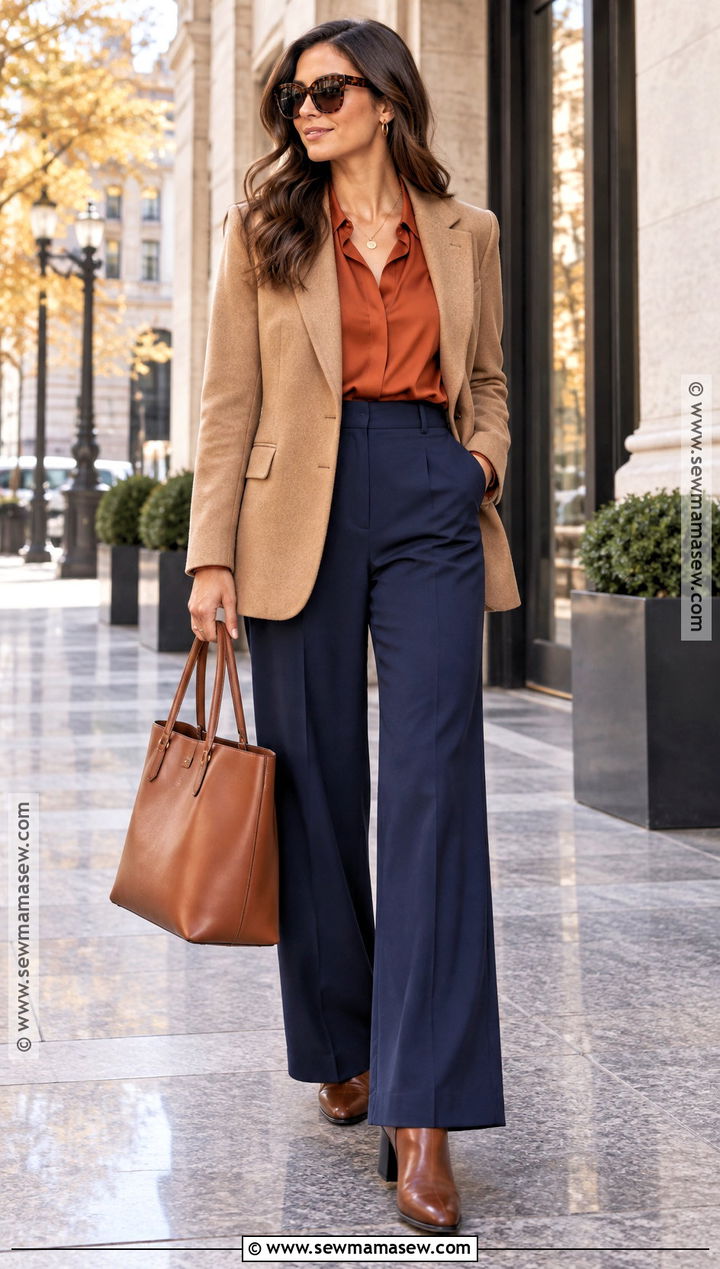
Plenty of warm-season clients assume navy is off-limits, but a navy with a slight warm or ink cast sits comfortably next to burnt orange. I pair a burnt orange blouse or light sweater with warm navy wide-leg trousers and use a camel blazer to connect them. Brown pointed loafers or block-heel ankle boots keep the shoe in the warm family, and a cognac tote with tortoiseshell sunglasses finishes it. Keep the orange to one piece. Repeating it in the shoes and bag as well is where this palette starts to look like a uniform. Dark indigo jeans and tan sneakers make the casual swap.
8. Brick Red, Chocolate, and Beige Autumn Outfit
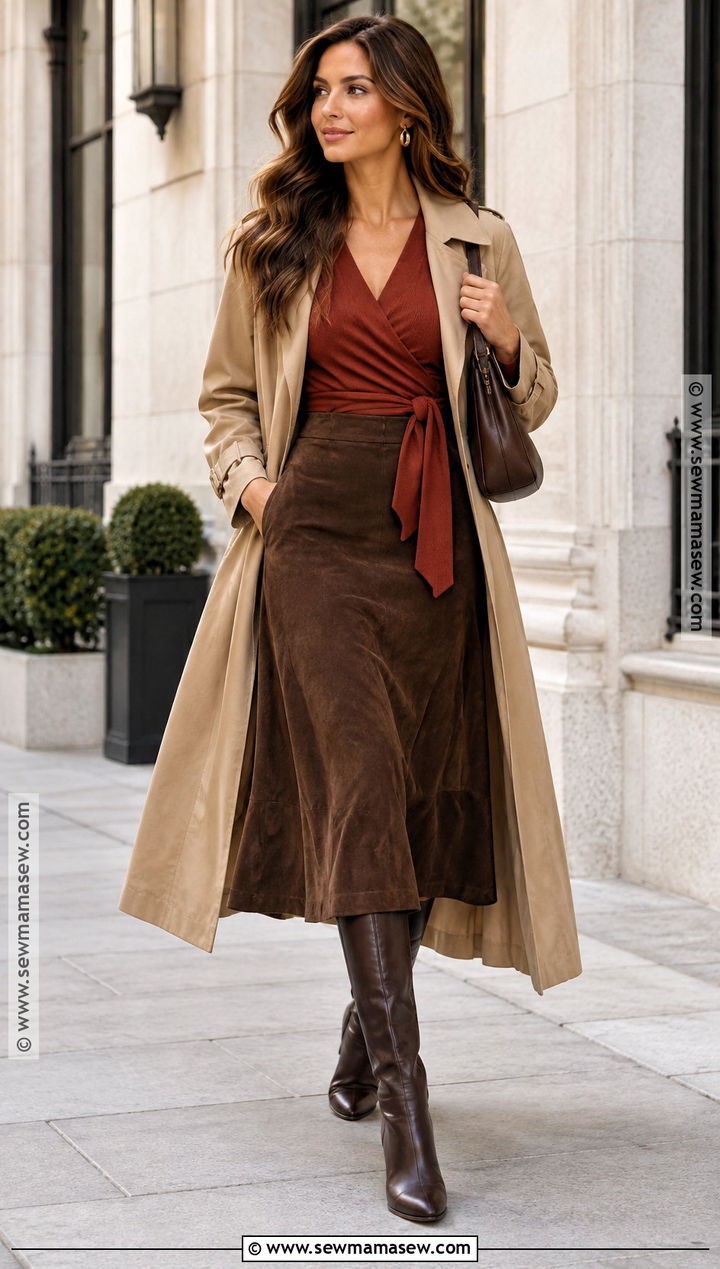
Brick red is the red I steer warm autumns toward, because it carries brown in it rather than the blue that makes cherry red look borrowed. A brick wrap top or fitted knit with a chocolate midi skirt is strong already; a beige trench over it lightens the whole thing and adds a long vertical line. Dark brown boots, a chocolate shoulder bag and gold finish it. If you want texture, a suede skirt or ribbed top works well. The contrast here is medium, which tends to photograph well because nothing blows out to white or sinks to black.
9. Moss Green, Mustard, and Tan Autumn Outfit
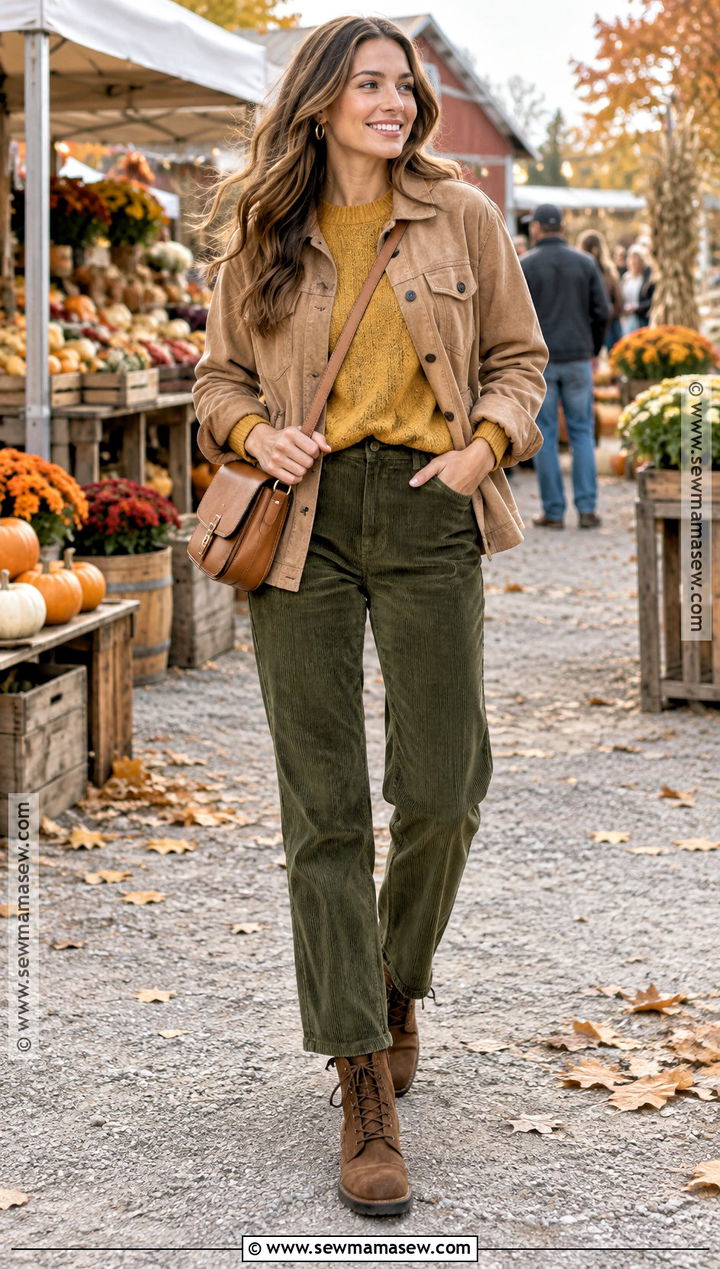
Moss green corduroy and a mustard knit make a soft, outdoorsy pairing, and the corduroy wale gives the green some depth on its own. A tan utility jacket or suede overshirt adds structure and a real windbreak. Brown lace-up boots and a tan crossbody keep it practical for walking. I'd add a cream undershirt at the neck if mustard pulls yellow on you. With ankle boots, a small roll at the hem keeps the trouser from bunching on the shaft; a full-length cut over the boot gives a cleaner line if you're shorter.
10. Copper, Cream, and Espresso Autumn Outfit
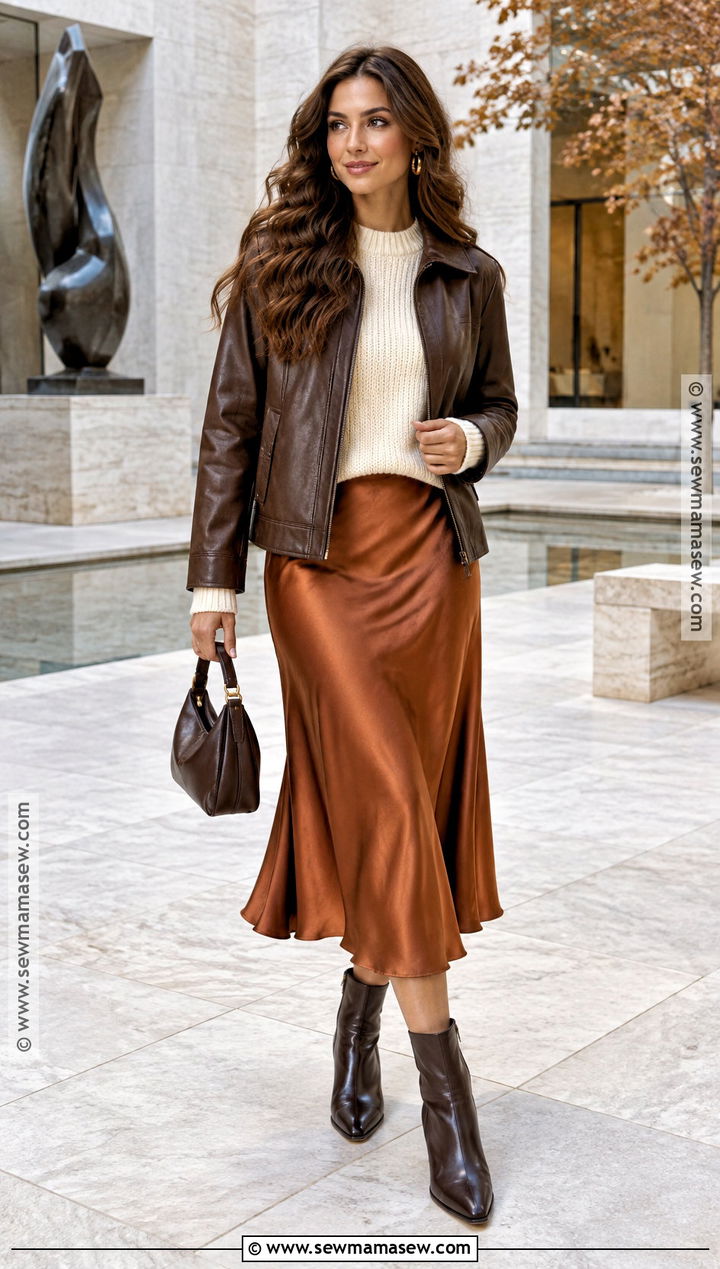
Copper is a metallic color, so it behaves differently from the flat shades in this list: it throws light, and that light lands warm on golden skin. I balance a copper satin midi skirt with a matte cream cashmere sweater so only one piece shines. An espresso leather jacket or tailored coat adds the dark weight, and brown ankle boots with a compact espresso bag finish it. Satin shows every seat crease after a long sit, so for daytime I'd choose a matte copper in suede or twill. This version is for dinners, gallery evenings and the dressier end of a weekend.
11. Warm Aubergine, Camel, and Bronze Autumn Outfit
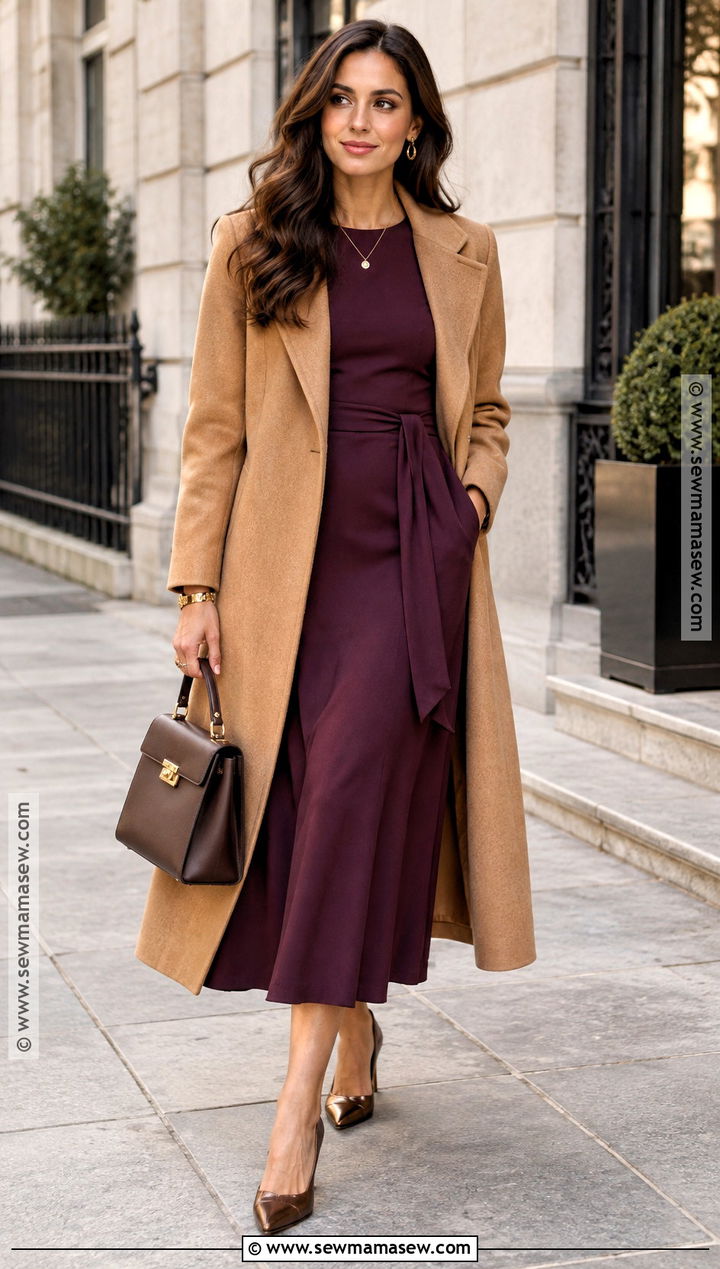
Aubergine is the one purple that belongs in a warm palette, but only when it has visible red or brown in it. Hold it next to a cool plum and the difference is obvious. An aubergine midi dress, or an aubergine knit with a camel skirt, takes a camel coat over the top and bronze flats or low-heeled boots underneath. A dark brown bag and antique gold keep it warm. Skip icy lilac or silver accessories; they pull the purple cool and the rest of the outfit stops connecting. It's deep enough for evening and still plain enough for daytime.
12. Pumpkin, Olive, and Chocolate Autumn Outfit
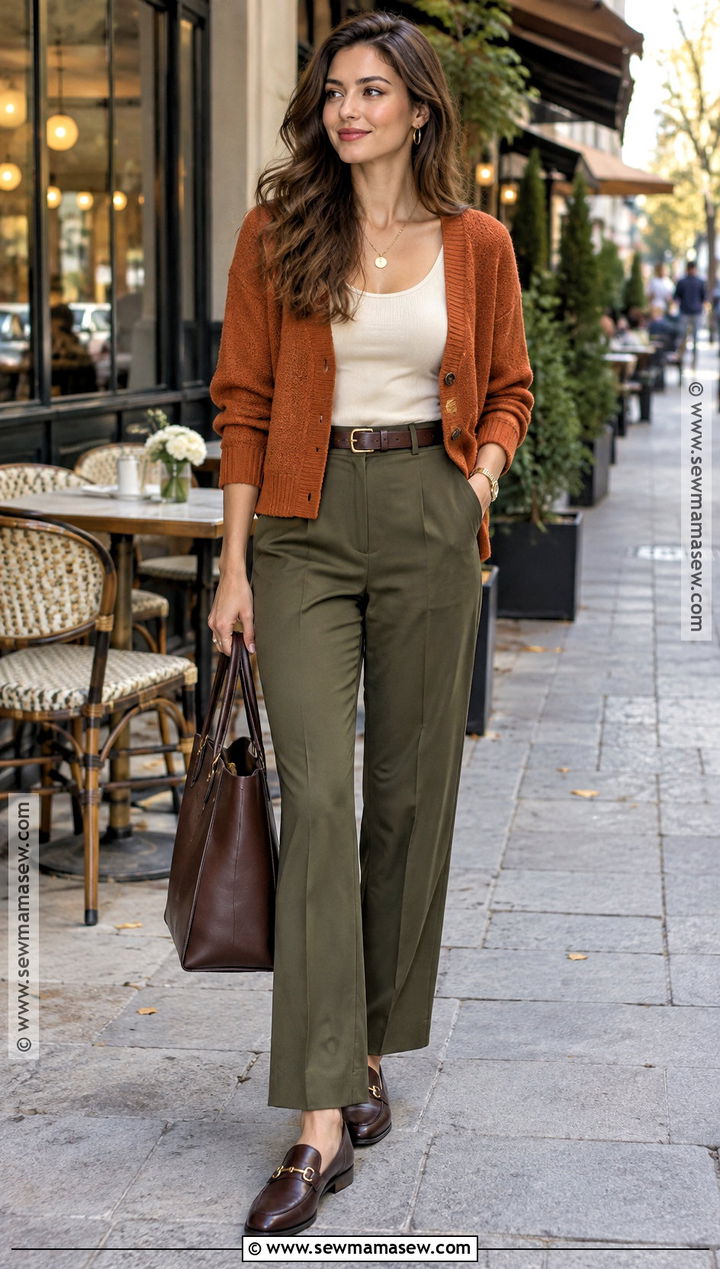
Pumpkin is bright, so I always surround it with two darker earth tones. A pumpkin cardigan over a cream tank, with olive trousers in a relaxed tailored cut, sets that up; chocolate loafers, belt and tote hold the bottom of the outfit down. Worn open, the cardigan draws a long line down the body; buttoned and front-tucked into high-rise pants, it shows the waist instead. If pumpkin near your face feels like a lot, flip it: a pumpkin midi skirt and an olive sweater give you the color lower down, where it is easier to live with.
13. Warm Burgundy, Mustard, and Camel Autumn Outfit
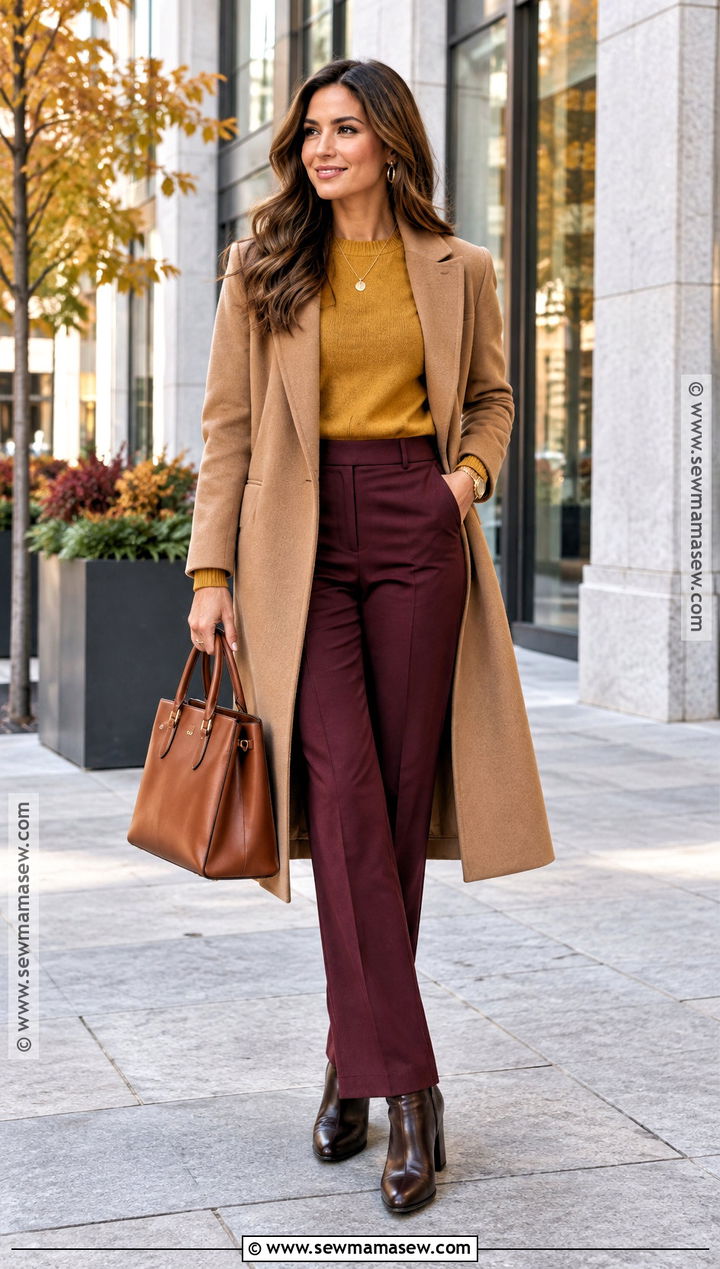
Burgundy with mustard is a bold pair, and camel is what stops it from feeling like a team uniform. Burgundy tailored trousers, a mustard blouse or fine knit and a long camel coat make the core outfit, with dark brown ankle boots and a camel or cognac bag. A brown belt defines the waist when the top is tucked. The burgundy has to lean brick or brown; a berry burgundy has blue in it and reads cool next to mustard. For a gentler take, wear a cream top and let the mustard appear only in a scarf or small bag.
14. Cinnamon, Teal, and Cream Autumn Outfit
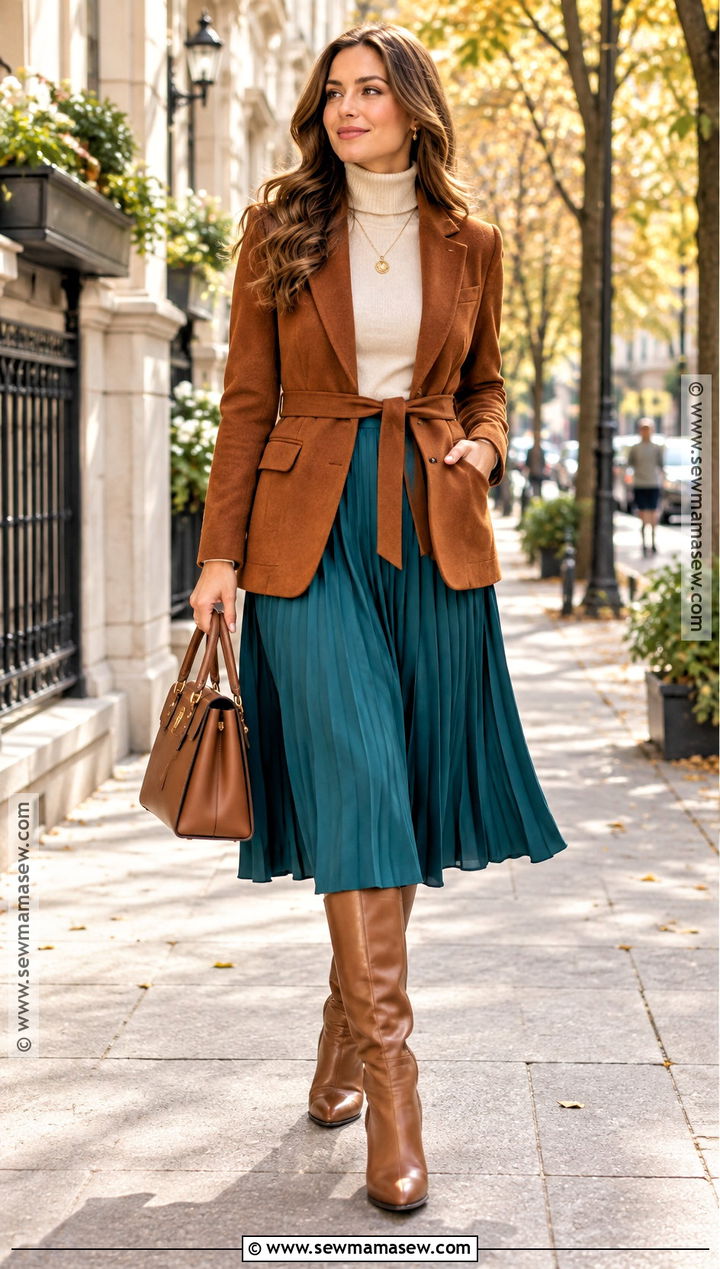
Cinnamon is a spiced mid-brown, and it gives teal a warm partner without stealing focus. I start with a teal midi skirt and a cream blouse or fitted turtleneck, then add a cinnamon blazer or belted cardigan, cognac knee-high boots and a warm brown bag. A thin gold necklace adds light near the face. Match the skirt to the top layer: a structured blazer wants a fluid skirt, while a soft oversized cardigan looks neater with a straighter one. The cream in the middle is doing real work here, giving the eye a rest between two strong colors.
15. Coral, Rust, and Camel Autumn Outfit
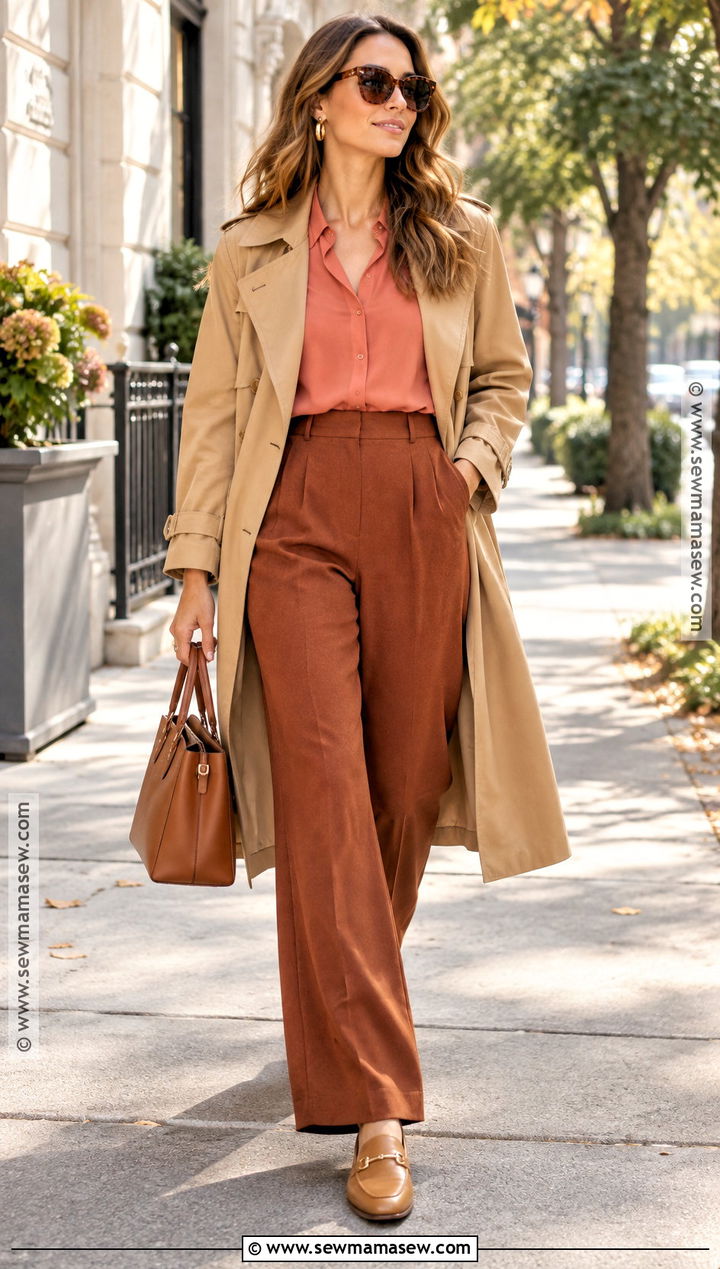
Muted coral is the early-autumn color in this list, for weeks when it is still too warm for wool. A soft coral blouse with rust wide-leg pants or a midi skirt, plus a light camel trench for cool mornings, covers most of September. Tan loafers, slingback flats or low block heels keep it comfortable, and a cognac bag with tortoiseshell gives it structure. The coral needs to be dusty or peachy. Neon or pastel coral sits apart from the rust instead of blending into it, and that is the most common mistake I see with this one.
16. Ochre, Forest Green, and Espresso Autumn Outfit
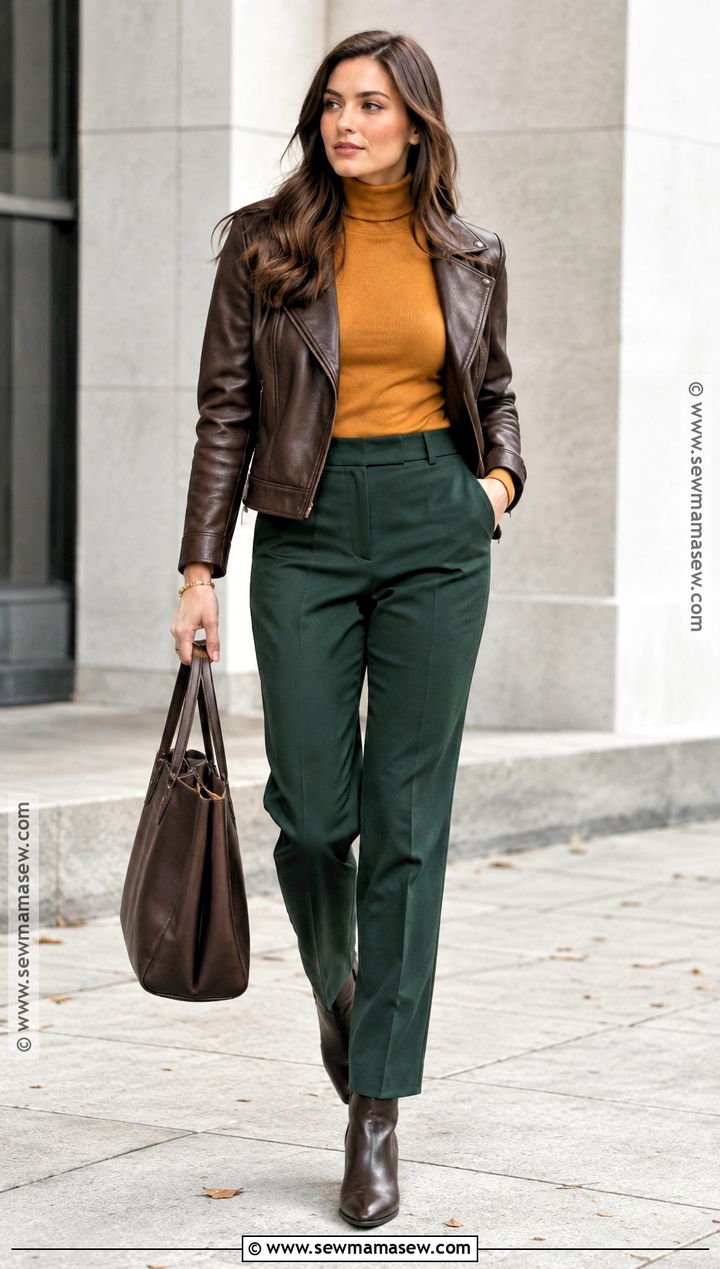
Ochre is mustard's deeper, earthier cousin, and it holds up better under gray autumn light. An ochre turtleneck tucked into forest green tailored trousers puts the bright color right at the face where it can lift the darker layers. An espresso leather jacket, wool coat or long cardigan goes over it, depending on the morning temperature. Dark brown boots, an espresso tote and a slim gold bracelet complete it. Prefer skirts? A forest green A-line midi with brown knee-high boots keeps the same balance.
17. Dark Denim, Rust, and Cognac Autumn Outfit
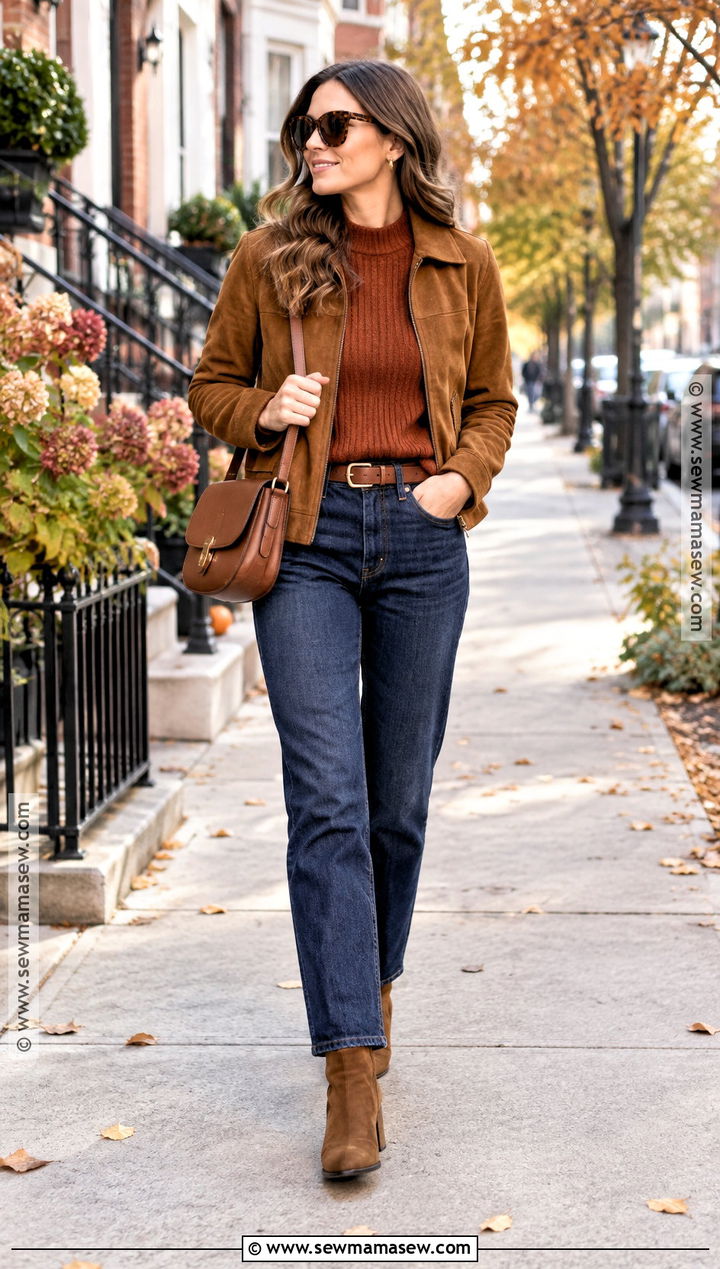
Dark denim can fit beautifully into a warm autumn palette when the wash is deep indigo, not the faded blue-gray that turns cool next to rust. Straight-leg dark jeans, a rust sweater and a cognac suede jacket are the whole outfit, with cognac ankle boots, a matching belt and a warm brown crossbody. A cream camisole underneath puts a thin line of light between the saturated shades. I'd choose clean denim without heavy distressing, which keeps it usable for a casual office as well as a coffee run. Suede and rain don't mix, so keep the jacket for dry days.
18. Khaki, Terracotta, and Cream Autumn Outfit
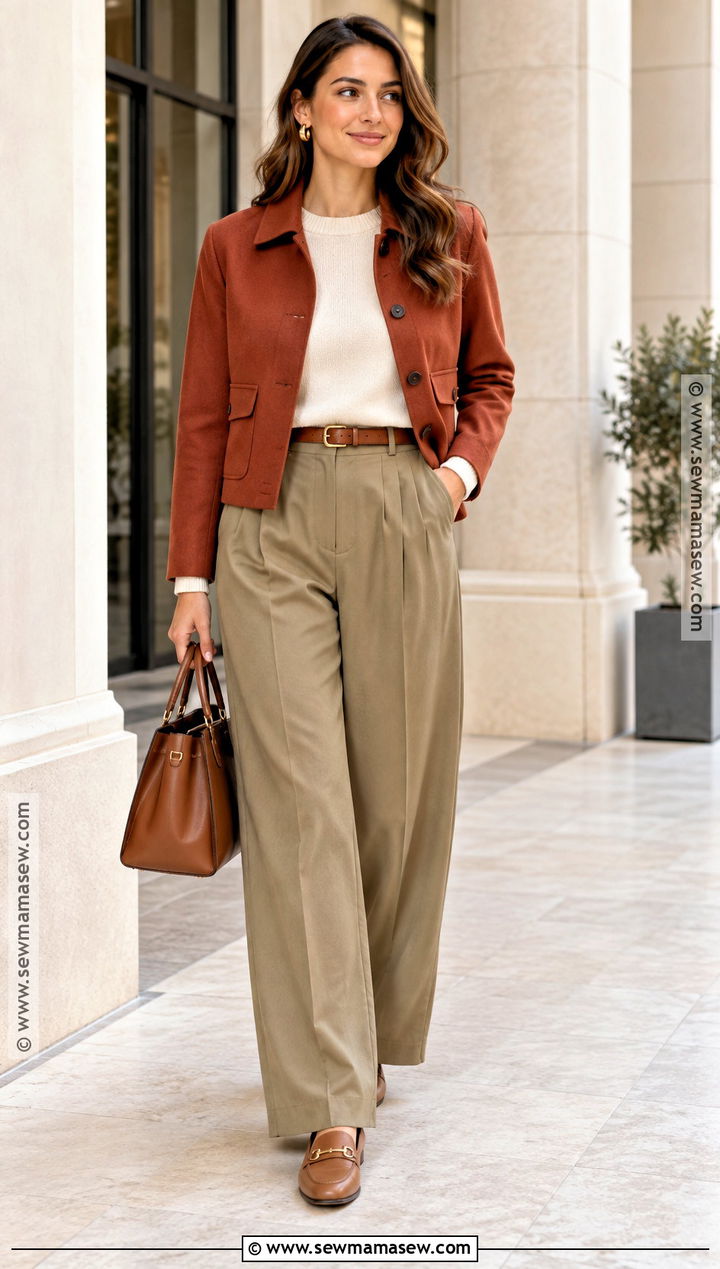
Khaki can look flat on its own, especially the greenish versions, but terracotta and cream warm it up quickly. Khaki wide-leg trousers with a tucked cream sweater or soft button-down form the base, and a terracotta cropped jacket, cardigan or blazer sits over the top. The tuck matters with wide legs: without a defined waist, the trouser volume swallows a smaller frame. Tan loafers suit milder days, brown ankle boots colder ones, and a cognac bag with a slim leather belt pulls the browns together. The contrast is gentle, which suits people who find stronger palettes tiring to wear.
19. Petrol Teal, Tobacco Brown, and Gold Autumn Outfit
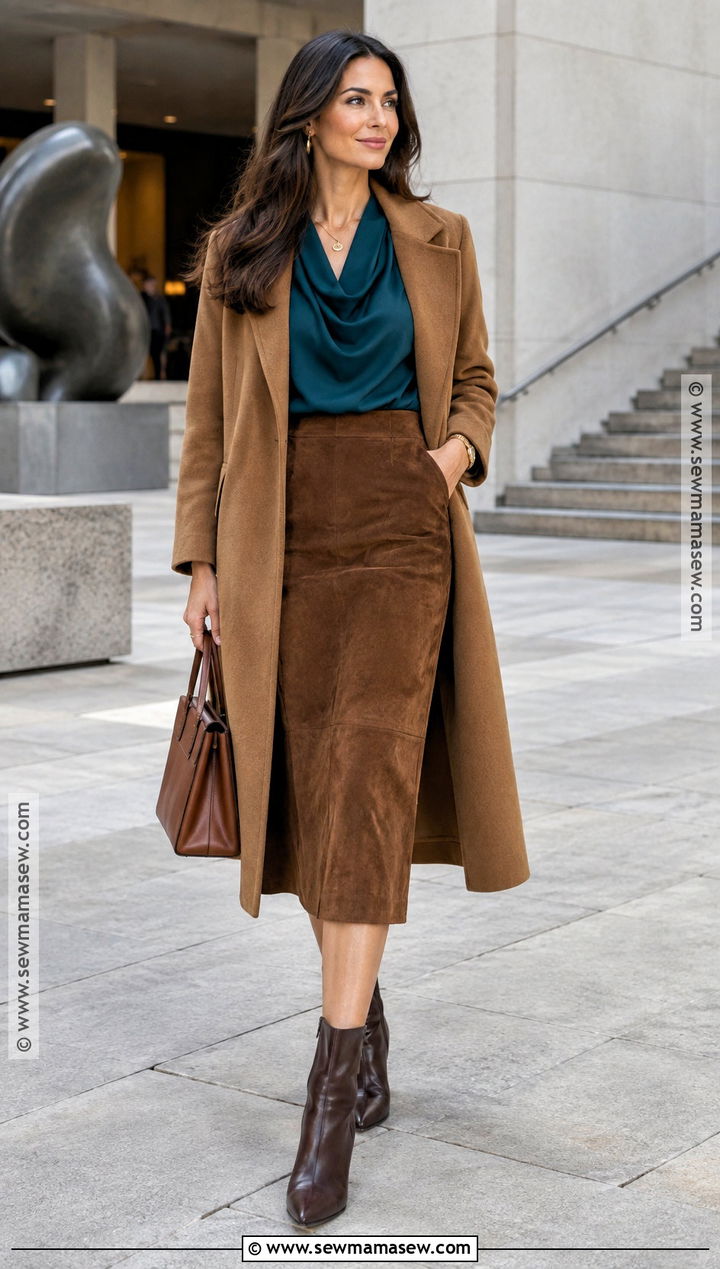
Petrol teal is darker and grayer than the teal in outfit four, which is why it can stand next to tobacco brown without sinking into it. A petrol blouse with tobacco trousers or a suede midi skirt sets the two main colors; a dark camel coat bridges them. Chocolate ankle boots and a tobacco leather bag fill in the rest. I keep gold to small accents, like earrings or a buckle. As a clothing color, metallic gold gets flashy fast. A draped blouse looks right with structured trousers, and a fitted knit is easier with the fuller skirt.
20. Tonal Brown Autumn Outfit
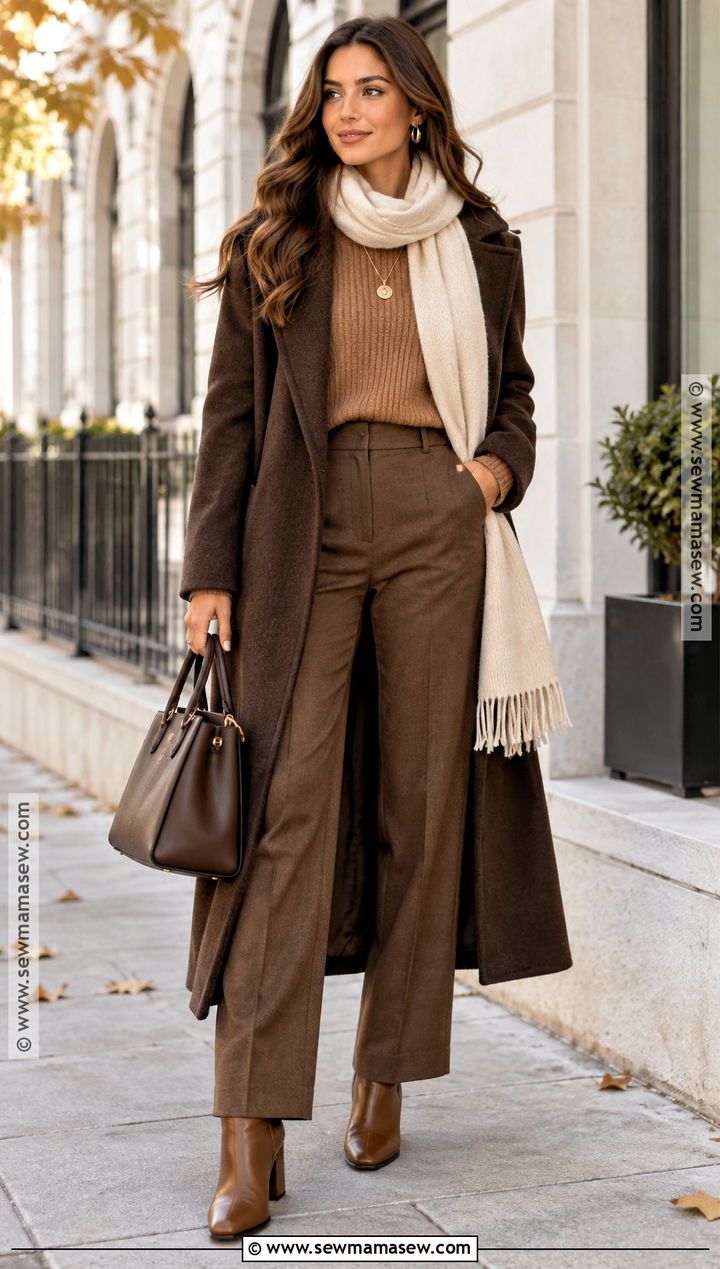
A tonal brown outfit only looks deliberate when you can see clear steps between the shades. I build it light to dark from the face down and out: a caramel sweater, chestnut trousers or a midi skirt, then a deep chocolate coat as the darkest layer. Cognac boots and an espresso bag fill the gaps. Texture is the other half of the trick, so mix wool, suede, leather and rib to stop the browns blending into one flat block. A cream scarf at the neck brightens the face without breaking the color story. Most people already own enough browns to try this before buying anything.
Mixing Browns That Don't Quite Match
Half of these outfits rely on two or three browns sitting together, and that is where I see people second-guess themselves. Browns rarely match exactly, and they don't need to. What they need is a shared undertone. A red-leaning cognac boot and a yellow-leaning camel coat both belong to the warm family, so they look related. A gray-brown taupe has cool in it and is the one that tends to look off.
A few habits make mixed browns look planned. Leave at least one clear step in depth between pieces, so a chestnut skirt and a chocolate coat read as two shades rather than a failed match. Repeat a brown twice, such as the belt and the boots, and the eye treats it as a theme. Change the finish when two shades are close: matte suede beside polished leather separates them even when the color is nearly the same.
Keeping These Colors Rich After a Season of Wear
Warm, saturated colors show fading faster than neutrals do, and a rust sweater that has gone pinkish or a mustard knit that has dulled can stop working with the rest of the palette. Wash colored knits inside out in cool water and dry them flat away from direct sun, which is what bleaches dyed wool and cotton fastest. Dark denim keeps its indigo longer when it is washed rarely and inside out. Brush suede with a suede brush after wear and treat it with a protector spray before the first rainy week, because water marks on cognac and tan suede are hard to remove. Store camel and cream coats away from dark pieces that can rub dye onto them in a crowded closet.
Start With Two Colors and a Neutral You Repeat
Every outfit above follows the same structure: one or two statement colors from the warm family, steadied by a neutral like camel, cream, chocolate, cognac or espresso. You don't need every shade at once. Pick the two colors you already reach for, choose a supporting neutral, and repeat that neutral in shoes, bags, belts and outerwear so the whole wardrobe connects. When the colors are close together, let texture create the contrast. And always judge a new shade in daylight next to your face before deciding it belongs in your closet.
Related posts: