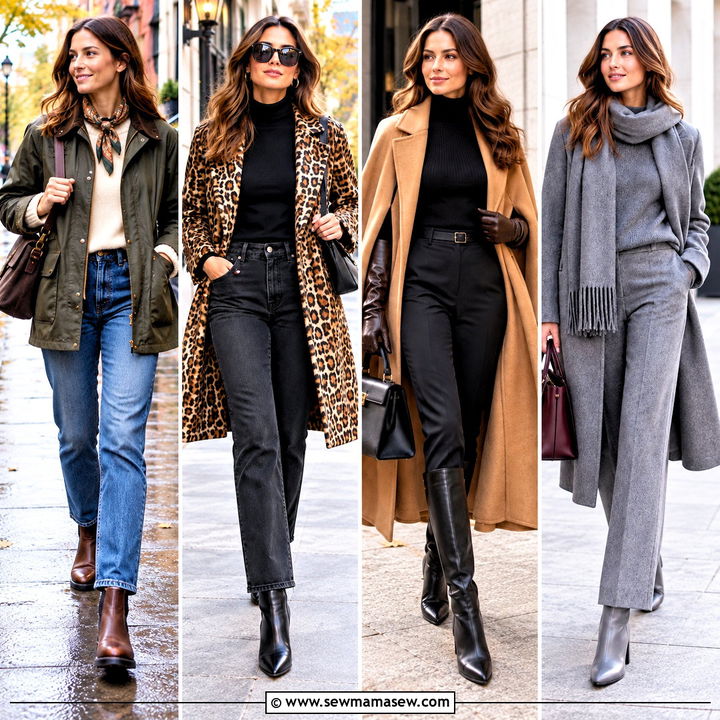
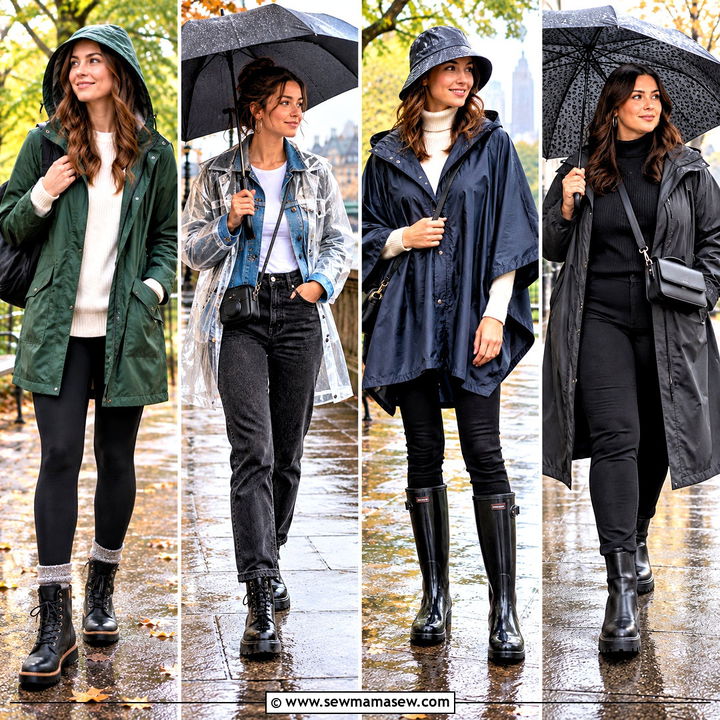
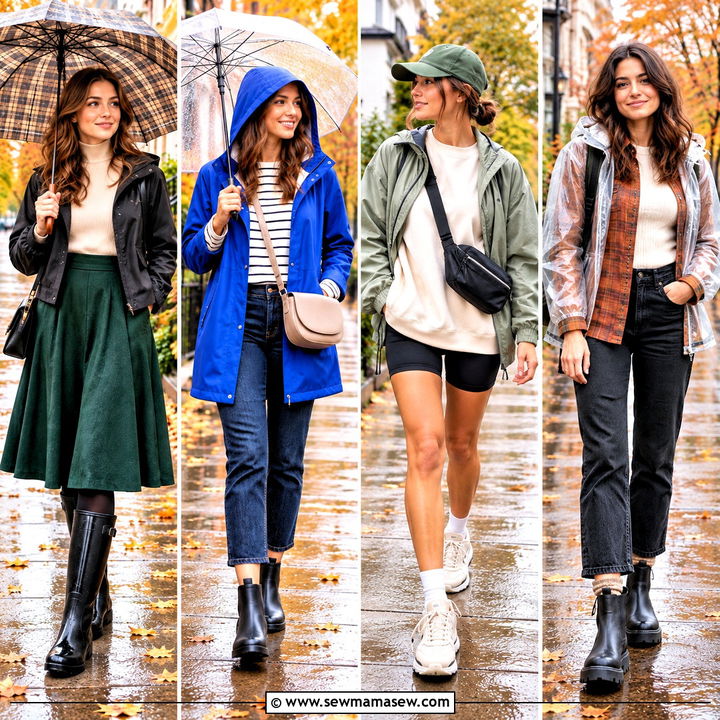
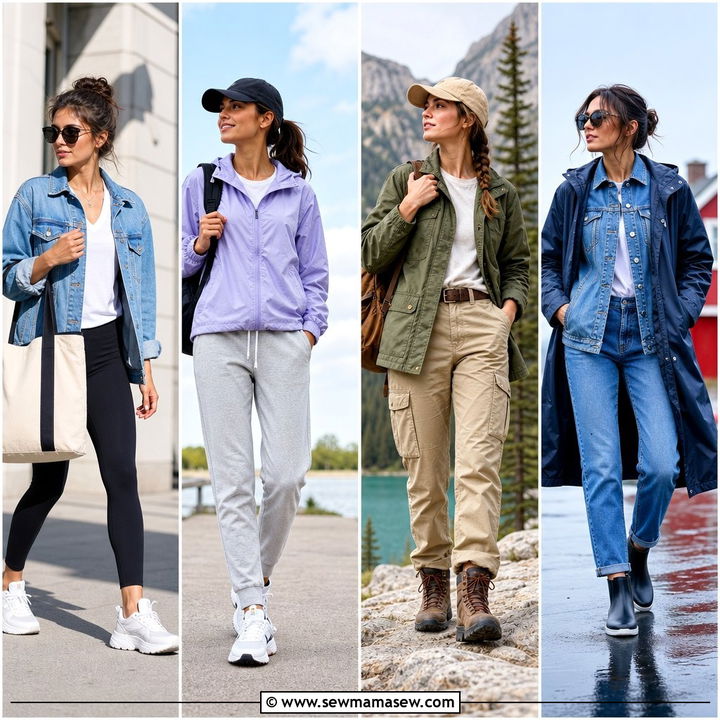
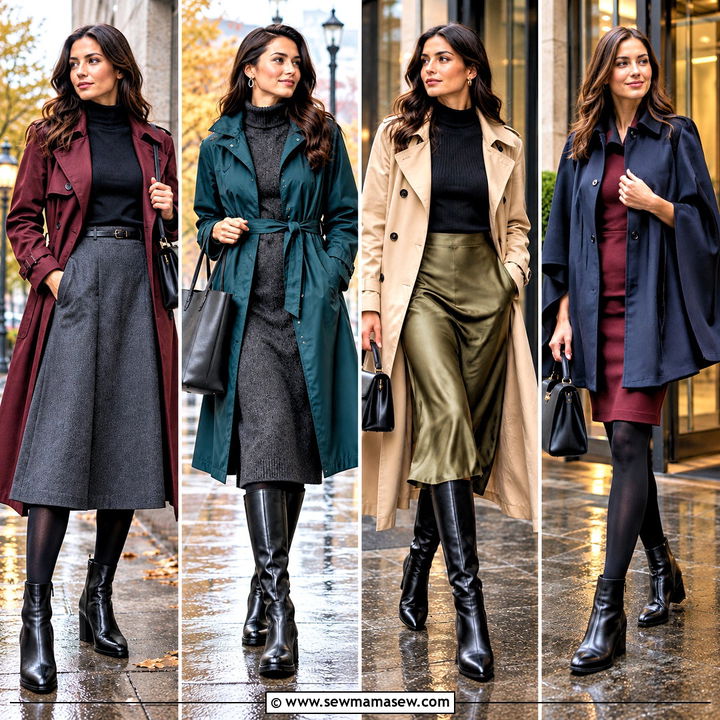
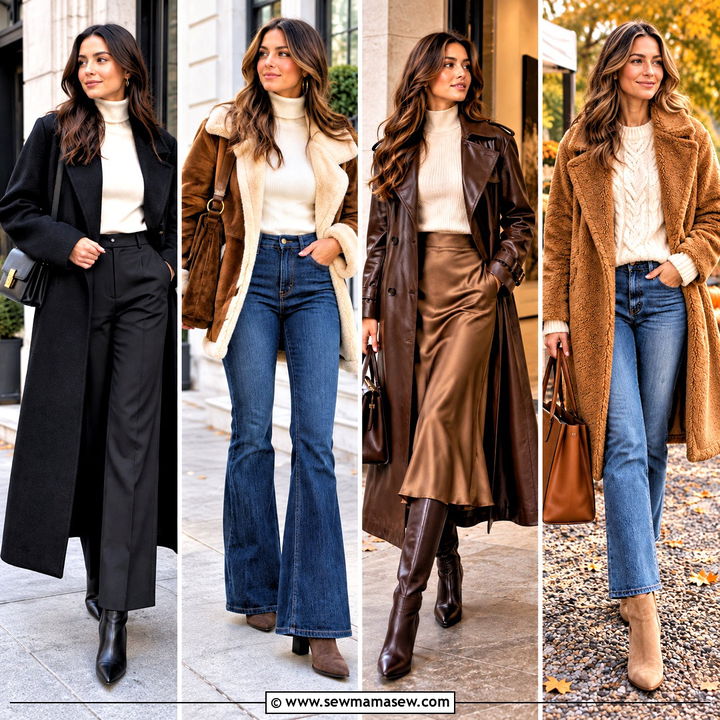
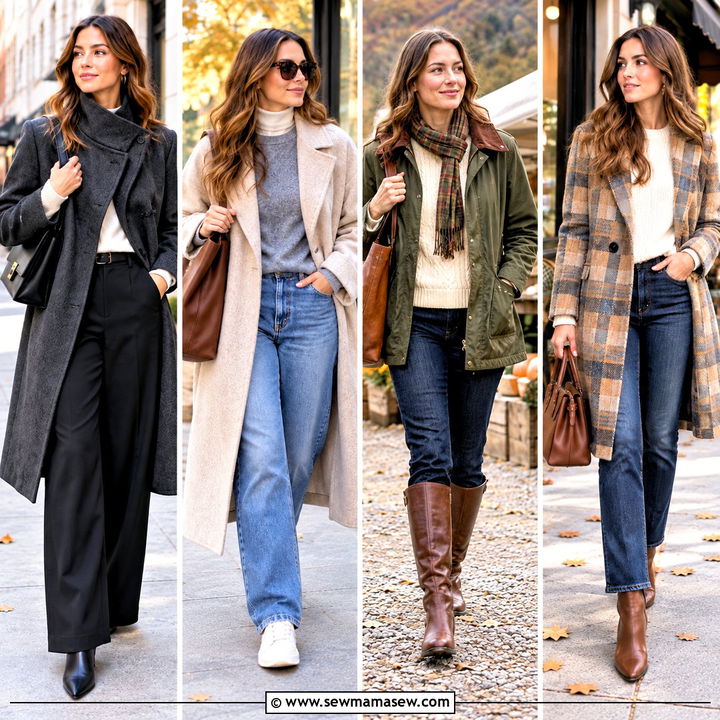
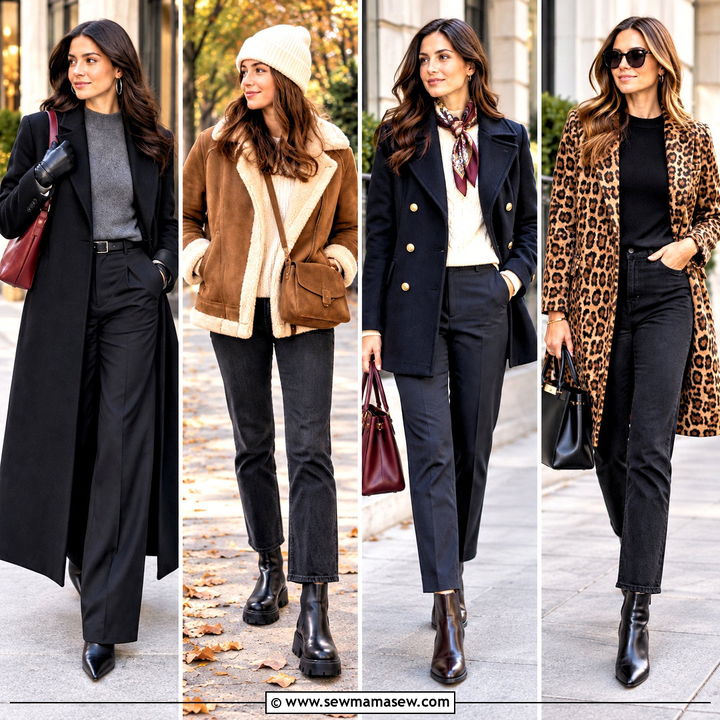
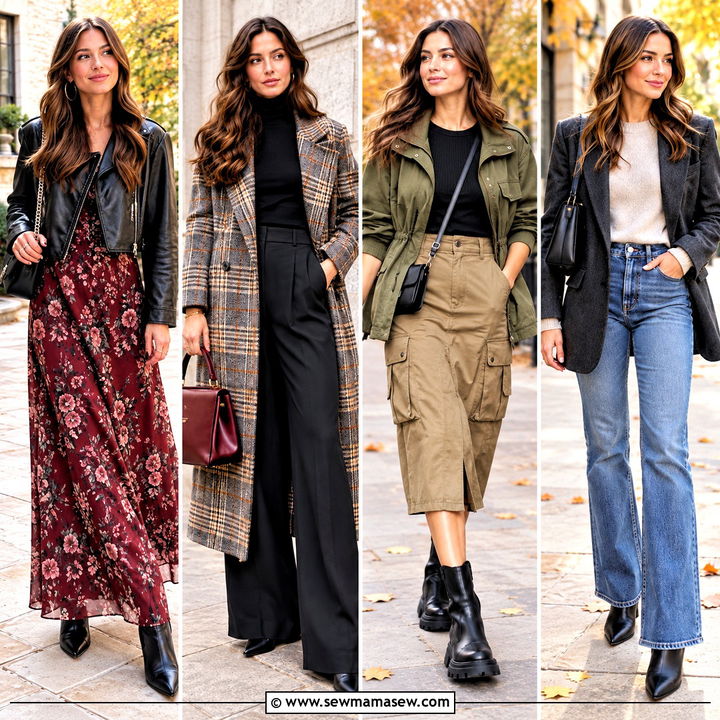
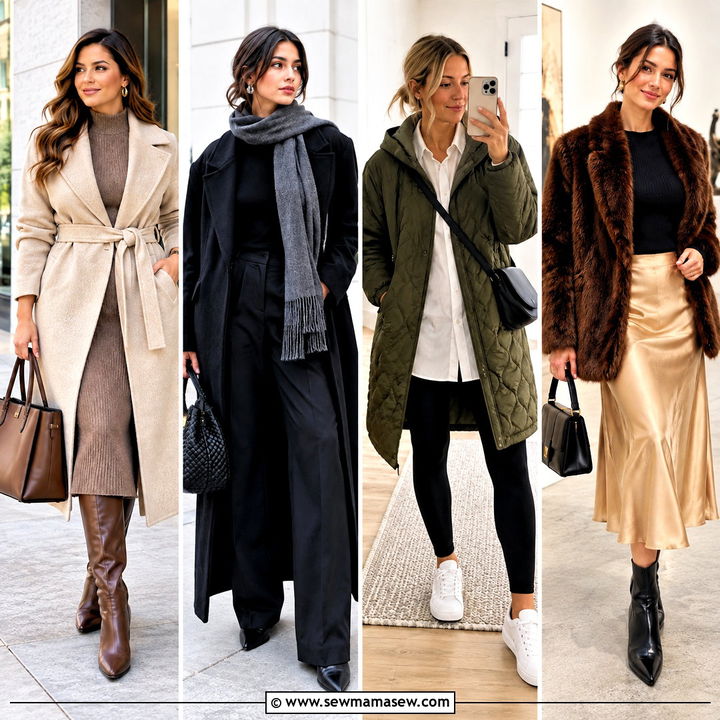
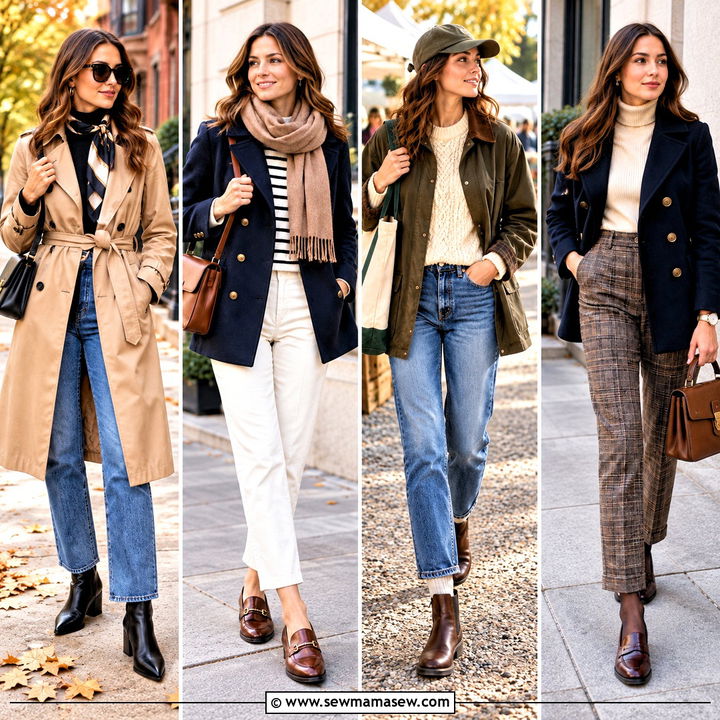
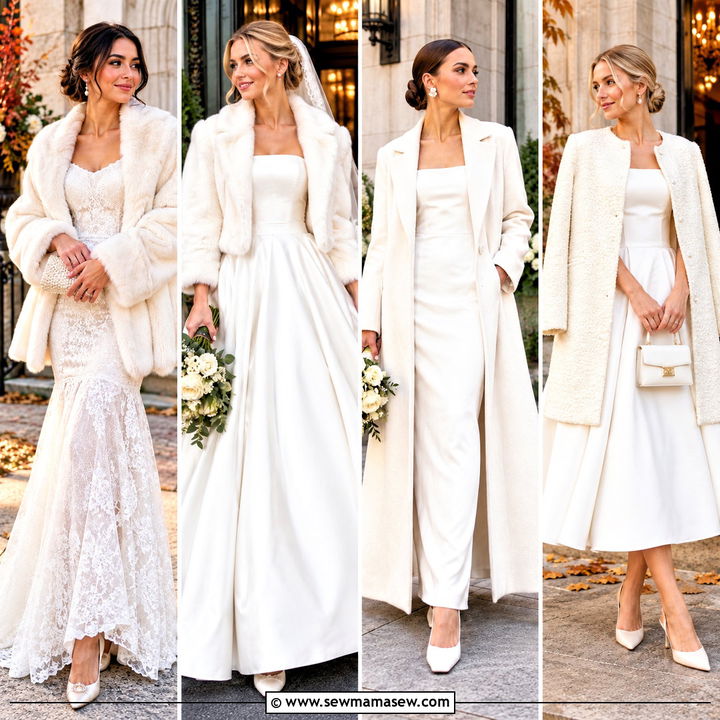
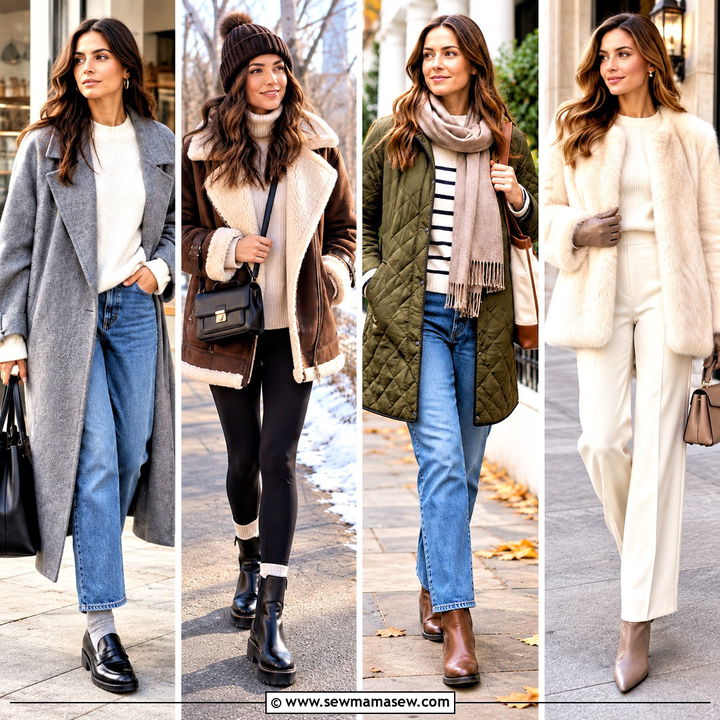
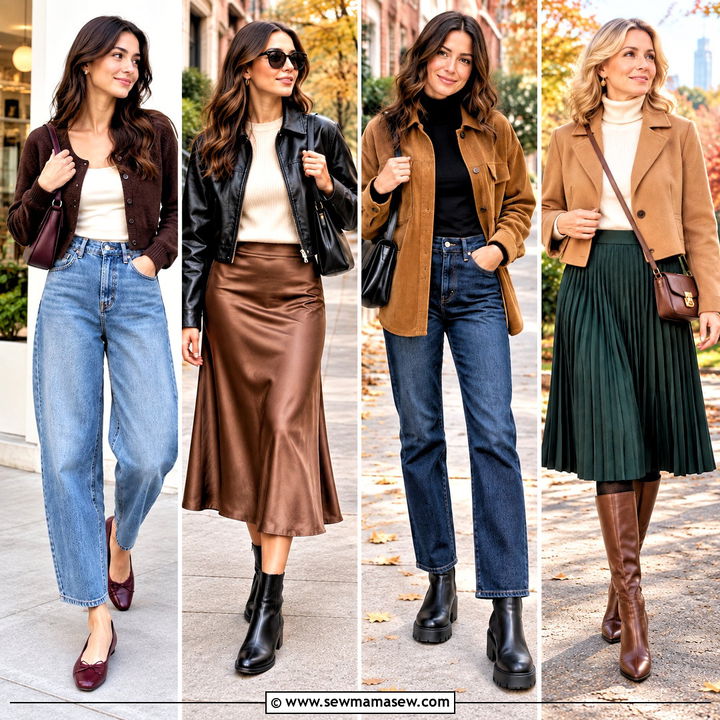
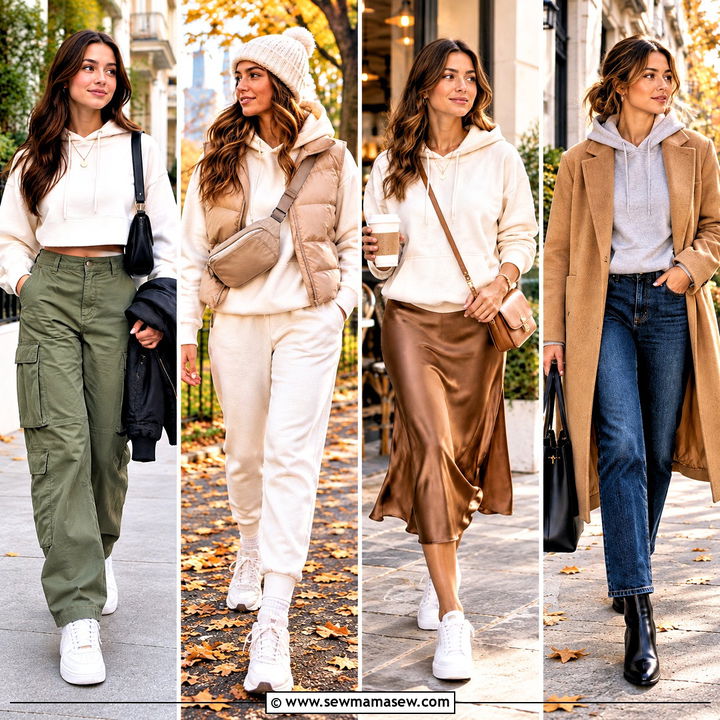
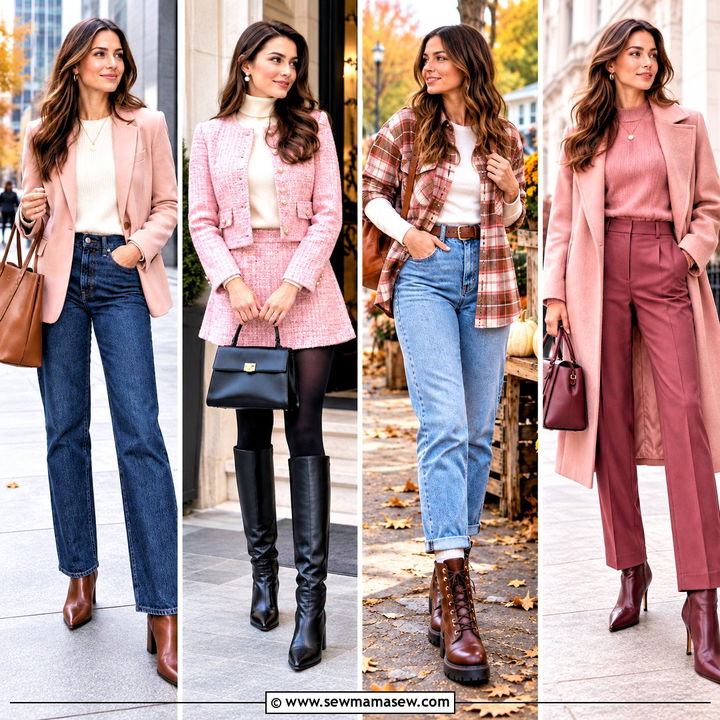
In fall, your coat is the outfit most people see. It's what you wear on the commute, at the market and on the walk to dinner, so it pays to get it right. This season's coats run from oversized trenches and barn jackets to suede, faux shearling, leather and tailored wool. When I help someone choose one, I start with length, warmth and shape, then check it against the shoes and bags they already own. Each of the fifteen coats below comes with a full outfit built around it and notes on who it suits, how warm it really is and what to watch for when you try it on.
How Much Wool a Coat Really Needs
Two coats can look identical on a hanger and feel completely different on a cold morning. The difference is mostly in the fabric, and the label tells you more than the price tag.
- Wool content: for a wool coat that actually keeps you warm, I look for a majority wool blend. Coats with only a small percentage of wool and lots of polyester look similar but feel colder and tend to pill sooner.
- Weave density: hold the fabric up to a light. Dense, tightly woven or felted wool blocks wind; a loose weave lets it through no matter how thick it looks.
- Lining: a full lining helps the coat slide on over sweaters and adds a layer of warmth. Unlined coats are lighter and suit milder climates.
- Fill, for puffers and quilted coats: down is the lightest for its warmth but loses loft when soaked; synthetic fill copes better with damp weather.
Match the coat to your actual fall. A trench or barn coat is plenty where autumn stays mild, while a place with frosty mornings needs dense wool, a duffle or a puffer by late October.
1. Camel Wool Coat Outfit
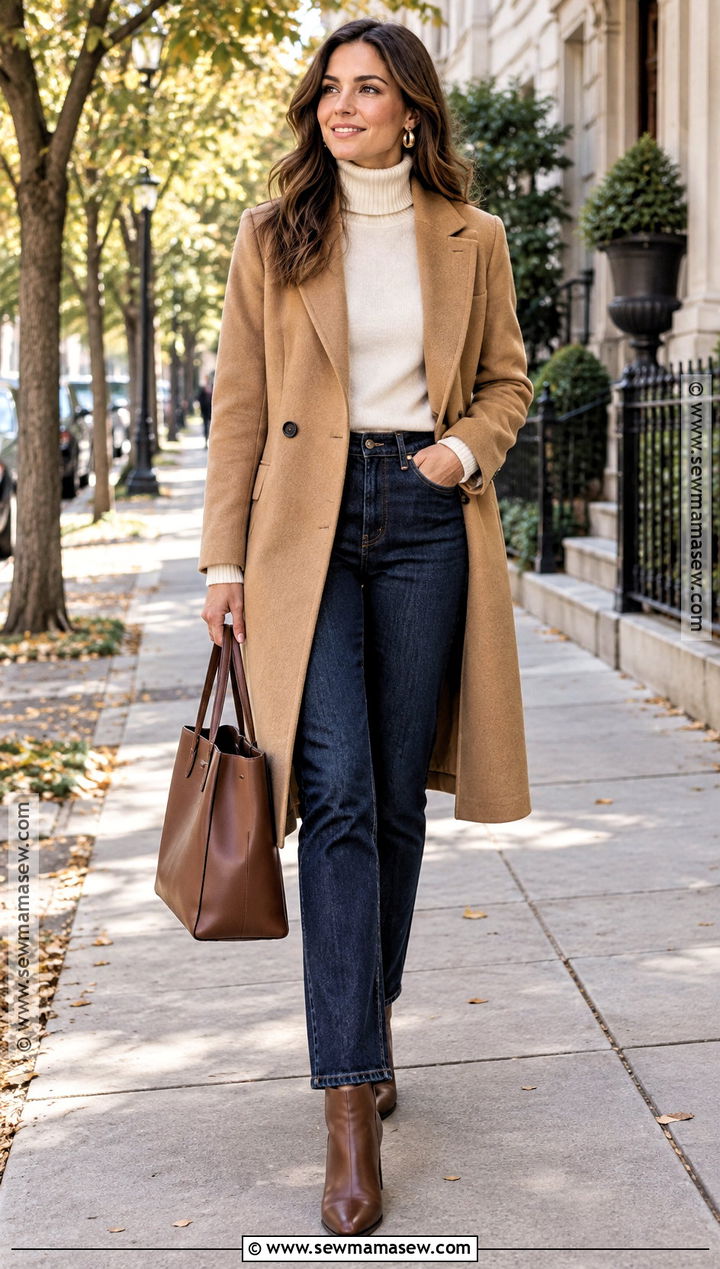
A camel wool coat is the one I'd suggest first to almost anyone, because camel works with black, navy, gray, brown and denim alike. Wear a knee-length single-breasted version over a cream turtleneck and dark straight-leg jeans, with brown ankle boots and a structured leather tote. The fitted knit keeps the top half neat under the coat; a chunky sweater would bunch at the armholes. If you're petite, choose a hem just above the knee so the coat doesn't swallow you. On colder days, swap in a ribbed sweater and a plaid scarf in tan, burgundy or forest green.
2. Oversized Trench Coat Outfit
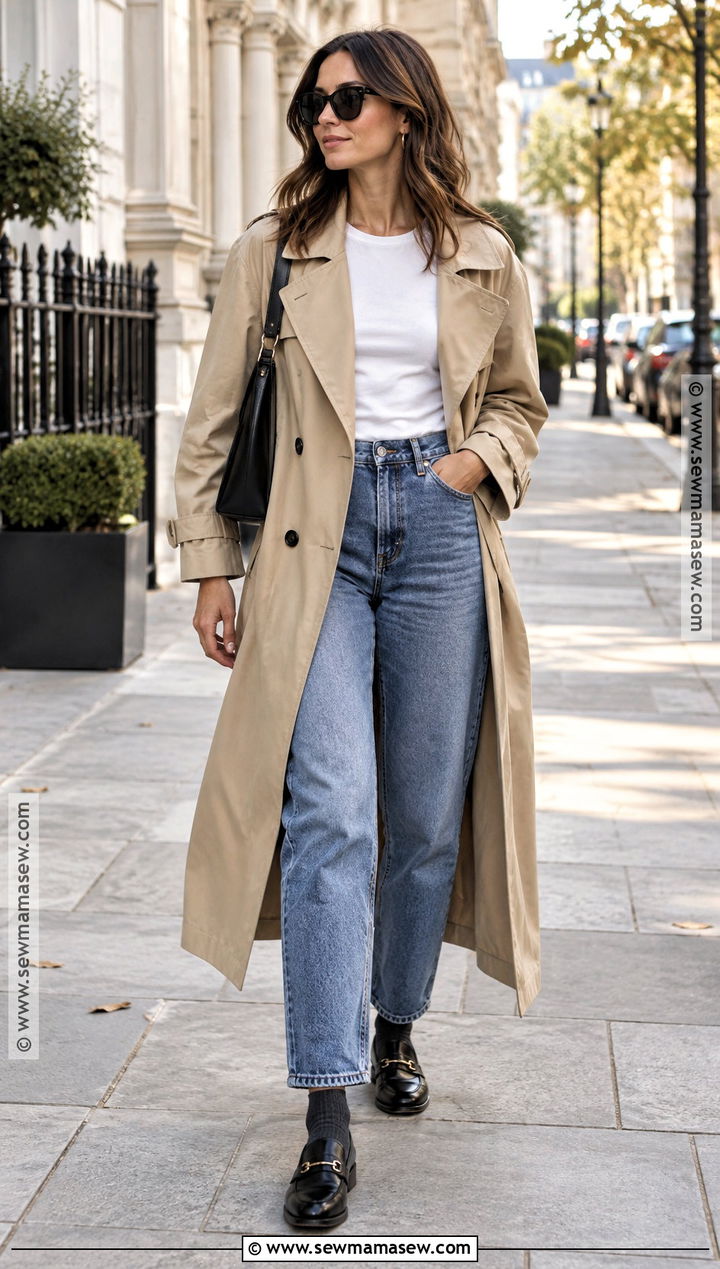
An oversized trench is for days that are cool but too mild for wool. Wear a beige or olive one over a fitted white tee and relaxed blue jeans, with black loafers and ribbed socks. Size matters more than usual here: an intentionally oversized trench has dropped shoulders and a wide sleeve, while a regular trench bought too big just looks sloppy at the shoulders. Keep everything under it slim so the volume reads as a choice. Push the sleeves up if the afternoon warms, and swap the tee for a light crewneck when it doesn't. Most trenches are cotton gabardine, which sheds light rain but won't keep you dry in a downpour.
3. Plaid Barn Coat Outfit
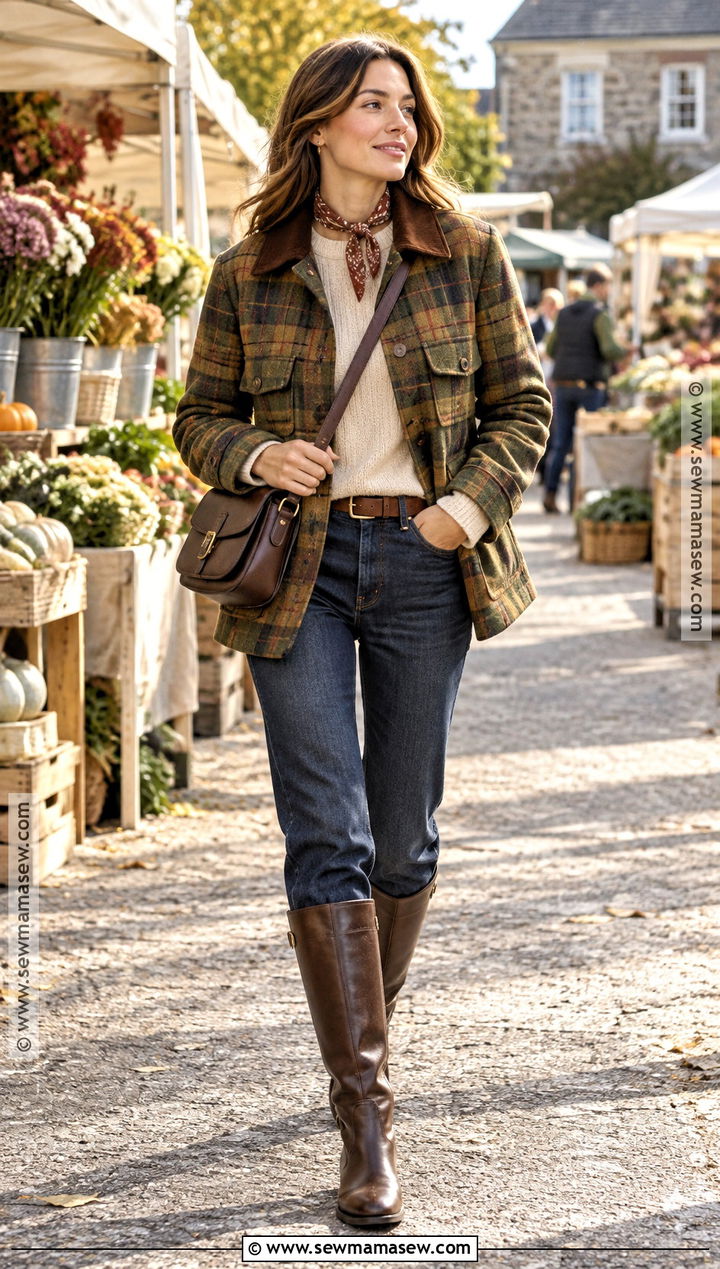
A plaid barn coat has a country feel without looking like you're about to muck out stalls. Choose a hip-length coat with a corduroy collar, big pockets and a muted brown, green or navy check. Barn coats are usually cotton canvas, so they block wind well but aren't very warm; I treat them as a mild-day layer and add a thermal under the sweater when it turns cold. Pair it with a fitted oatmeal sweater, dark straight jeans and chocolate loafers or flat riding boots. If the coat is boxy, cuff the jeans slightly to show the shoes and sharpen the proportions.
4. Chocolate Suede Coat Outfit
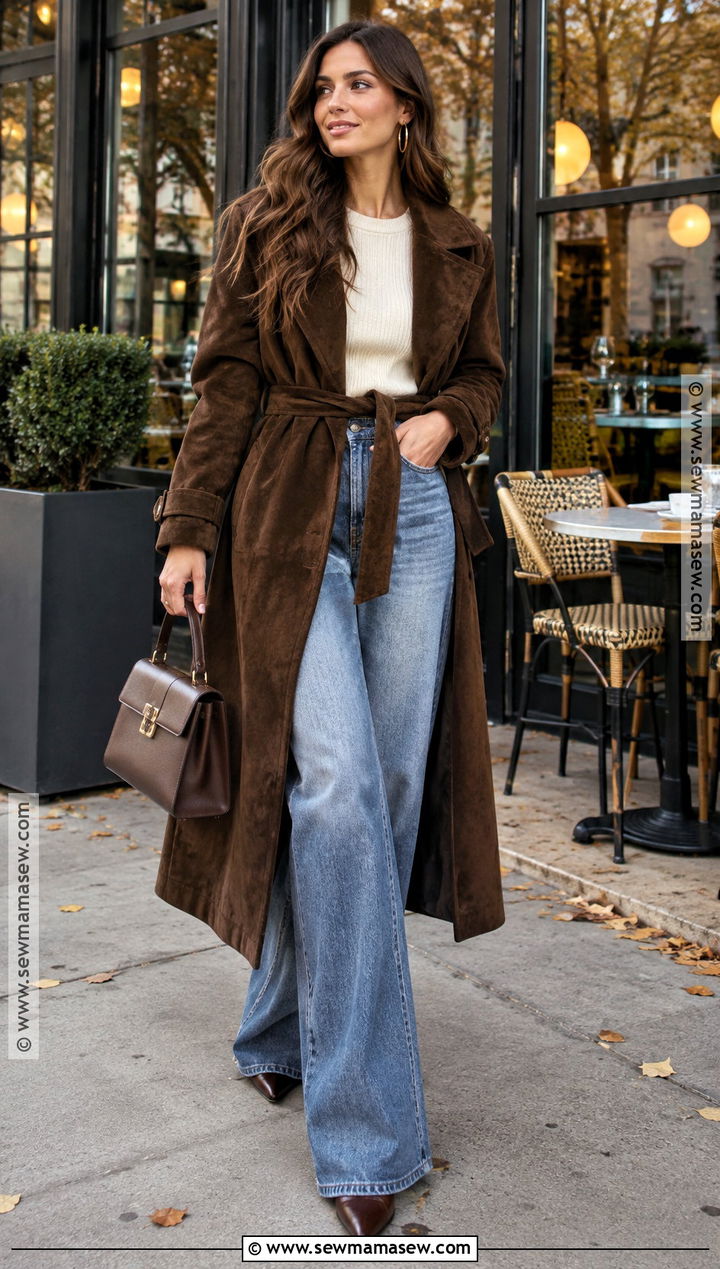
Chocolate suede against cream, tan and faded blue is one of my favorite fall color stories. Pair a belted suede coat with an ivory knit and high-waisted wide-leg jeans, then add pointed brown boots and a structured top-handle bag. A cropped suede coat suits high-rise bottoms; thigh-length gives more warmth and coverage. Be realistic about weather before you buy real suede. It darkens and can water-mark in rain, so it needs a protector spray and dry days, and faux suede is the more practical option if your fall is wet. Swap the tote for a small shoulder bag and it goes from work to dinner.
5. Black Leather Trench Coat Outfit
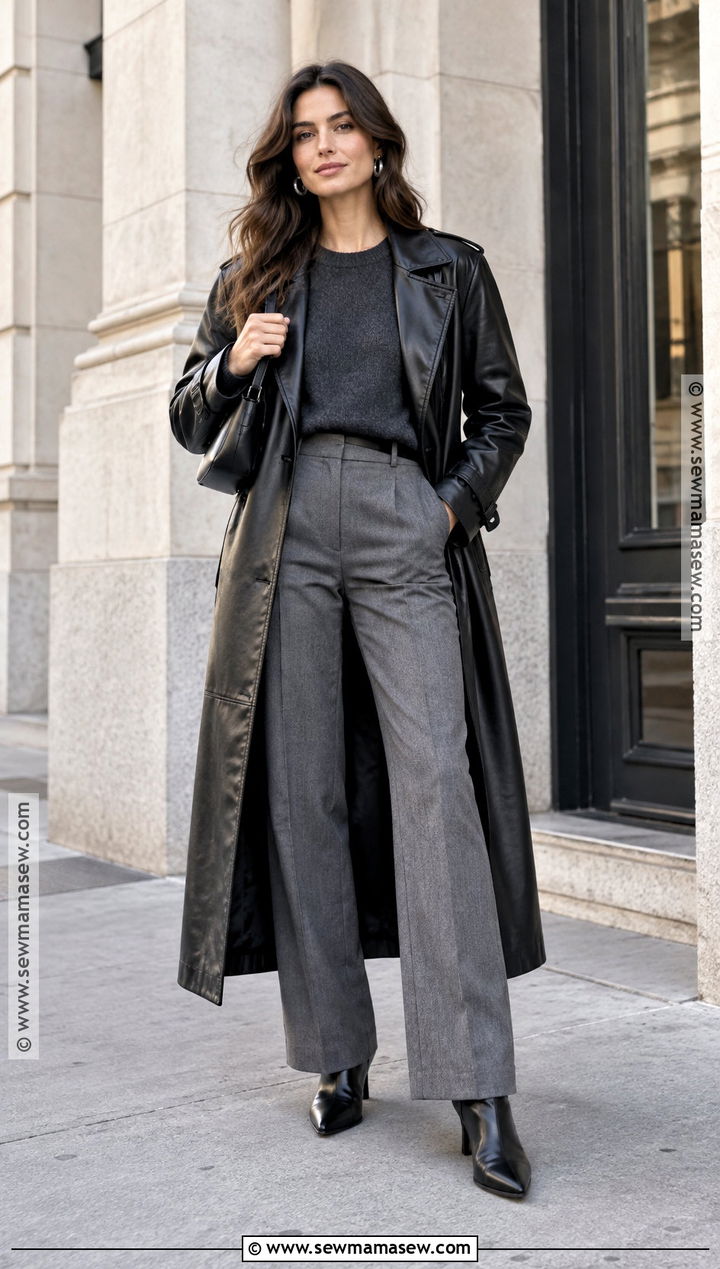
A black leather trench gives an outfit instant edge. Layer it over a charcoal crewneck and tailored gray trousers, with pointed black ankle boots and silver earrings. The belt gives you three looks: tied loosely for shape, knotted behind your back for an open front or left hanging. Leather is windproof but not insulating, so on cold days it needs a real sweater under it. Matte or softly textured leather looks quieter than high shine. Because the coat is already the statement, I keep accessories few and simple.
6. Burgundy Peacoat Outfit
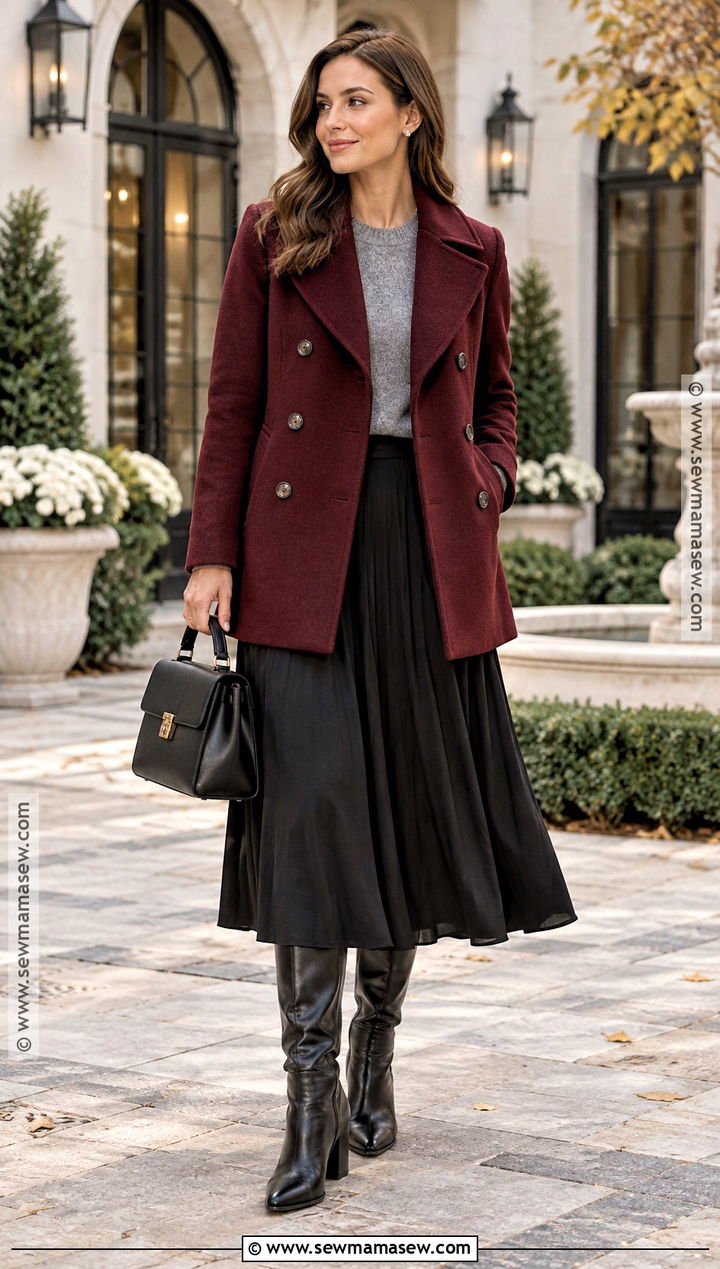
Burgundy is rich like a neutral but has more personality than black or navy. A double-breasted burgundy peacoat with a soft gray sweater, a black midi skirt and knee-high boots shows how it works: the short coat ends at the hip, which lets the longer skirt hem show and keeps the figure defined. Peacoats are usually dense wool, so they're warm, but double-breasted fronts add bulk at the chest. Try one on buttoned over the sweater you'd actually wear. If skirts aren't practical for you, slim black trousers or dark bootcut jeans work as well.
7. Quilted Coat Outfit
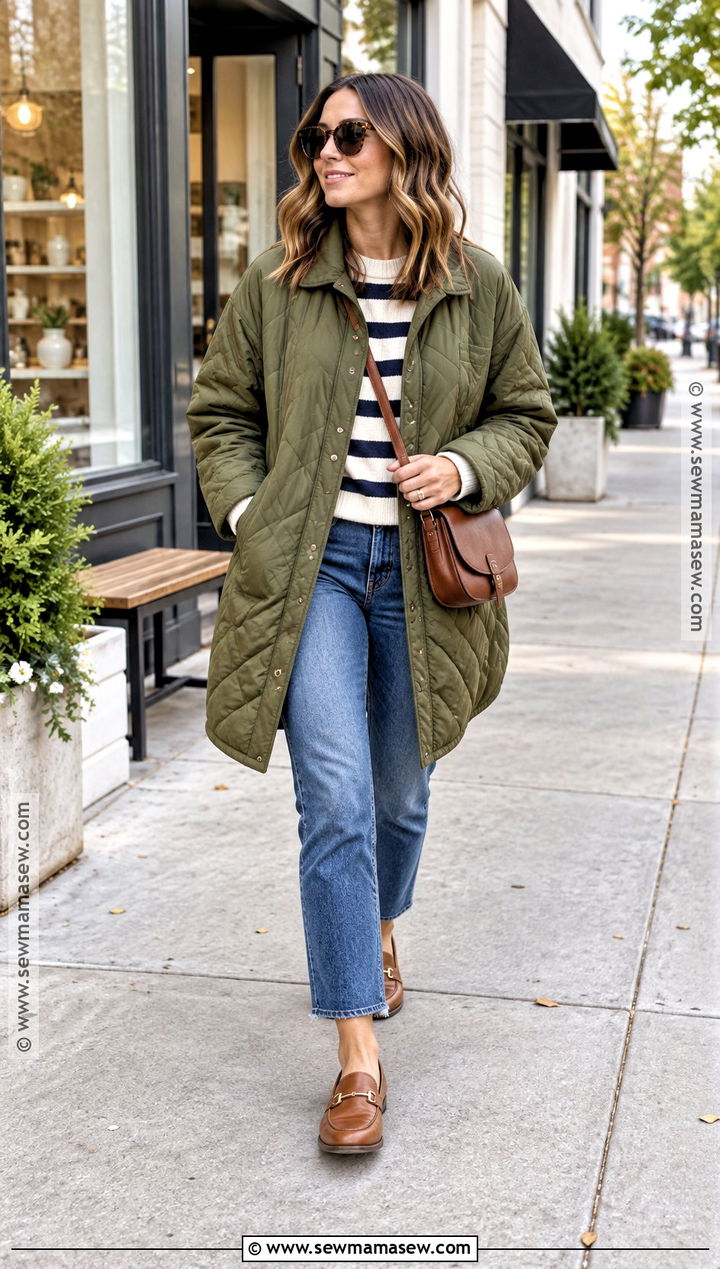
A quilted coat is my pick for mild days and active weekends. Choose a slightly oversized olive or navy one and wear it over a striped crewneck with cropped straight-leg jeans. Tan clogs, loafers or low sneakers all work, depending on how much walking you'll do. The stitching holds a thin layer of fill in place, so these are light and pack small but don't replace a wool coat in real cold. Reach your arms forward when you try one on; if it pulls hard across the back, size up. A version with curved side seams or a tie waist gives a boxy shape more definition.
8. Cream Wrap Coat Outfit
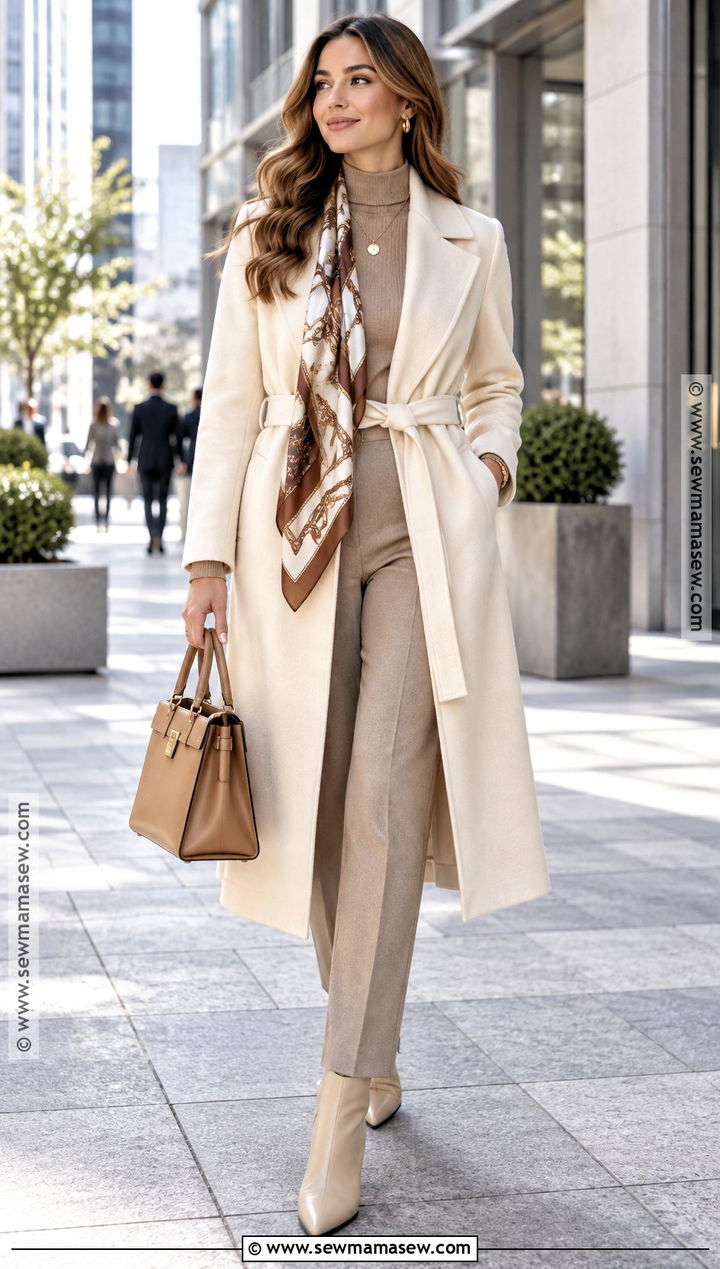
A cream wrap coat brightens the dark colors most of us wear in fall. Put it over a taupe mock-neck and matching tailored pants for one long, calm line, then add beige pointed boots and a camel bag. Tie the belt slightly off center, or knot it behind you when the coat is open. I'll be honest about cream outerwear: it shows makeup at the collar, bag-strap marks and city grime quickly, so choose a wool blend you can spot-clean, and check the care label before you fall for it. A printed silk scarf can add a little rust, olive or burgundy.
9. Faux Shearling Coat Outfit
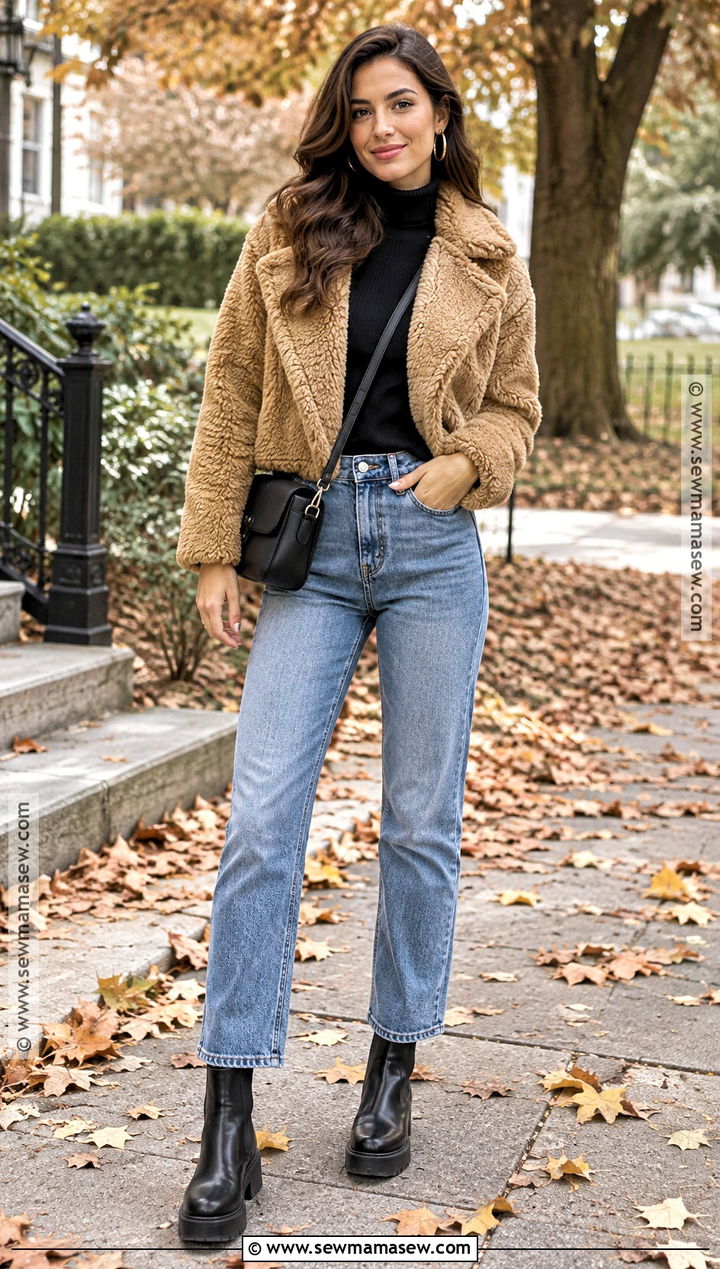
Faux shearling adds texture and real warmth to plain basics. Choose a cropped or hip-length coat in cream, tan or brown and wear it over a fitted black turtleneck and high-rise straight jeans, with chunky ankle boots to balance the plush top. Because the coat brings so much volume, everything under it should be smooth; add a thermal base layer rather than another thick sweater when it's cold. Wide shearling collars hide your neckline, so I'd pull hair back to show it. Faux shearling mats with friction, so brush it gently now and then.
10. Red Trench Coat Outfit
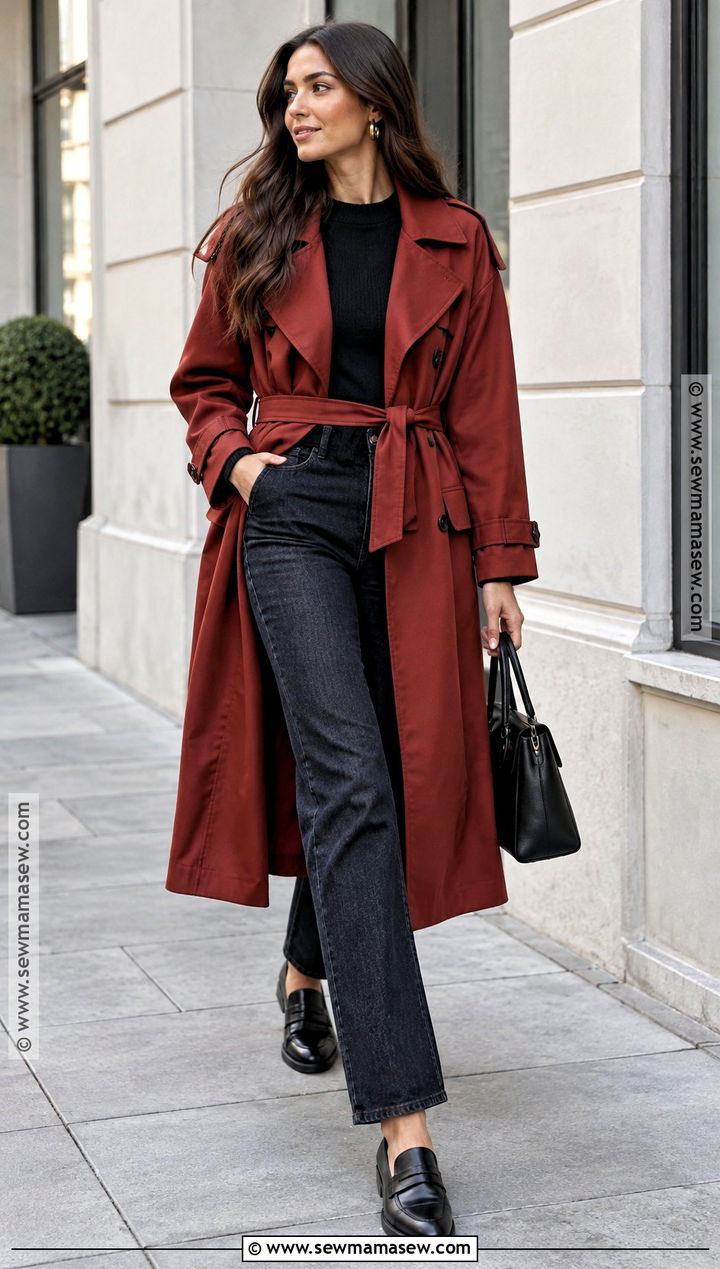
A red trench brightens a gray day with almost no effort. Wear it over a black fine-knit sweater and dark indigo jeans, with sleek black loafers or ankle boots and a black bag. True red is crisp; brick is softer and easier on warmer skin tones. Leave it open for a long vertical line or belt it to show the waist. I keep the rest of the outfit to black plus one small accent in cream, camel or gold, because a second strong color next to red competes. It's a coat I'd pick for commutes and errands in changing weather.
11. Gray Herringbone Coat Outfit
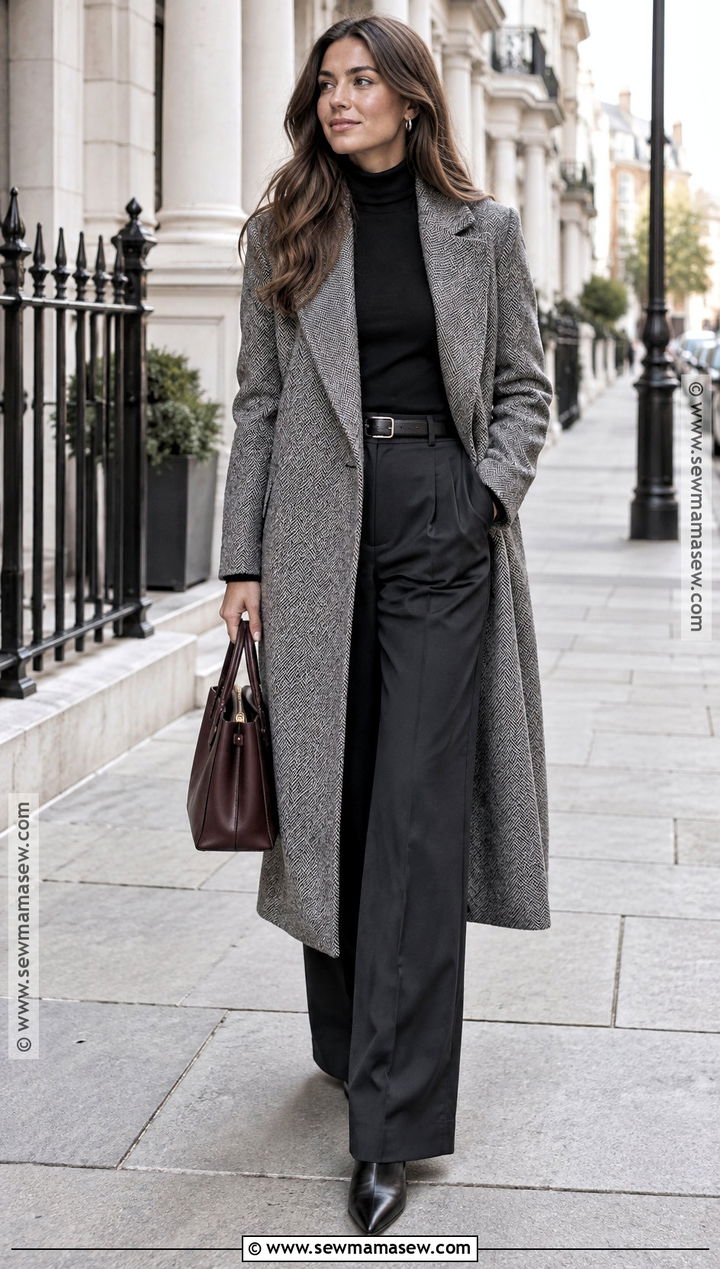
A gray herringbone coat adds pattern so quietly that it goes with almost anything. Wear a long, softly tailored one over a black turtleneck and dark wide-leg trousers. White leather sneakers relax it, and pointed boots dress it up for work. A burgundy bag or scarf adds a touch of color. Look for a herringbone that's visible up close but reads as solid gray from a few feet away; large-scale patterns are harder to pair. Petite frames suit a mid-thigh hem, while taller people can carry the longer cut easily.
12. Navy Duffle Coat Outfit
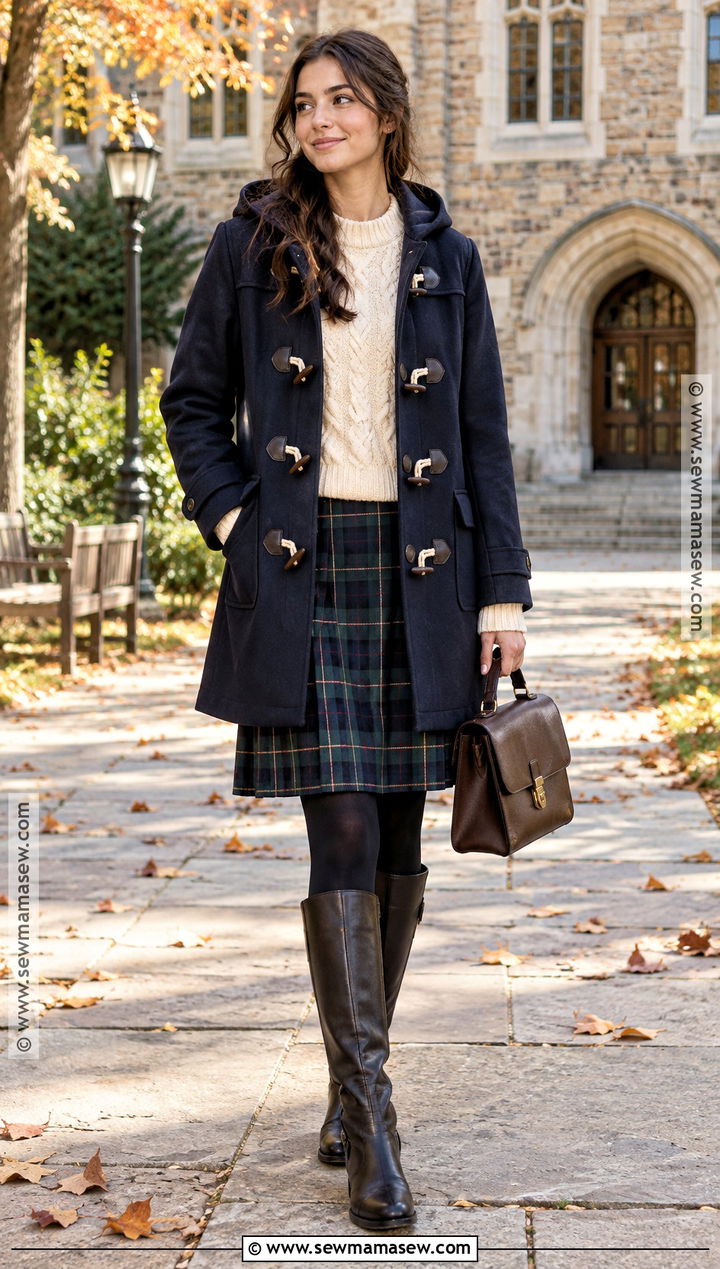
A navy duffle coat has a preppy, slightly playful character thanks to its hood and toggles. Pair it with a cream cable knit, a plaid mini or knee-length skirt, opaque black tights and flat knee-high boots. Duffles are made of thick, felted wool and are among the warmer coats on this list. Check that it closes over chunky knits with the toggles lying flat; if they pull across the chest, go up a size. Navy is softer than black and goes with camel, gray, cream, red and forest green. Swap the skirt for tailored ankle pants if you prefer.
13. Leopard Print Coat Outfit
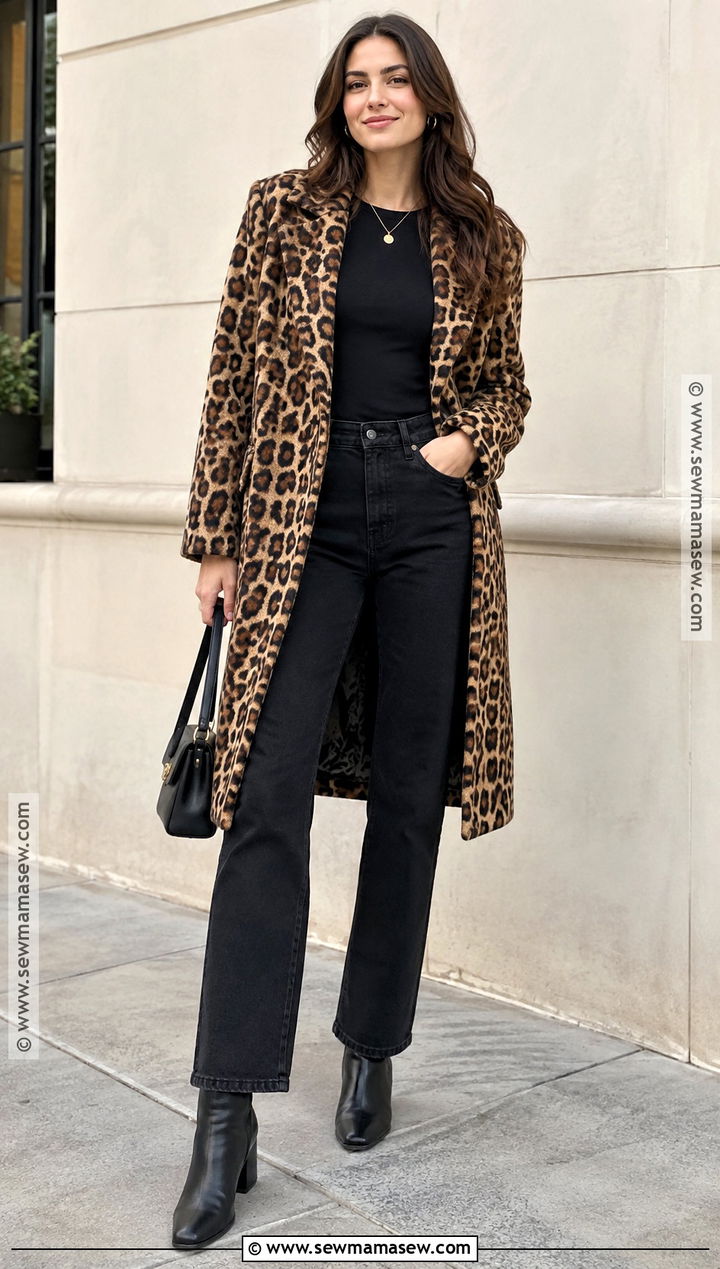
A leopard coat is more wearable than it looks, as long as everything under it is plain. I build it on a black crewneck and straight black jeans, with sleek loafers or low ankle boots and a small black bag, so the print is the only pattern. Chocolate brown separates make a softer version. Scale and contrast matter a lot: muted spots in tan, brown and black work with far more of your closet than a high-contrast print. It's a confident choice for evenings out and creative offices, and it still works for ordinary weekdays.
14. Long Puffer Coat Outfit
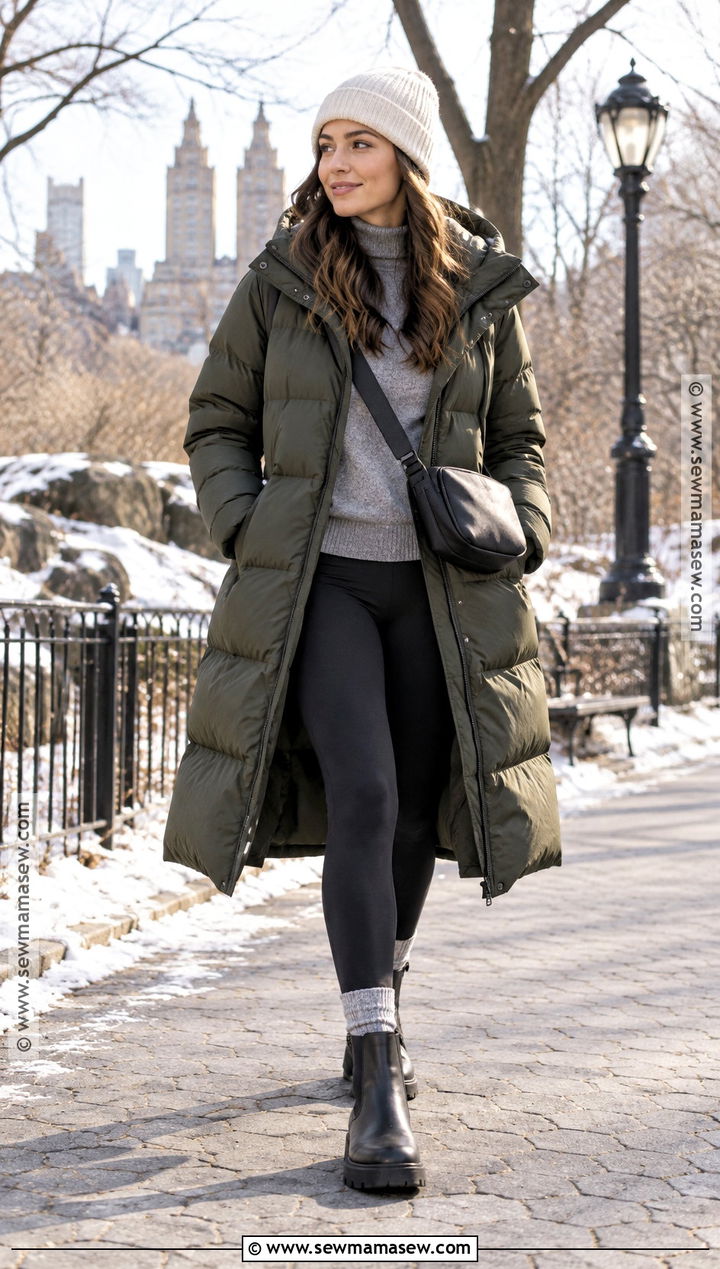
For cold, windy days, a long puffer is the warmest coat here. Wear a black or deep olive one over a fitted merino sweater and fleece-lined leggings, with weather-resistant Chelsea boots and thick socks. A cream or gray ribbed beanie softens the sporty look. Puffers can look like a sleeping bag, so I look for side snaps or a two-way zipper, which let you open the bottom to walk and sit, plus some waist shaping. Keep the layers underneath slim. A long hem also works over knit dresses and winter skirts.
15. Cropped Car Coat Outfit
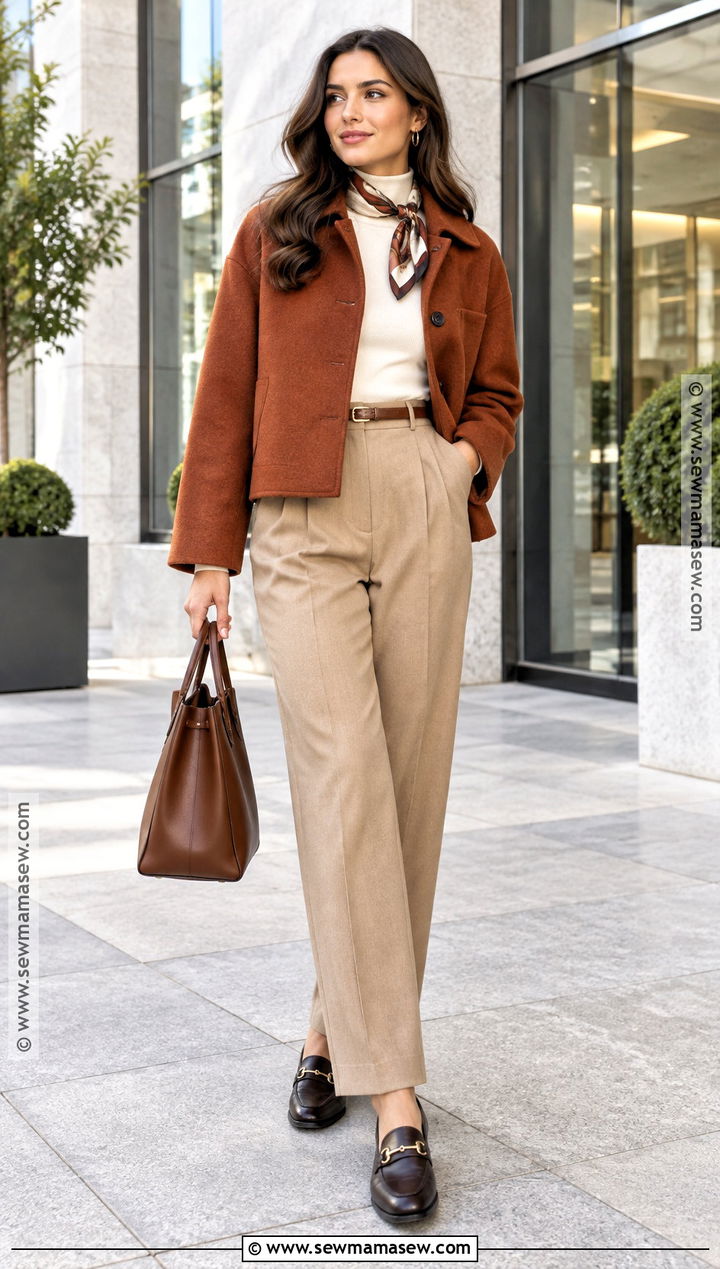
A cropped car coat is lighter and less formal than a long overcoat but still looks structured. Choose a boxy tan, navy or rust one and pair it with a fitted mock-neck and high-rise pleated trousers, plus leather loafers and a structured tote. The short hem shows off the trouser waist and suits petite frames especially well, since there's less coat to carry. If it feels too square, leave the top buttons open for a V at the neck. A light wool blend is warm enough for transitional weather without bulk. A silk scarf adds a small accent.
Arms Forward and Buttons Done Before You Buy a Coat
Coats get tried on badly. People slip one on over a thin top, glance in the mirror and buy it. I have everyone run through these moves first, wearing the thickest sweater they'd put under it.
- Button or zip it all the way. The front should lie flat with no pulling between buttons.
- Reach both arms forward, as if driving. If the back strains or the sleeves ride far up your wrists, it's too small.
- Lift a bag onto your shoulder. A shoulder strap shouldn't drag the whole coat off balance.
- Sit down. Long coats need a back vent or enough room in the skirt to sit without straining the buttons.
- Check the sleeve length with your arms down. It should cover the wrist bone and the cuff of your sweater.
Brushing, Airing and Storing Coats Between Wears
Coats don't need frequent dry cleaning, and too much of it wears wool out faster. Brush wool coats with a soft clothes brush after wearing to lift dust, and hang them to air overnight before putting them back in the closet. Use a wide, shaped hanger so the shoulders keep their form; thin wire hangers leave dents. Empty the pockets, since keys and phones stretch them out. At the end of the season, clean the coat once and store it in a breathable cotton bag rather than plastic.
Three Coats Cover Nearly Every Fall Day
A good fall coat feels comfortable, works with the clothes you already wear and suits the weather where you live. This list runs from camel wool and herringbone to red trenches, leopard and leather. Before you buy, check where the hem falls on your body, whether there's room for a sweater underneath and whether the color works with your shoes and bags. You don't need every coat here. One practical everyday coat, one polished one and one fun one cover most fall days, and with simple pieces underneath, each becomes the center of a full outfit.
Related posts: