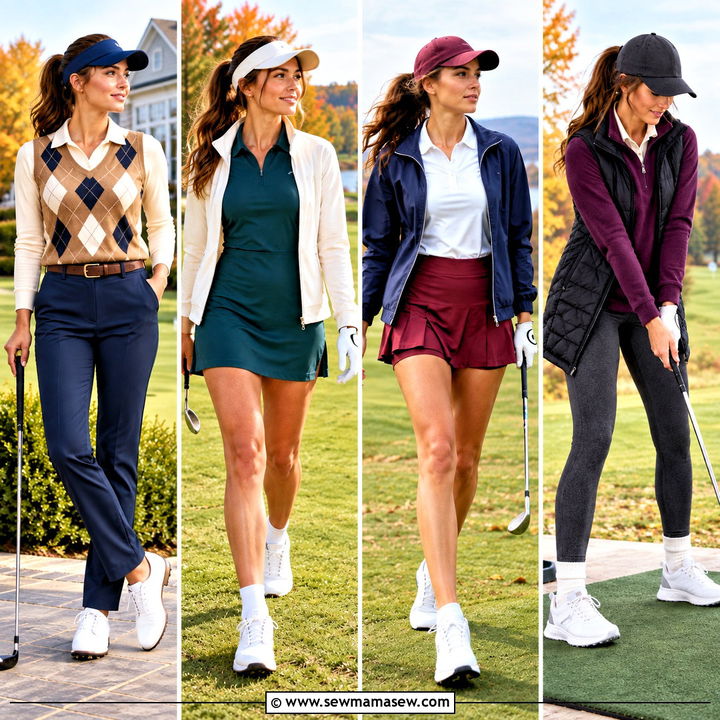
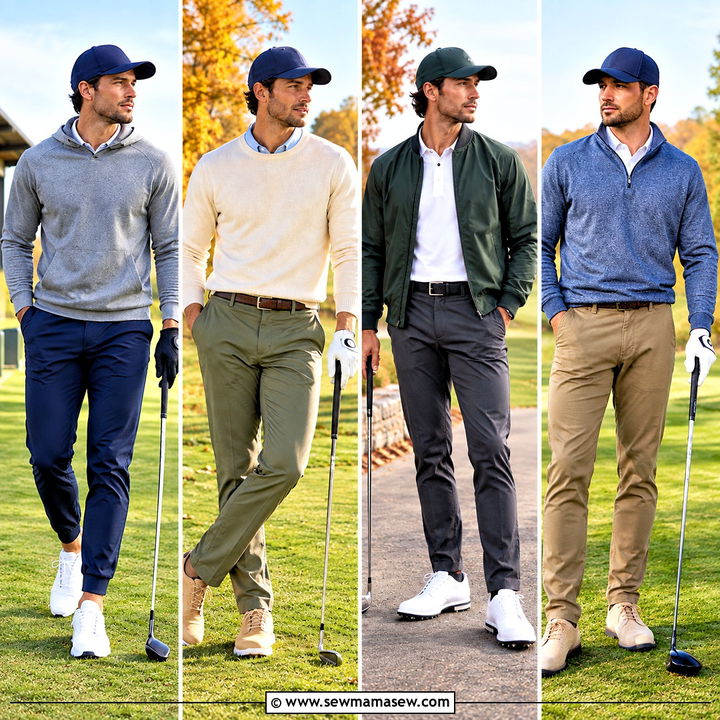
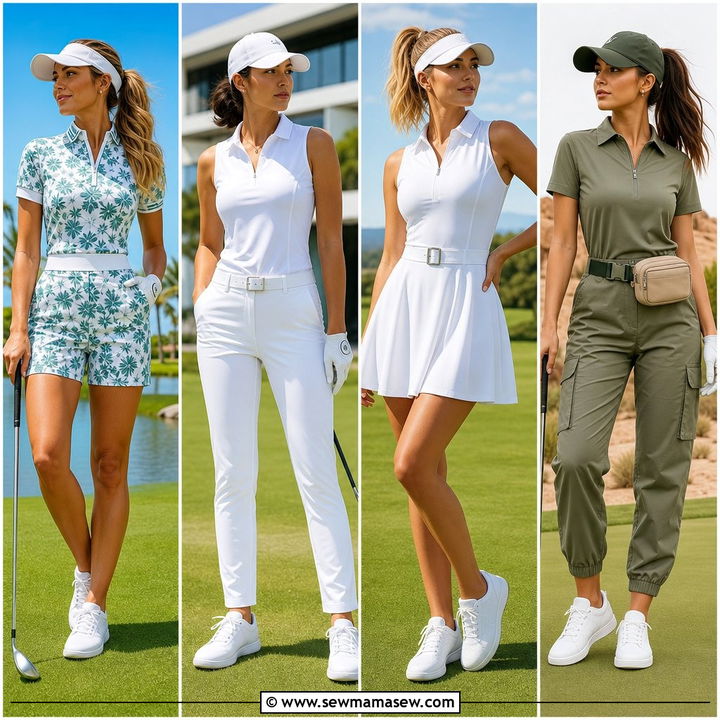
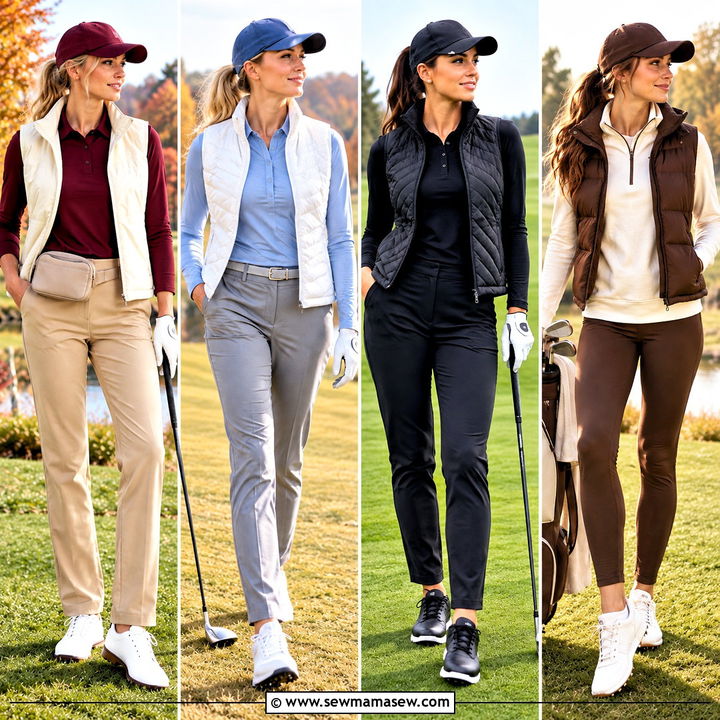
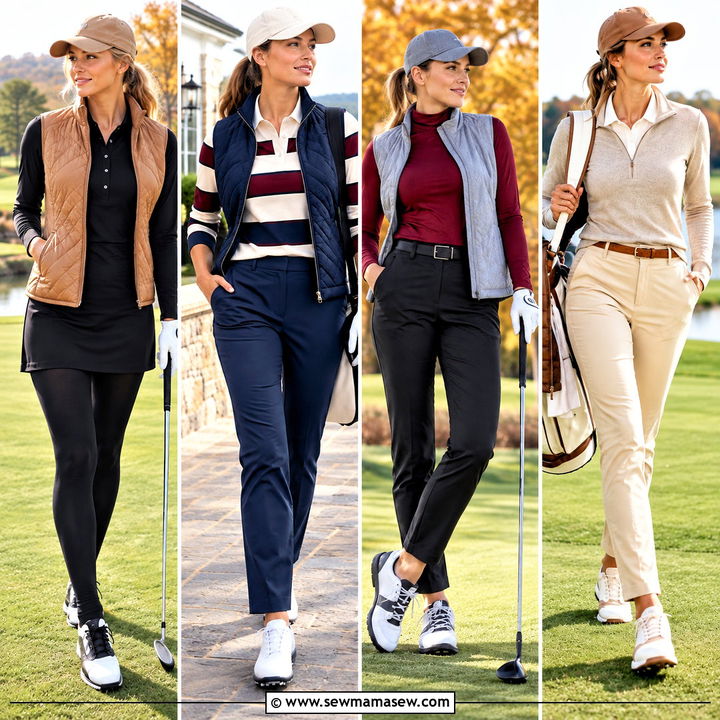
A fall round usually starts with frost on the cart path and ends with the sun on your back, so the outfit has to change at least twice without ever getting in the way of your swing. When I dress golfers for autumn, I build up from a thin, breathable golf base and add one removable layer at a time: a quarter-zip, a vest, a fine sweater or a wind shell. Stretch pants or a lined skort, proper golf shoes and a few small accessories round it out. Burgundy, camel, forest green, navy, rust and cream give it a seasonal feel. Check the forecast hour by hour, and check your course's dress rules before you head out, since they vary more than people assume.

Shedding Layers Between the Front and Back Nine
A typical fall round can swing fifteen or twenty degrees between the first tee and the last putt. I plan layers in three tiers so each one can come off without leaving you underdressed:
- Base: a moisture-wicking long-sleeve polo or base layer. This never comes off, so it has to look finished by itself.
- Middle: a quarter-zip, merino sweater or slim vest for warmth. Vests are best for anyone who hates anything on their arms while swinging.
- Shell: a wind or rain jacket that packs small enough to fit in a bag pocket.
Walking golfers warm up faster than those riding in a cart, so if you walk, start one layer lighter than feels comfortable at the car. Cold hands are what really ruin a fall round; keep a pair of winter golf mitts or hand warmers in the bag for between shots.
1. Burgundy Polo And Camel Golf Pants
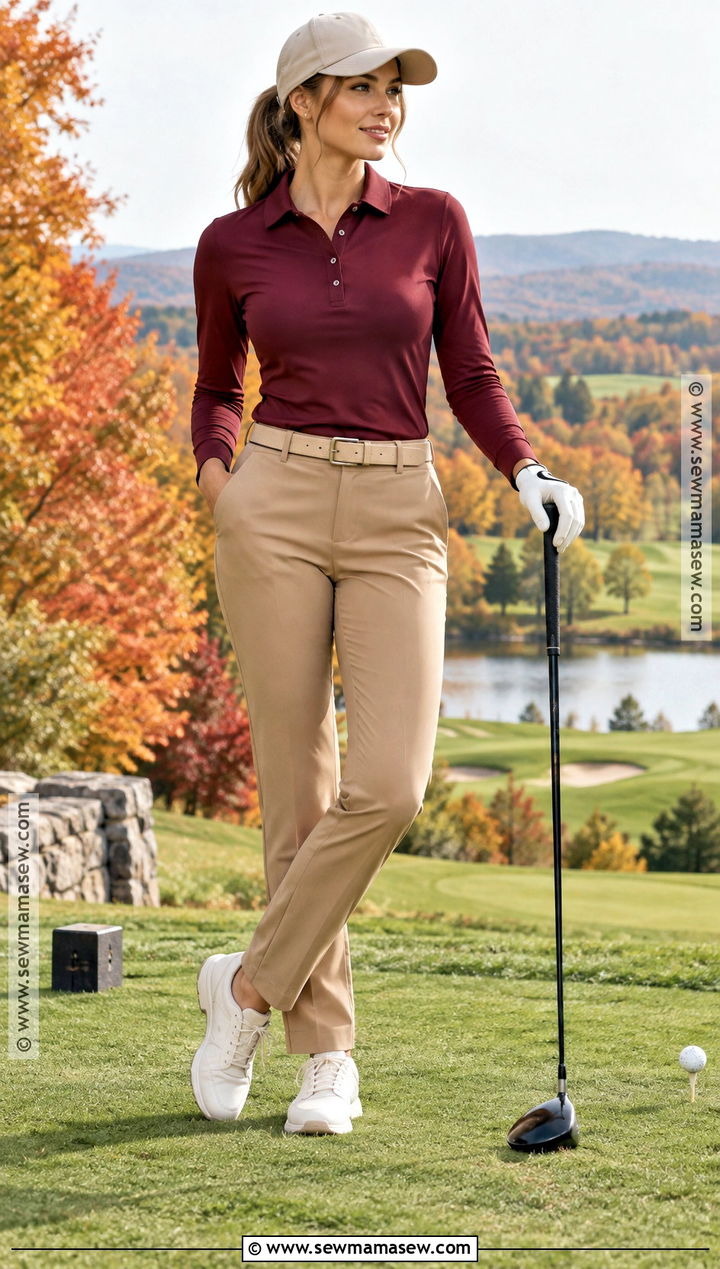
Burgundy and camel is the pairing I'd start a fall golf wardrobe with, because it looks put together without trying to be clubhouse formal. The polo should be long-sleeve performance fabric with real stretch across the upper back; reach both arms forward in the fitting room and if the shoulders pull, it'll pull at the top of your backswing too. Straight or slightly tapered camel pants, a leather-look belt, cream spikeless shoes, a neutral glove and a light cap. A beige quarter-zip stays in the bag for cold mornings and doesn't break up the palette when it goes on. A stud or a simple sports watch is plenty.
2. Cream Quarter-Zip And Olive Golf Pants
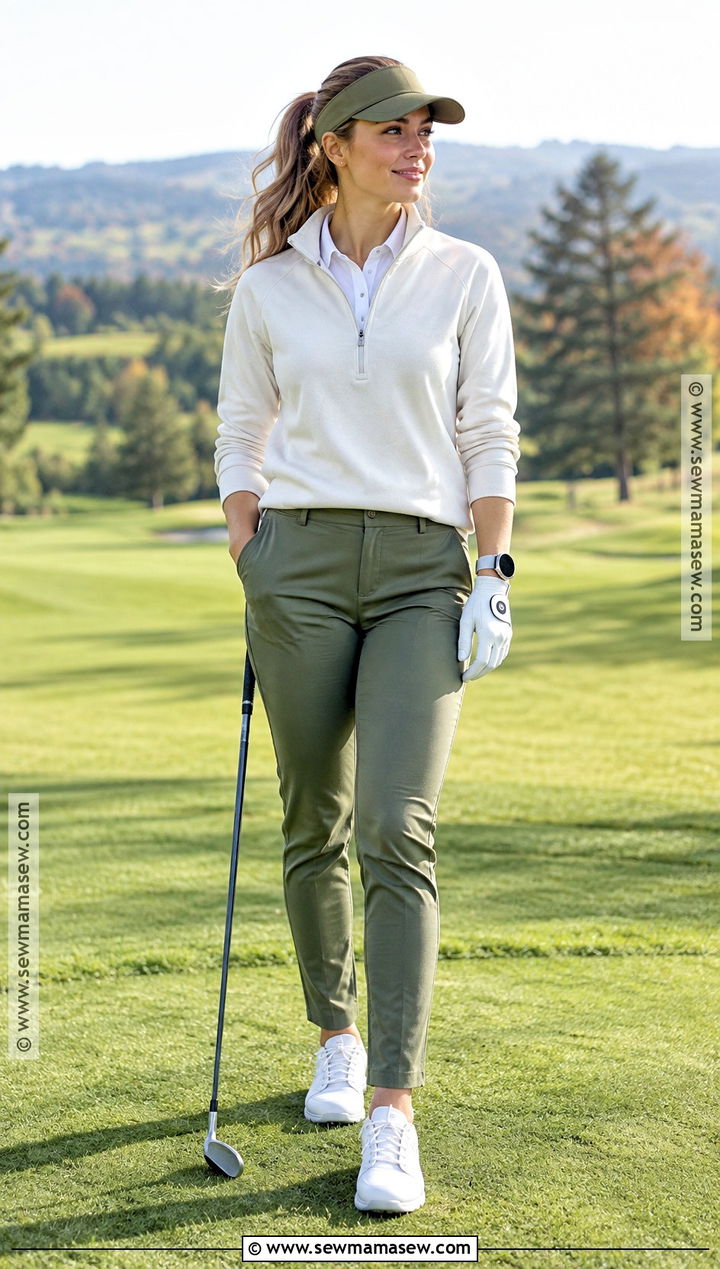
Cream and olive feel right once the leaves start turning. I'd layer a fitted white or beige polo under a thin cream quarter-zip that ends at the hip, so it doesn't ride up when you bend to tee up. Olive pants with a flexible waistband, deep pockets and a water-resistant finish handle dewy grass on early tee times. White shoes, an olive visor. A slim quilted vest adds warmth without touching the arms. Light cream knits show grass and dirt fast, so I keep this one for dry days and wash the quarter-zip after every round or two.
3. Navy Golf Vest And Striped Long-Sleeve Polo
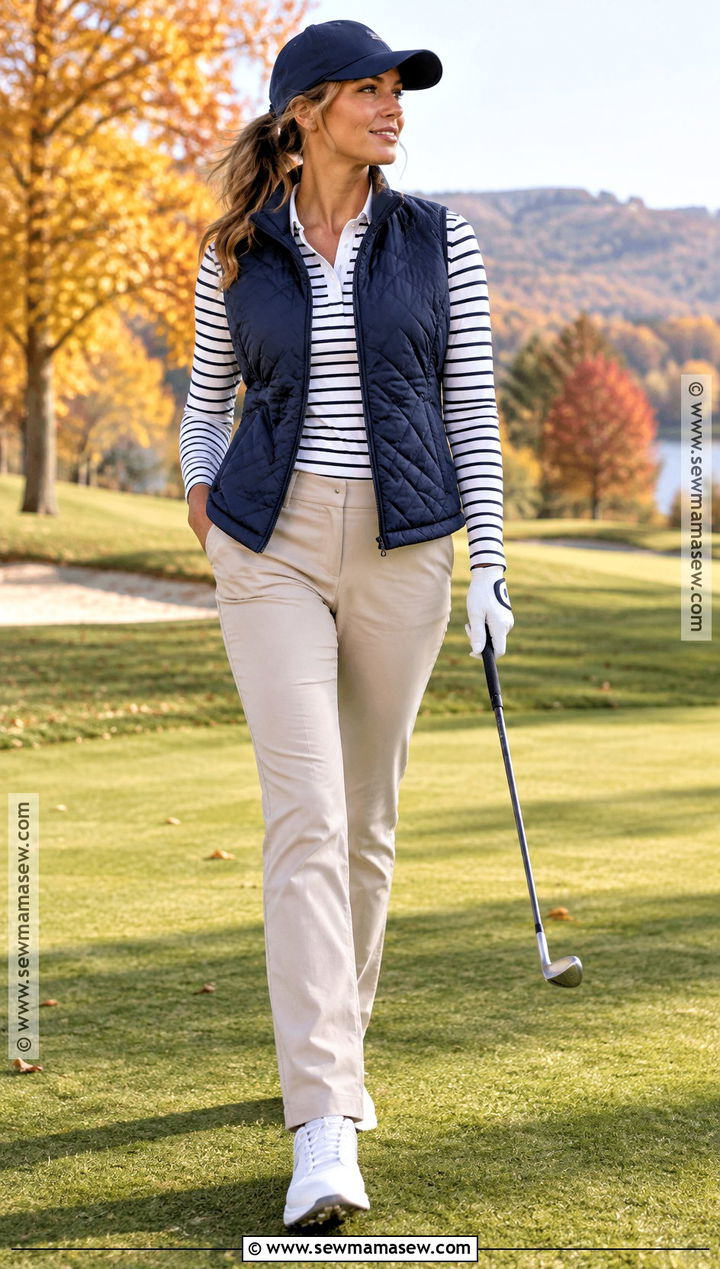
A navy vest over a navy-and-white striped long-sleeve polo is about as traditional as golf clothing gets, and it's traditional because it works. The vest keeps your core warm while your shoulders and arms rotate freely, which is exactly where you don't want bulk. Navy or stone pants, white spikeless shoes, a navy cap and a small belt pouch for tees and markers. When the afternoon warms up, the vest comes off and the striped polo looks finished alone. That's the test I use for any golf layer: every piece underneath should look fine if the one on top disappears into the bag.
4. Rust Mock-Neck Top And Black Golf Skort
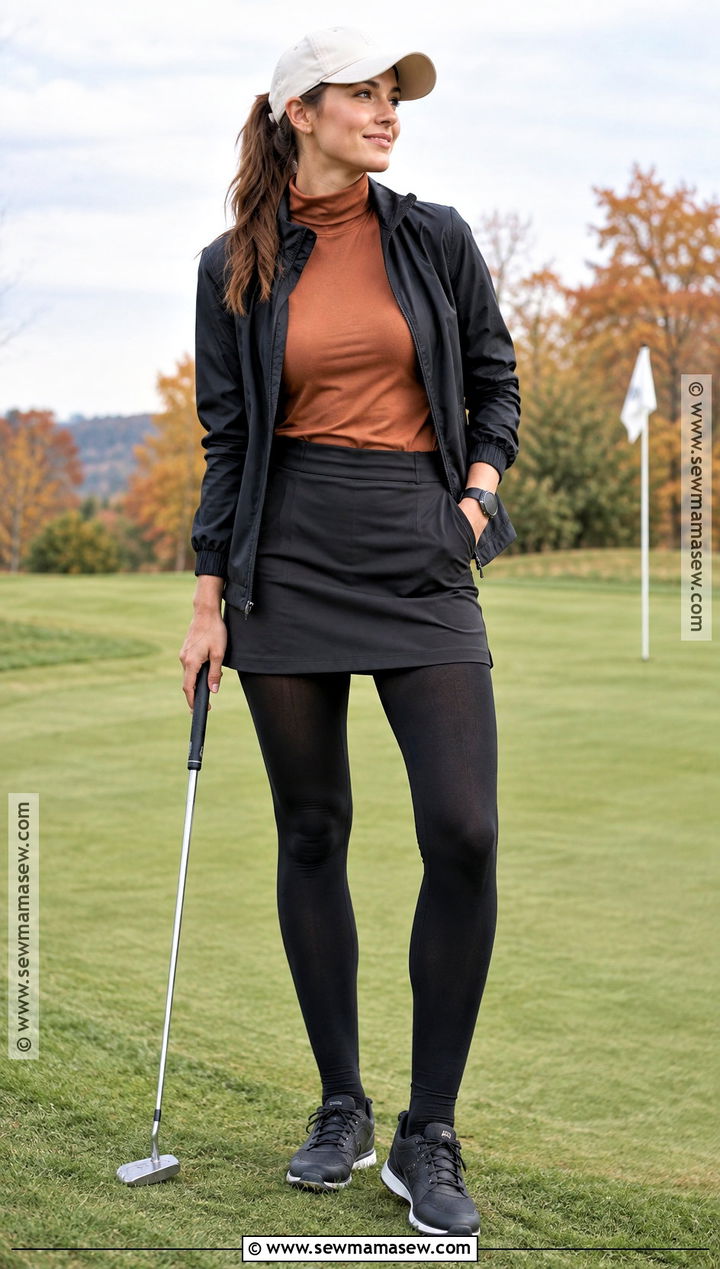
Rust is the easiest fall color to wear on the course because it sits with black, navy, cream and khaki alike. A fitted rust mock-neck with a black skort that has built-in shorts and pockets. Mock necks are accepted at many clubs now, but not all, so ask before you show up in one at a traditional course. Opaque black tights go underneath on cold days if the dress code allows them. Black shoes, a cream cap. For wind, a cropped black windbreaker ending near the skort waist; anything long and loose flaps across your arms on the follow-through.
5. Plaid Golf Skort And Merino Sweater
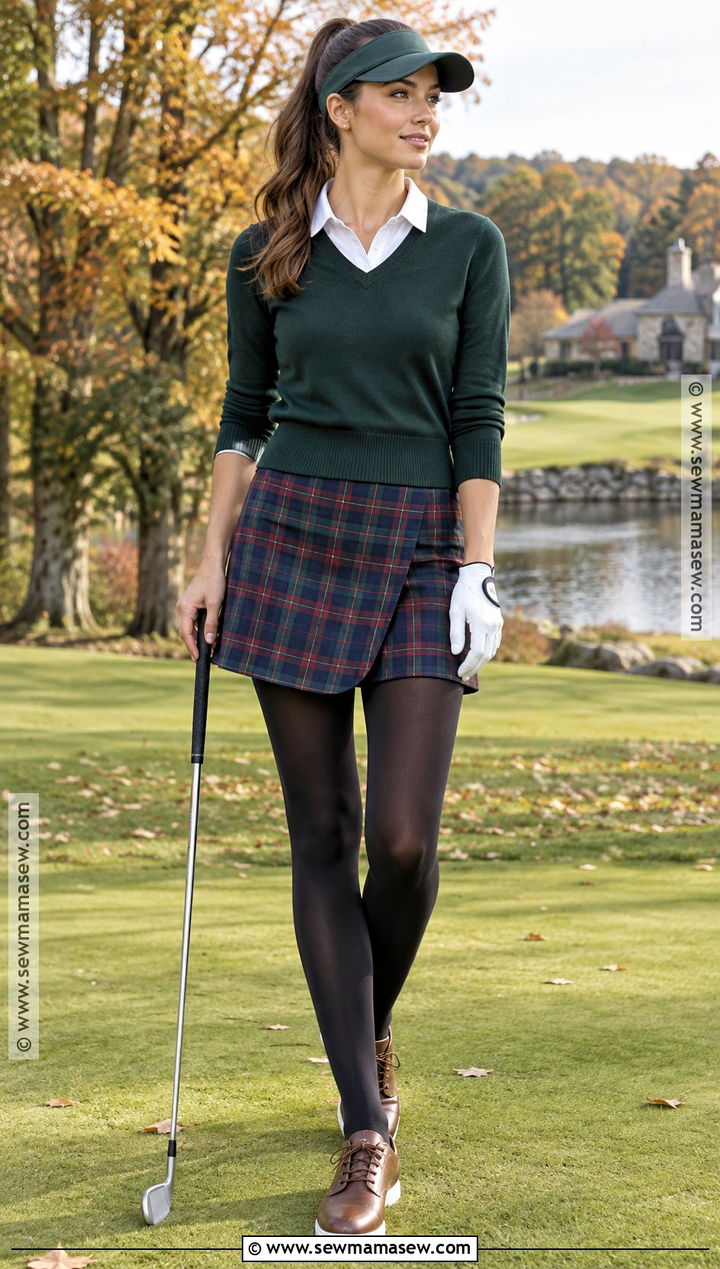
A plaid skort with a merino sweater gives a little heritage flavor without looking like a costume. Navy, forest green, burgundy or tan in the plaid, and a plain merino sweater in one of those colors over a collared performance polo with the collar out. Merino is my pick for golf knits since it regulates temperature well and doesn't hold sweat smell the way synthetics can. The fit should be close but not tight, or the sweater rucks up at the waist on every swing. Knee-high golf socks or opaque tights for coverage, white or brown spikeless shoes, a visor and a good glove.
6. Quilted Golf Vest And Thermal Golf Pants
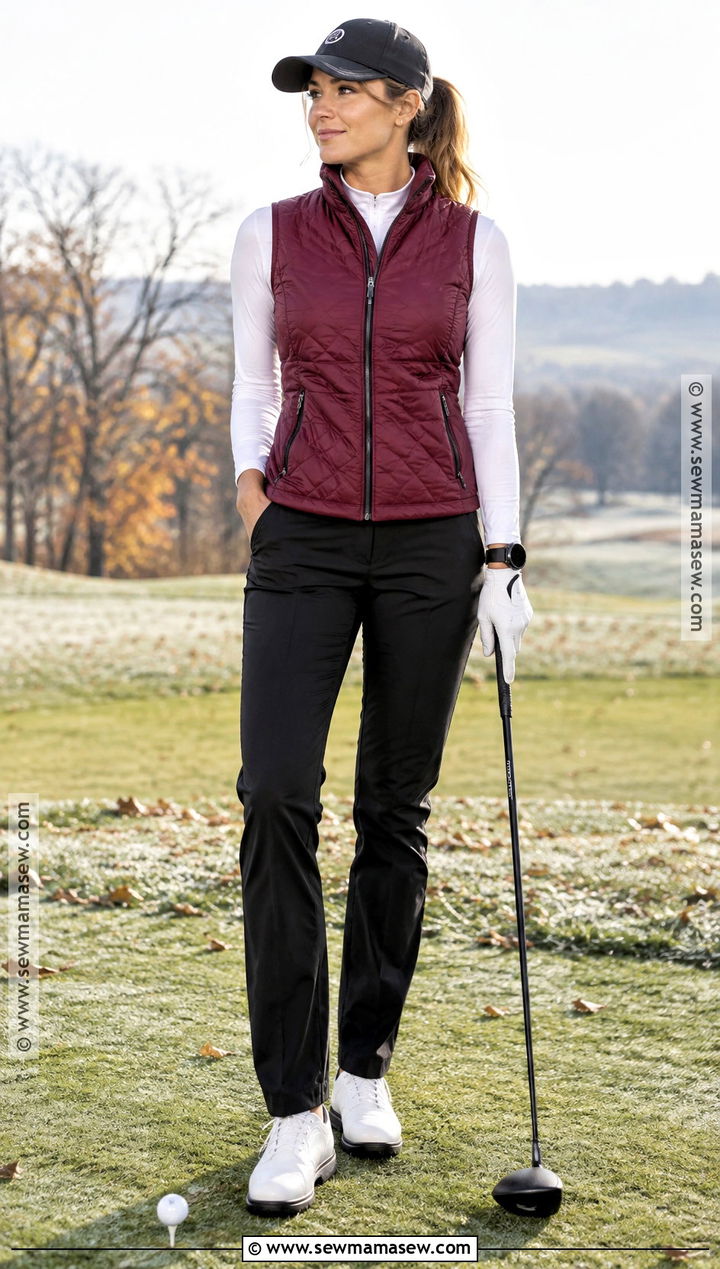
This is the outfit for a tee time where you can see your breath. A fitted long-sleeve base layer in white, gray or black, then a slim quilted vest in burgundy, navy or olive. Check the armholes by making a full shoulder turn in the mirror; tight armholes on a padded vest dig in at the top of the swing. Thermal-lined pants should still look tailored on the outside, smooth rather than puffy. Waterproof spikeless shoes, a knit-lined cap, and a thin neck warmer folded into the bag. Thermal pants get warm by midday when you're walking, so I'd only choose them for a round that starts and stays cold.
7. Golf Dress With Quarter-Zip And Tights
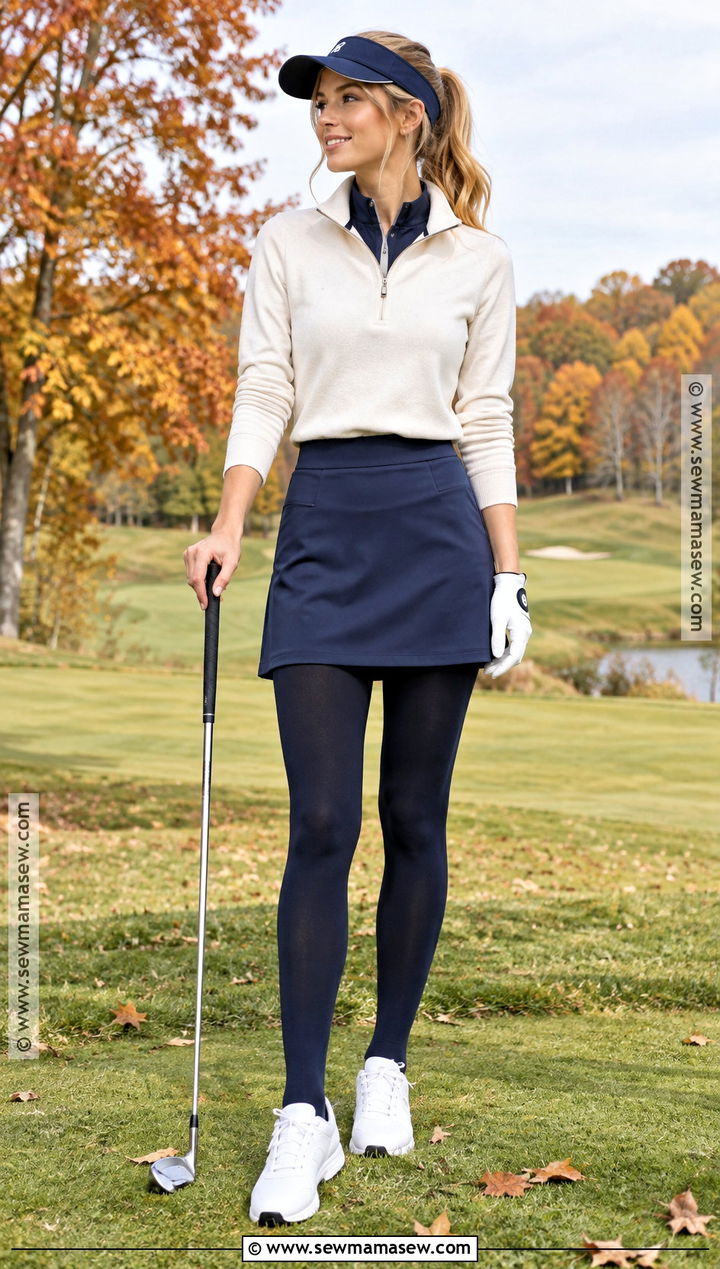
Golf dresses can keep going into fall with the right layers. A sleeveless or short-sleeve performance dress with built-in shorts, secure pockets and a hem your club accepts. A fitted quarter-zip goes over it in navy, cream, berry or forest green. If the quarter-zip is loose, the dress bunches beneath it at the waist, so close to the body matters here. Opaque thermal tights add warmth and a smooth line. Supportive shoes, ankle socks, a matching visor and a light vest packed in the bag for later. It's still a one-piece outfit at heart, which makes cold early starts easier.
8. Black Golf Outfit With Wind Jacket
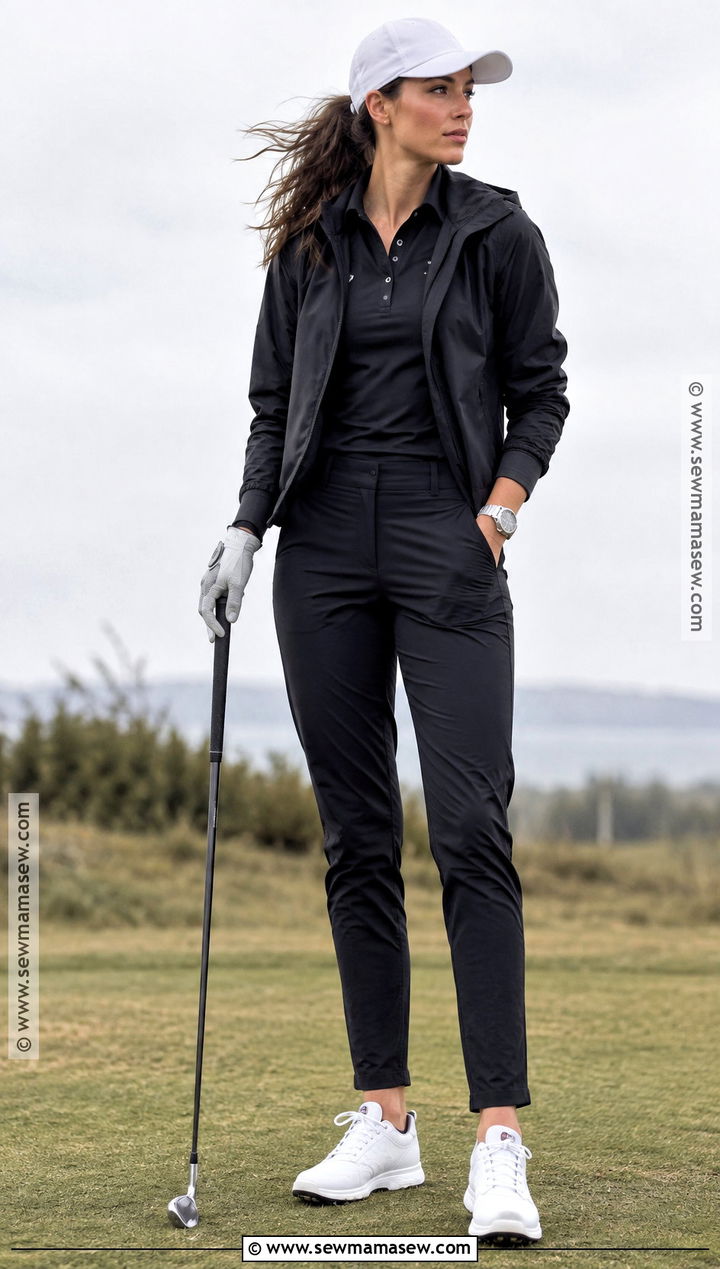
All black is the fastest outfit to get dressed in at 6 a.m. A black long-sleeve polo, tapered black pants, and a light wind jacket with stretch panels, zip pockets and an adjustable hem. White shoes and a white cap stop it looking heavy. A gray glove or a silver watch adds a little contrast. I'd pick pants and jacket with different finishes, a matte pant with a slightly shiny shell for instance, because identical black fabrics head to toe look flat. Black also absorbs sun, so on a bright afternoon you'll feel warmer than in lighter colors.
9. Forest Green Polo And Khaki Golf Joggers
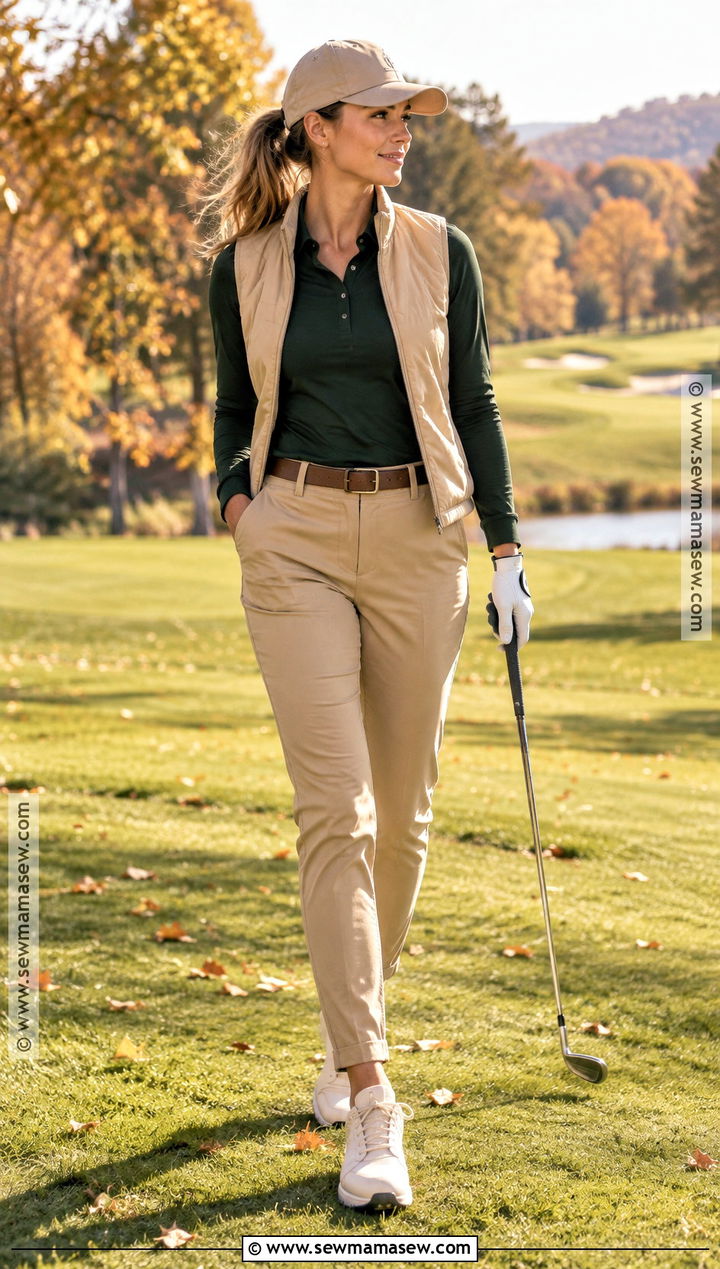
Forest green and khaki look outdoorsy and relaxed, and they suit a public course or the range better than a formal club. A long-sleeve green polo in breathable stretch fabric, and khaki golf joggers with a smooth waistband, clean pockets and fitted cuffs. The joggers need to look structured; anything resembling sweatpants will get a second glance at many courses, and some ban them outright. Brown or cream spikeless shoes, a matching belt, a neutral cap. A lightweight tan vest on top when it cools. The cuffed ankle also keeps the hem out of wet grass.
10. White Polo And Navy Rain Golf Set
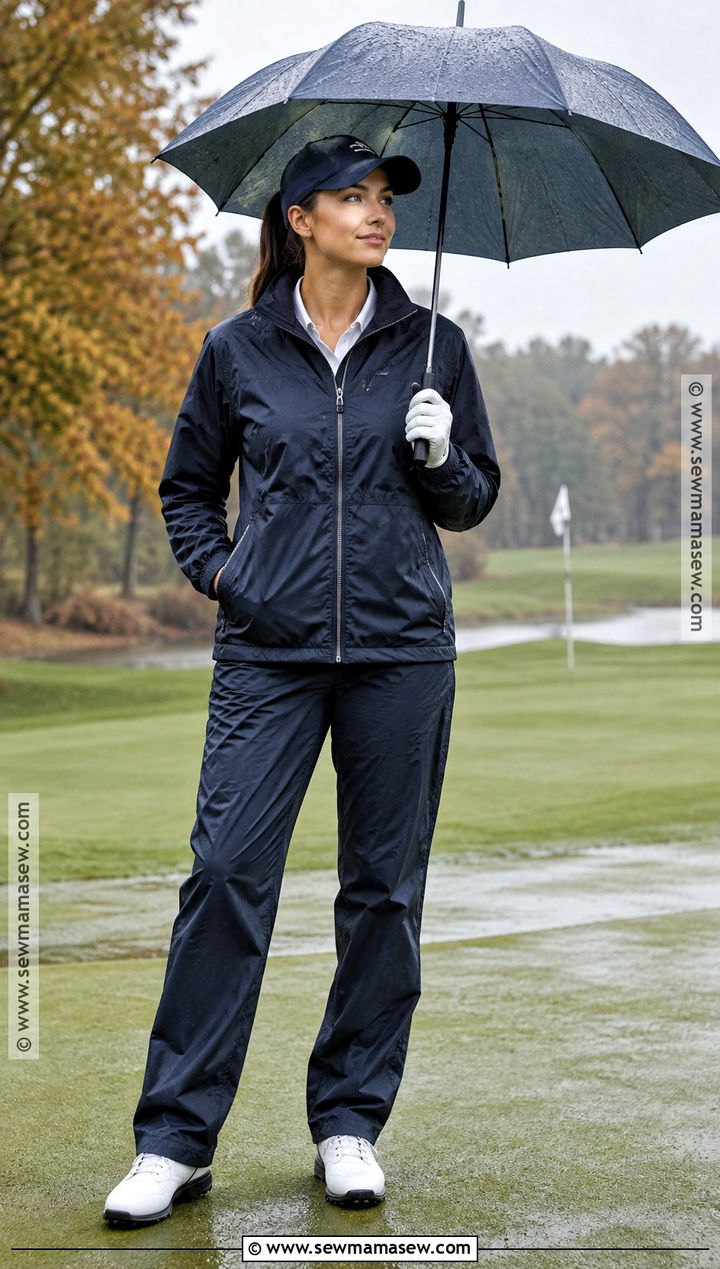
Rain golf is miserable in the wrong clothes and fine in the right ones. A navy rain jacket with sealed seams, adjustable cuffs and stretch across the shoulders, matching navy rain pants, and a white polo underneath that still looks neat if the sun comes out and the jacket comes off. Waterproof shoes with solid traction are non-negotiable on soaked turf. A structured cap keeps drizzle off your face, and rain gloves actually grip better when wet, unlike standard leather. Carry a compact umbrella. Skip anything oversized; loose rain jackets flap in wind and catch your arms mid-swing.
11. Color-Block Sweater And Straight-Leg Golf Pants
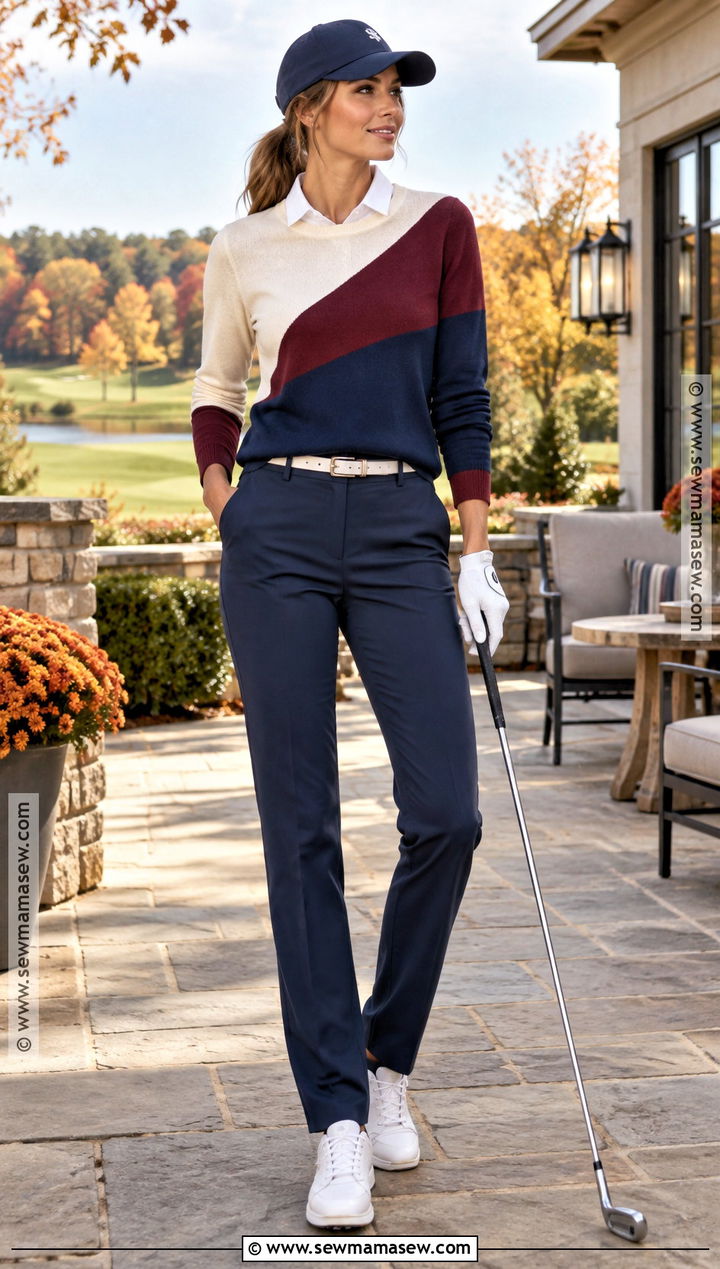
A color-block sweater brings personality and lets the rest stay plain. Look for a light knit in fall shades like cream, navy, burgundy, camel or rust, worn over a fitted collared polo so the neckline looks right for the course. Navy or black straight-leg pants calm the blocks down. White shoes and a cap in one of the sweater's colors. Chunky knits trap heat and limit your turn, so I go for a smooth, flexible one. This works on dry, cool days when the sweater is warm enough without a jacket over it. It also passes for lunch afterward without changing.
12. Puffer Vest And Pleated Golf Skort
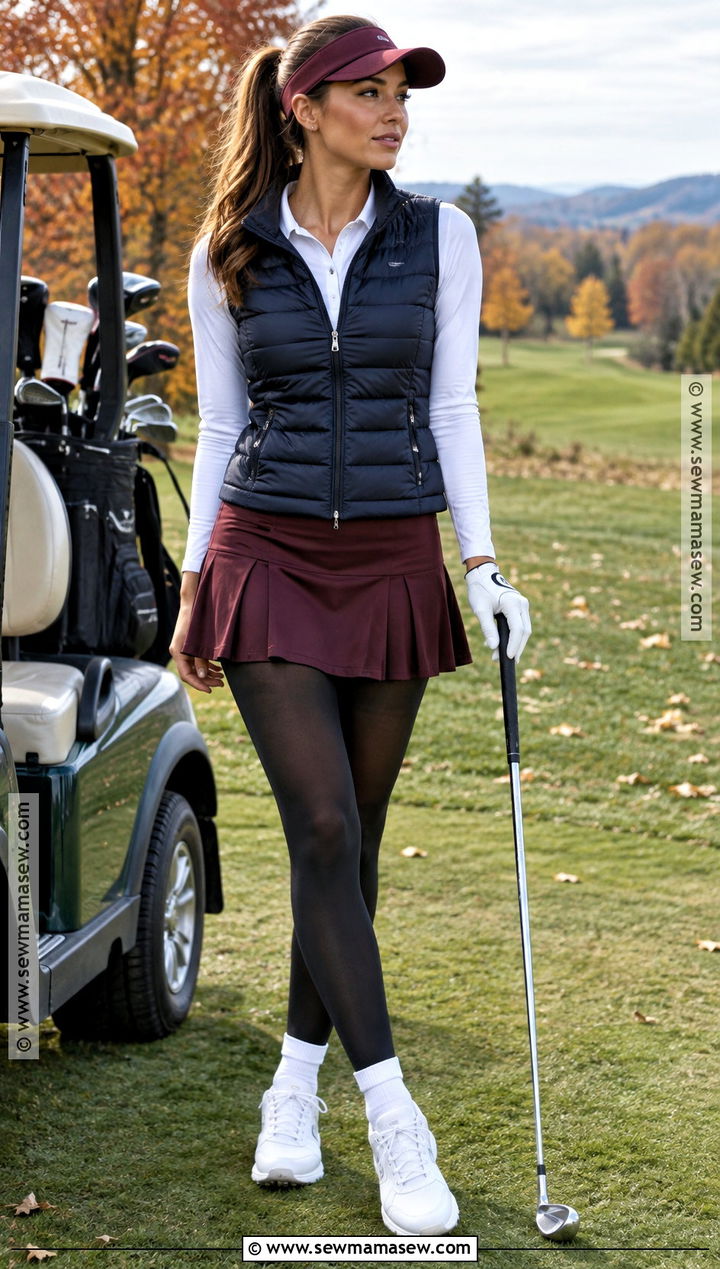
A slim puffer vest with a pleated skort is sporty and leaves your legs and arms free. A fitted long-sleeve polo in white, navy or soft gray, then a lightly insulated vest ending at the waist or upper hip so it doesn't sit on top of the skort and squash the pleats. The skort needs built-in shorts and pockets for tees and a ball marker. Opaque tights underneath when it's cold. Classic white shoes, ankle socks and a visor. Heavily padded vests restrict your rotation, so pick one that compresses flat in your hand.
13. Long-Sleeve Golf Polo And Brown Performance Pants
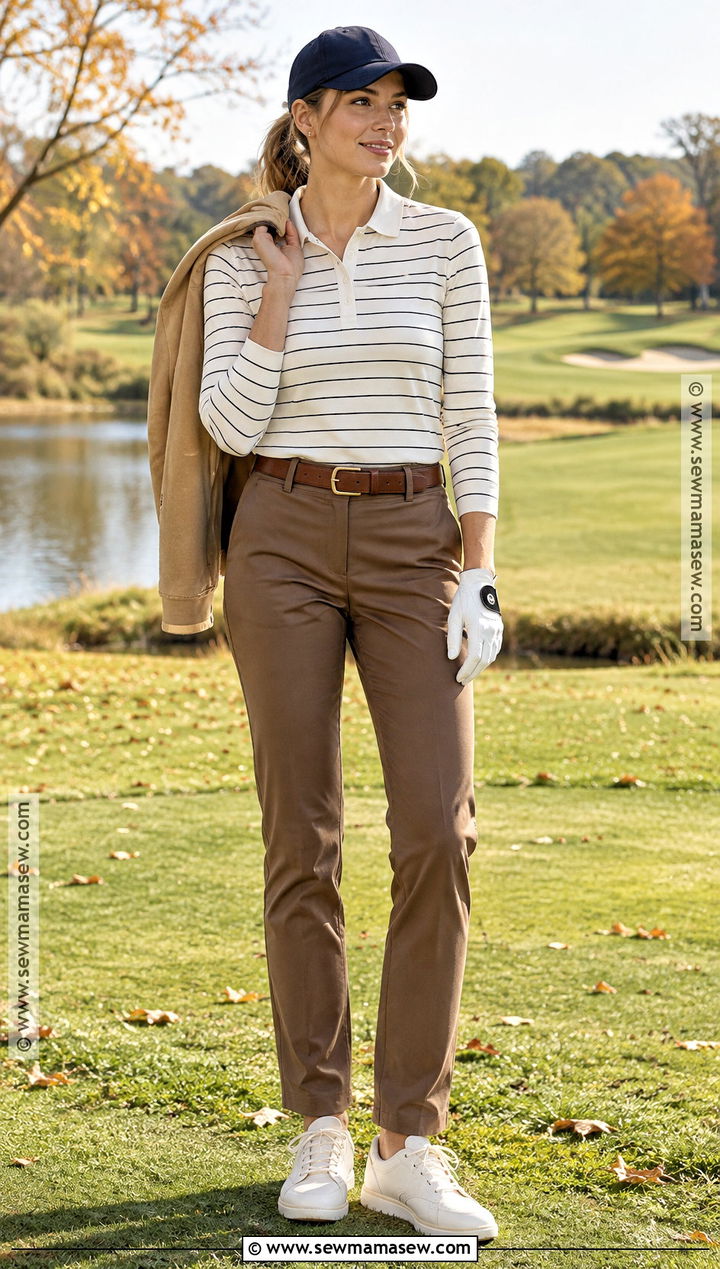
A long-sleeve polo with brown performance pants is quiet and very easy to wear all season. Cream, pale blue or a stripe on top to contrast the darker trousers. The pants can look like brushed cotton, but they should be performance fabric that stretches and dries quickly when you kneel to read a putt. A narrow brown belt and cream spikeless shoes. A navy or camel quarter-zip in the bag, a structured cap on your head. Have the hem finished to sit just above the shoe with no pooling, since extra length catches on spikes and gets soaked in wet grass.
14. Camel Golf Jacket And Cream Golf Pants
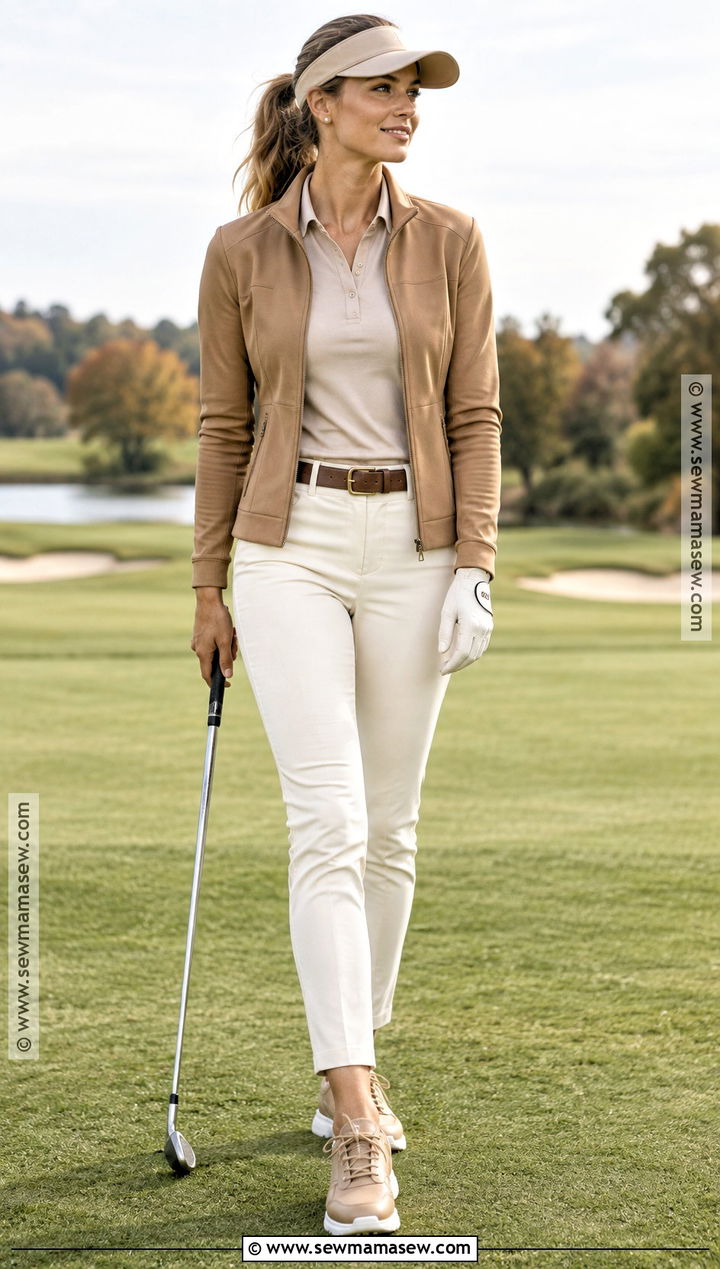
All-neutral golf outfits look especially sharp against a course full of orange trees. Cream pants with a white or oatmeal polo and a fitted camel jacket that's smooth at the front, flexible at the sleeves and short enough not to bunch at the hip when you address the ball. Cream or light brown shoes, a dark brown belt, a beige visor, small studs and a neutral glove. The catch with cream pants is moisture: a damp cart seat or a kneel on wet grass shows straight away. Choose quick-drying, stain-resistant performance fabric, and keep a small towel on the cart for the seat.
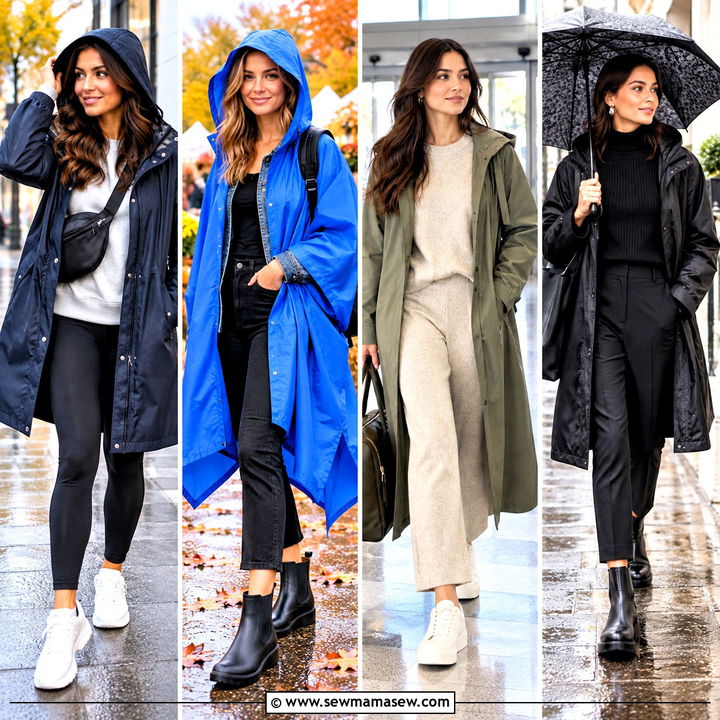
15. Burgundy Rain Jacket And Navy Golf Pants
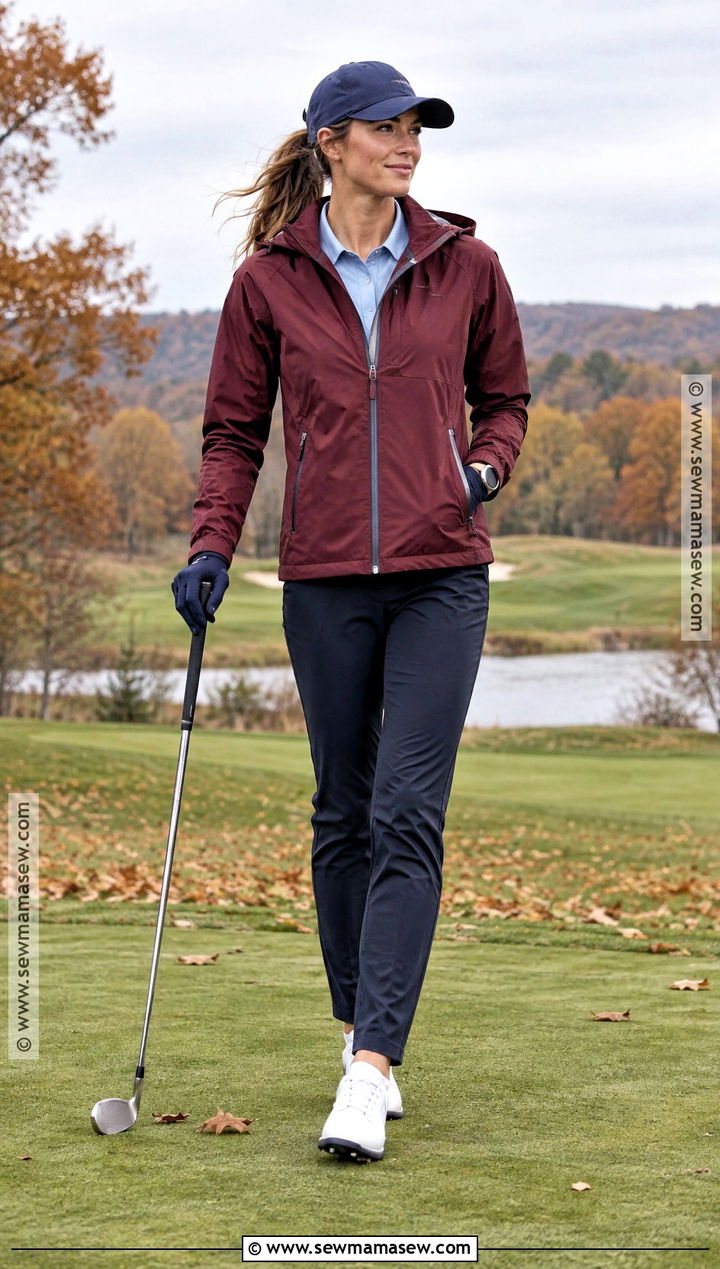
A burgundy rain jacket over navy pants gives strong color and real protection. Start with a pale blue, white or navy long-sleeve polo. The jacket should be packable, with a high collar, adjustable cuffs and stretch through the back so it doesn't pull on the takeaway. Tapered navy pants keep the lower half neat. Waterproof white or navy shoes, a matching cap and rain gloves when needed. A thin thermal vest fits under the jacket on colder days. Every layer has a job here, which is what I want from a late-fall rain outfit.
Reading a Club's Dress Code Before Your Tee Time
Golf dress codes are set by each course, and fall layering is where people get caught out. A few rules come up at many clubs, though the details differ, so look at the club's website or call the pro shop.
- Collared shirts are the safest choice. Mock necks are allowed at many courses now but not all.
- Denim is banned at most clubs, including on cold days when jeans feel tempting.
- Skorts and dresses often have a minimum length, commonly around mid-thigh.
- Joggers and leggings are accepted at some courses and refused at others.
- Metal spikes are banned almost everywhere; soft spikes or spikeless soles are the norm.
Spiked or Spikeless on Wet Autumn Turf
Spikeless golf shoes are comfortable and go straight from car to course, which is why so many outfits here use them. On wet fall grass and sloped lies, though, soft-spike cleats grip noticeably better, and I'd steer anyone playing a hilly course after rain toward a cleated pair. Fallen leaves on the turf make footing slicker than it looks.
Whatever the sole, look for a waterproof upper rather than water-resistant if you play early, since morning dew soaks through mesh within a few holes. Stuff wet shoes with newspaper and let them dry at room temperature away from a heater, which can crack the leather and warp the sole.
Warm on the First Tee, Comfortable by the Eighteenth
Fall golf is mostly a question of cool mornings, warm afternoons, wind and the odd shower, and dressing for all four without losing your swing. Start every outfit with a breathable golf base and add slim layers you can take off and stuff in the bag as the day changes. Performance pants, lined skorts, quarter-zips, fitted vests and light jackets keep you warm without stiffening your turn. Burgundy, olive, camel, rust, cream and navy make simple pieces look planned. Check the weather and the club's rules before you leave, and the rest is easy.
Related posts: