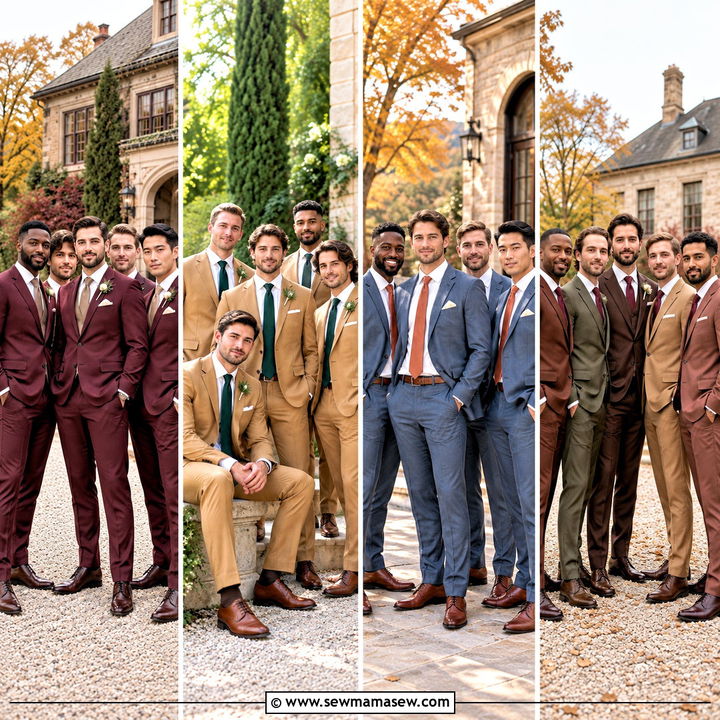
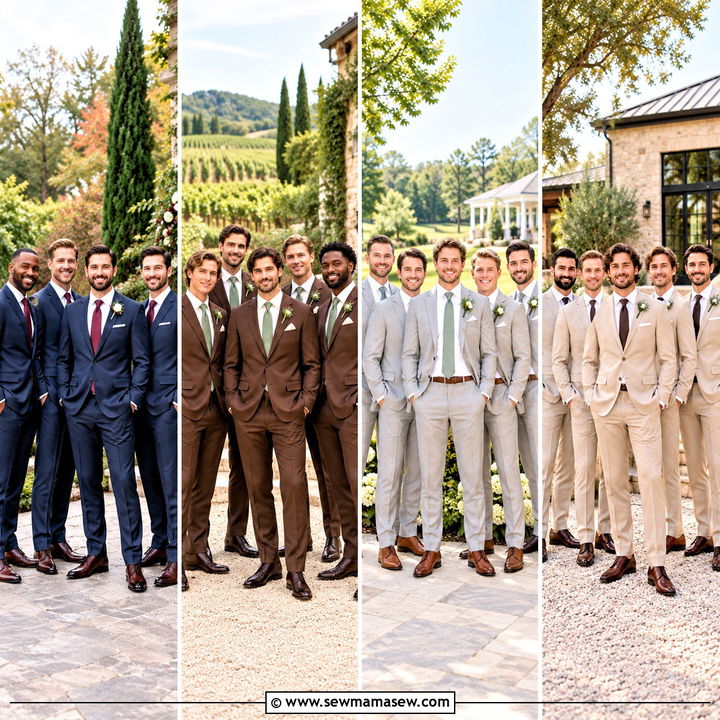
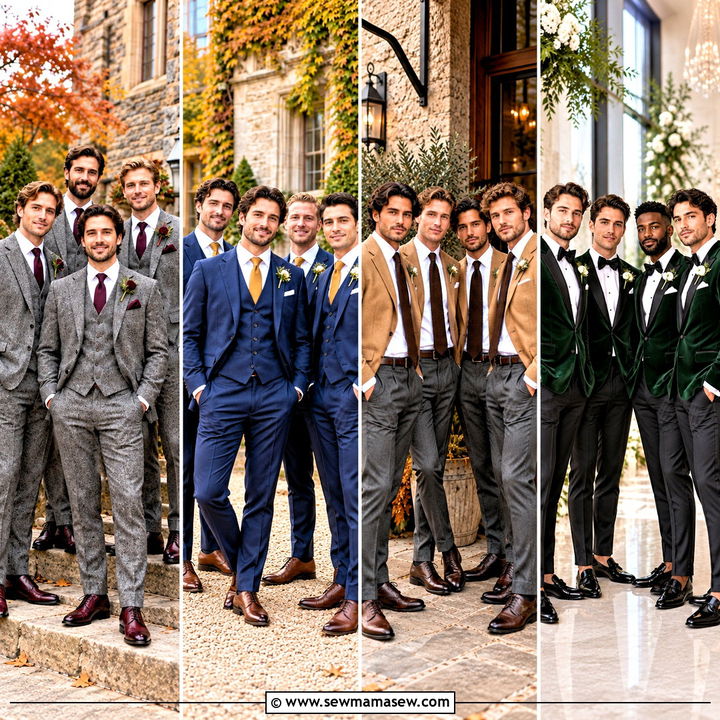
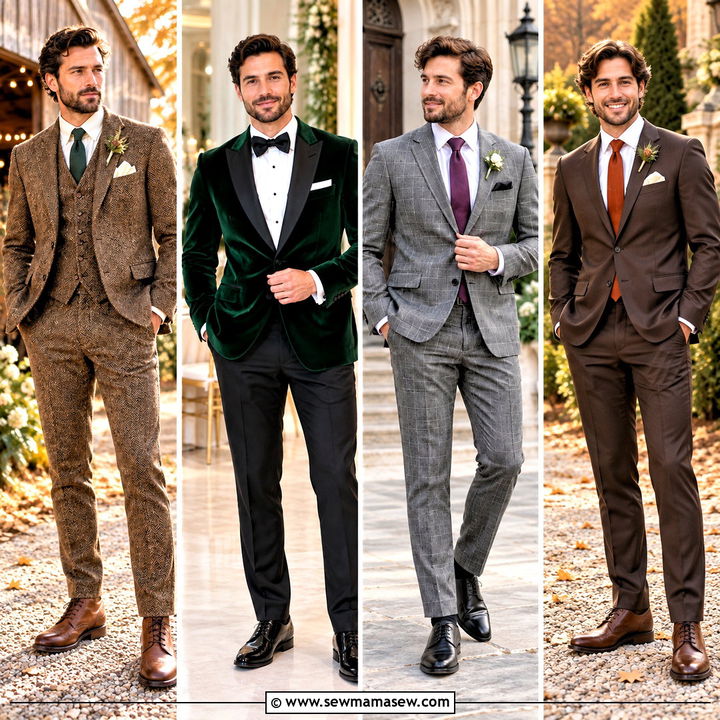
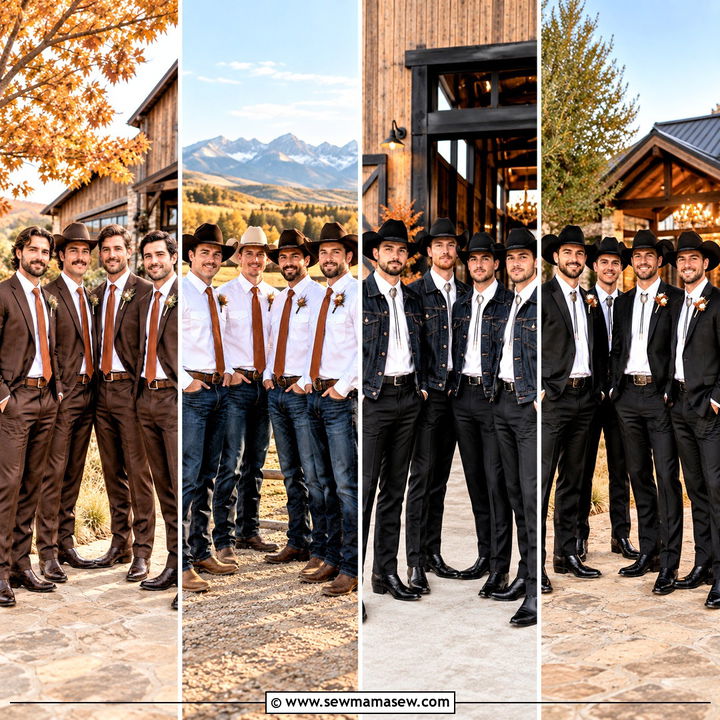
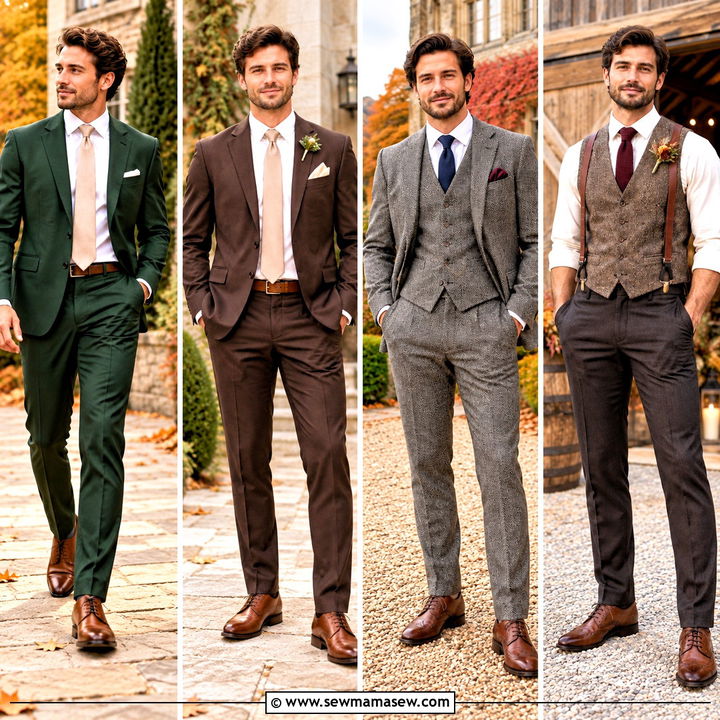
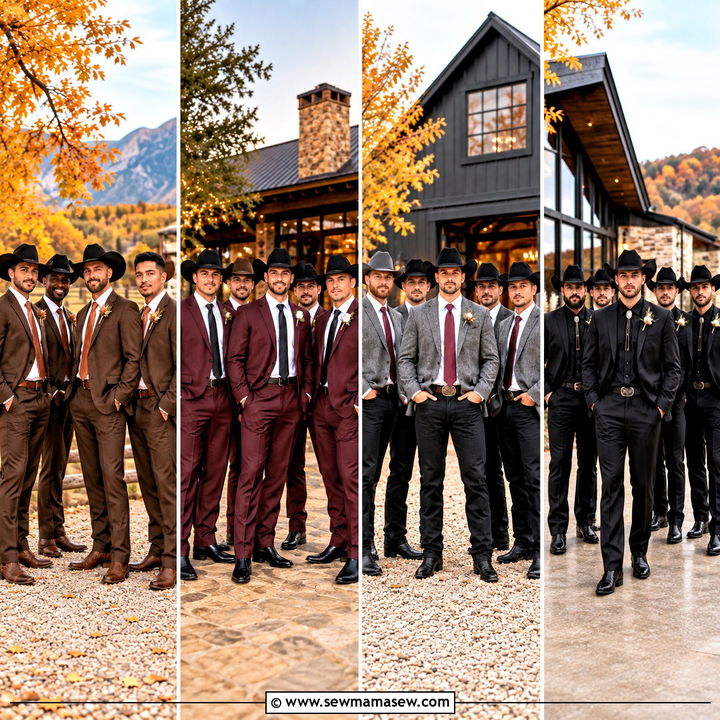
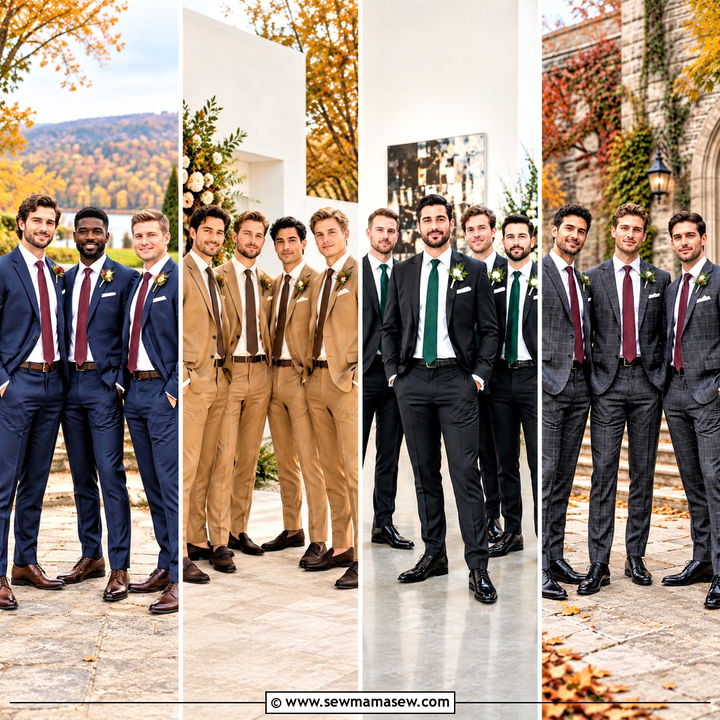
Dressing groomsmen for a November wedding is mostly a question of cloth. The suit has to hold up through cold outdoor photos, then stay bearable in a warm reception room, and it has to look like it belongs next to five or six other men. I lean on wool, flannel, tweed and velvet this time of year, with burgundy, forest green, chocolate brown and charcoal doing the color work, because those shades still read as rich when the light is flat and gray. The groomsmen rarely need to match the groom exactly; a shared fabric family and a few repeated accessories do more for a lineup than identical suits. Each idea below covers the shirt, shoes and small details, so you can fit it to your venue and dress code.
Ordering Suits for Men of Very Different Builds
Most wedding parties include a tall groomsman, a broad one and someone who hasn't worn a suit since his last interview. I get the measurements in writing from everyone first: chest, waist, inseam, height and weight, plus shoe size. Self-measured numbers are often off by an inch or more, so I ask each man to have a friend take them, or to get measured at a shop.
Timing matters more than people expect. For purchased suits that need alterations, I like to place orders around three months out, which leaves room for a second fitting. Rentals are faster to sort, but I still want them arriving early enough to swap a size before the rehearsal.
What I check at the fitting
- The shoulder seam sits at the edge of the shoulder, with no dent below it. Shoulders are the expensive alteration, so I fit to them first.
- The jacket buttons without an X of pulling across the stomach.
- Around a quarter to half inch of shirt cuff shows past the sleeve.
- Trousers have a slight break, or none, so the hem doesn't puddle over the shoes in photos.
- The collar of the jacket stays against the shirt collar when he turns his head.
For a very tall groomsman, I ask for a long-cut jacket instead of letting out a regular, since there's only so much fabric in the hem. A broader man usually looks better in a slightly darker shade than the rest of the group, if the palette allows it.
1. Navy Wool Suit With Burgundy Tie
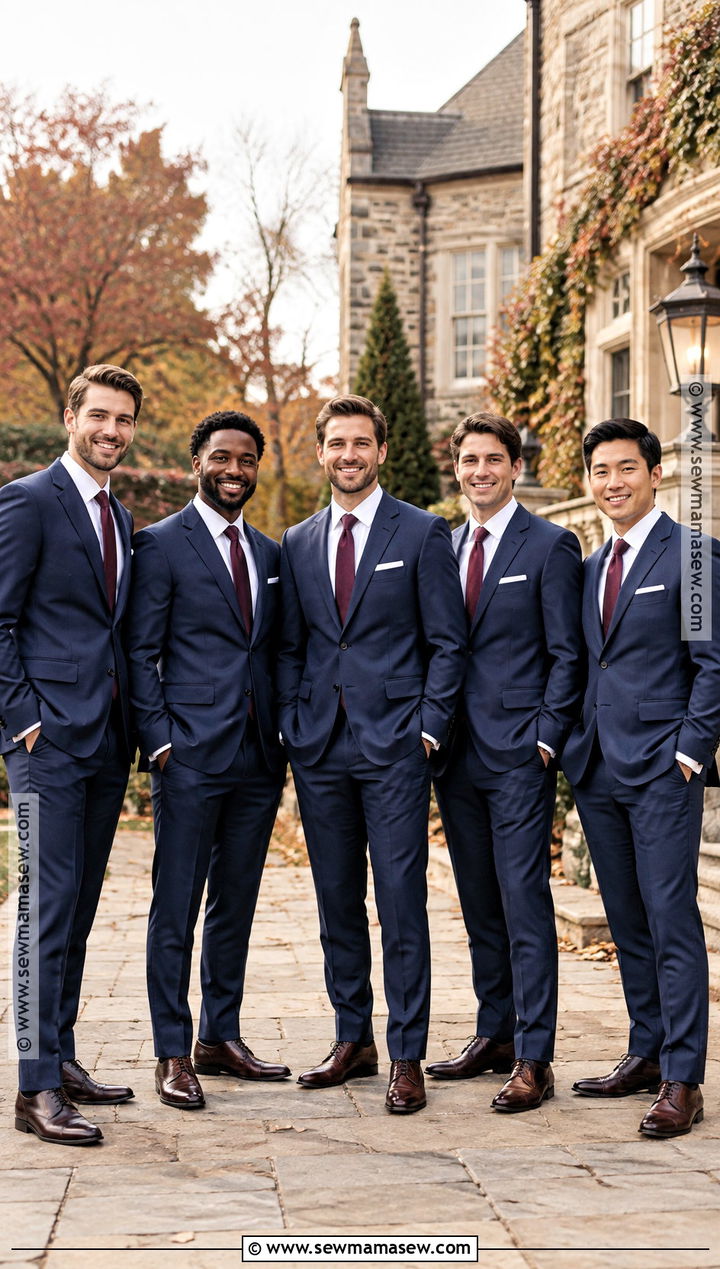
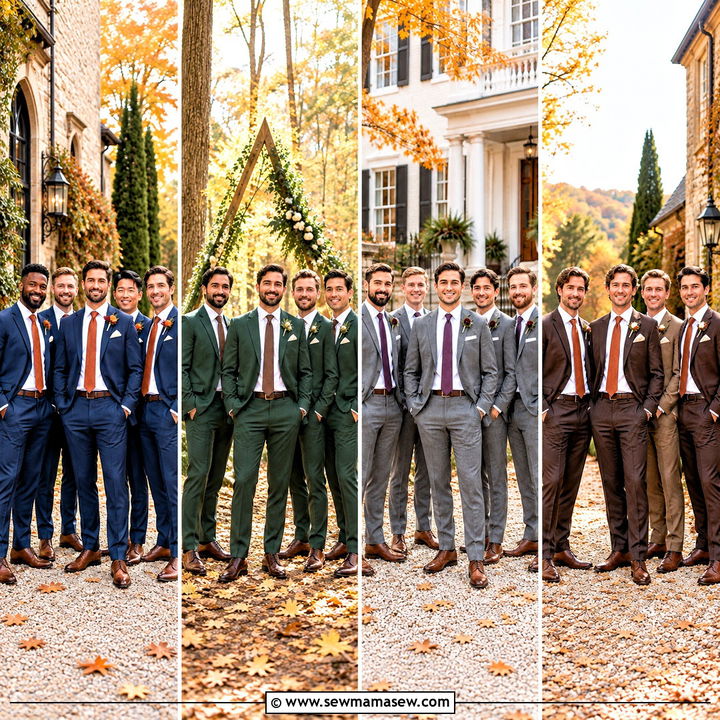
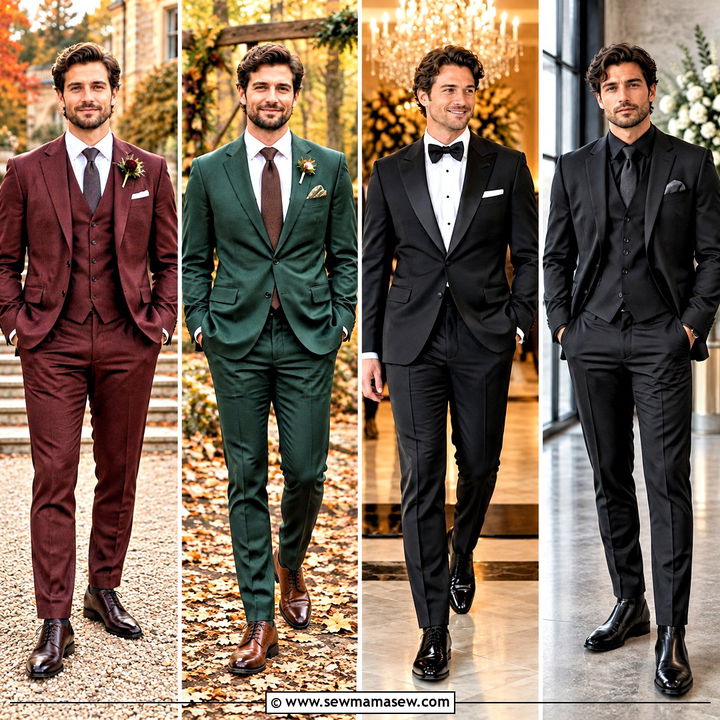
Navy is the suit I reach for when a couple can't decide, because it reads formal without the severity of black and flatters most skin tones in daylight. Go with a medium-weight wool; it keeps its shape through a long day and gives real warmth during outdoor photos. A crisp white shirt, a burgundy tie in silk or textured wool, and a white pocket square keep things clean, and a boutonniere in burgundy, cream and muted greenery ties the group to the flowers. I put dark brown Oxfords with this rather than black, since brown softens navy and looks warmer in fall light. Navy or burgundy socks finish it. If the groom wants to stand apart, give him the three-piece and keep the groomsmen in two-piece suits from the same cloth. Consistent tailoring across the group matters more here than any accessory.
2. Charcoal Suit With Rust Tie
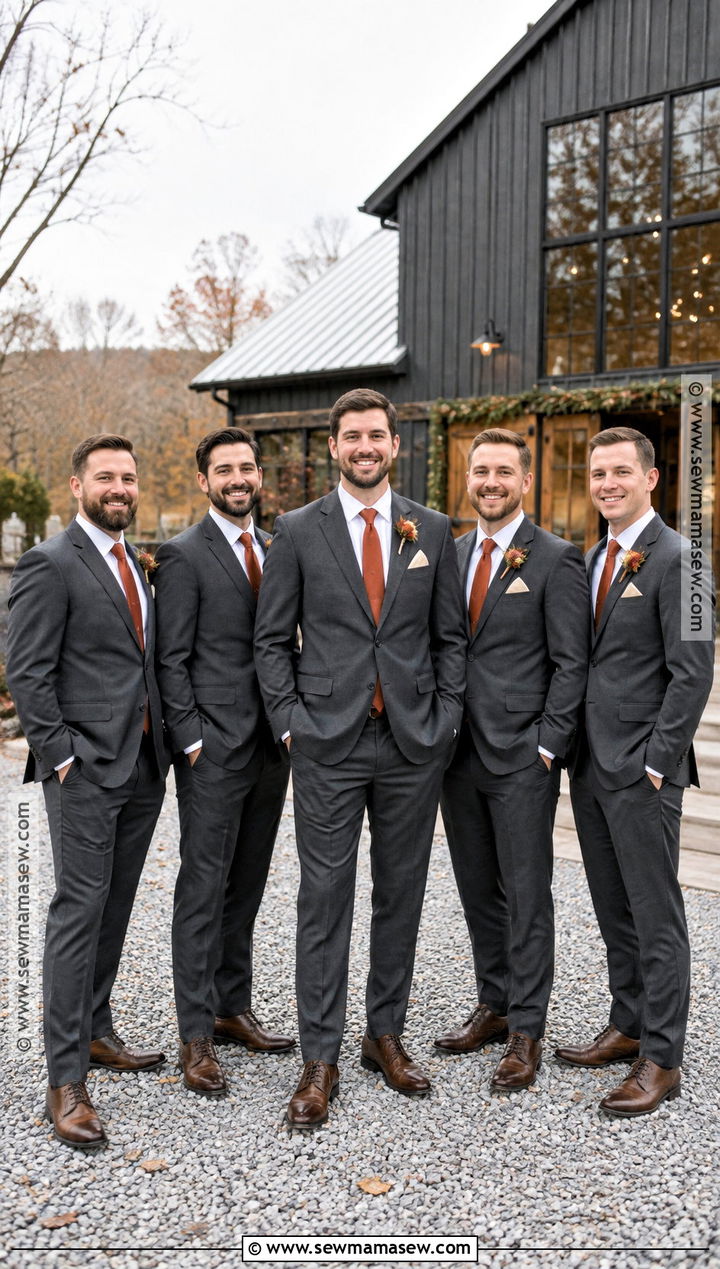
Charcoal and rust is a pairing I like against late-fall foliage: the cool gray steadies the warm accent so it never looks like a costume. Start with a charcoal wool-blend suit in a comfortable modern cut, a white or pale ivory shirt, and a rust tie in matte silk or lightly textured wool. Dark brown Derbies relax the formality a little and echo the tie. A cream pocket square and a small boutonniere of dried grasses or eucalyptus round it out. It suits hotels, estates and modern barns. For a more formal ceremony, swap to black Oxfords and black belts. The one rule I'm strict about: every tie comes from the same bolt or the same order, because two shades of rust side by side in a photo look like a mistake.
3. Brown Tweed Suit With Cream Shirt
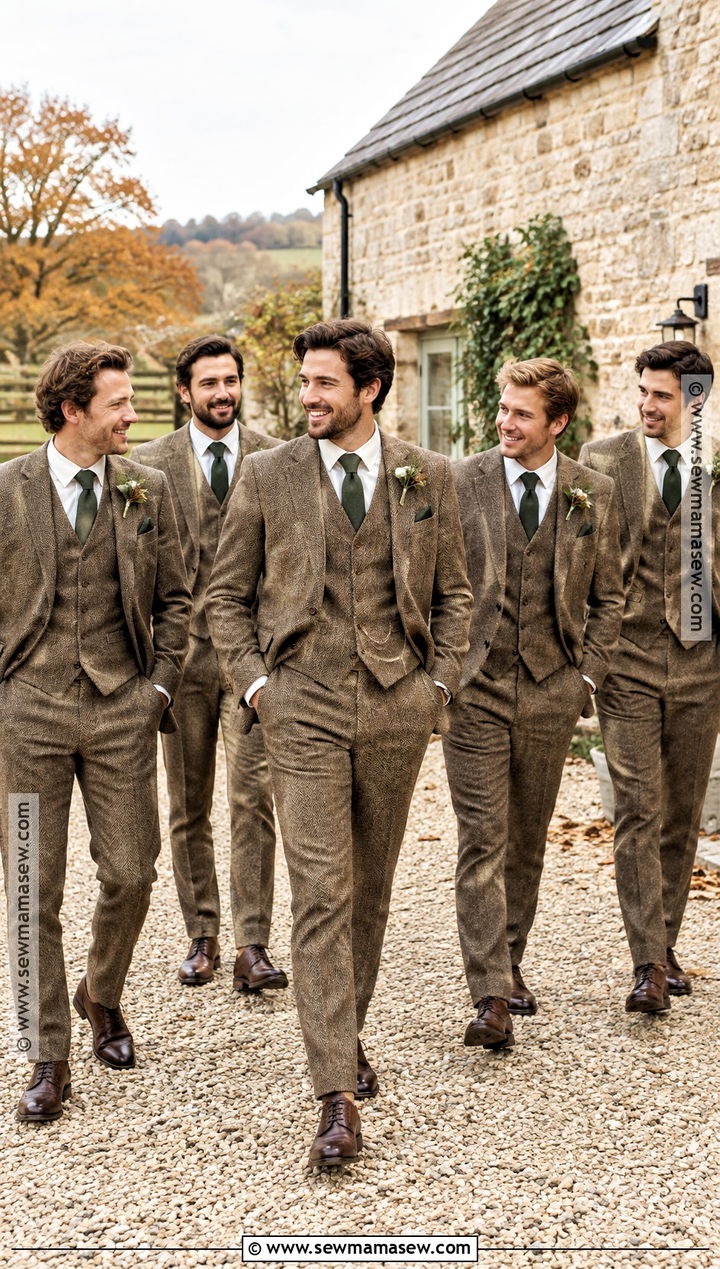
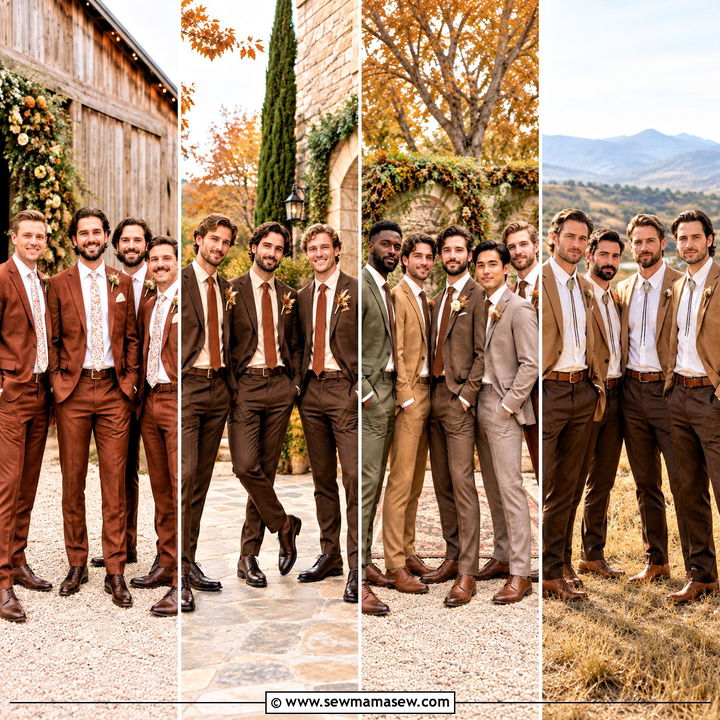
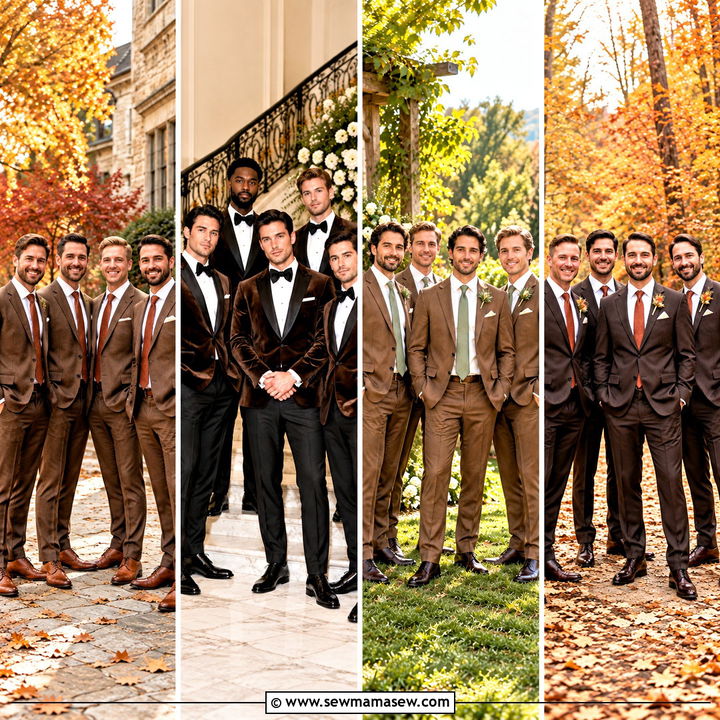
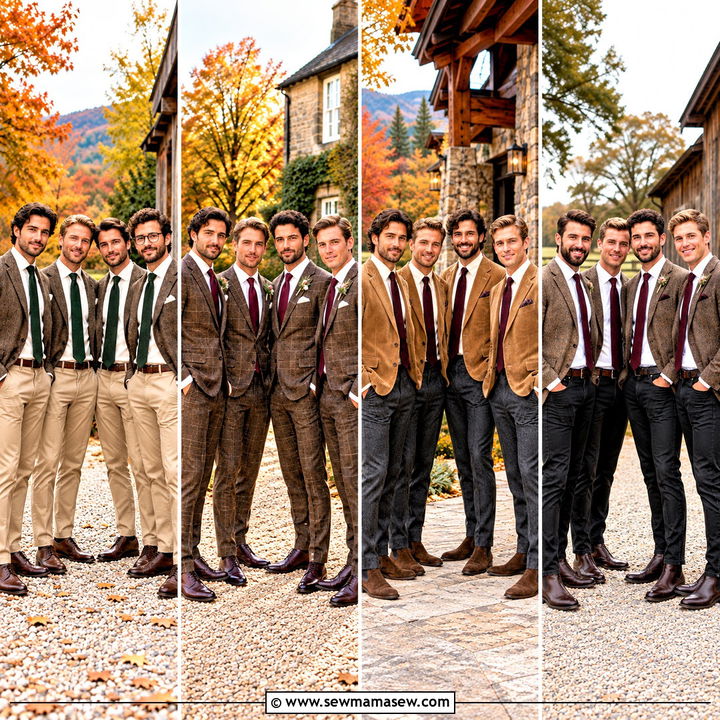
Brown tweed belongs at a rustic November wedding. Herringbone or Donegal weaves give the most interest without shouting, and a three-piece version handles a cold field better than any two-piece. I pair tweed with a cream shirt rather than bright white, since white can look stark against all those warm flecks in the cloth. Forest green, burgundy or muted gold ties all work; pick from the wedding palette. Dark brown brogues or polished Chelsea boots suit the countryside feel, with belts to match. Tweed already carries plenty of texture, so I keep pocket squares and boutonnieres plain. A warning I give every party in tweed: heavy cloth in a heated barn gets hot fast, so check the fabric weight against the reception space, not just the ceremony.
4. Forest Green Suit With Brown Accessories
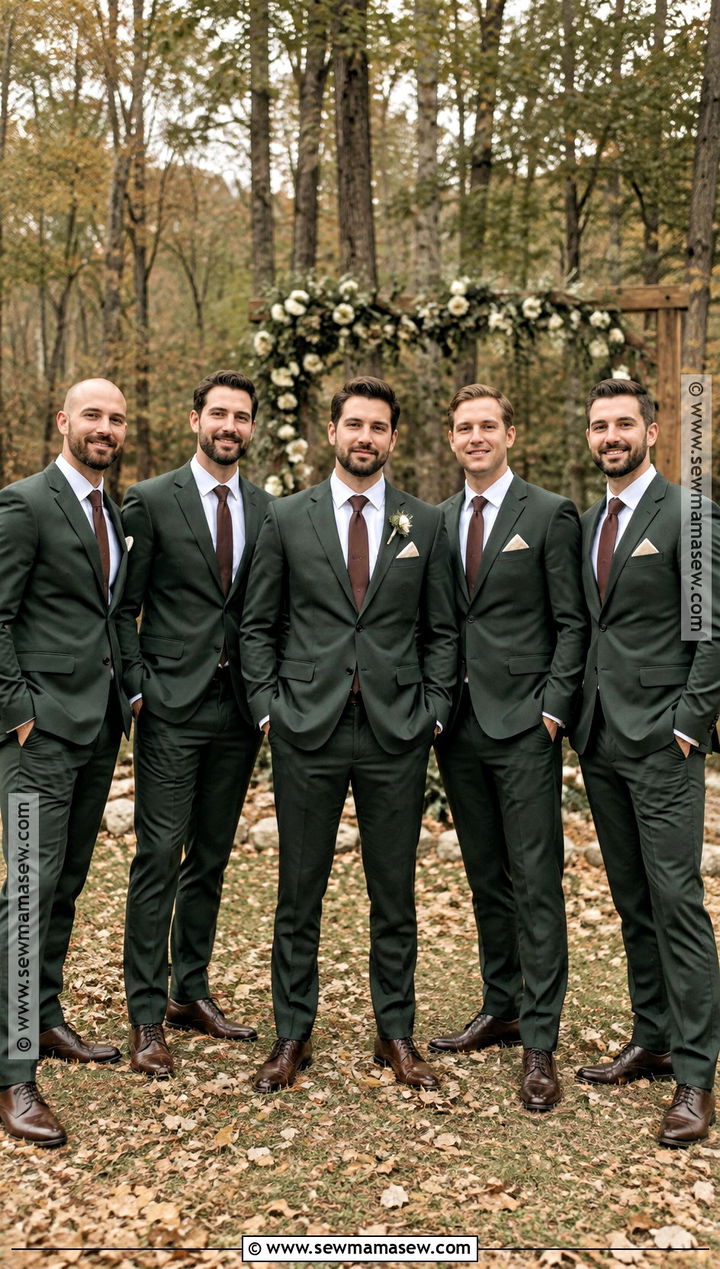
Forest green is distinctive without being loud, as long as you stay with a deep, muted shade in wool or a wool blend rather than a saturated emerald. Each groomsman gets a white shirt, a chocolate brown tie and a folded cream pocket square, with dark brown loafers or cap-toe Oxfords and matching belts. Against stone, golden leaves or woodland it photographs richly. The groom can stand apart with a green three-piece, a patterned tie or a brown waistcoat. Green is the hardest suit color to buy from a screen, in my experience; I always order swatches and look at them in daylight and under warm indoor bulbs, because many greens turn brighter or bluer in photos than they look online.
5. Black Tuxedo With Velvet Bow Tie
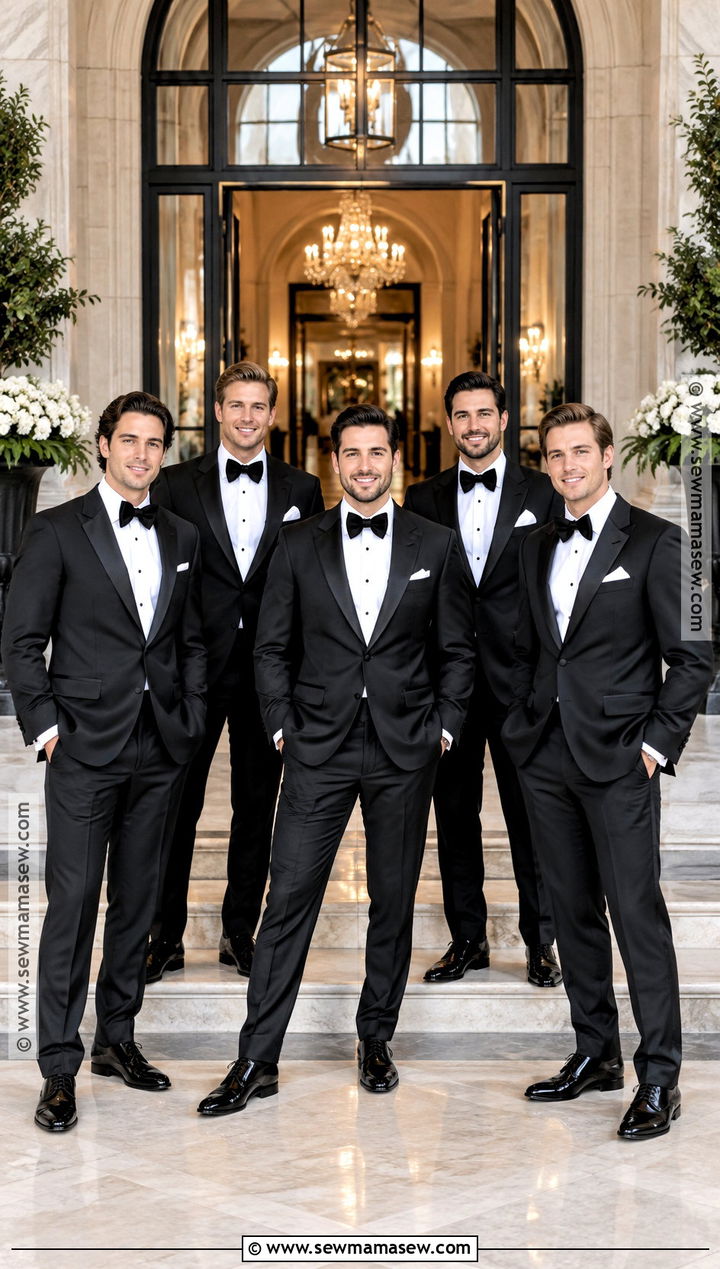
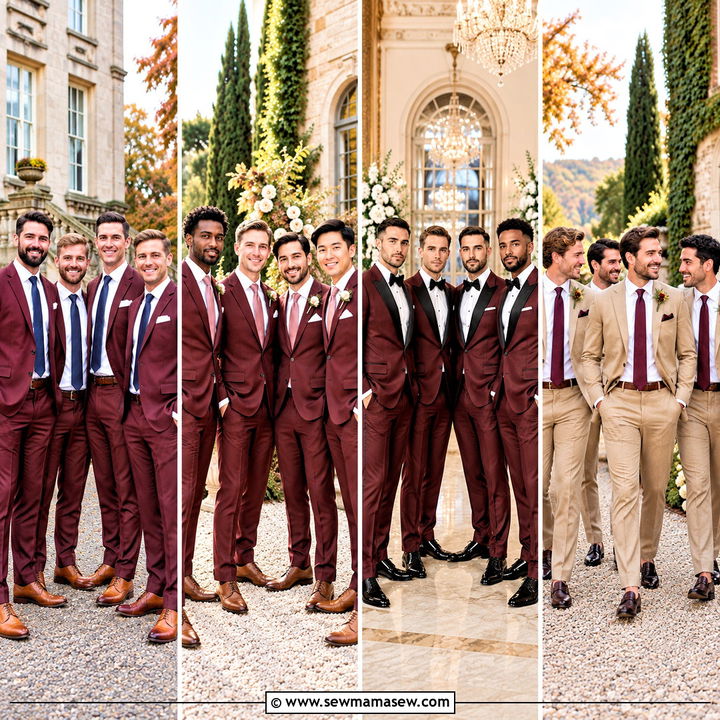
For a true evening affair, nothing beats a matched black tuxedo. I'd use satin lapels, white pleated or plain-front dress shirts and black velvet bow ties, which are a nice seasonal touch that most guests won't consciously notice but will feel. Patent shoes are the classic black-tie finish; highly polished calfskin Oxfords are fine too and easier to walk in. Black socks, white pocket squares and simple cuff links keep everything consistent. One white or burgundy boutonniere adds color without weakening the formality. The groom can switch to a velvet dinner jacket or peak lapels. Save this one for ballrooms, hotels and museums where guests have also been asked for black tie; a tux at a casual barn wedding just looks out of step.
6. Burgundy Suit With Black Shirt
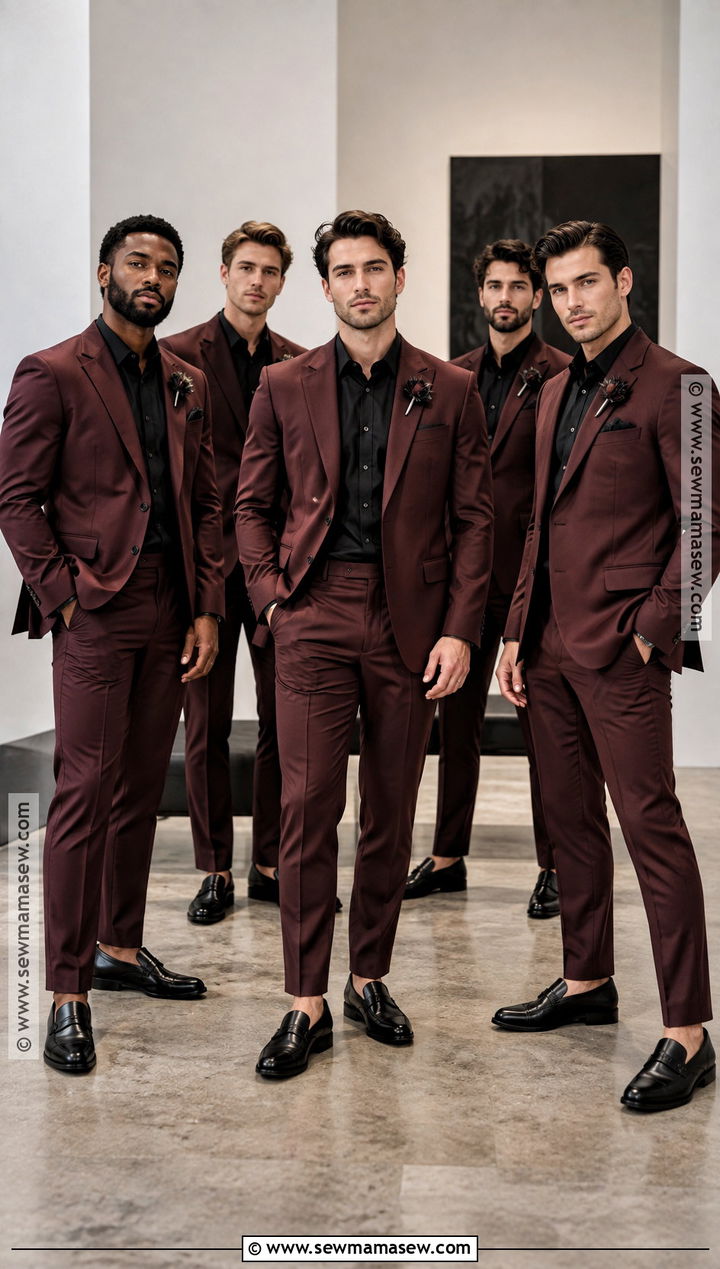
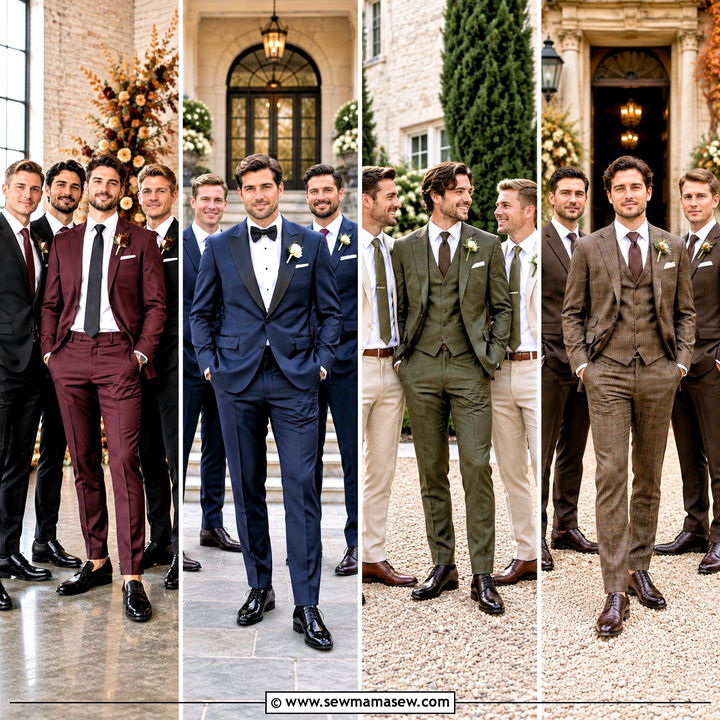
Burgundy suits are confident, so I keep the shade dark: wine or oxblood. Brighter reds overwhelm a photo once you line up five or six of them. A fitted black dress shirt gives an evening mood and lets you skip the tie, with black loafers, black belts and plain black socks underneath. A dark floral boutonniere with muted greenery adds depth while keeping the look monochrome. This is a cocktail or semi-formal outfit for lofts, galleries and restaurants. The catch with an open collar is that soft collars collapse after an hour, so I ask for shirts with a firm, structured collar or collar stays. If the couple wants ties after all, a narrow black tie keeps the same mood.
7. Gray Flannel Suit With Green Tie
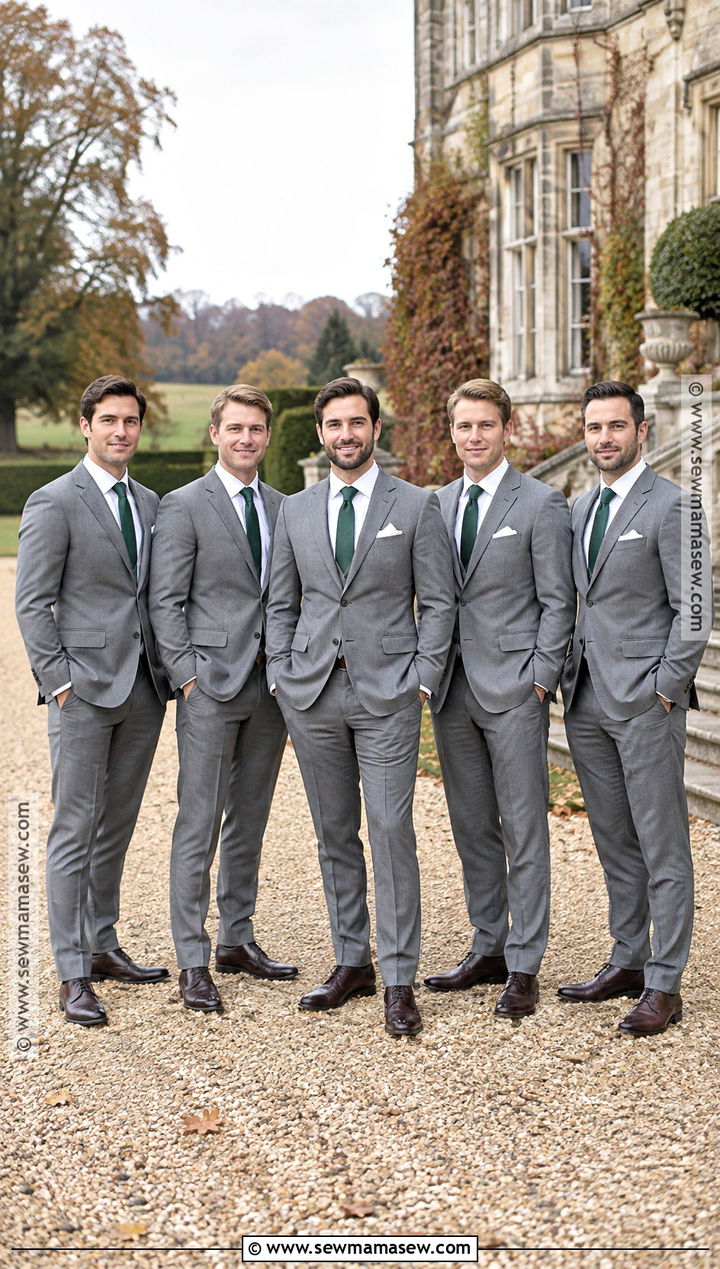
Flannel is my favorite November cloth for groomsmen who don't want to look rustic. It's soft, warm and has a quiet surface texture that heavy tweed can't match for polish. Choose a medium or dark gray suit with a white shirt and a forest green tie. Skip the matching green pocket square; it reads too coordinated. A white square with a simple fold is better. Dark brown Oxfords, matching belts and charcoal socks complete it, and a cream and green boutonniere links it to the flowers. Gardens, country clubs and historic homes suit it well. Flannel does show poor fit, though: it creases where the jacket pulls, so book alterations early and ask the tailor for a clean, slight break at the trouser hem.
8. Tan Suit With Chocolate Brown Tie
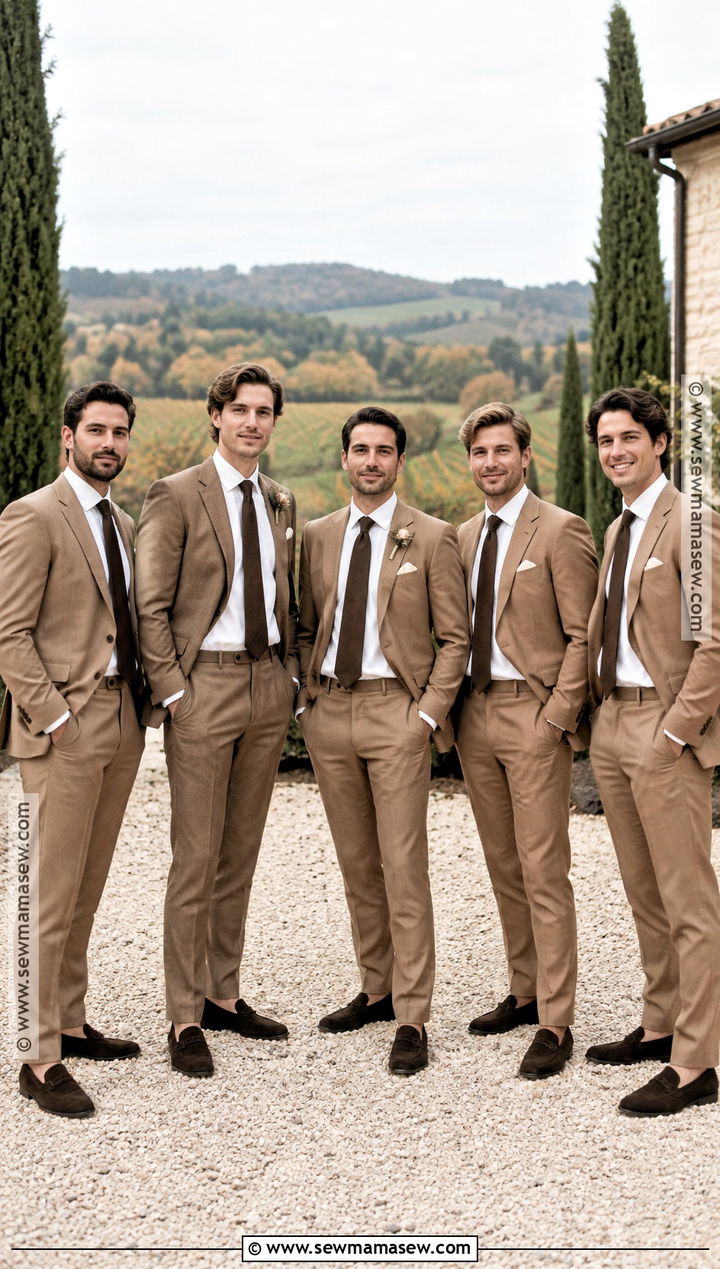
Tan can work in November, but only in the right cloth. Pale summer linen looks out of season; camel, tobacco or warm beige wool does not. Pair it with a white shirt and a chocolate brown tie for a grounded, tonal look, and use dark brown suede loafers or leather brogues so it stays relaxed. A cream pocket square and a rust or greenery boutonniere add contrast. I'd keep tan for daytime ceremonies, vineyards and warmer destinations; under evening lighting it can go flat and washed out. A neat way to show hierarchy is putting the groom in a deeper brown suit while the groomsmen stay in tan, so the whole party shares one warm palette.
9. Midnight Blue Tuxedo With Black Bow Tie
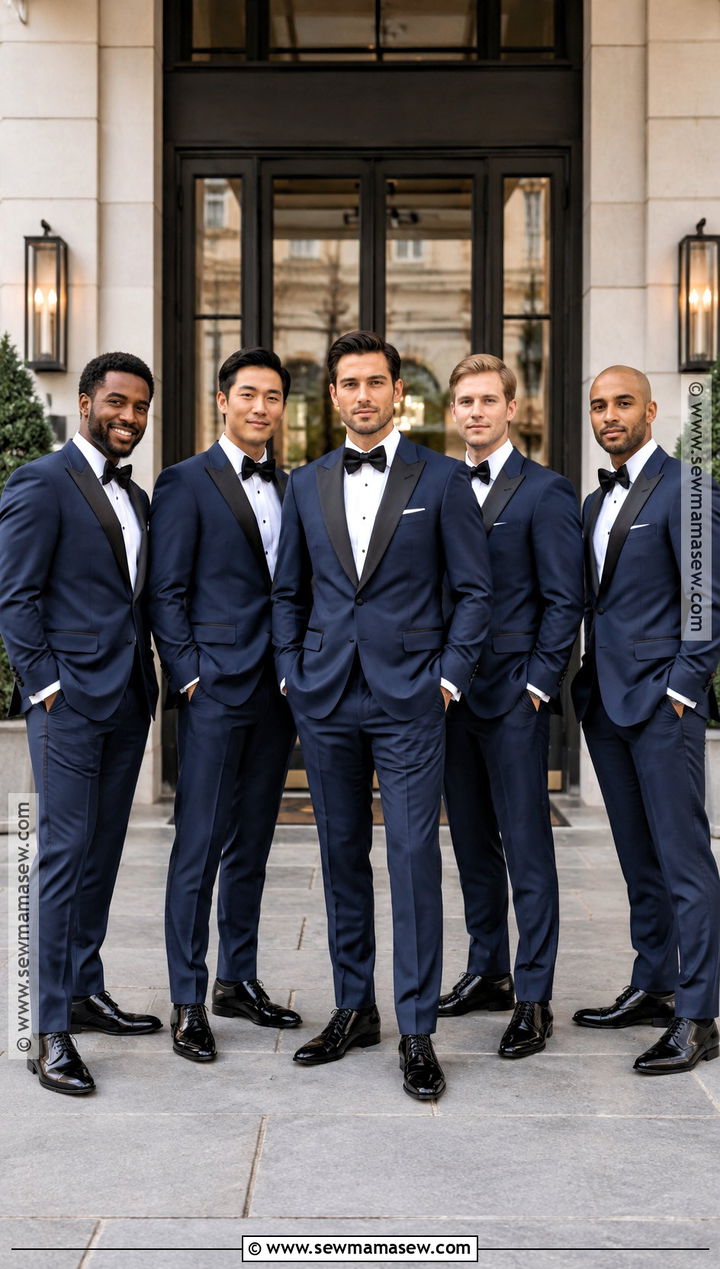
Midnight blue is the formal alternative I suggest when a couple wants a tuxedo but finds black too stiff. Under warm evening light it can actually look richer than black, and it sits naturally with black satin lapels. Dress the groomsmen in matching tuxedos, white formal shirts, black bow ties and polished black Oxfords, with black socks, minimal cuff links and white pocket squares. Keep boutonnieres compact: white flowers, a dark blue accent or plain greenery. Hotels, ballrooms and theaters are its natural setting. Give the groom a peak-lapel tux or a midnight velvet jacket while the groomsmen wear smooth wool. The details people overlook are the ones I check: shirt fronts, bow-tie shapes and trouser lengths all need to match.
10. Olive Suit With Champagne Tie
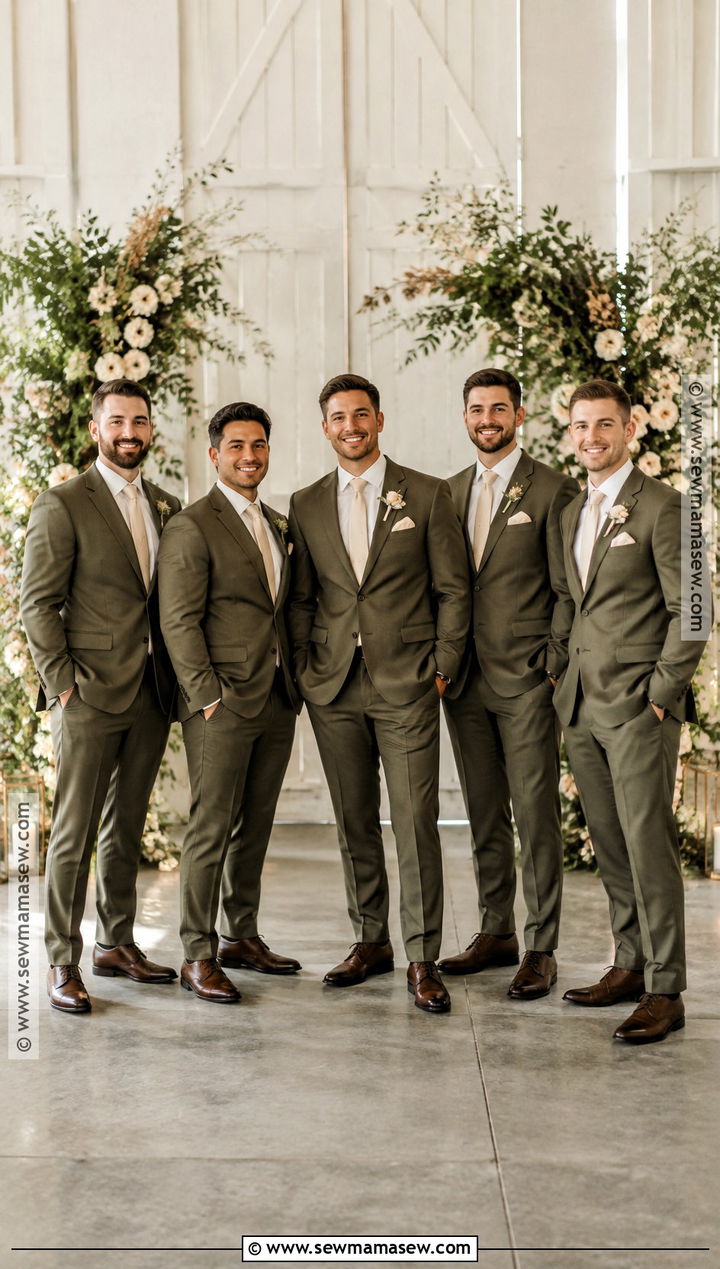
Olive is approachable color for couples who don't want very dark green. A tailored olive wool suit with a clean, solid finish, a white or pale cream shirt and a champagne tie make a soft, earthy pairing that sits well beside neutral dresses, dried flowers and gold decor. Dark brown shoes and belts, cream pocket squares and ivory boutonnieres keep it cohesive. It feels right at botanical venues, lodges and outdoor ceremonies. If the groom is also in olive, a waistcoat or patterned tie sets him apart. My one caution: olive turns rustic quickly, so I keep the shoes and accessories smooth rather than adding suede, tweed and twine all at once.
11. Black Suit With Burnt Orange Tie
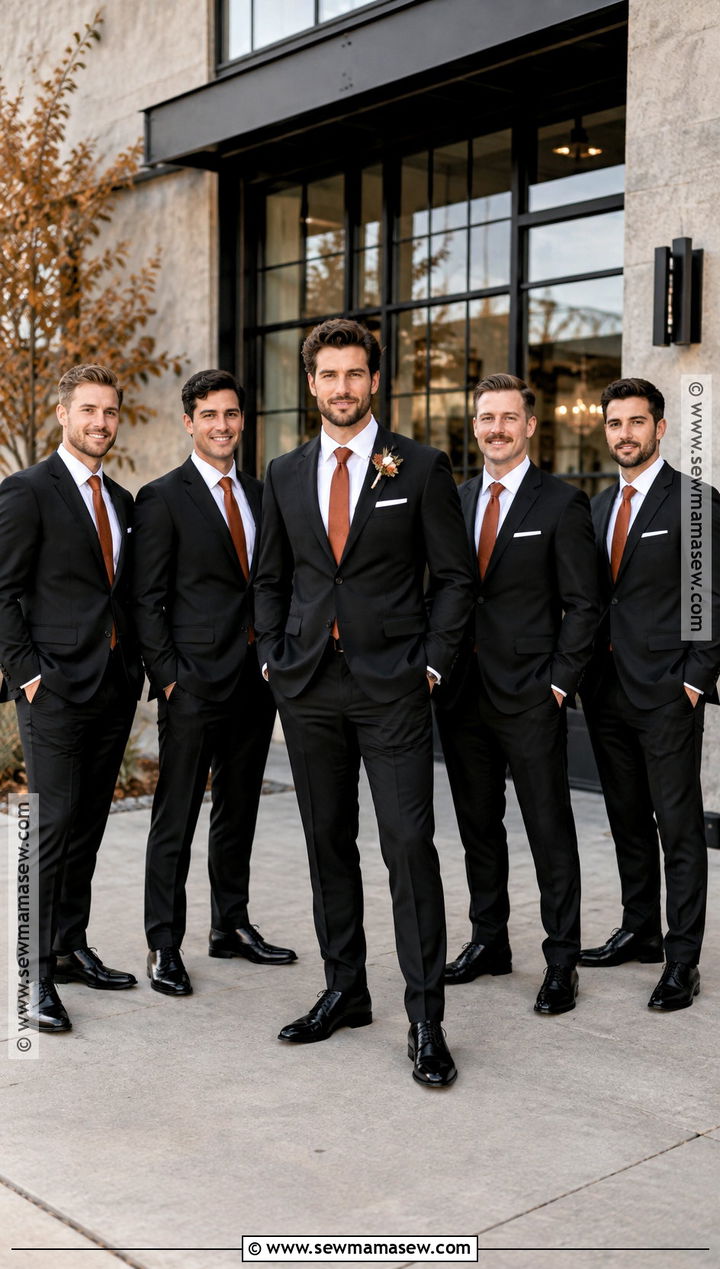
Black with burnt orange is the most practical idea here, since plenty of men already own a black suit. Start with well-tailored two-piece suits and bright white shirts for clean contrast. Choose muted copper or terracotta ties rather than vivid pumpkin, which looks seasonal in the wrong way. Black Oxfords, belts and socks keep the base formal, and a white pocket square with a small rust-and-green boutonniere finishes it without adding pattern. Modern barns, city venues and evening ceremonies all suit it. When groomsmen bring their own black suits, I line them up together in daylight before the wedding; one man's black is often another's very dark charcoal. Send everyone the same rules for lapels, shirt color, shoe finish, tie fabric and trouser length.
12. Herringbone Waistcoat With Dark Trousers
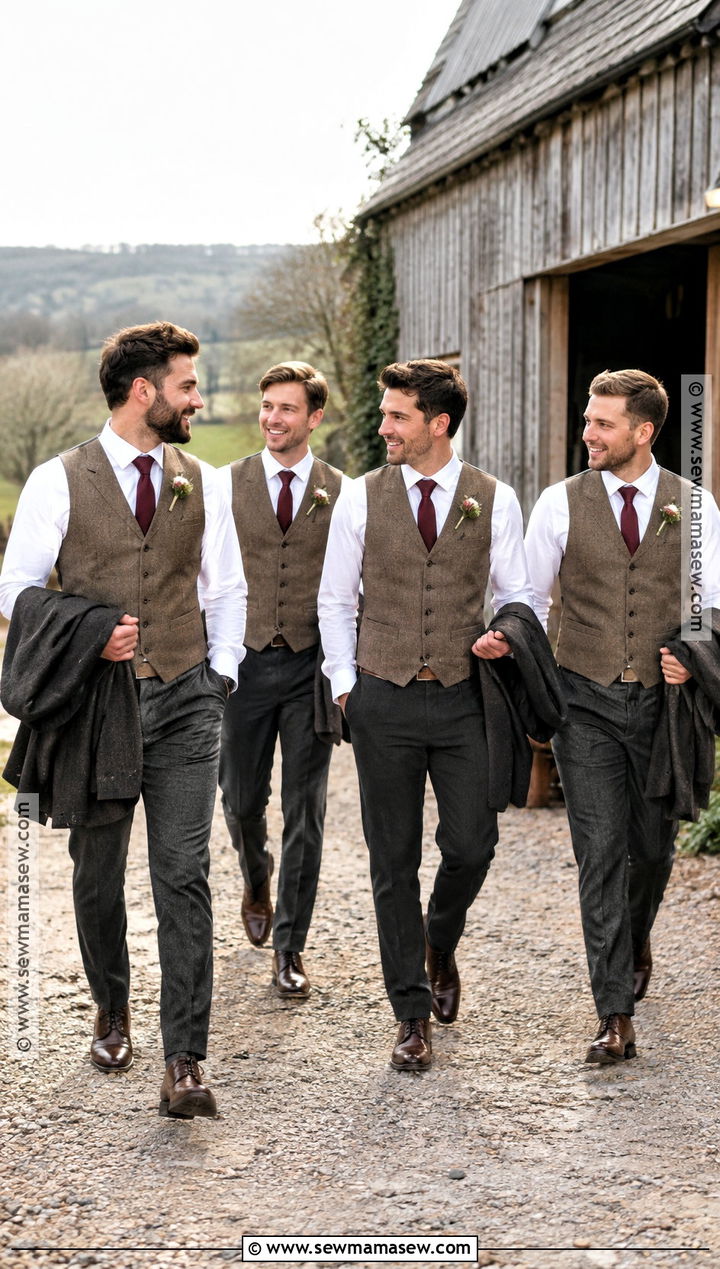
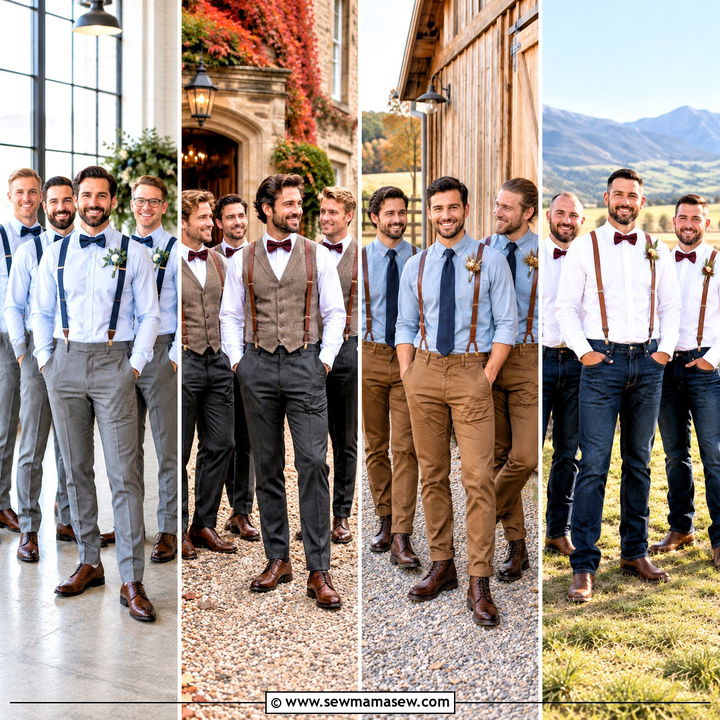
A herringbone waistcoat with dark trousers is relaxed but still wedding-ready. Brown or gray herringbone waistcoats over white shirts, with dark charcoal trousers and sleeves rolled down for the ceremony, give the group a clean starting point. Add burgundy ties or bow ties, dark brown brogues and matching belts. Jackets can go on for outdoor photos and come off at the reception, which is a real comfort when temperatures swing. Barns, farms and lodges are its home. Everyone's waistcoat should come from the same fabric, and the trousers from one color, or the party looks thrown together. On fit, the waistcoat has to cover the trouser waistband with a little to spare when he raises his arms; a shirt showing beneath it is the most common mistake I see. Suspenders are optional, but keep them simple and consistent.
13. Chocolate Brown Suit With Sage Tie
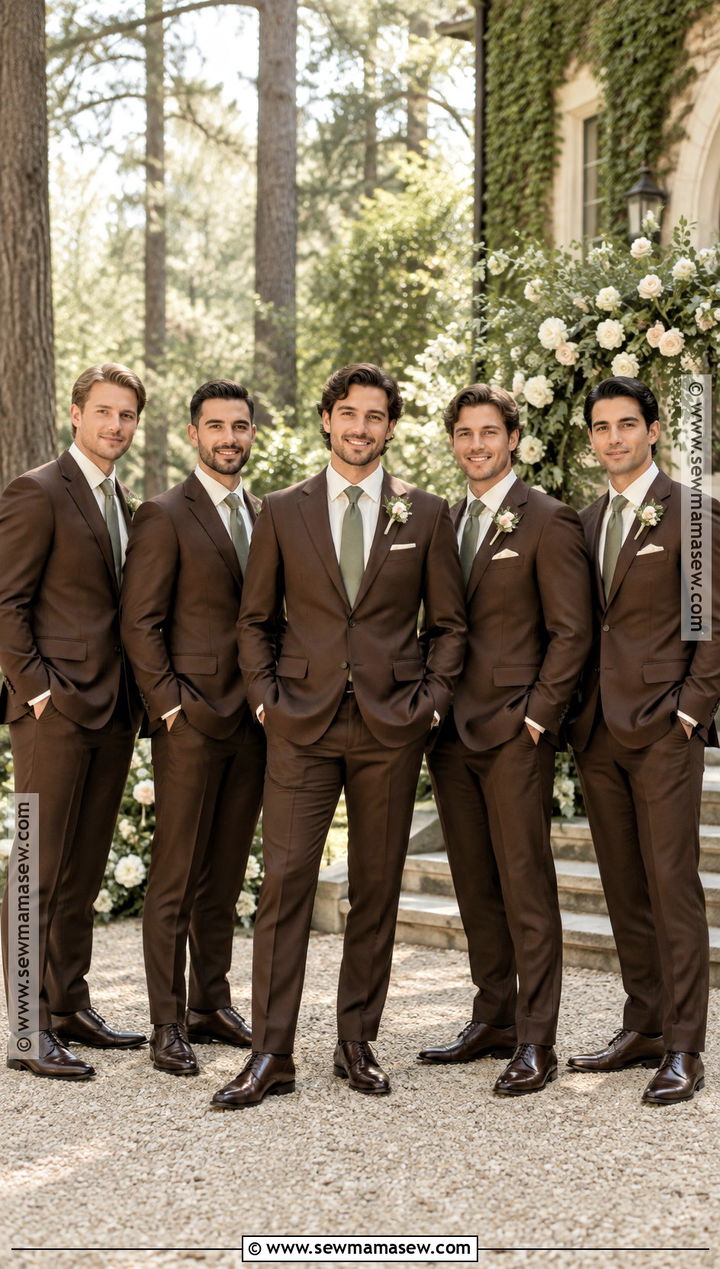
Chocolate brown suits feel warm and grown-up for a late-autumn palette. Choose a rich, solid brown wool with a white or soft cream shirt and a muted sage tie, which adds contrast without fighting the depth of the suit. Dark brown Oxfords, tonal socks, matching belts and cream pocket squares finish it, with boutonnieres of white flowers and gray-green foliage to connect to the ties. It suits woodland venues, historic estates and intimate indoor rooms. If the bridesmaids are also in brown, go lighter on the sage and use cream florals so the two sides separate in photos. The groom can wear a patterned waistcoat or a deeper green tie. One practical note: brown suits vary a lot between makers, so order the whole group from one source.
14. Plaid Suit With Solid Burgundy Tie
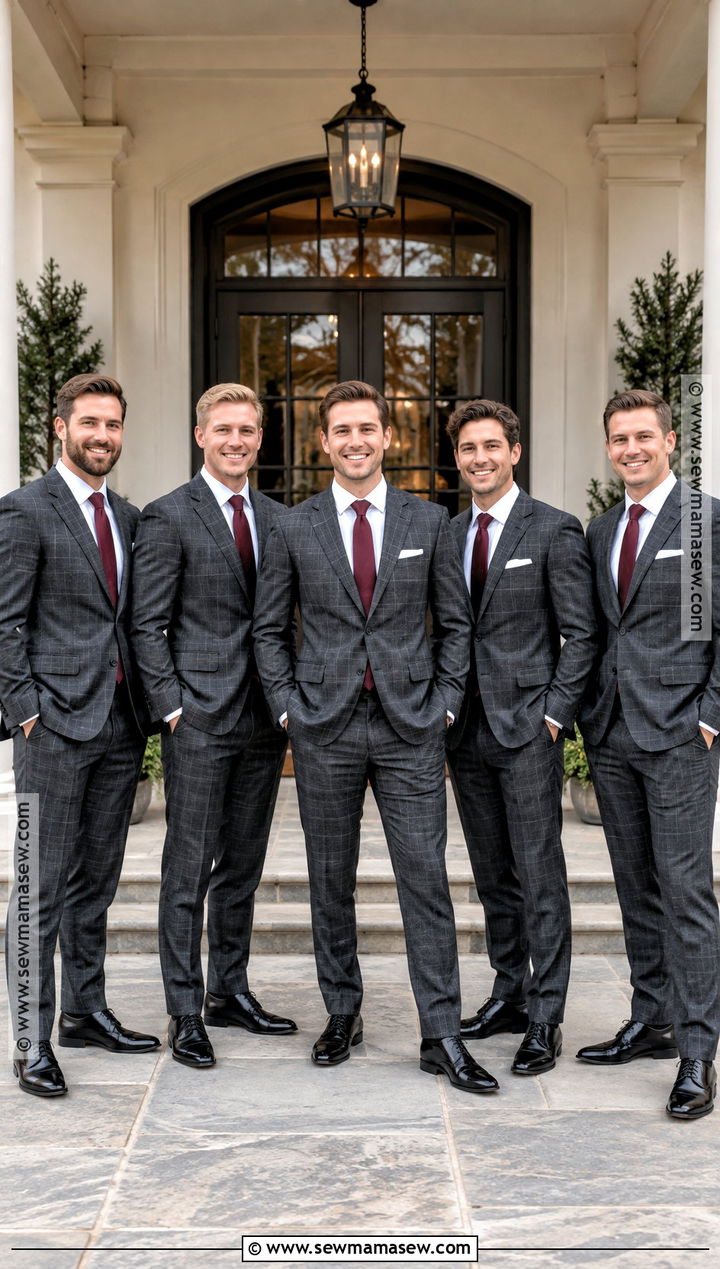
A subtle plaid gives the group character while staying polished in photos. Look for charcoal, navy or brown suits with a restrained windowpane or tonal check, and keep the shirts solid white and the ties plain burgundy so the pattern stays the main detail. Match the shoe color to the base of the suit: dark brown with brown and navy, black with charcoal. Pocket squares and boutonnieres stay small. I'd limit plaid to smaller wedding parties and vintage or country club venues. High-contrast checks get busy across a full lineup, so I look at the fabric from across the room before anyone orders. A good tailor will also line up the check at the seams, which makes an inexpensive suit look far more expensive.
15. Mixed Neutral Suits With Matching Ties
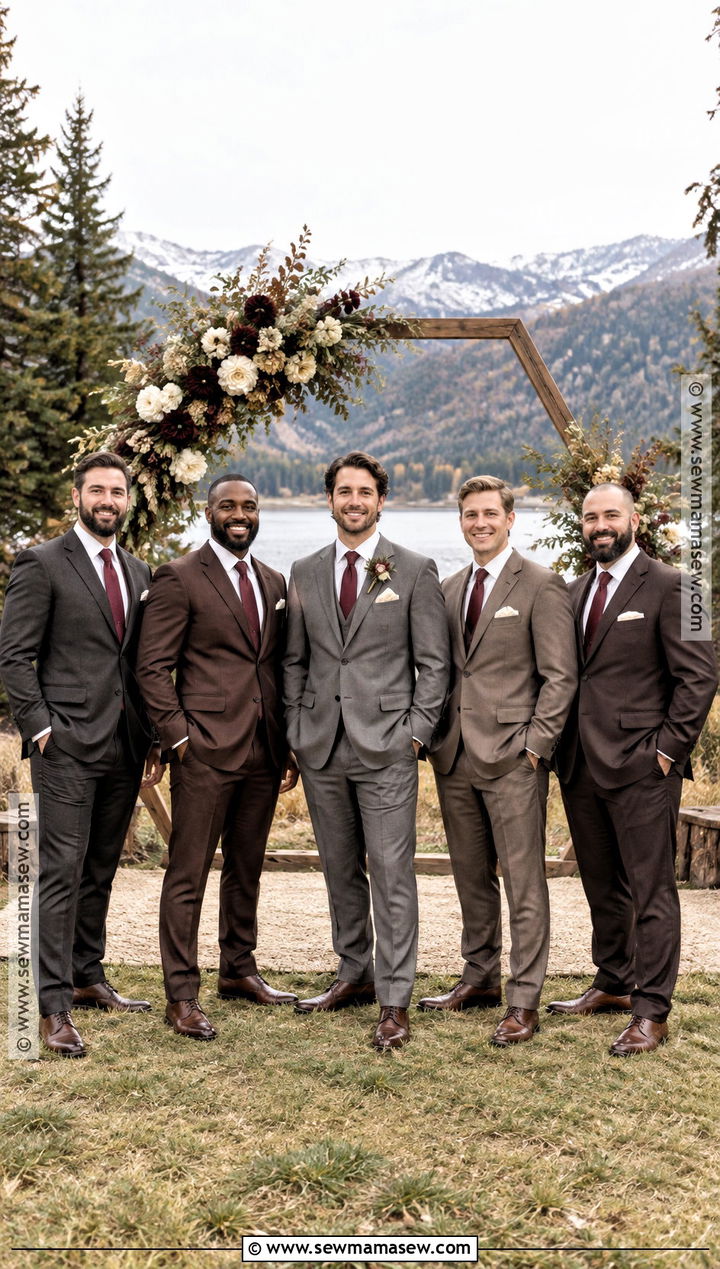
Mixed neutral suits solve the problem of groomsmen with different budgets, builds and access to rentals. Build the group around charcoal, medium gray, taupe and deep brown in similar fabric weights, then give everyone the same white shirt, dark burgundy tie, dark brown shoes and cream pocket square. Matching boutonnieres pull it together further. The groom wears the darkest suit, a three-piece or a textured jacket so he's easy to pick out. It suits bohemian, rustic and intimate November weddings. I cap the palette at three or four approved shades and ask each man for a daylight photo of his suit before the day. The repeated accessories are what make separate suits read as one wedding party.
Cold Photos Outside, a Hot Room Inside
November weddings swing hard between temperatures. Portraits might happen at 40 degrees in a field, and an hour later the same men are dancing in a packed, heated room. I plan the outfit for both moments rather than picking one.
A waistcoat is the most useful piece here. It keeps the core warm outside, and when the jackets come off at the reception the group still looks dressed. Without one, a room full of men in shirtsleeves and loose ties looks like the end of a work day.
For long outdoor portraits, a matching set of dark overcoats in navy, charcoal or camel looks deliberate in photos, while a mix of puffer jackets ruins them. If buying coats for everyone is unrealistic, I'd rather the group shoot without coats in short bursts and pass them back between frames.
Shoes on wet ground
Leather-soled dress shoes are slippery on wet grass and stone steps. Have new shoes worn around the house a few times before the day, and if the ceremony is outdoors, a cobbler can add thin rubber half-soles. Suede loafers and brown suede brogues mark easily in rain, so I keep them for indoor venues or dry forecasts, and give suede a protective spray beforehand either way.
Settle the Cloth, Then the Ties
Good November groomsmen outfits feel seasonal without novelty touches. I start with the dress code and the venue, then pick a suit cloth warm enough for the expected weather: navy wool, charcoal flannel, brown tweed, forest green or a formal tuxedo are all sound foundations. Ties, shoes, pocket squares and boutonnieres connect the group, and the groom stands out through one controlled difference. Book fittings early, and put clean tailoring ahead of any trend. Treat these ideas as starting points, adjust the colors and fabrics to the celebration, and make sure every groomsman can stand comfortably through a cold ceremony.
Related posts: