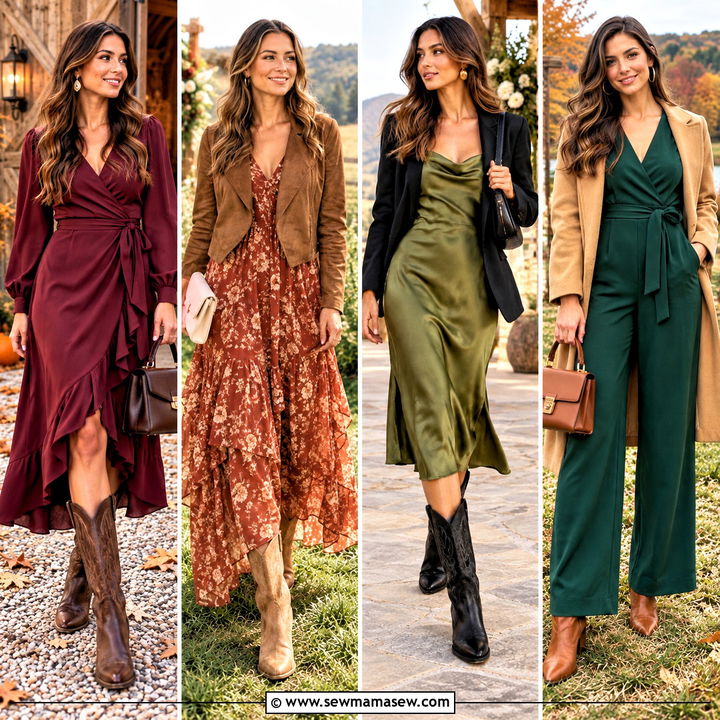
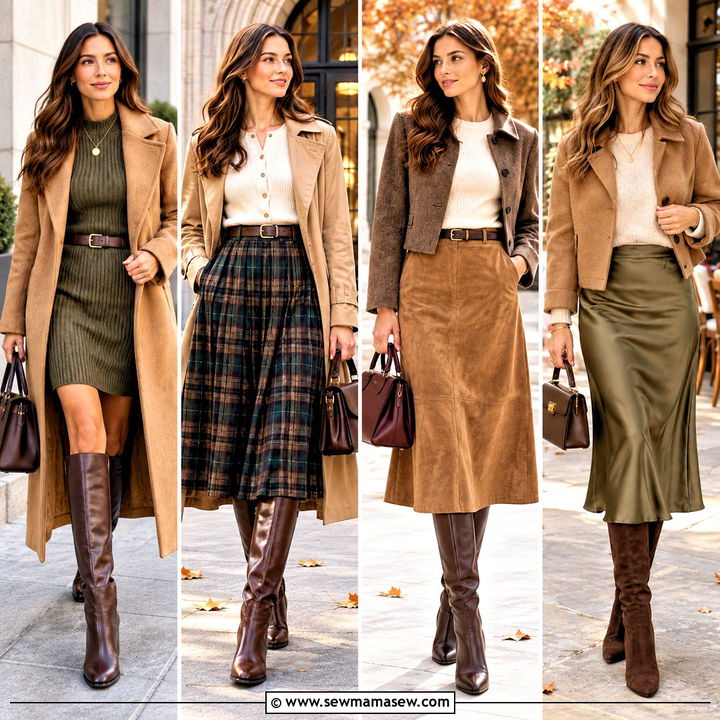
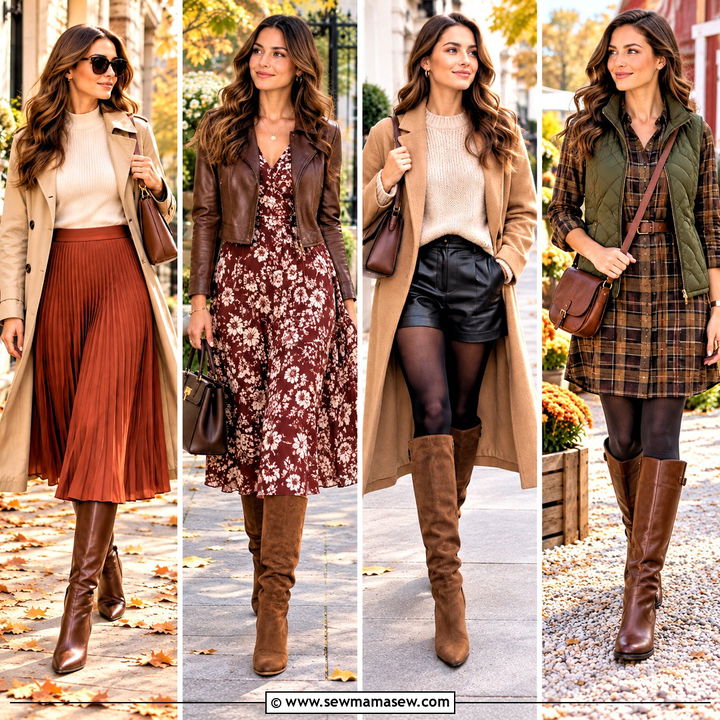
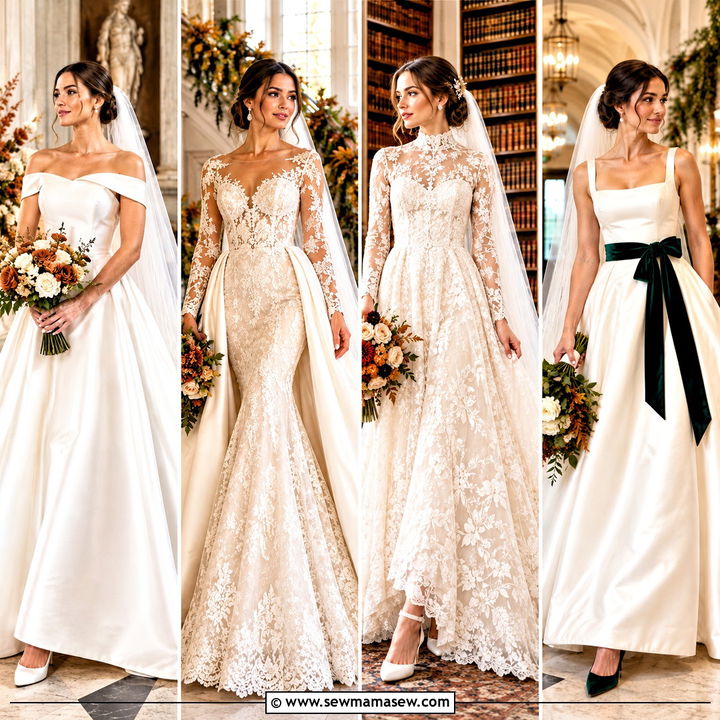
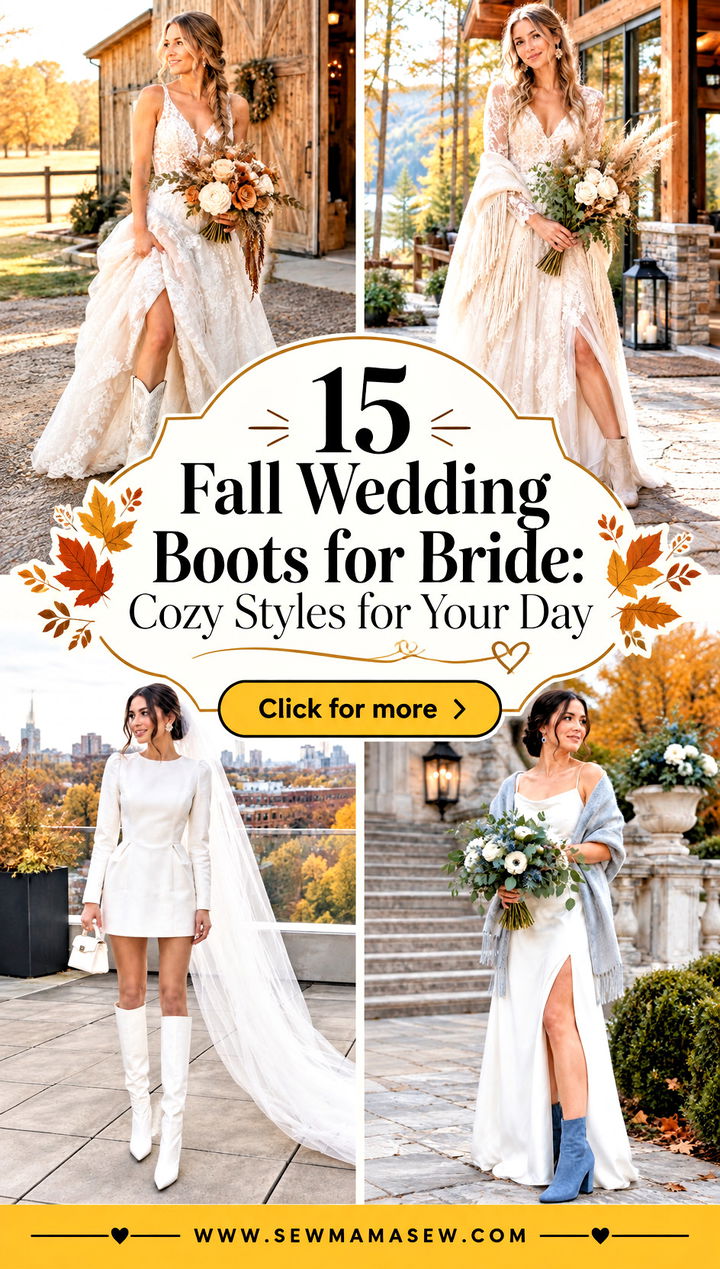
Boots solve problems that bridal pumps can't. A fall wedding usually means cool air after sunset, a lawn or gravel path somewhere between the ceremony and the tent, and ten or more hours on your feet. A boot covers the ankle, spreads your weight over a wider heel and keeps you upright on ground that would swallow a stiletto. I fit boots under lace gowns, crepe columns, minis and pantsuits, and they work with all of them once the hem and the undertone are right. The one rule I never bend: the exact pair you'll wear has to come to every fitting, because the seamstress sets the hem from the floor up.
Getting Boot and Gown to the Same Shade of White
Bridal white is not one colour. Gowns come in bright white, diamond white, ivory, champagne and blush, and boots are sold under the same names without any shared standard. A boot labelled ivory can be warmer or cooler than a gown labelled ivory, and the gap shows most in daylight photos, where a slightly yellow boot beside a cool skirt looks like a mismatch rather than a choice.
I ask the bridal shop for a small fabric swatch from the gown, or a snip from the hem allowance once alterations start. Then I compare boots against that swatch next to a window, never only under shop lights. Leather, satin and suede also reflect light differently, so a satin boot will always look brighter than a suede one of the same dye.
- Bright white gowns: pure white leather or satin; ivory boots look dingy beside them.
- Ivory and diamond white gowns: soft ivory boots, or a deliberate contrast such as silver or blue.
- Champagne and blush gowns: cream, nude or metallic boots; stark white looks harsh against warm fabric.
1. Ivory Lace Bridal Boots With A-Line Wedding Dress
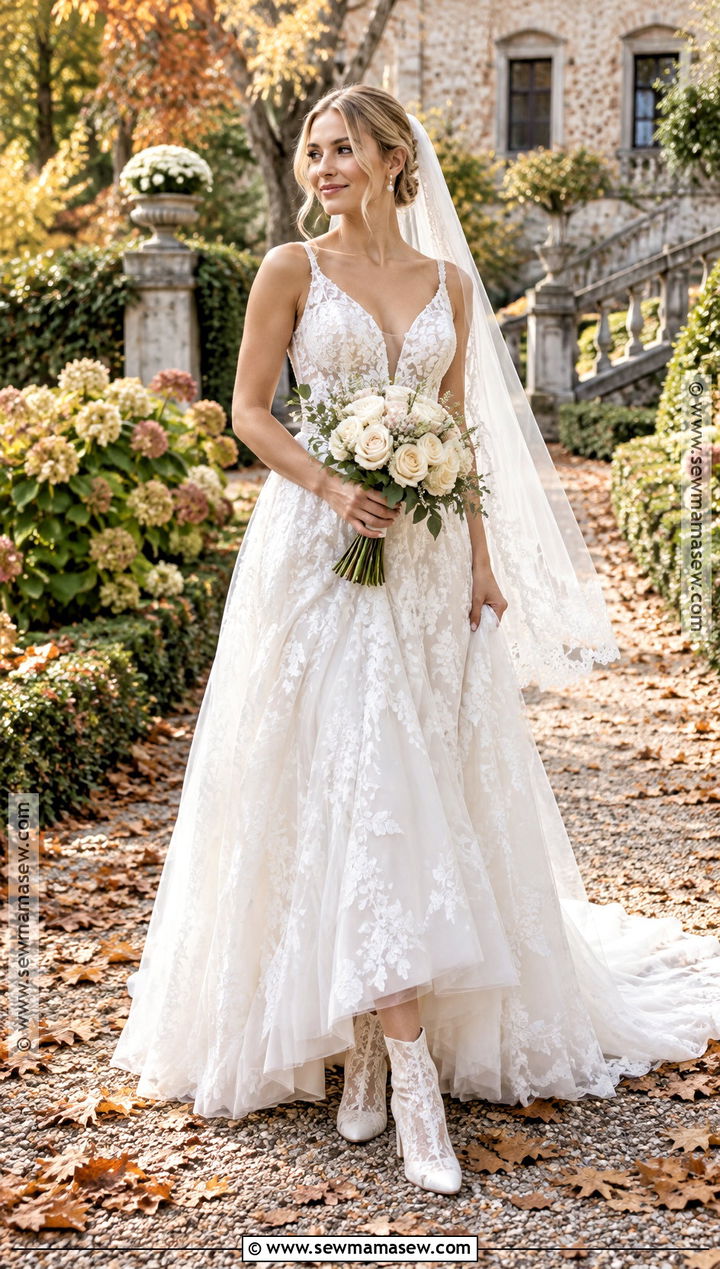
Lace on the boot repeats the lace on an A-line skirt, so the two read as one design instead of shoe plus dress. I look for an almond toe, a fitted ankle and a block heel; a pointed toe can catch the inside of a full skirt with every step. Cream roses, a fingertip veil and pearl drops finish it, and an ivory wrap covers the arms for outdoor portraits. Hold the boot against the gown in daylight before you buy. Two ivories that match under shop lighting can split into yellow and pink in photos. A thin cushioned sock that stays below the boot line makes a real difference by the reception.
2. White Cowboy Boots With Lace Wedding Dress
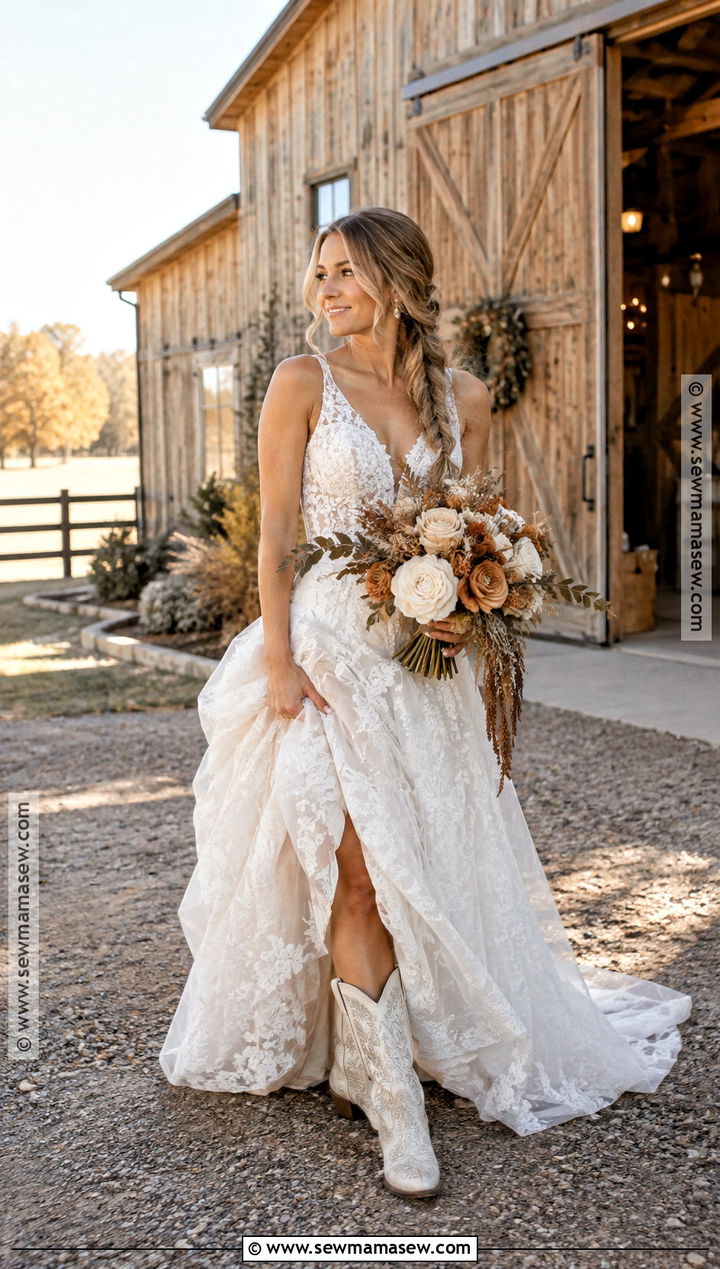
White cowboy boots shift a lace gown toward the country without making it costume. Tonal embroidery keeps them bridal, and a low stacked heel is what you want for hours of standing. A fitted lace dress gives a sharp contrast; a loose boho gown turns the whole look softer and more relaxed. I'd add turquoise or pearl earrings, a loose braid and white flowers with rust accents, then stop. Leave the hat at home so the boots stay the single Western note. On a ranch or a grassy field, that broad heel sits on top of soft ground where a narrow one would sink.
3. Pearl Bridal Boots With Satin Ball Gown
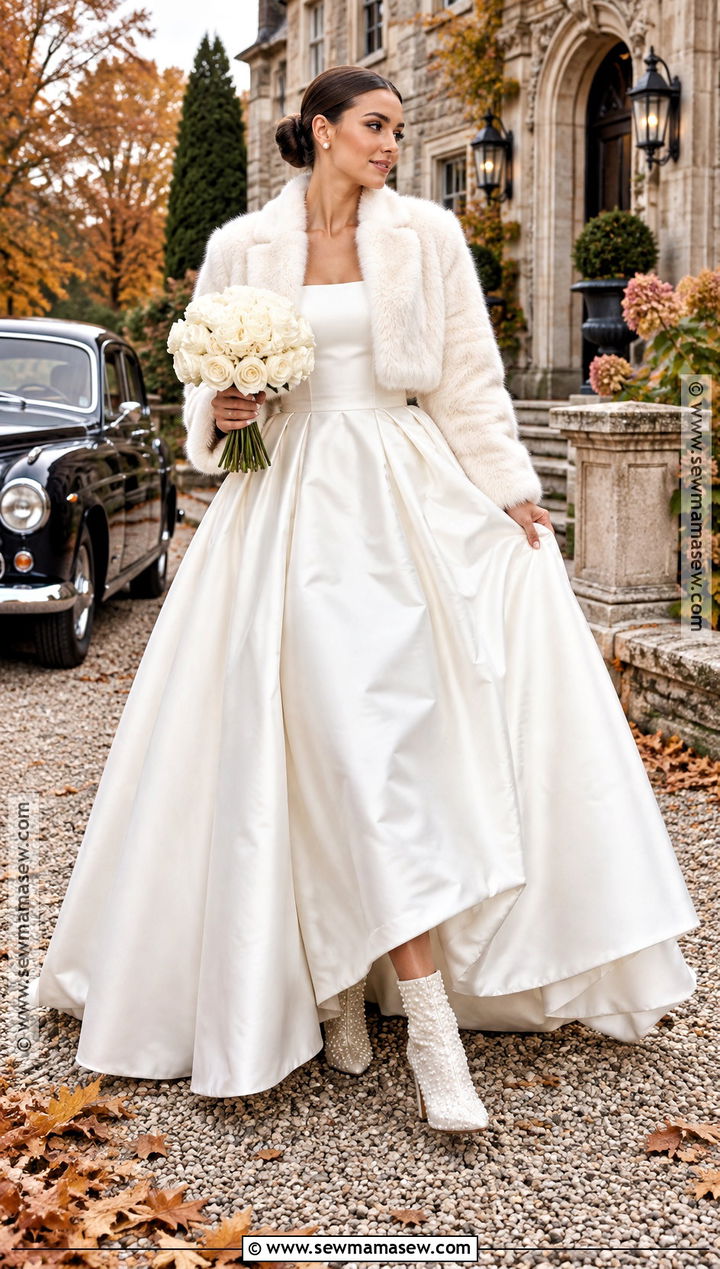
Satin is plain and smooth, so pearl boots have something to show against when the skirt swings. The thing I check first is the zipper and the spacing of the pearls. Large clusters near the top of the shaft snag the lining of a ball gown, and a snag mid-aisle is impossible to fix discreetly. An ankle pair with small, evenly set pearls avoids that. Pearl studs, a sleek bun and white roses are enough; a cropped faux-fur jacket keeps you warm for portraits and still shows the waist. Walk the full length of a room in the complete outfit before the day, listening for the skirt dragging on beads or the zip pull.
4. Crystal Ankle Boots With Tea-Length Wedding Dress
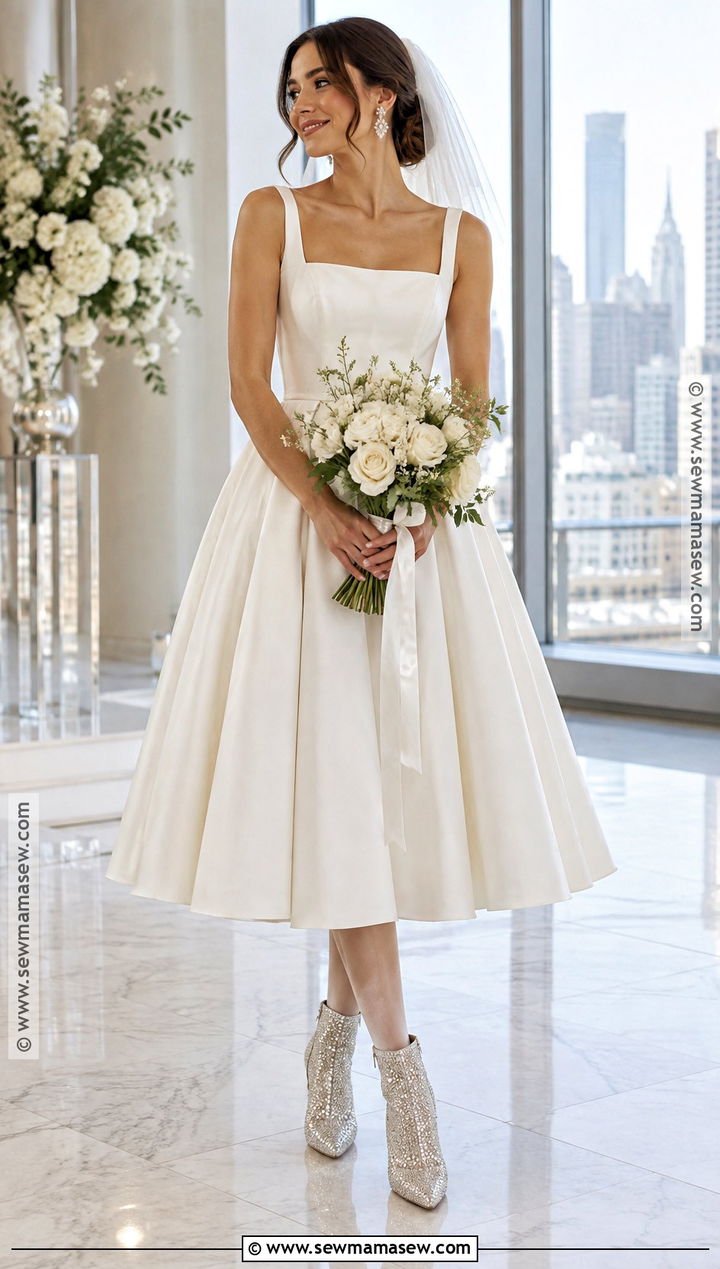
Tea length puts your feet on display, which is exactly why crystals belong here and not under a floor-length gown. A pointed toe and a medium block heel give a clean, balanced line. Scattered stones sparkle without stealing from the dress. Sheer ivory tights add warmth when the ankle is exposed in October air, and they also smooth the transition between boot and skin in photos. I'd pair it with a short veil and a small ribbon-tied bouquet for a loft, hotel or city ceremony. Practise turning in them at home. Embellished boots weigh more than plain satin, and you feel it by the third hour.
5. Block Heel Bridal Boots With Crepe Wedding Gown
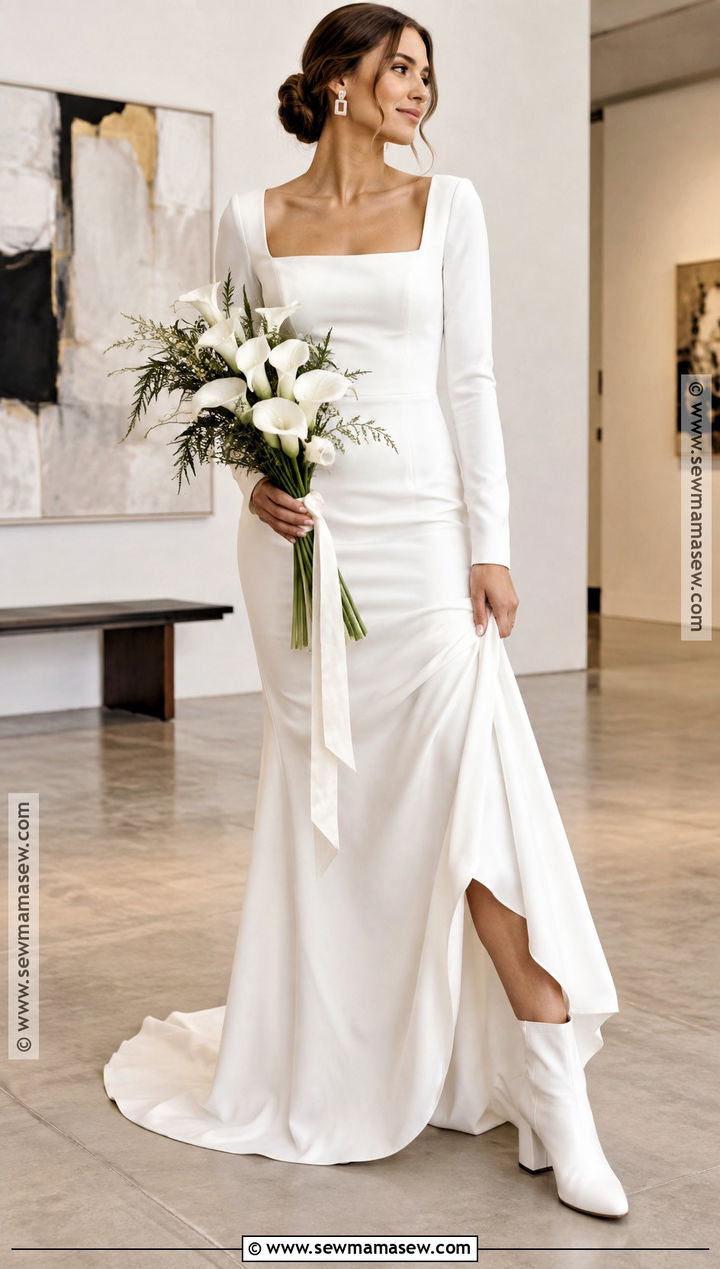
Crepe has a matte, close-lying surface that shows every lump underneath it, so I keep the boots under it smooth leather or satin with little decoration. An ankle-hugging shaft matters more here than with any other dress, because a loose boot opening shows as a ridge through a fitted skirt. Check that in a mirror from the side. A heel around two inches gives lift and stays stable on a patio or lawn. Calla lilies or orchids, geometric earrings and a low chignon suit the clean lines. Bring these exact boots to every alteration appointment so the hem is finished at the right height.
6. Suede Bridal Boots With Boho Wedding Dress
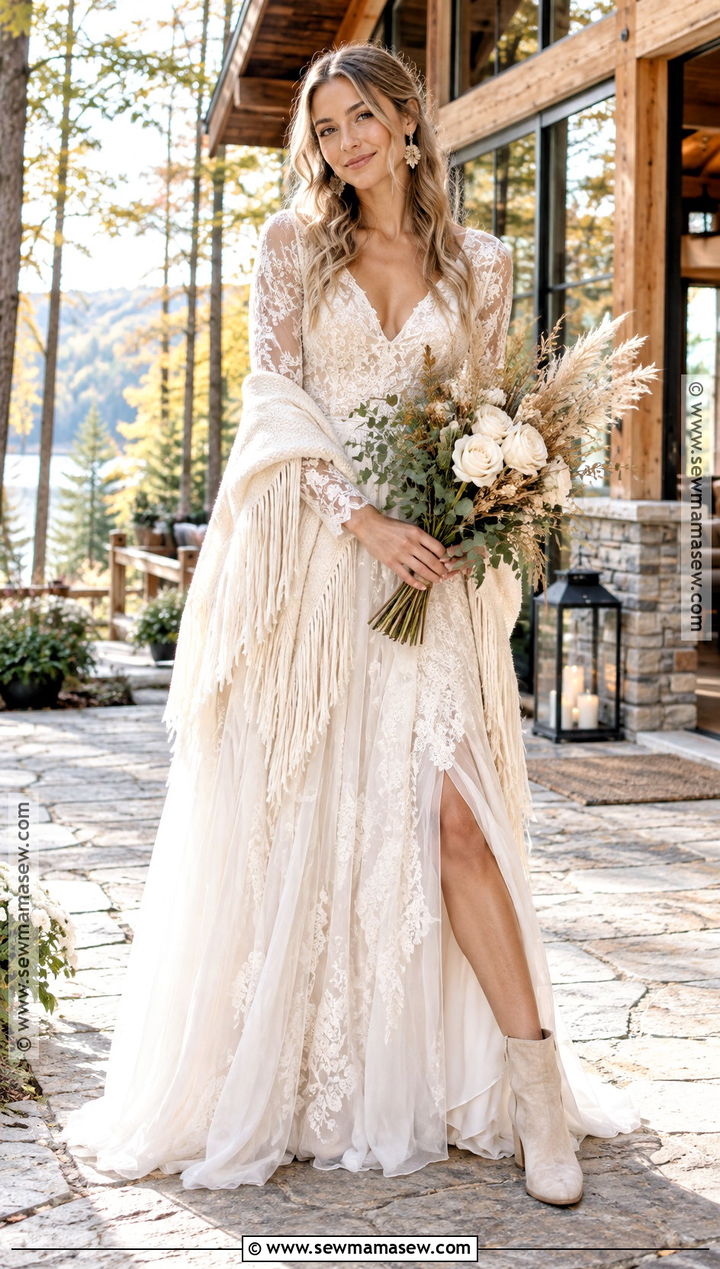
Suede has a soft nap that pairs naturally with chiffon, loose lace and flutter sleeves. I choose a rounded toe, a low heel and quiet stitching, nothing that tips into Western. Loose waves, botanical earrings and dried grasses mixed with fresh cream flowers suit forest, meadow and lodge settings in early fall. A fringed wrap handles the evening chill. Here is my honest warning: ivory suede marks fast, darkens when wet and picks up grass stains. Spray it with a suede protector a couple of days ahead, let it dry fully, and give someone in the bridal party a suede brush and eraser to carry.
7. Knee-High Bridal Boots With Mini Wedding Dress
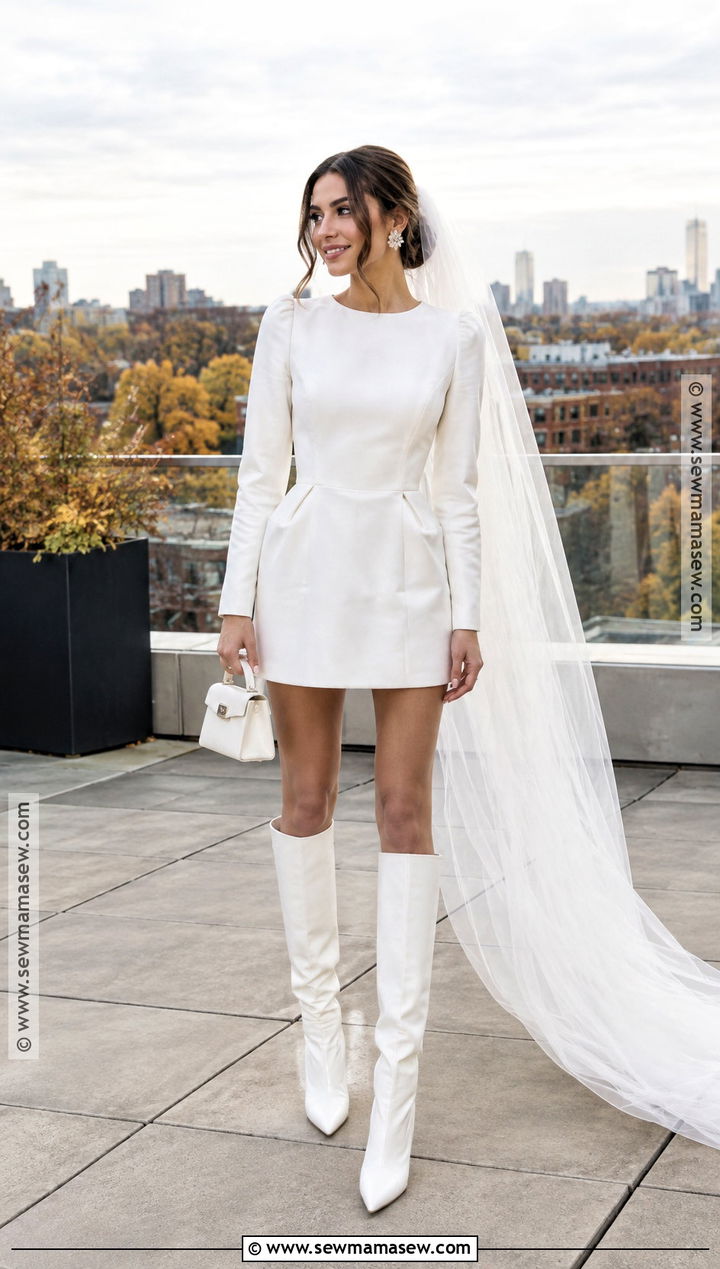
A knee-high boot with a mini dress is the most modern look in this set, and also the easiest to get wrong. The boot top and the dress hem need space between them; if they almost touch, the leg looks chopped. A slim shaft and pointed toe lengthen the leg, and a low or medium heel keeps it wearable all night. Long sleeves, a high neck or a blazer cut balance the short skirt. Sheer tights add warmth, and a long veil brings the traditional bridal contrast. It suits a courthouse, a rooftop or a reception change. Sit down in it before buying to check the boot top doesn't dig in behind the knee.
8. Victorian Lace-Up Boots With Vintage Wedding Dress
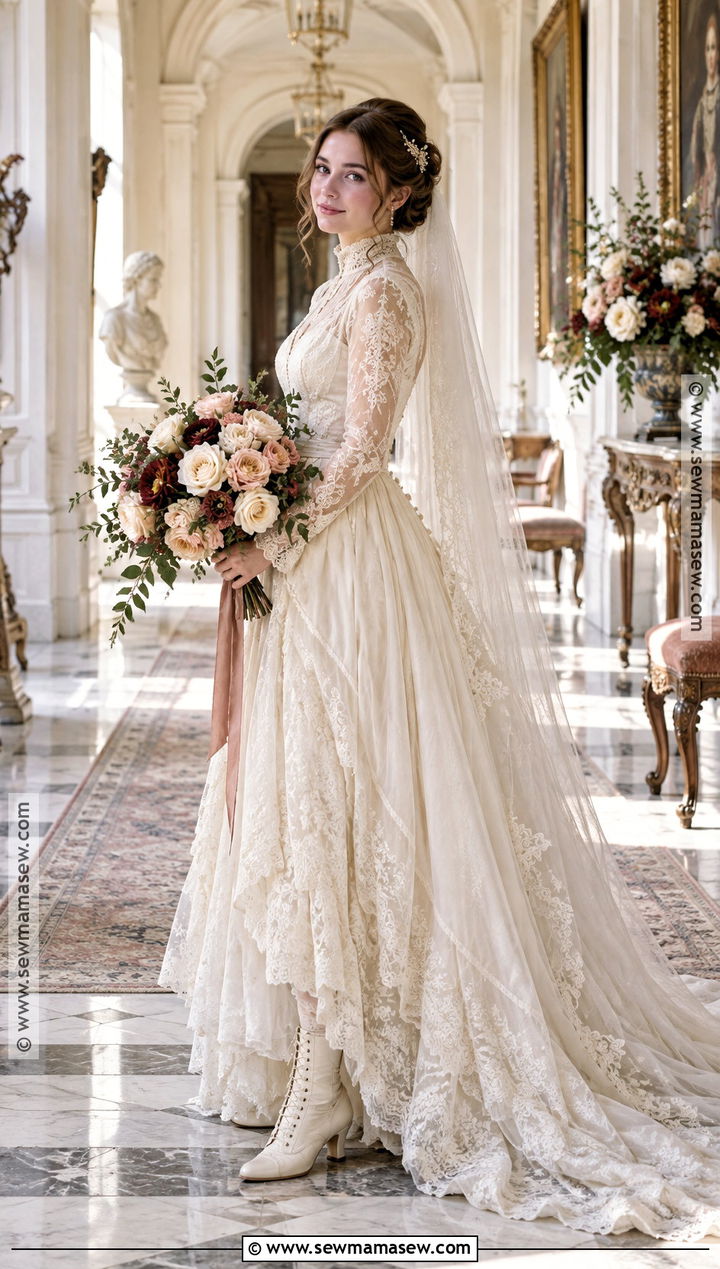
Lace-up Victorian boots belong with a high neck and delicate sleeves, where the period details agree with each other. Covered buttons, slim laces and a stable curved heel in ivory leather or satin give the right shape, but only if the shaft hugs the ankle. A waved updo, an antique-style comb and a lace-edged veil keep it romantic, and garden roses in cream, dusty pink and muted burgundy carry the fall palette. Keep the skirt light. A heavy gown over detailed boots weighs the whole look down. These boots are stiff at the ankle when new, so start wearing them at home weeks before the wedding.
9. Silver Metallic Boots With Modern Wedding Dress
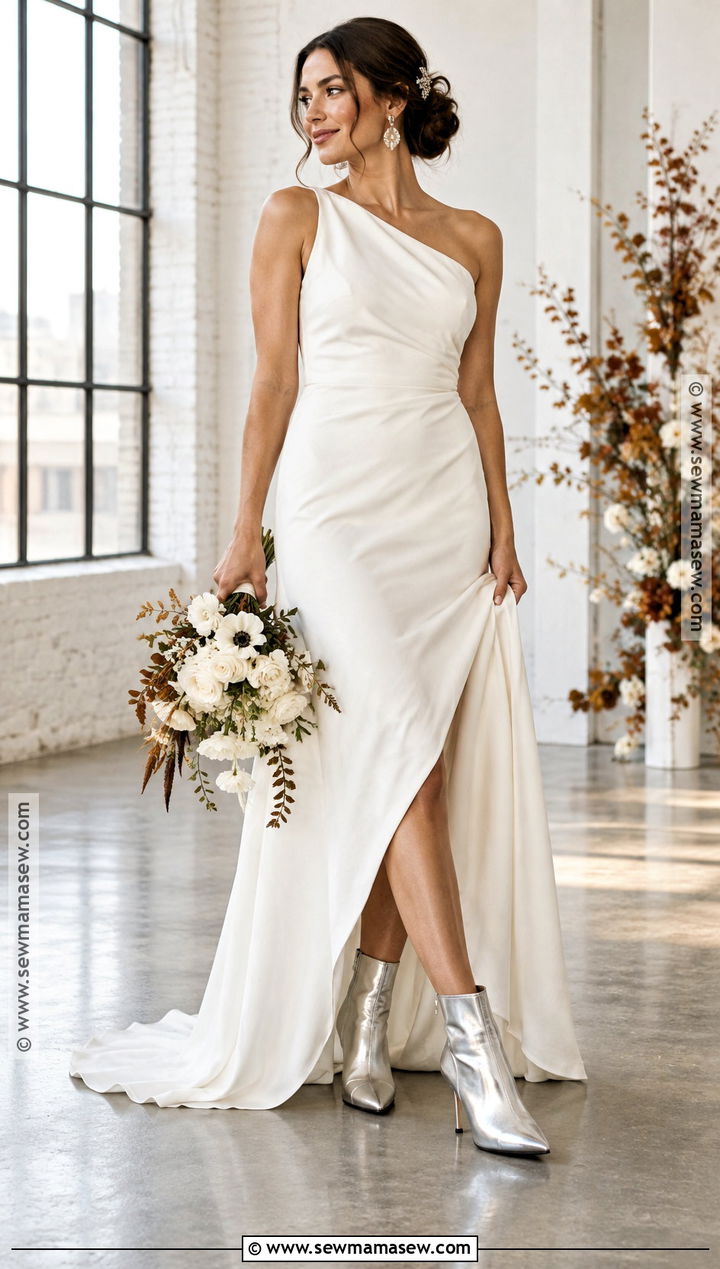
Silver boots under a minimalist gown work because the dress is plain enough to let one reflective element lead. A smooth pointed toe and a block or kitten heel suit a column, asymmetric or slip dress. Silver earrings, a metallic hair piece and a gray ribbon on the bouquet tie it together; anything more starts to glitter in every direction. A slit or raised hem lets the metal catch the light as you move, which is when it photographs best. Metallic finishes often come on slick soles, so I check the bottoms and add grip pads for polished floors or stone paths.
10. Blue Suede Boots With Simple Wedding Gown
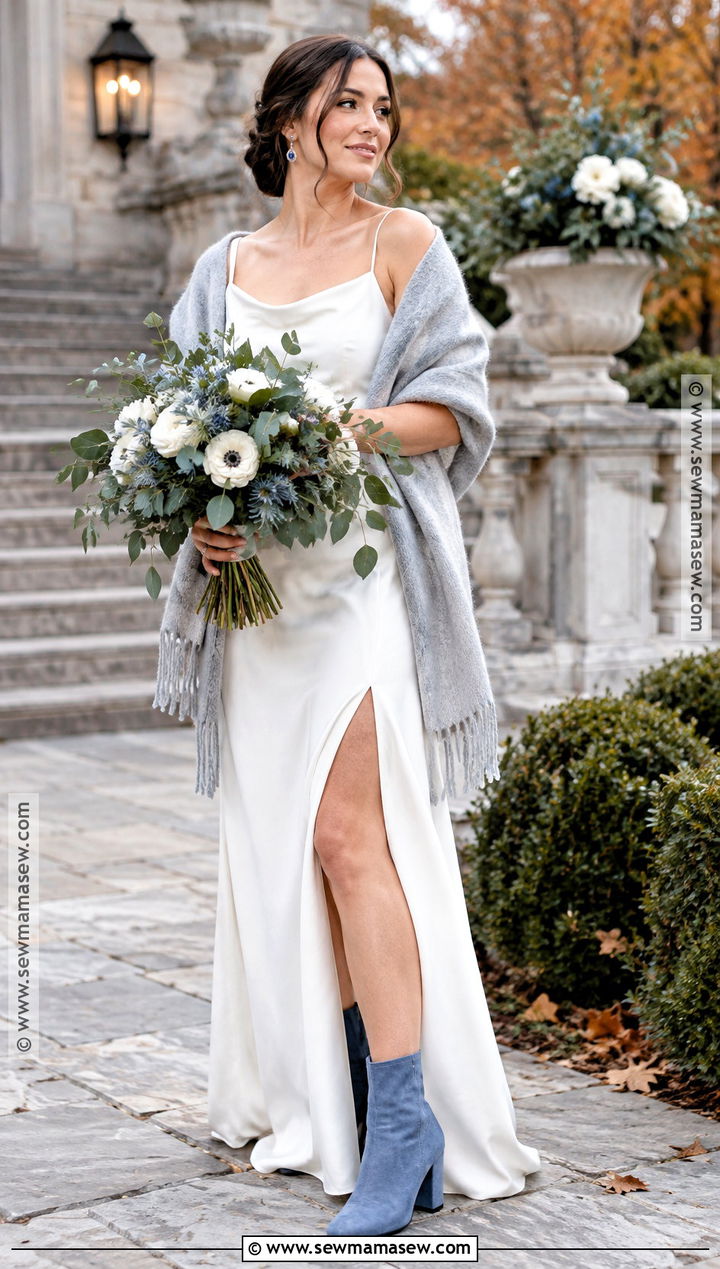
Blue suede is my favourite way to wear something blue, because it stays hidden until you move. Dusty blue, slate and muted navy feel right in fall and sit well against cool ivory; with a warm ivory or champagne gown, test the pairing first, since warm and cool can clash. A streamlined boot with a low block heel and very little hardware keeps it subtle. A slit, tea-length or high-low hem reveals the colour with each step. Sapphire studs and eucalyptus with white blooms echo it gently. Waterproof the suede, and if rain is forecast, have a backup pair ready.
11. Brown Cowboy Boots With Rustic Wedding Dress
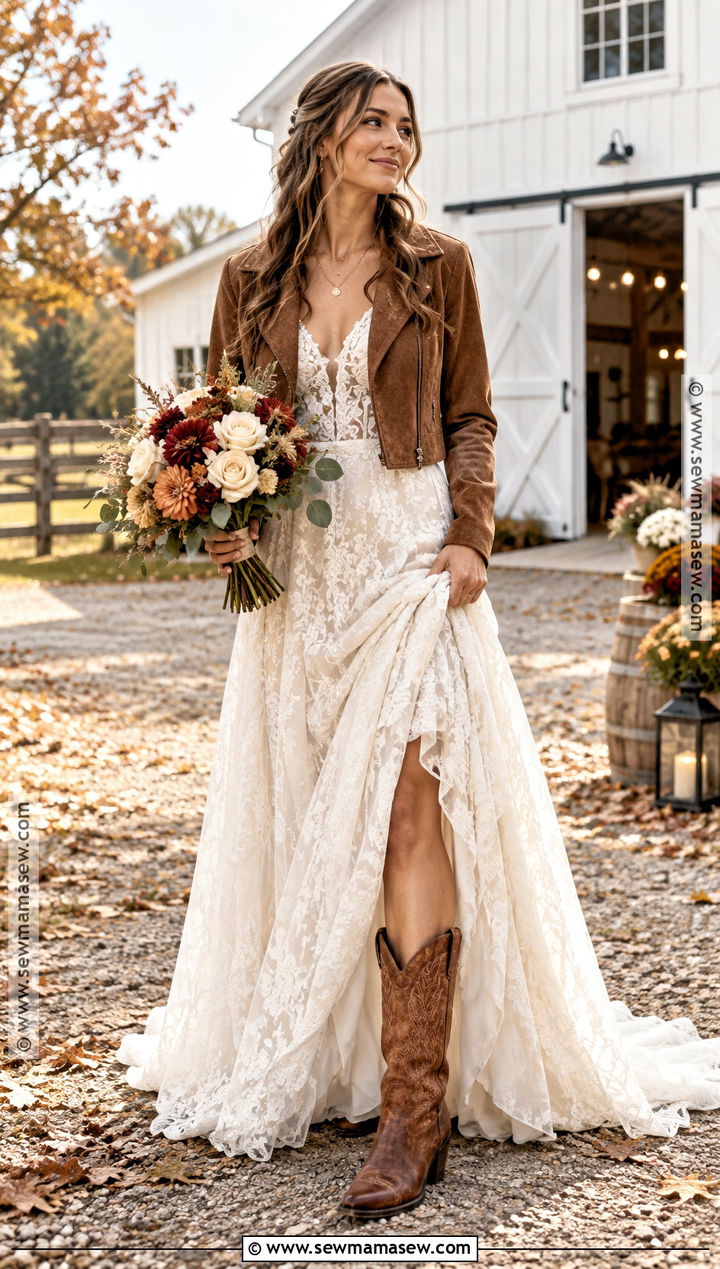
Brown leather is the one boot here that ties the bride to the landscape: cognac and chestnut sit with wooden barns and turning leaves. I pair them with a lace or chiffon gown that moves. Bold stitching on the boot means simpler details on the dress, otherwise the two compete. A denim or suede jacket for outdoor portraits, understated gold jewellery and cream, terracotta and deep red flowers suit the colours. Hem length decides how much boot people see: floor length hides them and keeps the comfort private, while a high-low skirt puts them on show. Break real leather in for weeks, not days.
12. Flat Bridal Boots With Long-Sleeve Wedding Dress
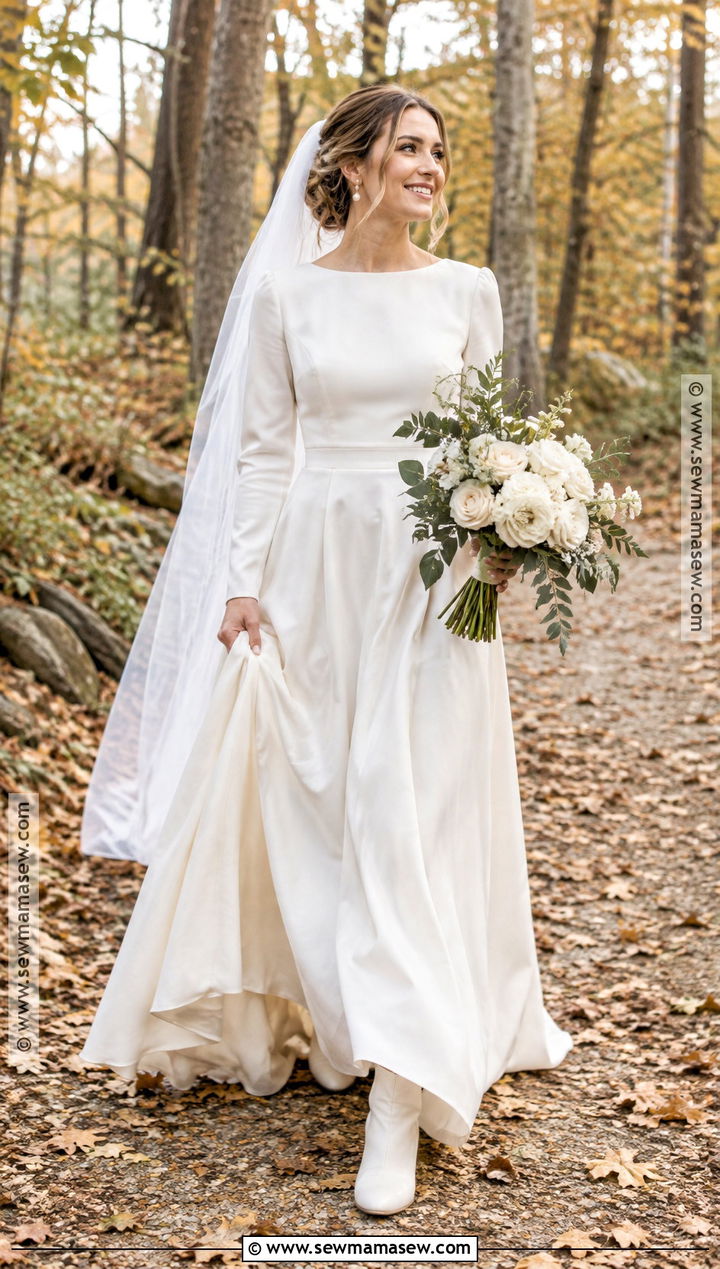
Flat boots are the honest answer for brides who know heels will be off by dinner. An almond toe and a close ankle shaft in polished leather or satin keep them bridal rather than casual. With a long-sleeve gown, the result is a fully covered, weather-ready outfit. An A-line or empire waist keeps a flat boot from looking heavy; a tight mermaid shape can make it look clunky. Check the sole for texture, since smooth flat soles slide on wet grass and courtyard stone. If you add cushioned insoles, add them before the final fitting, because they can change your height enough to shift the hem.
13. Platform Bridal Boots With Short Wedding Dress
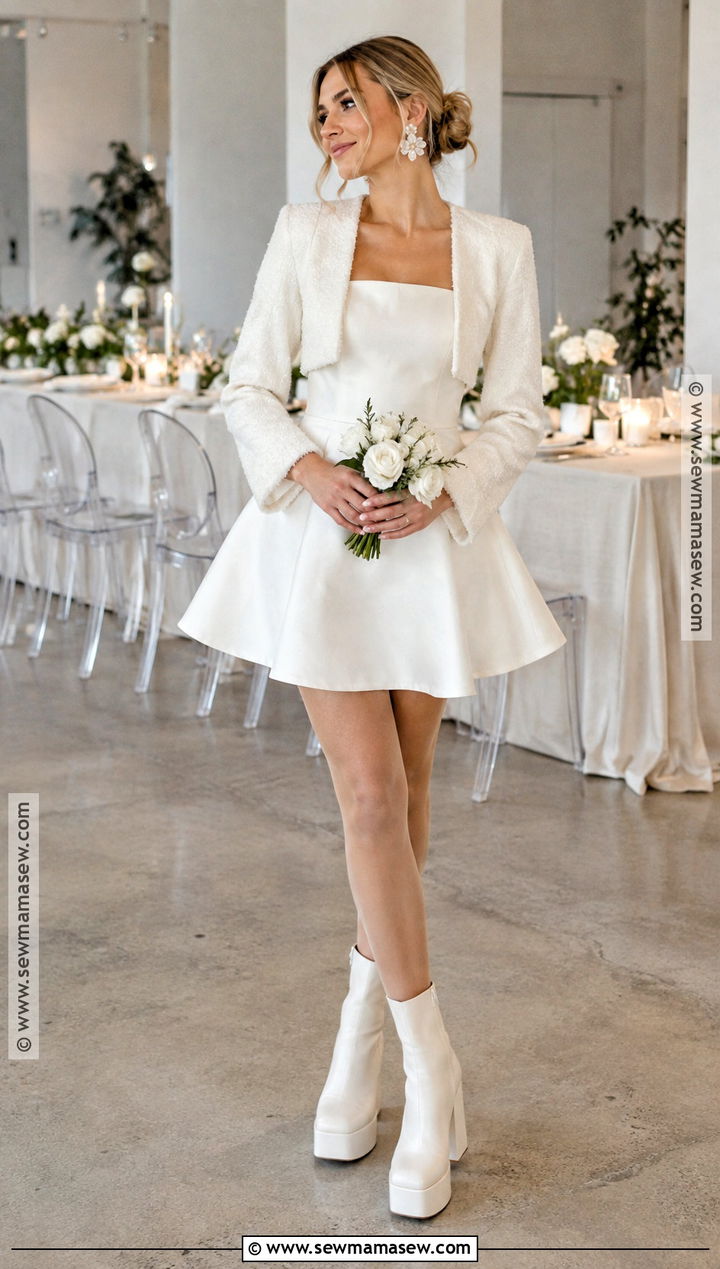
Platforms give height without the angle of a stiletto, which is why they suit a short dress and a long night of dancing. I look for a balanced platform, a sturdy block heel and real ankle support. White leather or satin keeps them bridal, and a few crystals are enough. An A-line mini, sheer or opaque tights and a cropped jacket cover cooler evenings, with a compact bouquet that matches the shorter shape. A thick sole changes your stride and how you take stairs, so practise both. Very heavy soles tire the legs quickly. I like this for a modern reception, a relaxed ceremony or a second look.
14. White Chelsea Boots With Bridal Pantsuit
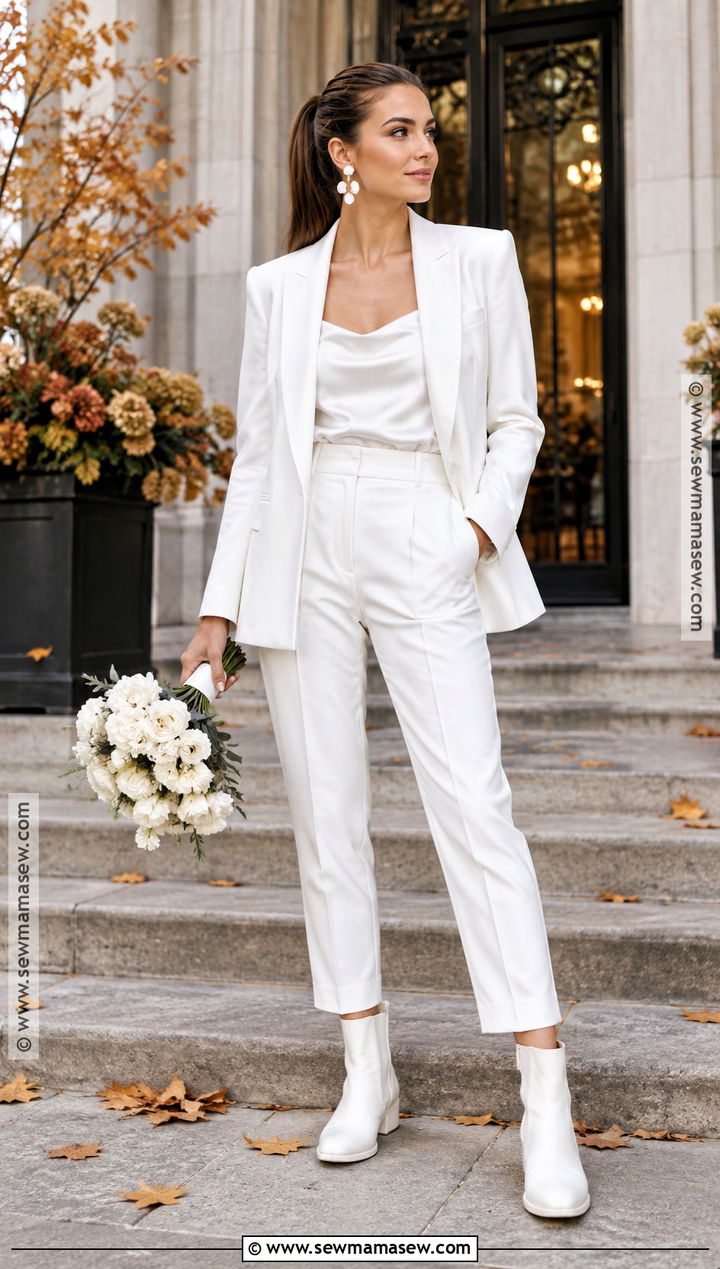
With a pantsuit, the trouser hem is the whole job. White Chelsea boots in smooth leather, with elastic side panels and a slightly pointed toe, give a slim base. Cropped trousers show the ankle; full-length ones should just skim the top of the boot with a slight break. A satin camisole, silk blouse or lace top under the blazer softens the tailoring, and a long coat adds warmth without losing the line. Sculptural earrings and a sleek ponytail finish it. Have the trousers hemmed while you're wearing these boots, because even a small change in sole height shifts how the fabric falls.
15. Embroidered Western Boots With High-Low Wedding Dress
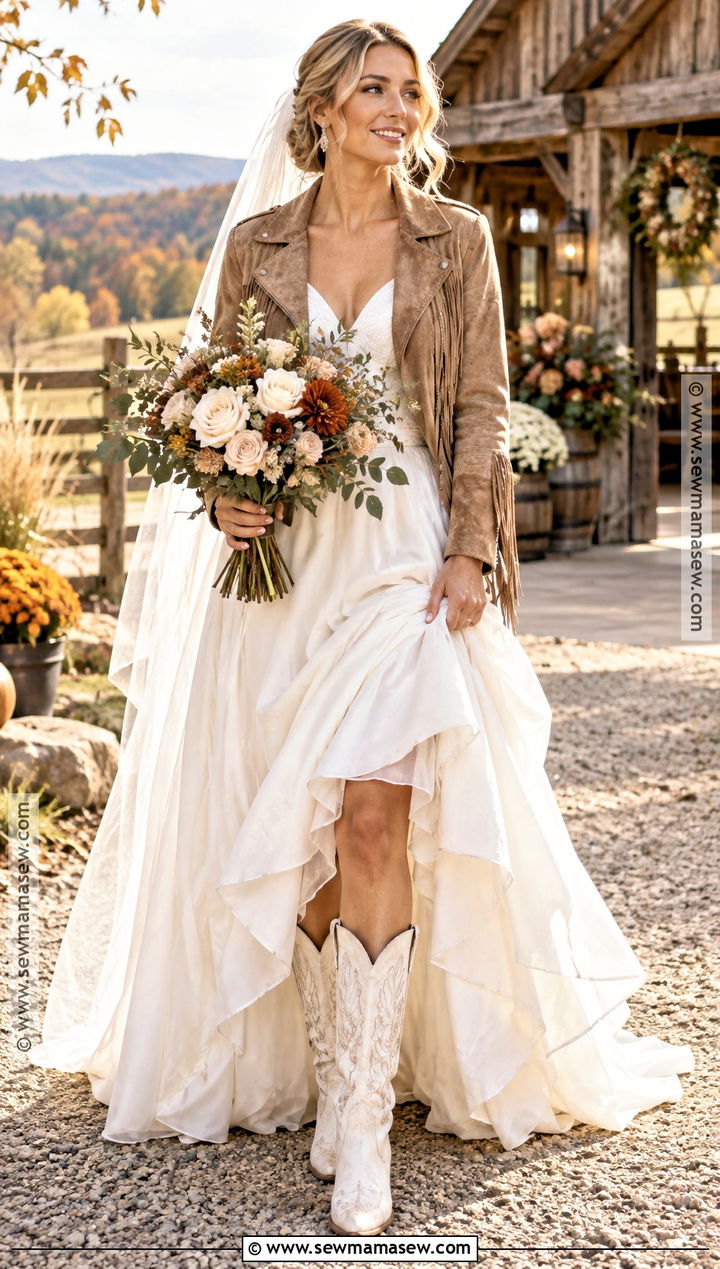
Embroidered Western boots are worth showing off, and a high-low dress does that without giving up a long train at the back. I choose white or ivory with tonal stitching, a comfortable stacked heel and a shaft that sits securely on the calf. The short front shows the embroidery; the longer back keeps the bridal sweep. With detailed boots, skip extra fringe and other Western accessories. A simple veil, delicate earrings and cream flowers with rust accents are plenty, and a removable leather or suede jacket handles a chilly outdoor evening. Climb some stairs in the dress to check the back hem clears the heels.
The Hem Is Measured From Your Boot Sole
A seamstress hems a floor-length gown to clear the floor by a small margin while you stand in your real footwear. Change from a two-inch block heel to a flat boot after that, and the skirt drags; go the other way and it stops above the toe. That is why I tell brides to settle on the boots before the first fitting and not swap them later.
Bring the boots, any insoles and the tights or socks you plan to wear. For high-low and tea-length dresses, ask the seamstress to check the front hem as you walk, since the boot shaft and the hem should not touch when your knee lifts.
Wearing Them In So Your Feet Last Until the Last Dance
New leather and lace-up boots press on the heel and the top of the foot until they soften. Feet also swell over a long day, so a pair that feels fine at noon can pinch by the speeches. I have brides start three or four weeks ahead with short wears at home, in clean socks, on carpet so the soles stay unmarked for returns.
- Wear them for an hour at a time indoors, then add stairs and a short walk on a hard floor.
- Notice exactly where rubbing starts and put blister patches there on the wedding morning.
- Lightly scuff smooth soles with fine sandpaper, or add grip pads, before walking on stone or polished wood.
- Pack a pair of flat shoes for the end of the night, even if you never change.
My Order for Settling on Bridal Boots
Start with the venue floor and the dress length, then choose the style. Grass and gravel need a wider heel; a polished ballroom needs grip; a tea-length or high-low hem means the boots are part of the look rather than hidden. White and ivory stay closest to the gown, while blue, brown, silver and suede bring personality. Whatever you pick, break the pair in, test the soles on a real surface, and carry them to every fitting. Lace, leather, crystals or embroidery all work when the boot suits the ground and lets you move freely all night.
Related posts: