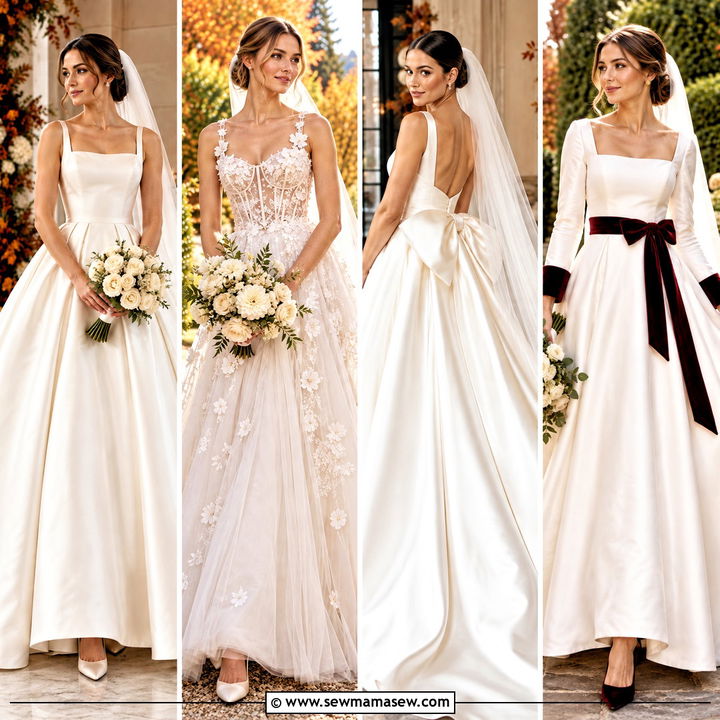
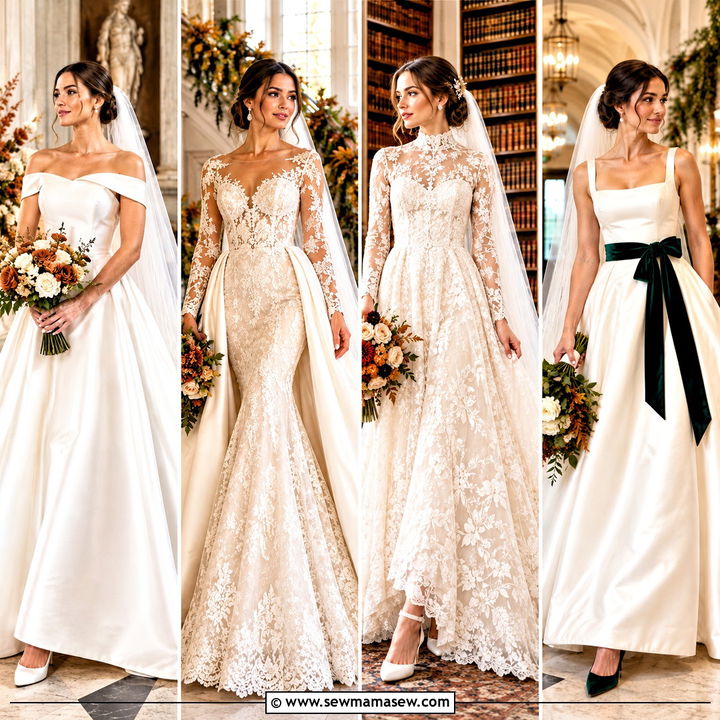
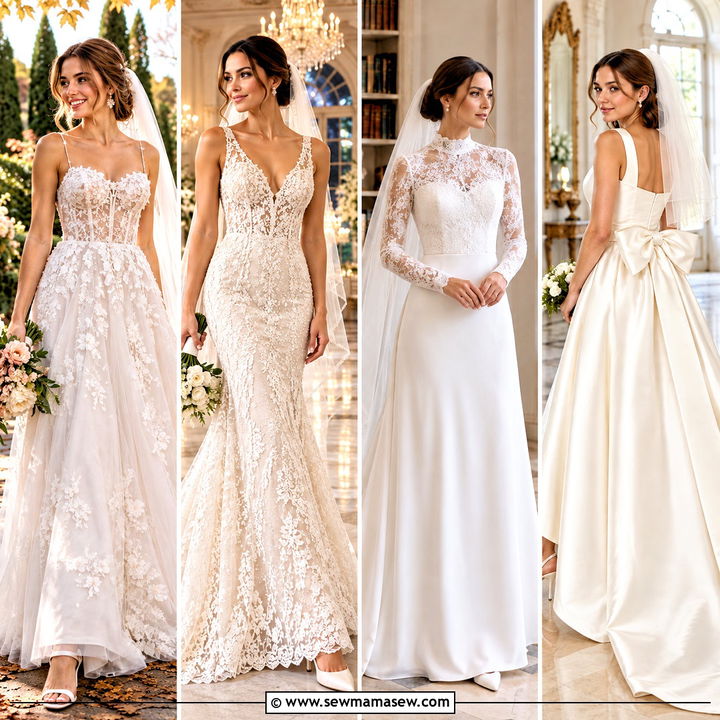
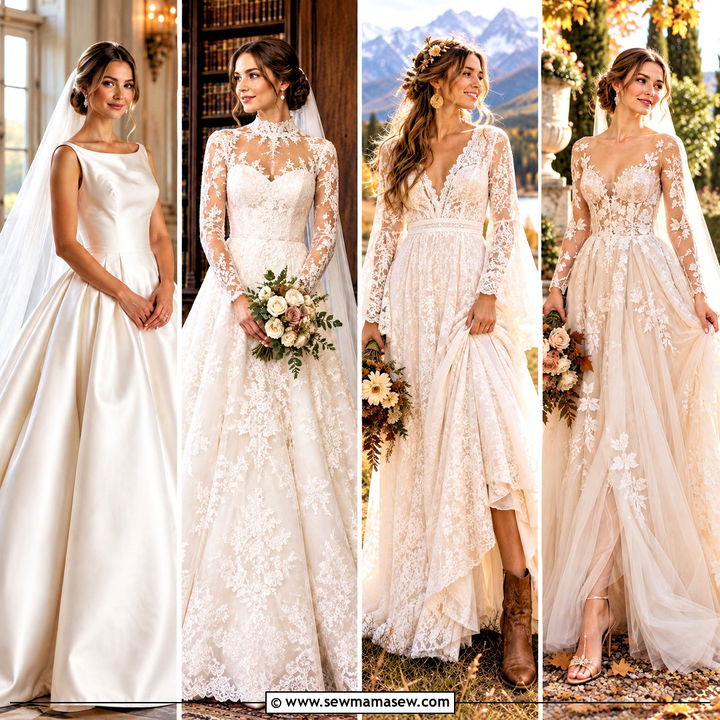
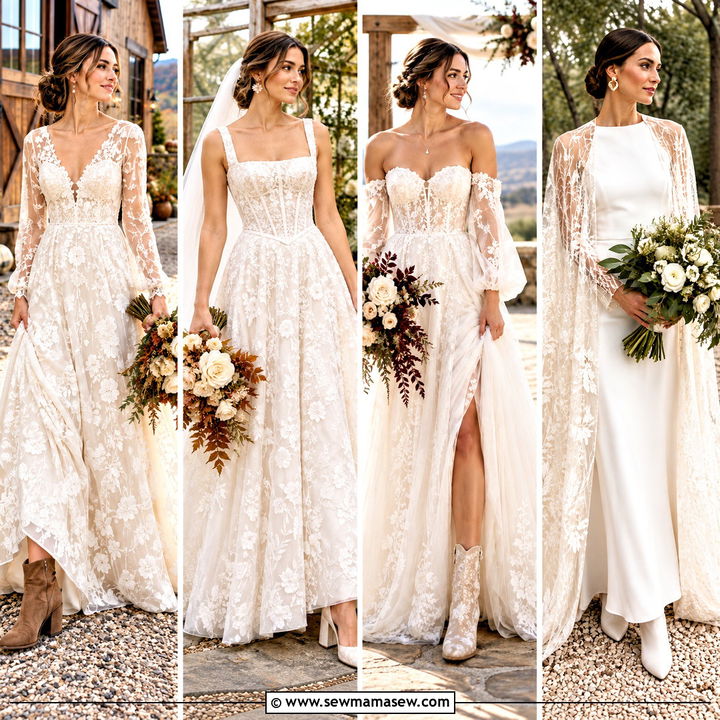
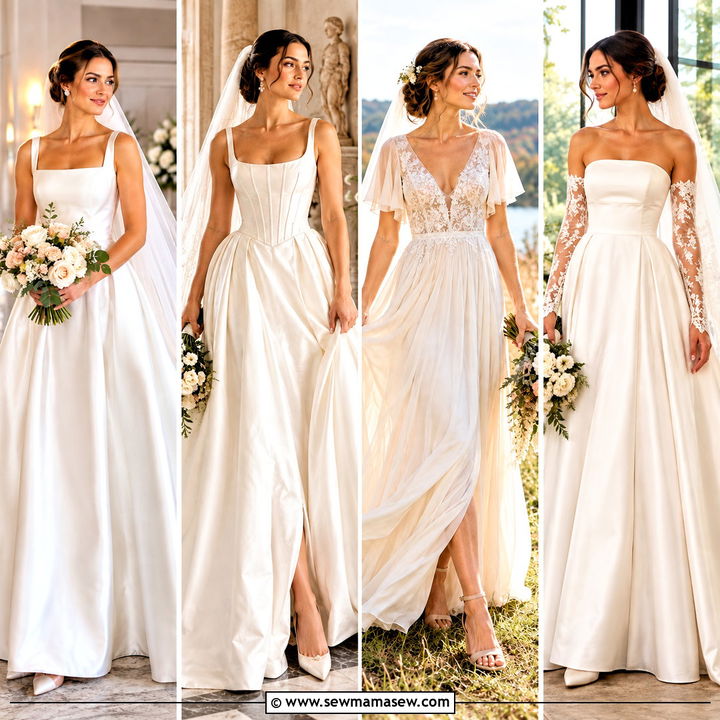
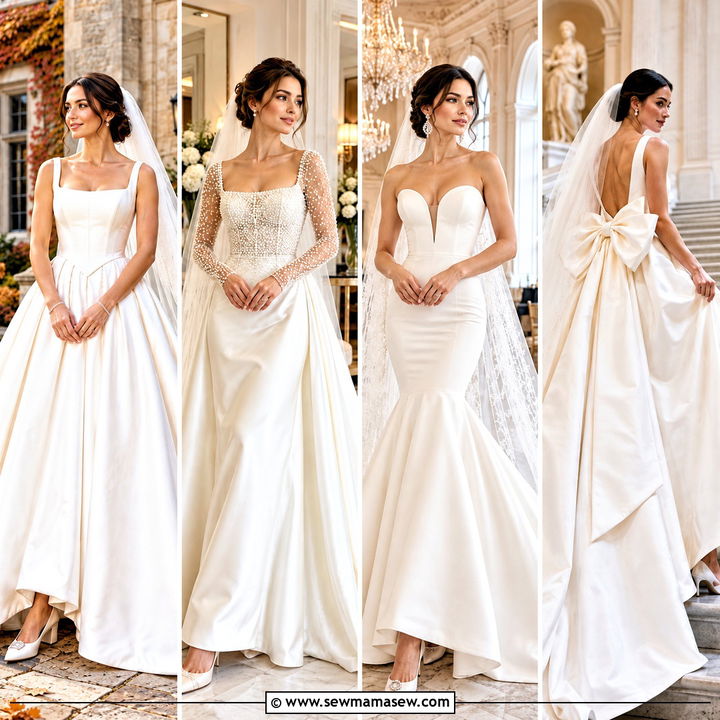
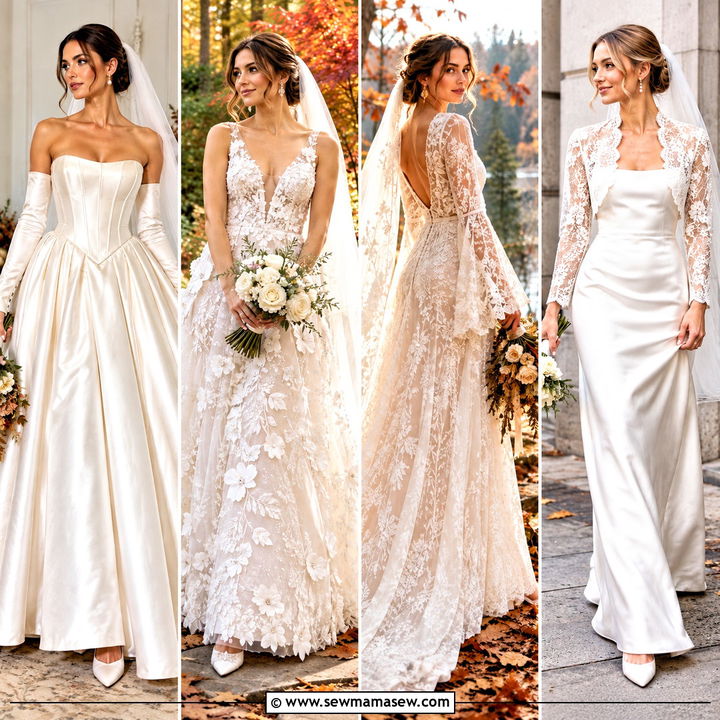
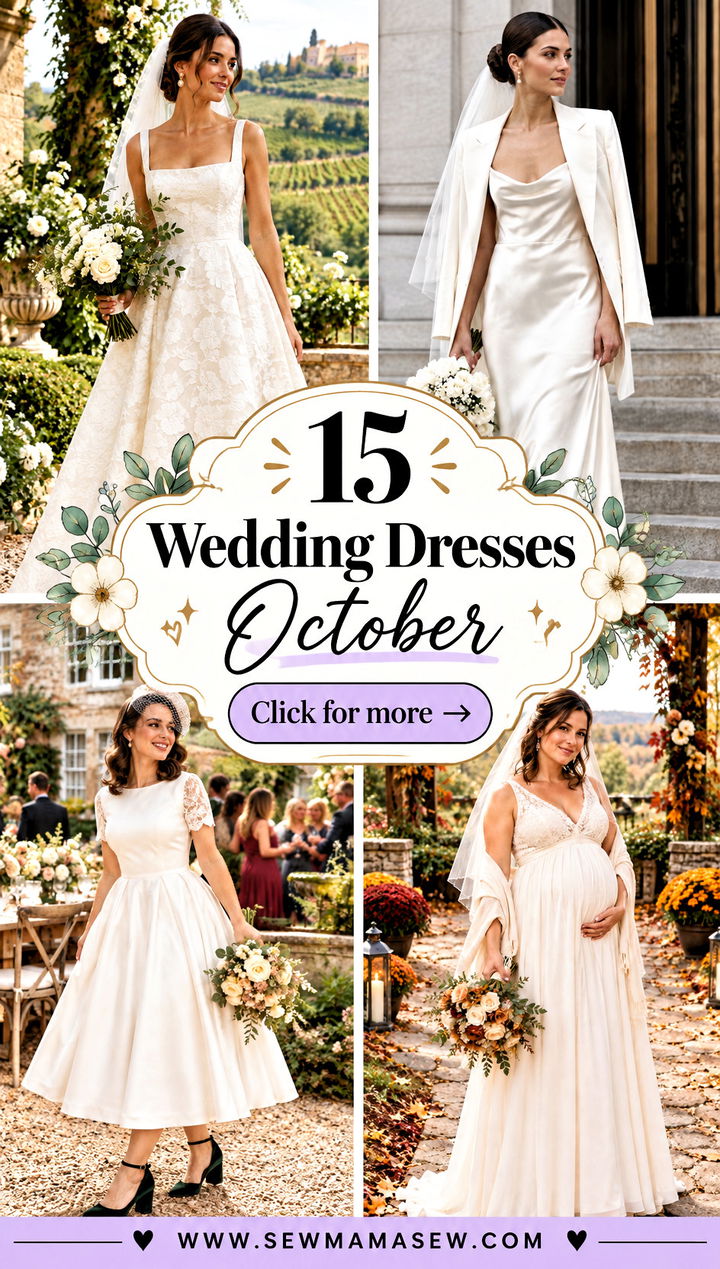
An October wedding asks one dress to cover two seasons in a single day. The ceremony can start in warm afternoon sun and the send-off can happen in air cold enough to see your breath, so the first thing I ask a bride is where she'll be standing at 7 p.m., not which neckline she likes. For fall I lean toward fabrics with some body to them, like structured satin, crepe and woven jacquard, plus a layer that comes off in seconds. Shoes and outerwear get planned at the same time as the gown, because they show up in more photos than people expect. The fifteen dresses below run from garden and barn settings to hotels and courthouses, and I've noted what each one asks of the woman wearing it.
How Much Gown an October Afternoon Can Handle
Fall weddings fall into an awkward middle ground. A heavy ball gown that is ideal at a cold evening ceremony can feel like a sleeping bag at a sunny 3 p.m. vineyard service, while a thin chiffon dress that is easy in July leaves you shivering by sunset. I sort fabrics by weight before I sort them by style.
- Heavier and warmer: Mikado, duchess satin, jacquard and thick crepe. Best for evening ceremonies, cooler climates and indoor venues.
- Middle weight: lace over a lining, lighter crepe and structured tulle skirts. These cover most October dates comfortably.
- Light: chiffon, organza and bias-cut slip satin. Pleasant on warm afternoons, but plan a real coat or wrap for the evening.
Then look at your timeline. If most of the day is spent indoors, a warm fabric can feel heavy by the second hour of dancing. If portraits happen outside after sunset, the light fabric will need help. Matching the cloth to where you'll actually spend the hours matters more than the date on the calendar.
1. Long Sleeve Lace October Wedding Dress
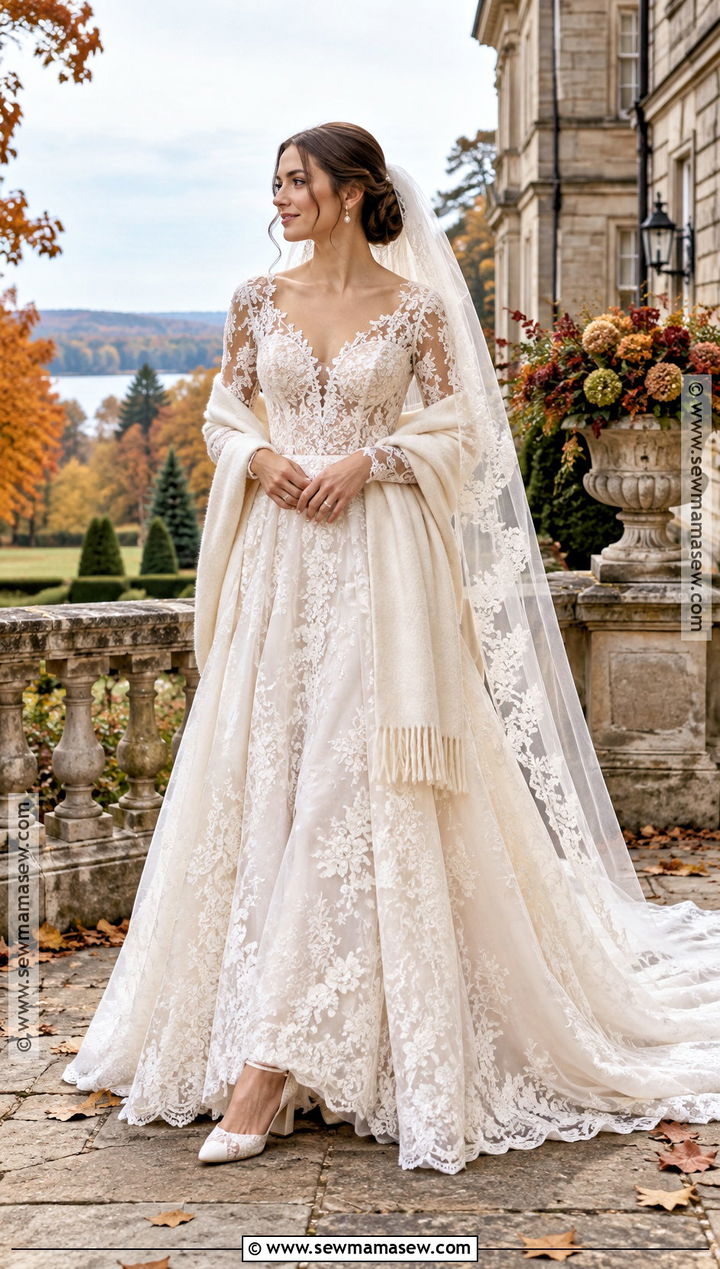
Long lace sleeves are the most practical romantic choice for October, since they give a little warmth without the weight of a fabric sleeve. I like them on an A-line with a fitted bodice and a clear waist, so the layered skirt moves when you walk. Look for illusion sleeves, where the lace is laid over sheer mesh; that keeps the arm from looking padded. Ivory block heels, pearl drops and a fingertip veil edged in the same lace finish it, and a loose low bun leaves the neckline visible. At the fitting, I have the bride lift both arms as if hugging someone. If the bodice rides up, the armhole needs work before anything else. Bring a cream wool wrap for the minutes spent waiting outside.
2. Satin A-Line October Wedding Dress
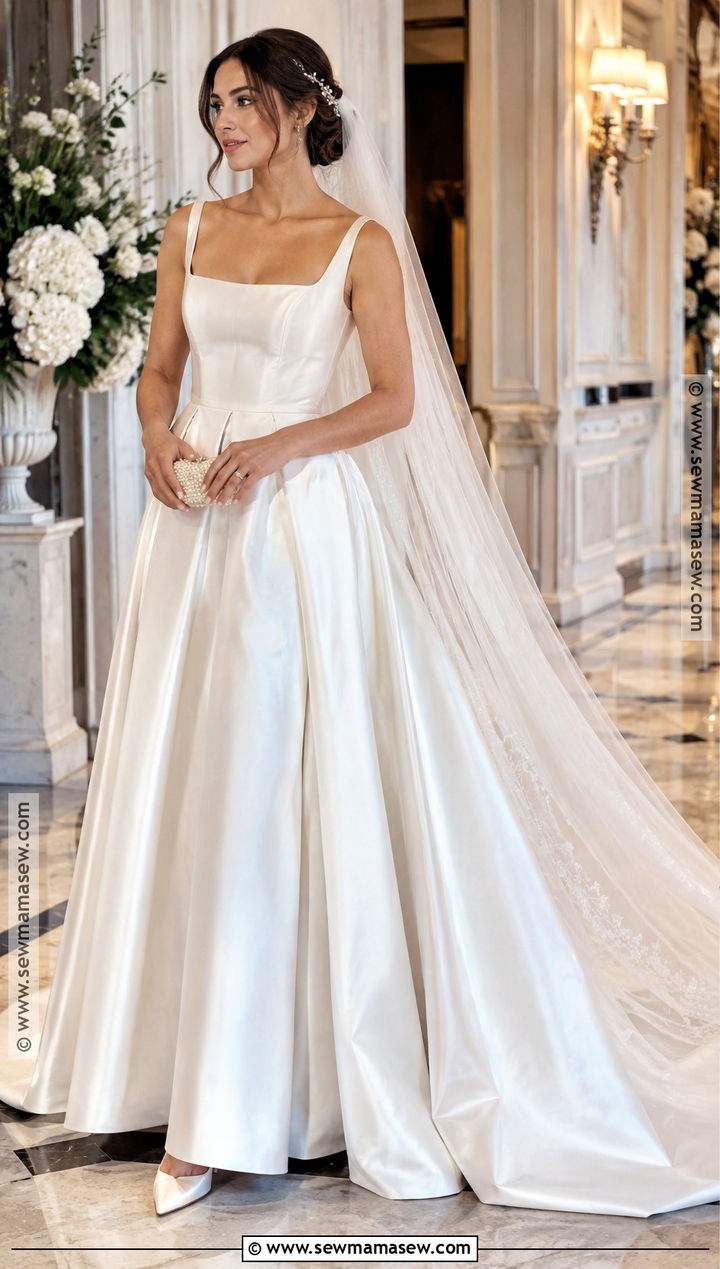
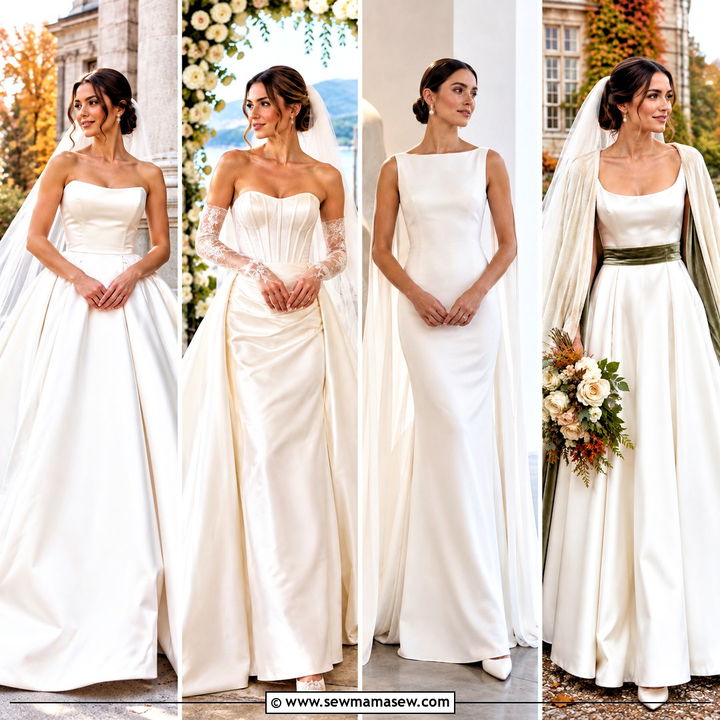
Satin earns its place in fall because low, slanting autumn light picks up its sheen without the glare of midsummer sun. Choose a structured bodice with straps that actually hold weight and a full skirt that sweeps rather than balloons. Pointed pumps, a small pearl clutch, a polished chignon with crystal pins and plain studs keep the look clean. I usually suggest a chapel-length veil here: it gives you a ceremony moment and you can still walk without someone managing it. The one thing to know about satin is that it shows every crease. Have the gown steamed at the venue, and sit carefully in the car on the way there. The defined waist and full skirt flatter a wide range of figures, which makes this an easy recommendation for hotel and country club weddings.
3. Crepe Fit And Flare October Wedding Dress
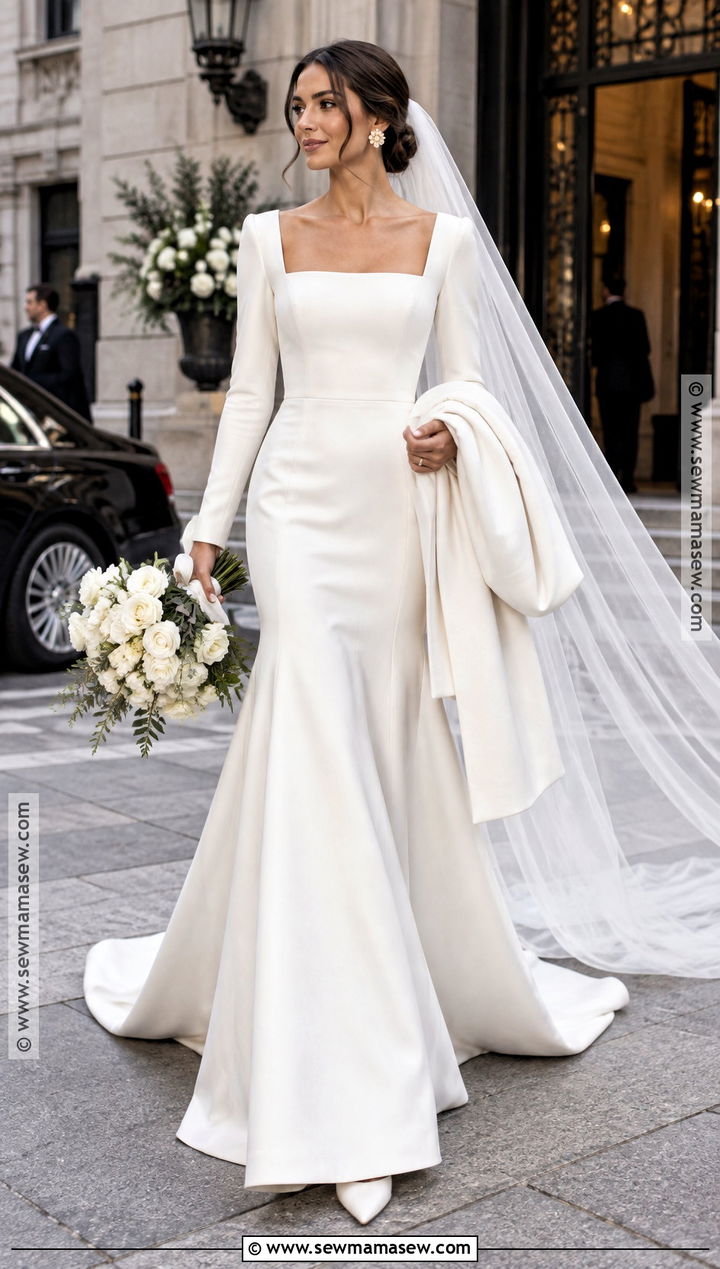
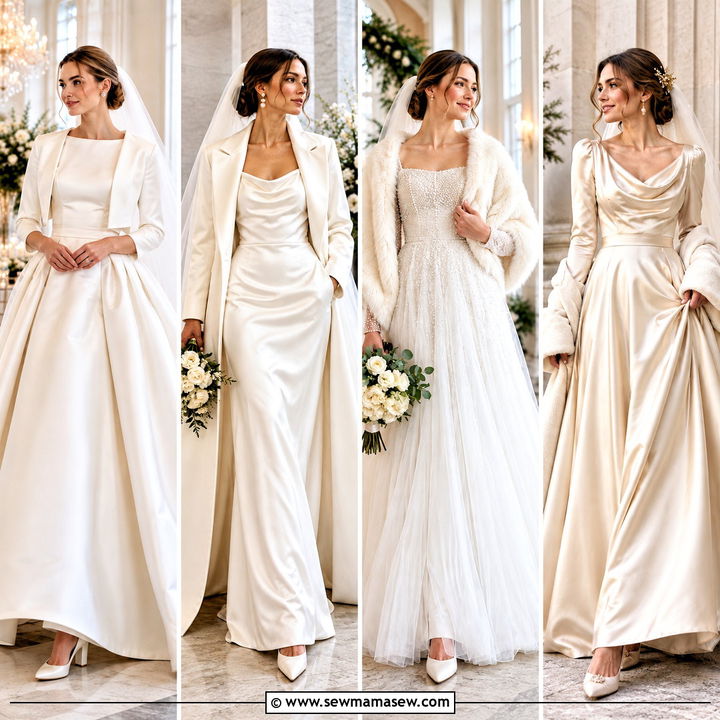
Crepe is my pick for a bride who wants clean lines and no fuss. A long-sleeved crepe fit-and-flare follows the body and then opens below the hip, so you get shape without a lot of volume to carry around. A square or bateau neckline gives the plain fabric some structure. Pair it with closed-toe ivory heels, sculptural earrings and a sleek low ponytail, and let a simple cathedral veil supply the drama. Be aware that matte crepe is honest fabric: it shows the line of whatever is underneath, so the right undergarments matter more here than with lace. Between photo locations, a tailored white coat suits the minimal look far better than a fluffy shrug.
4. Square Neck Ball Gown For October Wedding
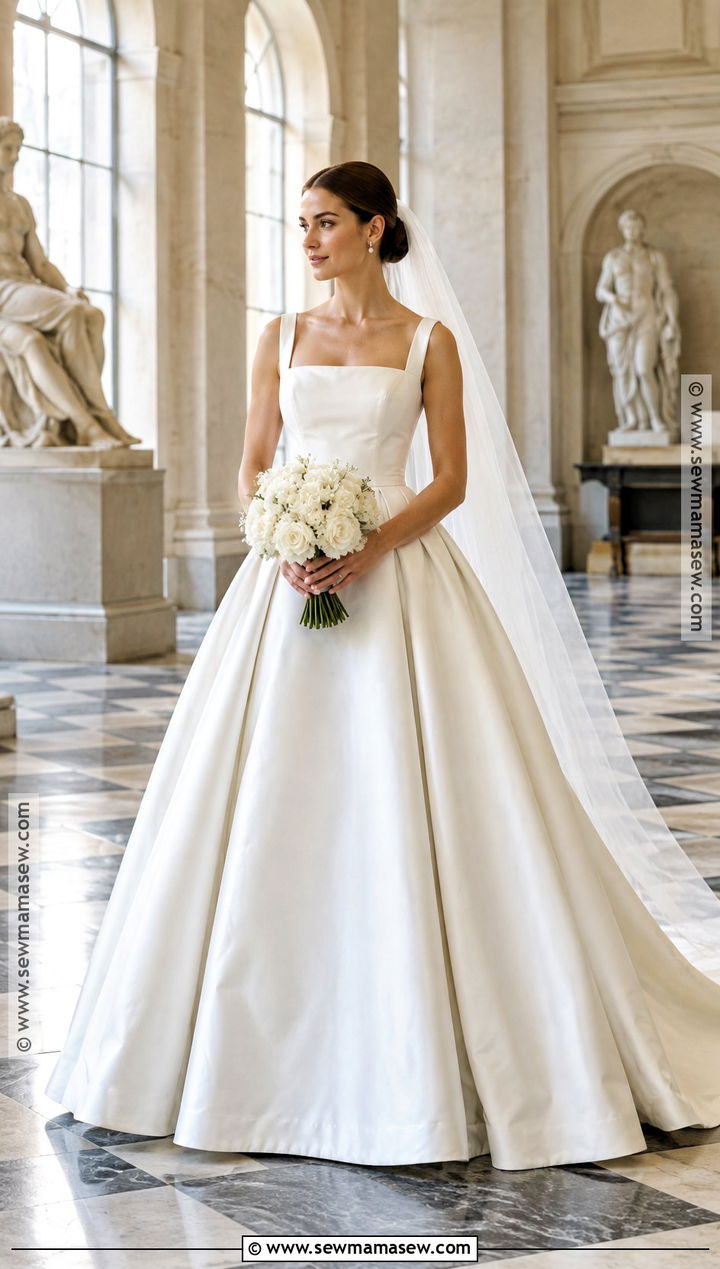
A square-neck ball gown is the most formal dress on this list, and it looks right against bright October trees. Wide straps give the bodice real support and frame the collarbones. I'd choose matte satin or Mikado, both heavy enough that the skirt keeps its shape from the aisle to the last dance. Pearl earrings, a classic veil and platform heels hidden under the hem keep it traditional, and a bun or a soft half-up style suits the straight neckline. If you want more coverage, detachable fitted sleeves or a bridal cape can be added later. One honest warning: a full ball gown takes up a car seat, a bathroom stall and a dance floor, so plan a bustle and a helper. It reads clearly in photos from every angle, which is why ballrooms and museums suit it so well.
5. Off Shoulder Mikado October Wedding Dress
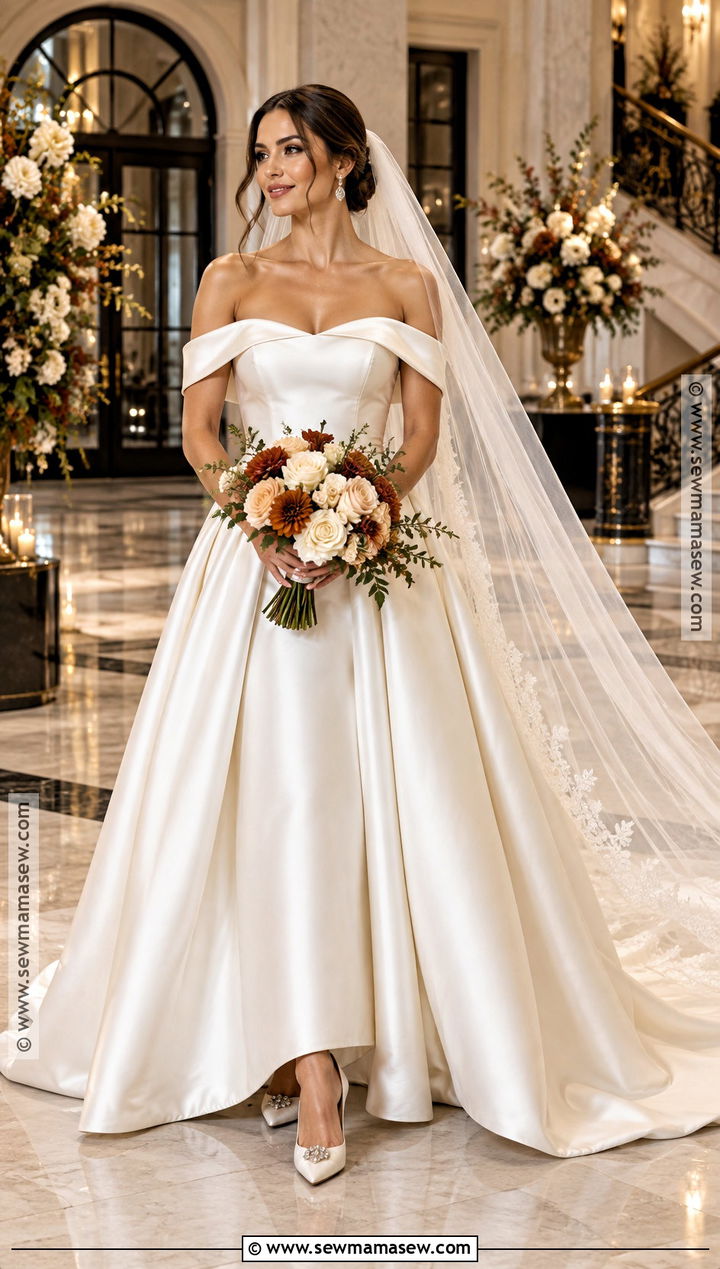
Mikado is a stiff, slightly ribbed silk-blend weave, and that stiffness is the reason it suits an off-shoulder cut: it holds pleats and sculpted folds without collapsing. Look for a fitted waist and a softly flared skirt instead of a long, heavy train. I pair it with ivory pumps, teardrop earrings and a compact bouquet in cream, rust and muted greens. A soft updo keeps the shoulders on show, and a sheer cathedral veil adds movement behind the firm fabric. Off-shoulder necklines need a bodice that is fitted snugly enough to stay up on its own, so test it by dancing in the fitting room. For a chilly outdoor portrait, a short fitted bridal jacket that stops above the skirt is the cleanest answer. This is the gown I'd suggest for a black-tie evening ceremony.
6. High Neck Lace October Wedding Dress
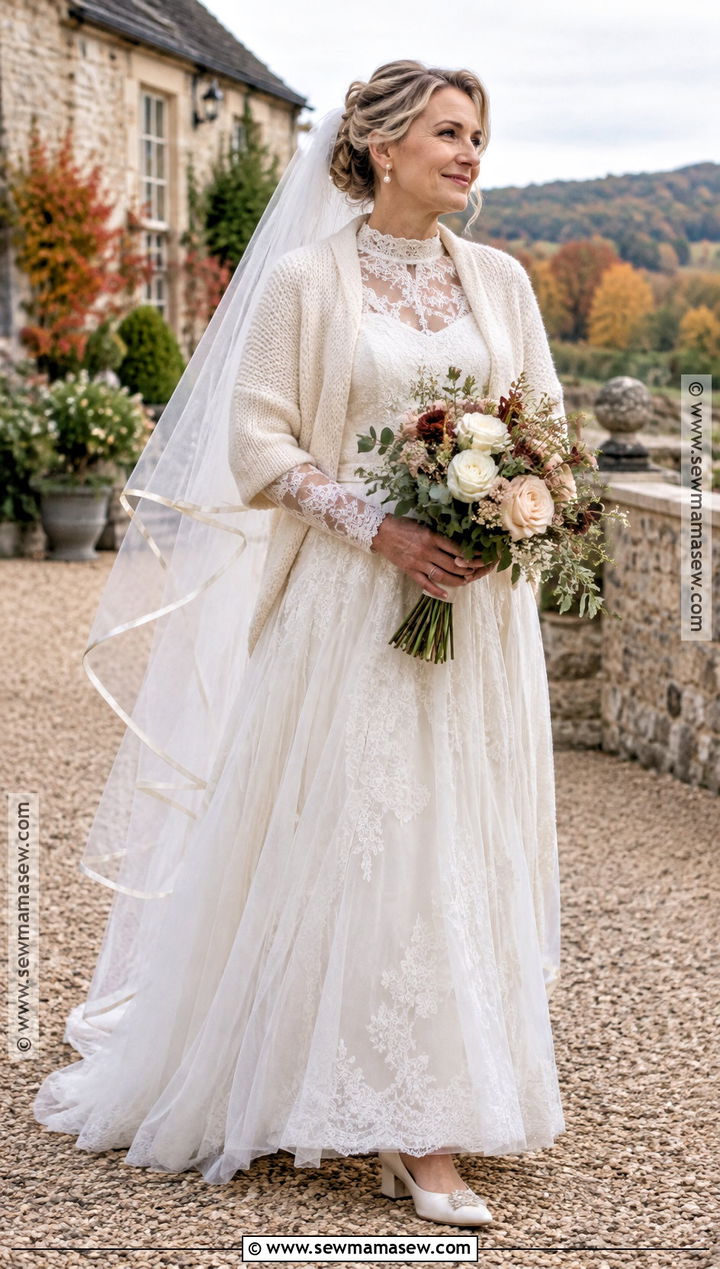
A high lace neckline gives full coverage and still looks light, because the sheer ground of the lace lets skin show through. I balance a softly fitted lace bodice with a flowing chiffon or tulle skirt so the dress doesn't feel stiff or overly traditional. Low block heels, small pearl studs and a ribbon-trimmed veil tucked under a textured bun are all it needs. Skip the necklace entirely; the neckline is already the jewelry. Check the collar while seated, since high necks often feel fine standing and tight once you lean forward to sign a register or eat. A cropped ivory cardigan keeps you warm outside without covering the skirt. It's a thoughtful choice for brides of any age who want coverage they don't have to fuss with.
7. Floral Jacquard October Wedding Dress
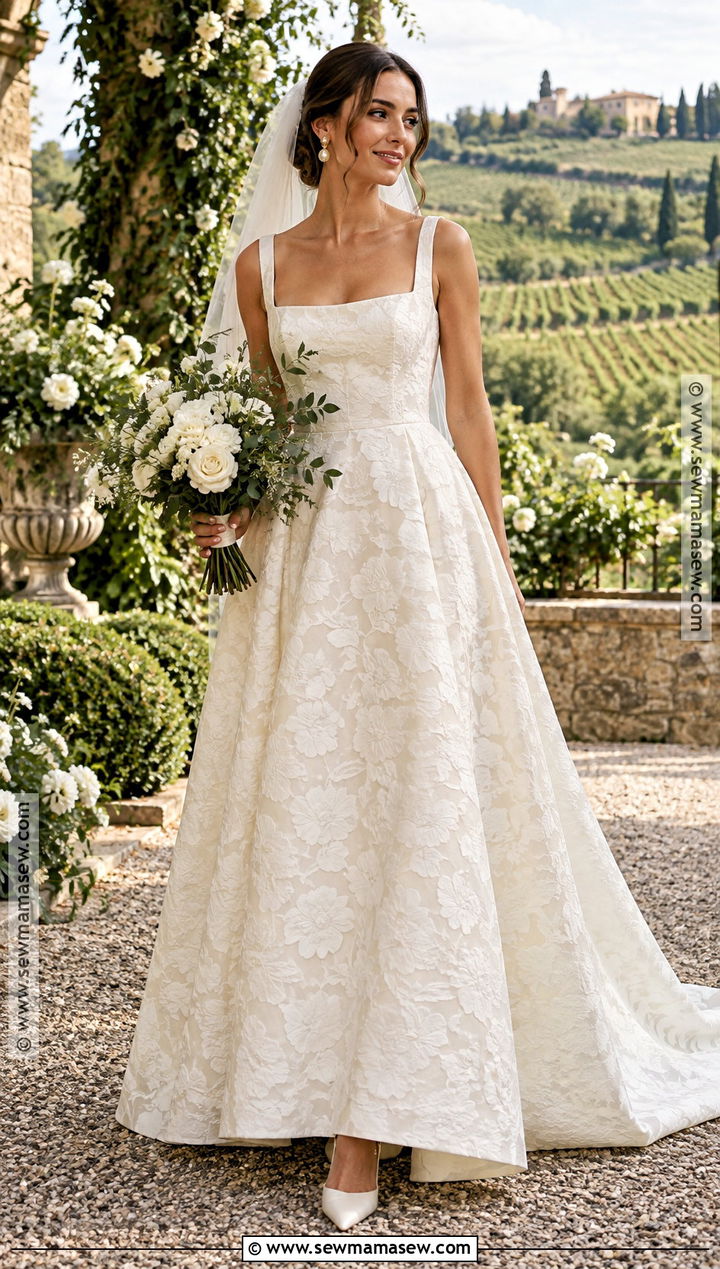
Floral jacquard gets its pattern from the weave itself, not from printing, so the flowers only appear as the fabric turns in the light. That subtlety is what makes it interesting against autumn foliage. It shows up in bridal lines next to lace and satin as an alternative for brides who find plain fabric too quiet. An A-line or ball-gown shape with a strapless or square-neck bodice shows the pattern best, since seams and gathers break it up. I finish it with pointed ivory heels, gold and pearl earrings and a shoulder-length veil, so the back of the dress isn't hidden. Keep the bouquet structured, white flowers with dark green leaves, so it doesn't fight the pattern. Vineyards and historic homes surrounded by turning trees suit it well.
8. Cape Sleeve October Wedding Dress
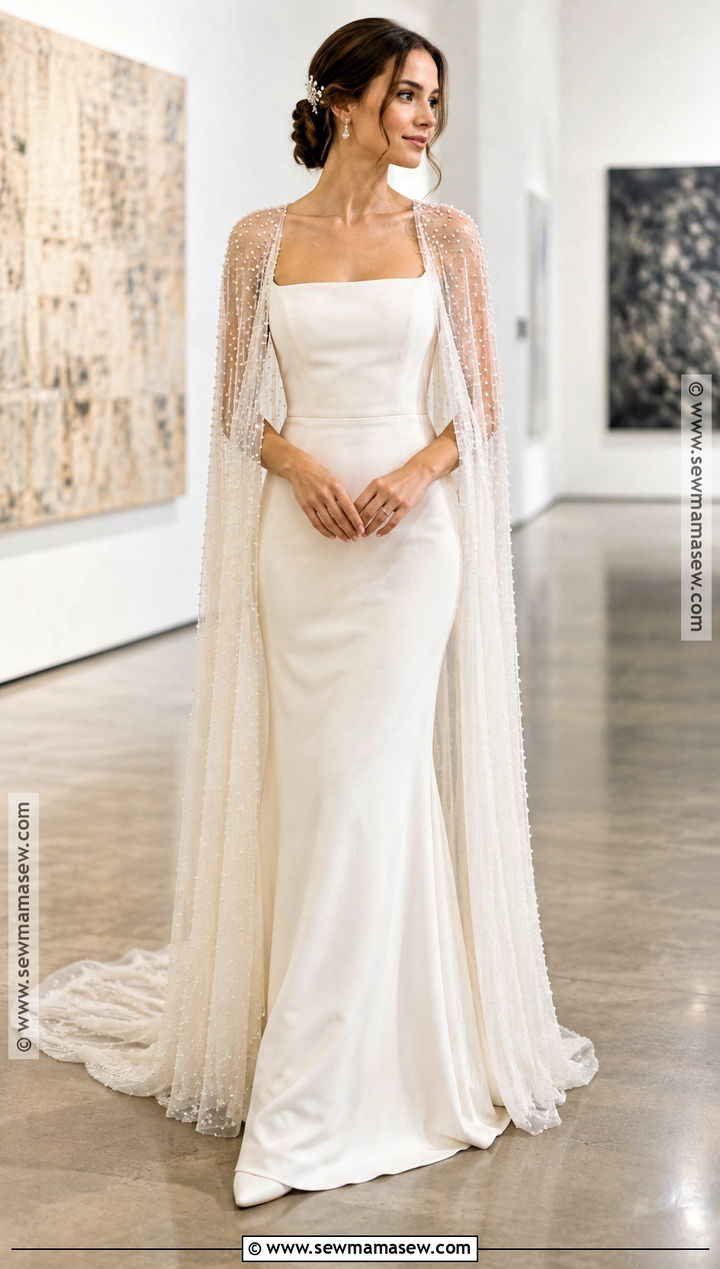
A bridal cape turns a plain gown into something memorable without changing the dress itself. Start with a sleeveless crepe or satin column with a clean neckline and a defined waist, then add a sheer floor-length cape with light embroidery, scattered pearls or small floral appliqués. Unlike fitted sleeves, a cape never restricts your arms. Closed-toe heels, understated earrings and a low bun held with a metallic comb keep the attention on the movement. Ask how the cape attaches before you buy it. Hooks at the shoulder are easy to remove for the reception; capes sewn to the straps are not. A compact bouquet keeps the cape visible in photos, and on a breezy fall day it will catch the wind in a way a veil can't.
9. Boho Bell Sleeve October Wedding Dress
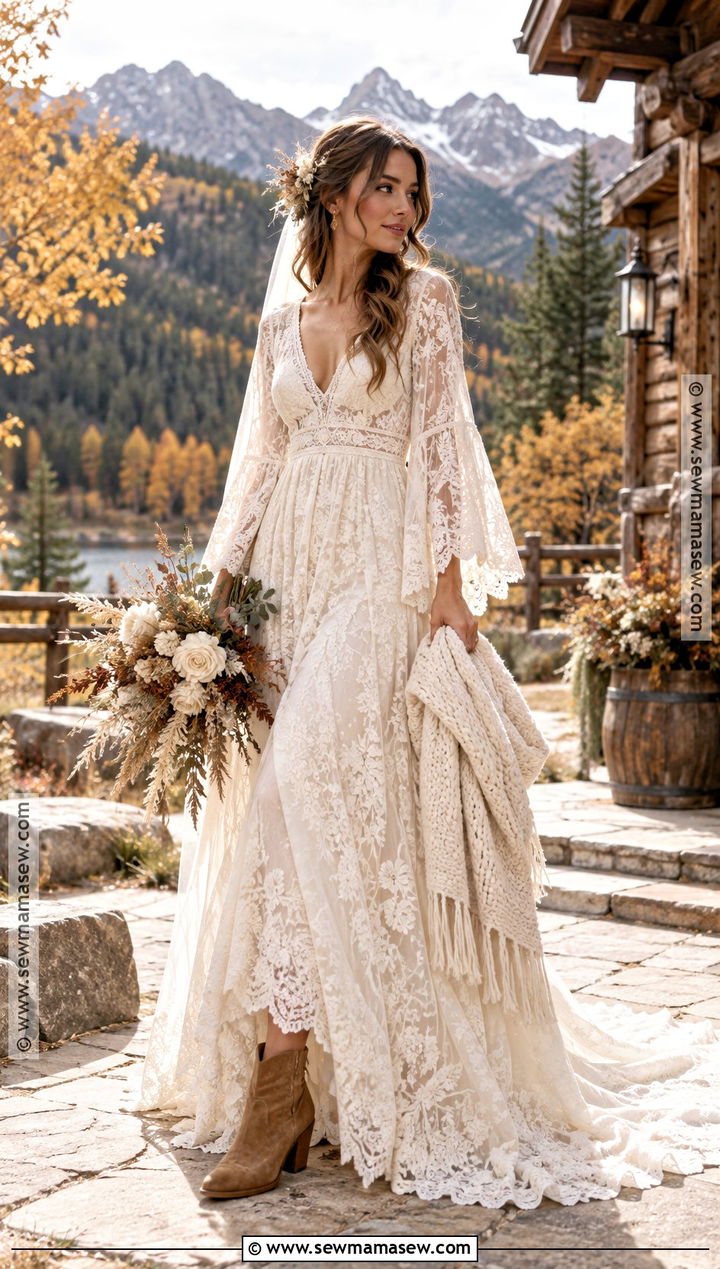
Bell sleeves bring easy movement to a countryside wedding, and they're forgiving if you'll be hugging a lot of guests. I'd choose a lace gown with a fitted waist, a comfortable lining and a flowing skirt that clears uneven ground. On grass and gravel, swap stilettos for ivory ankle boots or a stable block heel; a narrow heel sinks into a lawn within minutes. Small gold earrings, a dried-flower comb, a light chapel veil and loose waves or a braided half-up style suit the relaxed mood. Carry a cream shawl with a woven texture for the evening. The trap with this look is clutter: lace, wide sleeves and seasonal flowers already add a lot, so keep the jewelry very simple. Barns and mountain lodges suit it best.
10. Minimalist Slip October Wedding Dress
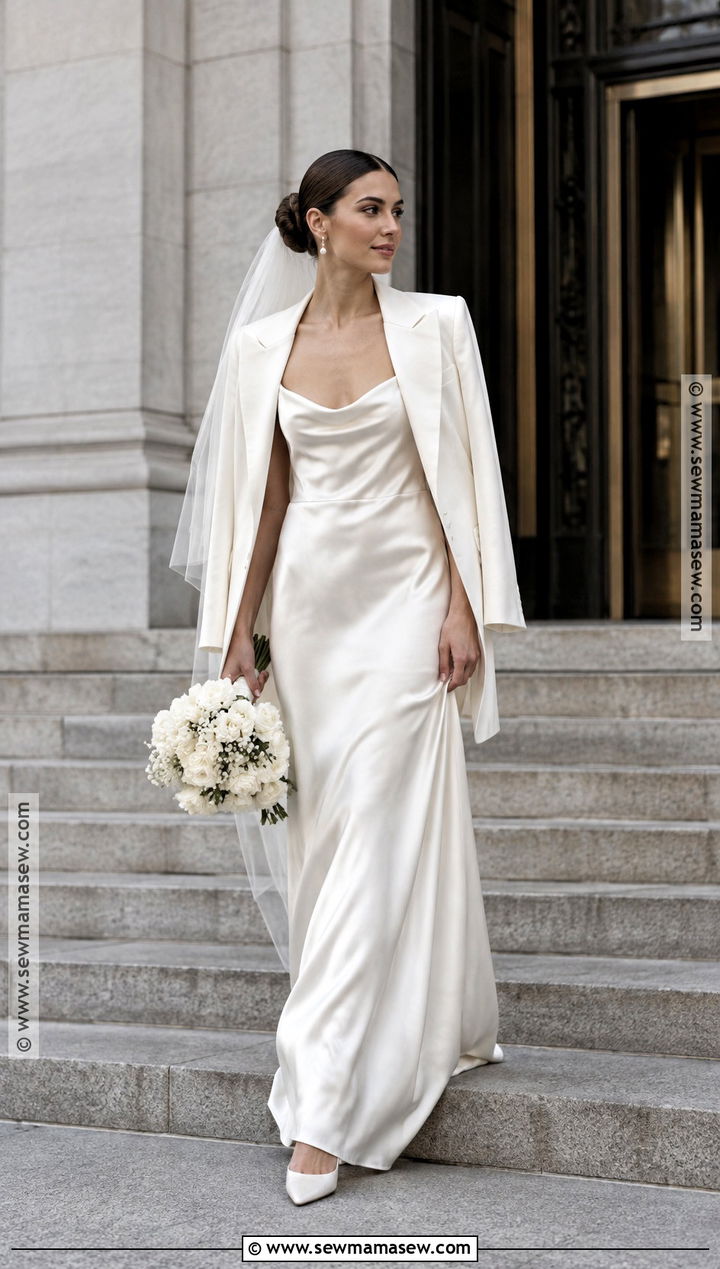
A slip dress can work in October if you treat the layers as part of the outfit, not an afterthought. Choose a bias-cut satin gown with wider straps, a softly draped neckline and enough weight to lie smoothly. Bias cutting lets satin stretch slightly and cling, which is lovely when you move and unforgiving when you stand still, so smooth, no-line shapewear or a slip made for satin is worth fitting with the dress. Pointed pumps, modern drop earrings and a sleek bun or polished waves keep it modern. A long ivory blazer covers you for courthouse steps and rooftop photos, and a sheer veil makes it unmistakably bridal. I'd skip this one for a long outdoor evening; thin satin offers almost no warmth.
11. Tea Length October Wedding Dress
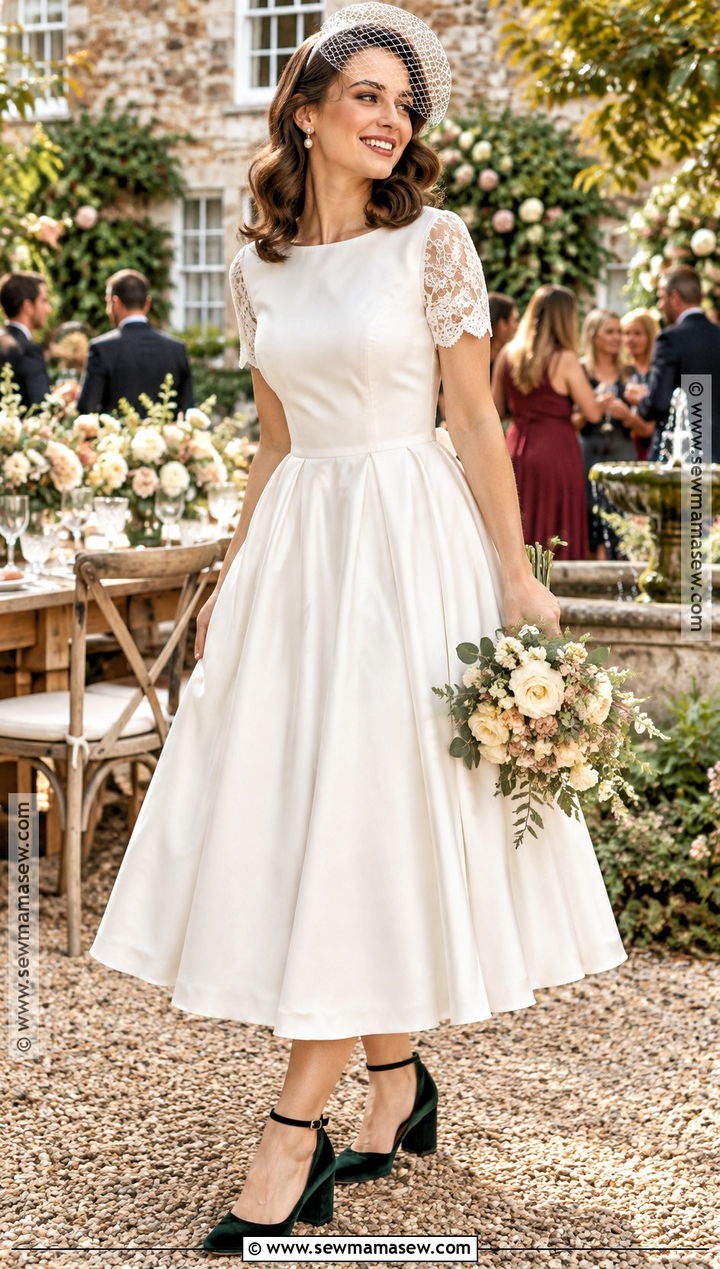
Tea length has a vintage feel and is far easier to live in than a floor-length gown. Look for a fitted bodice, a natural waist and a full skirt that ends between the knee and the ankle. A bateau neckline or short lace sleeves add polish without pushing it into formal territory. Because your shoes are on display all day, they deserve real attention: ivory slingbacks, embellished pumps or velvet block heels in a muted neutral all suit the length. Finish with pearl earrings, a birdcage veil and soft waves, plus a cropped cardigan or short jacket for the evening. The shorter hem makes walking, dancing and crossing a damp lawn much simpler, which is why I suggest it for courthouse and restaurant weddings.
12. Plus Size Corset October Wedding Dress
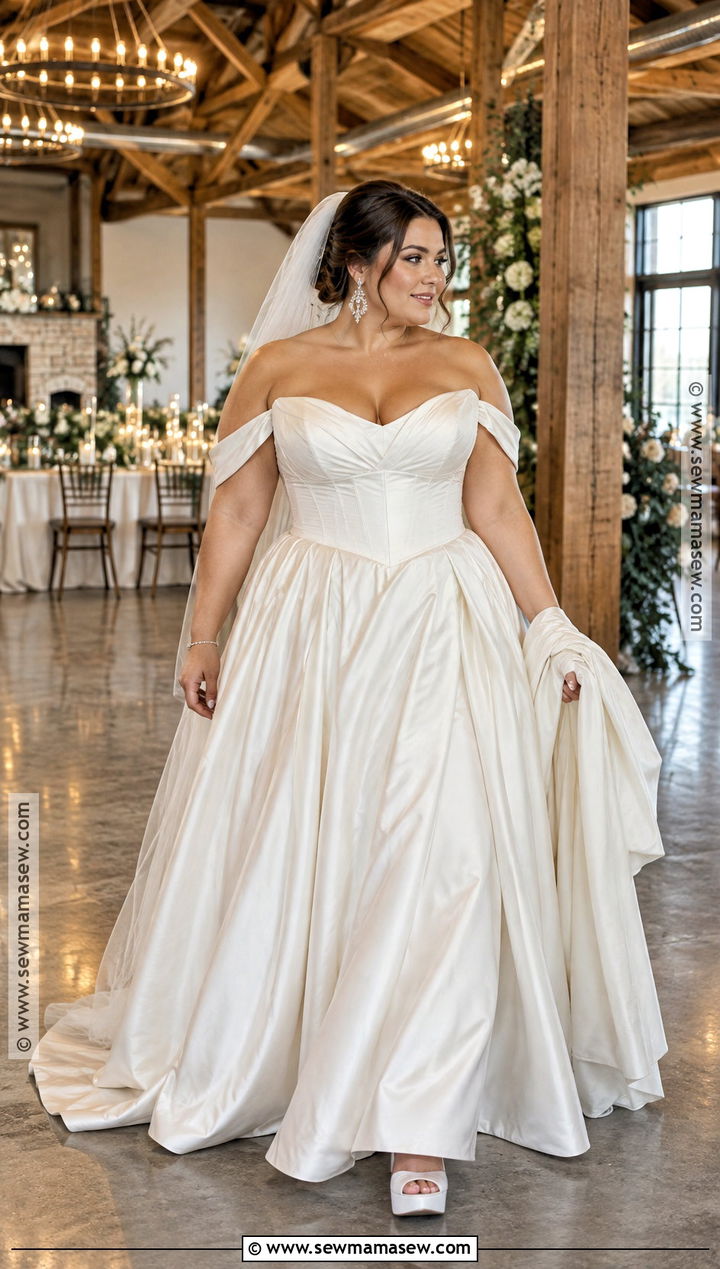
A properly built corset bodice supports the bust and back better than most bras, which is why I often recommend it to curvy brides. The skirt should balance that structure, so an A-line or soft ball-gown shape works better than a narrow sheath. Wide straps, off-shoulder sleeves or illusion lace panels add security, depending on how much coverage you like. Supportive block heels, chandelier earrings, a fingertip veil and a side-parted updo or smooth waves complete it. Order by your current measurements, not the size you hope to be, and leave real time for alterations to the bust, waist, straps and hem. Boning should lie flat against the body; if it digs in when you sit, it needs adjusting. A satin wrap gives warmth without bulk.
13. Maternity Empire Waist October Wedding Dress
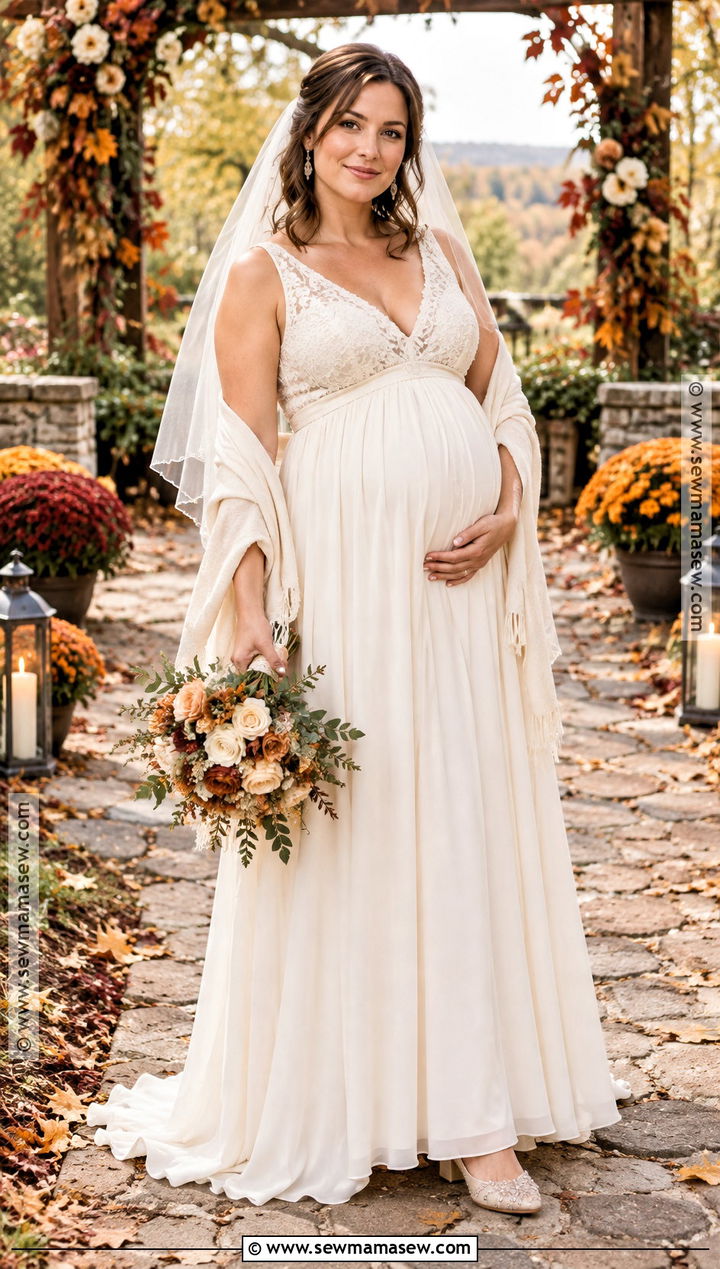
For a pregnant bride, comfort decides everything else. An empire waist sits just under the bust and falls loosely over the belly, leaving room for a body that may change between the last fitting and the wedding day. Stretch crepe, lined chiffon or lightweight lace avoids stiffness at the middle. I'd style it with low block heels or embellished flats, delicate earrings and a shoulder-length veil, plus a long cardigan or soft wrap that doesn't press on the stomach. A bodice with lace-up or adjustable straps gives some flexibility close to the date. Schedule the final fitting as late as your seamstress allows, ideally within a week or two of the day, so the bust and hem match your shape on the day itself. Relaxed indoor venues and family gardens suit this look.
14. Detachable Overskirt October Wedding Dress
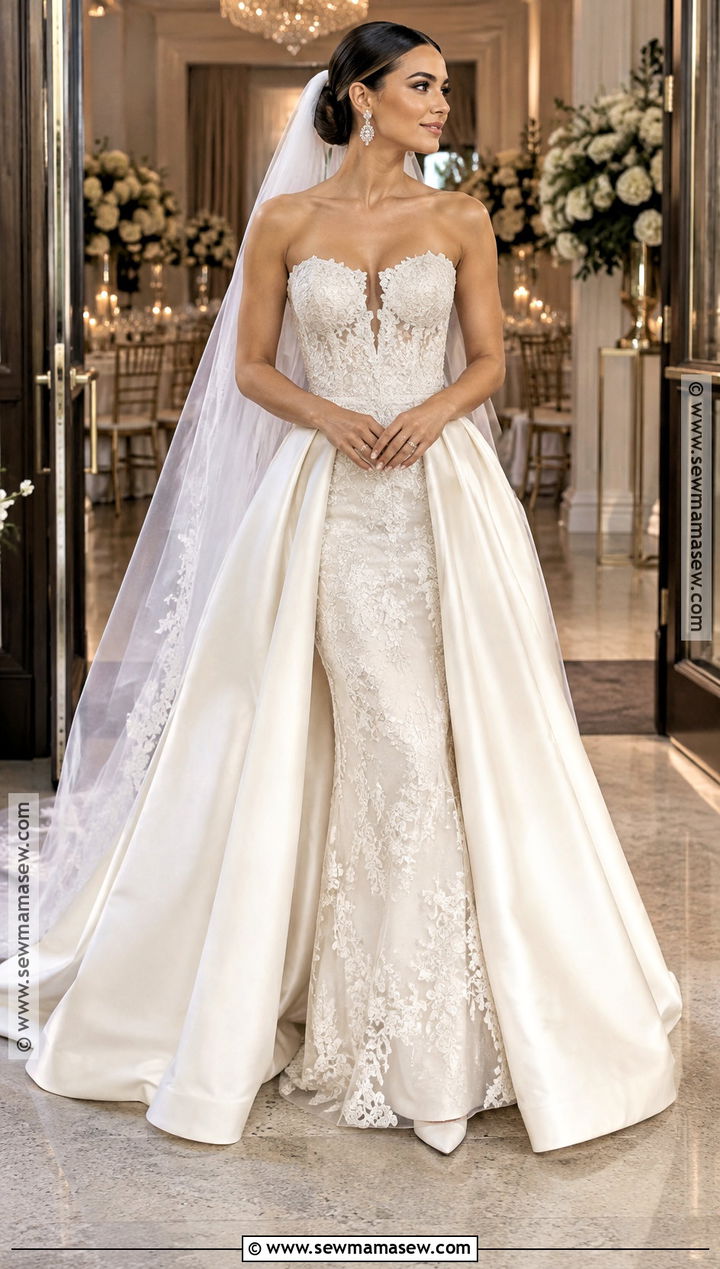
A detachable overskirt gives you two dresses for the price of one fitting schedule. Start with a fitted lace, satin or crepe gown comfortable enough for dinner and dancing, then add a full overskirt for the ceremony and portraits. Closed-toe pumps, crystal earrings and a cathedral veil finish the formal entrance. After photos, the veil and overskirt come off and the slimmer reception silhouette appears, and a sleek bun keeps that change looking tidy. Practise the removal before the day with whoever will help you; buttons and hidden hooks are slow with cold fingers. I like this option for October in particular, when the outdoor ceremony and the indoor party can feel like different seasons.
15. Black Accent October Wedding Dress
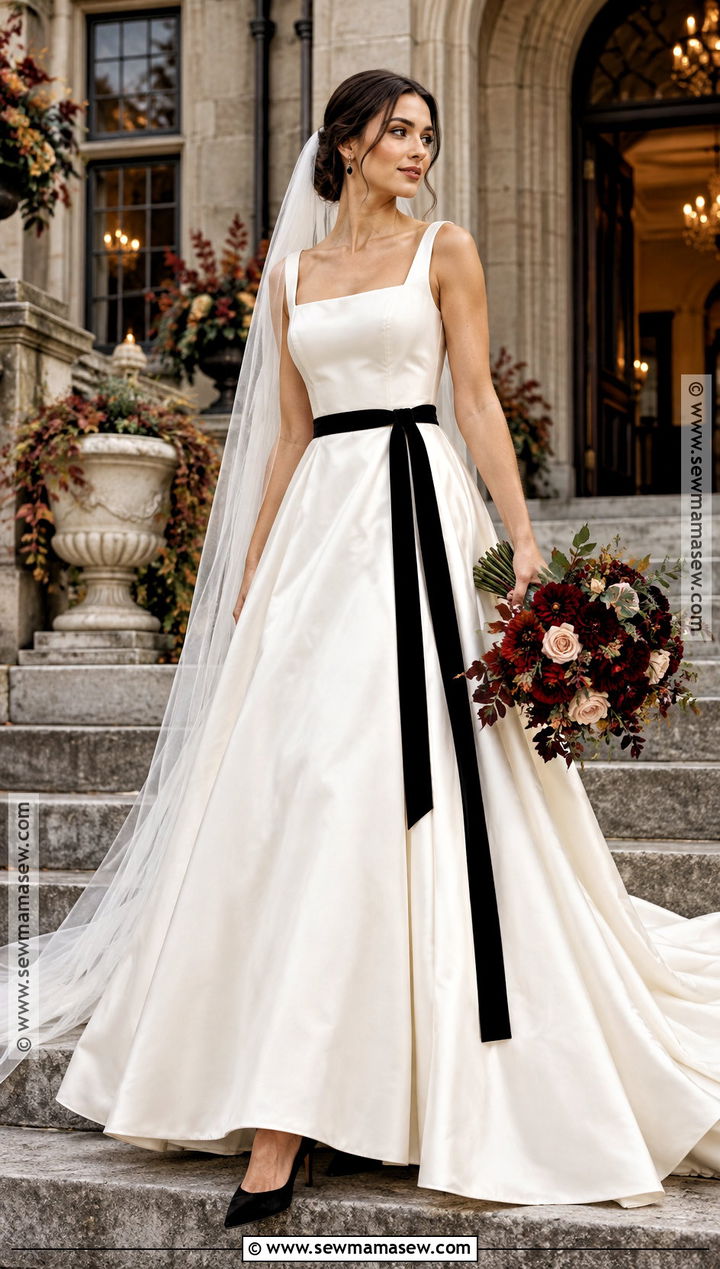
Black details give an October dress a seasonal edge while keeping the ivory base clearly bridal. On a white or champagne A-line, try a narrow black velvet sash, dark embroidered flowers or removable black ribbon straps. Black pointed pumps and small onyx earrings carry the contrast, but keep the veil ivory so the look stays cohesive. A berry-toned bouquet links the dark accents to the fall colors outside. Limit yourself to one or two black elements, because black draws the eye harder than any other color in a photograph. I'd recommend it for an evening ceremony in a museum or an old mansion, and for any bride who loves a classic shape with one unexpected detail.
Working Backward From an October Date
Bridal gowns are usually made to order, so fall brides are often shopping in the previous winter or spring. Lead times vary a lot between shops and designers, so ask for the specific dates in writing. As a rough guide, this is the schedule I plan around:
- Order the gown roughly six to nine months ahead. Rush orders exist but cost more and narrow your choices.
- Start fittings about two to three months before the day. Bring your wedding shoes and undergarments to the first one.
- Book the final fitting one to two weeks out, and have whoever will bustle the dress attend it to learn the hooks.
- Pick up the gown pressed and bagged, then leave it hanging rather than folded.
A Coat That Belongs in the Photos
Most October brides end up wearing their cover-up in at least some of the portraits, so it should be chosen with the same care as the veil. A cropped jacket or bolero suits full skirts because it stops at the waist and leaves the skirt's shape alone. Long, slim gowns look better under a longer tailored coat or blazer. Faux fur stoles are warm but bulky across the shoulders, so try one on with the dress before committing.
Match the cover-up's color to the gown on a sunny day, not under shop lighting. Ivory, cream and stark white can look alike indoors and clash outdoors. When in doubt, a soft neutral one shade warmer than the dress is the safer choice.
Trying the Gown On Like It's the Wedding Day
A good October gown has to suit the venue, the weather and the woman inside it, and on this list you'll find lace, satin, crepe, corsetry, maternity cuts and pieces that come off as the night goes on. When you try a dress on, wear shoes close to the height you'll actually wear and the undergarments you plan to use; a different heel changes the hem and the posture. Sit, walk and lift your arms before you decide. Think through the outdoor photos, the meal and the dancing, then add a veil, jacket, cape or wrap to handle the temperature drop. Let fall colors live in the flowers and the details, and choose the gown that feels like you.
Related posts: