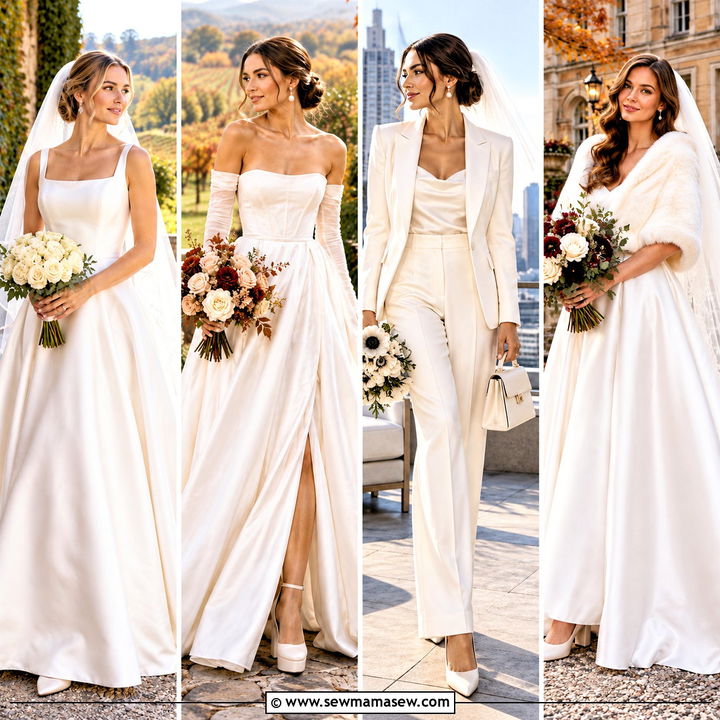
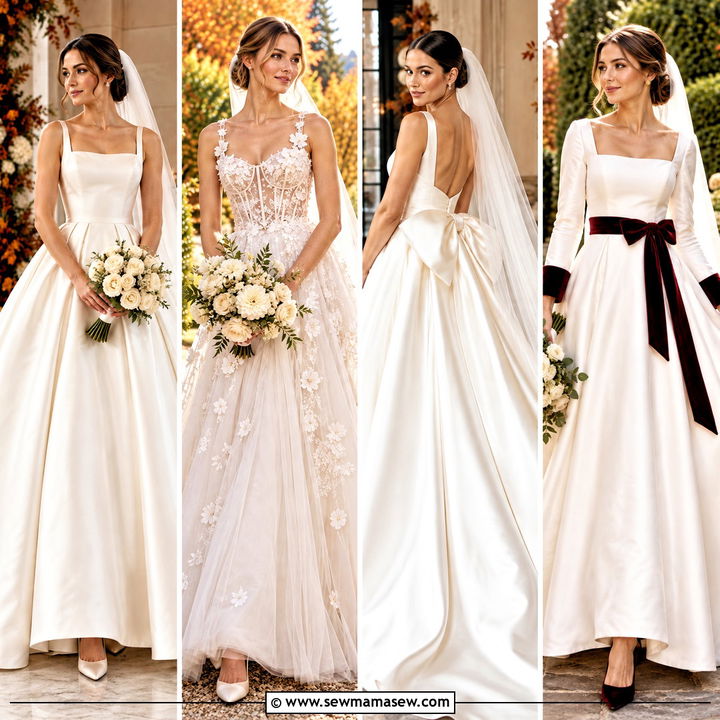
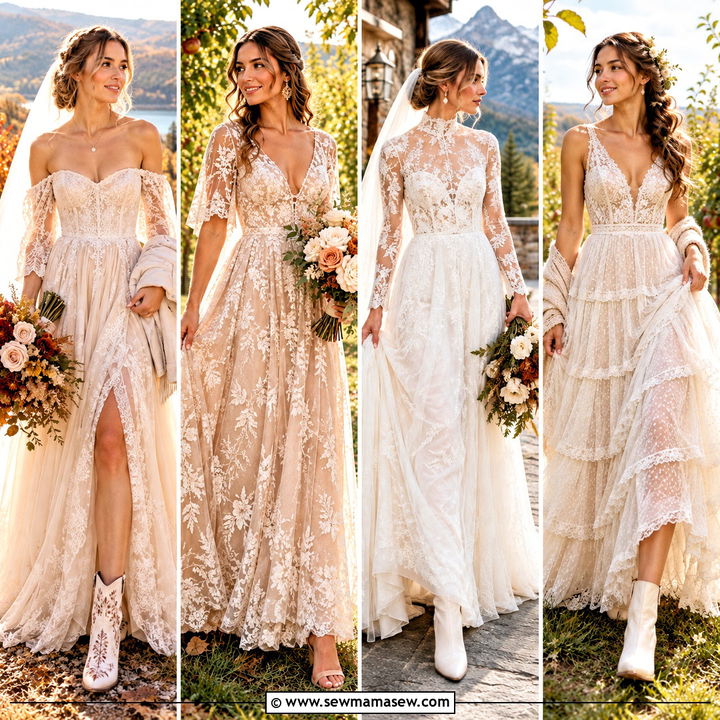
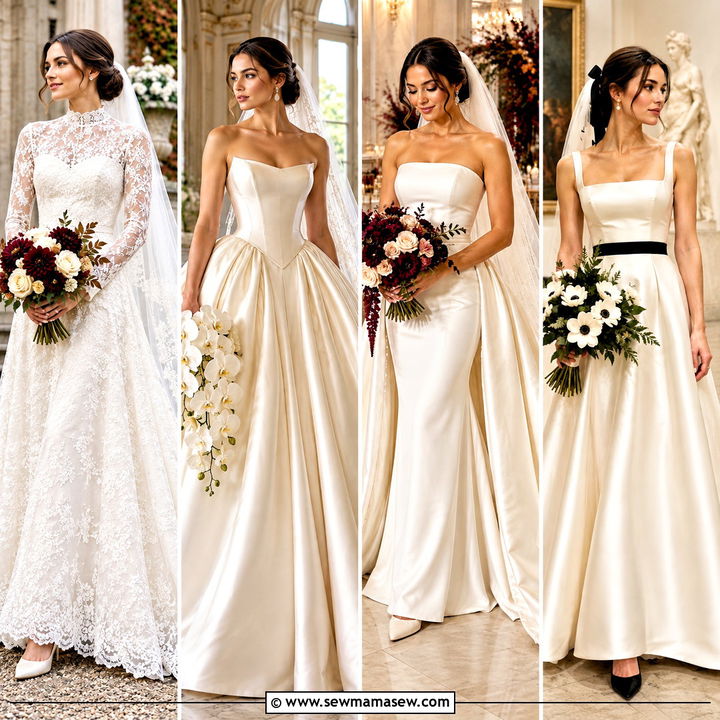
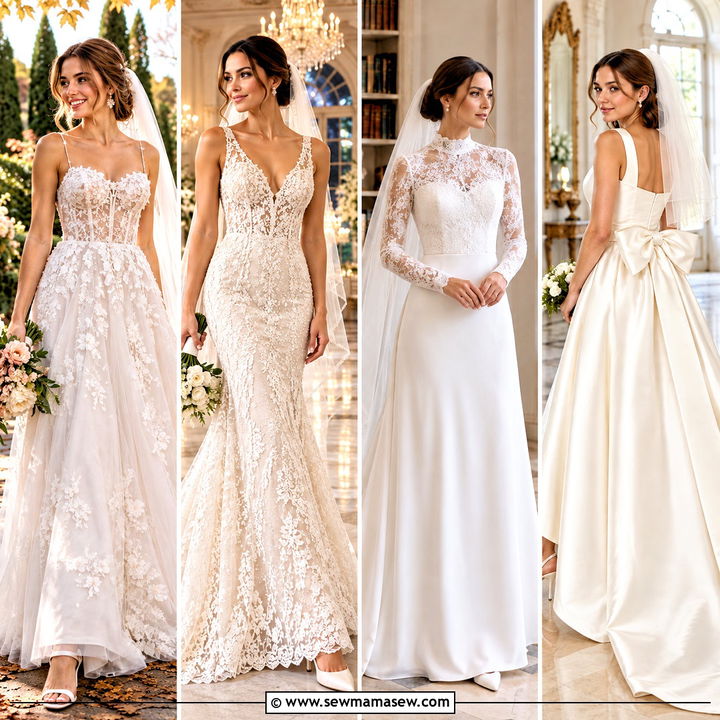
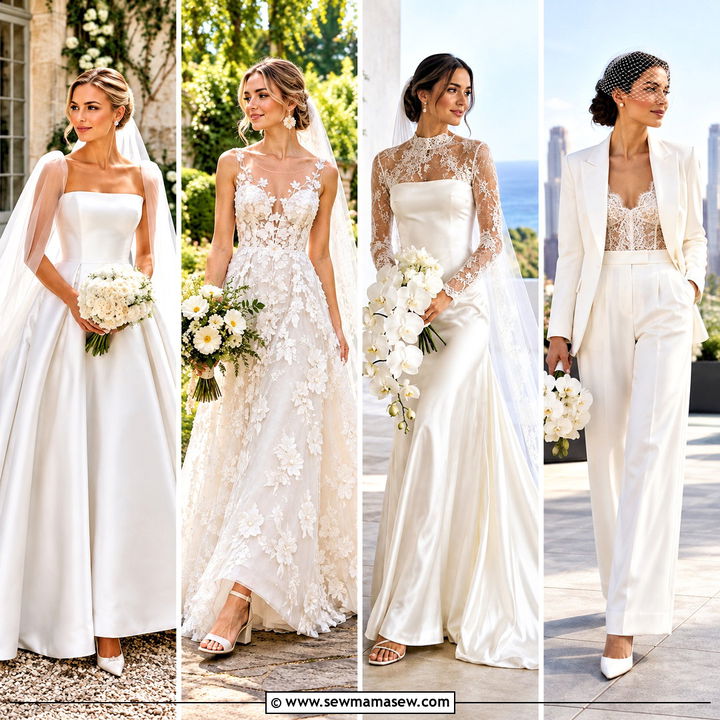
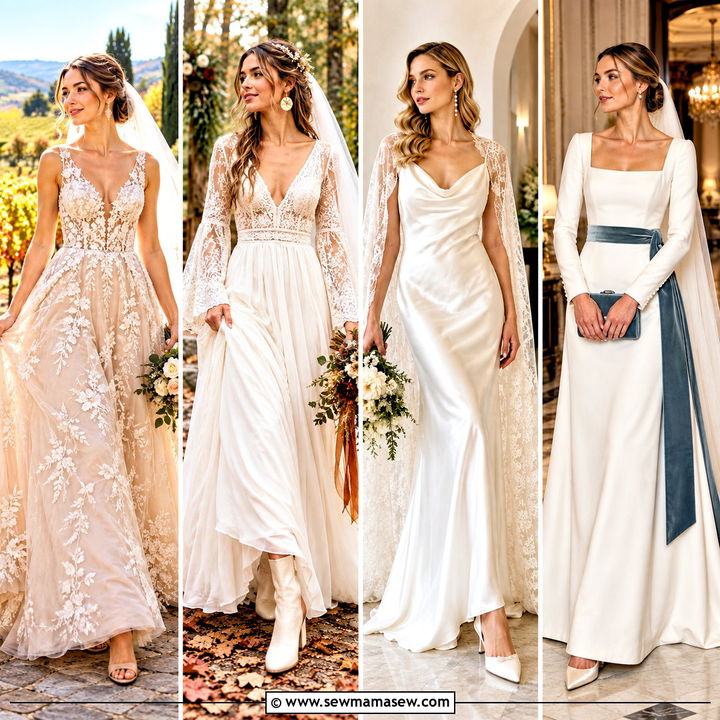
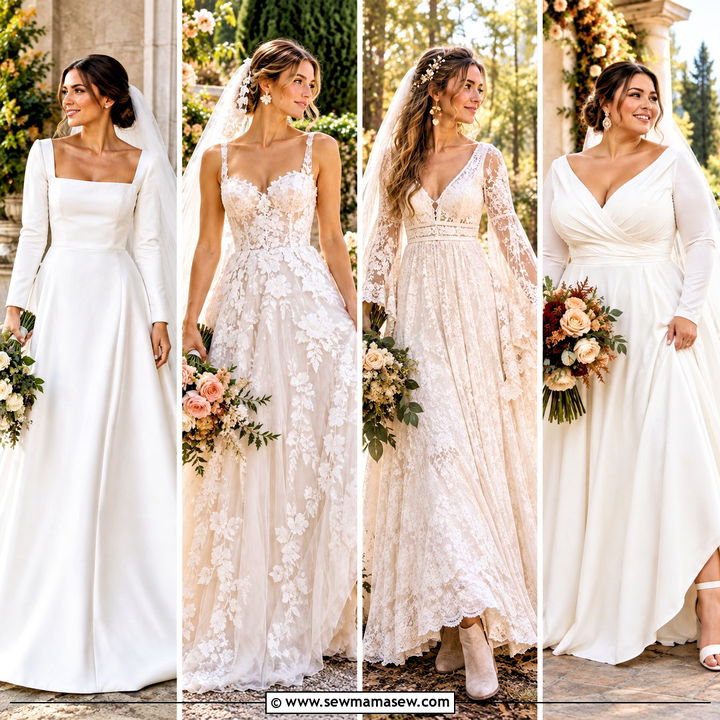
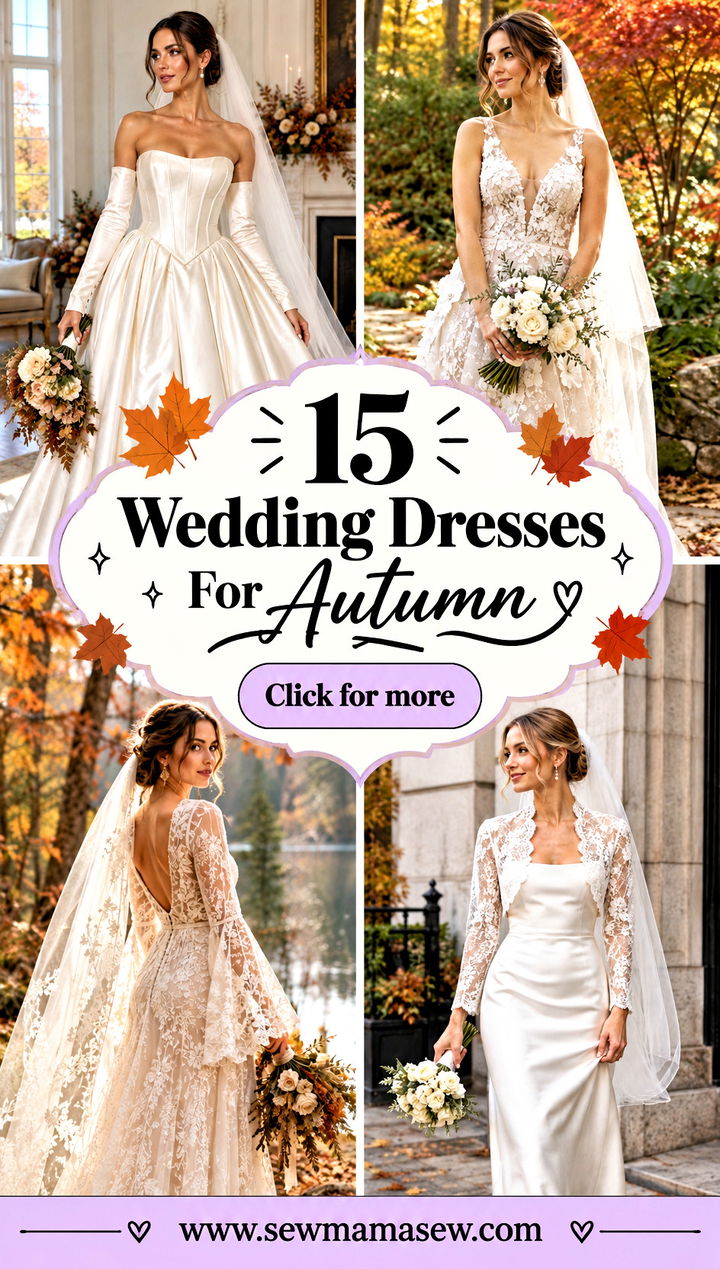
Autumn weddings come with their own set of advantages: cooler air, warm low light and venues that already look dressed for the occasion. They also come with a few problems summer brides never face, like a ceremony in the sun and portraits in a chill. Lace, structured corsetry, heavy satin, layered skirts and vintage shapes are all strong in bridal design right now, so there's no shortage of choice. What I'd do first is match the gown to the place. A woodland clearing, a barn, a historic house and a hotel ballroom each ask for something different from your hem, your sleeves and your shoes. The fifteen gowns below are styled head to toe, with notes on where each one is happiest.
Barn, Ballroom or Woodland: What Each Venue Asks of a Gown
The setting tells me more about which gown will work than the season does. Before you shop, picture the ground you'll walk on and the room you'll dance in.
Barns and rustic venues
Uneven floors, gravel and hay mean a long train gets dirty fast. Lace, chiffon and soft A-lines suit the setting; a sweep train or a sturdy bustle keeps the hem clean. Block heels or boots beat stilettos on wooden boards.
Ballrooms and hotels
Smooth floors and controlled heat let you go big: satin ball gowns, cathedral veils and long trains all make sense. Overhead lighting can be flat, so a fabric with some sheen or texture photographs better than matte crepe.
Woods, vineyards and gardens
Expect damp ground, branches and wind. Lighter skirts, appliqués that won't catch, and a veil you can pin securely all help. Bring a warm layer for the walk back from photos.
1. Long Sleeve Lace Wedding Dress
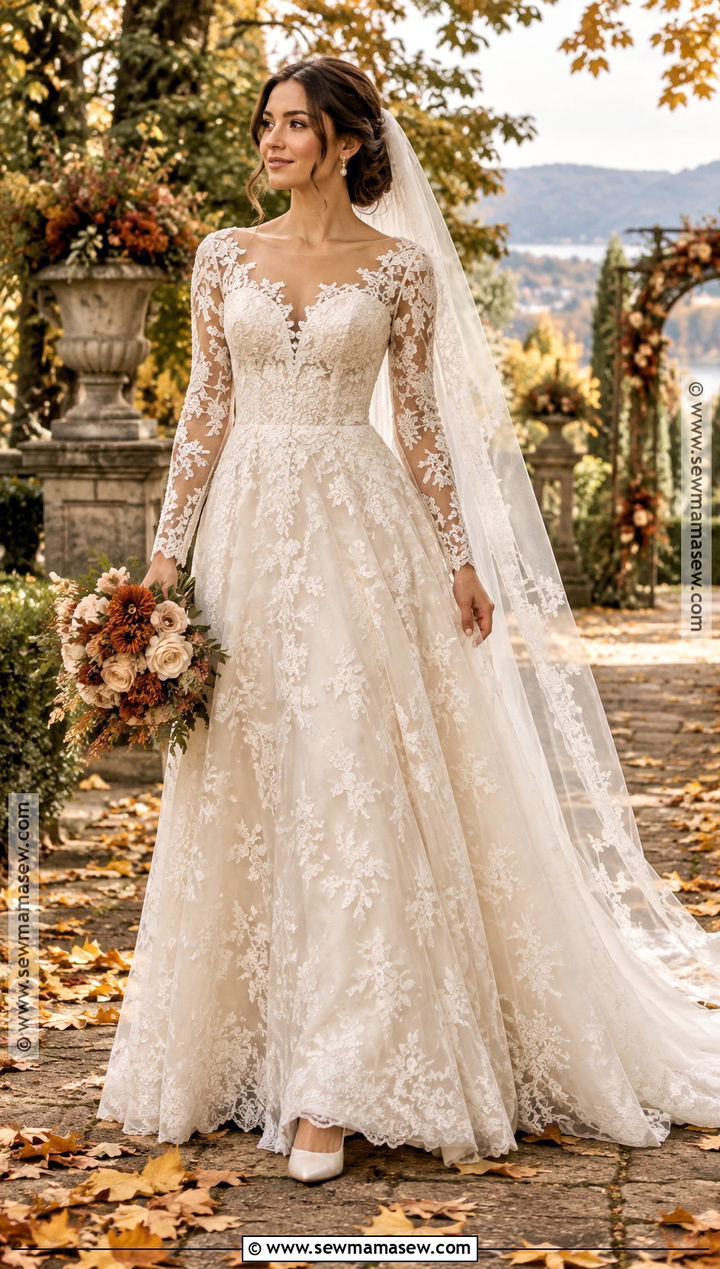
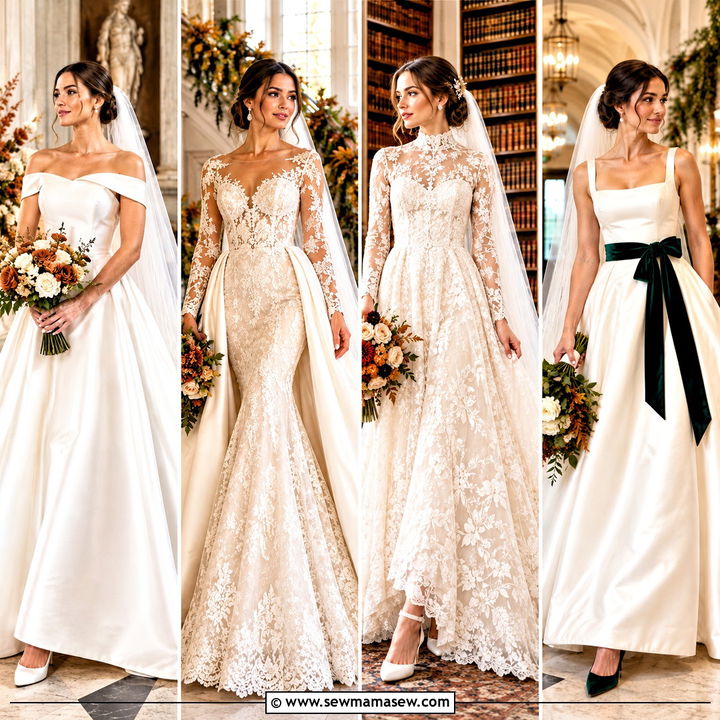
If there's a single gown I'd call the safe bet for autumn, it's long-sleeve lace. An A-line with fitted illusion sleeves, floral appliqués and a lightly structured bodice gives you a waist and a skirt that moves, without any stiffness. Ivory lace sits well against rust, gold and evergreen. Keep in mind that illusion sleeves are mostly for looks; they don't hold much warmth, so a soft wool wrap for the outdoor part of the day is worth packing. I'd finish with pearl drops, an embroidered fingertip veil, closed-toe ivory pumps and a low textured bun that leaves the neckline clear.
2. Satin Ball Gown Wedding Dress
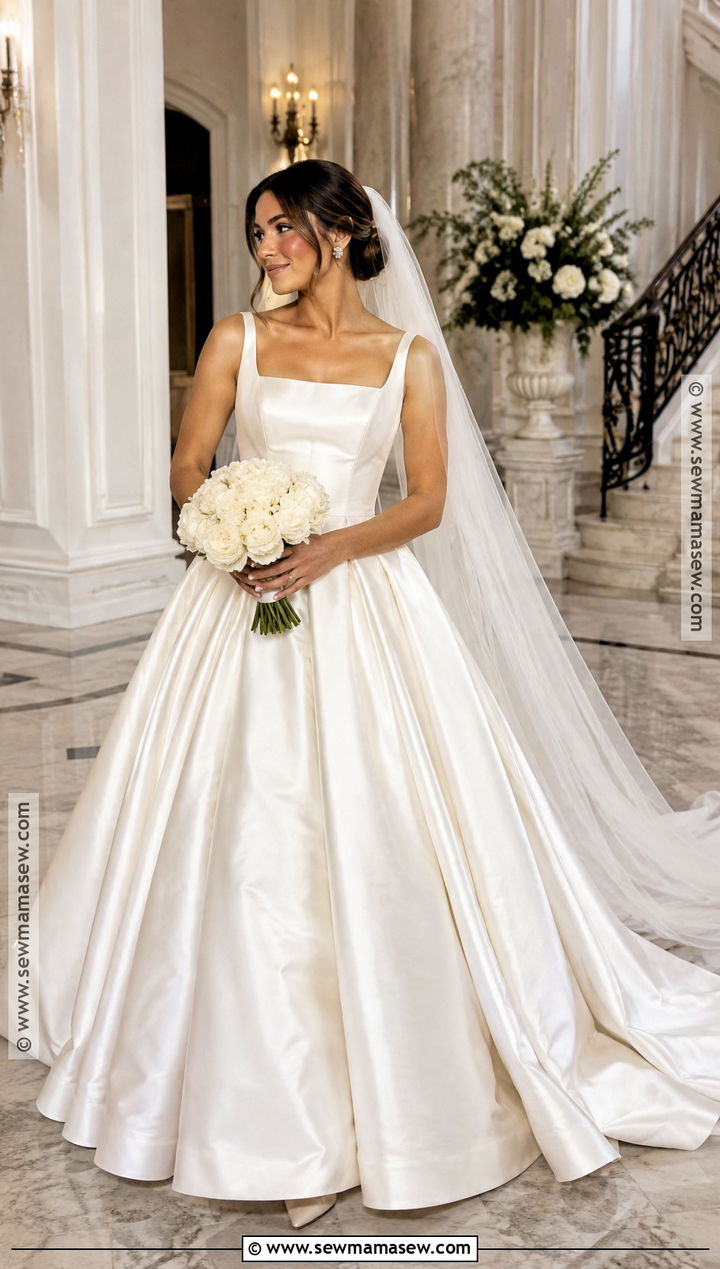
Satin and low autumn light get along very well; the fabric picks up a soft sheen rather than harsh glare. A ball gown with a clean square neckline, a supportive bodice and a full pleated skirt has real presence in a ballroom or a formal estate. I keep the styling classic: a cathedral veil, crystal studs, pointed ivory heels and a neat chignon. Ask whether pockets can be added; they're invaluable for lipstick and a tissue during toasts. Satin shows every crease, so book a steam the morning of and avoid sitting in the gown until you need to. There's no need for beading here. The fabric and shape carry it.
3. Off The Shoulder Wedding Dress
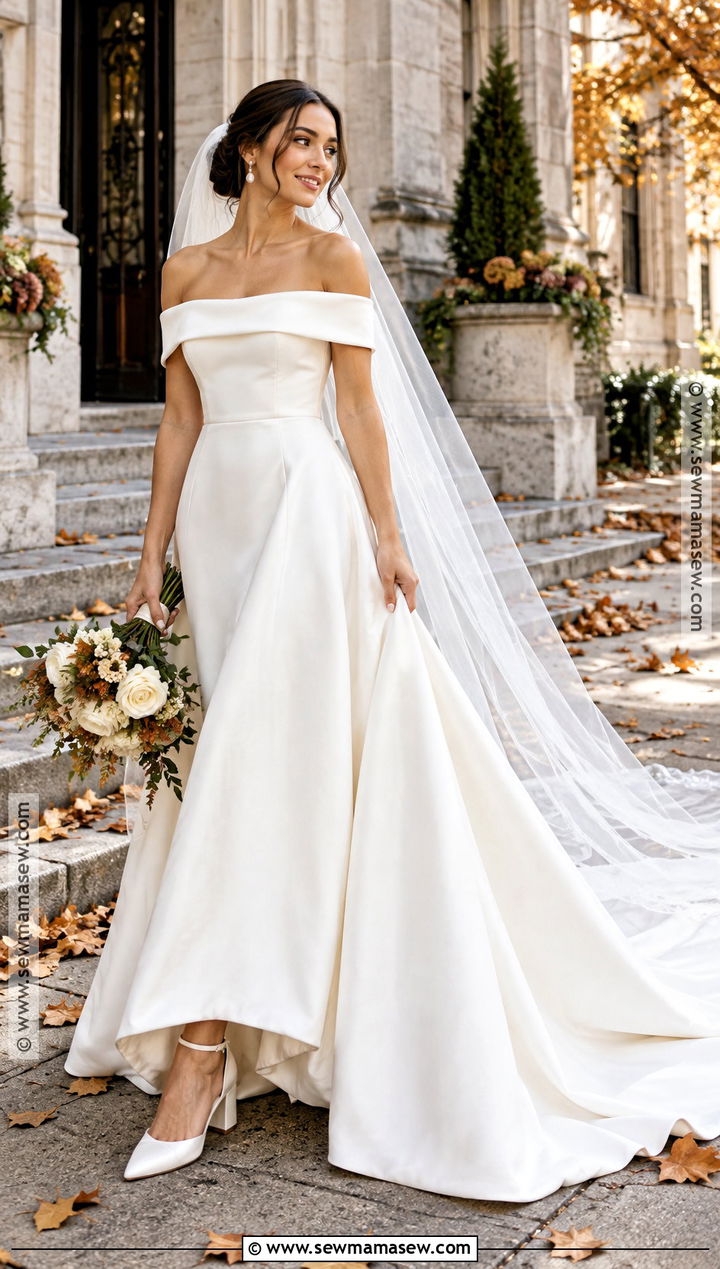
Folded off-shoulder necklines are soft, but in crepe or mikado they still feel substantial enough for cool weather. I look for a corseted bodice with real support, folded cuff sleeves and a gently flared skirt. It's a strong pick when the ceremony is indoors and portraits are outside, because the clean shape reads well in both. Add a sheer cathedral veil, fine pendant earrings and ivory block heels for comfort that still looks polished. A brushed-back low bun keeps the shoulders on show. When it turns cold, reach for a tailored bridal cape. A borrowed denim or knit jacket over a gown like this will always look like an accident in photos.
4. High Neck Wedding Dress
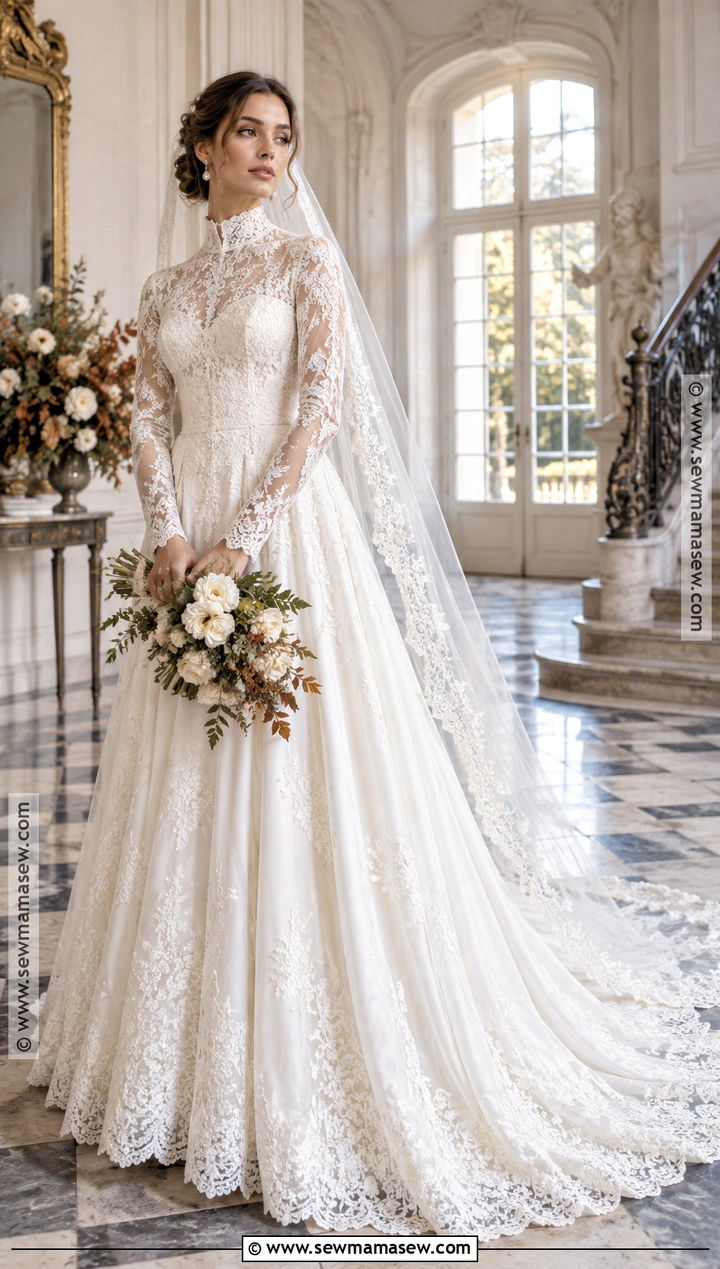
A high neck is both modest and warm, which suits a cool day and a formal room. A fitted lace bodice with a scalloped neckline can flow into chiffon, crepe or satin; sheer long sleeves add coverage while keeping it light. I keep jewelry minimal, perhaps pearl hairpins, small drops and closed-toe pumps, and attach a lace-edged chapel veil under a low bun so nothing crowds the collar. Historic venues and formal ceremonies are its natural setting. The fitting point that matters most is the neck and shoulders: when you turn your head or lift your arms, the bodice shouldn't pull or ride up. If it does, it needs more ease across the back.
5. Basque Waist Wedding Dress
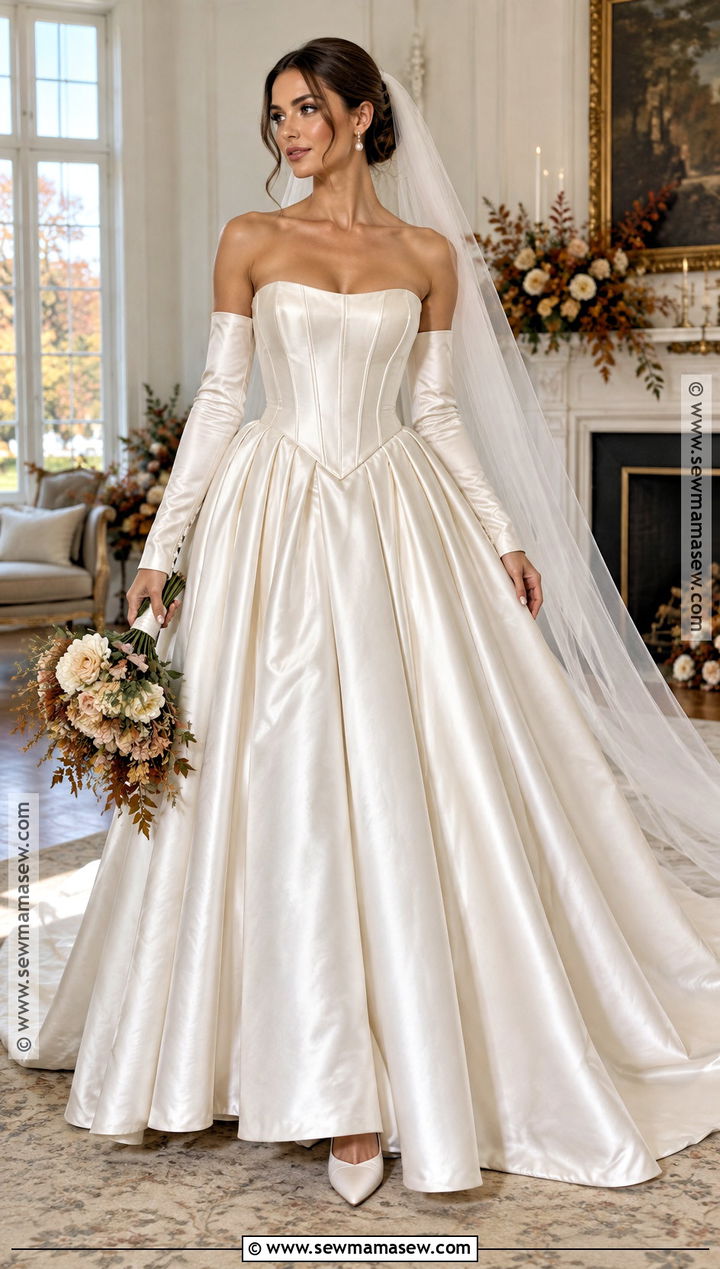
The pointed basque waist is one of the most flattering shapes in bridal, because the V lengthens the torso and lets the skirt fall away from the hips. Pair it with a full satin, tulle or lace skirt. For a modern take, I like a strapless draped corset bodice with detachable long sleeves for the ceremony. A chapel veil, simple pearl earrings, sleek ivory heels and a soft waved updo complete it. It's best suited to grand indoor rooms, garden estates and candlelit receptions. During fittings, sit down and stand up several times. A basque point that digs in when you sit will make dinner miserable, and that's an easy fix if caught early.
6. Floral Appliqué Wedding Dress
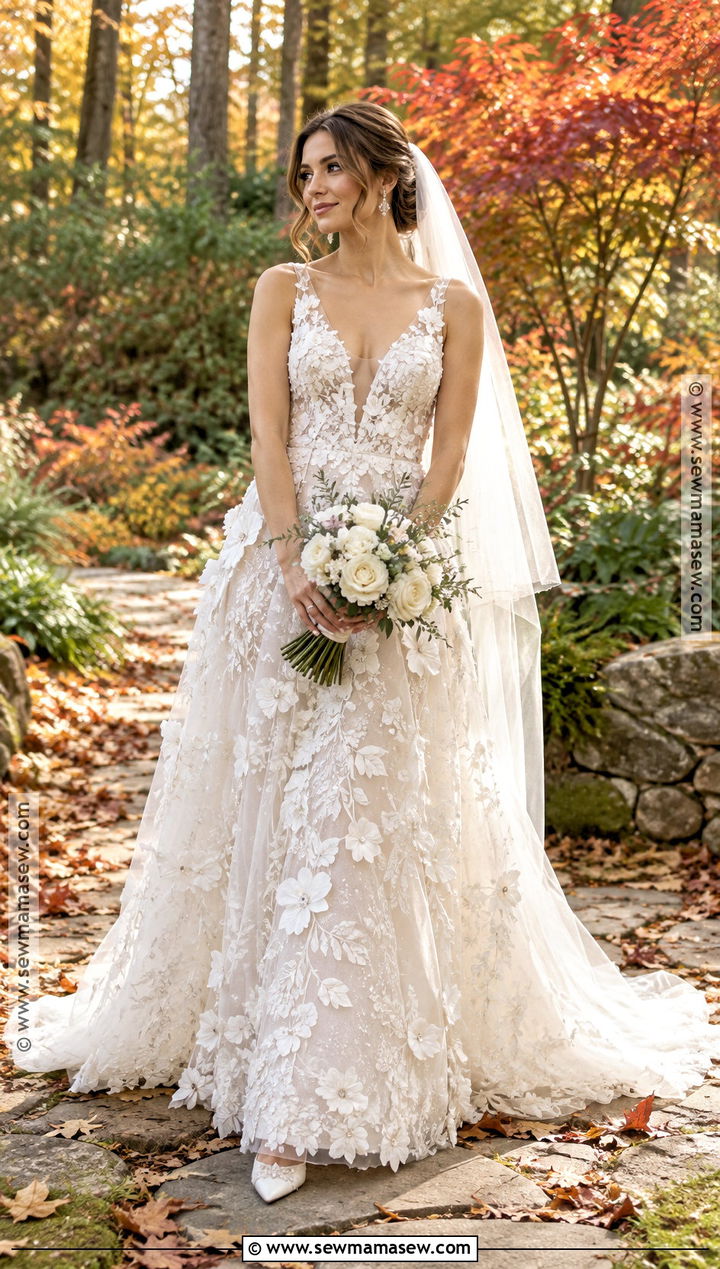
Raised appliqués bring the textures of autumn to a gown without adding any color. An A-line with embroidered leaves, ivory blossoms and a little beading spread across bodice and skirt looks rich up close and soft from a distance. A nude or pale ivory lining makes the appliqués pop while keeping it bridal. Because the gown is busy, I keep the rest calm: a plain tulle veil, crystal earrings and comfortable pointed heels, plus a restrained bouquet of white flowers and greenery. Loose waves or a soft braided updo suit the organic feel. Vineyards, woods and garden venues show this texture off best.
7. Long Sleeve Satin Wedding Dress
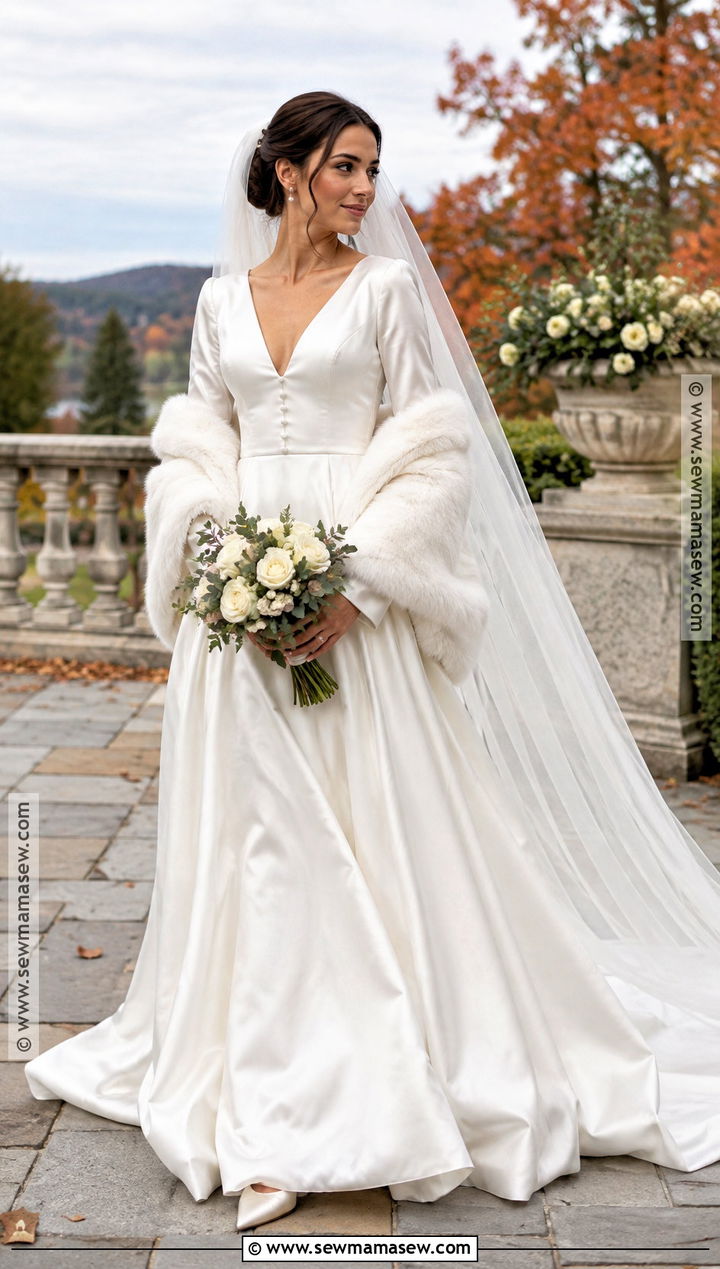
Long-sleeve satin is quiet and strong at the same time. A V-neck, fitted waist, covered buttons and a fluid A-line skirt make an unbroken surface that suits a minimalist or traditional day equally well. I style it with pearl studs, a simple chapel veil, pointed ivory pumps and a low bun that shows off the buttons, plus a small structured bouquet. For outdoor photos, a white faux-fur stole or tailored wool cape adds warmth. Here's the fitting warning: satin has no stretch, so long sleeves cut too tight will stop you hugging anyone. Raise your arms above your head at every fitting and ask for more room through the upper sleeve if it binds.
8. Vintage Lace Wedding Dress
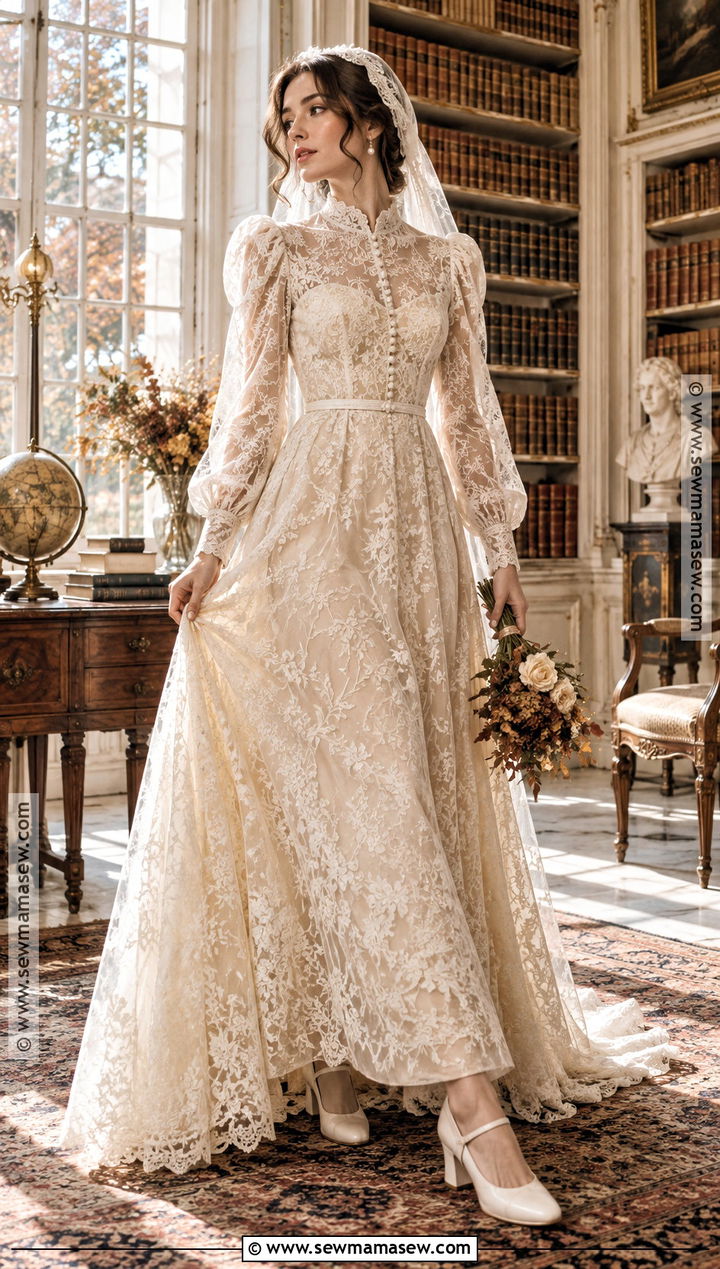
Historic mansions, libraries and rustic venues give a vintage lace gown a setting where it makes complete sense. Look at tea-length or floor-length styles with botanical lace, a defined waist, covered buttons and softly gathered sleeves. A champagne lining gives the lace an aged warmth without losing the bridal look. A Juliet cap veil, pearl drops and ivory Mary Jane heels lean into the period, with a waved bob or pinned curls. Keep makeup fresh with a muted rose lip; heavy retro makeup tips it into costume. Old shapes look best when the shoulders, waist and sleeve length fit closely, so leave room in the budget for careful tailoring.
9. Minimalist Crepe Wedding Dress
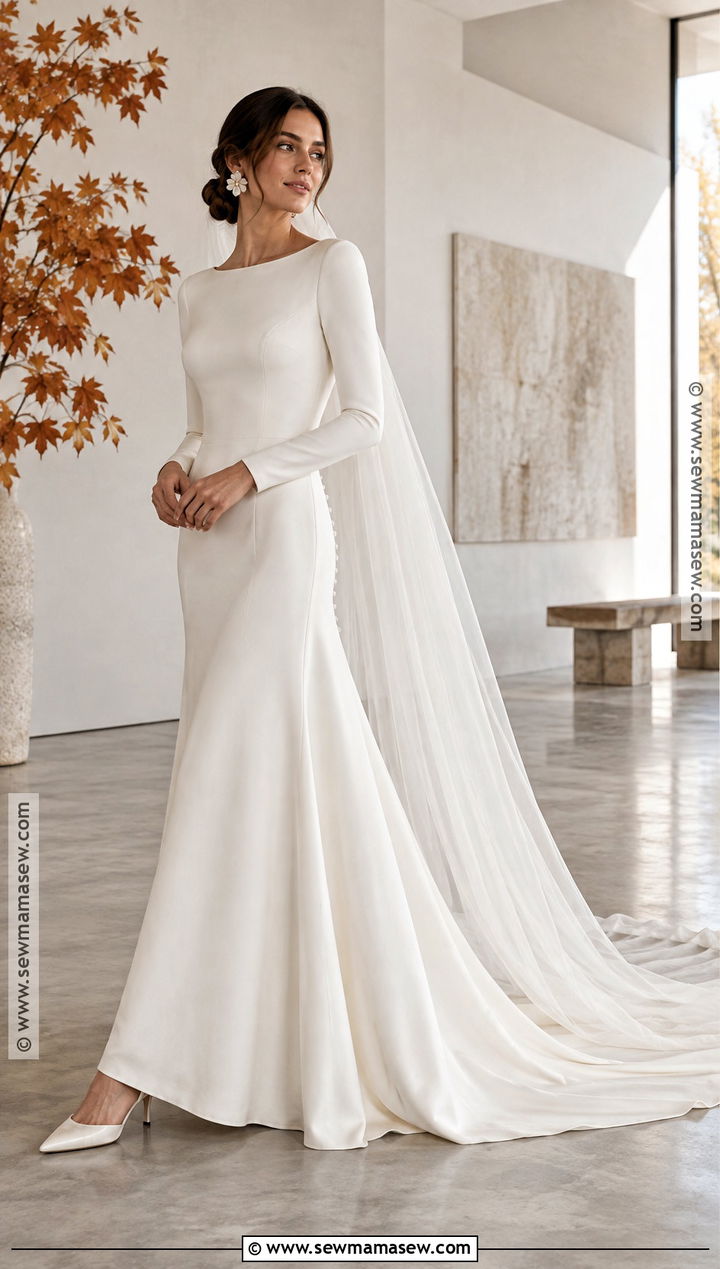
Against bright leaves, a gown with no decoration at all can be the boldest choice. A crepe dress with a bateau neckline, fitted long sleeves and a softly flared skirt relies on cut alone. The interest comes from small things: a low back, fabric-covered buttons, a train that detaches. Sculptural earrings, pointed slingbacks, a plain cathedral veil and a smooth low bun suit it, with a white bouquet for contrast. Crepe drapes well but shows undergarment lines, so I'd bring smooth, seam-free shapewear to every fitting. City venues, galleries and small ceremonies are where this restraint looks most deliberate.
10. Bridal Cape Wedding Dress
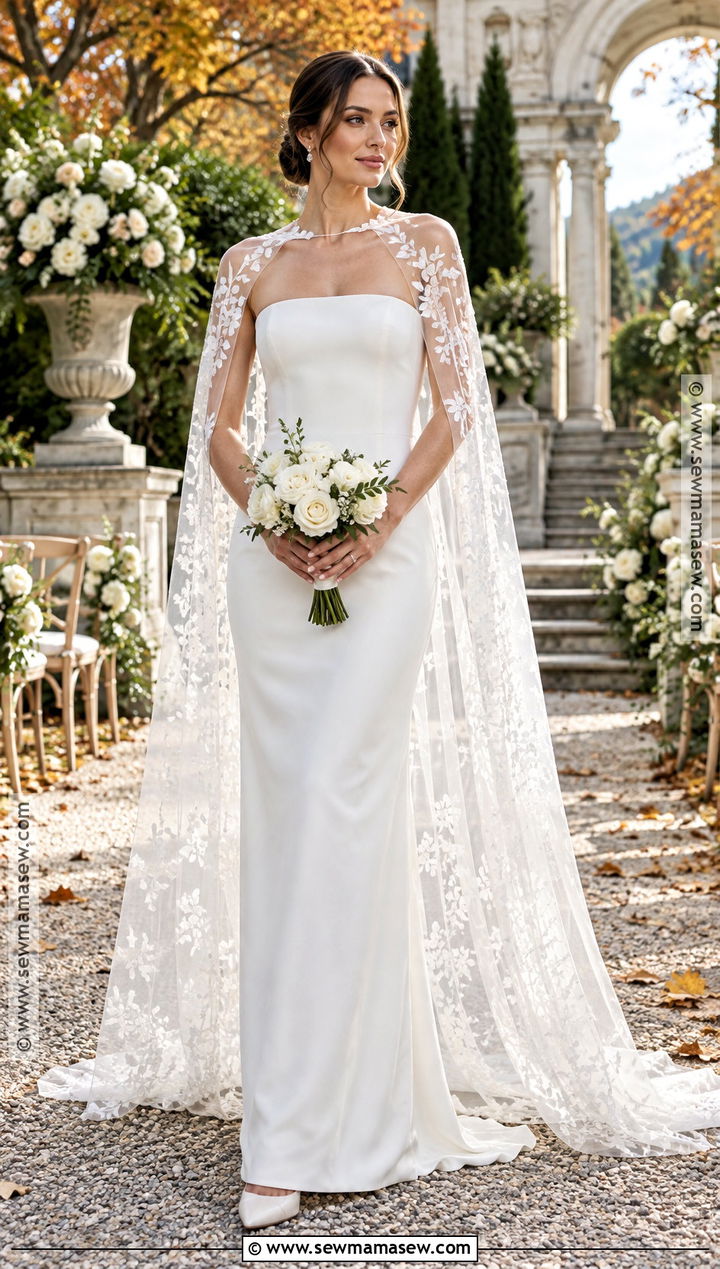
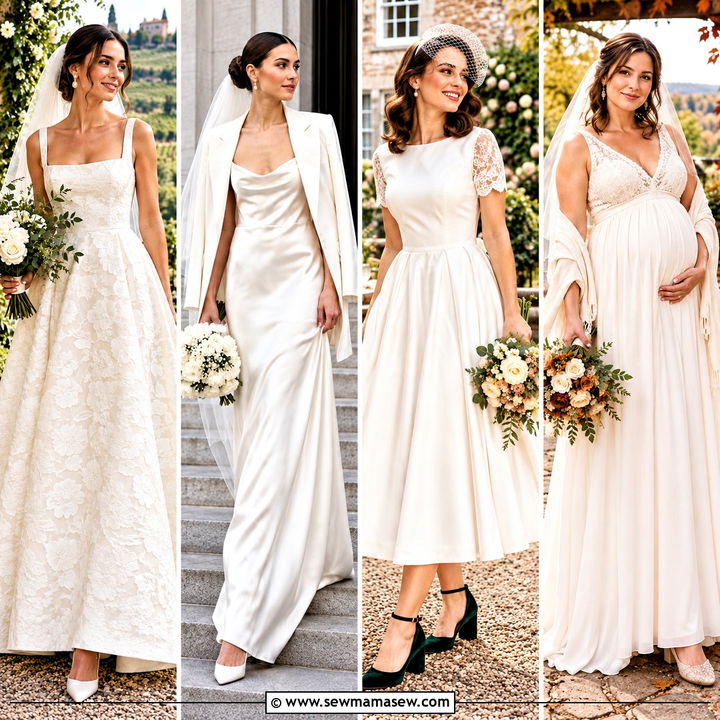
A cape gives a plain gown drama and covers your shoulders at the same time. Start with a strapless satin or crepe column with a structured bodice and a clean floor-length skirt. For a mild day, a sheer embroidered cape; for a cold outdoor ceremony, a heavier ivory one. I keep everything else small: crystal studs, sleek heels and a compact bouquet. A low bun lets the cape sit flat across the shoulders. Wear the cape in place of a veil, or take it off at the reception for a second look. Check the length while you're wearing your shoes, and walk in it. A cape that brushes the floor will catch under your heel on the first step.
11. Boho Bell Sleeve Wedding Dress
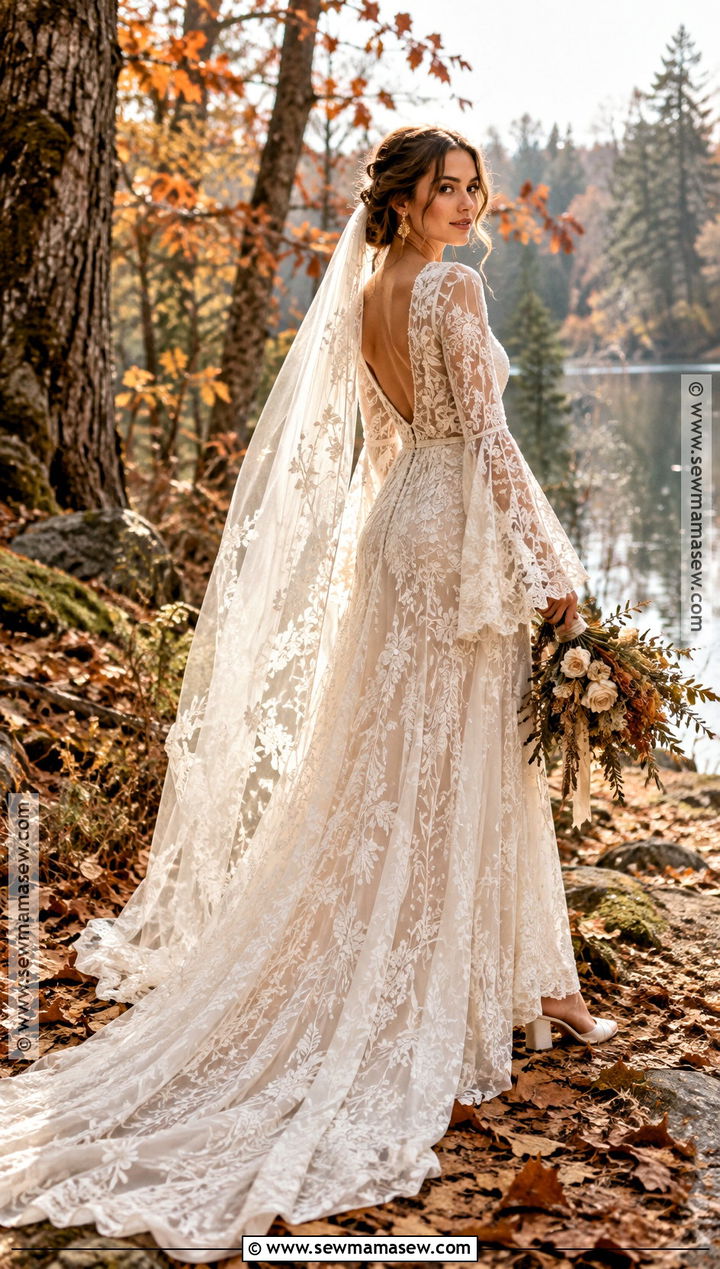
Bell sleeves and botanical lace suit a barn or woodland wedding where formality is relaxed. I'd look for a soft A-line with a fitted lining, a defined waist and an open back. An embroidered veil or a floral comb, low block heels and quiet gold earrings are plenty. A loose braided updo holds up in an outdoor breeze far better than loose waves, which tangle. The usual mistake with this gown is adding too many rustic extras on top: cowboy boots, a flower crown, a feather earring. The sleeves and lace are already interesting, so keep the bouquet to white flowers, greenery and a few muted seasonal touches. Early autumn, while the trees are still mostly green, suits it best.
12. Square Neck Wedding Dress
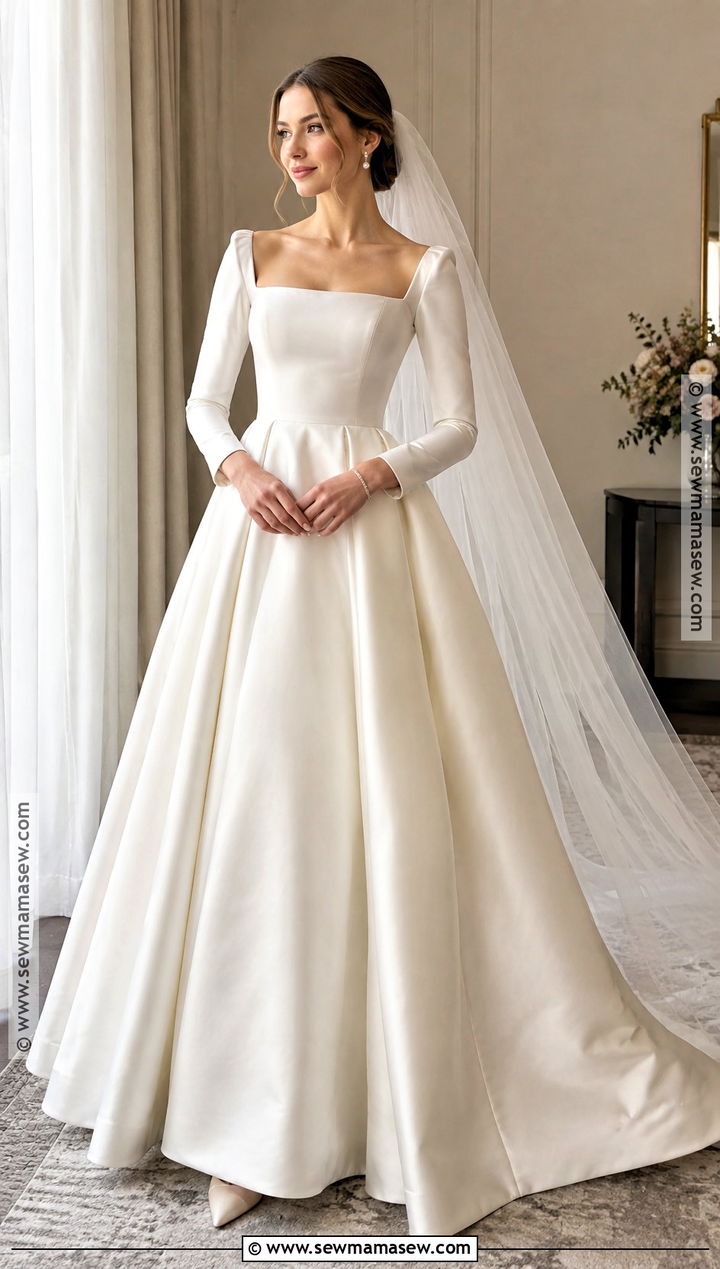
A square neckline frames the face and collarbone with a strong, clean edge. In autumn, I'd look at it in mikado or heavy satin, as an A-line with long fitted sleeves and a softly pleated skirt. You get seasonal coverage while the look stays contemporary. Pearl earrings, a thin bracelet, closed-toe pumps and a long plain veil keep it simple, and a center-parted low bun keeps attention at the neckline. The square shape suits a wide range of bust sizes when the bodice is well supported, so have your tailor check straps, cups and sleeve placement carefully. Modern venues, formal hotels and countryside estates all suit it.
13. Tea Length Wedding Dress
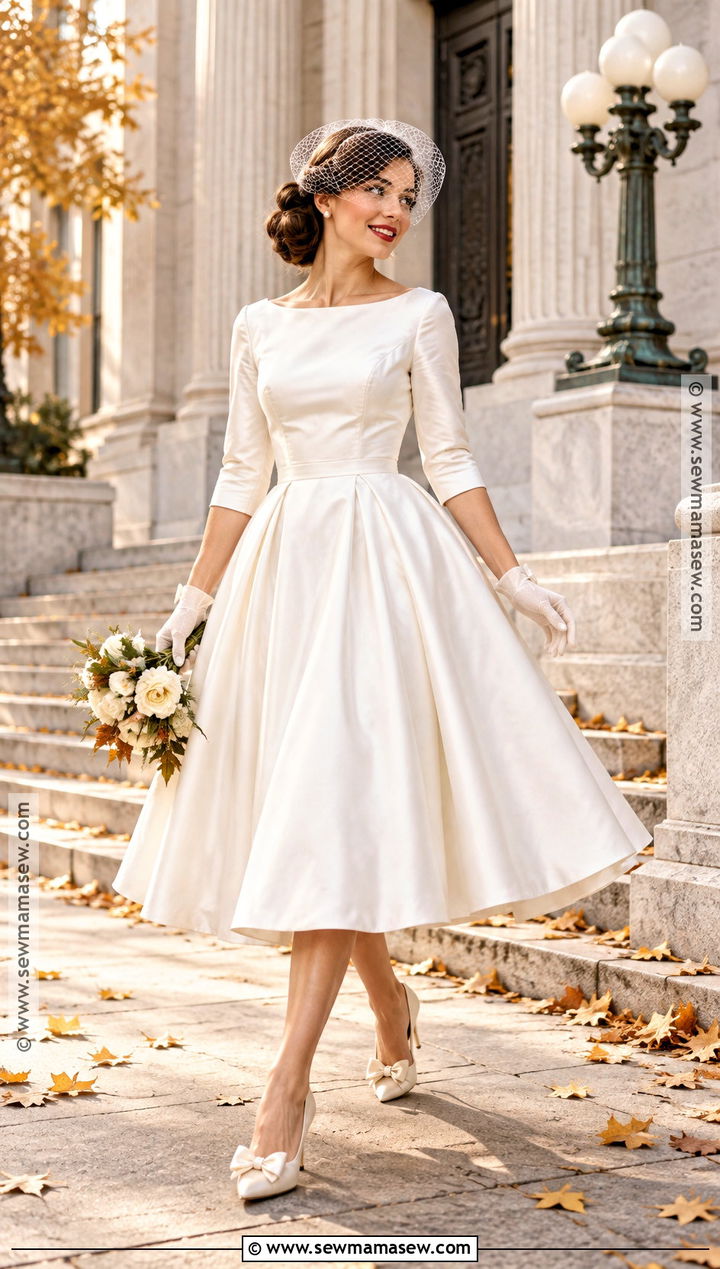
Tea length is the easiest gown on this list to move in, and the one I suggest most for courthouse ceremonies, small gatherings or a reception change. Structured satin with three-quarter sleeves, a fitted waist and a full skirt ending between knee and ankle has a classic feel. Since everyone can see your feet, the shoes are part of the outfit: ivory bow pumps or polished block-heel Mary Janes both work. I'd add pearl studs, short gloves and a birdcage or shoulder-length veil, with soft waves or a smooth chignon. When it turns cool, a cropped bridal jacket that stops at the waist keeps the proportions right.
14. Tulle Ball Gown Wedding Dress
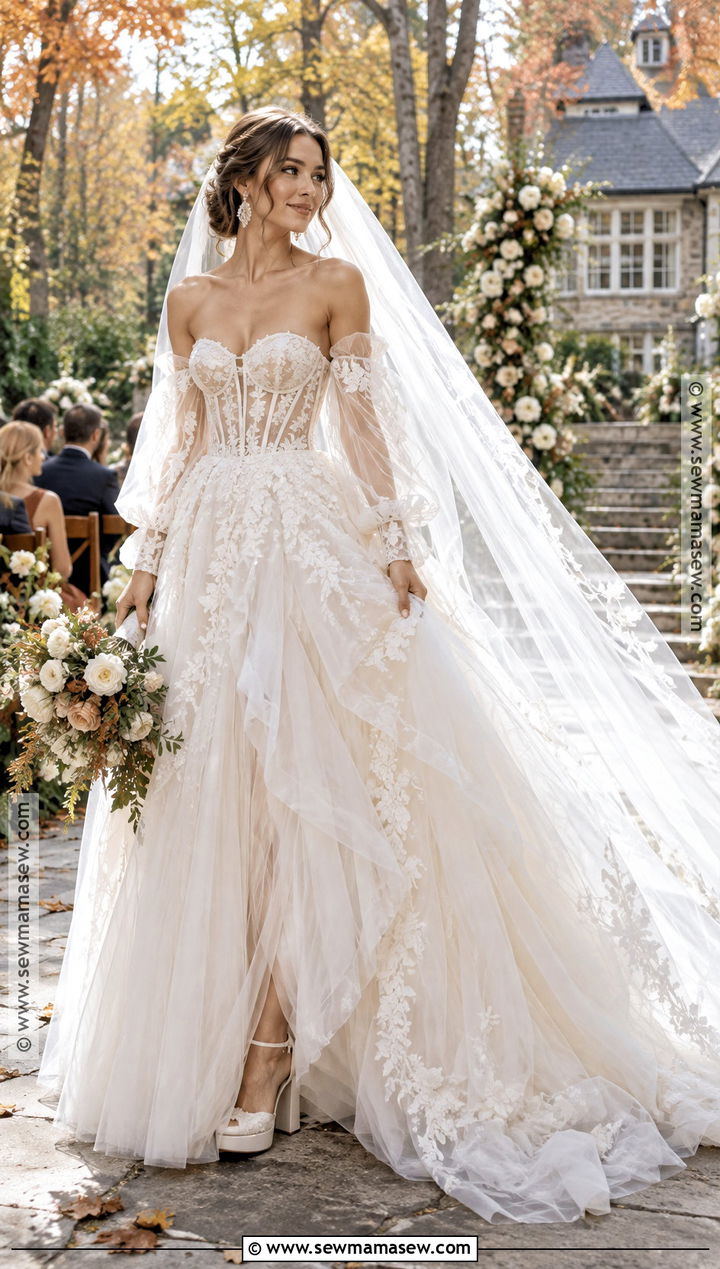
Tulle gives you all the volume of a ball gown at a fraction of satin's weight, and it moves in the wind. A corseted bodice, light floral embroidery and a layered skirt make the classic version; detachable sheer sleeves cover you for the ceremony and come off for a strapless evening. A fine cathedral veil, crystal earrings and sturdy block heels hidden under the skirt keep you steady. A romantic updo with a few loose pieces balances the volume. Tulle snags on twigs, splintery floors and rough stone, so assign one attendant to lift and guide the train whenever you're outside. Grand estates and wooded venues suit it.
15. Wedding Dress With Bridal Jacket
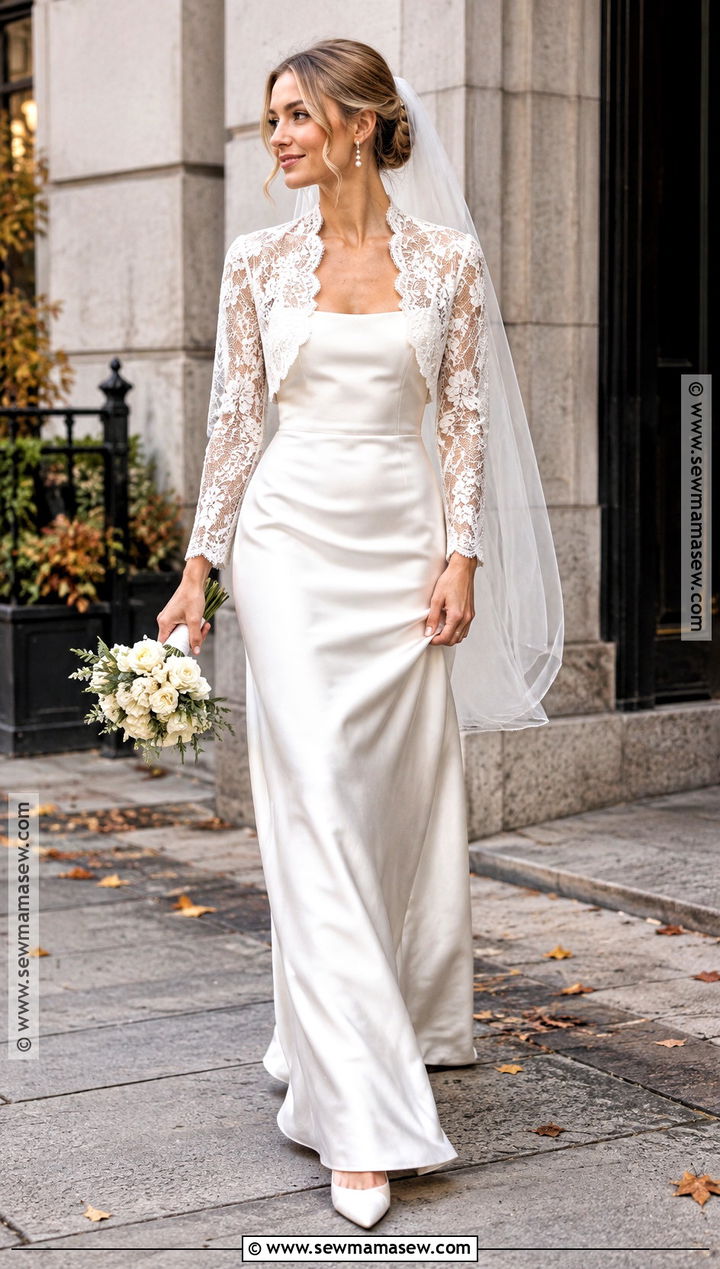
A jacket is the simplest way I know to handle a day that starts cold and ends warm. Begin with a sleek sleeveless sheath or slip gown in satin or crepe, then add a cropped lace jacket, a structured satin bolero or a tailored white blazer that works with the dress instead of hiding it. Modern drop earrings, pointed pumps, a fingertip veil and a neat ponytail or low bun keep the neckline clear. Take the jacket off after the ceremony for a lighter reception look. Bring it to every fitting so your tailor can check the sleeve length, the shoulder line and where its hem lands against the gown's waist seam.
What Goes Under a Structured Gown
Many of the dresses above rely on boning, corsetry or heavy satin, and the wrong undergarments can undo a good fit. I ask brides to buy undergarments before the first fitting and wear them to every one after, because a different bra can change where a bodice sits by a surprising amount.
- Corset and boned bodices often have support built in, so you may need no bra at all. Ask your seamstress whether cups can be sewn in.
- Open or low backs call for adhesive cups or a low-back long-line bra; test it for a full day before the wedding.
- Crepe and satin show lines, so choose smooth, seam-free shapewear in a shade close to your skin rather than white.
- Ball gowns with heavy skirts are easier with a light slip underneath, which stops tulle sticking to tights.
Comfort matters as much as the silhouette. If shapewear pinches after an hour at home, it will feel far worse by the reception.
Securing a Long Veil Against Autumn Gusts
Fall afternoons are often breezy, and a cathedral veil will happily wrap itself around your face or a nearby branch. Have your stylist anchor the comb into a braid or pinned base rather than loose hair, and add a couple of hidden bobby pins crossed over the comb. Sheer, unweighted tulle lifts the most; a veil with a lace or horsehair edge hangs heavier and behaves better outside. For outdoor portraits, a gust can make a lovely shot, so ask your photographer to use it on purpose rather than fighting it.
Your Venue, Your Weather, Your Dress
Making the final call is easier when you weigh venue, likely weather, comfort and taste together rather than one at a time. Lace sleeves and jackets give you flexible coverage, while satin, crepe, mikado and layered tulle have enough body for the season. Pair the dress with shoes you can stand in, jewelry that doesn't compete and an outer layer that looks planned in photos. Then test everything at your fittings: walk, sit, raise your arms and practice handling the train. Autumn is a generous season for brides, and the right dress will still look and feel like you from the ceremony to the last song.
Related posts: