Autumn is my favorite season to dress a bridal party, mostly because the fabric options open up. Velvet, satin and crepe have the weight to hold a darker color, and chiffon still earns its place at a warm September ceremony. When a bride asks me where to begin, I ask about the venue and the likely temperature before I ask about color, because a gorgeous rust satin means nothing if the bridesmaids spend the ceremony shivering on a hillside. Below are twenty dresses I'd genuinely consider, from burgundy velvet to sage chiffon, with notes on who each one suits, what it needs in shoes and wraps, and where it tends to cause trouble.
Ordering When Bridesmaids Live Far Apart
The dress itself is rarely what goes wrong. The ordering is. Bridesmaid gowns from most made-to-order lines take several months to arrive, and many retailers don't accept returns on them, so I work backward from the wedding date and build in time for alterations at the end.
- Order swatches of the two or three front-runner colors and look at them in daylight and under warm indoor bulbs before deciding.
- Have every bridesmaid measured by a tailor or a friend with a soft tape, at bust, natural waist and full hip, and size from the chart rather than from her usual dress size.
- Where measurements fall between two sizes, size up; taking a gown in is simple, letting it out often isn't possible.
- Place every order in the same week so the dye lot matches; separate orders weeks apart can arrive in noticeably different shades.
- Leave four to six weeks for hemming and fitting, and hem in the actual wedding shoes.
For long-distance bridesmaids, I ask each one to send a photo in the dress in daylight once it arrives. It's the fastest way to catch a wrong shade or a size problem while there's still time to fix it.
1. Burgundy Velvet Bridesmaid Dress
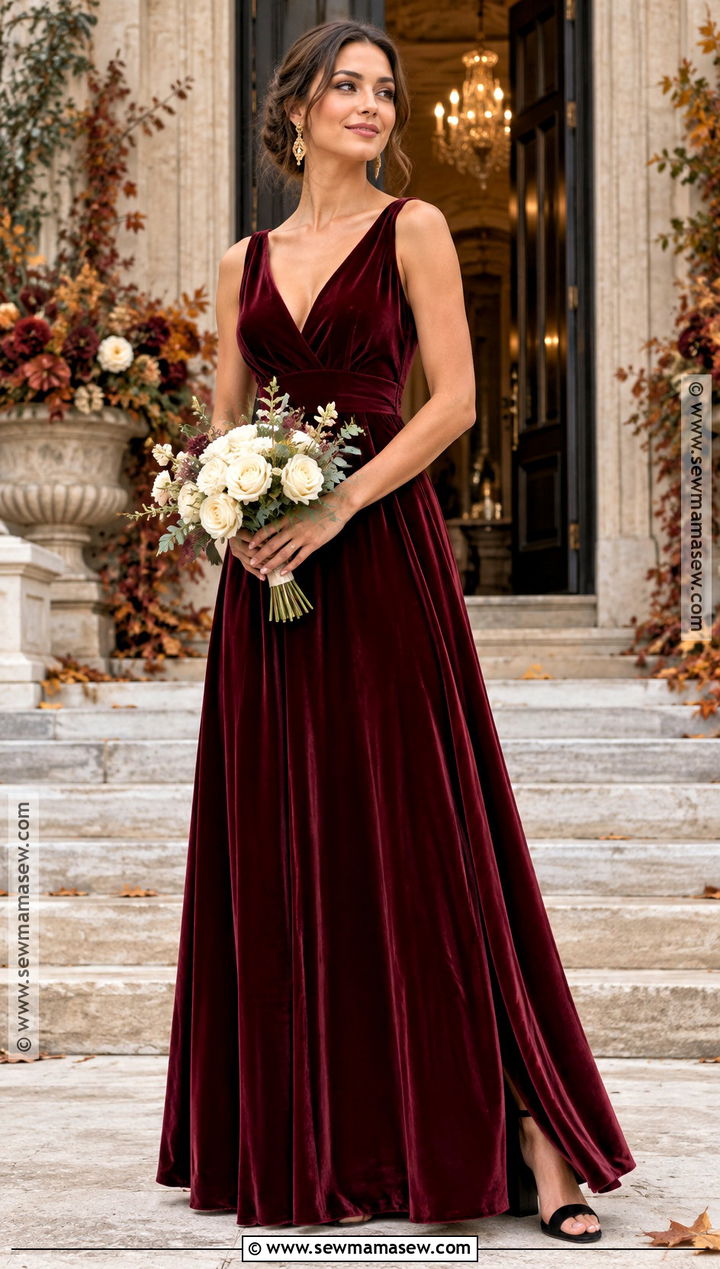
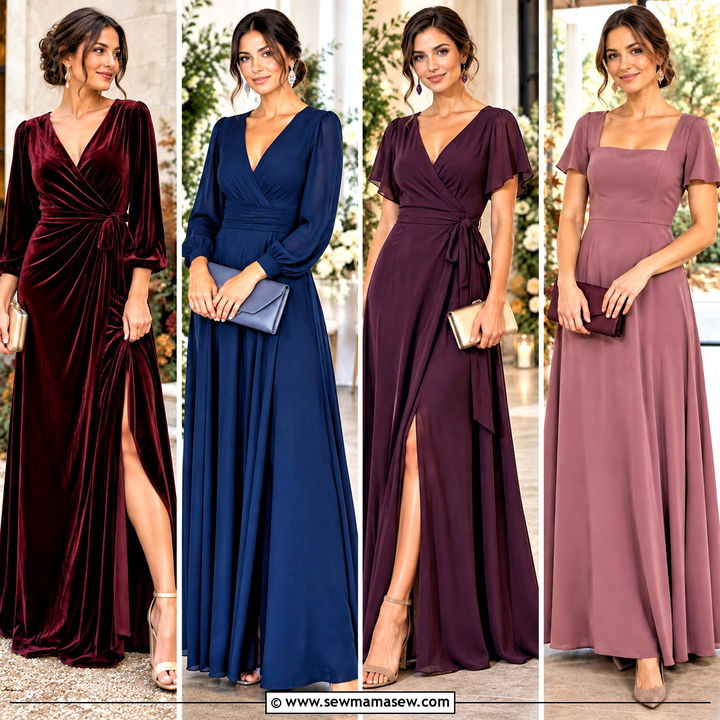
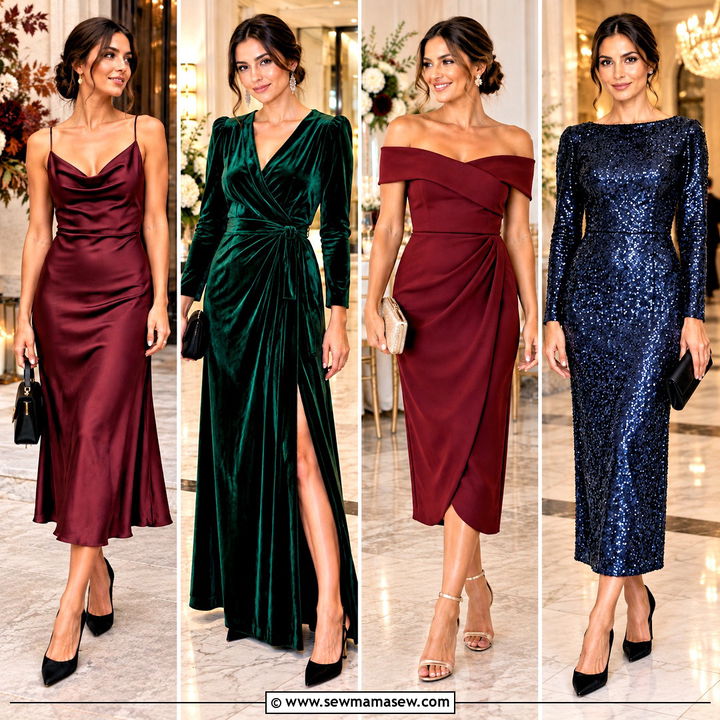
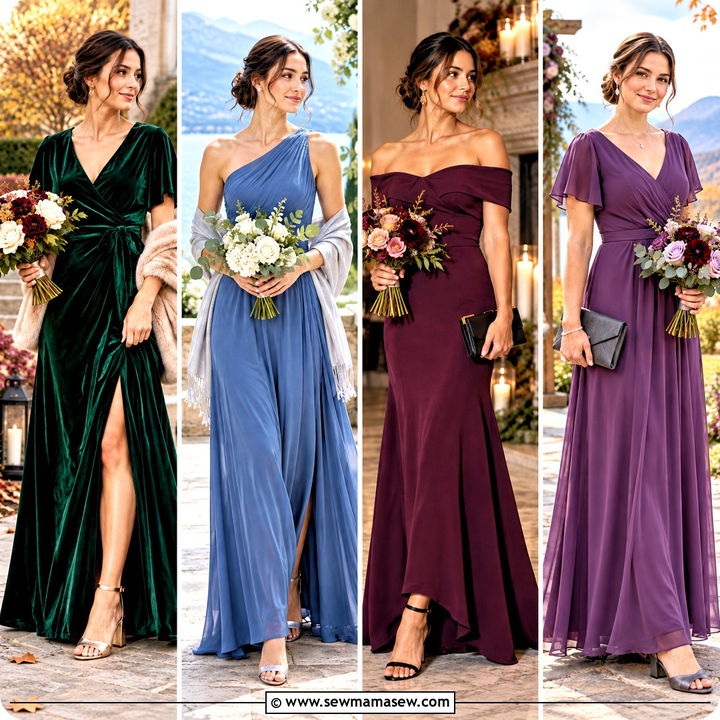
Burgundy velvet is the dress I reach for first when a wedding falls in late October or November. A floor-length A-line with a V-neck and a defined waist forgives a lot, which matters when the same gown has to work on five different bodies. Velvet holds warmth and its pile catches light unevenly, so burgundy reads deeper on camera than it does on a hanger. Gold drop earrings and an ivory bouquet with dark greenery keep it from looking heavy. I'd put the bridesmaids in black block heels if any of the photos happen on grass or gravel, and I'd tell them to steam velvet, never press it flat with an iron.
2. Rust Satin One-Shoulder Bridesmaid Dress
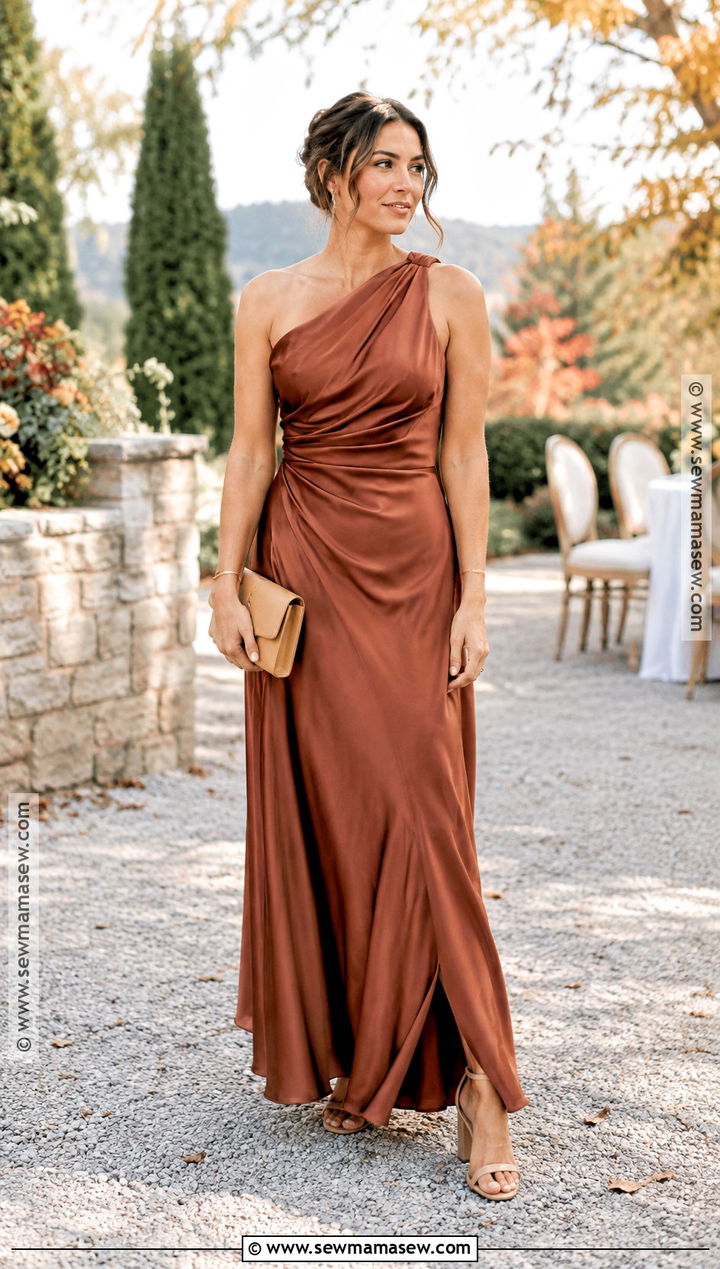
Rust satin picks up the color of turning leaves without tipping into a costume. A one-shoulder maxi with a draped bodice is modern enough for a city loft and still sits comfortably at a farm. The catch with satin is that it reflects daylight hard, so I keep the jewelry to brushed gold and one slim bracelet. Tan heels and a caramel clutch stay inside the palette. Before anyone orders, I check that the strap adjusts and that the side zip runs smoothly, because a single-strap bodice has nowhere to hide a poor fit. Cream flowers, terracotta accents and eucalyptus suit it from a warm September afternoon through a crisp October evening.
3. Forest Green Velvet Wrap Bridesmaid Dress
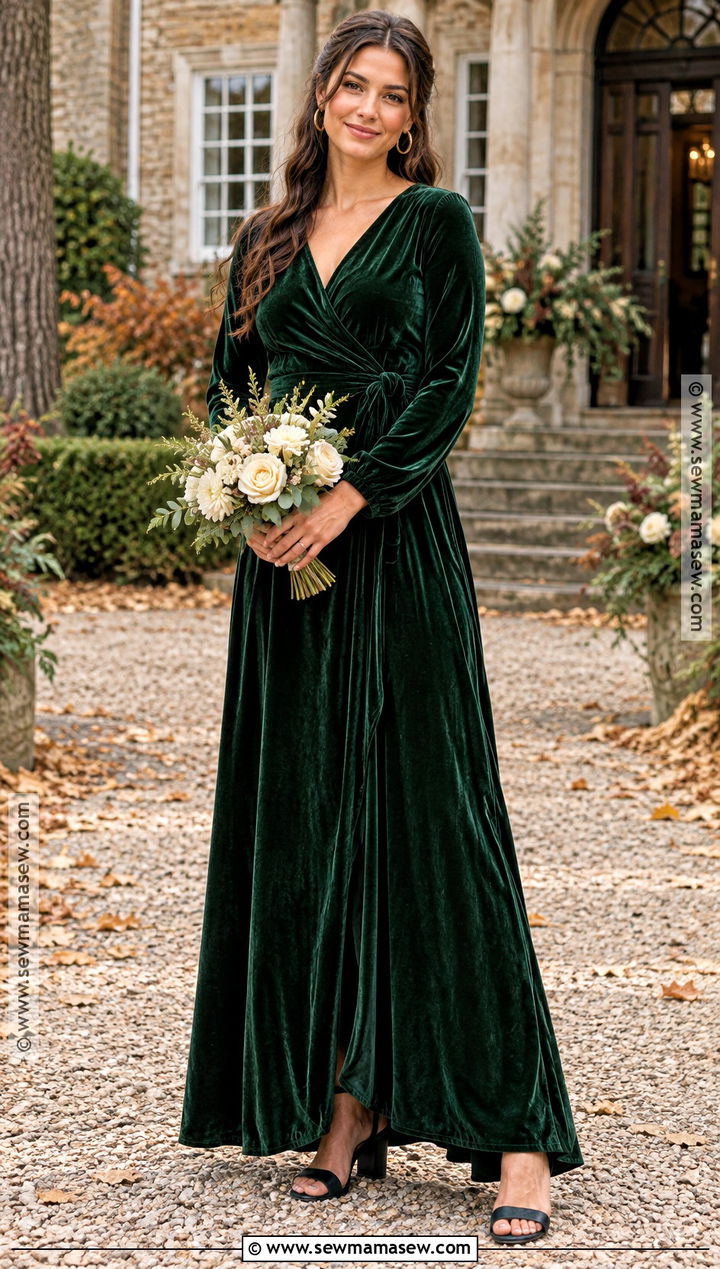
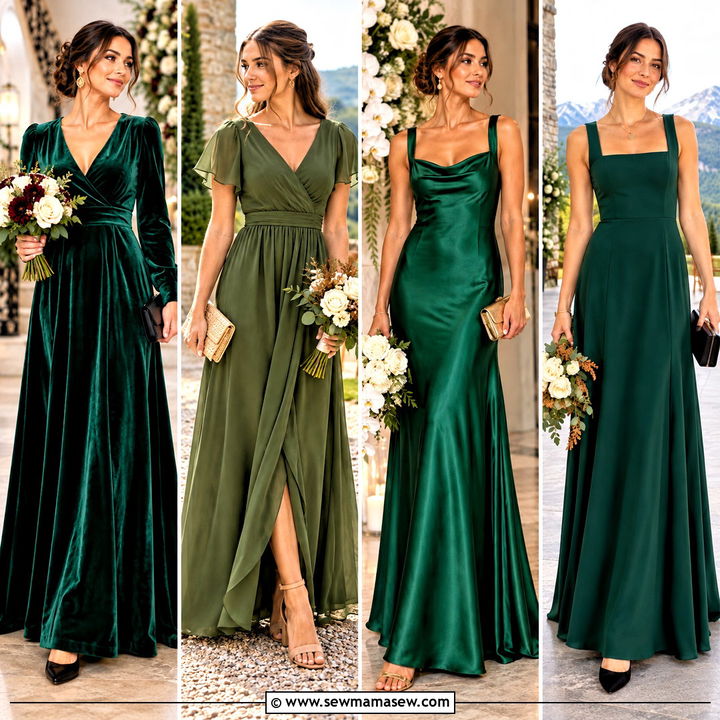
A wrap dress is the most forgiving silhouette I can hand a bridal party, and forest green velvet makes it look formal rather than casual. Each bridesmaid can tie the waist where it suits her, which solves half the fit complaints before they start. I like a moderate V, long sleeves and a gently flared skirt that clears the floor in heels. Gold hoops or small pearls, dark block heels and a satin clutch finish it. One thing I always check: velvet wraps can gape at the bust when someone sits, so a hidden snap at the crossover is worth adding. It suits woodland venues, old estates and evening receptions once the cold sets in.
4. Terracotta Chiffon A-Line Bridesmaid Dress
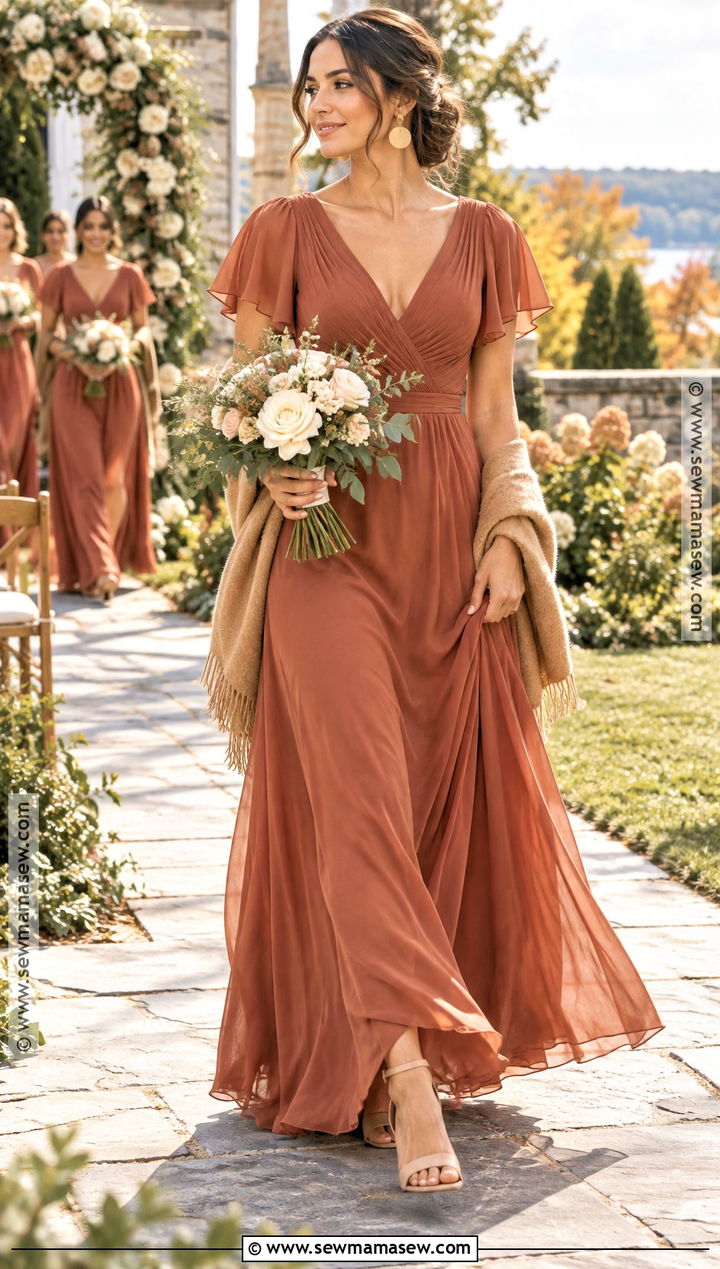
Terracotta chiffon is my answer for an early autumn wedding when the afternoon could still hit summer temperatures. Flutter sleeves give some arm coverage without trapping heat, and a pleated A-line skirt falls loosely over the hips, so it suits most shapes. Chiffon moves in the slightest breeze, which looks lovely in outdoor photos and can be a nuisance during a windy vow exchange. Nude block-heel sandals, matte gold earrings and a beige clutch are enough. Have camel wraps ready for after sunset. I steer the florist toward cream blooms and dried grasses here; too much orange in the bouquet makes the whole group look like one color block.
5. Chocolate Brown Satin Cowl-Neck Bridesmaid Dress
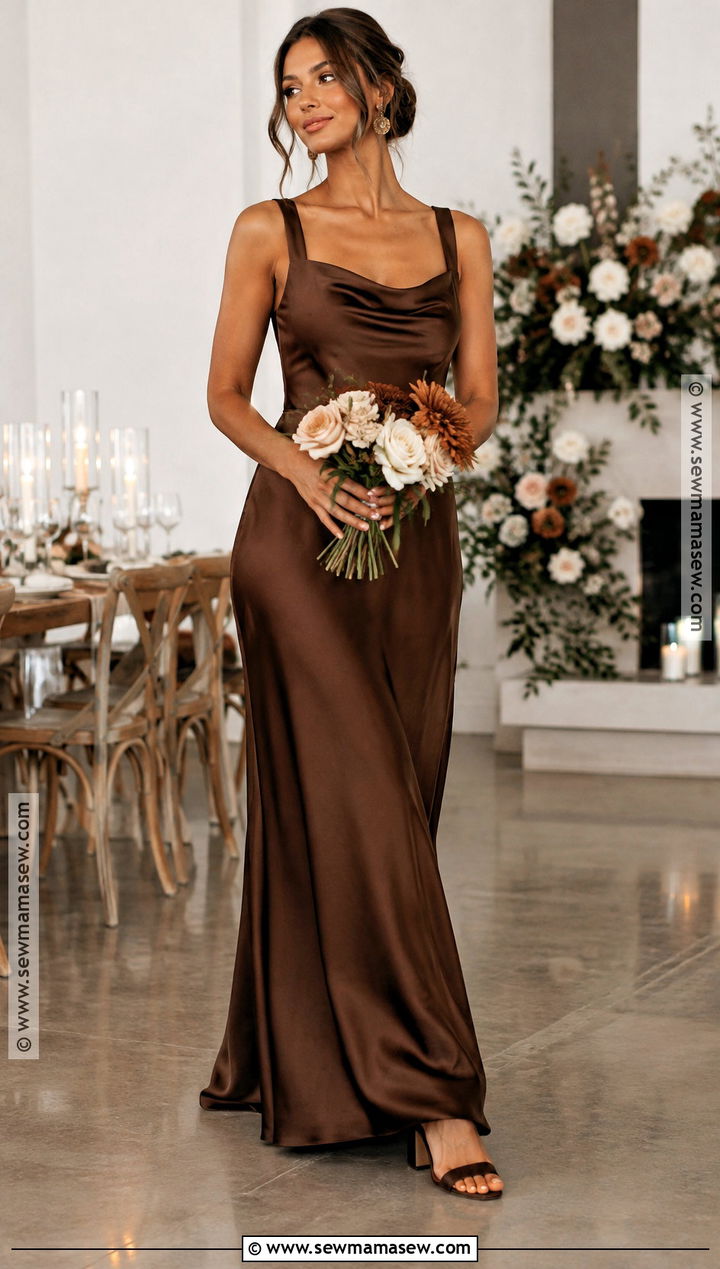
Chocolate brown satin looks expensive in a way few colors do. I like it with a soft cowl neck, wide straps that actually hold a bra, and a bias-cut skirt. Bias cut is the honest trade-off here: it skims the body beautifully and it also shows every seam and line underneath, so smooth undergarments are not optional. Bronze earrings, espresso block heels and a small metallic clutch keep it polished, and a neat low bun stops the cowl looking slouchy. Cream, peach and rust flowers lift the brown. This is a dress for a hotel ballroom or a modern indoor ceremony with warm neutral decor, not a muddy field.
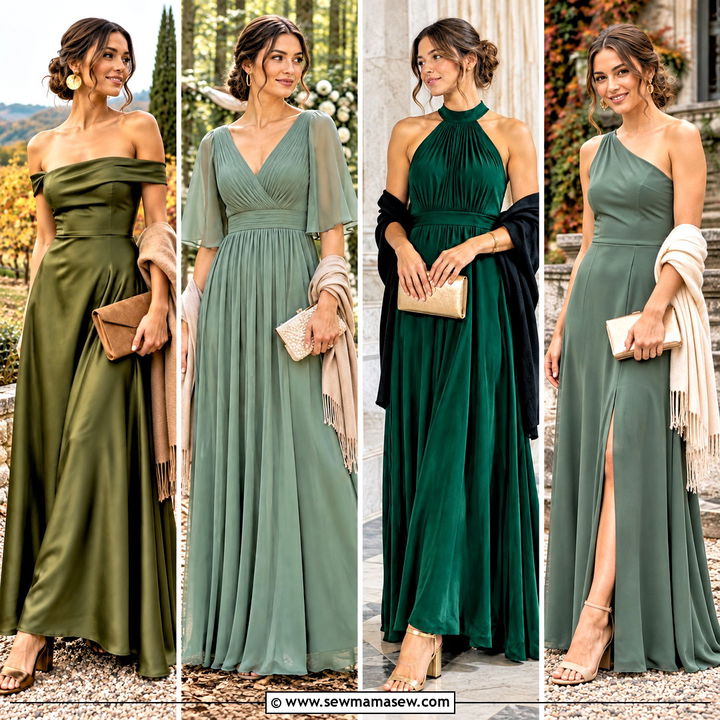
6. Olive Green Crepe Square-Neck Bridesmaid Dress
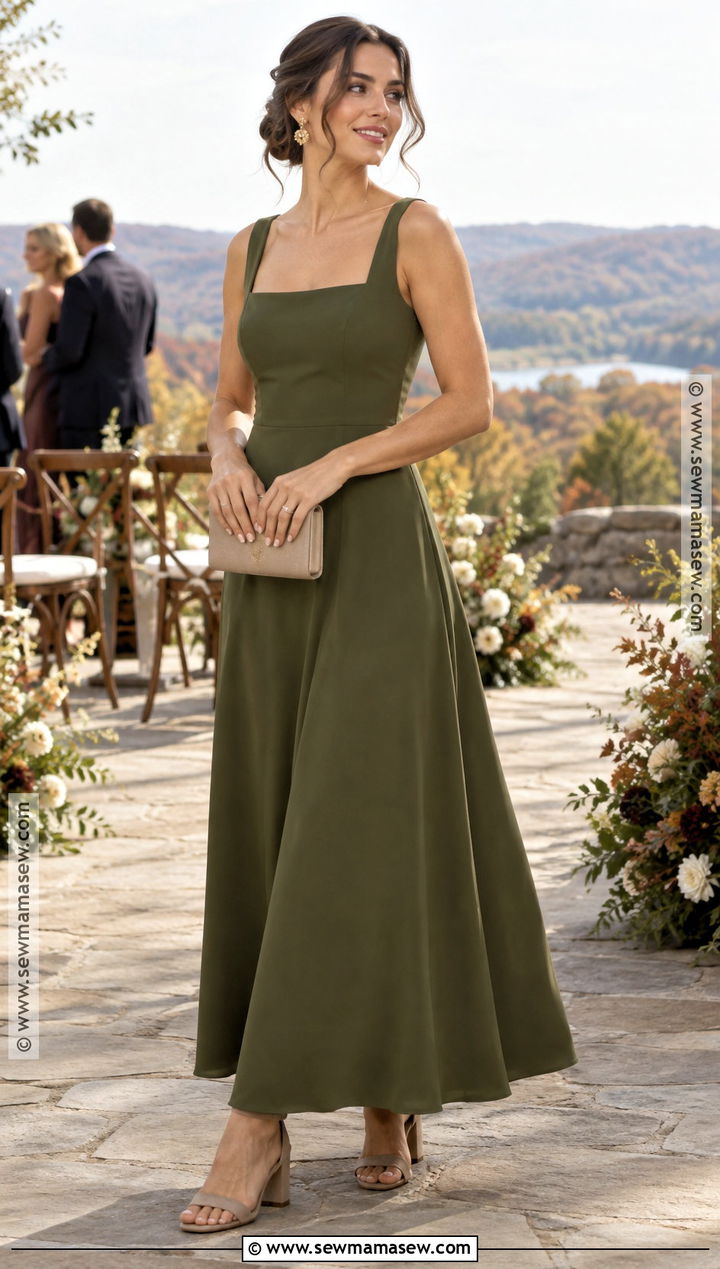
Olive crepe is grounded without being dark. A square-neck maxi with wide straps and an A-line skirt has a clean line, and crepe's matte surface photographs evenly under flash and daylight alike, which satin doesn't. I pair it with small gold earrings, taupe block heels and a structured neutral clutch. For an outdoor ceremony I add a camel shawl that complements the green rather than matching it, since an exact match tends to look like a uniform. It suits rustic, minimal and garden weddings where the couple wants autumn color that still feels light.
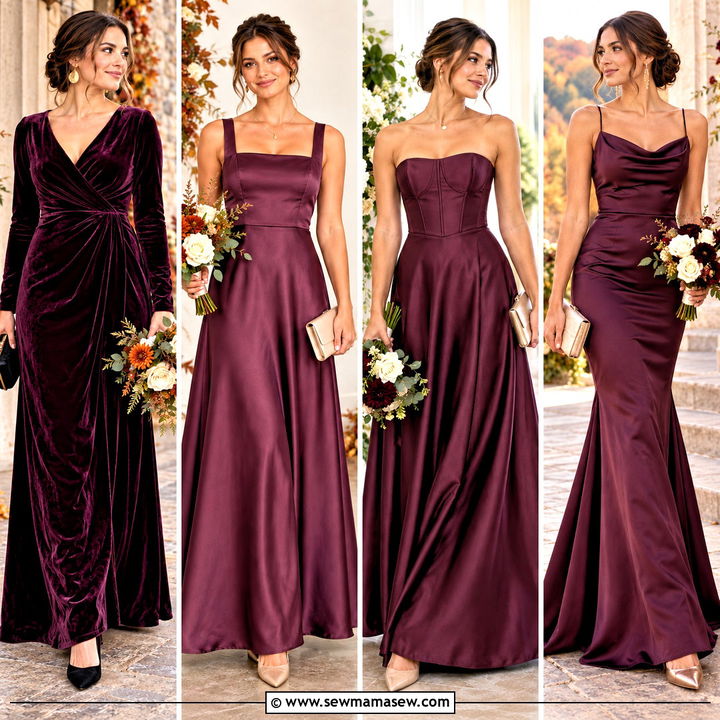
7. Plum Velvet Off-the-Shoulder Bridesmaid Dress
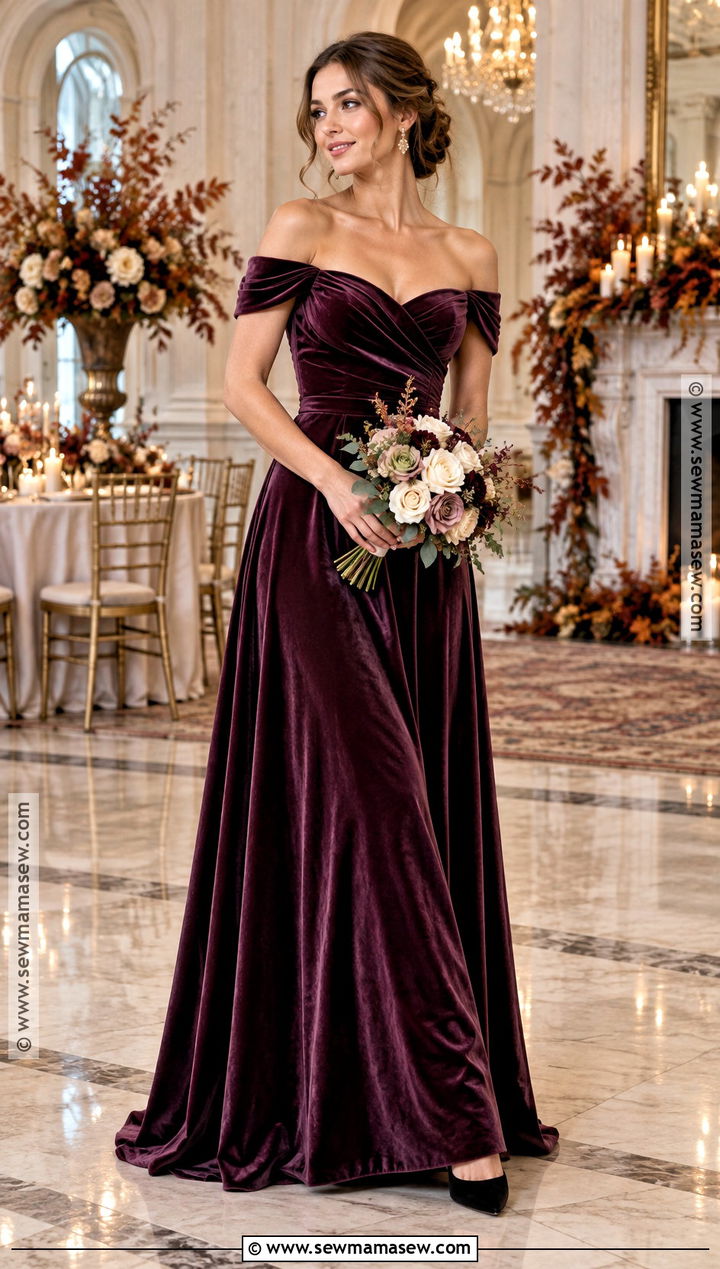
Plum velvet is how I give a bridal party rich color without red or orange. An off-the-shoulder gown with a fitted waist looks formal, but it is the neckline I'm most careful about. Off-the-shoulder bodices slide when arms go up for hugs and dancing, so I only recommend styles with silicone grip tape inside or detachable straps. Silver or soft gold earrings, black closed-toe heels and a dark clutch keep it composed. A matching plum wrap adds warmth. Ivory flowers and deep green foliage set it off in a ballroom or estate in late autumn.
8. Burnt Orange Satin Halter Bridesmaid Dress
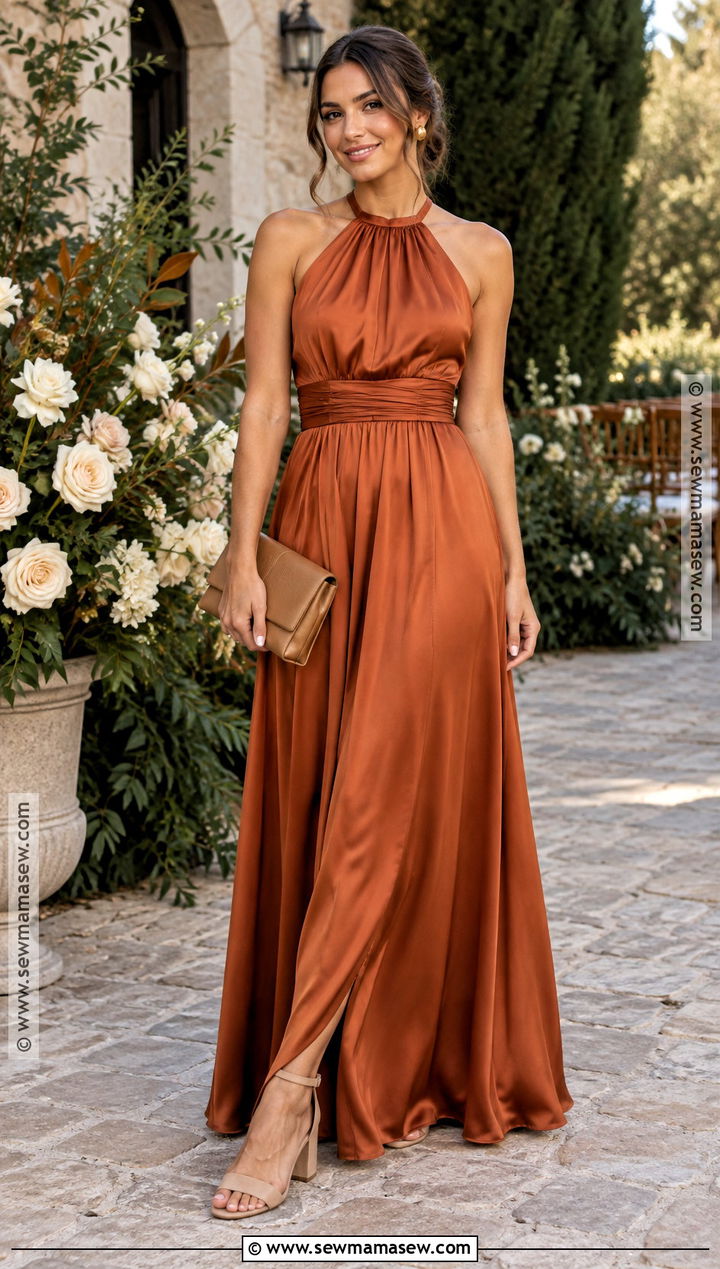
Burnt orange satin in a halter cut makes a confident statement with very little help. The high front balances an open back, and that covered neckline is something I appreciate in group photos because nobody spends the evening adjusting straps. Gold studs, a slim cuff and neutral block-heel sandals are all it needs. Hair should go up or into a sleek ponytail so the halter line shows. I'd flag one thing to the bride: saturated orange suits warm and deeper skin tones easily and can drain very fair skin, so I like to see it on the actual bridesmaids before committing. At an October wedding against real foliage it looks striking.
9. Navy Blue Long-Sleeve Chiffon Bridesmaid Dress
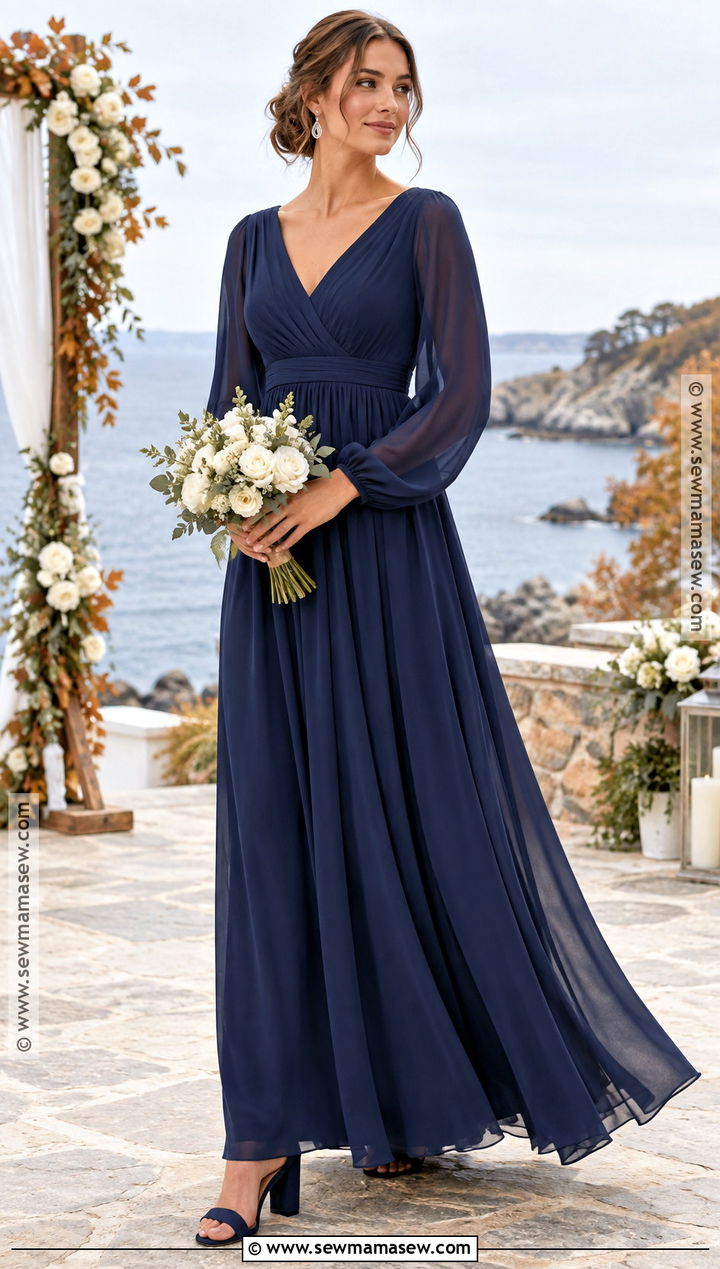
Navy is the cool-toned autumn option I suggest when earthy shades don't suit the wedding palette. A long-sleeve chiffon dress with sheer sleeves, lined cuffs and a gathered waist gives coverage without velvet's weight. I always check that the bodice has real support built in, since sheer sleeves pull a chiffon top downward over a long day. Silver earrings, navy block heels and a gray clutch stop the color count creeping up. Bring charcoal or navy wraps for a late outdoor ceremony. Navy also sits comfortably next to almost any suit color the groomsmen wear, which makes it practical at coastal and hotel weddings.
10. Dusty Rose Satin Wrap Bridesmaid Dress
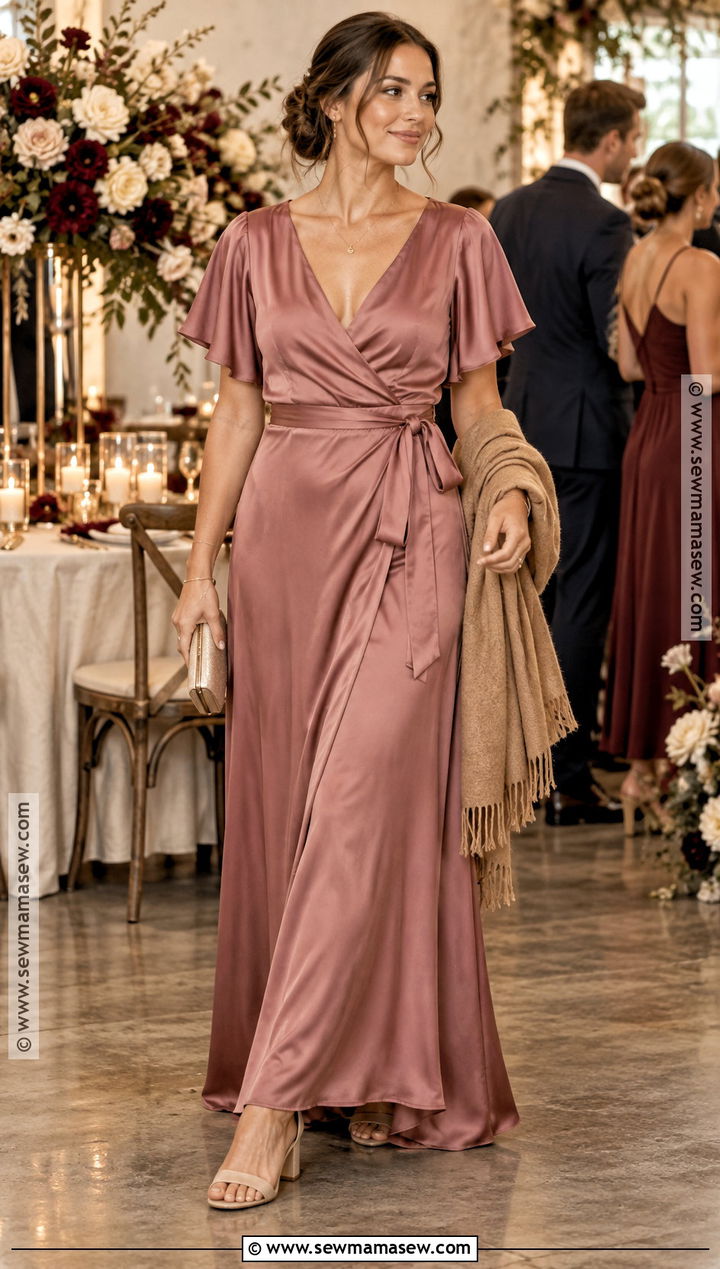
Dusty rose can belong to autumn, but only in the right shade and fabric. I go for a muted, grayed rose rather than a pastel, and a satin with enough body that it doesn't look like a spring dress. A wrap maxi with short flutter sleeves lets each bridesmaid adjust the waist and neckline. Champagne block heels, fine gold earrings and a taupe clutch keep it warm, and a camel wrap helps it settle into the scenery. Small burgundy accents in the bouquet are what tie it to the season. It's a good pick for early autumn and for parties mixing silhouettes in one shared color.
11. Champagne Satin Column Bridesmaid Dress
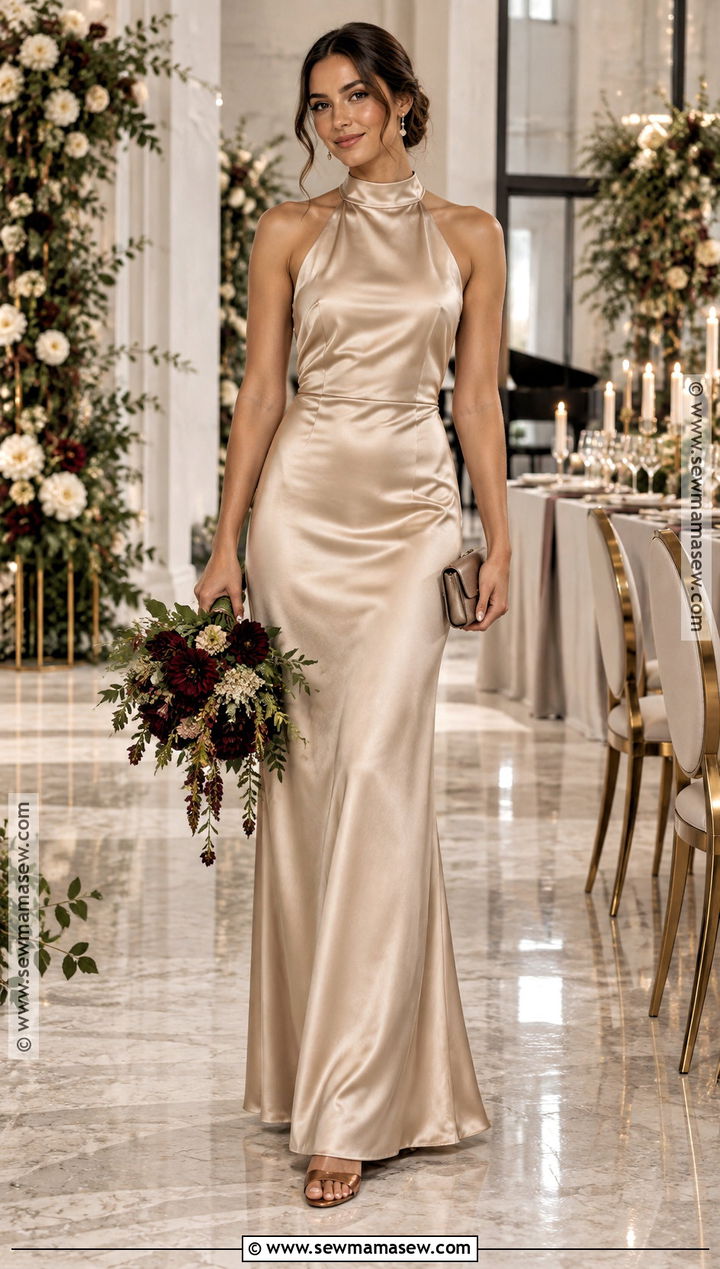
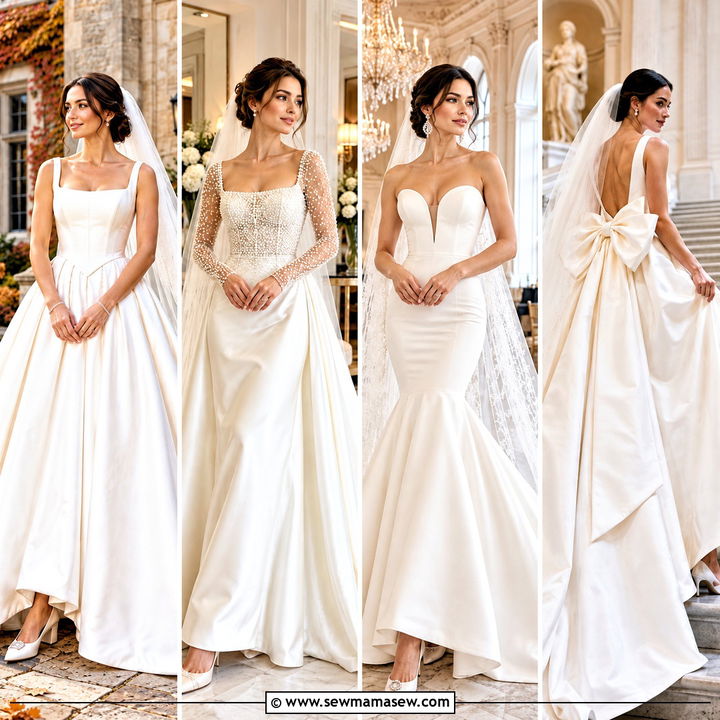
Champagne satin is the dress I handle most cautiously, because it sits close to bridal territory. I compare swatches against the bride's gown in both window light and indoor light before anyone orders; under warm reception bulbs, champagne and ivory can blur together. A high-neck column with light waist shaping looks refined. Metallic bronze heels, small drop earrings and a taupe clutch warm it up, and dark green or burgundy bouquets supply the contrast that keeps it from washing out. A column in satin shows everything, so budget for alterations and smooth underwear. It belongs at black-tie and modern venues.
12. Copper Satin One-Shoulder Bridesmaid Dress
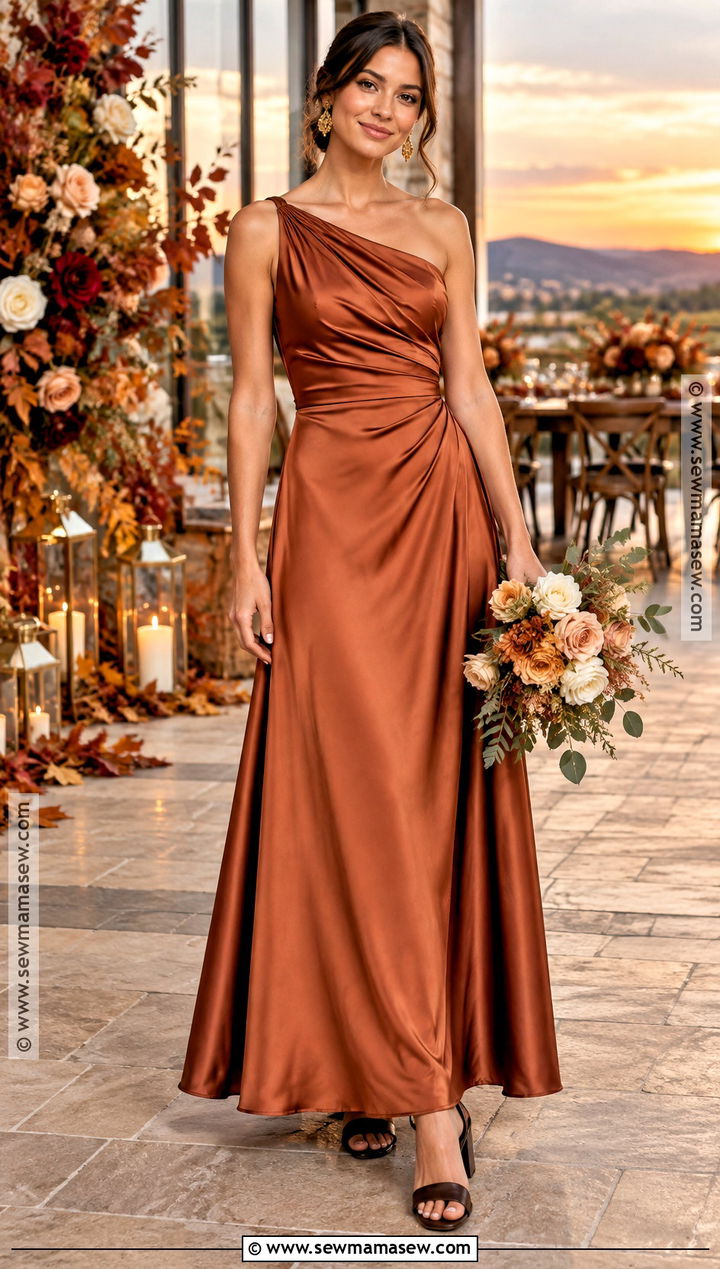
Copper satin has a metallic glow that does the work sequins usually do. A one-shoulder gown with soft ruching and an A-line skirt is comfortable enough for a long reception, and the ruching hides small fit variations better than smooth satin. I balance the shine with matte accessories: plain gold earrings, dark brown block heels, a matte clutch. A sleek low bun keeps the asymmetric neckline visible. Ivory flowers, brown foliage and deep green leaves round out the palette. Copper looks best at sunset and in industrial or minimal spaces where it can bounce some warmth into the room.
13. Sage Green Chiffon Flutter-Sleeve Bridesmaid Dress
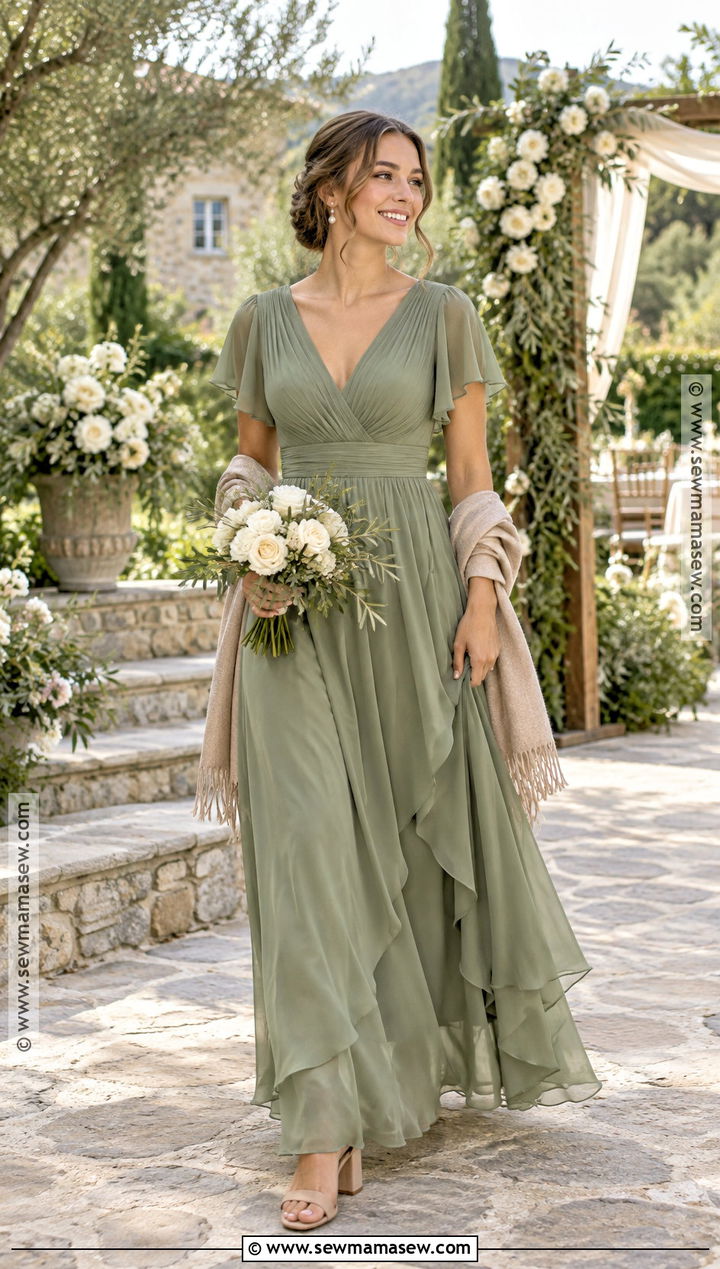
Sage chiffon is my bridge from summer into autumn, and I mostly suggest it for September. Flutter sleeves cover the upper arm, which many bridesmaids ask for, and a layered A-line skirt moves without clinging. Nude sandals, pearl or gold earrings and a beige clutch keep it fresh. Choose a taupe wrap for the evening; anything dark looks heavy against pale green. Peach accents in an ivory and olive bouquet bring warmth. Sage also mixes easily with olive or forest green gowns if the couple wants a tonal party, and it fits gardens and vineyards where green is already everywhere.
14. Deep Mauve Crepe V-Neck Bridesmaid Dress
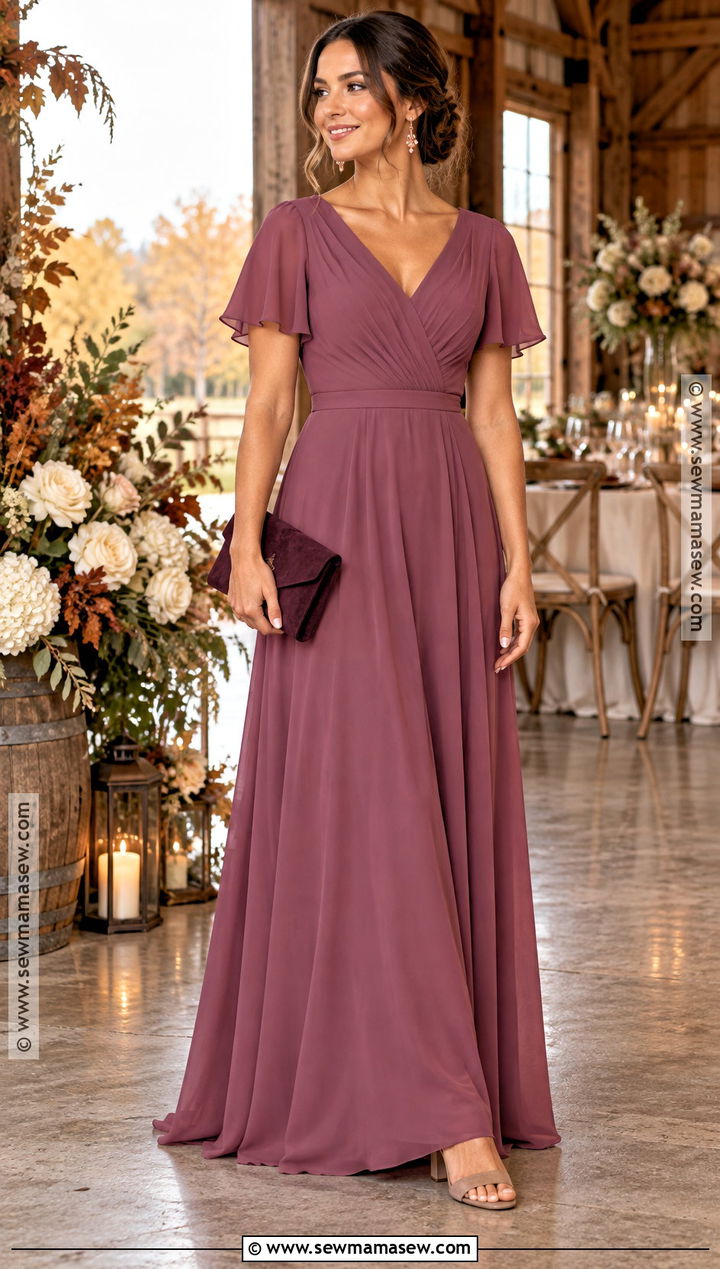
Deep mauve is a muted purple that reads grown-up rather than bright. A crepe maxi with a V-neck and short sleeves suits a wide range of figures, and I let the bride choose between an empire waist and a natural waist depending on the group; empire is kinder to anyone who doesn't want the waist defined, while a natural waist shows off shape. The matte crepe keeps the color soft in any light. Rose-gold earrings, taupe heels and a plum clutch work, and matching mauve wraps look tidy for a late October processional. Use it where the couple wants autumn color without brown, orange or dark green.
15. Emerald Green Satin Cowl-Neck Bridesmaid Dress
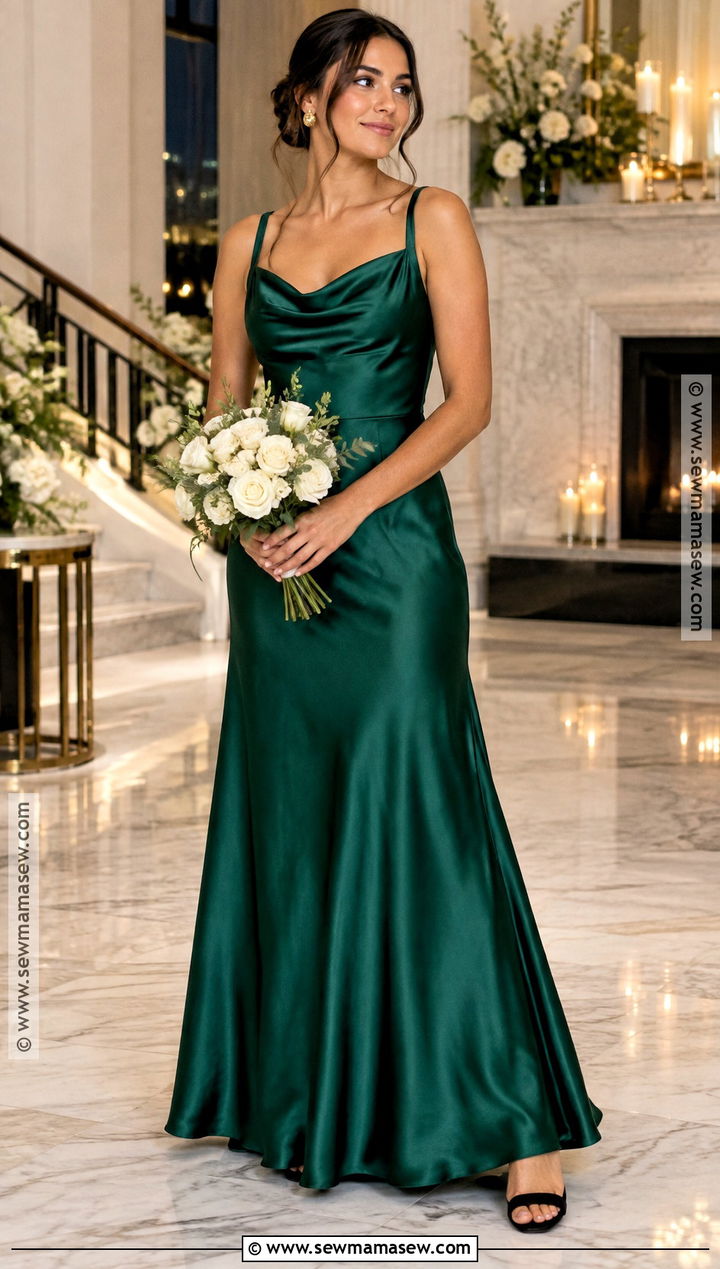
Emerald satin is a jewel tone that stands out against gold leaves, so I keep everything around it plain. A modest cowl, supportive straps and a gently flared floor-length skirt are enough shape. Gold studs, black block heels and a small black clutch give a clean formal finish. Sort the wraps before the day; I've found bridesmaids bring whatever is in their closet unless someone hands them a matching shawl. A sleek bun or polished waves keeps the neckline in view. Ivory and dark foliage bouquets give crisp contrast at evening ceremonies and upscale hotel weddings.
16. Mustard Gold Pleated Chiffon Bridesmaid Dress
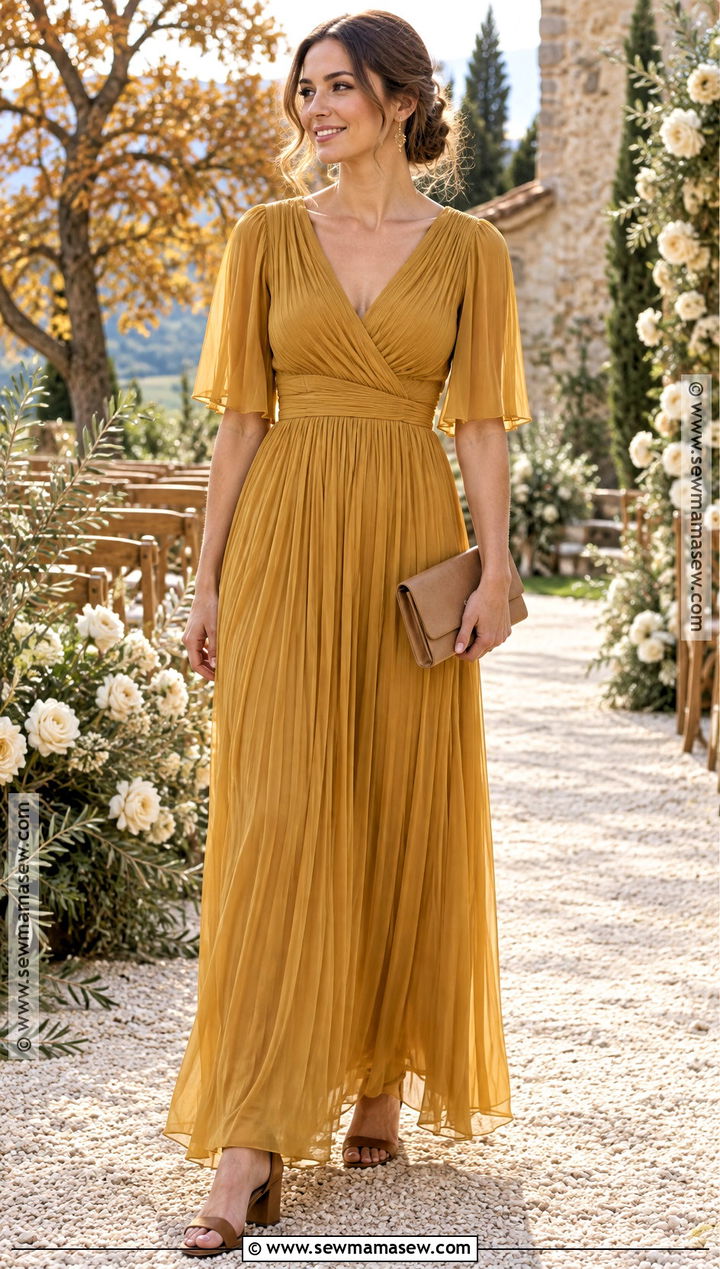
Mustard is the color I test most carefully on real people, because the gap between a flattering golden mustard and a sallow one is small. A pleated chiffon maxi with a crossover bodice and elbow sleeves moves well and dances well. Brown block heels, simple gold earrings and a camel clutch keep it warm, and a chocolate wrap deepens the whole color story. Cream bouquets with olive foliage brighten it so the gold doesn't dominate group photos. I'd keep it for daytime and outdoor ceremonies with natural wood and neutral flowers; under evening tungsten light it can turn brassy.
17. Black Velvet Square-Neck Bridesmaid Dress
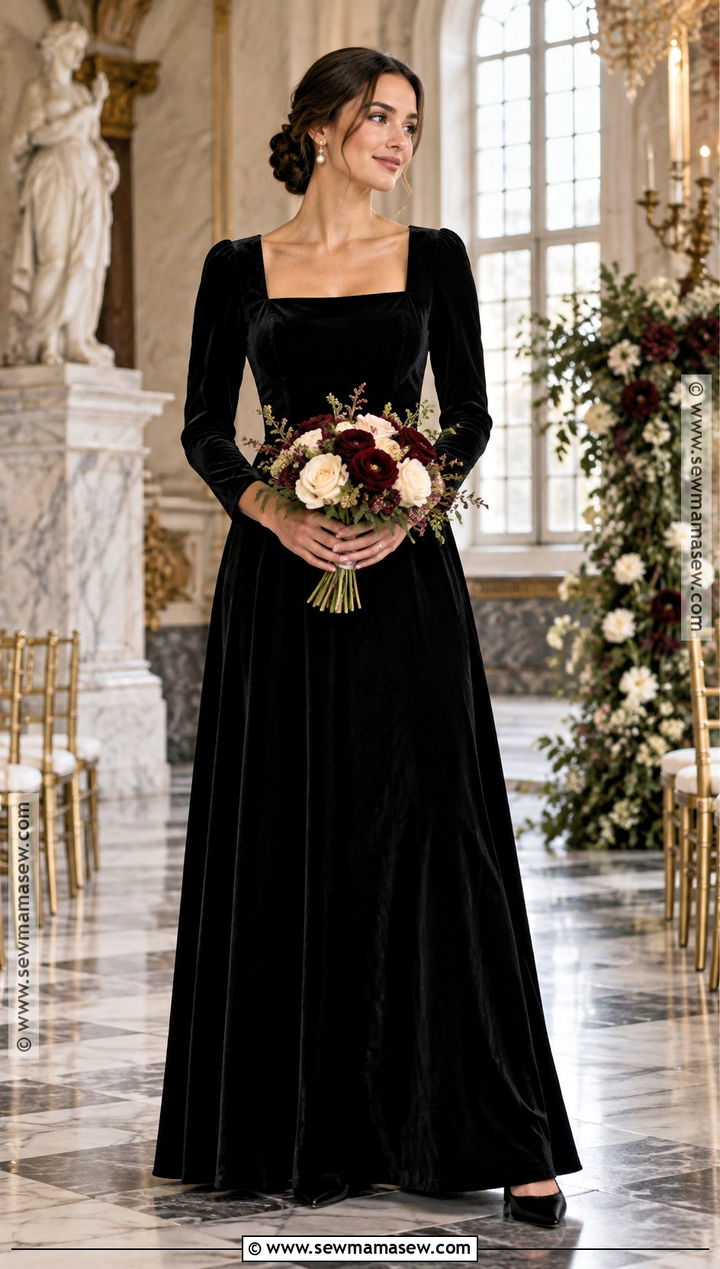
Black velvet is the most dramatic choice here and also one of the easiest to coordinate. Velvet's pile keeps black from looking flat, which is the problem with black crepe in photographs. A square neck, long sleeves and a softly fitted A-line skirt leave room for the bouquet and decor to carry the color. Pearl earrings, black closed-toe heels and a satin clutch are all it needs. Burgundy, cream and green flowers bring the season in. Necklines can vary across the party as long as the velvet matches. It suits evening ceremonies, historic venues and black-tie weddings.
18. Burgundy Floral Velvet Bridesmaid Dress
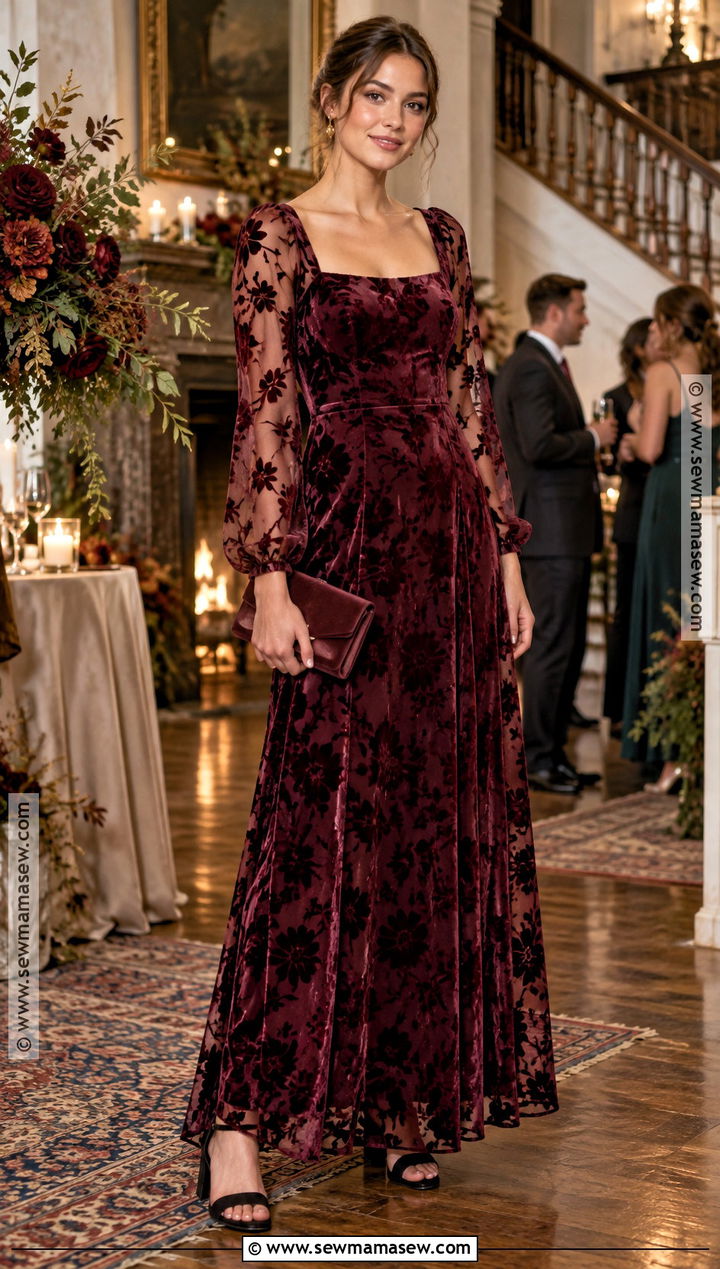
Burnout velvet carries a pattern in the fabric itself, so a tonal burgundy floral adds texture without the busy look of a printed dress. I like a lined bodice, sheer sleeves and a flowing skirt. Check the lining carefully on the try-on: burnout velvet is semi-sheer wherever the pile has been removed, and a poorly lined skirt shows a lot in flash photos. Black block heels, small gold earrings and a plain burgundy clutch keep it simple, and hair and jewelry should stay quiet. I often suggest this one just for the maid of honor at a late autumn indoor wedding with vintage decor.
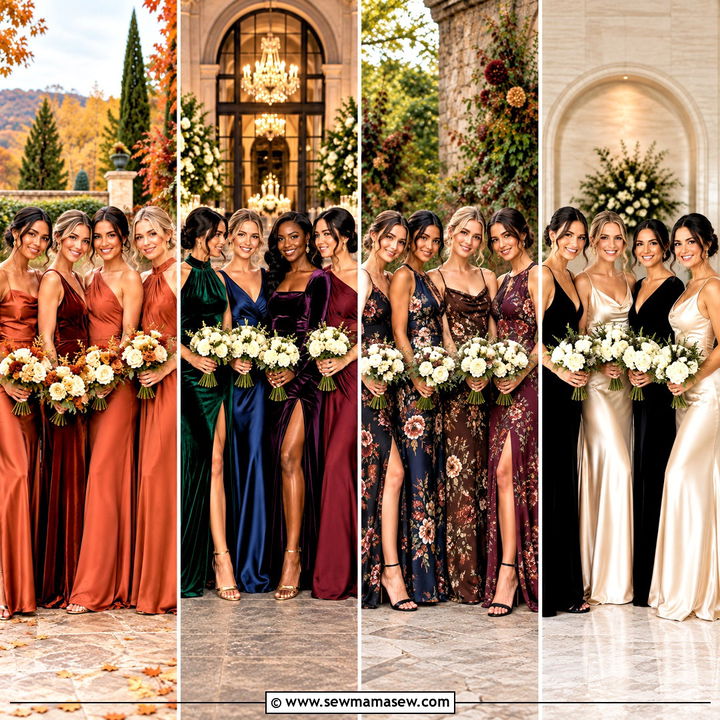
19. Mismatched Jewel-Tone Bridesmaid Dresses
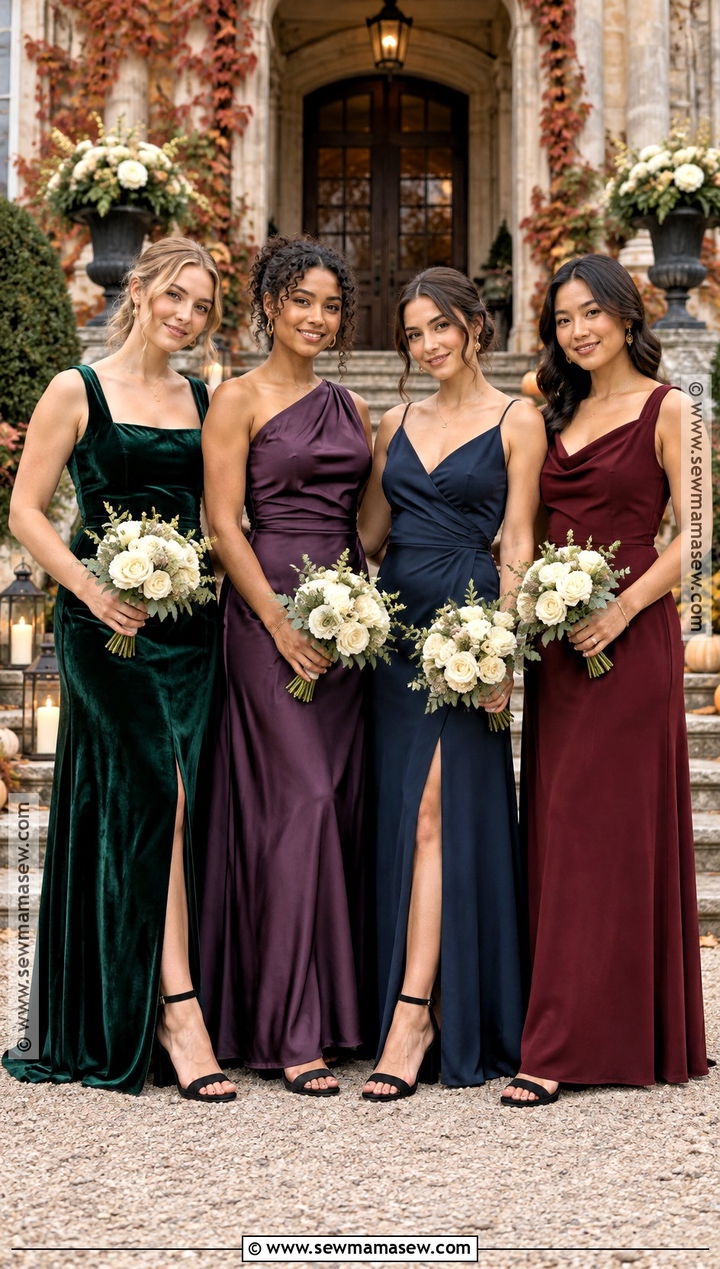
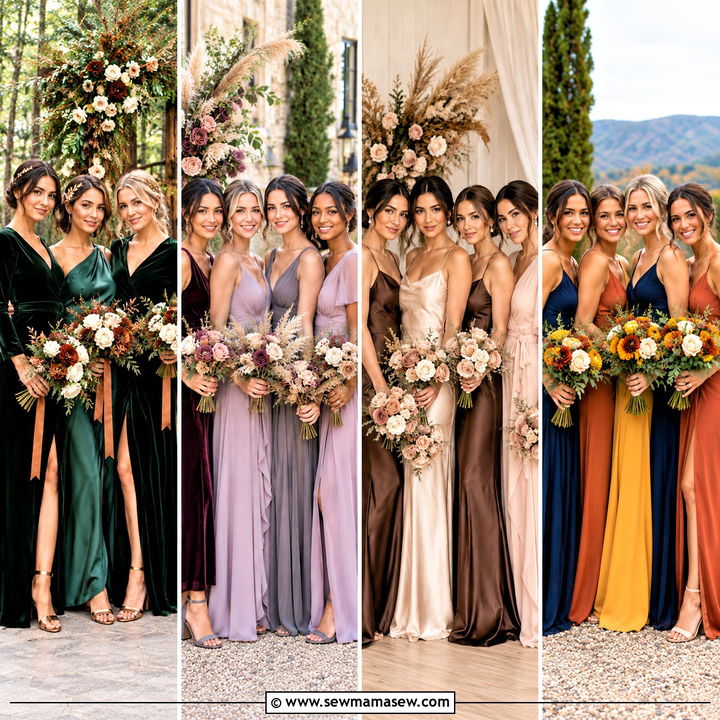
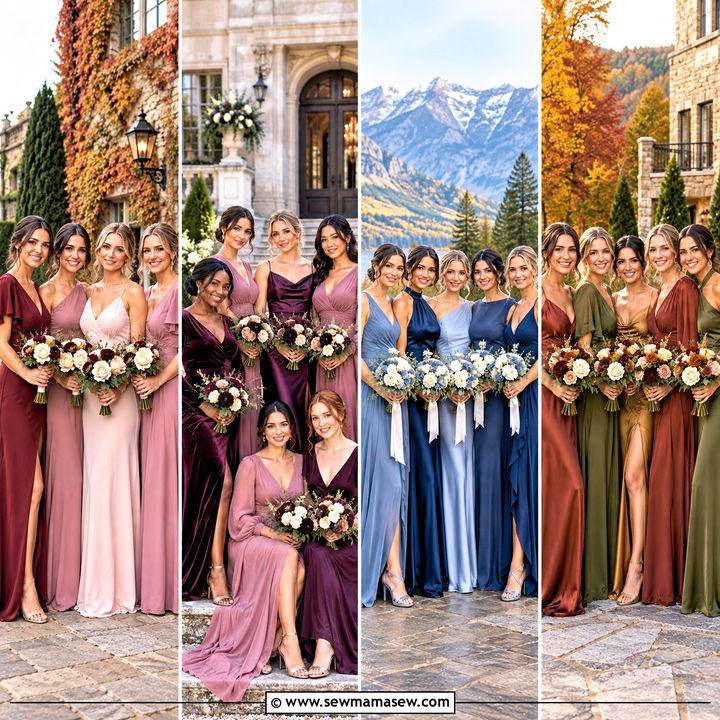
A mismatched jewel-tone party only looks deliberate if something stays fixed. I hold length and fabric family constant and let color and neckline vary: emerald, plum, navy and burgundy, each in velvet, satin or crepe, with wrap, square, one-shoulder or V-neck options. Every hem goes to the floor. Shared gold earrings, black block heels and similar bouquets tie the group together. Lay the swatches side by side before anyone orders, because the same named shade can look quite different in satin and in velvet. It gives each bridesmaid a dress she's comfortable in while keeping the formal autumn look.
20. Mismatched Earth-Tone Bridesmaid Dresses
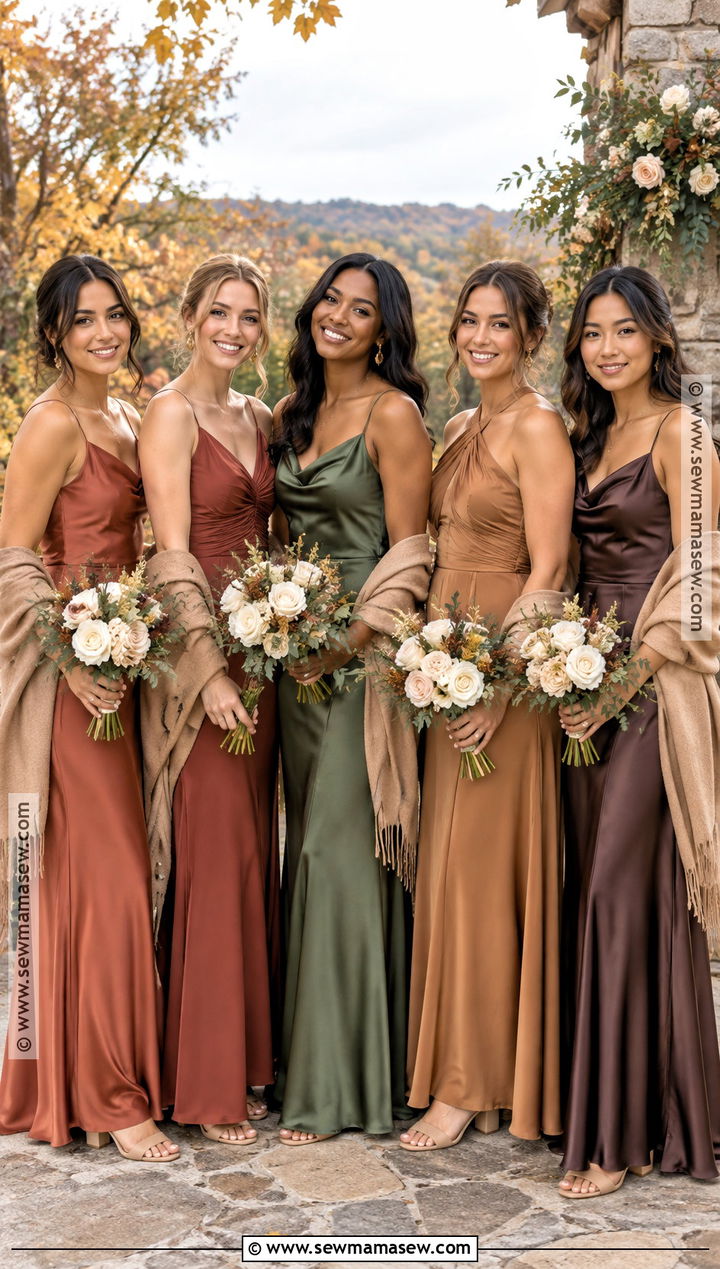
Earth tones mirror the landscape, and they're the palette where I most often see shades clash online and then look fine in person, or the other way round. Terracotta, rust, olive, caramel and chocolate brown make a strong set. Keep one fabric family, all satin or all crepe, and let bridesmaids pick wrap, A-line, halter or square-neck shapes. Floor-length hems and similarly sized bouquets do the coordinating. Tan or brown block heels, minimal gold and optional camel wraps finish each look. When I line the group up, I spread similar shades apart so two browns never stand side by side. It suits outdoor and relaxed formal weddings with organic decor.
Sitting, Dancing and Hugging in Velvet Versus Satin
A bridesmaid dress is worn for ten or twelve hours, so I judge fabrics by how they behave at hour eight, not in the fitting room.
- Velvet is warm and hides creases well, but it crushes where people sit for a long dinner. A handheld steamer at the venue lifts the pile again in minutes.
- Satin shows water spots and wrinkles from a long car ride. Keep the dress hanging until the last moment and blot spills, never rub.
- Crepe is the most forgiving fabric of the four: matte, low wrinkle, and it moves easily for dancing.
- Chiffon breathes best and snags easily on bouquet wire, beaded clutches and rough wooden benches.
I also have each bridesmaid do a sit, a squat and a full arm raise in the gown at her fitting. If a strap slips or a seam pulls in that minute, it will fail on the dance floor.
Cold Ceremonies Without Hiding the Dress
An outdoor November ceremony can feel colder than any forecast suggests once the wind picks up and everyone stands still. Matching wraps in a slightly heavier fabric than the dress, faux fur stoles for the most formal weddings, and skin-tone thermal layers under long skirts all keep a party warm without changing the photos. I tell bridesmaids to remove wraps for the processional and the portraits, then put them straight back on. Closed-toe heels help more than people expect, and hand warmers fit neatly inside most clutches.
Matching the Dress to the Month and the Venue
Most of these choices come down to two questions: how cold will it be, and how formal is the room. Velvet and emerald satin belong to late autumn and evening; sage and dusty rose chiffon belong to September and daylight. Rust, copper, olive and chocolate sit comfortably in between. Whatever color wins, I'd still insist on swatches seen together, alterations for anything satin, shoes that cope with the ground at the venue, and a wrap plan settled before the day. Do that and a single matching gown or a planned mix will both look intentional, and every bridesmaid will be comfortable enough to enjoy the wedding.
Related posts: