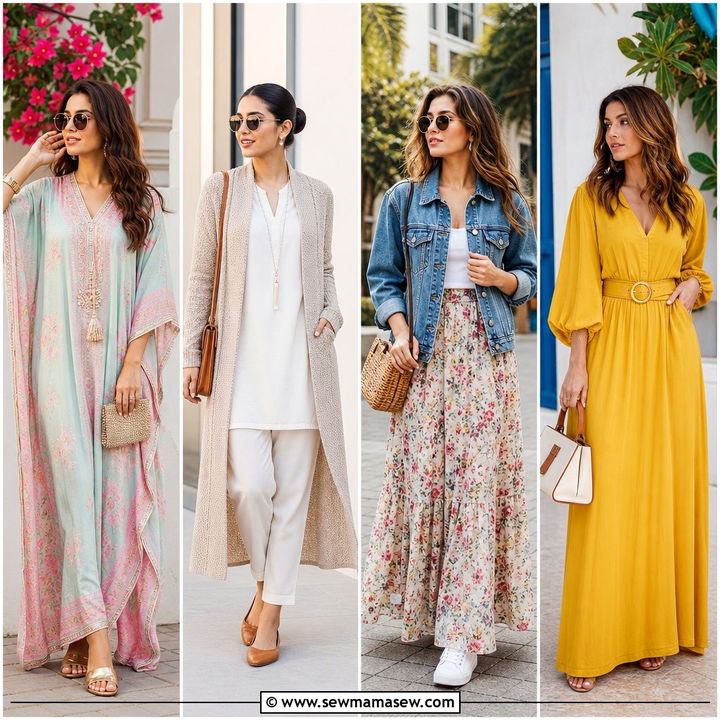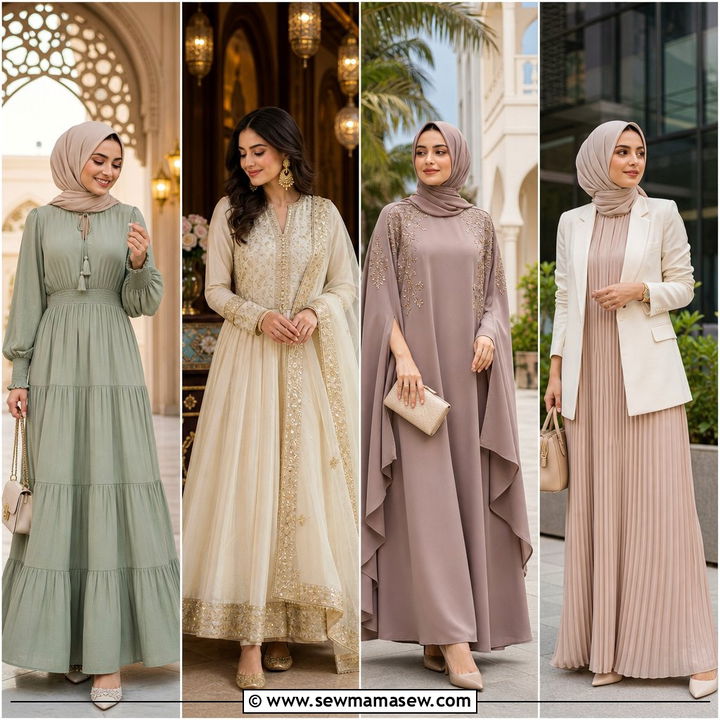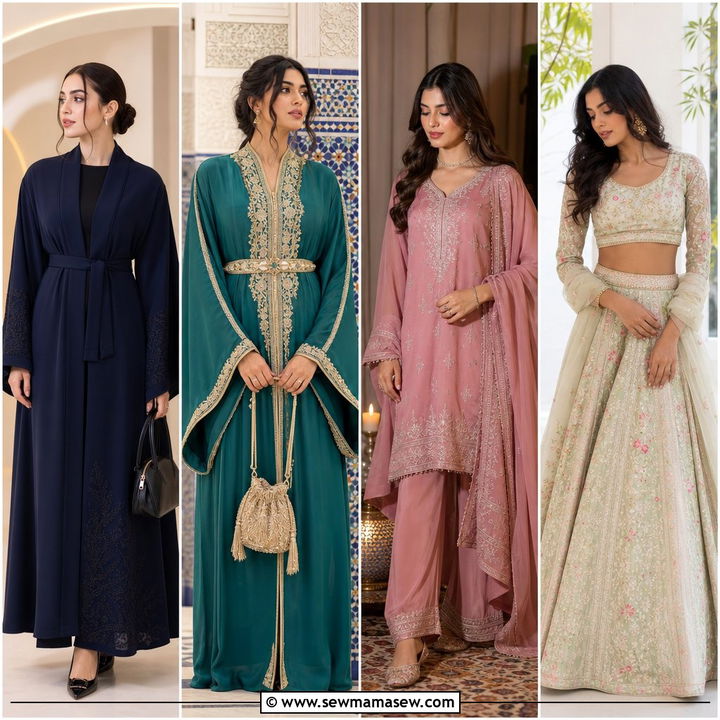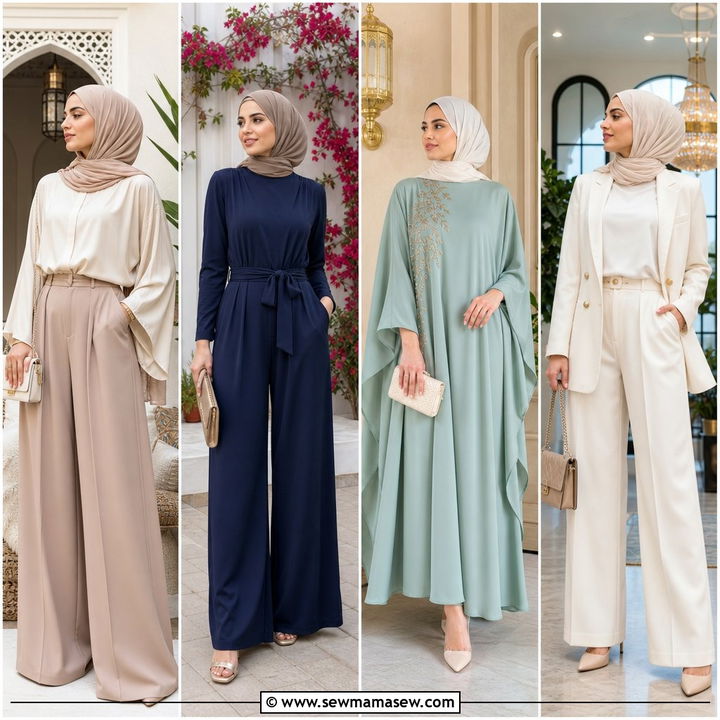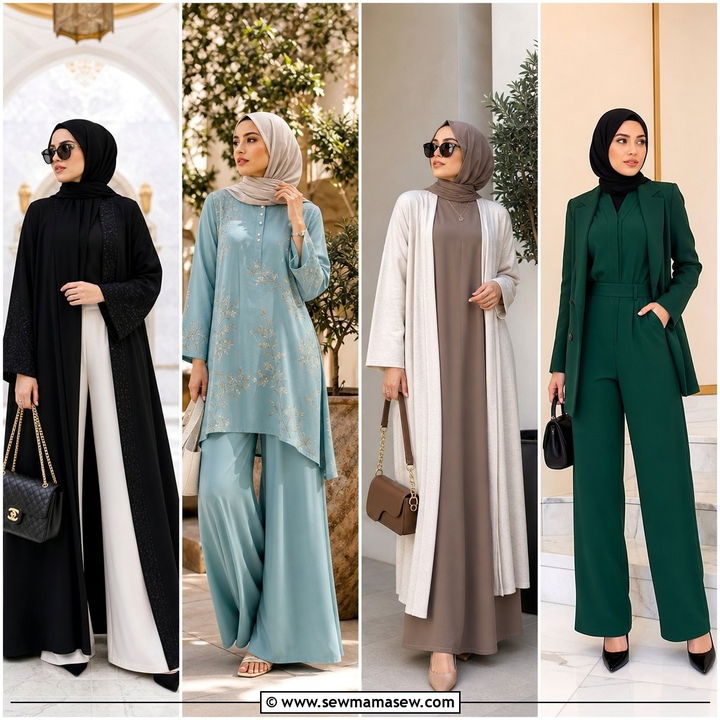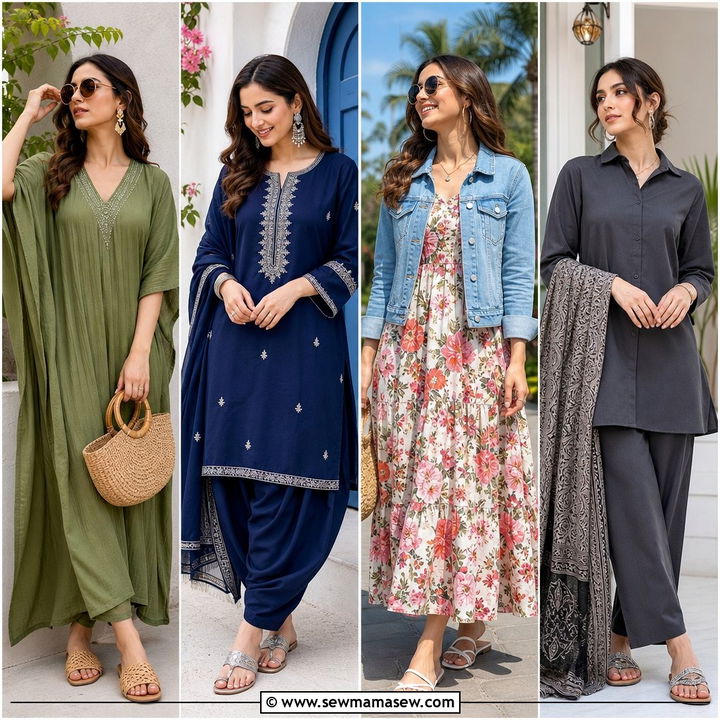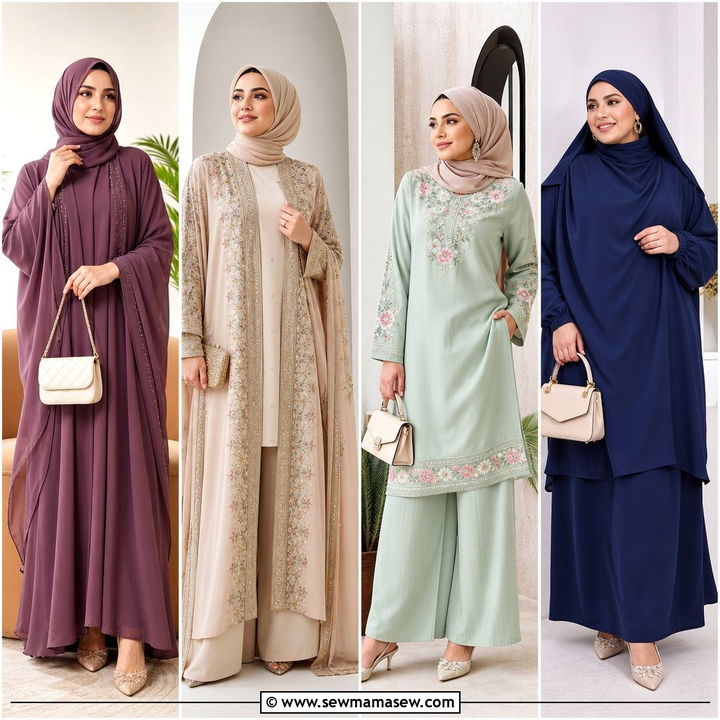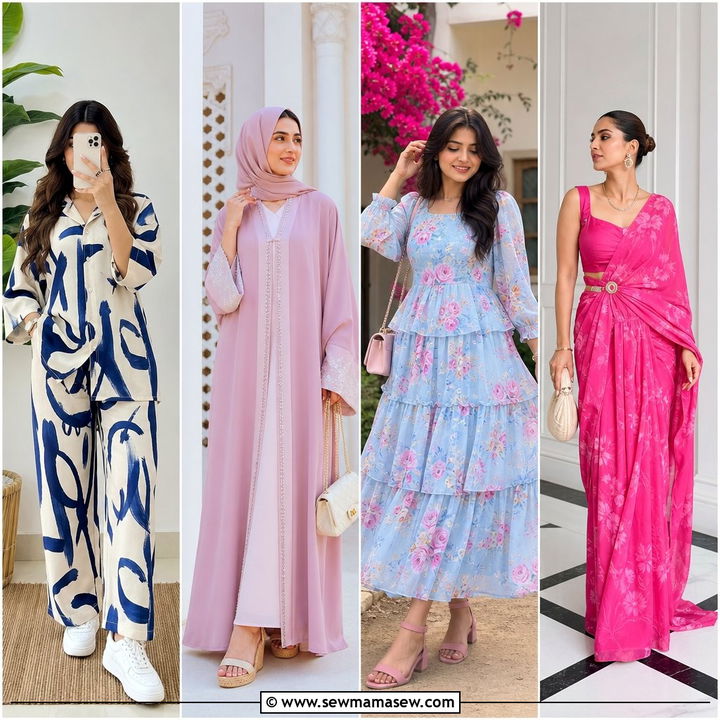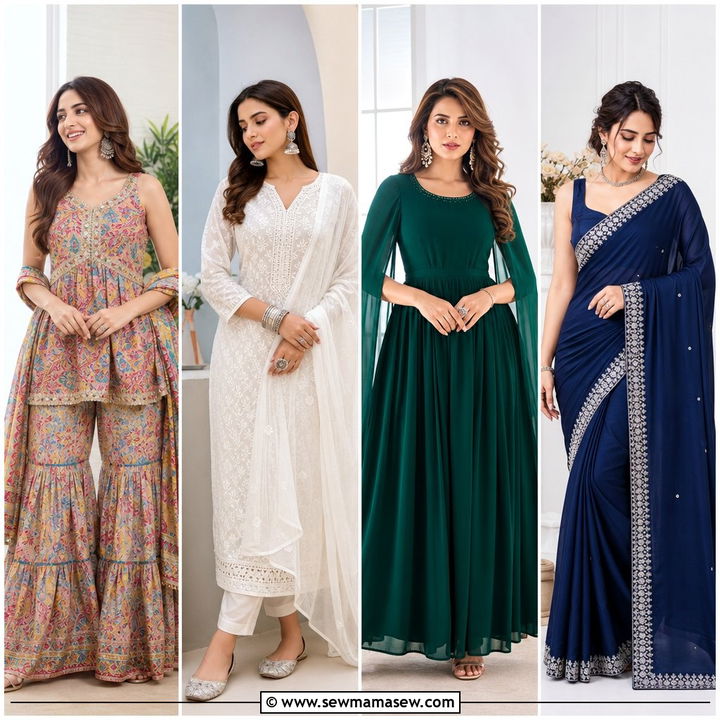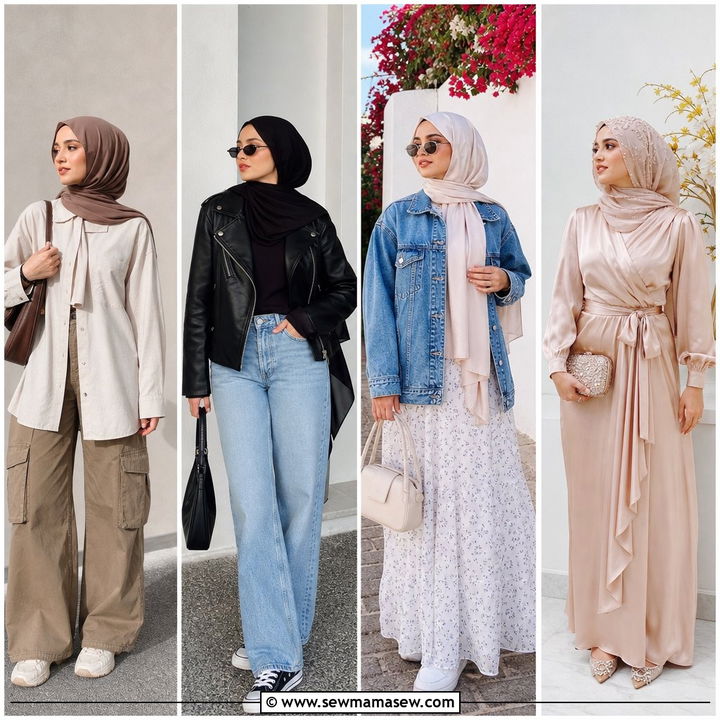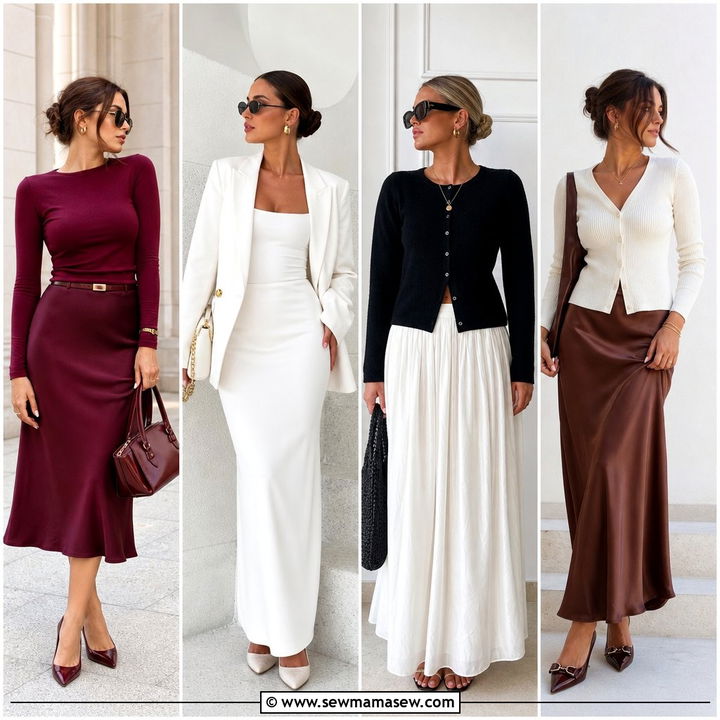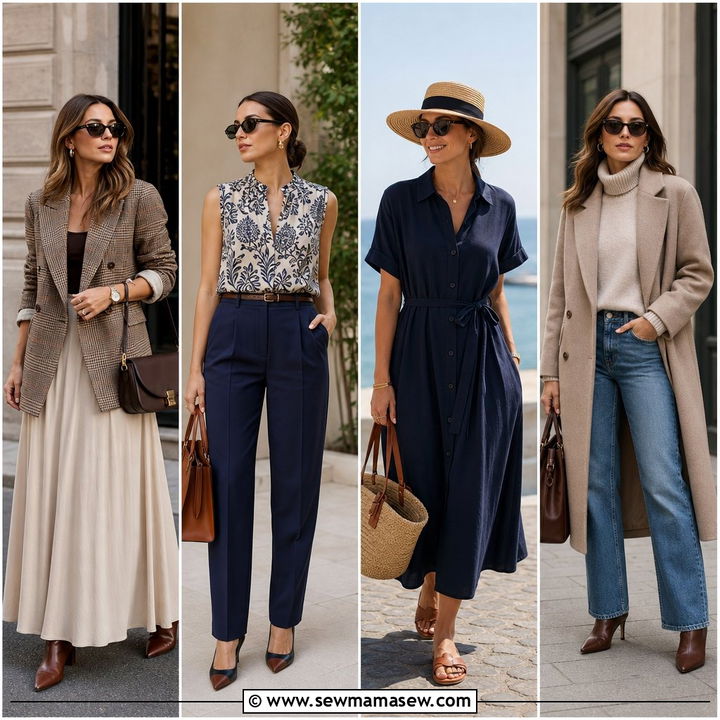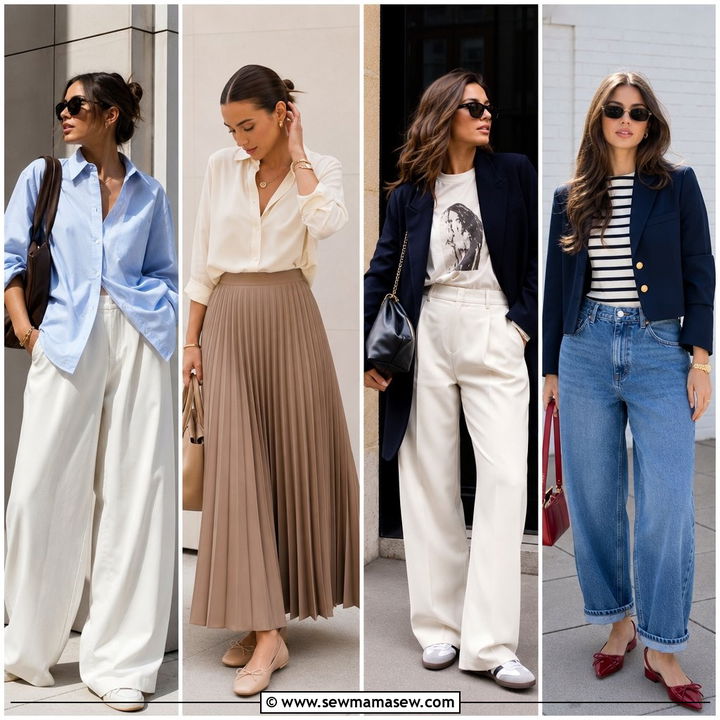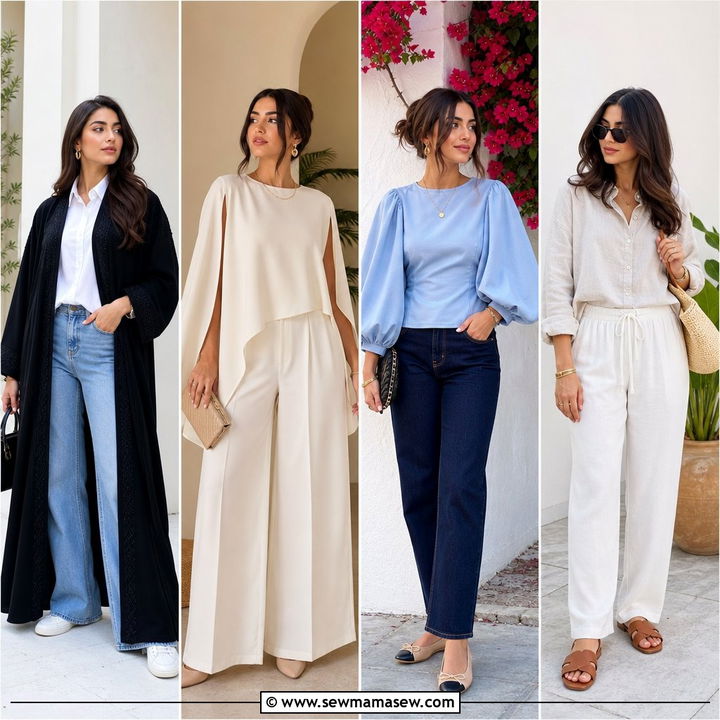
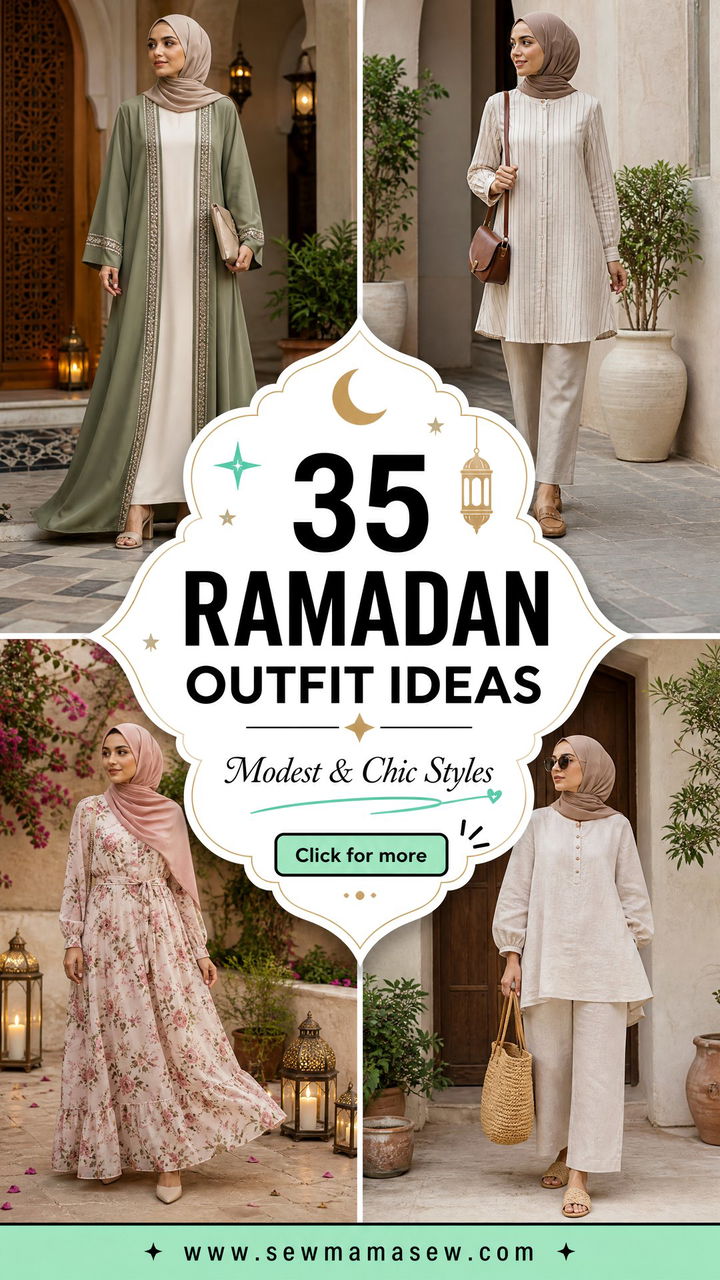
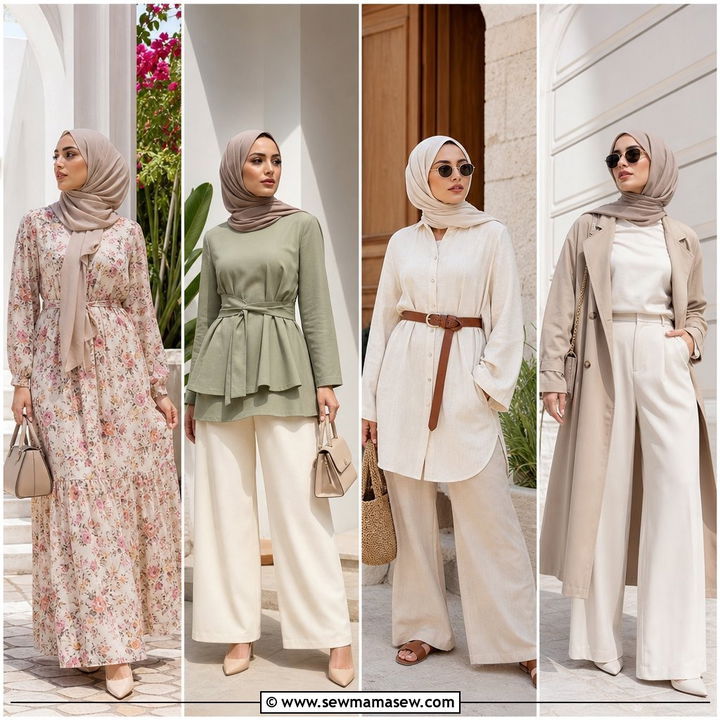
Dressing for Ramadan asks a lot of your clothes. They have to cover well, stay comfortable through a long fast, move easily in prayer and still feel special at iftar with family. When I plan a Ramadan wardrobe, I start with fluid shapes, breathable cotton and linen, soft neutrals and a little fine embroidery for the evenings that call for it. Structured abayas, loose kaftans, co-ord sets and draped maxi dresses all have a place. Here are 35 Ramadan outfit ideas, from busy daytime errands to taraweeh and the last nights before Eid.
Dressing for Wudu, Sujood and Long Taraweeh Nights
A Ramadan outfit gets tested in ways a normal party outfit never does. You wash for prayer several times a day, kneel and bow, sit on the floor for long stretches and stand through taraweeh. Before I recommend any piece, I run through those movements in it.
- Sleeves should push up past the elbow for wudu and slide back down without creasing. Very tight cuffs and heavy embroidered sleeves both fail this test.
- Bow and kneel in the fitting room. If the back rides up or the neckline gapes forward, choose a looser cut or layer trousers underneath.
- Opaque fabric matters more than you'd think. Bending under bright mosque lighting shows sheer fabric that looked fine in a mirror.
- Hems should clear the floor when you stand, so they don't get wet on wudu-area tiles or trip you on stairs.
- Stretchy waistbands or loose fits are kinder after iftar, when a fitted waist starts to dig in.
1. Open Abaya With Maxi Dress And Block Heels
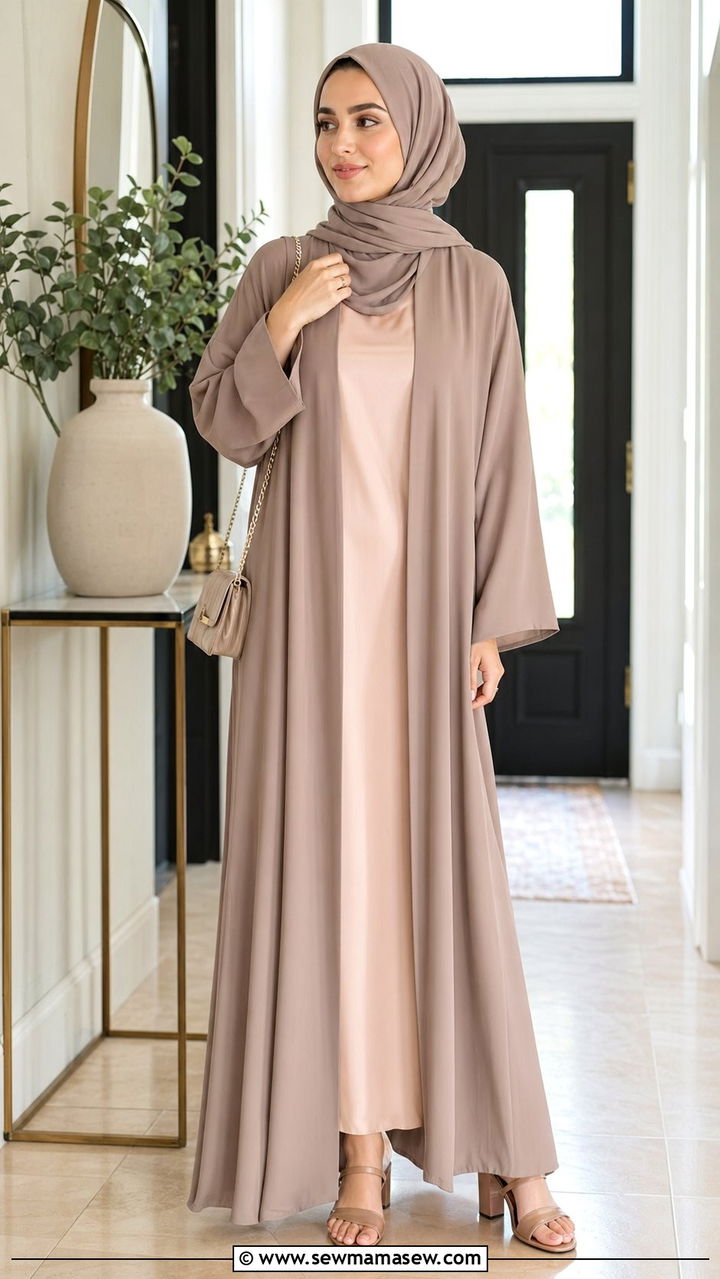
An open-front abaya over a soft maxi slip dress is the outfit I'd suggest first, because it covers fully without feeling heavy. Lightweight crepe in taupe, blush or stone drapes well and doesn't crush when you sit. I like an inner dress one shade darker so the layers read as planned. Block-heel sandals in a matching tone, a hijab in the same family and a small crossbody finish it. The long vertical lines lengthen the frame. It suits iftar at a relative's home or a relaxed evening prayer.
2. Structured Kaftan With Embroidered Neckline And Flat Sandals
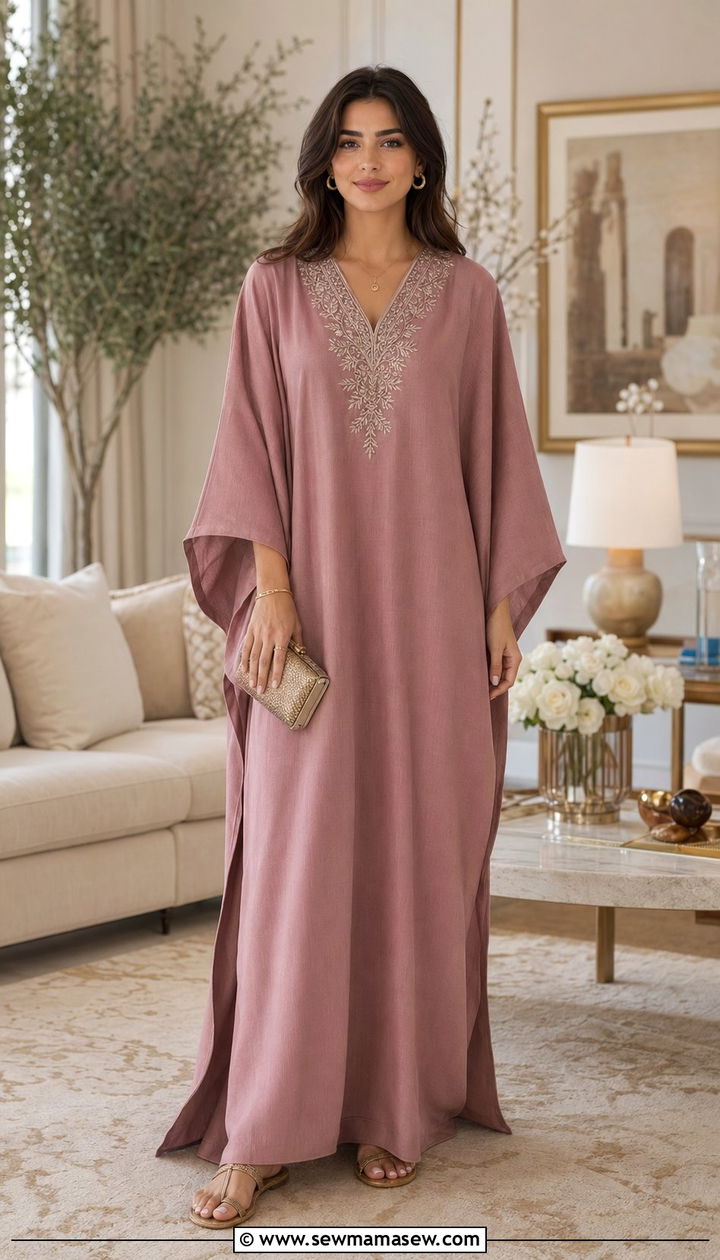
A structured kaftan with fine embroidery at the neckline and cuffs feels finished but still loose enough for a full meal. Many kaftans now come with a belted waist or soft pleating, which gives shape without losing the flow. Dusty rose, sage or soft caramel are easy colors to wear. Flat leather sandals or babouches, a simple clutch, small hoops and a single ring are plenty. For hosting, I'd check that the sleeve cuffs don't trail; wide embroidered sleeves and serving dishes are a bad mix, so a cuff that sits at the wrist is worth looking for.
3. Linen Kaftan With Wooden Accessories And Straw Tote
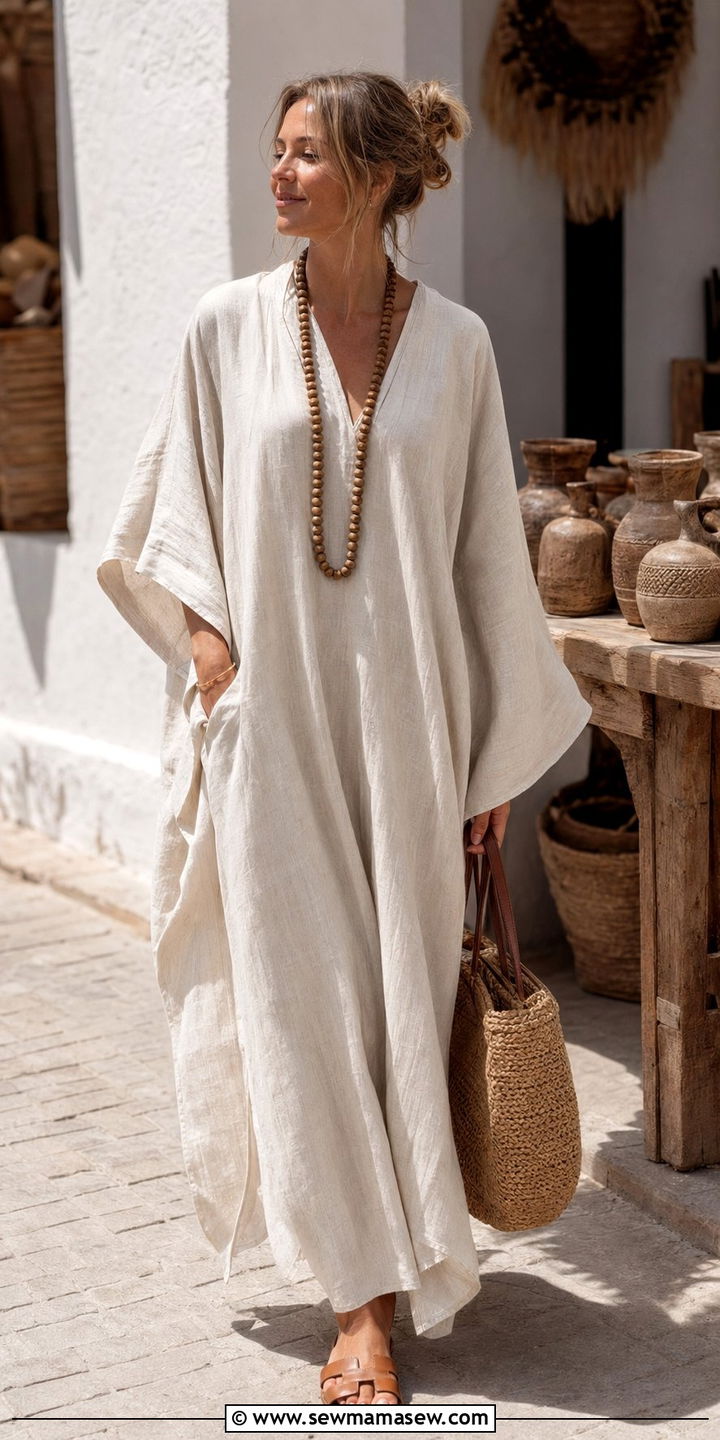
A breezy linen kaftan is my pick for warm afternoons spent on errands and cooking for the evening meal. Choose a relaxed cut in ivory, oat or light sand, with wooden-bead jewelry, flat leather slides and a woven straw tote. Linen lets heat escape better than polyester, which matters when you can't drink water all day. Pale linen can be sheer in sunlight, so I'd check it outdoors or add a slip. The neutral color goes with any hijab you already own, and it moves easily from the grocery store to an afternoon visit.
4. Kimono Abaya Over Matching Wide-Leg Trousers
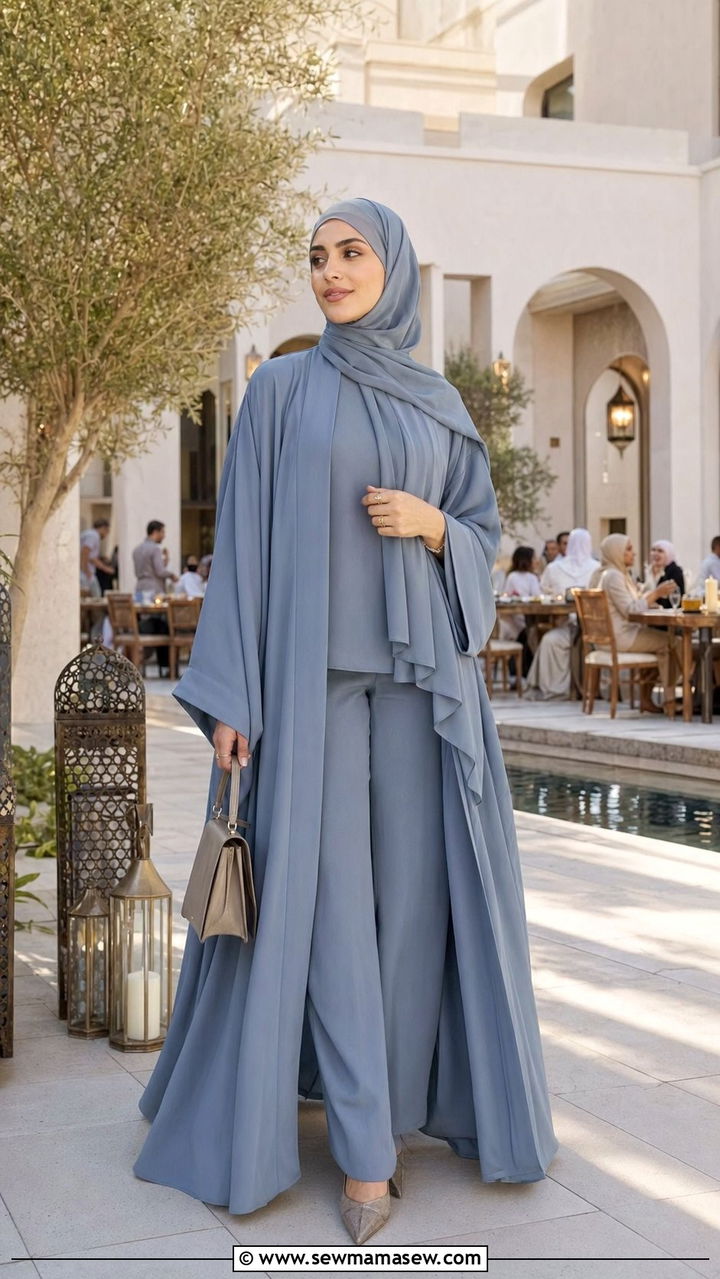
A kimono-style abaya over a sleeveless shell and matching wide-leg trousers gives a layered look with clean lines. Modal or lightweight jersey drapes softly and doesn't hold heat. Keep everything in one color family, like warm beige, dusty blue or soft lilac. Pointed flats or low mules keep it streamlined. The wide trousers are the real reason I recommend it: they let you sit on the floor for prayer or a long conversation without pulling at the knee. It's right for community iftars and evenings at the mosque.
5. Tiered Maxi Dress With Long Cardigan And Sneakers
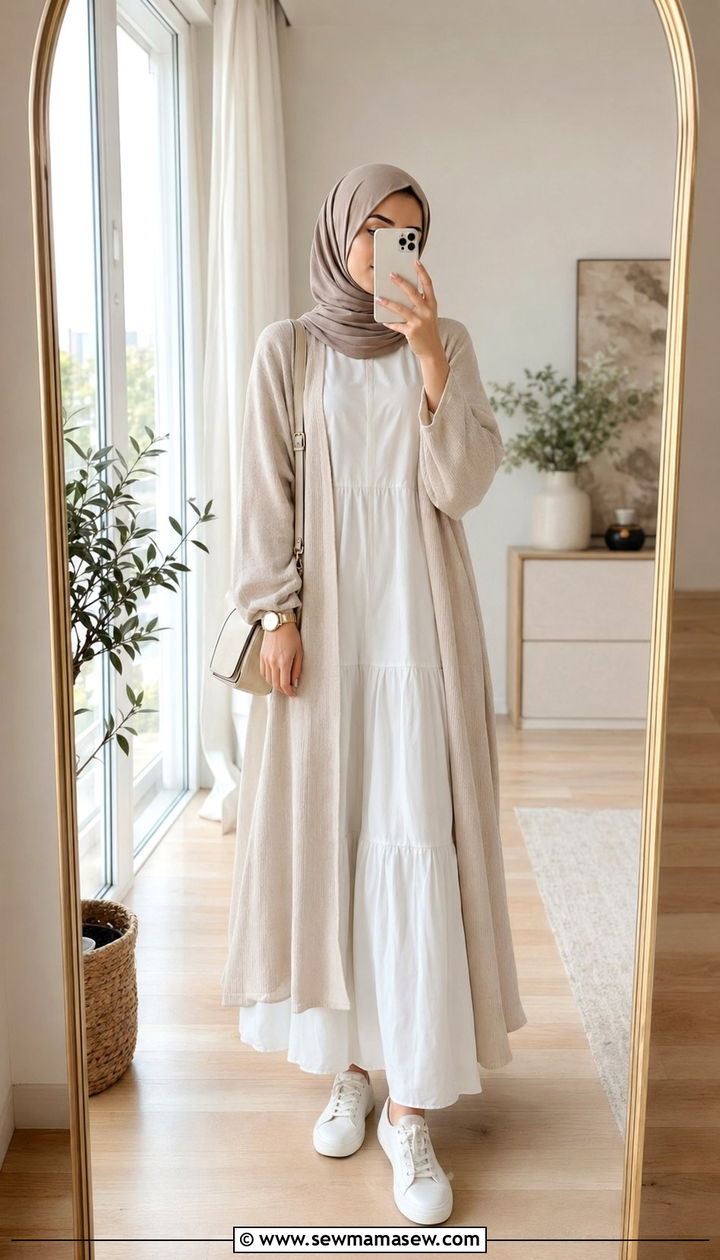
A long-sleeve, high-neck tiered maxi dress is an easy base for casual days. Add a lightweight open cardigan in a complementary neutral and clean white sneakers, and you can handle a whole day on your feet. Tiers add movement, though very full tiers can catch on car doors and stairs, so I'd pick a dress with moderate volume for errands. A jersey hijab in a matching tone ties it together without fuss. It works for morning errands, cooking and a relaxed family iftar.
6. Two-Piece Kaftan Set With Statement Earrings
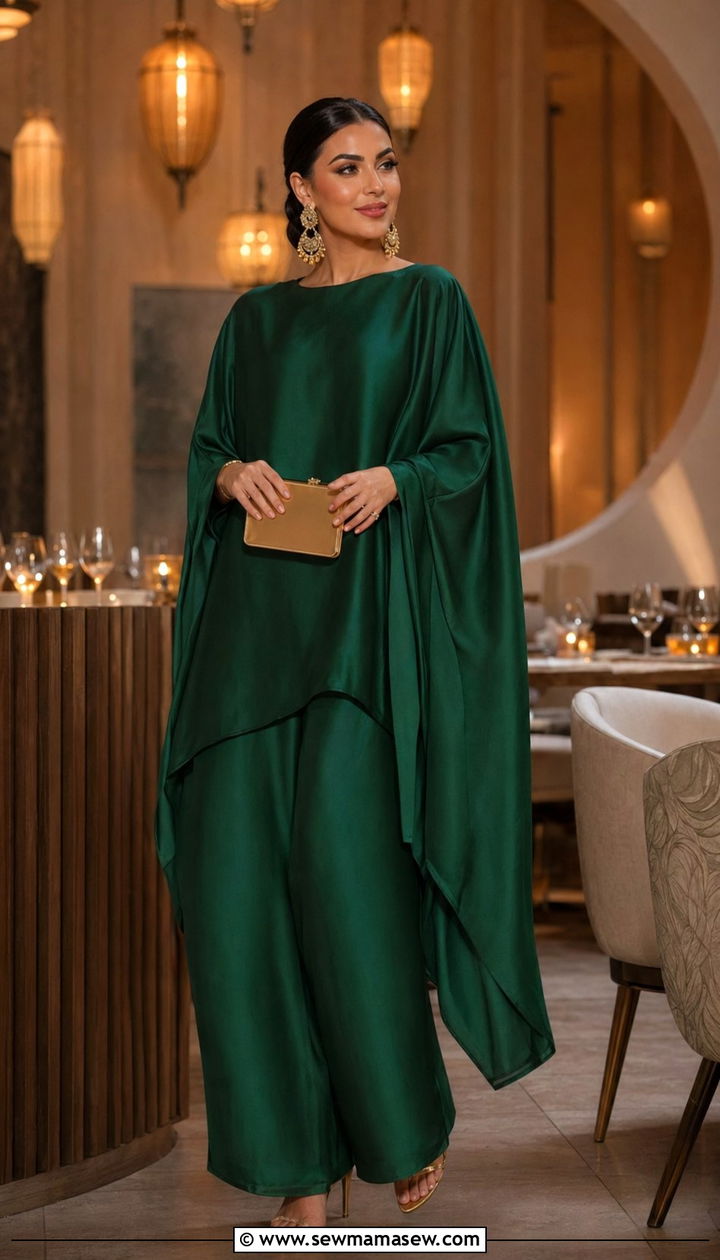
Two-piece kaftan sets have become popular because they feel current while staying close to a traditional shape. Look for a silk blend or satin crepe with a loose wide-sleeved top and matching wide pants or a flowing skirt. Deep emerald, sapphire or garnet make it feel special for an important iftar. Gold chandelier earrings, heeled sandals and a sleek clutch finish it. I like sets because the pieces split: the top over plain trousers, the pants under a long tunic, so one purchase covers several evenings.
7. Long Kurta With Palazzo Pants And Embroidered Dupatta
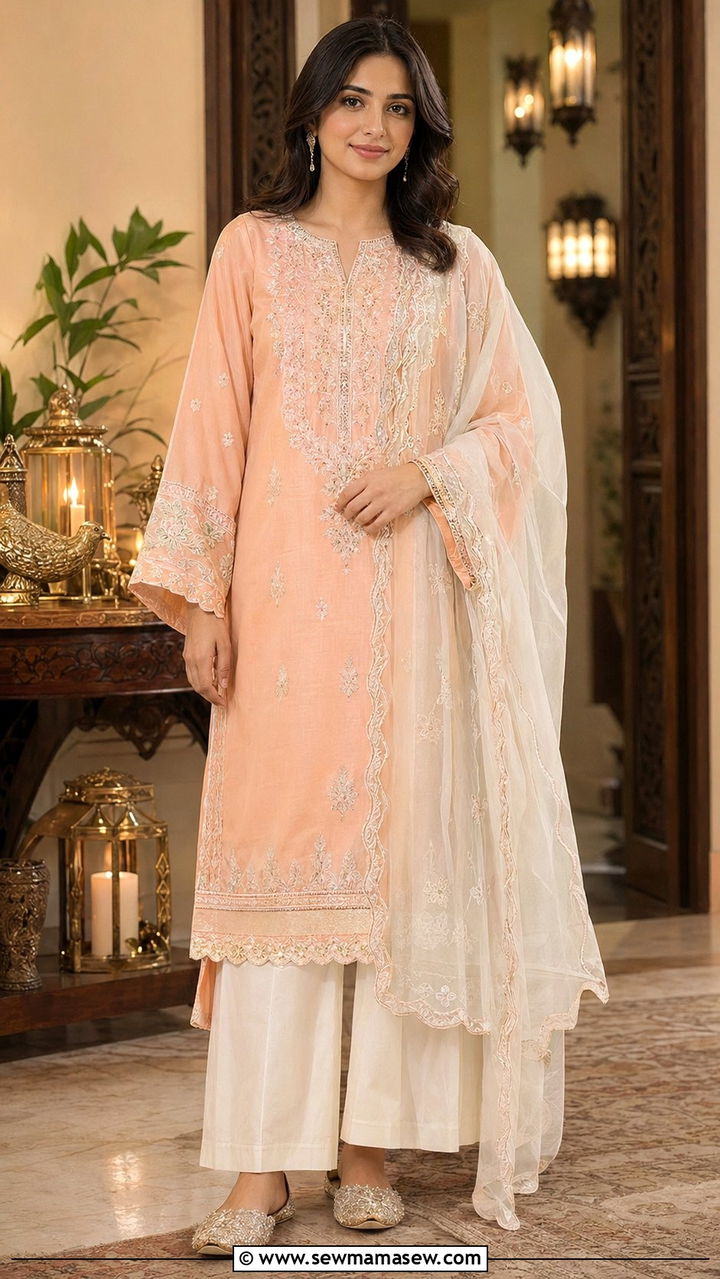
The long kurta with palazzo pants is a South Asian favorite and one of the most comfortable outfits in this list. A knee- or calf-length kurta with fine embroidery at the neck pairs with flowing palazzos in a contrast or tonal shade. Drape a light embroidered dupatta over one shoulder or pin it neatly for prayer. Khussa flats or embellished sandals add a traditional touch; new khussas can be stiff at first, so wear them at home a few times. It's a good choice for hosting iftar gatherings and visiting extended family.
8. Draped Jersey Maxi Dress With Shoulder Bag
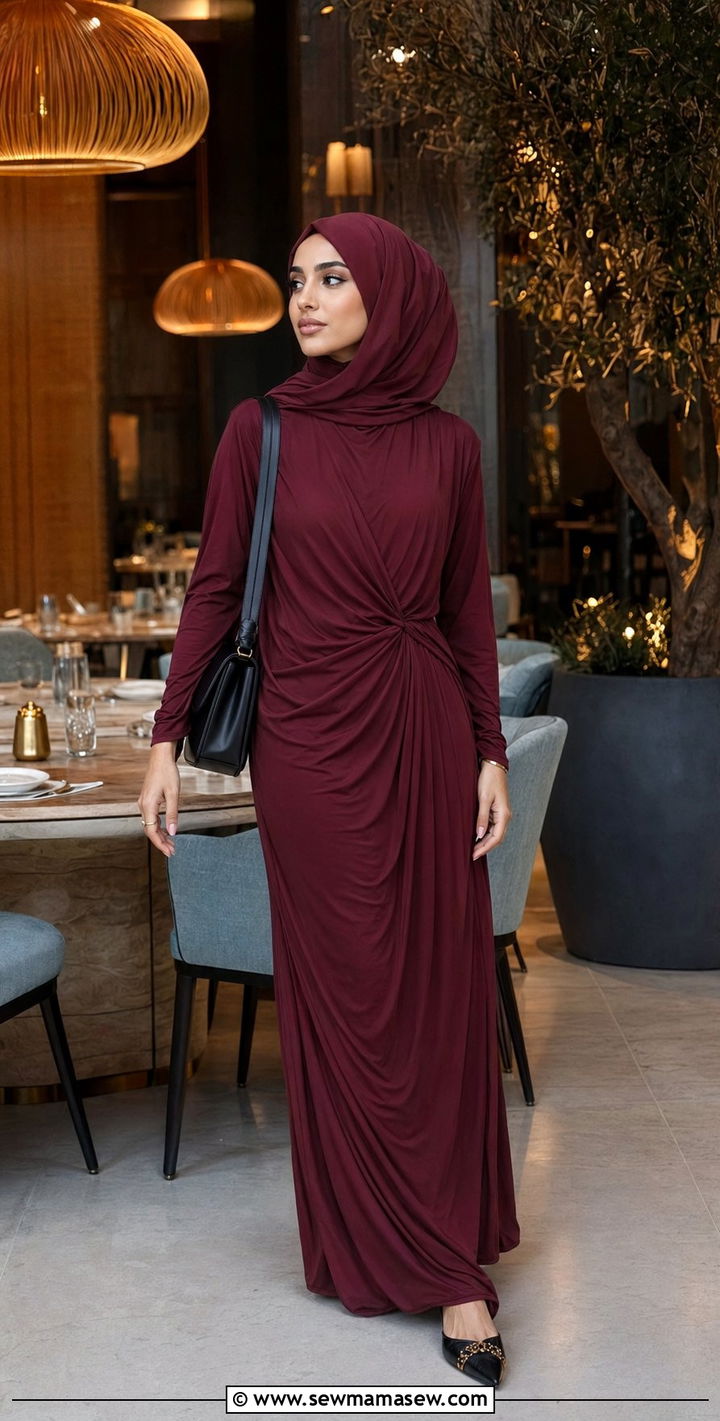
A draped jersey maxi dress in burgundy, deep teal or chocolate brown goes on in seconds and still looks deliberate. Good jersey skims without clinging, but thin jersey shows every line underneath, so I check the weight by holding it up to the light. Pair it with a structured shoulder bag, pointed flats and a chiffon hijab in a matching tone. It looks the same seated as standing, with no adjusting. Wear it to a restaurant iftar or dinner at a friend's home.
9. Silk Co-Ord Set With Matching Hijab And Mules
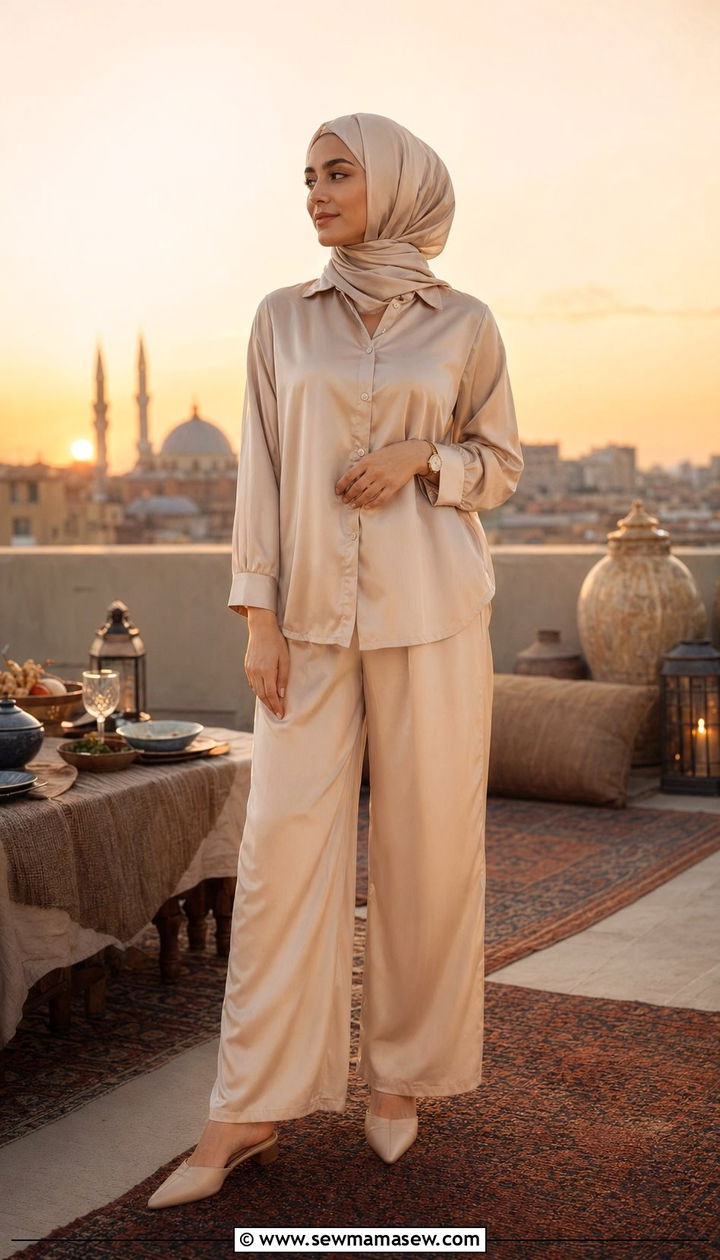
A silk co-ord set with a relaxed button-down top and wide-leg trousers is understated and very comfortable. A soft botanical print or a solid champagne or pearl works well. Add a matching silk-blend hijab, low-heel mules and a minimal watch. It moves from a daytime work commitment straight to an evening iftar without a change. Silk catches warm evening light nicely for outdoor gatherings or rooftop suhoors. I'd choose a washable silk, since food spills at a busy iftar table are almost guaranteed.
10. Belted Kaftan Dress With Woven Belt And Wedge Sandals
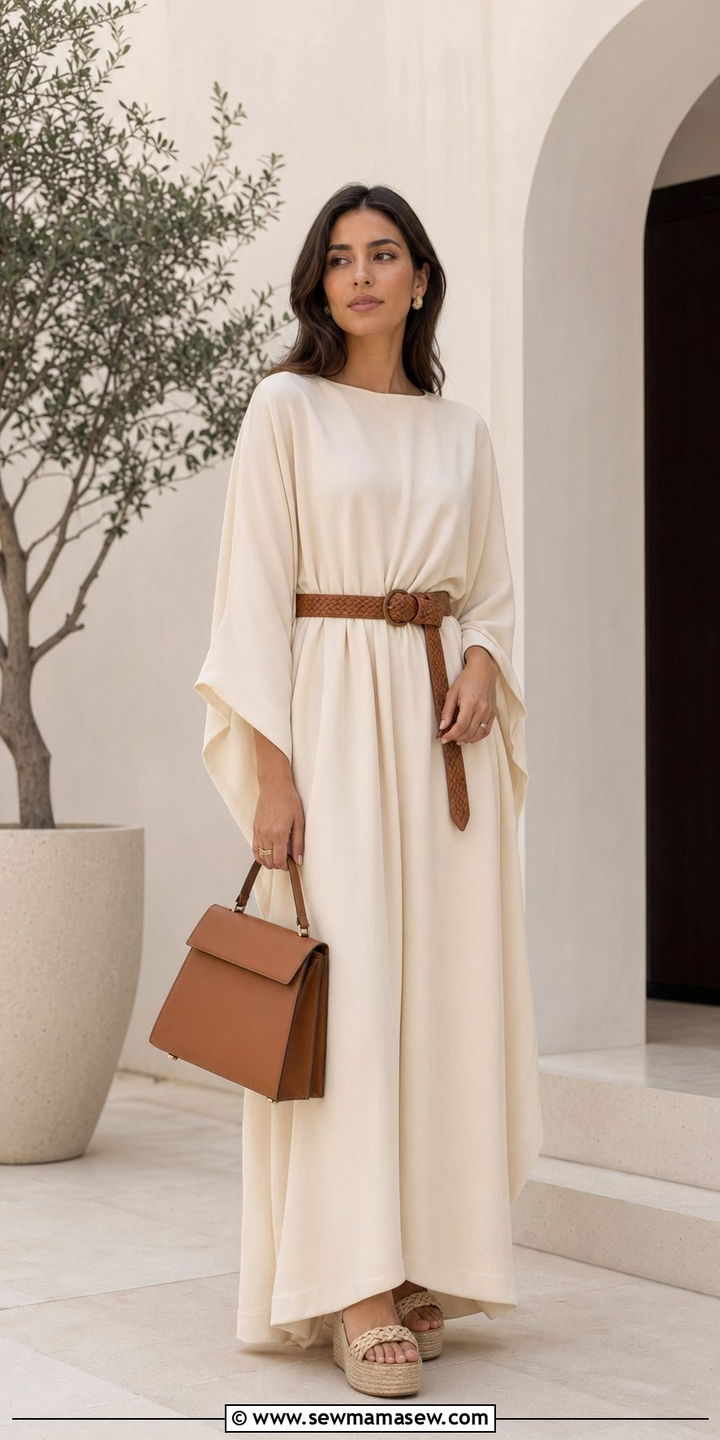
A woven or fabric belt turns a kaftan into a shape with a waist while keeping it fluid and modest. Choose mid-weight crepe or a linen blend; very thin kaftans bunch up under a belt. Cinch it tone on tone or with a contrasting woven leather belt. Wedge espadrilles add height and stay comfortable on longer evenings. I tie the belt loosely enough to fit two fingers underneath, so you can still eat comfortably at iftar. It also looks defined in group photos.
11. Black Abaya With Contrasting Satin Slip And Pearl Details
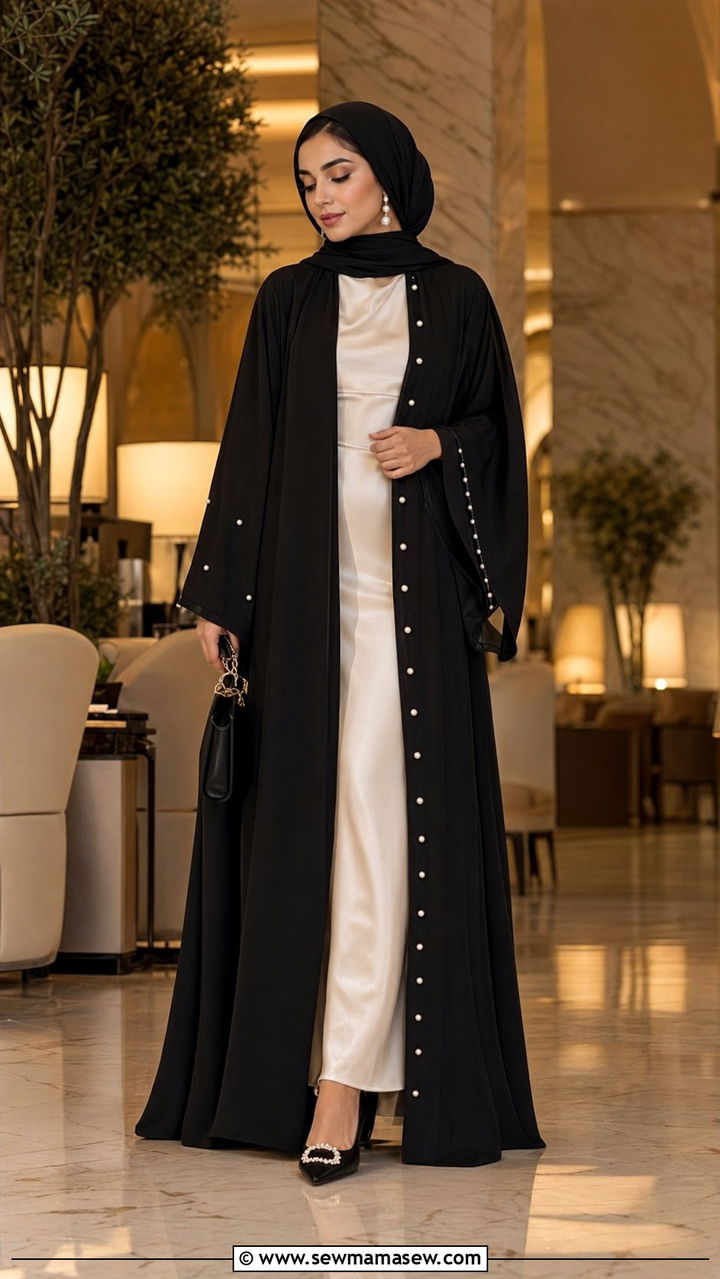
A classic black abaya over a slip dress in ivory, blush or champagne gets a fresh look from the contrast between matte and shine. Pearl drop earrings or a fine pearl bracelet add a quiet finish, with pointed black flats or low kitten heels. This is the outfit I'd reach for at a formal iftar dinner, a work suhoor or an evening prayer. A black abaya can be styled many ways over the month. Black crepe shows lint and dust fast, so keep a lint roller in your bag.
12. Crochet-Trim Kaftan With Espadrille Wedges
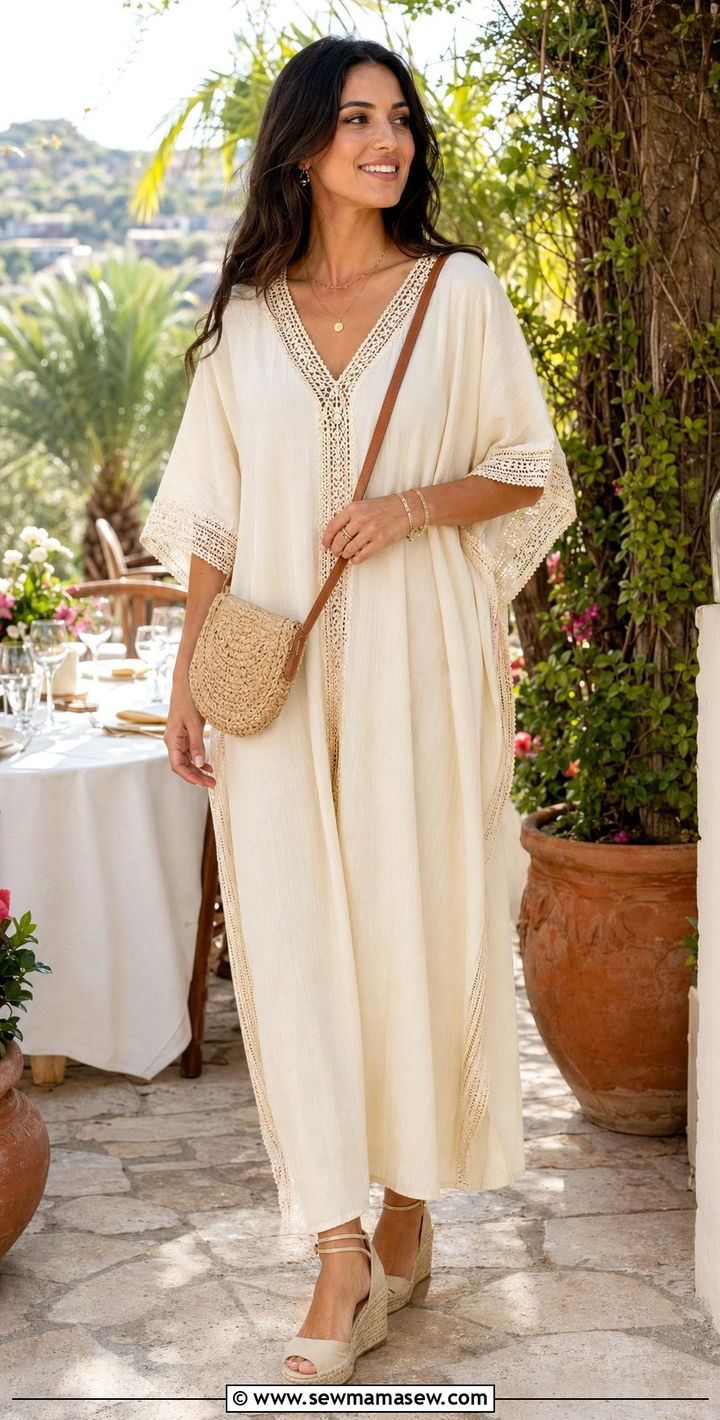
A cotton kaftan with crochet trim at the hem and sleeves has a handmade feel. Creamy ivory or warm ecru look fresh with espadrille wedges, a woven crossbody and fine gold jewelry. It suits a weekend daytime gathering or an outdoor suhoor gathering in the garden. Crochet trim can stretch and snag, so I'd wash it inside a mesh bag on a gentle cycle. A beige or soft terracotta hijab keeps the earthy palette.
13. Long-Sleeve Ruffle Maxi Dress With Strappy Sandals
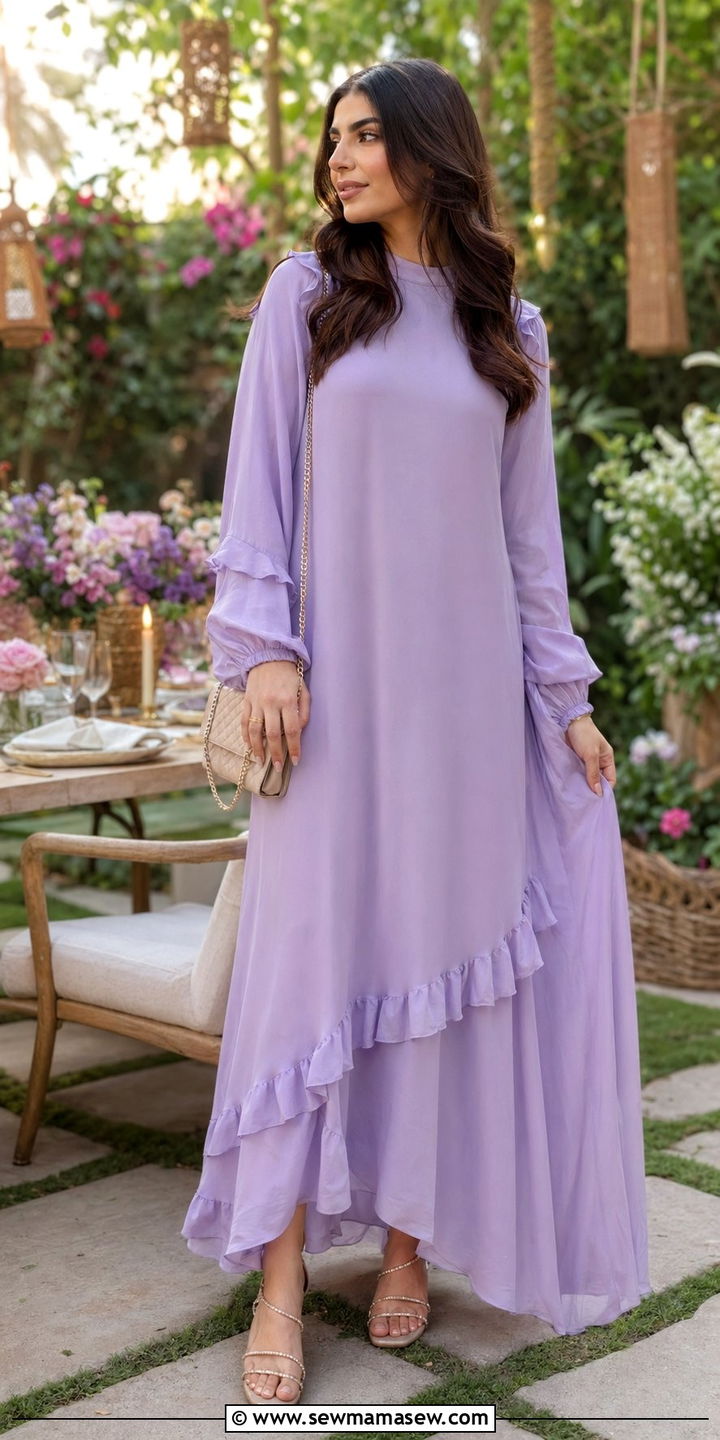
A long-sleeve maxi dress with ruffles at the hem or along the bodice gives a softer, romantic option for evenings. A small floral print or a solid lavender, mint or powder blue all work. Strappy flat sandals keep it light, and a small chain-strap bag adds polish. Ruffles at the bodice add volume to the bust, which is lovely on a slim frame but can feel bulky on a fuller one; I'd choose hem ruffles instead in that case. Wear it to garden iftars or a baby shower during the month.
14. Ankle-Length Tunic With Straight-Leg Pants And Loafers
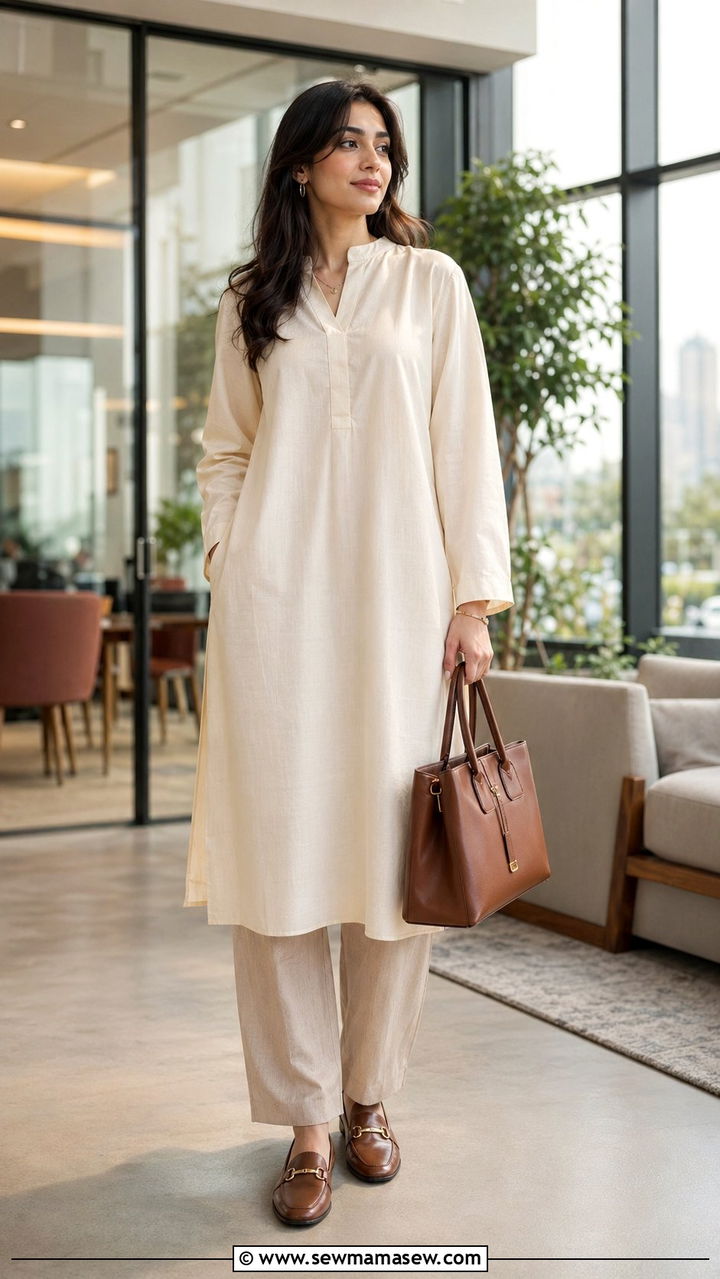
An ankle-length tunic in crisp cotton or light crepe over straight-leg pants makes a clean, modern silhouette that suits work. Go monochrome, cream over oatmeal, or add a little contrast with blush over stone. Leather loafers or brogues give a menswear-inspired finish. I'd make sure the side slits on the tunic start above the knee so you can walk and sit easily. It's a good fit for work iftars, university events and professional settings, and the long lines don't need heels.
15. Layered Cape Abaya With Heeled Sandals
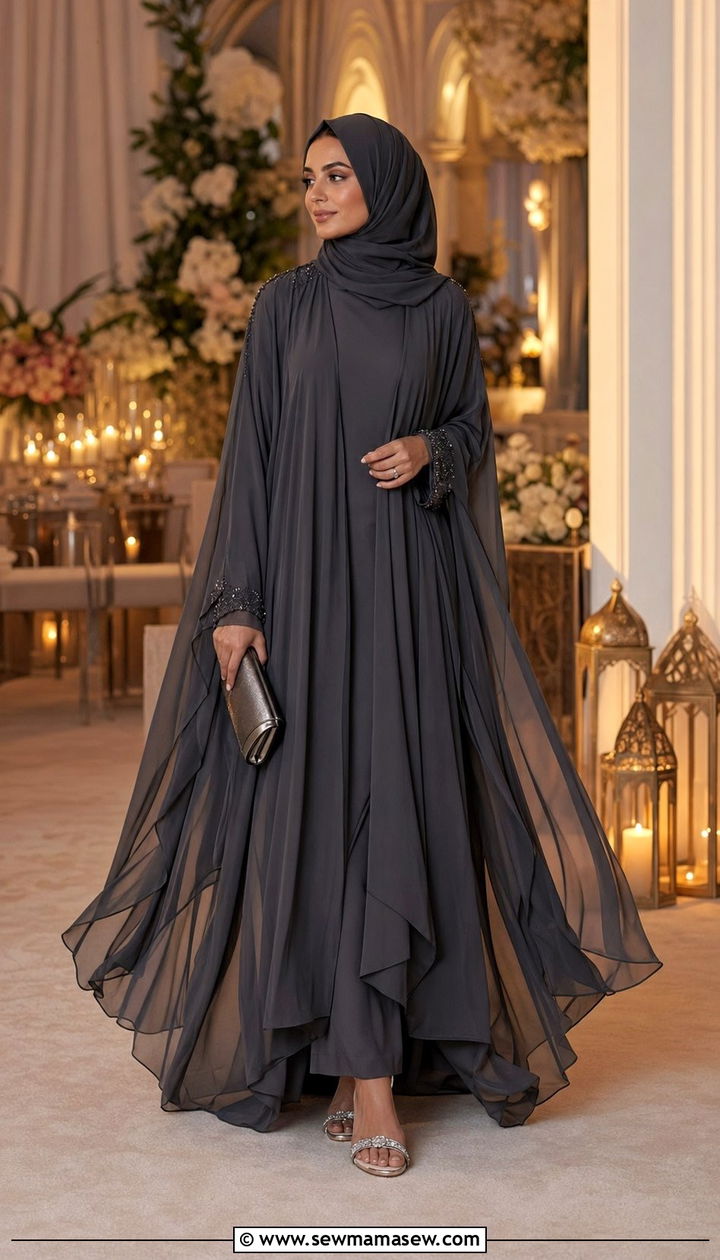
A cape-style abaya with a flowing overlay at the shoulders brings movement every time you walk. Chiffon or georgette in a jewel tone, mocha or charcoal works best, over a simple slip dress in the same tone. Heeled sandals, a metallic clutch and a softly draped hijab finish it. Cape layers can slide off the shoulder when you lift your arms, so I'd test the fit by reaching up before buying. It's for special iftar invitations and evening events where you want to stand out a little.
16. Cotton Maxi Dress With Utility Jacket And Sneakers
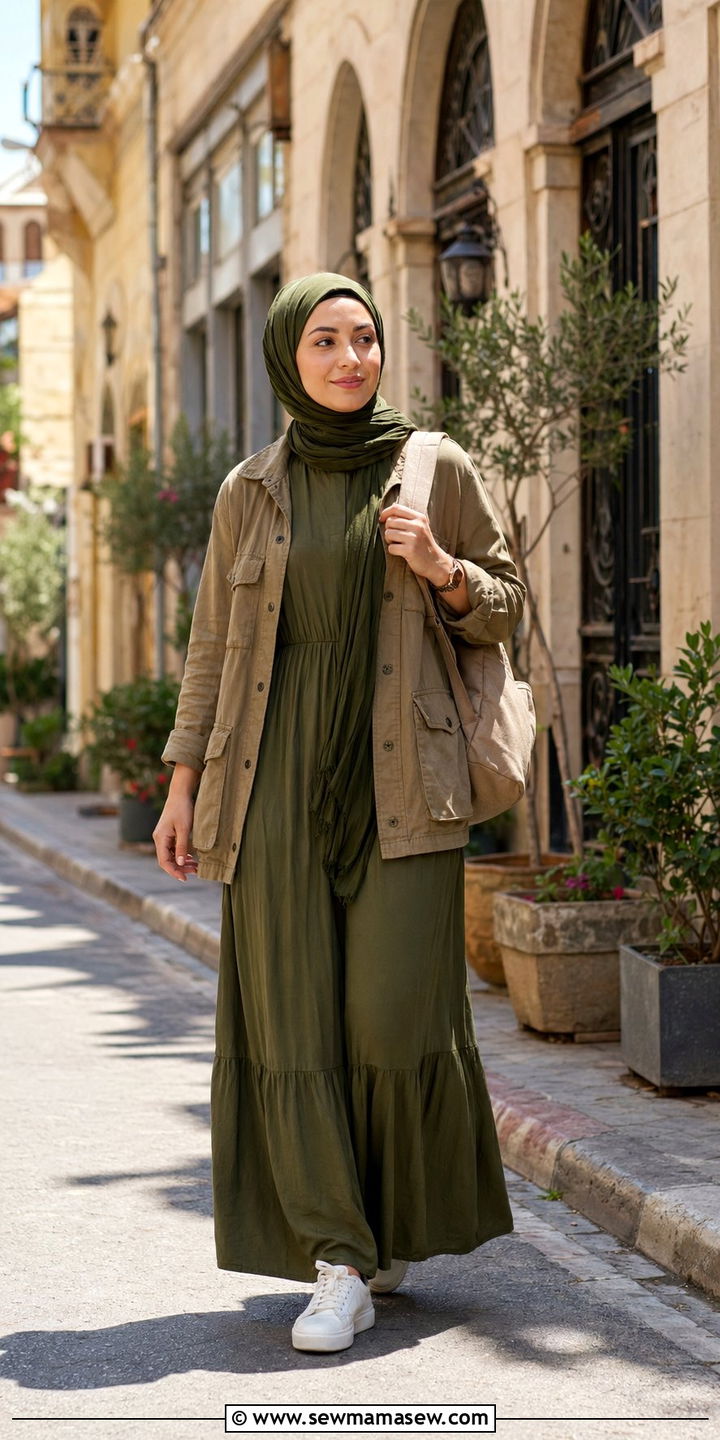
A simple cotton maxi dress in olive, sand or navy becomes casual and practical under a lightweight utility jacket. The structured jacket balances the soft dress. White leather sneakers, a backpack or canvas tote and a neutral jersey hijab keep it easy. I like the jacket here because air-conditioned shops and offices can feel cold while you're fasting, and it comes off in seconds. It's the outfit for school runs, errands and cooking days.
17. Hand-Embroidered Abaya With Metallic Flats
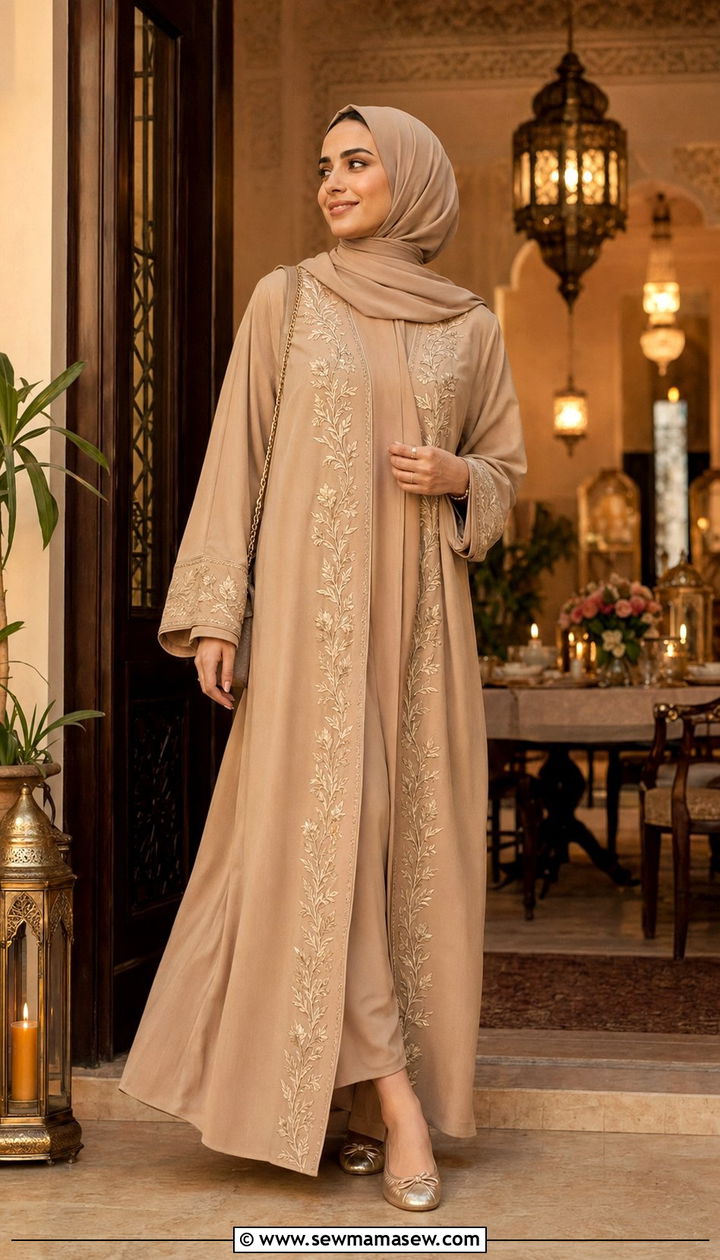
A hand-embroidered abaya with threadwork along the front panels or sleeves celebrates craftsmanship. Keep the base neutral, such as sand, pearl gray or soft black, and let the embroidery lead. Metallic ballet flats or pointed slippers and small studs leave the detail room to show. Hand embroidery can pull if it catches on rings or a bag strap, so I'd keep jewelry smooth and carry a clutch. Wear it for family iftars, community gatherings or evening prayers.
18. Matching Prayer Set With Soft Outer Layer
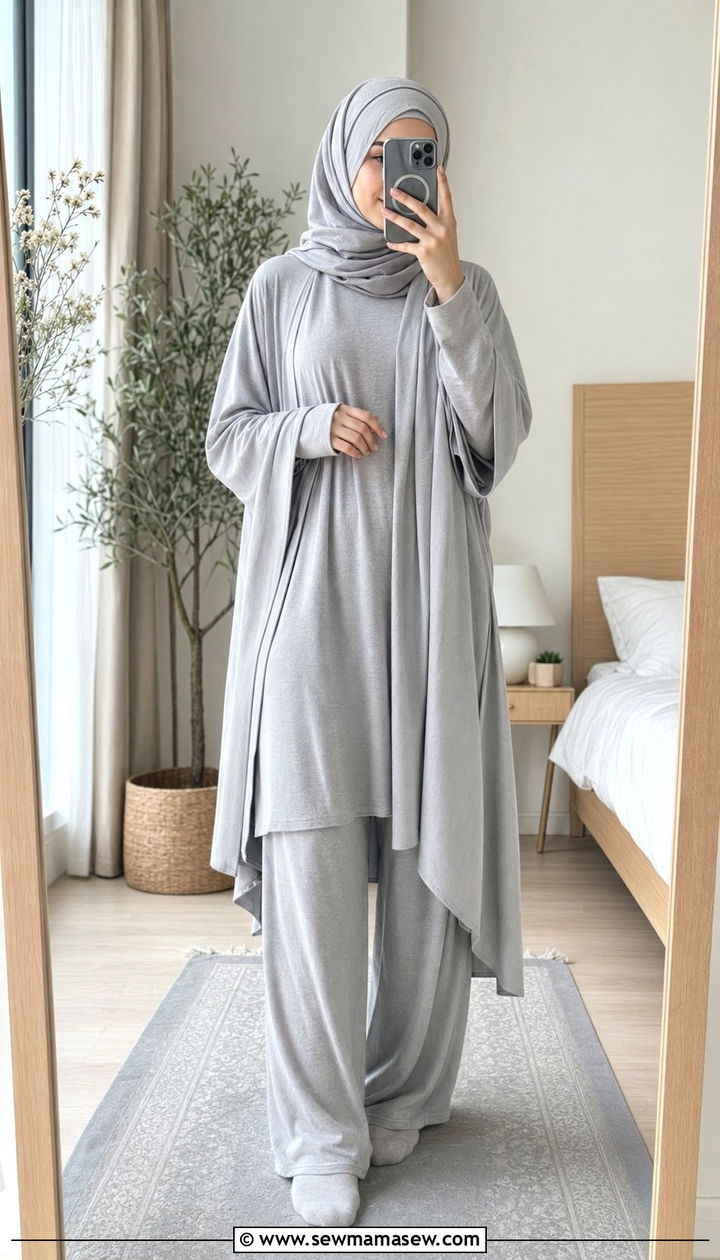
A matching prayer set, a long loose top with wide trousers in soft jersey or modal, is the most practical piece in a Ramadan wardrobe. Keep a light kimono-style layer nearby to slip on when guests arrive or you step out. Comfort comes first here, so it's my pick for long nights of prayer and quiet iftars at home. Dove gray, dusty rose or soft lilac feel calm. Modal pills less than cheap jersey with repeated washing. Swap the outer layer for a dressier one if plans change.
19. Metallic Kaftan With Minimal Accessories
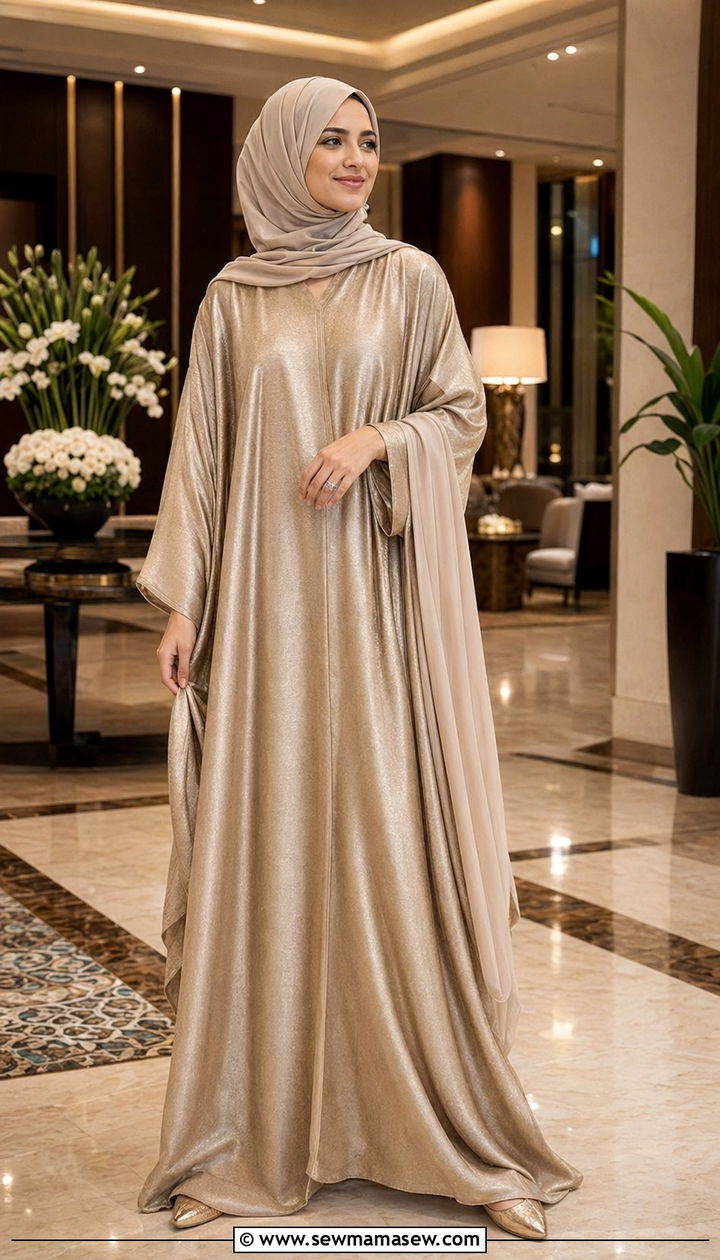
A kaftan in a subtle metallic like champagne gold, rose gold or soft bronze adds a soft glow to evenings without feeling too festive. Keep accessories very simple: bare wrists, one fine ring and plain metallic flats. The fabric carries the outfit. I'd look for a metallic that reads as a sheen rather than sparkle, which keeps it suitable for the spiritual tone of the month. Metallic fibers can scratch, so check the inside seams against your skin. It suits large iftar gatherings and hotel dinners.
20. Denim Abaya With White Sneakers And Canvas Tote
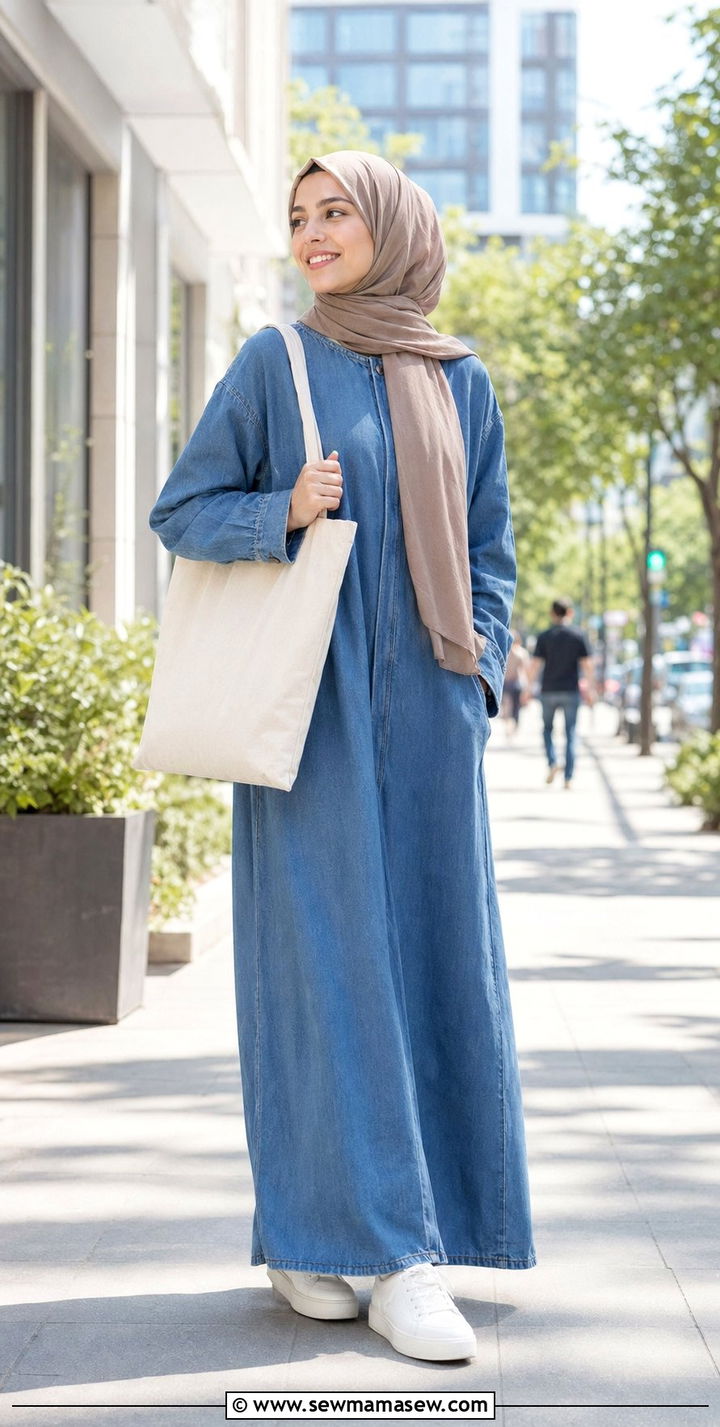
A denim abaya is an unexpected, modern piece that sits between modest dressing and casual street style. Lightweight denim in a medium or light wash keeps it from feeling stiff. Pair it with crisp white sneakers, a canvas tote and a neutral jersey hijab. Roll the sleeves for a casual touch while keeping full coverage. New denim can bleed dye onto a pale hijab, so I'd wash it once before wearing. It's good for weekend outings, casual iftar meetups and errands before maghrib.
21. Button-Front Midi Dress With Trousers And Ballet Flats
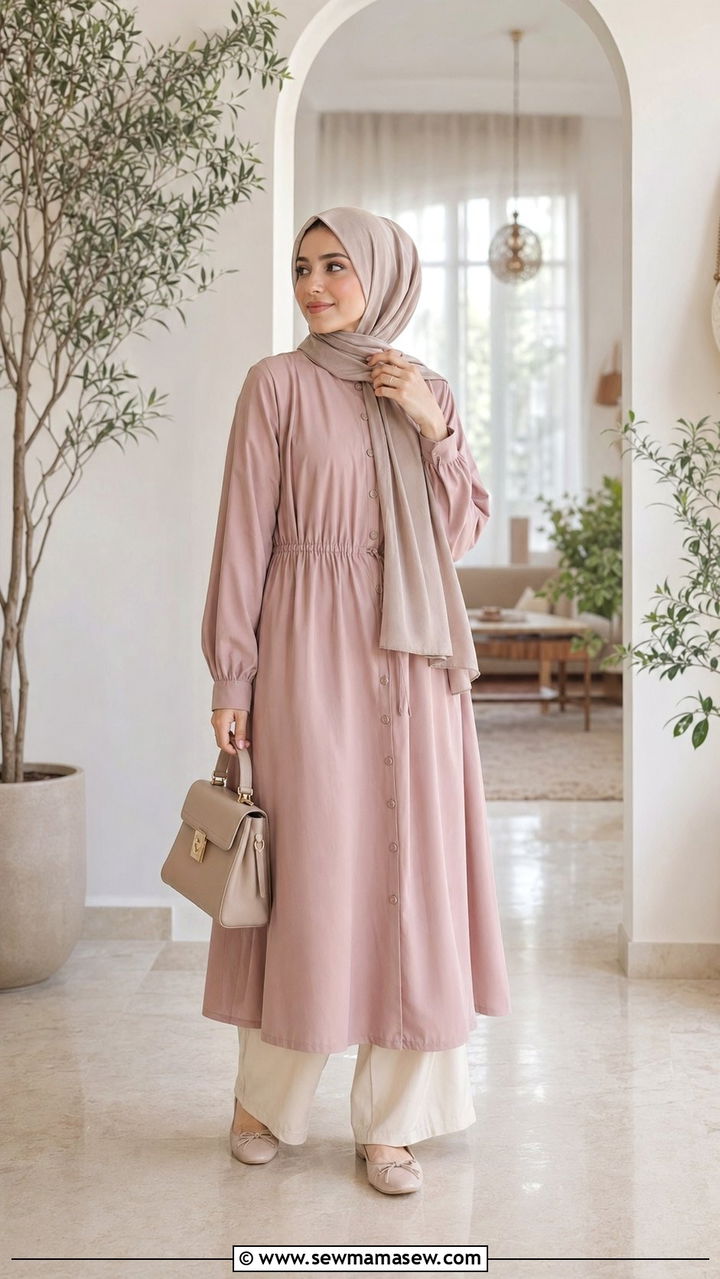
A button-front midi dress layered over slim or wide trousers is a modest look you can probably build from your own closet. Leave the lowest buttons open so you can walk freely. Try dusty pink over cream, or sage over beige pants. Ballet flats, a structured bag and a softly wrapped hijab finish it. The trick I use is matching the trouser color to the shoes, which keeps the legs reading as one line under the dress. It suits daytime events, office iftars and family visits.
22. Georgette Floral Maxi Dress With Pastel Hijab
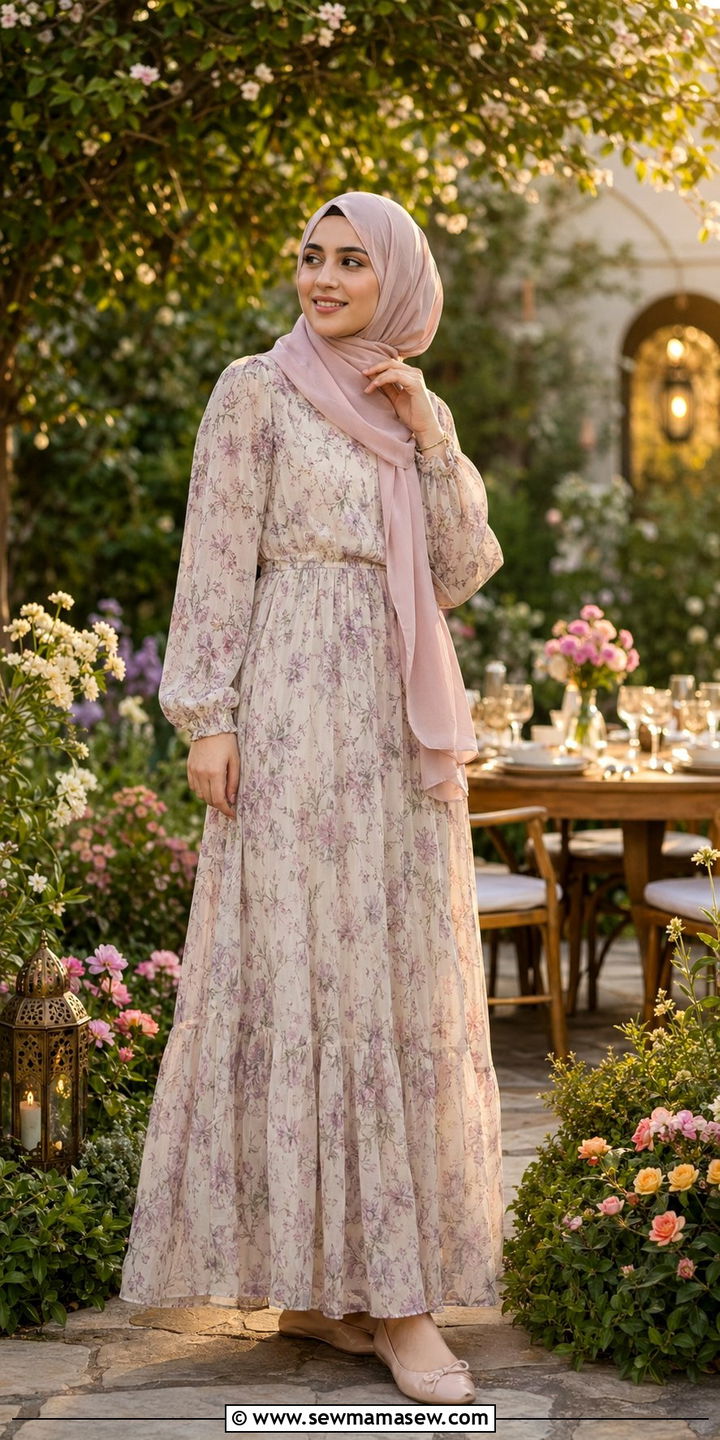
A georgette maxi dress in a small floral print feels soft and feminine. Choose small flowers in muted tones; large tropical prints look busier on a long dress. A pastel hijab pulled from one of the print's colors ties it up, with nude ballet flats or low block heels. Georgette moves well and doesn't cling, which makes it practical on warm evenings. It's usually sheer, so a lining or slip is something I'd confirm before buying. Wear it to garden iftars or afternoon tea.
23. Longline Vest Over Tunic And Wide-Leg Pants
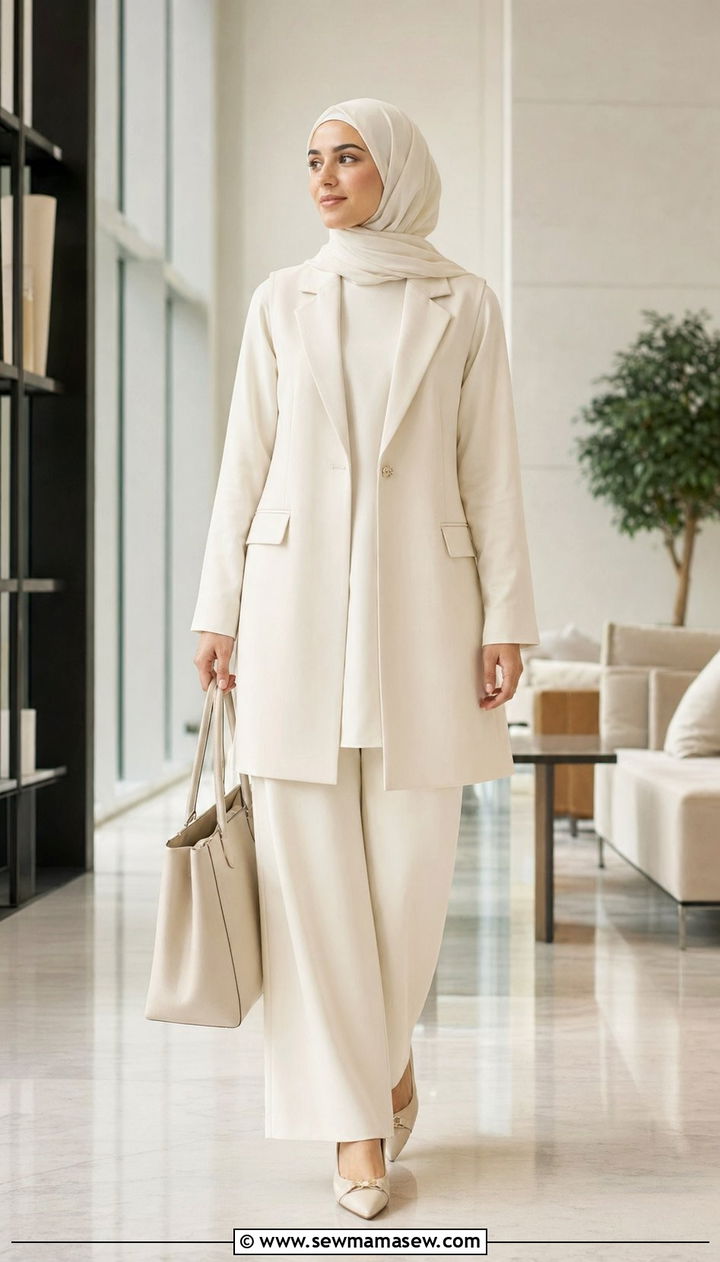
A longline tailored vest over a long-sleeve tunic and wide-leg trousers creates sharp vertical lines. Keep all three in one color, such as ivory, sand or charcoal. The vest adds structure without weight. Pointed flats or low block heels, a leather tote and minimal gold finish it. I'd choose a vest that ends at mid-thigh or lower so it covers the hip line under the tunic. It moves from a day of work to an iftar dinner, and the layers let you adjust to a warm room.
24. Pleated Maxi Skirt With Knit Sweater And Low Heels
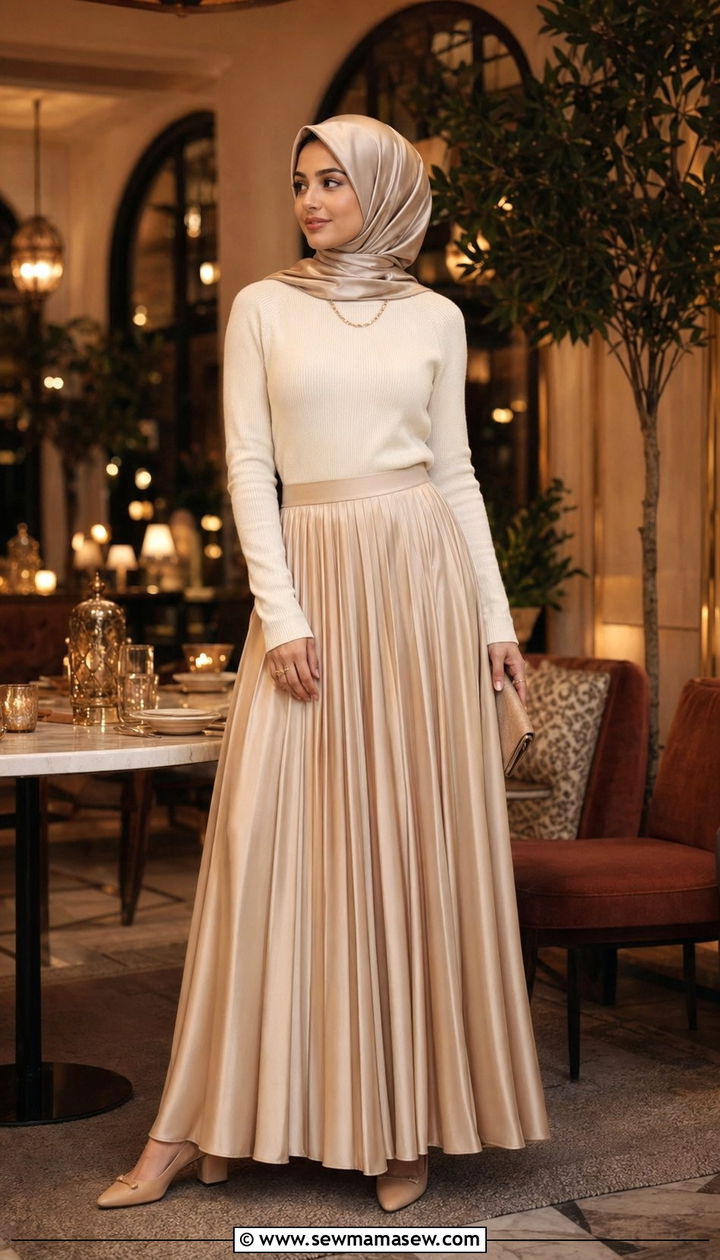
A silky pleated maxi skirt with a fine-knit long-sleeve sweater plays smooth against soft, and it suits Ramadan evenings in cooler weather. Tuck the front loosely or leave it out, depending on the shape you like. Low block-heel pumps, a fine chain and a satin hijab in a matching tone finish it. Satin hijabs slip, so I'd use an underscarf cap to keep it in place through the evening. It's a good option for restaurant iftars and charity dinners when you'd rather not wear a dress or abaya.
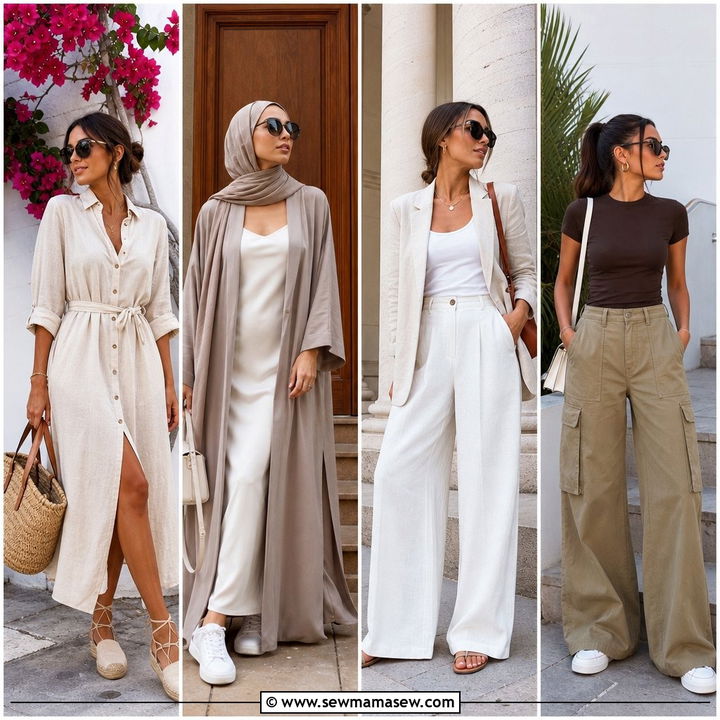
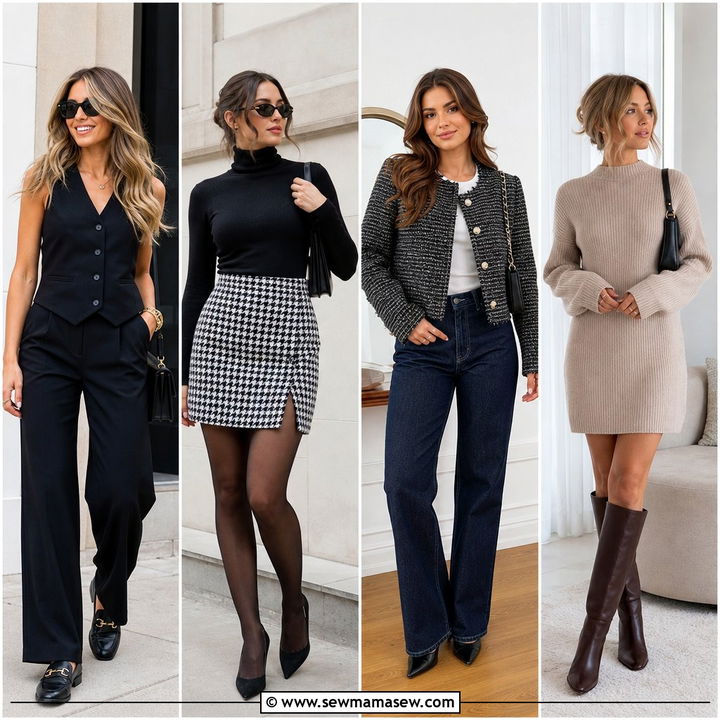
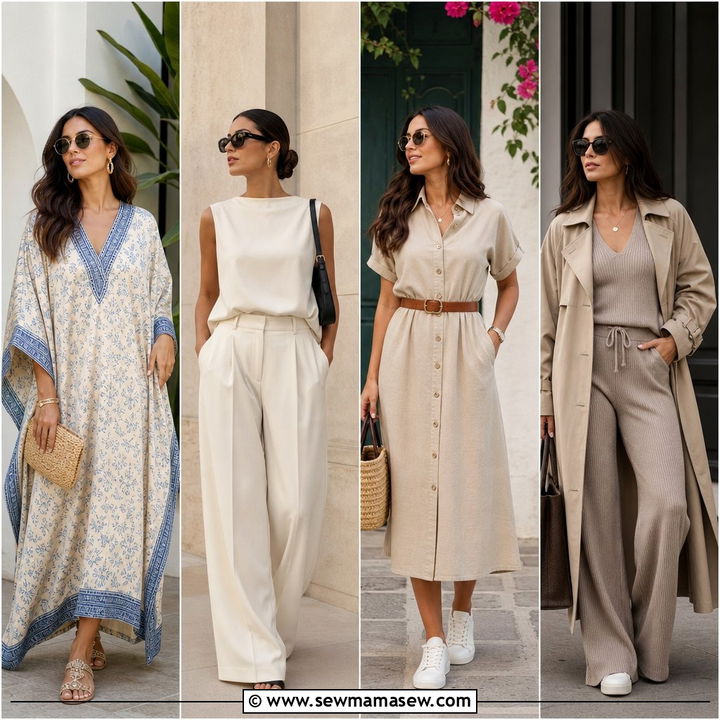
25. White Abaya With Gold Accessories And Nude Heels
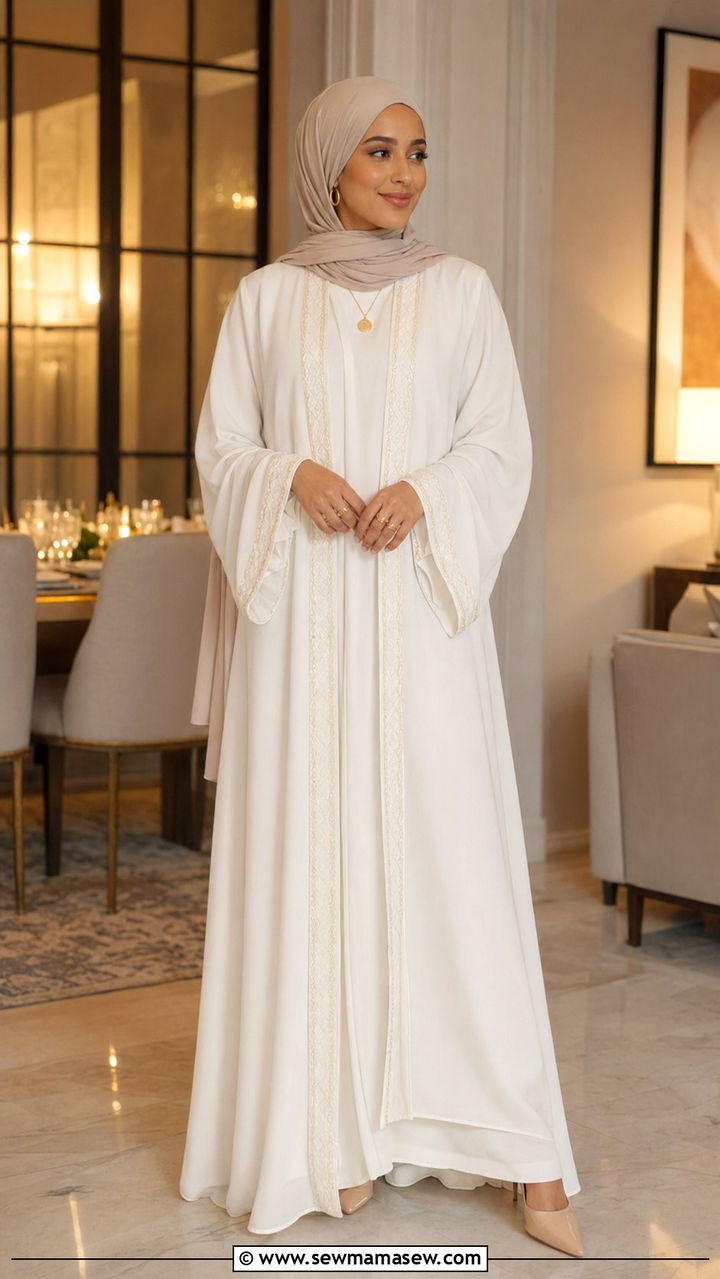
A white abaya is a Ramadan classic, simple and full of grace. Style it with gold: a fine pendant, slim hoops and a few stacked rings, plus nude pointed heels. A champagne or soft gold hijab ties the palette together. It's my choice for the first iftar of the month or the evenings around Eid. White shows makeup and food marks quickly, so I'd pin the hijab so it covers the neckline and keep a stain pen in your bag. Change the accessories and hijab color and it looks new each time.
26. Smocked Midi Dress With Denim Jacket And Espadrilles
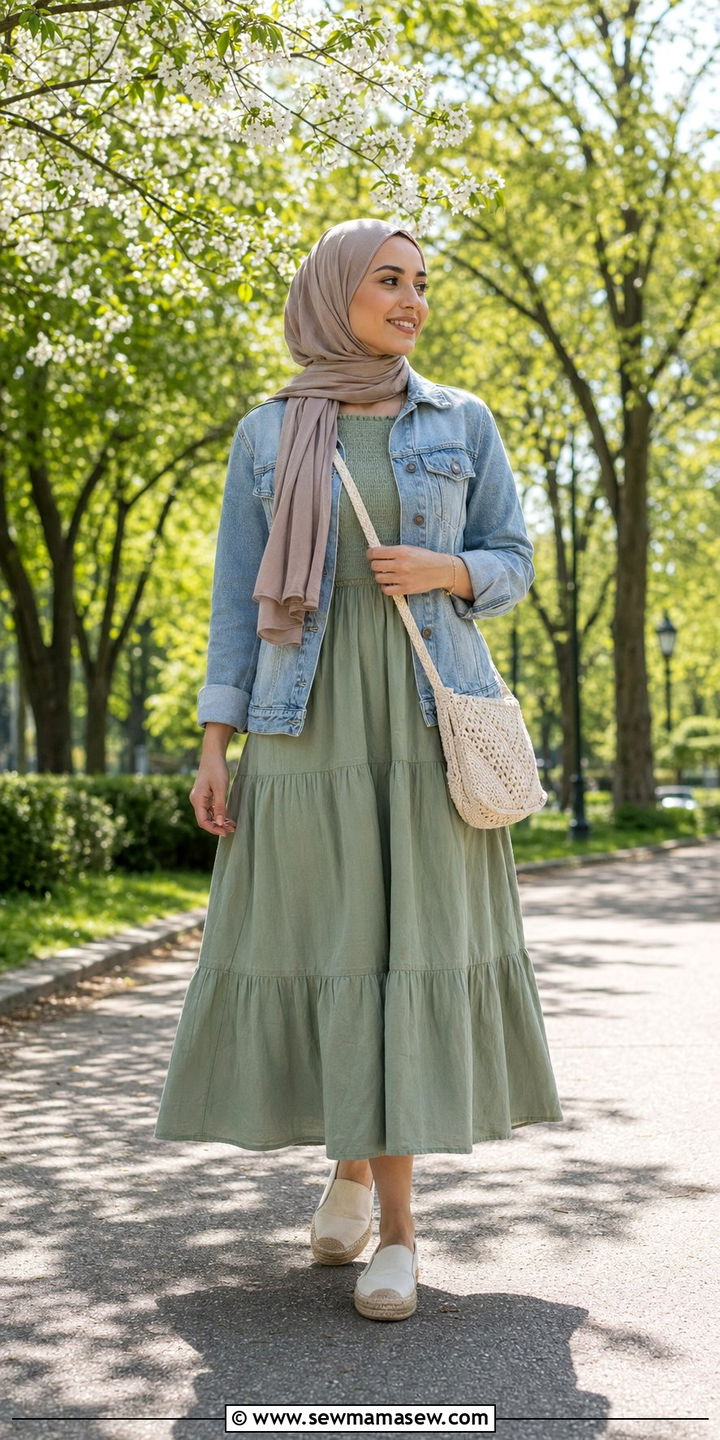
A smocked midi dress with long sleeves and a modest neckline fits close without clinging. A light-wash denim jacket on top adds coverage and makes it casual. Espadrille flats, a simple crossbody and a cotton hijab in a coordinating neutral finish it. Smocking stretches over the bust and waist, so it adapts well if your size changes during the month. It suits a coffee with friends before iftar or daytime errands.
27. Embellished Abaya With Clutch And Strappy Heels
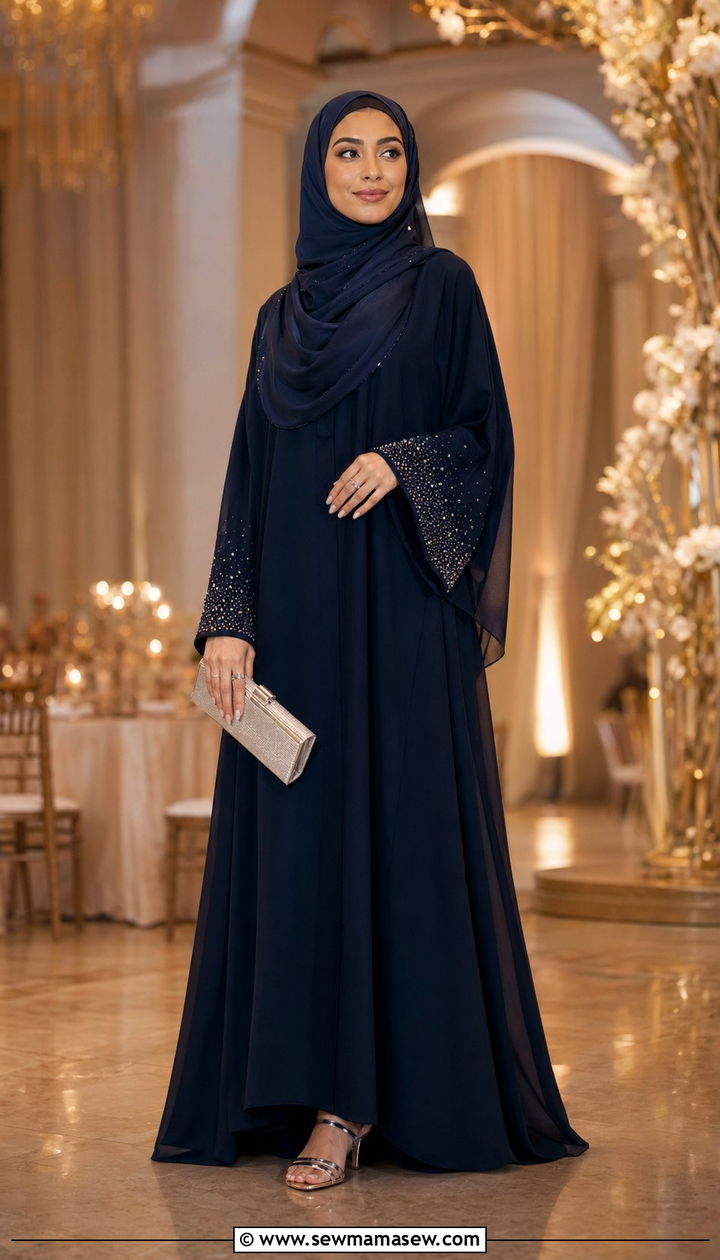
An abaya with fine crystal or pearl embellishments at the cuffs, neckline or hem adds sparkle for special evenings. Midnight blue, deep plum or soft black let the details shine in low light. A sleek clutch, strappy heels and a chiffon hijab with a little sheen finish it. Embellished cuffs can scratch and snag, so I'd check that the stones are sewn, not glued. I'd save this one for formal events, charity dinners and large community iftars.
28. Two-Piece Abaya Set With Color-Blocked Hijab
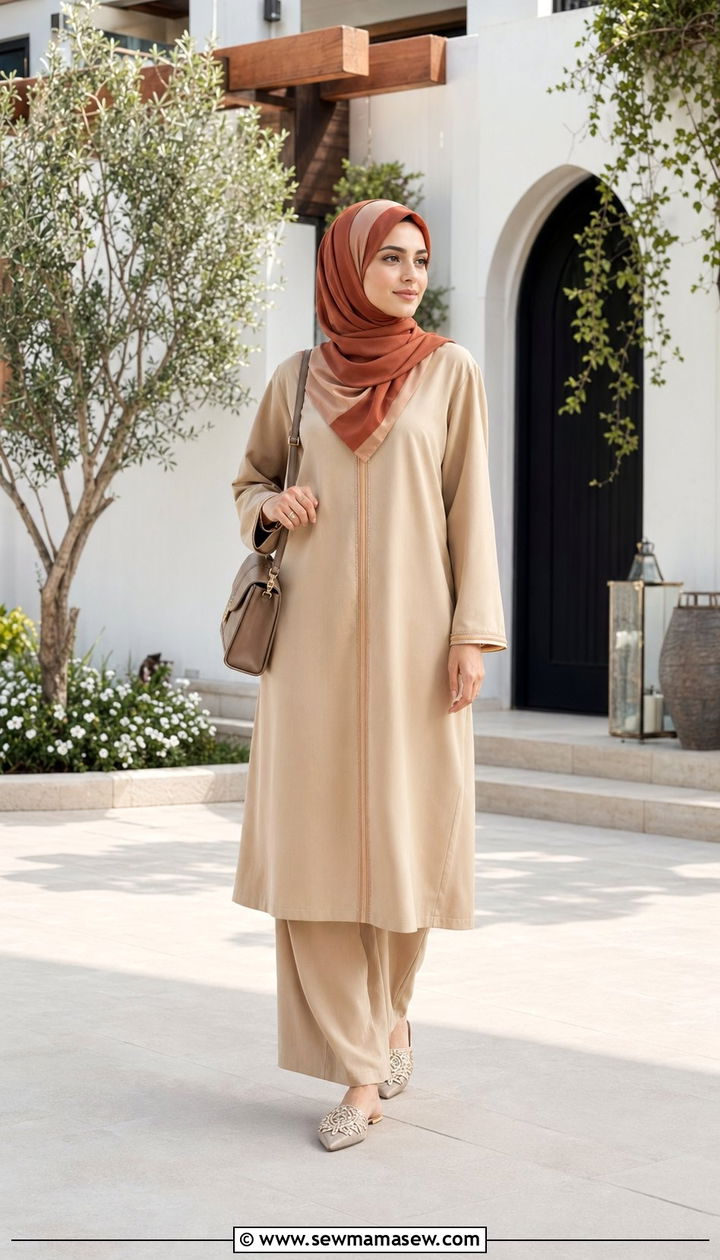
A two-piece abaya set, a long top with matching wide trousers or a skirt, gives the ease of an abaya with the flexibility of separates. Choose a solid neutral and add color through the hijab: sand with rust or terracotta, or gray with dusty pink. Flat mules, a structured shoulder bag and simple jewelry finish it. When I color-block with a hijab, I pick a shade that also suits your skin, since it sits right next to your face. It covers daytime gatherings and evening prayers.
29. Long Cotton Dress With Espadrilles And Straw Hat
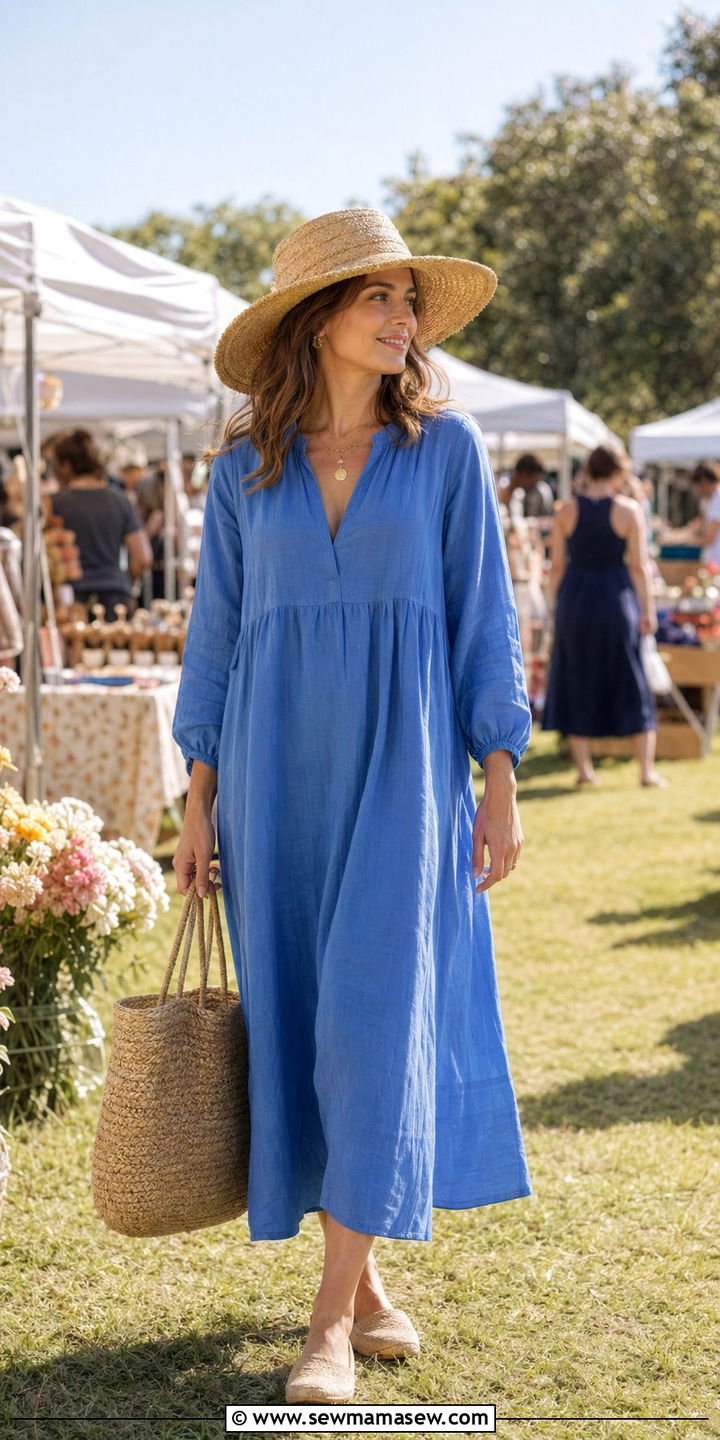
For daytime outdoor events, a relaxed long cotton dress with espadrille flats and a wide-brim straw hat looks summery and stays modest. Choose a cheerful but soft color like cornflower blue, butter yellow or soft coral. A woven tote and a cotton voile hijab keep it breathable. The hat brim also shades your face, which helps on a long fasting afternoon outdoors. I'd wear it to charity bazaars, open-air markets or a walk before iftar.
30. Jersey Wrap Dress With Pants And Slide Sandals
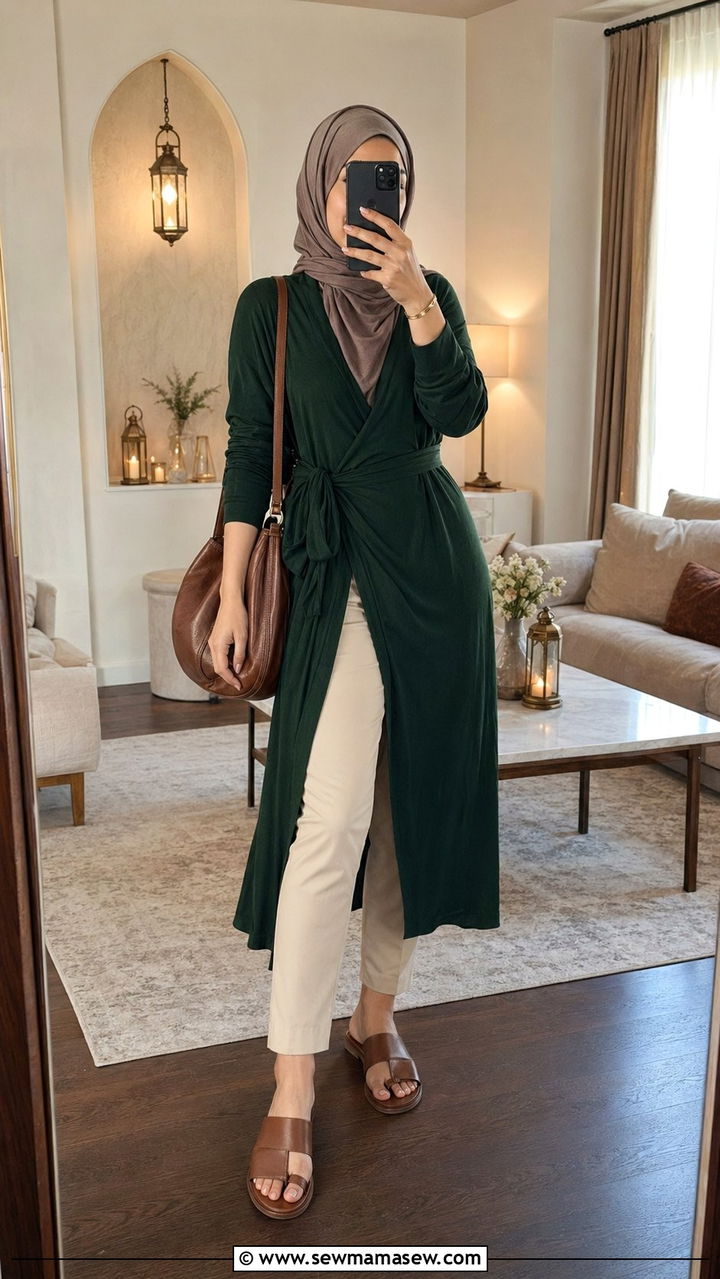
A jersey wrap dress worn open over slim pants layers comfortably and moves well. Pick a solid rich color like eggplant, forest green or warm terracotta over neutral trousers. Slide sandals, a hobo bag and a soft jersey hijab finish it. A wrap neckline can open when you bend in prayer, so I'd add a small snap or a camisole underneath for full coverage. I reach for it at casual iftars and family visits, when you want a dress with pants underneath.
31. Trench Coat Over Maxi Dress With Pointed Flats
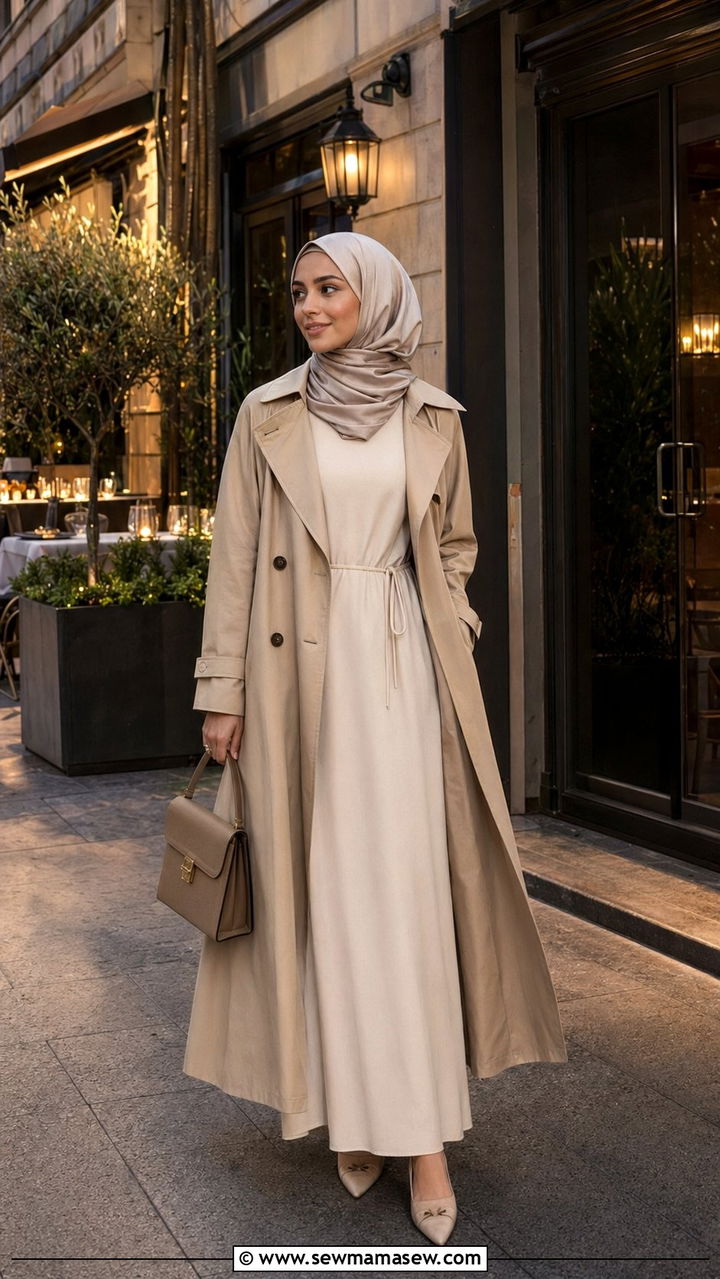
A lightweight trench over a simple jersey maxi dress is polished for evenings in changeable weather. Classic beige or khaki over cream, black or olive all work. Pointed flats, a structured bag and a satin hijab dress it up. The trench should be long enough to cover most of the dress, or it cuts the line in half. It suits iftar dinners at restaurants and evening Ramadan markets where you'll walk outside before or after eating.
32. Indian Anarkali Suit With Matching Sandals
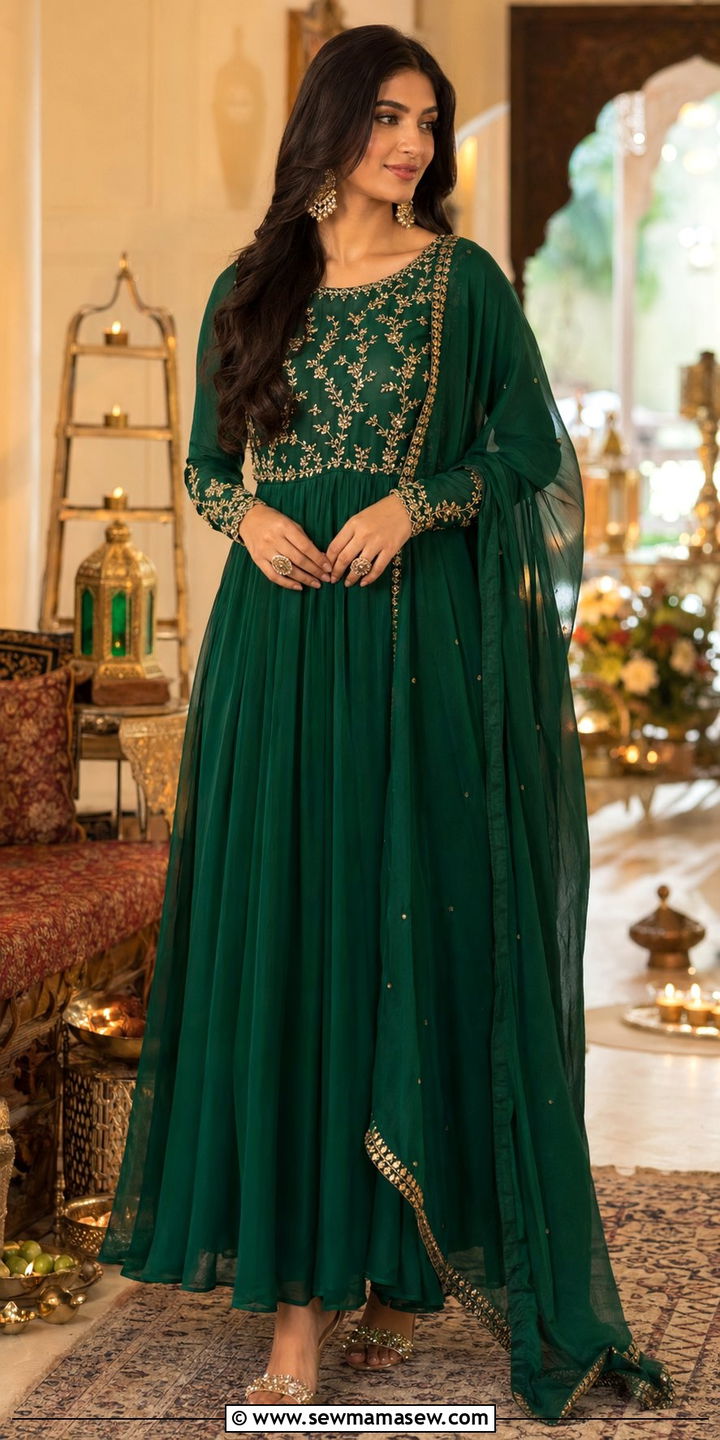
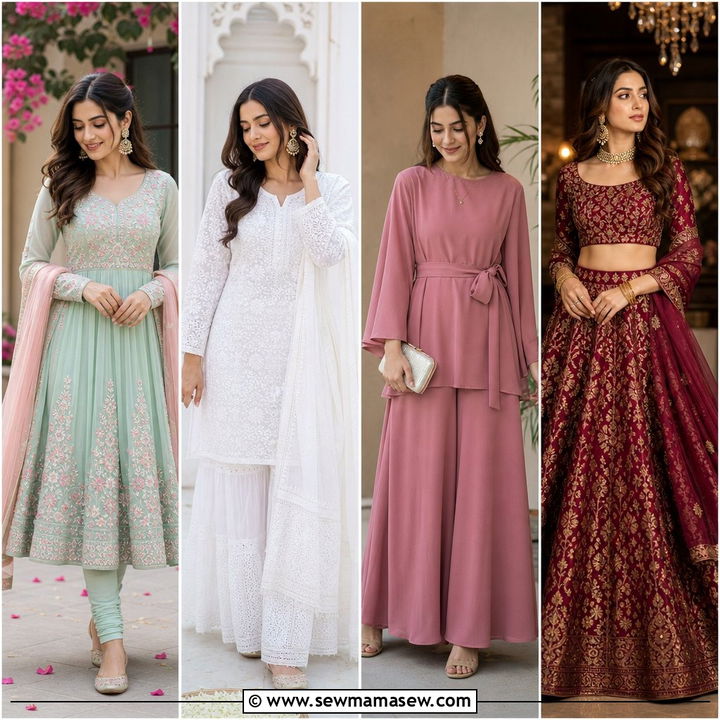
A floor-length Anarkali suit with a fitted bodice and a full flared skirt brings South Asian ceremony to iftar. Look for fine embroidery or light sequin work on the bodice and a georgette or chiffon skirt. Matching embellished sandals, a clutch and a light dupatta over one shoulder finish it. A full Anarkali skirt can be heavy, so I'd check the weight on the hanger before buying for a long evening. It suits big family iftars and the nights leading up to Eid.
33. Linen Tunic With Linen Trousers And Woven Slides
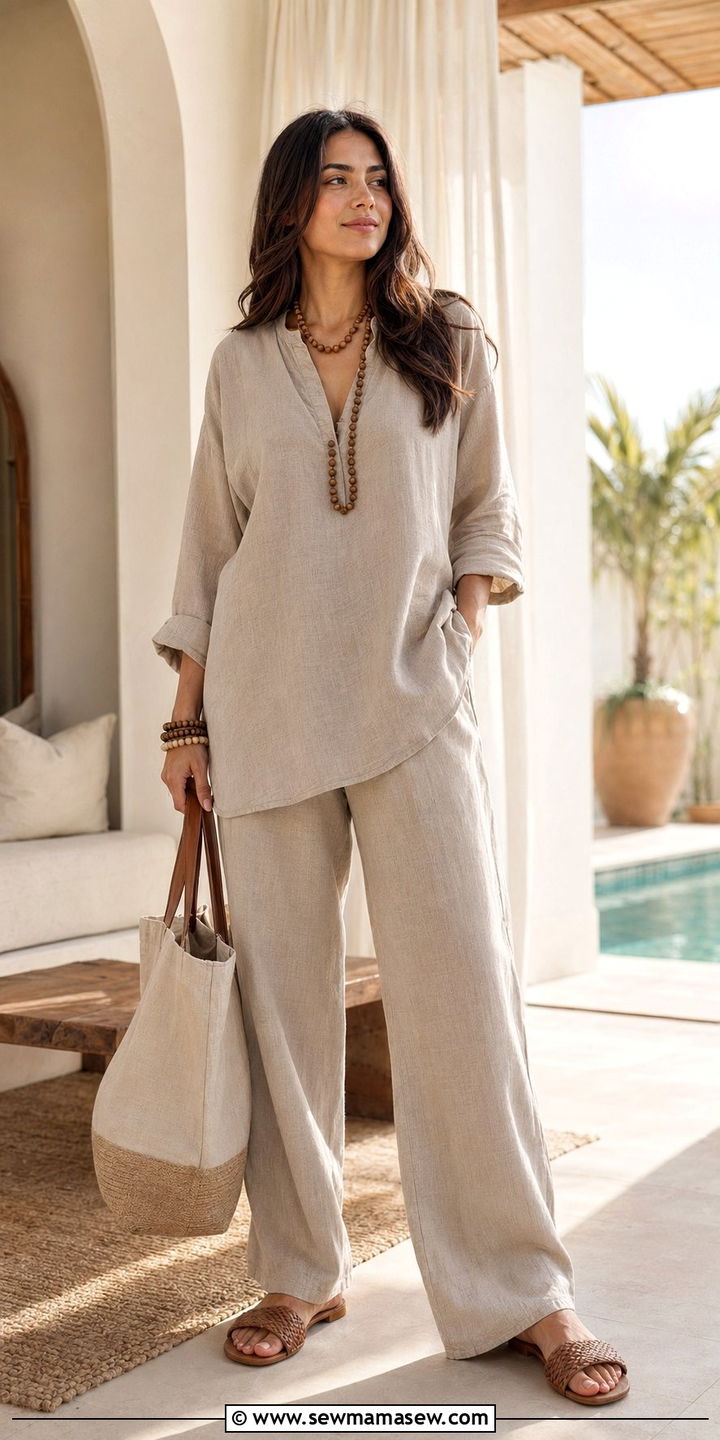
A matching linen tunic and trousers in stone, sage or pale blue is one of the easiest Ramadan outfits to throw on. Linen keeps you cool, and a matching set needs no planning. Woven leather slides, a canvas tote and wooden-bead jewelry suit the natural fabric. The creases add character rather than looking untidy, though I'd avoid very thin linen that creases into sharp lines. It's good for daytime gatherings or relaxing at home before the evening meal.
34. All-Black Modest Ensemble With Pop-Color Bag
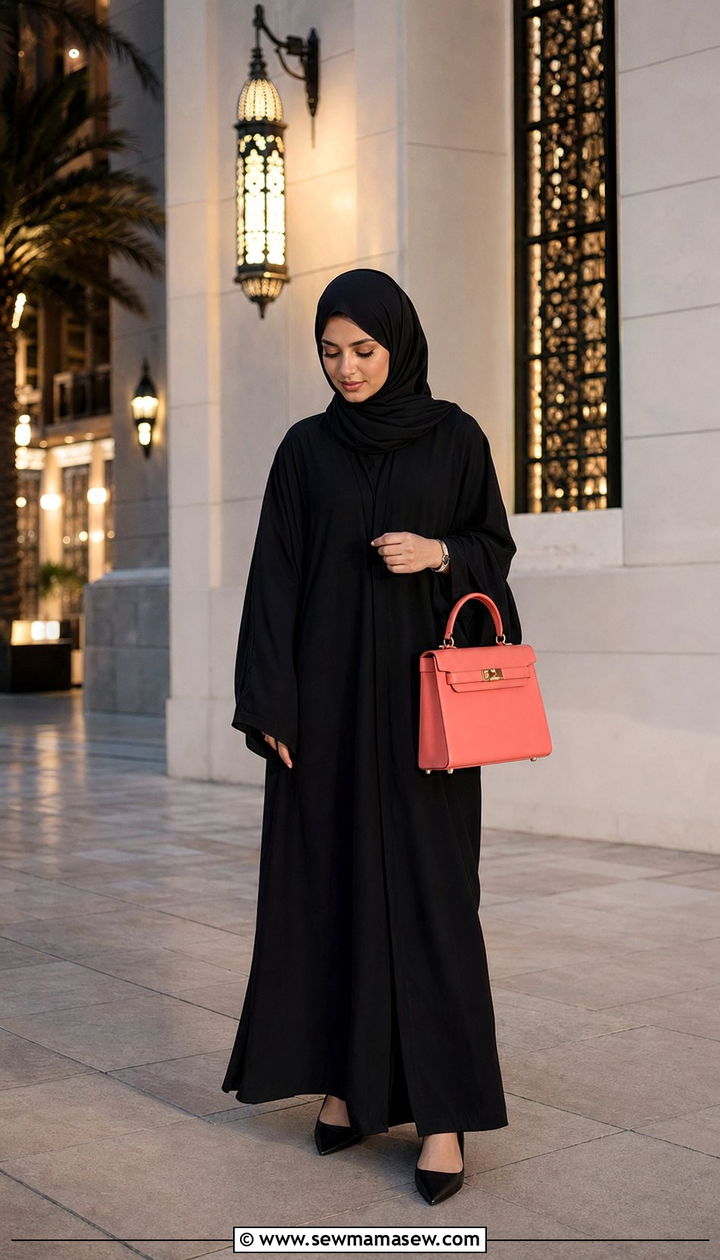
An all-black modest outfit, such as a black abaya, maxi dress or tunic with trousers, gets a modern lift from a bright bag in coral, turquoise or fuchsia. Black pointed flats or sleek boots, a black hijab and minimal silver keep the base calm, and the bag adds personality. I keep the color to one piece only; a bright bag plus bright shoes splits the attention. It works for evening iftars and mosque visits, and the color keeps black from feeling too somber.
35. Embroidered Takchita Or Gandoura With Babouche Slippers
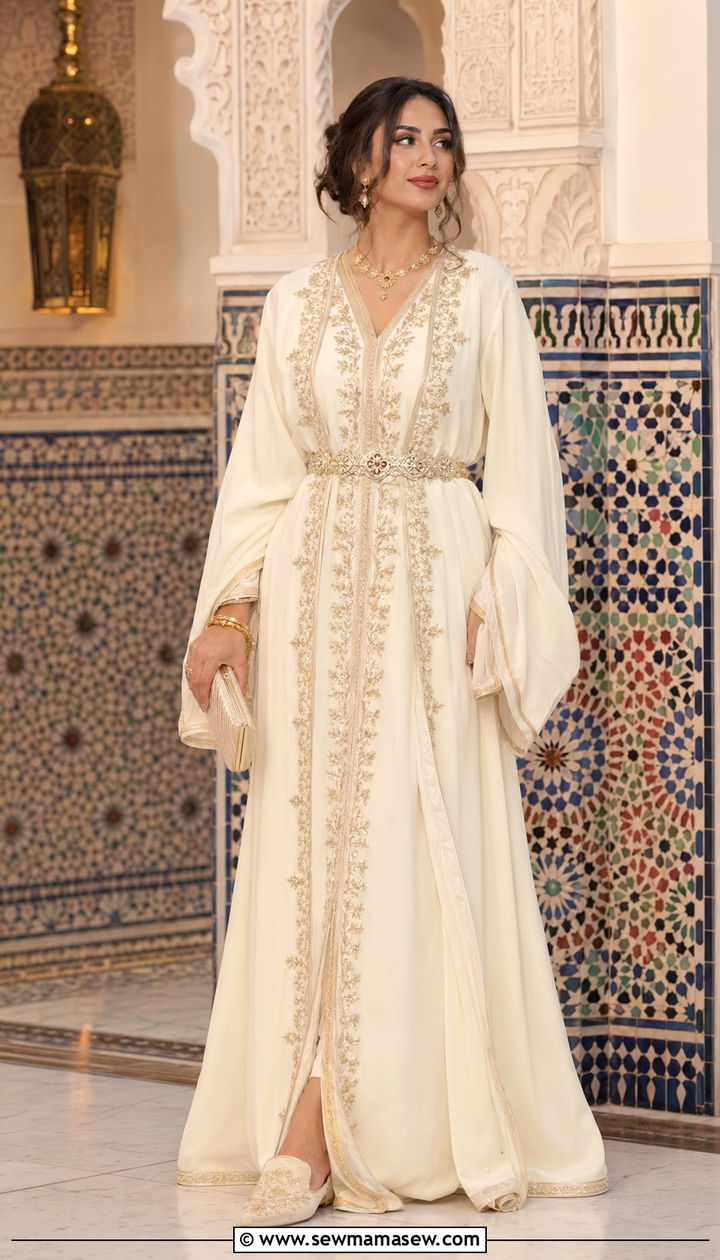
A traditional takchita or gandoura with detailed embroidery down the front celebrates North African craftsmanship. The two-layer garment has a matching underdress and an embellished outer layer worn open or closed. Soft leather babouche slippers, a simple clutch and fine gold jewelry complete it. Heavy embroidery should be stored flat or on a padded hanger, because the weight can stretch the shoulders over time. I'd save it for the most important iftars of the month or the nights before Eid.
A Thirty-Day Rotation From About a Dozen Pieces
Nobody needs 35 outfits for one month. I usually plan a Ramadan wardrobe around a small group of pieces that all share two or three colors, so everything mixes.
- Two abayas: one neutral for daily wear and one dressier for special iftars.
- Two pairs of wide-leg trousers and two long tunics or loose tops.
- Two maxi dresses that work alone or under an abaya.
- One cardigan or light jacket for cold air conditioning.
- Three or four hijabs in colors that pick up every other piece.
- Flat sandals, a pair of sneakers and one dressier shoe.
Save one special outfit, an embroidered set or a takchita, for the last ten nights and Eid, and wear the rotation for everything else.
Caring for Chiffon, Crepe and Embroidery Mid-Month
Pieces get washed far more often during Ramadan, and delicate fabrics suffer for it. Hand wash or use a mesh bag on a cold, gentle cycle for chiffon and georgette, and hang them to dry rather than tumble drying. Crepe abayas recover well with a steamer and rarely need ironing. For embroidered pieces, turn them inside out and press from the back on low heat with a cloth between. Treat food stains right after iftar with cold water, since oil and turmeric set quickly if they sit overnight.
Generous Shapes and Breathable Fabric for the Whole Month
Good Ramadan dressing respects the spirit of the month while letting your own style show quietly. The outfits above cover busy days, home iftars, special evenings and late-night prayer. The common threads are comfort, coverage and clothes that let you move, breathe, pray and eat without fuss. Keep fabrics breathable, shapes generous and accessories simple. A small set of pieces that mix together will save you time each day, so the month can be about what matters. Ramadan Mubarak.
Related posts: