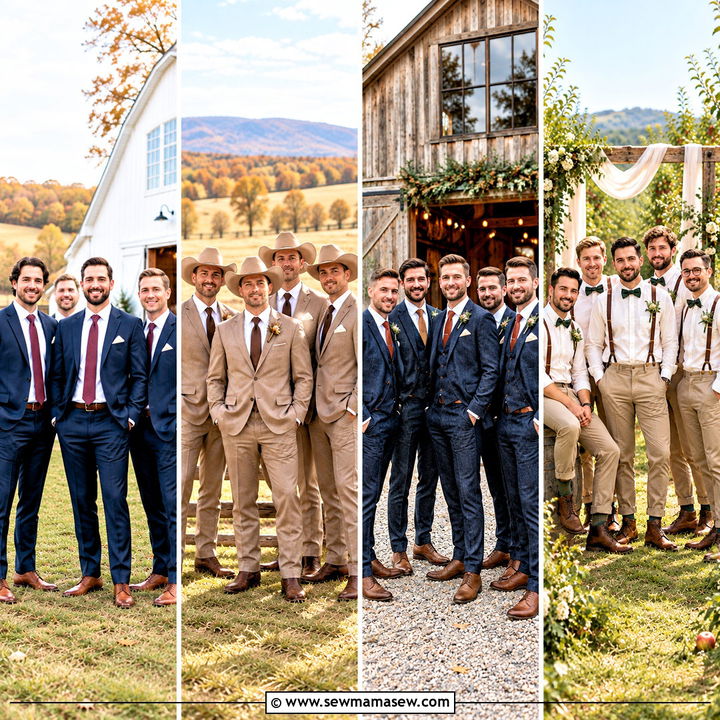
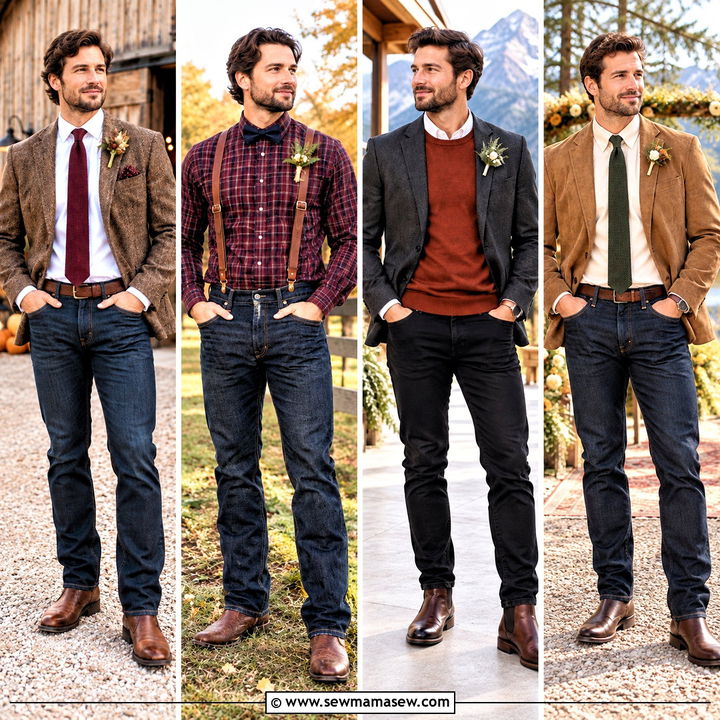
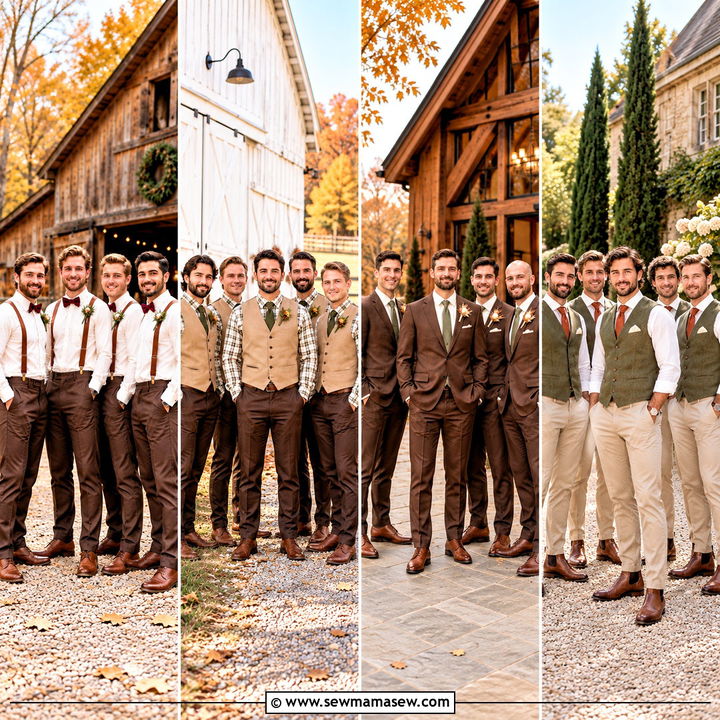
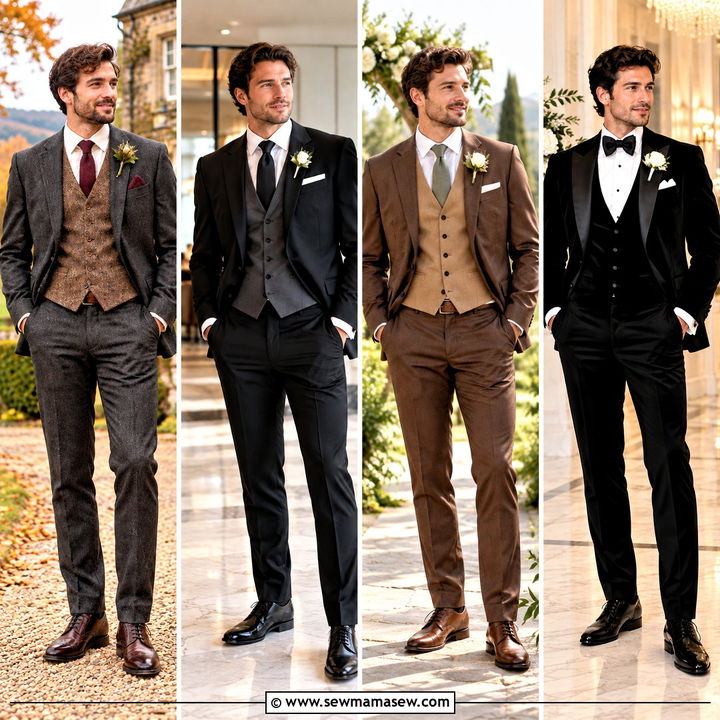
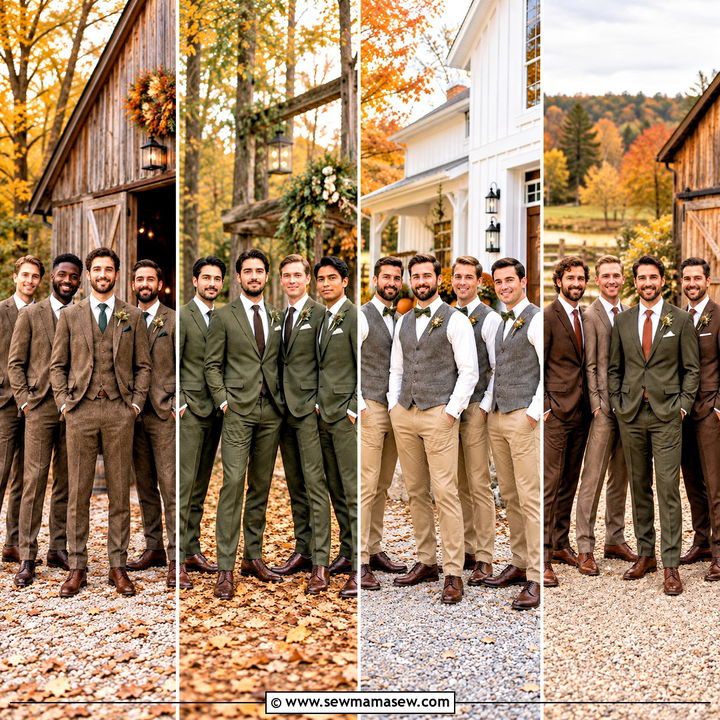
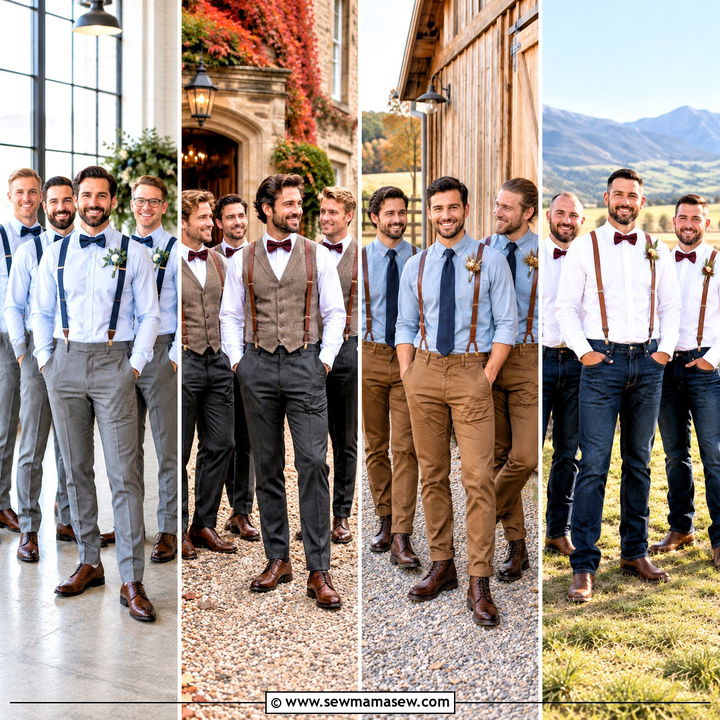
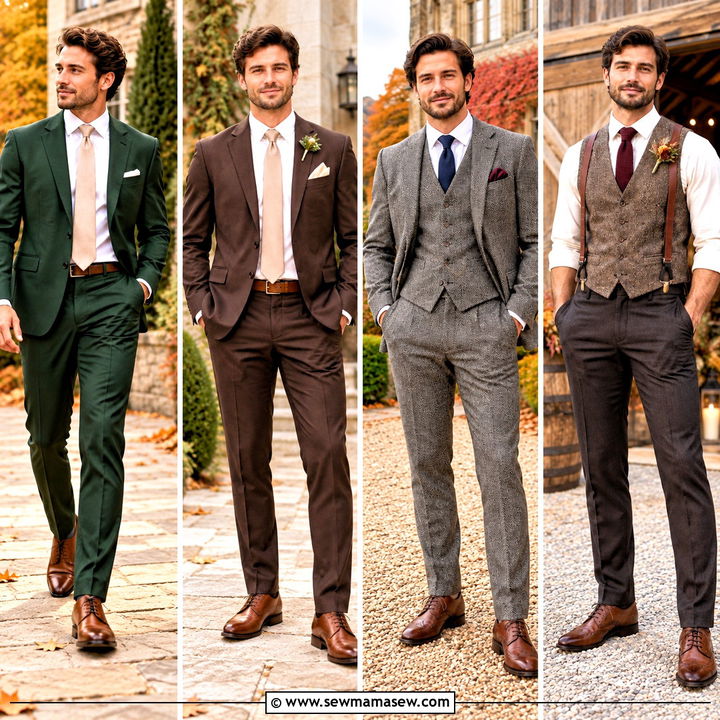
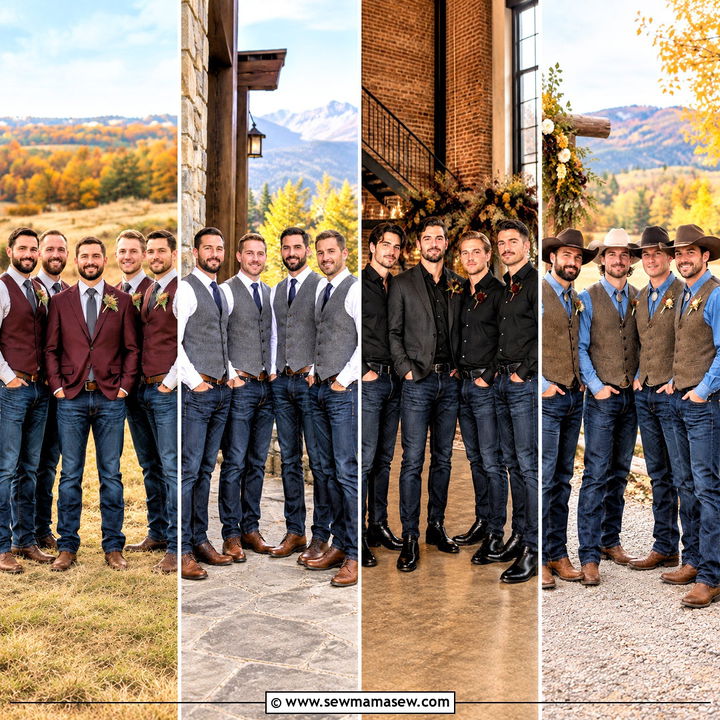
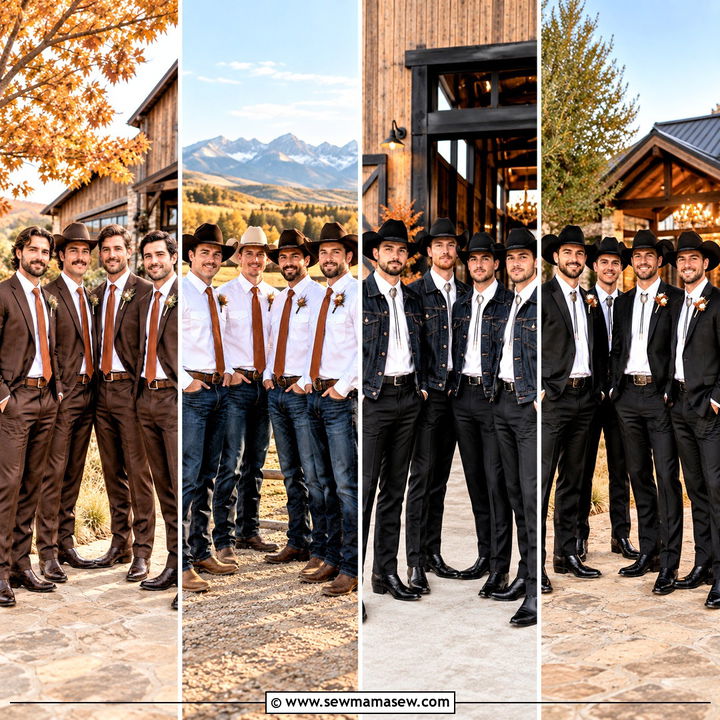
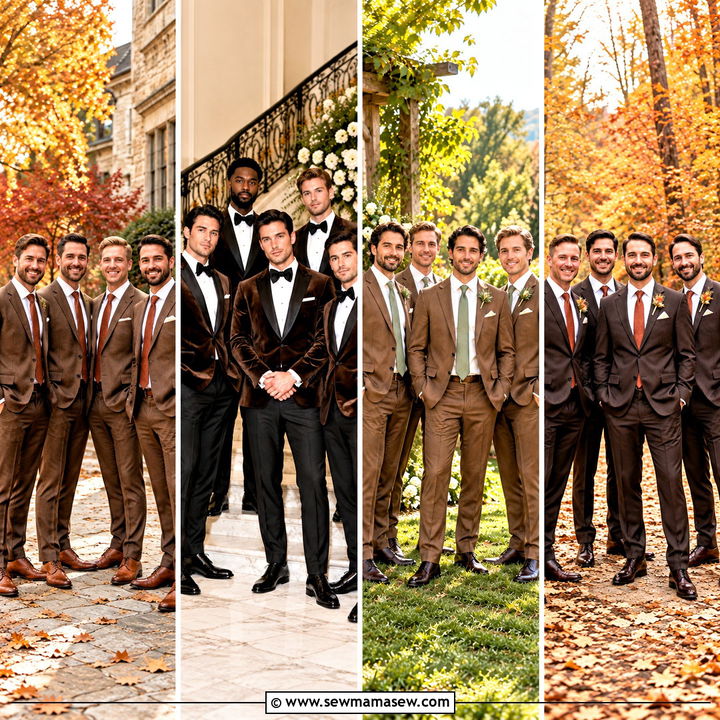
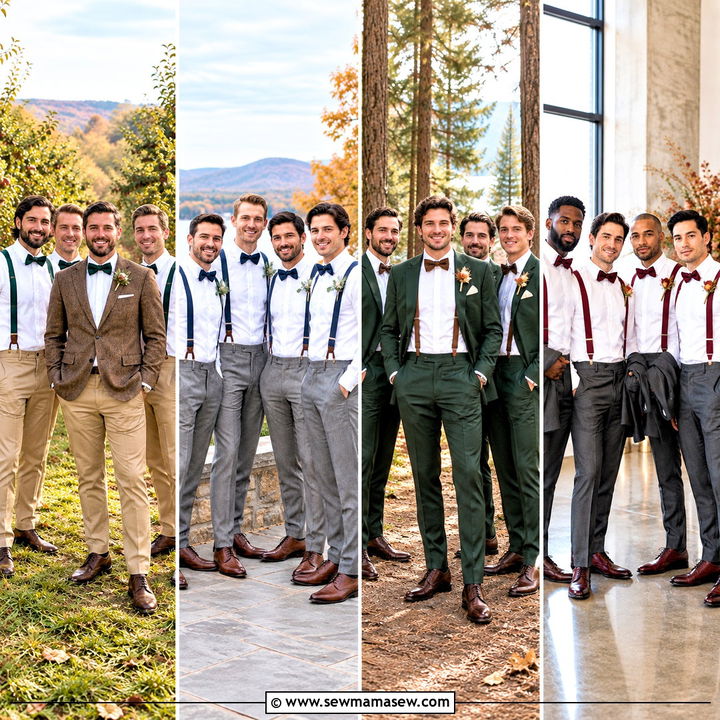
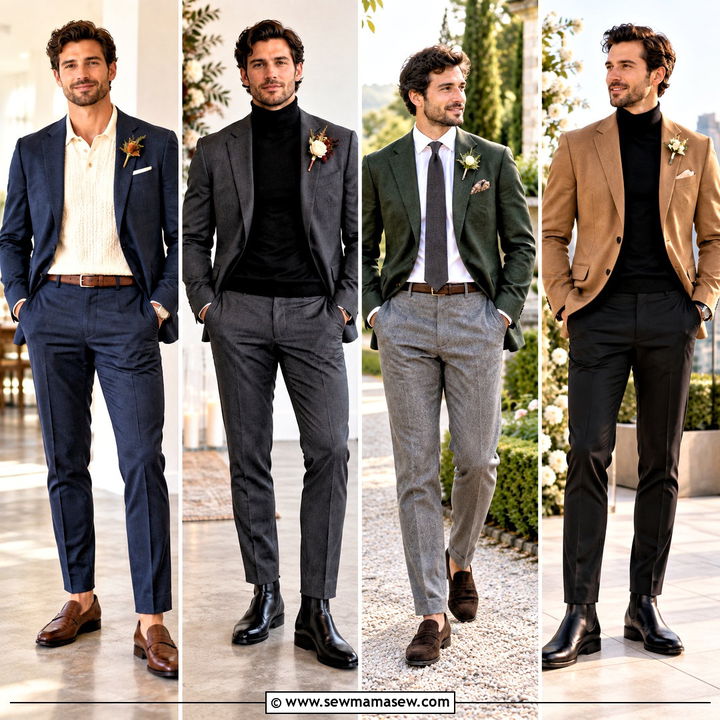
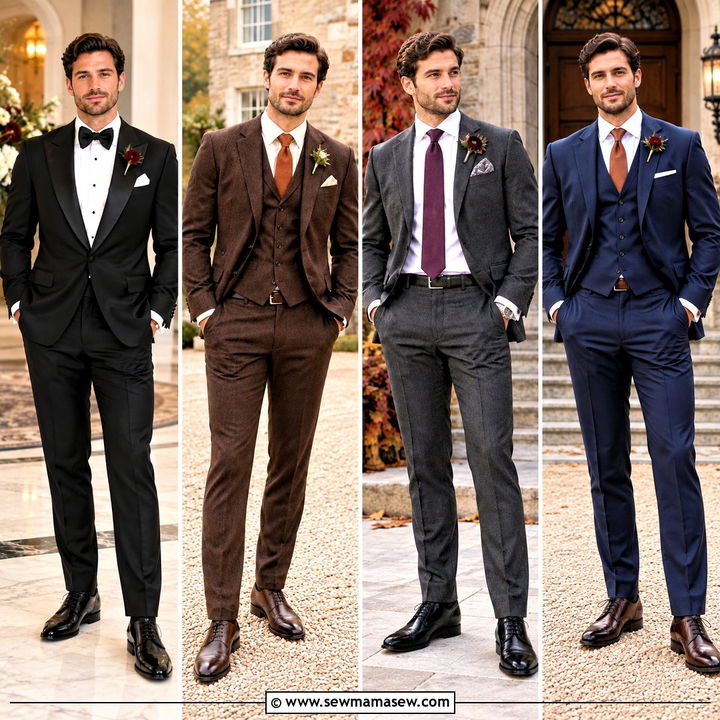
A groom at a fall country wedding has an easier job than he thinks. The season already hands him the right materials: tweed, flannel, corduroy and velvet, in brown, olive, burgundy, navy and charcoal, all of which sit naturally against barn wood and turning leaves. What I watch for is the line between rustic and costume. A barn, a ranch and an open field each allow a different level of formality, and boots, textured ties and dried-flower boutonnieres should support the suit rather than turn it into a theme. Below are fifteen complete looks, from a three-piece tweed to a vest and suspenders, with the fit and fabric points I'd check on each.
Cloth Weight for a Cold Ceremony and a Hot Dance Floor
Fall country weddings put the groom in two climates. The outdoor ceremony can be chilly, and a barn full of dancing guests gets warm fast. Cloth weight, usually given in ounces per yard, tells you more about comfort than the color does.
- Lighter worsted wool, roughly 9 to 11 ounces, breathes well and suits a mild September day or a groom who runs hot.
- Flannel and mid-weight wool, roughly 11 to 13 ounces, are what I'd choose for most October weddings. Warm outside, still bearable inside.
- Heavy tweed, often 13 ounces and up, is warm and holds its shape, but it gets stuffy during hours of dancing. That's why the three-piece vest matters with tweed.
- Velvet and corduroy are warm for their weight. Fine for evening, less so for a sunny afternoon.
Ask the tailor or shop for the cloth weight. If nobody knows, hold the fabric up to a window: if you can see light through it, it's on the light side.
1. Brown Tweed Three-Piece Groom Attire
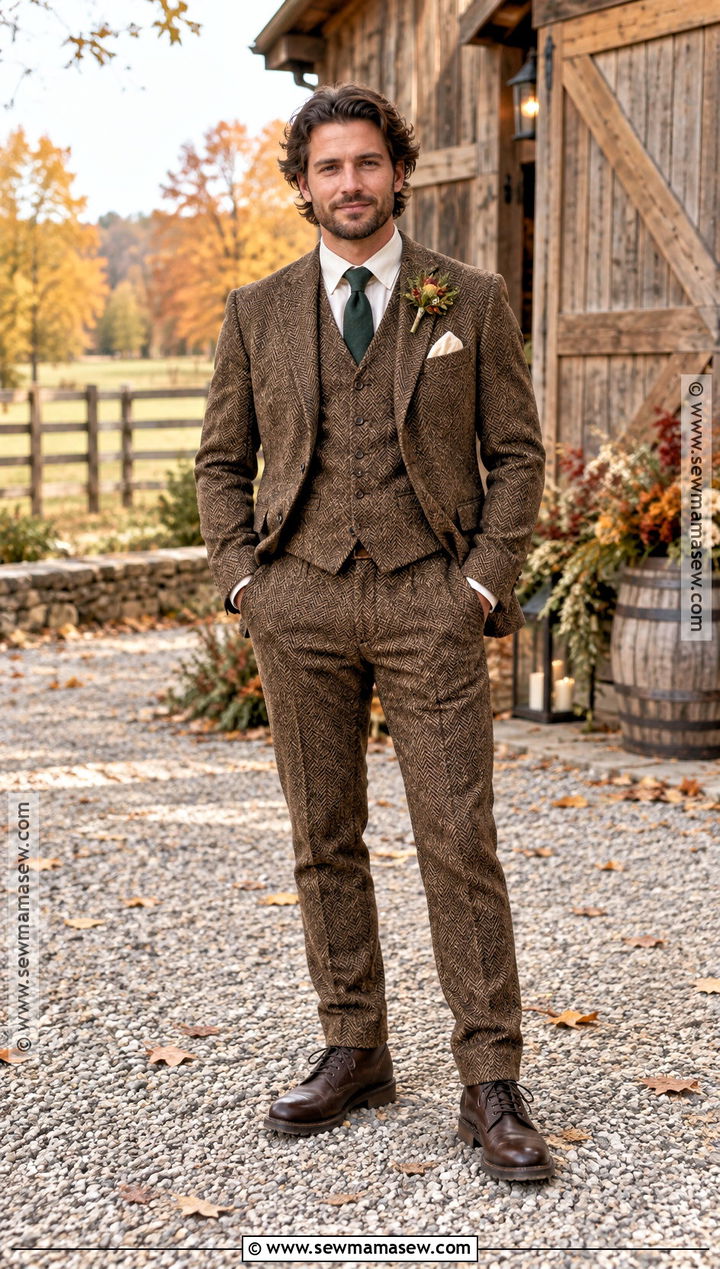
Brown tweed in three pieces is the look most couples picture when they say country groom. I steer toward a medium or dark brown with a small herringbone; a large, loud check can look like a hunting costume at full length. An ivory shirt softens the brown more than bright white does, and a forest green or rust tie adds the seasonal note. Polished dark brown lace-up boots, a matching belt and a cream pocket square finish it. The vest is the practical reason to go three-piece: once the jacket comes off for dancing, he still looks dressed. Keep the boutonniere small, neutral blooms, greenery or dried accents. It fits a timber barn, an old farmhouse or a country estate.
2. Olive Green Suit Groom Attire
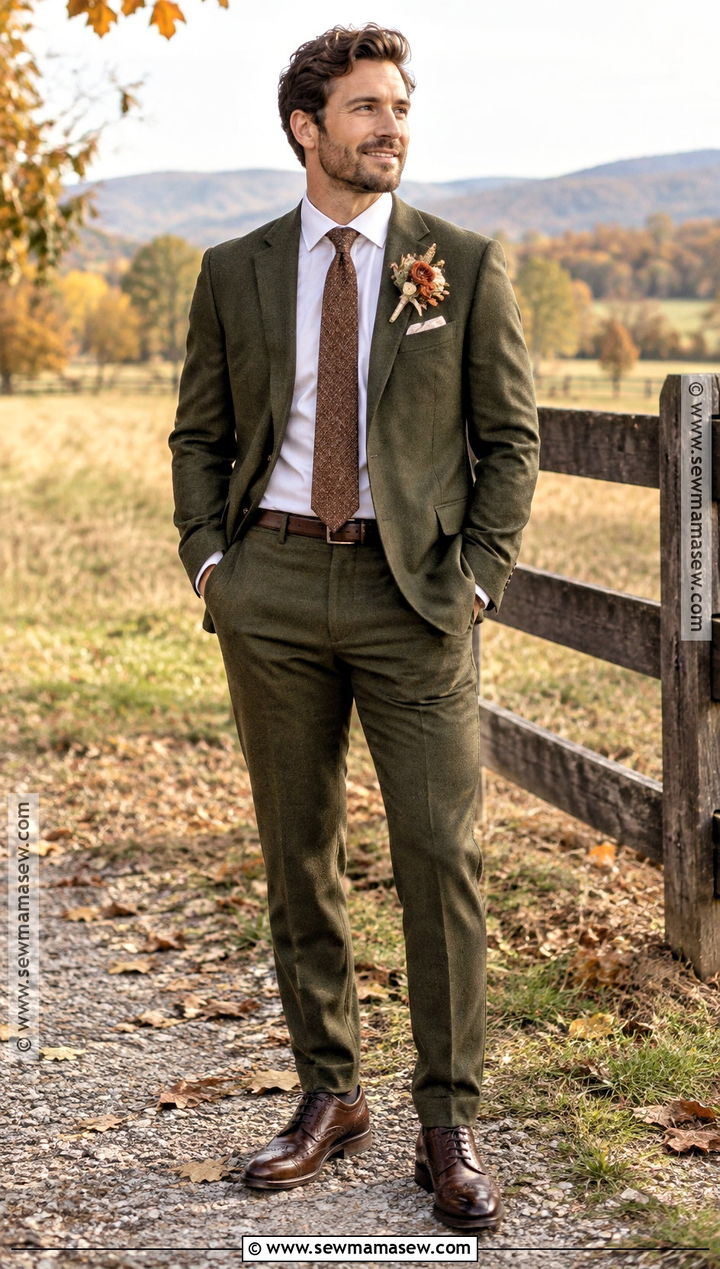
Olive suits the outdoors better than almost any other suit color, and it's more forgiving on skin than people expect when the shade is muted rather than army-bright. I'd choose a tailored two-piece in wool or a wool blend. A white shirt and a textured brown tie keep the palette grounded. Dark brown brogues or ankle boots add structure without feeling too formal for the venue, along with a brown leather belt, a neutral pocket square and simple gold or wood-tone cuff links. A boutonniere of rust, cream and greenery ties the suit to the wedding flowers. Against wood fencing, stone walls and orange leaves, olive gives the photographer a groom who belongs in the scene.
3. Navy Suit With Brown Boots Groom Attire
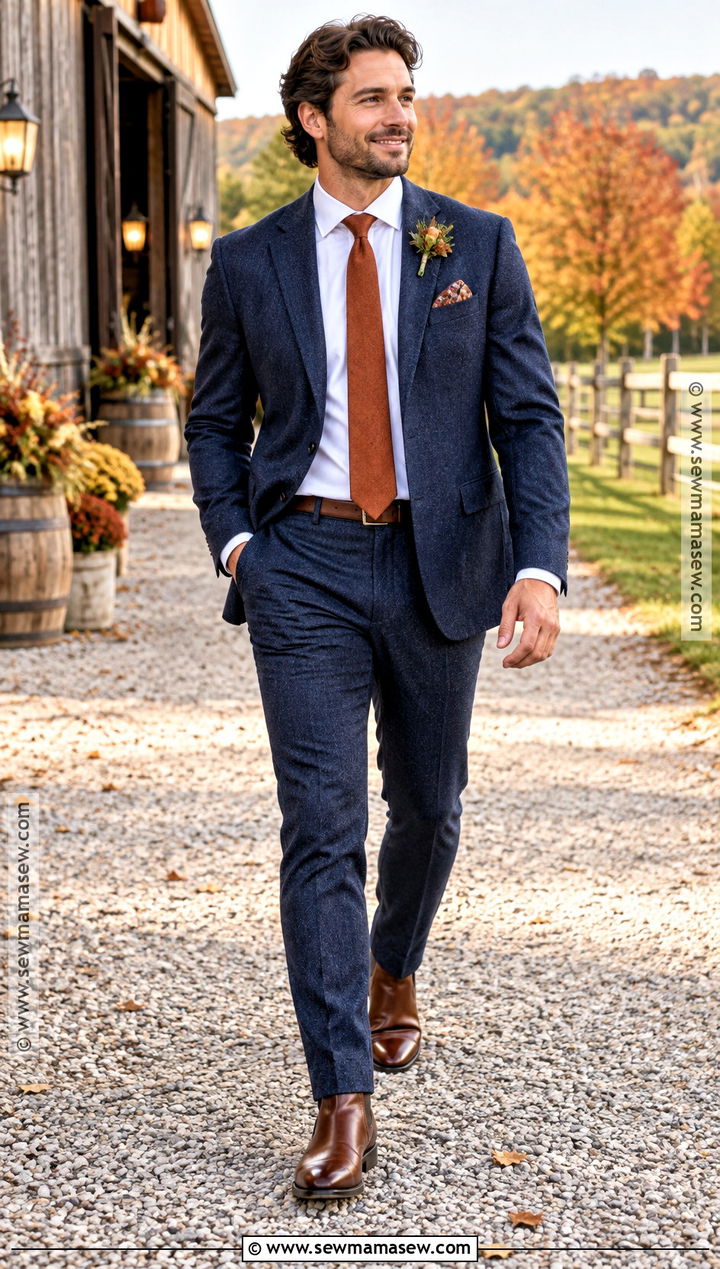
For a groom who wants something he'll wear again, a navy suit with brown boots is the safest call I know. Go darker navy, in brushed wool or flannel; the soft surface reads autumn, while a smooth, shiny worsted reads office. A light blue or white shirt and a burnt orange tie add the fall color. Match the belt closely to the boots, Chelsea or sleek lace-ups, because a near-miss in brown tones looks careless in close-up photos. A pocket square with navy and rust works if it doesn't repeat the tie's pattern exactly. Finish with a small greenery and cream boutonniere. It covers semi-formal barns, ranches and evening receptions alike.
4. Charcoal Wool Suit Groom Attire
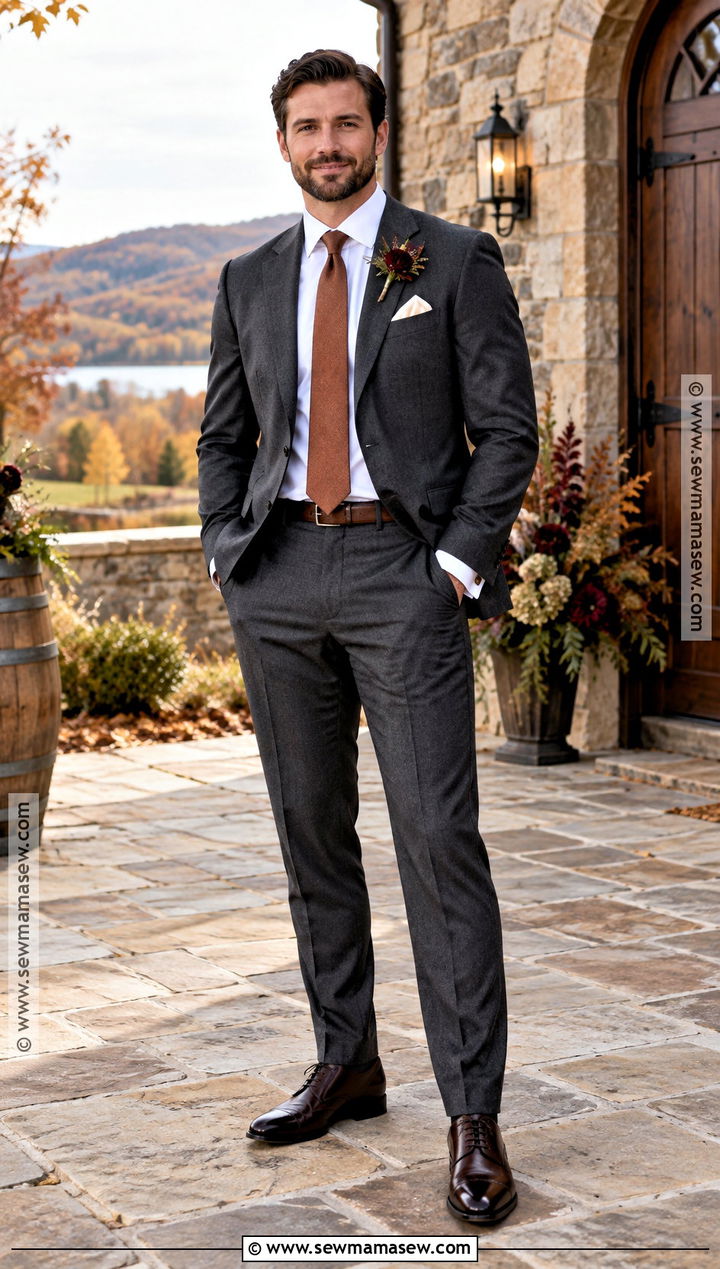
Charcoal wool is understated, and the texture is what keeps it from looking like a business suit. A soft flannel or brushed finish does that job; a slick worsted doesn't. Pair it with a clean white shirt and a rust, copper or deep mustard tie. Black shoes push it toward traditional, while dark brown cap-toes warm it up and connect it to the countryside. Add a matching belt, a folded cream pocket square and simple metal cuff links, plus a boutonniere with burgundy flowers and muted greenery for color near the face. In late October or November, when the ceremony is outside and cold, charcoal flannel is warm enough to stand in for half an hour without a coat.
5. Burgundy Suit Groom Attire
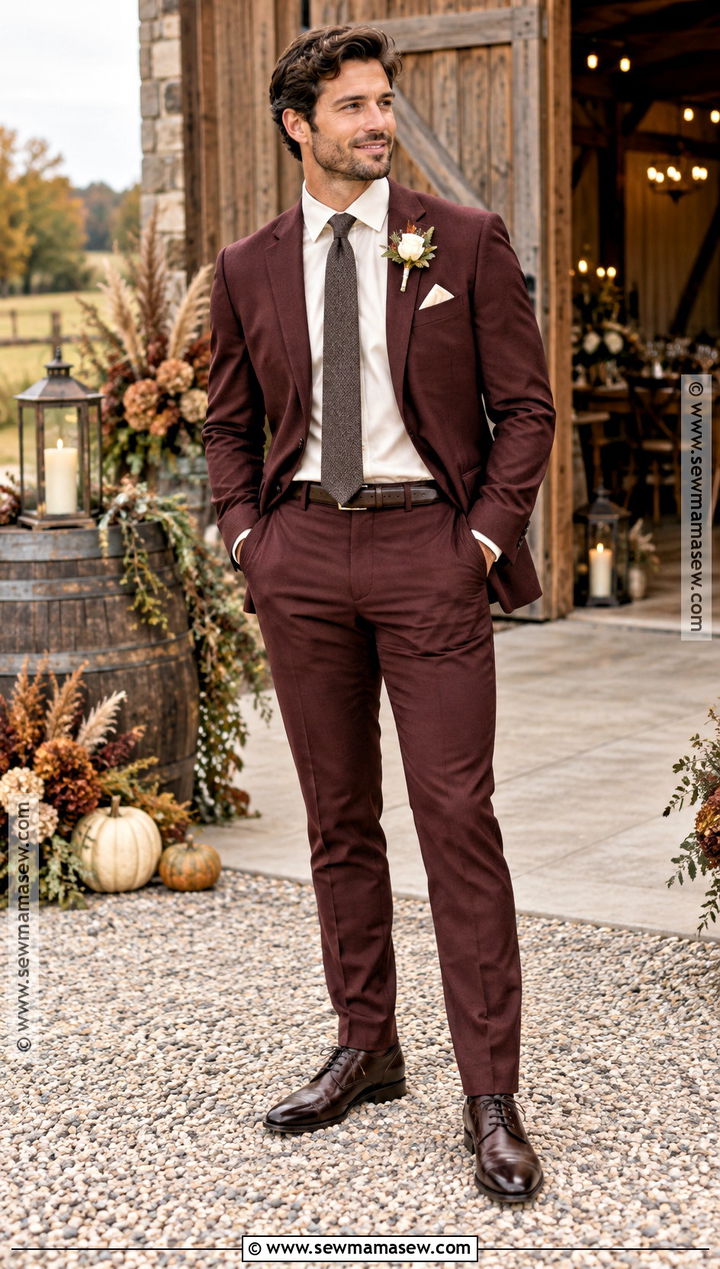
Burgundy makes the groom memorable, but only in a deep, muted shade. Bright red reads as a costume. A white or pale cream shirt keeps it crisp and stops the dark color from overpowering his face. A charcoal tie makes it formal; a textured tan tie relaxes it for a barn. Dark brown shoes, a matching belt and a cream pocket square complete the warm palette. Keep the boutonniere simple, greenery and small ivory flowers, so it stands out against the suit. I'd only suggest burgundy when the groomsmen wear neutrals like taupe, gray, navy or brown; a whole party in burgundy loses the point.
6. Tan Suit With Brown Vest Groom Attire
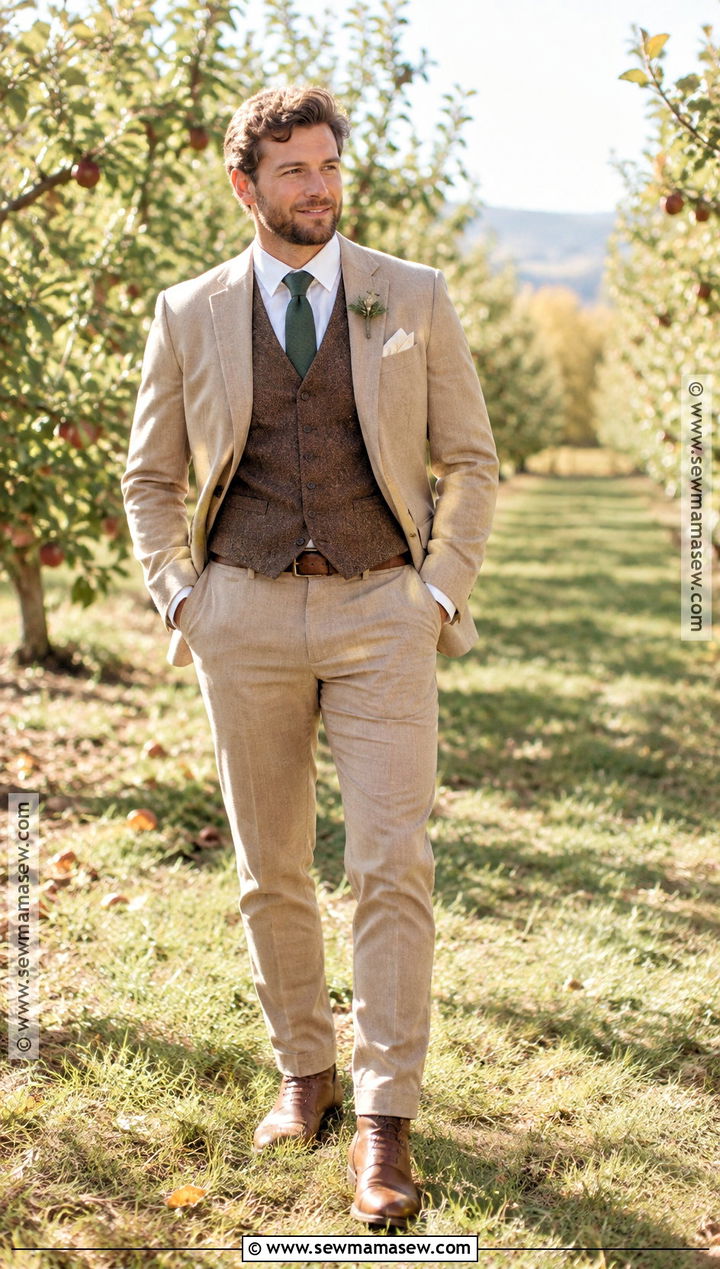
Early fall can still be mild, and a tan suit is the answer for a warm daytime ceremony. Just make it medium-weight wool or a cotton-wool blend, not summer linen, which creases into a map of every hug by the reception. A chocolate brown or patterned tweed vest under the jacket adds depth. A white shirt and dark green tie balance the warm neutrals. Polished brown boots, a matching belt and a cream or muted plaid pocket square finish it. When the jacket comes off, the darker vest keeps him structured for photos. It suits open fields, orchards and bright barns where a very dark suit would look heavy.
7. Plaid Suit Groom Attire
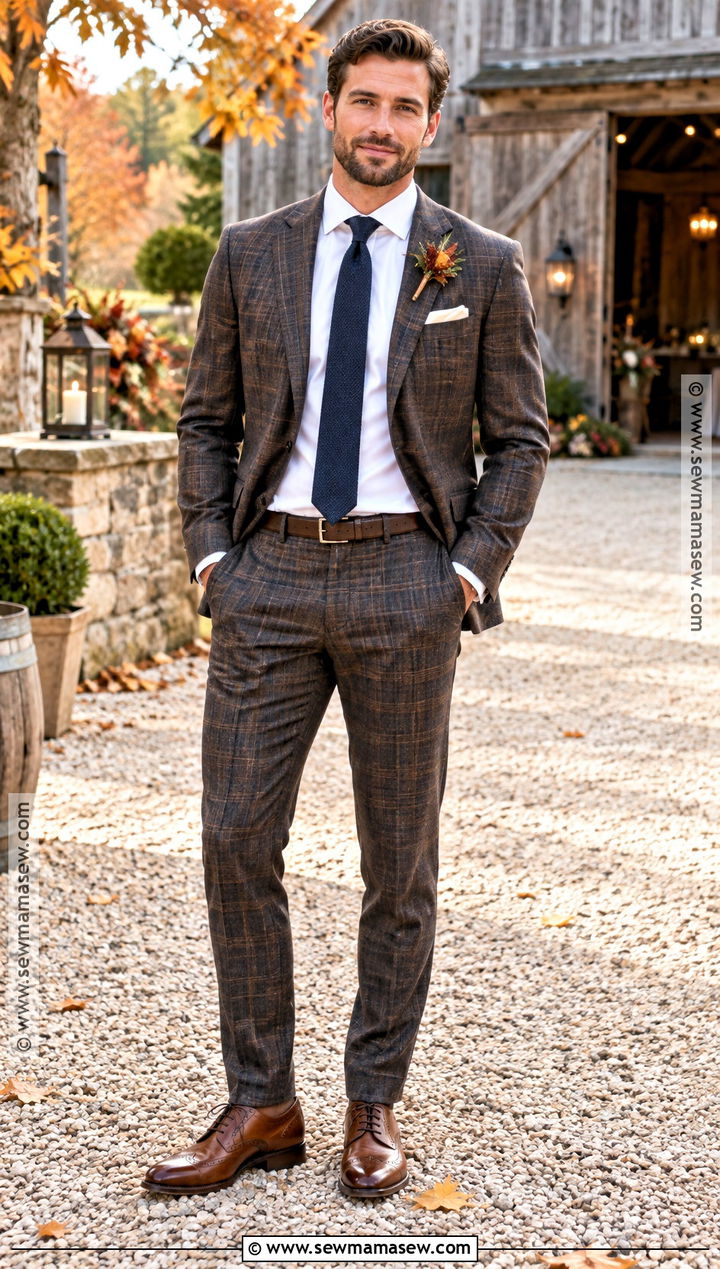
Plaid adds personality, and the scale of the check decides whether it stays polished. I keep to a small check or windowpane in brown, gray, navy or olive. Large, high-contrast plaid dominates every photo and can shimmer oddly on camera. Pair it with a solid white shirt and a tie that picks up one of the plaid's secondary colors. Brown brogues or dress boots suit the rustic setting, and a solid pocket square keeps things controlled. Add a cream, rust or burgundy boutonniere. With the suit already doing the talking, skip patterned shirts and novelty accessories. It's distinctive without being loud, a good fit for a refined barn celebration.
8. Brown Corduroy Suit Groom Attire
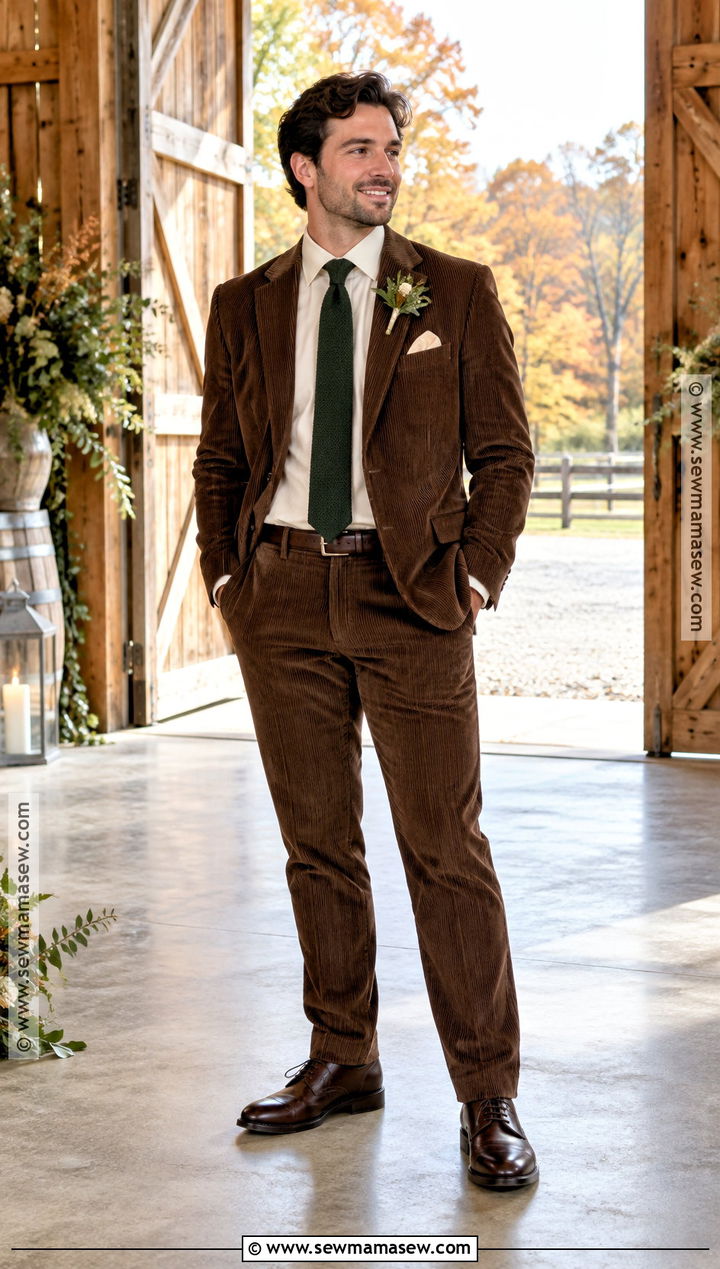
Corduroy is warm and soft, and the rib width makes all the difference. Fine-wale cord looks tailored and catches light gently in photos; wide-wale looks like weekend trousers and adds bulk. A fine-ribbed brown corduroy suit with an ivory shirt and deep green knit tie is relaxed but deliberate. Dark brown derbies or clean leather boots ground it, with a matching belt, a cream pocket square and a boutonniere of greenery and small fall flowers. One honest caveat: corduroy can bag at the knees and seat after a long day of sitting and standing, so it's worth having it pressed the day before. For a less formal wedding, wear the jacket with contrasting trousers. It belongs in a wooden barn or a mountain lodge.
9. Dark Brown Suit Groom Attire
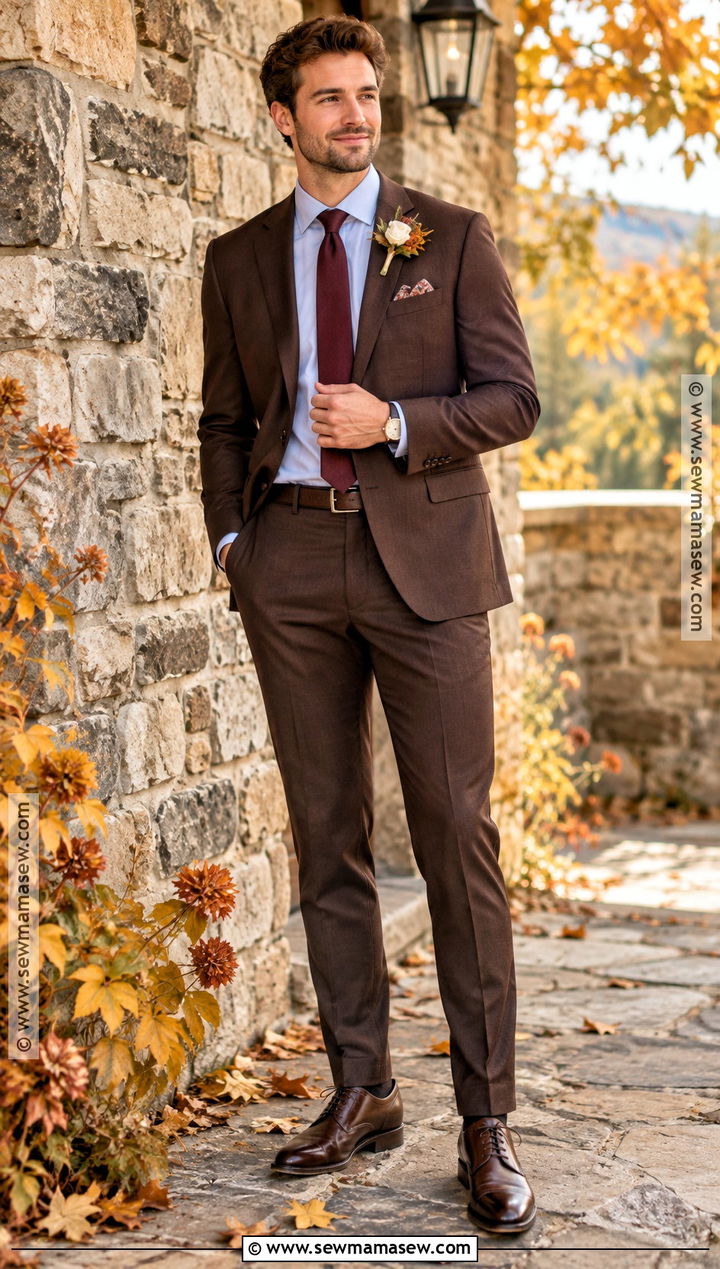
Dark brown is my first suggestion when a groom says black feels too stark for the countryside. Espresso, chocolate or deep tobacco all work, provided the fit is sharp, since brown is less forgiving of a loose cut than navy. A pale blue shirt gives gentle contrast; ivory warms the palette. A burgundy tie adds traditional fall color and a patterned pocket square adds a little interest. Choose dress shoes a shade darker than the suit, with a matching belt and a classic watch. A cream and rust boutonniere shows clearly against it. It's formal enough for an elegant reception and sits easily beside groomsmen in tan, navy or medium brown.
10. Tweed Vest With Chinos Groom Attire
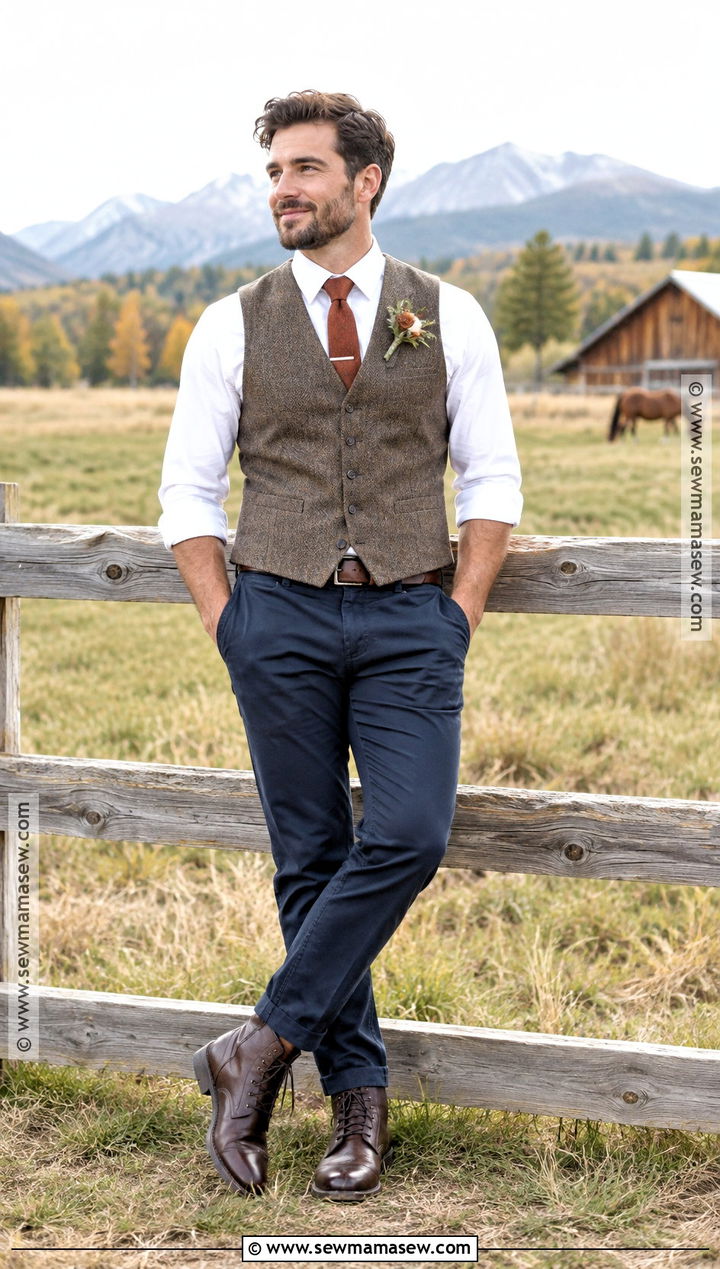
A casual ranch or barn dress code doesn't need a full suit, but the groom still needs to look like the groom. Start with a fitted brown or gray tweed vest over a crisp white dress shirt, then tailored navy, olive or tan chinos with a clean hem and a dark brown belt. Polished lace-up boots give a rugged finish that still suits the ceremony. A rust tie or patterned bow tie is what separates him from guests in similar clothes. Add one personal detail, a pocket watch or simple tie bar, not both. The vest should lie close without pulling at the buttons; if you see horizontal strain lines, size up. It stays relaxed but holds its own in formal photos beside the bride.
11. Black Suit With Cowboy Boots Groom Attire
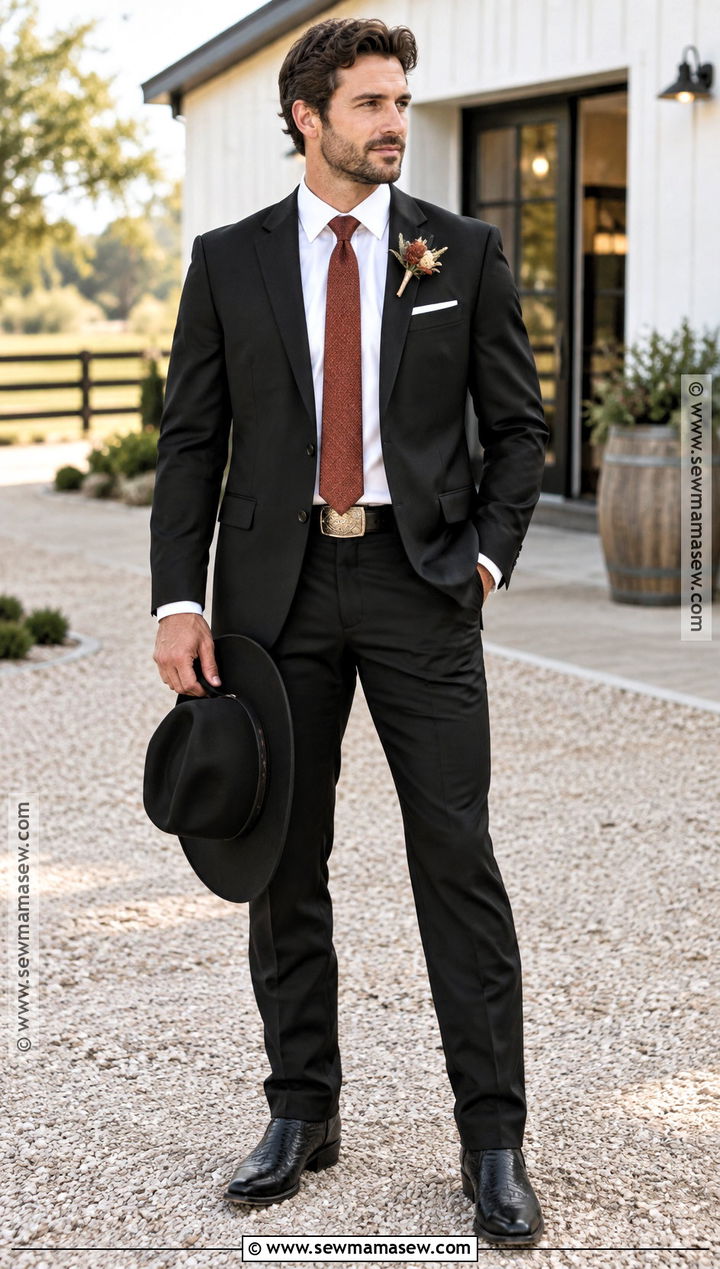
A black suit works at a country wedding when the details are warm and Western. Choose matte black; shiny fabric looks like evening wear and fights the rustic setting. Add a white shirt and a textured tie in rust, olive or dark brown. Cowboy boots should be clean black or deep brown with a refined toe and minimal decorative stitching. The trouser hem is the fitting point I'd fuss over most: have it cut to break once over the boot shaft, or it bunches around the top of the boot. A leather belt with a simple silver buckle, a white pocket square and a seasonal boutonniere complete it. A cowboy hat should be clean, well shaped and off indoors. This is the look for a ranch ceremony that wants strong country influence.
12. Gray Herringbone Suit Groom Attire
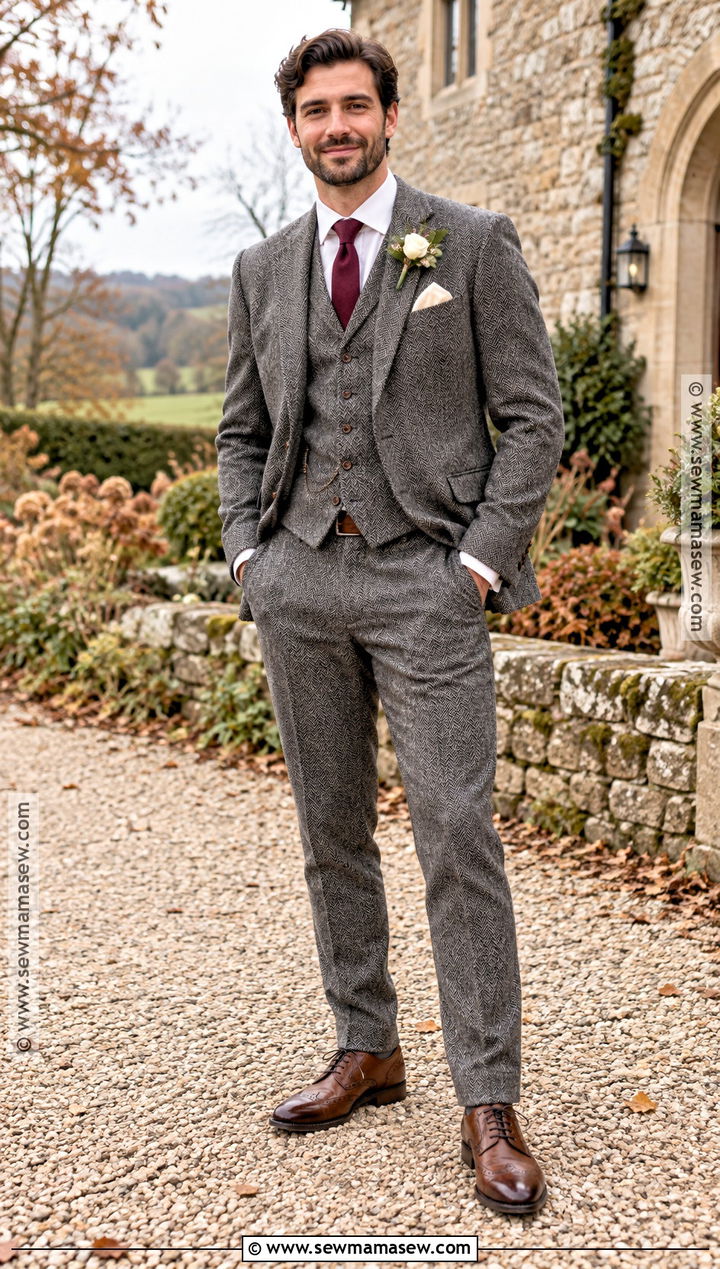
Herringbone looks plain gray from across a field and shows its zigzag weave in close-up photos, which is exactly why I like it for weddings. Choose a medium or charcoal gray three-piece in a comfortable wool blend, with a white shirt and a burgundy, forest green or burnt orange tie. Brown brogues or leather dress boots warm up the cool gray and connect it to the venue. Add a brown belt, a simple pocket square and a cream-and-greenery boutonniere. The vest gives him a second complete look once the jacket's off. It's at its best when the setting has wood, stone and dried foliage, and it stays traditional without feeling stiff.
13. Forest Green Jacket With Tan Trousers Groom Attire
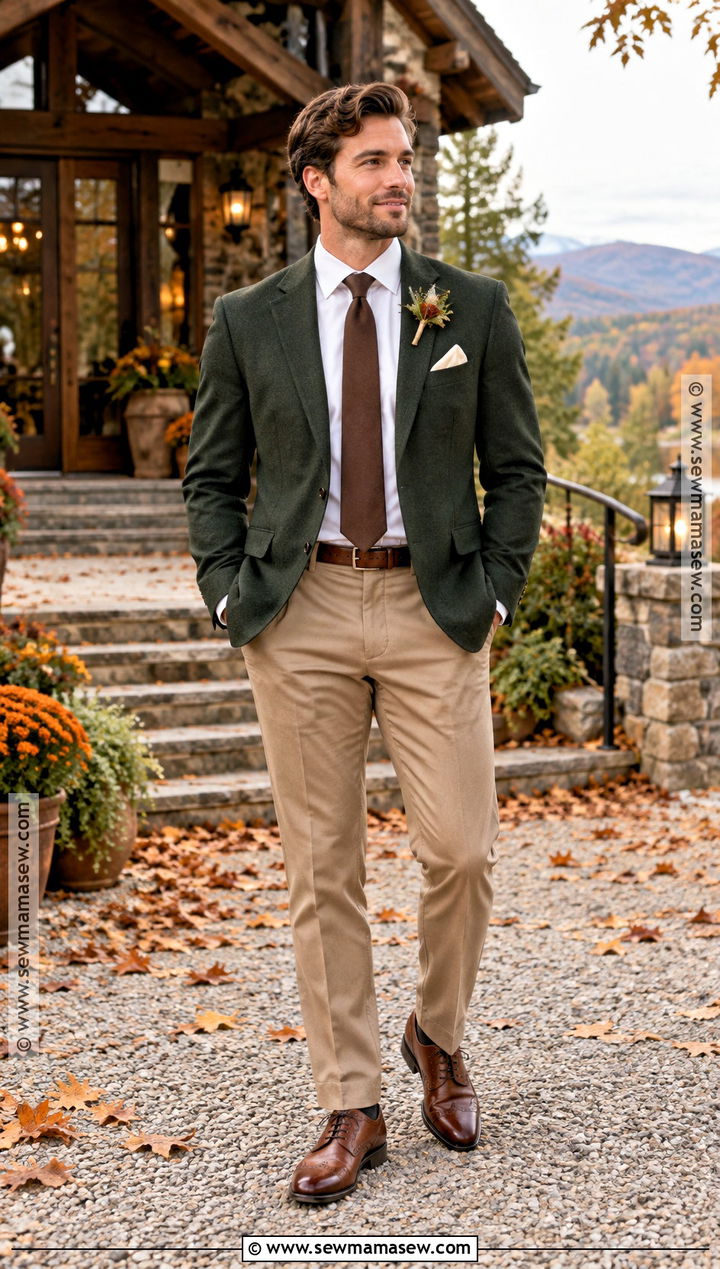
Separates suit the groom who wants color but not a full green suit. A tailored forest green wool jacket goes with tan or light brown dress trousers, and the contrast actually makes the jacket look richer than it would as a suit. A white shirt brightens it, and a dark brown tie keeps the palette together. Polished brown brogues, a matching belt and a folded cream pocket square finish it, and a tan or brown vest adds warmth for a late-fall ceremony. Keep the boutonniere light so it shows against the dark jacket. One fit note: the trousers need their own tailoring, because odd trousers off the rack rarely hang as cleanly as suit trousers. It suits an outdoor ceremony and a barn or lodge reception.
14. Velvet Dinner Jacket Groom Attire
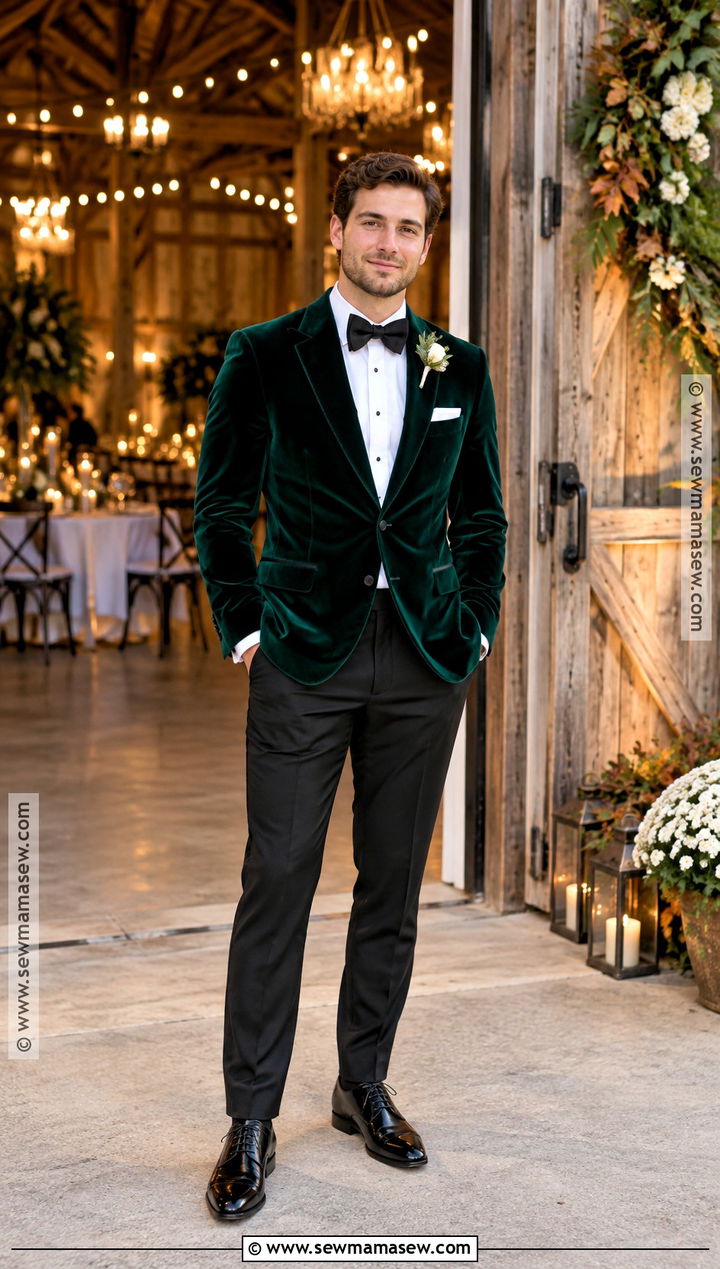
For an evening reception in an elegant barn or lodge, a velvet dinner jacket is the most formal option here. Choose deep green, burgundy or navy and pair it with tailored black trousers, a crisp white shirt and a black bow tie so the velvet is the only texture doing anything. Black leather loafers or lace-up dress shoes finish it. Traditionally, dinner-jacket trousers use side adjusters or braces rather than a belt, which keeps the waist clean; a simple white pocket square completes it. Keep the boutonniere small and neutral, since velvet pile crushes where a heavy pin sits. Velvet glows under warm evening light, but the fit has to be close and clean or the fabric adds bulk.
15. Wool Vest With Suspenders Groom Attire
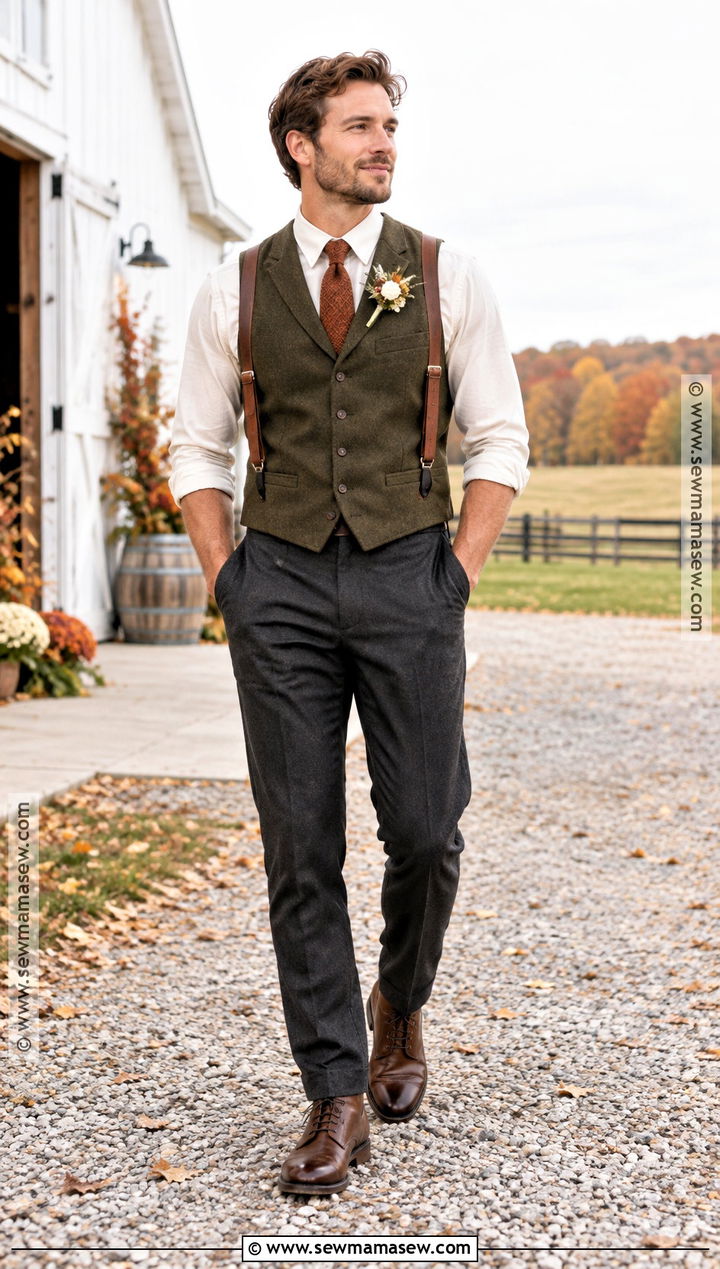
A wool vest with suspenders is the right level for a relaxed barn or farm celebration, where a full suit feels like too much but everyday clothes don't feel special. Start with a fitted charcoal, brown or olive vest over an ivory dress shirt, with tailored dark trousers and slim suspenders in brown leather or matching fabric. Button-on suspenders hold trousers better than clip-ons, which can slip during dancing. Keep them hidden under the vest for the ceremony, then let them show if the vest comes off later. A textured tie, polished brown boots and a small seasonal boutonniere finish it. Roll the sleeves only after the formal photos and ceremony are done.
Bring the Wedding Boots to Every Fitting
The most common fit problem I see in country wedding photos is trousers fitted with dress shoes and then worn with boots. A boot shaft is wider and higher than a shoe, so the hem sits differently and bunches. Wear the actual wedding footwear, plus the shirt, to every fitting.
- Order or buy the suit early. Made-to-measure often takes several weeks, and lead times vary by maker.
- Book the first alteration fitting about six weeks out to leave time for a second.
- Check the jacket buttoned, sitting and with arms raised. A jacket that only fits while you stand still won't survive the reception.
- Collect it a week or so before the wedding and try everything on together, including the belt, tie and pocket square.
Setting the Groom Apart From His Groomsmen
At a rustic wedding it's common for the groomsmen to wear vests or lighter suits. I keep the groom one step up: if they wear vests and chinos, he wears the jacket; if they're in tan, he's in brown or navy. A different tie color or a larger boutonniere also works. Matching everyone exactly makes it hard to spot the groom in the wide shots.
Venue, Dress Code, Weather, Then Fabric
Every groom's outfit starts with the same questions: what the venue is, what the dress code says, how cold it will be and what he's comfortable standing in for hours. Rich fall colors and textured fabrics connect him to the setting without leaning on lots of rustic props. Get the fit of the suit, jacket or vest right first, then add shoes, belt, tie and a simple boutonniere. Tweed and boots suit relaxed barns; wool suits and velvet jackets handle formal evenings. He should stand out beside his groomsmen through color or fabric, not through extra accessories. Good tailoring and a controlled palette will always look sharper than a crowd of competing details.
Related posts: