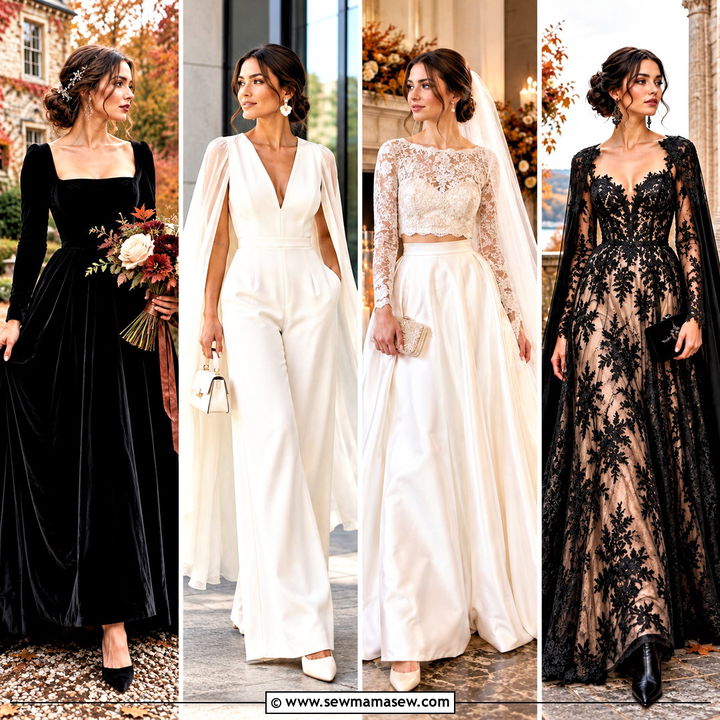
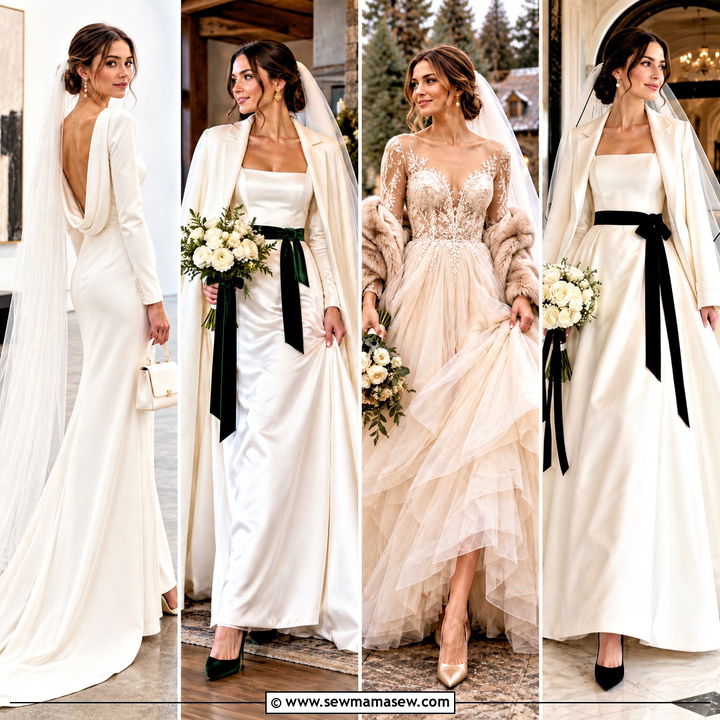
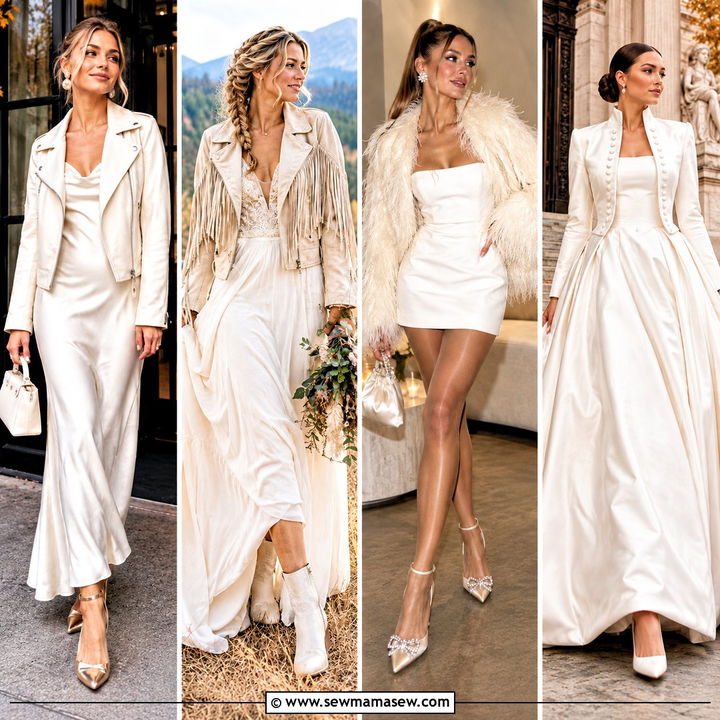
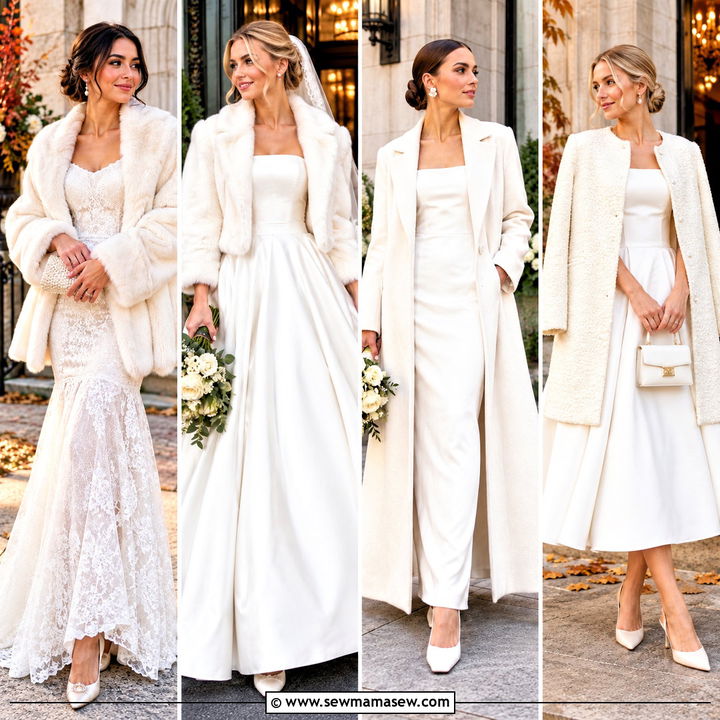
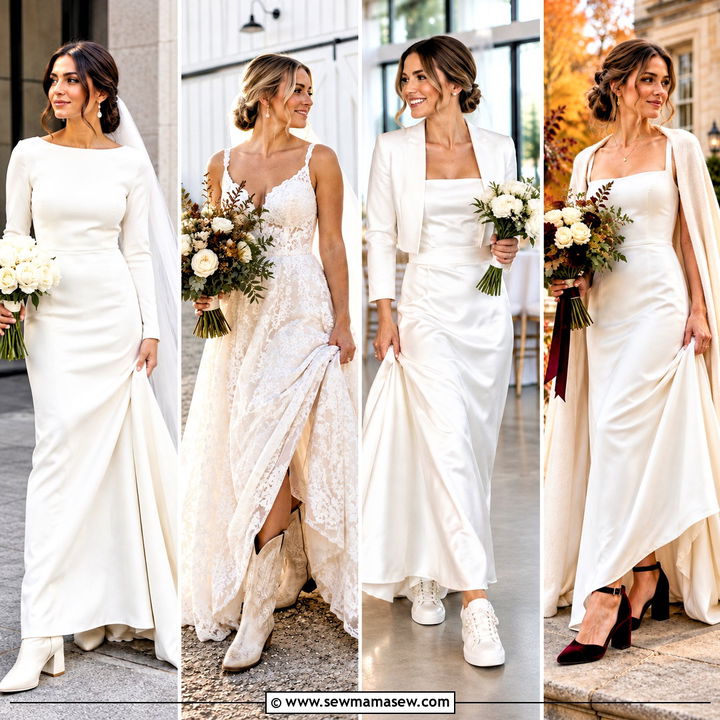
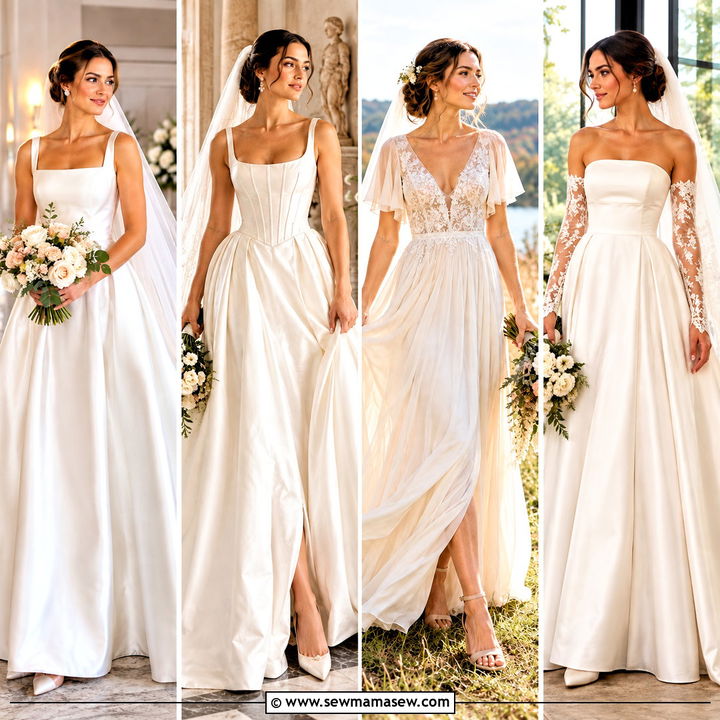
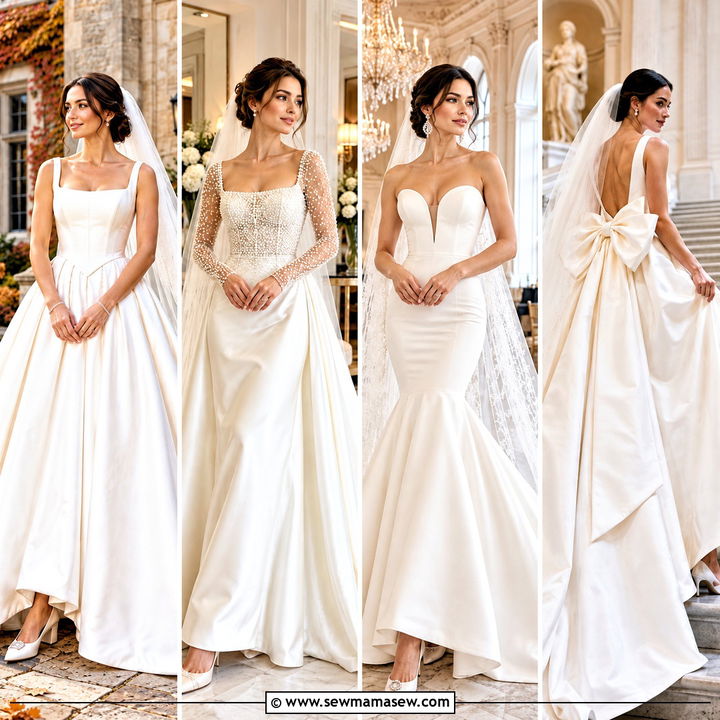
A fall wedding asks more of a gown than a June one does. The light drops earlier, the ground is often damp, and a ceremony that starts in a sunny courtyard can end in a chilly tent. When I help a bride narrow her options for autumn, I start with three practical questions before we talk about lace or necklines: how cold will it get after sunset, what surface will she walk on, and how long will she be on her feet? Lace sleeves, sculpted ball gowns, defined waists and removable layers are all strong choices this season, and each one handles those questions differently. Below are the fifteen styles I'd shortlist, with what I check for in a fitting room before a bride commits.
Matching Fabric Weight to an Autumn Forecast
Fall weather covers a huge range, from a warm September afternoon to a raw November evening, and the fabric of a gown matters more than its sleeves for how comfortable a bride feels. I sort fabrics into rough weights when I plan a fall wedding look.
- Lighter: chiffon, organza and single-layer tulle breathe well and suit early fall or a heated indoor venue, but they offer little warmth outdoors after dark.
- Middle: crepe, lace over lining and charmeuse handle most October dates, especially with a wrap or sleeves for the evening.
- Heavier: mikado, duchess satin and brocade hold structure and trap warmth, which is a real advantage at an outdoor ceremony in late fall and a burden in a crowded, warm reception room.
If the ceremony and reception happen in very different conditions, I'd choose the gown for the colder part of the day and plan a way to cool down later, such as removable sleeves or a lighter reception dress. Shivering through vows is harder to fix than feeling warm on the dance floor.
1. Long Sleeve Lace Fall Wedding Dress
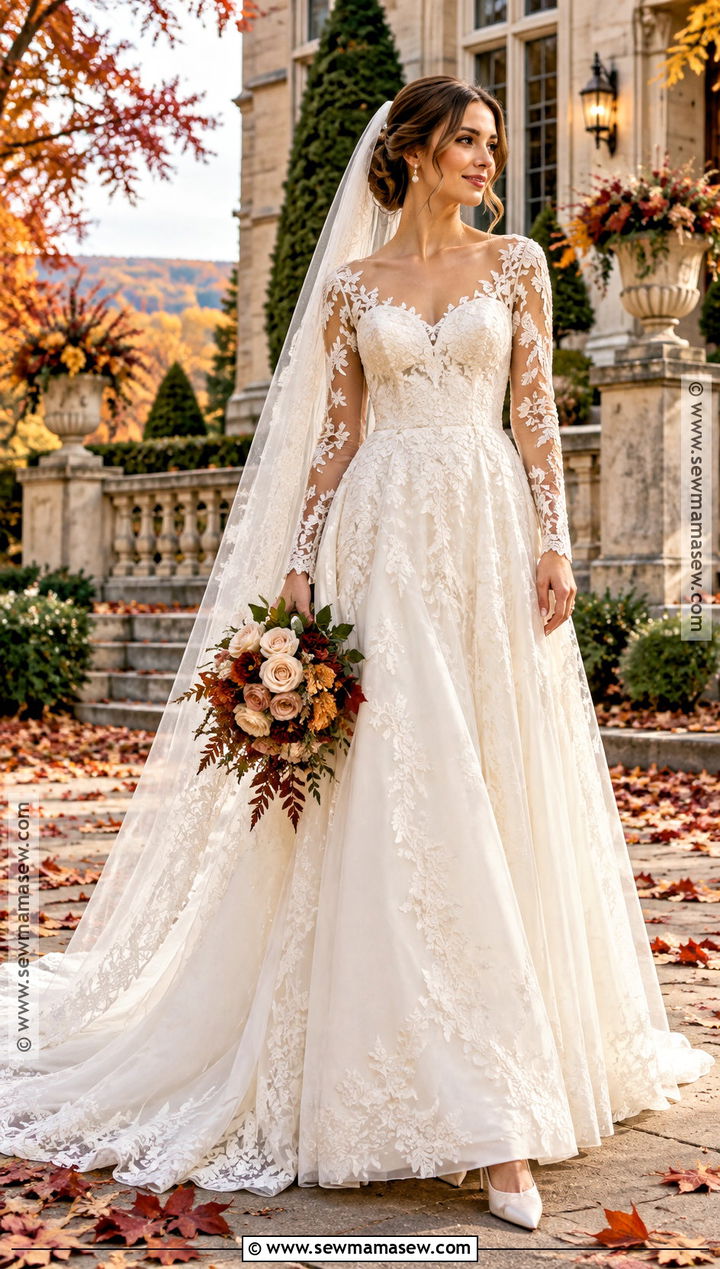
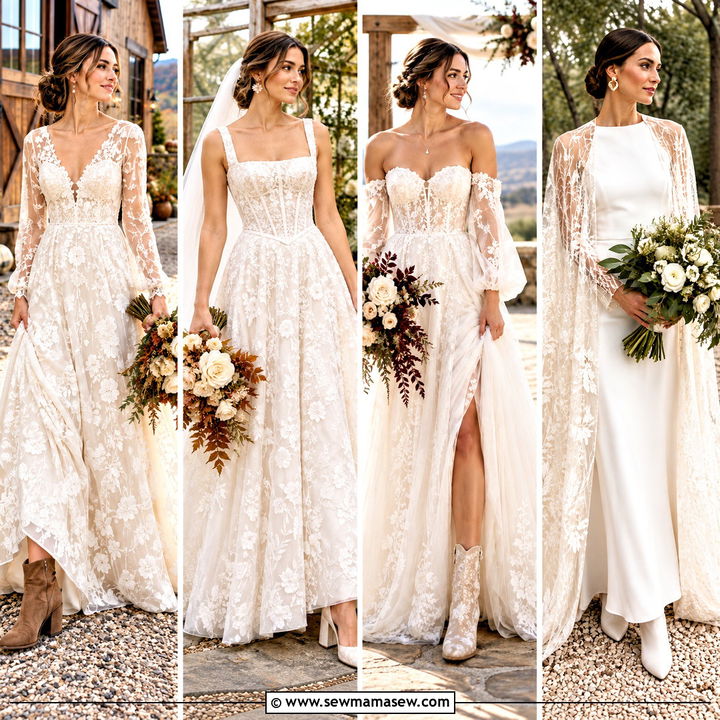
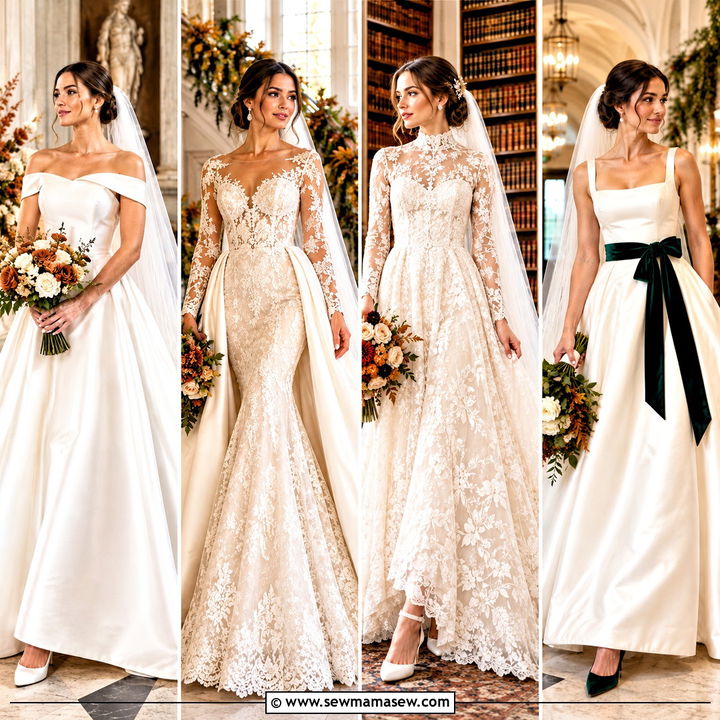
Long lace sleeves are the most requested fall silhouette I see, and for good reason: they add warmth without weight and photograph well against turning leaves. The detail I look at first is the sleeve itself. Illusion mesh with lace appliqué moves with the arm, while an all-over corded lace sleeve can feel stiff when a bride lifts her bouquet or hugs her family. A fitted bodice into a soft A-line skirt is the easiest shape to wear all day. I'd pair it with pointed satin pumps, pearl drops and a chapel veil edged in the same lace, then add a cashmere wrap for an outdoor ceremony that comes off for portraits.
2. Satin Ball Gown Fall Wedding Dress
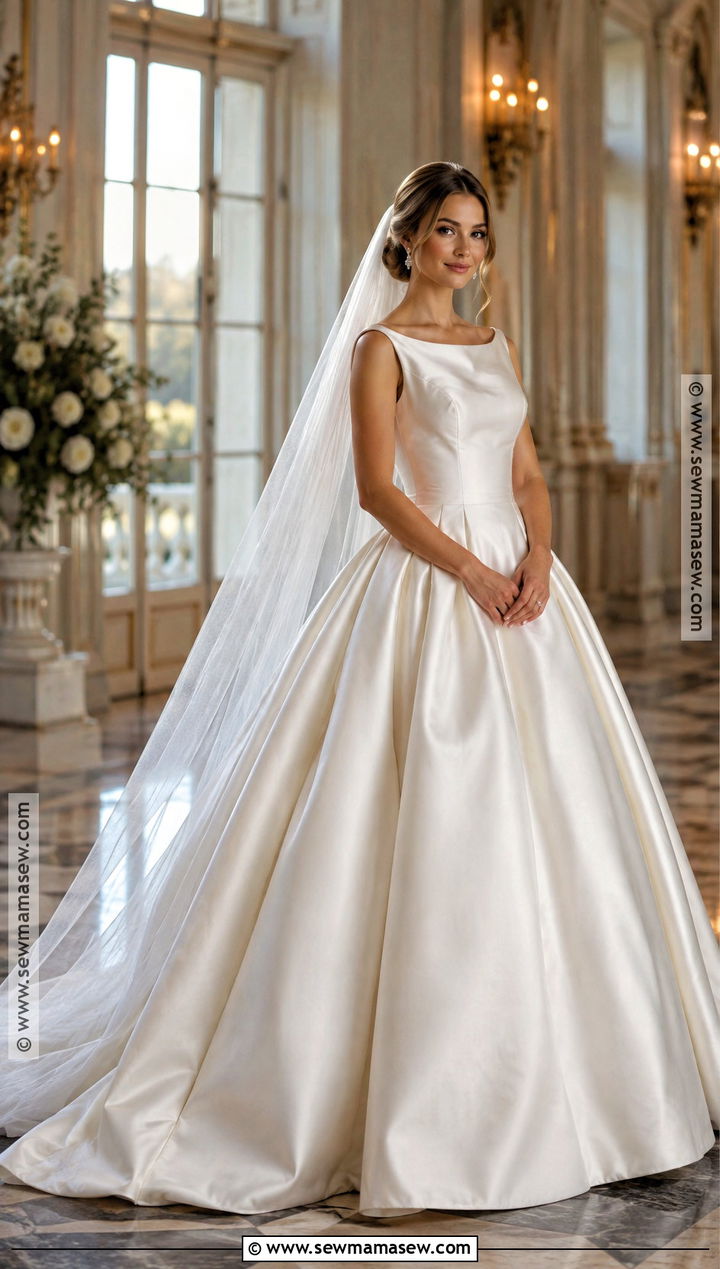
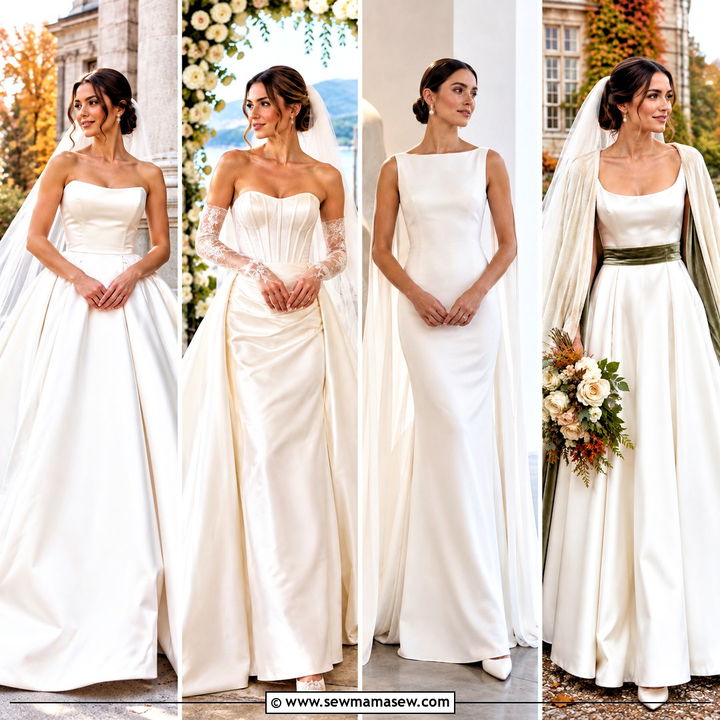
Duchess satin and mikado have enough body to hold a full skirt on their own, which is why a structured ball gown suits cool weather so well. You don't need heavy embellishment; the fabric does the work. Keep the neckline clean, a scoop or straight across, and let covered buttons down the back carry the detail. One thing brides rarely think about: a big skirt hides footwear, so a pair of ivory bridal boots can go underneath if the venue lawn is soft. Save this one for a formal hotel, a grand hall or a ballroom where the skirt has room to move.
3. Basque Waist Fall Wedding Dress
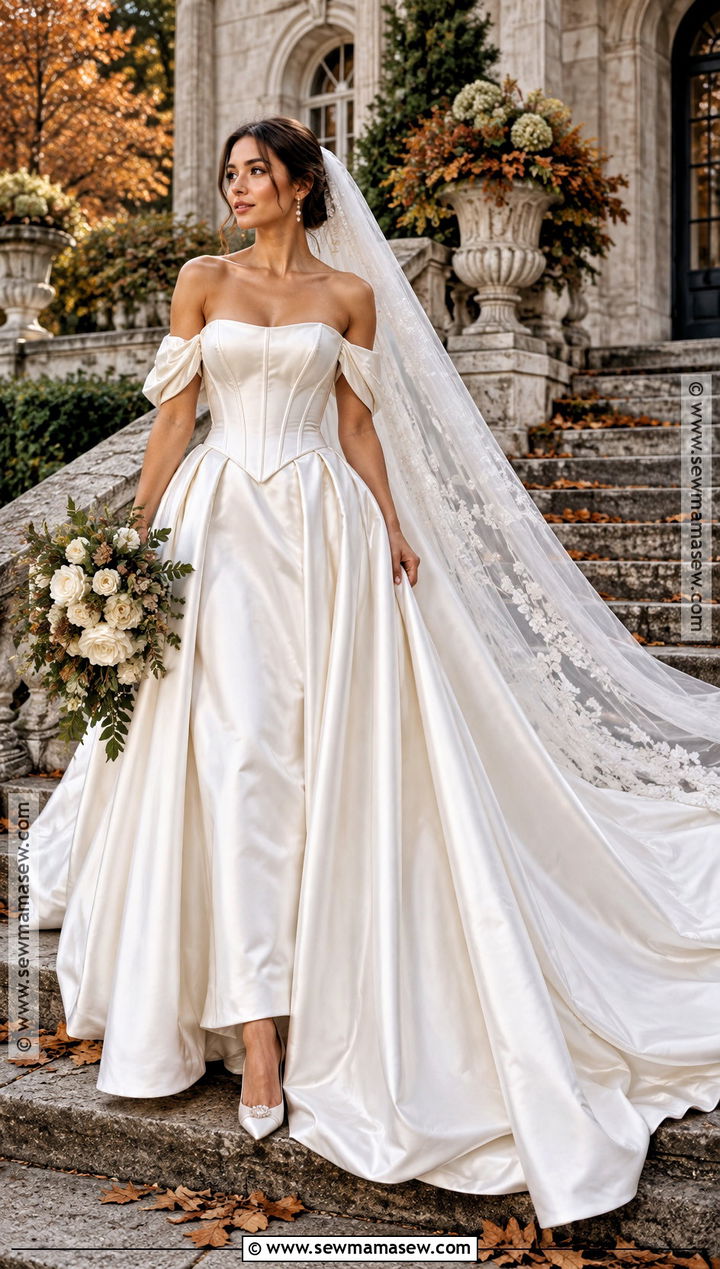
The basque waist dips into a point below the natural waistline, and that point is what makes or breaks the dress. Too shallow and it reads as a seam; too deep and it can shorten the legs on a petite bride. I always have a bride try two or three depths, because the right one depends on her torso length, not on what's popular this year. A structured ivory bodice with supportive straps and a lace-up or buttoned back pairs well with a full satin, organza or tulle skirt. Drop earrings and a cathedral veil finish it. For more coverage, a removable off-the-shoulder sleeve or a fitted lace topper works without changing the silhouette.
4. Off Shoulder Mikado Fall Wedding Dress
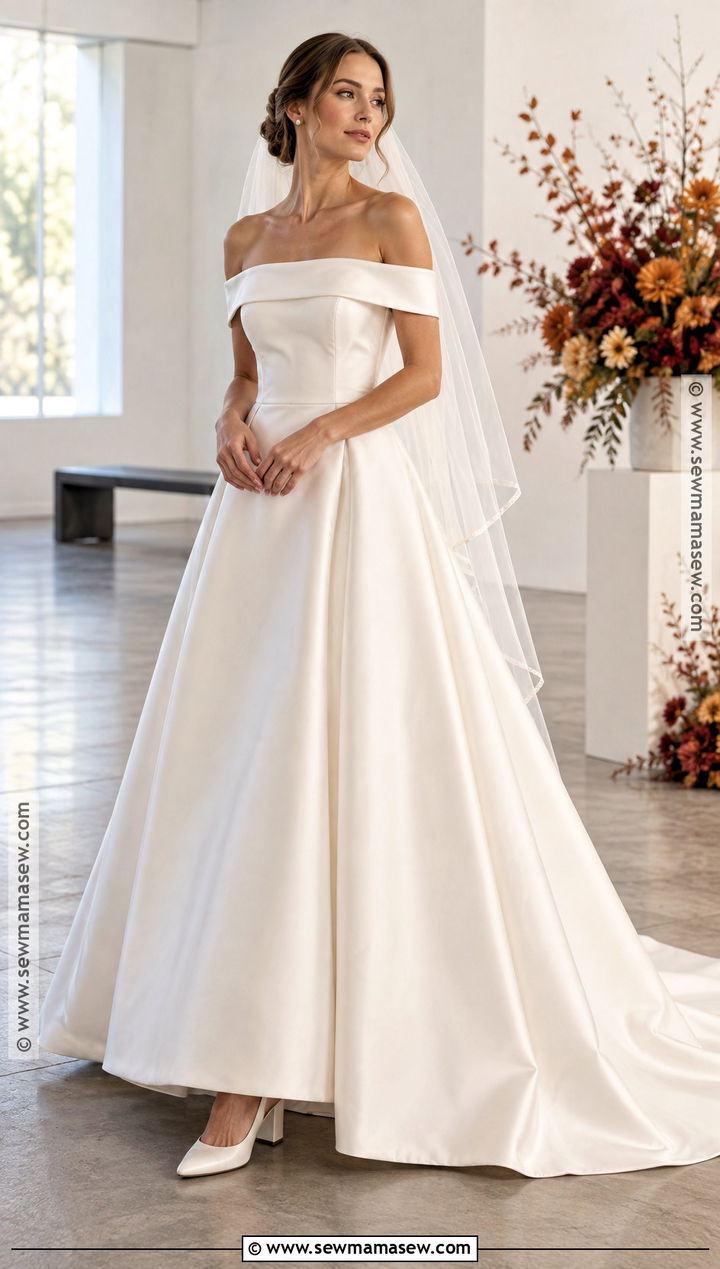
Mikado is my go-to fabric when a bride wants an off-the-shoulder neckline that actually stays put. Its stiffness lets a folded band sit on the upper arm without sliding, which softer satins struggle with over a long day. Look for a fold that frames the collarbone and runs into a fitted bodice with an A-line or gently flared skirt. A smooth chignon and pearl studs keep the neckline the focus. On cold dates, I'd add a short ivory jacket or a tailored cape for the walk between ceremony and reception, and a detachable overskirt can give extra volume for the aisle before coming off for dancing.
5. High Neck Lace Fall Wedding Dress
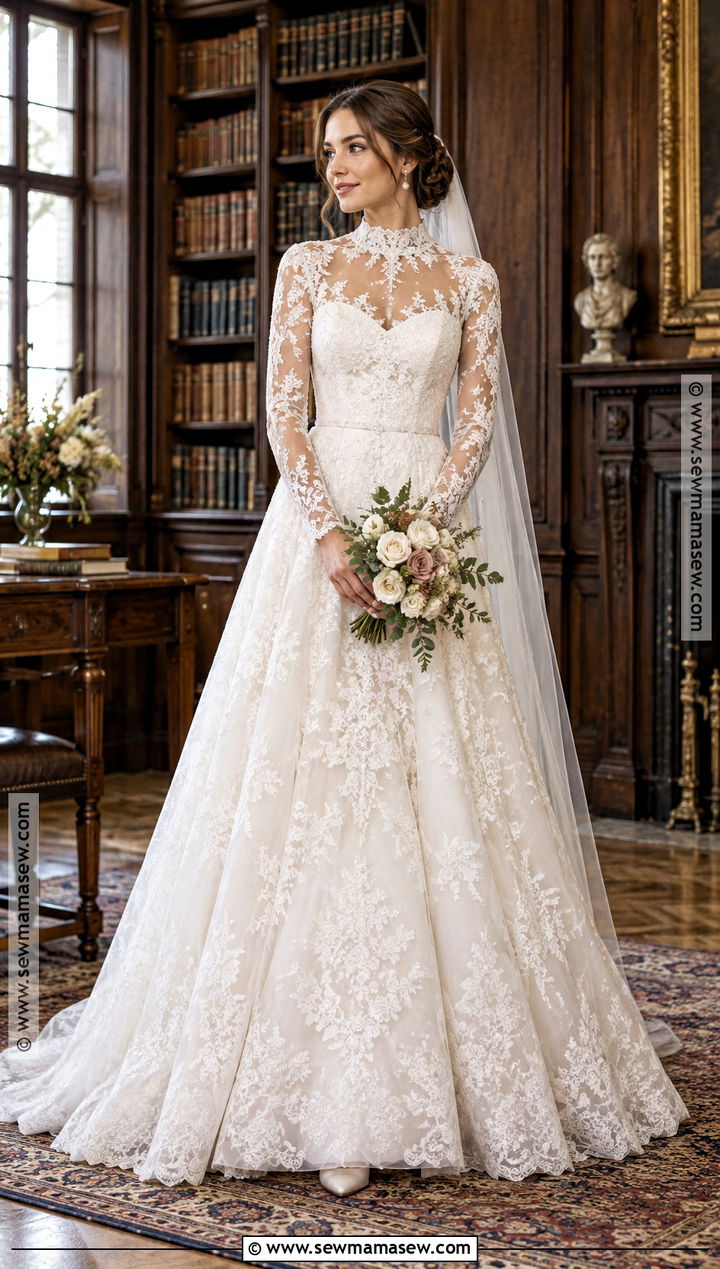
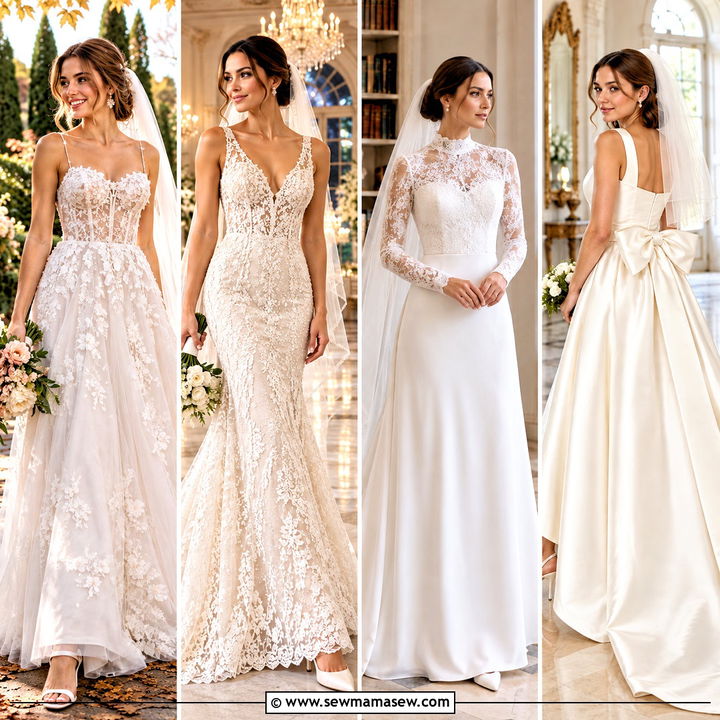
A high lace neckline already does the job a necklace would, so I tell brides to skip jewelry at the throat and keep earrings small. The comfort issue to check is the edge of the lace. Scalloped or eyelash edging is soft against the neck and wrists, while a raw or stiff trim can rub after a few hours of turning to greet guests. Fitted long sleeves, a lined sweetheart bodice under sheer lace and an A-line skirt make this an easy dress to move in. A low braided bun with the veil tucked beneath it lets the lace yoke stay visible, and the look suits wood-paneled rooms and libraries well.
6. Floral Applique Fall Wedding Dress
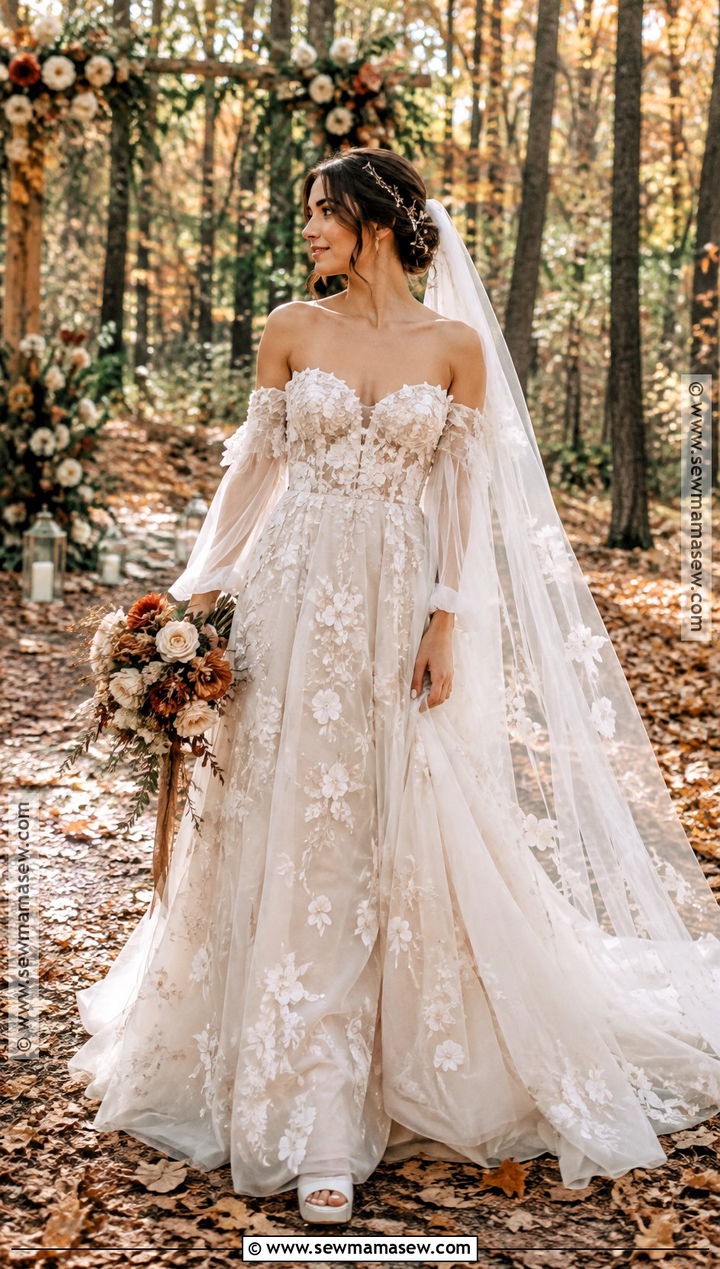
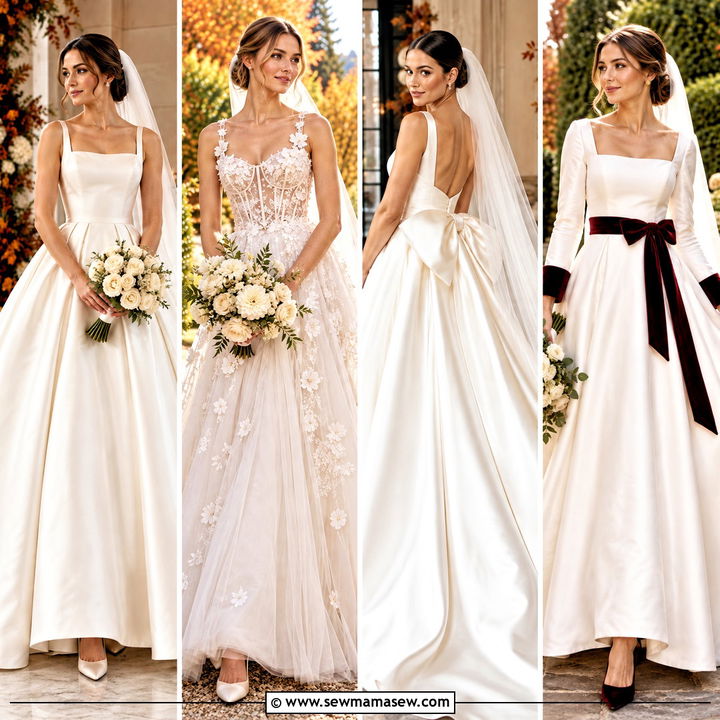
Three-dimensional appliqués give texture without the glare of heavy sparkle, which matters in the low, warm light of an autumn afternoon. The thing I watch for is placement. Leaves and flowers clustered on the bodice and drifting onto the skirt look natural; an even sprinkle everywhere can look busy in photos. A nude or champagne lining behind the ivory appliqués makes them show up more clearly on camera. Keep the bouquet a little restrained so it doesn't fight the dress, and consider removable tulle sleeves for warmth. Comfortable block heels make sense if the ceremony is in a garden or a barn with uneven boards.
7. Minimalist Crepe Fall Wedding Dress
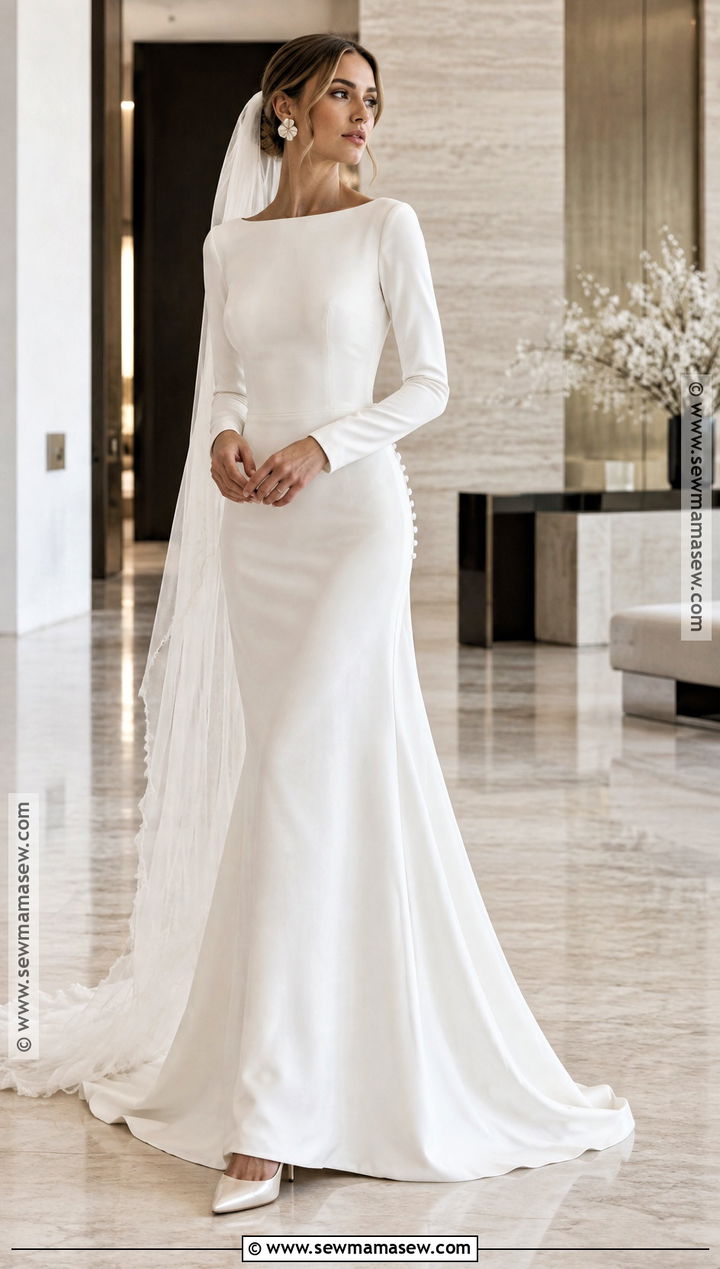
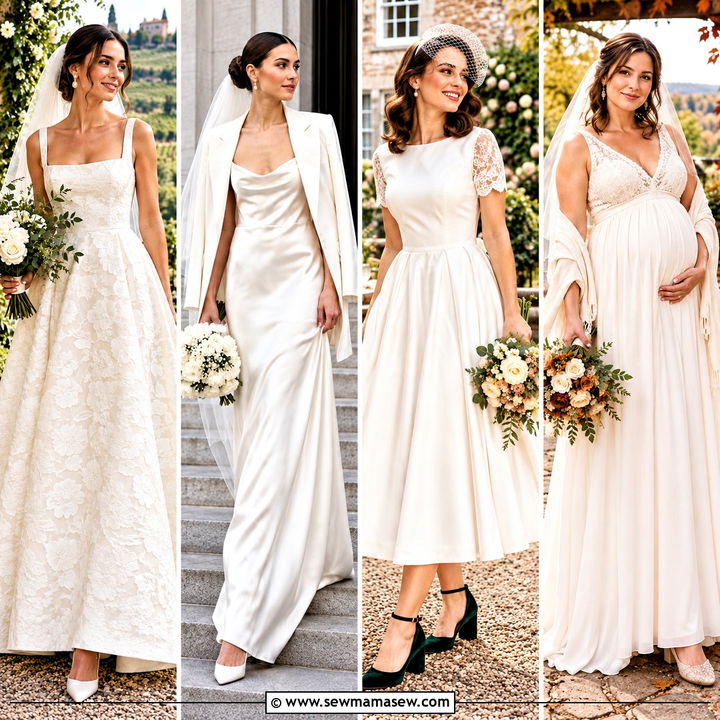
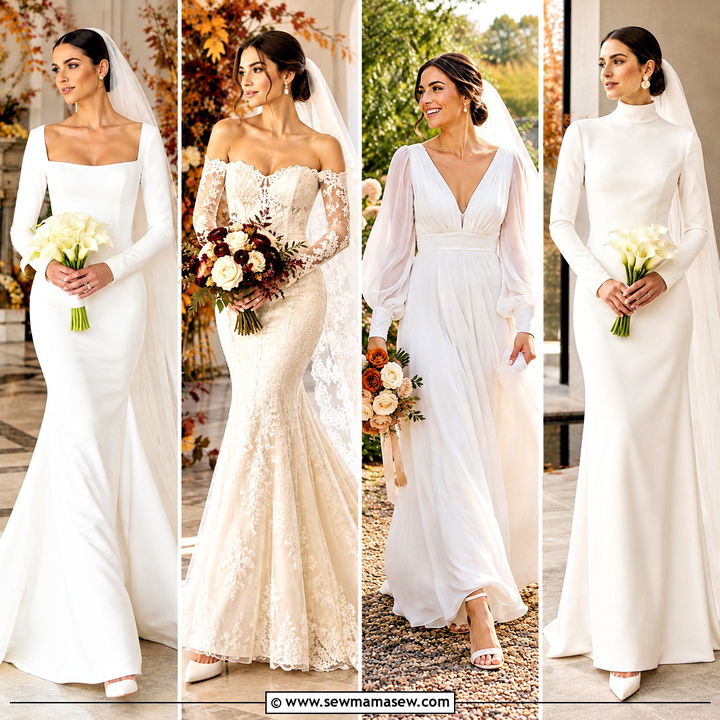
Crepe is unforgiving if it's thin, and very kind if it's substantial. Before anything else, I check whether the gown is lined, because unlined crepe shows every seam of what's underneath once a bride sits down. A long-sleeved column with a bateau or square neckline and a slight flare at the hem gives clean coverage for fall. Interest can come from an open back or a long row of covered buttons rather than beading. I'd add architectural earrings, pointed pumps and a raw-edge veil. For outdoor portraits on a cold day, a tailored ivory coat over the dress looks intentional, especially at a loft, a courthouse or a modern restaurant.
8. Tea Length Fall Wedding Dress
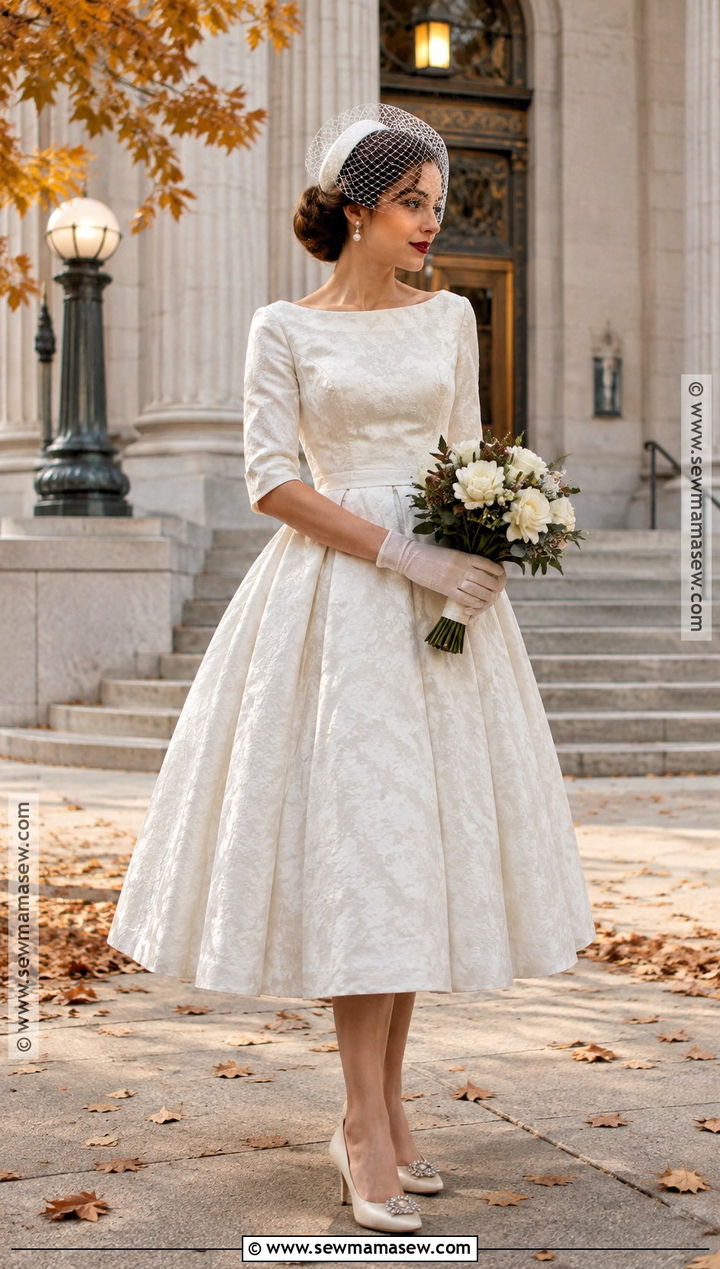
Shoes become part of the outfit with a tea-length hem, so I treat them as a real decision rather than an afterthought. Embellished pumps, ankle-strap heels or ivory boots all work, but the strap should sit above or below the hem line, never right at it, or the leg looks cut in half. Structured satin or jacquard holds the skirt out nicely between knee and ankle, and three-quarter sleeves balance the shorter length. A birdcage veil and short gloves lean vintage; a plain headband reads modern. Add a cropped faux-fur jacket or a short wool coat. The hem stays clear of wet leaves, which is a genuine advantage at outdoor venues.
9. Boho Bell Sleeve Fall Wedding Dress
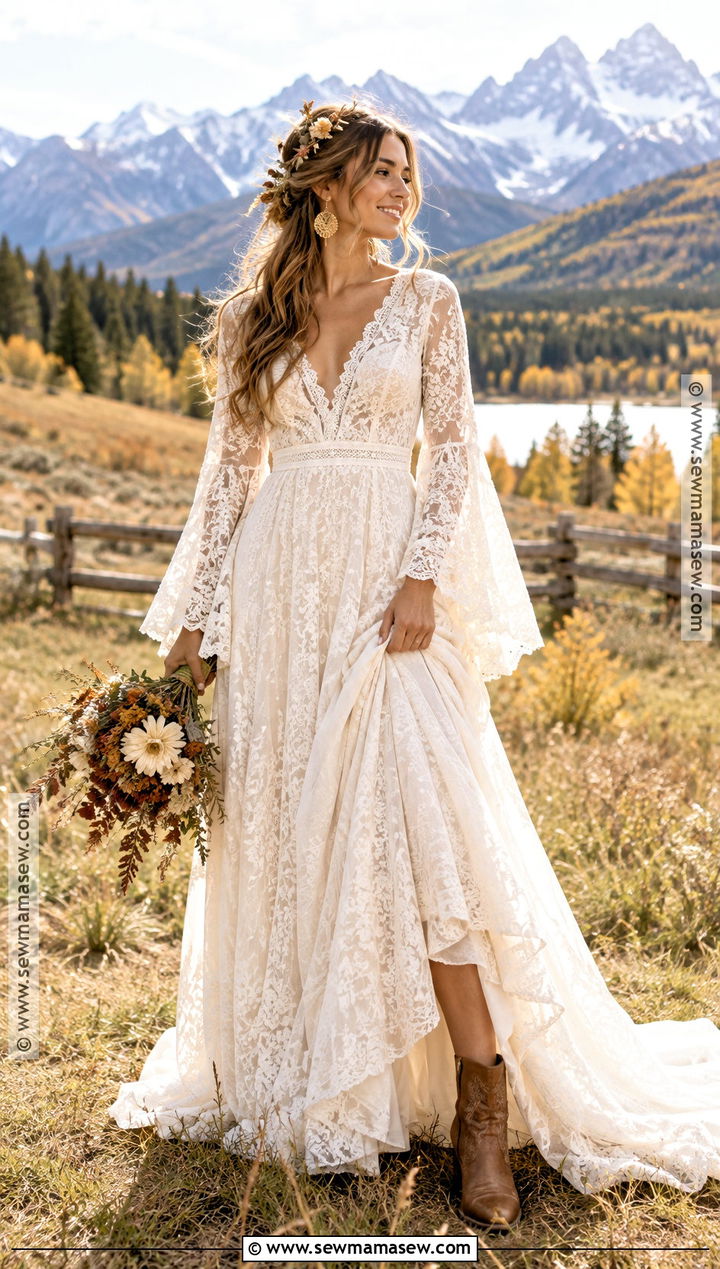
Bell sleeves are lovely in motion and awkward at the buffet, so I'm honest with brides about that trade-off. A sleeve that stays narrow through the upper arm and opens just below the elbow gives the drama without dragging through food or a bouquet. Lightweight lace over a soft lining, a fitted waist and a flowing A-line skirt keep the dress relaxed. Ivory leather ankle boots ground it for a woodland or mountain setting, and a loose braid holds up better in wind than loose waves. If the lace pattern is already strong, skip fringe or extra trims. A neutral wrap covers the evening chill without breaking the earthy mood.
10. Cape Sleeve Fall Wedding Dress
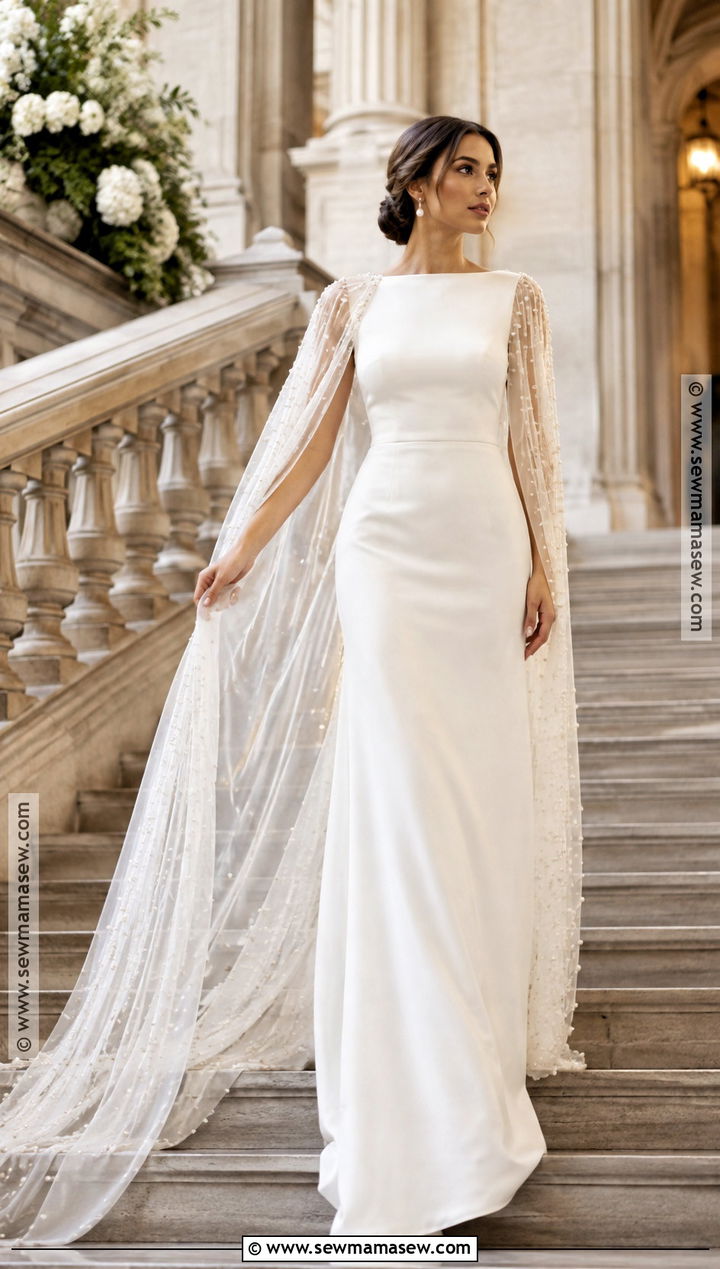
A floor-length cape gives a strong entrance, but it adds a lot of fabric behind the bride, so I usually suggest dropping the traditional veil when wearing one. Start with a simple column, A-line or fit-and-flare in satin or crepe, then attach a sheer cape at the shoulders. Lace edging or a few scattered pearls tie it visually to the gown. I always check how it fastens: snaps or small hooks under the shoulder seam let it come off cleanly for dinner, while a sewn-in cape commits you to it all night. A low bun keeps the neckline clear. It suits a grand staircase or an evening ceremony in a historic hotel.
11. Square Neck Satin Fall Wedding Dress
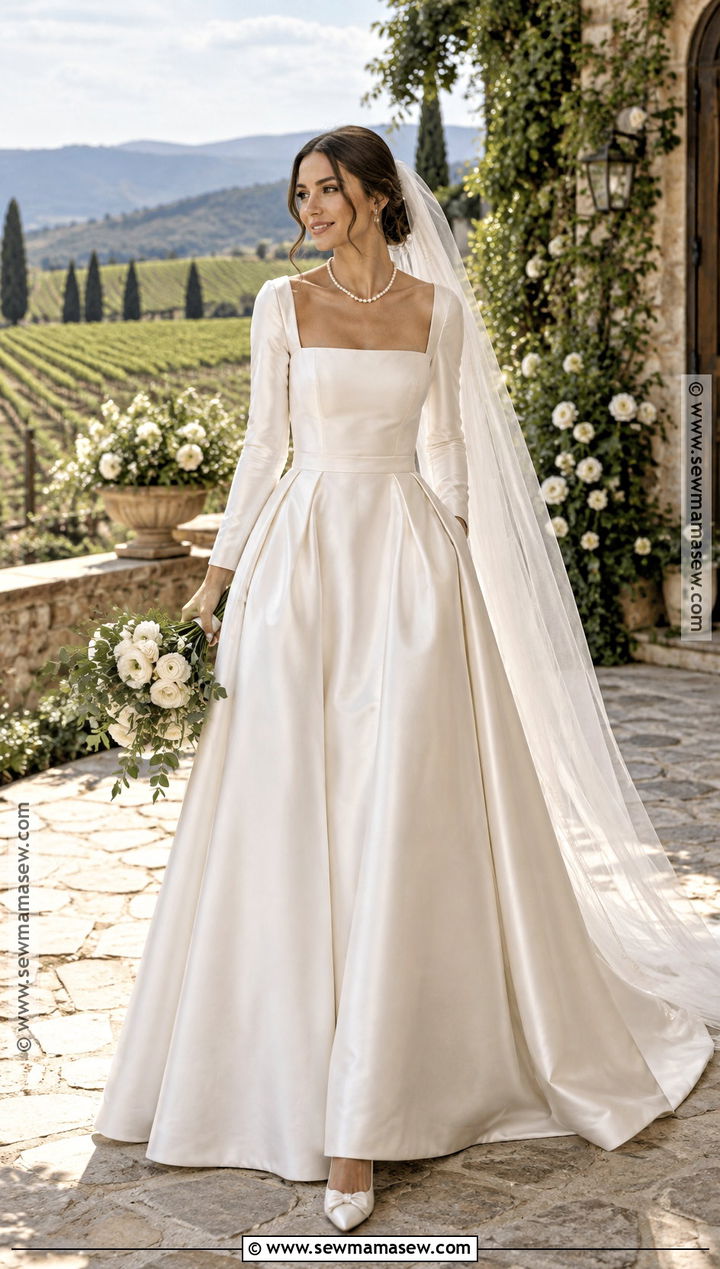
The square neckline frames the collarbone without showing much skin, which makes it a quiet choice for a traditional ceremony. The fabric decides the mood. Matte satin gives a soft finish, while mikado makes the bodice look more sculpted. For fall I prefer wide straps or fitted long sleeves, and I'll always ask a bridal shop whether pockets can be added to the A-line skirt, because brides use them all day. A short pearl necklace sits well inside a square neck. If the gown is sleeveless, a detachable satin bolero handles the outdoor portion. Cream flowers with seasonal greenery suit the simple lines.
12. Champagne Tulle Fall Wedding Dress
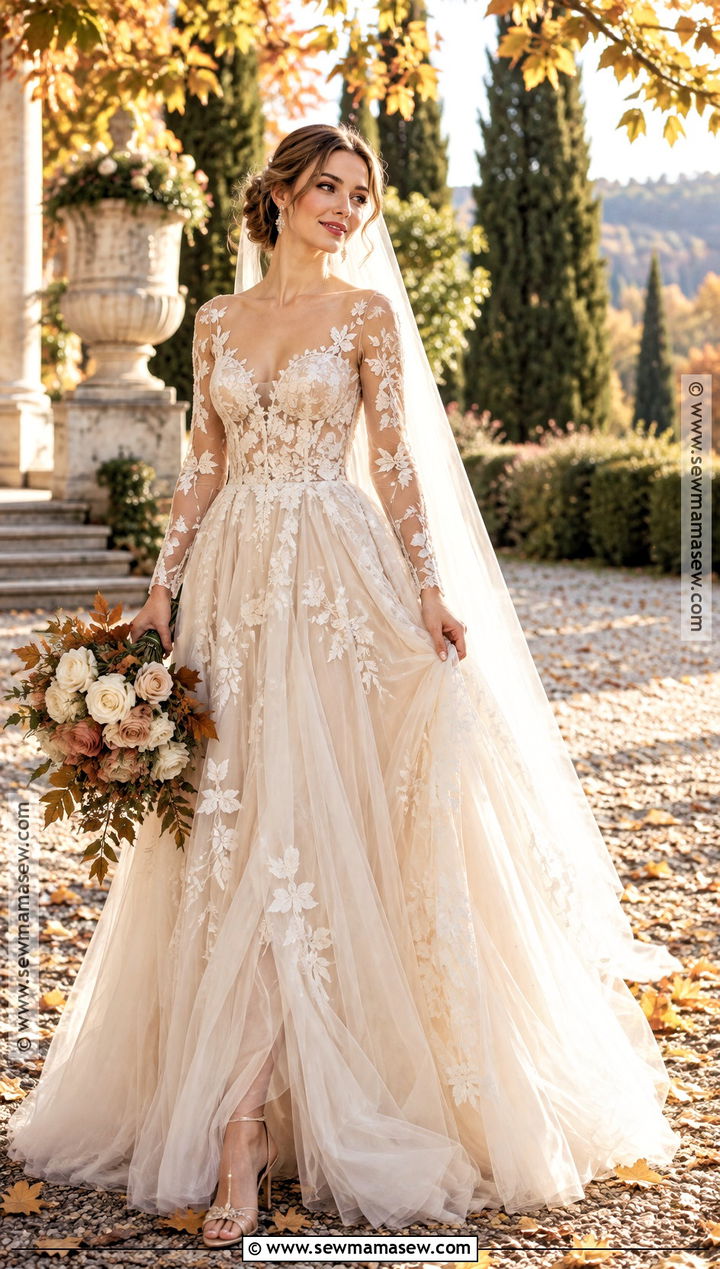
Champagne tulle reads warmer than pure ivory, which is why it flatters so many skin tones in golden fall light. Layered over a structured bodice with ivory lace on top, the contrast also helps the lace pattern show up in photographs. My one rule with this gown is to pick a single metal. Gold or soft champagne accessories look cohesive; mixing silver, rose gold and yellow gold against a warm base looks scattered. I'd finish with champagne-toned heels, crystal earrings and an ivory veil that matches the appliqués. Detachable tulle sleeves with matching embroidery add coverage for a cool garden or vineyard ceremony.
13. Velvet Trim Fall Wedding Dress
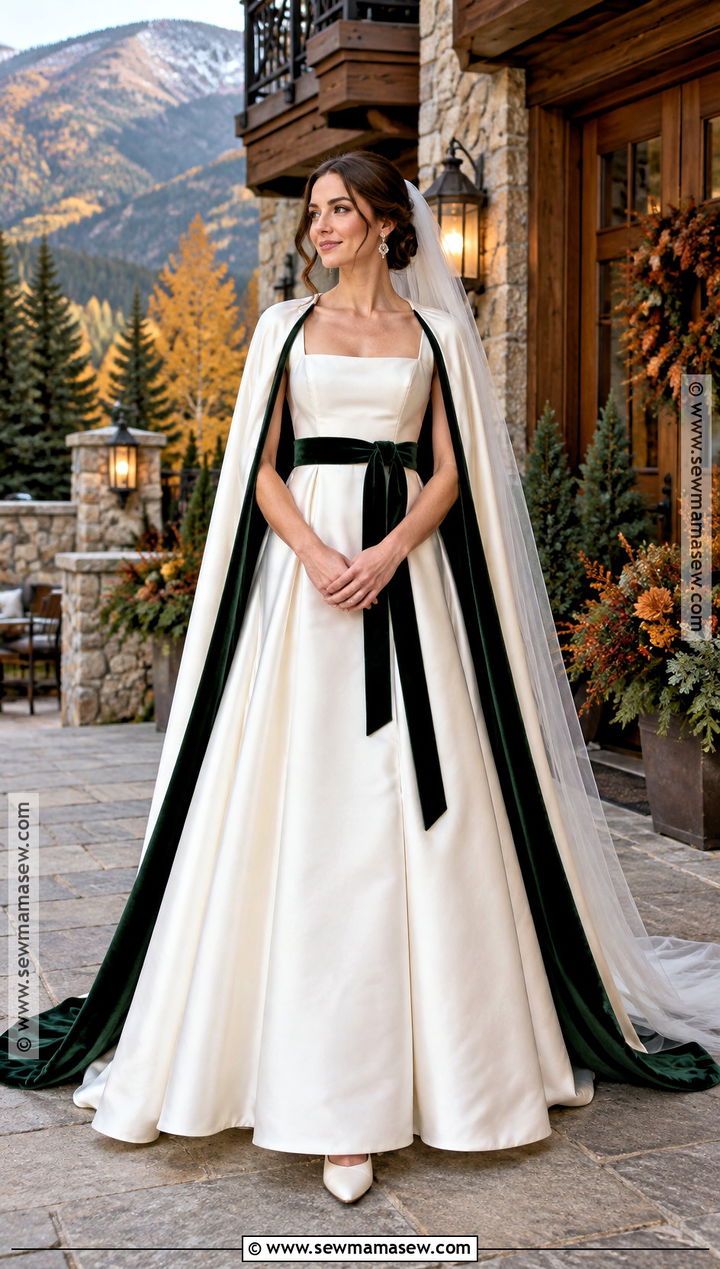
Velvet is a seasonal touch that's easy to overdo. A full velvet gown is heavy and warm, so I suggest using it as an accent on an ivory satin A-line instead: a narrow ribbon at the waist, a removable sash, or the lining of a cape. Ivory or taupe velvet stays subtle, while forest green or burgundy makes a clear statement. I'd keep it to one or two places at most. Velvet also reflects light differently from satin, so I always photograph the darker accent beside the gown in daylight before the wedding to see how strong the contrast reads. A velvet ribbon tied around a low ponytail repeats the detail neatly.
14. Detachable Sleeve Fall Wedding Dress
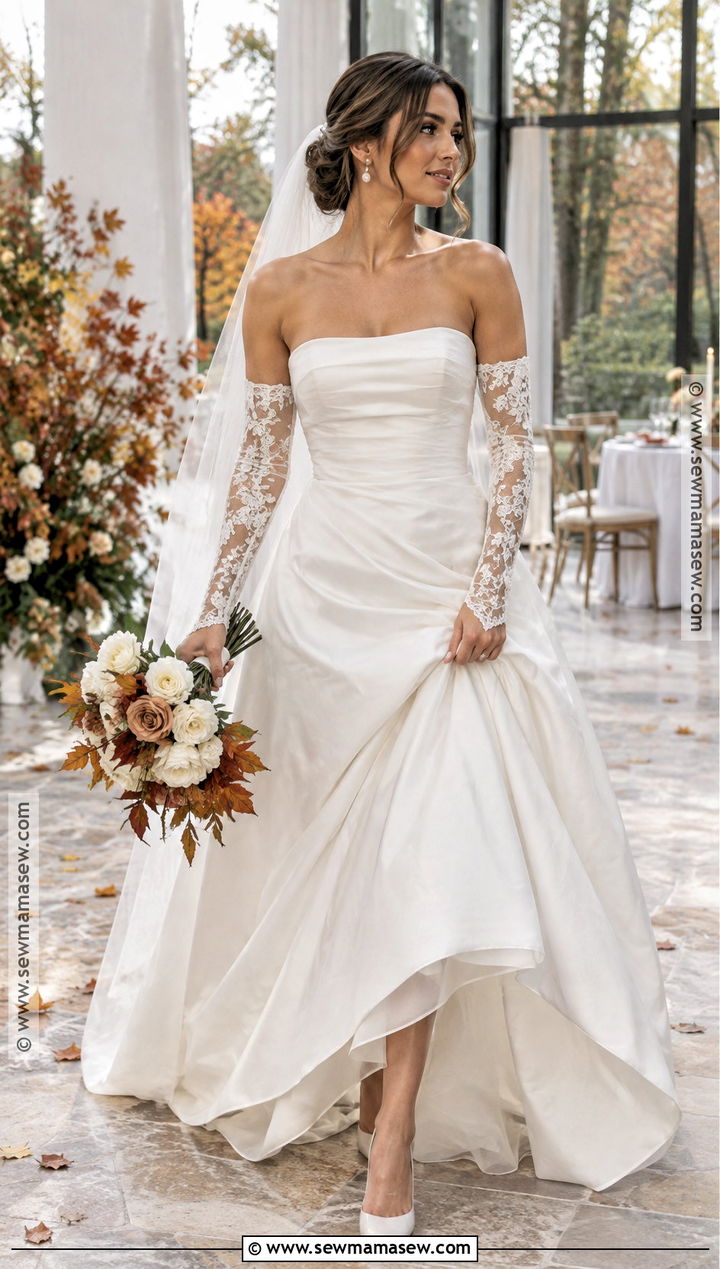
Detachable sleeves solve the fall temperature problem better than almost anything else, as long as they're fitted properly. Start with a strapless or sleeveless gown with a structured bodice, then choose fitted lace, draped satin or sheer puff sleeves for the ceremony. The attachment points matter most: small hidden buttons or hooks under the arm stay smooth through hugs, while elastic bands can roll. I insist that brides bring the sleeves to every single fitting, since adjusting the bodice without them can leave gaps later. Take them off at the reception for a lighter version of the same dress, and keep the veil short enough not to hide the sleeves.
15. Two Piece Fall Wedding Dress
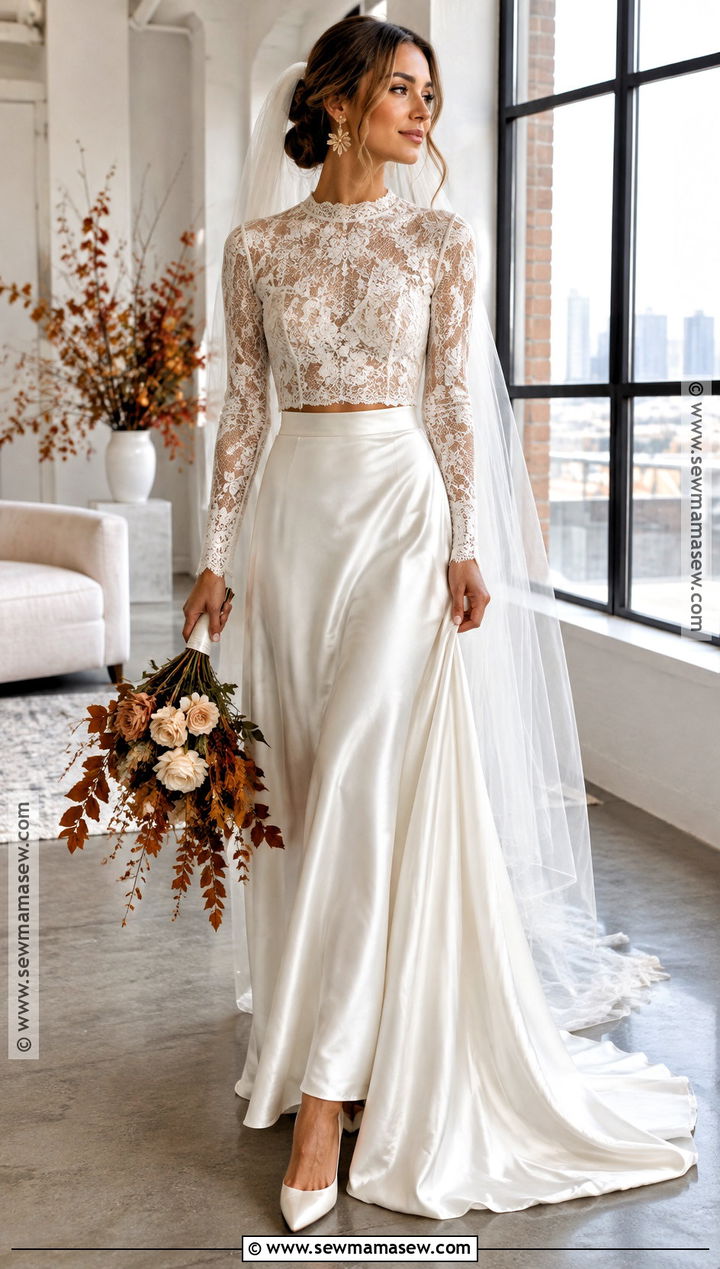
Two-piece bridal looks are practical in a way people don't expect: the skirt and top can be fitted separately, and either can be worn again. A fitted long-sleeve lace top over a high-waisted satin, crepe or tulle skirt gives full coverage, or the top can sit just above the waistband for a sliver of skin. The fitting detail I focus on is the join. Both pieces need to be altered together so the top doesn't ride up when a bride raises her arms. Sleek pumps and sculptural earrings keep it bridal. Swapping the lace top for a satin camisole or a tailored jacket gives an easy reception change.
Bustles, Trains and Damp Fall Lawns
Autumn ground is rarely dry. Morning dew, rain from the night before and fallen leaves all end up on a train, and a long hem picks up dirt faster than most brides expect. A few decisions before the wedding save a lot of stress on the day.
Which bustle suits which skirt
An over bustle lifts the train up and hooks it to the back of the skirt, which works well on satin and crepe. An under bustle, sometimes called a French bustle, tucks the train underneath and suits fuller tulle and organza skirts. A ballroom bustle hides the train so the skirt looks floor-length all around, which is the neatest option for heavy dancing. Ask your seamstress which one she'd use on your fabric, and have someone who'll be with you that day learn how to fasten it at the final fitting.
Planning for wet ground
For an outdoor ceremony on grass, I'd consider a chapel train rather than a cathedral length, or a tea-length hem if the dress allows it. Pack a lint roller, a small white towel and clear tape for leaves that cling to tulle. Shoes with a block heel or a low wedge won't sink into soft turf the way a stiletto does, and they're far easier to stand in through a long receiving line.
A Dress That Works From the Aisle to the Last Dance
Start with the venue and the forecast, then let taste decide between the styles that survive those two filters. Long sleeves and heavier fabrics are the simplest answer to a cold date, but detachable layers give the most room to adjust if the day swings warm. Lace, satin, crepe, tulle and a little velvet all have a place in autumn. Whatever you choose, bring your actual shoes, undergarments and accessories to every fitting, because a hem set in the wrong heel height is one of the most common last-minute problems I see. Then walk, sit and lift your arms in the dress. If it still feels like yours after that, it's the right gown.
Related posts: