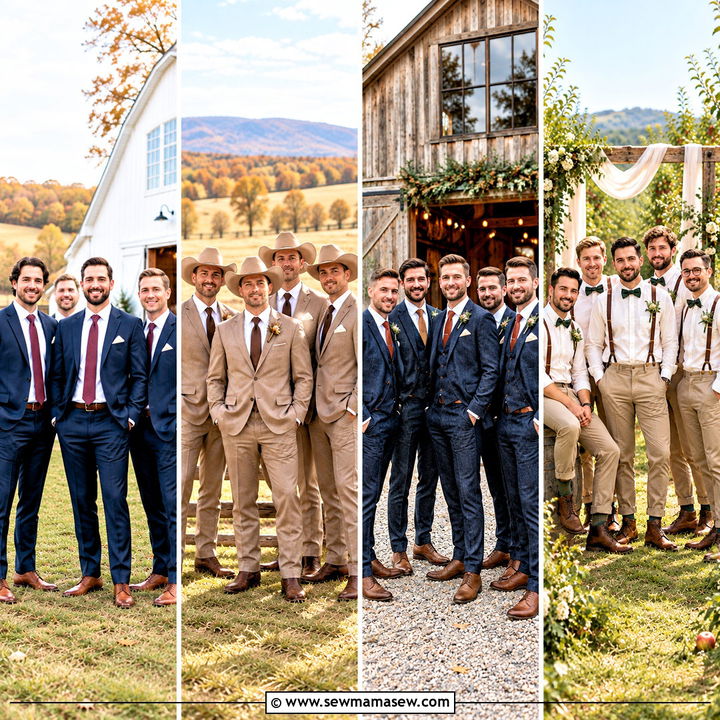
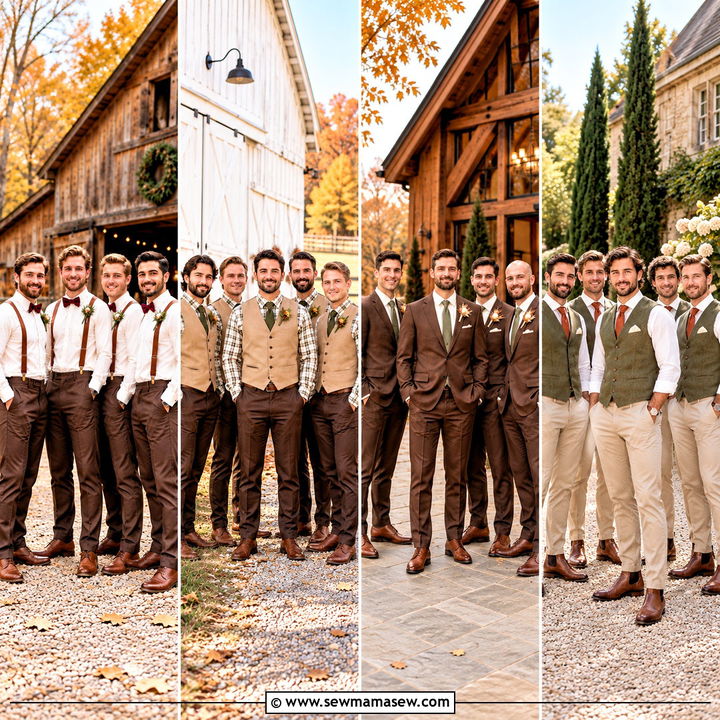
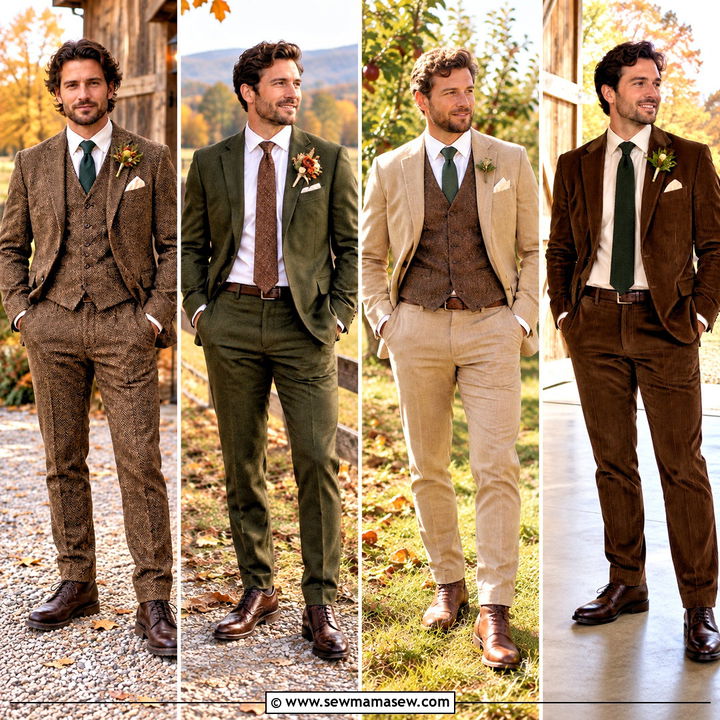
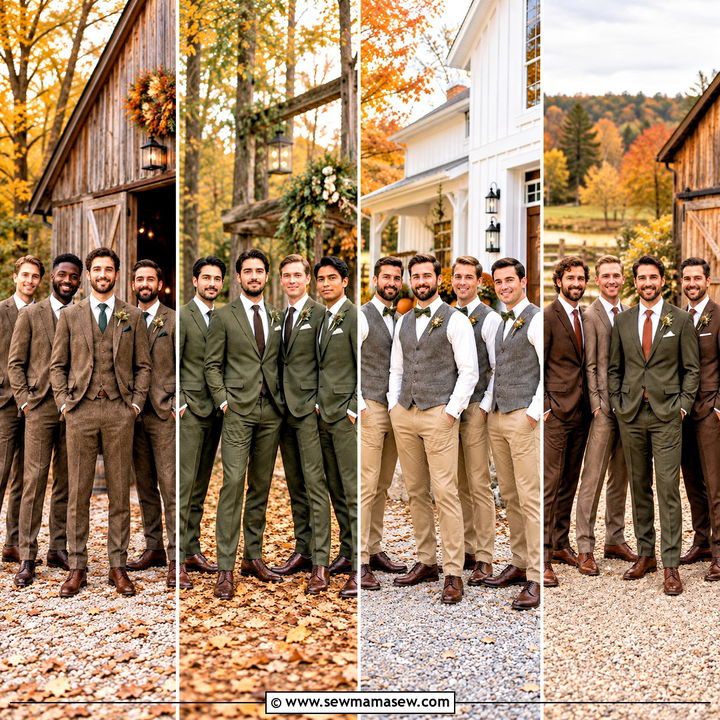
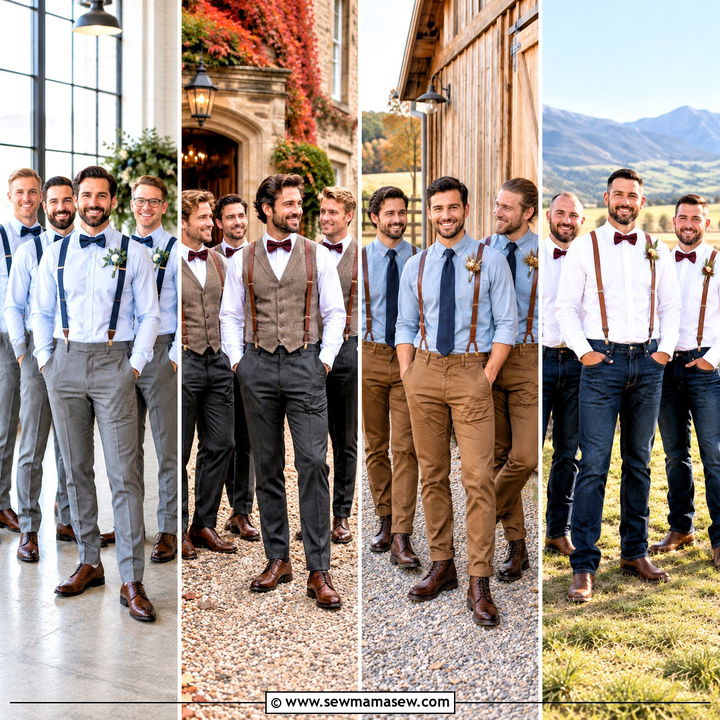
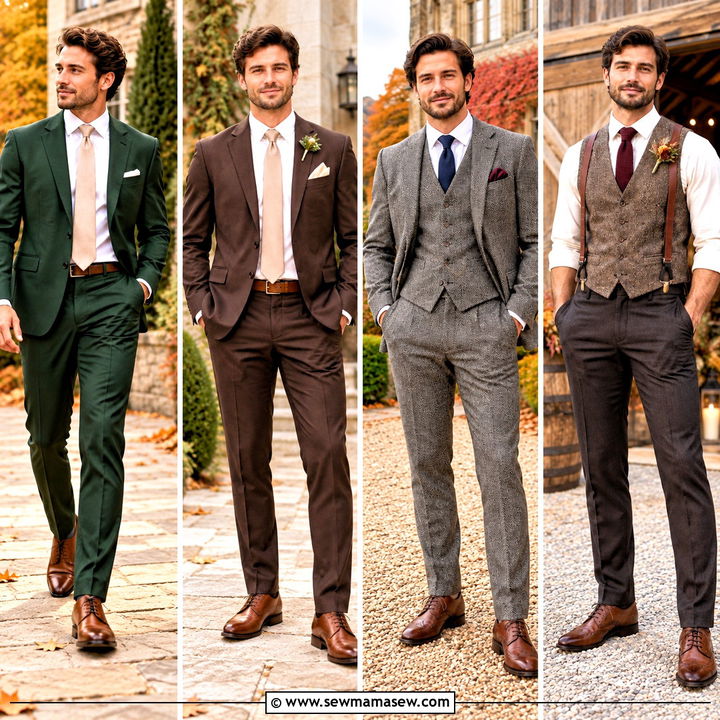
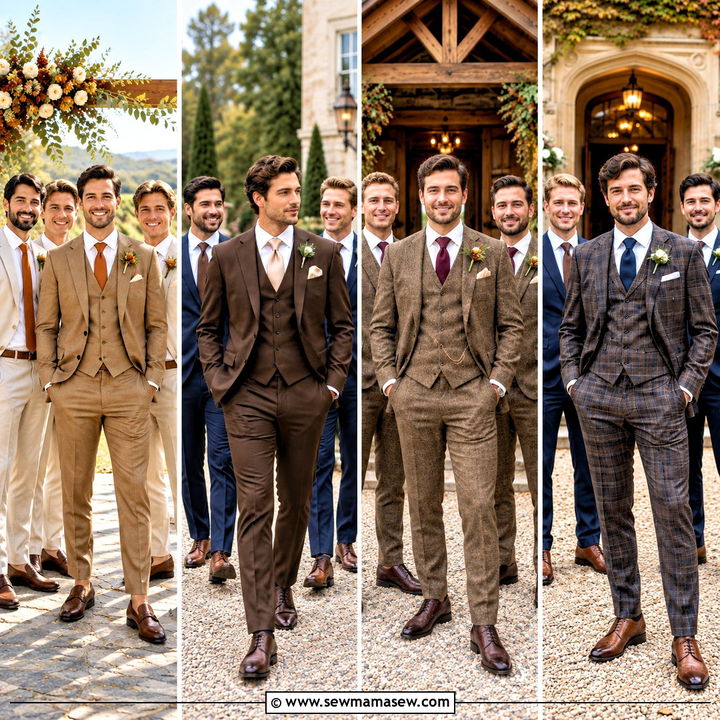
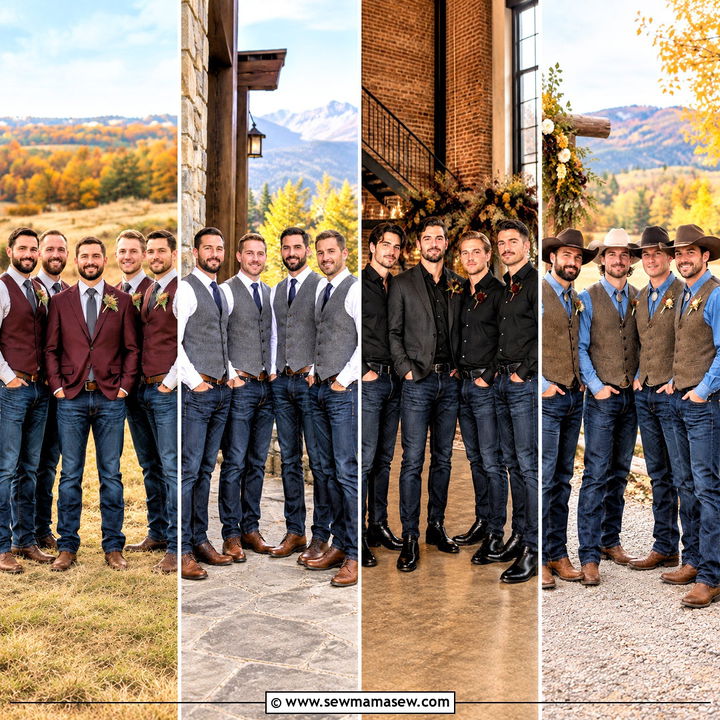
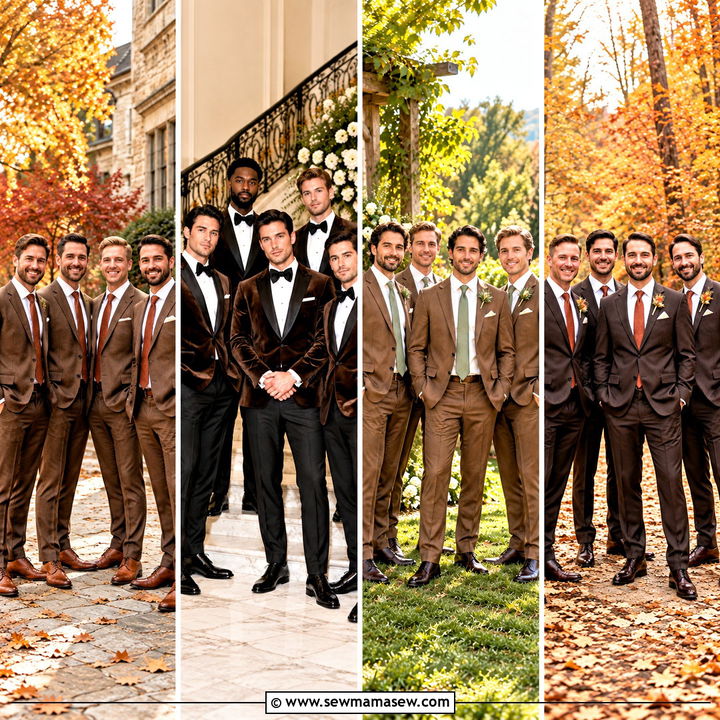
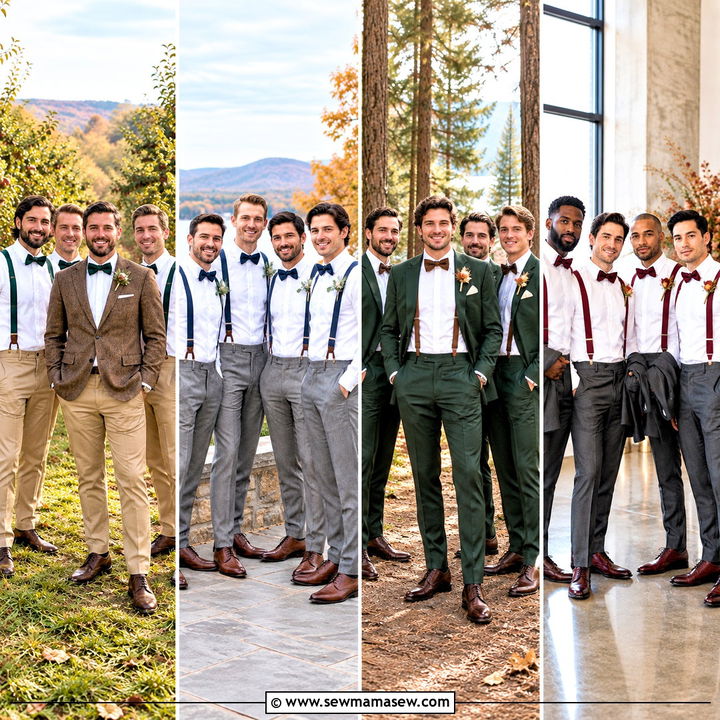
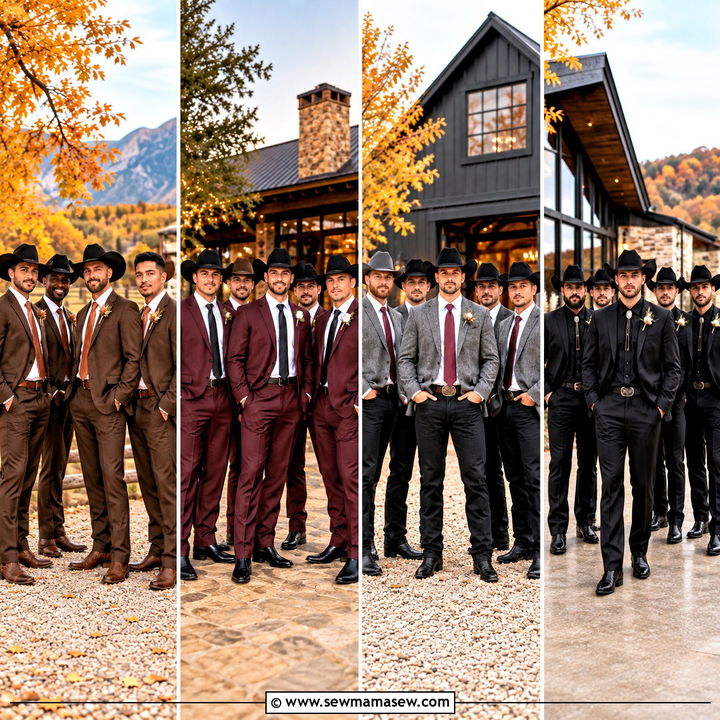
Western groomsmen outfits live or die on restraint. One or two genuine Western pieces, such as good boots, a bolo tie or a pearl-snap shirt, read as authentic, while hats, fringe, big buckles and embroidery all at once read as a costume party. Fall makes the palette easy: brown, rust, burgundy, olive, charcoal and forest green all suit a ranch, barn or mountain lodge. The range is wide, from dark denim and boots to tailored suits with a single cowboy detail, so there's an option for most dress codes. These are the fifteen I'd put a wedding party in, and what I'd watch on each.
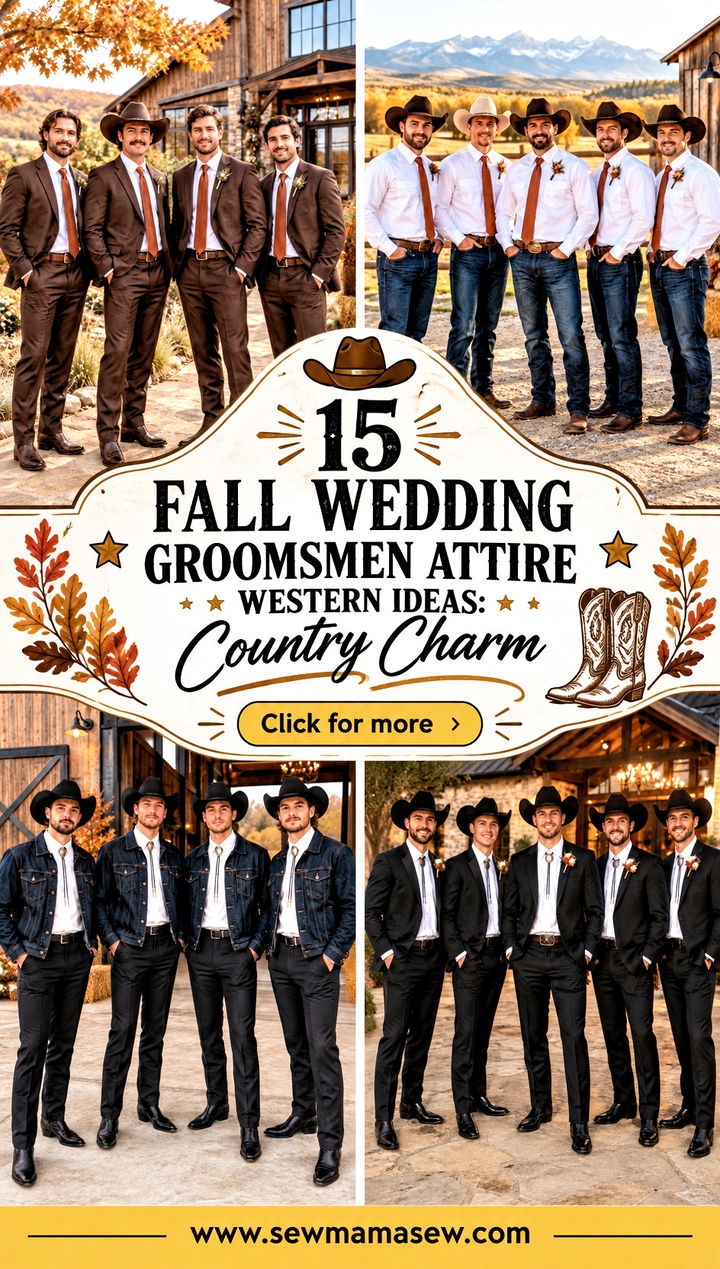
Felt Hats, Bolo Clasps and When Hats Come Off
Hats and bolo ties are the pieces that make a wedding party look Western, and also the pieces most likely to go wrong. I sort them out early, before anyone starts buying suits.
Hats
- Felt is the traditional choice from fall through winter, while straw hats are mostly worn in warm months. For an October or November wedding, felt looks right.
- Pick one crown crease and brim width for everyone. A classic cattleman crease is the most formal and suits most faces.
- Measure every head around the forehead, just above the ears. Borrowed hats that sit too low or perch on top ruin group portraits.
- Traditional etiquette has men remove hats indoors, during a prayer and for the vows. Outdoors, many couples are happy for hats to stay on. Agree on it beforehand so everyone takes them off at the same moment.
Bolo ties
Buy matching bolos from one source so the cord, tips and clasp all agree. For the ceremony, I slide the clasp up to the collar with the top shirt button fastened, which looks as formal as a knotted tie. At the reception it can drop an inch or two. Heavy stone clasps pull the cord down over the evening, so a lighter clasp holds its place better.
1. Brown Suit With Cowboy Boots
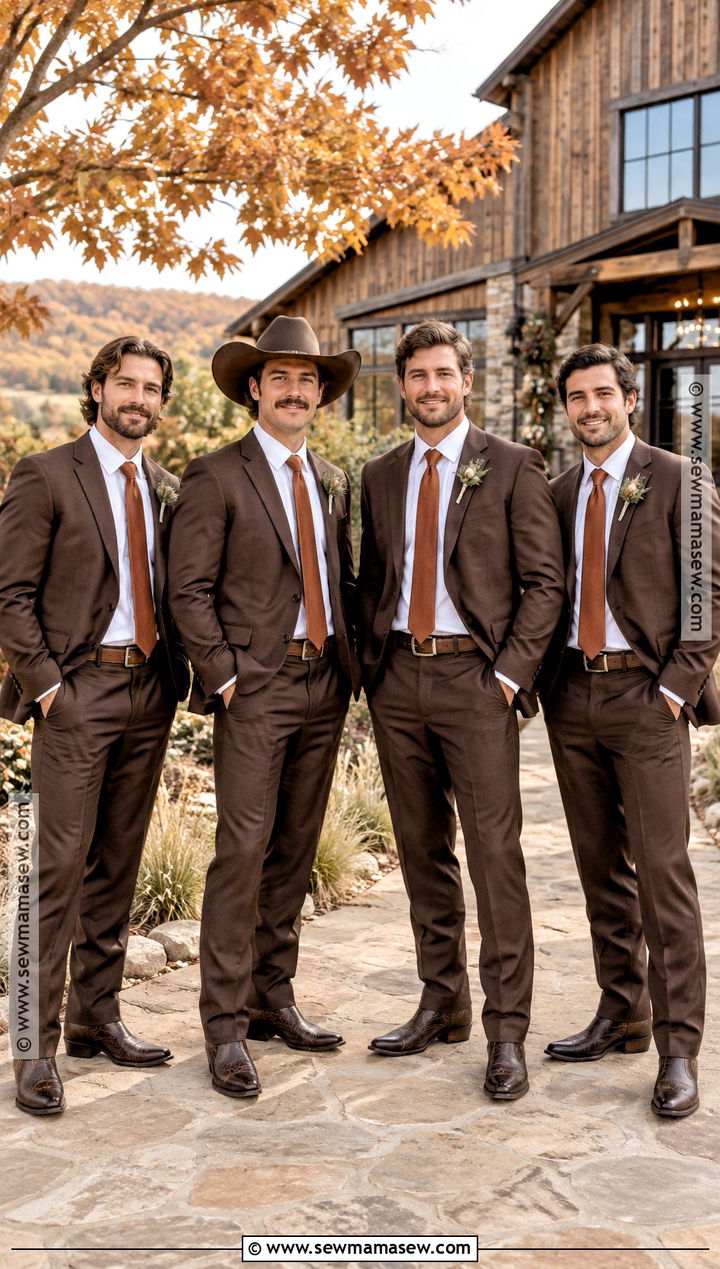
A brown suit with cowboy boots is the most natural starting point, because brown leather and brown cloth already belong together. Choose chocolate, tobacco or medium brown to suit the palette and time of day, then an ivory shirt, dark brown boots and a matching belt. A rust, sage or burgundy tie links to the flowers. Keep buckles modest. The detail I check first is the trouser hem: it should fall over the boot shaft and rest on the vamp without piling up. A patterned vest or a distinctive bolo marks the groom.
2. Charcoal Suit With Bolo Tie
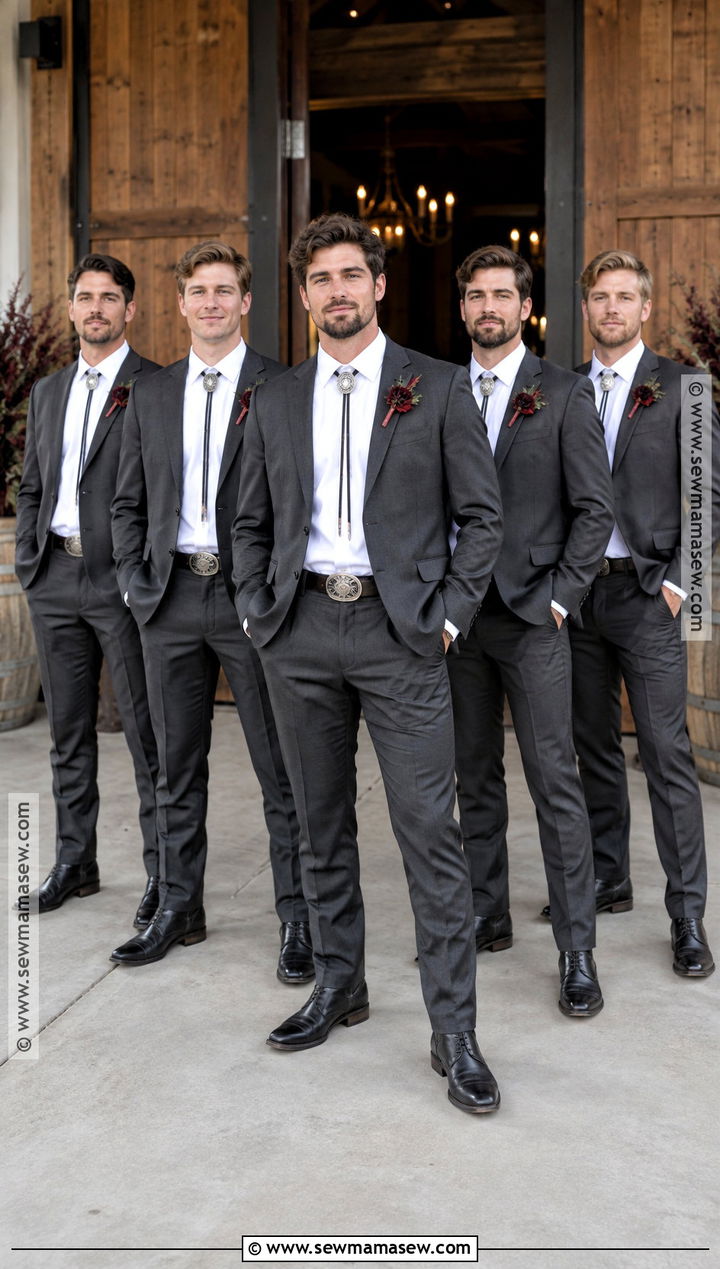
Charcoal with a bolo tie is my pick for an evening ceremony or an upscale ranch with a Western-formal dress code. Pair the suit with a crisp white shirt and black or deep brown Western dress boots. Matching silver bolos with understated stone or engraved clasps replace the necktie. The bolo cord should sit close at the collar for the ceremony, with the top button fastened behind it, so it reads deliberate rather than loose. Burgundy boutonnieres or rust pocket squares bring warmth. For the groom, a larger clasp or a black vest is enough.
3. Rust Suit With Ivory Shirt
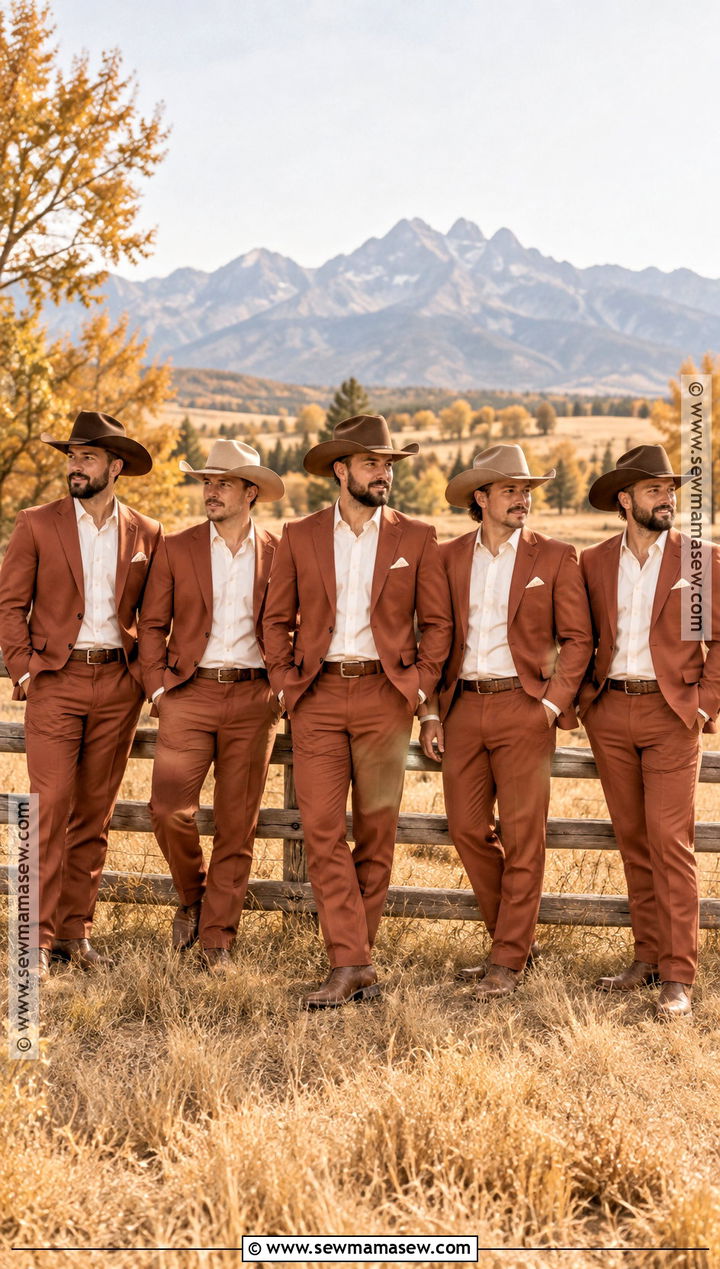
Rust suits look striking against a ranch or mountain backdrop, but only in a muted, slightly dusty finish. A bright orange cloth looks like a stage outfit in every photo. Dress the groomsmen in matching rust suits with ivory shirts, medium brown boots and plain leather belts. Skip ties for a relaxed ceremony, or add slim brown ones for a formal one. Cream pocket squares and small greenery boutonnieres keep it balanced. Rust carries the whole outfit, so every accessory stays quiet. A chocolate vest under the groom's jacket, or a darker terracotta suit, sets him apart.
4. Olive Suit With Western Boots
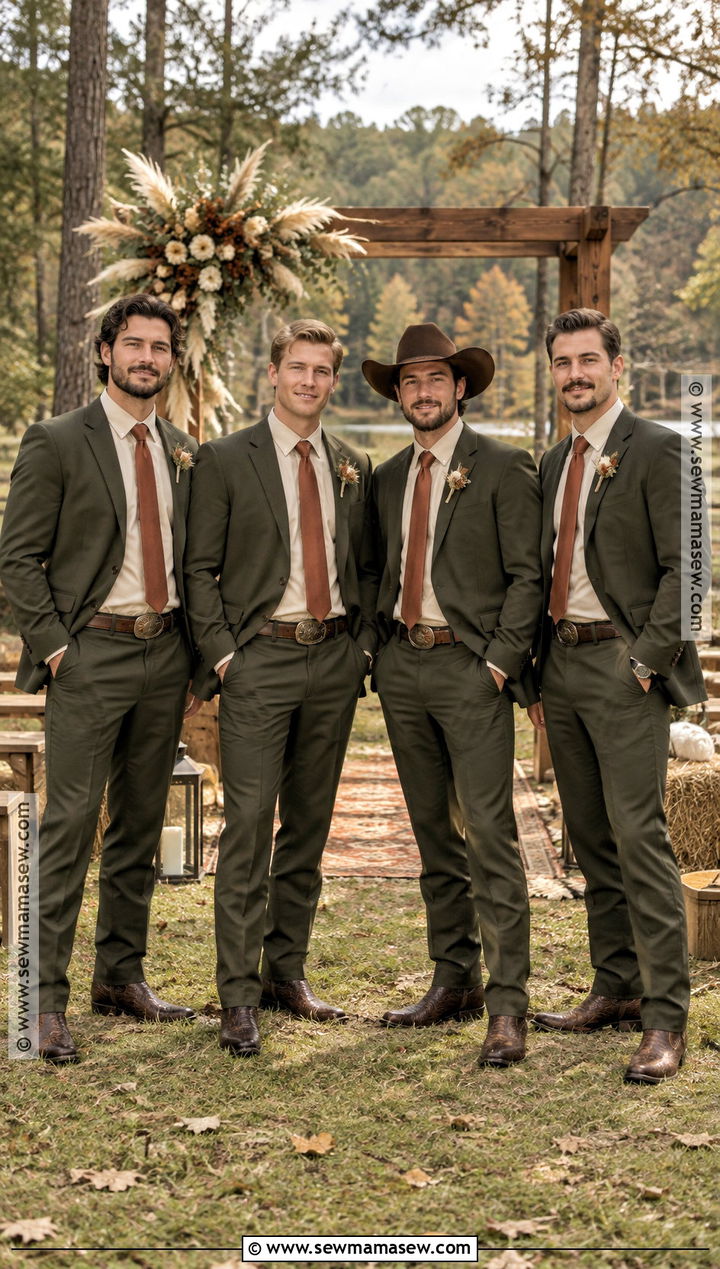
Olive suits give a couple rustic character without any denim. I steer toward a deep olive, which looks richer and more formal than bright green. Style each suit with a white or light beige shirt, dark brown boots, a matching belt and a copper or patterned brown tie. Antique brass tie bars or modest buckles hint at the Western theme. Boots are where groups drift, so I send everyone a note on boot shape and leather color before anyone shops. A patterned waistcoat or a cream felt hat gives the groom his own look.
5. Tweed Vest With Brown Trousers
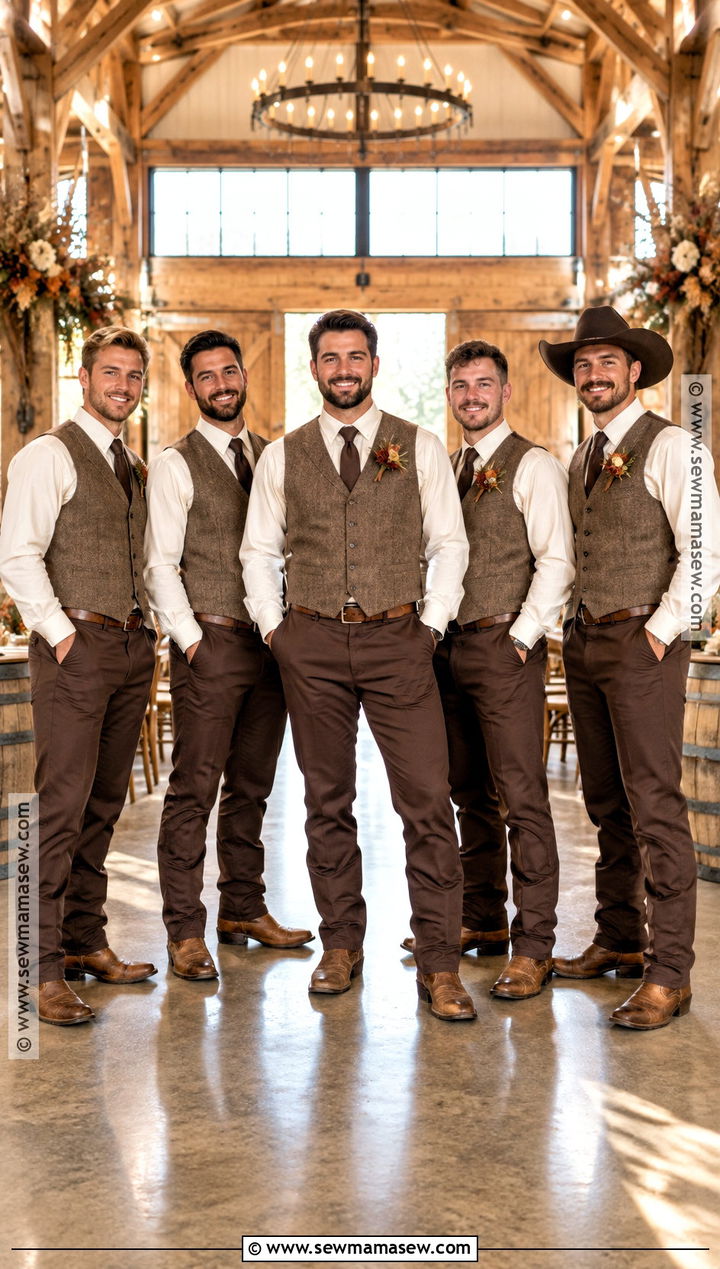
Tweed vests over brown trousers make a warm, jacket-free outfit for an indoor barn or daytime ranch ceremony. Start with an ivory button-down and brown tailored trousers, then matching herringbone or subtle plaid tweed vests, polished brown boots and leather belts. I check that every vest sits close without pulling across the buttons; a vest that strains shows horizontal creases in every photo. Cuffs stay buttoned for the ceremony and can be rolled later. Add neutral ties or bolos if the dress code calls for more. A matching tweed jacket marks the groom.
6. Dark Jeans With Pearl-Snap Shirts
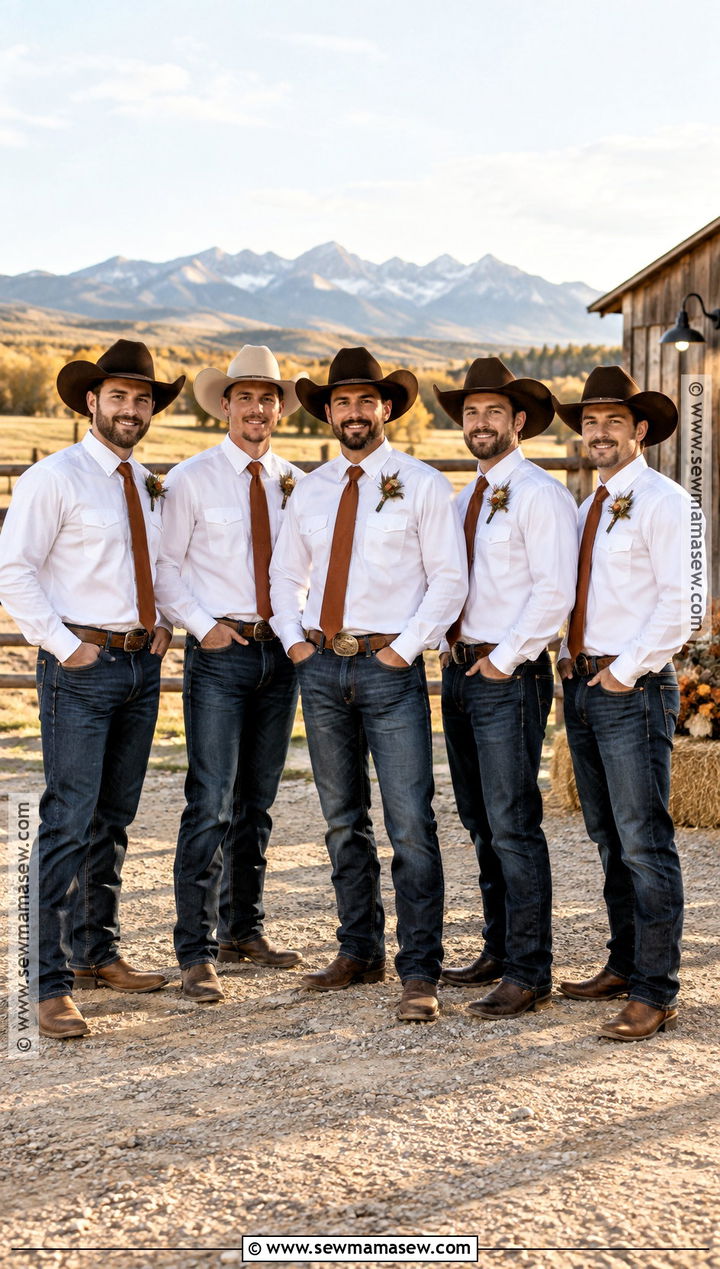
Dark jeans and pearl-snap shirts are the most recognizable Western look here, and the most casual. Choose clean, unfaded indigo in one wash and one cut, then pressed white pearl-snaps, brown boots and matching belts. Pearl-snaps often come with a pointed yoke and snap cuffs, so pick a plain style without contrast piping for a wedding. Distressed denim, huge buckles and work boots make the party look underdressed. A rust necktie dresses it up; a bolo keeps it traditional. Clear written instructions are essential so everyone arrives in matching denim.
7. Black Jeans With Tan Blazer
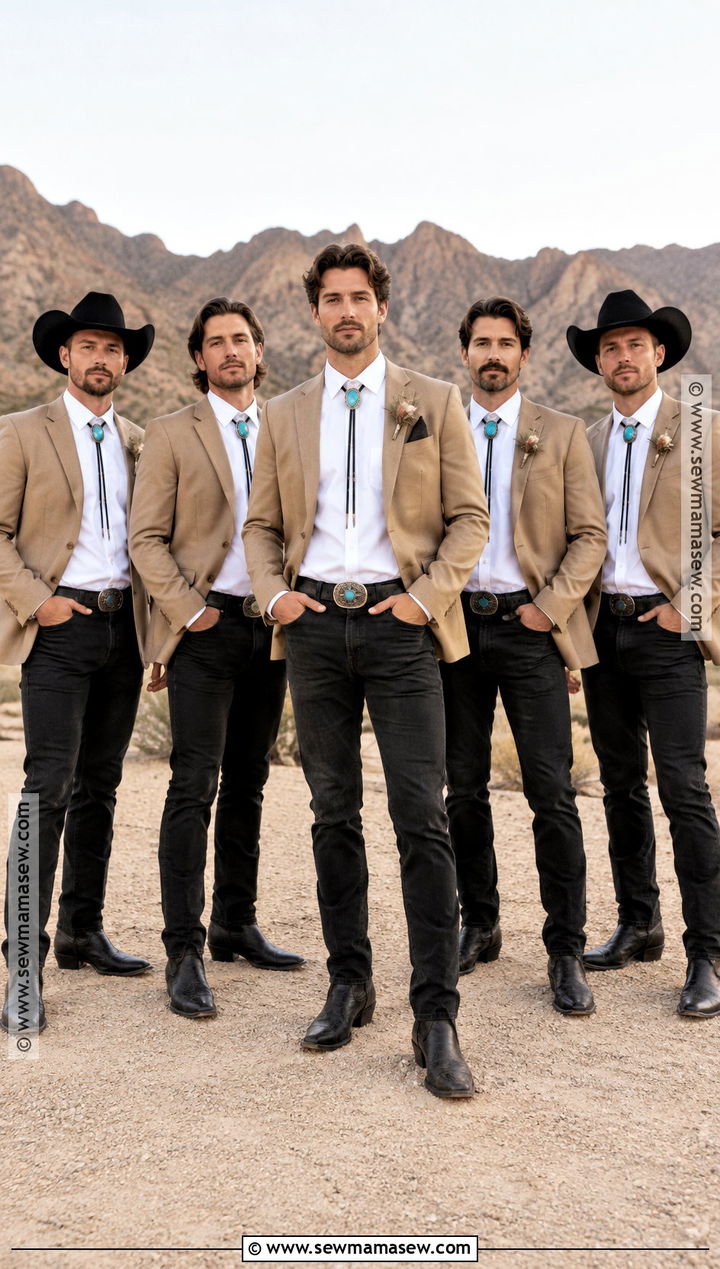
A tan blazer turns black jeans into something you can wear to a wedding. Begin with slim or straight black jeans with no fading, then a white dress shirt, a structured camel or tan blazer, black Western boots and a black belt. A bolo with a dark brown or turquoise accent gives a single focused Western detail. Tan blazers vary in shade and weight between makers more than people expect, so buy them together. This suits a desert venue, a modern barn or a late-afternoon ceremony. A deeper brown blazer or an embroidered shirt separates the groom.
8. Navy Suit With Cowboy Hat
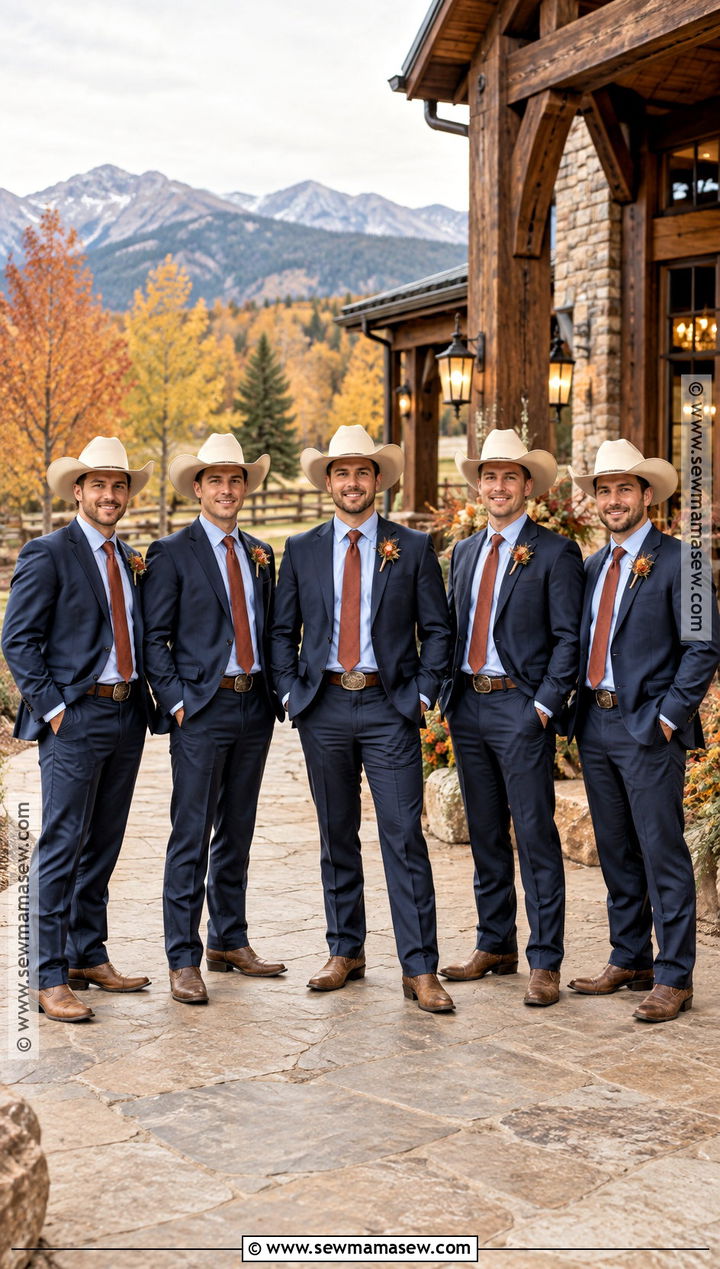
Navy suits keep a ranch wedding feeling traditional, and the hat and boots supply the Western side. Style the groomsmen in matching navy suits, pale blue or white shirts, polished brown boots and slim rust or burgundy ties. If hats are part of it, they all need the same shape and a neutral color, cream, tan or chocolate. A hat that's too big sits down on the ears and looks borrowed, so get every head measured. Keep boutonnieres small next to a hat brim. A darker hatband or a contrasting waistcoat marks the groom.
9. Burgundy Vest With Charcoal Pants
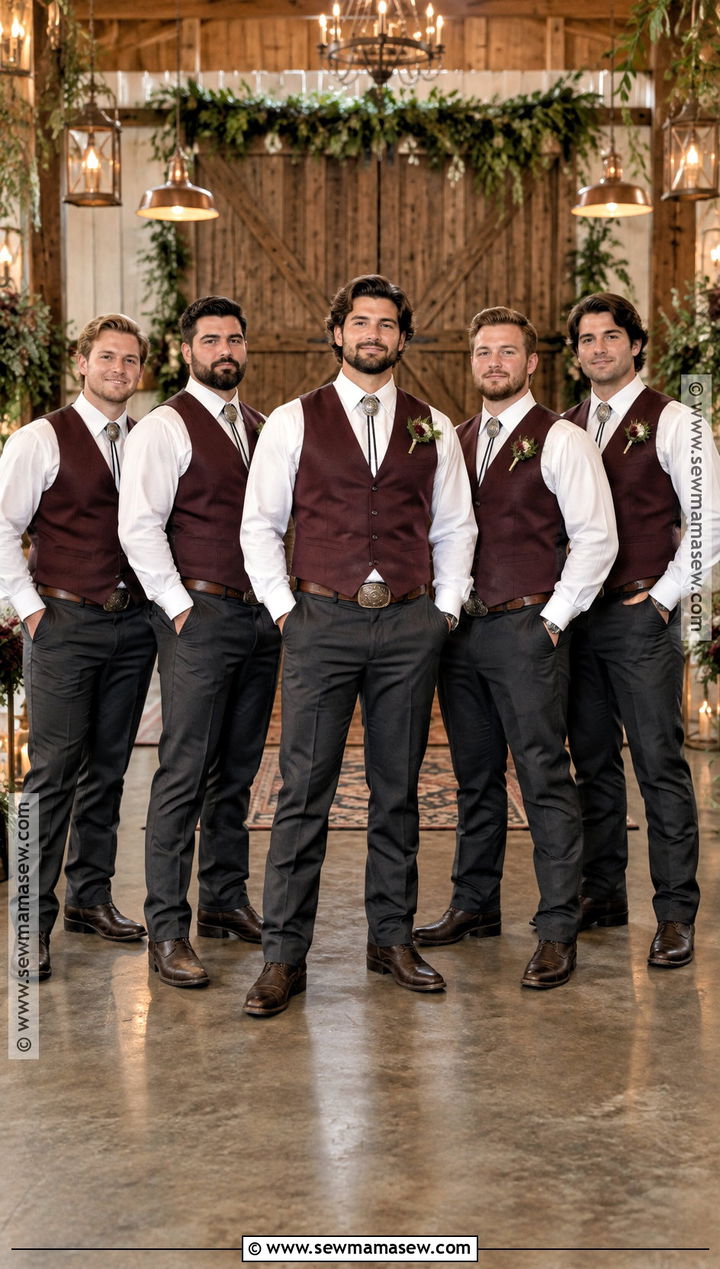
A burgundy vest is how I add strong fall color without putting anyone in a colored suit. Pair fitted burgundy vests with charcoal trousers and ivory shirts, then dark brown boots, matching belts and either bolos or narrow charcoal ties. Choose matte wool or a brushed blend; satin vests look like formalwear rentals and clash with the rustic setting. Trousers need to be long enough to meet the boots without riding up when a man sits. Matching charcoal jackets cover cold outdoor portraits, and a burgundy jacket or patterned vest suits the groom.
10. Camel Blazer With Dark Denim
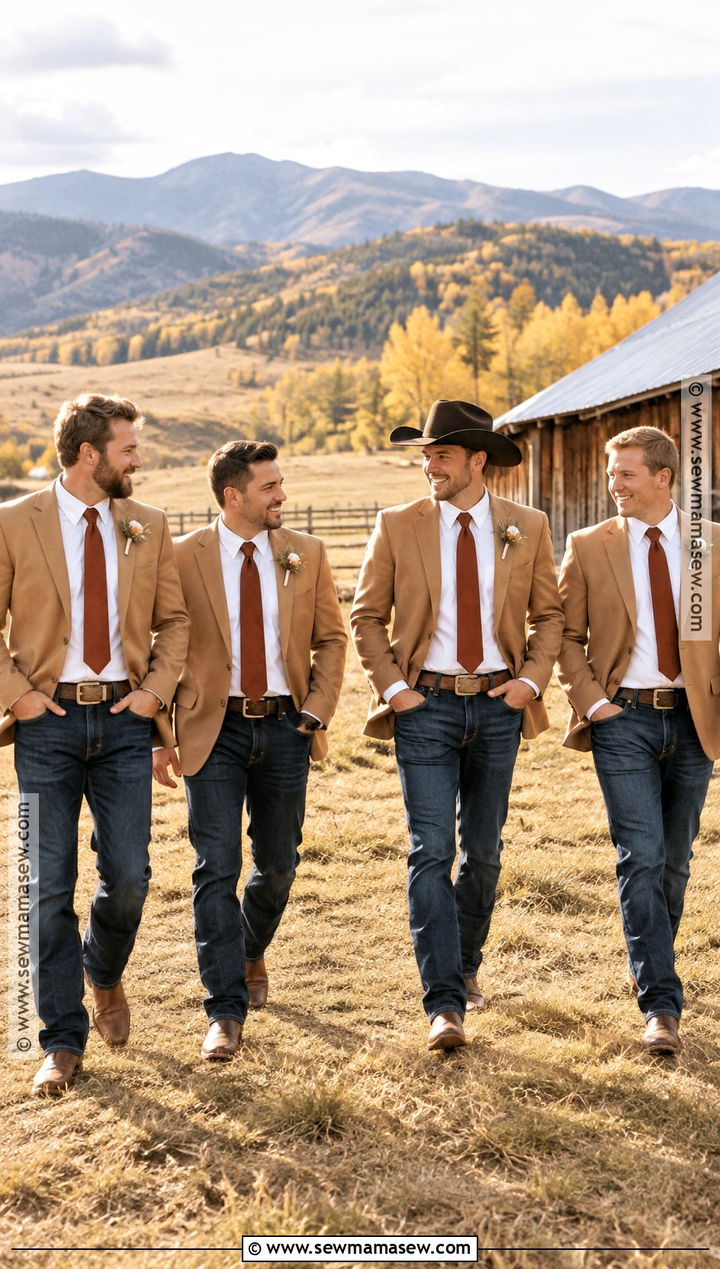
Camel blazers and dark denim are comfortable through a long ranch reception and still look dressed for the ceremony. Give each groomsman a structured camel sport coat, a pressed white shirt, dark indigo jeans and brown Western boots, with rust ties or engraved bolos. One approved wash for every pair of jeans, no decorative stitching on the back pockets. A wool-blend blazer adds warmth outside without much bulk. Cream or muted green pocket squares can pick up the flowers. A chocolate blazer or a special bolo clasp sets the groom apart.
11. Forest Green Suit With Bolo Tie
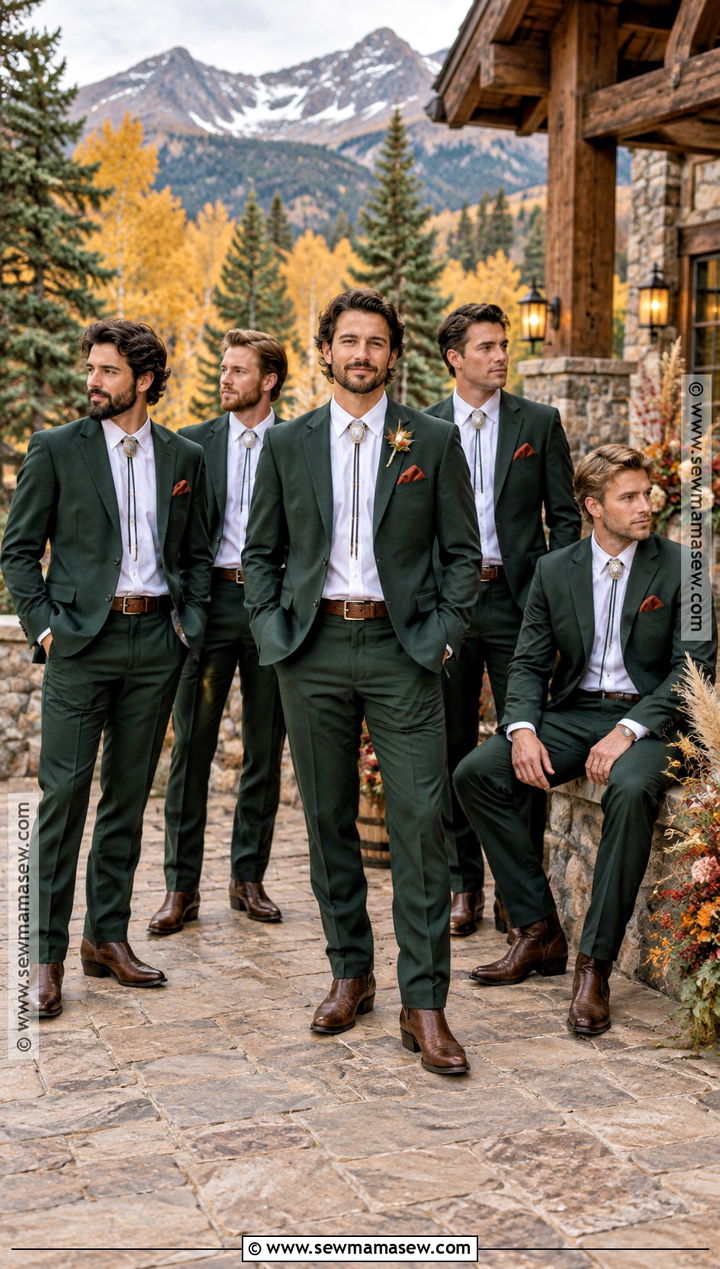
Forest green suits are the formal option for a ranch wedding where denim would sit below the guests. Pair deep green suits with white shirts, chocolate boots and matching belts, then silver bolos and rust pocket squares. I look for matte wool, which gives green its depth; a shiny finish makes it look cheap under flash. Keep the cut traditional and comfortable, since boot heels change how a man stands and a tight jacket gets worse once he's moving. A cream shirt or a bolo with a colored stone works for the groom.
12. Plaid Blazer With Brown Trousers
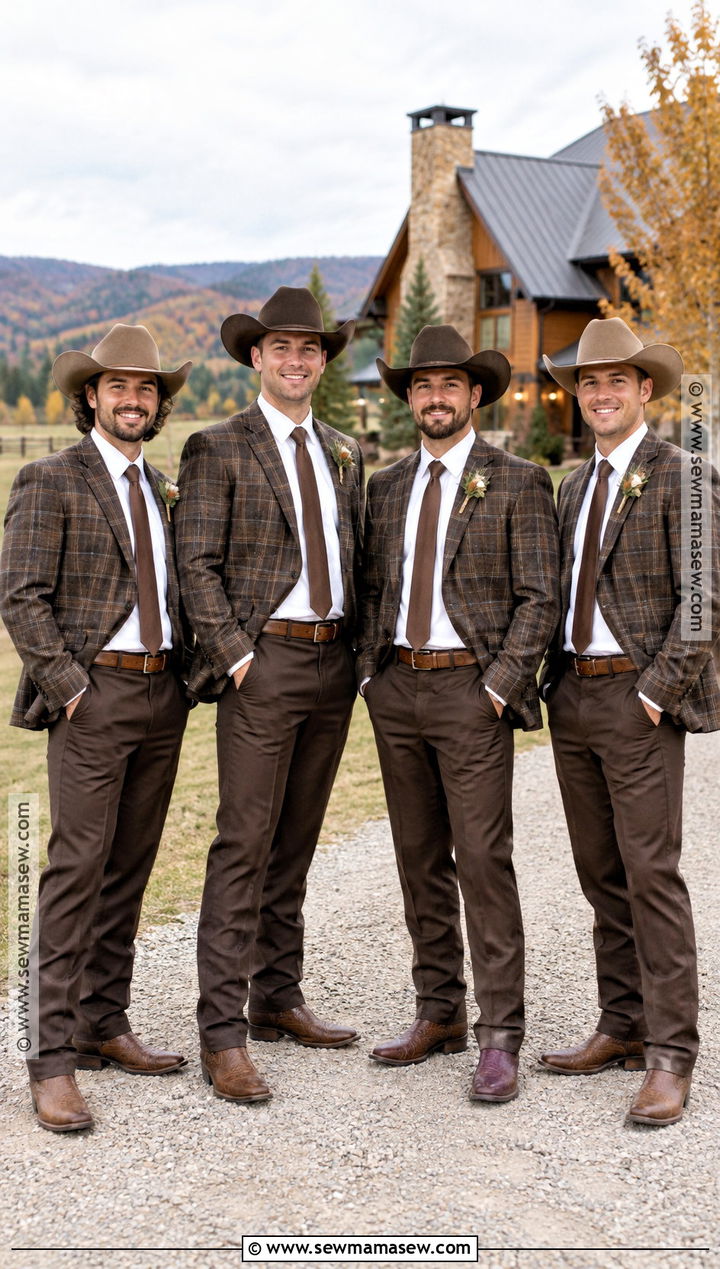
A plaid blazer gives Western personality without any obvious cowboy pieces. Choose jackets in a subtle brown, tan and charcoal check with solid dark brown trousers, ivory shirts, polished boots and plain ties. Every groomsman wears the same pattern; two competing plaids side by side look chaotic in group photos. Patterns also make fit problems obvious, because a check that doesn't line up at the shoulder seam or runs crooked on a too-long sleeve draws the eye straight there. Keep pocket squares and flowers minimal. A solid brown suit separates the groom.
13. Suspenders With White Shirt And Jeans
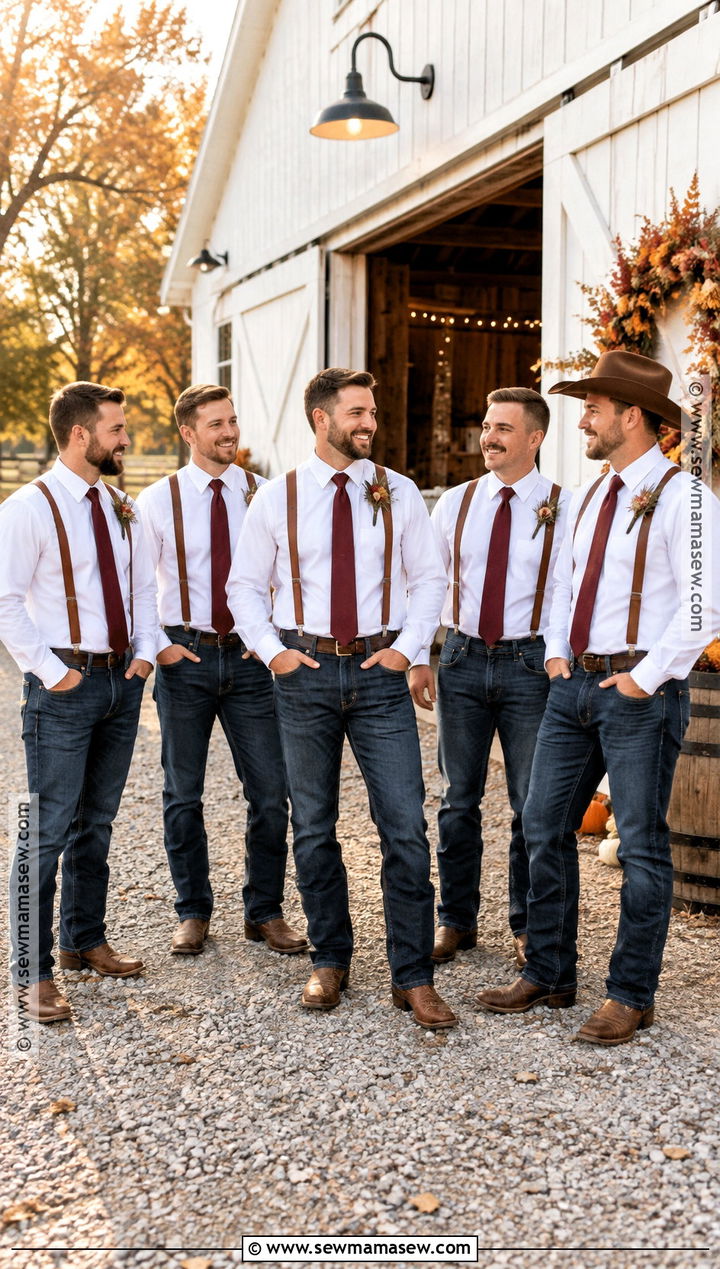
Suspenders with a white shirt and jeans make a relaxed vintage outfit for an informal daytime barn or backyard ranch wedding. Dress the groomsmen in crisp white shirts, clean dark jeans, brown leather suspenders and cowboy boots. Working suspenders and a belt never go together; a belt only makes sense if the braces are purely decorative, and I'd rather skip that compromise. Slim burgundy ties or small bolos make it ceremony-ready. Keep every leather piece in the same brown family, and choose shirts in a substantial cotton that stays neat without a jacket.
14. Denim Jacket With Black Trousers
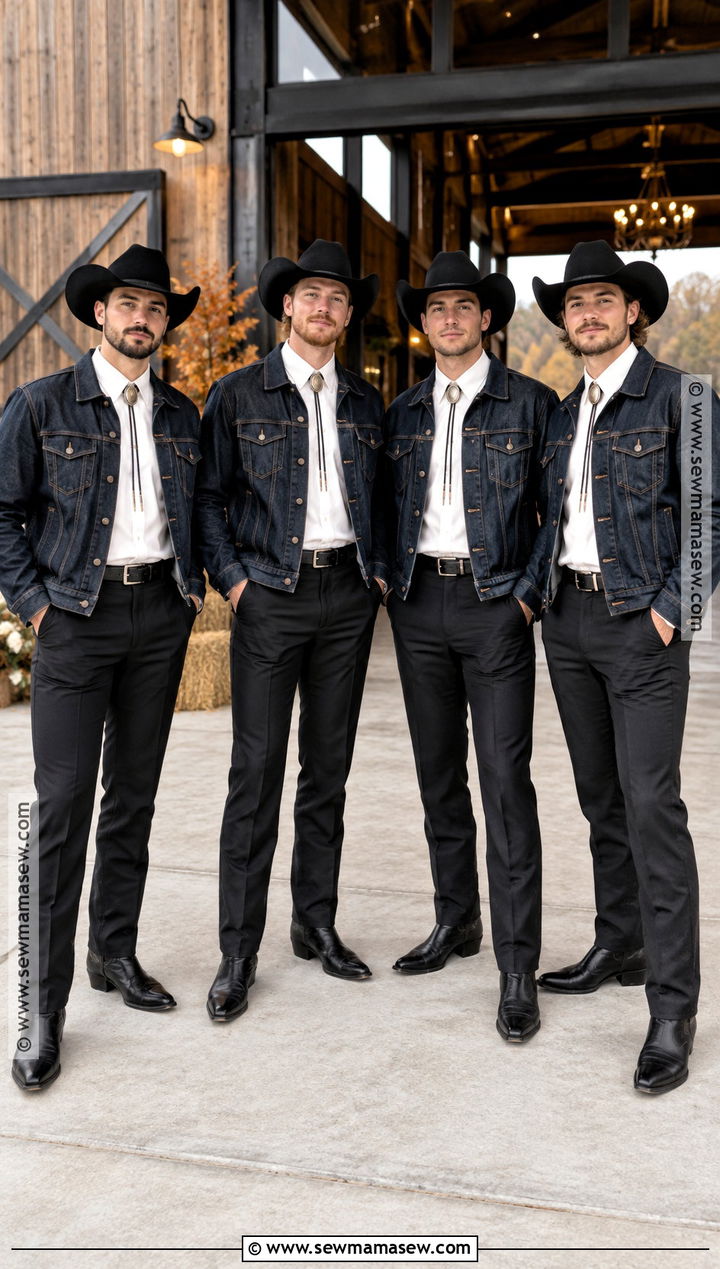
A dark denim jacket can be a proper wedding layer when everything around it is formal. Choose clean indigo jackets with no distressing, logos or patches, worn over ivory button-downs with tailored black trousers, black boots and black belts. Burgundy ties or silver bolos add fall color. Denim jackets are cut short, so they sit above the hip and show more of the trouser; tailored trousers with a clean line matter more here than with a blazer. Keep washes consistent and agree before portraits whether jackets are buttoned or open. A black Western blazer works for the groom.
15. Black Suit With Western Boots
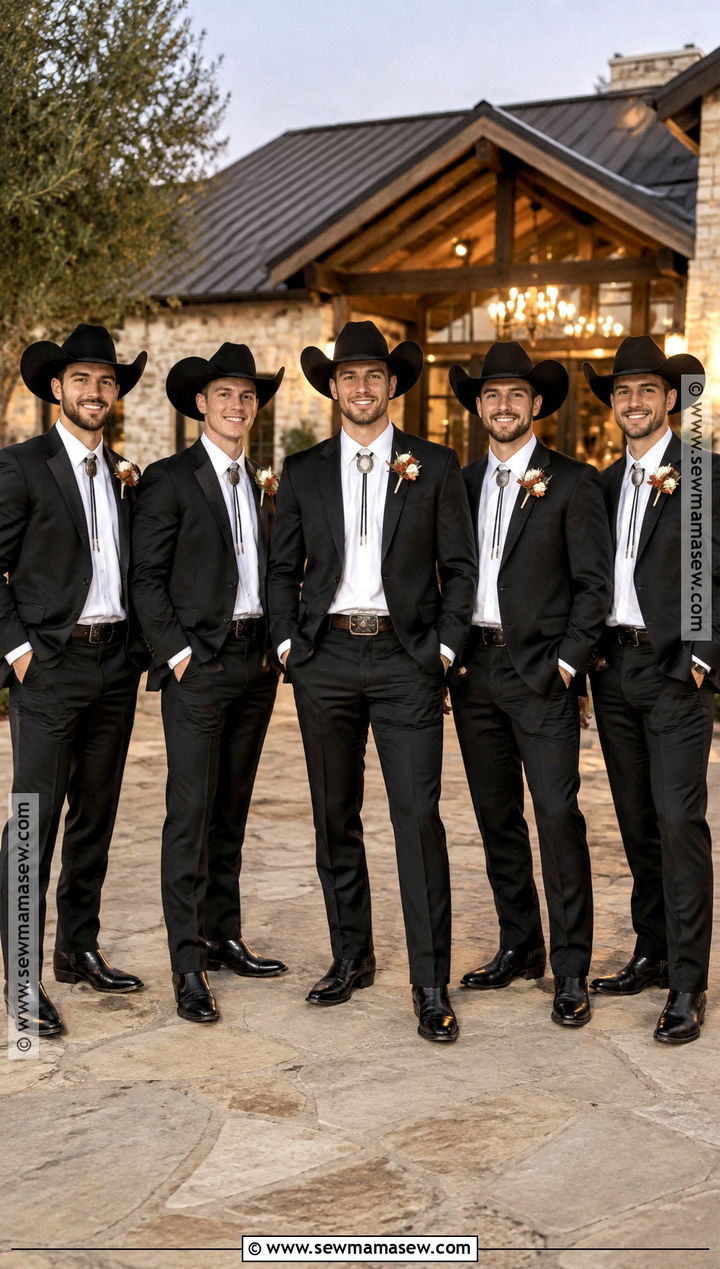
A black suit with Western boots is the simplest route to formal cowboy style for an evening ceremony. Select tailored black suits, crisp white shirts, black leather boots and matching belts, with silver bolos or burgundy ties if the couple prefers a traditional look. Small rust or greenery boutonnieres soften the dark palette. Boots should be sleek dress styles with a slim toe and smooth leather, not rugged ropers or heavily stitched shafts. If hats are included, choose black or a light neutral. A patterned vest or a larger bolo clasp marks the groom.
Getting Boots and Trouser Hems to Agree
Cowboy boots change the way trousers hang, and most fit problems in Western wedding photos come down to that. A shaft that's taller and wider than a dress shoe needs a different hem.
- Dress boots with a slim round or snip toe and a smooth shaft look most formal. Square toes read more casual, and ropers or work boots belong on the ranch, not the aisle.
- Suit trousers need enough leg opening to slide over the shaft. A narrow modern cut rides up and catches on top of the boot.
- Hem every pair with the boots on. Many tailors cut boot hems slightly longer at the back so the fabric covers the heel while the front rests on the vamp.
- Jeans should be bootcut or a straight leg with some room. Skinny jeans bunch over a boot no matter how they're hemmed.
New leather boots are stiff at the heel and across the instep, and a long day on grass and gravel will find every sore spot. I ask groomsmen to break in new boots for a couple of weeks at home, then condition and polish them the week of the wedding.
One Real Western Detail Is Usually Enough
Western details fit a wedding when they're added to well-made clothes rather than piled on. Pick an outfit that suits the venue, weather, dress code and palette. Tailored suits keep it formal, while vests, dark denim and pearl-snap shirts suit a relaxed ranch. Keep boots polished, clothes fitted and leather colors matched. Send every groomsman specific notes about fabrics, colors and accessories well ahead of the date. Then let the groom stand apart with one clear difference, a jacket, vest, hat or bolo clasp, while the rest of the party stays matched.
Related posts: